March 2 – Read Across America Day

celebrate-picture-books-picture-book-review-tough-tug-cover

About the Holiday

Today’s holiday, established by the National Education Association in 1997, encourages children all across the country to celebrate reading and all of its joys and benefits. To commemorate the day, authors, illustrators, politicians, athletes, librarians, and families hold special reading events in schools, libraries, bookstores, and community centers. A love of reading is one of life’s greatest pleasures and begun early can be a powerful force for future success. Celebrate today by reading with a child or on your own. There are fabulous worlds and stories waiting to be discovered.

Tough Tug

Written by Margaret Read MacDonald | Illustrated by Rob McClurkan


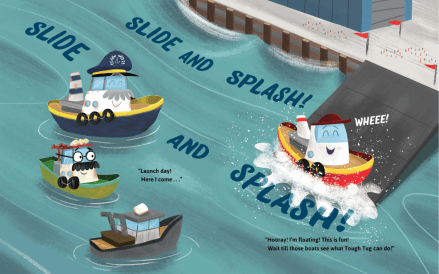
In a shipyard in Anacortes, Washington, a new tugboat is being built. He watches every weld and rivet and tells the workers to make him strong “so big waves can’t break me!” Tough Tug is happy to see that he’s being painted red—his favorite color. When he’s all finished, Tough Tug is launched into the sea, where the older tugs are waiting to welcome him. “‘Hooray! I’m floating! This is fun!’” Tough Tug says. He can’t wait to show what he can do.

celebrate-picture-books-picture-book-review-tough-tug-being-built

Image copyright Rob McClurkan, 2018, text copyright Margaret Read MacDonald, 2018. Courtesy of Two Lions.

But going forward is a little tricky, and there’s so much to look out for when reversing. Speeding is fun, but in a minute, the little tug is shouting “‘Oh, no! Oh, no!…can’t stop!’” The older tugs are watching all this with dismay. “‘Little tugs need to know how to STOP!’” Arctic Tug says. Tough Tug apologizes but can’t help showing off—just a little bit—his agility and the way he can “swirl and twirl” this way and that.
celebrate-picture-books-picture-book-review-tough-tug-wheee

Image copyright Rob McClurkan, 2018, text copyright Margaret Read MacDonald, 2018. Courtesy of Two Lions.

The other tugs are not impressed. They tell Tough Tug that his only job is to push and pull. He should practice THAT, they advise him. Soon Tough Tug is needed to take a Barge to Alaska. Even though the Barge is heavy, Tough Tug is up to the task. In fact, he’s so sure of his abilities that he wants to race Arctic Tug and his barge all the way to Sitka. It doesn’t matter that Arctic Tug has a head start or is bigger, Tough Tug knows he can catch up and win.

celebrate-picture-books-picture-book-review-tough-tug-obstacle-course

Image copyright Rob McClurkan, 2018, text copyright Margaret Read MacDonald, 2018. Courtesy of Two Lions.

Arctic Tug smiles and pulls away in a spray of ocean foam. When Tough Tug pulls up to the pier in Sitka, where Arctic Tug is waiting, he acknowledges defeat, but challenges the older tug to continue the race across the open sea to Anchorage. Tough Tug is met by high, rough waves, cold wind, and darkness, but he’s “‘not worried. I’m Tough Tug,’” he tells himself.

celebrate-picture-books-picture-book-review-tough-tug-practicing

Image copyright Rob McClurkan, 2018, text copyright Margaret Read MacDonald, 2018. Courtesy of Two Lions.

Suddenly in the stormy gray clouds, Tough Tug sees Arctic Tug’s puffy steam clouds spelling out S-O-S. Tough Tug knows just what to do. He leaves Barge and heads for where Arctic Tug is stranded with no power. He throws out his tow rope and begins to pull. It’s hard work pulling Arctic Tug and Arctic Tug’s Barge while keeping his course in such heavy seas, but he knows he can do it.
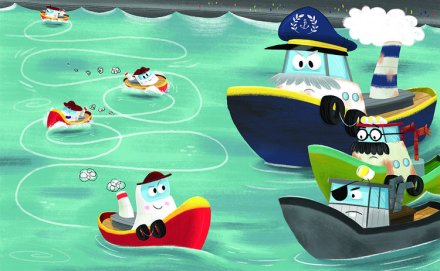
celebrate-picture-books-picture-book-review-tough-tug-bigger-ships

Image copyright Rob McClurkan, 2018, text copyright Margaret Read MacDonald, 2018. Courtesy of Two Lions.

They get to port “safe and sound,” and when Arctic Tug thanks him, Tough Tug just smiles and says, “‘No problem, Arctic Tug! A tugboat helps its friends!’” Still, Tough Tug isn’t finished for the day. He must go back and retrieve his own Barge still out at sea. With grit and determination, Tough Tug pulls his Barge through the high waves all the way to Anchorage. With the Barge safely in port, it’s time for Tough Tug, Arctic Tug, and the other tugs to “Rock and Rest. Rock and Rest” because tomorrow they’ll be needed again.
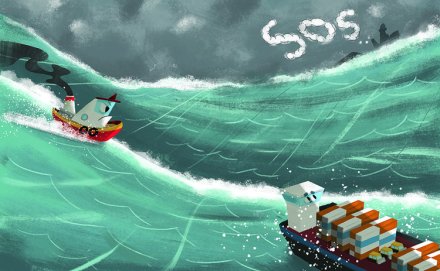
celebrate-picture-books-picture-book-review-tough-tug-sos

Image copyright Rob McClurkan, 2018, text copyright Margaret Read MacDonald, 2018. Courtesy of Two Lions.

Kids fascinated by boats and the sea will find lots to love in Margaret Read MacDonald’s rollicking ocean adventure. From the time he’s welded and riveted in the shipyard, Tough Tug has a can-do attitude that little ones will appreciate. He loves his color, his name, and his special abilities. Although his skills need practice and are a bit haphazard at first, just like children, Tough Tug learns to do his job well and puts games aside when he’s needed most. As Tough Tug rescues Arctic Tug, readers will cheer his bravery and perseverance. MacDonald’s straightforward text and first-person dialog from Tough Tug emphasizes the little boat’s self-confidence, willingness to learn, and readiness to help, making him a positive role-model for kids. Three-word action phrases sprinkled throughout describe the motions and duties of tugboats.
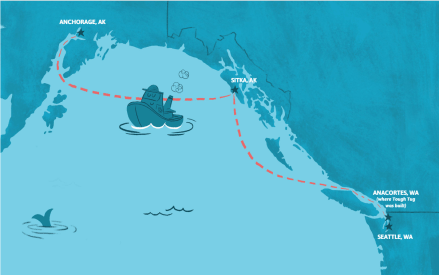
celebrate-picture-books-picture-book-review-tough-tug-map

Rob McClurkan knows that kids love to see how things work and starts the story with a sneak peek into the process of building a tug. In the shipyard, workers—tiny in comparison to Tough Tug—rivet and weld metal plates over an iron framework. In the next spread, Tough Tug is painted, and with a flip of the page, he is launched from a ramp into the sea. McClurken’s cartoon tugs—the older ones sporting mustaches—have expressive faces that register their happiness, fear, annoyance, and acceptance in ways that children will understand and which offer opportunities for discussion. The dark storm that whips the sea into high waves provides just the right amount of suspenseful peril, and as Tough Tug is accepted into the group of older, more experienced tugs, the storm abates and the sun comes out to shine.

Tough Tug would be a welcome book for young readers navigating new places or experiences and for those excited by boats and vehicles at home and in classrooms.

Ages 3 – 7

Two Lions, 2018 | ISBN 978-1503950986

Two Lions sent me a copy of Tough Tug to check out. All opinions are my own.

Discover more about Margaret Read MacDonald and her many books on her website.

To learn more about Rob McClurkan, his books and his art, visit his website.

Run and Race to watch this Tough Tug book trailer!

Read Across America Day Activity

celebrate-picture-books-picture-book-review-tugboat-matching-puzzle

Tugs to the Rescue! Matching Puzzle


The ships below need pulling to their destination. Can you match each tug to its ship in this printable Tugs to the Rescue! Matching Puzzle?


Picture Book Review

March 1 – National Horse Protection Day

celebrate-picture-books-picture-book-review-pony-in-the-city-cover

About the Holiday

Horses have been companion and work animals for people around the world since earliest times. Their beauty, strength, and swiftness are inspiring and are just a few of the reasons that horses continue to be favorites of children and adults alike. Today’s holiday was established in 2005 to raise awareness of horses who need forever families to adopt and care for them. If you have a special place in your heart for horses, consider donating to a cause that protects them—or, if you have the room and the means, think about adopting a horse yourself! 

Pony in the City

By Wendy Wahman


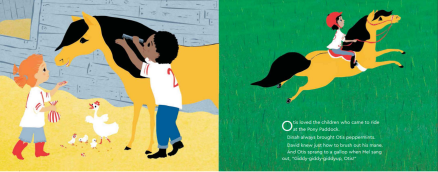
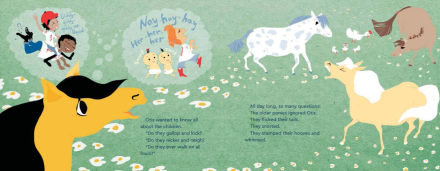
At the Pony Paddock, Otis met many children and he loved them all. He gobbled up the peppermints Dinah brought him, enjoyed having his mane brushed by Daniel, and “sprang to a gallop when Mel sang out, ‘Giddy-giddy-giddyup, Otis!’” While the kids got to see where Otis lived, Otis wondered about their lives. He “wanted to know… ‘do they gallop and kick? Do they nicker and neigh? Do they ever walk on all fours?’”

celebrate-picture-books-picture-book-review-pony-in-the-city-children-ride

Copyright Wendy Wahman, 2017, courtesy of Sterling Children’s Books.

The other horses in the paddock—Mosey, Whinny, and Derby—just shook their manes, stamped their hooves, and snorted when Otis started asking his questions. But Otis couldn’t stop thinking about how things were on the other side of the fence. Did kids “graze on grass and daisies?” Were their “manes brushed and braided?” And how did they sleep? Did they wear cozy blankets and stand in stalls?

celebrate-picture-books-picture-book-review-pony-in-the-city-many-questions

Copyright Wendy Wahman, 2017, courtesy of Sterling Children’s Books.

One day, “saddled with questions,” Otis broke through his enclosure and headed into the city to find some children. He passed an apple orchard where he nibbled a snack, clip-clopped around a fountain, and said hello to some squirrels. He even walked by a group of horses dancing around and around to music. Suddenly, he saw them! The pasture was full of children! Everywhere, they were climbing and swinging and playing.

Otis hid behind trees and watched the kids “galloping and kicking. Nickering and neighing.” He even saw some “walking on all fours.” Otis followed a brother and sister home and was impressed with the sizes of the barns on the street. As he watched them eat their veggies at a table decorated with daisies, he realized they ate just like he did. Through the window of another barn, he saw a little girl having her mane brushed and braided, and a pair of baby twins standing in their stalls clutched their blankets and giggled to see Otis peeking at them.

celebrate-picture-books-picture-book-review-pony-in-the-city-in-the-park

Copyright Wendy Wahman, 2017, courtesy of wendywahman.com.

Otis was getting tired; it was time to go back to Pony Paddock. He clippity-clopped down the street and turned the corner. Then he turned another corner. All the barns looked the same. He trotted down sidewalk after sidewalk, getting hungrier and farther away from home. Cars honked at Otis, headlights blinded him, doormen chased him away, and statues of lions and warriors frightened him. Finally, Otis was so exhausted that he lay down under a blanket of newspapers and fell asleep.

In the morning Otis heard “Clippity, clippity.” Could it be Mosey? He heard “Cloppity, cloppity.” Did Derby or Whinny come looking for him? No! It was Dinah, David, and Mel in their cleats on the way to soccer. They were so surprised to find their friend in the big city. “The children led Otis home with a song: ‘Giddy-giddy-giddyup, Otis!’” When they reached Pony Paddock, the three fed him, brushed him and tucked him in. But did Mosey, Derby, and Whinny let Otis sleep? No! They had so many questions…, and Otis answered them all “one by one. And then some.”

celebrate-picture-books-picture-book-review-pony-in-the-city-otis-can't-sleep

Copyright Wendy Wahman, 2017, courtesy of Sterling Children’s Books.

Wendy Wahman’s truly clever view of children through a pony’s eyes is sure to delight readers. As Otis thinks and wonders about the children who come to ride him, he only has his own experiences to use as reference. When he ventures out into the city, he discovers that he’s right. Wahman’s imaginative interpretation of a playground, meals, haircare, cribs, and even soccer cleats creates “Ah-ha!” moments of amusement while also spurring readers to insight about bigger issues of diversity and inclusion. With a deft wit, Wahman includes plenty of verbal and visual jokes, and puns.

Wahman’s art is always distinctive, and here her smart, sophisticated, and kid-pleasing illustrations are a treat. From the title page—where, while Otis passes a hat shop, his reflection dons a red chapeaux—to the dynamic playground scene, where all types of equestrian behavior are on display to the two-page-spread, lovey blue cityscapes that map out Otis’s route,  Wahman’s collage-style images create a vibrant world.

celebrate-picture-books-picture-book-review-pony-in-the-city-lost

Copyright Wendy Wahman, 2017, courtesy of wendywahman.com

Little details enrich the story and add humor that kids will love to point out: crime scene tape crisscrosses the fence where Otis broke through, a child uses a tree for hiding at the park, just as Otis does, and the babies have horse-themed mobiles above their cribs. Readers will also enjoy following the adorable families of cats and chickens from page to page.

Pony in the City is a cute, endearing ride of a story that will enchant children. The book would make a perfect gift, especially for horse lovers, and would be a favorite on home, classroom, and library bookshelves.

Ages 3 and up

Sterling Children’s Books, 2017 | ISBN 978-1454922322

You can view a portfolio of books and art by Wendy Wahman on her website!

Gallop on over to watch this Pony in the City book trailer!

National Horse Protection Day Activity

celebrate-picture-books-picture-book-review-horse-names-word-search

Just Horsing Around! Word Search Puzzle


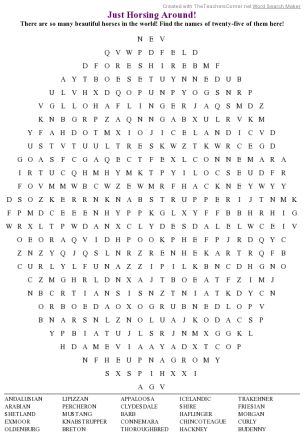
There are so many beautiful horses in the world! You’ll find the names of twenty-five types of them in this printable Just Horsing Around! Word Search Puzzle.

Just Horsing Around! Word Search PuzzleJust Horsing Around! Word Search Solution

Picture Book Review


Picture Book Review
February 28 – It’s National Bird-Feeding Month

celebrate-picture-books-picture-book-review-bird-builds-a-nest-cover

About the Holiday

As birds begin coming back to your area during this last bit of winter to build nests, mate, and hatch little cheepers, they still need help finding nutritious food to sustain them. Without the lush vegetation and increased insect activity that will come with warmer weather, birds often rely on backyard feeders for food. Attracting colorful birds to your home can be a rewarding and joyful hobby – one you can enjoy year-round. If you’ve been considering hanging a bird feeder to one of your trees, today is the perfect day to get started!

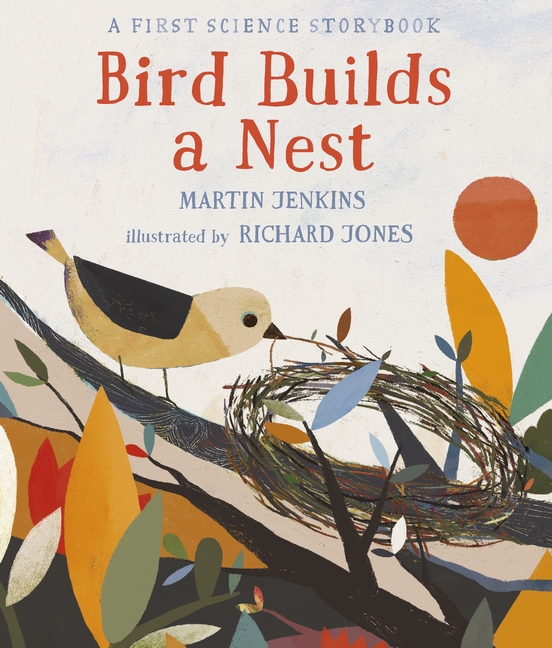
Bird Builds a Nest: A First Science Storybook

Written by Martin Jenkins | Illustrated by Richard Jones


It’s early morning and Bird is already chirping. It’s going to be a busy day! To get started she needs breakfast. Of course, “what she wants is a nice, juicy…worm.” What the worm wants, though, is to not be eaten. So while “bird pulls hard…the worm pulls back.” This is one strong worm, and it ends up winning the tug-of-war. Nearby, though, is a smaller and weaker worm that is just as delicious.

celebrate-picture-books-picture-book-review-bird-builds-a-nest-bird-in-nest

Image copyright Richard JOnes, 2018, text copyright Martin Jenkins, 2018. Courtesy of Candlewick Press.

Full and satisfied, Bird takes off on her next task. She needs to find twigs. “Lots of twigs.” The first one she finds is more like a branch to the little bird—and is too heavy. The next one is as long as a snake and too heavy too. But there are plenty of perfectly small twigs scattered around, so Bird gets to work. She “can carry one large twig or two medium-size twigs or three or four small twigs (although it’s hard to fit that many in her beak at once).”

What is Bird doing with all of these twigs? Building her nest, of course! It takes time to arrange the twigs she brings back to the branch of her tree. “Carefully, she pushes a twig into the side of the nest and pulls its end back out.” As if weaving a basket, Bird intertwines more and more sticks, making her nest strong. It takes hours to complete her new home. Once in a while a twig falls or she drops one, but there are plenty more to find.

celebrate-picture-books-picture-book-review-bird-builds-a-nest-worm

Image copyright Richard JOnes, 2018, text copyright Martin Jenkins, 2018. Courtesy of Candlewick Press.

Once the twigs are all in place, Bird searches for soft material to line it. She gathers dried grass and feathers. These are so light that it’s easy to carry a lot at one time. Back in her nest she places the grass and feathers inside and “turning around and around, pushing with her whole body, she makes a snug little cup, smooth and soft on the inside.” Now the nest is comfy and all ready for…the five little eggs that are waiting to hatch!

Bird Builds a Nest is a First Science Storybook for young readers that, while showing how birds build nests also demonstrates various scientific forces. As kids see the baby birds emerge from the nest for the first time, they can also answer a few questions in the Afterward that prompt them to think about pushing and pulling, moving light and heavy objects, and the force of gravity. An Index reveals where in the text these forces can be found.

celebrate-picture-books-picture-book-review-bird-builds-a-nest-making-it-soft

Image copyright Richard JOnes, 2018, text copyright Martin Jenkins, 2018. Courtesy of Candlewick Press.

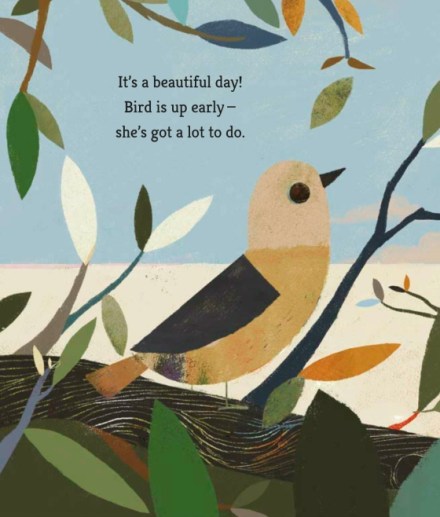
Spying a nest in a tree, eave, or other tucked-away space is like finding a secret, and is one of the joys of spring. Martin Jenkins’ delightful day out with Bird gives kids…well…a bird’s eye view of the nest-building process. Just like an artist, this sweet, industrious feathered friend gathers her materials and sets to work to make her instinctual vision come true. Jenkins’ step-by-step description is conversational and homey with words such as snug, tuck, fetching, and twigs that lend themselves to the charming alliteration that gives the story a poetic sound and feel.

Richard Jones’ mixed-media illustrations sing with beautiful folk-art inspired scenes of Bird gathering her material and creating her nest. Softly vibrant earth tones of autumn and spring accentuate Bird’s quiet and solitary endeavor. Bird is bright-eyed and cheerful as she flies back and forth carrying twigs and arranging them just so—activities that are clearly shown for budding scientists to see and understand. Readers will enjoy finding small details here and there—a mouse in a tree hole, a tiny ladybug, hearts in the swirls of the tree bark and formed by leaves, and even a bit of foreshadowing of the eggs to come. The male and female bird cuddle together in the finished nest as two ladybugs find each other under a purple heart, and the little chicks venturing out for the first time will enchant children.

Bird Builds a Nest wonderfully weaves together facts and a sweet story to introduce young readers to one particular natural phenomenon and some of the scientific forces involved. The captivating story would be a terrific addition to home libraries and classroom bookshelves for discussions about the natural world.

Ages 4 – 6

Candlewick Press, 2018 |ISBN 978-0763693466

To learn more about Richard Jones and view a portfolio of his art, visit his website.

National Bird-Feeding Month Activity

celebrate-picture-books-picture-book-review-let's-go-birding-word-search

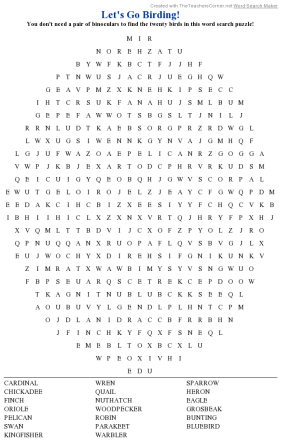
Let’s Go Birding! Word Search Puzzle


When you put up a bird feeder in your yard, you’ll see so many different types of birds come to visit! Find the names of twenty types of birds in this printable Let’s Go Birding! Word Search Puzzle.

Let’s Go Birding! Word Search Puzzle | Let’s Go Birding! Word Search Solution

Picture Book Review

February 27 – National Strawberry Day

celebrate-picture-books-picture-book-review-the-little-mouse-the-red-ripe-strawberry-and-the-big-hungry-bear-cover

About the Holiday

It may still be cold where you live, but delicious fresh, red strawberries will be available soon, bringing with them the taste of summer. Strawberries are grown in all parts of the world except the most frigid areas and are enjoyed alone or in delectable treats. To celebrate today, check out the strawberry offerings—either fresh or frozen—at your store and create a special snack!

The Little Mouse, the Red Ripe Strawberry, and the Big Hungry Bear

Written by Don and Audrey Wood | Illustrated by Don Wood


It’s quite curious what Mouse might be doing with that ladder at this time of day. In fact, it might be worth asking. “Hello little Mouse. What are you doing?” Ah! It seems that beyond the hammock and the huge gnarled tree, there’s a strawberry plant. And on that strawberry plant is an enormous strawberry. Mouse seems very pleased with himself that he’s found it and has the ladder set up to pick it.

celebrate-picture-books-picture-book-review-the-little-mouse-the-red-ripe-strawberry-and-the-big-hungry-bear-oops

Copyright Don Wook, 1984, courtesy of Child’s Play.

But there is some disturbing news. Even though Mouse is half way up the ladder, it might just be good to ask if he’s heard about “the big hungry Bear.” His shocked reaction would say he hasn’t. Maybe it would be good to emphasize just “Ohhh, how that Bear loves red, ripe strawberries.” The Mouse wants to protect his find, but there’s no time to lose. After all that Bear “can smell a red, ripe strawberry a mile away….”

celebrate-picture-books-picture-book-review-the-little-mouse-the-red-ripe-strawberry-and-the-big-hungry-bear-disguised

Copyright Don Wook, 1984, courtesy of Child’s Play.

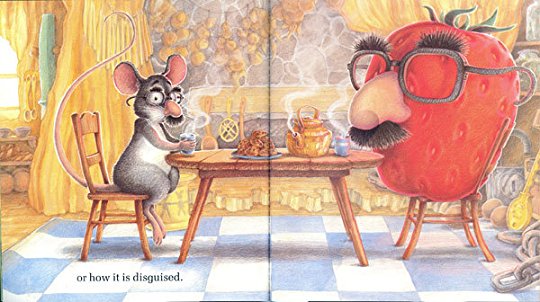
Oh! The Mouse already has the strawberry off the stem. Well, this does pose a problem. You see, that only helps the Bear smell it more easily. Run, little Mouse! That Bear will soon be tromping through the forest on his huge feet with his huge appetite and find that strawberry. Burying it won’t help. Putting it under lock and key won’t help. And there’s no disguise the Bear can’t see through.

In fact… “There’s only one way in the whole wide world to save a red, ripe strawberry from a hungry Bear!” That’s right, so…get a knife… and… “cut it in two.” Then “share half with me. And we’ll both eat it all up!” And the Bear? Well, he’ll have to find another red, ripe strawberry.

celebrate-picture-books-picture-book-review-the-little-mouse-the-red-ripe-strawberry-and-the-big-hungry-bear-eating

Copyright Don Wook, 1984, courtesy of Child’s Play.

This classic story by Don and Audrey Wood was a favorite in my house and continues to excite gasps and giggles in kids today. The enticing storyline, teased along through innocent-sounding questions and “helpful” suggestions, leads to a twist ending that begs the question: Was there ever really a bear? Young readers will be thrilled to discover that they, too, get to share in that delicious red, ripe strawberry.

celebrate-picture-books-picture-book-review-the-little-mouse-the-red-ripe-strawberry-and-the-big-hungry-bear-mouse

Don Wood’s pleased-as-punch, surprised, worried, hurried, and ultimately satisfied Mouse is the star of the story and as cute as his readers, although the strawberry, dressed up in a glasses-and-moustache disguise, may get the biggest guffaw. The forest, with its gnarled trees and overhanging vegetation, offers a suspenseful obstacle course for the fleeing Mouse, and the Mouse’s home is a cozy spot for a snack.

A perfect book to jump-start gardening with kids, as a take-along on outings, as a lead-in to snack time, or for any spirited story time at home or in the classroom, The Little Mouse, the Red Ripe Strawberry, and the Big Hungry Bear is a perennial charmer.

Ages 2 – 5

Child’s Play, 1984 | ISBN 978-0859530125 (Paperback); 978-0859531825 (Hardcover, 1997); 978-1846434037 (Board book, 1998); 978-1846434051 (English/Spanish edition, 2011)

To learn more about Don and Audrey Wood and all of their books, plus find activities, secrets, and more, visit their website.

National Strawberry Day Activity

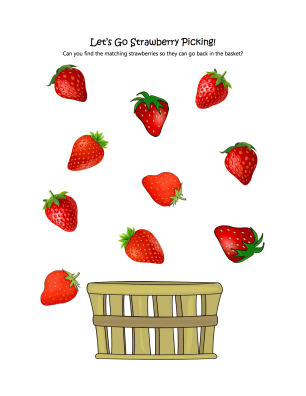
celebrate-picture-books-picture-book-review-let's-go-strawberry-picking

Let’s Go Strawberry Picking! Matching Puzzle


It’s strawberry-picking day! Can you match pairs of strawberries before you put them in the basket in this printable Let’s Go Strawberry Picking! Matching Puzzle.

Picture Book Review

February 26 – National Tell a Fairy Tale Day

celebrate-picture-books-picture-book-review-la-princesa-and-the-pea-cover

About the Holiday

Today, we remember that fairy tales often have their origin in the oral stories, myths, and legends of long ago. In addition to entertainment, their purpose was to teach a lesson, change behavior, or warn of dangers. Over the years magical elements and mystical creatures were added to the stories. The Brothers Grimm published their collection of stories in 1812 under the title Household Tales. The plots were darker and meant for more of an adult audience. Hans Christian Andersen’s work was first published in 1829. Through him, readers were introduced to The Ugly Duckling, The Little Mermaid, and today’s story. Over the years, fairy tales have evolved to include “fractured” versions—tales told by another character or with a funny or quirky twist. To celebrate today, reread some of your and your child’s favorite fairy tales—and discover some new ones!

La Princesa and the Pea

Written by Susan Middleton Elya | Illustrated by Juana Martinez-Neal


“There once was a prince who wanted a wife, / but not any niña would do in his life.” His madre demanded just the right sort of girl and said “No!” to all the princesses who wanted to catch the prince’s eye. But then along came a girl riding home to her castle who asked to stay “if it isn’t a hassle.” The girl winked at the prince and he was immediately smitten.

celebrate-picture-books-picture-book-review-la-princesa-and-the-pea-the-courtyard

Copyright Juana Martinez-Neal, 2017, courtesy of juanamartinezneal.com.

The prince invited her in, but his mother planned to test her to make sure she was “buena.” So “Mama crept away / to the royal jardín / and found a small pea / that was fit for a queen.” She went up to the guest room and called for twenty mattresses to be brought in. Then while she ate bon-bons, her workers carried the colchones in. The first mattress was soft, the second was small, the third was muy grande, and the fourth was un sueño—as comfy as a dream. Then came striped ones and dotted ones and ones that were fleece. There were red ones and blue ones and ones that were gris.

celebrate-picture-books-picture-book-review-la-princesa-and-the-pea-the-prince

Copyright Juana Martinez-Neal, 2017, courtesy of juanamartinezneal.com.

When the twenty mattresses were piled high on the bed, Mama showed the girl to her room. Seeing the soft bed, she said, “‘Thanks! I won’t even count sheep.’” But under the first mattress way down below sat the small pea. “Meanwhile el príncipe practiced ‘I do’s.’ / He knew that this maiden was the one he should choose.” But when he told his mama how much he liked the girl, she just said, “‘we’ll see.’”

In her room, “the girl stretched her brazos / and yawned with her boca. / But the bed felt so lumpy / like there was a roca.” That tiny pea—that little guisante—could that be the reason she just could not sleep? In the morning the maiden dragged herself down to breakfast, and when Mama asked how she’d slept, she answered, “‘Great…if you like hard and lumpy.’” But when she spied the prince, she cheered up and said, “‘it wasn’t that bad.’”

celebrate-picture-books-picture-book-review-la-princesa-and-the-pea-the-queen

Copyright Juana Martinez-Neal, 2017, courtesy of juanamartinezneal.com.

“‘¡Ay!’” Thought la reina. / How’d she detect it? / Is she a real princess? / I think I suspect it.” When the prince learned that the girl had passed the test, he gave her a golden anillo, and they married “that week in the royal castillo.” The wedding was huge and the girl’s dress most stylish. With “‘¡acepto!’” “‘¡acepto!’” they were quickly wed. And only the prince knows to this very day that he helped things along by adding “pitchforks and stones en la cama / to help his true love pass the test of Queen Momma.” The prince and the princess “had hijos galore. / One for each mattress and then had no more.”

celebrate-picture-books-picture-book-review-la-princesa-and-the-pea-the-kids

Copyright Juana Martinez-Neal, 2017, courtesy of juanamartinezneal.com.

Susan Middleton Elya’s Latin-inspired take on The Princess and the Pea story is fresh and funny and puts control of the prince’s future in his own hands. Young readers will embrace this twist that shows when they know what is right for them, they can make it happen. The use of Spanish words throughout the story, and especially to create clever rhymes, make the verses as joyful to read aloud as they are to hear.

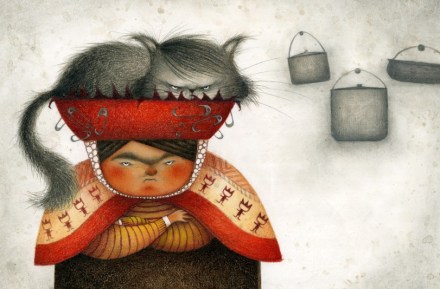
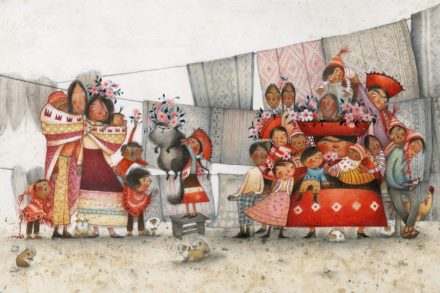
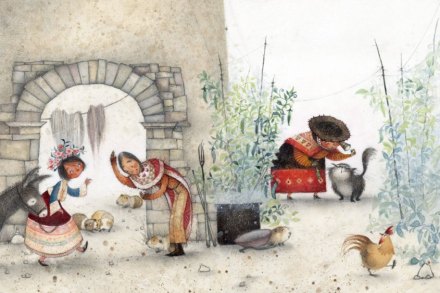
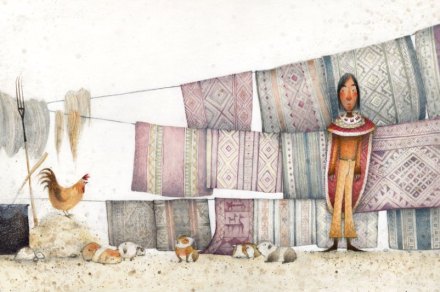
Juana Martinez-Neal’s warm colors and beautifully patterned clothing, inspired by Peruvian textiles, infuses this favorite story with a homey and family-centered, folk-tale feeling that sets it apart. Readers will be charmed by the llamas, guinea pigs, and even the grumpy cat that inhabit the castle and will want to linger over the softly colored illustrations to see every detail. The sweet looks between the prince and princess show their true love, and among their twenty children, readers may find la reina’s favorite(?) grandchild.

La Princesa and the Pea is a terrific addition to children’’s fairy tale book collection at home and in the classroom.

Ages 4 – 8

G.P. Putnam’s Sons Books for Young Readers, 2017 | ISBN 978-0399251566

Discover more about Susan Middleton Elya and her books on her website.

To learn more about Juana Martinez-Neal, her books, and her art and find lots of fun story-related activities visit her website.

National Tell a Fairy Tale Day Activity

celebrate-picture-books-picture-book-review-castle-coloring-page

Fairy Tale Coloring Pages


What’s a fairy tale without a castle and maybe a dragon or two? Have fun coloring these pages, then make up your own story!

Fairy Tale CastleHappy Dragon

Picture Book Review
February 25 – It’s Bake for Family Fun Month

celebrate-picture-books-picture-book-review-chow-mein-and-potstickers-cover

About the Holiday

During the month of February, family and friends are encouraged to get together and have fun baking. Making sweet treats and savory dishes that come out hot and delicious from the oven is a wonderful way to spend time together, try new recipes, and learn new skills. This month is also a great time to explore foods and cuisine from other countries!

Chow Mein and Potstickers

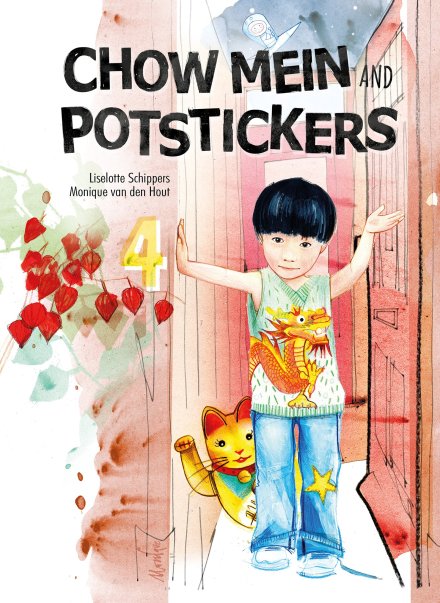
Written by Liselotte Schippers | Illustrated by Monique van den Hout


A little boy named Chan has just moved here from China and is hoping to make new friends. He tells a little about himself: “I moved to this country with my father, / my mother and my sister. / My mother is starting a new job here. / She’s an astronaut and someday she’ll go to the moon!” He reveals that his favorite food is potstickers and chow mein. He’s just about to go door-to-door to meet his neighbors. He wonders if kids here like to play and how “things work around here.”

Next door at Number 6, Chan meets Mila, who is from Bosnia. Chan thinks “she looks like a princess from a country far away.” Chan and Mila play soccer until they “get tired and hungry!” Then they eat Mila’s “favorite dish / Bosnian ćevapĉići—rolls of ground / meat.” At the end of the day, they say goodbye: “‘Zàijiàn!’” and “‘Doviđenja!’”

The next day Chan meets Rani, who was born in Indonesia. Even though Rani is younger, Chan says that “you can tell he is very wise. / Rani’s father is a famous musician. / He has to travel a lot, touring with his band. / His mother works at the hospital and helps people who are sick.” Rani shows Chan how to play marbles. Afterward, they enjoy Rani’s “favorite foods: satay and kroepoek. / That’s meat on a stick and shrimp crackers.” Later, they wave good-bye and say: “‘Zàijiàn!’” and “‘Sampai jumpa!’”

Across the street lives a little girl named Jamila, who is originally from Afghanistan. “‘Salaam!’” she greets Chan. Jamila plays the guitar, and the two sing and dance along. Chan says: “After a while we get tired and hungry. / Jamila and I eat Afghan qabuli—rice and lamb. / That brings us to the end of our day. / As we wave good-bye, we say: “‘Zàijiàn!’” and “‘Khodahafez!’”

Twins Kim and Coen live at Number 10. They are from Belgium. “Their father is a master chocolatier. That means he / makes fancy chocolates. When he is working, the house / smells wonderful. / Their mother sells the chocolates in a  / special shop. We get to try some. I’ve never tasted / anything so delicious!” After roller skating, they eat frietjes, which are like French fries served with mayonnaise. “‘Zàijiàn!’” and “‘Tot ziens!’”

In the tall yellow house next to the church on Chan’s street, Chan meets Basu, who came here from South Africa. His mother is a minister and his father is a fireman. Chan thinks that maybe he’d like to be a fireman too when he grows up. “Basu loves to paint and draw.” He and Chan “get busy with brushes, paints and pens.” When their “masterpiece is finished,” Chan says, “We have paint splatters on our clothes and in our hair!” All that creating has made them “tired and hungry.” They “eat South African bobotie… / a dish made with seasoned ground meat.” Before Chan goes home, the boys say:  “‘Zàijiàn!’” and “‘Totsiens!’”

Chan is excited to discover that his street is full of other children to play with. In other homes live Ania from Poland, Nuray from Turkey, Clifton from Suriname, Gracy from England, and Nino from Italy. On one special day, Chan invites all of his new friends to go to the playground with him, and Chan’s father brings chow mein and potstickers for everyone to enjoy. At the end of the day, the air rings with each child’s special way of saying “good-bye.”

Liselotte Schippers free verse poetry opens the door to a world of children for young readers. Each poem gives children the kind of information they want to know about kids from around the world. What do they like to do? What are their families like? What do they eat? Every poem includes the words “hello” and “good-bye” in the native language of the child as well as a favorite dish from each country. Little Chan makes a delightful and enthusiastic tour guide to his multicultural neighborhood, and shows young readers that even though people may come from different countries, their dreams, desires, games, and even jobs are the same. The country that Chan has moved to is never named, making “here” everywhere.

Monique van den Hout’s beautiful illustrations combine the ethereal with realistic portrayals of the happy, bright-eyed children that Chan meets in his neighborhood. Each poem is presented on a two-page spread in which Chan and his new friend are surrounded by colorful images of symbols from that child’s native country. Following each poem, a short dictionary defines and gives a pronunciation guide to the greetings and food introduced.

Chow Mein and Potstickers is an enticing introduction to the global community for children. Each poem could be used to spark more discovery about the countries presented and their children. The book’s inclusion of languages and foods makes it a perfect addition to school, classroom, and homeschool libraries for social studies units as well as a fun book for personal bookshelves.

Ages 4 and up

Clavis, 2017 | ISBN 978-1605373287

Discover more about Liselotte Schippers and her books on her website.

Learn more about Monique van den Hout, her books, and her art on her website.

Bake for Family Fun Month Activity

celebrate-pictureb-books-picture-book-review-Kids-Baking-Cake-in-Cooking-Show-Bakery-Coloring-Pages

Let’s Bake Together Coloring Page


It’s fun for friends to create new recipes or just cook up some favorite treats! Have fun with this printable Let’s Bake Together Coloring Page!

Picture Book Review
February 24 – It’s National Haiku Writing Month

celebrate-picture-books-picture-book-review-guess-who-haiku-cover

About the Holiday

Great things come in small packages, right? Just look at the amazing kiddos in your family! It’s the same with poetry! The haiku may be the smallest form of poetry, but it packs in huge heart and emotion. Traditionally written to express awe at the natural world, haiku now touches on every subject with its poignancy. Poets the world over have designated this month to create new haiku, improve their art, and share their work. To celebrate this month, try your hand at writing haiku and introduce your littlest readers to these little verses.

Guess Who, Haiku

Written by Deanna Caswell | Illustrated by Bob Shea


Down on the farm the animals are playing games and they invite readers to join in the fun! Combining poetry with a guessing game, this cute book introduces younger children to haiku. On each page an animal presents a riddle about another animal in the form of a haiku. When readers turn the page, they discover the answer to the riddle as well as another one to solve.

celebrate-picture-books-picture-book-review-guess-who-haiku-cow-haiku

Image copyright Bob Shea, text copyright Deanna Caswell. Courtesy of Harry N. Abrams Books

As morning dawns the first haiku reveals: “new day on the farm / muffled mooing announces / a fresh pail of milk.” Then kids are asked, “Can you guess who from this haiku?” Flipping the page, kids see a smiling cow who in turn has a haiku for them: “flower visitors / busy buzzing in the field / black and yellow stripes.”

Other animals familiar to kids—a horse, bird, fish, mouse, cat, dog, and this guy: “from a lily pad / keen eyes spy a careless fly / a sticky tongue—SNAP!”— also puzzle over each other from page to page. The final haiku describes an animal like no other: “two hands hold a book / guessing animals’ puzzles / written in haiku.” Who can it be? Kids will giggle and beam when they discover that they too are in the book!

celebrate-picture-books-picture-book-review-guess-who-haiku-cow-haiku

Image copyright Bob Shea, text copyright Deanna Caswell. Courtesy of Harry N. Abrams Books

Deanna Caswell’s Guess Who, Haiku is a fun way to get kids interacting with poetry and the very accessible haiku form. Her clever riddles contain lovely images and lyrical alliteration that make these poems as enjoyable to read as they are to hear.

Bob Shea’s animals are adorably illustrated on vibrant solid-colored backgrounds, and each haiku is accompanied by an image that helps kids guess the answer to the riddle. The text and illustrations work together to make Guess Who, Haiku a wonderful way to spend time with kids—who, after reading, may want to make up some poems of their own!

Ages 3 – 6

 Harry N. Abrams, 2016 | ISBN 978-1419718892

Check out a gallery of work by Bob Shea on his website!

National Haiku Writing Month Activity

CPB - Animal Matching Cards

Animal Pairs Matching Game


You can have fun testing your powers of guessing with this cute Animal Pairs Matching Game!

Supplies

Directions

  1. Print the Animal Pairs Cards, print two pages to have double cards. To make the game more difficult print 3 or more pages to find 3 or more groups of matching animals
  2. Color the cards
  3. Cut out the cards
  4. Lay the cards face down on a table in random order
  5. Turn over cards to look for matching pairs
  6. When you find a matching pair leave the cards face up
  7. Continue playing until you find all the matching animal pairs or groups

Picture Book Review