October 28 – National Immigration Day

Today’s holiday celebrates the uniqueness of our “melting pot” culture and our tradition of welcoming those seeking a new and better life of opportunity. Most of America’s citizens can look back on a history of immigration, especially during the 19th century, when famine, oppression, and political upheaval threatened people’s lives and livelihoods. To honor today’s holiday, talk with your kids about your family’s history.

Thank you to Apples & Honey Press for sending me this book for review!

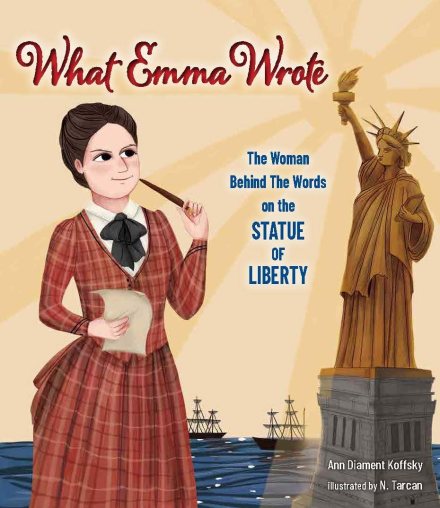
What Emma Wrote: The Woman Behind the Words on the Statue of Liberty

Emma Lazarus was a born writer, penning stories, poems, and essays wherever she went. Her parents were so proud of her that they bound her work into a book for family and friends, but so many people wanted one that they had to print more copies. While Emma was happy with this accomplishment, she was also looking for new ideas. Then one day Emma heard a group complaining about the “many people who had recently moved to New York from other countries.” Emma thought about her own family, who had come from Brazil many years ago after the king made it illegal to be Jewish.
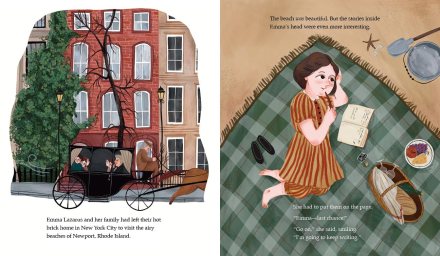
Illustration copyright © 2026 by N. Tarcan. Text copyright © 2026 by Ann Diament Koffsky. Published by Apples & Honey Press copyright © 2026.

Emma wondered about the new immigrants’ stories and decided to talk to them herself. “She went to Wards Island, where many new immigrants lived.” She met a mother from Russia with young children and others who had come to America after their homes were burned because they were Jewish. Emma began helping this community, bringing them food and clothing and helping to set up a trade school to help them find work.
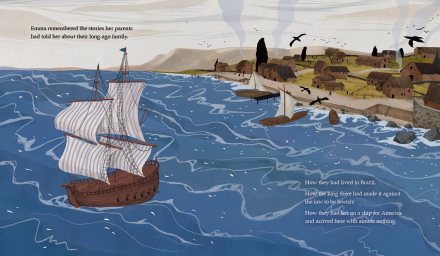
Illustration copyright © 2026 by N. Tarcan. Text copyright © 2026 by Ann Diament Koffsky. Published by Apples & Honey Press copyright © 2026.

When Emma read an article in a popular magazine blaming the immigrants for their plight, she went to the magazine’s editor, who told her to write a rebuttal. Her first article led to many more, and soon these were changing people’s minds and conversations about the immigrants. Now, people wanted to help them and accept them as their own. Her work became so well-known that Emma was asked to write a poem about the Statue of Liberty. Emma imagined what the statue would say to those “who traveled so far to come to America,” and pictured her as a “mother, welcoming her children home.” She began to write: “Give me your tired, your poor, / Your huddled masses yearning to breathe free . . .”
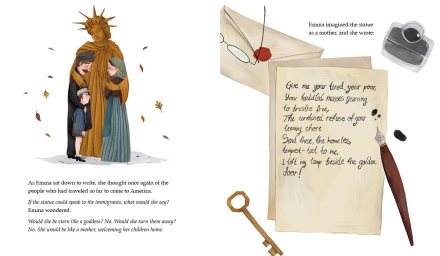
Illustration copyright © 2026 by N. Tarcan. Text copyright © 2026 by Ann Diament Koffsky. Published by Apples & Honey Press copyright © 2026.

People loved Emma’s poem, and “it inspired them to love the statue, too.” When her pedestal and the Statue of Liberty were finally settled in New York Harbor, the celebration attracted more than a million people. In the ensuing years, millions of people have traveled through New York Harbor to make America their home. Emma’s poem, “carved into a metal plate inside the statue’s base” welcomes each of them “with kindness.”

Back matter includes an Author’s Note about immigration in the 1800’s to early 1900’s and today, as well as the story of her own family’s immigration to America; facts about the Statue of Liberty; and a discussion of the deep connection between Emma and the Statue along with the text of Emma’s sonnet, “The New Colossus.”
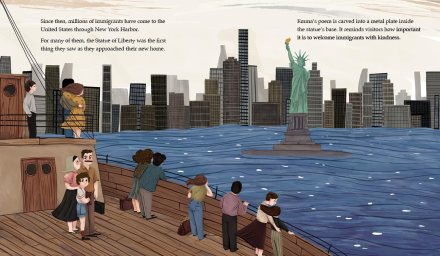
Illustration copyright © 2026 by N. Tarcan. Text copyright © 2026 by Ann Diament Koffsky. Published by Apples & Honey Press copyright © 2026.

Ann Diament Koffsky reveals Emma Lazarus as a profound thinker and writer with a big heart even from a very young age, who, instead of relying on hearsay and the voices of prejudice, sought the truth by talking to the immigrants herself and then acting on their behalf. Through her poignant use of Emma’s thoughts, various characters’ dialogue, and Emma’s family’s and other immigrants’ stories, Koffsky provides readers with an understanding of the underpinnings of immigration. Her compelling, well-paced prose will keep children riveted to the story and prompt them to want to learn more about their own family’s history of coming to America. Koffsky’s excellent portrayal of the impact of journalism on people’s opinions opens doors to discuss today’s communication methods.

N. Tarcan’s stunning illustrations of New York during the mid to late 1800s allow readers to experience the customs and lifestyle of Emma’s world during this period. Tarcan contrasts this with an image of the village in Brazil from which Emma’s ancestors escaped. Children see the trade school Emma established as well as her determination to help the immigrants on Wards Island and elsewhere. An image of the Statue of Liberty embracing an immigrant family is particularly moving and exemplifies Emma Lazarus’s warmhearted welcome to all.

What Emma Wrote: The Woman Behind the Words on the Statue of Liberty is a must for all public and school libraries and would be an inspiring and impactful addition to any home collection.

Ages 4 – 8

Apples & Honey Press, 2026 | ISBN 978-1681157191

About the Author

Ann D. Koffsky is an award-winning author and illustrator of more than thirty books for children, including The Peddler and the President, the Kayla and Kugel series, What’s In Tuli’s Box?, Under-the-Sea Seder, and Noah’s Swimathon, all published with Apples & Honey Press. She lives in West Hempstead, New York. Visit her at annkoffsky.com.

About the Illustrator

N. Tarcan is a Turkish illustrator. She studied photography at Yildiz Technical University, but life had other plans! One day, she was taking photos of a local circus and the next thing she knew, she was performing with them and traveling around the world—from Qatar to Georgia and beyond. When COVID hit, she decided to return to her first love: drawing. Today, she draws inspiration from the small details of everyday life. She lives in Namur, Belgium. Follow her on Instagram.

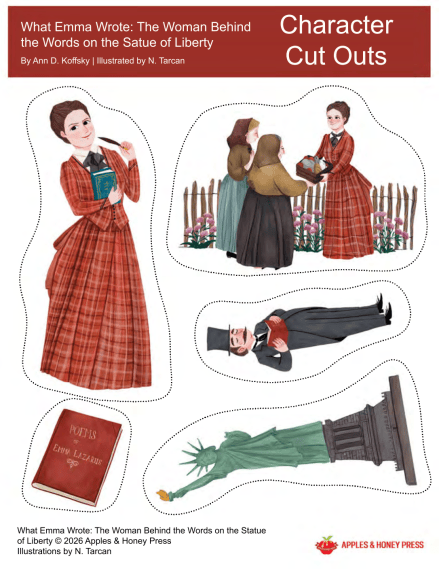
You can find a detailed Reading Guide to What Emma Wrote with discussion questions, extension activities, coloring pages, character cut outs, and more on the Apples & Honey Press and Behrman House website and here.
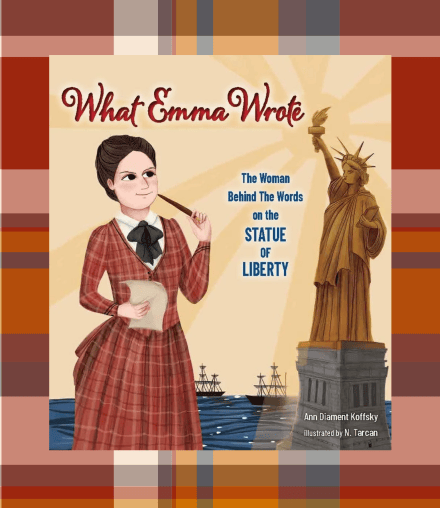
You can purchase What Emma Wrote: The Woman Behind the Words on the Statue of Liberty from these booksellers

Amazon | Barnes & Noble | Bookshop

September 2 – Friendship Month

Friendship Month has been celebrated ever since the Oddfellows organization was established in England in the 1730s. Their official title is The Grand Order of Oddfellows Friendly Society (or GUOOFS), and it is an international organization dedicated to philanthropy, charity, and, of course, friendship. All month long people are encouraged to spend more time with their friends, get in touch with those they haven’t seen or talked to in a while, and to reach out to others who are alone or need a friend. As school gets underway, there are plenty of opportunities for kids to meet new people and form friendships – some of which may last a lifetime.

Thank you to Charlesbridge and Barbara Fisch at Blue Slip Media for sending me this book for review!

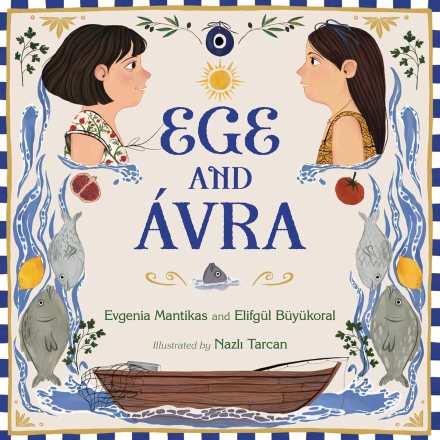
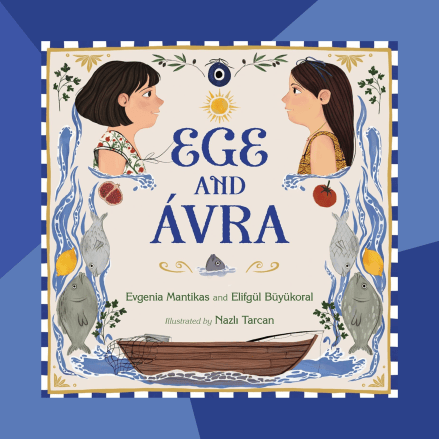
Ege and Ávra

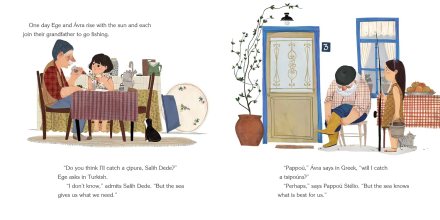
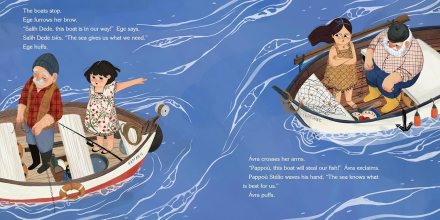
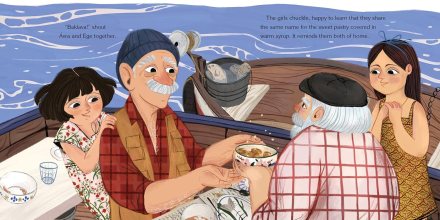
Ege, who lives on the east side of the Aegean Sea in Türkiye, is going fishing with her grandfather. “‘Do you think I’ll catch a çipura, Salih Dede?'” she asks. He doesn’t know, he tells Ege and adds “‘but the sea gives us what we need.'” A short way away on the west side of the Aegean Sea in Greece, Ávra asks her grandfather, “‘Pappoú, will I catch a tsipoúra?'” He answers “‘Perhaps. But the sea knows what is best for us.'” As the girls and their grandfathers steer their boats into fishing waters, they come upon each other in close proximity. Ege complains that Ávra’s boat is in their way, while Ávra fears Ege will steal their fish. Both grandfathers repeat their wisdom from the morning.

Illustration copyright © 2026 by Nazlı Tarcan. Text copyright © 2026 by Evgenia Mantikas and Elifgül Büyükoral. Published by Charlesbridge copyright © 2026.

As Ege and Ávra cast their fishing lines, they get hopelessly tangled. They pull and wrestle with their poles until Ege is thrown into a bucket and Ávra finds herself wrapped in a net. The two girls lock eyes while their grandfathers erupt in laughter. The girls laugh too, then, and introduce themselves, overcoming their language barrier by placing a hand over their heart as they say their name. Ávra offers Ege the corner of a net, and together they cast it into the sea.

It doesn’t take long before a school of fish swim into the net. With excitement, Ege shouts, “‘çipura!'” “‘Tsipoúra!'” Ávra cries. They stare at each other in awe; “their words for the fish sound the same!” Aboard their respective boats, Ege and Dede and Ávra and Pappoú cook lunch with some of the fish they’ve caught, spices, lemon, and vegetables. They gather on Pappoú’s boat, giving thanks before they begin. Afterward, there’s dessert—a favorite of everyone.

Illustration copyright © 2026 by Nazlı Tarcan. Text copyright © 2026 by Evgenia Mantikas and Elifgül Büyükoral. Published by Charlesbridge copyright © 2026.

Too soon, it’s time for each family to return home. Ege and Ávra wave goodbye “until they both disappear into the horizon,” each believing that they will meet again. As the two girls drift off, with the sea air gently lulling them to sleep, they whisper “Good night” to the new friend they each made.

Back matter includes an Authors’ Note relating how Evgenia Mantikas and Elifgül Büyükoral met and became friends in college; a brief history of the clash between Türkiye and Greece, a map, and a glossary of Turkish and Greek terms in the story.

Illustration copyright © 2026 by Nazlı Tarcan. Text copyright © 2026 by Evgenia Mantikas and Elifgül Büyükoral. Published by Charlesbridge copyright © 2026.

As children meet Ege and Ávra and their grandfathers at home and on their boats, they are privy—through visual and textual clues—to something neither girl yet knows: how similar they are. Instantly, readers become invested in how their meeting will play out, starting as it does with suspicion and grumbling. Throughout their story, Evgenia Mantikas and Elifgül Büyükoral beautifully use metaphor, humor, and lyrical prose to bring the two families together in the universal languages of laughter, food, and shared experiences. Büyükoral and Mantikas imbue their lovely, simple storytelling with true surprise and delight that will captivate both children and adults.

Children will eagerly linger over Nazlı Tarcan’s beautiful and evocative illustrations to point out the similarities between the girls as well as their grandfathers. Even the boats boast commonalities. Tarcan’s gorgeous color palette and expressive portraits suffuse her pages with feelings of camaraderie and peace. You can almost feel the sea breeze and smell the aromas wafting from the impromptu meal, and as the girls wish each other “Good night,” their wistful faces will fill readers hearts with hope.

A poignant and uplifting read aloud for meaningful story times, Ege and Ávra is a must for all public and school libraries and would be an exceptional addition to any home bookshelf.

Ages 4 – 8

Charlesbridge, 2026 | ISBN 978-1623546670

A third generation Greek American, Evgenia Mantikas grew up immersed in her family’s culture. She visited Xios every summer, reading for hours on the beach. Evgenia’s love for stories grew as she studied creative writing and received her BA and MA in English literature. After teaching ELA for two years, Evgenia returned to school and earned her MFA from Simmons University and uses her voice to tell cultural stories about family. You can visit her at evgeniamantikas.com.

Elifgül Büyükoral was born and raised in Türkiye, where her close-knit family nurtured her love for books. Elifgül delved into the world of literature and language when she earned her BA in ESL. Fueled by her passion for storytelling, Elifgül moved to the United States to receive her MA in children’s literature from Simmons University. Elifgül writes stories that shine light on her heritage and Islamic faith, hoping to amplify diverse voices. Follow her on Instagram.

Nazlı Tarcan is a Turkish artist and illustrator based in Namur, Belgium. After studying illustration in high school, she studied photography at one of Türkiye’s most prestigious fine art universities, Yildiz Technical University. Midway through her studies, she followed her creative call and ran away with the circus, performing for ten years, traveling through Qatar, Georgia, Tajikistan, Greece, France, Poland, and many other countries. As an artist, she takes inspiration from the tiny details of everyday life. Visit her at nazlisillustrations.com.

celebrate-picture-books-picture-book-review-give-me-your-hand-puzzle

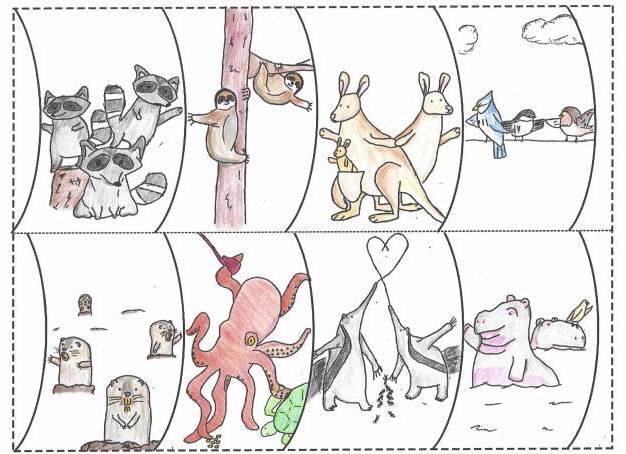
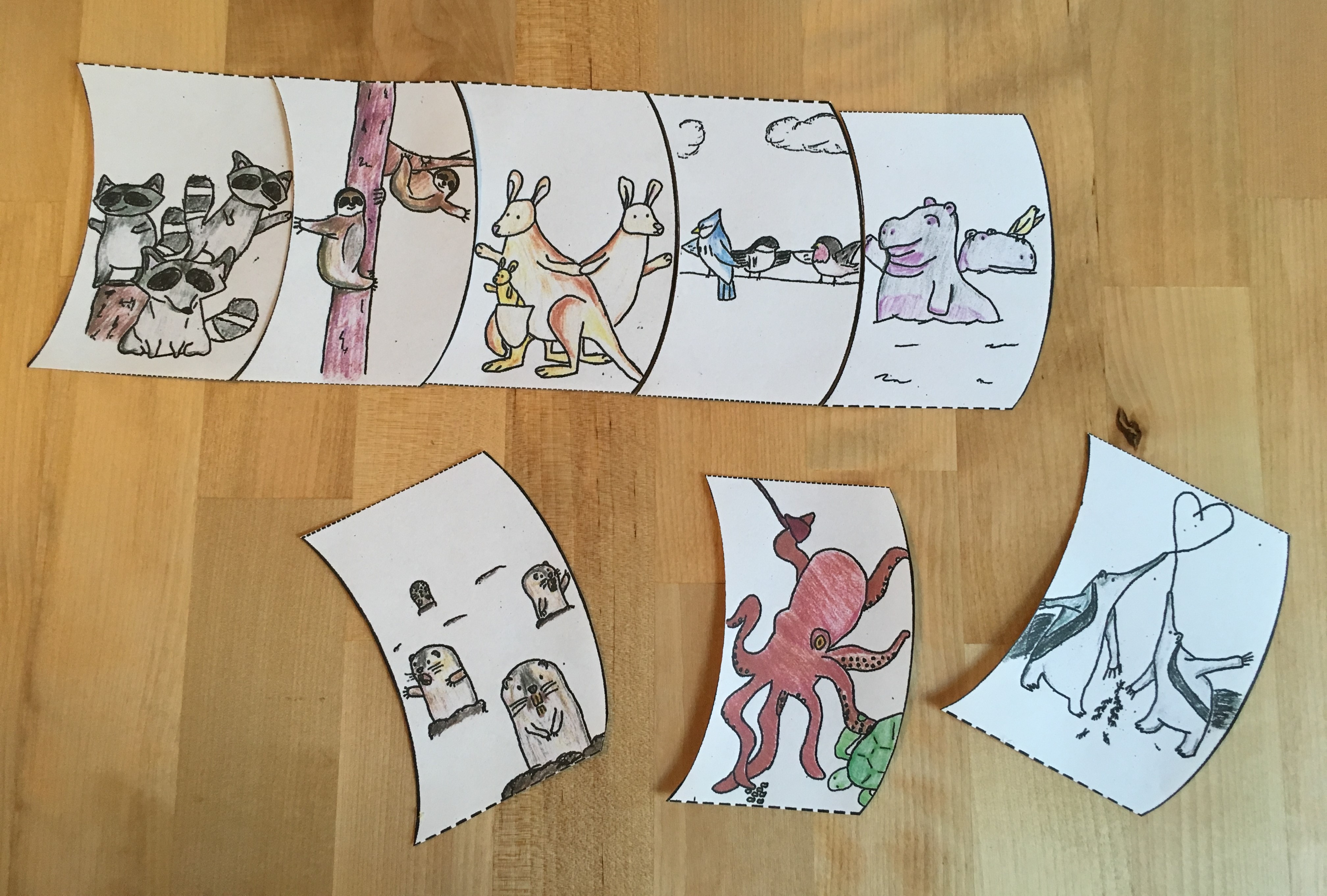
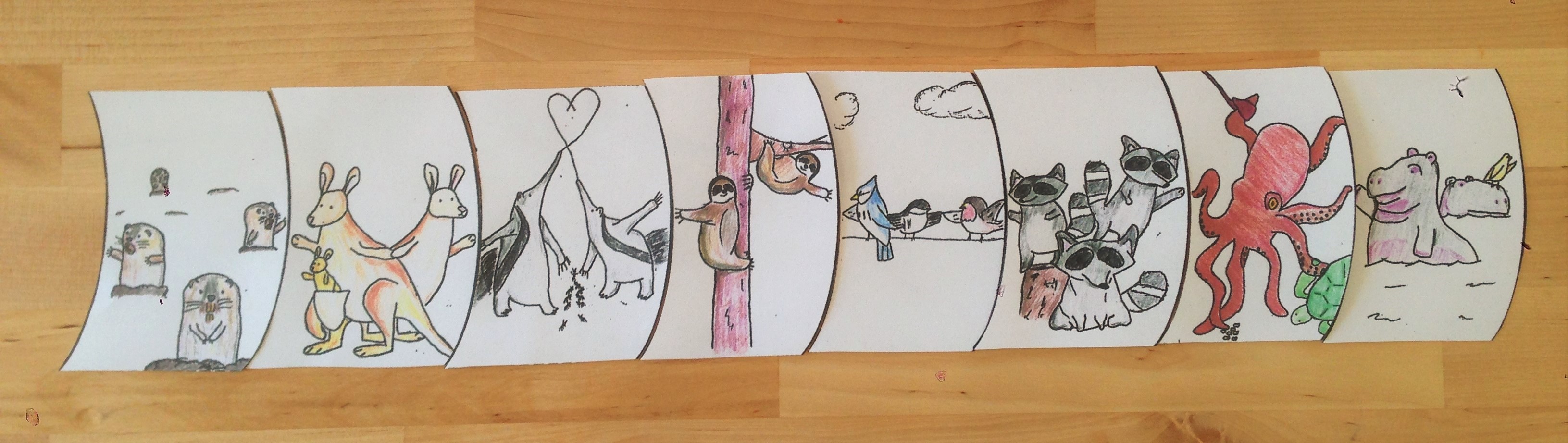
In this Give Me Your Hand! Puzzle, everyone is welcomed with a handshake. Offering friendship to all, the interchangeable pieces can be mixed and matched as the animals become buddies with one another. 

Supplies

celebrate-picture-books-picture-book-review-UN-day-puzzle

Directions

  1. Print the puzzle: to make the puzzle sturdier: Print on heavy stock paper or glue the page to poster board
  2. Color the pictures with colored pencils or crayons
  3. Cut the pieces apart
  4. Switch the pieces around to make many alternate pictures
celebrate-picture-books-picture-book-review-UN-day-puzzle

You can purchase Ege and Ávra from these booksellers

Amazon | Barnes & Noble | Bookshop