September 10 – Swap Ideas Day

celebrate-picture-books-picture-book-review-the-king-and-the-magician-cover

About the Holiday

Today is a perfect day to get together with people you love, trust, and respect—and even some who challenge your thinking—to discuss matters large and small. Not only might you gain a different perspective on your pals, but you all may come up with the next Great Idea!

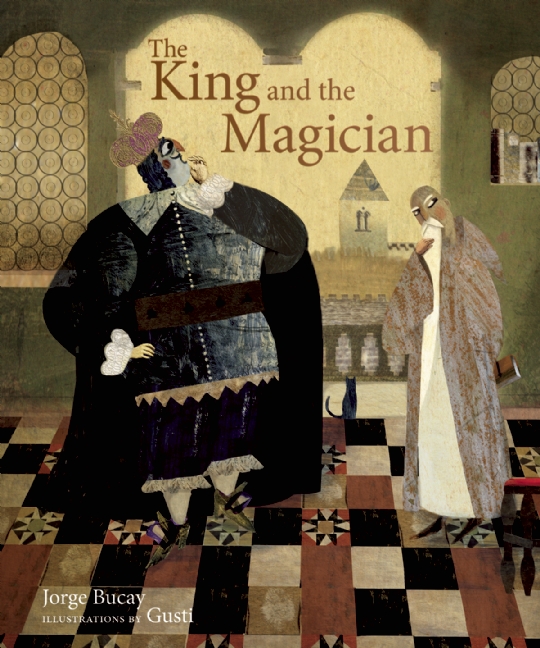
The King and the Magician

Written by Jorge Bucay | Illustrated by Gusti


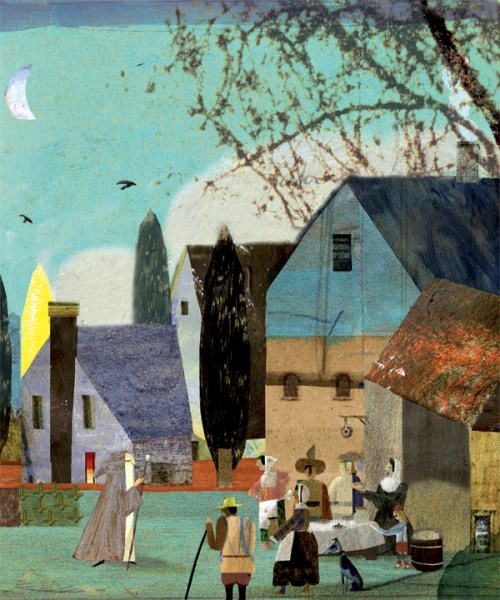
In a faraway land there once lived a King who was very powerful. Not only did he love power, he commanded that everyone in his kingdom obey and admire him. Tremblingly, his subjects reassure him every day that he is the most powerful man in the kingdom. One day, however, the King hears a rumor that down in the village lives a Magician who can predict the future. The King fears that this man will become more powerful than he, and he sends his spies to learn more. The spies return and reveal that not only can the Magician tell the future, he is loved and admired by everyone.
celebrate-picture-books-picture-book-review-the-king-and-the-magician-townspeople

Image copyright Gusti, courtesy of Abbeville Press

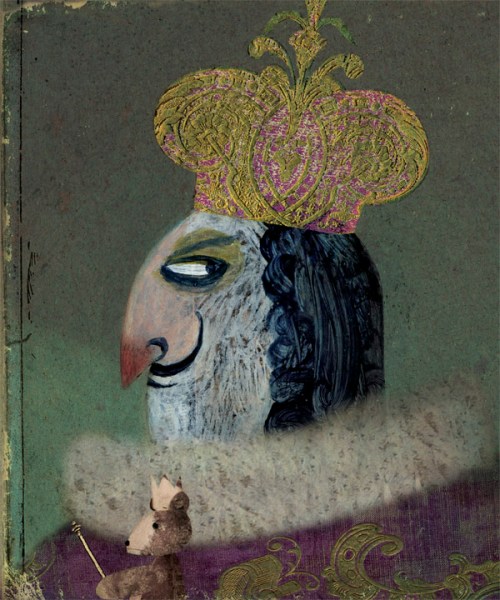
The King becomes terribly jealous and plots to do away with his most hated enemy. He devises a plot to trick the Magician. He will host a party, and at the end he will ask the Magician if he can truly predict the future. If the Magician says “No,” he will be exposed as a fraud, and the king will kill him. If the Magician answers “Yes,” the King will ask him to predict the date of the Magician’s death and would then kill him. The King is pleased with his scheme because either way, he will be rid of his rival.
celebrate-picture-books-picture-book-review-the-king-and-the-magician-king-has-evil-idea

Image copyright Gusti, courtesy of Abbeville Press

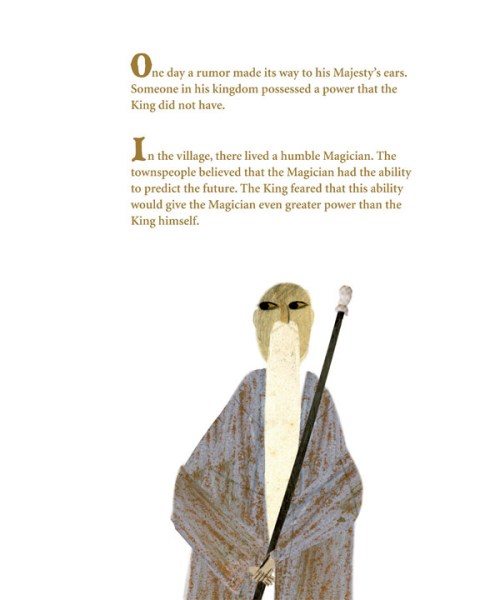
On the night of the party, the King summons the Magician and asks him the fatal question. The Magician is more than just a seer or a sorcerer—he is wise. He looks at the King and states, “the Magician of this kingdom will die the exact same day as his King.”

Now the King is in a terrible quandary. He does not want to risk the possibility that this old man’s prediction is true. He must now protect the Magician in order to save his own life. He quickly concocts a ruse and asks the Magician to stay the night in the castle, saying he wants to consult with him about some royal matters. In fact, he just wants to keep an eye on him.

The Magician agrees. The next morning the King goes to the Magician and asks his advice on some kingly decisions. The Magician offers good suggestions, and the king accepts them. As the months go by, the King continues to rely on the Magician for guidance, and slowly the King learns to be fair and wise. He becomes the respected and admired ruler he always wanted to be.
celebrate-picture-books-picture-book-review-the-king-and-the-magician-old-magician

The King realizes that not only is the Magician a trusted advisor, he is a loyal and beloved friend. One day, wracked with guilt over his one-time plot to kill the Magician, the King reveals the story. The Magician listens to the King’s secret, and shares one of his own.

On the night of the party, the Magician says, I saw you reach for the hilt of your sword when you questioned me, and I knew your intentions. He then divulges that he made up the prediction of their shared death date to teach the King a lesson—one the King has learned. He says, “It is our lives that have become entwined, not our deaths.”

For many more years the King and the Magician live as friends and confidants. The kingdom grows stronger and the King kinder and more loved by his people. One day the Magician dies. The King is sad, and realizes he is no longer afraid of his own death. The King has learned the Magician’s lesson well, and even though his advisor is gone, he continues to make wise and beneficial decisions.
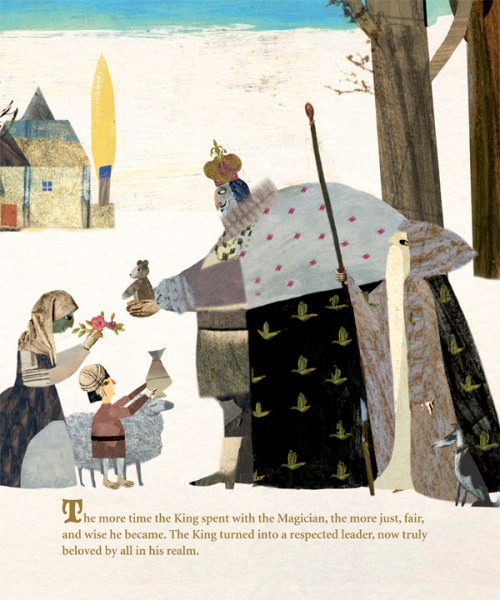
celebrate-picture-books-picture-book-review-the-king-and-the-magician-changed-king

Image copyright Gusti, text copyright Jorge Gusti, courtesy of Abbeville Press

Ten years later the King writes a letter to his son and heir. In his letter, the King cautions his son that at sometime in his life he may come across someone or something that “will arouse fear and jealousy in your soul.” He will want to destroy this person or thing to alleviate his fear, his father tells him. Instead, says his father, “open your heart or your home” because “what you thought was your most feared enemy, is really your most powerful friend.”

Jorge Bucay has written a classic tale of wisdom verses power wrapped around a clever trick. The story, full of intrigue and twists, initiates the kind of thought that leads to true enlightenment. The straightforward storytelling, beautifully paced over a lifetime of growth and change, builds suspense while lyrical descriptions create a beautiful flow that depicts both the quandary of the King and the kindness of the Magician.

Gusti’s lavish illustrations, reminiscent of hieroglyphics and Medieval tapestries, are rendered in dark, rich brown, rust, black, olive and blue hues that gorgeously depict the splendor of the King and his castle, but also signal the somber weight in his soul. The regal tone even extends to the gilded text. The King is drawn as an imposing figure, towering over everyone else in his kingdom, but his feet and hands are tiny, lending him a bit of a comical yet vulnerable air. The King’s eyes narrow with cunning as he plots his evil deed but widen in doubt and dispair as the Magician works his special brand of magic.

This lovely book—in both message and art—would be a wonderful addition to any child’s or fable-lover’s library.

Ages 4 – 8

Abbeville Kids, 2014 | ISBN 978-0789212047

While I take some personal days over the next couple of weeks, I am re-blogging some earlier posts with updated interior art, activities, and links, when available.

Swap Ideas Day Activity
celebrate-picture-books-picture-book-review-a-world-of-ideas-word-search

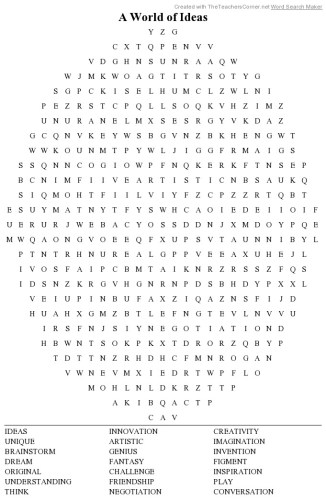
A World of Ideas Word Search


Creative ideas are a little like magic – sometimes seeming to come out of thin air – and can make the world a better place! Find the 21 words in this printable A World of Ideas Word Search about what swapping ideas can conjure up! Here’s the Solution!

Picture Book Review


September 9 – It’s National Courtesy Month

celebrate-picture-books-picture-book-review-the-black-and-white-factory-cover

About the Holiday

September has been designated as National Courtesy Month to remind us that good manners and watching out for others, goes a long way toward making the world a more cooperative and happy place. Sometimes common courtesy is as black and white as directly following the rules…but sometimes…well, I’ll let you decide…

The Black and White Factory

Written by Eric Telchin | Illustrated by Diego Funck


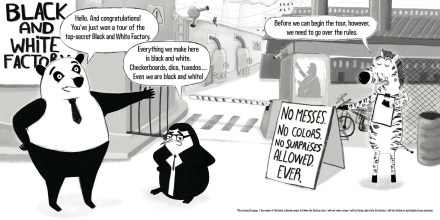
You are one lucky reader! You have won a tour of the Black and White Factory where the employees are hard at work making products like checkerboards, dice, tuxedos…you know the stuff. Even the bosses—a panda and a penguin—are in black and white. Before you start your tour, you’re met by a zebra foreman who goes over the rules of the factory. And they are these:

“No Messes, No Colors, No Surprises Allowed.” When? “Ever.”

As you proceed inside your first stop is the billiard ball machine—8 balls only, of course! It doesn’t take you long to be ushered into the “top-secret Experiment Room,” where innovative products are being developed. You may be the first ever to see “trick dominoes that are impossible to knock over” and new black-and-white-paint in either checkerboard or polka-dot. Another prototype displayed on a wall chart is “never-melting vanilla ice cream.” Also prominently displayed are the factory’s rules: “No Messes, No Colors, No Surprises Allowed. Ever.”

celebrate-picture-books-picture-book-review-the-black-and-white-factory-outside-factory

Image copyright Diego Funck, text copyright Eric Telchin, courtesy of simonandschuster.com

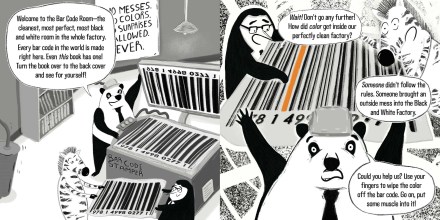
Moving on you push the button leading to the Animal Room. Housed here are white Dalmatians, dairy cows, and skunks who are being sprayed with their distinctive black marks. An elevator takes you to the Bar Code Room. While waiting for your car, you are exhorted to remember the rules: “No Messes, No Colors, No Surprises Allowed. Ever.” The Bar Code Room is “the cleanest, most perfect, most black and white room in the whole factory. Every bar code in the world is make right here.” Even the one for the book you’re reading! Turn it over and see!

celebrate-picture-books-picture-book-review-the-black-and-white-factory-factory-floor

Image copyright Diego Funck, text copyright Eric Telchin, courtesy of simonandschuster.com

“Wait!” Wait!! Turn the book back! A stripe of yellow has seeped into the factory! “Someone didn’t follow the rules. Someone brought an outside mess into the Black and White Factory.” The bosses need your help! Can you “use your fingers to wipe the color off the bar code?” Oh, no, no, no! That just made it worse—now it’s smudged yellow and orange! “Quick! Do something! Rub the colors with your sleeve. Or your elbow. Something.”

We interrupt this review to remind you of the RULES: “No Messes, No Colors, No Surprises Allowed. Ever.” Right, then, back to our dilemma. Now the colors are dripping! It’s such a mess! Suddenly, the zebra has an idea. He asks you to “hold the book upright and tilt it so the color drips down the bottom of the page.” Okay—phew!—great job!

Oh, no!! More colors are creeping in! “Swirl the book so the colors fly off the page,” the penguin orders. You are one strong swirler—the zebra, penguin, and panda are all topsy-turvy, and now the factory looks like an abstract painting! This definitely is not good. “What a mess! The Black and White Factory is ruined.” But the panda may have an idea. Everyone, “back to the top-secret Experiment Room.” There the panda, zebra, and penguin, splattered in paint, stand in front of the “Air-powered comprehensive cleaning contraption.” They just need your help in getting it started. Can you blow into the nozzle? Harder? Come on, put some oomph into it! All right!

celebrate-picture-books-picture-book-review-the-black-and-white-factory-bar-code-room

Image copyright Diego Funck, text copyright Eric Telchin, courtesy of simonandschuster.com

The machine’s at 100% power! The machine shakes and whirrs with a color overload. It explodes with a rainbow of colors that covers everything in the factory. The panda, zebra, and penguin stand in the midst of it. “Everything is so…different,” says the panda. “It’s…colorful…,” adds the penguin. “And wonderful!” concludes the zebra. There’s just one problem…The RULES: “No Messes, No Colors, No Surprises Allowed. Ever.” Hmmmm….

How about: “No Messes, No Colors, No Surprises Allowed. ForEver.”

Yes! Much better! So “that concludes the Best. Tour. Ever!” Off you go—just don’t forget the rules: “Messes, Colors, Surprises Allowed. Forever.”

Eric Telchin’s The Black and White Factory will have kids tipping, tilting, swinging, and even reading this fun and funny interactive picture book. Directly addressing the reader, the three staid and rule-abiding managers of a very focused factory, play straight-man to the child’s laugh inducing and unintentional “mistakes” that lead to a brighter future. With the pacing of a favorite theme-park ride, the story has a suspenseful “Oh, no! What’s going to happen?” feeling as readers progress from page to page until the first tinge of yellow precipitates the humorous chaos to come.

Diego Funck’s sly illustrations riff on the black-and-white theme, as he designed a clever product line in line with “the rules.” Kids will want to linger over the pages to catch all the jokes and visual puns. The reactions of the three employees of The Black and White Factory will make readers laugh too as they endeavor to hang on to their beloved rules in the midst of their changing world. The bold colors of the transformed factory are as refreshing as the sun after a dark, rainy day.

The theme that creativity and expression come from making messes and allowing surprises to happen is a welcome idea and one that leads to innovation and personal freedom. The Black and White Factory is sure to be asked for again and again!

Ages 4 – 7

little bee books, 2016 | ISBN 978-1499802771

Learn more about Eric Telchin on his websites – erictelchin.com and boyseeshearts.com

To view a portfolio of Diego Funck’s artwork, visit his website!

National Courtesy Month Activity

celebrate-picture-books-picture-book-review-black-and-color-crayon-craft-boat

Let Your Colors Shine Through! Craft


With this easy-to-make craft you can show your colors and your creativity!

Supplies

  • Heavy stock paper
  • Crayons, a variety of colors and black

celebrate-picture-books-picture-book-review-black-and-color-crayon-craft-colors

celebrate-picture-books-picture-book-review-black-and-color-crayon-craft-black-crayon

Directions

  1. Color the paper with blocks, stripes, or splotches of color
  2. Cover the colored paper entirely with the black crayon
  3. Scrape a design in the black crayon, exposing the colors beneath

Picture Book Review

September 7 – Buy a Book Day

celebrate-picture-books-picture-book-review-a-child-of-books-cover

About the Holiday

Established in 2012 Buy a Book Day promotes an appreciation for physical paperback and hardbound books. Whether you’re cracking open a brand new release or gently turning the pages in a well-worn volume, holding an actual book in your hands is an unforgettable connection between you, the author, and another world—real or imaginary. Today, drop into your local bookstore and peruse the shelves—you’ll be sure to find a fascinating book to buy.

A Child of Books

By Oliver Jeffers and Sam Winston


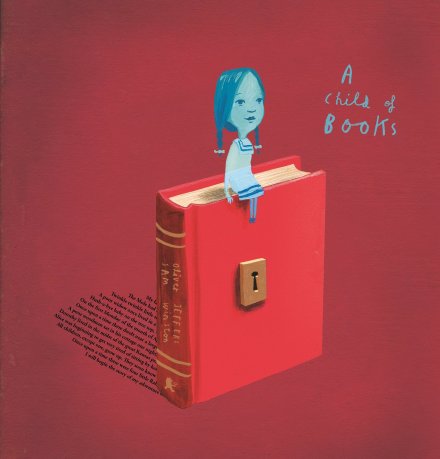
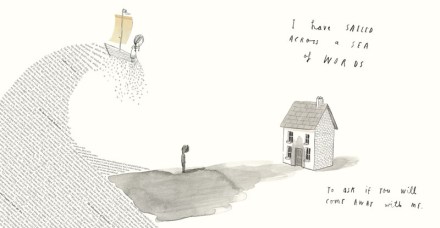
A little girl sits on a log raft with a parchment sail, dangling her feet into the water that swirls around her legs in an eddy made of words that read: “Once upon a time there was a child who loved to read…,” while the rest of the words disperse and float away. In fact, the girl is reading now—a book with a keyhole in the middle. “I am a child of books,” she reveals. “I come from a world of stories.” The wind catches the sail of her raft and the girl is off on an adventure, rising and dipping with the cresting letters that make up waves coming from the deeper sea of straight lines of excerpted text from classics including The Voyages of Doctor Doolittle, Robinson Crusoe, The Swiss Family Robinson, and Kidnapped.

celebrate-picture-books-picture-book-review-a-child-of-books-wave

Image copyrights Oliver Jeffers and Sam Winston, courtesy of oliverjeffers.com

The waves bring her to shore, where riding atop one she towers over a small boy. The girl asks if he will sail away with her. He peers into the window of his house where his father sits reading the newspaper. Headlines announce “Serious Stuff,” “Facts,” “Important Things,” and “Business.” And indeed just a glance at the articles will inform readers that “A group of serious people passed on concerns about a serious document that has been lost by a serious organization….”; that “Scientists have discovered a new fact. In one test, nearly half the subjects proved the fact, it was revealed….”; and that “an important company is to stop producing some important stuff by later this year. It said no one wanted this particular bit of important stuff.” The father’s glasses glint with numbers that rim the frames like tears.

The girl says that “some people have forgotten” where she lives, but that she can lead him on the way. The two follow a path of words from Alice in Wonderland, and the boy watches worriedly as the girl confidently climbs down a hole in the lines. There is more climbing to be done, however, and the girl, in her blue and white sailor dress, holds the boys hand as they traverse mountains made of Peter Pan that reach into the sky. By the time the friends row their dinghy into a dark cave created from the story of Treasure Island and discover a wooden chest, the boy is eager and excited for the journey.

celebrate-picture-books-picture-book-review-a-child-of-books-colorful-book-forest

Image copyrights Oliver Jeffers and Sam Winston, courtesy of oliverjeffers.com

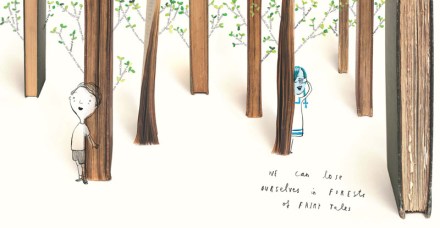
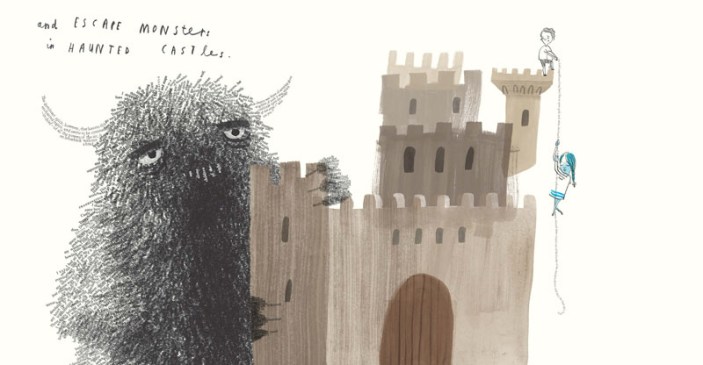
The girl and boy play hide-and-seek among tall trees made of books, where titles and lines of Hansel and Gretel, Little Red-Cap, The Golden Goose, Tom Thumb, and more jut out as leaf-covered branches. They leave the woods and come to a haunted castle that is being attacked by a monster made dark and hairy with the words of Frankenstein and Dracula. This time the boy holds a line of Rapunzel as the girl deftly shimmies to the top of a turret.

Tuckered out, the pair of friends ascend ladders to clouds of lullabies and drift into dreamland where they stand on the moon so they can “shout as loud as we like in space.” But perhaps it is not the moon but, instead, their own imaginary world made of color and characters, palaces and possibilities where stories may end but creativity lives on because “we’re made from stories…” and “our house is a home of invention.”

celebrate-picture-books-picture-book-review-a-child-of-books-colorful-monster

Image copyrights Oliver Jeffers and Sam Winston, courtesy of oliverjeffers.com

If any book invites readers to linger over the intricacies of its pages, A Child of Books is it. A perfect combination of Oliver Jeffers’ homage to the power of storytelling and Sam Winston’s artistry with typography, A Child of Books summons readers of all ages to leave the weariness of the “serious” world and enter the realm of the imagination.

The lilting lines of Oliver Jeffers’ prose poem flow with the stream of consciousness that allows thinkers to journey to nooks and crannies, participate in majestic vistas, and create the unknown of their own fancies. In Sam Winston’s hands sentences and paragraphs describing classic sea voyages swell into waves; lines from other classics crowd in upon each other, solidifying into a hidden inlet or forming a horned creature; and soft yellowed pages return to replicate the trees they once were. In the end a rainbow of characters spin out from a revolving globe, depicting our full color world.

Maps laid out by the storytellers of the past may show us routes to take but as A Child of Books reveals, there is so much white space yet to be discovered. For bibliophiles young and old, A Child of Books makes a beautiful gift and will be a welcome addition to personal library shelves.

Ages 4 and up

Candlewick Press, 2016 | ISBN 978-0763690779

Visit Oliver Jeffers’ website to view his wide-ranging work in picture books, paintings, film, and more. You can follow a paper airplane to fun games based on his picture books in Oliver Jeffers’ World.

To see the unique perspective of Sam Winston, view his books, projects, and archives on his website!

Watch the Child of Books book trailer!


Buy a Book Day Activity

celebrate-picture-books-picture-book-review-i've-got-the-reading-bug-books-to-read-list

I’ve Got the Reading Bug! Books to Buy List


Do you love to read? Do you have a wish list of books you want to read next? Me too! Use this printable I’ve Got the Reading Bug! Books to Buy sheet to keep track of those great book ideas.

September 4 – National Wildlife Day

celebrate-picture-books-picture-book-review-finding-wild-cover

About the Holiday

Founded in 2005 National Wildlife Day was established to celebrate the diversity of nature and promote the awareness of endangered species worldwide. To celebrate visit an animal sanctuary, zoo, or aquarium—or think about donating your time to a worthy animal cause.

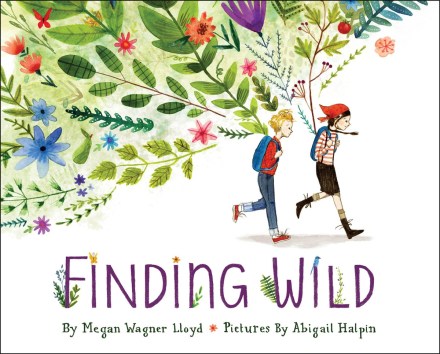
Finding Wild

Written by Megan Wagner Lloyd | Illustrated by Abigail Halpin

A girl and a boy stand with their backs to the stairs leading to the subway contemplating the jungle of growth in front of them. A single floating leaf seems to lead the way. They follow along the path, leaving the city behind and enter the wild. Here “Wild is tiny and fragile and sweet-baby new. It pushes through cracks and crannies and steals back forgotten places.” Wild comes in many guises—some obvious, some not.

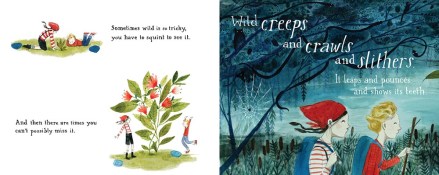
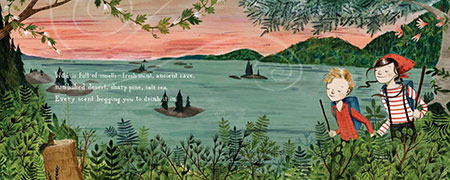
Wild also moves in various ways. As the boy and girl continue on the path passing a spider’s web and shadowy shapes with glowing eyes, wild “creeps and crawls and slithers. It leaps and pounces and shows its teeth.” Everywhere the pair ventures, wild has a distinct smell—fresh or musty, sharp or sweet, tangy or arid. They discover wild can be as hot as a forest fire or as cold as an icicle. Running through a field of flowers and climbing a rocky cliff the two find that wild is “as smooth as the petals of poppies, and as rough as the fierce face of a mountain.” They also find that wild can hurt in so many ways.

celebrate-picture-books-picture-book-review-finding-wild-creepy

Image copyright Abigail Halpin, courtesy of Alfred A. Knopf

Plunging deeper into the wild the boy and girl uncover more secrets—delicious and quenching. The sounds of wild chill and soothe them. Suddenly, though, the girl and the boy find themselves outside of the wild, back in front of a subway entrance. The wild, now seems far away, invisible and unknown, as if “the whole world is clean and paved, ordered and tidy.” As the pair gaze upward the tall buildings and skyscrapers block the sky. But the girl points to a leaf swirling through the air. They follow it through an open door that leads to a most surprising discovery.  

celebrate-picture-books-picture-book-review-finding-wild-water

Image copyright Abigail Halpin, courtesy of Alfred A. Knopf

Megan Wagner Lloyd entreats readers to rediscover the wild no matter where they live. Her lyrical descriptions of the splendor of nature in all its incarnations—from gentle to intense, quiet to loud, mysterious to open—delightfully capture the way children interact with the environment. Lloyd reminds readers that tasting a single juicy blackberry, thrilling to a coyote’s howl on a dark night, even feeling the prick of a cactus needle connect them to the greater world and that searching for and finding the wild—especially in the midst of an “ordered and tidy” world—brings peace and happiness.

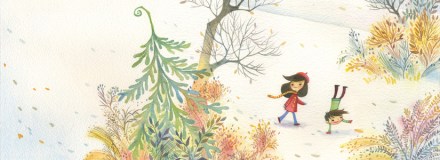
Abigail Halpin’s lush illustrations of the wild environment gorgeously depict the vibrant colors, sometimes chilling shadows, and refreshing water the two children discover in the middle of their city. The thick vegetation rendered in a palette of greens is a riot of ferns, pines, flowering trees, and vines that hide small birds and animals. As the children huddle in a tent, the indigo night crackles with lightning and the songs of coyotes. A two-page scrapbook-type spread displays various plants and insects that sting, burn, or cause itching. When the boy and girl reenter the city, buildings—old and new—billboards, and traffic meet their eyes, but they keep their gaze on the leaf leading them on. That leaf invites readers, also, to get outside and explore the wild.

Ages 3 – 8

Alfred A. Knopf, Random House Books for Young Readers, 2016 | ISBN 978-1101932810

Discover more about Megan Wagner Lloyd, the world of Finding Wild, and news on her upcoming book on her website!

View a gallery of artwork by Abigail Halpin on her website!

Wildlife Day Activity

celebrate-picture-books-picture-book-review-forest-coloring-page

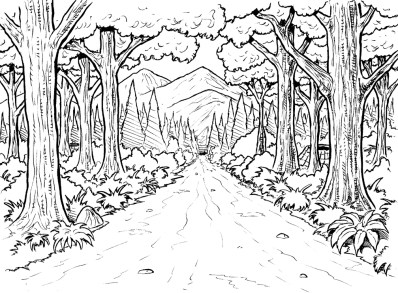
Explore the Forest Coloring Page

Take the path on this printable Forest Coloring Page to explore all nature has to offer. Add your own animals or birds to the picture—and maybe even yourself!

Picture Book Review
August 31 – It’s Happiness Happens Month

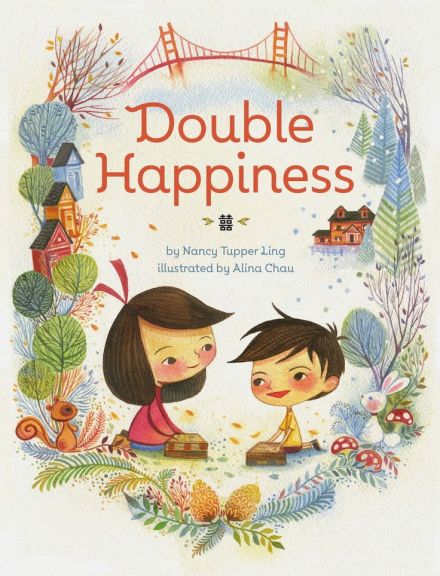
celebrate-picture-books-picture-book-review-Double Happiness by Nancy Tupper Ling Picture Book Review

About the Holiday

Summer is coming to a close and school is starting again. It’s a great time to reflect on the fun you’ve had in the warmer weather and all the memories that are about to be made as another year of activities, education, new friendships, and excitement unfolds. Happiness really does happen if you let it!

Double Happiness

Written by Nancy Tupper Ling | Illustrated by Alina Chau


This quiet, thoughtful picture book tells the story of a family’s move from China to America in a series of unrhymed verses that reveal the experience honestly from alternating viewpoints of a brother, Jake, and his sister, Gracie. Each page is dedicated to one sibling or the other with the Jake’s poems written in blue and Gracie’s in purple. In several poems the children interact with each other, the blue and purple lines acting as dialog tags.

In the first poem, The Move, Gracie stands on her doorstep surrounded by boxes and suitcases and thinks, “I won’t go! / I won’t move / away / from our city house / by the trolley tracks….” But Jake is more adventurous and in the second poem, Train, is already imagining his new room. After considering different décor, he decides what he really wants is something familiar, something outside—“just one long train / that rocks and wobbles / my bed each night. / I can’t fall asleep until the train passes by.”

celebrate-picture-books-picture-book-review-double-happiness-train

Image copyright Alina Chau, 2015, courtesy of Chronicle Books

In Grandmother, the siblings are each given a happiness box by their Nai Nai, who wisely challenges her grandchildren to “Find four treasures each, / leading from this home / to your new.” Gracie takes this to heart, and readers see in Panda that even before leaving Nai Nai’s Gracie has added a favorite keepsake to her box: “Nai Nai’s panda sits / by the window / like always. / “I’ll miss you,” I say. / Nai Nai leans over me. / She places Panda / inside my box. / “He has a new home / now.”

Too soon moving day comes, and in Goodbye Gracie and Jake give hugs and kisses to beloved relatives. The search for items to fill Nai Nai’s boxes is taken up in the next three poems. In Treasure, Jake becomes a dragon keeping his “dragon eyes / wide open for stuff / along the way.” He is rewarded in Lucky, in which he discovers an old penny on the bus ride to the airport. In Leaf Gracie receives a surprising gift for her happiness box: “One stray leaf / flutters down / onto my box— / Eucalyptus! / If I had a koala I’d feed / her this minty meal all / day long— / the perfect treasure / to remind me of home.” 

In keeping with the long hours of travel from China to the United States, the next six poems chronicle the brother and sister’s experiences in the airport, waiting for their plane, and during the flight. Airport sees the children running, hopping, waiting, and navigating their way through the crowds of people to their gate. Dad is already tuckered out in Quiet, but Jake is wrangling to look for treasure: “’Huff puff. Puff huff.’” / Dragon blows fire. / Dragon stomps his feet. / “’Ssshhh, you’ll wake Daddy. / I giggle. / Gracie giggles. / “’Daddy can sleep / anywhere.’” Jake finally discovers gum in his backpack and creates a treasure. “I stretch it / and roll it / and ooze it / into one slinky snake / Sssssee, his penny pillow. / Sssssee, he’s kai xin— / so happy—in his brown box. / I’m tied with Gracie now— / two treasures each.”

celebrate-picture-books-picture-book-review-double-happiness-discovering-the-woods

Image copyright Alina Chau, 2015, courtesy of Chronicle Books

Adventures at the airport continue in Cat and Wings, and as the plane takes off Gracie draws pictures of the day’s events in Picture. In Here the children wake up to see their new city far below them and wonder, “can I find our house / from the sky?” Marble and Sadness juxtapose Jake’s happiness at finding another treasure for his box with the apprehension of Gracie as the plane lands and the family makes its way into their new country.

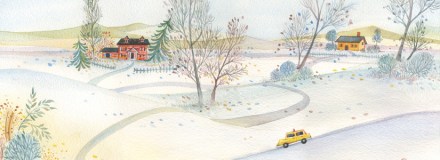
At last in Home the family reaches their new house by taxi. Gracie seems only to see the “piles of snow,” but Jake likes the “windy roads, lots of trees, and the curvy driveway.” In Explore Gracie and Jake walk around the countryside, and while Gracie still determines that she won’t like it, Jake hears a train and is happy. My Room and Dinner see the kids settling in, with a photograph of the family they’ve left behind accompanying them on the table while they eat. In A Surprise, Gracie finds that her grandmother is still with her through a special scarf, and in Paints Jake and Gracie accept the move as they paint their happiness boxes: Jake decorates his with a dragon and a train, while Gracie depicts herself and her brother walking in the snow and “they look very, / very / happy.”

celebrate-picture-books-picture-book-review-double-happiness-coming-to-new-house

Image copyright Alina Chau, 2015, courtesy of Chronicle Books

While Double Happiness tells the story of a family’s distant move, Nancy Tupper Ling’s gentle verses are appropriate for any situation involving change or uncertainty. She reminds children that happiness can be found wherever they are and all around them if they look for it. The poems flow as freely as thoughts, fears, and unguarded moments. As Gracie and Jake resolve their feeling, readers or listeners will also see that feelings of apprehension are common, and that happiness is waiting for them.

Alina Chau’s soft, lovely watercolor illustrations are beautiful representations of Gracie and Jake’s move from the familiar surroundings of their home in China to a new home in a snowy countryside.  The children’s emotions resonate as they alternate between sadness and happiness and between the concrete places of Nai Nai’s house, the airport, and their new city and their own imaginations of dragons, drawings, and dreams.

Ages 5 – 8

Chronicle Books, 2015 | ISBN 978-1452129181

Discover more books for children and adults by Nancy Tupper Ling on her website!

View a gallery of artwork by Alina Chau and more on her website!

Happiness Happens Activity

CPB - Happiness typography

Happiness Is…Game


Happiness is all around you! Grab one or more friends to play a game that reveals what things make you happy. Here are two ways to play:

  1. Like the “Geography” game: the first player names something that makes them happy, the next player must think of something that starts with the last letter of the word the previous player said. The game continues with each player continuing the pattern. Players drop out as they cannot think of a word. The last player left is the winner.
  2. Using a time limit (depending on age): players must think of something that makes them happy. Players drop out if they cannot think of a word within the time limit. The last player left is the winner.

Picture Book Review
August 26 – Women’s Equality Day

celebrate-picture-books-picture-book-review-for-the-right-to-learn-malala-yousafzai's-story-cover

About the Holiday

Today’s holiday commemorates the day in 1920 when the 19th Amendment to the United States Constitution was ratified, giving  women the right to vote. Over the years women all over the world have fought and are still striving to gain equal footing with men in areas such as employment, salary, and education and to be free from fears of violence and discrimination. Empowering women across the globe and ensuring their voices are heard is an issue for all people to be involved in.

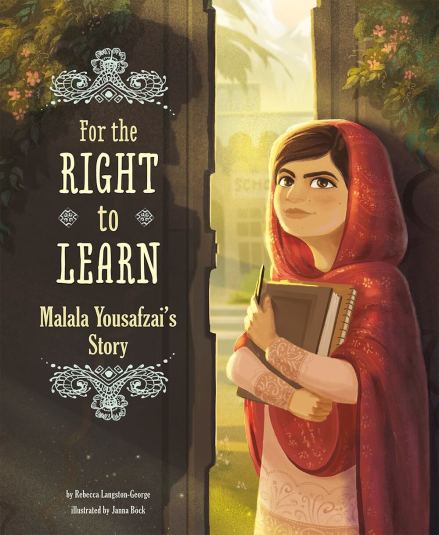
For the Right to Learn: Malala Yousafzai’s Story

Written by Rebecca Langston-George | Illustrated by Janna Bock


Malala Yousafzai lived in the Swat Valley of Pakistan, where her father, Ziauddin, ran a school in the town of Mingora. Malala loved school and even when she was tiny visited classes with her father often. Not all Pakistani children could go to school—some families couldn’t afford it and some believed girls should stay home to clean, cook, and keep house. But Malala’s father believed his daughter had the same right to an education as his sons. Malala thrived at school. She learned multiple languages and won many academic awards.

“But Taliban leaders who controlled the area were against letting girls go to school. They declared that females should be separated from males. They wanted to outlaw education for girls.” The Taliban leaders even tried to intimidate Malala’s father. “One ordered Ziauddin to close his school because girls and boys used the same entrance.” Ziauddin refused.

celebrate-picture-books-picture-book-review-for-the-right-to-learn-malala-yousafzai's-story-writing

Image copyright Janna Bock, courtesy of Capstone Press

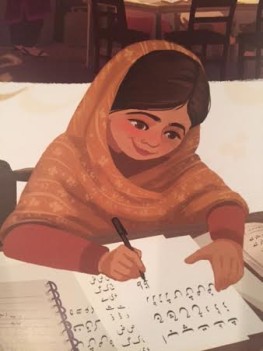
While her father was worried, Malala’s determination grew stronger. She studied harder at school, and during the school holidays while most Pakistani women covered their hands with henna flowers and vines, Malala painted science formulas on hers. The Taliban continued to exert a tight grip on the Swat Valley, and instituted new rules: men could not shave, women had to cover their faces, movies were banned. And the radio “crackled with the sound of the Taliban preaching: No education for girls! Girls who attend school bring shame to their families!”

The Taliban frightened many, and empty seats in school classrooms began to be more frequent. Ziauddan and Malala appeared on TV to express the importance of education. In response the Taliban threatened Ziauddan and his school. Despite the threats Malala and her father continued to speak and write, “demanding equal education for girls.” The Taliban began patrolling the streets, perpetrating violence and destruction on anyone who didn’t obey their rules.

In December 2008, the Taliban announced that all girls’ schools would close by January 15. “Even before the deadline, bombs started to rain down on nearby schools as warnings.” The British Broadcasting Corporation wanted to reveal to the world what was happening. They wanted a girl to write a blog about her experience and “how it felt to be denied an education. Malala volunteered.

celebrate-picture-books-picture-book-review-for-the-right-to-learn-malala-yousafzai's-story-sneaking-to-school

Image copyright Janna Bock, courtesy of Capstone Press

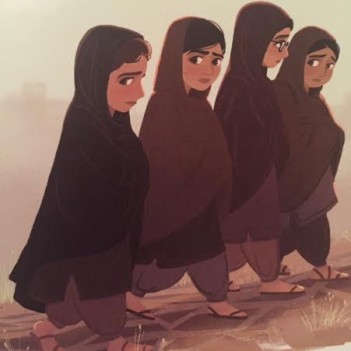
She took the pen name Gul Makai and related her blog by phone to a reporter who typed and published her words for two months. The first post appeared on January 3, 2009. On January 14 Malala wrote: “‘They can stop us from going to school, but they can’t stop us learning!’” Because activists were growing angry, the Taliban let girls ages 10 and younger go to school. Malala and her friends were 11. They began dressing to look younger and hid school books in their clothes. If they had been caught lying about their ages, they and their teachers could have been beaten or executed.

In May 2009 the Pakistani army began battling the Taliban and ordered everyone to evacuate. Malala and her family had to pack their belongings and leave. Malala wanted to take her books along, but there wasn’t room. She could only hope that they—and her home—would survive the fighting. Three months later, the people of Mingora were allowed to come home, but the town was not the same as they had left it. Shops and buildings were destroyed, burned frames of cars were strewn across the roads. The school’s walls were riddle with bullet holes. But the Taliban was gone. Ziauddin reopened his school for boys and girls.

While Malala returned to school, her life was not the same. Because of her blog, speeches, and interviews, she was internationally famous. Everyone wanted to hear what she had to say—everyone but the Taliban. “Talban leaders began to threaten her on the Internet. Saying she was working for the West, they announced Malala was on their hit list. The police warned the Yousafzai family to leave, but Malala refused to hide. She refused to be silenced.”

Because of the danger, Malala’s mother wanted her to ride the bus to school instead of walk. On October 9, 2012 as Malala and her classmates rode the bus home after school, the bus was stopped and a man boarded, demanding to know which girl was Malala. While no one spoke, the girls couldn’t stop their eyes from flashing quickly toward Malala. That was all the man needed. He “pointed a gun at Malala. Three shots shattered the silence.”

The bus driver rushed Malala and two of her friends to the hospital. Word spread quickly about the shooting through the town and around the world. Malala lay unconscious for days as the Taliban threatened her again should she live. As determinedly as Malala fought for equal education, she fought for survival. Finally, she was flown to a hospital in England for more surgery and to keep her safe. Gifts and wished poured in from all over the world. Malala stayed in the hospital for three months and underwent many procedures to correct the damage done by the Taliban’s bullets.

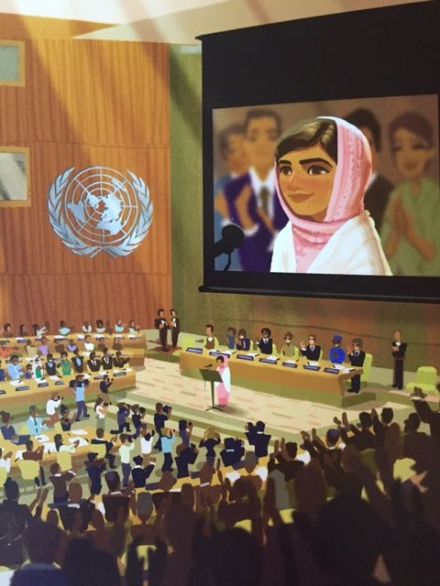
When she had recovered, Malala returned to her family and to her place on the world stage where she continues to speak out for the rights of all. On July 12, 2013 in a speech at the United Nations, Malala “declared, ‘One child, one teacher, one book, and one pen can change the world.’” On December 10, 2014 Malala became the youngest recipient of the Nobel Peace Prize for her “strength, power, and courage” to “lift her voice for children everywhere.”

celebrate-picture-books-picture-book-review-for-the-right-to-learn-malala-yousafzai's-story-speaking-to-the-UN

Image copyright Janna Bock, courtesy of Capstone Press

Malala. Those three syllables have become synonymous with bravery, freedom, and education. Rebecca Langston-George tells Malala’s remarkable story with the same unstinting vision that fuels Malala’s mission. Told sensitively, but candidly, this compelling biography reveals the harrowing evolution of the Taliban’s reach that, far from intimidating young Malala, only served to make her more determined. Langston-George’s excellent command over her well-chosen details and gripping pacing enhances the power of this important true story. Readers should come away inspired—not only by Malala’s life, but the fact that they too can make a difference.

Janna Bock depicts the changing landscape of Malala’s hometown both physically and philosophically with illustrations that help readers clearly envision and understand Malala’s life and environment. The faces of the townspeople and the Yousefzai family register distress and fear, but also determination, courage, and optimism as schools close, Mingora comes under fire, and the citizens become refugees. Malala’s shooting, and recovery are portrayed with thoughtful consideration of the readers, and the ending takes children inside the United Nations to witness Malala’s ultimate triumph.

An Author’s Note detailing more about Malala’s story then and now as well as a glossary and index follow the text.

For the Right to Learn: Malala Yousafzai’s Story is an important biography of current events and people shaping the world and our children’s future and is a must read for all.

Ages 8 – 12

Capstone Press, 2016 | ISBN 978-1623704261

Discover more fascinating books by Rebecca Langston-George on her website!

View a gallery of art by Janna Bock on Tumblr!

Women’s Equality Day Activity

celebrate-picture-books-picture-book-review-star-border-writing-template

Be a Star! Letter to Your Teacher


The school year is about to begin! Do you feel excited? Nervous? Ready to learn? Your teachers are looking forward to meeting you! With the printable Be a Star! Letter to Your Teacher Template, tell your teacher something funny about yourself, something serious, and something you’d like to learn about this year. Add a thank you for all their work and dedication and give it to your teacher on the first day of school! If you’ve already started school, give it to your teacher this week!

Picture Book Review
August 23 – Ride the Wind Day

celebrate-picture-books-picture-book-review-the-boy-and-the-airplane-cover

About the Holiday

Today is set aside to honor the first manned air flight to win a Kremer Prize, a series of monetary awards established by Henry Kremer to commemorate pioneers in human-powered flight and administrated by the Royal Aeronautical Society. The first Kremer Prize was won on this date in 1977 by Dr. Paul MacCready when his Gossamer Condor, piloted by Brian Allen flew a figure eight around two markers one half mile apart. Three Kremer Prize milestones still remain to be accomplished. Today people are encouraged to spend time outdoors catching the wind with a kite, pinwheel, sailboat, or maybe with a toy airplane like the little boy in today’s book!

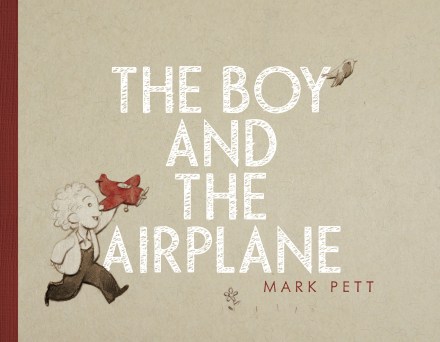
The Boy and the Airplane

By Mark Pett


A little boy receives a present and watches the giver as he leaves. When the boy opens the box, he is thrilled to find a red airplane inside. He runs outside to play with it, zooming it up and down. Laying it on the ground, he then becomes an airplane, zooming around with his arms out as wings.

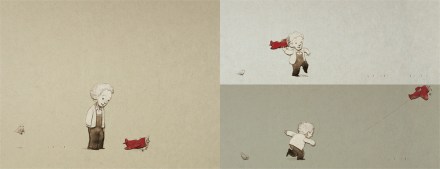
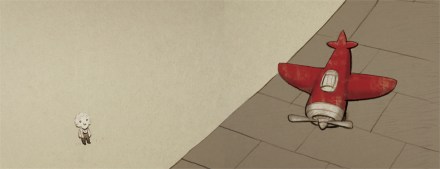
The boy looks at his plane and wonders. He picks it up and gives it a good, hard throw. It soars upward…upward, its propeller spinning as it speeds away. The boy chases after it then stops. His plane has come to a landing…on the roof. He ponders what to do for a moment, then gets a ladder. He leans the ladder against the house and climbs to the top rung, but he’s not nearly close enough. With child-like persistence, he tries different tactics—lassoing it, hitting it off with a baseball, jumping on a pogo stick, spraying it off with a hose—nothing dislodges his new toy.

celebrate-picture-books-picture-book-review-the-boy-and-the-airplane-throwing-plane

Image copyright Mark Pett, courtesy of simonandschuster.com

He sits down under a tree to think. As he reflects a whirlybird seed spirals down in front of him. He gazes at it, then goes to the garage for a shovel. He digs a hole, tosses the whirlybird in, pats down the dirt and waits. Snow falls on a tiny sapling as the boy in his coat, cap, and scarf keep it company. A future springtime sees both the boy and the tree older, with a little more height and hair and a little more height and leaves, respectively.

The tree grows tall and sturdy, complete with a bird’s nest and little peepers as the boy becomes an adult, complete with suit and tie and wiser peepers. By the time the boy reaches middle age, the tree’s trunk is thick and powerful, and as the boy matures to old age, the tree is strong enough to hold him. The elderly man climbs his tree’s branches and reaches over the eaves. His red plane is waiting for him, a little dusty now and tied down with cobwebs, but just as it was on that afternoon so long ago.

celebrate-picture-books-picture-book-review-the-boy-and-the-airplane-plane-on-roof

Image copyright Mark Pett, courtesy simonandschuster.com

With the exuberance of his youth, the man pulls back to give the plane a good, hard throw, but he stops. He considers his recovered toy and keeps it close instead, devising another plan for the airplane. He knows someone else who will like that plane as much as he did. he puts it in a box, wraps it and gives it to his granddaughter.

Mark Pett’s lovely, wordless picture book is a tribute to childhood, imagination, patience, and generational longevity. The subtle, vintage-style drawings in hues of brown on sage green backgrounds, punctuated only with the deep maroon red of the airplane, convey the feeling of permanence and the enduring presence of nature and familial love. The figure disappearing off the left-hand side of the first page after presenting the gift of the airplane to the little boy mirrors the clothes of the elderly man the boy has become as he gives the airplane to his granddaughter, passing down tradition and heritage.

Kids will also enjoy spotting the little bird that follows the boy on every page and hatches its own family in the branches of the mature tree. A close reading reveals deeper meanings and metaphors, comparisons and humor, making The Boy and the Airplane a perfect book for quiet story times or bedtime.

Ages 4 – 8

Simon & Schuster Books for Young Readers, 2013 | ISBN 978-1442451230

Discover more books by Mark Pett and what’s coming next on his website!

Ride the Wind Day Activity

celebrate-picture-books-picture-book-review-tiny-airplane-coloring-page

Tiny Toy Airplane Coloring Page


Is this airplane in the sky or at the airport? Or maybe it’s sitting in a field or at an airshow. It could be an attraction at a fair, or maybe it’s waiting to take you for a ride! Draw in whatever background you imagine and then color it! Get your Tiny Toy Airplane Coloring Page here!

Picture Book Review