April 13 – National Bookmobile Day

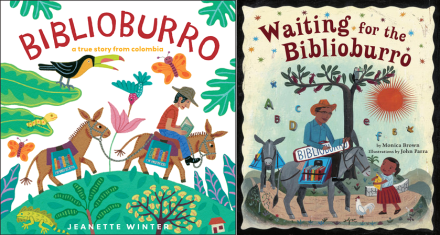
CPB - Biblioburro 3It’s not often that kids are able to read the same story from two different sides. In today’s post I review two picture books about the inspiring Luis Soriano Bohórquez. The first book is from Soriano’s viewpoint, and the second focuses on the children whose lives are changed by his courage and dedication.

About the Holiday

Today we honor the more than 930 dedicated library professionals who bring books to remote places, shut-ins, and others in the community who have no access to libraries and the services they offer. For over 100 years, bookmobiles have delivered information, technology, and resources for life-long learning to Americans of all walks of life.  To celebrate today’s holiday show your support for bookmobiles by thanking your library workers in person or by sending them a letter or email. You can also consider donating to a book drive or book fund to keep this vital service going!
Biblioburro: a True Story from Columbia by Jeanette Winter Picture Book Review

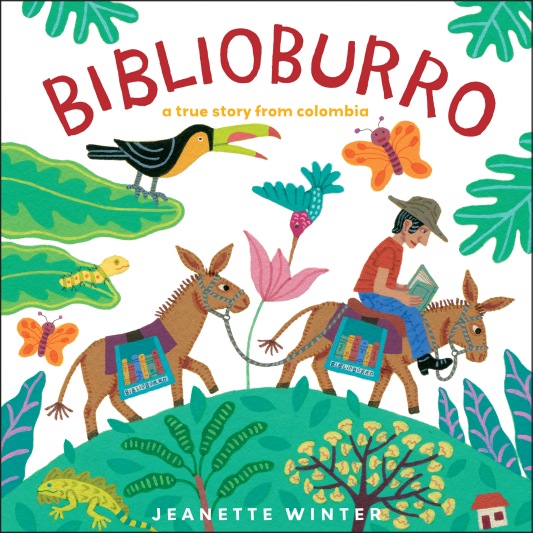
Biblioburro: A True Story from Columbia

By Jeanette Winter


Luis lives deep in the jungles of Columbia surrounded by his beloved books. In fact, Luis loves books so much that his entire house is filled with them, floor to ceiling. “What will we do with them all?” asks his wife, Diana. Luis thinks about it and suddenly has an idea. He can share his books with people who live in the faraway hills! How will he get them there? By burro!

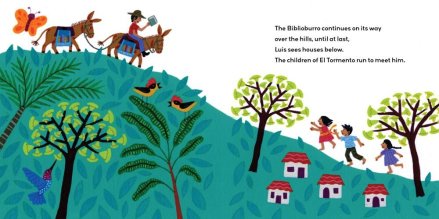
Luis buys two burros and names them Alfa and Beto. He builds special crates that will fit on their backs to carry the books. He paints a sign to carry with him: “Biblioburro”—The Burro Library—it says. Every week Luis takes the burros to far off villages, but it is not an easy trip. On his way to El Tormento, the hot sun makes the burros thirsty. When they stop at a stream to drink the water, Luis has a hard time pulling Beto away from the cool oasis.
celebrate-picture-books-picture-book-review-biblioburro-el-tormento

Copyright Jeanette Winter, 2010, courtesy of Beach Lane Books.

Among the jungle trees, bandits wait. As Luis passes through a lonely section of his path, a robber jumps out and demands silver. Luis has no money, so the bandit takes one of his precious books, demanding silver “next time.” At last Luis reaches El Tormento. The children run to greet him! Before they choose their books, however, Luis reads them a story. Today he has brought along a special treat—pig masks for everyone! As the children wear their masks, Luis reads the story of the Three Little Pigs and the Big Bad Wolf. After the story the kids choose their books and head for home.

Luis leads Alfa and Beto on the journey back as the sun sets. At home he and his burros have a well-deserved dinner. Luis is tired from his long journey, but as Diana sleeps he sits in his rocking chair reading into the deep, dark night—just the same as the children of El Tormento.

celebrate-picture-books-picture-book-review-biblioburro-Luis

Copyright Jeanette Winter, 2010, courtesy of Beach Lane Books.

The final page presents factual information about Soriano and his life. He has inspired many to donate to his cause, bringing education and literacy to hundreds of people since the year 2000. This book is also available in a Spanish language version.
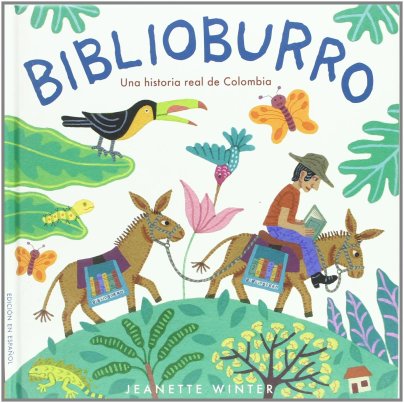
celebrate-picture-books-picture-book-review-biblioburro-spanish-edition-cover

Any book lover will be fascinated by this true story of a man dedicated to bringing books to children living in remote areas of Columbia. Jeanette Winter’s straightforward tale reveals not only the imagination and care it took to make Luis’s dream a reality, but also the perils he faces in carrying out his mission. Winter’s lyrical tone emphasizes the isolation of the far-off villages Luis visits and his solitary travels. The story is full of suspense and humor that will draw children into this unique biography of Luis Soriano Bohórquez.

Winter’s vivid illustrations bring the Columbian jungles to life—vivid green leaves and flowers are home to orange snakes, yellow caterpillars, multi-colored toucans and parrots, and other native species. Kids will wish they could reach out and pet the sweet burros that work so hard to carry the books. As nighttime falls, the hues cool to muted teals and blues—the color of dreams.

Ages 5 – 9

Beach Lane Books, Simon & Schuster, 2010 | ISBN 978-1416997788

You can find Biblioburro: A True Story from Columbia at these booksellers

Amazon| Barnes & Noble | Books-a-Million | IndieBound
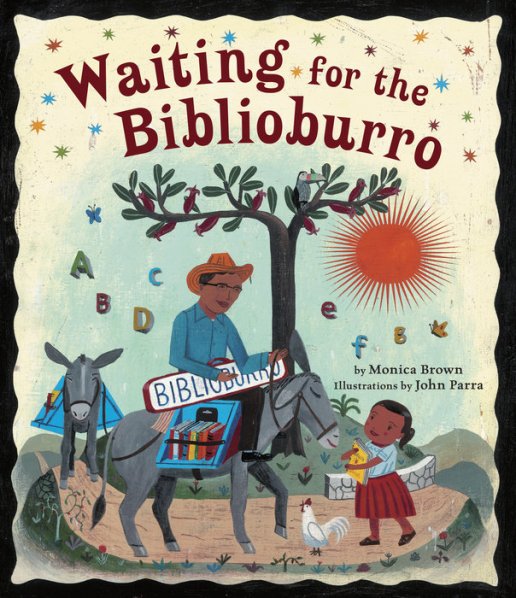
Waiting for the Biblioburro by Monica Brown and John Parra picture book review

Waiting for the Biblioburro

Written by Monica Brown | Illustrated by John Parra


On a faraway hill in a small Columbian village, a little girl named Ana wakes to a day of feeding the farm animals, taking care of her younger brother, and collecting eggs to sell in the market. When the long, hot day is over, Ana retreats to her room to read her most precious treasure—the one book that her teacher gave her before she moved and the school closed.
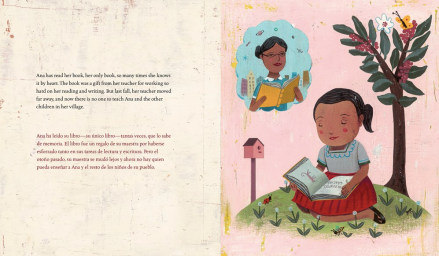
celebrate-picture-books-picture-book-review-waiting-for-the-biblioburro-bilingual-edition-reading

Image copyright John Parra, 2016, text copyright Monica Brown, 2016. Courtesy of Tricycle Press.

Ana has memorized the book and wishes she had more, but there is no one to provide books or education in her tiny village. To make up for it, Ana imagines her own stories and tells them to her brother before they go to sleep. But one day everything changes. Ana hears an unfamiliar clip-clop and a loud iii-aah! Iii-aah!

Ana runs outside to see a most unusual but wonderful sight! Riding past her house is a man with two burros loaded down with books! All the children leave the fields and run to this stranger. “Who are you?” the children ask. The man says he is a librarian and a teacher. His burros are Alfa and Beto, and his name is Luis Soriano. Together they are a moving library. Luis reads to the children and teaches them the alphabet. He then tells them they can choose books from the crates strapped to the burros’ backs and keep them until he returns.
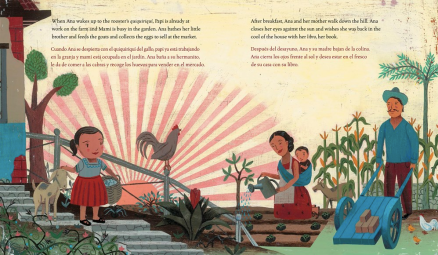
celebrate-picture-books-picture-book-review-waiting-for-the-biblioburro-bilingual-edition-sunrise

Image copyright John Parra, 2016, text copyright Monica Brown, 2016. Courtesy of Tricycle Press.

Ana gazes at the selection—there are so many cuentos, so many stories! She hugs the books she has chosen and, before Luis goes on his way, tells him someone should write a story about Alfa and Beto. Why don’t you? Luis encourages her. With a promise to return, Luis is gone. Ana shares her books with her brother, reading until she can’t keep her eyes open.
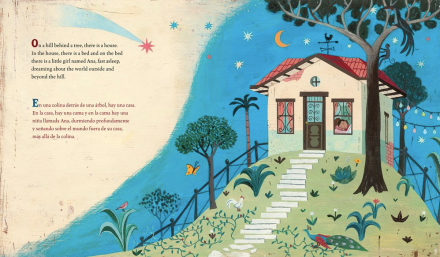
celebrate-picture-books-picture-book-review-waiting-for-the-biblioburro-bilingual-edition-nighttime

Image copyright John Parra, 2016, text copyright Monica Brown, 2016. Courtesy of Tricycle Press.

It seems like forever and no biblioburro! “When will he come back?” Ana pesters her mother. Finally, unable to wait for a new story, Ana takes the librarian’s advice and creates a book about the biblioburros. Just when Ana has almost given up hope of seeing Luis again, she hears the now familiar iii-aah! Iii-aah. She runs to show Luis her special surprise. Not only does he read her book to the other children, he carefully packs it away on the burro’s back “ready to be carried away over the hills and through the fields to another child “who is dreaming of the stories the biblioburro will bring.”

This book is also available in a bilingual edition: Waiting for the Biblioburro/Esperando el Biblioburro.
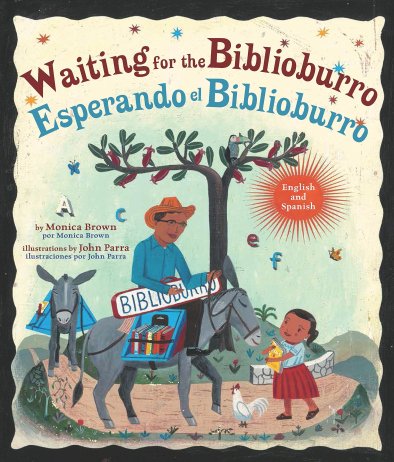
celebrate-picture-books-picture-book-review-waiting-for-the-biblioburro-bilingual-edition-cover

Monica Brown’s telling of this inspirational story reveals how much one person’s actions can touch another. Through her expressive language and rhythms, Brown effectively reveals the thoughts and feelings of a little girl thirsty for knowledge but without any means of acquiring it. The girl’s enthusiasm for books and learning is infectious and will resonate with children. Listeners will empathize with her longing and celebrate when they hear of the biblioburro’s arrival.

John Parra’s well-known paintings are a highlight of this book, filling each page with the radiant sun, colorful architecture, exotic animals, tropical vegetation, and other sights of the jungles and hills of Columbia. Ana’s hopes and dreams are also illustrated in Parra’s unique style, creating a world of imagination fitting for a budding young writer.

Ages 5 – 8

Tricycle Press, Penguin Random House, 2011 | ISBN 978-1582463537 | ISBN 978-0553538793 (Spanish–English Bilingual Edition)

Discover more about Monica Brown and her books on her website.

To learn more about John Parra, his books, and his art, visit his website.

You can find Waiting for the Biblioburro at these booksellers

Amazon | Barnes & Noble | Books-a-Million | IndieBound

National Bookmobile Day Activity
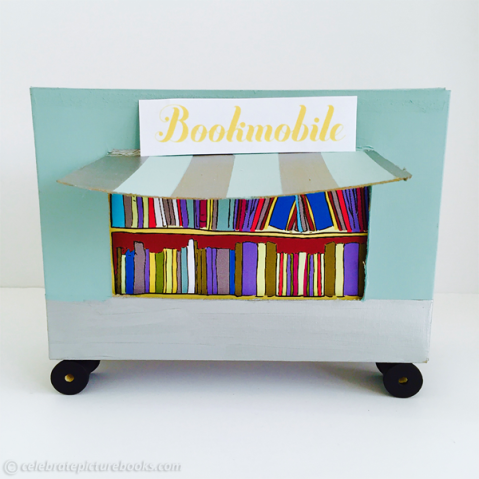
CPB - Bookmobile

Make a Box Bookmobile


Bookmobiles are love on wheels! If libraries are some of your favorite places, you’ll like making this box bookmobile! You can even use it as a desk organizer!

Supplies

  • Printable Book Shelves and Sign Template
  • Cardboard box, 16-oz pasta or other recyclable boxes work well (I used a 5” x 7 ¼ -inch pasta box)
  • Small wooden spools or bottle caps, large beads, or toy wheels
  • Paint
  • Scissors
  • X-acto knife
  • Strong glue
  • Paint brush

Directions

1.Gently pull the box apart at the seam and lie flat with the unprinted side facing up

2. To Make the Awning:

  • On one of the wide sides of the box, measure a rectangle 1 inch from the top of the box, leaving at least 1 ¼ inches at the bottom of the box and 1 ¼ inches on both sides
  • With the x-acto knife or scissors cut the sides and bottom of the rectable, leaving the top  uncut
  • Paint the top and underside of the awning (if you want to make stripes on the awning lay strips of tape side by side across the awning. Remove every other strip of tape. Paint the open stripes one color of paint. When the paint dries replace the tape over the paint and remove the tape from the unpainted stripes. Paint those stripes a different color.)

3. Paint the rest of the box on the unprinted side any way you like, let dry

4. Cut the Printable Book Shelf template to fit the size of your window opening, leaving at least a ½ inch margin all around

5. Tape the book shelf to the inside of the window

6. Reconstruct the box, making the original seam an inside flap

7. Glue the flap and sides together

8. If using small spools for wheels, paint them black. Let dry

9. Glue the wheels to the bottom of the box

10, Attach the Bookmobile sign, found on the printable template, above the awning

** To Make a Desk Organizer from the Bookmobile

  • Cut an opening in the top of the bookmobile with the x-acto knife or a scissor

April 12 – National Big Wind Day

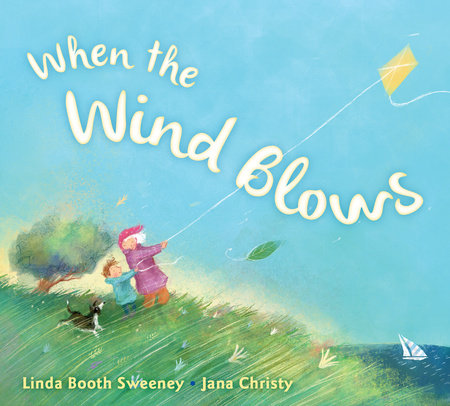
When the Wind Blows by Linda Booth Sweeney and Jana Christy picture book review

About the Holiday

Hold onto your hats—maybe even your hair! On April 12, 1934 three weather surveyors at the Mount Washington Observatory registered the highest wind gusts ever recorded—231 miles per hour! Mount Washington is located in New Hampshire and at 6,288 feet is the highest peak in the Northeast United States and east of the Mississippi River. Since that blustery event, big wind day has been celebrated on this day.

When the Wind Blows

Written by Linda Booth Sweeney | Illustrated by Jana Christy


A little boy peeks out his rattling window as the wind sends chimes ringing and doors creeaaaking. Jumbled into their jackets the boy’s mom, baby sister, and grandmother go out to enjoy the day. They fly a kite while nearby bells clang and walkers stroll hand in hand. In the sweeping wind “Trees dance. / Spiders curl. / Mice shiver. / Leaves swirl.”

When the wind snatches the kite, the boy and his grandma chase after it amid clouds racing across the sky and seeds scattering to and fro. Running after the kite through waving beach grass, the family sees “Sails puff. / Boats wobble. / Gulls float. / buoys bobble.” Their pursuit takes them into town where they track down their kite lying on a sidewalk. When the wind blows on these narrow seaside village lanes, “Signs shake. / Lights jiggle. / Puddles splosh. / We giggle.”

With the kite safely in hand the foursome ventures to the park for some rolling, swaying, whirling play. But the day is graying—“Skies darken. / Thunder BOOMS. / Rain falls. / We zoom!” Back at home all is cozy as the family dries off and the little boy takes a bath. Tucked into bed the little boy and his mom cuddle while their pets curl up on the blankets. As they sleep, “Skies clear. / Stars gleam. / Earth sleeps. / We dream.”

Linda Booth Sweeney’s charming tale of a day spent in the midst of a windy day perfectly captures the sights and sounds of such a gusty natural event. Sweeney’s eye for detail and talent for evocative verbs elevate the two-word lines in these short verses, letting readers fully experience the effects of a wild squall. Kids will appreciate the original imagery and love repeating the lyrical lines.

The blustery wind is evident in Jana Christy’s vibrant pastel illustrations, where clouds swirl in scribbles, flowers bow, and buffeted grasses protect small creatures. Everywhere, the wind flutters head scarves and clothing, bends signs, and tears hats and kites from unsuspecting hands. As rain approaches Christy’s skies acquire a gray, gauzy texture, and when the family again reaches home, the colors turn warm and bright, as comforting as a cup of tea or hot chocolate. Readers will be rewarded for lingering over the beautiful pages by seeing details and people carried over from page to page, uniting the story.

Ages 3 – 6

G. P. Putnam’s Sons, Penguin Group, 2015 | ISBN 978-0399160158

National Big Wind Day Activity

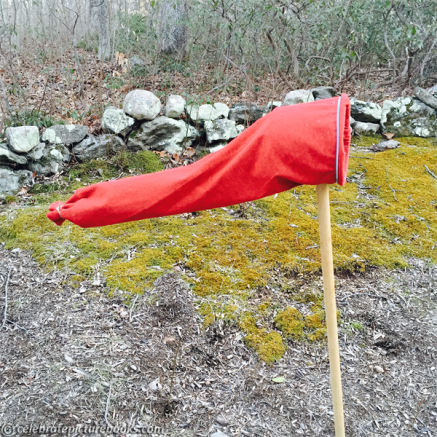
CPB - Windsock

Catch the Wind! Windsock


You can feel the wind in your hair and see it blowing through the trees, but can you actually catch it? You can with this easy-to-make windsock!

Supplies

  • 1 large yogurt container (32 oz) or 1-pound deli salad container
  • 1 long-sleeve T-shirt
  • Strong glue
  • Dowel, 5/8 diameter x 48-inches long or longer
  • String
  • Rubber band
  • sewing seam ripper or cuticle scissors
  • X-acto knife
  • Scissors

Directions

  1. Remove the sleeve from a long-sleeve t-shirt with the seam ripper or cuticle scissors
  2. Cut the shoulder off the sleeve by cutting straight across from the underarm seam
  3. Cut 2 inches from the bottom of the yogurt container OR cut the bottom out of the deli container with the x-acto knife or scissors
  4. With the x-acto knife or scissors, make a hole a little smaller than the diameter of the dowel about 1 inch from the rim of the container
  5. Slide the container into the large opening of the sleeve
  6. Fold about a ¾ -inch edge over the rim of the container and attach all along the rim with strong glue
  7. Put the rubber band around the outside edge of the opening
  8. Tie the bottom of the sleeve’s cuff together with the string
  9. To attach the dowel: Option 1: leaving the t-shirt in place, push the dowel and material through the hole in the container. The t-shirt material will hold the dowel in place (I used this option).  Option 2: cut a small hole in the t-shirt at the location of the hole in the container. Push the dowel through this hole and the hole in the container. Secure with strong glue
  10. Stick your windsock in the ground in an open area where it can catch the wind. As the wind changes direction, you can turn your windsock so the opening faces the wind.

April 11 – National Pet Day

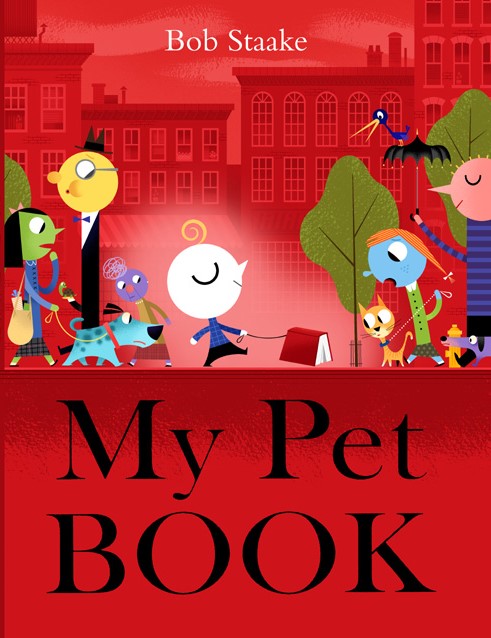
celebrate-picture-books-picture-book-review-my-pet-book-cover

About the Holiday

Pets are often our best friends—they love us unconditionally, are always there for us, and make us laugh. Today we celebrate pets—whether they’re as small as a goldfish, as large as a horse, or as unique as…well, you’ll see as you read on. National Pet Day also raises awareness of the number of animals available for adoption and encourages people to donate to animal shelters or consider taking a dog, cat, bird, or other pet into their family. If you already have a pet, observe the day by giving them an extra pat, offering a special treat, or spending more time with them.

My Pet Book

By Bob Staake


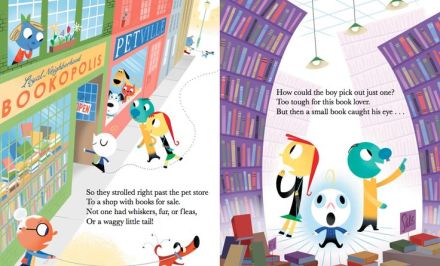
In a town named Smartytown a little boy has a most unusual pet—a book! Not one for puppies and allergic to kittens, he wants a pet that’s “easy.” His mom and dad suggest a book, and the family heads to the bookstore to adopt one. The shelves are so full of appealing potential pets that it’s hard to choose. But then the little boy spies a small “frisky red hardcover,” and it’s love at first sight.

celebrate-picture-books-picture-book-review-my-pet-book-choosing-pet

Copyright Bob Staake, courtesy of Random House Books for Young Readers.

The tiny book turns out to be the perfect pet—it doesn’t need food or water, its cover never sheds or hides fleas, it never needs a bath, and best of all there’s no housebreaking required. The boy takes his pet for walks in the evening, finding it superior to dogs that yap and run away and cats that constantly purr and lick their fur.

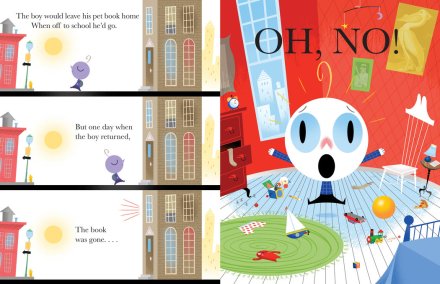
With his new pet, the boy’s days are full of adventure, fun, and excitement. He can’t wait to get home from school and spend time with the little book. But one day when he walks into his house, the boy discovers that his best friend is gone. “‘He ran away! He ran away!’ / The boy began to bleat. / ‘How could a pet book run away / Without a pair of feet?’”

celebrate-picture-books-picture-book-review-my-pet-book-book-gone

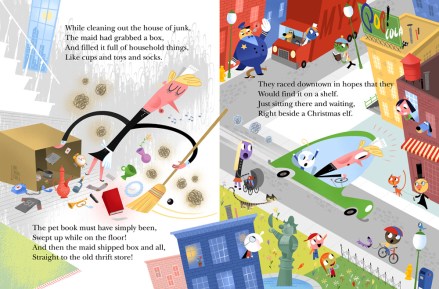
Copyright Bob Staake, courtesy of Random House Books for Young Readers.

Soon the answer comes: “The maid could hear the crying boy. / (That sound was such a rarity.) / ‘I think I know what happened…’ (gulp) / ‘I gave your book to…charity.’” The boy and the maid race downtown to the thrift store, hoping to find the beloved book. They search through clothes, and furniture, through toys and shelves of books, but the little pet is nowhere to be found. There is only one conclusion—the book has just been sold!

The boy and maid sit down to cry, but then the maid has an idea. Maybe their pet is only hiding, Suddenly the boy remembers something that caught his eye in the dog-and-cat-stuff aisle. They race over to where a lone dog house sits. The boy says, “‘If I were just a scared pet book, / I’d likely sneak in here. / Perhaps the dark would help me hide, / And make me disappear!’”

celebrate-picture-books-picture-book-review-my-pet-book-searching-for-book

Copyright Bob Staake, courtesy of Random House Books for Young Readers.

He reaches in and discovers his pet book just waiting for him. The boy checks his pet over carefully and finds him well from cover to cover. The boy and the maid drive home relieved. Although they are tired, this crazy day has a happy ending, and now the boy and his pet have their own special story to share.

Perhaps Bob Staake is onto something in this humorous page-turner. Don’t we love our favorite books just like pets? And when they’re mysteriously missing, don’t we search and search for them? Through fast-paced and cleverly worded verses, Bob Staake leads his readers on a jaunt of book love that includes love, excitement, companionship, suspense, and a happy ending. What more can you ask for from a book—or a pet?

Staake’s vibrant and whimsical illustrations create a world all its own yet rooted in the here and now. A bit surreal, a bit silly, the action-packed scenes will have kids giggling and searching for every detail.

For book lovers, pet lovers, and those who love a good story, My Pet Book is perfect for snuggling up with.

Ages 3 – 7

Random House Books for Young Readers, 2014 | ISBN 978-0385373128

National Pet Day Activity

CPB - Pet Day Word Search

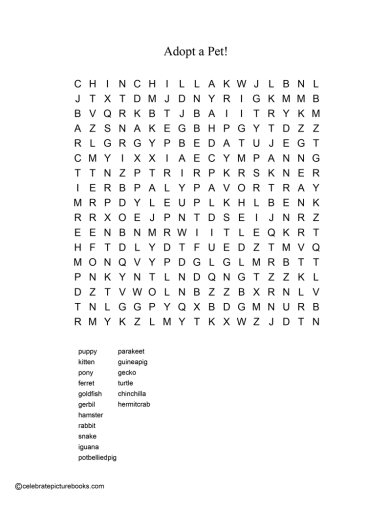
Adopt a Pet! Word Search

There are so many awesome pets to choose from! Can you find all the animals in this fun printable Adopt a Pet! word search?

Picture Book Review

April 10 – National Sibling Day

sisters & brothers by Steve Jenkins and Robin Page picture book review

About the Holiday

Brothers and sisters, huh? Sometimes you can’t live with them—but you’d never really want to live without them! Sure the bad part is that they know all your secrets and your quirks and you vie for that last cookie, but the good part is that they know all your secrets and your quirks and you didn’t really want that last cookie anyway.

Today do something fun with your sibling or siblings or tell them you love them—or both!

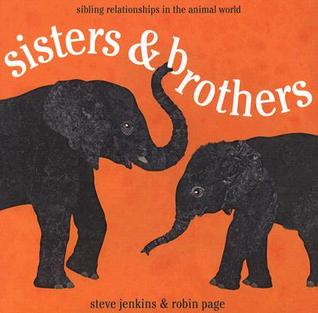
Sisters & Brothers: Sibling Relationships in the Animal World

By Steve Jenkins and Robin Page


You know that most animals are born in a litter or with one or two other siblings, but do you really consider that they are brothers and sisters just like human siblings? You might wonder if they have the same kind of relationship with each other that people do. How do they get along? How do they communicate? Do they stay together or go their separate ways? Sisters & Brothers: Sibling Relationships in the Animal World reveals the answers to these questions and more about 21 animals from around the world.

Would you like to be a clone of your brother or sister? Maybe not so much. If you were a nine-banded armadillo, though, you’d have no choice. These armadillos are always born four at a time—all females or all males—and are identical in every way! They stay with their mother until they are four months old and then set off on their own adventures.

If there are a lot of women and girls in your family, you may feel as if you’ve been born into a community of whiptail lizards. In the world of whiptails, there are no males! While their unusual reproduction method may avoid some battles, the identical traits of these creatures leaves them vulnerable to disease or changes in their environment.

Are you the youngest in your family? If you were a naked mole rat, you’d have to lie on the floor of your narrow tunnel and let your older siblings walk over you to pass. Mole rats aren’t the only ones who have worked out a hierarchical system. Brother bears fight fierce battles until the weaker one leaves to find his own territory, and black widow spiders even eat their weaker brothers and sisters!

Many animal siblings get along, however, and even help each other grow strong and develop important traits. Two of the fastest animals on earth—cheetahs and peregrine falcons—practice hunting techniques on each other, acquiring speed and accuracy along the way. There are even wildlife families that include adopted members, such as the cichlid fish and myna birds.

These are just a few of the intriguing animals readers will discover in this unique look at the world’s wild kingdom. Each animal is beautifully rendered through large cut or torn paper collages that enhance the short text, perfect for a child’s attention span. The final pages offer more information on each creature, and a list for further reading is also included.

Ages 4 – 8

Houghton Mifflin Harcourt, 2008 | ISBN 978-0547727387

National Sibling Day Activity

CPB - Heart Jar

I Heart You! Jar


Sometimes it’s hard to say “I love you” (or even “I like you”) to siblings. But sisters and brothers like to know they’re important to each other. Here’s a gift you can make to give them that will tell them what is in your heart.

Supplies

  • A clear jar with a lid—you can use a recyclable jar or buy a mason jar or other decorative jar at a craft store
  • Red felt
  • Scissors

Directions

1. Cut red hearts from the felt

2. Add hearts to the jar—you can add as many as you like and continue to fill the jar after you’ve given it to your sibling. Here are some ideas:

  • Add one heart for each year you have known your sibling
  • Add one heart for each thing you love about your sibling (write those traits on the hearts)
  • Give a new heart whenever your sibling does something nice for you

3. Give your I Heart You! jar to your sister(s) and/or brother(s)

April 9 – Cherish an Antique Day

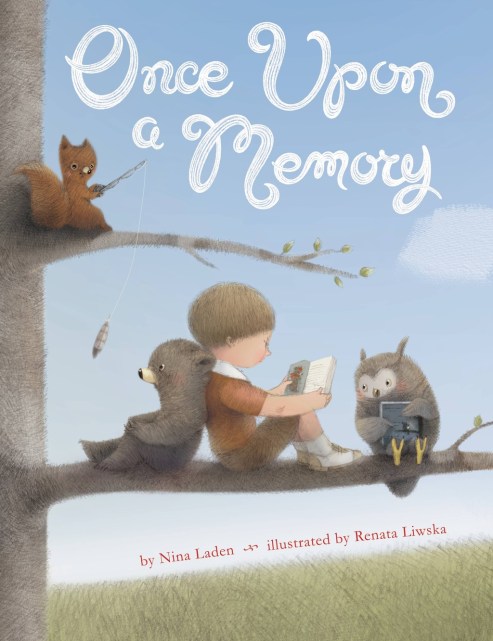
Once Upon a Memory by Nina Laden and Renata Liwska Picture Book Reivew

About the Holiday

When you look at an antique chair with its faded upholstery or a brooch handed down from your great-great-grandmother, do you ever think about the day when it was new? Imagine the excitement of sitting in the chair for the first time or opening the jewelry box on a shining pin. Today we remember our collective and individual treasured past, held in the objects of days gone by. Cherish an Antique Day is a perfect time to learn more about the stories of any antiques you may own.

Once Upon a Memory

Written by Nina Laden | Illustrated by Renata Liwska


This stunning, quiet book is so evocative in its premise that certain lines can bring a lump to your throat even before you reach the endearing end. A little boy sits in his playroom surrounded by his stuffed toys and pet dog, enjoying a tea party. A feather blows through the window, eliciting the question, “Does a feather remember it once was…a bird?” and then more musings: “Does a book remember it once was…a word?”

The simple patterned phrasing and rhyming couplets lend the story a surprising suspense as the reader tries to guess what one-time material or emotion transformed into another before the clever answer is revealed: “Does a statue remember it once was…stone? Does an island remember it once was…unknown?”

In the last pages the queries become more personal—“Does love remember it once was…new? Does a family remember it once was…two?” Adult readers will recognize where the reflective path leads, giving this book a deeper level of meaning for both adults and children: “Does the world remember it once was…wild? Will you remember you once were…a child?”

The question is not an idle one. In these busy, stressful times it’s good to remember what it meant—and means—to be a child.

Nina Laden’s subtly anthropomorphic world invites readers into a new realm of imagination as well as reality. Readers and listeners receive a new perspective on life as Laden’s poetic voice opens up a wide world of possibilities.

Renata Liwska’s illustrations are simply adorable and represent each couplet with depth and imagination. The feather that blows in the little boy’s window comes not from some single, random bird, but from a happy barber shop where an owl is getting a haircut. “Book” is both the volume lovingly read by the boy and the word painted on a busy bookshop sign. Liwska’s sweet bears, squirrels, beavers, birds, raccoons, bats and more as well as the tiny boy are rendered in gauzy browns, grays, reds, and yellows that are as soft and comforting as a favorite memory.  Once Upon a Memory would be a perfect companion on a walk, a trip, or during times of waiting, where readers and listeners could make up their own “once was” pairs. Its cadence also makes it a nice, comforting bedtime book.

Ages 4 – 7

Little Brown and Company, 2013 | ISBN 978-0316208161

Cherish an Antique Day Activity

CPB - Antique Day

Share the Stories of Your Antiques


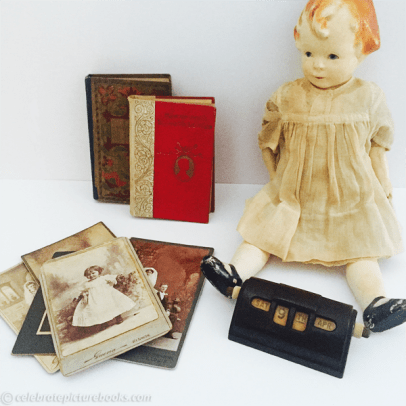
Whether you have old photographs of great-great-grandparents or special heirlooms, today’s holiday is a wonderful time to share them and the stories behind them with children. The feeling of being part of several generations or holding history in your hands is exciting and comforting and can lead to more understanding and closer relationships.

Adults can collect a few family heirlooms and/or photographs to share with children. Children can choose which of their toys, books, or other favorite objects they think will last to become a cherished antique in the future.

Take time to get together and discuss the objects you’ve collected with a cup of tea or hot chocolate and some special treats.

April 8 – National Zoo Lovers Day

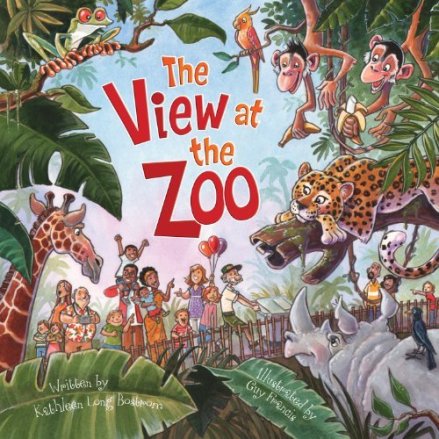
The View at the Zoo by Kathleen Long Bostrom and Guy FrancisAbout the Holiday

Zoos are wonderful places to see and learn about exotic animals from around the world. In addition to creating educational exhibits, zoological experts are involved in the preservation of endangered species. To celebrate the day, you might visit your local zoo, donate your time or money to further a zoo’s mission, or consider “adopting” a zoo animal—many zoological institutions offer this fun and rewarding program.

The View at the Zoo

Written by Kathleen Long Bostrom | Illustrated by Guy Francis


“Rise and shine! Attention, please! Monkeys get down from those trees!” So calls the zookeeper as he begins his rounds, waking up the zoo animals to greet another day of visitors. Once the bear cubs are up, the lion’s mane is combed, the elephant has wiped his nose, and the giraffes are standing tall, the gates are flung open.

The day is full of excitement, observations, and education—“My, what silly things they do, all these creatures at the zoo.” Some creatures walk and waddle to an inner beat. Some carry babies in pouches or on their backs while others are noisy—howling and shrieking. And look at how some love to eat! There are those who primp to stay neat and clean, and those that will nip your fingers if you get too close!

Yes, the zoo is full of intriguing specimens! As the sun goes down the visitors head for the exit, and the animals watch them leave. It’s been another good day; those people put on quite a show! The owl exclaims, “What a hoot! Folks have no clue the view that we have at the zoo!”

The View at the Zoo is a perfect union of words and illustration. Kathleen Long Bostrom’s text tells the story while Guy Francis’s illustrations reveal the meaning of the story. Kids will have fun picking the animal and people pairs out of the crowd who are “dancing to their own inner beat,” carrying babies on their backs or in pouches, making noise, chowing down, getting clean, and flashing dangerous teeth. This zoo is colorful, wild, and populated with animals happy to study the exotic creatures on the other side of the fence.

Ages 3 – 6

Ideals Children’s Books, 2010 | ISBN 978-0824956295

National Zoo Lovers Day Activity

CPB - Zoo Day Word Search II (2)

Round up the Animals! Word Search


Find all the animals in the zoo! Print this Round Up the Animals! word search and have fun! Here’s the Solution.

April 7 – International Beaver Day

The Flying Beaver Brothers and the Crazy Critter Race by Maxwell Eaton III

About the Holiday

Beavers are pretty amazing creatures. With their prominent teeth these largest members of the rodent family cut down large trees. They use the bark, buds, and small twigs for food then gnaw the trunk and branches into smaller parts and build dams that are just about as strong as anything people can construct. These dams can help prevent floods, clean the water supply, and restore wetlands. The largest beaver dam is in Wood Buffalo National Park in Alberta, Canada.

Beaver Day is celebrated to bring awareness to the declining beaver population and to promote their protection.

The Flying Beaver Brothers and the Crazy Critter Race

By Maxwell Eaton III


The flying Beaver brothers are back in a vine-popping, lasso-swirling adventure! Bub is reading Penguin Giant to Bob and Bob when Ace comes home with an intriguing ad for The Crazy Critter Race. The winner will receive—not pancakes as the penguins hope—but a free houseboat. The house Bob and Bob built for the Beaver brothers is a little less than desirable, so Ace and Bub swim over to Critter Houseboat Sales and Service to sign up.

There they meet the yeehawin’ cowboy hat-wearin’ crazy critter who has organized this unusual event. They also encounter the rope-snapping Raccoon sisters, and the competition is on! Crazy Critter explains the rules of the race: It seems the islands’ trees have been destroyed by ornery baboons, so the object of the race is to replant trees from a jar of seeds Crazy Critter gives them. The first team to reach the top of each mountain must plant one seed. The team who completes the race and rings the bell at the finish line will win a houseboat.

The racers take off, but the Beaver brothers and Raccoon sisters soon leave the rest of the competition in their wake. They both run to the top of the first mountain and plant their seeds. With a Rugga Rugga and a loud Brorg! two enormous vines break the earth and thunder toward the sky! In all the mayhem Ace and Bub’s jar of seeds opens and spills its contents on the beach.

In the blink of an eye, vines are shooting out of the ground and grabbing everything in sight. In fact, “Everything Vine” is the name of this Kudzu cousin because it covers everything. Ace and Bub go to work with their gnawing teeth, but even they are no match for the vine. Unaware of the disastrous consequences, the Beaver sisters use some pretty impressive moves to get ahead even as they continue planting seeds.

Now vines are erupting willy-nilly, threatening every land mass and even Beaver Island. Crazy Critter denies all knowledge of the fatal seeds, but has a solution of his own—if the islands are uninhabitable, he will sell houseboats to all the ex-habitants. Crazy Critter finally fesses up to his evil plan, but what can anyone do now? The vines are taking over!

The Beaver brothers look at the Raccoon sisters and the Raccoon sisters look at the Beaver brothers. They know that by working together they can save the islands. The Raccoon sisters use their awesome roping skills to gather the vines while the Beaver brothers chomp them in half, destroying them. Beaver Island is saved!

But who wins the houseboat? Let’s just say Crazy Critter isn’t so crazy after all.

This graphic novel-style book—the 6th in the series—will appeal to reluctant readers as  well as kids who enjoy a wild, humorous adventure. The quick pace of the story, teamed with action-packed drawings, will keep fans of the series cheering for their familiar friends in this race that just doesn’t seem right. Kids will laugh out loud at the funny asides and sound effects. A light-hearted lesson on competition and cooperation ties the story together in a satisfying finish.

Ages 6 – 9

Knopf Books for Young Readers, 2015 | ISBN 978-0385754699

International Beaver Day Activity

CPB - Beaver craft picture (2)

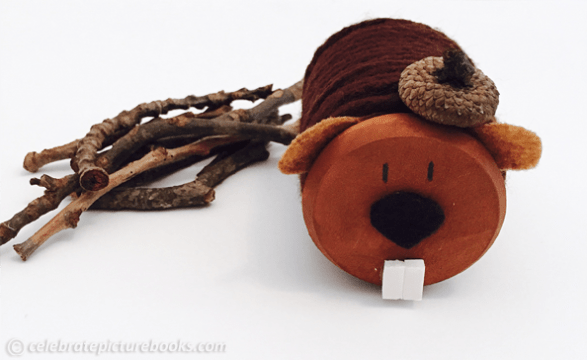
Make a Spool Beaver


Do you have a gnawing need to have a beaver of your own? Make one with this Spool Beaver craft!

Supplies

  • Printable Ears and Nose Template
  • 2-inch wooden spool, available at craft stores
  • 1 6-inch long x ¾ inch wide craft stick
  • Small piece of foam board
  • Brown “chunky” yarn
  • Brown felt, small piece for ears and tail
  • Black felt, small piece for nose
  • Acorn top for hat (optional)
  • Brown craft paint
  • Black craft paint
  • Black marker
  • Strong glue
  • Paint brush
  • Scissors

CPB - Beaver craft picture with tail

Directions

  1. Print the Ears and Nose template
  2. Paint the spool with the brown paint, let dry
  3. Cut the ears from the brown felt
  4. Cut the nose from the black felt
  5. Cut a piece from the end of the craft stick
  6. Paint the craft stick brown or black, let dry
  7. Cut two small pieces from the foam board, ½-inch long x 3/8 inch wide
  8. When the spool is dry, glue the ears to the spool, leaving the ears sticking up over the rim of the spool
  9. Glue one end of the yarn to the spool
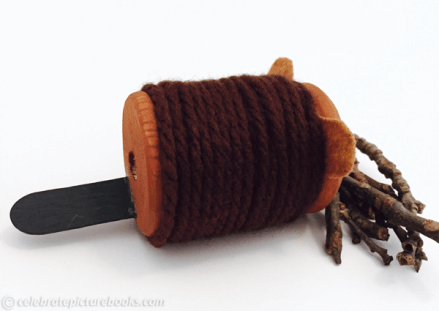
  10. Holding the spool horizontally, wind the rest of the yarn around the spool back and forth from front to back. Glue the end to the body of yarn. This will be the bottom of the beaver.
  11. Glue the nose over the hole in the spool
  12. Glue the teeth below the nose
  13. Glue the flat edge of the craft stick to the back of the spool to make the tail