June 16 – Dump the Pump Day

celebrate-picture-books-picture-book-review-good-trick-walking-stick-cover

About the Holiday

There’s no better time than early summer to consider “dumping the pump” and traveling by foot, bicycle, scooter, skates, skateboard…there are so many options! Leaving the car at home saves on gas costs, is better for the environment, and leads to a great exercise workout. Today, grab your walking or tennis shoes and with a friend or alone, take an example from the subject of today’s book and enjoy the pleasure of traversing the outside world!

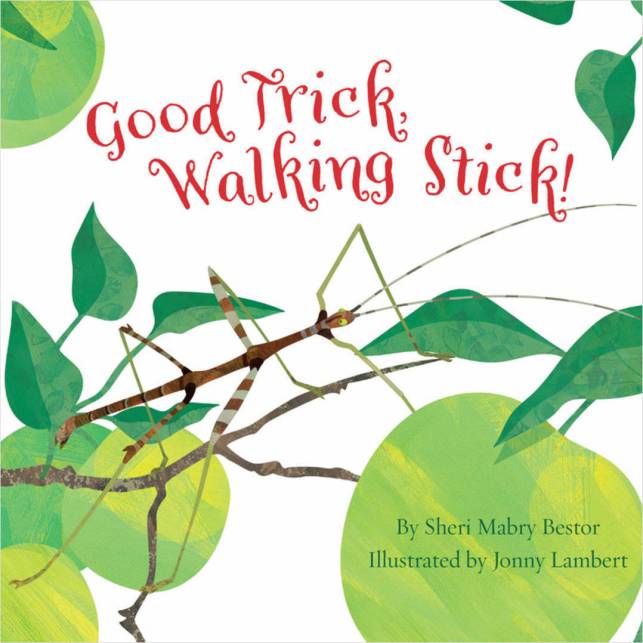
Good Trick, Walking Stick!

Written by Sheri Mabry Bestor | Illustrated by Jonny Lambert


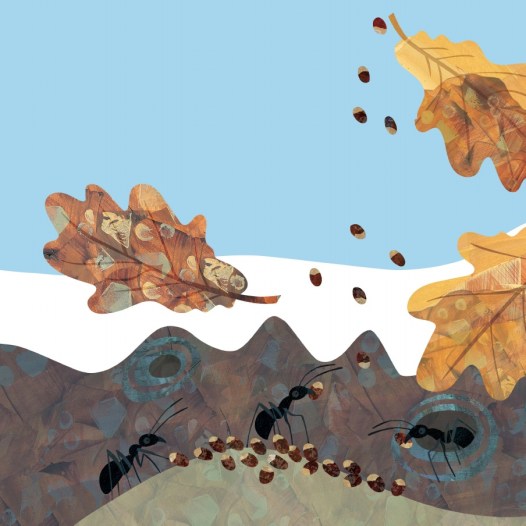
The walking stick is one insect that knows a thing or two about tricks. Even before it’s born wile plays a part in its survival. A mother walking stick drops her eggs where they will be buried by autumn leaves—and found by ants that think they are delicious seeds to eat. Why would a mother purposefully do this?! She knows that the ants will take the eggs to their colony, where they will eat only the tops leaving the baby walking sticks undisturbed. The ants will then drag the remains of the “seeds” to their garbage dump area, where they will spend a warm winter safe from predators until spring.
celebrate-picture-books-picture-book-review-good-trick-walking-stick-interior-art-eggs

In the spring a baby hatches. It look like a tiny twig—a twig that can walk! The baby searches for food and munch, munch, munches the leaves it finds. As it becomes bigger it molts, shedding its old skin and growing a new one. The walking stick looks just like the branches that it lives on. It is perfectly camouflaged! “Good trick, walking stick!”

But a bird with keen eyesight swoops down and in an instant grabs the walking stick in its beak. Quickly, the walking stick squirts out a bad-smelling juice. The bird spits it out, but has gained a snack while the walking stick has lost a leg! It’s okay, though; the walking stick will just grow a new one! “Good trick, walking stick!”

The walking stick finds a tree with others of her kind hidden in its branches. The leaves make delicious meals. During the day the walking stick can change color to blend in with the sunlit bark of the tree and stay cooler. At night the walking stick becomes darker to hide in the shadows and stay warm. “Good trick, walking stick!”

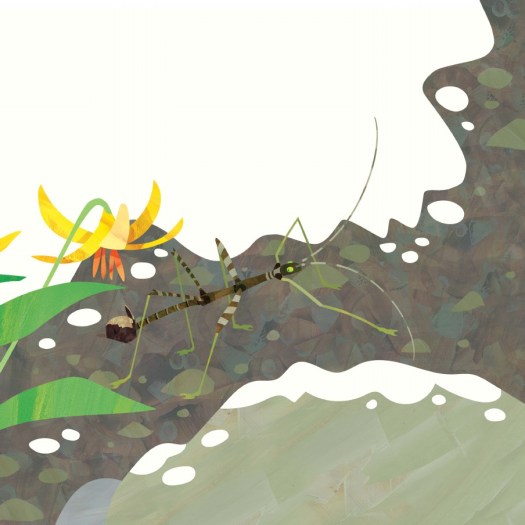
When a squirrel brushes past, looking for a meal, the walking stick “pulls in her legs and drops to the forest floor, just like a stick falling off a larger branch. The stick insect is safe.” All day the insect lies on the ground, not moving, pretending to be just another cutting. At nightfall the walking stick climbs back into the tree. The squirrels and birds are resting now, so the stick insects “Munch munch. Crunch. Munch.”
celebrate-picture-books-picture-book-review-good-trick-walking-stick-interior-art-camouflage

With the onset of fall stick insects begin looking for mates. The females “spritz their perfume into the cooling air.” Males find them. Even if a walking stick does not have a mate, she can still produce eggs which will all develop into females. The eggs settle into the fallen leaves, ready to begin their unique life. “Good trick, walking stick!”

Stick insects are some of the most unusual creatures in the world. Measuring from an inch or two to 21 inches (53 centimeters), they can be found in forests, parks, even your own backyard! Sheri Mabry Bestor’s story of a year in a walking stick’s life is filled with action, suspense, and the clever ploys stick insects use to survive. Bestor’s enthusiastic, conversational tone and evocative language will engage kids over a wide range of ages. Each page also contains fascinating scientific sidebars that expand on the events in the story.

Jonny Lambert’s collage-style illustrations are a perfect match for the text. The mottled hues and textures of nature are beautifully represented in the vibrantly colored two-page spreads. The scientific details of the stick insect’s life are clearly and organically depicted, making it easy for kids to understand and enjoy the concepts: on one page ants carry away eggs with missing tops while on the next baby walking sticks emerge from the same images. Illustrations of the stick insect’s camouflage are particularly effective, and the cyclical quality of the story and the insect’s life are well portrayed.

For teachers and for kids who love the natural world and are curious about its unique creatures, Good Trick, Walking Stick is a wonderful addition to their school or personal library.

Ages 5 – 9

Sleeping Bear Press, 2016 | ISBN 978-1585369430

Dump the Pump Day Activity
celebrate-picture-books-picture-book-review-walking-find-the-differences-puzzle

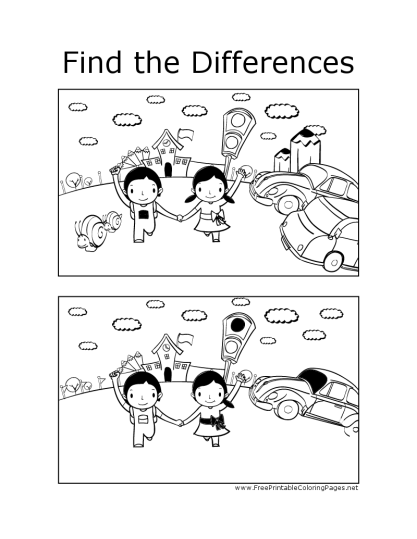
Take a Stroll Puzzle


You can see so many amazing things when you take a walk! But can you spot the 15 differences between the two pictures in this printable Take a Stroll puzzle?

June 10 – It’s Pet Appreciation Week

celebrate-picture-books-picture-book-review-excellent-ed

About the Holiday

Pets give us so much love and joy that we often want to do something special for our furry friends in return. The first full week of June gives us just that opportunity! Why not spend a little extra time walking or cuddling with your pet? Or maybe make them a favorite treat or get them a new toy. However you celebrate, you know your pet will appreciate it!

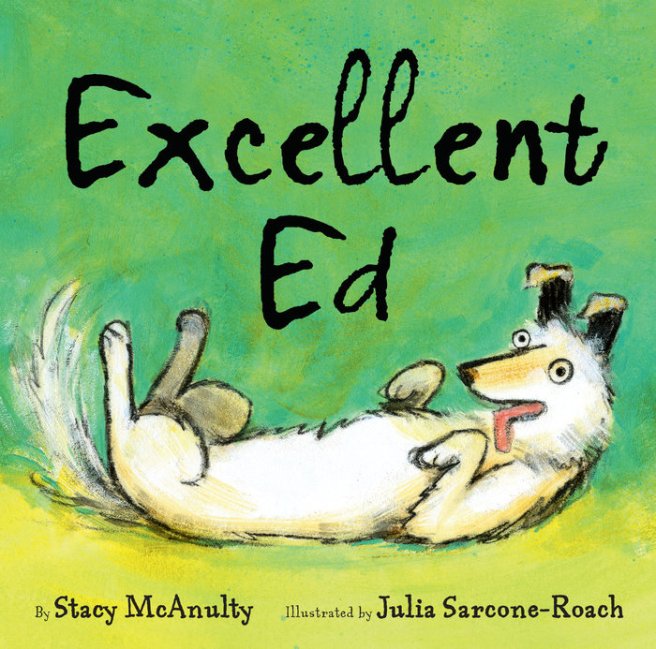
Excellent Ed

Written by Stacy McAnulty | Illustrated by Julia Sarcone-Roach


Ed, the Ellis family dog, is feeling a little left out. All five of the children are excellent at something, but not Ed. All the Ellis kids can eat at the table, ride in the car, sit on the couch, and use the indoor bathroom, but not Ed. Each kid has his or her own talent—playing soccer, calculating math, dancing, and baking cupcakes—and while Ed can carry a ball in his mouth, count to 4, spin after his tail, and eat cupcakes, it’s just not the same.

One day Ed wonders—if he was excellent at something could he have the same perks as the kids? He considers his talents and comes up with something. He knows he’s great at breaking stuff! Surely this will earn him a place at the dinner table. But even before he gets going, Elaine runs in with the news that she’s broken the record for most soccer goals in a season. Ed realizes that Elaine is better at breaking stuff than he is.

Again Ed thinks. Suddenly it dawns on him that he’s excellent at losing things—he even lost himself last week! This kind of ability was surely worth a ride in the van. But just as he’s about to jump in, the twins shout, “I’ve lost a tooth!” Foiled in this attempt, Ed goes back to the drawing board. Hmmm…it was just there…oh, yeah! Ed is fantastic at forgetting stuff! After proving to Dad that he doesn’t remember he ate a minute ago and ready to take his place on the couch, Ed is thwarted again by Edith, who forgot to be nervous during an audition and is now the lead ballerina.

Ed whimpers. Is there nothing he’s most excellent at? Maybe he doesn’t even belong in the Ellis family. Just then Ernie drops his sandwich and Ed gobbles it up, leaving no crumbs on the floor. “‘Wow, Ed! You are excellent at cleaning the floor,’” Earnie says. When Emily and Elmer come home, Ed runs to meet them and covers them in kisses. “‘Ed! You’re excellent at welcoming us home,’” the twins exclaim. Later, with the couch stuffed with Ellises, Ed lays across Edith’s and Elaine’s feet. “‘Ed is excellent at warming feet,’” Elaine and Edith agree.

Ed wags his tail—he is an excellent floor cleaner, welcomer, and feet warmer! Now he knows why he doesn’t sit at the table, stays home instead of riding in the van, and doesn’t join the family on the couch. He realizes that he is an important part of the Ellis family, and that he’s always loved and appreciated. Now, if only he could figure out that indoor bathroom thing….

There comes a time in everyone’s life when they doubt their place in the world. Stacy McAnulty explores that feeling through Ed, who worries, works the problem, and discovers that he is without a doubt excellent just the way he is. Giving the Ellis kids a variety of ages and talents makes this a great universal book for readers. McAnulty’s twist which turns “negative” gifts for breaking, losing, and forgetting things into triumphs for the Ellis kids is ingenious, adding humor, depth, and “ah-ha! moments” to the story. The mystery of Ed’s abilities is well-kept until the end, and the solution comes as a happy surprise.

Readers will wish they were part of the Ellis family, with their exuberant smiles, supportive cheers, snuggly, crowded couch, and, of course, adorable Ed. Julia Sarcone-Roach’s vivid illustrations are infectious as Ed perks up his ears, rolls his eyes skyward and with tongue out thinks about his situation. Scenes of his shenanigans will elicit giggles, and Ed’s sweet looks and wagging tale will win readers’ hearts.

Ages 4 – 8

Alfred A. Knopf Books for Young Readers, 2016 | ISBN 978-0553510232

Pet Appreciation Week Activity

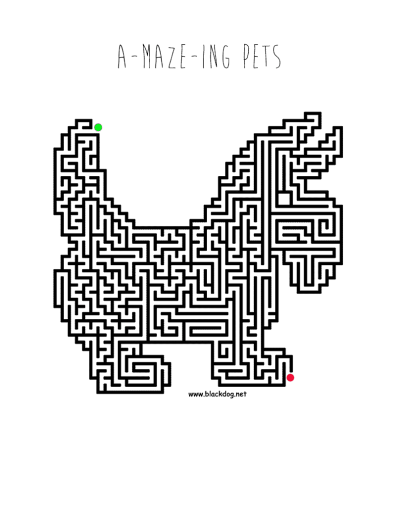
celebrate-picture-books-picture-book-review-dog-maze

A-maze-ing Pets Maze


Dogs love to take circuitous routes as they pick up scents that are too enticing not to follow! Can you find your way through this printable A-maze-ing Pets Maze

Picture Book Review

June 6 – Russian Language Day

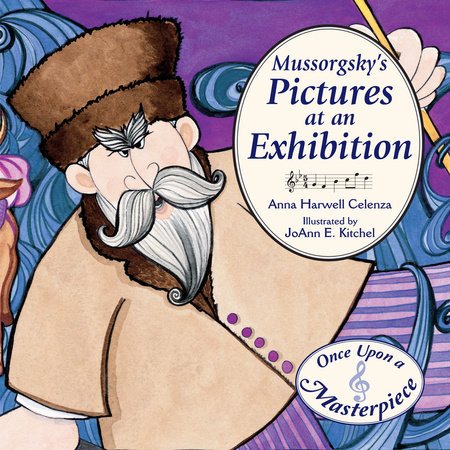
celebrate-picture-books-picture-book-review-mussorgsky's-pictures-at-an-exhibition

About the Holiday

Established in 2010 by the United Nations Educational, Scientific, and Cultural Organization, Russian Language Day honors the music, art, and other unique aspects of this intriguing country. The observance coincides with the 1799 birthday of Alexander Pushkin, a Russian poet who is considered the father of Russian literature. Celebrations include concerts, readings, and other cultural events. Today, listen to the music of a Russian composer, read a novel or short story, or learn a few Russian words!

Mussorgsky’s Pictures at an Exhibition (Once Upon a Masterpiece Series)

Written by Anna Harwell Celenza | Illustrated by JoAnn E. Kitchel


It’s the 1870s and Russian culture is enjoying a resurgence. Young musicians and artists are excited to be recognized by the world. Three friends—Modest Mussorgsky, a musician; Victor Hartmann, an artist and architect; and Vladimir Stasov, an art critic—have big plans for their work. Victor, especially, has dreams of designing the new City Gate in Kiev. But on July 23, 1873 Victor suffers an aneurysm and dies. Modest is devastated. He feels that Victor’s death is his fault because he had dismissed Victor’s complaints about a headache only days before. Although Vladimir tries to comfort his friend, Modest pushes him away.

Modest stops going out, he stops being happy, and he stops writing music. Meanwhile Vladimir organizes an exhibition of Victor’s art so everyone will remember him. Vladimir and other friends think that seeing Victor’s work displayed will help Modest come to terms with his friend’s death. When the exhibit is ready, Vladimir visits Modest to invite him to come. When Modest refuses, Vladimir locks the door, puts the key in his pocket, and tells Modest he had two choices: either go to the exhibition or have a new roommate in Vladimir. Modest reluctantly agrees to go.

When they reach the gallery, Modest reluctantly enters. He is awestruck. “Every inch was filled with Victor’s hopes and dreams, his fears, and his greatest triumphs.” Slowly Modest wanders through each room, gazing at the paintings that bring back such vivid memories. He sees familiar faces, costume designs, children, couples, peasants, even Baba-Yaga, a witch from Victor’s favorite fairy tale.

Modest stops in front of Victor’s picture “The Great Gate of Kiev.” Tears fill his eyes and he thinks, “This was to be your greatest achievement…now it will never be more than a dream. If only I could build it for you.” He studies the picture for a long time, and suddenly an idea comes to him—“Maybe I can build it for you!” He dashes from the gallery straight to his piano.

As Modest thinks about Victor’s art, “one by one the spirit of each picture filled the room.” The images rise from the piano and Modest follows them from one theme to another, note by note. Some passages he plays are slow and sad, others clear and quick, while still others flutter or whisper. Even Baba-Yaga makes an appearance. With each chord special parts of Victor came to life until the last majestic strains built the Great Gate of Kiev in music. Modest calls his composition Pictures at an Exhibition.

With the spirit of his friend Victor in his heart. Modest Mussorgsky goes on to compose operas and visit with friends. Vladimir Stasov also follows his dreams to travel far and wide, and wherever he goes he tells people about Victor and Modest’s Pictures at an Exhibition

Anna Harmann Celenza relates the heartfelt story of the origins of Modest Mussorgsky’s great work with sensitivity and honors the emotional origins and effect of his Pictures at an Exhibition. The hopes of the three friends as well as the details of Victor’s artwork are evocatively described, allowing children to easily picture the feelings and objects that influenced Mussorgsky’s music.

Both the colorful architecture of Russia and the soaring notes of Mussorgsky’s music are beautifully depicted in JoAnn E Kitchel’s illustrations. Each one-and-a-half-page spread depicting scenes of St. Petersburg, Modest’s apartment, the art gallery, musical imagery, and the theater is framed in lovely floral borders, tying together the themes of art and music. Rich purples, regal blues, fiery reds, and glowing yellows makes this book a feast for the eye as well as the mind.

The book is accompanied by a CD of Mussorgsky’s work, making Pictures at an Exhibition a must have for music lovers of all ages.

Ages 6 – 10 and up

Charlesbridge, 2016 | ISBN 978-1580895286

Russian Language Day Activity

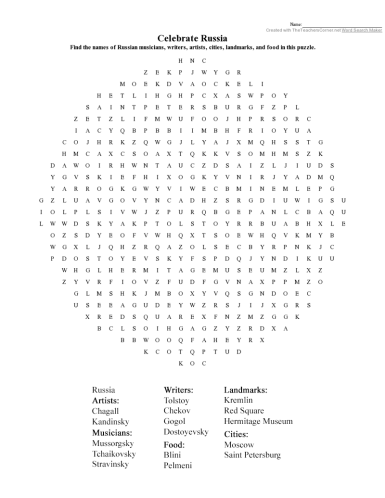
celebrate-picture-books-picture-book-review-russia-word-search

Celebrate Russia Word Search


Find the names of Russian musicians, artists, writers, cities, and more in this circular word search. Print your Celebrate Russia Word Search here! And here’s the Solution!

Picture Book Review

May 31 – Web Designer Day

celebrate-picture-books-picture-book-review-coding-games-in-scratch

About the Holiday

Today we laud all the brilliant web designers who bring us our favorite sites and make it so easy for us to shop, do business, watch videos, and play games. We can’t even imagine life without them anymore. If you know a web designer, thank them for their hard work!

Coding Games in Scratch: A Step-by-Step Visual Guide to Building Your Own Computer Games

By Jon Woodcock


Video games are so fun to play! You know you’re good at them; don’t you sometimes wish you could make one of your own? With Coding Games in Scratch, you can! In just 11 chapters you’ll discover all the basics of creating different kinds of games plus how to add special effects, cool characters, exciting backgrounds, music and sounds, and more.

Chapter 1 reveals what makes a game fun to play. Things like characters, objects, obstacles, the mechanics of the game, story, sound, speed, atmosphere, rules, goals, and difficulty levels all contribute to the playability and enjoyment of the games you create. Discussions of the various types of games and a bit about coding round out Chapter 1.

Chapter 2 introduces the programming language Scratch developed by the Lifelong Kindergarten Group at MIT. Here you’ll learn about objects, scripts, and running a program. It shows you where to get Scratch and provides a tour.

Chapter 3 welcomes you to building your first game—Star Hunter, which is a fast-paced underwater treasure hunt. Some of the things you’ll learn include setting the scene, building the script, adding sound, how to introduce an enemy, collisions, and collecting stars. Plus you’ll learn some hacks and tweaks for making your game the best it can be.

Love maze games? Chapter 4 shows you how to build Cheese Chase and help Mimi the mouse find her cheese while avoiding beetles and ghosts. Here you also learn about keyboard control, using the paint editor, making things spooky, creating intricate mazes, and how to move characters along the passages.

Chapter 5 covers Circle Wars—a quick-paced search and chase game full of clones and bouncing friendly and unfriendly circles. In Chapter 6 you’ll discover the gravity of the situation. Literally. Jumpy Monkey may love to leap, but he has to come to earth sometime!

Building Doom on the Broom from Chapter 7 introduces scene, casting spells, enemy attacks, explosions, adding harder enemies, and how to give players extra lives. Phew! Platform games are the subject of Chapter 8. You’ll find the ins, outs, ups, and downs, of jumping from platform to platform, falling, portals, progressing through levels, and more.

Racing games are covered in Chapter 9 with Glacier Race, where cars compete with the clock to avoid obstacles and gather the most gems. You’ll discover how to use game loops to keep the action happening just right, how to make a scrolling road, all about collisions and spins, and adding a penguin race official to start things off and end the race.

Music more your thing? Enjoy a brain teaser? Welcome to Chapter 10 and Tropical Tunes where you listen to drums play and then repeat the sounds you hear in an ever-growing song.

Now that you’ve learned to create video games, what’s next? Chapter 11 tells you about remixing and how to create your very own games. If you really love making games, there’s a section on the kinds of jobs there are in video gaming.

In Coding in Scratch Jon Woodcock clearly explains with text and illustrations how kids can create fun games with a good bit of complexity. Screen shots and digital imagery show kids exactly what they will encounter as they progress through the different kinds of games. Colorful pages and Woodcock’s easy-to-understand directions makes this a go-to guide for budding programmers.

So grab the book, your computer, and your creativity and start Coding Games in Scratch!

Ages 8 – 13

DK, Penguin Random House, 2015 | ISBN 978-1465439352

Web Designer Day Activity

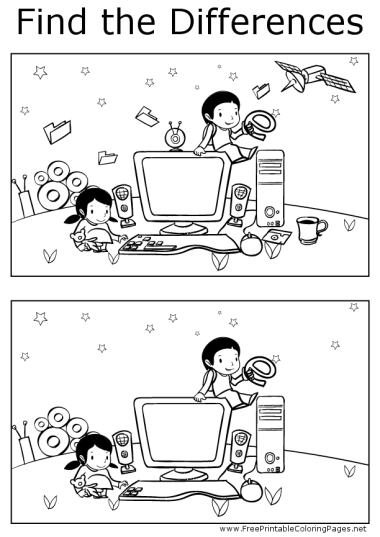
celebrate-picture-books-picture-book-review-computer-kids-puzzle

Computer Kids Find the Differences Puzzle


Whenever a designer builds a website there are bugs to work out. Can you discover the “bugs” in these pictures? Take a close look at this printable Computer Kids Puzzle and find the differences!

May 30 – Memorial Day

celebrate-picture-books-picture-book-review-the-poppy-lady

About the Holiday

Memorial Day, originally called Decoration Day to commemorate the laying of wreaths and flowers on soldiers’ gravesites, was first celebrated on May 30, 1868. In 1971 Congress passed the Uniform Monday Holiday Act and established the last Monday in May as Memorial Day. The day is honored with parades and special commemorative events. At Arlington National Cemetery in Washington DC, the President or Vice President lays a wreath at the Tomb of the Unknown Soldier

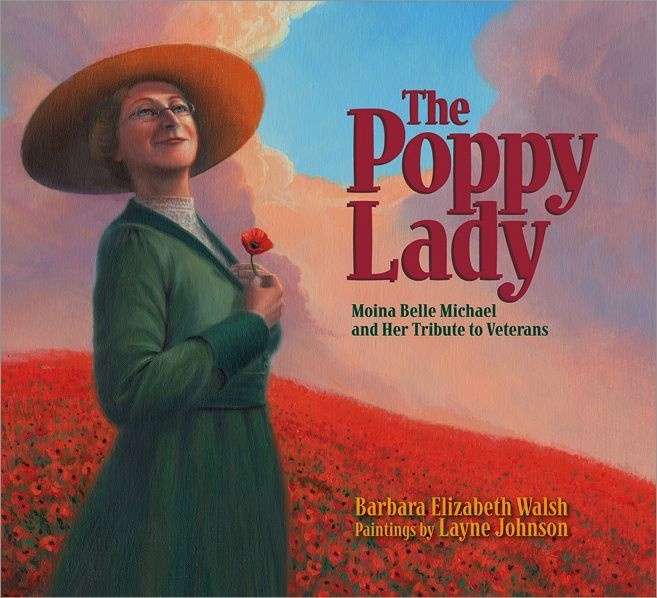
The Poppy Lady: Moina Belle Michael and Her Tribute to Veterans

Written by Barbara Elizabeth Walsh | Illustrated by Layne Johnson


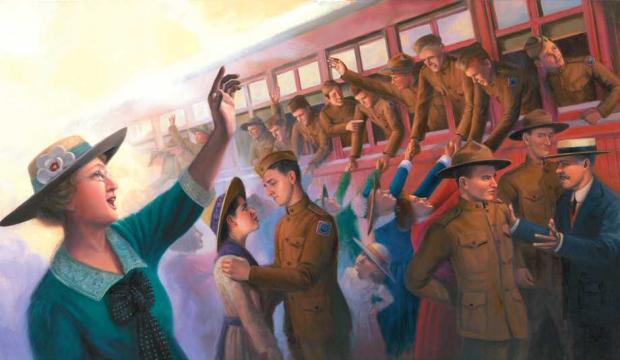
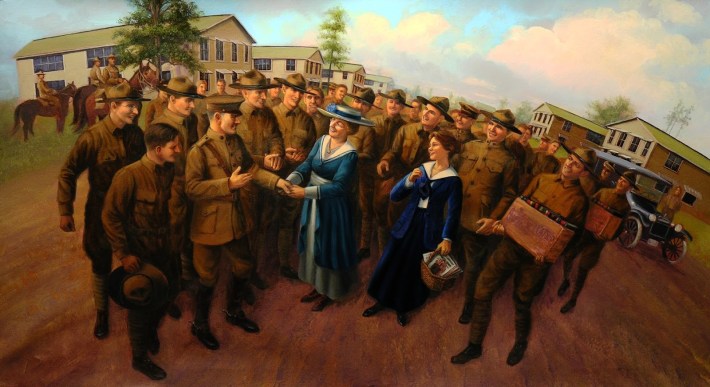
In April of 1917 President Woodrow Wilson declared that America was going to war in Europe. As a teacher and foster mother to girls at the University of Georgia’s Normal School, Moina Belle Michael wanted to do something to honor the boys going off to fight—boys who were the brothers, sweethearts, even fathers of her students. Moina did what the other women were doing to help—knitting socks and sweaters and rolling bandages—but she wanted to do more. She went to the soldiers’ camps nearby to deliver books, magazines, and candy, and she waved goodbye to them at the train station. But she still wanted to do more.

celebrate-picture-books-picture-book-review-the-poppy-lady-waving-goodbye

Image copyright Layne Johnson, 2012, text copyright Barbara Elizabeth Walsh, 2012. Courtesy of Boyds Mills Press.

Moina wanted to go overseas to help the young men with the Y.M.C.A, but after she finished her training at New York’s Columbia University, she was told she was too old to go. She then set up a desk in the basement of Hamilton Hall on the Columbia University campus where she assisted soldiers before they deployed, but the room was dark and dreary. Moina wanted them to have a more cheerful meeting place.

celebrate-picture-books-picture-book-review-the-poppy-lady-poppy-camp

Image copyright Layne Johnson, 2012, text copyright Barbara Elizabeth Walsh, 2012. Courtesy of Boyds Mills Press.

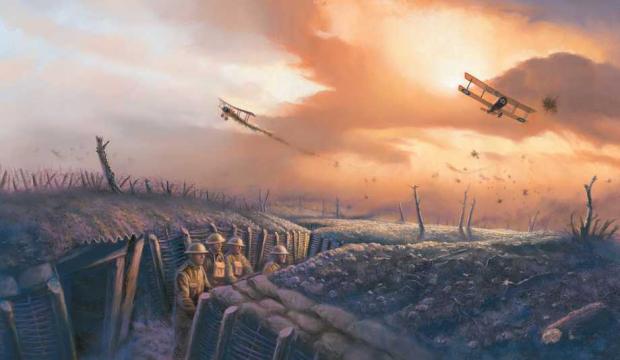
Moina brightened the room with fresh flowers she bought with her small salary. More soldiers came to spend time with her, to share their pictures, letters, and hometown news. But Moina wanted to do even more. One day she rediscovered a poem she had read many times. Titled We Shall Not Sleep, it was written by Lieutenant Colonel John McCrae and was a tribute to soldiers who had died on the battlefields of Flanders. The poem was illustrated with a field of nameless crosses and bright red poppies. The last verse of the poem urged others to take up the torch of the noble fight. Suddenly, Moina knew what she had to do.

celebrate-picture-books-picture-book-review-the-poppy-lady-war

Image copyright Layne Johnson, 2012, text copyright Barbara Elizabeth Walsh, 2012. Courtesy of Boyds Mills Press.

She wrote a poem of her own, giving poppies a special meaning: “And now the Torch and Poppy red / We wear in honor of our dead. / Fear not that ye have died for naught; / We’ll teach the lesson that ye wrought / In Flanders Field.” Moina shared her poem with soldiers at the Y. Many wanted to wear red poppies on their uniforms to honor their fallen friends. With a ten dollar donation, Moina went shopping to find artificial red poppies that she and the soldiers could wear.

celebrate-picture-books-picture-book-review-the-poppy-lady-poppy-on-coat

Image copyright Layne Johnson, 2012, text copyright Barbara Elizabeth Walsh, 2012. Courtesy of Boyds Mills Press.

But finding these flowers was difficult. She finally found one large poppy and 24 smaller ones. She pinned the large one to her coat and with the others wrapped, hurried back to the Y. There she gave the small flowers to some of the men and women leaving for the war in France. But there were so few flowers to share. Moina wanted every American to wear a poppy to remember the soldiers. Always.

The epilogue goes on to reveal that two days after Moina bought those 24 poppies, World War I ended.  While everyone was happy to see the soldiers coming home, people wanted to move on, to forget the horrors of the war. But for veterans it wasn’t easy. Jobs were scarce, some veterans were disabled or suffered lingering effects of war.

Moina wanted to help. She wondered if the poppy could benefit returning veterans. After much work she convinced local and international veterans’ groups to adopt the poppy as their memorial flower. People began donating to veterans’ causes, and in return they received a red poppy. Millions of dollars were raised to help the soldiers. Even today, Moina’s red poppies benefit veterans and remind us of their sacrifices and service.

celebrate-picture-books-picture-book-review-the-poppy-lady-moina

Image copyright Layne Johnson, 2012, text copyright Barbara Elizabeth Walsh, 2012. Courtesy of Boyds Mills Press.

Through her detailed telling of how Moina Belle Michael discovered her life’s work, Barbara Elizabeth Walsh provides a realistic view of the World War I era and the desire of most citizens to do something to help the soldiers fighting the war. The sense of suspense, comaraderie, fear, and disappointment that fueled Moina Michael’s heart and actions are beautifully and straightforwardly presented and give children true knowledge of this time period.

Accompanying the text to maximum effect are Layne Johnson’s inspiring, realistic paintings of the scars of war on both the landscape and the human heart. In close-up portraits, Johnson captures the emotions of the women learning that their brothers, boyfriends, and fathers will be joining the war effort as well as scenes of soldiers training, deploying, and returning to tell their stories. Turning the pages is like stepping onto the university campus, visiting the basement gathering space, and walking the city streets. Especially evocative are the two battle scenes and the view of the Flanders Fields with their endless carpet of poppies and straight rows of white cross markers.

For anyone wanting to teach or learn about the origins and meaning of Memorial Day and the significance of the red poppy, The Poppy Lady: Moina Belle Michael and Her Tribute to Veterans is a must read.

Ages 7 – 12 and up

Calkins Creek, Boyds Mills Press, 2012 | ISBN 978-1590787540

Memorial Day Activity

celebrate-picture-books-picture-book-review-memorial-day-word-scramble

Memorial Day Word Scramble


Unscramble the words associated with today’s holiday and discover a secret message! Print your Memorial Day Word Scramble here!

Picture Book Review

May 29 – Learn about Composting Day

celebrate-picture-books-picture-book-review-compost-stew

About the Holiday

Composting is a wonderful way to use organic waste to help the environment. Whether you keep a small composting container in your kitchen, set aside a pile in the corner of your yard, or invest in a compost tumbler, letting non-meat or dairy kitchen scraps, outdoor vegetation cuttings, and even hair or dryer lint decompose into nourishing soil additives will make your garden grow bigger and better!

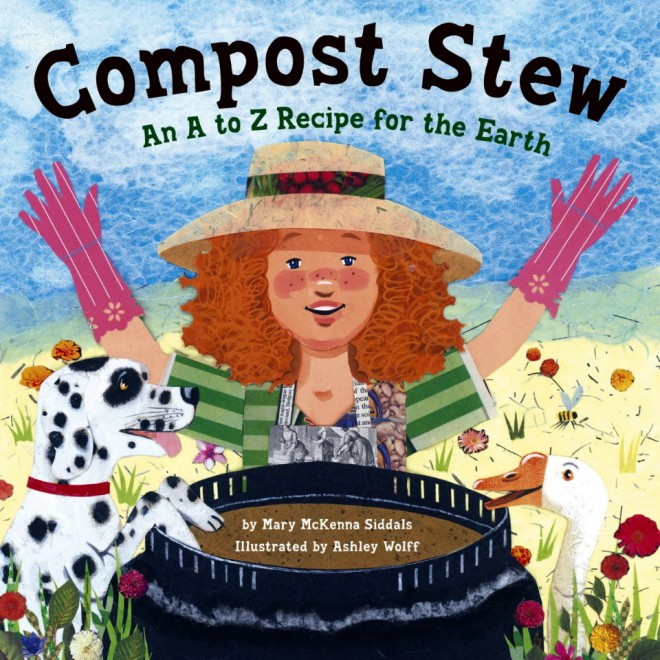
Compost Stew: An A to Z Recipe for the Earth

Written by Mary McKenna Siddals | Illustrated by Ashley Wolff


“Environmental chefs, / here’s a recipe for you / to fix from scratch / to mix a batch / of Compost Stew.” This clever alphabet book reveals the ABCs of gathering the perfect ingredients for a compost pile, which creates a nutritious meal for gardens, flower beds, and the environment:

“Apple cores / Bananas, bruised / Coffee grounds with filters, used / Dirt clods, crumbled / Eggshells, crushed / Fruit pulp left behind, all mushed / Grass clippings / Hair snippings / and an Insect or two / Just add to the pot / and let it all rot / into Compost Stew.”

The catchy rhymes and easy-to-follow directions will make kids excited about saving left-overs, raking up fallen leaves, and shredding paper to add to the pile. Readers may also be surprised by some of the other items that will decompose to make rich soil, such as seaweed, laundry lint, and teabags. Three simple steps for cooking up compost stew follow the alphabet, and create a refrain that kids will love to repeat.

Mary McKenna Siddals brings the science of composting and recycling to kids in a fun, interactive way. Children may even like to think of their own ingredients for each letter of the alphabet. The author’s note at the end of the book reveals substitute ingredients as well as items that are not appropriate or safe for composting.

Ashley Wolff’s brilliant, textured collage artwork depicts four multicultural kids (along with their helpful Dalmatian and goose) gathering the ingredients for their compost bag wherever they are—in the yard, in the kitchen, at the hair salon, at the beach, and more.

Kids interested in gardening and environmental issues will love to have Compost Stew on their bookshelf.

Ages 3 – 8

Dragonfly Books, Random House, 2014 | ISBN 978-0385755382

Learn about Composting Day Activity

celebrate-picture-books-picture-book-review-composting-word-search

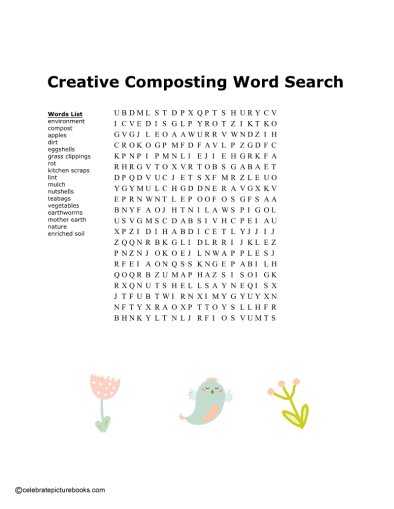
Creative Composting Word Search


Composting takes individual ingredients and combines them to create nourishing soil. Can you find the words that relate to this environmental science in this printable Creative Composting Word Search? Here’s the Solution.

Picture Book Review

May 27 – It’s National Family Month

celebrate-picture-books-picture-book-review-brothers-at-bat

About the Holiday

National Family Month was established by KidsPeace and is observed in the weeks between Mother’s Day and Father’s Day to encourage families to spend time together. Now that the school year is coming to a close, it’s the perfect time to plan some fun activities!

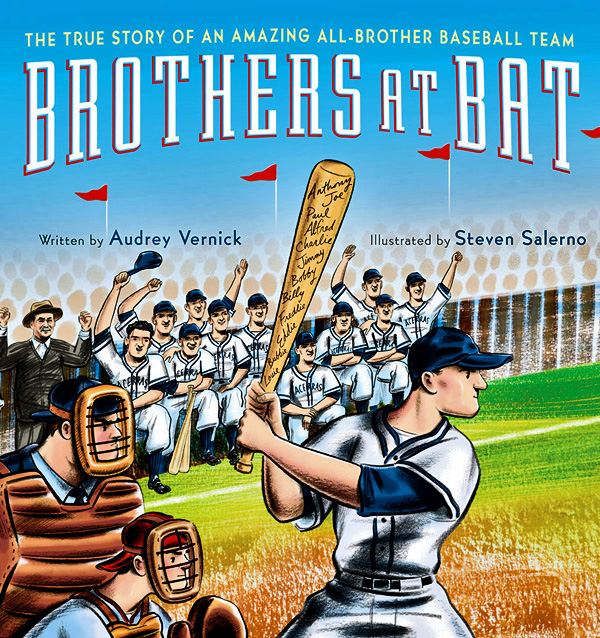
Brothers at Bat: The True Story of an Amazing All-Brother Baseball Team

Written by Audrey Vernick | Illustrated by Steven Salerno


When the weather warms and kids’ thoughts turn to sports, the afternoon air rings with the sounds of slamming doors as players race from home to the baseball diamond. Back in the 1920s and ‘30s, the same door slammed not once or twice, not three or four times, not even eight or nine! The door shut behind 12 brothers! Anthony, Joe, Paul, Alfred, Charlie, Jimmy, Bobby, Billy, Freddie, Eddie, Bubbie, and Louie Acerra. These 12 boys also had 4 sisters—but this is a story about baseball, and back then girls didn’t play ball.

It could be said that “baseball set the rhythm of their lives.” Neighbors couldn’t remember a time when Acerra boys weren’t throwing or hitting a ball or running the bases at the local park. And there was an Acerra on the high school baseball team for 22 years in a row!

In 1938 the nine oldest brothers formed a semi-pro team and competed against other New Jersey teams and teams from New York and Connecticut. Their dad was their coach. The brothers all had different skills—Anthony could hit homeruns, and even hit a couple into the Atlantic Ocean from a seaside park; Charlie was a slow runner; and Jimmy had a knuckleball that was unhittable and uncatchable.

But playing had its dangers too. In one game Alfred was going to bunt, but the ball bounced badly off the bat and hit him in the face. He was rushed to the hospital, but the accident caused him to lose an eye. Everyone thought he would never play again. But after he healed, his brothers helped him recover his skills and his courage.

During World War II six of the brothers joined the war effort and spent years apart. Far from home they dreamed of the days when they played together on warm afternoons. When the war ended all the Acerra boys came home to their very happy mother. The brothers got back to what they loved doing best. Now Anthony was their coach, and from 1946 to 1952 they won the Long Branch City Twilight Baseball League championship four times—much to the pleasure of the crowds that came out to watch the Acerras play.

As time went on the Acerras got jobs, married, and had families of their own. In 1952 the brothers played their last game as a team, having made history as the longest-playing, all-brother baseball team ever. Even though the Acerras played many, years ago, people have not forgotten them. In 1997 they were honored by the Baseball Hall of Fame. The surviving seven brothers made the trip along with one sister and more than a hundred relatives. Now Jimmy Acerra’s uniform and glove are on display alongside exhibits about Babe Ruth, Ty Cobb, and Willie Mays. If you visit the Baseball Hall of Fame, you can see them too!

Interesting and personal author’s and artist’s notes follow the text.

Baseball fans will love Audrey Vernick’s exciting, true story of this most unusual team. Her focus on the close relationship of the Acerra brothers elevates the tale from merely a sports story to one that reveals deep affection and support during difficult times. The different personalities of the brothers shine through in Vernick’s easy, conversational tone, and the inclusion of the Acerra brothers’ induction into the Baseball Hall of Fame shows that this story lives on for all generations.

Steven Salerno’s evocative illustrations will transport readers into a past where neighborhood leagues enjoyed the same level of loyalty as the majors. Capturing the brushed style, colors, and portraiture of pictures of the period, Salerno shows kids not only what it meant to be a baseball player in the 1930s and 40s, but what it meant to be a family.

Ages 4 – 9

Clarion Books, 2012 | ISBN 978-0547385570

National Family Month Activity

celebrate-picture-books-picture-book-review-we-are-all-family-word-search

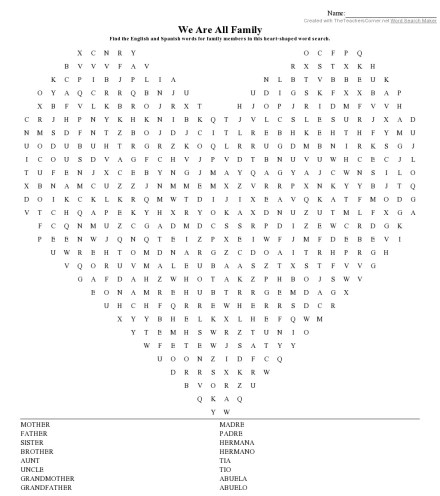
We Are All Family English – Spanish Word Search


This month is all about family! Find the words for special relatives in this English – Spanish dual language word search! Print the We Are All Family word search puzzle here! And here’s the Solution!