June 25 – It’s National Insect Week

celebrate-picture-books-picture-book-review-a-way-with-wild-things-cover

About the Holiday

Insects are endlessly fascinating, and this week celebrates their diversity, purpose, and beauty. This week was established by the Royal Entomological Society to encourage people to learn more about insects, from those close to home to the exotic species around the world. This year the theme is Entomology at Home and people are invited to participate by learning about local species of insects and enjoying the resources on the National Insect Week website. There’s a photography contest, learning videos for all ages, access to Instar the Magazine for Young Entomologists, and so much more, including a mention of “the most bizarre use” of an insect ever imagined. To discover all of the resources and fun, visit the National Insect Week website.

Thanks to Bloomsbury Children’s Books for sharing a copy of A Way with Wild Things for review consideration. All opinions about the book are my own.

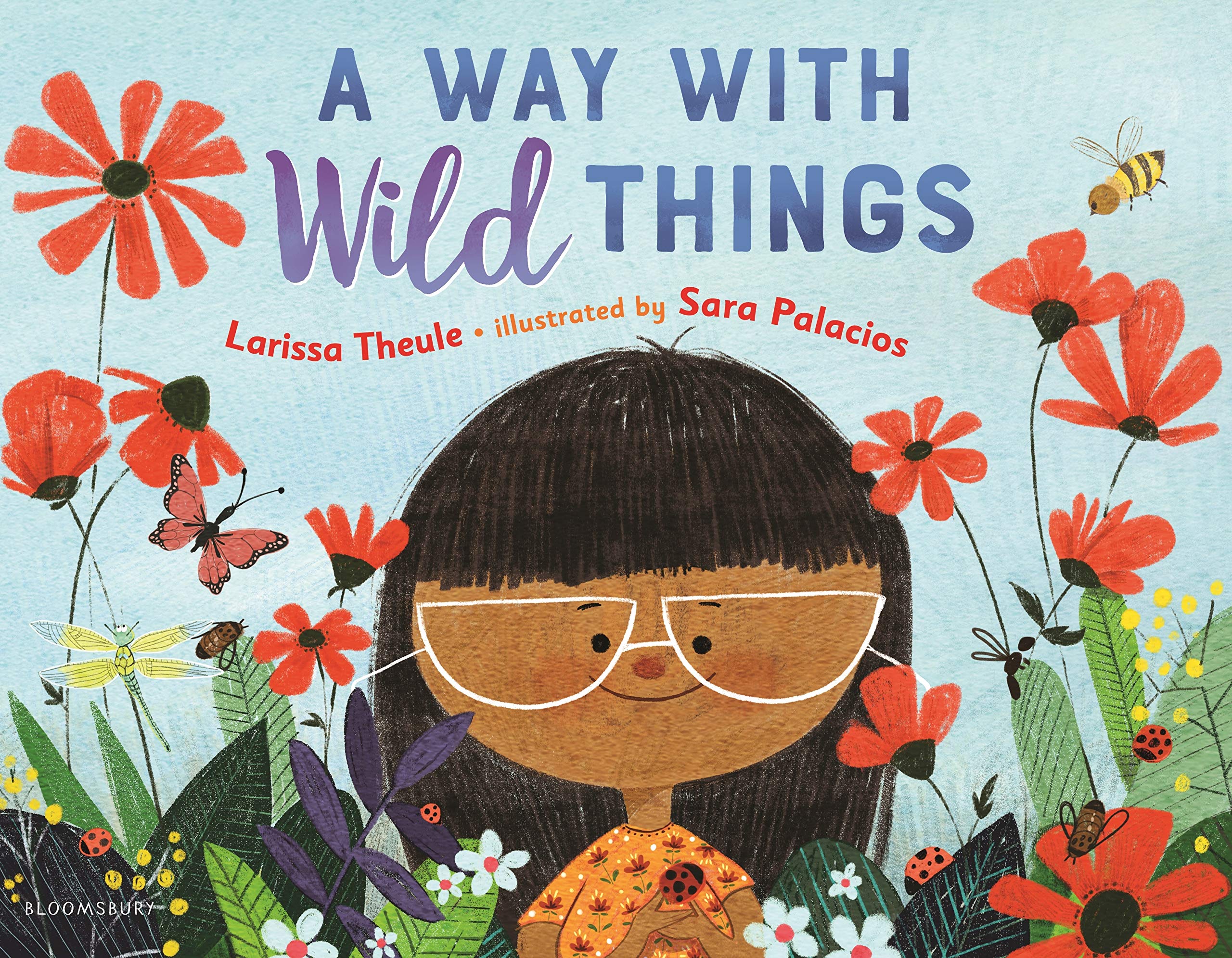
A Way with Wild Things

Written by Larissa Theule | Illustrated by Sara Palacios


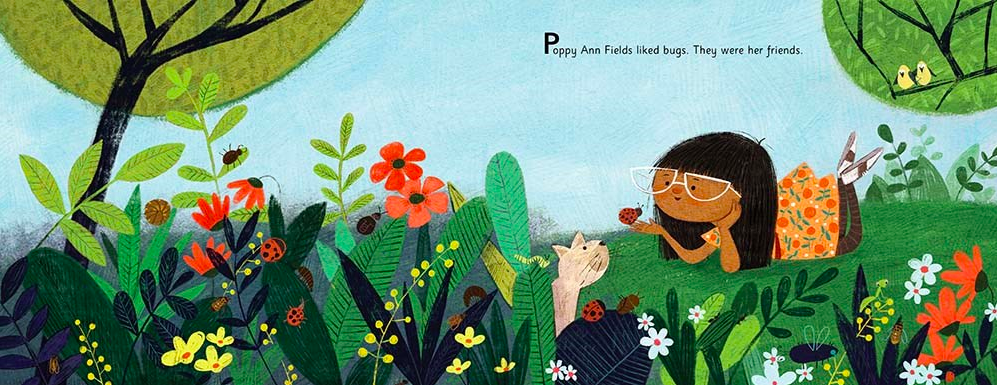
Poppy Ann Fields made friends with lots of bugs. She appreciated all of their natural talents—the way the cicadas formed a symphony, the way the ants marched in perfect lines, the way the shy roly poly said hello, and the “magnificent art” the spider wove. She could spend all day outside among these friends, “but when people came around, Poppy preferred to disappear into the background.”
celebrate-picture-books-picture-book-review-a-way-with-wild-things-bugs

Image copyright Sara Palacios, 2020, text copyright Larissa Theule, 2020. Courtesy of Bloomsbury Children’s Books.

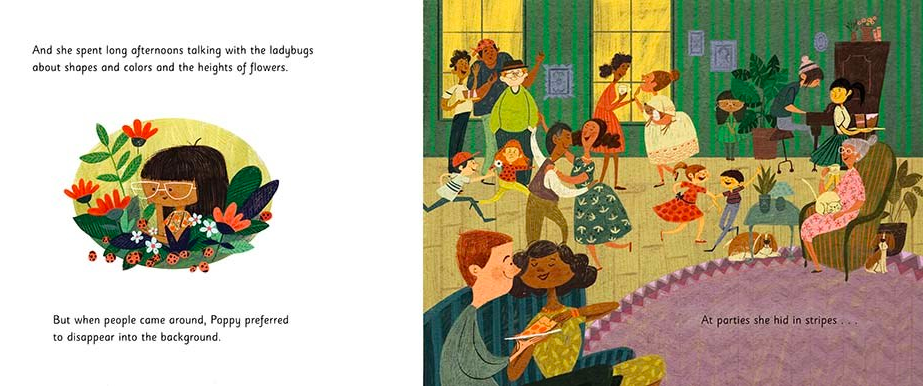
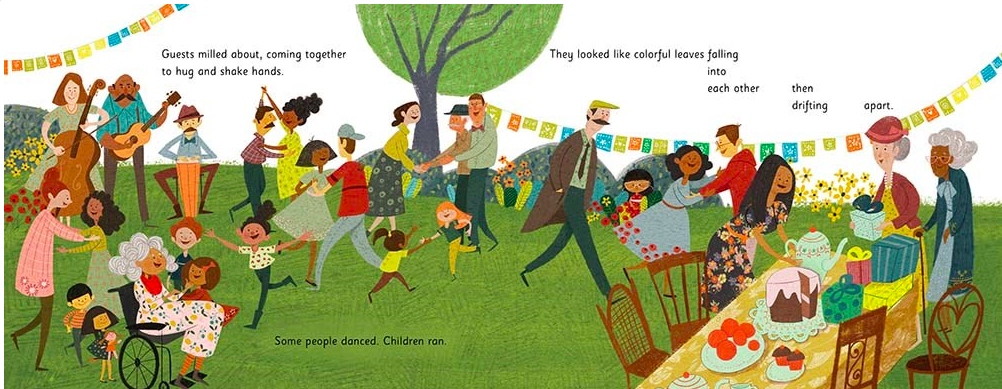
At parties she dressed to blend in with the wallpaper or the brightly flowered rug. She could disappear into the framed landscape on the wall or behind the tree in the corner. To celebrate Grandma Phyllis’s 100th birthday, there was a big party. Poppy watched from behind the flowers and bushes. She watched as people strolled about, meeting and hugging, dancing and running. “They looked like colorful leaves falling into each other then drifting apart.”

A shimmering dragonfly drifted on the breeze and landed on the cake. “Her whole heart glad, Poppy clapped her hands.” She came over to look and that’s when Uncle Dan spotted her. His voice boomed, “‘Poppy Ann Fields, you wallflower, you. So that’s where you’ve been hiding this time.’” Everyone turned to look at Poppy. She froze. The dragonfly took off… “and landed in her hand.” No one could believe it; they smiled and stared in wonder. Then they moved in to get a closer look.
celebrate-picture-books-picture-book-review-a-way-with-wild-things-party

Image copyright Sara Palacios, 2020, text copyright Larissa Theule, 2020. Courtesy of Bloomsbury Children’s Books.

Poppy wished she could run away. She didn’t know where to look, so she gazed at the dragonfly. “She knew the dragonfly had come here for her.” She listened to the cicadas’ music wafting through the air and took a breath. Then she spoke, telling everyone the dragonfly’s scientific name. Grandma Phyllis clasped her hands and gave Poppy a hug. “‘You wildflower, you,’” she whispered. In her heart Poppy knew Grandma Phyllis was right. She was not a wallflower, but “a wildflower.”

An illustrated glossary of Poppy’s bug friends, along with their scientific name and a brief description follows the story.
celebrate-picture-books-picture-book-review-a-way-with-wild-things-birthday

Image copyright Sara Palacios, 2020, text copyright Larissa Theule, 2020. Courtesy of Bloomsbury Children’s Books.

Larissa Theule’s quietly comforting story is balm for those thoughtful, introverted children who interact with the world through observation, contemplation, and gentle interactions. With the soul of a poet, Poppy listens to, watches, and connects with nature, feeling its rhythms and wonder with her whole heart. Theule’s carefully chosen verbs and play on the idea of nature embrace Poppy’s personality. Poppy “preferred” to observe large, noisy gatherings from the sidelines while she “became” things that most people find lovely: landscapes, trees, rain, a group of animals.

When Uncle Dan’s loud voice turns everyone’s attention to Poppy, Theule’s simply stated “she was scared down to her toes” validates the feelings of kids who’d rather not be in the spotlight and gives children and adults an opportunity to talk about these emotions. The party-goers’ enthusiasm to hear what Poppy has to say and Grandma Phyllis’s loving and apt nickname for her granddaughter will reassure introverted readers that they are seen and appreciated for their unique strengths.

Sara Palacios festival of flowers—found outside, in Poppy’s home décor, and on party-goers’ clothing—surrounds Poppy and reveals that she is a part of and does fit in everywhere. One of the joys of A Way with Wild Things is finding Poppy on each page and appreciating Palacio’s creative genius in how she uses camouflage similar to nature. Her vivid, textured illustrations are joyous and full of love for nature, for life, and especially for Poppy who tenderly takes it all in and makes it uniquely hers.

Ages 3 – 6

Bloomsbury Children’s Books, 2020 | ISBN 978-1681190396

Discover more about Larissa Theule and her books on her website.

To learn more about Sara Palacios, her books, and her art, visit her website.

National Insect Week Activity
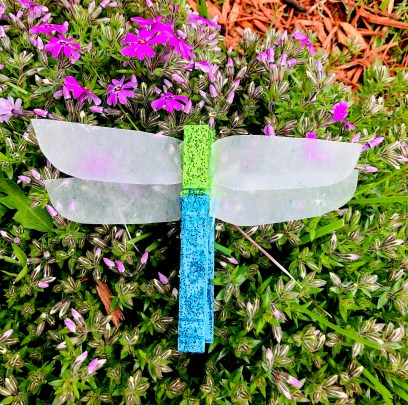
celebrate-picture-books-picture-book-review-dragonfly-craft-3

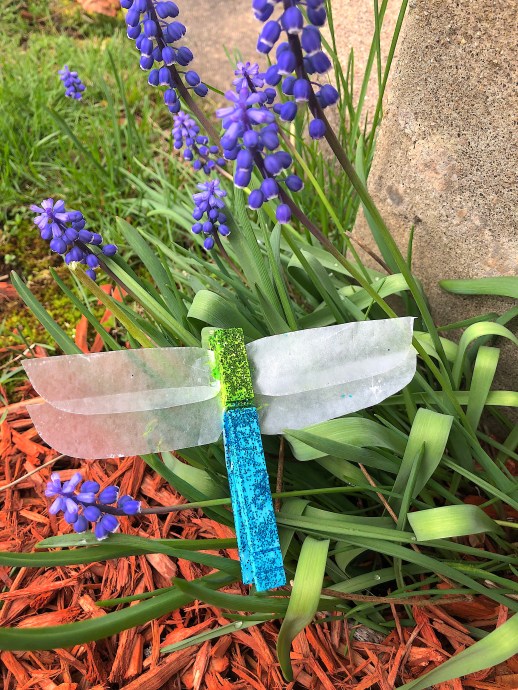
Dragonfly Decoration


Your kids can bring the beauty of nature inside with this easy-to-make dragonfly craft.

Supplies

  • Wooden clothespin
  • Wax paper
  • Bright green craft paint
  • Bright blue craft paint
  • Green glitter
  • Blue glitter
  • Paint brush
  • Thread or fishing line (optional)
  • Adhesive magnet (optional)

celebrate-picture-books-picture-book-review-dragonfly-craft

Directions

To Make the Body

  1. Paint the top part of the clothespin (to the point where the metal hinge crosses the wood) green
  2. Sprinkle green glitter on the wet paint, let dry
  3. Paint the bottom part of the clothespin blue
  4. Sprinkle blue glitter on the wet paint, let dry
  5. If the glitter doesn’t completely stick, apply a thin layer of glue with a toothpick and add more glitter

To Make the Wings

  1. Cut two 5-inch-by-3/4-inch strips from the wax paper
  2. Cut a curved edge at each end of the wax paper strips, cutting straight down from the top and curving around the bottom corner
  3. Cut curved notches in the center, top and bottom, of each wing to allow the wings to fit into the clothespin
  4. Open the clothespin and slip the wings in, curved edge down and allowing the top wing to overlap the bottom wing slightly

To Finish

Attach the thread or fishing line to the dragonfly to hang, or to make a refrigerator magnet, attach an adhesive magnetic strip to the back.

celebrate-picture-books-picture-book-review-a-way-with-wild-things-cover

You can find A Way with Wild Things at these booksellers

Amazon | Barnes & Noble | Books-a-Million

To support your local independent bookstore, order from

Bookshop | IndieBound


June 12 – National Get Outdoors Day

celebrate-picture-books-picture-book-review-southwest-sunrise-cover

About the Holiday

Established in 2008, National Get Outdoors Day was instituted to inspire people – and especially young people – to enjoy healthy, active outdoor fun and exploration. Celebrated in conjunction with national parks, people are encouraged to hike, explore, and enjoy the natural wonders near them. You can also head out into your yard to play games or into your neighborhood with bikes, scooters, skates, or just for a walk. There’s so much for kids to see and discover – even concepts that may seem simple are beautiful and complex in the eyes of a child, as you’ll see in today’s book. 

Thank you to Bloomsbury Children’s Books for sharing Southwest Sunrise with me for review consideration. All opinions of the book are my own. 

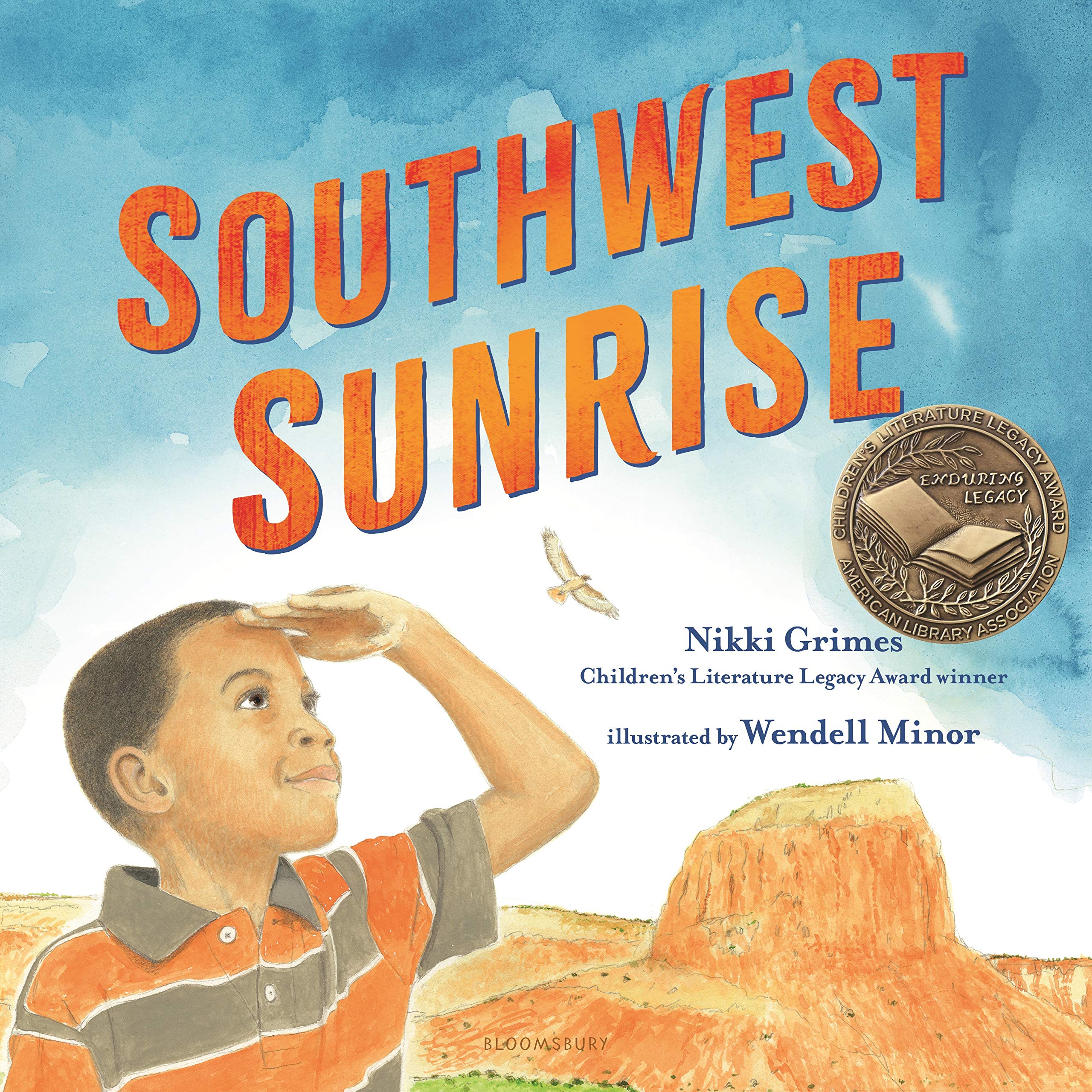
Southwest Sunrise

Written by Nikki Grimes | Illustrated by Wendell Minor


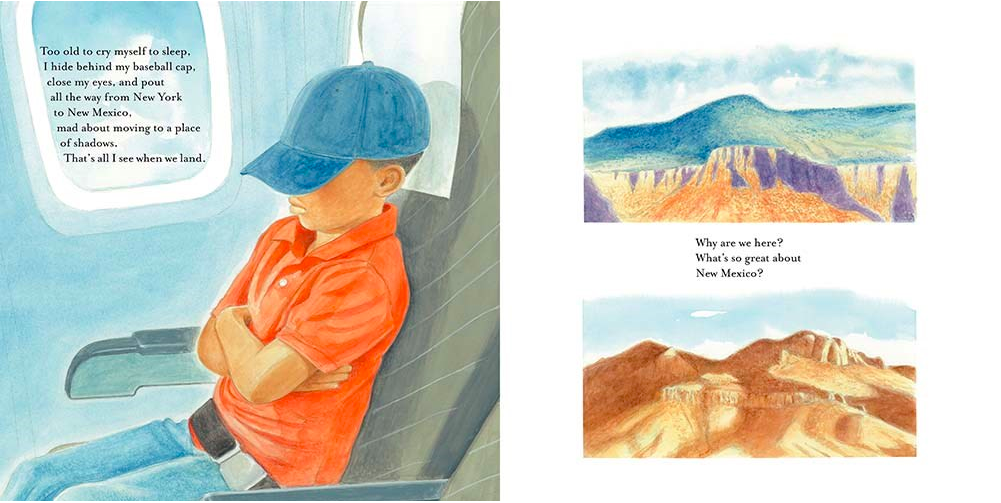
Jayden mopes all the way from New York to New Mexico, upset about moving from his beloved city to “a place of shadows.” Shadows and drabness are all he sees when he gets off the plane. In the morning, though, he wakes up “to a knife of sunlight slicing through” his room. Here, his window doesn’t have bars, and the view is of a “mountain striped in rainbow.” Jayden is surprised; he didn’t know that was there.

celebrate-picture-books-picture-book-review-southwest-sunrise-moving

Image copyright Wendell Minor, 2020, text copyright Nikki Grimes, 2020. Courtesy of Bloomsbury Children’s Books.

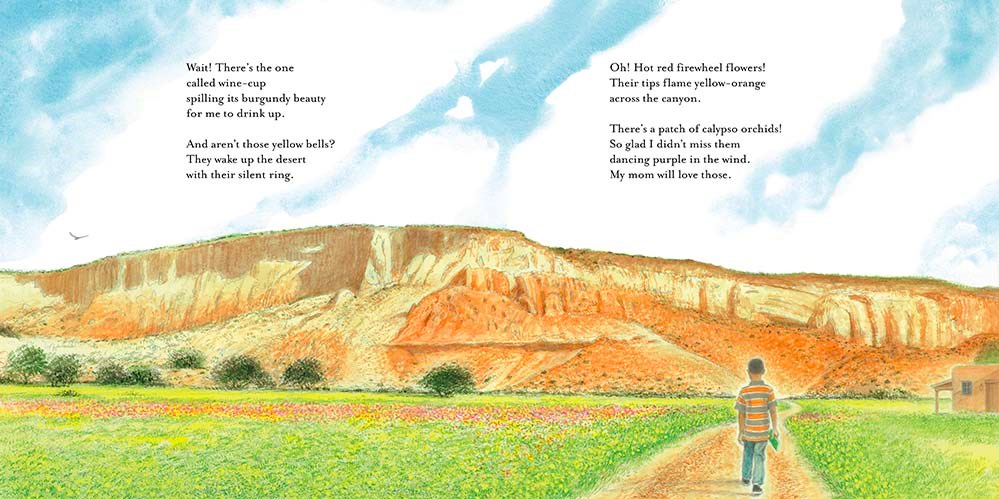
A string of chili peppers brightens the kitchen. Jayden isn’t optimistic that he’ll see any other colors in his new desert surroundings. His mom gives him a field guide to New Mexico at breakfast, and as he pages through it he doesn’t really think he’ll find any of the colorful flowers inside. But then, as he looks around, he spies the burgundy wine-cup and yellow bells that “wake up the desert with their silent ring.” He finds more flowers from the book that add red and purple to the landscape.

celebrate-picture-books-picture-book-review-southwest-sunrise-firewheel-flowers

Image copyright Wendell Minor, 2020, text copyright Nikki Grimes, 2020. Courtesy of Bloomsbury Children’s Books.

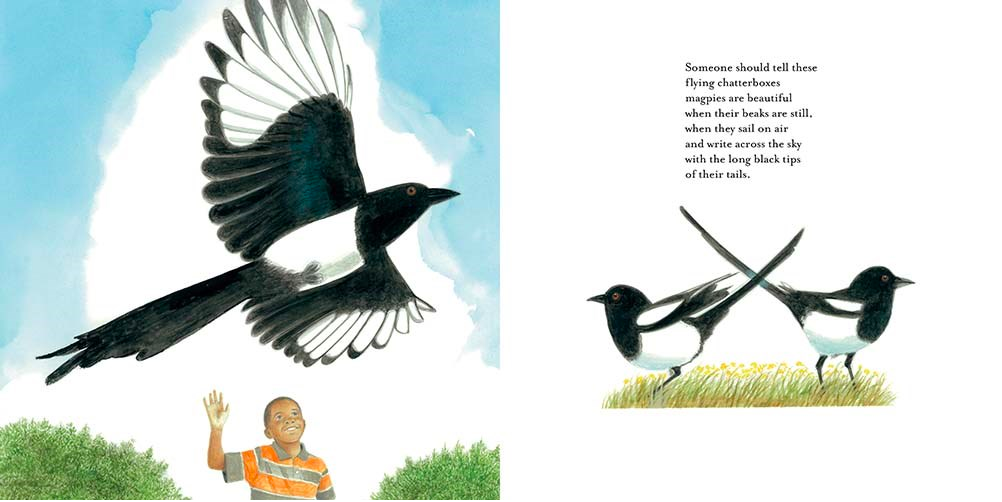
Jayden walks on, farther away from his new house. The unfamiliar silence is broken by “the mad chatter of winged gossips passing secrets” from one piñon tree to another. He watches the long-tailed magpies swoop through the “deep waves of turquoise overhead” and wonders why he never saw so much sky in New York. Still, he misses looking up and seeing the grandeur of the skyscrapers.

celebrate-picture-books-picture-book-review-southwest-sunrise-magpies

Image copyright Wendell Minor, 2020, text copyright Nikki Grimes, 2020. Courtesy of Bloomsbury Children’s Books.

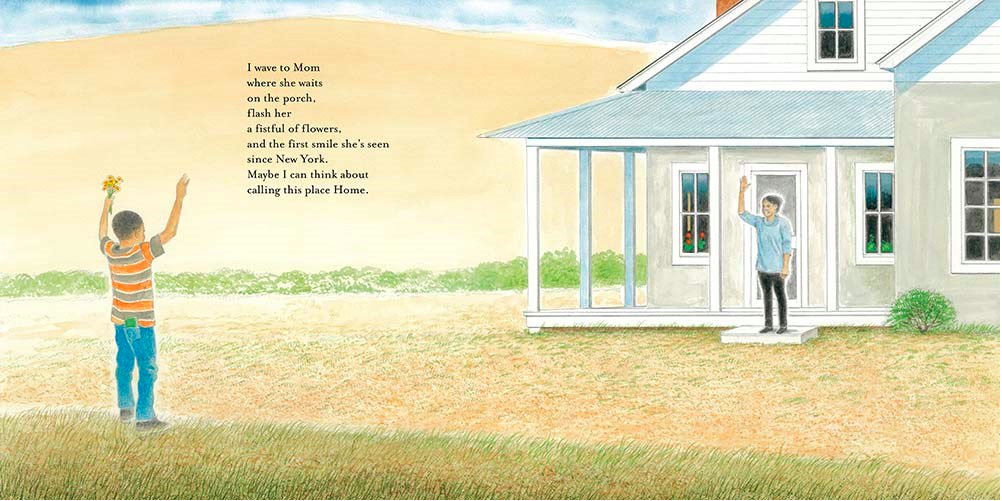
Looking down again, Jayden finds a striped lizard that seems happy to run along his hand, tickle his fingers. Instead of seashells, he finds bones and an abandoned turtle shell. “What stories do they have to tell?” he wonders. He continues his walk and, upon turning the corner, finds himself in the shadow of a different kind of skyscraper—rugged, red, and rocky. On the air, Jayden hears his mom calling. He picks some flowers the colors of sunset to take home to her. He waves as he nears the house and sees her standing on the porch and flashes her “the first smile she’s seen since New York.” He thinks that maybe New Mexico can be Home.

celebrate-picture-books-picture-book-review-southwest-sunrise-mom

Image copyright Wendell Minor, 2020, text copyright Nikki Grimes, 2020. Courtesy of Bloomsbury Children’s Books.

Nikki Grimes’ lyrical story is in plot a tale about moving from one part of the country to another, but in spirit it is a invitation for children and adults alike to open their heart to new experiences, to find the beauty in the unfamiliar and the joy in the unexpected. As Jayden journeys from New York to New Mexico and then around his new environment, Grimes explores honest emotions—the disappointment and anger change can bring, the preconceived ideas about the unknown that can color feelings and actions, and even that moment when a person can reject or accept the new circumstance or opportunity. As a poet, Grimes excels at the perfectly chosen detail and sublime description. Here, her words put readers in the spotlight of New Mexico’s laser sun, let them feel the skittering feet of a lizard, meet a haughty raven, and bask in the rainbow of colors Jayden never expected he’d see. His final smile and resolve to give his new city a chance fulfills the new dawning inherent in the title and is uplifting encouragement for all.

celebrate-picture-books-picture-book-review-southwest-sunrise-flowers

Slouched down in his airplane seat, baseball cap pulled low over his eyes, Wendell Minor’s Jayden is a picture of despondency. But things begin to look brighter when, in the morning, he notices the mountains and colors he missed the night before. Minor’s sun-washed illustrations allow readers to discover the beauty of the New Mexico desert along with Jayden. His new home is light and open, with a timbered ceiling and windows free of the bars he’s used to. Minor’s use of perspective allows children to view sweeping vistas of the desert landscape as well as images of some of the creatures found there. Putting the raven front and center gives kids an idea of the size and attitude of this striking bird. Fiery reds and oranges, vivid yellows, pinks, and purples, and glorious blues punctuate the sandy backdrop as Jayden’s thoughtful expressions depict his growing appreciation for his new home.

An exquisite book for any child, whether they are moving to a new home, exploring new experiences, or keen observers of their surroundings, Southwest Sunrise would be a joyful addition to home, school, and public library collections.

Ages 3 – 6

Bloomsbury Children’s Books, 2020 | ISBN 978-1547600823

Discover more about Nikki Grimes  and her books as well as educator guides and resources on her website.

To learn more about Wendell Minor, his books, and his art, visit his website.

National Get Outdoors Day Activity

Screen Shot 2020-07-11 at 9.36.56 PM

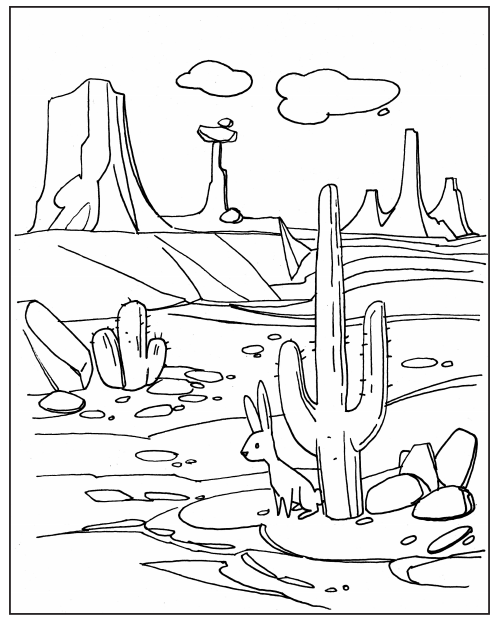
Beautiful Desert Coloring Pages


The desert has plants, animals, and landmarks seen nowhere else. Grab your crayons or pencils and give these two printable scenes some of its unique color.

Curious Rabbit Desert Scene | Western Sun Desert Scene

celebrate-picture-books-picture-book-review-southwest-sunrise-cover

You can find Southwest Sunrise at these booksellers

Amazon | Barnes & Noble | Books-a-Million

To support your local independent bookstore, order from
Bookshop | IndieBound

Picture Book Review

April 26 – National Audubon Day

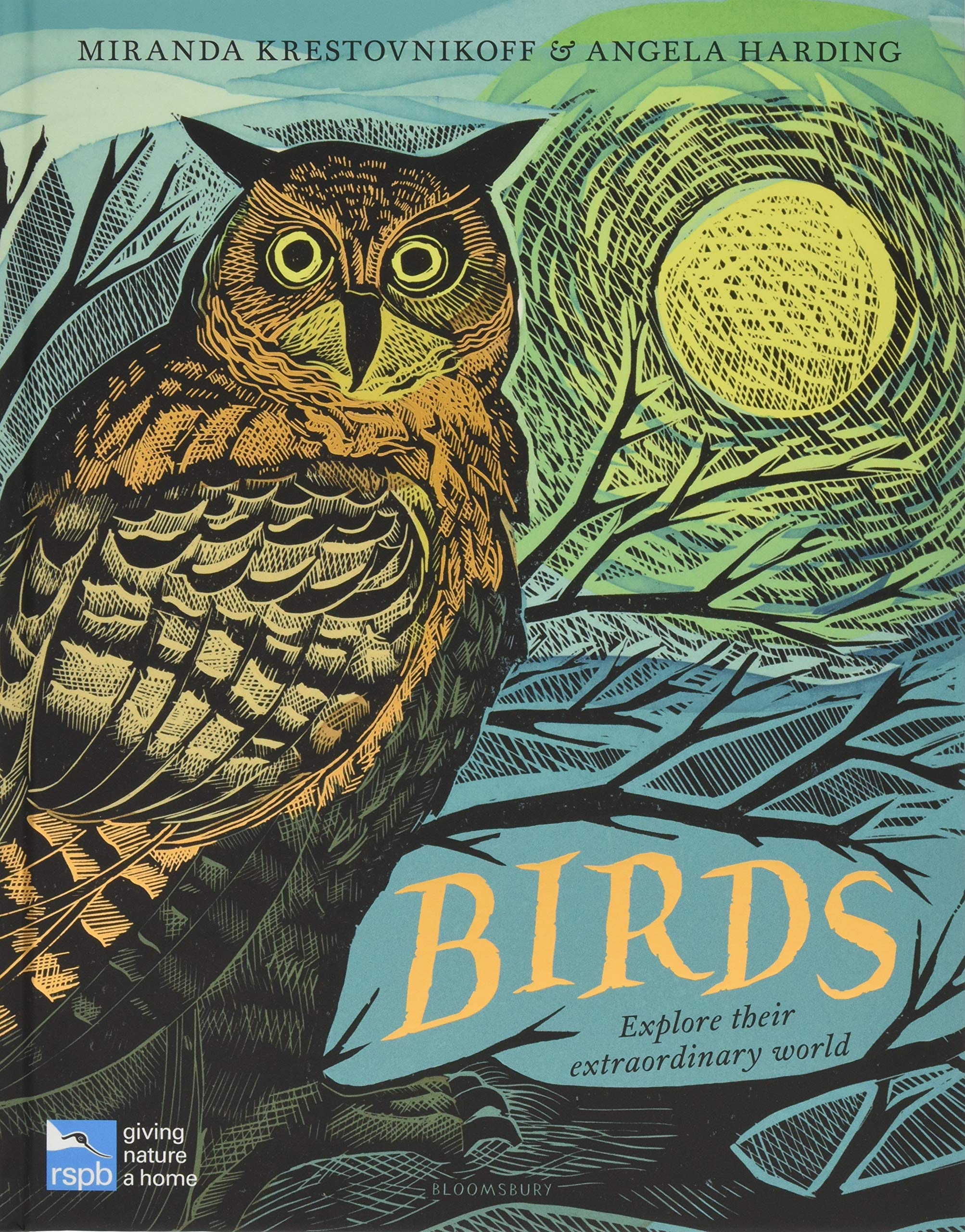
celebrate-picture-books-picture-book-review-birds-explore-their-extraordinary-world-cover

About the Holiday

Today’s holiday honors John James Audubon, who was born on this date in 1785. Audubon was a French-American ornithologist, naturalist, and painter who traveled across America, documenting the birds he found in his detailed illustrations of them in their natural habitats. Audubon’s greatest work was The Birds of America, which is considered one of the finest ornithological works ever completed. This book contains more than 700 North American bird species with 435 hand-colored, life-size prints of 497 bird species. The Audubon Society is a far-reaching organization dedicated to conservation and education and is actively involved in issues that threaten bird populations. To learn more about the Audubon Society and its work, visit the organization’s website.

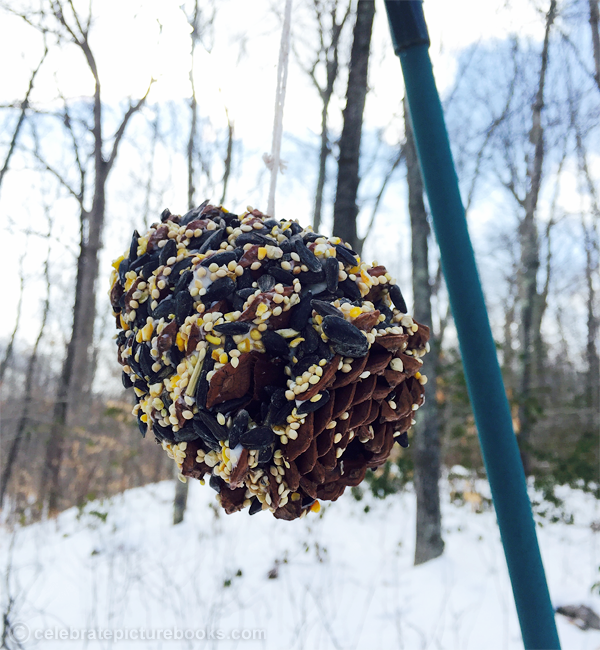
To celebrate today’s holiday, take a walk in your area or even your backyard and take special note of the birds you see. If you’d like to attract more birds to your backyard, consider hanging a bird feeder or making a temporary feeder from a pinecone, peanut butter, and seed as in the activity below. 

Thanks to Bloomsbury Children’s Books for sending me a copy of Birds: Explore their extraordinary world for review consideration. All opinions on the book are my own.

Birds: Explore their extraordinary world

Written by Miranda Krestovnikoff | Illustrated by Angela Harding


To love birds is to marvel over everything about them from their smooth gliding flight and beautiful songs to their colorful plumage and intricate nests that protect fragile eggs from the elements and predators. With a stunning number of species, birds are found around the world and living in every kind of climate. In Miranda Krestovnikoff and Angela Harding’s eye-catching compendium, readers learn about seven families of birds – birds of prey, seabirds, freshwater birds, flightless birds, tropical birds, tree dwellers, and passerines. 

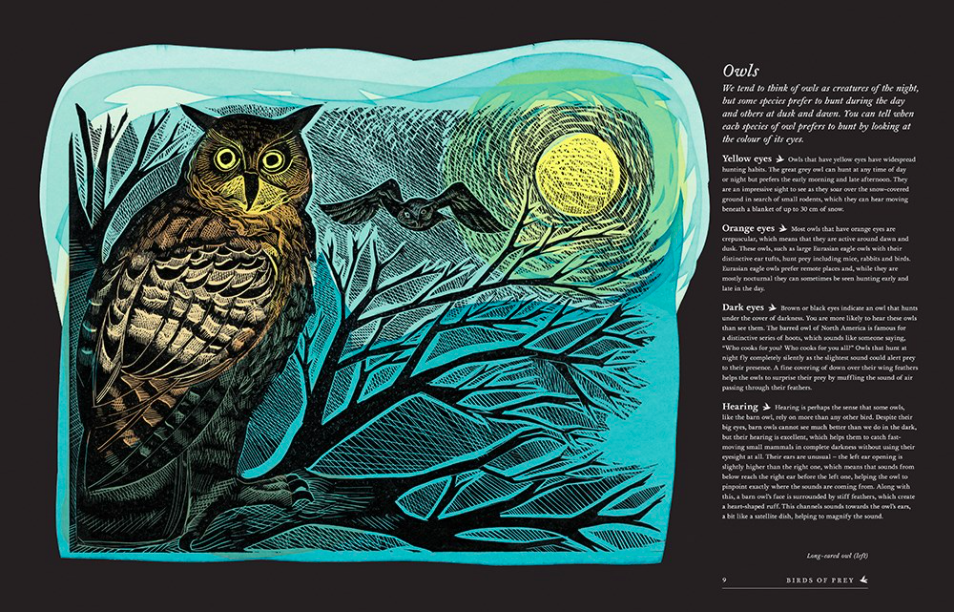
Each chapter opens with general facts on the behavior, anatomical features, and habitat that determine the order in which a bird is categorized. Integrated with this information are descriptions of specific birds within the order. In the section on Birds of Prey, for instance, readers learn about sparrowhawks; fish-eating ospreys; and golden eagles, which can “spot a rodent from over a mile away and a rabbit from nearly double that distance.” Children also learn about extreme birds of prey: the fastest, largest, smallest, tallest, and baldest and how their distinctive feature helps them thrive. Kids also discover how they “can tell when each species of owl prefers to hunt by looking at the color of its eyes.”

celebrate-picture-books-picture-book-review-birds-explore-their-extraordinary-world-owls

Image copyright Angela Harding, 2020, text copyright Miranda Krestovnikoff, 2020. Courtesy of Calkins Creek.

The next chapter takes readers to coastal areas to learn about the seabirds that scour the water from the sky, searching for food and waders, that are found along the water’s edge and “feed on the variety of high-protein invertebrates that lie hidden in the mud.” Children learn about the birds that populate warmer waters, such as blue-footed boobies, terns, and frigatebirds as well as those who survive in colder waters, such as gulls, and kittiwakes. Readers will also find a fascinating description of the gannet and learn how it can safely “dive into the sea at speeds of 60 miles an hour from an impressive height of up to 100 feet” to feed.

From sea birds, readers move on to freshwater birds like ducks, swans, grebes, and Canada geese. Even the bright flamingo is here with its distinctive scoop-shaped beak that is “uniquely designed to be used upside down and helps them to filter out tiny brine shrimps and blue-green algae from the water, which, when digested, give them their pink color.” The flamingo isn’t the only bird with an unusual way to acquire their prey, and kids will discover the clever ways pelicans, herons, and kingfishers (which use “objects such as sticks, feathers, and even discarded popcorn as lures”) find food.

And then there are the “more than 50 bird species across the world [that] stay firmly on the ground (or on water)” or just “choose not to fly very often.” These flightless birds include kiwis, kākāpōs, southern cassowaries, ostriches, and Penguins. Penguins vary in size, from the “little penguin (also known as the fairy or blue penguin)” which comes to shore to nest only at night and stave off predators with their oversized voices, to the emperor penguin. Occasional fliers include great bustards, domestic chickens, and tinamous.

celebrate-picture-books-picture-book-review-birds-explore-their-extraordinary-world-penguin

Image copyright Angela Harding, 2020, text copyright Miranda Krestovnikoff, 2020. Courtesy of Calkins Creek.

When you hear about extravagant birds, you most likely think of tropical birds. “Rainforests are packed with a range of incredible species with dazzling plumage and bizarre courtship displays.” Readers will learn about the appearance and mating rituals of scarlet macaws, Raggiana birds of paradise, and the Andean cock-of-the-rock. A detailed description of the bowerbird and the male bird’s careful and artistic nest (or bower) building is funny, poignant, and even a little bit human. Then readers are treated to some tropical bird extremes: smallest bird, longest bill, and smelliest as well as a poisonous species and one that makes its own musical instrument.

Of course, woodlands are the home of many bird species, and in the chapter on Tree Dwellers, readers learn about acorn woodpeckers and great hornbills that use trees for food and shelter; tawny frogmouths and potoos that use trees for camouflage; and nuthatches, greater honeyguides, and yellow-bellied sapsuckers, which find all the food they need among the bark, leaves, and branches of trees.

celebrate-picture-books-picture-book-review-birds-explore-their-extraordinary-world-chickens

Image copyright Angela Harding, 2020, text copyright Miranda Krestovnikoff, 2020. Courtesy of Calkins Creek.

Next up are passerines, or perching birds, which make up the “largest group of birds, with over half of all known species falling into this category.” Corvids, a group that includes the common raven, crows, magpies, and rooks, are considered to be the most intelligent birds. “These birds have a remarkable ability to solve problems in order to find food, in some cases performing better than young children or chimpanzees!” Readers will be impressed with their tricks and clever use of tools (that even include cars). Children learn about cooperative breeders, which rely on their extended family to help raise the young from year to year. Passerines also include many of the garden birds we find in our backyards and which fill the air with song. Readers discover facts about blue tits, robins, and finches in this section.

The next sections give detailed and interesting information on the features we most associate with birds: their feathers, beaks, eyes, nesting habits, eggs, migration patterns, and birdsong. The book ends with perhaps the most adaptable birds in the world: those that make their homes on glaciers, mountain tops, and in the Arctic snow as well as urban birds, which live among people in crowded cities, nesting on tall cathedrals and skyscrapers and foraging for food in garbage cans and on the street.

celebrate-picture-books-picture-book-review-birds-explore-their-extraordinary-world-woodpeckers

Image copyright Angela Harding, 2020, text copyright Miranda Krestovnikoff, 2020. Courtesy of Calkins Creek.

For young ornithologists, Miranda Krestovnikoff, a wildlife expert, offers a compelling, eye-opening, and accessible introduction to a wide variety of birds, placing them in their natural environments and revealing intriguing facts and tantalizing tidbits that inform and will spark a continued interest in learning more about the world’s feathered creatures. Krestovnikoff’s engaging writing style will captivate readers and keep them turning the pages to discover birds that are both familiar and new to them. The comprehensive nature of the book allows kids in all parts of the world to learn more about their native birds while creating a global connection with these most recognized and widely distributed creatures.

Accompanying Krestovnikoff’s text are Angela Harding’s beautiful linocuts that depict birds in mid-flight, capturing prey on land and water, engaging in mating rituals, and building and protecting their nests and young. Harding’s use of natural colors and exquisitely etched landscapes set off each bird in breathtaking illustrations that invite readers to linger to enjoy their full impact. Each illustration is captioned with the bird’s species.

A gorgeous and educational book that readers of all ages will love dipping into again and again, Birds: Explore their extraordinary world is a must for bird lovers and highly recommended for home, school, and public libraries.

Ages 7 and up

Bloomsbury Children’s Books, 2020 | ISBN 78-1408893913

Discover more about Miranda Krestovnikoff and her books on her website.

To learn more about Angela Harding, her books, and her art on her website.

National Audubon Day Activities

celebrate-picture-books-picture-book-review-beautiful-birds-word-search

Beautiful Birds Word Search Puzzle


It’s fun to watch for different kinds of birds when you take a walk or in your own backyard. Can you find the names of twenty types of birds in this printable Beautiful Birds Word Search Puzzle? Here’s the Solution!

cpb-bird-feeder-i

Pinecone Bird Feeder


Pinecone bird feeders are quick to make and great for your backyard fliers. The combination of peanut butter, lard, or vegetable shortening and a quality seed mixture provide birds with the fat and nutrition they need to stay warm and healthy during the winter.

Supplies

  • Pinecones
  • Peanut butter, vegetable shortening, or lard
  • Birdseed
  • String
  • Knife or wooden spreader
  • Spoon

Directions

  1. Tie a long length of string around the middle of the pinecone
  2. Spread the peanut butter, vegetable shortening, or lard on the pinecone
  3. Sprinkle a thick coating of birdseed on the pinecone, pressing it into the covering so it will stick
  4. Tie the pinecone feeder onto a tree branch or other structure
  5. Watch the birds enjoy their meal!

celebrate-picture-books-picture-book-review-birds-explore-their-extraordinary-world-cover

You can find Birds: Explore their extraordinary world at these booksellers

Amazon | Barnes & Noble | Books-a-Million

To support your local independent bookstore, order from
Bookshop | IndieBound

Picture Book Review

March 30 – It’s Women’s History Month

celebrate-picture-books-picture-book-review-a-most-clever-girl-cover

About the Holiday

National Women’s History Month is all about celebrating women who broke barriers with their intelligence, creativity, courage, persistence, and unwavering confidence in their abilities. In every discipline, women have brought and continue to bring new perspectives, experiences, and talents to make contributions toward a better world. Today’s book celebrates a writer who broadened readers’ understanding of women and their lives through her complex and compelling novels. 

A Most Clever Girl: How Jane Austen Discovered Her Voice

Written by Jasmine A. Stirling | Illustrated by Vesper Stamper


While Jane loved stories, there were some she couldn’t abide. These were stories about women who fainted at the slightest thing, stories about orphans with dark secrets, and stories about couples who fell in love at first sight. To Jane these books were boring, unbelievable, and predictable. But they were all the rage. Instead, Jane like the ridiculous, and she made up her own stories that “poked fun” at the popular literature of the day. When she read her “stories to her family,… they couldn’t stop laughing.”

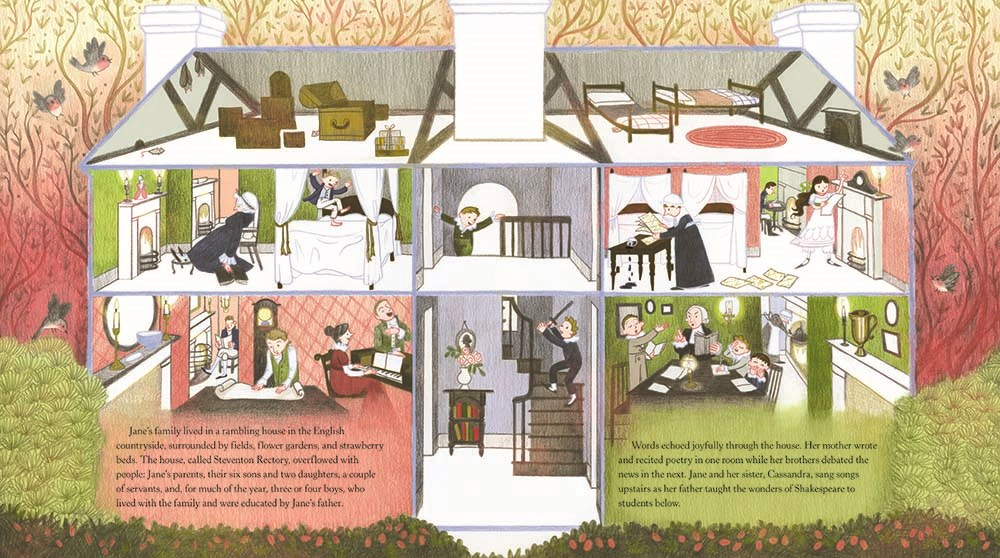
Jane lived in a large house in the English countryside. It was always full of people, fun, and learning. Jane’s father was the village rector of Steventon in Hampshire, England, and her mother wrote poetry. Sometimes Jane’s family (mother, father, six sons, and two daughters) staged plays in the barn. They made their own sets and costumes and played all the roles. When there was quiet time, Jane wrote and wrote in the study her father had created just for her and her sister.

celebrate-picture-books-picture-book-review-a-most-clever-girl-rectory

Image copyright Vesper Stamper, 2021, text copyright Jasmine A. Stirling, 2021. Courtesy of Bloomsbury Children’s Books.

Jane loved the satires she wrote, but “she stared to dream about writing stories that mattered to her. They would come from her own voice—a style that was uniquely hers.” She began to pay attention to tiny personal details, particular conversations, and the way her family, friends, and neighbors interacted. She found it all fascinating. Jane’s father encouraged her writing, saving up to buy her the best pens, blank books, and even a “portable mahogany writing desk.”

Jane had an idea about a story involving “three or four families in a country village,” and soon the characters came to life in her imagination, even when she wasn’t writing. She “wrote three novels before she turned twenty-four. Jane’s voice was clever and real… But something was still missing.”

Over the years as Jane’s brothers left home, the big house grew quiet. When her father stopped teaching, money grew short and Jane’s parents decided to move to a small house in another town, Bath. They sold their possessions, even the books in her father’s library, and left the neighbors and friends they’d known so well. Jane wondered if she would feel at home anywhere else. When they moved into their new home, Jane put away her writing things. Time passed, but “Jane persisted in a very determined, though very silent, disinclination for Bath.” Years passed and Jane spent her time in “busy nothings.”

celebrate-picture-books-picture-book-review-a-most-clever-girl-characters

Image copyright Vesper Stamper, 2021, text copyright Jasmine A. Stirling, 2021. Courtesy of Bloomsbury Children’s Books.

When her father died, Jane, her sister, and their mother had to move into a cheap apartment, and then when they could no longer afford that, they moved in with her brother Frank in a rough-and-tumble town. “The weight of Jane’s losses threatened to drown her,” and she still couldn’t write. Four years later, her brother Edward gave her, her sister, and their mother a small cottage near their childhood home. Here she found her way to happiness.

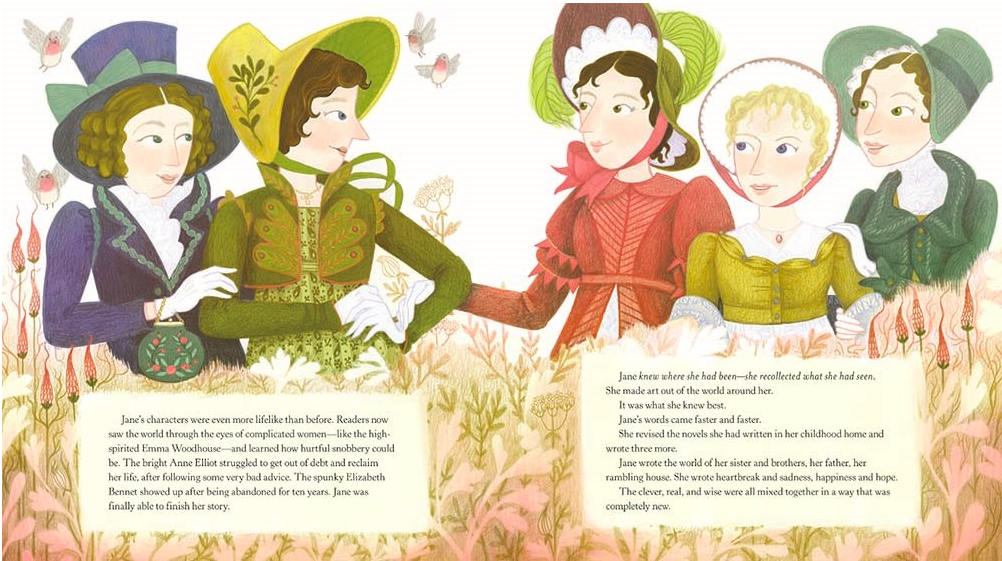
At last she brought out her pens, paper, and writing desk and began to write. Her voice was still clever and “filled with real people, but grief and loss had added something new. Jane’s voice was wise.” Her characters were even more realistic and complicated. She wrote about happiness and wealth, but also about heartbreak and sadness “mixed together in a way that was completely new.”

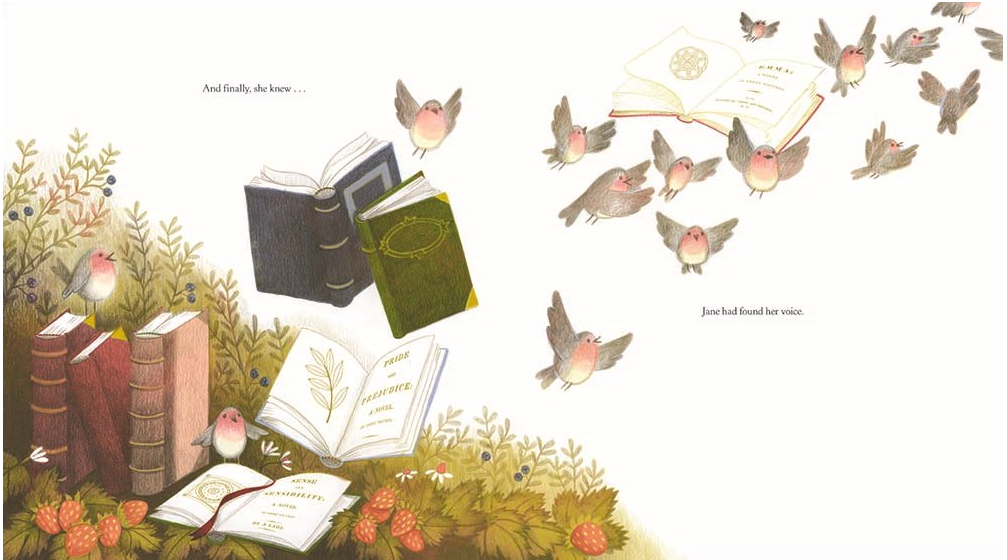
Jane’s novels were a hit—even with the future king of England. George IV loved them so much that his librarian wrote to Jane and asked her to write one of those “love-at-first-sight” stories she hated. Jane wrote back and told him that she could not unless her life depended on it, that she must remain true to her own style. At long last, “Jane had found her voice.”

Extensive backmatter includes a list of quotes from Jane Austen’s novels that are used in the story, more about Jane Austen’s life, Notes from the Author and Illustrator, a list of Austen’s novels, further resources for young readers, and a bibliography.

celebrate-picture-books-picture-book-review-a-most-clever-girl-novels

Image copyright Vesper Stamper, 2021, text copyright Jasmine A. Stirling, 2021. Courtesy of Bloomsbury Children’s Books.

Jasmine A. Stirling’s in-depth biography of Jane Austen shines with specific details about her and her family’s life, their happy times and tribulations that informed her writing and made it so distinctive for its time and beloved even now. Stirling’s engaging and lively storytelling invites children to share the joys and heartaches that molded Jane Austen’s personality and writing. Quotations from Austen’s novels sprinkled throughout the story give young readers a taste of Jane’s writing and the truths and understanding her novels embody.

Dazzlingly lovely, Vesper Stamper’s expressive illustrations draw readers into Jane Austen’s world and give them a glimpse into her childhood and adult experiences as well as the society of the time. Cleverly designed images allow kids to understand how much Jane loved to read, to laugh along with her as she reads the sentimental and gothic stories she satirized, and to see at a glance all the shenanigans, work, and entertaining that went on in her beloved home. The elegance of these surroundings and the dinner parties that enlightened Jane’s writing are realistically reproduced and her characters come to life on the page. A moving metaphorical image shows Jane riding away from the home she loved while pages of her novels fly out of the writing desk strapped to the back of the carriage. Jane’s sadness is depicted on pages sketched in gray, but her vibrancy returns with her brother’s generosity and the novels that finally take wing.

A superb biography of a beloved and influential writer that will spark enthusiasm for Jane Austen’s novels as well as literature and writing in general, A Most Clever Girl: How Jane Austen Discovered Her Voice is a must for students of all ages as well as for those who simply love reading and writing stories. The book would make an exceptional addition to lesson plans for readers from elementary school to high school and is highly recommended for home, school, and public library collections.

Ages 5 – 12 and up

Bloomsbury Children’s Books, 2021 | ISBN 978-1547601103

Discover more about Jasmine A. Stirling and her books on her website.

To learn more about Vesper Stamper, her books, and her art, visit her website.

Women’s History Month Activity

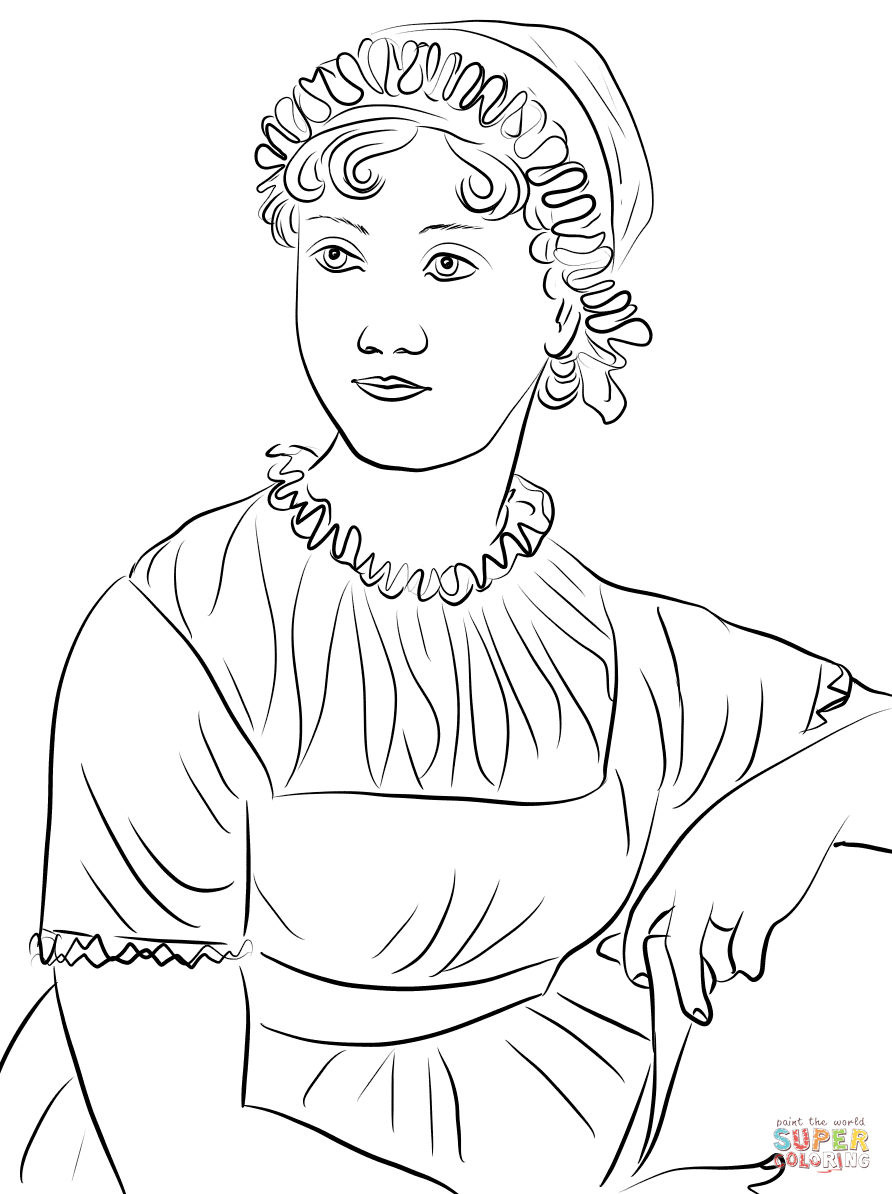
celebrate-picture-books-picture-book-review-jane-austen-coloring-page

Jane Austen Coloring Page


Enjoy this printable coloring page of Jane Austen as you learn more about this clever writer.

Jane Austen Coloring Page

celebrate-picture-books-picture-book-review-a-most-clever-girl-cover

You can find A Most Clever Girl: How Jane Austen Discovered Her Voice at these booksellers

Amazon | Barnes & Noble | Books-a-Million

To support your local independent bookstore, order from
Bookshop | IndieBound

Picture Book Review

March 17 – It’s National Introverts Week

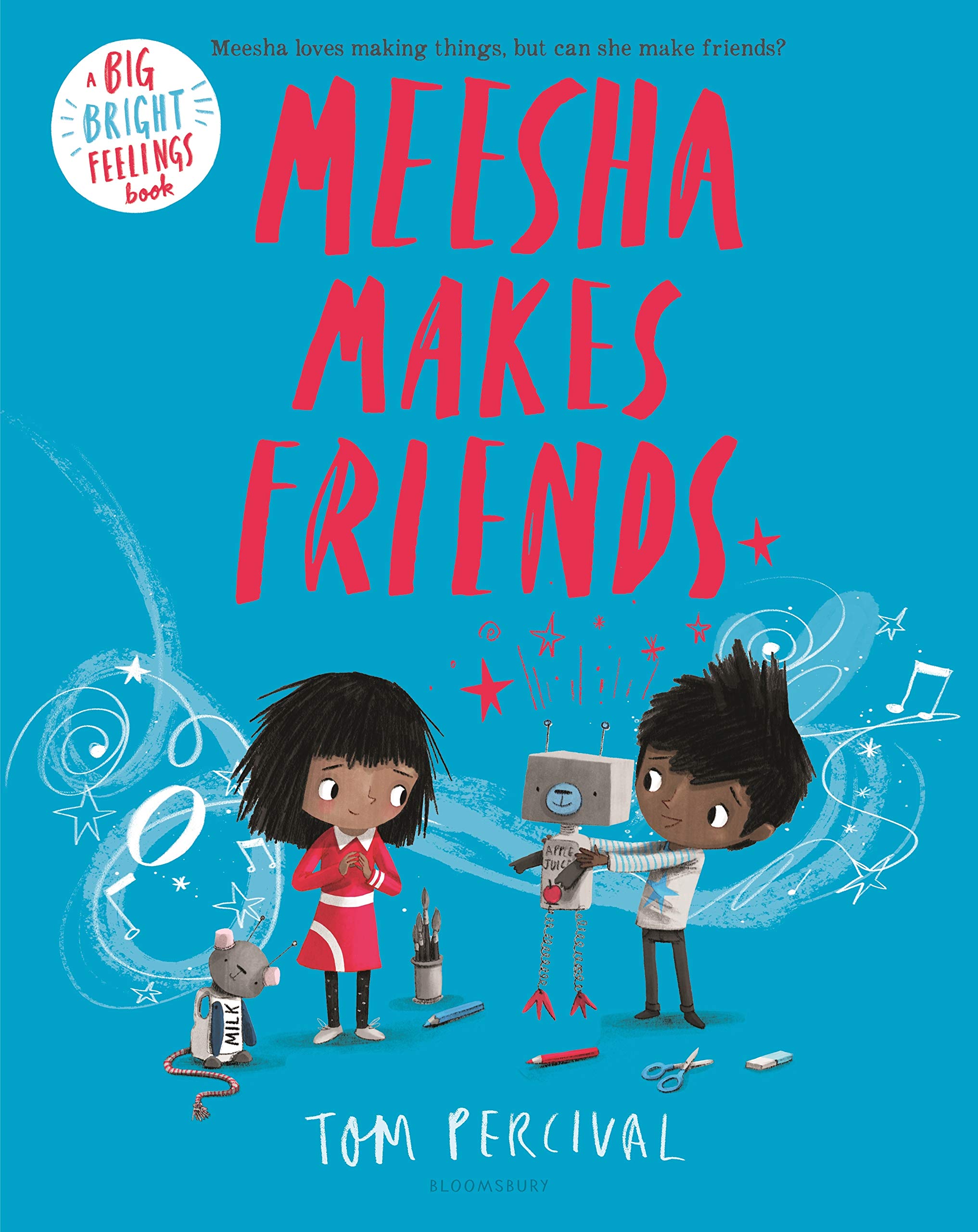
celebrate-picture-books-picture-book-review-meesha-makes-friends-cover

About the Holiday

Introverts, this is your week to shy-ne. National Introvert’s Week was founded by author Matthew Pollard to celebrate the achievements of introverts and combat the stigma and stereotypes associated with being on the shy side. Oftentimes extroverted people are considered more powerful, popular, and successful in society. Introvert’s Week is meant to offer a counternarrative to this belief. In actuality, introverts and extroverts alike can be perfect friends, role models and achievers. Celebrate National Introvert Week by recognizing the introverts in your life, learning about role models who identify as introverted, and reading lots of books. Meesha Makes Friends provides a sweet story of how an introvert makes friends in her own, unique style.

Thanks to Bloomsbury Children’s Books for sharing a copy of Meesha Makes Friends with us for review consideration. All opinions of the book are my own.

Review by Dorothy Levine

Meesha Makes Friends

By Tom Percival


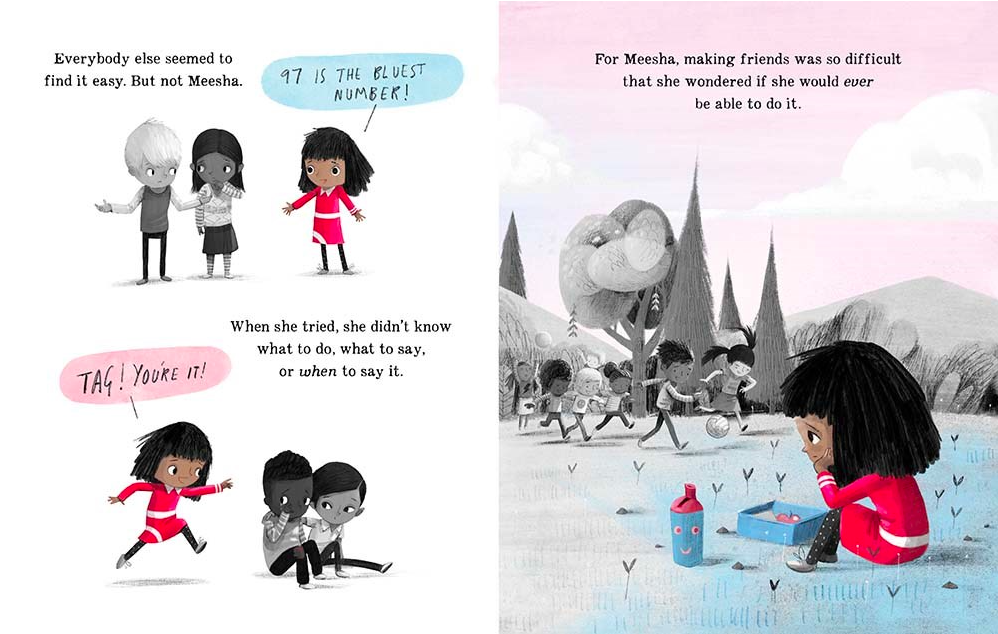
Meesha loves to make her own pictures, music and imaginary creatures. There is just one thing that she can’t figure out how to make—friends! She is a shy kid, and often has trouble connecting with other kids her age. “For Meesha, making friends was so difficult that she wondered if she would ever be able to do it.”

celebrate-picture-books-picture-book-review-meesha-makes-friends-difficult

Copyright Tom Percival, 2021, courtesy of Bloomsbury Children’s Books.

Luckily, Meesha has a solution. She gets out her creating materials and makes a whole crew of friends. Meesha happily totes her new pals around with her. She is pleased to find that they are easy to talk to and transport. However, her creations are not exactly perfect: “Admittedly, Meesha’s new friends weren’t very good at tennis…or soccer…or catch. / But Meesha felt comfortable with them, and that was what mattered.”

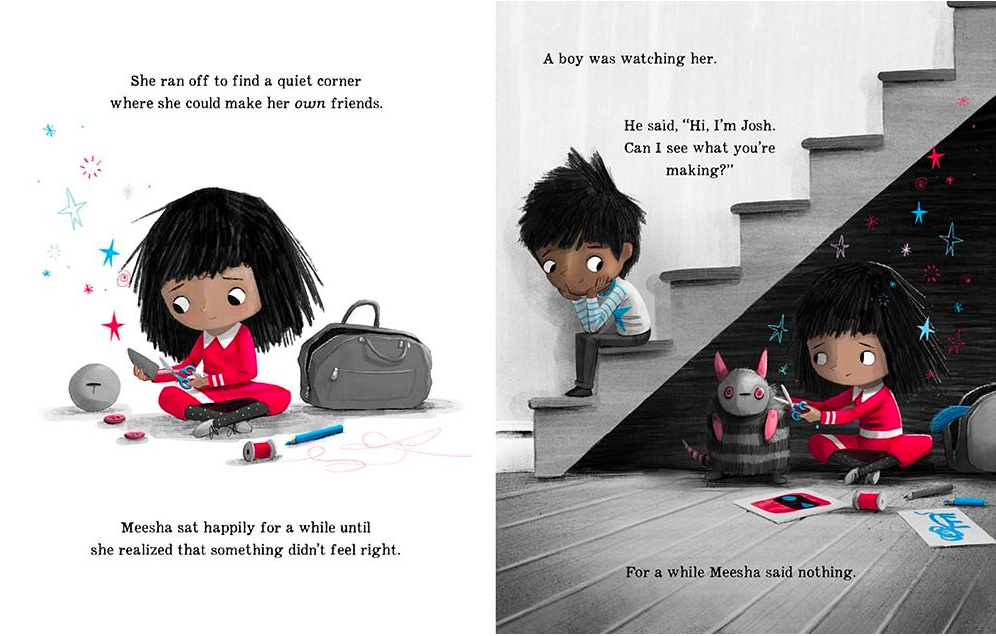
When Meesha attends a birthday party, she is nervous to join in with the other children. Overwhelmed, she finds a quiet spot to do what she likes best—creating creatures, her ownfriends. A boy named Josh comes to watch and asks if Meesha will teach him how to make them. At first this makes Meesha a little worried. She wonders if Josh will not be gentle enough with her friends. But she takes a deep breath and decides to give it a try.

celebrate-picture-books-picture-book-review-meesha-makes-friends-Josh

Copyright Tom Percival, 2021, courtesy of Bloomsbury Children’s Books.

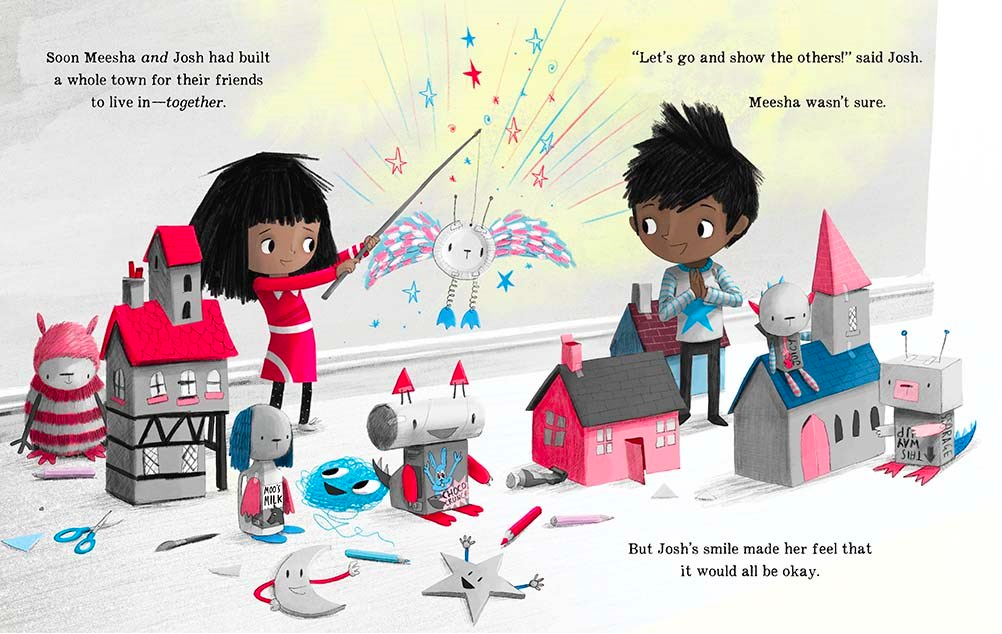
And, as a matter of fact, “Josh didn’t get it all wrong, and he didn’t ruin anything either.” Josh and Meesha soon build a whole town for all of their creatures to live in together. When Josh suggests that they show their new creations to the rest of the kids at the party, Meesha is once again hesitant. But, with some bravery and encouragement, Meesha and Josh share their creations with the rest of the group. And, to Meesha’s excitement, everyone loves them! “For the first time ever Meesha knew exactly what to say and what to do.” And with that, Meesha makes new friends.

celebrate-picture-books-picture-book-review-meesha-makes-friends-playing-together

Copyright Tom Percival, 2021, courtesy of Bloomsbury Children’s Books.

“Making friends is one of those things that looks really easy but can sometimes feel like the hardest thing in the world!” Tom Percival says it best in his kind note to readers at the end Meesha Makes Friends. Author and illustrator of the Big Bright Feelings picture book series, Percival produces yet another beautiful read for children to explore and engage in conversations about feelings. Meesha Makes Friends teaches young readers how to communicate, make friends and interact in their own unique ways. At the end of the story, Percival provides helpful tips on how to make friends for readers who may identify with Meesha’s struggles.

Tom Percival described himself in an interview as a quiet, creative and thoughtful child. Through his Big Bright Feelings series, he hopes to help kids explore different emotions and why we feel the way we do. Intricately drawn details and expressions allow readers to easily understand and empathize with the emotional states of the characters. Percival thoughtfully plays with the color pallet of his illustrations to perhaps allude to sensory sensitivities and provide a vibrant view of Meesha’s perception of the world. A diverse cast of characters of different races and abilities makes this book an accessible read for all. Truly a book driven by thoughtfulness, kindness, creativity, and compassion.  

For parents, teachers, and other caregivers who are looking for a sensitive, relatable, and truly helpful way to talk to kids about shyness, making friends, and socializing, Meesha Makes Friends is a must addition to home, school, and public library collections. Be sure to look for the other books in the Big Bright Feelings series: Perfectly Norman, Ruby Finds a Worry, and Ravi’s Roar.

Ages 3 – 6

Bloomsbury Children’s Books, 2021 | ISBN 978-1547605194

To learn more about Tom Percival, his books, and his art, visit his website.

National Introverts Week Activity

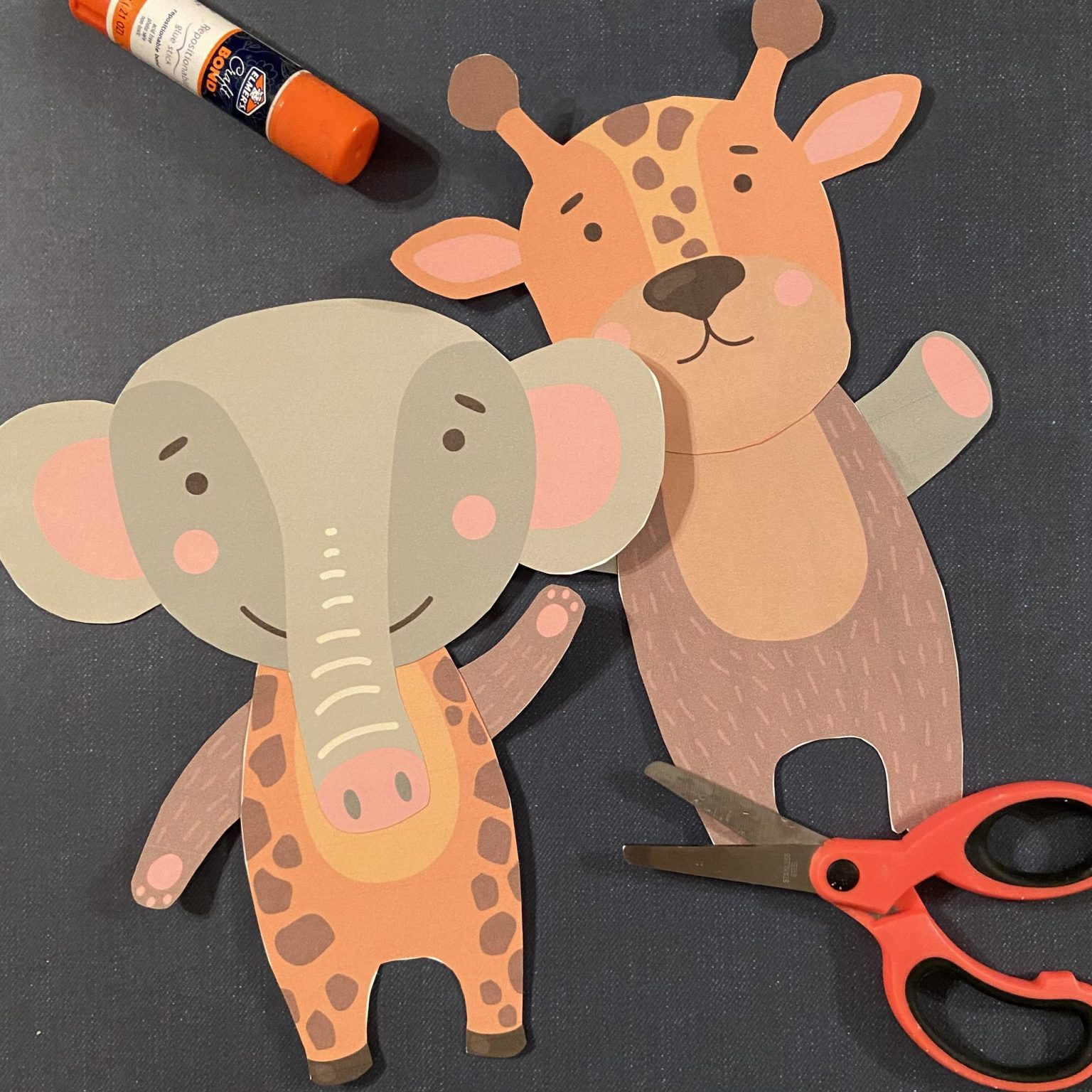
free-kids-crafts-animal-mixup-activity

Image courtesy of Free Kids Crafts

Mixed-up Creatures


You can make creations like Meesha’s with this Flower/Animal Mix-Up Activity! 

Materials

Instructions

Print these pages, cut up the parts, and glue or tape together pieces on a blank piece of paper to make the quirkiest creatures you can!
 
You’ll find many more craft and activity ideas at Free Kids Crafts and Making Friends!

celebrate-picture-books-picture-book-review-meesha-makes-friends-cover

You can find Meesha Makes Friends at these booksellers

Amazon | Barnes & Noble | Books-a-Million

To support your local independent bookstore, order from
Bookshop | IndieBound

Picture Book Review

March 10 – It’s Women’s History Month

celebrate-picture-books-picture-book-review-send-a-girl-cover

About the Holiday

Calling all gals, pals, and woman-identifying people! This month is dedicated to YOU and all the women throughout history who have worked to make things fair. Women throughout history have often been treated as less than men, especially women of color. This concept is called gender inequality, and a whole lot of wonderful ladies across the world have been working to change it. In 1987 the National Women’s History Project petitioned to have the US Congress officially designate March as Women’s History Month. From that point on, organizations and communities have celebrated and recognized the month-long holiday by uplifting the stories of role-model women throughout US history. To celebrate Women’s History Month, read about some of the achievements of women in various fields of study, learn about (and from) stories of activism, and spend some quality time with the women and girls who matter most in your life. To learn more about Women’s History Month, visit: https://womenshistorymonth.gov/ 

Thank to Bloomsbury Children’s Books for sending me a copy of Send a Girl! for review consideration. All opinions on the book are my own.

Reviewed by Dorothy Levine

Send a Girl! The True Story of How Women Joined the FDNY

Written by Jessica M. Rinker | Illustrated by Meg Hunt


As a girl growing up in the 1950’s, Brenda Berkman dealt with a lot of adults telling her what she could and couldn’t do. Brenda loved to play sports and spend time outside. But many of her favorite activities were ones that people considered “boy’s games.” When Brenda tried to join a baseball team, the coach said he wouldn’t send a girl to play a boy’s game. But, did Brenda let this stop her? Nope! Brenda was determined to keep doing the things she liked to do, so she made her own all-girls football team with friends instead. 

As Brenda grew older, people’s views on what boys and girls could do began to expand. Brenda had moved to New York and studied to become a lawyer but realized that she yearned for a career that was more active. In 1977 the New York City Fire Department announced that they would finally allow women to take the exam to become firefighters. This was exciting news! Brenda didn’t think that this would ever be a possibility for her because “In the past, every firefighter in the city had to be a man. In fact, they’d only ever been called firemen!”

celebrate-picture-books-picture-book-review-send-a-girl-football

Image copyright Meg Hunt, 2021, text copyright Jessica Rinker, 2021. Courtesy of Bloomsbury Books for Children.

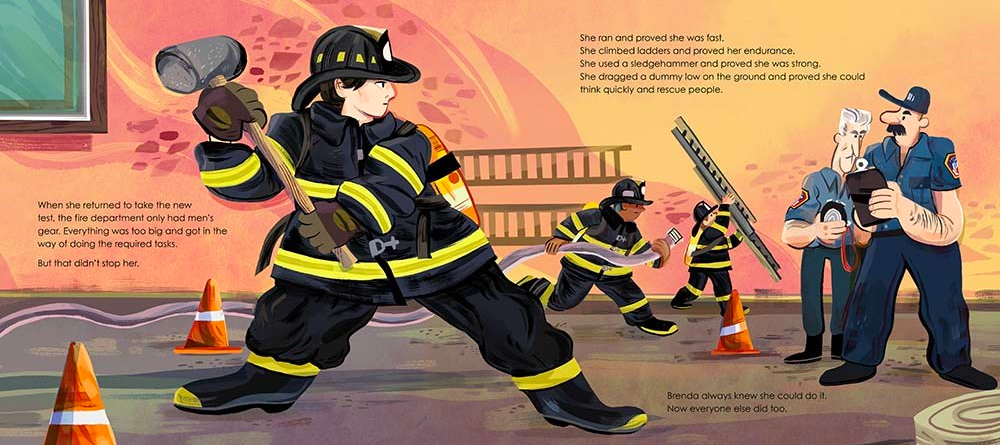
Brenda knew she wanted to do something that would involve helping people, using her mind to strategize, being active, and getting outdoors. Becoming a firefighter seemed like the perfect fit. Becoming a firefighter proved to be a tough journey for Brenda. Even though the fire department now allowed women to apply, many people did not support this decision. “They said, ‘Don’t send a girl to do a man’s job!’ They didn’t think women were courageous enough, smart enough, or strong enough.” Brenda knew she was going to have to work really hard to prove these people wrong. She passed the written test and began to train for the fitness test.

When Brenda took her physical exam, she found that the men in charge were not looking for the strengths firefighters need to do their jobs. None of the women who took the test passed, and Brenda knew this was no coincidence. It wasn’t that the women weren’t strong enough, but rather the people in charge of the firefighters’ test didn’t want women to pass. Brenda realized that she could use her background in law to fight against this injustice. After four long years of working to prove her case in court, Brenda won, and the test was restructured to better match the skills that people need to have as firefighters. 

In 1982 Brenda Berkman and forty others became the first female firefighters to join the New York City Fire Department. In Brenda’s new job, “She hauled hoses! Climbed ladders! Broke through walls! Fighting fires was exciting and gritty, loud and dirty, and sometimes dark and dangerous.” But her fight against people’s bias and discrimination was far from over. Many people still didn’t think that women were tough enough for the job, even after they had proved they were. “They said, ‘I want to be saved by fireMEN!’”

celebrate-picture-books-picture-book-review-send-a-girl-test

Image copyright Meg Hunt, 2021, text copyright Jessica Rinker, 2021. Courtesy of Bloomsbury Books for Children.

And, some of the men already on the New York City Fire Department agreed. They were mean and made the job as difficult as possible for Brenda and the other women firefighters. Sometimes they would pull pranks on the women in their departments that were incredibly cruel and dangerous. “Firefighters need to depend on one another. Brenda wasn’t sure she could depend on all her fellow firefighters. Sometimes it was lonely. Often, she felt invisible.” To combat against this, Brenda formed a group called United Women Firefighters, where women could come and talk about these issues and support each other. 

With this new group, strong friends, and time, things got slowly better for Brenda. People began to change their opinions on firefighting only being for men. Brenda continued to excel as a firefighter, and eventually became a captain of her department. She continued to fight fires—and discrimination—throughout her life, and she proved that firefighting is something you can “send a girl” for. Now there are people of all genders across the nation who fight fires every day and save lives. 

An Author’s Note at the end details the importance of learning stories like Brenda’s and provides more information on the history of firefighting and Brenda’s accomplishments. A list of websites where readers can learn more about women firefighters and other influential women is also included.

celebrate-picture-books-picture-book-review-send-a-girl-rescue

Image copyright Meg Hunt, 2021, text copyright Jessica Rinker, 2021. Courtesy of Bloomsbury Books for Children.

In this inspiring story of overcoming norms and gender discrimination, Jessica Rinker eloquently recounts Brenda Berkman’s stirring biography. Readers of all ages will rejoice in the perseverance that Berkman exhibited throughout her career. Rinker’s repetition of Brenda’s firefighting tasks takes on an exciting, triumphant tone and echoes the thrill Brenda felt while fighting fires despite all of the hardship she faced. Rinker’s straightforward writing discusses difficult themes of women’s inequality, bullying, and discrimination in an easily digestible manner for young readers. 

Illustrator Meg Hunt provides a diverse cast of characters to make the story come alive. Her multimedia images match the bustling, busy nature of New York City and provide an immersive view into city living. Readers are transported into the story to fight fires right alongside Brenda with intricate, realistic, and colorfully designed spreads. They watch the protagonist age throughout the story with determination and power. The first image of Brenda valiantly hauling a firehose to a window of billowing smoke in an NYC apartment is mirrored near the end. Readers follow Brenda in a full circle—working tirelessly to become a firefighter, shining at her job, and then extending her joy for firefighting to the next generation of young women on the final spread. 

Book lovers of all types will be inspired by Brenda Berkman’s story and how she shaped the history of fighting fires, both literal and metaphorical. An honest, informative and empowering book. The sentiment and lessons in Send a Girl! are of utmost importance for young girls, and really all young readers to hear.

Ages 4 – 8

Bloomsbury Children’s Books, 2021 | ISBN 978-1547601745

Discover more about Jessica M. Rinker and her books on her website.

To learn more about Meg Hunt, her books, and her art, visit her website.

Women’s History Month Activities

celebrate-picture-books-picture-book-review-womens-history-month-word-search

Women’s History Month Word Search


Find the names of fifteen inspirational women in this printable word search puzzle.

Women’s History Month Word Search Puzzle | Women’s History Month Word Solution

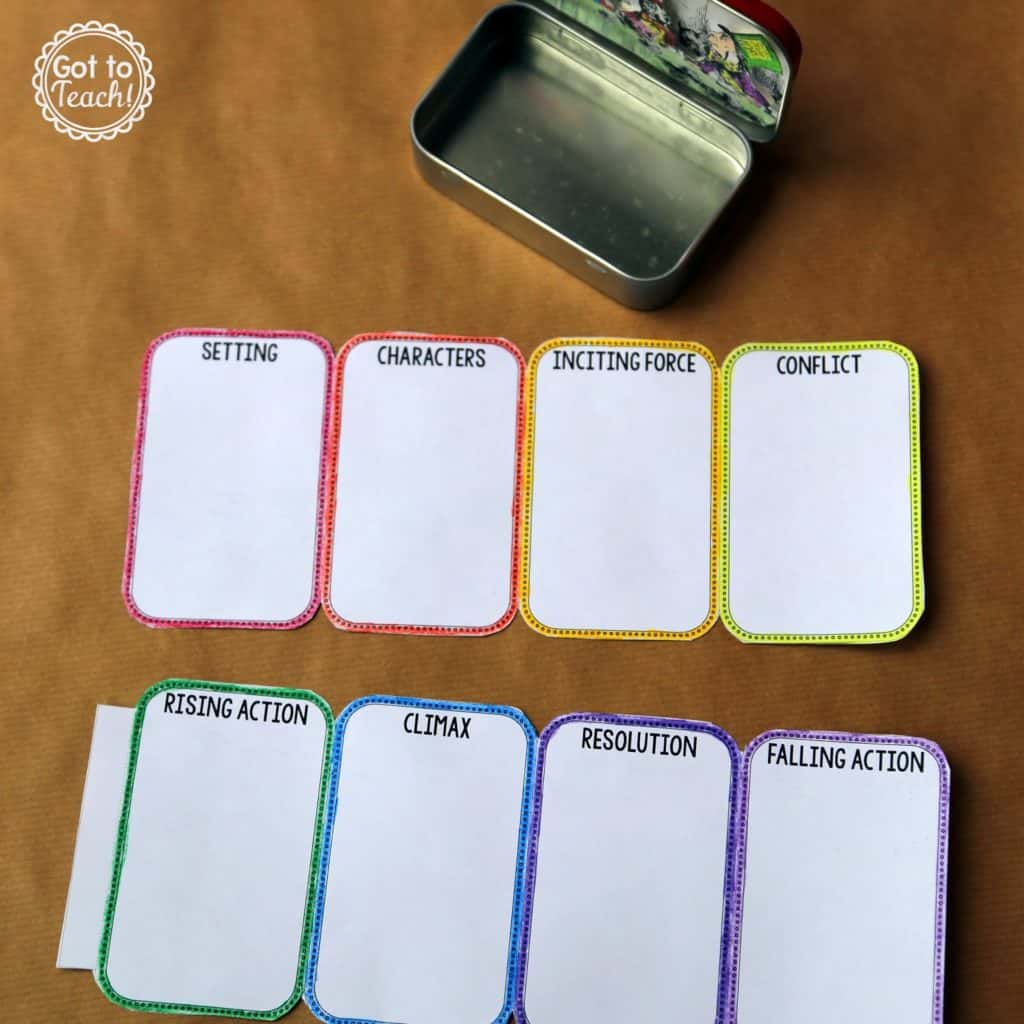
Teacher Thrive mint tin book report craft

Mint-Tin Book Report


Create a mint-tin book report of Brenda Berkman’s story in Send a Girl! or of another book highlighting an important women’s biography. You can find more about this clever idea from Melissa at Teacher Thrive

Materials

Instructions

Cut out the pages from the printable template and fold along the creases. Glue the “conflict” and “rising action” pieces together using the extra rectangle of paper. Write down the most important facts or highlights from each part of the story and decorate. Fold up the pages accordion style and stick into a mint tin. Use the blank parts to decorate the top and inside of the lid. Then you’ll have a portable, cute book report to carry around wherever you please!

celebrate-picture-books-picture-book-review-send-a-girl-cover

You can find Send a Girl! The True Story of How Women Joined the FDNY at these booksellers

Amazon | Barnes & Noble | Books-a-Million

To support your local independent bookstore, order from
Bookshop | IndieBound

Picture Book Review

February 9 – It’s Creative Romance Month

celebrate-picture-books-picture-book-review-bear-meets-bear-cover

About the Holiday

February, the month of love, is a perfect time to think up creative ways to surprise that special person in your life with a romantic gesture, exciting date night, or fun adventure that will add spice and fun to your relationship. With a little imagination you can find unique ways to show all the love that’s in your heart. 

I’d like to thank Bloomsbury Children’s Books for sharing Bear Meets Bear with me for review consideration. All opinions on the book are my own.

Bear Meets Bear

By Jacob Grant


Bear was waiting for the teapot he and Spider had ordered to arrive. It was exciting to think of getting something new delivered. At last the doorbell rang. When Bear opened the door, he found Panda, a delivery person he’d never seen before. She asked him to sign for his package, but Bear was smitten. “His heart beat fast…. He wanted to say something clever, or funny, or anything at all,” but he couldn’t.

celebrate-picture-books-picture-book-review-bear-meets-bear-delivery

Copyright Jacob Grant, 2020, courtesy of Bloomsbury Children’s Books.

The delivery woman asked for his signature again, and finally he was able to sign the sheet. He watched Panda peddle away on her delivery bike. Spider thought Bear’s predicament was quite funny. Bear rushed to his computer and ordered another teapot. Bear waited and waited. He watched out the window, hoping to see Panda’s delivery bike roll up.

celebrate-picture-books-picture-book-review-bear-meets-bear-waiting

Copyright Jacob Grant, 2020, courtesy of Bloomsbury Children’s Books.

Bear was just considering ordering another tea pot when he saw Panda coming up the walk. But when she handed him the box and asked him to sign, Bear just stood silently again. “Spider felt sorry for his friend.” Bear ordered another teapot and another and another. Never could he summon the courage to talk to Panda, even though Spider encouraged him. Standing among all of the boxes of teapots, Spider told him he should “invite her to tea” or “at least remember to breathe” when Panda came to the door.

Bear agreed. He would order one more teapot and talk to Panda when it arrived. Bear waited with anticipation. But when the doorbell rang, it wasn’t Panda standing there, but a “gruff raccoon.” “Bear’s heart hurt.” He bemoaned the missed opportunities and regretted all the teapots. Spider wanted to help. He wrote a note and headed out to find Panda. He went from door to door asking if anyone had seen her. Finally, he found her at Duck’s house.

celebrate-picture-books-picture-book-review-bear-meets-bear-sad

Copyright Jacob Grant, 2020, courtesy of Bloomsbury Children’s Books.

The next day Panda was excited to see Panda on his doorstep. She thanked him for his invitation to a tea party. Bear felt himself freeze, but then he told her he would be just a minute. He cleaned up the scattered teapots and welcomed her in. Soon Bear and Panda were chatting and laughing like old friends.

After Panda said goodbye, Bear thanked Spider and said that Panda was very nice but that they would “not be meeting for tea again.” It turned out that Panda didn’t like tea! Bear was nonplussed, but thought it was “all rather funny.” The next time he and Panda met, Bear served lemonade. And what about all those teapots? Bear held a yard sale!

celebrate-picture-books-picture-book-review-bear-meets-bear-tea-party

Copyright Jacob Grant, 2020, courtesy of Bloomsbury Children’s Books.

Fans of Jacob Grant’s Bear and Spider series know that Bear is often hesitant to put himself out there, to try something new, or even, sometimes, to leave the house. It might be because his feelings are so strong or he doubts himself  – or a little of both. Fortunately, Bear has his good friend Spider who supports him and gives him a nudge when he needs it. When Bear meets Panda and is smitten, he, like many people, can’t find the exact right words among all those feelings; a simple “hello” doesn’t seem like enough. Grant understands. Enter Spider, who offers a gentle dose of honesty and provides always-polite Bear with an opportunity to shine. When Bear discovers that Panda doesn’t like tea, Grant also shows readers that conditions don’t have to be perfect to make a new friend and that a little humor goes a long way toward smoothing things over.

Grant’s tranquil color palette and simple shapes make it easy for readers to immerse themselves in Bear’s feelings, empathizing with his all-too-human predicament while enjoying the comical collection of all those tea pots. When Bear watches out the window day after day, willing Panda to return only to be filled with fear and anxiety when she does, Grant perfectly captures that “oh no, now what?” emotion as Bear’s paws fly to his face and his eyes widen. Likewise, Bear’s regrets are palpable as, surrounded by boxes, he buries his head in the chair. Throughout, Spider is there, weaving his web, strumming his banjo, and watching out for Bear. Wordless images of Bear and Panda enjoying lemonade together and Bear’s yard sale let kids know it has all turned out all right.

A charming, poignant, and reassuring addition to the Bear and Spider series, Bear Meets Bear,  a story about overcoming emotions that hold us back, is highly recommended for home, school, and public library bookshelves.

Ages 3 – 6

Bloomsbury Children’s Books, 2020 | ISBN 978-1547604241

Discover more about Jacob Grant, his books, and his art on his website.

Creative Romance Month Activity

celebrate-picture-books-picture-book-review-ceramic-mug-craft

Create a Mug


If you’re kids are looking for a gift to make for a family member or a friend for Valentine’s Day or any time, a personalized mug makes a creative way to share a little love every time it’s used. 

Supplies

  • Plain ceramic mug
  • Bakeable markers or paint

Directions

  1. Design and color your mug
  2. Follow directions on the markers or paint to properly bake on your decoration and make it permanent.

celebrate-picture-books-picture-book-review-bear-meets-bear-cover

You can find Bear Meets Bear at these booksellers

Amazon | Barnes & Noble | Books-a-Million

To support your local independent bookstore, order from
Bookshop | IndieBound

Picture Book Review