Today’s celebration remembers and honors the ninja warriors of China and Japan who with stealth and their signature black clothing could appear and vanish “like a hawk on stolen wings” to defeat their opponents. It was rumored that they were masters of Kuji-Kiri, an eastern magical practice that allowed them to combine their natural ability to move undetected with supernatural powers. The original ninja came from the Iga province of Japan and were made up of regular citizens. Their weapons were those of farmers, making it easier for them to be explained away and these warriors to escape exposure. The black clothing that we now associate with the ninja came from the theater, where the “invisibility” of the common-man warrior was represented by stage hands playing the parts of the ninja. To conceal themselves from the audience, stage hands wore black costumes that blended in with the black background curtains. When they became part of the play, theater-goers were taken by surprise. Today, ninja remain popular characters in movies and books, and especially with children.
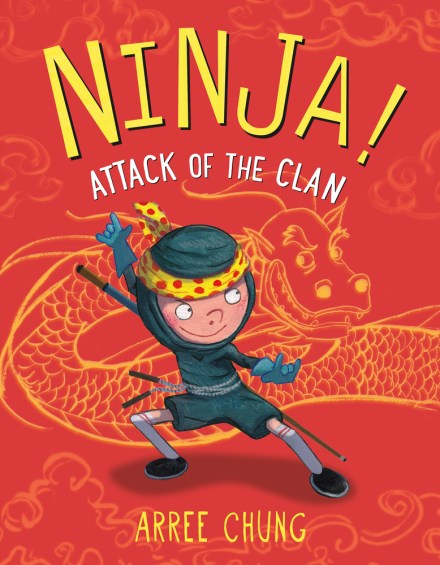
Ninja! Attack of the Clan
By Arree Chung
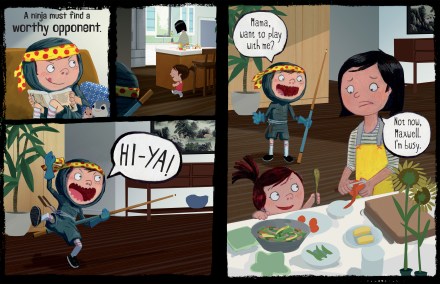
Maxwell is dressed in his ninja best, pool cue at the ready. Now all he needs is a “worthy opponent.” He leaps into the kitchen where his mom’s making a salad. “HI-YA!” But when he asks if his mom wants to play, she tells him she’s too busy. He turns to his sister. “BOOYAH! Cassy, want to play with me?” he asks. “I working,” she answers from behind the tall building she’s constructing from blocks. Disappointed, Maxwell searches out his dad in his office.
Copyright 2016 Arree Chung, courtesy of us.macmillan.com
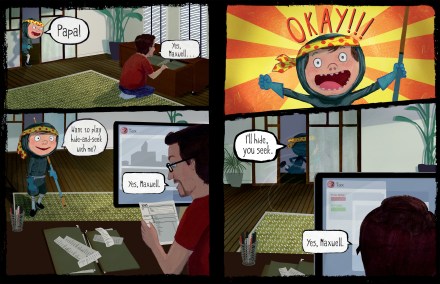
“Papa!” Maxwell exclaims. “Yes, Maxwell…,” Papa says, flipping through the file cabinet. Want to play hide-and-seek with me?” Maxwell asks. “Yes, Maxwell,” Papa says, studying the income tax form in his hand. “OKAY!!! I’ll hide, you seek.” Maxwell shouts as he runs out of the room. “Yes, Maxwell,” Papa says, opening the tax program on the computer.
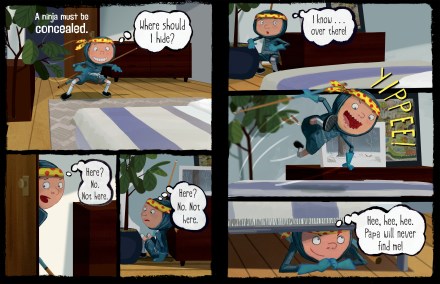
Maxwell tries out various hiding places, but none seem ninja-worthy. Then he spies the bed. Concealing himself underneath, he waits for Papa to find him…and waits. Finally, he hears a thump, thump, thump, and giggles with anticipation. But it’s only Brutus sniffing him out. Time goes by and still no Papa. Maxwell shouts out an anti-clue, but still nothing happens. At last Maxwell leaves his hiding place and goes back to his dad’s office, where Papa is still sitting in front of the computer. “Hey, you never came looking for me,” Maxwell says. But his dad is too distracted to hear him. Maxwell heads out with a dejected, “Forget it.”
Copyright Arree Chung, courtesy of us.macmillan.com
To recover from disappointment, Maxwell knows “a ninja must practice the art of meditation and find inner peace.” But even here his bad day continues. When he’s called for dinner he skips out to the dining room, but no one is at the table except Brutus, who is gulping down Maxwell’s soup. Suddenly, Brutus barks a warning. From behind comes a “surprise attack!” “Defend yourself,” orders Papa. With a flick of his finger, Maxwell secures his mask and goes to work, poking Papa in the belly. His dad comes back with an awesome bear hug, but Maxwell deftly somersaults out of his arms. With lightning speed he whips his jump rope across the room and ties up Papa.
Copyright 2016 Arree Chung, courtesy of us.macmillan.com
Next comes his mom, wielding her yellow bag. Maxwell leaps over the flying purse and retrieves its lost lipstick, which he slathers on in preparation for the “kiss of death!” Covered in red lip marks, Maxwell’s mom joins his father in defeat. Cassy, however, is harder to pin down. She sneaks behind him and in one swift move covers his eyes with his own headband and applies a dastardly “SLURP!” Stunned, Maxwell admits, “I’ve been licked.” Still—as the battle continues to wage—Maxwill declares, “I love my ninja clan!”
In Ninja! Attack of the Clan, Arree Chung’s cute sequel to Ninja!, Maxwell just wants to play with his family but is disappointed as each is too busy to take notice. Maxwell’s dilemma is handled with honesty and humor that will resonate with kids. The end of the story in which Maxwell’s family executes the perfect remedy for his bad day is touching and will have kids cheering for this enthusiastic ninja. Chung’s bold, vibrant cartoon-inspired panels perfectly carry the high-action parts of the story, while full-page illustrations slow things down a bit to embrace family time.
Ages 4 – 7
Henry Holt, 2016 | ISBN 978-0805099164
For little ninjas there’s so much to see and do on Arree Chung’s website, including fun activities, a video, more about the characters, a gallery of ninja art by kids, and even a place where they can “ninjafy” pictures of themselves!
International Ninja Day Activity
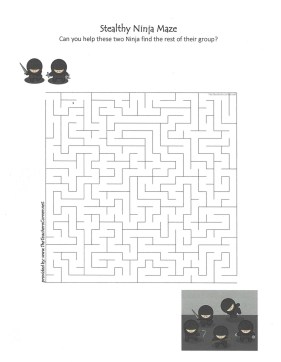
Stealthy Ninja Maze
Two ninja have been separated from their group! Can you help them find their way back in this printable Stealthy Ninja Maze?
In the aftermath of World War II the Four Freedoms that had guided the Allies—Freedom of Speech, Freedom of Religion, Freedom from Want, and Freedom from Fear—did not go far enough in defining the areas that need to be covered. In December 1948 the United Nations General Assembly put forth 30 articles to further delineate the freedoms and rights of the world’s citizens, including the freedom of education, thought, health, opinion, and expression as well as the right to take part in government, have a free choice of employment, and more. To honor today’s observance, speak out when you see inequality and work to bring freedom in all it’s forms to everyone.
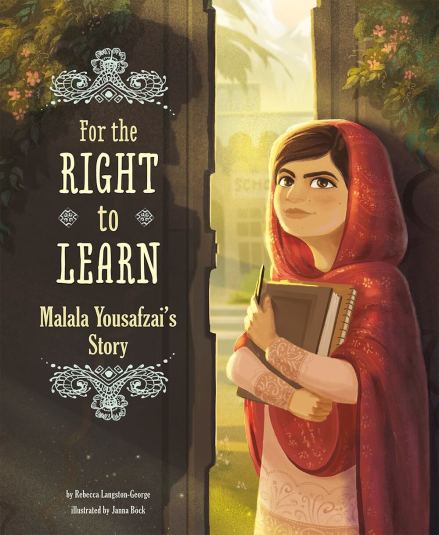
For the Right to Learn: Malala Yousafzai’s Story
Written by Rebecca Langston-George | Illustrated by Janna Bock
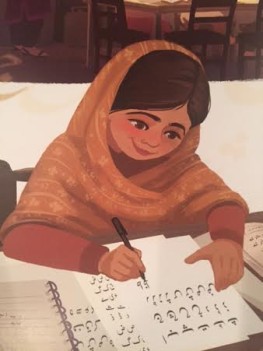
Malala Yousafzai lived in the Swat Valley of Pakistan, where her father, Ziauddin, ran a school in the town of Mingora. Malala loved school and even when she was tiny visited classes with her father often. Not all Pakistani children could go to school—some families couldn’t afford it and some believed girls should stay home to clean, cook, and keep house. But Malala’s father believed his daughter had the same right to an education as his sons. Malala thrived at school. She learned multiple languages and won many academic awards.
“But Taliban leaders who controlled the area were against letting girls go to school. They declared that females should be separated from males. They wanted to outlaw education for girls.” The Taliban leaders even tried to intimidate Malala’s father. “One ordered Ziauddin to close his school because girls and boys used the same entrance.” Ziauddin refused.
Image copyright Janna Bock, courtesy of Capstone Press
While her father was worried, Malala’s determination grew stronger. She studied harder at school, and during the school holidays instead of covering her hands with henna flowers and vines as most Pakistani women did, Malala painted science formulas on hers. The Taliban continued to exert a tight grip on the Swat Valley, and instituted new rules: men could not shave, women had to cover their faces, movies were banned. And the radio “crackled with the sound of the Taliban preaching: No education for girls! Girls who attend school bring shame to their families!”
The Taliban frightened many, and empty seats in school classrooms began to be more frequent. Ziauddan and Malala appeared on TV to express the importance of education. In response the Taliban threatened Ziauddan and his school. Despite the threats Malala and her father continued to speak and write, “demanding equal education for girls.” The Taliban began patrolling the streets, perpetrating violence and destruction on anyone who didn’t obey their rules.
In December 2008, the Taliban announced that all girls’ schools would close by January 15. “Even before the deadline, bombs started to rain down on nearby schools as warnings.” The British Broadcasting Corporation wanted to reveal to the world what was happening. They wanted a girl to write a blog about her experience and “how it felt to be denied an education. Malala volunteered.
Image copyright Janna Bock, courtesy of Capstone Press
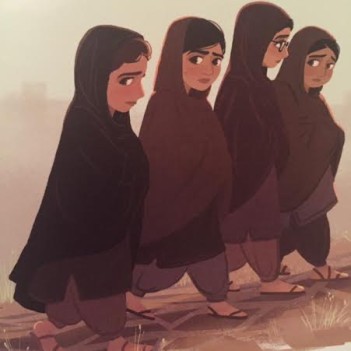
She took the pen name Gul Makai and related her blog by phone to a reporter who typed and published her words for two months. The first post appeared on January 3, 2009. On January 14 Malala wrote: “‘They can stop us from going to school, but they can’t stop us learning!’” Because activists were growing angry, the Taliban let girls ages 10 and younger go to school. Malala and her friends were 11. They began dressing to look younger and hid school books in their clothes. If they had been caught lying about their ages, they and their teachers could have been beaten or executed.
In May 2009 the Pakistani army began battling the Taliban and ordered everyone to evacuate. Malala and her family had to pack their belongings and leave. Malala wanted to take her books along, but there wasn’t room. She could only hope that they—and her home—would survive the fighting. Three months later, the people of Mingora were allowed to come home, but the town was not the same as they had left it. Shops and buildings were destroyed, burned frames of cars were strewn across the roads. The school’s walls were riddle with bullet holes. But the Taliban was gone. Ziauddin reopened his school for boys and girls.
While Malala returned to school, her life was not the same. Because of her blog, speeches, and interviews, she was internationally famous. Everyone wanted to hear what she had to say—everyone but the Taliban. “Talban leaders began to threaten her on the Internet. Saying she was working for the West, they announced Malala was on their hit list. The police warned the Yousafzai family to leave, but Malala refused to hide. She refused to be silenced.”
Because of the danger, Malala’s mother wanted her to ride the bus to school instead of walk. On October 9, 2012 as Malala and her classmates rode the bus home after school, the bus was stopped and a man boarded, demanding to know which girl was Malala. While no one spoke, the girls couldn’t stop their eyes from flashing quickly toward Malala. That was all the man needed. He “pointed a gun at Malala. Three shots shattered the silence.”
The bus driver rushed Malala and two of her friends to the hospital. Word spread quickly about the shooting through the town and around the world. Malala lay unconscious for days as the Taliban threatened her again should she live. As determinedly as Malala fought for equal education, she fought for survival. Finally, she was flown to a hospital in England for more surgery and to keep her safe. Gifts and wished poured in from all over the world. Malala stayed in the hospital for three months and underwent many procedures to correct the damage done by the Taliban’s bullets.
When she had recovered, Malala returned to her family and to her place on the world stage where she continues to speak out for the rights of all. On July 12, 2013 in a speech at the United Nations, Malala “declared, ‘One child, one teacher, one book, and one pen can change the world.’” On December 10, 2014 Malala became the youngest recipient of the Nobel Peace Prize for her “strength, power, and courage” to “lift her voice for children everywhere.”
Image copyright Janna Bock, courtesy of Capstone Press
Malala. Those three syllables have become synonymous with bravery, freedom, and education. Rebecca Langston-George tells Malala’s remarkable story with the same unstinting vision that fuels Malala’s mission. Told sensitively, but candidly, this compelling biography reveals the harrowing evolution of the Taliban’s reach that, far from intimidating young Malala, only served to make her more determined. Langston-George’s excellent command over her well-chosen details and gripping pacing enhances the power of this important true story. Readers should come away inspired—not only by Malala’s life, but the fact that they too can make a difference.
Janna Bock depicts the changing landscape of Malala’s hometown both physically and philosophically with illustrations that help readers clearly envision and understand Malala’s life and environment. The faces of the townspeople and the Yousefzai family register distress and fear, but also determination, courage, and optimism as schools close, Mingora comes under fire, and the citizens become refugees. Malala’s shooting, and recovery are portrayed with thoughtful consideration of the readers, and the ending takes children inside the United Nations to witness Malala’s ultimate triumph.
An Author’s Note detailing more about Malala’s story then and now as well as a glossary and index follow the text.
For the Right to Learn: Malala Yousafzai’s Story is an important biography of current events and people shaping the world and our children’s future and is a must read for all.
On March 13, 1877 Chester Greenwood—a 19-year-old inventor—received a patent for “improvements in ear-mufflers” and forever sealed his place in history—as well as making winter more comfortable for millions of freezing ears! Today we honor Chester and his invention that brought attention to Farmington, Maine and jobs for many people in the area. 2016 marks the 40th anniversary of Chester Greenwood Day, and the people of Farmington are pulling out all the stops. With a theme of Holiday Celebrations around the World, the day will include a parade, gingerbread contest, chili contest, craft fairs, historical open houses, Polarbear Dip, 5K race, Festival of Trees and more. If you live nearby, why not plan to attend? If not, and you live in an area where the cold winds are blowing, wear your earmuffs with pride!
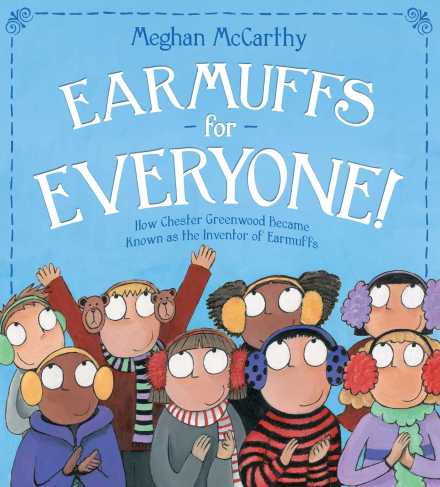
Earmuffs for Everyone! How Chester Greenwood Became Known as the Inventor of Earmuffs
By Meghan McCarthy
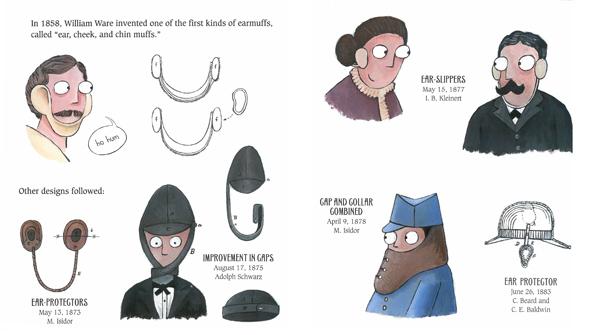
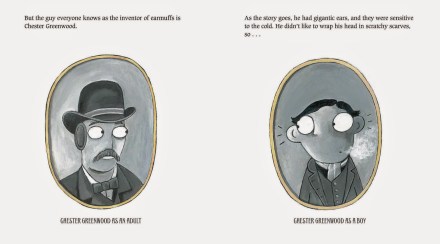
In the mid-1800s inventors were trying to solve the problem of winter’s chill effects on tender ears. William Ware designed an “ear, cheek, and chin muff” that one wore somewhat like a false beard. Ear protecting hats, ear “slippers,” high collars, and other designs followed. But it wasn’t until Chester Greenwood and his sensitive protruding ears came along that earmuffs became practical. While the exact steps Chester took in creating his earmuffs aren’t known, he eventually perfected his invention and received a government patent on March 13, 1877—when he was only 19 years old!
Copyright Meghan McCarthy, courtesy of Simon & Schuster
Chester was no one-invention wonder, though. Always on the lookout for clever ways to make money, he went on to improve other products. He applied his foresight to the tea kettle, rounding the edges of the bottom to reduce wear; constructed an interchangeable-tooth rake; and built a collapsible, if cumbersome, tent.
His inventions brought him a comfortable life that he shared with others—a beautiful house for his family in Maine, the first steam car in his town, and a bicycle shop on the bottom floor of his workshop. His wife, also a progressive thinker, worked for women’s suffrage and inspired her husband to hire women in his workshops.
After Chester passed away, some people, most notably Mickey Maguire, thought he deserved more acclaim—even a day dedicated as Chester Greenwood Day. Maguire was so excited about this that he became a kind of inventor himself—an inventor of tall tales. Over time he told some whoppers about Chester which were repeated in the press, making it hard to separate fact from myth. But even without the made-up stories, it’s easy to say that Chester Greenwood had a very remarkable life
Copyright Meghan McCarthy, courtesy of Simon & Schuster
Earmuffs for Everyone! goes beyond the story of Chester Greenwood to include other inventors, a discussion of the patent system (using products well-known to today’s kids), and an explanation of how an inventor’s legacy grows. Meghan McCarthy writes with verve and humor, making the story of Greenwood’s invention as well as others’ creations inviting, accessible, and fun. Her illustrations of early attempts at creating earmuffs as well as other products from the 1800s are sure to delight kids and make them curious about the time period.
In her author’s note following the text, McCarthy expands on the story of Chester Greenwood and the process of applying for and earning a patent.
Ages 4 – 8
Simon & Schuster/Paula Wiseman Books, 2015 | ISBN 978-1481406376
Discover more about Meghan McCarthy and her books plus fun activities, videos, artwork, advice for writers and artists and more visit her website!
National Earmuff Day Activity
Here’s to Warm Ears! Maze
One muff on each side of the head—Genius! But it took inventors a lot of trial and error to make the perfect warming headgear. Use your own creative thinking on thisHere’s to Warm Ears!earmuff-shaped maze.Solutionincluded.
National Mutt Day, also known as Mixed Breed Dog Day, was established in 2005 by animal welfare advocate Colleen Paige to raise awareness of the plight of mixed breed dogs abandoned and in shelters around the country. Approximately 80% of dogs in shelters are mixed breeds and often lose out on finding permanent homes to purebred dogs who are adopted much more quickly. Mixed breed dogs tend to be healthier, behave better, and often have sweeter temperaments than their purebred cousins, making them wonderful family pets. If you are considering adding a pet to your family, consider a mixed breed. You’ll be happy you did!
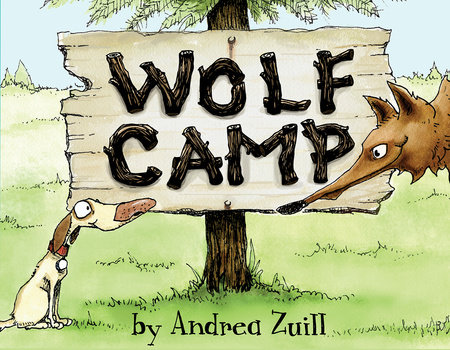
Wolf Camp
By Andrea Zuill
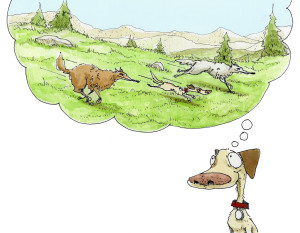
Homer is a regular dog—except when he’s feeling wolfish. He loves the lure of the hunt, and likes to pounce on stuffed Mr. Moose unawares. He thinks this is because it’s been proven by science that “all dogs have a bit of wolf in them.” When Homer takes to daydreaming, his mind wanders to the joys of living as “a real wolf,” running with the pack on the open plains. Then one day in addition to his kibble, a flier for Wolf Camp pours from the dog food bag.
The flier seems to offer everything Homer wants. “Have you ever felt like howling at the moon? Come join us!” it reads. Homer knows he has to go, so he makes sure his people see the notice—whether they are in the bathtub, in bed, relaxing, or just walking through the house. Finally his people relent, and on the designated day he boards the Wolf Camp bus and is off on an adventure.
Copyright Andrea Zuill, courtesy of andreazuill.org
Once at camp, Homer is “greeted by Fang and Grrr,” the counselors. Then he meets his fellow campers, big Rex and tiny Pixie. Fang gives a safety speech that includes staying together, refraining from chasing dangerous animals, and other rules. Their first lesson is “marking.” Could Homer help it if he was a little too close to Fang’s feet? Next comes howling. Grrr and Fang sing out a chilling “Ahh-whooooo…” Pixie pipes up with a small “Yeeiiiiiip”; Rex gives an indeterminate “Wahwawawawa…”; and Homer offers his best “Phooooooof…”
Copyright Andrea Zuill, courtesy of andreazuill.org
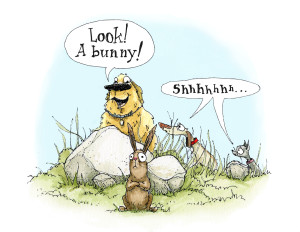
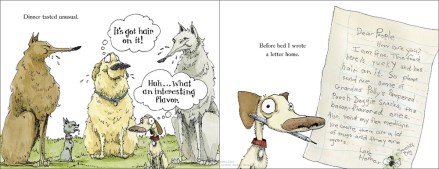
When they learn to track, Rex can’t contain his excitement and shouts out “Look! A bunny!” “Shhhhhhh…,” Homer and Pixie remind him. At last the campers are shown how to hunt, even if Fang and Grrr do run ahead and with Grrrs, snarls, growls, and a cloud of dust acquire dinner by themselves. The meal has “an interesting flavor,” which prompts Homer to write a letter home: “Dear People, How are you? I am fine. The food here is yucky and has hair on it.” He asks his family to send his favorite bacon-flavored doggie snacks as well as flea medicine “because there are a lot of bugs and they are gross.” He even includes a real “smashed bug” in the corner of the paper.
Copyright Andrea Zuill, courtesy of andreazuill.org
Living and sleeping in the wild have their challenges, but day-by-day the dogs adjust, becoming experts at marking rocks, howling “Ahh-Whoooo,” and hunting. And while taking down a moose may still be daunting, chasing squirrels is easy. The end of the week comes quickly and as Homer receives his “Honorary Wolf” certificate, he feels sad to be leaving his new friends. They howl “one more time as a pack,” and then it’s time to ride the bus back home.
While it’s good to be home with his people, his soft bed and electric blanket, and his familiar toys, Homer feels different. As nighttime falls he goes to the window and sings out a chilling “Ahh-whoooo-Ahh-Ahh-Whooowhooo….”
Andrea Zuill’s funny story of a regular dog who dreams of being more by embracing his bolder heritage will delight dog owners and dog lovers alike. Endearing Homer, with his wagging tail, sweet smile, and unflagging perseverance, is an enthusiastic hero who inspires readers to never give up in the face of obstacles. Humorous dialogue and commentary by Homer, Rex, and Pixie as they perform their camp lessons are presented in speech and thought bubbles and will make kids giggle. Zuill’s nod to “people” camp makes Wolf Camp an accessible story that will resonate with any child facing a new situation, learning new skills, or being away from home for the first time.
Zuill’s vivid, cartoon-inspired illustrations are loaded with personality and expression. Kids will root for earnest Homer, shaggy Rex, and scrawny Pixie, and, while needle-nosed Fang and Grrr initially seem intimidating, they are counselors who have their camp charges’ best interests at heart.
Ages 4 – 8
Schwartz & Wade, 2016 | ISBN 978-0553509120
To learn more about Andrea Zuill and Wolf Camp, as well as view a portfolio of her illustrations, visit her website!
National Mutt Day Activity
Funny Mutt Coloring Page
Mixed breed dogs make wonderful pets with lots of love to give. Here’s a printableFunny Mutt Picturefor you to color!
Today’s holiday marks a milestone in the search for peaceful and productive cooperation among nations. Commemorating the 1959 signing of the Antarctic Treaty, which was signed by 12 countries and set aside nearly 10% of Earth “forever to be used exclusively for peaceful purposes….” Antarctica Day was established in 2010 and is now an annual event, with activities held within schools, science organizations, governmental organizations, and other institutions across more than 25 participating countries. According to the Foundation for the Good Governance of International Spaces, Antarctica Day is “an opportunity to demonstrate how diverse nations can work together peacefully, continuously using science as a global language of cooperation for decision making beyond national boundaries.”
Penguin Problems
Written by Jory John | Illustrated by Lane Smith
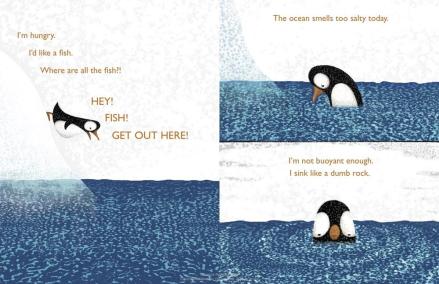
A little penguin lies flat out on a snow bank. It’s morning, which is “way too early.” To top it off his “beak is cold” and there’s a bunch of squawking coming from a hoard of other penguins nearby. As the penguin starts his day, he trudges through snow that’s deeper than it was yesterday, and the little guy doesn’t “even like the snow.” Ugh! The sun is too sunny, and the fish don’t even have the courtesy to jump out of the water into his beak! He has to wade into the freezing water where he just sinks like a stone.
Image copyright Lane Smith, text copyright Jory John, Courtesy of Random House Books for Young Readers
Down in the darkest depths he comes face to teeth with an orca. “Oh, great.” A leopard seal nips at his feet (“Oh, great.”), and a shark has his sharpened fangs ready to chomp (“Oh, great.”)! All that swimming around has left the poor penguin hungry and his flippers exhausted. He waddles up an iceberg to safety, but, ya know, that brings up something else—the penguin decides he waddles too much and thinks he looks “silly when he waddles.” What do you think? Look! He wobbles to the left; he wibbles to the right; he rocks back into place. “See?” Really, it would be so much better if he could fly—but those tiny wings just flap up and down ridiculously. Look! “See?”
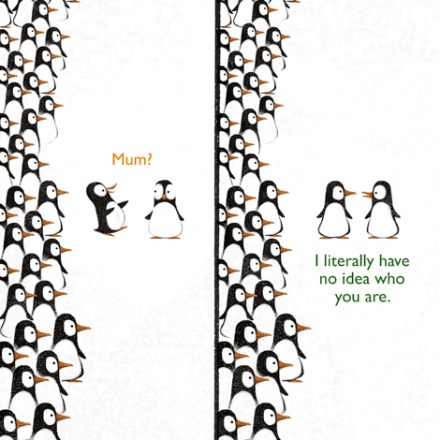
And another thing: every other penguin looks exactly like him! And he looks just like every other penguin! Don’t think so? Watch—he thinks he sees someone he knows over there. “Mum?” Awww! That’s so sweet. I’ll bet he gets a big hug. Here it comes…: “I literally have no idea who you are.” Ouch! That does hurt! Wait! There’s his dad. Phew! This time he’ll get a chuck on the…umm…shoulder for sure. “I literally have no idea what you’re talking about. My name is Mortimer.” Yikes!
Image copyright Lane Smith, text copyright Jory John, Courtesy of Random House Books for Young Readers
The little penguin gives vent to his feelings: “I have so many problems! And nobody even cares!” The penguin stands dejectedly under the full weight of his loneliness when he feels a tap on the…umm…shoulder. He turns to see a walrus behind him. “Good afternoon,” the walrus greets him. It seems that he has been watching, and he has a message, “I sense today has been difficult, but lo! Look around you, Penguin. Have you noticed the way the mountains are reflected in the ocean like a painting? Have you gazed up on the blue of that cloudless winter sky, my friend?”
The wise walrus goes on to point out the warmth of the sun and his adoring penguin brothers, sisters, and elders. He admits that there are challenges, and that all creatures face difficult times. “But hear me now, my new friend: I wouldn’t trade my life for any other, and I am quite sure you wouldn’t, either.” In fact, he suggests “you are exactly where you need to be.” With an abrupt goodbye the walrus flops his way back home across the snow.
Image copyright Lane Smith, text copyright Jory John, Courtesy of Random House Books for Young Readers
The penguin is flabbergasted by the audacity of a walrus trying to explain penguin problems. “Who the heck was that guy?! He exclaims to some nearby brothers, sisters, and elders. But he sighs and sits down in the shadow of the mountain and thinks. He does actually “love the mountains. And the ocean. And the sky.” He agrees that he has family and friends and has only one home. He sits on the top of a high snowbank and reflects on his life until night falls and the stars appear. But really…his “beak is cold.” And ya know? “It gets dark way too early.”
Jory John impeccably captures those days (weeks? months? …?) when the grumbles take over, and even the sun seems “too bright.” As one quibble builds on another, the wry grousing of the disgruntled penguin adds up to a sardonic comic routine that will make kids laugh out loud. The intervention of the walrus is likewise hilarious as he lectures the penguin at length like some old-age guru holding court. With perfect pitch John lets the penguin revel in life’s gifts for an hour or two before returning to his true nature.
Lane Smith’s penguin, at turns dumbfounded, resigned, self-conscious, rejected, flummoxed, and reflective, is so adorable readers cannot help but empathize. The small black-and-white figure of the penguin set against the pages of white snowdrifts highlights his singular dissatisfaction, while the softly mottled depictions of his underwater misadventure and escape, meeting with the garrulous walrus, and moment of contemplation enhance the humor.
Keeping Penguin Problems on any child’s bookshelf is the perfect remedy for days when the doldrums hit, a charm for days that are giggly, and a delight for any day in between.
Ages 3 – 8
Random House Books for Young People, 2016 | ISBN 978-0553513370
Discover more books by Jory John and what’s coming next on his website!
View a gallery of picture book illustration and other artwork by Lane Smith on his website!
Antarctica Day Activity
Antarctic Animals Coloring Sheets
Antarctica is home to some of the world’s cutest and best-loved animals. Here are three printable coloring sheets for you to have fun with!
During the month of November we’ve celebrated picture books—those wonderful stories and works of art that open the world to children and adults in surprising and amazing ways. Creating home libraries for children as well as reading together every day is an important part of improving language development and literacy. The close bond formed between parents and other caregivers and children during quiet or boisterous reading times last a lifetime. If you have young children or even older kids who love the beauty of picture books, make every month Picture Book Month!
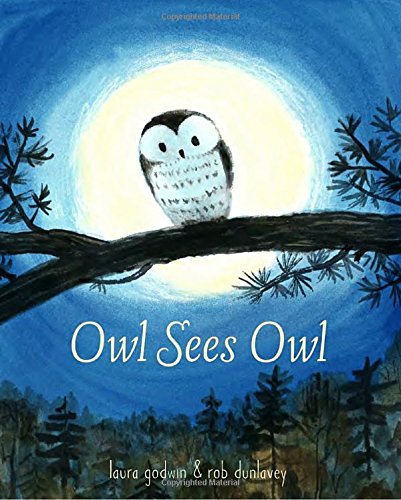
Owl Sees Owl
Written by Laura Godwin | Illustrated by Rob Dunlavey
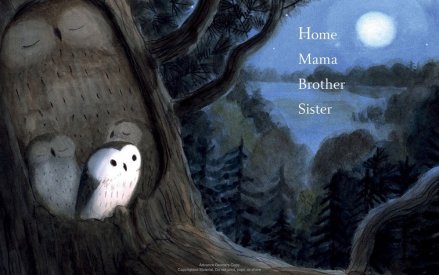
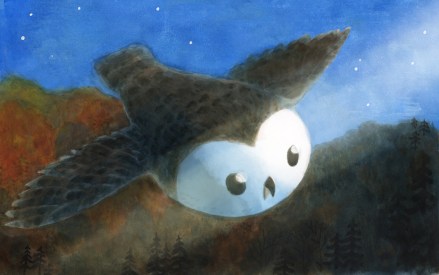
An adorable baby owl, wide awake in the full moonlight while its family sleeps, gazes out from its nest in a tree at the surrounding forest. The night is filled with “Home / Mama / Brother / Sister.” The little owl ventures out onto a sturdy limb. It knows “Tree / Nest / Hop / Look.” From its perch with a “Jump / Flutter / Flap / Fly” the owlet soars through the deep blue sky, its white face shining like the stars. It floats over autumn leaves while in the “Moon / Beam / Eyes / Gleam.”
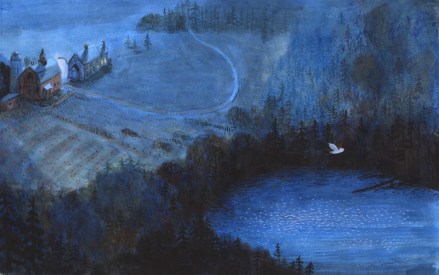
Down below other nocturnal animals have come out to play. On the farm the barn is quiet and dark while someone is stirring in the house. The baby owl passes them by with a “Soar / Glide / Swoop / Swoosh.” Something glistens in the midst of the forest, and the owl descends to investigate. “Owl… / Sees / Owl” in the rippled rings of the small pond.
Image copyright Laura Godwin, courtesy of Rob Dunlavey, robd.com
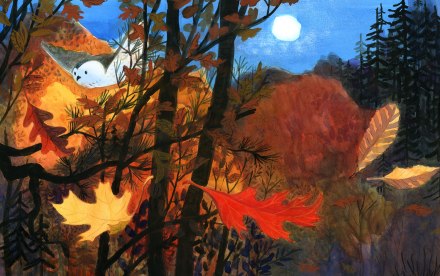
After a moment the owlet takes off with a quick “Swoosh / Swoop / Glide / Soar,” reversing its nighttime flight. Once more the curious baby passes over the star- and moonlit field, feeling bolder: “Scamper / Mice / Twinkle / Stars.” Deer perk up their ears and stare alert to the nearly silent woosh of the owl’s wings above. “Yellow / Red / Leaves / Fall as the owl zooms with a “Fly / Flap / Flutter / Jump toward “Sister / Brother / Mama / Home,” where Mama waits wide awake.
Image copyright Laura Godwin, courtesy of Rob Dunlavey, robd.com
Inspired by reverso poetry, Laura Godwin’s lovely Owl Sees Owl is a language- and emotionally rich story to share with young children. With only four words per two-page spread, Godwin tells the detailed adventure of an inquisitive baby owl who leaves home for a nighttime caper through woods and over farmland to a pond where it sees itself reflected in the mirror-like surface. In a minute the owl is back in the air for the trip home, reversing its path and also the order of the words. Godwin’s dynamic, lyrical words are joyful to read and allow for readers to linger over each page and talk about what they see, what the little owl is doing, and even whether a sentence such as “Fall / Leaves / Red / Yellow” is active or descriptive. The reverse nature of the story brings the baby owl’s adventure to a sweet, satisfying conclusion that children will love.
Image copyright Laura Godwin, courtesy of Rob Dunlavey, robd.com
Rob Dunlavey’s illustrations transfer the most beautiful clear, moonlit night to the page, creating a perfect quiet time or bedtime book for young children. The lush, dark woods rendered in deep olives, rusts, browns, grays, and blacks as well as the indigo sky highlight the gleaming moon, twinkling stars, and white feathers of the owl. In one spread deer appear in silhouette in the background as mice scamper over pumpkins in the foreground; in another fiery red, yellow, and orange autumn leaves make a spectacular backdrop to the owl’s outstretched wings. The central spread in which the owl sees its own reflection offers readers much to talk about. Is the owl startled? Wondering? Happy? Is the owlet going home for comfort or to tell of its amazing discovery? Kids will love lingering over each page to think and talk about all that is there.
Owl Sees Owl makes a wonderful gift for young children or children who love poetry and art. The book would be a welcome and often read addition to home libraries.
Ages 2 – 7
Schwartz & Wade Books, 2016 | ISBN 978-0553497823
To see a gallery of illustration work for picture books, nature sketches, and other artwork by Rob Dunlavey, visit his website!
Picture Book Month Activity
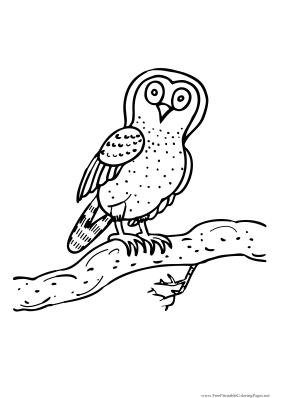
Barn Owl Coloring Page
This little guy looks ready for an adventure! Grab your pencils or crayons, color this printable cute Barn Owl Coloring Page, and give him a background to start his journey!
Today’s observance was established in 1994 to promote family and community involvement in teaching and supporting children to read more. Family members can make reading a priority at home by sitting down together every day with a wide range of books and other reading material. By taking trips to the library and bookstores, children will also naturally pick up a love of reading. But families can’t do it alone. Kids acquire a drive to read when they see connections between books and their wider world. Fun book-related activities at schools, libraries, science centers, museums, and other places capture children’s attention and make them curious about reading more. Whether children are attracted by fiction or nonfiction, picture books or chapter books, novels or graphic novels, they should be encouraged to read. Universal literacy is a goal that can be accomplished.
About Small Talk Books®
Ellen Mayer’s Small Talk Books® feature young children and adults conversing (or adults speaking to children who are not talking yet) while they have fun, do chores, shop, and bake together. Their conversations demonstrate the kind of excitement and close relationships that encourage learning and language advancement. Each Small Talk Book® includes an accompanying note from Dr. Betty Bardige, an expert on young children’s language and literacy development and the author of Talk to Me, Baby! How You Can Support Young Children’s Language Development. The introduction discusses how children connect actions, words, and meaning as adults speak to them while doing particular jobs or actions.
Other titles in the Small Talk Books® series include Cake Day and Rosa’s Very Big Job. Each book makes a wonderful gift for baby showers, new parents, or anyone with young children in the family. They would be a welcome addition to any young child’s bookshelf as well as libraries and preschool classrooms.
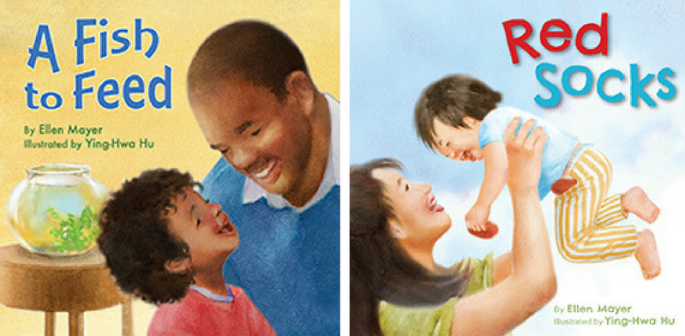
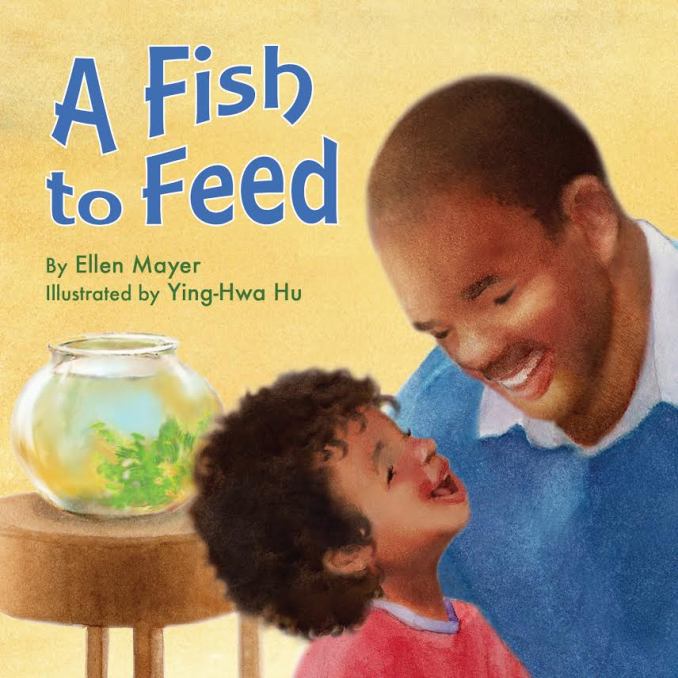
A Fish to Feed
Written by Ellen Mayer | Illustrated by Ying-Hwa Hu
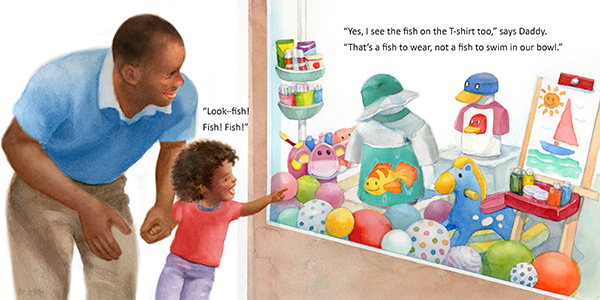
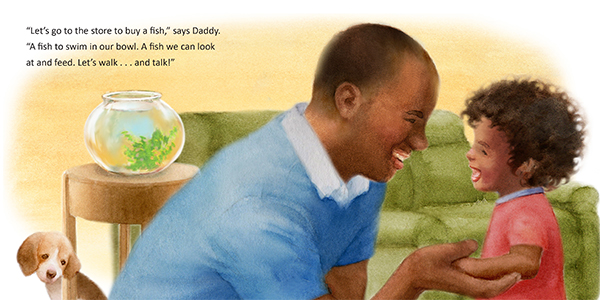
Dad plans a fun trip into town with his young child to buy a pet fish. He says, we will get “a fish to swim in our bowl. A fish we can look at and feed.” The pair are excited to go together and have time to “walk…and talk.” The two head out and soon pass a store. In the window the child sees a T-shirt with the picture of a fish on it and points. “Look—fish! Fish! Fish!” Dad reinforces the observation—“Yes, I see the fish on the T-shirt too.”—and further explains: “That’s a fish to wear, not a fish to swim in our bowl.”
Image copyright Ying-Hwa Hu, text copyright Ellen Mayer. Courtesy of starbrightbooks.com
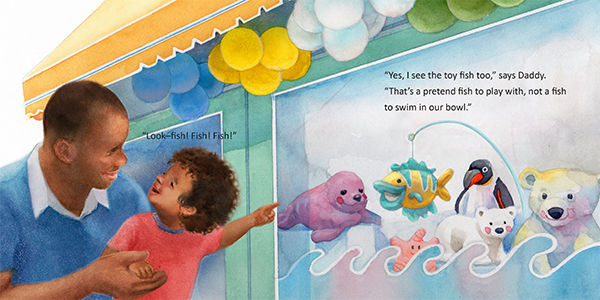
Going into the store, Dad and his youngster find another item with a fish on it. On a shelf is a backpack with a picture of a gold-and-yellow fish on the front pocket. This is a “fish to wear on your back,” Dad says, before going in search of a “fish to feed.” Next, the two come to a toy store. The child points to another fish—a fish on a mobile. “Look—fish! Fish! Fish!” the toddler exclaims. Dad affirms his child’s remark and expands on it using complete sentences that model conversation and increase vocabulary. They linger in the shop, finding other examples of fish.
Image copyright Ying-Hwa Hu, text copyright Ellen Mayer. Courtesy of starbrightbooks.com
“‘Now let’s go find a fish to feed,’ says Daddy.” They head out of the store and continue down the street. As they come to the Pet Shop, the little one shouts, “‘Look—fish! Fish swim!” Daddy echoes the excitement while praising his child. “‘You found a fish that swims!’” They take the goldfish home, where it swims happily in their bowl—a pet they “can love and feed.”
A Fish to Feed contains die-cut holes in the pages that kids will love peering through as they shop along on this adventure to find a special pet.
Image copyright Ying-Hwa Hu, text copyright Ellen Mayer. Courtesy of starbrightbooks.com
Ellen Mayer’s story of a dad and his child out for an afternoon together as they look for a pet to love offers adults and children such a sweet way to spend time with one another. The story, set in the familiar environments of home and stores and revolving around a close parent-child relationship, will engage even the youngest readers. The back-and-forth conversation between Dad and his child as they shop models ways in which adults can follow a child’s lead while providing language and literacy development. The abscence of gender-specific pronouns makes this a universal story.
Ying-Hwa Hu’s illustrations are vibrant and joyful. When Dad bends down to be at eye-level with his toddler as they talk, the close bond between them is obvious in their smiling and laughing faces. The shops are full of colorful toys, clothes, backpacks, and other items that will capture kids’ attention. Spending time looking at each page allows adults and children to point at the various items, name them, and talk about them.
Ages Birth – 5
Star Bright Books, 2015 | ISBN 978-1595727077
Red Socks
Written by Ellen Mayer | Illustrated by Ying-Hwa Hu
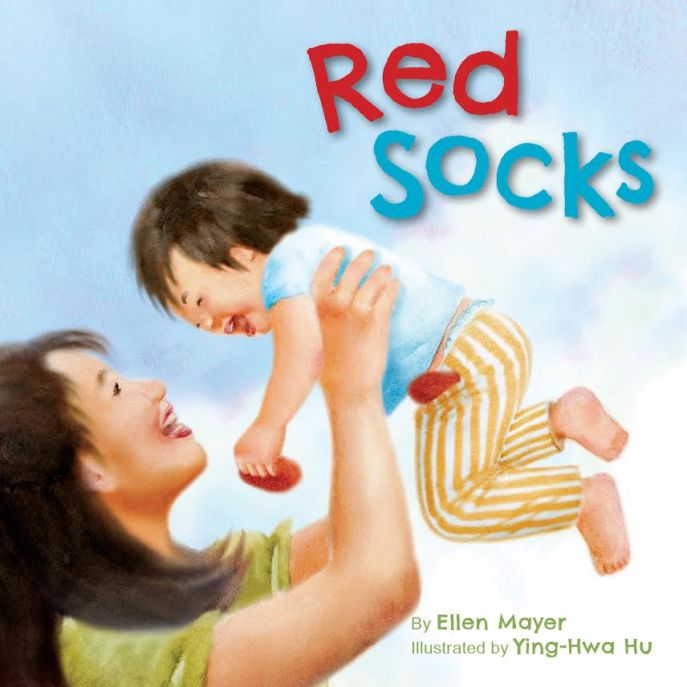
It’s laundry day and the clothes are all dried and soft and ready to wear. “‘Here is your blue shirt, with the goldfish on it,’” Mama says, pulling the top out of the basket and bending down to eye level to show it to her baby. Next, Mama describes the “yellow and white striped pants” she puts on her child. “‘Let’s see what else is in the laundry basket,’” she says.
Image copyright Ying-Hwa Hu, text copyright Ellen Mayer. Courtesy of starbrightbooks.com
Mama pulls a tiny red sock from the basket, but—“UH-OH!—where is the other red sock?’” Now it’s the baby’s turn to help. With a look down, the toddler shows Mama where the sock is. “‘You found the other red sock. Yay!’” she says, giving words to the baby’s action. She continues explaining while pointing to the sock poking out of the baby’s pocket: “‘It was hiding in your pants pocket!” Once the laundry is folded, Mama tells her child exactly what they will do next while she playfully slips the other red sock on the baby’s wiggling feet. “‘Let’s put that other sock on your foot. Then we can go play outside.’” As the baby flies in the swing outside, the red socks are brilliant dots against the blue sky.
Image copyright Ying-Hwa Hu, text copyright Ellen Mayer. Courtesy of starbrightbooks.com
Ellen Mayer’s simple and charming story of a particular moment in a mother and child’s day will immediately appeal to even the youngest reader. Familiar words coupled with clear, vivid illustrations will engage toddlers who are pre-talking and just learning language and concept development. The mother’s use of complete sentences as well as step-by-step descriptions of the activities the child sees and is involved in demonstrates how adults can converse with their babies and young children to encourage strong language and literacy skills. Free of gender-specific pronouns, Red Socks is a universal story.
Ying-Hwa Hu’s illustrations show a mother and child interacting on a typical day while they complete common chores and go outside to play. The mother and child portray a range of emotions and gestures, giving further depth to the understanding of the ideas and conversation presented. Kids will giggle at the adorable puppy who causes a bit of mischief on each page.
Ages Birth – 5
Star Bright Books, 2015 | ISBN 978-1595727060
To learn more about Ellen Mayer and her Small Talk Books® (including other titles: Cake Day and Rosa’s Very Big Job) as well as to find activities to accompany each book, visit her website!
Discover more about Ying-Hwa Hu and view a portfolio of her illustration work on her website!
Red Socks and Too Small to Fail
Red Socks was chosen by Too Small to Fail, an early literacy initiative of The Clinton Foundation to feature in their Wash Time is Talk Time project. Wash Time is Talk Time serves underserved communities and provides resources to turn time spent at the laundromat into an opportunity for families to talk together, read together, and learn together. Language-rich literacy resources will be delivered to more than 5,000 laundromats across the country.
Here’s a video from one fun afternoon with families, Ellen Mayer, and Ying-Hwa Hu during wash time!
National Family Literacy Month Activity
Child’s Sensory Board
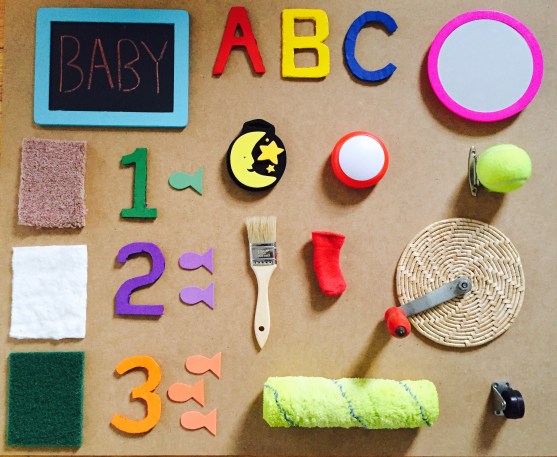
Toys or objects that provide many opportunities for sensory experimentation and observation stimulate a baby and young child to learn while having fun. You can make a sensory board for your own child using household items and that have a variety of textures, sizes, shapes, and movement. When you create your own sensory board, you can personalize it for your child by adding their name, pictures of family members, and other special items. While you play with your child, take time to talk about all of the objects on the board, what they do, and how they work. Count the objects. If you include words or your child’s name, spell them outloud and say them. There are so many ways to use a sensory board. Even if children can’t yet talk, they are listening and soaking in the rich language learning you are providing!
**When making your board always ensure that you use items that are not a choking hazard or can catch tiny fingers. Make sure that items are firmly attached to the board. Never leave a baby unattended while playing.**
Supplies
A board large enough to hold the items you want to attach. Boards that can be used include: those found at hardware stores or craft stores; large cutting boards; shelves; old table tops; etc.
Sample items for your sensory board can be age appropriate and include:
Large swatches of various textured material. (I used fur, a scrubbing sheet, and a piece of carpeting)
Wooden or thick cardboard letters and numbers, painted in a variety of colors. Letters can be used to add a child’s name to the board.
Figures cut from sheets of foam or wooden figures found at craft stores in a variety of numbers that you can count with your child (I used sets of 1, 2, and 3 fish cut from foam to go along with the numbers 1, 2, and 3)
Mirror
Push button light
Chalk board to write on
Castor or other wheel
Door latches
Door knockers
Mop heads
Paint rollers
Cranks
Drawer handles
Hinges (I attached a tennis ball to a hinge that children can push back and forth)
Pulleys
Paint in various bright colors
Paint brushes
Scissors
Screws
Nuts and bolts
Velcro
Super glue
Directions
Assemble your items
Paint wooden or cardboard items
Arrange item on the board so that your baby or child can easily reach or manipulate each one
Attach items with screws, nuts and bolts, or super glue
Push button lights or other objects that take batteries can be attached with strong Velcro. Ensure items attached with Velcro are large and not a choking hazard.
Set up board where you and your baby or child can enjoy playing with it together
















 celebratepicturebooks.com