June 4 – Tailors Day

celebrate-picture-books-picture-book-review-green-pants-cover

About the Holiday

On Tailors Day we honor those who design and manufacture one-of-a-kind dresses, suits, and other outfits to precise specifications. With their vision and talents, tailors make the world a more beautiful place!

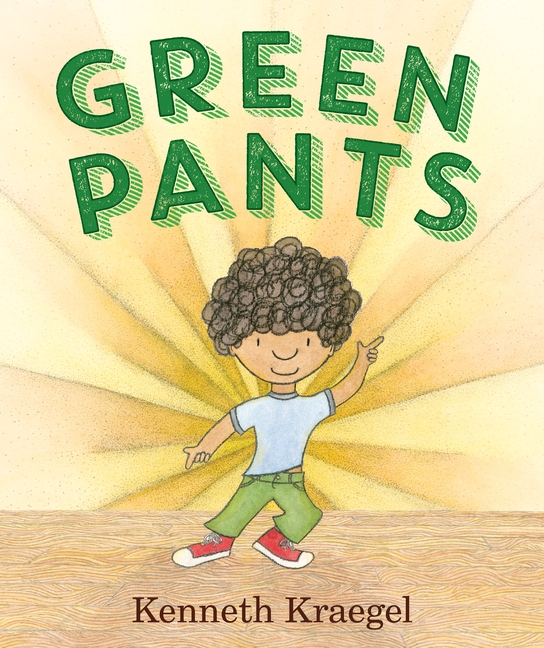
Green Pants

By Kenneth Kraegal


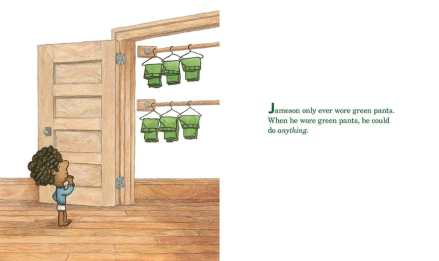
Jameson loved green pants—in fact, they were the only kinds of pants he wore. “When he wore green pants, he could do anything.” He flew to the basketball hoop for spectacular dunks; made Olympic gold-medal-deserving dives; and he could dance.” Sometimes Jameson’s mom and dad gave him different colored pants to wear, but somehow they ended up hanging from trees or flying from flagpoles, or even clothing neighborhood dogs.
celebrate-picture-books-picture-book-review-green-pants-closet

Copyright Kenneth Kraegel, 2017, courtesy of kennethkraegel.com

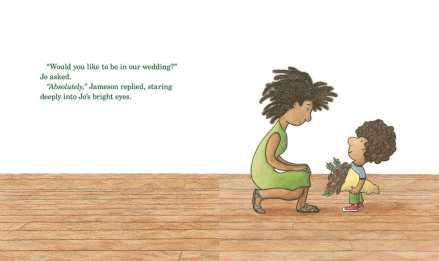
One day Jameson’s cousin Armando and his fiancée Jo dropped by with a very important question. Jameson loved Jo. She “had the nicest smile Jameson had ever seen, and her eyes seemed to sparkle like the autumn sun shining upon a running river.” And when she asked if Jameson would like to be in their wedding, Jameson said, “‘Absolutely.’” Later, Jameson’s mom sat him down and explained the requirements: lots of standing, smiling nicely for photographs, using his best manners. “‘No problem,’” Jameson replied. “‘And one more thing,’ his mother said slowly. ‘You will have to wear a tuxedo.’” That sounded okay to Jameson too, until he learned the pants would be black. Jameson gasped.
celebrate-picture-books-picture-book-review-green-pants-asked-to-be-in-wedding

Copyright Kenneth Kraegel, 2017, courtesy of candlewick.com

At the tuxedo fitting, Jameson tried on pair after pair of black pants, but none were as handsome as his own green pants. His mother put down her foot, though. If he wanted to be in the wedding, he had to wear black pants. On the day of the wedding, Jameson still didn’t know what to do. Even moments before the ceremony was to begin, Jameson had not made up his mind. His mother kissed him on the forehead and left him to figure it out.

“Jameson sank in despair. ‘But how? HOW? How do I make such a decision? AAAAAAAAAAARGH!!!’” At that moment Jo poked her head out the door. “Her hair played happily in the sunny breeze, her eyes shone like the summer stars, and her smile warmed his very soul. ‘Hey,, Jameson! I’m so glad you’re here! I’ll see you inside!’” she said and then she was gone. Suddenly, Jameson’s decision was made.
celebrate-picture-books-picture-book-review-green-pants-wedding-picture

Copyright Kenneth Kraegel, 2017, courtesy of kennethkraegel.com

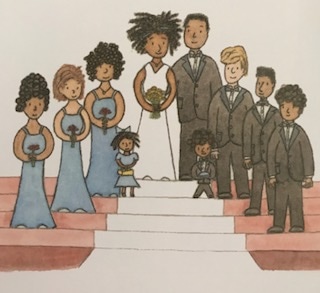
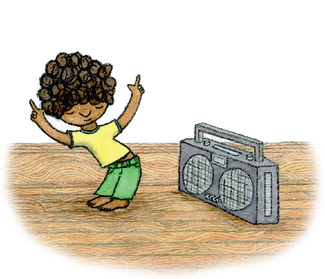
Following the bridesmaids down the aisle, Jameson looked “quite dashing in his tuxedo!” He remembered all of his mother’s words, too. He stood still, smiled for the camera, and used his best manners. But then the music began. With a leap, a flip, and a whoosh, Jameson’s black pants came off to reveal his green pants underneath, “and Jameson danced like no one has ever danced before.”

Kenneth Kraegel’s at-once funny and sweet story of obsessive love will resonate with young readers and adults as well. Kids often go through stages where one outfit, food, drink, or activity becomes synonymous with their identity and only that thing will fit the bill. Kraegel’s straightforward and tender storytelling wonderfully portrays opportunities for Jameson’s independent thought while showing how love overcame and became personal preference when it mattered. The dialogue among the characters rings true and is inspirational modeling. Jameson’s ultimate solution to his dilemma is all-kid and will make his reading peers nod in appreciation.
celebrate-picture-books-picture-book-review-green-pants-dancing

Copyright Kenneth Kraegel, 2017, courtesy of kennethkraegel.com

Jameson, with a shock of curly hair and his ever-present green pants, is an adorable protagonist. Ready with a smile for Jo or when accomplishing daring feats, he also registers amusing alarm at the idea of wearing black pants. Children will laugh to see where Jamison’s non-green pants end up and will empathize with his agonizing indecision—and they may just want to try some of his pretty sweet dance moves too!

Ages 3 – 8 (great as a read-aloud for younger kids and also as an independent book for early and transitional readers)

Candlewick, 2017 | ISBN 978-0763688400

You’ll find books, art, coloring pages, and more by Kenneth Kraegel on his website!

Dance with Green Pants in this toe-tapping book trailer!

Tailors Day Activity

Sew Much Dress-Up Fun!


If you like playing dress-up, why not be your own tailor and make a one-of-a-kind outfit from your imagination. With only a few materials and supplies, you can be anything or anyone you want!

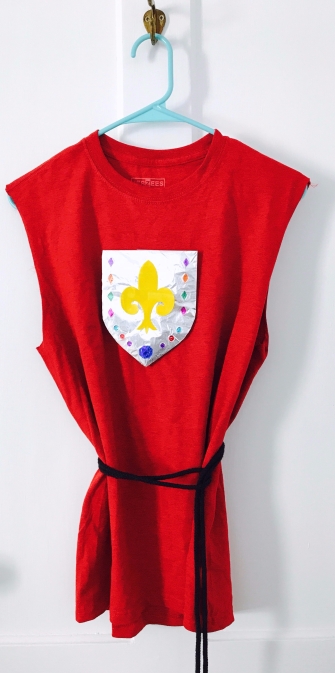
For the Knight’s Tunic
celebrate-picture-books-picture-book-review-plastic-party-dress-craft

Supplies

  • Tee shirt with the sleeves cut off
  • Thin cardboard (a cereal or other food box works well)
  • Aluminum foil
  • Paper or foam
  • Scissors
  • Permanent Markers
  • Play jewels (optional)
  • Fabric glue
  • Belt, rope, or twine
  • Tape

Directions

  1. Cut the sleeves off of the T-shirt
  2. Use the cardboard to create a crest shape
  3. Cover the cardboard with aluminum foil
  4. Tape the aluminum foil if necessary
  5. With the markers, color a design with various shapes
  6. Alternately: glue play jewels to the crest
  7. On the paper draw a fleur de lis or other design
  8. Color the fleur de lis or other design
  9. Cut out the fleur de lis or other design
  10. Glue the fleur de lis to the crest
  11. Attach the finished crest to the tunic with fabric glue
  12. Tie a belt with the rope, twine, or belt

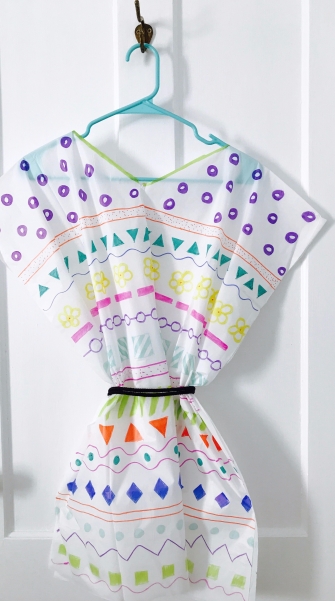
For the Dress
celebrate-picture-books-picture-book-review-plastic-party-dress-craft

Supplies

  • Plastic tablecloth
  • Belt or scarf
  • Permanent Markers
  • Scissors
  • Newspaper or old sheeting to protect the floor or table from the permanent markers

Directions

  1. With the table cloth folded along one edge, cut a rectangle the appropriate size
  2. In the middle of the folded edge cut a V-shaped or rounded opening for the child’s head. Begin with a small opening and enlarge it as needed
  3. Lay the dress on newspaper or other material to protect the floor or table
  4. Draw and color shapes, lines, figures, or other designs on the dress
  5. Add a belt with a ribbon, a scarf, a piece of crepe paper garland, or other material

Picture Book Review

June 3 – Repeat Day

celebrate-picture-books-picture-book-review-before-and-after-roller-cover

About the Holiday

Today’s holiday recognizes that some things are just so fun or compelling that you want to do them again and again (ok, yeah…and maybe even again). So if you have a favorite song, show, or activity that you just can’t get enough of, hit that Repeat button and enjoy!

Before and After

By Jean Jullien


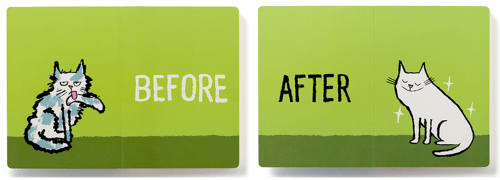
In this original and funny concept book, kids learn the idea of “before” and “after” with repeated examples of cause and effect. Opening the book, readers meet a Before soon-to-be mom and dad standing belly to belly. Turning the page, they see After, where a now-svelte Mom smiles as the baby hugs Dad, while riding atop a soft seat. Moving on, a rakish cat begins grooming her paw in a portrait of Before. Soon After she is sparkling clean, and her coat is smooth.

celebrate-picture-books-picture-book-review-before-and-after-cat

Copyright Jean Jullien, courtesy of Phaidon Press, 2017

Hmmm…what are those yellow sticks or straws or pasta noodles Before they become ?? Ha! Nailed it! After, those lines became a nice, hot, plate of spaghetti and meatballs! On the next page a child with very long hair is wearing a mischievous look Before. But—Ack! After, that hair has been cut very, very—did I mention very?—short, and the child’s expression is a little bugged out! What’s next? Way After—when the hair is back to its starting point and contentment reigns.

celebrate-picture-books-picture-book-review-before-and-after-chicken

Copyright Jean Jullien, courtesy of Phaidon Press, 2017

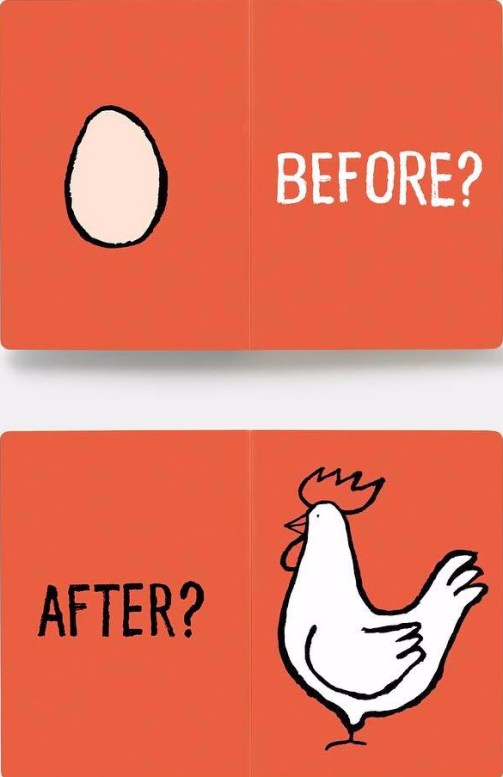
Are you a half-full or a half-empty kind of person? Either way the glass and bottle are partly full Before, and the glass and bottle are partly full After—but in differing amounts. Ah! The age-old question has made an appearance: Which came Before? The egg? And which came After? The chicken? Or is it the other way ‘round?

celebrate-picture-books-picture-book-review-before-and-after-roller-coaster

Copyright Jean Jullien, courtesy of Phaidon Press, 2017

At the amusement park, a dad and child—every hair in place—wait in the roller coaster car Before. The dad is all smiles; the child a little wary. After, they sport the wind-blown look, while the child is all smiles and the dad is a bit shaken up. So what caused this change? During—which was a loop-the-loop, up-and-down, high-speed, no-hands thrill! A summer day takes its toll on the girl in the next scene: Before, she arrives at the beach with her shades firmly in place. But After a day of fun in the sun, those shades have left a pale mask on her now-burned face.

celebrate-picture-books-picture-book-review-before-and-after-roller-coaster-during

Copyright Jean Jullien, courtesy of Phaidon Press, 2017

And so we have come to…The Beginning? Yep, that is definitely the beginning of a Dalmatian. Let’s flip the page and see…Ah, yes! And so we have come to The End! (Or the tail—however you’d like to look at it.)

Jean Jullien’s humorous concept book will have kids and adult readers giggling and wondering what comes next page after page. While the text is minimal, the images offer a wealth of opportunities for kids to build prediction skills and talk about how Before became After. The bold images and backgrounds from a modern color palette—as well as the double fold-out roller coaster spread—will engage readers and make Before & After as much an art book as a fun learning tool.

A fun take-along book on outings or for waiting times, Before & After can spur your own game of contrasts.

Ages 2 – 5

Phaidon Press, 2017 | ISBN 978-0714874081

View a portfolio of artwork by Jean Jullien on his website!

Repeat Day Activity

celebrate-picture-books-picture-book-review-origami-find-the-differences

Flying Origami Find the Differences Puzzle


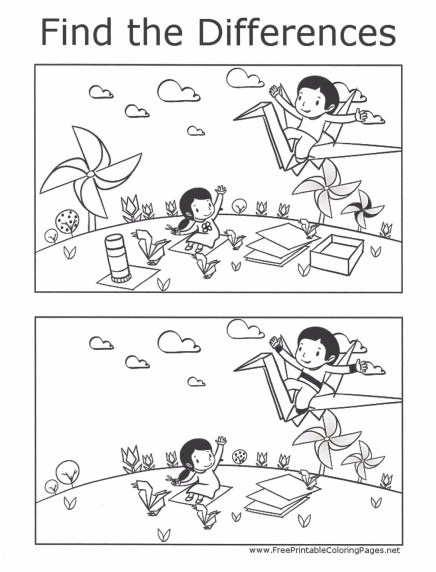
These two kids are making origami. While these pictures may look like repeats, there are ten differences. Can you find them all in this printable Flying Origami Find the Differences Puzzle?

Picture Book Review
June 2 – It’s National Oceans Month

celebrate-pciture-books-picture-book-review-town-is-by-the-sea-cover

About the Holiday

The world’s oceans offer beauty, resources, and mystery. This month we celebrate these vast wonders while committing ourselves to their preservation. Pollution, climate change, and habitat destruction all threaten the fragile ecosystems that exist in and near the sea. We also remember the communities that rely on the oceans for economic stability as well as the men and women who work to protect the oceans and their unique creatures. 

Town Is by the Sea

Written by Joanne Schwartz | Illustrated by Sydney Smith


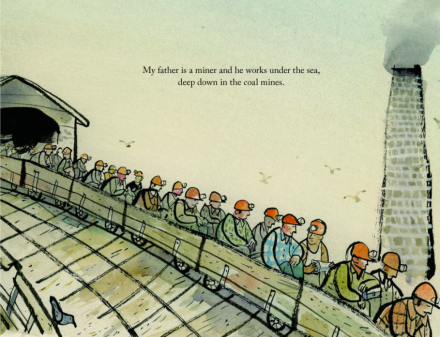
A little boy introduces readers to his home by the sea. It is so close that “it goes like this—house, road, grassy cliff, sea.” Early in the morning, his father leaves home and rides the tram that takes him underneath the ocean to his job as a coal miner. The little boy wakes later to the sounds of town—cars on the road, a dog barking, seagulls calling as they soar overhead. He rises from bed and gazes out the window at the vast sea, knowing that his “father is already deep down under that sea, digging for coal.”

celebrate-picture-books-picture-book-review-town-is-by-the-sea-morning

Image copyright Sydney Smith, text copyright Joanne Schwartz. Courtesy Groundwood Books.

After breakfast he goes next door to his friend’s house. They run to the playground where only two swings are left—“one for big kids and one for babies.” They swing so high they can see far in the distance where the “waves have white tips. And deep down under that sea,” he thinks, “his father digs for coal.” The boy returns home for lunch—a baloney sandwich, carrots, and milk—and then takes the grocery list his mother gives him and goes to the store, which is only a couple of blocks away.

celebrate-picture-books-picture-book-review-town-is-by-the-sea-miners

Image copyright Sydney Smith, text copyright Joanne Schwartz. Courtesy Groundwood Books

On the way back home, past the sparkling sea, the boy thinks about his father digging coal. He stops off at the graveyard to visit his grandfather, who was also a miner.  The boy says, “The air smells like salt. I can taste it on my tongue. My grandfather used to say, Bury me facing the sea b’y, I worked long and hard underground.” The grandfather’s stone is so close to the water that during storms, waves batter it. But the boy says, “That’s okay. My grandfather is used to storms.”

celebrate-picture-books-picture-book-review-town-is-by-the-sea-sunny

Image copyright Sydney Smith, text copyright Joanne Schwartz. Courtesy Groundwood Books.

In the evening “it goes like this—” the boy’s father comes home from work with “black smudges on his face from working the coal.” Even though he is tired, he gives his son a smile and a hug. The little boy is happy to have him home “safe and sound.” The family eats dinner together and later the boy’s mother and father sit on the porch, talking. The boy falls asleep to the sound of the waves washing the shore. He thinks about his father and “the bright days of summer and the dark tunnels underground, knowing that one day, it will be his turn.

celebrate-pciture-books-picture-book-review-town-is-by-the-sea-porch

Image copyright Sydney Smith, text copyright Joanne Schwartz. Courtesy Groundwood Books

In Joanne Schwartz’s graceful tribute to a coal-mining town settled on the coast, the sea is as much a character as the little boy and his family. Sustaining the townspeople over generations, the sea wakes them, feeds them, provides beauty and challenges, and in its fluid consistency mirrors the love and security of family. The repetition of the boy’s thoughts that wander to join his father in the dark tunnels throughout the day demonstrate both the strong bond between father and son and also the developing identity of the boy, who is also destined for those underwater tunnels. Schwartz’s sure, straightforward storytelling provides details that are familiar to all readers, making it a universal tale, rooted in the heart.

Sydney Smith’s ink and watercolor illustrations gorgeously depict the dual nature of this town built solidly on a rocky coastline and surviving on the dusty, back-breaking work of coal-mining while overlooking the constantly flowing wash of the sea. The sunny sky and daily activities of the boy give way every so often to two-page spreads of the black tunnel, where the miners push carts, drill, and recoil from a sudden rock slide. The ocean, rendered in sage and blue with pearlescent waves, is always in sight, the lifeblood of this special town.

Town Is by the Sea is a beautiful reminder of both the constancy and change inherent in life and would be a lovely addition to home libraries for quiet times and family time.

Ages 4 – 9

Groundwood Books, 2017 | ISBN 978-1554988716

View a portfolio of artwork by Sydney Smith on his tumblr!

National Oceans Month Activity

celebrate-picture-books-picture-book-review-kinetic-sand-craft

Kinetic Sand


Sand is so much fun to play with at the beach that you just wish you could bring it home. Now you can! With this easy recipe you can create your own kinetic sand to form or let run through your fingers. It makes a great anti-stress reliever too!

Supplies

  • 1 cup sand
  • ½ tablespoon cornstarch
  • 1 teaspoon dish soap
  • Water as needed – about ¾ cup
  • Bin or bowl for mixing dry ingredients
  • Bowl for mixing dish soap and water

Directions

  1. In the bin combine the sand and cornstarch and mix well
  2. In the bowl combine the dish soap and water until the water is bubbly
  3. Slowly add the water mixture to the dry ingredients, mixing and adding water little-by-little until the desired consistency is reached. The grain of the sand will determine how much water is needed.
  4. The sand can be formed with cookie cutters, molds, hands, etc. and is strong enough to stack. Or its loose consistency makes it fun to drip, drabble, and let run through your fingers.

Picture Book Review

June 1 – It’s Great Outdoors Month

celebrate-picture-books-picture-book-review-round-cover

About the Holiday

The warmer weather begs to be enjoyed—whether you’re playing, working, or just lounging around. Established in 1998 as Great Outdoors Week, the holiday expanded to a month-long celebration in 2004. There’s so much to see and do outside as the wonders of nature are always changing and challenging you in new and surprising ways.

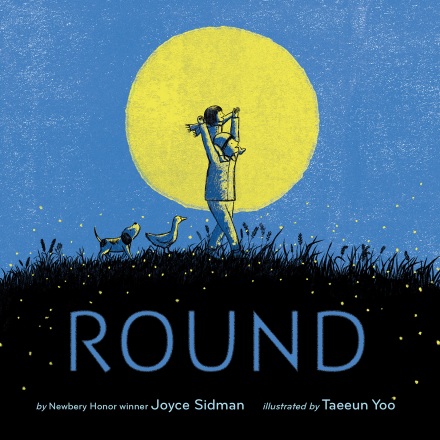
Round

Written by Joyce Sidman | Illustrated by Taeeun Yoo


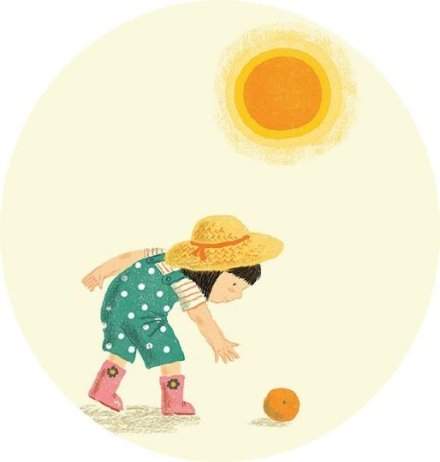
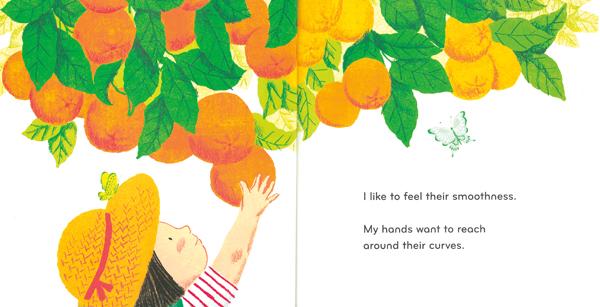
A little girl spies an orange on the ground and bends to pick it up. She sees more—many more—of the brightly colored orbs hanging from a tree and reaches up to touch them. “I love round things,” she says. “I like to feel their smoothness. My hands want to reach around their curves.” The girl continues on her singular scavenger hunt for round things that grow.

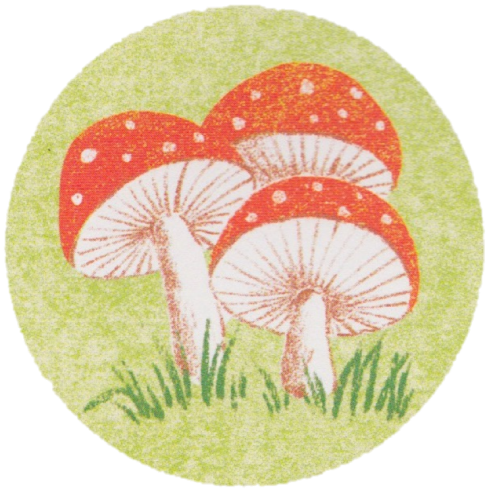
She scatters some seeds in a hole and parts tall grasses to peek in on a turtle waiting for her eggs to hatch. On a hillside, a little patch of mushrooms “swell into roundness,” while tiny, plump blueberries beckon on a nearby bush and fill the family’s baskets. On the bike ride home, the girl and her crew pass fields of sunflowers with their dark, mysterious round centers.

celebrate-picture-books-picture-book-review-round-orange

Image copyright Taeeun Yoo, courtesy of Houghton Mifflin Harcourt

At the beach the little girl finds seashells in the sand near the tall craggy rocks which some day, whittled by water and wind, will become round when “all the edges wear off.” Back on dry land, the girl watches a dung beetle transport a ball, persistently moving it with its legs, and body motions. The girl stands by, fascinated. She loves “to watch round things move. They are so good at it! Rolling, spinning, bouncing.” She always wonders “where they’re headed.”

An old, old tree, chopped down now, reveals its secret age as the little girl counts the rings in the trunk. She’s excited to discover hidden round things—like the tiny ladybugs and snails concealed beneath green leaves. As the rain splatters a pond, the little girl, safe in her yellow slicker, reveals, “I love how water can be round, gathered in beads of silver…or falling in wet splats leaving circles of ripples behind.”

celebrate-picture-books-picture-book-review-round-orange-tree

Image copyright Taeeun Yoo, text copyright Joyce Sidman. Courtesy of Houghton Mifflin Harcourt

The sun sets, turning the sky yellow and orange, while the girl blows transparent bubbles and watches them float toward the clouds. When the sun is gone and the sky is dark, she gazes through a telescope at the twinkling dots of light that “spin together slowly…and last billions of years” while she waits for that one constant celestial body that grows “rounder and rounder, until the whole sky holds its breath.”

The girl shares the beauty of roundness with her friends as they hold hands in a never-ending circle of friendship, and when she is alone she curls up into a cozy ball to read or feels arms around her in a loving hug.

An explanation of why so many things in nature are round—including the shape’s sturdiness, balance, and ability to spread and roll—follows the text.

celebrate-picture-books-picture-book-review-round-mushrooms

Image copyright Taeeun Yoo, courtesy of Houghton Mifflin Harcourt

Joyce Sidman’s lyrical story of discovery is a perfect introduction for little ones to the wonders of nature. Focusing on a shape that is familiar to children, Sidman takes them on a walk from grove to field to beach where they can find circles in common and surprising places. After coming home, kids discover an even more poignant idea—the circular beauty of love and friendship.

Taeeun Yoo’s delicate illustrations gorgeously depict examples of circles in nature. Bold sunflowers, tiny insects, snowball-white eggs, expanding ripples, and smooth boulders invite readers to notice the shapes and colors of the wild world around them. Children will be enticed to hunt for all the circles on each page as lily pads, fireflies, polka dots, balloons, the sun, and other objects create an exciting journey of exploration. The little girl’s pets—a dog (appropriately spotted) and a duck—add humor and companionship along the way.

Round would be an excellent take-along book for nature hikes, waiting times, or other outdoor activities and could spur at-home scavenger hunts for circles and other shapes. This original concept book is a wonderful introduction to shapes and nature for little ones.

Ages 3 – 7

Houghton Mifflin Harcourt, 2017 | ISBN 978-0544387614

Learn more about Joyce Sidman and her books on her website!

View a gallery of artwork by Taeeun Yoo on her website!

Great Outdoors Month Activity

celebrate-picture-books-picture-book-review-shapes-coloring-page

Shapely Butterfly Coloring Page


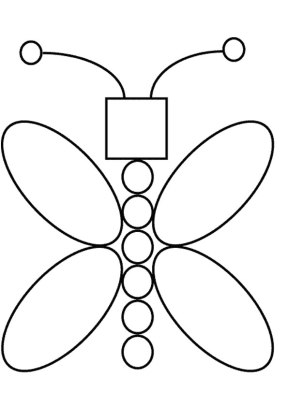
This butterfly is made up of many different shapes. Grab your colored pencils, markers, or crayons and have fun coloring this printable Shapely Butterfly Coloring Page.

Picture Book Review
May 31 – It’s Get Caught Reading Month

celebrate-picture-books-picture-book-review-the-original-cowgirl-cover

About the Holiday

As we say goodbye to Get Caught Reading Month, let’s remember all of the great stories we’ve read and eagerly anticipate those that still await us in the days and months ahead! The long, relaxing hours of summer vacation are nearing, giving readers even more time to enjoy their favorite pursuit. So why not make a list of titles you’d like to explore this summer, and lead it off with today’s book that tells the true story of a very original teenager!

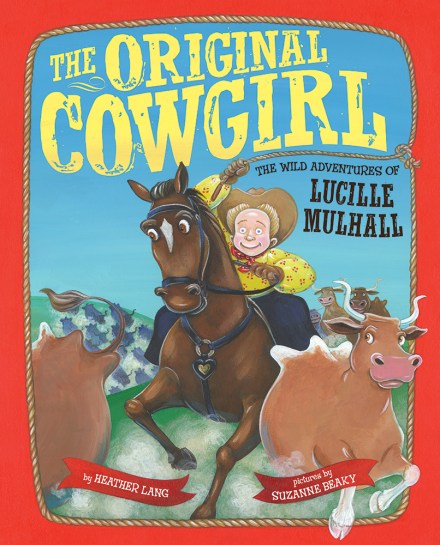
The Original Cowgirl: The Wild Adventures of Lucille Mulhall

Written by Heather Lang | Illustrated by Suzanne Beaky


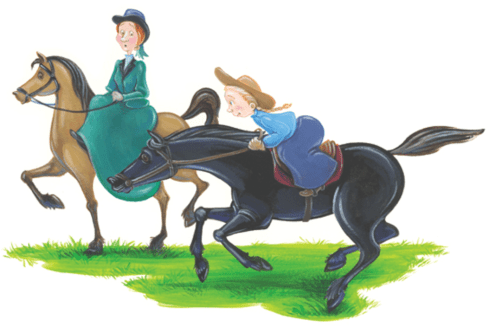
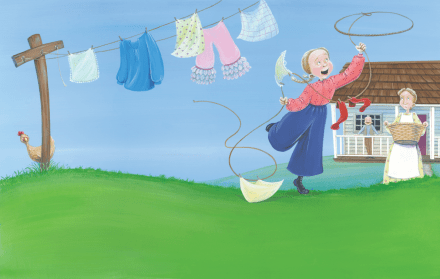
Unlike most girls in the 1890s, Lucille didn’t skip rope “with her mama’s clothesline, she twirled it like a lasso. Whoosh…whoosh…snap!” While Lucille’s papa thought his daughter would be a great help around the ranch, her mother considered riding horses and roping steers unladylike. Lucille wasn’t interested in the regular pursuits of becoming a lady, however. Sewing and cooking were boring, and “riding sidesaddle was slower than a snail climbing a greased log.”

celebrate-picture-books-picture-book-review-the-original-cowgirl-clothesline

Image copyright Suzanne Beaky, courtesy of suzannebeaky.com

By the age of ten, Lucille was well versed in “mending fences, training racehorses, and herding cattle.” When she asked her father for her own herd of cattle, he told her that she could have one when she was old enough to rope and brand her own—something she could already do. Lucille’s mother worried about her when she patrolled the pastures where her cows grazed. They were threatened by “longhorns, wolves, and coyotes so mean they could turn the strongest cowboy into buzzard food,” but Lucille could snatch those varmints with her lasso in no time flat. The only thing Lucille was afraid of was not being allowed to work on the ranch, so she hid her bumps and bruises.

When Lucille was thirteen, her papa took her along on some rough-riding and roping competitions he had organized. When people saw how talented she was, word got around. Newspapers called her a “daring young girl who ‘held the audience in a breathless spell’” and said she was “‘the envy of half the men.’” But now that she was a teenager, Lucille’s mama sent her to a boarding school where she was to learn how to be a lady.

celebrate-picture-books-picture-book-review-the-original-cowgirl-lassoing-cow

Image copyright Suzanne Beaky, text copyright Heather Lang. Courtesy of albertwhitman.com

When she returned home at the end of the year, her papa presented her with a gift—a “beautiful sixteen-hand chestnut horse named Governor. Right off, Lucille could see that he would make a perfect trick horse. That summer Lucille, her papa, and the other cowboys were invited to perform for Vice Presidential candidate Teddy Roosevelt. At first Lucille’s mother said no, but she later relented, with the stipulation that “it would be Lucille’s last appearance.”

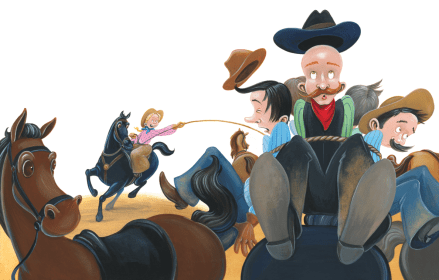
Lucille was a star, demonstrating her riding and roping skills for 25,000 people. Teddy Roosevelt was so impressed, he suggested Lucille have her own show. Soon, Lucille was traveling around the country, thrilling audiences by breaking broncos, lassoing and branding steers, and performing tricks like roping “five galloping cowboys all at once.”

Lucille entered her first professional steer-roping competition when she was just fifteen. She was the first women ever to compete in this kind of event. Some cowboys laughed at her, but she didn’t care. When the steer was released from the pen, Lucille took off after him. Her first throw of the lasso landed but broke. Quickly she tossed another and “flipped him up like a flapjack.” She jumped off her horse and in 29 ½ seconds tied the steer’s feet. Her time was “faster than all the men!”

celebrate-picture-books-picture-book-review-the-original-cowgirl-roping-five-cowboys

Image copyright Suzanne Beaky, courtesy of suzannebeaky.com

Lucille went on to break the world record for steer roping. Plenty of people still thought Lucille belonged in the home instead of on horseback. “But her home was always on a horse with the sun on her cheeks a lariat coiled in her hand, and the boundless Oklahoma prairie rolling out in front of her.”

More information on and a timeline of Lucille Mulhall’s life follow the text.

With her folksy storytelling, Heather Lang transports readers to the prairies of the Wild West, where a girl with phenomenal riding skills captured the attention and hearts of Americans. Young readers will be fascinated by Lucille Mulhall’s development from a 10-year-old prodigy to the star of her own stage show in only a few short years. Lang’s expressive period-perfect vocabulary allows all kids to ride the range while they learn about this young woman who broke stereotypes, championed the cause of women, and still serves as a role model for all who wish to live life on their own terms.

celebrate-picture-books-picture-book-review-the-original-cowgirl-roping-five-cowboys

Image copyright Suzanne Beaky, courtesy of suzannebeaky.com

With her downhome, action-packed illustrations, Suzanne Beaky lets kids watch as Lucille lassos a wolf, ropes a steer, preforms tricks, and celebrates her record-breaking performance. Lucille is a wide-eyed force of nature in her split skirt and braids as she twirls her rope for serious ranch business and for entertaining the crowds, whose stunned expressions reveal just how original Lucille was. Clothing, hair, and mustache styles, as well as depictions of horses, steers, and the vast green prairie make The Original Cowgirl as fun as it is informative.

For kids interested in the Wild West, early American history, biographies, or a story about true individuality, The Original Cowgirl: the Wild Adventures of Lucille Mulhall is a great addition to home bookshelves and public and school libraries.

Ages 4 – 8

Albert Whitman, 2015 | ISBN 978-0807529317

Discover more about Heather Lang and her books on her website!

To find out more about Lucille Mulhall through videos, photographs, and fun activities, click here!

Learn more about Suzanne Beaky and view a gallery of her artwork on her website!

Get Caught Reading Month Activity

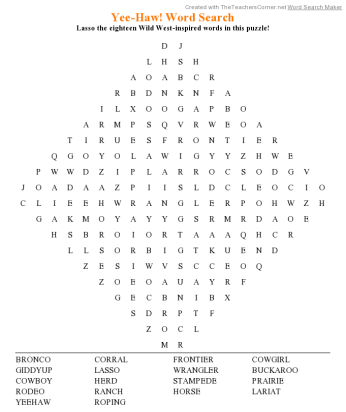
celebrate-picture-books-picture-book-review-Yee-haw-word-search

Yee-haw! Word Search


Can you lasso the eighteen Wild West-inspired words in this printable Yee-haw! Word Search? Here’s the Solution!

Picture Book Review
May 30 – Loomis Day

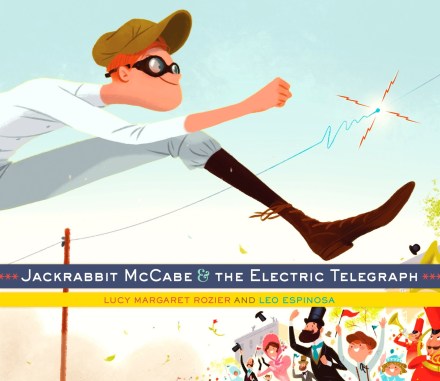
celebrate-picture-books-picture-book-review-jackrabbit-mccabe-&-the-electric-telegraph-cover

About the Holiday

On Loomis Day we remember Mahlon Loomis, a Washington DC dentist working in the mid-1800s who had a very inventive mind. Not only did he invent artificial teeth, he also had some revolutionary ideas on communication. He understood about the electrical properties of the atmosphere and experimented with sending signals long distances using kites flown many miles apart but at the same height. In July of 1872 he received a U. S. patent for “An Improvement in Telegraphing” on wireless telegraphy. Further research revealed that while his wireless telegraphic system worked, it did not work the way Loomis thought. His experiments, however, advanced the science at the time, leading to one of the world’s most transformative discoveries and an ongoing quest for better and faster communications.

Jackrabbit McCabe & the Electric Telegraph

Written by Lucy Margaret Rozier | Illustrated by Leo Espinosa


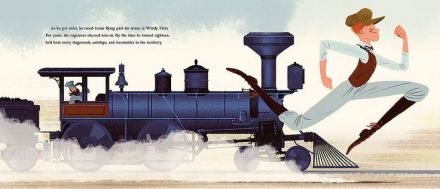
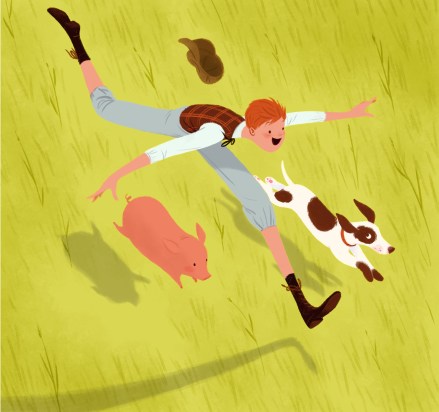
Anyone who looked at the baby with legs “so long they looped like a pretzel” and required a stroller with “an extra axle” knew that he’d been born to run. In fact, his legs grew so fast that if his mother dressed him in long pants in the morning, they were shorts by that evening. Little Jack McCabe used those legs to chase “whatever would run: hogs, dogs, even his own shadow” and “as he got older, he raced trains flying past his house in Windy Flats. By the time he turned eighteen, he’d beat every stagecoach, antelope, and locomotive in the territory.”

celebrate-picture-books-picture-book-review-jackrabbit-mccabe-&-the-electric-telegraph-racing-a-train

Image copyright Leo Espinosa, text copyright Lucy Margaret Rozier. Courtesy of Schwartz & Wade

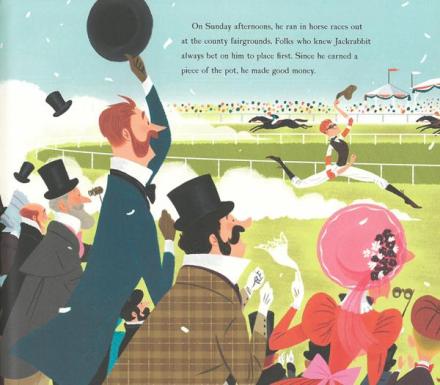
The people of Windy Flats called him Jackrabbit and relied on him to deliver messages that were urgent. On Sundays he joined the horses on the track, making money when people bet on him to come in first. One day, though, the electric telegraph came to Windy Flats. The poles and wires already crossed the eastern part of the country. Each connected city had “a telegraph and an operator who sent and received messages in Morse code, an alphabet of dots and dashes.”

The people of Windy Flats didn’t think this newfangled contraption could carry messages faster than Jackrabbit, so the telegraph man suggested, “‘How ‘bout a race between your fella and this here electric telegraph? Sandy Bluff’s just got themselves an operator, That’s pert near twenty-five miles, as the crow flies.’” Jackrabbit was all for it.

celebrate-picture-books-picture-book-review-jackrabbit-mccabe-&-the-electric-telegraph-racing-a-horse

Image copyright Leo Espinosa, text copyright Lucy Margaret Rozier. Courtesy of Schwartz & Wade

On the day of the race, the whole town of Windy Flats came out with flags, banners, and even a brass band. “The mayor carefully wrote down the same message on two slips of paper. He handed one to the telegraph man and the other to Jackrabbit.”  On the shout of “GO!” the telegraph man plunked his finger on the key sending the pulses through the wire while Jackrabbit took off down the road toward Sandy Bluff “like a tornado.”

The townspeople watched as in only a few moments “a reply came clattering back as that telegraph key jumped and smacked all on its own.” The telegraph man read the code and yelled, “‘Message received. Stop. Sandy Bluff Operator.’” But where was Jackrabbit McCabe? Although he made it to Sandy Bluff in only 9 ½ minutes, it was still too long to beat the telegraph. When he stopped short at the door of the depot, he was met by a telegram tacked to the door. Jackrabbit read it and then pulled the paper that contained the mayor’s message out of his pocket. The two were the same.

celebrate-picture-books-picture-book-review-jackrabbit-mccabe-&-the-electric-telegraph-racing-at-the-starting-line

Image copyright Leo Espinosa, text copyright Lucy Margaret Rozier. Courtesy of Schwartz & Wade

Riding home in a stagecoach, “Jackrabbit felt lower than a snake’s navel.” The mayor also felt pretty low, thinking of Jackrabbit, until he realized that if Jackrabbit’s fingers were as fast as his legs, he’d make an excellent telegraph operator. When Jackrabbit stepped out of the stagecoach and heard the mayor’s offer, he whooped with joy. It didn’t take long for Jackrabbit to learn the new code, and soon “his fingers flew like a banjo player’s strumming that telegraph key.” Every day he sent and received messages. He even “teamed up with the local typesetter, who printed the news that came over that wire, linking Windy Flats to the whole entire country,” and whenever a telegram or the newspaper needed to be delivered, Jackrabbit was there in a flash!

An Author’s Note outlining the pivotal event that sparked Samuel F. B. Morse’s interest in a quicker communication method and the history of the telegraph as well as a Morse code key and a riddle to translate follow the text.

celebrate-picture-books-picture-book-review-jackrabbit-mccabe-&-the-electric-telegraph-racing-hogs-and-dogs

Image copyright Leo Espinosa, courtesy of Schwartz & Wade

Lucy Margaret Rozier has written a funny and fact-based addition to the fine American tradition of tall tales with Jackrabbit McCabe & the Electric Telegraph. From her folksy delivery to her humorously exaggerated details, Rozier presents an engaging history of the telegraph through the story of one man affected by this new technology. Kids will love the fast-paced story full of crackling dialog and gripping suspense.

Leo Espinosa infuses his brightly colored, vintage-style illustrations with the charm and innocence of the mid-1800s while highlighting the humor of Rozier’s yarn. Jackrabbit’s looong legs take up a whole page—sometimes two—as he runs with dogs and hogs, sprints past steam trains, speeds off at the starting line, and wedges himself into the stagecoach, with one foot hanging out the window. The small town of Windy Flats and the townspeople are decked out in period details, and the enthusiasm of the time is infectious.

Jackrabbit McCabe & the Electric Telegraph will become a favorite read lightening quick. The book would make a fun addition to children’s bookshelves.

Ages 4 – 8

Schwartz & Wade Books, 2015 | ISBN 978-0385378437

Discover more about Lucy Margaret Rozier plus book-related resources on her website!

View a gallery of illustration work by Leo Espinosa on his website!

Loomis Day Activity

celebrate-picture-books-picture-book-review-morse-code-image

Morse Code Decoder


Sending secret messages in code is cool! Use this printable Morse Code Decoder to learn how to write your name and those notes you don’t want anyone else to read in this early method of communication.

Picture Book Review

May 29 – It’s National Smile Month

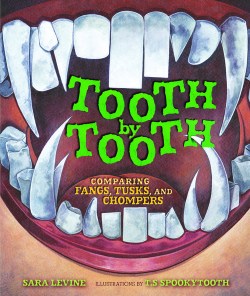
celebrate-picture-books-picture-book-review-tooth-by-tooth-cover

About the Holiday

Today we honor that happiest of expressions—the smile! Celebrating its 41st anniversary this year, National Smile Month was established as a weekly event in 1977 by the British Dental Health Foundation (now known as the Oral Health Foundation) to focus on good dental health practices. Over the years the initiative has grown in length and now includes countries worldwide. With the introduction of the Smiley—a bright smile on a stick—and the Smiley Photo campaign on social media in 2012, everyone now has an opportunity to join in the fun, spread the message, and become the face of National Smile Month. National Smile Month runs from May 15 to June 15. If you’d like to participate, visit nationalsmilemonth.org.

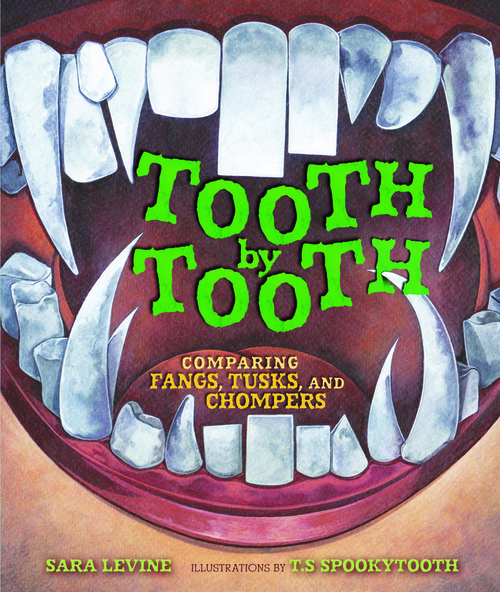
Tooth By Tooth: Comparing Fangs, Tusks, and Chompers

Written by Sara Levine | Illustrated by T. S. Spookytooth


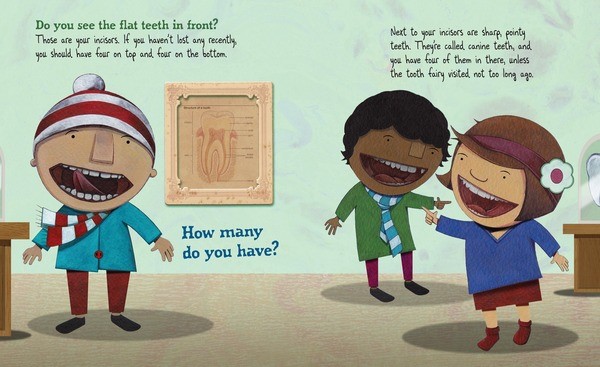
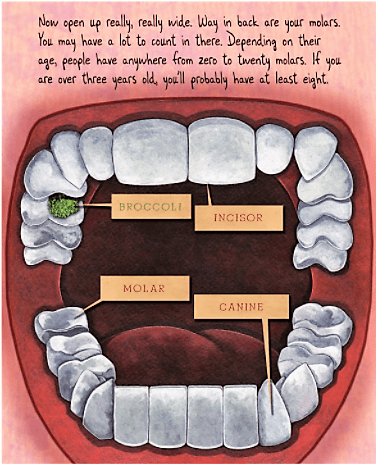
“Open wide!” a little girl with a good set of teeth herself encourages readers on the first page of this fun nonfiction book. “Look at all the chompers in there.” Mirror in hand she proceeds to reveal that human teeth are unusual because we are mammals, and mammal teeth come in different shapes and sizes. In fact there are three distinct types. A little boy takes over to describe them. Incisors are the four flat teeth in a person’s mouth—two on the top and two on the bottom right in front.

celebrate-picture-books-picture-book-review-tooth-by-tooth-human-mouth

Image copyright T. S. Spookytooth, text copyright Sara Levine. Courtesy of Lerner Books

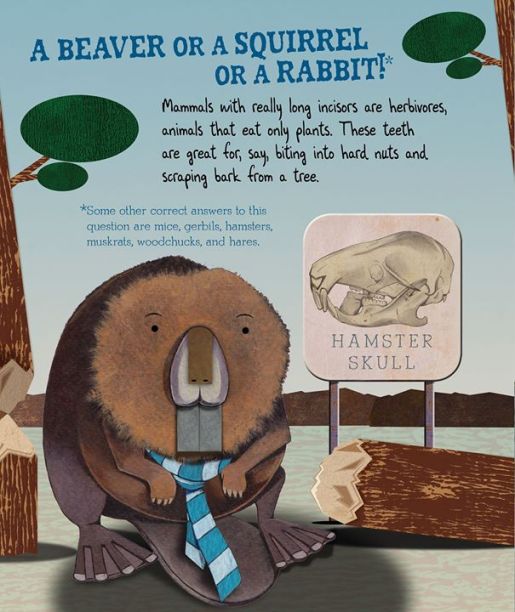
The four pointy teeth next to the incisors are canines, and the rest of the teeth are molars. Other mammals also have these teeth, and you can tell what an animal eats by which type is largest. For example, say your incisors were bigger than all your other teeth and they were so big they stuck out of your mouth even when it was closed, then you would be a beaver…or a squirrel…or a rabbit. These animals are herbivores and their oversized incisors help them break into nuts and scrape bark from trees.

celebrate-picture-books-picture-book-review-tooth-by-tooth-human-teeth

Image copyright T. S. Spookytooth, courtesy of Lerner Books

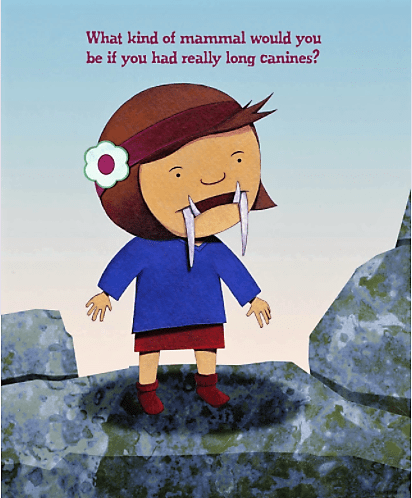
From here on Tooth by Tooth offers up amusing illustrations and “what kind of animal would you be if…” questions to spark kids’ powers of recognition. How about if your canines were so long they poked out of your mouth? Well, then you could be a “seal or a cat or a dog or a bear!” All these animals eat meat and need the sharp teeth to do it.

What if you had really tall molars? Then you’d be a “horse or a cow or a giraffe!” These guys use their molars to grind up grass. And if all your teeth were the same height? Come on…you know! You’d be you! Because humans eat plants and meat, we “need teeth that do many different jobs.”

But there are a lot more wacky teeth out there waiting for us to brush up on. So let’s get started. What if “two of your top incisors were so long that they grew out of your mouth and pointed to the sky? What if they were so long you could use them to carry your school bag?” You’ve probably guessed this one—you’d be an elephant. While an elephant’s tusks aren’t used for eating, they are used to procure the bark, roots, and other plant material that make up the elephant’s diet.

celebrate-picture-books-picture-book-review-tooth-by-tooth-beaver

Image copyright T. S. Spookytooth, text copyright Sara Levine. Courtesy of Lerner Books

What if you could almost trip over your canine teeth? Yep, you’d be a walrus, and you would use those sharp bad boys to poke holes in the ice to grab your favorite oysters and clams. But after eating they’re not done using their teeth. “After diving down for a meal, walruses can use their tusks to pull themselves back up onto the ice for a nap. Imagine if “your top and bottom canine teeth curled up out of your mouth so you had two pairs of tusks?” Or if your one upper canine grew through your upper lip and kept on growing?  Or if you had no teeth at all? Yikes! The remarkable answers are just a read away!

Fish, amphibians, and reptiles also have teeth of a sort, but because they are all the same shape and size, they don’t get special names—that doesn’t mean you can ignore them, though, because sharks are among this group, and you know what they can do!

celebrate-picture-books-picture-book-review-tooth-by-tooth-canines

Image copyright T. S. Spookytooth, text copyright Sara Levine. Courtesy of Lerner Books

More information about mammals, mammal teeth, a glossary, and a list of online and print references follow the text.

There’s nothing like the Wow! factor to capture kids’ attention, and Sara Levine uses it to humorous and fascinating effect in Tooth by Tooth: Comparing Fangs, Tusks, and Chompers. After giving a solid description of each kind of tooth and what it is used for in language that kids use and will relate to, Levine begins her guessing game that leads to even more discovery. We’ve all seen elephants and walruses with their mighty tusks, but how many know what they are really used for? And what about warthogs and narwhals? It’s all here in this creative nonfiction title.

T. S. Spookytooth took a big bite out of the “how to make kids laugh” manual in illustrating each question and type of tooth. Pictures of girls and boys with enormous teeth jutting this way and that will make readers glad to be human. And while the animals that belong to each molar, incisor, or canine sport the scarf, bow, or head band of its human counterpart, they are clearly and scientifically drawn to provide full understanding. Animal skulls also demonstrate the placement of teeth. The cover, with its close-enough-to-eat-you view of a very scary mouth is a show stopper and will attract kids as soon as they see it.
Ages 5 – 9

Millbrook Press, Lerner Books, 2016 | ISBN 978-1467752152

Check out Sara Levine’s website for more books, stuff for kids, teachers’ resources, and more!

View a gallery of T. S. Spookytooth’s art and read his biography (?!) on his website!
National Smile Month Activity


celebrate-picture-books-picture-books-review-brush-up-on-your-smile-maze

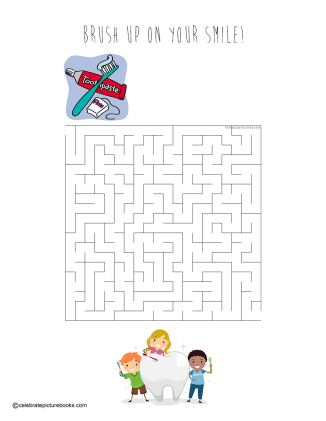
Brush Up On Your Smile! Maze


These kids are practicing good dental heath! Can you bring them the toothbrush, toothpaste, and floss they need in this printable Brush Up On Your Smile! Maze? Here’s the Solution!

celebrate-picture-books-picture-book-review-tooth-by-tooth-cover

You can find Tooth by Tooth: Comparing Fangs, Tusks, and Chompers at these booksellers

Amazon | Barnes & Noble | Books-a-Million | IndieBound

Picture Book Review