July 16 – World Snake Day

celebrate-picture-books-picture-book-review-i-don't-like-snakes-cover

About the Holiday

Snakes are beautiful and fascinating creatures, but they often get a bad rap due to their mysterious nature and their portrayals in literature and throughout history. Today’s holiday promotes awareness of dangers to the snake population through habitat destruction, climate change, disease, and other threats. The wide variety of snakes provide many benefits to their natural environments and deserve protection.

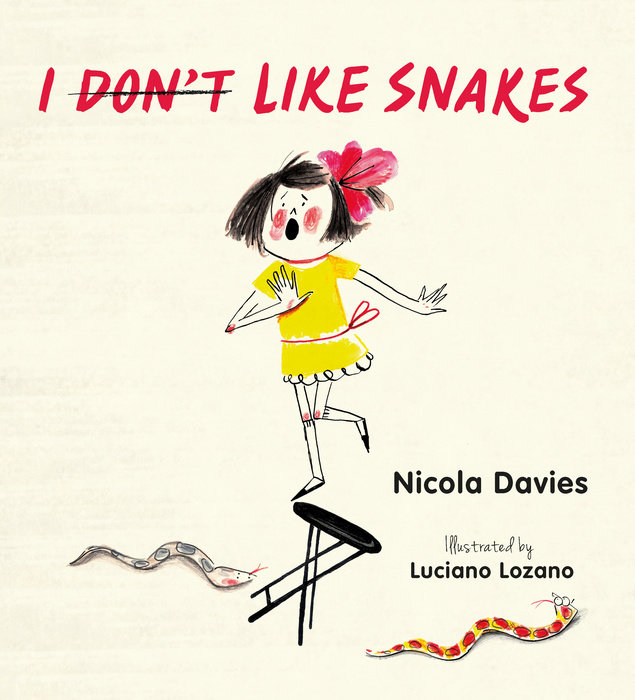
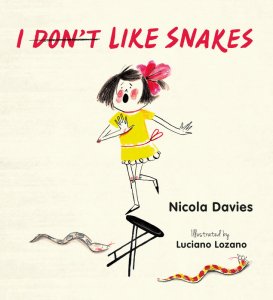
I Don’t Like Snakes

Written by Nicola Davies | Illustrated by Luciano Lozano


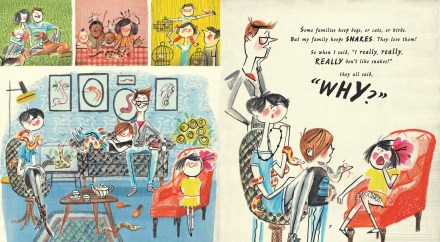
Can you imagine a family who has nothing but snakes for pets? Well, that’s the way it is for the little girl in I Don’t Like Snakes. Sitting in her red chair surrounded by her mother, father, brother and four snakes, she finally pipes up and tells her family that she “‘really, really, REALLY doesn’t like snakes!’” And they ask, “‘Why?’”

“‘Because they slither,’” she answers. Her mom has a ready answer that leads into a scientific discussion of why and how different kinds of snakes move. The mechanics of concertina and serpentine slithering as well as caterpillar crawling are clearly described in both easy-to-understand text and accompanying illustrations. Her father adds more transportation methods, including side-winding, twining, climbing, swimming, and even flying.
celebrate-picture-books-picture-book-review-i-don't-like-snakes-interior-art-why

Image copyright Luciano Lozano, courtesy of walker.co.uk

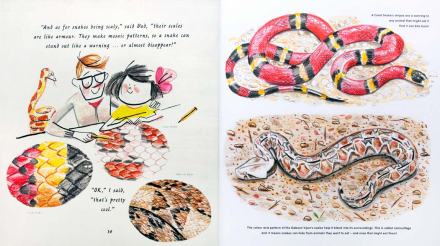
The little girl has to admit these sound pretty smart. “‘But what about their slimy, scaly skin?’” She asks. After all it’s so icky! Well, her mom reveals, snakes aren’t actually slimy, but dry. Following this readers learn why snakes look wet and how they shed their skin. Her dad goes on to explain that a snake’s scales are used for protection and as camouflage or as a warning to other creatures. Ok, the little girl agrees, “‘That’s pretty cool.’”

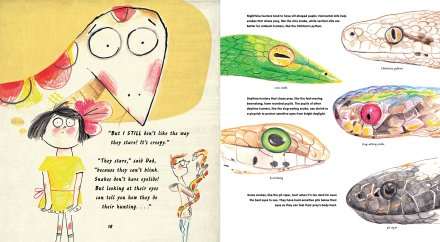
Still, the girl doesn’t like their flicking tongues. Her mom reassures her that snakes only use their tongues to smell with. Readers then see how a snake picks up the scent of a mouse or other prey and how it is transferred to the Jacobsen’s organ that helps it detect even faint odor trails. “‘That IS interesting,’” the girl tells her mom. “‘But I STILL don’t like the way they stare! It’s creepy.’”
celebrate-picture-books-picture-book-review-i-don't-like-snakes-interior-art-eyes

Image copyright Luciano Lozano, courtesy of walker.co.uk

Dad has the answer to that one. They stare because they have no other choice. Without eyelids, it’s impossible for them to blink. But if you look closely at a snake’s eyes, you can tell if they are a night or day hunter or whether they are chasers or ambushers.

All this information is starting to change the little girl’s mind about snakes. “‘Maybe now that I know something about them, I do like snakes—just a little bit!’” she tells her brother. And just like brothers everywhere, he ups the ante by revealing how snakes kill. He revels in explaining about how some snakes have hollow fangs that inject poison into their victims and how others strangle their prey until there’s no life left. And without proper teeth, snakes have to swallow their dinner whole!

The boy’s sister is braver than he thinks, and now she wants to get in the game. She says that she has discovered something about snakes herself. She knows how snakes have babies. Some give birth to live babies but most lay leathery eggs. Either way, the babies are on their own soon after hatching. The little girl has had a complete change of heart. She now thinks snakes are beautiful. “‘And do you know what?’” she says. “‘I really, really, REEEEEALLLLY LIKE THEM!’”
celebrate-picture-books-picture-book-review-i-don't-like-snakes-interior-art-skin

Image copyright Luciano Lozano, courtesy of walker.co.uk

Whether you like snakes, don’t like snakes, or are somewhere in between, Nicola Davies’ engaging tribute to this interesting and often misunderstood species will delight. Cleverly written to include commonly held opinions and provide compelling facts, I Don’t Like Snakes is part story, part nature encyclopedia seamlessly woven together to create a fascinating and funny read. Kids and adults will respond to the conversational tone, and, like the little girl in the story, be open to a change in attitude toward this intriguing reptile.

Luciano Luzano bridges the world of the fictional story and the nonfiction facts in I Don’t Like Snakes with charming sketches of the family and realistic depictions of the snakes they discuss. The little girl with her oversized hair bow and astonished expressions is a disarming guide to discovery. The family’s reptilian obsession is everywhere, from the snakes that twine around the mother, father, and brother’s arms and shoulders to the snakeskin upholstery. The factual information about snakes is accompanied by accurate drawings and representations of the traits portrayed.

I Don’t Like Snakes is a wonderful book for those who already love snakes as well as for those who want to learn more! It’s a great addition to anyone’s nonfiction collection.

Ages 5 – 10

Candlewick Press, 2015| ISBN 978-0763678319

Learn more about Nicola Davies and her books on her website!

To view more art and books by Luciano Luzano visit his website!

World Snake Day Activity
celebrate-picture-books-picture-book-review-snake-word-search

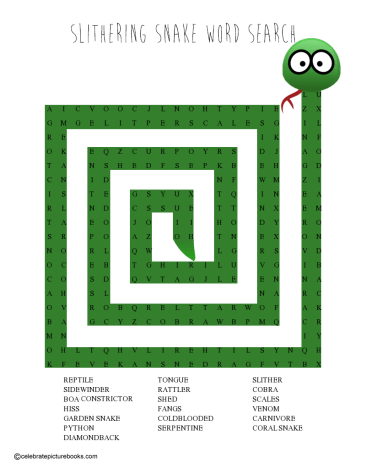
Slithering Snake Word Search


Snakes wind their way along wherever they want to go. Follow the twists and turns in this printable Slithering Snake Word Search to find the reptile-inspired words! 
celebrate-picture-books-picture-book-review-i-don't-like-snakes-cover

You can find I Don’t Like Snakes at these booksellers

Amazon | Barnes & Noble | Books-a-Million | IndieBound

Picture Book Review

July 14 – Shark Awareness Day

celebrate-picture-books-picture-book-review-nugget-and-fang-coverAbout the Holiday

Today we take a moment to consider the benefits sharks provide to the marine ecosystem. Every year thousands of sharks die and their species threatened due to misconceptions and misuse. As a predator at the top of the food chain, sharks play a crucial role in maintaining balance within the ocean. Protecting this often-misunderstood species is an important goal.

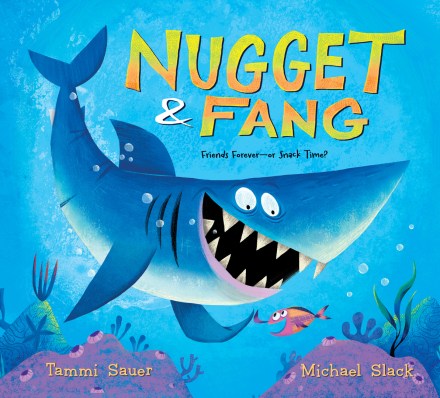
Nugget & Fang: Friends Forever—or Snack Time?

Written by Tammi Sauer | Illustrated by Michael Slack


Deep in the ocean two friends do everything together and life is almost perfect as they swim over ship wrecks, under reefs, and all around. Nugget and Fang are as close as two friend can be—there’s just one thing: Nugget is a minnow while Fang is a shark. Neither of them consider their friendship unusual—until Nugget goes to school. There during Reading, Nugget hears the story of The Three Little Minnows and the Big, Bad Shark. “‘Ha!’” says Nugget. “‘Impossible!’”

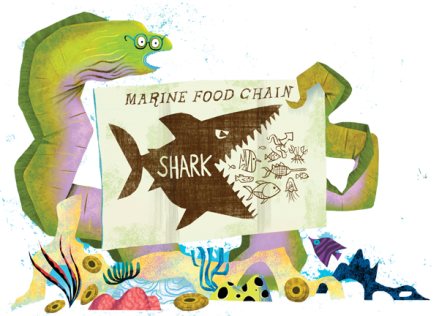
During Math class the students solve a word problem: “What if there were ten minnows and a shark came along and ate four of them? How many minnows are left?” Nugget is scandalized. “‘A shark would never do that!’” he says. But Science period reveals the facts of the Marine Food Chain. Nugget protests that sharks aren’t scary. “‘My best friend is a shark!’” he announces. His classmates are shocked. “Have you lost your gills?” one asks. Another snarks, “Hello—sharks eat minnows!” Nugget can’t believe it.

celebrate-picture-books-picture-book-review-nugget-and-fang

Image copyright Michael Slack, courtesy of hmhbooks.com/nuggetandfang

Back home Nugget gives Fang the bad news. “‘Sounds fishy to me,’” says Fang. Nugget assures him it’s true before swimming far away. “Fang’s heart sank.” He can’t help if he’s “toothy,” he thinks, and he knows he doesn’t mean to be scary. He wants his best friend back. To prove it Fang tries different tactics. On Tuesday he dresses like a mermaid, but Nugget and the other fish see through his disguise. “‘Oh, my algae!’” exclaims Nugget. On Wednesday Fang sends a beautiful sea plant arrangement with a note—“Dear Nugget, I’d love to have you over for dinner.”—which is misinterpreted in the worst possible way. On Thursday Fang pulls out all the stops. He gets a “Nugget” tattoo, sends a special message and gift, and performs an original song and dance, but nothing works.

On Friday Fang is sadly resigned to being alone. While he mopes and cries, he doesn’t see that a fishing net has been lowered to the ocean floor, capturing Nugget and the other minnows. “Help!” shouts Nugget as the net is slowly lifted. Fang wrings his fins, uncertain of what to do. Suddenly, he has an idea. With his big sharp teeth he chomps and chews and tears the net to pieces. Nugget and the minnows swim to safety. They all stare at Fang wide-eyed.

celebrate-picture-books-picture-book-review-nugget-and-fang

Image copyright Michael Slack, courtesy of hmhbooks.com/nuggetandfang

Fang dejectedly begins to swim away. “‘I know, I know,’” he says, “‘I’m toothy. Too scary. Too…shark.’” “Wait!” calls Nugget and uses a little math of his own. “‘There were ten minnows, and a very special shark came along. How many friends are there altogether?’” Now eleven friends live happily deep in the ocean, and everyone—especially Fang—are all smiles.

Tammi Sauer’s tribute to true friendship reveals the danger when “facts” take precedence over what you know in your heart to be true. Her reminder to listen to your inner voice is approached with humor and the honest types of doubts that can niggle and cloud judgement. Throughout the story, her language is accessible and kid-conversational, including puns that will elicit giggles. Sauer’s use of a math word problem to both highlight contrary thinking and provide a solution underscores the influence of education. Nugget & Fang is a wonderful book for kids navigating the school and activities environment while making new—and keeping old—friendships.

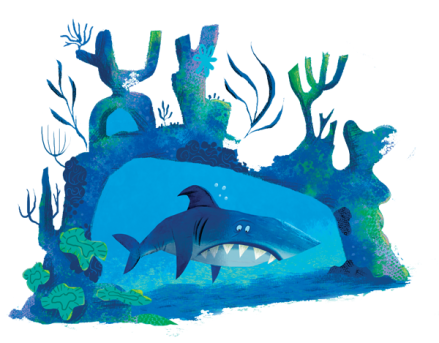
Michael Slack immediately sets kids in the right mindset with his bright, cartoon-inspired illustrations. Tiny, colorful Nugget and bold, blue Fang, his “toothiness” on display through his big grin, make a happy, nonchalant pair. They play together through vibrant green, yellow, and purple reefs unaware of marine stereotypes. When Nugget gets “schooled”, his astounded expressions and those of his classmates, humorously depict their predicament. The ocean environment gives Slack an opportunity for plenty of visual jokes and innovation. The Reading teacher holds a clamshell-shaped book, a piece of shipwrecked board serves as a Math blackboard, and the Science food chain poster is appropriately scary. Kids will laugh at Fang’s attempts at reconciliation, and cheer when he becomes a hero.

Nugget & Fang: Friends Forever—or Snack Time? is sure to be a favorite story time read!

Ages 4 – 9

Houghton Mifflin Harcourt, 2013 | ISBN 978-0544481718

Will everything go swimmingly for Nugget and Fang? Watch the trailer and see!

To learn more about Tammi Sauer and her books, visit her website!

View a gallery of work by Michael Slack on his website!

Visit the Houghton Mifflin Harcourt Nugget & Fang page for more goodies!

Shark Awareness Day Activity

celebrate-picture-books-picture-book-review-shark-coloring-page

Looking Sharp, Sharks! Coloring Page


Sharks are some of the most fascinating creatures in the sea. Have fun decorating this printable Looking Sharp, Sharks! Coloring Page—get creative with textures, colors, and materials!

July 10 – Don’t Step on a Bee Day

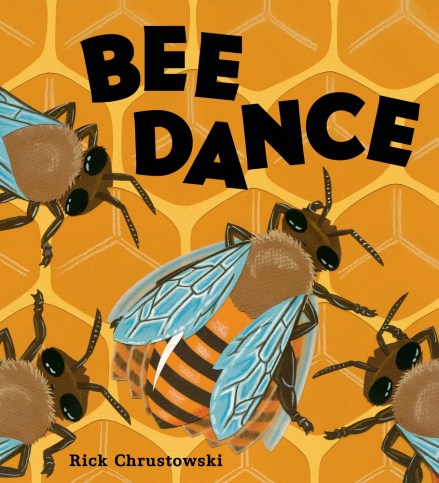
celebrate-picture-books-picture-book-review-bee-dance-cover

About the Holiday
With the bee population declining, today is a reminder to protect bees and preserve their habitats. Without bees and the pollination they provide, the world’s food supply is threatened. Pollution, pesticides, and colony collapse all endanger the health of bee colonies around the globe.

Bee Dance

By Rick Chrustowski


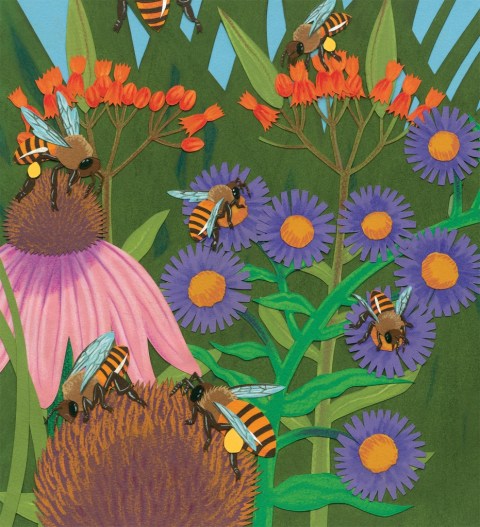
In the warm sunlight a honey bee leaves the hive in search of nectar. A sweet scent in the pleasant air entices the bee toward a prairie in bloom, where tasty wildflowers await. With its “bendy-straw tongue” the bee sips the delicious food. The bee races back to the hive and as the other bees welcome it home with a buzz of excitement, the Scout climbs the honey comb to deliver its news.

celebrate-picture-books-picture-book-review-bee-dance-interior-art-wildflowers

Image copyright Rick Chrustowski, courtesy of us.macmillian.com

The bee communicates its story through a “waggle dance.” It forms a figure 8, twirling one way, running up the middle, and then twirling around the other side. To indicate direction and distance, the Scout bee waggles faster and for a longer period of time. When the dance is completed, the other bees know exactly where to go. They swarm out of the hive and easily find the wildflower prairie.

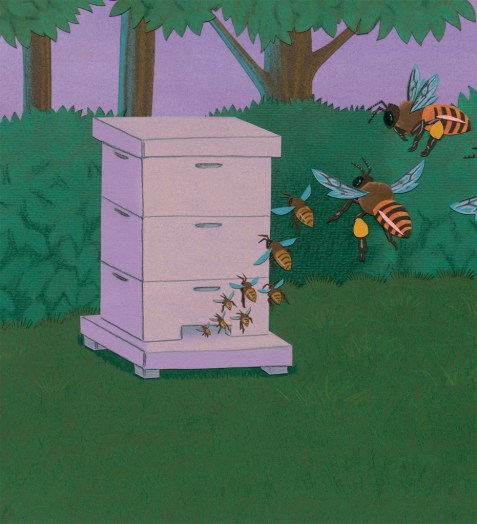
Forager bees collect nectar from the tall flowers and fill pouches on their legs with pollen. They zip from flower to flower until daylight fades. In the growing twilight the bees head for  home once more. Back in the hive they unload their cargo in the combs and rest for the night. With dawn the cycle and the dance will begin again.

celebrate-picture-books-picture-book-review-bee-dance-interior-art-coming home

Image copyright Rick Chrustowski, courtesy of us.macmillian.com

Rick Chrustowski’s Bee Dance is a lyrical introduction to the fascinating and mysterious world of bees. Focusing on the communicating dance Scout bees perform to relay information is a familiar and excellent choice for young children used to following and inventing meaningful motions. The boldly colored illustrations give children an up-close view of the flying, sipping, and pollen gathering behavior of bees. The Scout bee’s dance is depicted clearly, and kids may love to replicate it. Further details of the life and work of honeybees at the end of the book add compelling information that kids will want to explore further.

Ages 4 – 8

Henry Holt and Co., 2015 | ISBN 978-0805099195

Visit Rick Crustowski’s webste to discover more about his books and how to make a Bee Kite!

Don’t Step on a Bee Day Activity

celebrate-picture-books-picture-book-review-bee-coloring-page

Honeybee Coloring Page


Honeybees and wildflowers go hand-in-hand or is it wing-in-petal? Either way they go together and make a beautiful, natural sight! Decorate this printable Honeybee Coloring Page with pencils, crayons, or markers—or make a collage using cut or torn tissue or craft paper!

June 26 – National Canoe Day

celebrate-picture-books-picture-book-review-can-you-canoe?

About the Holiday

June is the perfect month to explore the great outdoors up close through camping. Whether you enjoy pitching a tent or renting a cabin, all the enjoyment of hiking, fishing, swimming, and of course toasting marshmallows and singing around the campfire await!

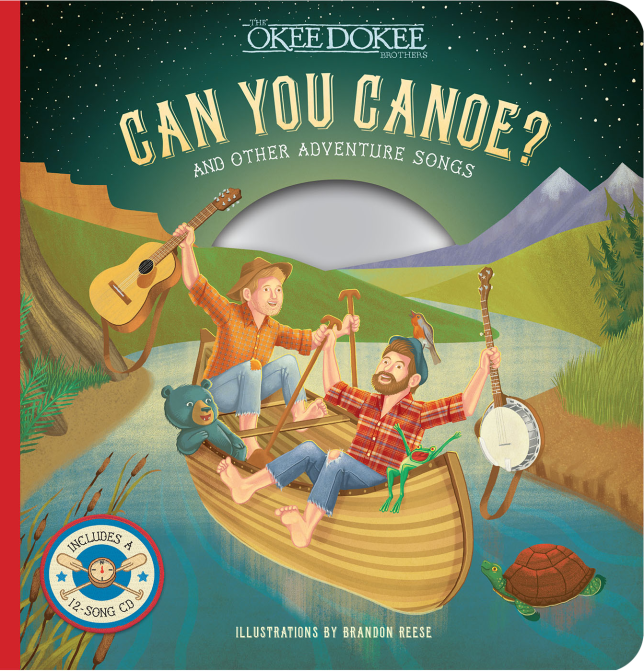
Can You Canoe? And Other Adventure Songs

Written by The Okee Dokee Brothers—Joe Mailander and Justin Lansing Illustrated by Brandon Reese


Is it possible to sing a picture book? It is when the book is Can You Canoe?! These twelve humorous, rip-roaring tunes take readers and singers deep into the fun of what it means to spend time enjoying nature. Wild animals, tall tales, legendary characters, and all the sounds and flavors of country livin’ are represented in these catchy original songs that will have you singing and laughing along in no time.

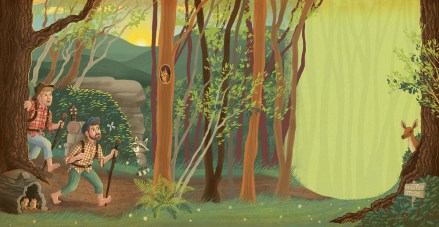
Through the Woods introduces the line-up with an apt question: “I’m wondering if you’d go wandering with me / Through the wilderness and woods / To where the winds are blowin’ free…” But even the speaker realizes there might be doubts—“You’re wondering if I go wandering with you / what kind of trouble we’ll get ourselves into. / Would it be wrong to tag along / With a band of vagabonds?”—and assuages them in the end.

celebrate-picture-books-picture-book-review-can-you-canoe?

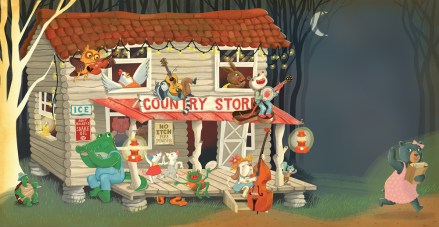
Jamboree takes readers to a country store where there’s dancing every Friday night to a song called “Jamboree” that’s played with abandon and just a little off key. But all you need is to “grab you a partner / And hold on tight / ‘Cause we ain’t stoppin’ / Until we see the light.”

In Black Bear Mama a couple learns there’s no arguing with a mother bear on the lookout for food for her cubs, and Echo Echoooo reassures that nothing, not even the widest valley, can keep true love apart. Can You Canoe? is a celebration of the simple life out on the water without distractions: “Can you canoe on a little boat built for two? Can You Canoe?…I wanna float down a river with you.”

Mr. & Mrs. Sippy can take you by surprise as this isn’t a tune about straws or baby cups. Instead, this is a rambling life story that starts like this: “Mr. and Mrs. Sippy / Got married in the fall. / They left the church that very same day / For their honeymoon in St. Paul, / Singin’ M-I-double-S-double-S-I-P-P-I / M-I-double-S-double-S-I-P-P-I. The couple roams on down to St. Louis to make themselves a home, then raises children in ‘good old Memphis Town.” When they have no place left to go, “they drift down past New Orleans / To the Gulf of Mexico.” Then you’re invited to sing the chorus backwards and forwards once again!

The Legend of Tall Talkin’ Sam echoes some of the great legends of the American West, such as Paul Bunyan and Babe the Blue Ox. Samantha Rosie-Anna, aka Sam, was “born to a pioneer woman and a Rocky Mountain mountain man” and “come out ridin’ a panther and ropin’ a twister outta the sky.” Sam’s so big that when she sleeps under a blanket of snow, she lays her “hat down in Montana and my boots in Colorado.” But even though this girl is “half horse, half mountain lion and half grizzly bear,” she admits there are things she doesn’t know—“like how some little stream / Carved out one big ol’ canyon, / Or how a fire’s angry flame / Can be your best companion.”

celebrate-picture-books-picture-book-review-can-you-canoe?

Can You Canoe? images courtesy of Brandon Reese (www.brandonreese.com)

Jackalope addresses one of the greatest American myths—that of a creature of mixed jack rabbit and antelope blood that roams the plains of the West. With tongue in cheek, the mysterious whereabouts of the Jackalope is exposed in the chorus: “Well I’ve seen ‘em in books and in taxidermy shops. / I’ve seen ‘em hangin’ on the wall. / But I ain’t never seen one in the livin’ light of day— / It’s almost like they don’t exist at all.” But the last verse reveals that perhaps this odd apparition has a purpose after all: “So when you’re searchin’ for the truth / And you’re at the end of your rope, / You might find you don’t need no proof / To believe in the thing that gives you hope— / And for me that’s the jackalope.”

These and a few other rollicking, gold-nugget songs will make any camp out—or even camp in—a knee-slappin’ good time. Can You Canoe comes with a CD so you can sing along to all your favorites—and I have no doubt each song will become a favorite in no time!

Joe Mailander and Justin Lansing have known each other all their lives and know a thing or two about adventures and how to make them more fun for friends and families. This Grammy-winning duo conjure up catchy tunes and compelling stories to make their songs unforgettable. These poems/songs have as much heart and wonder as a new frontier and invite readers and singers to explore!

Brandon Reese lends his distinctive talent to each song, creating animated scenes loaded with the kinds of details and drama kids love. Barefoot travelers with their packs on their backs and strong walking sticks in hand pad through woods populated with friendly wildlife. The country store is alive with animal musicians and dancers on the porch, on the roof, and hanging out every window while broadsides for Aunt Malady’s Snake Oil and No Itch Flea Powder hang on the walls. A cozier camping tent you’ll never find, and canoe paddlers are accompanied by a raccoon poling a crocodile boat while a rabbit floats along on the belly of a turtle. Each picture invokes the great outdoors in all its glory.

Can You Canoe is a must for any trip, whether you’re traveling far or just down the road!

Ages 4 and up

Sterling Children’s Books, 2016 | ISBN 978-1454918035

National Canoe Day Activity

celebrate-picture-books-picture-book-review-canoe-maze

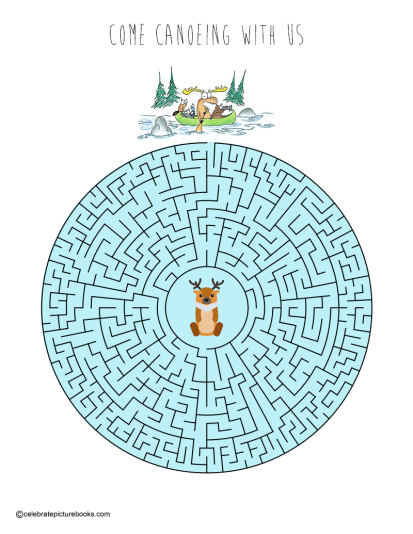
Come Canoeing With Us Maze


These friends want to canoe together but first they must pick up little deer at the center of the lake. They need your help navigating their way in this printable Come Canoeing With Us maze! Here’s the Solution!

June 22 – It’s Great Outdoors Month

celebrate-picture-books-picture-book-review-bringing-the-outside-in

About the Holiday
June, with its lazy feel and longer days, is the perfect month to spend time outdoors. Great Outdoors Week was established in 1998, but it quickly became apparent that only seven days were not nearly enough to enjoy everything nature has to offer. In 2004 the holiday was expanded to encompass the entire 30 days of June. So whether you enjoy activities on land or water, pack a picnic, grab some toys or equipment, and get out to play! Or if you just like quiet time, take a book and find a shady spot to read! Or if you love discovering new places, slip on your walking shoes and explore! Or…well, there’s just so much to choose from…!

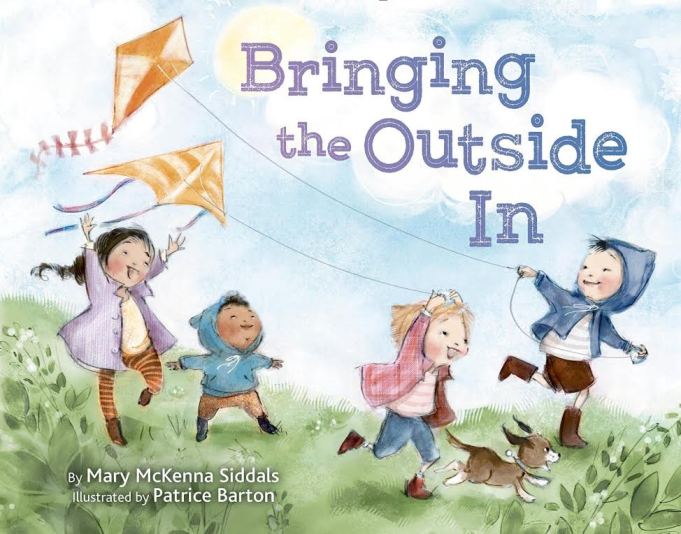
Bringing the Outside In

Written by Mary McKenna Siddals | Illustrated by Patrice Barton


For kids there’s something magical about an open door. Going out leads to unexpected adventures, blissful messiness, and astonishing discoveries. Coming in means comfort, encouragement, and that homey feeling of being wrapped in love. Bringing the Outside In is an exuberant celebration of this harmonious juxtaposition for every season of the year.

celebrate-picture-books-picture-book-review-bringing-the-outside-in-spring-art

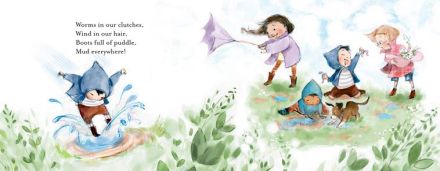
In springtime four children in jackets and boots and their adorable puppy race to play on a blue, blustering day. Under soft, billowing clouds they leap into puddles, dig in the dirt, pick wildflowers, and play tug-of-war with the wind. Happily sated and with “Worms in our clutches / Wind in our hair, / Boots full of puddle, / Mud everywhere!” the kids skip toward home. They are greeted with smiles, towels, hooks for their coats, and a mop for the drips. Even the puppy knows it’s time for “Wiping it off, / Mopping it up, / Dumping it / out again.”

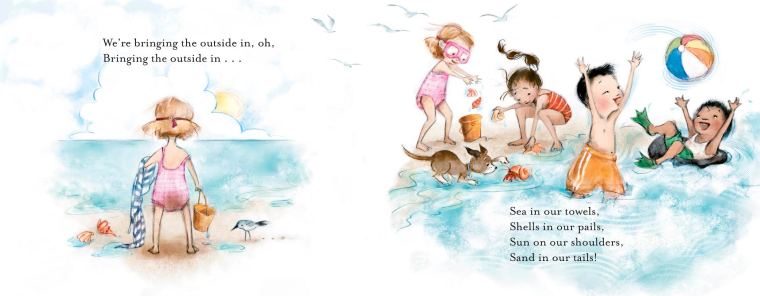
With the repeated chorus “We’re bringing the outside in, oh, / Bringing the outside in…” the spring turns to summer and the four kids are visiting the beach with pails, swim fins, goggles, float, and a ball to toss. With buoyant abandon they collect sea shells, meet hermit crabs, get properly soaked, and revel in the warm sunshine. The sun, sand, and sea follow them home, where they kick off their sandals, gather at the mudroom’s big double sink, and pin their suits on the clothes line while “Shaking it off, / Washing it up, / Drying it out again.”

celebrate-picture-books-picture-book-review-bringing-the-outside-in-summer-art

Autumn once again finds the kids outside amid its brilliant colors and “Bushels of apples, / Leaves stuck on clothes, / Acorns in pockets, / Smells in our nose!” Back inside the kids make art of some of the apples and leaves they’ve collected, untangle more leaves from hair, clothes, and the puppy’s ears, and sweep even more out the door. With the onset of winter the kids plop in the snow, build snowmen, sled, and eat icicles. After a fun-filled afternoon and with “Slush on our seats” and a “nip in our fingers,” they know it’s time for “Bringing the outside in, then…Brushing it off, / Warming it up, / Thawing out again.”

A full year has passed, but the enchantment of spring, summer, autumn, and winter have not been forgotten outside. As the kids, comfy in their matching pajamas, huddle on the round rug poring over a box of photographs and souvenirs of their escapades, they’re happily “…keeping the outside in, oh, / Keeping the outside in….” And whenever they want to relive the “Treasures collected, / Pictures in heaps, / Stories remembered, / Memories for keeps!” that box contains, all it takes is a quick “digging it up” and “dusting it off” and “bringing it out again!”

Mary McKenna Siddals’ effervescent tribute to the joy of outdoor play perfectly captures the bouncy wonder young children exhibit in the freedom of a natural environment. Using evocative, lyrical language, Siddals imbues simple childhood pleasures with poetic resonance. The repeated phrases make this a great read-along, read-aloud book, and the children’s actions could easily be turned into fun movement games for school or family story time.

Patrice Barton’s endearing illustrations of the adorable ethnically diverse children at play are inspired and inspiring. Vivid swirls and streaks create splashing water, wind-whipped hair, swinging tires, and plenty of drips, drops, and delight. Children will love seeing themselves so affectionately depicted and will want to linger over the details on every page. One wonderful aspect of Bringing the Outside In is that the children can represent friends or they could be siblings.

Bringing the Outside In is a must for school libraries and would be a wonderful, often-read addition to a family library.

Ages 3 – 8

Random House Books for Young Readers, 2016 | ISBN 978-0449814307

Visit Mary McKenna Siddals’ Website to discover more about her and her books! You’ll also find lots of hands-on and online activities for Bringing the Outside In and her other books as well as teachers’ resources, and lesson plans.

Join in the fun with Mary McKenna Siddals on the Bringing the Outside In Facebook Page!

Visit Patrice Barton’s Website to view more of her adorable artwork, books, and blog posts!

Great Outdoors Month Activity

celebrate-picture-books-picture-book-review-bringing-the-outside-in-painted-pails-craft

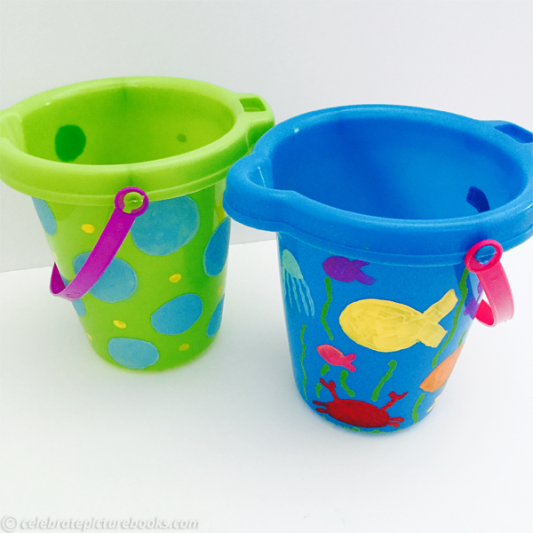
Personalized Painted Pail


A trip to the beach or park isn’t complete without a pail to collect shells, seaweed, sea glass, pebbles, sticks, nuts, or other things in. But why should all the cool stuff be on the inside? With this craft you can decorate your pail to show your unique personality!

Supplies

  • Plastic or metal pail
  • Craft paint in various colors
  • Crystal Clear Acrylic Coating, for multi-surface use
  • Paint brush

Directions

  1. Paint designs on the pail
  2. When paint is dry spray with acrylic coating to set paint
  3. Let dry

June 17 – Flip-Flop Day

celebrate-picture-books-picture-book-review-at-the-beach-cover

About the Holiday
Nothing says “casual” like a pair of flip-flops! These open-toe, open-back, open-side (you can hardly call them shoes!) shoes have been trending since 4000 BC with no limits in sight! Flip-Flop Day was initiated by Tropical Smoothie Café. Customers wearing flip-flops receive a free smoothie and the Café also uses the day to raise money for Camp Sunshine, which offers respite and support to children with life-threatening illnesses and their families. Today if the weather’s warm slip on a pair of flip-flops and head out for a casual day at the beach or on the town!

At the Beach

Written by Anne Rockwell | Illustrated by Harlow Rockwell


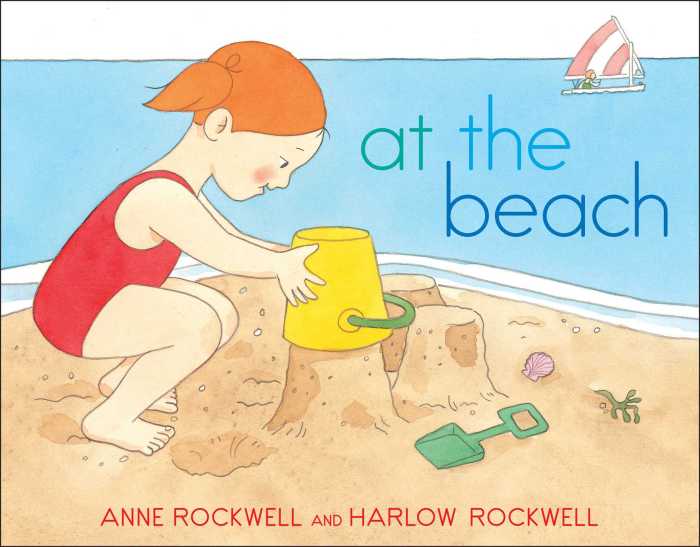
A little girl with a yellow pail and red swimsuit and her mom who’s carrying a tote and umbrella head out for a day at the beach. They find a spot to lay their striped and polka-dot towels and plant their blue-striped umbrella. Waiting in the tote is their lunch—two foil-wrapped sandwiches, two peaches, and a thermos of lemonade.

celebrate-picture-books-picture-book-review-at-the-beach-interior-art-sandpipers

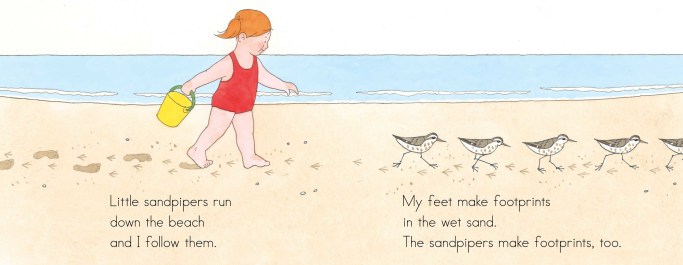
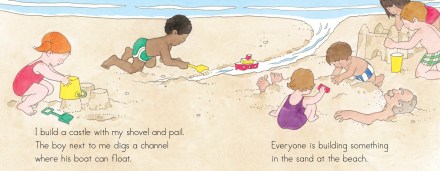
After the little girl is covered in nice-smelling sunscreen, she follows a line of sandpipers, adding her footprints to theirs in the wet sand. For her bucket she finds different types of seaweed and a variety of shells. She joins a group of kids playing among the dunes. “I build a castle with my shovel and pail. The boy next to me digs a channel where his boat can float,” the little girl says. The girl ventures out into the shallow water where “a little crab tweaks my toe” and “little silver fishes swim past me.”

The girl likes to “walk past the lifeguard station to the big brown rocks” to look for barnacles, snails, and muscles. She and her mom then swim in the waves near a drifting seagull. Back on land, the girl lies on her towel and lets the sunshine dry her off “until it is time for lunch.”

celebrate-picture-books-picture-book-review-at-the-beach-interior-art-kids-playing

Like the best laid-back days, Anne Rockwell’s classic At the Beach takes a tranquil, unhurried look at a mother-and-child seaside outing. For young children the straightforward, but lyrical text will evoke happy memories of their own beach experiences; for children who don’t live by the ocean the story will pique their interest in the shoreline environment.  This book, anchored in universal details yet inviting imagination, will soon become a favorite.

Harlow Rockwell’s sweet drawings of the little girl enjoying all a busy beach has to offer will captive young children. Scenes of a diverse group of children playing in the sand, a stalwart sea gull afloat on the current, a parade of scurrying sandpipers, and even the up- close look at scavenger hunt finds and the always welcome lunch engage all of a child’s senses. The clean lines and soft colors of the sand, sea, and sky contribute to a book as lovely as a sun-drenched beach.

Beach Day Scavenger Hunt Idea: At the Beach would be a wonderful take-along on any beach outing. Take a stroll along the shore and see if you and your child can find the shells, seaweed, sea creatures, and other seaside sights in the book.

Ages Birth – 8

Aladdin reissue edition, Simon & Schuster, 2016 | ISBN 978-1481411349

Flip-Flop Day Activity

celebrate-picture-books-picture-book-review-flip-flop-craft

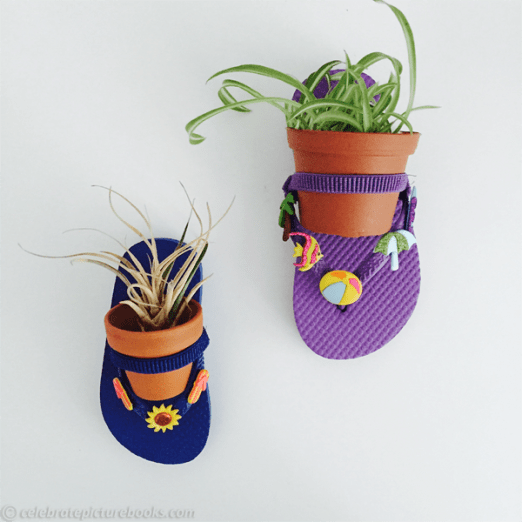
Flip-Flop Plant Holder


Flip-flops don’t only have to be for your feet! With this easy craft you can make a sandal-ightful way to hang succulents and other light plants on walls or even windows!

Supplies

  • Child’s flip-flops with elastic heel straps
  • Buttons or charms
  • Small plastic, terra cotta, or ceramic solid-bottom pot
  • Small plant
  • Dirt
  • Hot glue gun
  • Heavy duty mounting strips
  • Small shovel or spoon

Directions

  1. Place the flip-flop toe down on your work surface. With the hot glue gun, attach the buttons to the plastic toe straps of the flip-flops.
  2. Add dirt to the pot
  3. Add plant to the pot
  4. Slip the pot into the elastic strap and gently push down so it is also supported by the plastic toe straps
  5. To hang, use appropriate weight mountable strips.
  6. To make an interesting and attractive arrangement, use various sizes of flip-flops

June 16 – Dump the Pump Day

celebrate-picture-books-picture-book-review-good-trick-walking-stick-cover

About the Holiday
There’s no better time than early summer to consider “dumping the pump” and traveling by foot, bicycle, scooter, skates, skateboard…there are so many options! Leaving the car at home saves on gas costs, is better for the environment, and leads to a great exercise workout. Today, grab your walking or tennis shoes and with a friend or alone, take an example from the subject of today’s book and enjoy the pleasure of traversing the outside world!

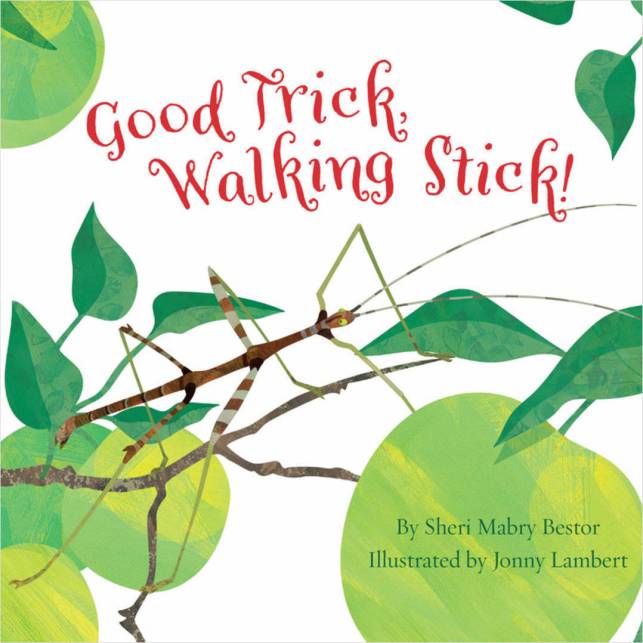
Good Trick, Walking Stick!

Written by Sheri Mabry Bestor | Illustrated by Jonny Lambert


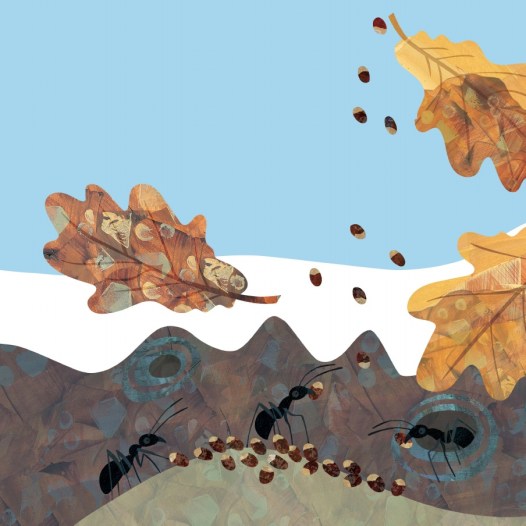
The walking stick is one insect that knows a thing or two about tricks. Even before it’s born wile plays a part in its survival. A mother walking stick drops her eggs where they will be buried by autumn leaves—and found by ants that think they are delicious seeds to eat. Why would a mother purposefully do this?! She knows that the ants will take the eggs to their colony, where they will eat only the tops leaving the baby walking sticks undisturbed. The ants will then drag the remains of the “seeds” to their garbage dump area, where they will spend a warm winter safe from predators until spring.

celebrate-picture-books-picture-book-review-good-trick-walking-stick-interior-art-eggs

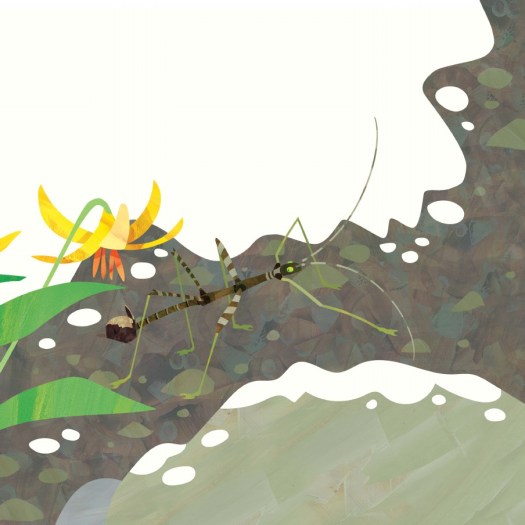
In the spring a baby hatches. It look like a tiny twig—a twig that can walk! The baby searches for food and munch, munch, munches the leaves it finds. As it becomes bigger it molts, shedding its old skin and growing a new one. The walking stick looks just like the branches that it lives on. It is perfectly camouflaged! “Good trick, walking stick!”

But a bird with keen eyesight swoops down and in an instant grabs the walking stick in its beak. Quickly, the walking stick squirts out a bad-smelling juice. The bird spits it out, but has gained a snack while the walking stick has lost a leg! It’s okay, though; the walking stick will just grow a new one! “Good trick, walking stick!”

The walking stick finds a tree with others of her kind hidden in its branches. The leaves make delicious meals. During the day the walking stick can change color to blend in with the sunlit bark of the tree and stay cooler. At night the walking stick becomes darker to hide in the shadows and stay warm. “Good trick, walking stick!”

When a squirrel brushes past, looking for a meal, the walking stick “pulls in her legs and drops to the forest floor, just like a stick falling off a larger branch. The stick insect is safe.” All day the insect lies on the ground, not moving, pretending to be just another cutting. At nightfall the walking stick climbs back into the tree. The squirrels and birds are resting now, so the stick insects “Munch munch. Crunch. Munch.”

celebrate-picture-books-picture-book-review-good-trick-walking-stick-interior-art-camouflage

With the onset of fall stick insects begin looking for mates. The females “spritz their perfume into the cooling air.” Males find them. Even if a walking stick does not have a mate, she can still produce eggs which will all develop into females. The eggs settle into the fallen leaves, ready to begin their unique life. “Good trick, walking stick!”

Stick insects are some of the most unusual creatures in the world. Measuring from an inch or two to 21 inches (53 centimeters), they can be found in forests, parks, even your own backyard! Sheri Mabry Bestor’s story of a year in a walking stick’s life is filled with action, suspense, and the clever ploys stick insects use to survive. Bestor’s enthusiastic, conversational tone and evocative language will engage kids over a wide range of ages. Each page also contains fascinating scientific sidebars that expand on the events in the story.

Jonny Lambert’s collage-style illustrations are a perfect match for the text. The mottled hues and textures of nature are beautifully represented in the vibrantly colored two-page spreads. The scientific details of the stick insect’s life are clearly and organically depicted, making it easy for kids to understand and enjoy the concepts: on one page ants carry away eggs with missing tops while on the next baby walking sticks emerge from the same images. Illustrations of the stick insect’s camouflage are particularly effective, and the cyclical quality of the story and the insect’s life are well portrayed.

For teachers and for kids who love the natural world and are curious about its unique creatures, Good Trick, Walking Stick is a wonderful addition to their school or personal library.

Ages 5 – 9

Sleeping Bear Press, 2016 | ISBN 978-1585369430

Dump the Pump Day Activity

celebrate-picture-books-picture-book-review-walking-find-the-differences-puzzle

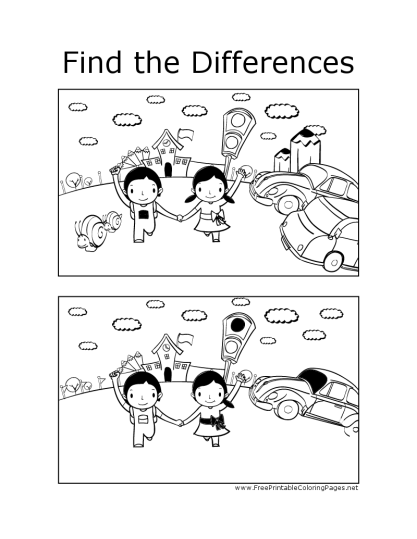
Take a Stroll Puzzle


You can see so many amazing things when you take a walk! But can you spot the 15 differences between the two pictures in this printable Take a Stroll puzzle?