March 14 – National Learn about Butterflies Day

About the Holiday

Spring has sprung – or is right around the corner – so today’s holiday reminds us to watch out for butterflies in your area. With more than 20,000 species of butterflies around the world, these delicate beauties are one of the most recognized and beloved natural wonders. Beyond their wow factor, butterflies are an important part of our ecosystem, but habitat destruction and climate change are decreasing their numbers by alarming amounts. You can help! By planting milkweed and other plants as well as nectar-producing flowers in your yard or community, you can create an area where butterflies can find shelter, food, and a place to lay their eggs. To learn more about saving monarch butterflies, visit Save Our Monarchs.

Thanks to Beach Lane Books and Barbara Fisch at Blue Slip Media for sending me this book for review!

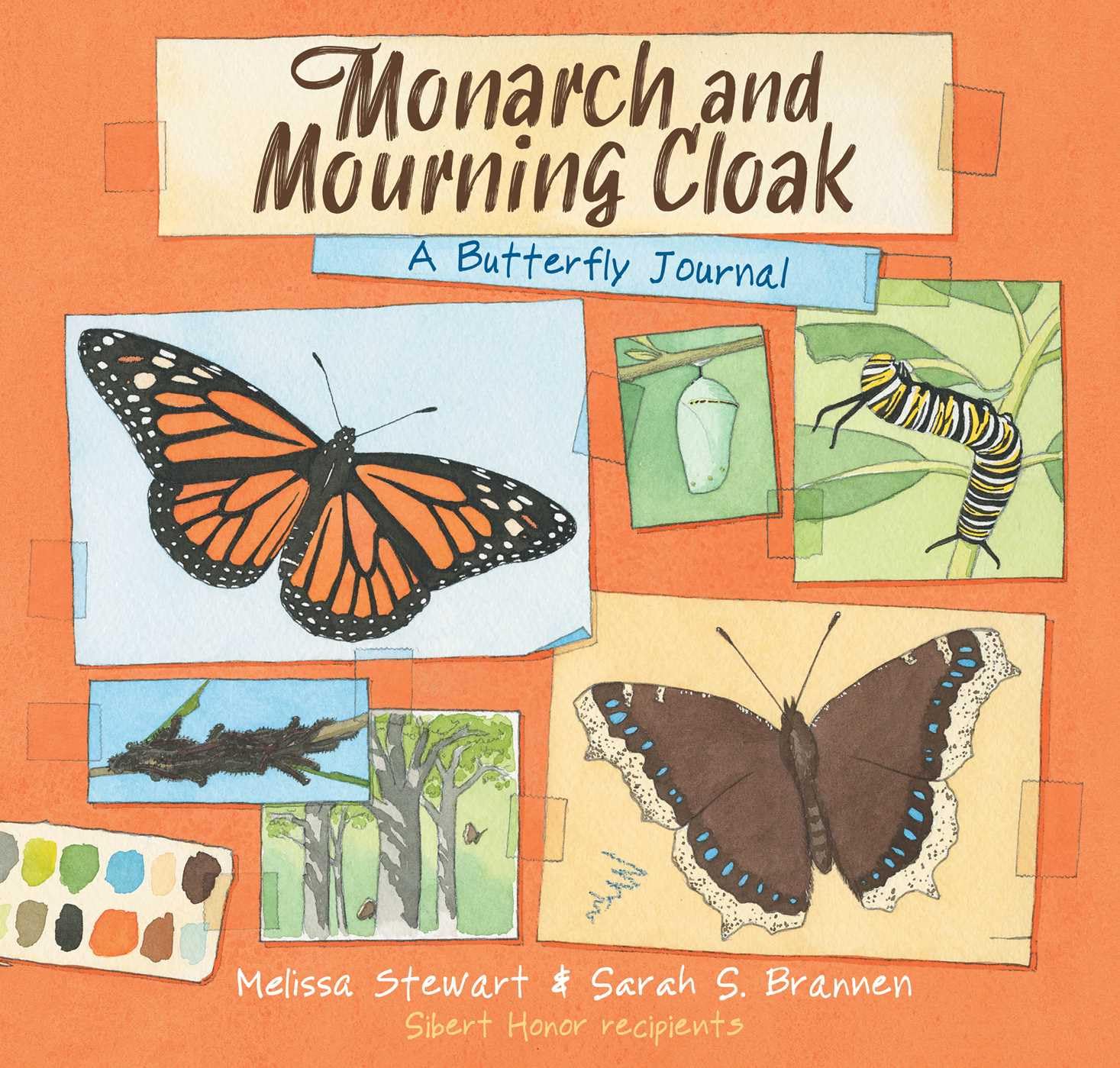
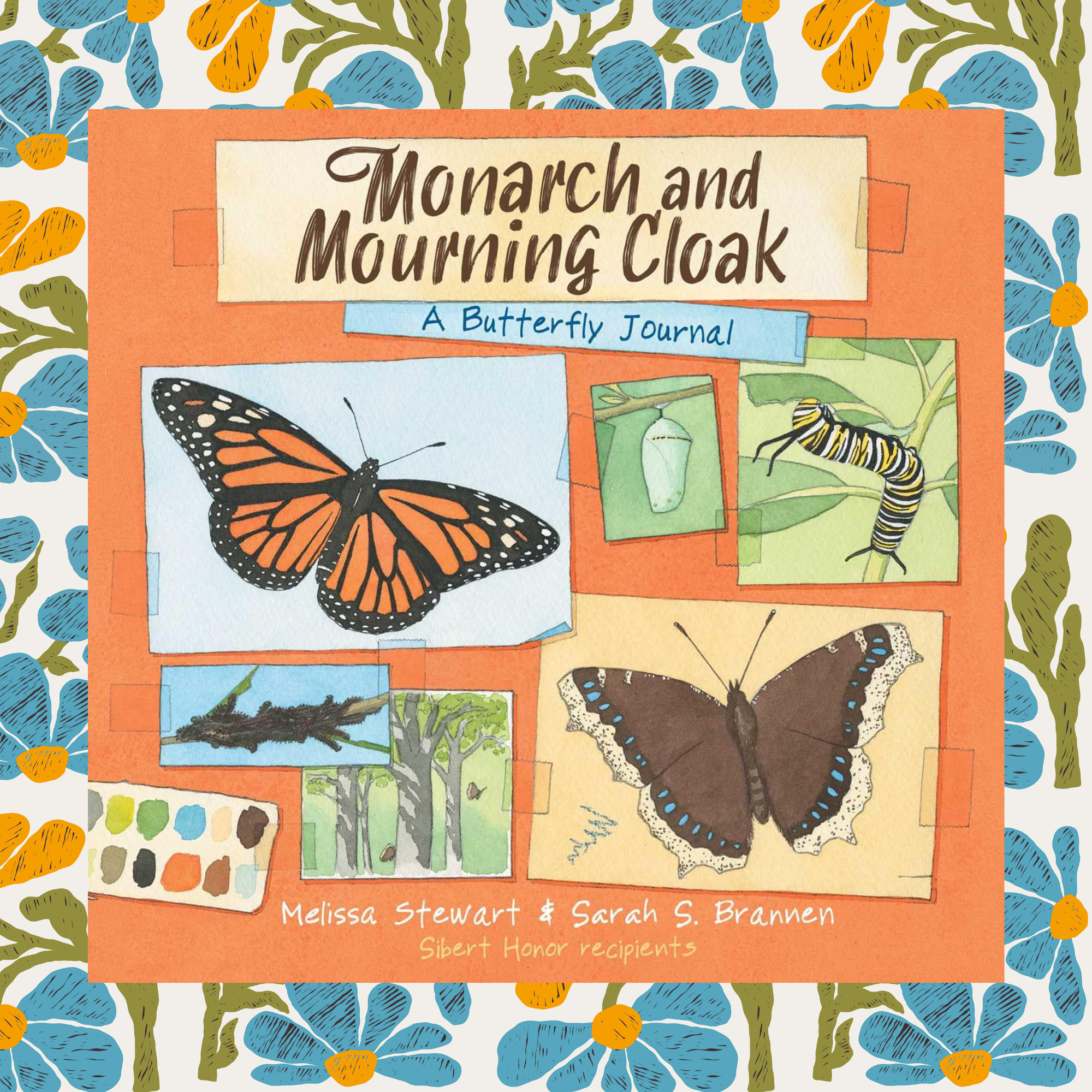
Monarch and Mourning Cloak: A Butterfly Journal

By Melissa Stewart and Sarah S. Brannen


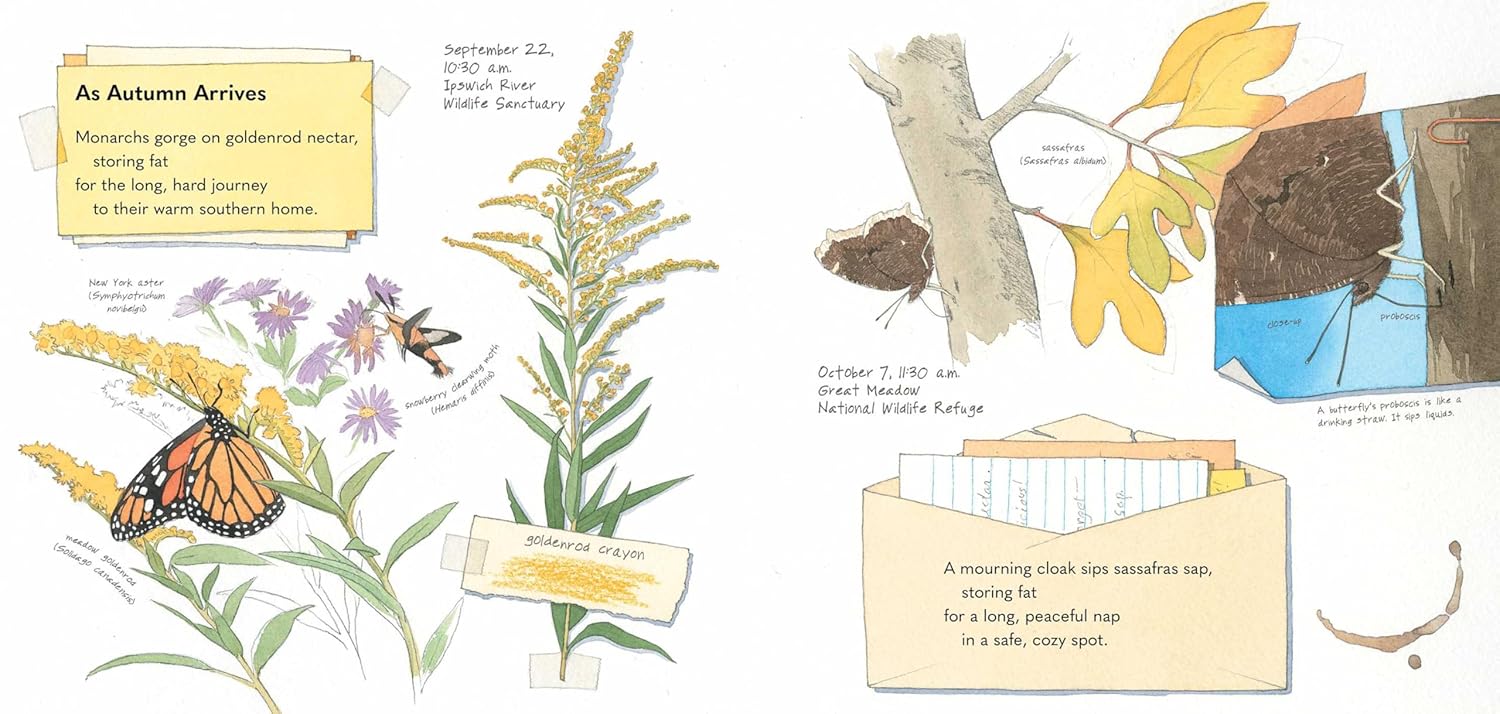
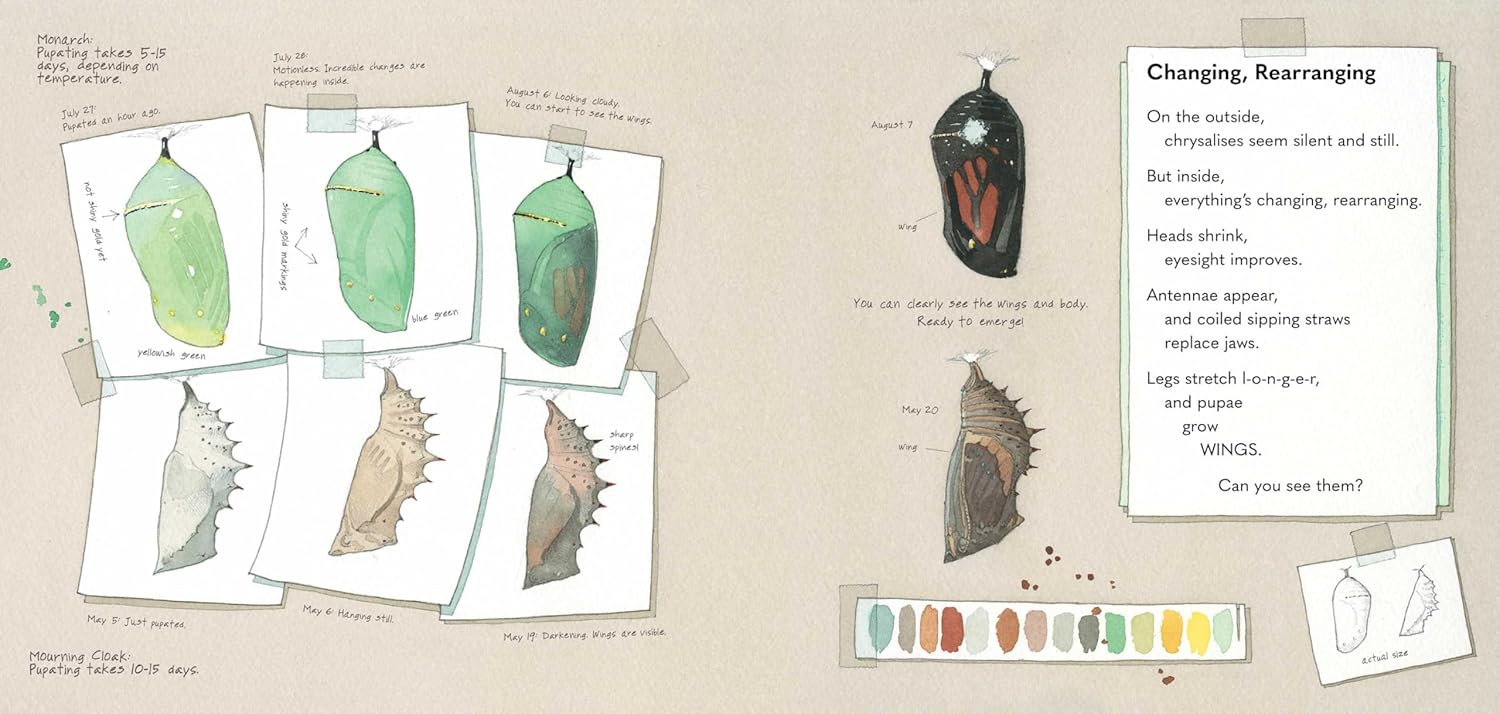
It’s impossible not to be captivated by the creative process. When we read, see, or hear something amazing, we want to ask the artist: How did you do that? The same can be said of metamorphoses in nature. Melissa Stewart and Sarah S. Brannen understand this fascination. In Monarch and Mourning Cloak, Melissa and Sarah give readers an immersive look not only into the lives of monarch and mourning cloak butterflies, but into their very own journal pages full of the research, notes, sketches, and multiple drafts of poems that became this stunning book. Images of papers stacked and taped together simulate the changes Melissa’s poems underwent while Sarah’s painted and rough-sketch images stand side-by-side along strips of watercolor tests and samples of flowers and leaves she used for reference.

Illustration copyright @ 2026 by Sarah S. Brannen. Text copyright @ 2026 by Melissa Stewart. Courtesy of Beach Lane Books.

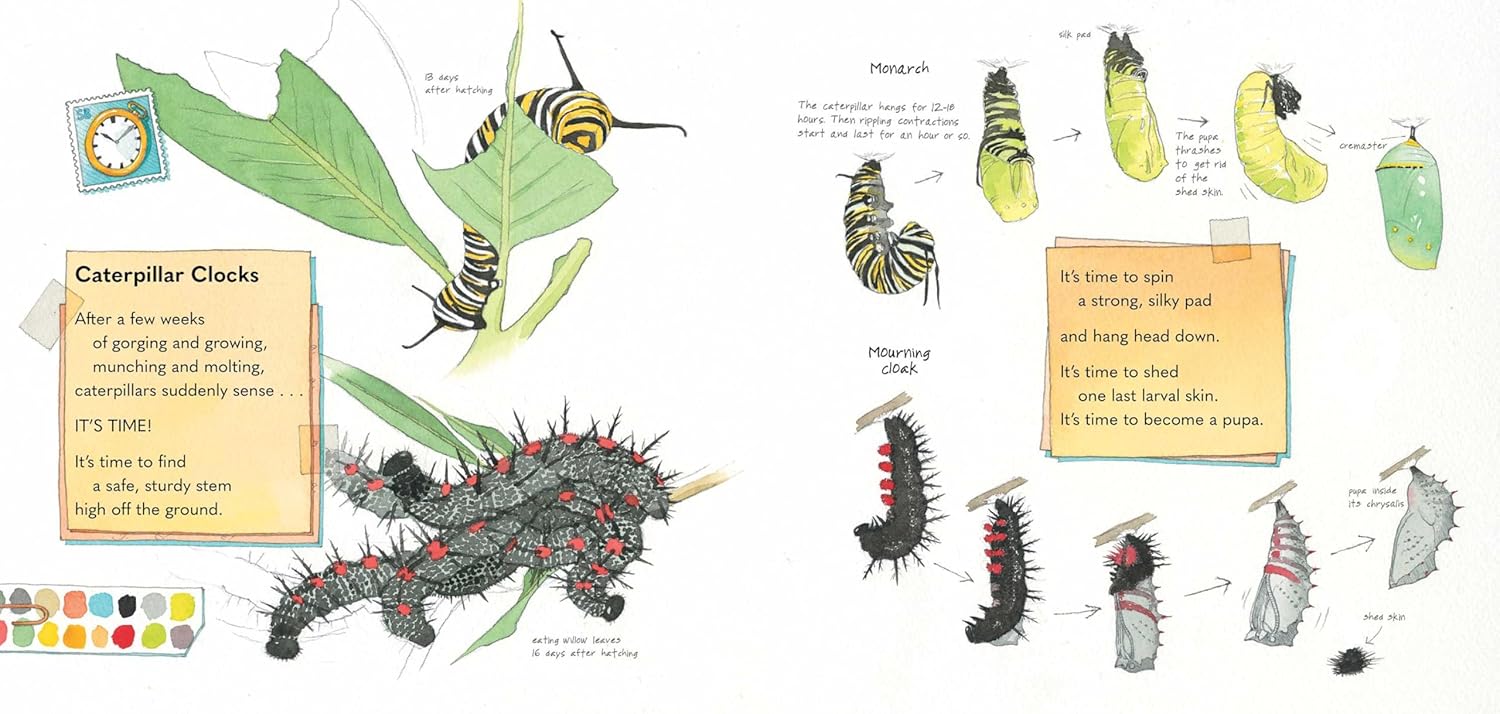
With each page—many inscribed with the date, time, and wildlife sanctuary or garden where observations took place—young nature-lovers receive an incredibly in-depth look at the very different lifecycles of monarch and mourning cloak butterflies through factual information that accompanies Sarah’s glorious illustrations and is sweetened with Melissa’s evocative verses. Particularly stunning are the pages dedicated to the metamorphosis of both monarch and mourning cloak butterflies.

Illustration copyright @ 2026 by Sarah S. Brannen. Text copyright @ 2026 by Melissa Stewart. Courtesy of Beach Lane Books.

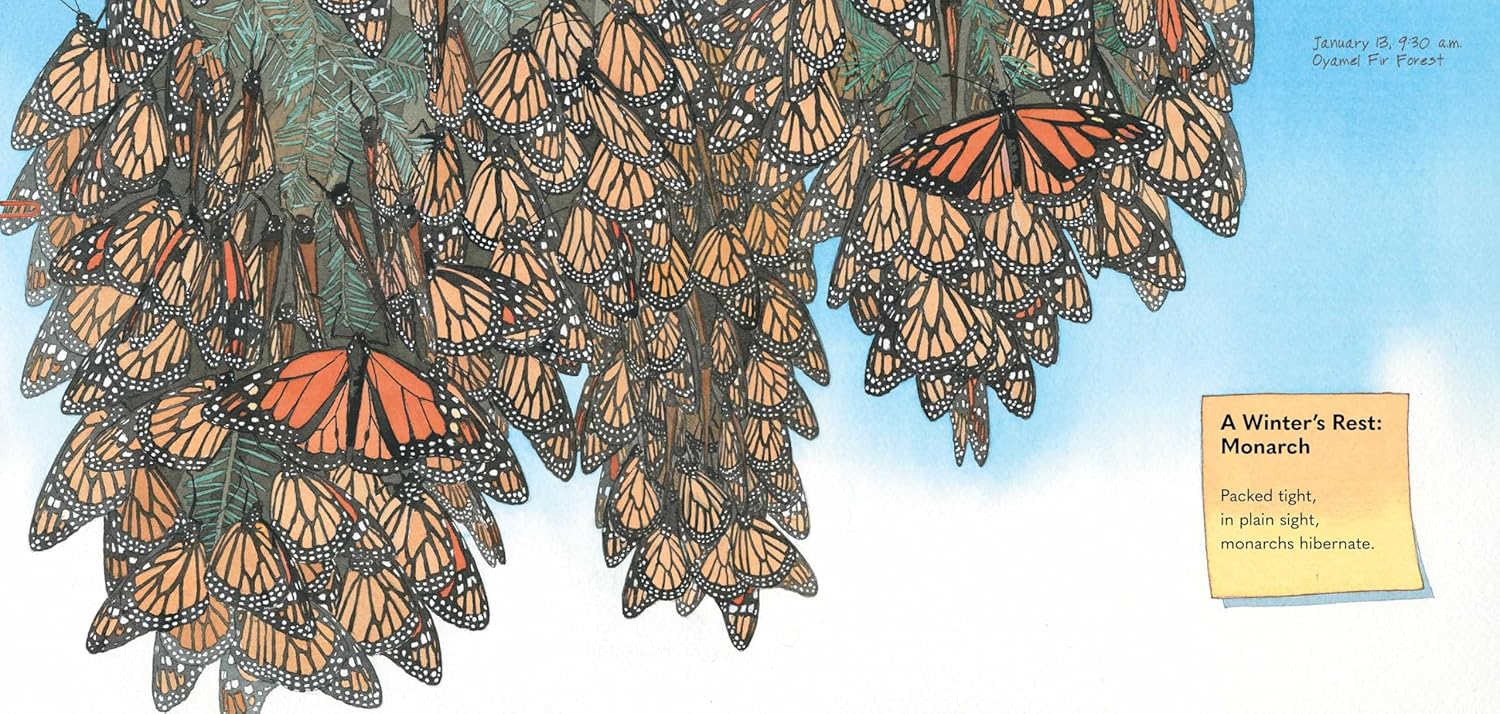
Young naturalists first meet Monarch perched on a purple coneflower at Davis Field on June 12 at 1:15 p.m. Mourning Cloak makes its first appearance on a white oak tree in Harvard Forest at 6:15 p.m. on June 15. While these two butterflies are similar in size and share many traits, their lives diverge in many ways. Readers learn all about these similarities and differences by following each throughout the year as they float, feed, hibernate, mate, and fly away leaving their progeny behind. But leaving their readers wondering is not Melissa and Sarah’s style. Through their enlightening words and images, they show children the eggs’ day-by-day transitions from tiny shell to larvae to caterpillar to chrysalis until the fully transformed butterflies emerge and soar into the sky.

Illustration copyright @ 2026 by Sarah S. Brannen. Text copyright @ 2026 by Melissa Stewart. Courtesy of Beach Lane Books.

After the butterflies take wing, this well-conceived book expands with a section that includes illustrated tips by Melissa Stewart on keeping a journal and Sarah S. Brannen on creating a sketchbook; extensive information that elaborates on each of Melissa’s poems with fascinating information about each butterfly’s defenses, food choices, migration paths (including map), surviving winter, egg deposits and survival rates, caterpillar growth and metamorphosis, and its final preparations before flying. Even the endpapers and title page provide enticing facts.

Illustration copyright @ 2026 by Sarah S. Brannen. Text copyright @ 2026 by Melissa Stewart. Courtesy of Beach Lane Books.

For young butterfly and entomology enthusiasts, as well as for nature lovers, writers, and illustrators, Monarch and Mourning Cloak: A Butterfly Journal is an absolute must. Inspirational and educational, this radiant nonfiction title will be a go-to resource throughout the year and a standout addition to all library collections.

Ages 4 – 8+

Beach Lane Books, 2026 | ISBN 978-1665962711

About the Author

Melissa Stewart is the award-winning author of more than 150 science books for children, including the celebrated Meet the Mini Mammals, illustrated by Brian Lies, and Can an Aardvark Bark? and Fourteen Monkeys: A Rain Forest Rhyme, both illustrated by Steve Jenkins. After earning a bachelor’s degree in biology from Union College and a master’s degree in science journalism from New York University, Melissa worked as a children’s book editor for nine years before becoming a full-time writer. While gathering information for her books, she has explored tropical rain forests in Costa Rica, gone on safari in East Africa, and swum with sea lions in the Galapagos Islands. She lives in Acton, Massachusetts. Visit her at melissa-stewart.com.

About the Illustrator

Sarah S. Brannen is an award-winning author and illustrator of more than twenty books for children. Her authored works include the groundbreaking Uncle Bobby’s Wedding, illustrated by Lucia Soto, and her illustrated works include Melissa Stewart’s Sibert Honor book Summertime Sleepers. Sarah lives in Massachusetts. Visit her at sarahbrannen.com.

National Learn about Butterflies Day Activity

celebrate-picture-books-picture-book-review-the-very-impatient-caterpillar-craft

Chrysalis to Butterfly Craft

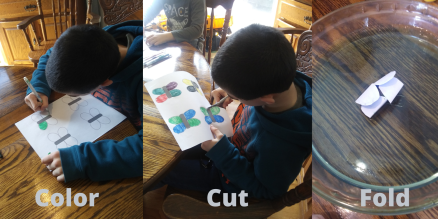
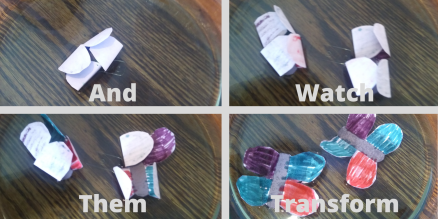
Make your own chrysalis and watch your butterflies emerge! Color your own butterflies and fold them into their own chrysalises. Once placed in the water, the butterflies will transform.

Supplies

  • Printable Butterfly Template
  • Paper
  • Markers/Crayons
  • Scissors
  • Shallow pan filled with water 

celebrate-picture-books-picture-book-review-the-very-impatient-caterpillar-craft-2

Directions

  1. Print the butterfly template
  2. Color butterflies
  3. Cut butterflies out. Be sure to snip in between the wings
  4. Gently fold butterflies. Do not fold hard or crease them, otherwise they will not unfold
  5. Place in the shallow pan in water. Butterflies will open up on their own!

You can purchase Monarch and Mourning Cloak: A Butterfly Journal from these booksellers

Amazon | Barnes & Noble | Bookshop

Picture Book Review


March 12 – National Plant a Flower Day

About the Holiday

Spring is right around the corner and with it the beautiful blooms that color our yards, neighborhoods, and communities. In some places the flowers are already blossoming, while in others, people are eagerly waiting for the snow to melt. Whether you’re already planting or still looking forward to gardening, today’s book puts a creative and clever spin on nature that everyone in your family (or classroom) will really dig! 

Thank you to Twirl Books and Barbara Fisch at Blue Slip Media for sending me this book!

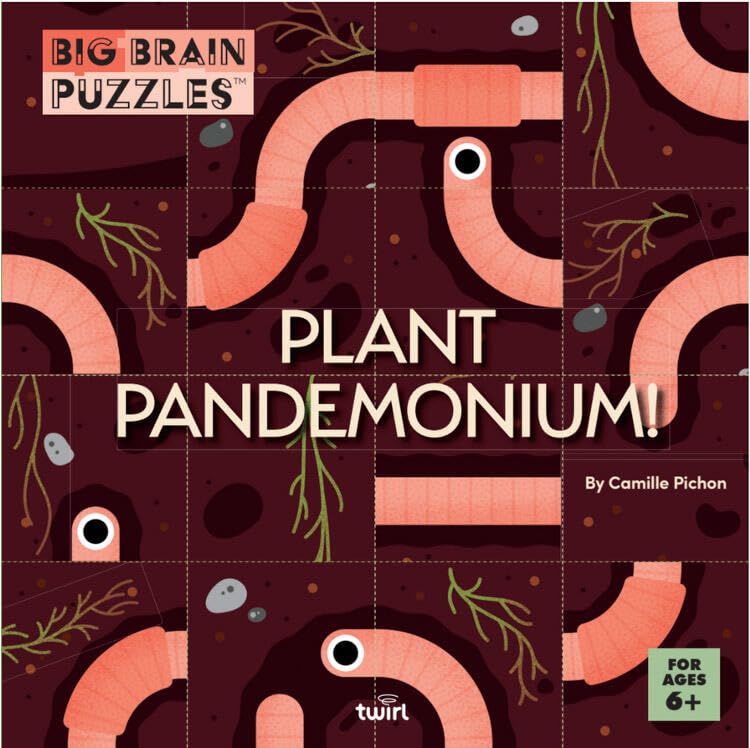
Big Brain Puzzles: Plant Pandemonium

By Camille Pichon


Kids can grow potted flowers, plant a garden, help worms wiggle and hide, and engage with other colorful flora and fauna with this one-0f-a-kind puzzle book! Children who love brain teasers, mazes, creating patterns, manipulating objects, and feeling the pride and satisfaction of completing a challenge will be awed by this beautifully illustrated book.

Each of the five plant-themed puzzles (Water Lily Carousel; Flutter, Flutter, Butterfly; Underground Paths; Plant Pandemonium; and Vegetable Jumble) are divided into three levels of difficulty and nine illustrated challenges to follow, resulting in 45 total games. Beyond these, kids can even devise new challenges for themselves or their friends to complete.

These hands-on puzzles will wow kids with their interactive elements that include wheels, moveable strips, sliding tiles, flaps that lift in multiple directions, and tokens that slide up, down, left, and right. While children work away on the possibilities, they’re continuously charmed by Camille Pichon’s bright, surprising, and quirky illustrations, in which adorable insects, snails, worms, and other creatures also appear to say “hi” along the way.

Far removed from one-and-done puzzles, Plant Pandemonium is a marvel of art and engineering that offers plenty of repeat play while immersing children in a rich environment that exercises their critical thinking and problem-solving skills, observation skills, fine motor dexterity, patience, and even memory.

Big Brain Puzzles: Plant Pandemonium will captivate puzzle lovers of all ages and would be a favorite go-to book on any home or classroom bookshelf. It would make a fantastic take-along book for car trips, outings, or anywhere waiting is expected. The book also makes a perfect gift for any puzzle lover.

Ages 6+

Twirl, 2026 | ISBN 978-2408061814

Camille Pichon is a graphic designer and paper engineer who specializes in children’s books. She lives in Paris, France. Visit her at camillepichon.com.

National Plant a Flower Day Activity

celebrate-picture-books-picture-book-review-flower-pot-stake-craft

Flower Garden Stakes


It’s fun to start a garden from seeds, but how do you remember what you’ve planted where? With these easy to make garden stakes, you can mark your pots with style! 

Supplies

  • Wide craft sticks
  • Chalkboard paint in various colors
  • Colorful chalk
  • Paint brush

Directions

  1. Paint the stakes with the chalkboard paint, let dry
  2. With the chalk, write the name of the different flowers or plants
  3. After planting your seeds, stick the stake in the pot 
  4. Wait for your seeds to grow!

You can purchase Big Brain Puzzles: Plant Pandemonium from these booksellers

Amazon | Barnes & Noble | Bookshop

Picture Book Review


September 16 – Collect Rocks Day

About the Holiday

You can find rocks almost everywhere you go—from tiny pebbles to imposing boulders. Most of the time we may not pay much attention to the pebbles under our feet or the rock formations we pass frequently, but today’s holiday encourages people to really take a look at the variety of sizes and colors that make each rock unique. Rock collecting can be a fun and educational hobby as each type of stone has its own fascinating history and science to learn about. Why not get outside, do a bit of rock hunting, and start your collections today?!

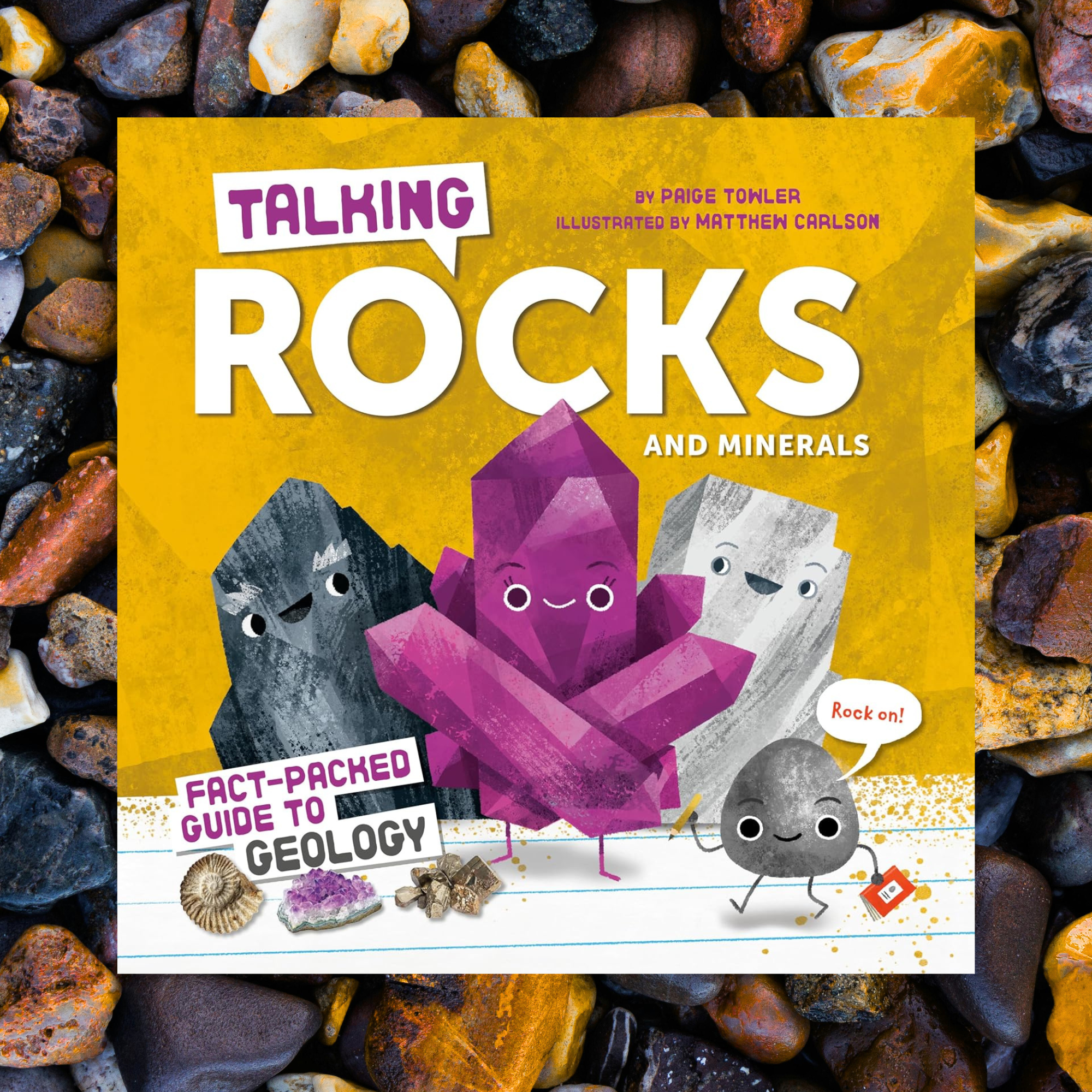
Talking Rocks and Minerals: Fact-Packed Guide to Geology

Written by Paige Towler | Illustrated by Matthew Carlson


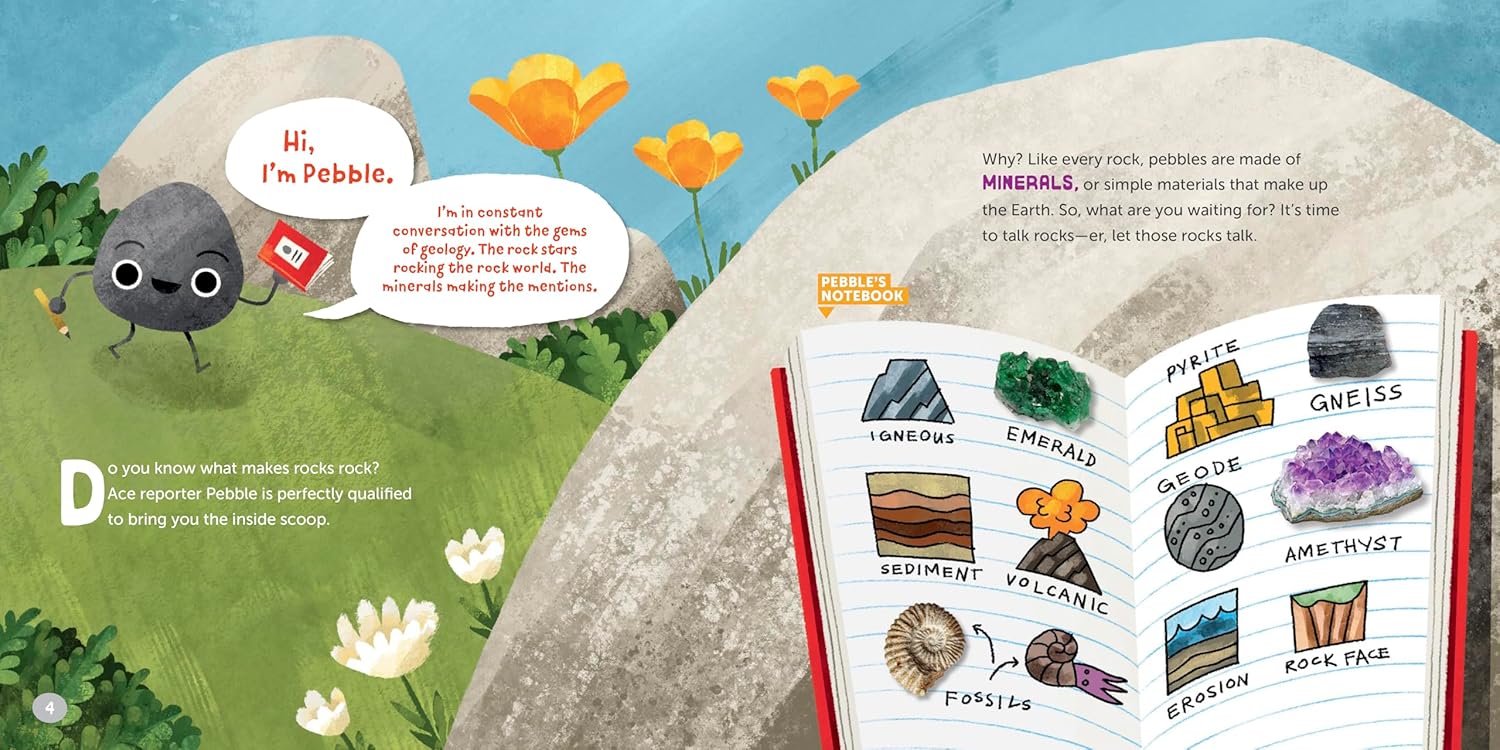
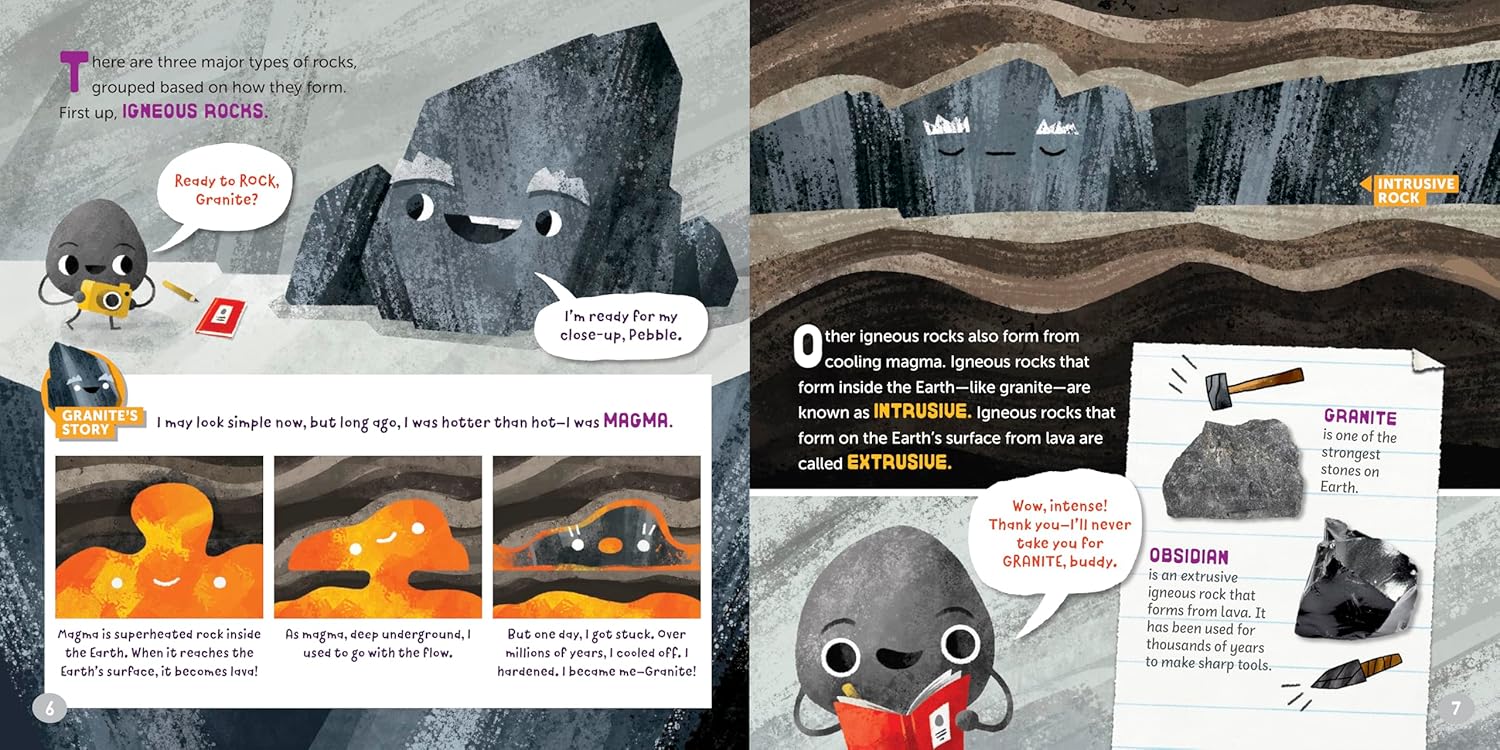
In Talking Rocks and Minerals, readers meet ace reporter Pebble, whose resume boasts, “I’m in constant conversation with the gems of geology. The rock stars of rocking the rock world. The minerals making the mentions.” And he’s not kidding! A quick scan of his notebook reveals interviews scheduled with all the big names in rock, and he’s sent an open invitation for kids to come along and hear what they have to say. First up, readers meet an igneous rock, who regales them with memories of long, long, long ago when he started out as magma then cooled to become granite, “one of the strongest stones on earth.”

Illustration © 2025 by Matthew Carlson. Text © 2025 by Paige Towler. Courtesy of Grosset & Dunlap.

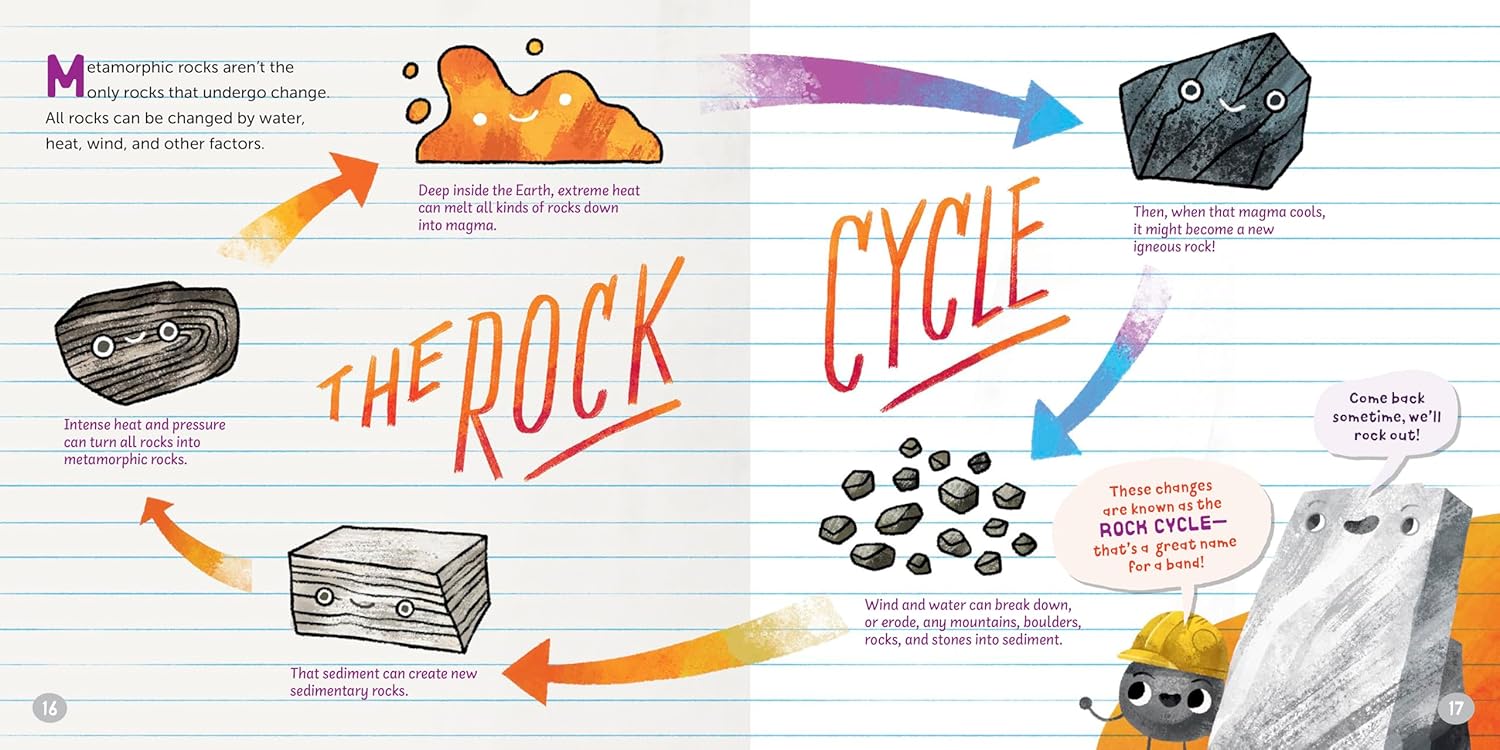
From there, Pebble moves on to talk to Coal and Limestone and discovers the layered story of what it’s like being a sedimentary rock. A couple of geodes then roll by to give kids a peek of the secrets they hold inside and make their story “crystal clear.” Amethyst gives an exclusive, showing how this royal gem developed, from when “a volcano blew its top” to the gamma rays that turned it purple. Pebble then introduces kids to two types of metamorphic rock—Marble and Gneiss—that start out as one kind of stone but under pressure and heat become another.

Illustration © 2025 by Matthew Carlson. Text © 2025 by Paige Towler. Courtesy of Grosset & Dunlap.

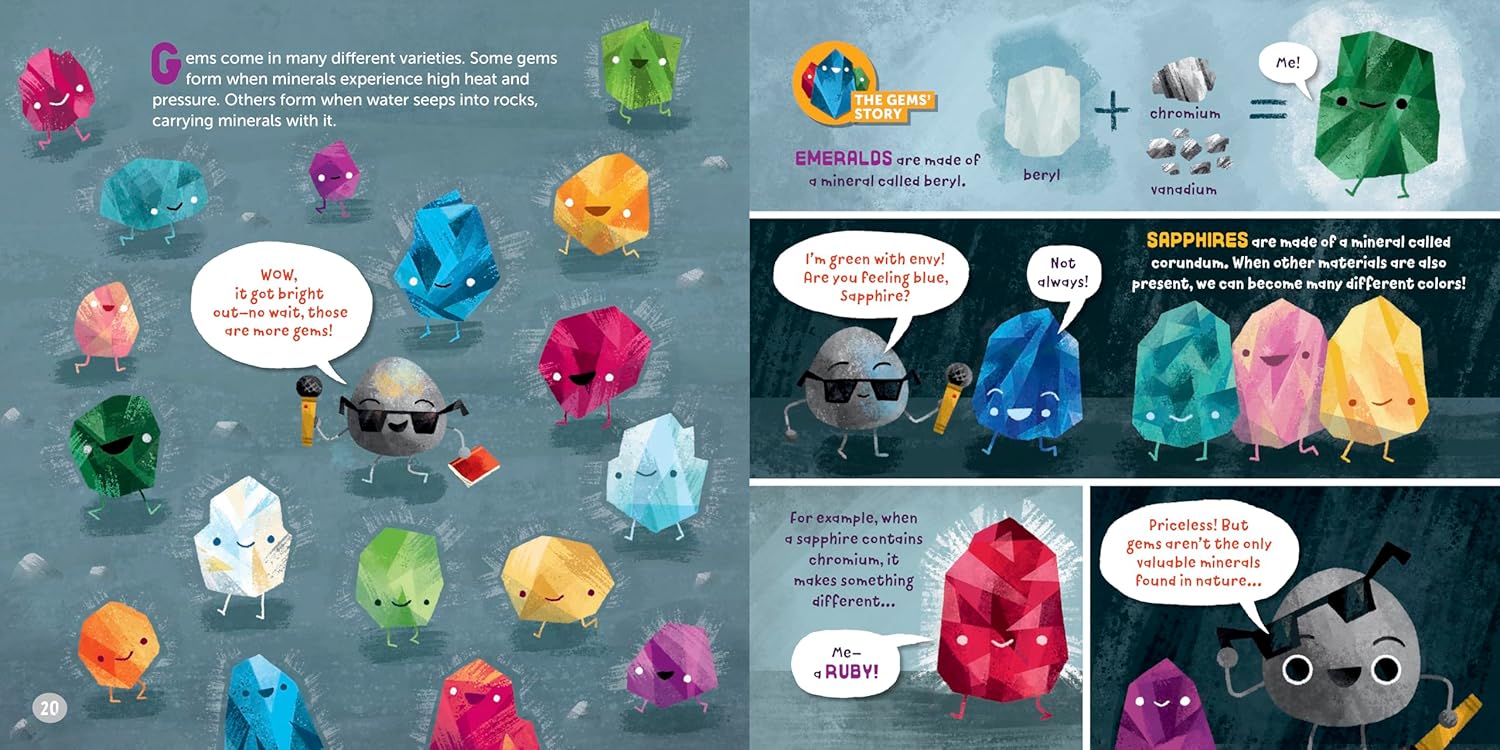
After learning the steps to the rock cycle, kids go deep underground to meet Diamond and learn how diamonds are formed from carbon and how they appear before they’re polished to a shine. Pebble interviews other gems too, like Emerald, Sapphire, and Ruby, who shine a light on how different minerals create such a variety of colorful and valuable stones.

Illustration © 2025 by Matthew Carlson. Text © 2025 by Paige Towler. Courtesy of Grosset & Dunlap.

Emerging from underground, Pebble talks with pyrite, a shiny, golden mineral that often fooled prospectors during California’s gold rush, who has a surprising revelation to share. Continuing his walk, Pebble encounters a dinosaur fossil, who recounts how bones, leaves, and footprints become fossilized, leaving evidence of creatures and plants from eons ago. Speaking of eons ago, a trio of space rocks drop in—assuring Pebble “We come in pieces.”—to contrast asteroids from meteorites and tell how meteorites come to Earth.

Surrounded by all of his new friends, Pebbles signs off, but the learning continues. Back matter includes a glossary, a note from a geologist, a list of ideas on how kids can become rock hounds, and a bibliography of more books to check out.

Illustration © 2025 by Matthew Carlson. Text © 2025 by Paige Towler. Courtesy of Grosset & Dunlap.

Gem-packed with puns, jokes, and hard-core facts, Paige Towler’s Talking Rocks and Minerals will excite kids already enthralled with geology and spark enthusiasm in those unfamiliar with the science, variety, and history of rocks we see every day as well as the stones we prize as valuable. Towler’s accessible text will appeal to all learners, making the book an excellent resource for educators. Her conversational delivery draws children in, creating a personal connection between them and the subject that will continue as they grow in their scientific studies.

Matthew Carlson’s eye-catching pages reflect how children learn today, offering adorable interacting characters, separate panels or full-page spreads that illustrate particular facts or scientific processes, and a wealth of detail that allows children to see the layers in sedimentary rock, look inside a geode, follow the rock cycle and the preservation of prehistoric creatures in fossils, and watch an asteroid plummet through Earth’s atmosphere to become a meteorite, among so many other elements.

A brilliant teaming of author and illustrator, Talking Rocks and Minerals: Fact-Packed Guide to Geology is an enriching and enlightening STEM book that is a must for all elementary classrooms, geology-loving children, science educators, and library collections.

Ages 6 – 9

Grosset & Dunlap, 2025 | ISBN 978-0593890950

About the Author

Paige Towler is a children’s book author and poet living in Washington, DC. She loves writing scary stories, tales about animals, and nonfiction facts about the weird and wonderful world around us. Her previous picture books include Mysterious, Marvelous Octopus! (National Geographic Kids), Baby Bat Bedtime (Smithsonian Institution/Sleeping Bear Press), Yoga Animals (National Geographic Kids), and more. Visit her at paigetowler.com.

About the Illustrator

Matthew Carlson is an illustrator, game designer, and graphic designer in Northern California. He studied art and English literature at the University of California, Berkeley. He’s illustrated projects for Robert Mondavi Wines, Facebook, and Twitter, and is currently the director of UX Design for Education, Fonts, and Drawing & Painting at Adobe. Originally from Seattle, Washington, Matthew now lives in Marin, California, with his partner, two kids, two dogs, and a growing collection of rocks.

You can purchase Talking Rocks and Minerals: Fact-Packed Guide to Geology from these booksellers:

Amazon | Barnes & Noble | Bookshop

Picture Book Review
September 4 – National Wildlife Day

About the Holiday

National Wildlife Day was established in 2005 by author and pet lifestyle expert Colleen Paige to promote awareness of endangered species as well as preservation and conservation efforts around the world. Globally, there is increased pressure on many animals due to pollution, habitat destruction, and other environmental issues. This day (as well as February 22, in honor of renowned conservationist Steve Irwin) encourages people to learn more about the species in their area, work toward creating hospitable habitats in their own yard or community, and implement environment-friendly choices in their homes. One of the animals featured in today’s book is the pangolin, a species whose members range in endangered status from vulnerable to critically endangered.

Thank you to Scholastic for sending me a copy of this book for review!

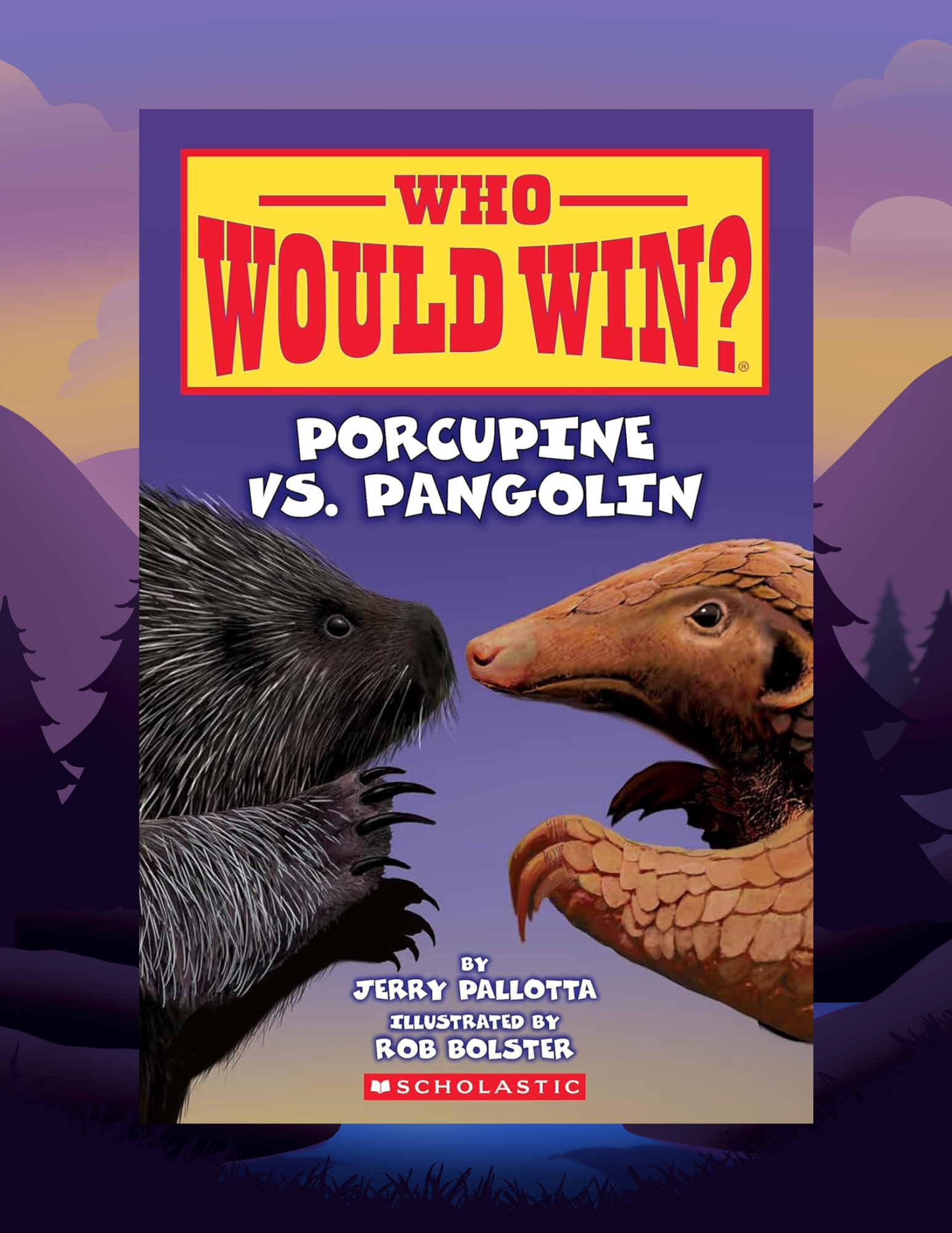
Who Would Win? Porcupine vs. Pangolin

Written by Jerry Pallotta | Illustrated by Rob Bolster


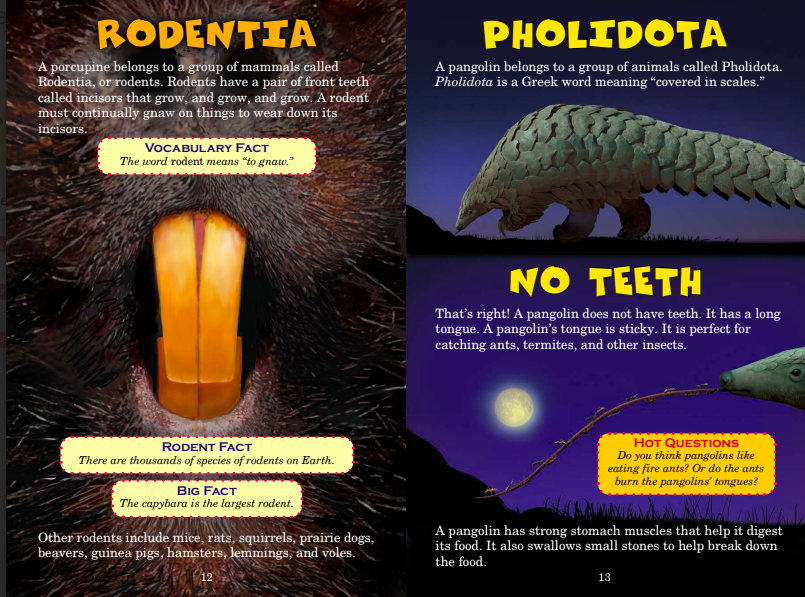
Welcome to Jerry Pallotta’s and Rob Bolster’s nocturnal showdown in the latest addition to the Who Would Win? series! On the left hand page: a porcupine; on the right: a pangolin. To help readers decide which animal would emerge victorious in a fight, Pallotta provides side-by-side dossiers that reveal pertinent facts about porcupines’ and pangolins’ bodies, skills, and defenses. 

Examining these profiles, kids learn that a porcupine is “a mammal with sharp, pointed quills . . . that looks like a spiky fur ball.” They also get to know the pangolin, a mammal that resembles a reptile due to its scales that make it look like a “walking pine cone.” Pallotta—his text supported with photographs and Bolster’s realistic illustrations—presents clear and snappy descriptions of the competitor’s quills vs. scales, fur vs. hair, faces and feet, weapons and defenses, and the scientific group each animal belongs to.

Illustration © 2025 by Rob Bolster. Text © 2025 by Jerry Pallotta. Courtesy of Scholastic.

 The pages are also sprinkled with kid-pleasing visual elements that call out a wide range of facts, from “ouch facts” about quills to “hair facts” about naked mole rats and elephants to “name facts” that reveal alternate monikers for each contestant. There’s humor here too, and even a poem about a pangolin! Pallotta is also tuned into children’s boundless curiosity, revealing the various types of porcupines and pangolins; a lineup of animals with spikes as well as those that can roll into a ball like the pangolin; and a fascinating look at how other animals would fare against these two warriors.

As the sun sets, however, it’s time for the main attraction as the porcupine, searching for dinner, comes upon the pangolin slurping ants from a log. It’s time to RUMBLE! Who will win?

Illustration © 2025 by Rob Bolster. Text © 2025 by Jerry Pallotta. Courtesy of Scholastic.

If you’re a parent, librarian, teacher, or caregiver with a child or children who are familiar with the Who Will Win? series, then you know what a phenomenon these books are. Who Will Win? Porcupine vs. Pangolin is a worthy entrant into the field, providing educational and entertaining depth to the scientific study of these two unusual mammals. Children come away from reading (and excitedly rereading) this book not only with knowledge about porcupines and pangolins, but with bits about 21 other animals as well, making it an energizing spark for expanded learning. 

Information-packed and high-interest, Who Will Win? Porcupine vs. Pangolin will appeal to emergent and independent readers and makes a perfect read aloud for adults to share with their animal-loving kids. This book, as well as the rest of the series, is a must for any library collection and highly recommended for home bookshelves.

Ages 6 – 8

Scholastic, 2025 | ISBN 978-1339000961

About the Author

Jerry Pallotta is an award-winning author of children’s books, including What I Saw in the Teachers’ Lounge, Dinosaur Christmas, Who Will Guide My Sleigh Tonight?, Apple Fractions, and The Hershey’s Milk Chocolate Multiplication BookHis combination of interesting facts, detailed research, humor, and realistic illustrations has mesmerized countless children across the United States. You can visit him at jerrypallotta.com.

About the Illustrator

Rob Bolster is both a fine artist and a professional illustrator. His work has appeared in newspaper and magazine advertisements, and he has illustrated many books for young readers, including the bestselling Who Would Win? series. Rob lives and works near Boston, Massachusetts.

National Wildlife Day Activity

Pangolin and Porcupine Coloring Pages


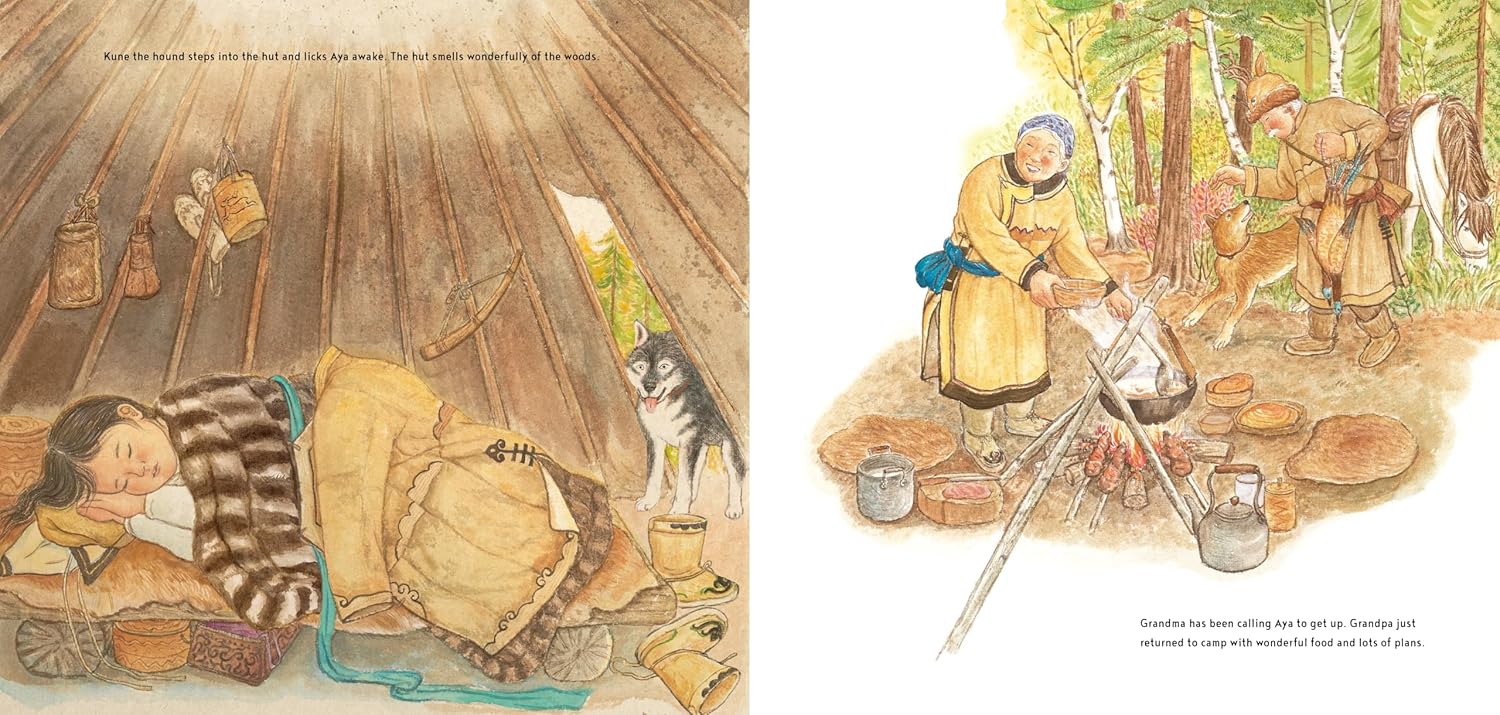
Celebrate the diversity of wildlife with these coloring pages of a pangolin and her pup and a porcupine!

Pangolin and Pup (by Rachel L Shaw) | Porcupine (courtesy of Karen Watson of The Graphics Fairy)

You can purchase Who Would Win? Porcupine vs. Pangolin from these booksellers

Amazon | Barnes & Noble | Bookshop (discounted books and support for your local independent bookstore)

Picture Book Review

July 22 – Wild about Wildlife Month

About the Holiday

Wild about Wildlife Month may be winding down, but that doesn’t mean we can’t enjoy all that nature has to offer the rest of the summer and all year long. Exploring parks, woodlands, grassy fields, or the shores of lakes, rivers, or the ocean is a fun and educational family activity that’s different each time you visit. Whether you and your kids like plants, animals, insects, or the rocks that hold everything together, a nature walk provides something for everyone. The best way to enjoy the outdoors is with a relaxed pace that lets you decompress, take it all in, and say “Ahhh!” 

Thank you to G. P. Putnam’s Sons for sending me a copy of this book for review!

Polecat Has a Superpower

Written by Jill Esbaum | Illustrated by Bob Shea


A spotted skunk, aka Polecat, sits front and center, backlit by a sunset glow, promising to reveal his “DOOZY of a superpower”—but only after divulging all the other relevant information about himself. Things like why he chooses to live in a very particular place while being not that particular about where he lives; when polecats hunt for food, and how they’re “always, always alert for hungry predators.” It’s at this moment when the word “predators” hangs ominously in the air that Porcupine “SPROINGS” into view, frightened by the prospect of being eaten, and mistakes Polecat for a baby skunk.

illustration © 2025 by Bob Shea, text © 2025 by Jill Esbaum. Courtesy of G. P. Putnam’s Sons Books for Young Readers.

Polecat is not too pleased and goes on to show just how many things spotted skunks can do that their striped cousins can’t. Things like climbing quickly and sporting camouflaging spots. Porcupine is just warming up to this unusual interloper when Polecat chomps down a cricket, goes on to provide a full menu of foods that would satisfy its munchies, and then demonstrates how he prepares a caterpillar for “yumminny-yum-yum” fine dining. Trying hard not to be sick, Porcupine pleads, “Tell me that isn’t your superpower.” 

Reassured that it is not, Porcupine hints at knowing what Polecat’s superpower is. “Bet you don’t,” Polecat answers. The two creep farther into the woods where they spy a gathering of predators attending a program titled “How to Eat a Polecat” while enjoying a variety of snacks. Polecat is just about to disclose his “great trick to discourage enemies” when Porcupine blurts it out. Upset, Polecat blurts out what he thinks Porcupine’s defense is, but instead ends up getting an education about his spiky friend.

illustration © 2025 by Bob Shea, text © 2025 by Jill Esbaum. Courtesy of G. P. Putnam’s Sons Books for Young Readers.

Finally, Polecat is ready to demonstrate his real superpower—”something nobody else does, not even my stripy cousins.” Porcupine happily volunteers to assist in the show only to run away screaming when he gets the surprise of his life. Polecat’s glad his superpower is so powerful, but he was hoping he and Porcupine could be friends. Porcupine’s ready to “hug it out”—but Polecat? Maybe a high five will do just as well.

A True or False? quiz about spotted skunks, with answers and explanations, follows the story.

illustration © 2025 by Bob Shea, text © 2025 by Jill Esbaum. Courtesy of G. P. Putnam’s Sons Books for Young Readers.

Polecat Has a Superpower, Jill Esbaum’s third book in this entertaining and educational series, sparkles with humor and smart repartee that keeps kids on the edge of their seats for the big reveal. Along the way, readers learn about the unusual spotted skunk and a few surprising tidbits about porcupines, while getting a grasp on some scientific terms as well.

Bob Shea realistically recreates the appearance of a spotted skunk and porcupine while infusing each with personalities that will hook kids. Porcupine’s facial expressions will endear him to young readers, who are also eager to know what Polecat’s secret is. Shea’s nighttime conclave of predators will have kids giggling, and the disclosure of Polecat’s superpower is sure to have them screaming along with Porcupine (but in delight, not fear).

Polecat Has a Superpower is a high-interest book that will be a much-asked-for addition to any home, classroom, and library collection. 

Ages 5 – 8

G. P. Putnam’s Sons Books for Young Readers, 2025 | ISBN 978-0593699997

Check out the other books in the series!

About the Author

Jill Esbaum has written many books for children, including How to Grow a DinosaurFrankenbunny, and If a T. Rex Crashes Your Birthday Party. Several of her books have been nominated for state awards, and I Am Cow, Hear Me Moo! won SCBWI’s Crystal Kite Award. She also enjoys writing kooky beginning reader stories like Thunder and Cluck, as well as a variety of nonfiction books. Visit her at jillesbaum.com and follow her on Twitter/X @JEsbaum.

About the Illustrator

Bob Shea is an award-winning author and illustrator of children’s books, including the popular Ballet Cat series, the Dinosaur Vs. series, and the runaway smash hit Unicorn Thinks He’s Pretty Great. He is an Eisner Award nominee and has worked with Comedy Central, PBS Kids, Playhouse Disney, Nick Jr., Google, and other clients. Visit him at bobshea.com and follow him on Instagram @BobSheaBooks.

Wild about Wildlife Month Activity

Eastern Spotted Skunk Coloring Page


If you’re kids are wild about wildlife, they’ll be wild about this Eastern Spotted Skunk Coloring Page! You can find many more educational Critter Sheets and Coloring Pages on the Florida State Parks website.

You can purchase Polecat Has a Superpower at these booksellers

Amazon | Barnes & Noble | Bookshop (discounted books and support for your local independent bookstore)

Picture Book Review

July 15 – Wild about Wildlife Month

About the Holiday

Wild about Wildlife Month celebrates the wonderful diversity of our planet’s wildlife while reinforcing the importance of all animals to our ecosystem and even to our survival! The holiday also focuses on conservation, recycling, and education about how humans’ actions affect crucial habitats and the health of flora and fauna populations. While July is designated as Wild about Wildlife Month, the holiday’s significance is something to be mindful of all year around. To participate, explore the wildlife in your area while learning about the creatures on the other side of the world and everywhere in between. Today’s book will get you and your youngest nature-lovers started!

Thanks go to Phaidon Press for sending me a copy of The Secret Powers of Animals for review!

The Secret Powers of Animals

Written by Soledad Romero Mariño | Illustrated by Sonia Pulido


It’s no secret that kids of all ages are fascinated by animals. Little ones stand on tiptoe gazing up up up in awe at elephants and giraffes, fold themselves into pint-sized scientists to inspect bugs on the sidewalk, and are endlessly entertained by family pets. And when they learn interesting facts about their favorites, they love sharing their knowledge.

Illustration © 2025 by Sonia Pulido, text © 2025 by Solodad Romero Mariño. Courtesy of Phaidon Press.

How do you replicate the excitement of witnessing an animal in person at home or in the classroom? With The Secret Powers of Animals, a lift-the-flap board book that combines jaunty introductory rhyming verses, three amazing secret powers, and the fun of interactive learning for 10 distinct creatures of the land, sea, and air.

Illustration © 2025 by Sonia Pulido, text © 2025 by Solodad Romero Mariño. Courtesy of Phaidon Press.

Among this menagerie, kids meet a brainy octopus, who tells them “I’m a master of disguise— / I’m cunning and I’m wise. / Through swirling seas I glide / with my many ways to hide.” Indeed, the octopus’s superpowers back this up! Just one of the three amazing talents this eight-armed beauty reveals to readers is the ability to change “my shape or skin tone to look like something else.” 

Little learners will love trying to guess each creature’s super powers as they discover which animal has the best sense of smell, who has a tusk that works like a thermometer, who can chomp harder than a shark, who can detach its tail to throw predators off its track, and so many more ingenious animal traits! 

Illustration © 2025 by Sonia Pulido, text © 2025 by Solodad Romero Mariño. Courtesy of Phaidon Press.

Soledad Romero Mariño brings each animal to life with witty and spirited vocabulary that not only describes the creature’s physical attributes but evokes a sense of their personality and place in the natural kingdom. The elephant “swishes” its tale and “flaps” its ears, the owl “swoops about,” the lizard “scuttles” and “darts,” and the cheetah “inches” and “creeps” before “. . . [giving] chase / in a big, bursting leap.” Romero Mariño explains each secret power in simple language that even the youngest reader will understand and remember. Her flowing verses are a joy to read aloud and are perfect sparks for pretend play at home, in preschool and kindergarten classrooms, and for library story times. 

Sonia Pulido’s realistic, museum-quality illustrations transport children to the savanna to meet an elephant face to face; under the sea, where a strikingly beautiful octopus levitates amid colorful coral and a family of narwals floats in the deep-blue water; to desert sands and rocky paths; and to sun-drenched grasslands among other locales. On the facing page, Romero Mariño’s text is bordered by lovely and thoughtful details that reflect the animal’s natural habitat. Both kids and adults enjoy lingering over each spread to talk about the animals. On each tab, Pulido includes an icon that depicts the secret power—for instance, the image of an eye with the words “Amazing eyes” for super vision—which becomes familiar to readers as it is repeated throughout the book. 

The Secret Powers of Animals, a stunning, sturdy board book that adults will be excited to share with young children, is a must for all nature-loving families, early educators, and library collections. The book also makes a terrific gift for any young animal lover.

Ages 2 – 5

Phaidon Press, 2025 | ISBN 978-1838669522

About the Author

Author Soledad Romero Mariño is an experienced children’s non-fiction author who specializes in ‘best of’ round-up style books. Her works include Superpowered Animals: Meet The World’s Strongest, Smartest, and Swiftest Creatures (also published by Phaidon), Awesome Accidents: 19 Discoveries that Changed the World and Famous Robberies: The World’s Most Spectacular Heists.

About the Illustrator

Sonia Pulido’s illustrations have appeared in publications globally, including The New Yorker and The New York Times. In 2020 Pulido won the Spanish National Illustration Award and she is the illustrator of Phaidon’s bestselling What a Shell Can Tell. Visit her at soniapulido.com.

You’ll find my review of the stunning Super Powered Plants for older readers here.

Wild about Wildlife Month Activity

celebrate-picture-books-picture-book-review-hand-print-elephants-craft

Handprint Elephants


This easy craft is fun for siblings to do together and can make a nice decoration for a child’s room or a gift for mom, dad, or other family members.

Supplies

  • Craft paint in two colors of the children’s choice
  • Yellow craft paint
  • Black fin-tip marker
  • Crayons, markers, or colored pencils to make a background
  • Paper
  • Paint brush

Directions

  1. Paint one child’s hand and press it on the paper. The thumb is the truck and the fingers the legs.
  2. Paint the second child’s hand and press it on the paper near the other “elephant.” A couple of examples are: the elephants standing trunk to trunk or trunk to tail 
  3. After the paint has dried, draw on ears and an eye
  4. Add a sun with the yellow paint
  5. Add grass, trees, or other background features

You can purchase The Secret Powers of Animals from these booksellers

Amazon | Barnes & Noble | Bookshop

Picture Book Review
June 24 – International Fairy Day

About the Holiday

Full of sparkle, magic, and mischief, it’s no wonder that fairies captivate the imagination of young and old around the world! Today we celebrate these mythical creatures and all the joy they bring through cultural associations, books, movies, and pretend play. For an interesting look at the history of International Fairy Day, plus lots of ways to celebrate with your family and friends, visit Days of the Year and Punchbowl

Thank you to Candlewick Press for sharing a copy of Fairy Walk with me!

Fairy Walk

By Gaia Cornwall


As their mothers relax and talk, three children and their curly-haired dog “skip, skip, skip, trip” into the woods behind the house, hopping from stone to stone to cross the little river “into the misty magic” of fairyland. “Where are you, fairies?” they call. Are they among the honey snowdrop flowers on the ground or under the boulder, so heavy it takes all three of them to tip? They don’t see any fairies, but they do find “a dragon!”—an orange salamander.

Are there fairies across the clearing, enjoying a feast on a “cozy, snug” mushroom table? No—or are there? Maybe they’re just a little farther, under the blanket of pixie moss. A peek underneath reveals “Bugs!” that “scramble, scamper, roll, and burrow,” but not a single fairy.

Text and illustration © 2025 by Gaia Cornwall. Used with permission of Candlewick Press. All rights reserved.

After all this fruitless searching, the kids grow frustrated and exhausted. It’s time for a snack. While they eat their sandwiches, the children decide that perhaps the fairies are shy. They then engage their other senses and can “hear them whisper in the trees.” They feel “thrums” in the ground below and appreciate the “whisper soft” wings of a butterfly.
They reconsider the gifts of flowers, stones, and mushrooms they’ve found, smelling them more deeply, creating a rock cairn, and inspecting them with a magnifying glass. The children leave a present for the fairies as well. The day is waning, and the trio bids goodbye to their fun and to the fairies, with hope for the future: “See you later!”

Text and illustration © 2025 by Gaia Cornwall. Used with permission of Candlewick Press. All rights reserved.

In her lovely, lyrical story that sings with sumptuous sensory language and the cadence of childhood fancies, Gaia Cornwall invites children into the magical realm of a lush woodland fed by a rocky stream and brimming with glorious flowers, mushrooms, and the kind of creepy crawlies that set the imagination whirling.

While the kids within the pages never see a fairy, the kids reading the pages will be delighted to spy plenty of tiny blue, sparkle-winged fairies hiding in the foliage; perched on the edge of a bird’s nest; enjoying the day among the mushrooms; and flitting playfully here and there with the kids’ charmed dog, who can see them. Eagle-eyed kids will also want to look for the tiny ladybug in each illustration. Cornwall’s soft-hued pencil, watercolor, and collage illustrations are dappled with texture and rich in details of the natural world that children and adults will also want to linger over.

Fairy Walk is an enchanting and clever combination read-aloud and fun I-spy story that children and adults will love sharing again and again. The book is sure to inspire nature walks through the neighborhood, in the backyard, or on hiking trails, where, even if you don’t see fairies, you’ll find lots of the gifts they scatter about. Fairy Walk will enjoy brisk circulation in any library and is highly recommended for home collections.

Ages 3 – 7

Candlewick Press, 2025 | ISBN 978-1536230710

About the Author/Illustrator

Gaia Cornwall loves to write and illustrate for children. She is the author-illustrator of Jabari Jumps, which was a Charlotte Zolotow Honor Book and an American Library Association Notable Children’s Book, and its follow-up, Jabari Tries, as well as The Best Bed for Me. Gaia Cornwall lives in Connecticut. Visit her at gaiacornwall.com.

International Fairy Day Activity

Text and illustration © 2025 by Gaia Cornwall. Used with permission of Candlewick Press. All rights reserved.


Fairy Walk Activity Kit


Learn how to draw fairies and bugs and go on a nature hunt with this four-page Fairy Walk Activity Kit from Gaia Cornwall and Candlewick Press!

You can purchase Fairy Walk from these booksellers

Amazon | Barnes & Noble | Bookshop (discounted books and support for your local independent bookstore)

Picture Book Review