March 12 – National Plant a Flower Day

MIss Maple's Seeds by Eliza Wheeler Picture Book Review

About the Holiday

It’s March—that funny month when some people are basking in 80-degree sunshine and others are still shoveling snow. But no mater where we live, we’re thinking about the same thing—Spring! Spring brings new green leaves, gentle rains, and little shoots that will grow to be trees, vegetable and fruit plants, and flowers. Whether you live somewhere warm and can already plant outside or somewhere that’s still a little chilly and requires indoor propagation, planting flower seeds is a perfect way to beautify your home and your life.

Miss Maple’s Seeds 

By Eliza Wheeler


Late in the summer, Miss Maple hurries to prepare for some very special guests. She has searched all summer for unplanted “orphan” seeds, and baskets full of them are winging their way to her home on the backs of bluebirds. Once they arrive she “learns each seed by heart.” There are poppy, wild rice, maple, water lily, pine, impatiens, apple raspberry, sunflower, acorn, pea, fern seeds, and as many more as make up our world.

As she lovingly tends to each one, she says, “Take care, my little ones, for the world is big and you are small.” Miss Maple takes them on field trips and shows them the world they will inhabit—the muddy soil along riverbanks, grassy fields, and thick forests. She cautions them about “weedy characters” who can show up even in a “bustling garden.”

At night Miss Maple snuggles each seed into a comfy bed and reads to them by the light of fireflies. During the winter Miss Maple entertains other guests—woodland creatures who gather in her maple tree home and share food, stories, and songs. With the spring come rains and new lessons on burrowing into the ground.

May ushers in another summer, and Miss Maple knows it’s time for her little ones to “find roots of their own.” She sends them out into the world, knowing that she has prepared them well for what they will become. Her seeds say goodbye and sail off to begin their futures, and Miss Maple is left alone. But soon another summer day comes, and Miss Maple sets off to gather more orphan seeds, because “the world is big and they are small.”

Eliza Wheeler’s Miss Maple’s Seeds is a triumph—as comforting as a warm blanket and as empowering as a master key. Wheeler’s beautiful language floats quietly and unhurried like the flight of a leaf on a gentle breeze. The metaphor of seeds and children is so sweetly made, and Miss Marple’s wish for her little charges can bring a tear to the eye of any caretaker.

Wheeler’s luminous artwork is breathtaking in its fully realized details of the wide world Miss Maple’s seeds and all of us inhabit. Each season is gorgeously rendered in soft blues, roses, browns, and yellows, and she imbues the little seeds with personality without making them anthropomorphic. The reader may wish they could be friends with these future beauties and Miss Maple as well.

Miss Maple’s Seeds would be a wonderful gift for high school graduates, teachers, and anyone who loves taking care of children.

Ages 3 – 7, all ages

Nancy Paulsen Books, an imprint of Penguin Group | ISBN 978-0399257926

Plant a Flower Day Activity
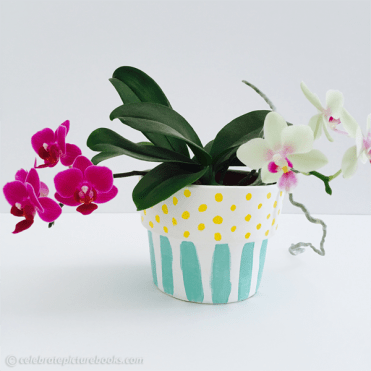
CPB - Flower Pot

Decorated Flower Pot


Spring is almost here, and that means flowers will soon be blooming. If you want to beautify your home plant your favorite flower seeds in a pot you’ve decorated yourself!

Supplies

  • Terra cotta pot in any size
  • Acrylic multi-surface paint in various colors
  • Flower seeds
  • Soil

Directions

  1. Paint your terra cotta pot—be creative!
  2. Let paint dry
  3. Fill pot with soil
  4. Plant flower seeds

March 4 – It’s Umbrella Month

celebrate-picture-books-picture-book-review-the-umbrella-queen-cover

About the Holiday

Today I am celebrating a month-long holiday. As spring returns with its rainy weather, walkers everywhere appreciate the protection umbrellas give. The need for umbrellas has been recognized since earliest days, when palmetto fronds were used by ancient civilizations. The Chinese were the first to create waterproof umbrellas by waxing or lacquering their paper parasols. Parasols were a woman’s accessory until Jonas Hanway, a Persian travel writer, used one in public in England in the 1700s. English men took up the practice, calling their version a “Hanway.” The first collapsible umbrella was designed in 1710, and in 1928 the folding pocket umbrella appeared. Since then, umbrellas have become fashionable and necessary accessories

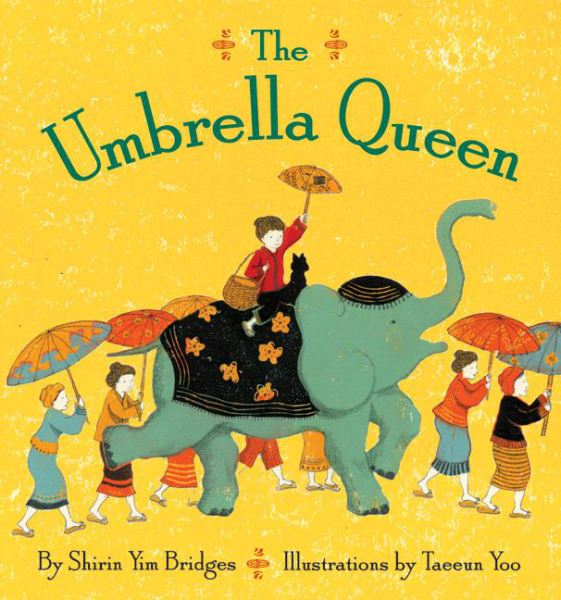
The Umbrella Queen

Written by Shirin Yim Bridges | Illustrated by Taeeun Yoo

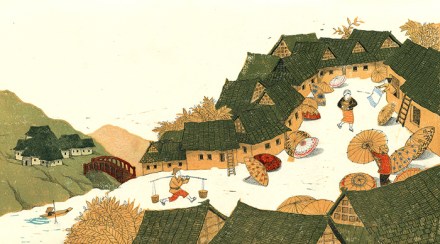
The residents of a small village in Thailand are well known for the beautiful paper umbrellas they make and sell in the local shops. The umbrellas are colorful, but always decorated with flowers and butterflies. Every New Year’s Day the villagers hold an Umbrella Parade, and the woman who has painted the most beautiful umbrella is chosen as the Umbrella Queen.

Noot is a little girl who longs to paint her own umbrellas and partake in the parade. One day her mother gives her an umbrella to paint and shows her how to copy her design. Noot is a natural artist, and her finished umbrella is nearly indistinguishable from her mother’s. She is given her own painting spot in the garden and five umbrellas to decorate.

celebrate-picture-books-picture-book-review-the-umbrella-queen-village

Image copyright Taeeun Yoo, courtesy of taeeunyoo.com

Noot paints the familiar butterflies and is about to start on the flowers when she is inspired to draw elephants instead. She covers all five umbrellas with elephants doing handstands, playing and squirting water, walking trunk-to-tail, and just being silly. When her mother sees these umbrellas, she is unhappy. Flowers and butterflies sell in the local shops, not elephants. Noot understands the importance of the money made from the umbrellas to her family. For the next year she paints the large umbrellas with the traditional design. At night, however, using bits and pieces, she fashions tiny umbrellas. These she paints with elephants, and displays them on her windowsill.

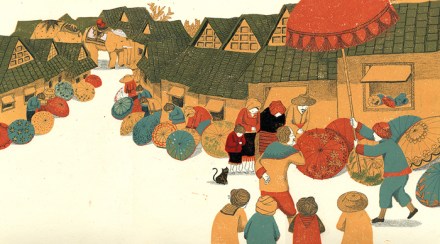
celebrate-picture-books-picture-book-review-the-umbrella-queen-emperor-visits

Image copyright Taeeun Yoo, courtesy of taeeunyoo.com

As New Year approaches there is much excitement in the village. It is rumored that the king will be visiting and will choose the Umbrella Queen himself. One day the villagers receive the message that the king will indeed arrive. The villagers spruce up their town and each woman displays her umbrellas in front of her home.

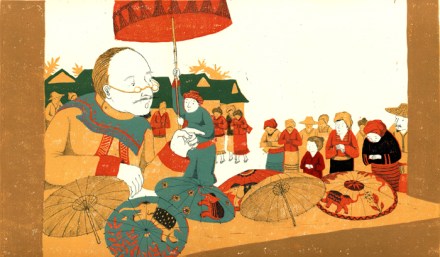
The king walks the length of the street, considering each umbrella until he comes to Noot’s house. He is very impressed with the umbrellas painted by Noot’s mother, but his gaze wanders to Noot’s windowsill, and he asks who painted the “strange” umbrellas.

celebrate-picture-books-picture-book-review-the-umbrella-queen-emperor-judges-umbrellas

Image copyright Taeeun Yoo, courtesy of taeeunyoo.com

A bit embarrassed by the attention, Noot shyly answers the king’s questions about the size of the small umbrellas and the unusual designs. In trying to explain herself, she forgets to look at the ground when talking to the king, and when her eyes meet his she realizes that, instead of judging her, he is charmed. “I like elephants,” she tells him, and he laughs.

The king takes Noot’s hand and names her the Umbrella Queen because “she paints from her heart.”

Shirin Yim Bridges has written a unique story that presents the often conflicting dilemma of responsibility to others while staying true to yourself effectively and engagingly. Noot’s journey from an observer in her family’s business to a valued artist is told straightforwardly and the familial love and support are clearly emphasized. The king’s recognition of Noot’s talent and heart will be highly satisfying for young readers or listeners.

Taeeun Yoo’s delicate illustrations in gold, red, black, and green set the story firmly in Thailand and perfectly demonstrate the close-knit village and relationships as well as the intricate beauty of the umbrellas and the pride the villagers take in them.

The Umbrella Queen is a wonderful story about family, discovering your talents, and self-expression that would find a welcome spot on any child’s bookshelf.

Ages 4 – 8

Greenwillow Books, Harper Collins, New York, 2008 | ISBN 978-0060750404

Learn more about Taeeun Yoo, her books, and her art on her website!

Umbrella Month Activity

CPB - Umbrella Matching Game

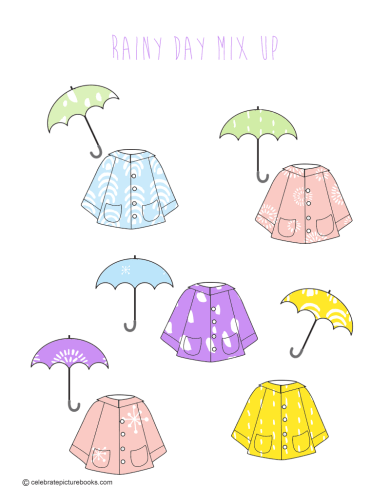
Rainy Day Mix Up Matching Game

A sudden storm scattered all the umbrellas and raincoats! Can you put the pairs together again? Draw a line to connect the umbrella and the raincoat that have the same pattern. Print the Rainy Day Mix Up Game here!


February 17 – Random Acts of Kindness Day

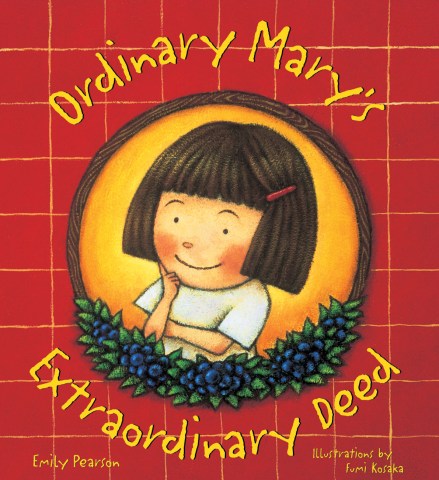
celebrate-picture-books-picture-book-review-ordinary-mary's-extraordinary-deed-covers

About the Holiday

Random Acts of Kindness Day originated in New Zealand, where the holiday is celebrated nation wide every September 1st. In the U.S. the popularity of this day continues to grow, as people discover the pleasure of doing nice things for friends and strangers alike. Connecting with others and paying forward kind deeds can be infectious, making the world a better place for all!

Ordinary Mary’s Extraordinary Deed

Written by Emily Pearson | Illustrated by Fumi Kosaka

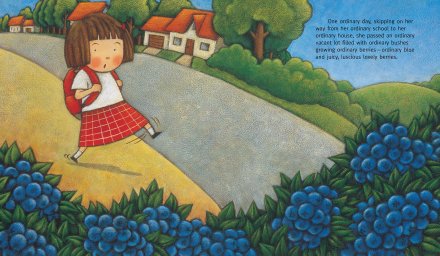
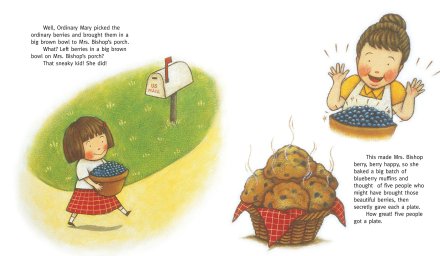
One day an ordinary girl named Mary begins her ordinary day. On her way home she spies ordinary blueberries in a field and picks them. She knows Mrs. Bishop would like them, so Mary leaves them in an ordinary bowl on her porch. Mrs. Bishop is so happy with the berries that she uses them to make blueberry muffins. But who gave her the blueberries? Mrs. Bishop can think of five people who might have, and she divides the muffins between them.

celebrate-picture-books-picture-book-review-Ordinary-Mary's-Extraordinary-Day-blueberries

Image copyright Fumi Kosaka, 2002, text copyright Emily Pearson, 2002. Courtesy of Gibbs Smith.

One of the five is Mrs. Bishop’s paperboy. He is so delighted with the muffins that he kindly hand delivers the newspapers to the next five people on his route. One of these is Mr. Stevens, who is so happy he spends the next 10 hours smiling on an airplane and helps five people lift heavy bags.

celebrate-picture-books-picture-book-review-Ordinary-Mary's-Extraordinary-Day-mrs-bishop

Image copyright Fumi Kosaka, 2002, text copyright Emily Pearson, 2002. Courtesy of Gibbs Smith.

One of these is Maria, who later does nice things for five other people. One of these cheers up the next five people she sees, who in turn brightens the day of five people. By now these random acts of kindness have spread through town and farther. People everywhere are watching out for others, being generous, smiling, becoming friends, and more! And in a surprising happenchance, ordinary Mary’s original act of kindness comes back to her!

celebrate-picture-books-picture-book-review-Ordinary-Mary's-Extraordinary-Day-joseph

Image copyright Fumi Kosaka, 2002, text copyright Emily Pearson, 2002. Courtesy of Gibbs Smith.

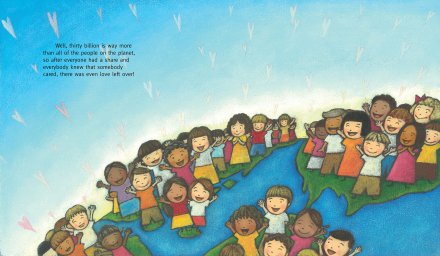
What Mary doesn’t know, though, is that her extraordinary deed actually changes the whole world for the better—because each person touched by kindness shares it with five others, who share it with five more until the one act of leaving blueberries on Mrs. Bishop’s porch multiplies to 6 billion other people!

celebrate-picture-books-picture-book-review-Ordinary-Mary's-Extraordinary-Day-world

Image copyright Fumi Kosaka, 2002, text copyright Emily Pearson, 2002. Courtesy of Gibbs Smith.

Emily Pearson’s story is a delightful tale of how one person can make a positive difference in the lives of others. The thread of simple deeds shared from one character to the next demonstrates to young and old alike how just a smile, a compliment, or an unexpected act can transform another person’s day and even the way they view themselves and the world. This is a perfect book for spurring random acts of kindness, and its straightforward treatment of the way random acts build on each other makes it a great reminder for all ages.

Fumi Kosaka has populated Mary’s world and beyond with people whose wide smiles and twinkling eyes make you want to share the excitement of giving right along with them. Her simple, colorful drawings focus on the people affected and highlight the simple acts that bring them so much pleasure.

Ages 4 and up

Gibbs Smith Publishers, Reprint edition, 2017 | ISBN 978-1423648871 Paperback

Random Acts of Kindness Day Activity

CPB - Random Acts of Kindness cards

Random Acts of Kindness Cards to Share

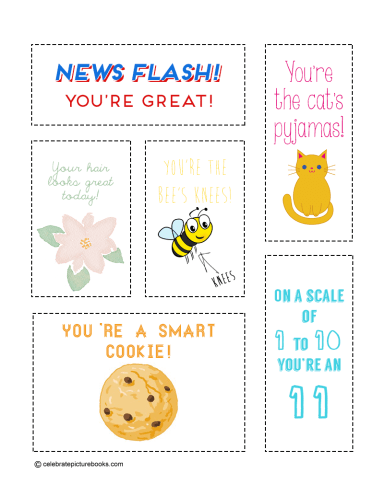
It’s fun to surprise someone with an unexpected gift or compliment! It makes the other person and you feel happier! Here are some printable Random Acts of Kindness Cards that you can give to anyone you meet today—or any day. If you’d like to write your own, here is a set of Blank Cards. You can give one to your teacher, librarian, favorite store clerk, your postal worker, your neighbors and friends, the person next to you on the bus or train. Or why not brighten someone’s day by leaving a note where they might find it—in a book at the library or bookstore, in a friend’s lunchbox, in your mailbox, on a store shelf, or anywhere you go!

Picture Book Review

February 15 – Susan B. Anthony Day

celebrate=picture-books-picture-book-review-heart-on-fire-cover

About the Holiday

On February 15, 1820 in Adams, Massachusetts a girl was born who would grow up to set the world afire with her belief in women’s rights. Her name was Susan Brownell Anthony. An early feminist, her father believed it was as important for his five daughters to receive an education as for his two sons. After graduating from school, Susan Anthony became a teacher—at the age of 14—making $2.50 a week compared to the $10.00-per-week salary of the male teachers. Anthony later became active in the abolition and temperance movements. She recognized that the inability to vote limited women’s influence in these causes and began promoting women’s rights. She worked tirelessly to change the voting laws until her death on March 13, 1906 without seeing her greatest wish fulfilled. It was not until 1920, with the ratification of the 19th Amendment, that women were allowed to vote.

Susan B. Anthony has been honored for her dedication with commemorative stamps, and her portrait appears on the dollar coin. We also remember her work on behalf of all women on her birthday with memorial services at her gravesite in Rochester, NY and in Washington DC. Susan B. Anthony Day is a legal holiday in Florida, West Virginia, Wisconsin, New York and California.

Heart on Fire: Susan B. Anthony Votes for President

Written by Ann Malaspina | Illustrated by Steve James


It’s November 1, 1872 and only four days until the presidential election. Everywhere people are being urged to register to vote. Knowing how important voting is, Susan B. Anthony races to the registration office with her sister and a friend in tow. The men in the office stare at her in confusion.

They know that women can’t vote—only men! What is Susan B. Anthony trying to do? But Anthony argues that the new 14thAmendment, which says “all persons born in the United States have the same rights as citizens,” gives women the right to vote. Some inspectors think she is right, some disagree. Finally they allow Anthony to sign the registration card.

celebrate=picture-books-picture-book-review-heart-on-fire-susan-goes-to-vote

Image copyright Steve James, courtesy of Albert Whitman & Company

On November 5, Voting Day, Anthony and 15 other women cast their ballots. Thirteen days later, however, a deputy federal marshal shows up at Anthony’s door with a warrant for her arrest. The charges? Voting illegally! The other women and the men who had allowed them to register and vote are also arrested.

In January word comes that unless Anthony pays a $1,000 fine, she will have to spend the time until her trial in prison. Anthony is adamant about not paying, but her lawyer sends the money. People in the country are split over whether she is right or not, but Anthony knows she’s right. Without being able to vote, women will have no voice in government.

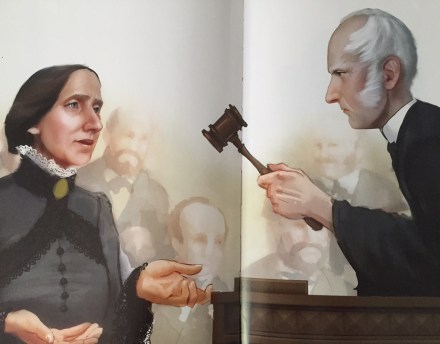
She gives speeches, trying to rally people to her cause, and when her trial begins on June 17, 1873 the courtroom is packed. After Anthony’s lawyer and the prosecutor speak, the judge decides that Anthony has broken the law. He proclaims her guilty. When the judge asks if she has anything to say, Anthony answers, “You have trampled under foot every vital principle of our government. My natural rights, civil rights, political rights….” The judge stops her and does not allow her to continue speaking. He fines her $100, plus court costs. Susan B. Anthony refuses to pay, and she never did.

celebrate=picture-books-picture-book-review-heart-on-fire-susan-pleads-case

Image copyright Steve James, courtesy of Albert Whitman & Company

Through action, dialogue, and the metaphorical theme of fire, Ann Malaspina has written an exciting biography of Susan B. Anthony. Readers will understand and, more importantly, feel the opinions and determination that fueled Anthony’s crusade for women’s rights. The final pages follow the history of the women’s suffrage movement until the ratification of the 19th Amendment in 1920 and provide photographs from the time. The text of the 14th and 19th Amendments is also included.

Opening the pages of Heart on Fire is like walking into a city of the 1800s. The lush colors and intricate details of Steve James’ illustrations immediately immerse readers in the time and place of Susan B. Anthony’s world, depicting the reality of her struggles. This is a perfect book to share with children, especially in this election year when they can see how far women have come—from being denied the vote to running for president.

Ages 5 – 9

Albert Whitman & Company, Chicago, 2012 | ISBN 978-0807531884

Learn more about Ann Malaspina and her books on her website!

View a gallery of illustration by Steve James on his website!

Susan B. Anthony Day Activity

CPB - Vote For Me round (2)

Vote For Me! Campaign Poster and Frame


If you were running for President, what would be important to you? Here’s a Vote For Me! Poster and Picture Frame to get your campaign started!

Supplies

Directions

  1. Print Vote For Me! Poster and Picture Frame templates
  2. Take a selfie or use your school picture
  3. Cut out the Picture Frame and the circle or rectangle in the middle
  4. Tape or glue your picture in the circle or rectangle
  5. If you are using a clear magnetic frame, slip the template inside and hang on your refrigerator or any metal object.
  6. If you are using a magnetic sheet, peel the paper off the adhesive side. Stick the Vote For Me! Picture Frame template with your picture attached to the adhesive. Cut around the edges. Hang!
  7. On the Vote For Me! Poster, list the things you would do if you were President. Talk to your family and see if you might be able to do some of them now! Hang your poster in your room or in the house where others can see it.

February 14 – Frederick Douglass Day

CPB - Words Set Me Free

About the Holiday

Although the exact date is not known, history records Frederick Douglass’ birthday as around Valentine’s Day in 1818, so February 14 was chosen to honor this most unique and influential man. Born into slavery, Frederick Bailey (he later changed his last name to Douglass) learned how to read and write when still a child. As a young man he used his intellect and courage to secure his freedom. He became a compelling speaker, writer, leader of the abolition movement, and statesman. His writings, especially his autobiography Narrative of the Life of Frederick Douglass, an American Slave, are among the most powerful accounts of the slave experience and are still widely read today.

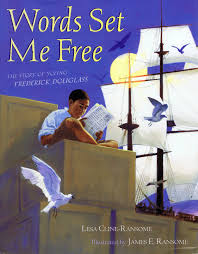
Words Set Me Free

Written by Lesa Cline-Ransome | Illustrated by James E. Ransome


Born into slavery and separated from his mother in infancy, Frederick Bailey is raised by his Grandmama while his mother works on a separate plantation. When she is able Harriet Bailey walks the 12 miles between plantations to spend a few short hours with her son, watching him sleep, before making the long journey back. While Frederick is still a very young child, his mother falls ill and dies. Douglass recalls never seeing his mother’s face in daylight.

At the age of six, Frederick is moved from his Grandmama’s cabin to the plantation house. At eight, he is sent to the master’s brother in Baltimore, Maryland. Here, the master’s wife, Sophia Auld, treats Frederick more like a paid servant then as a slave. When Frederick says he wants to learn how to read and write, she immediately begins teaching him the alphabet. Frederick is always mindful, however, that he may be punished for these lessons, and he has only memorized the letters and a few words before his master puts an end to his education. Angrily, the master explains to his wife, “If you teach him how to read…it would forever unfit him to be a slave.”

These words are perhaps Frederick’s greatest lesson. He never forgets them, and they fuel his resolve to pursue an education. He makes clever use of the few resources he has and slowly learns to read and write. From the newspapers he discovers that the North offers freedom, and Frederick decides to escape. It’s many long years, however, before he can fulfill his dreams. At last, he sees an opportunity to leave the South behind, and using his talent for writing makes his escape a reality.

Lesa Cline-Ransome has written a compelling biography of Frederick Douglass for children in Words Set Me Free. In straightforward language and through first-person point of view, Cline-Ransome reveals the brutal truth of Douglass’s life as a slave and his fight against injustice. As the title suggests, the book focuses on Frederick’s desire to become educated and the obstacles he overcame to succeed. This universally important message continues the work Douglass engaged in long ago.

James Ransome’s stirring paintings highlight pivotal scenes of Frederick’s story. Readers witness the tender moments with his mother, the cruel contrast of slavery and his blossoming intellect, and Frederick’s growing resolve to educate himself and escape.

Ages 5 and up                                                                                                            

Simon & Schuster, New York, 2012 | ISBN 978-1416959038

Frederick Douglass Day Activity

CPB - Words Set Me Free word search

Words Set Me Free word search


Words were so important to Frederick Douglass that he risked everything to learn how to read and write. In this printable Words Set Me Free Word Search Puzzle you will find words about the man we honor today. Solution

February 1 – National Freedom Day

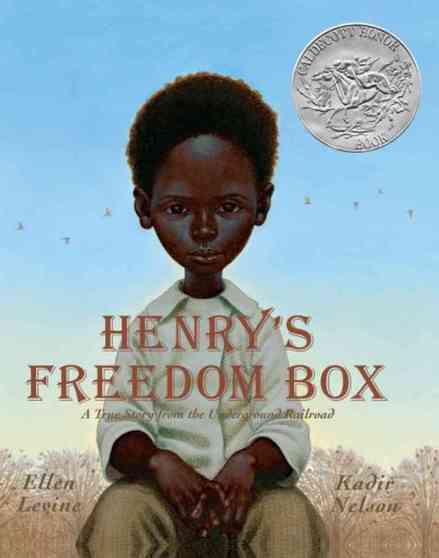
celebrate-picture-books-picture-book-review-henry's-freedom-box-cover

About the Holiday

National Freedom Day was created by a former slave named Major Richard Robert Wright Sr. and was established as a national holiday on June 30, 1948 by President Harry S Truman. The observance commemorates the day in 1865 when Abraham Lincoln signed a resolution that would become the thirteenth amendment to the U.S. Constitution. The amendment was ratified almost one year later by each state and outlawed slavery.

Today, people often celebrate National Freedom Day by laying a wreath at the Liberty Bell, which is located in Philadelphia, Pennsylvania.

Henry’s Freedom Box: A True Story from the Underground Railroad

 Written by Ellen Levine | Illustrated by Kadir Nelson


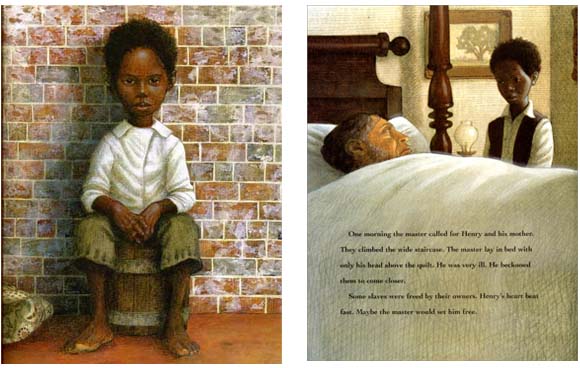
Henry Brown was born a slave. He didn’t know his birthday and he never knew security. “Like autumn leaves are torn from the trees,” his mother tells him, “slave children can be torn from their families.” When Henry’s master calls him to his sickbed, Henry hopes to be freed, but instead, his mother’s fear comes true. Henry is taken away and grows up far from his family, learning to be careful not to make mistakes that will bring severe punishment.

celebrate-picture-books-picture-book-review-henry's-freedom-box-henry

Image copyright Kadir Nelson, text copyright Ellen Levine. Courtesy of Scholastic Press

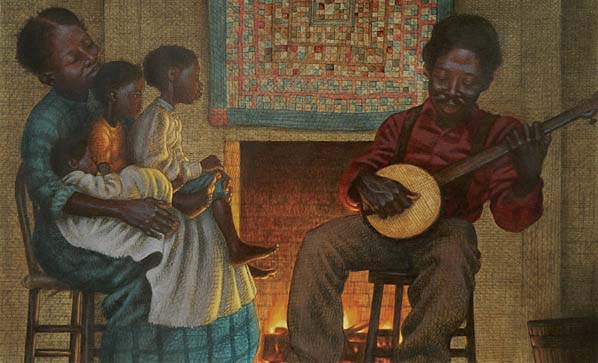
One day Henry, now a young man, falls in love with Nancy, a slave on another plantation. Henry and Nancy marry and are allowed to live together despite being owned by separate masters. Henry and Nancy have three children and are living happily.

But one day Nancy tells Henry that her master’s plantation is in financial trouble. She is afraid her master will sell their children to make money. The idea strikes fear into Henry’s heart. The next day Henry learns that indeed Nancy and his children have been sold. He knows he can show no emotion, but “his heart twisted in his chest.”

celebrate-picture-books-picture-book-review-henry's-freedom-box-henry-plays-music-for-his-family

Image copyright Kadir Nelson, courtesy of Scholastic Press

Henry runs to the town square and sees his children and Nancy being driven away. Henry is devastated. Time passes and Henry thinks about freedom. Lifting a crate used for shipping tobacco gives him an ingenious idea. He will mail himself to the North, where he can be free.

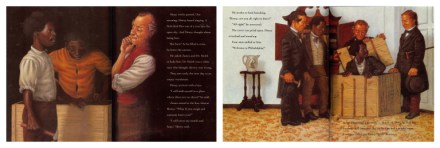
Henry’s friends agree to help him, and although they’re afraid he will be discovered, they seal him into a wooden box, address it to people in Philadelphia, and send him off. The crate is handled roughly throughout the journey north, and Henry must endure pain for many hours. Henry finally arrives safely in Philadelphia on March 30, 1849. Known from then on as Henry “Box” Brown, he became one of the most famous runaway slaves in America.

celebrate-picture-books-picture-book-review-henry's-freedom-box-henry-comes out of box

Image copyright Kadir Nelson, text copyright Ellen Levine. Courtesy of Scholastic Press

Based on an actual story of The Underground Railway, Henry’s Freedom Box is written and illustrated to stunning effect. Ellen Levine’s lyrical and metaphorical language combines with the excellent pacing of the pages to enhance the emotional impact of this powerful and original true story. Children will be inspired by this man who suffered devastating loss, but persevered and through cunning, bravery, and the help of friends, obtained freedom.

Kadir Nelson took inspiration for his illustrations from an antique lithograph of Henry Brown, created by Samuel Rowse in 1850. Through a combination of watercolor and oils crosshatched with pencil lines, Nelson’s richly hued paintings capture the poignancy of Henry’s struggles and ultimate freedom. His characters’ facial expressions are particularly moving.

Henry’s Freedom Box: A True Story from the Underground Railroad is a riveting story of slavery and one man’s fight for freedom that would make an excellent addition to children’s libraries.

To view a gallery of books and other illustration work by Kadir Nelson, visit his website!

Ages 4 – 8

Scholastic Press, 2007 | ISBN 978-043977733

National Freedom Day Activity

CPB - Freedom Stamp template (2)

Create Your Own Freedom Stamp


If you were going to create a postage stamp representing freedom, what would it look like? Think about what freedom means to you, then grab some colored pencils and design your own stamp!

Supplies

Directions

  1. Print the Freedom Stamp template
  2. Draw your own design about what freedom means to you
  3. Cut out the stamp and display it in your room or in a common area of your home

OR:

  1. Inside the stamp template write a letter to:
  • Someone in the Military: Thank them for their service to the United States to help keep our country free. You can learn how to send letters to members of the military here.
  • Your Teacher: Thank your teacher for all of her or his hard work. Only through education can we really be free.
  • Someone else who inspires you: Tell this person why they inspire you and thank them for their work.
  1. Give your Freedom Stamp letter to the person it is written to

Picture Book Review