April 23 – Talk Like Shakespeare Day

picture-book-review-will's-words

About the Holiday

To read or not to read—is that even a question?! Of course “to read!” And who produced literature containing some of the most excitement ever? William Shakespeare! Not only did Shakespeare write astounding plays and poems, he coined words and phrases that are still part of our everyday speech 400 years after his death in 1616. In recognition, the Chicago Shakespeare Theater initiated Talk Like Shakespeare Day in 2009. To honor Shakespeare’s legacy today, read or reread one of his famous plays, attend a performance, or watch a film adaptation of his work, and for goodness sake – use some of the terms he so cleverly invented.

*Italicized words were invented by William Shakespeare

Will’s Words: How William Shakespeare Changed the Way You Talk

Written by Jane Sutcliffe | Illustrated by John Shelley


“In 1606 London was a bustling, jostling, clanging, singing, stinking, head-chopping, pickpocketing wonder of a city.” With that phenomenal sentence Jane Sutcliffe begins this fascinating and ingenious look at the Globe Theatre and the experience of attending a play in William Shakespeare’s time.

In addition to all the qualities of London mentioned above, the town was also a “play-going city.” Every day of the week except Sunday, a play—or maybe even two or three—was performed, and as many as 18,000 (!) people attended plays every week! They just couldn’t get too much of a good thing!” And everyone loved the plays written by William Shakespeare!

How did a day at the theater begin? Well, at 1:00 a banner was raised from the roof of the playhouse, and men, women, and children streamed through the streets toward the Globe. It cost a penny to get in, but if you paid more you got a chair, and if you paid a little more than that you were seated in the Lord’s Rooms. The Lord’s Rooms were actually for fashionable people who wanted to be seen but didn’t really care what they were seeing.

All the actors were…well…actors. There were no actresses in those days. Men played women’s parts as well as men’s. And if you think phones and talking are problematic in today’s theaters, you would have been aghast at the audiences back then! They were not well behaved at all!

There were plays to please all tastes—comedies, tragedies, histories, and romances—all full of complicated plots and plenty of twists and turns. While the stories may have been intricate, the sets were not. But the bare-bones sets were made up for in gorgeous costumes and even some special effects accomplished with trap doors and ceiling holes. Sounds full of amazement, right? Good thing too because these plays could go on for hours, and most people stood through the whole thing, rain or shine!

William Shakespeare’s plays didn’t end when the last line was spoken. In fact theatre-goers repeated the lines they’d heard long after they left the Globe. They used Will’s words so much that his new phrases became part of the common language, and we still use them today!

Jane Sutcliffe inserts a tongue-in-cheek apology before the main text, explaining how she wanted to tell the world about the Globe Theatre in her own words, but that William Shakespeare’s words kept getting in the way. Yes, using another writer’s words is a no-no—but if they’re Shakespeare’s words? Words we use every day? Hmmm…Sutcliff’s lively history of the Globe Theatre and Old London’s theater culture is conversational, humorous, and highly informative.

The left-hand page tells the story of the Globe with phrases and words coined by William Shakespeare sprinkled throughout and set in bold type. On the right-hand page readers learn the meaning of those words and phrases (some have changed a bit since Will’s time) and which play they come from. A final note from Sutcliffe at the end of the book reveals a bit more about the playwright. A timeline of Shakespeare’s life and a bibliography are also included.

John Shelley’s incredible illustrations of London and the Globe Theatre will take your breath away. The streets teem with vendors, knights, shoppers, kids, Ladies, and Lords. If you look closely at the intricate paintings you’ll also spy the seamier side of Old London—a pickpocket, a criminal in the stocks, a tavern brawl, a cat snatching a free meal, a woman about to empty a chamber pot on her unsuspecting downstairs neighbor’s head, and…could that be a dead rat?— and that’s only on the first page!!

Subsequent pages show the waterfront with its sailing vessels, a peek into Shakespeare’s study and a look at the printing press, an aerial view of London, the Globe Theatre with its thatched awning, the actors donning wigs and costumes, and the audiences enjoying the plays and the fun of a day out. Each illustration is alive with color and movement, texture and design, expressive faces, and all the sights, sounds, and aspects of Old London. Kids will love lingering over each page picking out the funny events going on in the lanes, in the theatre seats, and on stage.

So hurry to get your own copy of Will’s Words and enjoy it to your heart’s content! You will definitely get your money’s worth!

Ages 6 – 10 and up (Anglophiles and Shakespeare lovers will enjoy this book)

Charlesbridge, 2016 | ISBN 978-1580896382

Talk Like Shakespeare Day Activity

picture-book-reviews-quill-pen-craft

Fashion a Quill Pen


William Shakespeare didn’t have a laptop to compose his great plays; he didn’t even have a desktop or a typewriter or a ballpoint pen! Shakespeare wrote all of those intrigues, characters, settings, sonnets and words with a feather!! (Plus a little ink!) Try your hand at making a quill pen—you may not be able to write with it, but it sure will look cool on your desk!

Supplies

  • Medium to large size feather with quill, available at craft stores
  • Clay, oven-bake or air-dry, in various colors if desired
  • Wire, beads, paint, and/or markers for decorating     
  • Scissors
  • Baking pan for oven-bake clay

Directions

  1. Roll clay 2 ½ inches to 4 inches long 
  2. Push the quill end of the feather into the clay
  3. Add bits of clay or roll sections of the clay between your fingers to give the clay shape
  4. To make the twisted shape pen, twist the length of clay around itself before adding the feather
  5. Shape the end or cut it with scissors to make the pointed writing nib
  6. If using air-dry clay: Add beads and/or wire and let clay dry around feather
  7. If using oven-bake clay: Add beads and other layers of clay before baking then carefully remove feather. Bake clay according to package directions
  8. Add wire and other decorations after clay has baked and cooled
  9. Reinsert feather into clay

February 22 – Museum Advocacy Day

CPB - How the Dinosaur Got to the Museum II

About the Holiday

Today is a day when we can show our museum curators and representatives in government how much we value museums. Without these grand (and sometimes small) buildings dedicated to preserving and teaching about our historical, scientific, and cultural achievements, our lives would be much poorer. Show your support for museum funding by visiting and/or donating to your favorite museum!

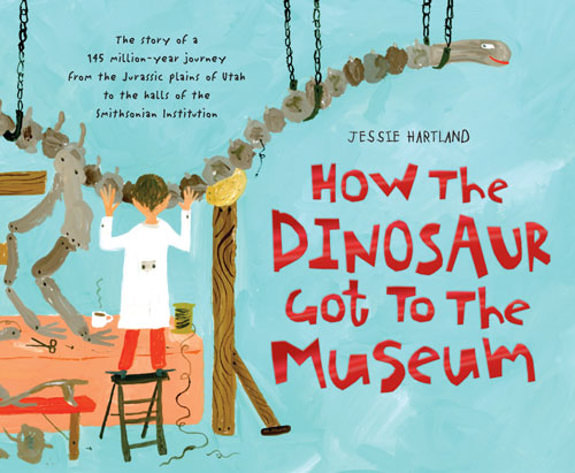
Another wonderful way to celebrate our custodians of history, science, art, and life is by reading the clever How the Dinosaur Got to the Museum / How the Sphinx Got to the Museum / How the Meteorite Got to the Museum series by author-illustrator Jessie Hartland.

How the Dinosaur Got to the Museum

By Jessie Hartland


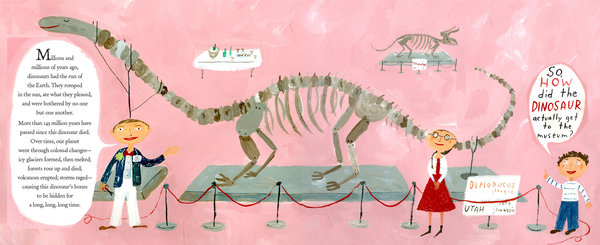
“So…” asks a little boy visiting the Smithsonian Museum of Natural History, “how did the dinosaur get to the museum?” Thus begins the tale—not of the dinosaur’s life, but of its journey from life to the museum exhibit hall.

celebrate-picture-books-picture-book-review-how-the-dinosaur-got-to-the-museum-talking-about-dinosaur

Image and text copyright Jesse Harland, courtesy of Blue Apple Books

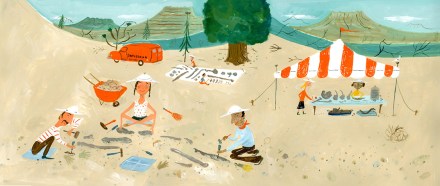
One hundred and forty-five million years ago, the dinosaur roamed the plains of what is now Utah, Overcome by weather and evolutionary events, the dino is buried and much, much later once again exposed. A Dinosaur Hunter finds one large bone and believes it to be from a Diplodocus Longus. He calls in the Paleontologist who confirms it. A team of Excavators arrives and unearths the rest of the skeleton.

The Movers pack the skeleton which was found by the Dinosaur Hunter, confirmed by the Paleontologist, and dug up by the Excavators and load it on a train that transports it to the Smithsonian. Here, the bones are cleaned and preserved by the Preparators, who discover that the head and neck are missing!

celebrate-picture-books-picture-book-review-how-the-dinosaur-got-to-the-museum-digging

Image copyright Jesse Harland, courtesy of Blue Apple Books

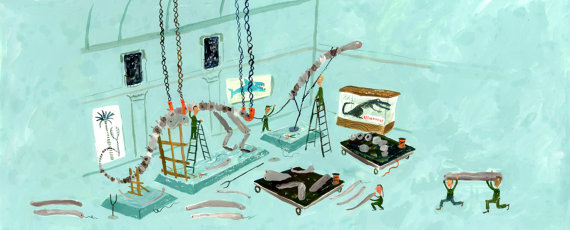
The Curator locates a plaster cast at another museum and work continues. The Diplodocus is assembled, but in the darkness the Night Watchman trips over its tail and breaks it! In come the Welders to fix it, and finally the Riggers can display the skeleton.

The Exhibits Team creates a background, lighting, and signs for Diplodocus, and the Cleaners give it a final dusting before the Director invites the public to view the magnificent exhibit with a speech and a toast.

celebrate-picture-books-picture-book-review-how-the-dinosaur-got-to-the-museum-exhibit

Image copyright Jesse Harland, courtesy of Blue Apple Books

Jessie Hartland’s bold, colorful illustrations offer a child’s-view perspective on the behind-the-scenes working of a museum, while her highly entertaining and educational text will keep kids giggling and reciting along as each page builds on the next to reveal the story of the men, women, and processes engaged in creating a museum exhibit.

Ages 5 – 9

Blue Apple Books, New Jersey, 2011 | ISBN 978-1609050900

Museum Advocacy Day Activity

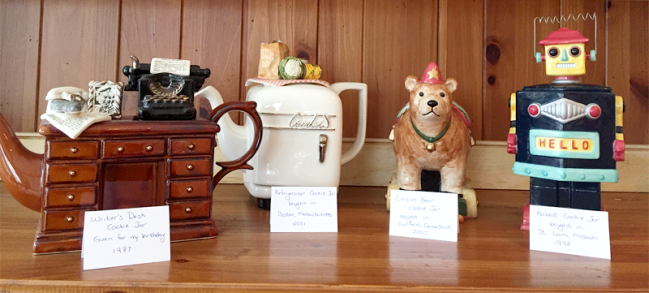
CPB - Cookie Jar Museum (2)

Create a Museum Exhibit

Every item has a story. Is there a funny anecdote behind that knick-knack on the shelf? Does your favorite serving dish hold sentimental value? A fun and educational way for kids to learn family stories and interact with their own history is to create a museum exhibit of objects in your home.

For teachers this can be a fun classroom activity that incorporates writing, art, and speaking, and categorizing skills. Students can use objects in the classroom or bring items from home to set up museum exhibits. This activity can be done as a whole-class project or by smaller groups, who then present their exhibit to the rest of the class.

Supplies

  • A number of household or classroom items
  • Paper or index cards
  • Markers
  • A table, shelf, or other area for display

Directions

  1. To get started have children gather a number of items from around the house to be the subjects of their exhibit. An exhibit can have a theme, such as Grandma’s China or Travel Souvenirs, or it can contain random items of your child’s choice, such as toys, plants, tools, even the furniture they see and use every day.
  2. Using the paper or cards and markers, children can create labels for their exhibit items. Older children will be able to write the labels themselves; younger children may need adult help.
  3. Spend a little time relating the story behind each object: where it came from, how long you’ve had it, when and how it was used in the past, and include any funny or touching memories attached to the item. Or let your child’s imagination run free, and let them create histories for the objects.
  4. When the labels are finished, arrange the items on a table, shelf, or in a room, and let your child lead family members or classmates on a tour. You can even share the exhibit with family and friends on social media.
  5. If extended family members live in your area, this is a wonderful way for your child to interact with them and learn about their heritage.

February 14 – Frederick Douglass Day

CPB - Words Set Me Free

About the Holiday

Although the exact date is not known, history records Frederick Douglass’ birthday as around Valentine’s Day in 1818, so February 14 was chosen to honor this most unique and influential man. Born into slavery, Frederick Bailey (he later changed his last name to Douglass) learned how to read and write when still a child. As a young man he used his intellect and courage to secure his freedom. He became a compelling speaker, writer, leader of the abolition movement, and statesman. His writings, especially his autobiography Narrative of the Life of Frederick Douglass, an American Slave, are among the most powerful accounts of the slave experience and are still widely read today.

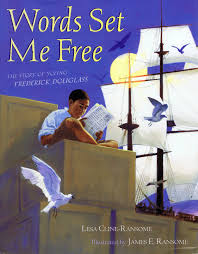
Words Set Me Free

Written by Lesa Cline-Ransome | Illustrated by James E. Ransome


Born into slavery and separated from his mother in infancy, Frederick Bailey is raised by his Grandmama while his mother works on a separate plantation. When she is able Harriet Bailey walks the 12 miles between plantations to spend a few short hours with her son, watching him sleep, before making the long journey back. While Frederick is still a very young child, his mother falls ill and dies. Douglass recalls never seeing his mother’s face in daylight.

At the age of six, Frederick is moved from his Grandmama’s cabin to the plantation house. At eight, he is sent to the master’s brother in Baltimore, Maryland. Here, the master’s wife, Sophia Auld, treats Frederick more like a paid servant then as a slave. When Frederick says he wants to learn how to read and write, she immediately begins teaching him the alphabet. Frederick is always mindful, however, that he may be punished for these lessons, and he has only memorized the letters and a few words before his master puts an end to his education. Angrily, the master explains to his wife, “If you teach him how to read…it would forever unfit him to be a slave.”

These words are perhaps Frederick’s greatest lesson. He never forgets them, and they fuel his resolve to pursue an education. He makes clever use of the few resources he has and slowly learns to read and write. From the newspapers he discovers that the North offers freedom, and Frederick decides to escape. It’s many long years, however, before he can fulfill his dreams. At last, he sees an opportunity to leave the South behind, and using his talent for writing makes his escape a reality.

Lesa Cline-Ransome has written a compelling biography of Frederick Douglass for children in Words Set Me Free. In straightforward language and through first-person point of view, Cline-Ransome reveals the brutal truth of Douglass’s life as a slave and his fight against injustice. As the title suggests, the book focuses on Frederick’s desire to become educated and the obstacles he overcame to succeed. This universally important message continues the work Douglass engaged in long ago.

James Ransome’s stirring paintings highlight pivotal scenes of Frederick’s story. Readers witness the tender moments with his mother, the cruel contrast of slavery and his blossoming intellect, and Frederick’s growing resolve to educate himself and escape.

Ages 5 and up                                                                                                            

Simon & Schuster, New York, 2012 | ISBN 978-1416959038

Frederick Douglass Day Activity

CPB - Words Set Me Free word search

Words Set Me Free word search


Words were so important to Frederick Douglass that he risked everything to learn how to read and write. In this printable Words Set Me Free Word Search Puzzle you will find words about the man we honor today. Solution

February 12 – Abraham Lincoln’s Birthday

CPB - I am Abraham Lincoln

About the Holiday

Today we celebrate Abraham Lincoln’s birthday! Abe Lincoln was born in a one-room log cabin in Kentucky and later worked as a riverboat worker, a shopkeeper, and a postmaster in Illinois before becoming the 16th President of the United States. With compassion, bravery, and strength, Lincoln shepherded the country through the Civil War and signed the 13th Amendment to the Constitution outlawing slavery in the United States. Lincoln’s birthday is commemorated with wreath-laying ceremonies at his birthplace and at the Lincoln Memorial in Washington D.C.

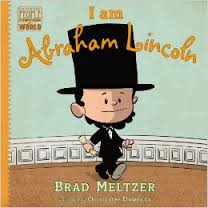
I am Abraham Lincoln

Written by Brad Meltzer / Illustrated by Christopher Eliopoulos


In his I am… series of biographies, Brad Meltzer writes about famous people as they grow from childhood into the influential adults they became. In I am Abraham Lincoln, Meltzer illuminates various experiences of Lincoln’s life that formed his beliefs of equality and inclusiveness. At a time when most children liked to hunt, fish, and tend the farm, young Abe spent his time reading, and he was one of the few people in town who could write. Even at the age of 10, his compassion showed when he stopped a group of his peers from treating a turtle roughly. Later, as a young man and newcomer to Illinois, he faced a group of bullies and dispersed them without throwing a punch.

It was when he witnessed the indignities of a slave boat, however, that his most deeply held beliefs took hold. As President, Lincoln acted on those beliefs, helping the country through the Civil War, gave speeches, and signing laws that ensured all people would be treated equally.

By relating stories from Abraham Lincoln’s childhood, Meltzer not only teaches children about his life, but demonstrates that his young readers can also make a difference by speaking up and helping others whenever they see injustice.

Christopher Eliopoulos’s cartoon-like illustrations are particularly effective in showing the earnestness of Abraham Lincoln’s personality from early childhood on. Speech bubbles display dialogue, modeling the simple words that can so often create great change. Part of the book’s charm is that even as a child Lincoln sports his iconic beard and top hat, making him instantly recognizable as the hero children are familiar with and emphasizing the “man in the child” theme.

Ages 4 – 8

Dial Books for Young Readers, Penguin Group, New York, 2014 | ISBN 978-0803740839

Abraham Lincoln’s Birthday Activities

CPB - Abe Lincoln's Top Hat chalkboard (2)

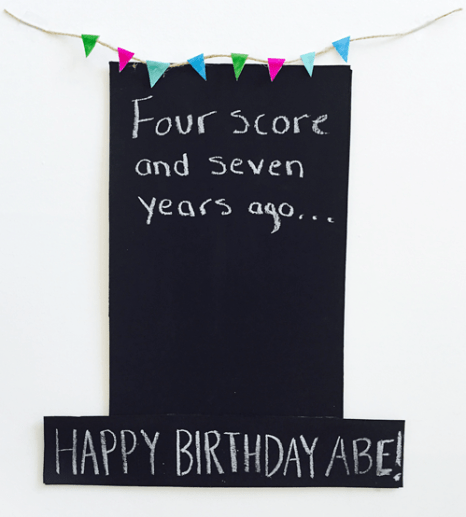
Abe Lincoln’s Top Hat Chalkboard

Abraham Lincoln was known for the black top hat he wore – and for his inspiring words In this activity you can learn how to make a top hat chalkboard to use for your own drawings or inspiring words!

Supplies

  • Cereal Box (I used a large sized cereal box), cardboard or poster board
  • Chalkboard Paint (black)
  • Paint brush
  • Hot Glue Gun or extra-strength glue
  • Removable mounting squares
  • Chalk

Directions

  1. If you are using cardboard or poster board: cut a rectangle at least 8 inches wide by 12 inches long for the hat and 12 inches long by 2 inches wide for the brim (but your top hat can be any size you’d like!)
  2. If you are using a Cereal Box: open the seams of the Cereal Box
  3. Cut the panels of the cereal box apart
  4. Take one face panel and one side panel
  5. With the chalkboard paint, paint both panels
  6. Let the panels dry
  7. Attach the side panel to the bottom of the face panel to create the shape of Lincoln’s top hat
  8. Hang Abe Lincoln’s Top Hat Chalkboard 

Donate to a Food Bank

Today can be a day to remember the hardships that many people still endure. Many still live with hunger every day. Today, gather a bag of non-perishable foods and donate them to your local food bank. This activity can also be done by a group—a classroom, scout troop, youth group, or group of friends. Even a little bit helps a lot!