July 3 – Compliment Your Mirror Day

celebrate-picture-books-picture-book-review-why'd-they-wear-that

About the Holiday

Take a peek in the mirror and who do you see? That’s right—a fantastic person with inner and outer beauty! Today is dedicated to recognizing and appreciating that person in the mirror! 

Why’d They Wear That? Fashion as the Mirror of History

By Sarah Albee


Whether you’re a fashionista or an “any ol’ thing will do” kind of person, there’s no denying that clothes make a statement. Sarah Albee’s fascinating look at human wraps spans history from 10,000 BC to the modern era. Along the way she exposes both historical facts as well as the often repugnant, laughable, and can’t-look-away fashion fads and disasters that have brought us to “wear” we are today.

In Chapter 1: That’s a Wrap, Albee reveals facts about the first needles and thread, silk production, the Mayan tradition of forced elongation of skulls (this was considered attractive, denoted social status, and was intimidating), the first pants, warrior wear, and much more.

Chapter 2: Keeping the Faith exposes the influence religion had on clothing in the Middle Ages. White or russet colored robes were worn by men traveling on pilgrimages while penitents could wear a hair shirt made of itchy, bristly horsehair as punishment. Medieval armor, Samurai dress, why modern men’s loafers are decorated with little holes, and more are also discussed here as is the job of Wool Fuller – in which the Fuller soaked wool in urine to degrease it and improve its texture.

celebrate-picture-books-picture-book-review-why'd-they-wear-that

Image courtesy of National Geographic, 2015

Chapter 3: Going Global covers the Age of Exploration, which changed fashion as explorers from Europe came in contact with Native peoples in the New World. Red dye, rubber shoes, and the leather Moccasins were all adopted by Europeans. And if you think the search for remedies for wrinkles and other vestiges of older age is a modern pursuit, you’ll learn about Ponce de Leon and his quest for the fountain of youth.

Chapter 4: Ruff & Ready takes a look at the Renaissance. You may have seen fur stoles with the head of the animal still attached and wondered, Why? This fashion statement goes back to “Flea Furs” which were dead, stuffed animals that people draped over their shoulders in the belief that the fleas that were munching on their skin would transfer to the animal instead. Unfortunately, people discovered that fleas prefer warm bodies. Another curious fad was the ruff collar. While people may have thought they looked swell, these collars hindered physical movement and even led to the invention of the long-handled spoon because people could not get food to their mouths any other way. One “benefit” perhaps: when the first American settlers ran out of all other food options, they ate their collars, which were stiffened with wheat paste. And there’s so much more!

In Chapter 5: Lighten Up! readers will discover facts about the dour dress of the Puritans and the ostentatious dress of the French court. The tradition of men’s wigs is explained, and today’s face-painting has nothing on the unusual solution for facial blemishes—black velvet, leather, or silk patches in various shapes.

celebrate-picture-books-picture-book-review-why'd-they-wear-that

Image courtesy of National Geographic, 2015

Revolutionary Times take center stage in Chapter 6: Hats (and Heads) Off. During this time clothes began to fit the task. There were clothing items to protect (walking canes became popular as a way to ward off marauding wild dogs), uniforms to highlight the good looks of running footmen, elaborate costumes for Venetian parties, and homespun clothes that became a sign of protest from the American colonists. And if you think “bumpits” and hair extensions are new, women trying to keep up with Marie-Antoinette wore their hair (real and artificial) “cemented upward over wire armatures into two-foot (0.6-m)-high coiffures that made the wearer stand 7 ½ feet tall!”

Chapters 7 through 9 bring readers into the modern age, taking them from a time when children were dressed as young adults and boys wore elaborate gowns until the age of 7 to the textile innovations of the Industrial Revolution and the popularity of bustles that put fanny packs to shame to the fads of the 1960s and today.

celebrate-picture-books-picture-book-review-why'd-they-wear-that

Image courtesy of National Geographic, 2015

Albee’s Why’d They Wear That? is much more than a book about fashion. It’s a humorous, fabulously entertaining way to learn about so many aspects of history, from social revolution to inventions to cultural differences. Enlightening side bars, especially the fascinating “Tough Job” entries, and full-color illustrations, paintings, and photographs depicting every concept make Why’d They Wear That? an essential book for school libraries as well as for home bookshelves. Readers of all ages will want to dip into it again and again…and will “Oh!” “Ah!” and “Ewww!” over every page.

Ages 7 and up (children on the younger end of the range will enjoy the facts and pictures during a read-along session)

National Geographic Children’s Books, 2015 | ISBN 978-1426319198

Learn more about Sarah Albee and her books on her website!

Watch the trailer for Why’d They Wear That? Fashion never looked so…good? unsettling? hilarious? You decide!

Compliment Your Mirror Day Activity

celebrate-picture-books-picture-book-review-mirror-word-search

Mirror, Mirror, What Shall I Wear?


In this magic mirror word search are 20 fashion-related terms from history. Find them all! Here’s the printable Mirror, Mirror, What Shall I Wear puzzle and the Solution.

celebrate-picture-books-picture-book-review-why'd-they-wear-that

Why’d They Wear That? Fashion as the Mirror of History can be found at these booksellers

Amazon | Barnes & Noble | Books-a-Million | IndieBound

February 5 – National Weddings Month

celebrate-picture-books-picture-book-review-green-pants-cover

About the Holiday

With Valentine’s Day on the 14th, February is known as a month of love. Add to that its designation as National Weddings Month, and you might say February is the most romantic month of the year. While more people get married during the summer months, February has a few distinctions that set it apart. As you might imagine, Valentine’s Day is one of the most popular days to get married, but did you know that many people with a hearty sense of humor choose February 29th —in those leap years when it occurs! Couples planning a wedding often start during February. It takes time to make all the arrangements, find a venue, and pick out just the right clothes to wear—as you’ll see in today’s book!

Green Pants

By Kenneth Kraegal


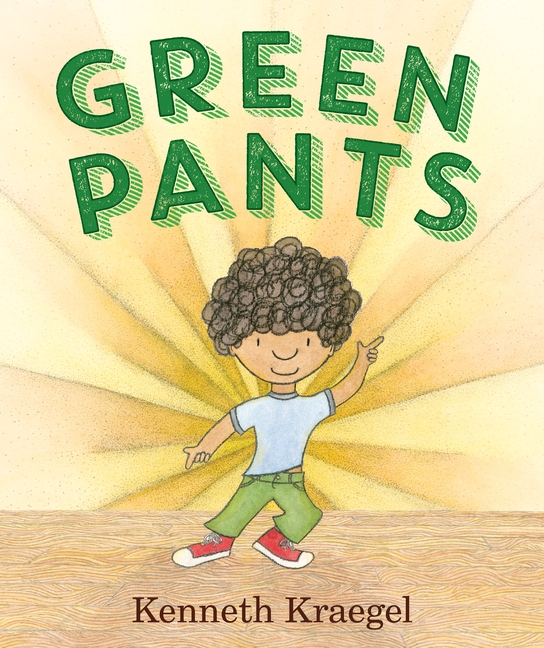
Jameson loved green pants—in fact, they were the only kinds of pants he wore. “When he wore green pants, he could do anything.” He flew to the basketball hoop for spectacular dunks; made Olympic gold-medal-deserving dives; and he could dance.” Sometimes Jameson’s mom and dad gave him different colored pants to wear, but somehow they ended up hanging from trees or flying from flagpoles, or even clothing neighborhood dogs.

celebrate-picture-books-picture-book-review-green-pants-closet

Copyright Kenneth Kraegel, 2017, courtesy of kennethkraegel.com

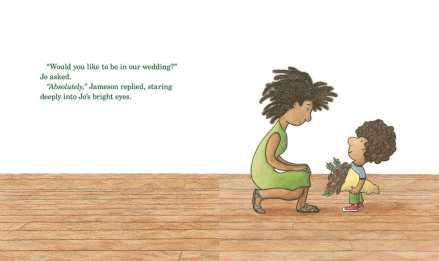
One day Jameson’s cousin Armando and his fiancée Jo dropped by with a very important question. Jameson loved Jo. She “had the nicest smile Jameson had ever seen, and her eyes seemed to sparkle like the autumn sun shining upon a running river.” And when she asked if Jameson would like to be in their wedding, Jameson said, “‘Absolutely.’” Later, Jameson’s mom sat him down and explained the requirements: lots of standing, smiling nicely for photographs, using his best manners. “‘No problem,’” Jameson replied. “‘And one more thing,’ his mother said slowly. ‘You will have to wear a tuxedo.’” That sounded okay to Jameson too, until he learned the pants would be black. Jameson gasped.

celebrate-picture-books-picture-book-review-green-pants-asked-to-be-in-wedding

Copyright Kenneth Kraegel, 2017, courtesy of candlewick.com

At the tuxedo fitting, Jameson tried on pair after pair of black pants, but none were as handsome as his own green pants. His mother put down her foot, though. If he wanted to be in the wedding, he had to wear black pants. On the day of the wedding, Jameson still didn’t know what to do. Even moments before the ceremony was to begin, Jameson had not made up his mind. His mother kissed him on the forehead and left him to figure it out.

“Jameson sank in despair. ‘But how? HOW? How do I make such a decision? AAAAAAAAAAARGH!!!’” At that moment Jo poked her head out the door. “Her hair played happily in the sunny breeze, her eyes shone like the summer stars, and her smile warmed his very soul. ‘Hey,, Jameson! I’m so glad you’re here! I’ll see you inside!’” she said and then she was gone. Suddenly, Jameson’s decision was made.

celebrate-picture-books-picture-book-review-green-pants-wedding-picture

Copyright Kenneth Kraegel, 2017, courtesy of kennethkraegel.com

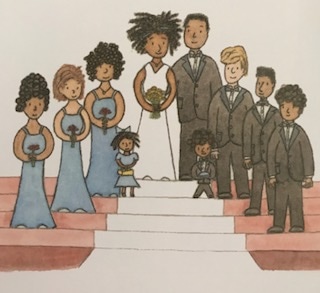
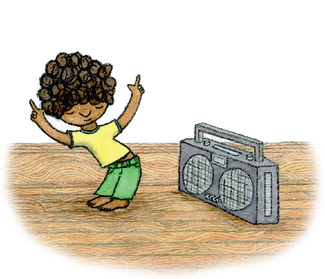
Following the bridesmaids down the aisle, Jameson looked “quite dashing in his tuxedo!” He remembered all of his mother’s words, too. He stood still, smiled for the camera, and used his best manners. But then the music began. With a leap, a flip, and a whoosh, Jameson’s black pants came off to reveal his green pants underneath, “and Jameson danced like no one has ever danced before.”

Kenneth Kraegel’s at-once funny and sweet story of obsessive love will resonate with young readers and adults as well. Kids often go through stages where one outfit, food, drink, or activity becomes synonymous with their identity and only that thing will fit the bill. Kraegel’s straightforward and tender storytelling wonderfully portrays opportunities for Jameson’s independent thought while showing how love overcame and became personal preference when it mattered. The dialogue among the characters rings true and is inspirational modeling. Jameson’s ultimate solution to his dilemma is all-kid and will make his reading peers nod in appreciation.

celebrate-picture-books-picture-book-review-green-pants-dancing

Copyright Kenneth Kraegel, 2017, courtesy of kennethkraegel.com

Jameson, with a shock of curly hair and his ever-present green pants, is an adorable protagonist. Ready with a smile for Jo or when accomplishing daring feats, he also registers amusing alarm at the idea of wearing black pants. Children will laugh to see where Jamison’s non-green pants end up and will empathize with his agonizing indecision—and they may just want to try some of his pretty sweet dance moves too!

Ages 3 – 8 (great as a read-aloud for younger kids and also as an independent book for early and transitional readers)

Candlewick, 2017 | ISBN 978-0763688400

You’ll find books, art, coloring pages, and more by Kenneth Kraegel on his website!

Dance with Green Pants in this toe-tapping book trailer!

National Weddings Month Activity

celebrate-picture-books-picture-book-review-love-maze

Love,,,and Cake!


Weddings are all about love…and then comes the cake! So get your pencil and do this printable LOVE maze, then grab your crayons or markers and decorate the layers of this wedding cake just the way you’d like it.

LOVE Maze | Wedding Cake Coloring Page


Picture Book Review

November 25 – Shopping Reminder Day

celebrate-picture-books-picture-book-review-fancy-party-gowns-cover

About the Holiday

Of course there are reminders everywhere we look that it’s time to do that kind of shopping. But today’s holiday encourages people to count the days until their gift-giving day or days and plan accordingly. Today is also Small Business Saturday, so if you’re out there doing some shopping, consider spending some of that holiday budget at your local shops. Festive events and parties are also often on the calendar during this month and are just perfect for the beautiful creations found in today’s book!

Fancy Party Gowns: The Story of Fashion Designer Ann Cole Lowe

Written by Deborah Blumenthal | Illustrated by Laura Freeman


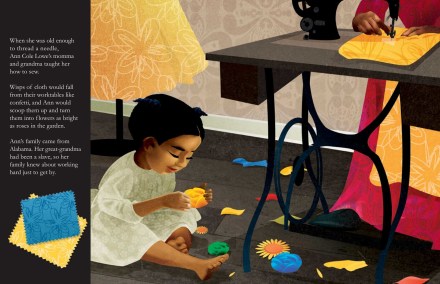
From the time that Ann Cole Lowe was old enough to thread a needle, she loved to sew. While her momma and grandma worked at their sewing machines, making dresses for the socialites of Alabama, Ann sat nearby turning “the wisps of cloth” that fell to the floor into “flowers as bright as roses in the garden.” Even at a young age Ann understood that “doing what you love could set your spirit soaring.”

celebrate-picture-books-picture-book-review-fancy-party-gowns-ann-as-child

Image copyright Laura Freeman, text copyright Deborah Blumenthal, courtesy of simonandschuster.com

When Ann was only sixteen years old, her momma died. Not only did her mother’s death leave Ann bereft, it left her in charge of the business, and many women were waiting for gowns, most importantly the Alabama governor’s wife. “Ann thought about what she could do, not what she couldn’t change.” She sat down and finished the dresses. “Then she stood up and ran the business.”

celebrate-picture-books-picture-book-review-fancy-party-gowns-design-school

Image copyright Laura Freeman, text copyright Deborah Blumenthal, courtesy of simonandschuster.com

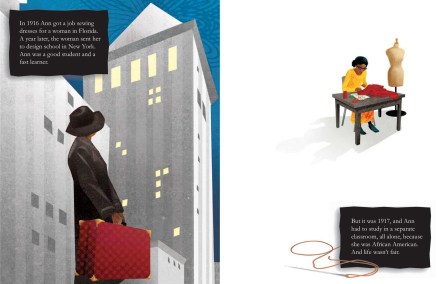
In 1916 a woman in Florida hired her to sew dresses. She also sent Ann to design school in New York. Because she was African American, however, Ann was required to study in a separate classroom by herself. Ann was not deterred. She continued to make unique gowns and dresses, and her client list grew. Finally, Ann had saved enough money to open a salon of her own in Manhattan. Sometimes she didn’t have enough money to pay all the bills, but she persisted. Her life was about “what she could do, not what she couldn’t change.”

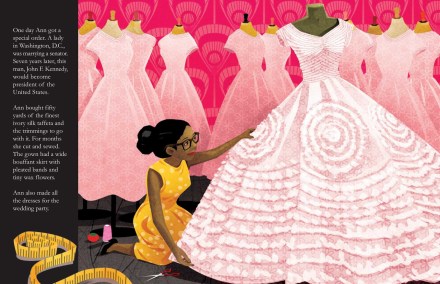
One day Ann received an order for a wedding dress from a woman who was marrying a United States senator. The woman’s name was Jacqueline Bouvier and the man was John F. Kennedy, a future president of the U.S. Ann bought 50 yards of ivory silk taffeta and designed a beautiful dress with a bouffant skirt and pleated bands decorated with tiny wax flowers. She also made the dresses for Jacqueline’s attendants.

celebrate-picture-books-picture-book-review-fancy-party-gowns-wedding-dress

Image copyright Laura Freeman, text copyright Deborah Blumenthal, courtesy of simonandschuster.com

Then ten days before the wedding, Ann walked into her workroom and discovered that a water pipe had burst, flooding the dresses, material, everything. Ten of the sixteen gowns Ann had sewn were destroyed. “Ann though about what she could do, not what she couldn’t change.” She ordered new fabric, hired more seamstresses, and went to work. On this job she lost money instead of making it, but none of that mattered. In eight days all of the dresses were ready.

When Ann delivered the gowns to the mansion in Newport, Rhode Island, the butler who answered the door told her workers needed to use the back entrance. Ann replied that “if she had to enter through the back door, the bride and bridesmaids wouldn’t be wearing her dresses for the wedding.” The front door swung open. On the day of the wedding—September 12, 1953—the whole world “Oohed” and “Aahed” over Jacqueline Bouvier Kennedy’s gorgeous gown and her bridesmaids’ dresses, but not many people thought about or knew the name of the woman who had created them. “Why? Because Ann Cole Lowe was African American. And life wasn’t fair.”

celebrate-picture-books-picture-book-review-fancy-party-gowns-sewing

Image copyright Laura Freeman, text copyright Deborah Blumenthal, courtesy of simonandschuster.com

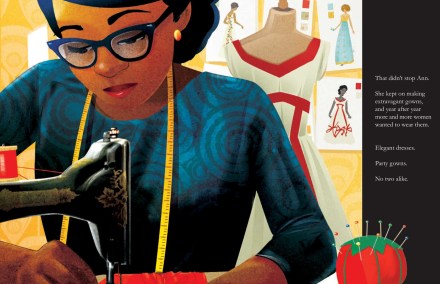
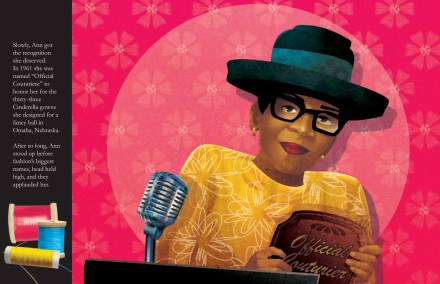
Ann continued to design and sew party dresses and evening gowns for the women of high society. She “didn’t make fine clothes to get rich or famous,” however, but, as she once said, “‘To prove that a Negro can become a major dress designer.’” In 1961 Ann finally gained public recognition for her work when she was named “Official Couturiere” in honor of the 33 ball gowns she created for an elegant ball in Omaha, Nebraska. She proudly accepted her award as the fashion world applauded.

An Author’s Note explaining more about Ann Cole Lowe’s life and work follows the text.

celebrate-picture-books-picture-book-review-fancy-party-gowns-recognized

Image copyright Laura Freeman, text copyright Deborah Blumenthal, courtesy of simonandschuster.com

With straightforward storytelling adorned with lyrical passages, Deborah Blumenthal reveals Ann Cole Lowe’s lifelong love of fashion design, her struggles, and her ultimate acclaim. Lowe’s natural talent, single focus, self-confidence, courage, and persistence come through as she overcomes obstacles and prejudice to become the first African American couture designer. Children interested in fashion and history will find much to spark their curiosity and desire to know more about the woman and her times. Blumenthal’s repetition of Lowe’s philosophy to think about what she could do instead of what she couldn’t change will inspire readers to push past difficulties and find solutions.

Laura Freeman’s full-bleed illustrations are as bold and vivacious as Ann Cole Lowe herself. Beginning with the endpapers, which are scattered with drawings of Lowe’s one-of-a-kind gowns, Freeman takes readers on a tour of the workrooms and salons stocked with the fabrics that gave form to Lowe’s creativity. While the backgrounds are typically brilliantly colored and patterned, twice Freeman places Lowe on a completely white page—after her mother has recently died and she is left alone to finish dresses and when she is segregated from the other students in design school. These pages make a moving and effective statement. Children fascinated by fashion will love seeing the beautifully depicted gowns, and may be stirred to create styles of their own.

Ages 4 – 8

little bee books, 2017 | ISBN 978-1499802399

To learn more about Deborah Blumenthal and her books for children, young adults, and adults, visit her website!

Discover a gallery of illustration work by Laura Freeman on her website!

Shopping Reminder Day Activity

celebrate-picture-books-picture-book-review-tablecloth-dress


Create Your Own Party Dress 


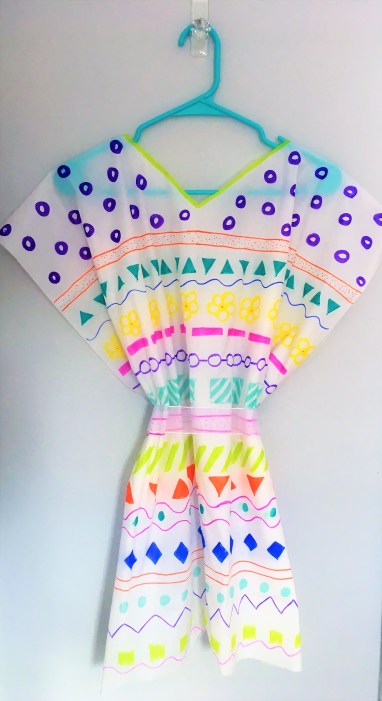
With this easy craft you can make a  fun sheath dress for playing dress-up. It’s also a great party activity! All you need is a plastic or paper party table cloth, Sharpies, and your imagination!

Supplies

  • 1 plastic party tablecloth (1 cloth will most likely make 4 dresses)
  • Sharpies or other permanent markers
  • Ribbon, scarf, crepe paper garland, or other material for a belt
  • Scissor
  • Newspaper, old sheeting or other material to protect the floor

Directions

  1. With the table cloth folded along one edge, cut a rectangle the appropriate size for the child
  2. In the middle of the folded edge cut a V-shaped or rounded opening for the child’s head. Begin with a small opening and enlarge it as needed
  3. Lay the dress on newspaper or other material to protect the floor
  4. Draw and color shapes, lines, figures, or other designs on the dress
  5. Slip on over a shirt and pants or leggings
  6.  Add a belt with a ribbon, scarf, piece of crepe paper garland, or other material

Picture Book Review

June 4 – Tailors Day

celebrate-picture-books-picture-book-review-green-pants-cover

About the Holiday

On Tailors Day we honor those who design and manufacture one-of-a-kind dresses, suits, and other outfits to precise specifications. With their vision and talents, tailors make the world a more beautiful place!

Green Pants

By Kenneth Kraegal


Jameson loved green pants—in fact, they were the only kinds of pants he wore. “When he wore green pants, he could do anything.” He flew to the basketball hoop for spectacular dunks; made Olympic gold-medal-deserving dives; and he could dance.” Sometimes Jameson’s mom and dad gave him different colored pants to wear, but somehow they ended up hanging from trees or flying from flagpoles, or even clothing neighborhood dogs.

celebrate-picture-books-picture-book-review-green-pants-closet

Copyright Kenneth Kraegel, 2017, courtesy of kennethkraegel.com

One day Jameson’s cousin Armando and his fiancée Jo dropped by with a very important question. Jameson loved Jo. She “had the nicest smile Jameson had ever seen, and her eyes seemed to sparkle like the autumn sun shining upon a running river.” And when she asked if Jameson would like to be in their wedding, Jameson said, “‘Absolutely.’” Later, Jameson’s mom sat him down and explained the requirements: lots of standing, smiling nicely for photographs, using his best manners. “‘No problem,’” Jameson replied. “‘And one more thing,’ his mother said slowly. ‘You will have to wear a tuxedo.’” That sounded okay to Jameson too, until he learned the pants would be black. Jameson gasped.

celebrate-picture-books-picture-book-review-green-pants-asked-to-be-in-wedding

Copyright Kenneth Kraegel, 2017, courtesy of candlewick.com

At the tuxedo fitting, Jameson tried on pair after pair of black pants, but none were as handsome as his own green pants. His mother put down her foot, though. If he wanted to be in the wedding, he had to wear black pants. On the day of the wedding, Jameson still didn’t know what to do. Even moments before the ceremony was to begin, Jameson had not made up his mind. His mother kissed him on the forehead and left him to figure it out.

“Jameson sank in despair. ‘But how? HOW? How do I make such a decision? AAAAAAAAAAARGH!!!’” At that moment Jo poked her head out the door. “Her hair played happily in the sunny breeze, her eyes shone like the summer stars, and her smile warmed his very soul. ‘Hey,, Jameson! I’m so glad you’re here! I’ll see you inside!’” she said and then she was gone. Suddenly, Jameson’s decision was made.

celebrate-picture-books-picture-book-review-green-pants-wedding-picture

Copyright Kenneth Kraegel, 2017, courtesy of kennethkraegel.com

Following the bridesmaids down the aisle, Jameson looked “quite dashing in his tuxedo!” He remembered all of his mother’s words, too. He stood still, smiled for the camera, and used his best manners. But then the music began. With a leap, a flip, and a whoosh, Jameson’s black pants came off to reveal his green pants underneath, “and Jameson danced like no one has ever danced before.”

Kenneth Kraegel’s at-once funny and sweet story of obsessive love will resonate with young readers and adults as well. Kids often go through stages where one outfit, food, drink, or activity becomes synonymous with their identity and only that thing will fit the bill. Kraegel’s straightforward and tender storytelling wonderfully portrays opportunities for Jameson’s independent thought while showing how love overcame and became personal preference when it mattered. The dialogue among the characters rings true and is inspirational modeling. Jameson’s ultimate solution to his dilemma is all-kid and will make his reading peers nod in appreciation.

celebrate-picture-books-picture-book-review-green-pants-dancing

Copyright Kenneth Kraegel, 2017, courtesy of kennethkraegel.com

Jameson, with a shock of curly hair and his ever-present green pants, is an adorable protagonist. Ready with a smile for Jo or when accomplishing daring feats, he also registers amusing alarm at the idea of wearing black pants. Children will laugh to see where Jamison’s non-green pants end up and will empathize with his agonizing indecision—and they may just want to try some of his pretty sweet dance moves too!

Ages 3 – 8 (great as a read-aloud for younger kids and also as an independent book for early and transitional readers)

Candlewick, 2017 | ISBN 978-0763688400

You’ll find books, art, coloring pages, and more by Kenneth Kraegel on his website!

Dance with Green Pants in this toe-tapping book trailer!

Tailors Day Activity

Sew Much Dress-Up Fun!


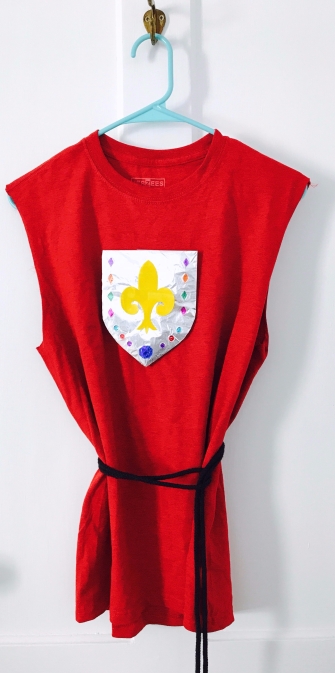
If you like playing dress-up, why not be your own tailor and make a one-of-a-kind outfit from your imagination. With only a few materials and supplies, you can be anything or anyone you want!

For the Knight’s Tunic

celebrate-picture-books-picture-book-review-plastic-party-dress-craft

Supplies

  • Tee shirt with the sleeves cut off
  • Thin cardboard (a cereal or other food box works well)
  • Aluminum foil
  • Paper or foam
  • Scissors
  • Permanent Markers
  • Play jewels (optional)
  • Fabric glue
  • Belt, rope, or twine
  • Tape

Directions

  1. Cut the sleeves off of the T-shirt
  2. Use the cardboard to create a crest shape
  3. Cover the cardboard with aluminum foil
  4. Tape the aluminum foil if necessary
  5. With the markers, color a design with various shapes
  6. Alternately: glue play jewels to the crest
  7. On the paper draw a fleur de lis or other design
  8. Color the fleur de lis or other design
  9. Cut out the fleur de lis or other design
  10. Glue the fleur de lis to the crest
  11. Attach the finished crest to the tunic with fabric glue
  12. Tie a belt with the rope, twine, or belt

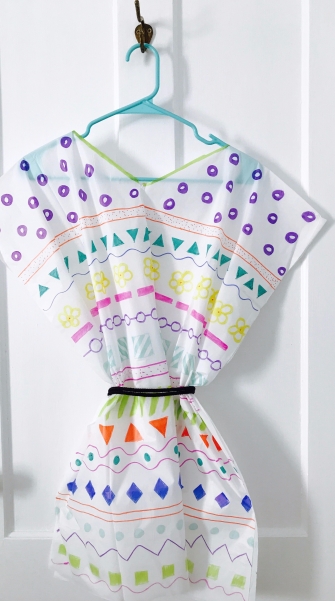
For the Dress

celebrate-picture-books-picture-book-review-plastic-party-dress-craft

Supplies

  • Plastic tablecloth
  • Belt or scarf
  • Permanent Markers
  • Scissors
  • Newspaper or old sheeting to protect the floor or table from the permanent markers

Directions

  1. With the table cloth folded along one edge, cut a rectangle the appropriate size
  2. In the middle of the folded edge cut a V-shaped or rounded opening for the child’s head. Begin with a small opening and enlarge it as needed
  3. Lay the dress on newspaper or other material to protect the floor or table
  4. Draw and color shapes, lines, figures, or other designs on the dress
  5. Add a belt with a ribbon, a scarf, a piece of crepe paper garland, or other material

Picture Book Review