March 8 – International Women’s Day

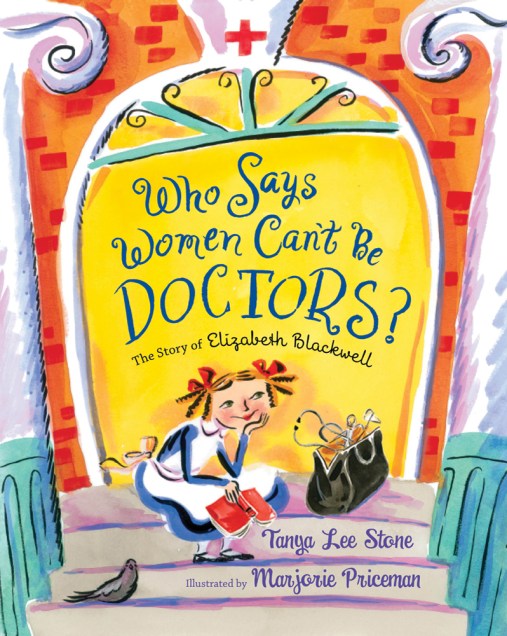
Who Says Women Can't Be Doctors by Tanya Lee Stone and Marjorie Priceman picture book review

About the Holiday

When the United States celebrated International Women’s Day in 1911, it paved the way for more extensive recognition of the contributions of women. Women’s Day stretched to a week officially in 1981 when Republican Senator Orin Hatch of Utah and Democratic Representative Barbara Mikulski of Maryland co-sponsored a Joint Congressional Resolution that established Women’s History Week. Six years later Congress named March as Women’s History Month.

March is a great time to discover and learn about the women who have shaped our country in all fields of endeavor from the arts to education to the sciences and beyond. Today we celebrate a woman who changed the medical profession forever.

Who Says Women Can’t be Doctors? The Story of Elizabeth Blackwell

Written by Tanya Lee Stone | Illustrated by Marjorie Priceman


Once upon a time there were no women doctors. Women weren’t even allowed to be doctors. Sounds like a fairy tale, doesn’t it? Fortunately, this one-time fact has entered the realm of fiction—all thanks to Elizabeth Blackwell. Elizabeth was not like other girls of the 1830s. She loved to explore and take on challenges. She could lift her brother over her head, and to toughen herself up she slept on the hard wood floor. To get a better look at the world she climbed to the roof of her house and leaned waaaaay out with a spyglass. What did she see? Maybe she saw her future. But it wasn’t what she imagined at the time. Blood made her queasy, dissection was disgusting, and being sick just made her want to hide from all the fussing.

But a comment by a sick friend, puts a bee in her bonnet. Mary Donaldson tells Elizabeth that she would much rather have been examined by a woman than her male doctor. “You should be a doctor, Elizabeth,” Mary says.

What a crazy notion, right? Well… Elizabeth can’t stop thinking about it. She asks around. Some people think it’s a good idea, but impossible; others just think it’s impossible. They believe women aren’t strong enough or smart enough and they laugh at her. By this time, though, Elizabeth is determined.

She applies to 28 medical schools, and they all say, “No.” But one day a “Yes” arrives in the mail. Elizabeth packs her bags. The townspeople all come out to see this new medical student, but they aren’t outside to welcome Elizabeth; they just want to whisper and point and stare. Surely, Elizabeth thinks, the students will be happy to see her.

But she receives the same reception on the college campus. In fact, she learns, the only reason she was accepted is because the men voted to let her in as a joke! Elizabeth knows how to handle it. She studies hard and gives her opinions, and soon she wins the respect of her fellow students—even if the townspeople still don’t accept her.

On January 23, 1849 Elizabeth Blackwell graduates from medical school with the highest grades in the class. She has become the first woman doctor in America! Many people hope that she would be the last. But as we know…she was Not!

Tanya Lee Stone magnificently imbues this short biography of Elizabeth Blackwell with enough mystery, conflict, and history for even the youngest readers to understand the type of girl and woman Elizabeth was as well as the challenges she faced. The details of Blackwell’s life that Stone includes are deftly chosen, and make her instantly recognizable and relatable to children. One line in the text written in the present tense amid the historical past transforms this biography into a universal story for all generations. Blackwell may have started out as a reluctant dreamer, but once she dared to believe she accomplished more than she or anyone could have imagined. It is what we want for all our children.

Marjorie Priceman’s illustrations, swirling with words, angled on the page and floating in white space, are as topsy-turvy as the world Elizabeth Blackwell created. Blackwell’s boldness is echoed in the rich colors and strong lines of the gouache and India-ink paintings, and the emotions she stirred in others—from derision to horror to admiration—are cleverly and exceptionally drawn in a minimal style on the characters’ faces.

Ages 5 – 9

Christy Ottaviano Books, Henry Holt and Company | ISBN 978-0805090482

International Women’s Day Activity
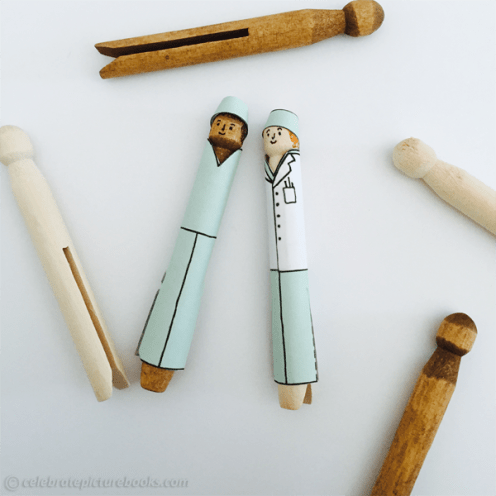
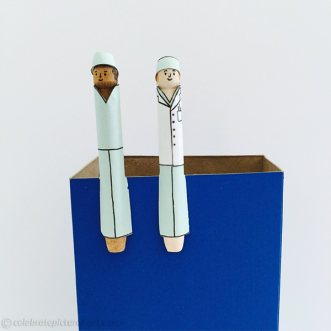
CPB - Doctors Clothespins

Doctor Clothespin Figure


Make one of these clothespin figures that honors International Women’s Day and Women’s History Month as well as everything doctors do to help us stay healthy.

Supplies

CPB - Doctors Clothespins on box

Directions

  1. Draw a face and hair on the clothespin
  2. Cut out the outfit you want your doctor to wear (color pants on your clothespin if you choose the lab coat)
  3. Wrap the coat or scrubs around the clothespin. The slit in the clothespin should be on the side.
  4. Tape the clothes together
  5. Wrap the cap around the head and tape it.
  6. If you’d like to display your clothespin doctor on a wire, string, or the edge of a box or other container, cut along the dotted lines of the clothes template.

 

March 3 -World Wildlife Day

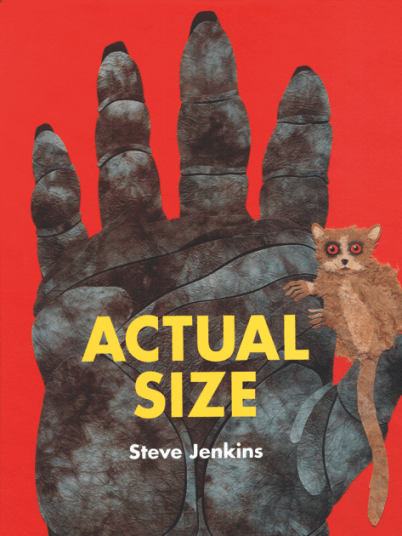
Actual Size by Steve Jenkins Picture Book Review

About the Holiday  

Sponsored by the United Nations, World Wildlife Day celebrates the many varieties of wild animals and plants that make up our earth. It is also a day to raise awareness of the ways in which conservation of natural resources and sustainable development benefits people and all the world’s species. The theme this year is “The future of wildlife is in our hands.” African and Asian elephants are the main focus of the 2016 global campaigns.

Secretary-General Ban Ki-moon says: “On this World Wildlife Day, I call on all citizens, businesses and governments to play their part in protecting the world’s wild animals and plants.  The actions taken by each of us will determine the fate of the world’s wildlife.  The future of wildlife is in our hands!”

For more information on World Wildlife Day 2016 and to see what events are taking place in cities around the world visit wildlifeday.org

Actual Size

By Steve Jenkins


We know wildlife is all around us, but apart from our pets and the occasional mosquito we swat or bumble bee we avoid, we tend to see it from a distance. We watch birds flutter at feeders through a window, we see exotic animals at the zoo, aquarium, or wildlife parks, and point out cows and horses while driving. If asked how big the chickadee or elephant is, we’d say small and huge! But how small? How huge?

What makes Steve Jenkins’ book Actual Size so fascinating is that he shows readers on the page exactly how big or how tiny with scale drawings of each creature. The Atlas Moth on page 1 is so large part of one wing dips into page 2, where you hardly notice the dwarf goby—at a minuscule 1/3 inch long—in the bottom corner. As you turn the page you almost catch your breath to find the enormous 12-inch-wide eye of a giant squid staring back at you.

An ostrich with its egg and the whip-like tongue of the giant anteater are also here. And if you’re at all squeamish about spiders, you might want to avoid pages 12 and 13! The snout of the saltwater crocodile and the Goliath frog are both so long that they require a fold-out page! Kids will love putting their tiny hand against the gorilla’s and their foot on the African elephant’s.

Actual Size features 18 of the world’s well-known and unusual creatures, each described in more detail, including weight, habitat, diet, behavior, defenses, and more, at the end of the book.

Steve Jenkins’ striking collages, created from cut and torn paper, beckon readers to look closer at these awesome creatures.

Ages 4 – 9

Houghton Mifflin Books, 2004 | ISBN 978-0547512914

World Wildlife Day Activity

CPB - Wildlife Day Elephant Print (2)

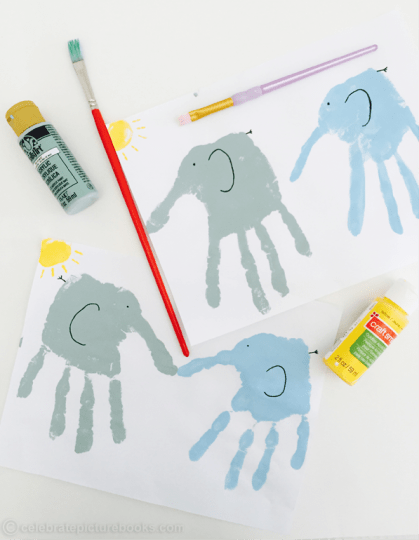
Hands Down Best Elephant Print


A way to make the cutest elephant print ever is right in your hands! With a little paint and paper, you can create a wildlife print that’s as unique as you are. This is a fun activity to do with a child and parent or two siblings. Working with different size hands can make your print more interesting.

Supplies

  • Paper, any color
  • Paint, any color you would like your elephants to be
  • Paint brush
  • Black marker

Directions

In this print your palm creates the body of the elephant, your four fingers create the legs, and your thumb becomes the trunk.

1. Make the right-facing elephant:

  • Paint your left hand. Make sure to fill in all the creases on your palm and fingers.
  • Press your hand onto the left side of the piece of paper

 2. Make the left-facing elephant:

  • Paint your right hand. Make sure to fill in all the creases on your palm and fingers.
  • Place your hand on the right side of the paper so that your thumb touches the end of the thumb on the left hand print. Press your hand onto the right side of the piece of paper

3. You can fill in any thin or open spaces with the paintbrush if you like

4. Let the handprints dry

5. Turn the page so that the four fingers that create the legs of the elephant are facing down.

6. Draw a dot for an eye at the base of the thumb, an ear in the palm, and a tail at the back of the hand.

7.  To make the sun, dip your thumb in yellow paint and press it into the corner of the paper. Make little rays with the edge of the paintbrush.

8. Hang your print with or without a frame.

March 2 – Dr. Seuss’s Birthday | Read Across America Day

The Sneetches and Other Stories Picture Book Review

About the Holiday

Read Across America was designed by the National Education Association as a day to raise awareness of the importance of reading and to motivate people to read more. What better day could they have chosen to celebrate the joys books can bring than March 2—Theodor Seuss Geisel’s birthday! With 46 children’s books to his name, Dr. Seuss is one of the world’s most beloved authors, and one whose imagination has entertained generations of readers.

For more information on the Read Across America program visit www.nea.org/grants/read-across-background.html

The Sneetches and Other Stories

By Dr. Seuss


If you love reading chances are Dr. Seuss has something to do with it! He wrote so many stories that there are fantastic and fantastical creations to fit everyone’s fancy! Today I’m reviewing my favorite collection of Dr. Seuss tales—I hope you’ll like it too!

The four stories in this collection touch on such topics as individualism, prejudice, stubbornness, fear, and just the ridiculous. Perhaps the best-known tale is The Sneetches, in which a community of Sneetches, some of whom sport stars on their bellies and some who do not, fall prey to a slick salesman and his star-on and star-off machines. The Sneetches run themselves ragged trying to be popular and keep up with the fad of the moment. In the end, Sylvester McMonkey McBean has made monkeys of them all and drives away with a smile and all their cash. He thinks they’ll never learn, but he’s wrong—the Sneetches are actually richer for McBean’s visit and become a closer-knit community.

In The Zax, a North-going Zax and a South-going Zax are strolling along on their individual tracks when they meet face to face in the middle of nowhere. Neither one will move the slightest inch to the left or the right to let the other pass. They stand “toe-to-toe” in unbreakable stalemate, even if it means the whole world must halt along with them. “Of course the world didn’t stand still,” Dr. Seuss tells us. The middle of nowhere became somewhere. Buildings went up, people moved in, and a highway was built right over the Zax, who are probably standing there still.

Ah, the poor mother in Too Many Daves! If only she’d had a little more imagination and forethought in the name department she may have saved herself a lot of trouble. One after one, however, she named her sons Dave—all 23 of them! Too late she thinks of all the other names she could have used, and here is presented a list of names that far outshines any baby naming book on the market. Be ready for giggles when you get to “Stinky.”

My very favorite story is What Was I Scared Of?. It has just the right combination of spookiness and humor to satisfy any budding mystery buff. One night while picking berries the hero of the story spies a “pair of pale green pants with nobody inside them.” The pants begin to show up in the oddest of places, no matter how hard the storyteller tries to escape them. The pants are rowing on the river, riding a bicycle, and walking the same path. When the pants and the narrator peek around the same bush, however, they’re both in for a surprise. “Why, the pants were just as scared as I,” the narrator reveals. Instead of gloating or running away, our intrepid hero learns that feelings are often shared and he becomes a friend to the pants that once so frightened him.

Of course these stories are all told with Dr. Seuss’s inimitable word choice, rhymes, names, and rhythm accompanied by his whimsical characters and landscapes.

Ages 4 – 9

Random House, New York, 1961 | ISBN 978-0394800899

Dr. Seuss’s Birthday/Read Across America Day Activity

CPB - Reading Bug Book Plate (2)

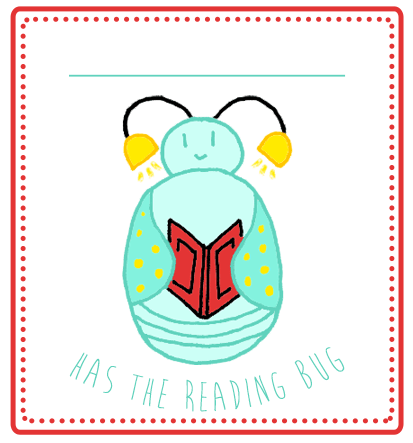
I Have the Reading Bug Bookplate


There’s no better feeling than leafing through the pages of your own book! Now, to keep precious books from getting lost, you can dress them up with this printable I Have the Reading Bug Bookplate!

Supplies

Directions

  1. Print the I Have the Reading Bug Bookplate
  2. Cut out the bookplate
  3. Write your name on the line at the top
  4. Using glue dots or removable mounting squares attach the bookplate to the inside front or back cover

February 28 – Tooth Fairy Day

Throw Your Tooth on the Roof picture book review

About the Holiday

For hundreds of years losing baby teeth has conjured up stories, legends, and superstitions. The idea of paying for teeth may have come from the Vikings, who reportedly believed the teeth could make them better warriors and so paid their children for their teeth, which they fashioned into necklaces to wear in battle. Some people buried the teeth, wanting to hide them from witches and evil spirits. The first immaginary creature to actively search for and take teeth was perhaps a mouse, which is still taught in many countries today. From the mouse came the Tooth Fairy, who is one of those mysteries of childhood in America and other English-speaking lands.

Throw Your Tooth on the Roof: Tooth Traditions from Around the World

Written by Selby B. Beeler | Illustrated by G. Brian Karas


When children lose a tooth, it’s so exciting! They know it means they’re growing up. It also means they can participate in a tradition that is fanciful and fun. American kids put the tooth under their pillow, believing that while they sleep the Tooth Fairy will visit them, take the tooth, and leave them money. But what do kids in other countries do with their baby teeth?

In Throw Your Tooth on the Roof, Selby Beeler reveals traditions from 65 countries around the world. In many countries children are rewarded with money but the deliverer differs. El Ratón, a magic mouse, visits children in Mexico, Guatemala, Dominican Republic, Columbia, and other countries. A rabbit sneaks into homes in El Salvador, and in India, Korea, and Brazil birds take the tooth.

In some places what children do with their teeth doesn’t bring monetary riches, but the value of a beautiful smile. In Yellowknife Déné putting a lost tooth in a tree and dancing around it ensures that the new tooth grows in as straight as a tree. In many Asian countries upper teeth are placed in the ground and lower teeth are thrown on the roof in the belief that the new tooth will grow straight toward the old one.

Selby B. Beeler’s book offers children a fascinating way to learn about their counterparts in other countries through a common experience and rite of passage. Each description is accompanied by Brian Karas’ appealing illustrations of children in their native environment happily performing their tradition.

Ages 4 – 8

Houghton Mifflin Company, 2001 | ISBN 978-0618152384

Tooth Fairy Day Activity

CPB - Tooth Fairy Maze finished

Help the Tooth Fairy Find the Tooth Maze


The Tooth Fairy has a job to do, but she doesn’t know which way to go! Can you show her the right path? Print out the Help the Tooth Fairy Find the Tooth Maze and lead her to the tooth! The Solution is included.

February 22 – Museum Advocacy Day

CPB - How the Dinosaur Got to the Museum II

About the Holiday

Today is a day when we can show our museum curators and representatives in government how much we value museums. Without these grand (and sometimes small) buildings dedicated to preserving and teaching about our historical, scientific, and cultural achievements, our lives would be much poorer. Show your support for museum funding by visiting and/or donating to your favorite museum!

Another wonderful way to celebrate our custodians of history, science, art, and life is by reading the clever How the Dinosaur Got to the Museum / How the Sphinx Got to the Museum / How the Meteorite Got to the Museum series by author-illustrator Jessie Hartland.

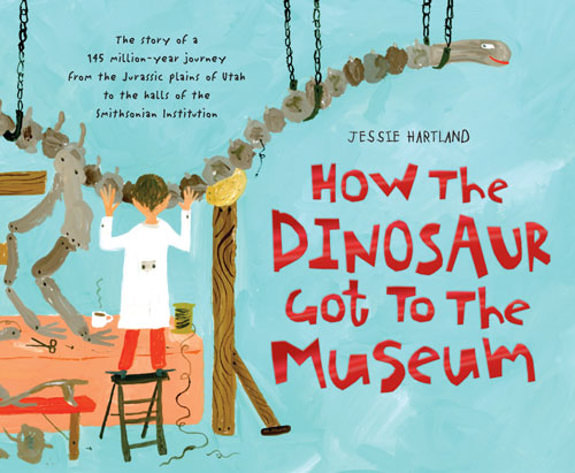
How the Dinosaur Got to the Museum

By Jessie Hartland


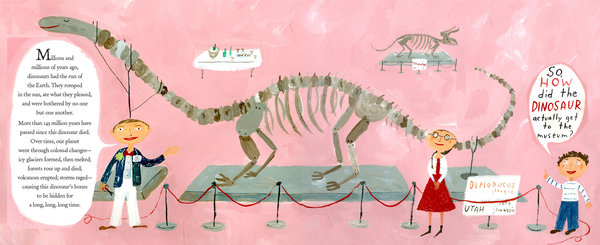
“So…” asks a little boy visiting the Smithsonian Museum of Natural History, “how did the dinosaur get to the museum?” Thus begins the tale—not of the dinosaur’s life, but of its journey from life to the museum exhibit hall.

celebrate-picture-books-picture-book-review-how-the-dinosaur-got-to-the-museum-talking-about-dinosaur

Image and text copyright Jesse Harland, courtesy of Blue Apple Books

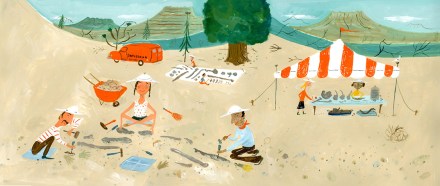
One hundred and forty-five million years ago, the dinosaur roamed the plains of what is now Utah, Overcome by weather and evolutionary events, the dino is buried and much, much later once again exposed. A Dinosaur Hunter finds one large bone and believes it to be from a Diplodocus Longus. He calls in the Paleontologist who confirms it. A team of Excavators arrives and unearths the rest of the skeleton.

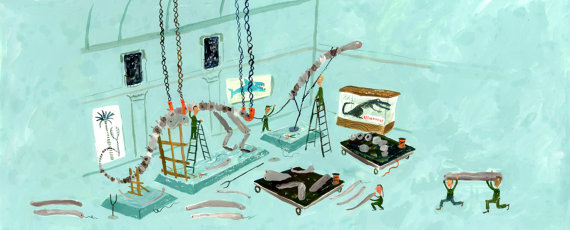
The Movers pack the skeleton which was found by the Dinosaur Hunter, confirmed by the Paleontologist, and dug up by the Excavators and load it on a train that transports it to the Smithsonian. Here, the bones are cleaned and preserved by the Preparators, who discover that the head and neck are missing!

celebrate-picture-books-picture-book-review-how-the-dinosaur-got-to-the-museum-digging

Image copyright Jesse Harland, courtesy of Blue Apple Books

The Curator locates a plaster cast at another museum and work continues. The Diplodocus is assembled, but in the darkness the Night Watchman trips over its tail and breaks it! In come the Welders to fix it, and finally the Riggers can display the skeleton.

The Exhibits Team creates a background, lighting, and signs for Diplodocus, and the Cleaners give it a final dusting before the Director invites the public to view the magnificent exhibit with a speech and a toast.

celebrate-picture-books-picture-book-review-how-the-dinosaur-got-to-the-museum-exhibit

Image copyright Jesse Harland, courtesy of Blue Apple Books

Jessie Hartland’s bold, colorful illustrations offer a child’s-view perspective on the behind-the-scenes working of a museum, while her highly entertaining and educational text will keep kids giggling and reciting along as each page builds on the next to reveal the story of the men, women, and processes engaged in creating a museum exhibit.

Ages 5 – 9

Blue Apple Books, New Jersey, 2011 | ISBN 978-1609050900

Museum Advocacy Day Activity

CPB - Cookie Jar Museum (2)

Create a Museum Exhibit

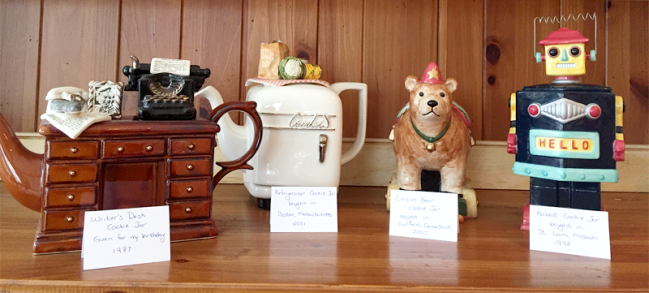
Every item has a story. Is there a funny anecdote behind that knick-knack on the shelf? Does your favorite serving dish hold sentimental value? A fun and educational way for kids to learn family stories and interact with their own history is to create a museum exhibit of objects in your home.

For teachers this can be a fun classroom activity that incorporates writing, art, and speaking, and categorizing skills. Students can use objects in the classroom or bring items from home to set up museum exhibits. This activity can be done as a whole-class project or by smaller groups, who then present their exhibit to the rest of the class.

Supplies

  • A number of household or classroom items
  • Paper or index cards
  • Markers
  • A table, shelf, or other area for display

Directions

  1. To get started have children gather a number of items from around the house to be the subjects of their exhibit. An exhibit can have a theme, such as Grandma’s China or Travel Souvenirs, or it can contain random items of your child’s choice, such as toys, plants, tools, even the furniture they see and use every day.
  2. Using the paper or cards and markers, children can create labels for their exhibit items. Older children will be able to write the labels themselves; younger children may need adult help.
  3. Spend a little time relating the story behind each object: where it came from, how long you’ve had it, when and how it was used in the past, and include any funny or touching memories attached to the item. Or let your child’s imagination run free, and let them create histories for the objects.
  4. When the labels are finished, arrange the items on a table, shelf, or in a room, and let your child lead family members or classmates on a tour. You can even share the exhibit with family and friends on social media.
  5. If extended family members live in your area, this is a wonderful way for your child to interact with them and learn about their heritage.