July 14 – Shark Awareness Day

celebrate-picture-books-picture-book-review-nugget-and-fang-coverAbout the Holiday

Today we take a moment to consider the benefits sharks provide to the marine ecosystem. Every year thousands of sharks die and their species threatened due to misconceptions and misuse. As a predator at the top of the food chain, sharks play a crucial role in maintaining balance within the ocean. Protecting this often-misunderstood species is an important goal.

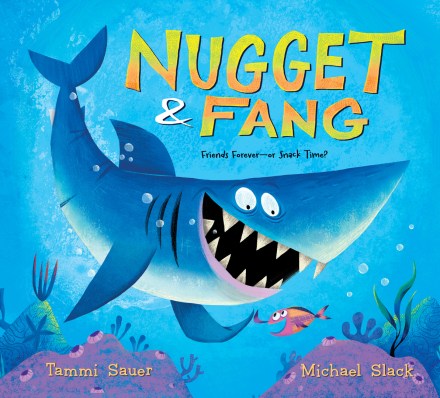
Nugget & Fang: Friends Forever—or Snack Time?

Written by Tammi Sauer | Illustrated by Michael Slack


Deep in the ocean two friends do everything together and life is almost perfect as they swim over ship wrecks, under reefs, and all around. Nugget and Fang are as close as two friend can be—there’s just one thing: Nugget is a minnow while Fang is a shark. Neither of them consider their friendship unusual—until Nugget goes to school. There during Reading, Nugget hears the story of The Three Little Minnows and the Big, Bad Shark. “‘Ha!’” says Nugget. “‘Impossible!’”

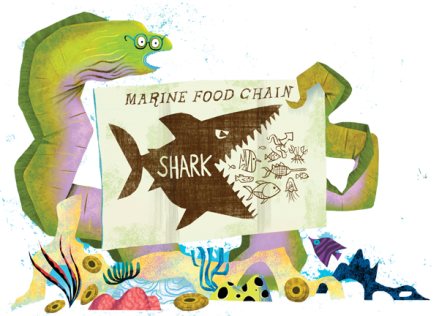
During Math class the students solve a word problem: “What if there were ten minnows and a shark came along and ate four of them? How many minnows are left?” Nugget is scandalized. “‘A shark would never do that!’” he says. But Science period reveals the facts of the Marine Food Chain. Nugget protests that sharks aren’t scary. “‘My best friend is a shark!’” he announces. His classmates are shocked. “Have you lost your gills?” one asks. Another snarks, “Hello—sharks eat minnows!” Nugget can’t believe it.
celebrate-picture-books-picture-book-review-nugget-and-fang

Image copyright Michael Slack, courtesy of hmhbooks.com/nuggetandfang

Back home Nugget gives Fang the bad news. “‘Sounds fishy to me,’” says Fang. Nugget assures him it’s true before swimming far away. “Fang’s heart sank.” He can’t help if he’s “toothy,” he thinks, and he knows he doesn’t mean to be scary. He wants his best friend back. To prove it Fang tries different tactics. On Tuesday he dresses like a mermaid, but Nugget and the other fish see through his disguise. “‘Oh, my algae!’” exclaims Nugget. On Wednesday Fang sends a beautiful sea plant arrangement with a note—“Dear Nugget, I’d love to have you over for dinner.”—which is misinterpreted in the worst possible way. On Thursday Fang pulls out all the stops. He gets a “Nugget” tattoo, sends a special message and gift, and performs an original song and dance, but nothing works.

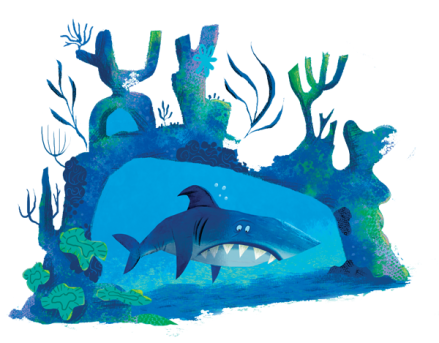
On Friday Fang is sadly resigned to being alone. While he mopes and cries, he doesn’t see that a fishing net has been lowered to the ocean floor, capturing Nugget and the other minnows. “Help!” shouts Nugget as the net is slowly lifted. Fang wrings his fins, uncertain of what to do. Suddenly, he has an idea. With his big sharp teeth he chomps and chews and tears the net to pieces. Nugget and the minnows swim to safety. They all stare at Fang wide-eyed.
celebrate-picture-books-picture-book-review-nugget-and-fang

Image copyright Michael Slack, courtesy of hmhbooks.com/nuggetandfang

Fang dejectedly begins to swim away. “‘I know, I know,’” he says, “‘I’m toothy. Too scary. Too…shark.’” “Wait!” calls Nugget and uses a little math of his own. “‘There were ten minnows, and a very special shark came along. How many friends are there altogether?’” Now eleven friends live happily deep in the ocean, and everyone—especially Fang—are all smiles.

Tammi Sauer’s tribute to true friendship reveals the danger when “facts” take precedence over what you know in your heart to be true. Her reminder to listen to your inner voice is approached with humor and the honest types of doubts that can niggle and cloud judgement. Throughout the story, her language is accessible and kid-conversational, including puns that will elicit giggles. Sauer’s use of a math word problem to both highlight contrary thinking and provide a solution underscores the influence of education. Nugget & Fang is a wonderful book for kids navigating the school and activities environment while making new—and keeping old—friendships.

Michael Slack immediately sets kids in the right mindset with his bright, cartoon-inspired illustrations. Tiny, colorful Nugget and bold, blue Fang, his “toothiness” on display through his big grin, make a happy, nonchalant pair. They play together through vibrant green, yellow, and purple reefs unaware of marine stereotypes. When Nugget gets “schooled”, his astounded expressions and those of his classmates, humorously depict their predicament. The ocean environment gives Slack an opportunity for plenty of visual jokes and innovation. The Reading teacher holds a clamshell-shaped book, a piece of shipwrecked board serves as a Math blackboard, and the Science food chain poster is appropriately scary. Kids will laugh at Fang’s attempts at reconciliation, and cheer when he becomes a hero.

Nugget & Fang: Friends Forever—or Snack Time? is sure to be a favorite story time read!

Ages 4 – 9

Houghton Mifflin Harcourt, 2013 | ISBN 978-0544481718

Will everything go swimmingly for Nugget and Fang? Watch the trailer and see!

To learn more about Tammi Sauer and her books, visit her website!

View a gallery of work by Michael Slack on his website!

Visit the Houghton Mifflin Harcourt Nugget & Fang page for more goodies!

Shark Awareness Day Activity
celebrate-picture-books-picture-book-review-shark-coloring-page

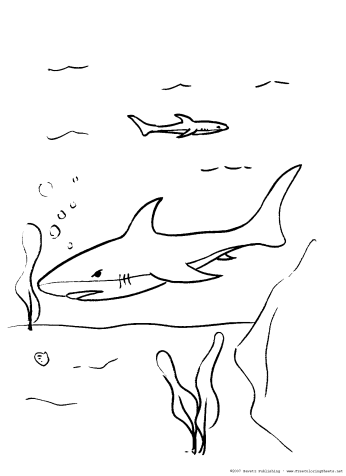
Looking Sharp, Sharks! Coloring Page


Sharks are some of the most fascinating creatures in the sea. Have fun decorating this printable Looking Sharp, Sharks! Coloring Page—get creative with textures, colors, and materials!

July 13 – National Culinary Arts Month

celebrate-picture-books-picture-book-review-the-hole-story-of-the-doughnut-cover

About the Holiday

July is a great month for celebrating culinary arts. With kids home from school it’s fun to spend time together in the kitchen learning new skills and making experimental or favorite recipes. On-the-go meals or vacations can also take you to new and enticing restaurants, where you may try regional cuisine and discover exciting flavors.

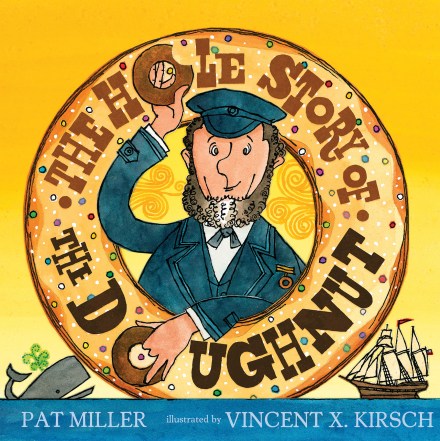
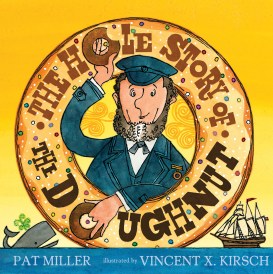
The Hole Story of the Doughnut

Written by Pat Miller | Illustrated by Vincent X. Kirsch


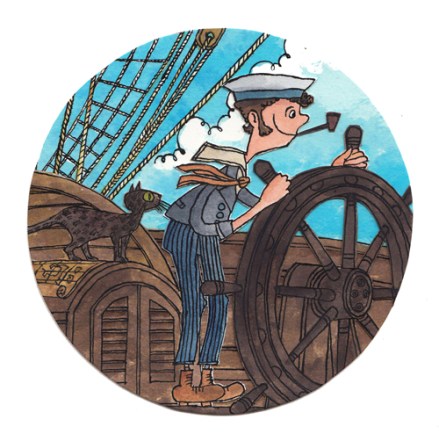
In 1844 at the tender age of 13, Hanson Gregory left the family farm and went to sea as a cabin boy on the schooner Isaac Achorn. He quickly became the cook’s assistant and also learned how to rig the sails and “steer a ship over trackless waves by sun and stars.” By the age of 19 Gregory had become the captain of the schooner Hardscrabble, and within a few more years was racing “his cargo from Maine to California as commander of a clipper, the fastest ship on any ocean.”

celebrate-picture-books-picture-book-review-hole-story-of-the-doughnut

Image copyright Vincent X. Kirsch, courtesy of vincentxkirsch.com

Hanson Gregory may have been one of the best captains to sail the seas—once awarded a medal for heroism for rescuing seven shipwrecked Spanish sailors even though his own ship and crew were endangered. But his greatest achievement was not attained because of his seafaring skills—it was his ingenuity in the galley that people remember.

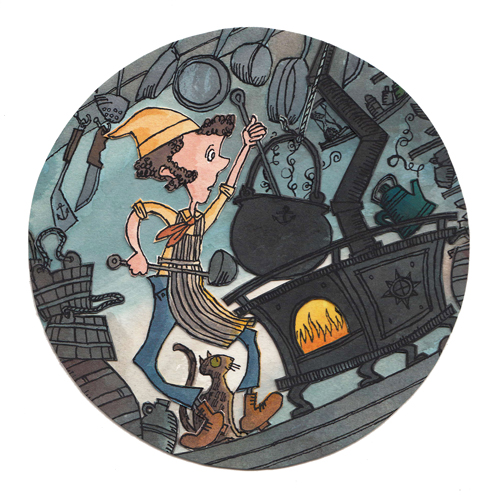
On June 22, 1847 as a 16-year-old cook’s assistant, Hanson was rustling up the crew’s breakfast—coffee and fried cakes, the same as every morning. While the pot of lard bubbled on the stove, Gregory formed balls of sweetened dough and dropped them in. They sizzled and crisped—at least around the edges. The centers were raw, heavy with grease, and they dropped like cannonballs in the stomach. “Sailors called them Sinkers.” But this morning Gregory had an idea. He removed the lid from the pepper can and cut out the center of the balls. “Then he tossed the rings into the bubbling lard.”

celebrate-picture-books-picture-book-review-hole-story-of-the-doughnut

Image copyright Vincent X. Kirsch, courtesy of vincentxkirsch.com

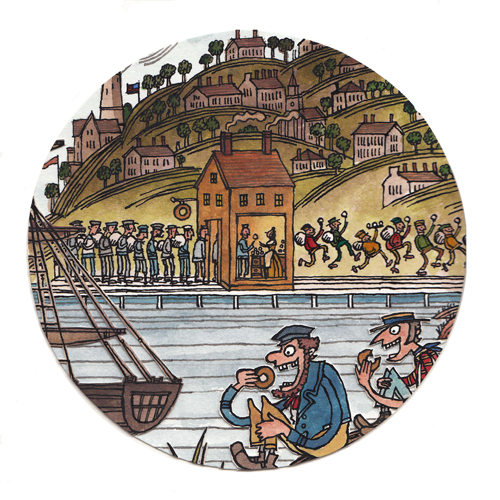
The cook and the sailors took one look at this odd concoction and…ate them up! “The cakes were brown, and sweet, and fully cooked. Sighs of delight rose above the noisy sea. A new breakfast tradition was born.” Gregory told his mom about his invention, and she fried up large batches of these ‘holey cakes’ that were a sensation at a friend’s store and on the docks.

You might think this is a pretty interesting tale in itself, “but sailors like their stories bold” and so they “spun legends worthy of such a delicious treat.” One tale had Captain Gregory inventing the doughnut while he saved his ship from disaster. Another told how Gregory, distraught over the drowning of five sailors pulled to the ocean floor by of their “sinker” breakfast, punched holes in every cake to make them look like life rings and vowed, “‘Never again!’”

Captain Gregory had a sense of humor about his accomplishment. During an interview he once stated that “he had invented ‘the first hole ever seen by mortal eyes.’” Gregory lived to be 89 and is buried “overlooking the sea where stormy weather can be spotted as readily as it once was from the quarterdeck of the Hardscrabble.”

An author’s note expanding on the story of Captain Gregory, the doughnut, doughnut shops, a timeline, and a selected bibliography follow the text.

celebrate-picture-books-picture-book-review-hole-story-of-the-doughnut

Image copyright Vincent X. Kirsch, courtesy of vincentxkirsch.com

Doughnuts have never been so evocative! In Pat Miller’s humorous, informative history of this favorite pastry treat, readers can smell the salt air, feel the ocean swell and roll under their feet, and even ache a little for those poor sailors forced to eat “sinkers.” Seamlessly interwoven into this foodography is a fascinating look at the early days of sail. Miller’s language is immediately stirring: the Ivanhoe bucks and plunges, the sea becomes a monster, and Captain Gregory spears a sinker on the wheel spoke. Kids will marvel at a 13-year-old going off to sea and becoming an inventor at 16.

Vincent X. Kirsch provides just the right touch to this captivating true story with his cartoon-inspired watercolor and cut paper artwork. Ingeniously incorporating Hanson Gregory’s innovation of removing the center of the fried cakes, Kirsch’s illustrations are “cored” to allow for text, while the extracted section appears on the facing page as a glimpse through a porthole. The maritime atmosphere—from ship to shore—of the mid-1800s is beautifully represented in the folk-style sketches, and the humor that is so intrinsic to this story is wonderfully embraced.

The Hole Story of the Doughnut will delight foodies and history buffs alike and would make a fun gift and a delectable addition to personal libraries for all ages.

Ages 5 – 12

Houghton Mifflin Harcourt, 2016 | ISBN 978-0544319615

Vincent X. Kirsch’s website is full of illustrations from his books for children—take a look at his portfolio!

Spend some time with Pat Miller on her website that offers activities, tips, resources and many more books!

Culinary Arts Month Activity

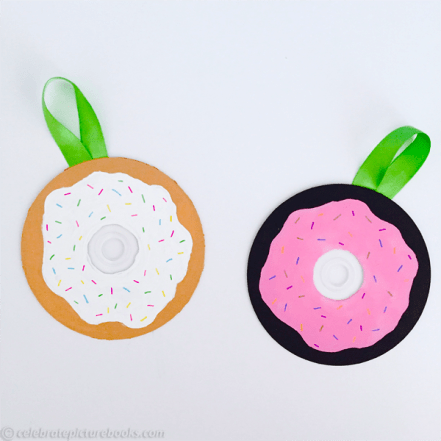
celebrate-picture-books-picture-book-review-cd-doughnut-craft

CD (Compact Doughnuts) Decoration


Are some of  your CDs a little passé? Not if you can turn them into cute décor like this doughnut hanging.

Supplies

  • Unused CDs
  • Craft paint in tan, black, pink, yellow, white (or any colors you want for the doughnut and the icing)
  • Ribbon, any color and length you want
  • Fine-tip markers in bright colors
  • Glue
  • Glue dots (optional)
  • Paint brush

Directions

  1. Paint a wavy edge around the CD, let dry
  2. Paint the center of the CD, leaving the clear circle unpainted
  3. When the icing paint is dry, draw sprinkles on the icing with the markers
  4. With the ribbon make a loop hanger and attach it to the back of the CD with glue or glue dots
  5. Hang your decoration

celebrate-picture-books-picture-book-review-the-hole-story-of-the-doughnut-cover

You can find The Hole Story of the Doughnut at these booksellers

Amazon | Barnes & Noble | Books-a-Million | IndieBound


July 12 – It’s National Blueberry Month

celebrate-picture-books-picture-book-review-more-blueberries-cover About the Holiday

Farmers’ Markets are bursting with fresh produce during the summer months, and that is especially true for blueberries, those little round morsels of sweetness. The United States Department of Agriculture recognized July as National Blueberry Month in 2003, and it’s been delicious eating ever since! Blueberries are the perfect accompaniment to muffins, pancakes, bread, fruit salads, and of course they’re delectable just on their own! So visit a farmers’ market today and pick up a peck.

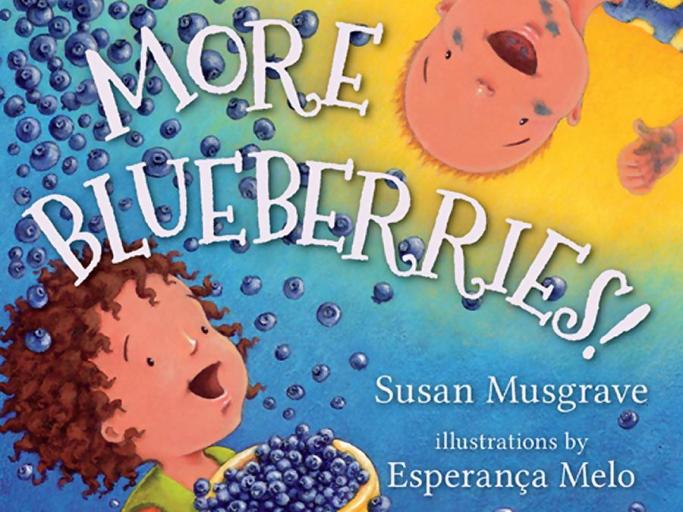
More Blueberries!

Written by Susan Musgrave | Illustrated by Esperança Melo


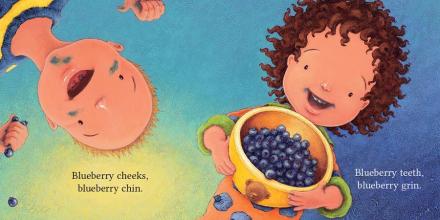
When the blueberries are ripe, the siblings in this adorable picture book live in a blueberry world. The brother and sister are all smiles with their bowl full of berries, and soon they have “Blueberry cheeks, blueberry chin. / Blueberry teeth, blueberry grin. / Blueberry fingers, blueberry nose. / Blueberry lips, blueberry toes.” Oops! After all that yummy, tasty blueberry gobbling, the bowl is empty, eliciting a call for “More Blueberries!”

celebrate-picture-books-picture-book-review-more-blueberries

Image copyright Esperança Melo, courtesy esperancamelo.blogspot.ca

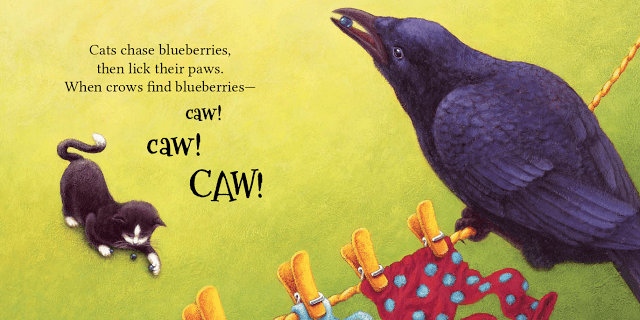
The scrumptious berries find their way into pancakes, muffins, mush, and slush, ice cream, cake—and even cause a bit of an ache. But with a small burp, the cry goes out for MORE BLUEBERRIES! The kids aren’t the only ones who love the season’s fruit—a cat chases them as they roll away, and a cawing crow carries one in its beak like the finest of pearls.

Frogs hop on blueberries with a pop and a splat while teddy bears gulp them down in no time flat. “Meow,” says the cat. “Caw,” says the crow. “Ribbit,” says the frog, and “Grrrrrrr,” says the bear as they all shout for MORE BLUEBERRIES!

But the day is waning and while bath time beckons there’s still more time to turn bathwater blue, sail berries in a tug, wash with blueberry soap and blueberry shampoo. Finally it’s nightime with “Blueberry jammies, / blueberry yawn. / Blueberry bedtime, / blueberries gone.” As the little girl and boy drift off to sleep to dream about blueberries, they snuggle with their teddy bear and froggy toys, leave their crow book until tomorrow, and sleep peacefully under the watchful eye of their cat.

celebrate-picture-books-picture-book-review-more-blueberries-crow-and-cat

Image copyright Esperança Melo, courtesy of esperancamelo.blogspot.ca

Susan Musgrave’s irresistibly catchy rhymes burst with flavor and will make More Blueberries a favorite story time read for young children. The repeated “blueberry” (such a wonderfully alliterative word!) will capture kids’ imagination and give them the pleasure of reading along even at very early ages. Beyond the fun of the blueberry theme, this book makes an entertaining concept book to teach parts of the body, food, and clothing.

Esperança Melo’s endearing illustrations perfectly depict the messy, delicious, enthusiasm small children develop for certain foods or objects. The sister with her curly mass of brown hair and her brother with spiky blond hair are human canvases of blueberry-painted faces, hands, and feet while their infectious grins display stained teeth and tongues. Their household surroundings are appropriately blue, and even their pets and toys get in on the action.

More Blueberries is a book to add to children’s shelves as it will be asked for again and again!

Ages Birth – 4

Orca Book Publishers, 2015 | ISBN 978-1459807075

Visit Esperança Melo’s website to view her illustrations and paintings portfolio!

To learn more about Susan Musgrave’s books for children and adults visit her website!

National Blueberry Day Activity

 celebrate-picture-books-picture-book-review-blueberry-cupcakes

Baking Blueberry Cupcakes Coloring Page


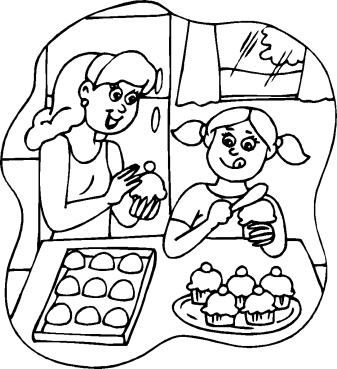
Blueberries make everything better! So get out your blue crayons, pencils, or markers (and some other colors too) and create something berry special with this printable Baking Blueberry Cupcakes coloring page!

July 11 – World Population Day

celebrate-picture-books-picture-book-review-p-is-for-passport

About the Holiday

In 1989 the Governing Council of the United Nations Development Program established this date as a time to focus on urgent population and humanitarian issues. Each year revolves around a different theme. This year the theme is “Investing in teenage girls.” Education, health, and safety issues for girls around the world is an emerging issue that demands serious attention.

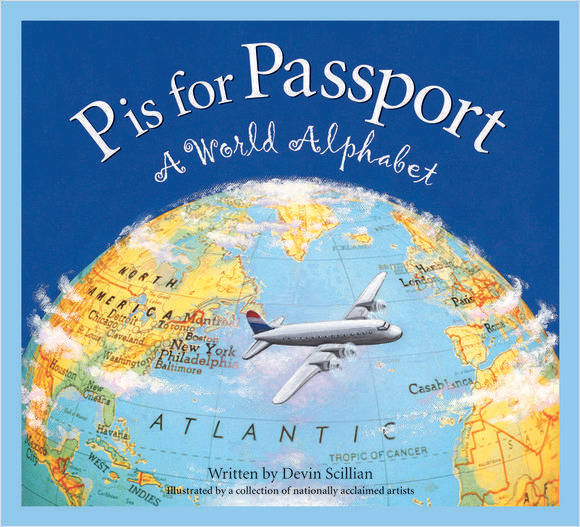
P is for Passport: A World Alphabet

Written by Devin Scillian | Illustrated by nationally acclaimed artists


One of the best ways to learn about the world’s diverse population is to travel—either in person or through a great book. P is for Passport is your own personal guide to the myriad people, landmarks, animals, natural resources, modes of transportation, and other things that make up our world. Each letter of the alphabet introduces readers to a concept that begins with that letter (A for animals, B for breads, etc.). A short definition of the place, event, object, or idea is given on one page, and the facing page contains a poem that cleverly and lyrically describes it with examples from around the globe.

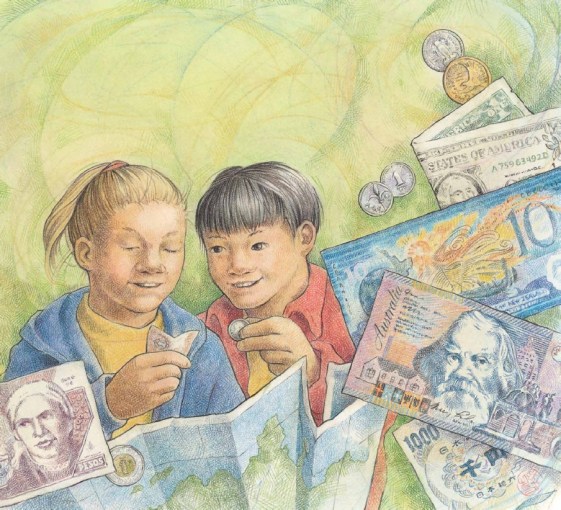
celebrate-picture-books-picture-book-review-p-is-for-passport-currency

Image copyright K.L. Darnell, courtesy of Sleeping Bear Press

After getting the right Currency with the letter C and filling K’s Knapsack, armchair travelers will traverse the world’s varied terrain. E takes them to the “epic elevation” of “mighty Mount Everest”; for the letter I they will sail to the Emerald Isle of Ireland, the Isles of Greece, and the Isle of Skye as well as to chilly Greenland, warm Tahiti, and green Iceland; J will find them in the densest jungles; of course, “O is for Oceans that “roll and roar and sway”; and D is for deserts:

“We’re in Dakar and it’s dreadfully dry, whipped by the sand in the breeze. / Or it’s a day in Death Valley, dangerously hot at 120 degrees. / A dazzling sun dries out the Gobi, a harsh and punishing land. / The largest on earth is called the Sahara, nine million miles of sand….”

celebrate-picture-books-picture-book-review-p-is-for-passport-bread

Image copyright Gary Palmer, courtesy of Sleeping Bear Press

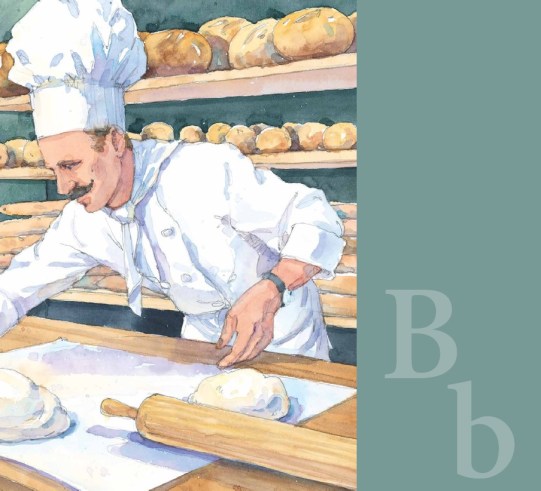
By now readers will be hungry, so B provides buttery buns, bagels, baguettes, biscuits, and more. Feel like something else? Then flip to G for Grain found in pasta, porridge, dumplings, ramen, couscous, wheat, and rice. While travelers eat they can peruse the languages at L:

“Polish is spoken in Poland. In Japan, it’s Japanese. / In Brazil they don’t speak Brazilian, but rather Portuguese. / L is the list of Languages, so many ways to speak. / Like English and Spanish, Italian and Hebrew, Arabic and Greek. / So pack a handy phrase book and learn a few things to say. / A friendly ‘Bonjour!’ or ‘Buenos dias!’ can go a very long way.”

Q is your Quest “…both large and small, from climbing Kilimanjaro to seeing Niagara Falls.” You’ll cross countries by R—Railway and “…rise right through the Rockies , or across the French Riviera, / or rumble across the Australian outback making your way to Canberra.” Along the way you’ll be entertained by M—Music from mandolins, marimbas, maracas, and many different musicians—and S for Sports, such as soccer, surfing, sailing, skiing, and so many more.

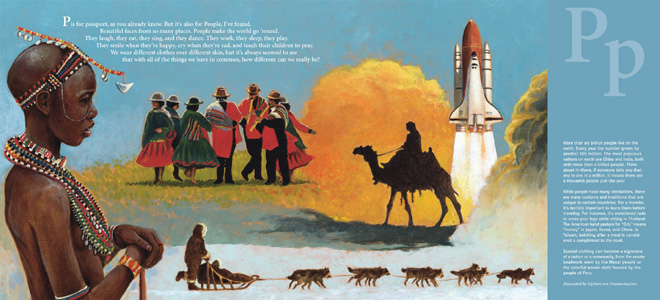
Lastly, T stands for Travel as “you see, each trip a traveler takes is a moment that you spend / getting to know a whole new world. And that world becomes your friend.” And from your travels you’ll remember P, the People:

“They laugh, they eat, they sing, and they dance. They work, they sleep, they play. / They smile when they’re happy, cry when they’re sad, and teach their children to pray. / We wear different clothes over different skin, but it’s always seemed to me / that with all of the things we have in common, how different can we really be?”

celebrate-picture-books-picture-book-review-p-is-for-passport-people

Image copyright Gijsbert van Frankenhuyzen

As today’s date also hosts the holiday International Town Criers Day, honoring those early “news reporters,” it’s appropriate that Devin Scillian is our featured author. Besides authoring this and other books, he is a television journalist. His childhood spent living in cities across the globe and his work make him a perfect traveling companion for P is for Passport and its introduction to the marvels of the world around us. Delivering the sights, sounds, aromas, play, and people of foreign lands through fascinating rhymes and facts is a wonderful way to get kids excited about travel and geography.

Twenty-four artists from around the United States and Canada lend their unique talents to depicting each letter. Beautiful two-page spreads burst with color and bold, up-close views of representatives for each letter-inspired text. Brilliant red and blue parrots share space with violet orchids, blue poison dart frogs, a coiled green snake, and a stealthily creeping jaguar in Karen Latham and Rebecca Latham’s painting for the letter J. Susan Guy’s soft watercolor of a frozen landscape cut only by a sleek train and its glowing headlamp transports readers to cold northern regions for the letter N. Volcanoes steam and spout while hot, golden lava burns a path through forestland in Ross Young’s vivid painting for the letter V.

Each illustration is equally compelling. Children and adults will want to linger over each page and will find P is for Passport just the beginning of their world exploration. The book would be a welcome home library addition for geography enthusiasts of all ages.

Ages 7 – 12

Sleeping Bear Press

Hardcover, 2003 ISBN 9781585361571 | ebook, 2013 ISBN 9781627533577

World Population Day Activity

celebrate-picture-books-picture-book-review-train-shaped-word-search

All Aboard for Travel! Word Search


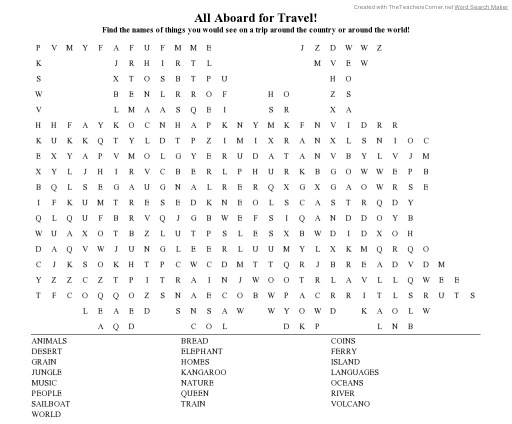
The best way to meet your fellow citizens of the world is to travel! Today’s word search is shaped like a train—one of the best ways to see the countryside. So hop on board and start exploring! Get your printable All Aboard for Travel! puzzle.

July 10 – Don’t Step on a Bee Day

celebrate-picture-books-picture-book-review-bee-dance-cover

About the Holiday

With the bee population declining, today is a reminder to protect bees and preserve their habitats. Without bees and the pollination they provide, the world’s food supply is threatened. Pollution, pesticides, and colony collapse all endanger the health of bee colonies around the globe.

Bee Dance

By Rick Chrustowski


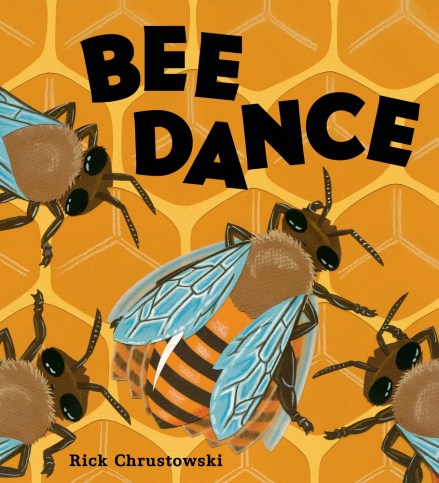
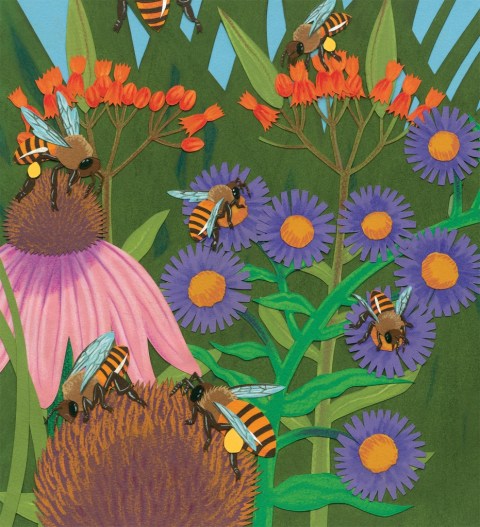
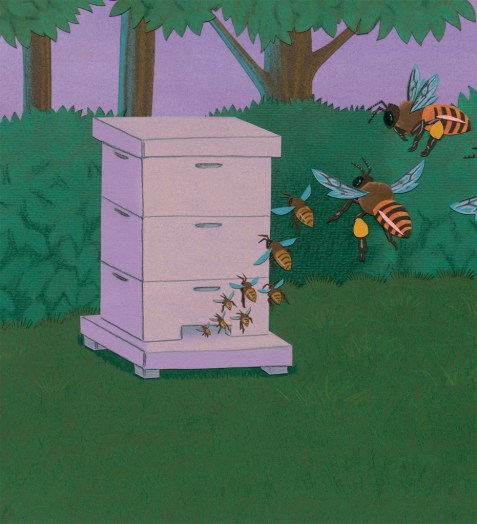
In the warm sunlight a honey bee leaves the hive in search of nectar. A sweet scent in the pleasant air entices the bee toward a prairie in bloom, where tasty wildflowers await. With its “bendy-straw tongue” the bee sips the delicious food. The bee races back to the hive and as the other bees welcome it home with a buzz of excitement, the Scout climbs the honey comb to deliver its news.

celebrate-picture-books-picture-book-review-bee-dance-interior-art-wildflowers

Image copyright Rick Chrustowski, courtesy of us.macmillian.com

The bee communicates its story through a “waggle dance.” It forms a figure 8, twirling one way, running up the middle, and then twirling around the other side. To indicate direction and distance, the Scout bee waggles faster and for a longer period of time. When the dance is completed, the other bees know exactly where to go. They swarm out of the hive and easily find the wildflower prairie.

Forager bees collect nectar from the tall flowers and fill pouches on their legs with pollen. They zip from flower to flower until daylight fades. In the growing twilight the bees head for  home once more. Back in the hive they unload their cargo in the combs and rest for the night. With dawn the cycle and the dance will begin again.

celebrate-picture-books-picture-book-review-bee-dance-interior-art-coming home

Image copyright Rick Chrustowski, courtesy of us.macmillian.com

Rick Chrustowski’s Bee Dance is a lyrical introduction to the fascinating and mysterious world of bees. Focusing on the communicating dance Scout bees perform to relay information is a familiar and excellent choice for young children used to following and inventing meaningful motions. The boldly colored illustrations give children an up-close view of the flying, sipping, and pollen gathering behavior of bees. The Scout bee’s dance is depicted clearly, and kids may love to replicate it. Further details of the life and work of honeybees at the end of the book add compelling information that kids will want to explore further.

Ages 4 – 8

Henry Holt and Co., 2015 | ISBN 978-0805099195

Visit Rick Crustowski’s webste to discover more about his books and how to make a Bee Kite!

Don’t Step on a Bee Day Activity

celebrate-picture-books-picture-book-review-bee-coloring-page

Honeybee Coloring Page


Honeybees and wildflowers go hand-in-hand or is it wing-in-petal? Either way they go together and make a beautiful, natural sight! Decorate this printable Honeybee Coloring Page with pencils, crayons, or markers—or make a collage using cut or torn tissue or craft paper!

July 9 – National Sugar Cookie Day

celebrate-picture-books-picture-book-review-cookies:-bite-size-life-lessons

About the Holiday

Sugar Cookie Day may be one of the sweetest holidays on the calendar! With a few simple ingredients you can bake up delicious, melt-in-your-mouth confections that are perfect by themselves, with a cup of tea or milk, or served with fruit. The basic recipe can also be dressed up with all kinds of flavors and chips. Whether you slice the dough in circles or roll it thin and use cookie cutters, making sugar cookies is a fun way to spend time together!

Cookies: Bite-Size Life Lessons

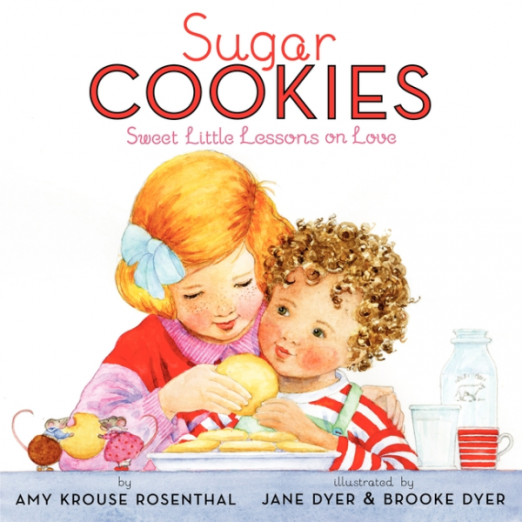
Sugar Cookies: Sweet Little Lessons on Love

One Smart Cookie: Bite-Sized Lessons for the School Years and Beyond

Written by Amy Krouse Rosenthal | Illustrated by Jane Dyer


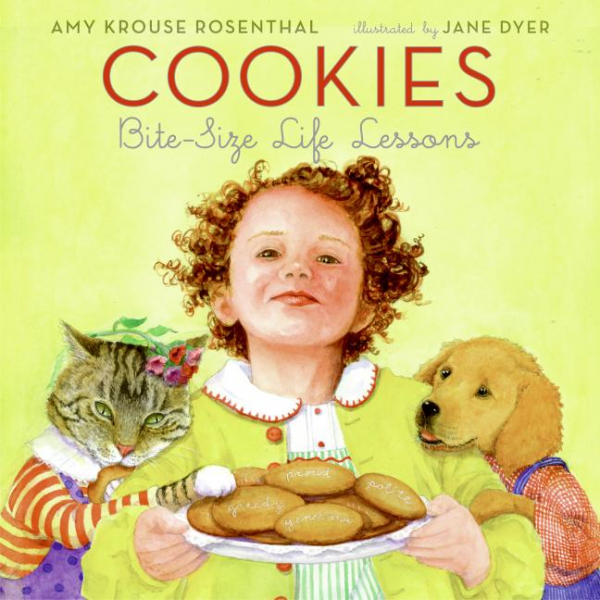
Baking is such an ideal metaphor for life and one that children can understand and appreciate from a very early age. A child’s familiarity with and love of cookies make Cookies, Sugar Cookies, and One Smart Cookie perfect ways to teach children the lessons of good manners and social skills. Newly released in board book form, Cookies: Bite-Size Life Lessons opens to a curly-haired girl and her rabbit and Boston Terrier friends gathered around a mixing bowl. They are cooperating as the animals pour in the chocolate chips while the little girl stirs.

Having patience is often hard for young children. A girl and her sailor-suited Scotty dog stare into the glowing door of the oven, reminding kids that they are often already successful at this much-needed skill.  Once the cookies are baked, kids learn how to be proud of their accomplishment while also showing modesty, and they see compassion at work as a little boy reaches across the table to share his cookie with a cat whose cookie has fallen to the floor.

Two rabbits see the same half cookie on a plate very differently: One, trim in her blue bow, is pessimistic, while the other, rakish in his backward baseball cap, is optimistic. Honesty and courageousness are both learned when a contrite sheep tells the truth about taking a cookie: “I have to tell you something. The butterfly did not take the cookie—I took the cookie.” And “It was not easy for me to tell you that I took the cookie, but I took a deep breath…and made the words come out.”

Loyalty means sticking by a friend even if other kids have bigger cookies, and being open-minded is demonstrated when you try your friend’s new recipe even if the result looks a little odd. Contentment is found “sitting on the steps—just you and me, and a couple of cookies.” New insight closes the book with “I used to think I knew everything about cookies, but now I realize I know about one teeny chip’s worth.” After digesting these and other etiquettes, including respect, trustworthiness, fairness and unfairness, generosity, greediness, politeness, envy, and regret, children will be well on their way to life’s wisdom.

celebrate-picture-books-picture-book-review-sugar -cookies:-sweet-little-lessons-on-love

Sugar Cookies offers equally perceptive notions on love, defining such words as endearment, considerate, heartfelt, compassionate (“when you burn the cookies to a crisp, I’ll be there to give you a hug.”), selfless, tenderness, adore, cherish, protect, supportive, admire, requited and unrequited, forgive, unconditionally, and more.

One Smart Cookie gives kids direction as they navigate the social constructs of school and activities, defining terms such as prompt, organized and unorganized, prepared and unprepared, compromise, curious, ponder, empathy, integrity, contribute, and more with the same astute and homey ingredients as the previous books.

Amy Krouse Rosenthal’s Cookies series offers life lessons with gentle encouragement in a loving, conversational tone as well as comforting advice for those times when situations and emotions can be difficult. The beautifully written text does not simplify the terms or talk down to children, but treats them with the respect, intelligence, and maturity that they will learn when applying these concepts.

With just the right combination of old-fashioned and modern charm, Jane Dyer (and Brooke Dyer as co-illustrator of One Smart Cookie) infuses each concept with enchanting depth. Gorgeous full-page paintings of children and animals dressed in comfortable sweaters, homespun dresses, overalls, and rolled up pants, paired with fine typography create pages worthy of framing. The children and their rabbit, cat, sheep, frog, horse, and dog friends display pride, happiness, patience, sadness, indignation, and love through facial expressions and body language that kids will recognize and respond to.

Cookies: Bite-Size Life Lessons, Sugar Cookies: Sweet Little Lessons on Love, and One Smart Cookie: Bite-Size Lessons for the School Years and Beyond should find a place on every child’s bookshelf.

Ages 4 – 8

HarperCollins Publisher:

  1. Cookies: Bite-Size Life Lessons, Board Book Edition, 2016 | ISBN 978-0062427397; Hardcover 978-0060580810
  2. Sugar Cookies: Sweet Little Lessons on Love, 2009 | ISBN 978-006174072
  3. One Smart Cookie: Bite-Size Lessons for the School Years and Beyond, 2010 | ISBN 978-0061429705

To explore Amy Krouse Rosenthal’s books for children and adults, her short films, and much, much more, visit her website!

Visit Jane Dyer’s website to learn more about her and view a gallery of her books for children!

National Sugar Cookie Day Activity

celebrate-picture-books-picture-book-review-catch-the-cookie-maze

Catch the Cookie! Maze


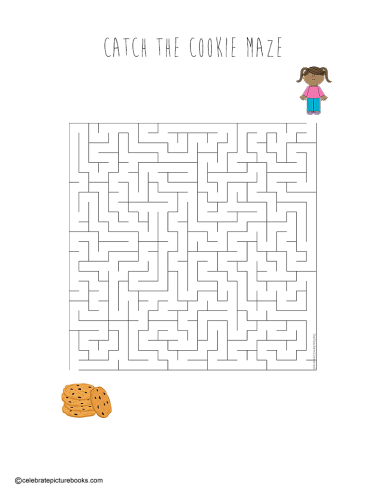
Sometimes you just need a cookie! Help the little girl find her way to her favorite cookies with this printable Catch the Cookie! Maze and Solution.

July 8 – Cow Appreciation Day

celebrate-picture-books-picture-book-review-the-cow-who-climbed-a-tree

About the Holiday

The cow is a moo-st amazing animal! Its importance to the world cannot be overstated. It has sustained humankind throughout history and even played an integral part in the defeat of small pox. It was discovered that most milk maids did not get small pox because they regularly contracted cow pox (a less virulent cousin of small pox) and built an immunity to the more serious disease. From this revelation, a vaccine for small pox was developed, saving thousands of lives every year.

Cows, with their gentle demeanor and soft, brown eyes, have always been beloved picture book characters. My own early favorite was the classic The Story of Ferdinand written by Munro Leaf and illustrated by Robert Lawson. The author/illustrator of today’s book carries on that cherished tradition.

The Cow Who Climbed a Tree

By Gemma Merino


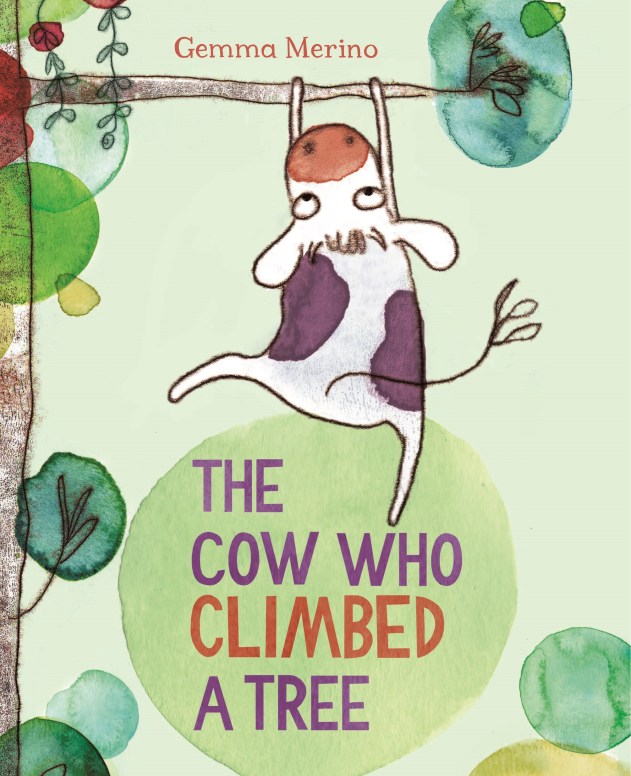
Tina is a very unique cow. Unlike her sisters who are only interested in “fresh and juicy grass,” Tina is very curious and always inventing new ideas. Her sisters proclaim her notions “‘Impossible! Ridiculous! And Nonsense!’” One day while exploring the woods, Tina decides to climb a tree. Branch by branch she swings herself to the top. Up there among the owls and squirrels Tina discovers a dragon—a friendly one, and a vegetarian to boot!

“All afternoon they talked about wonderful dreams and incredible stories.” Tina is excited to tell her sisters, but when she gets home they aren’t impressed. The whole idea of cows climbing trees and dragons is “‘Impossible! Ridiculous! And Nonsense!’” The next morning Tina never shows up for breakfast. Her sisters find a note that reads “Gone flying with the Dragon of the Woods.”

celebrate-picture-books-picture-book-review-the-cow-who-climbed-a-tree

Image copyright Gemma Merino, courtesy of gemmamerino.blogspot.com

Her sisters decided this nonsense has to stop, so they head out to find her. As they leave behind their familiar farmland and enter the forest, they can’t believe how beautiful it is. Suddenly a pig wearing a backpack dashes past them and shimmies up a tree. Even though they consider this “impossible,” one sister follows the pig. The others join her. From a treetop branch they three find that “the world beyond the fields was extraordinary.”

Still, Tina is nowhere to be found. The sisters look left, right, down, and up. Up! “It was impossible. It was ridiculous. It was nonsense. But it was true! Tina was flying!” She and other animals are taking flying lessons from the dragon, and while they don’t have wings, they soar just fine with a little help. From her lofty place, Tina asks her sisters to join her, and they say something she has never heard before: “Yes, why not?” They float, drift, and glide in the sunlit sky, and ever afterward find that nothing is “impossible, ridiculous, or nonsense.” Now all four sisters can’t wait to see what else is possible.

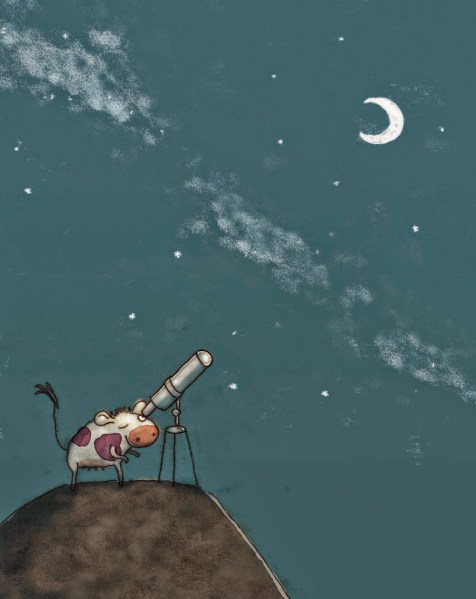
Gemma Merino’s mooving tribute to people who live and dream large will inspire young children to reach for the treetops and beyond. The plucky heroine who doesn’t cower under her sisters’ reproach is a confident and likable role model, happy to include her sisters when they finally see the light. Merino’s sweet, soft-hued illustrations humorously depict the dichotomy between the sisters’ grass-focused existence and Tina’s vivid imagination. The cows’ home has sage green walls, furniture, and floors. The pictures on the walls, the flowerpot on the windowsill, and the planter are all full of various types of vegetation, and the jars in the pantry contain such ingredients as Pickled Leaves, Meadow Mix, Dried Petals, and Herbal Tea. But Tina’s imagination and the forest she loves to visit are infused with reds, ambers, blues, and teals; even the greens are more brilliant. For anyone contemplating the unknown, The Cow Who Climbed a Tree is rousing fun!

Ages 4 – 7

Albert Whitman & Company, 2016 | ISBN 978-0807512982

To learn more about Gemma Merino and her books visit her website!

Cow Appreciation Day Activity

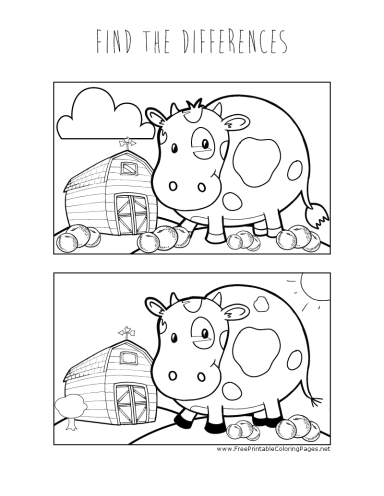
celebrate-picture-books-picture-book-review-cow-find-the-differences-puzzle

Cud-dly Cows Find the Differences Puzzle


These two farms may seem identical, but if you look closely, you’ll find eleven differences that make them unique. Print your Cud-dly Cows Puzzle here!