August 11 – Son and Daughter Day

celebrate-picture-books-picture-book-review-the-wonderful-things-you-will-be-cover

About the Holiday

Today’s holiday celebrates the special relationship between parents and their sons and daughters. The lifelong bond takes work, dedication, and most importantly unconditional love, and its rewards are innumerable. Whether your child or children are still small, have moved away, or are somewhere in between, spend some time with them, tell them why they are unique, and tell them that you love them.

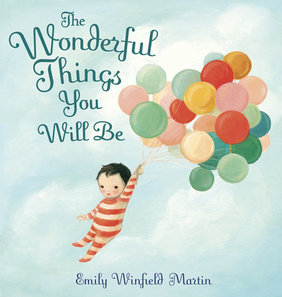
The Wonderful Things You Will Be

By Emily Winfield Martin


“When I look at you / and you look at me, / I wonder what wonderful / things you will be.” This opening sentence simply and beautifully expresses the emotions of parents and caregivers when first bringing a child home—and every subsequent day as they watch their kids grow and acquire their own talents, experiences, and opinions. From the first moments of a child’s life, the adults around them can’t wait to discover what is behind that sly smile, infectious laugh, even the pained cries. “When you were too small / to tell me hello, / I knew you were someone / I wanted to know.”

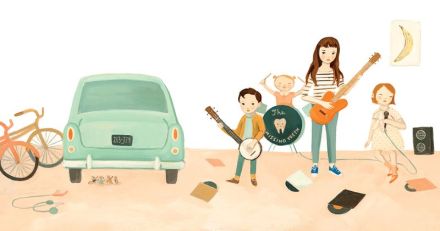
celebrate-picture-books-picture-book-review-the-wonderful-things-you-will-be-kids-in-band

Image copyright Emily Winfield Martin, courtesy of theblackapple.typepad.com

Martin reveals what caregivers know but children don’t yet realize—that the size of their heart, their wisdom, and their spirit is evident even when they are tiny, and because each child is unique the world holds a special place for them. Martin then opens that world to readers: “Will you stand up for good / By saving the day? / Or play a song only you / know how to play?” Perhaps the child will tell stories, help things to grow, or learn how to fly. Or will they “take care of things / Much smaller than you?” Whatever the child grows up to choose, parents or caregivers know that “they’ll be kind, and clever, and bold.” And when hard days come, being “brave” and “bright” will vanquish the “shadows.”

As each child matures and chooses a path in life, Martin leaves the reader of the book with these reassuring words any child needs to hear: “And then I’ll look at you / And you’ll look at me / And I’ll love you, / Whoever you’ve grown up to be.”

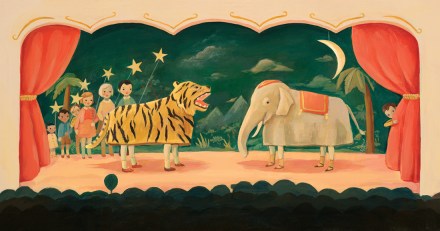
celebrate-picture-books-picture-book-review-the-wonderful-things-you-will-be-kids-in-tiger-and-elephant-play

Image copyright Emily Winfield Martin, courtesy of emilywinfieldmartin.com

When a child first comes into a home, parents or caregivers once again see the world in a new way—fresh and holding unlimited possibilities. Emily Winfield Martin captures that feeling with her lyrical words and delicate paintings. The vintage/retro illustrations populated with adorable children of various ethnicities, faithful pets, and favorite toys, give the book a universal feel. Throughout the book the children go about their tasks with confidence, thoughtfulness, and creativity—embodying the hopes and wishes adult readers have for their own children.

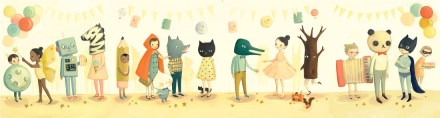
A gate-fold page toward the end of the book is a joy to explore as the illustrated children line up with costumes on as if for a school play or Halloween night. The different costumes invite readers to image what the children may grow up to be.

celebrate-picture-books-picture-book-review-the-wonderful-things-you-will-be-kids-in-kids-in-costumes

Image copyright Emily Winfield Martin, courtesy of emilywinfieldmartin.com

The Wonderful Things You Will Be is a perfect gift for new babies or for older children graduating from high school or college. The book invites multiple readings and makes a wonderful addition to anyone’s library.

Ages Birth and up

Random House Books for Young Readers, 2015 | ISBN 978-0385376716

Discover more distinctive artwork and books by Emily Winfield Martin on her website!

Son and Daughter Day Activity

celebrate-picture-books-picture-book-review-i-love-you-template

I Love You Because…


Children love to hear why you think they’re special and why you love them. With this printable I Love You Because…template, you can tell the children in your life what makes them so loveable and unique.

Picture Book Review

August 10 – World Lion Day

celebrate-picture-books-picture-book-review-lion-lessons-jon-agee

About the Holiday

The organization Big Cat Rescue established today’s holiday to bring awareness to the declining lion population. Habitat depletion, climate change, poaching, and other dangers have taken their toll on these majestic animals, and they are now on the endangered list. Global organizations aim to reverse the trend through education, protection, and governmental policy.

Lion Lessons

By Jon Agee


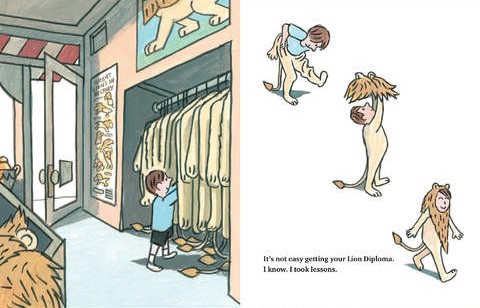
Passing signs for yoga lessons, violin lessons, Spanish classes, knitting classes, karate classes tutoring, a little boy turns into a shop advertising Lion Lessons in 7 Easy Steps. A closet to the right of a poster depicting “Great Lions in History” contains the appropriate garb—lion costumes. The boy steps into the body and attaches the mane. “It’s not easy getting your Lion Diploma,” the boy tells readers. “I know. I took lessons.”

His instructor, a lion himself, reveals that there are seven steps to becoming a lion. But first comes stretching. Converted yoga poses—“the Upward Lion, the Downward Lion, the Upside-Down Lion, the Rolling Lion, and the Flying Lion”—prepare them for the class to come. And, oh yes, they must shake their manes.

celebrate-picture-books-picture-book-review-lion-lessons-jon-agee-wearing-lion-costume

Image copyright Jon Agee, courtesy of Dial Books for Young Readers

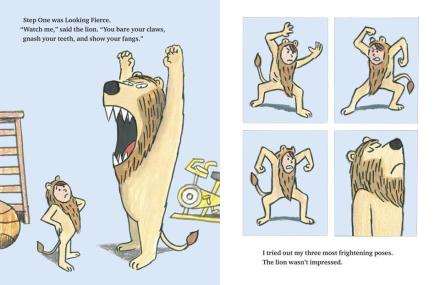
Step One to becoming a lion is “Looking Fierce.” The instructor demonstrates how to do it, complete with bared claws, gnashing teeth, and glinting fangs. The boy attempts these poses, but his instructor isn’t impressed. Step Two is “Roaring.” The boy steps up to the microphone and gives it his loudest growl. The sound barely registers on the noise meter.

Step Three is “Choosing What to Eat.” The instructor folds out the menu, with its wide choice of meats: “free-range muskrat, wombats, organic iguana, grass-fed gnu, all-you-can-eat antelope, sloth, prairie-raised anteater, and wild warthog.” Where’s the spaghetti? the boy wonders, only to learn that lions don’t eat spaghetti. Next up is Step Four: “Prowling Around.” Practice takes place in the forest where the boy learns to hide in the bushes and behind trees without letting his tail show.

Step Five is “Sprinting” and requires meeting the instructor at a faraway tree in five minutes; it took the boy one hour. After Sprinting comes “Pouncing.” The lion maneuvers the boy behind a woman talking on her phone and says, “‘It’s simple. You get a running start and then you jump on that lady.’” The boy protests that he will scare her to death. “‘Uh,’” says the lion, “‘that’s the idea.’” So the boy gets a running start and leaps—right into the lady’s arms. “‘What a cute little kitty-cat!’” she says.

celebrate-picture-books-picture-book-review-lion-lessons-jon-agee-looking-fierce

Image copyright Jon Agee, courtesy of Dial Books for Young Readers

Step seven is “Looking Out for Your Friends.” The boy peers through the telescope and sees a kitten: friend. The dog chasing the kitten: not a friend. The boy lets out a “ferocious roar.” He bares his claws, gnashes his teeth, paws the ground, shakes his mane and sprints across the field. When he’s within striking distance, he pounces…and saves the kitten! “‘Bravo!!’” congratulates the lion.

And that is how the little boy earned his diploma and became a hero to all the neighborhood cats in the bargain!

What kid wouldn’t like to be a lion—if even for a day? To be king of the classroom, or king of the playground, or even king of the house would be awesome. Jon Agee taps into that childhood (and adulthood?) mind set with his story of the little boy who channels his inner big cat to save a little cat from the neighborhood bully dog. Agee’s droll allusions to other popular classes enhances the humor for both kid and adult readers. Instead of yoga pants or a karate gi, the boy dons a lion uniform and proceeds on to perform lion-inspired exercises. While seemingly simple give-and-take, the dialogue between the two characters contains more dry wit that will have kids agreeing with their picture book counterpart and giggling at his predicament.

The over-sized pages and full-bleed colorful spreads allow for king-sized laughs. This is one lion instructor who takes his job seriously no matter how unsavory the menu or pouncing practice may seem to humans. Jon Agee never fails to entertain, and Lion Lessons continues the fun.

Ages 4 – 8

Dial Books for Young Readers, 2016 | ISBN 978-0803739086

To learn more about Jon Agee and his books and view a gallery of his illustrations, visit his website!

World Lion Day Activity

celebrate-picture-books-picture-book-review-wooden-spoon-lion-craft

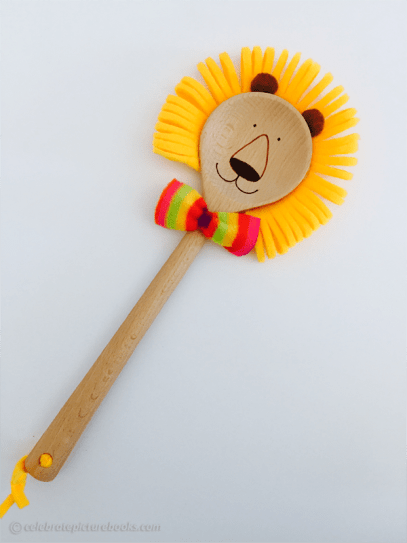
Wooden Spoon Lion Puppet


Unleash your inner lion! With this craft you can make a ROARingly cute lion puppet!

Supplies

  • Wooden mixing spoon
  • Yellow Fleece
  • Brown felt
  • Colorful Fleece or felt
  • Fabric glue
  • Light brown marker
  • Dark brown marker
  • Hot glue gun or super glue

Directions

  1. To make the lion’s face
  2. Draw a nose, mouth, and eyes on the front/bowl of the spoon

To make the mane

  1. Measure the rim of the spoon from one side of the handle to the other
  2. Cut a strip of yellow fleece as long as rim measurement and 4 inches wide
  3. Fold the piece of fleece in half long-ways
  4. Glue the open edges of the fleece together
  5. Along the folded side cut a fringe, leaving the loops intact

To make the ears

  1. Cut round ears from the brown felt

To assemble the lion

  1. Glue the ears to the back of the spoon
  2. Glue the mane to the back of the spoon

To make the bow

  1. Cut a 3-inch x 1 ½-inch piece of colorful fleece or felt
  2. Cut a long thin strip of fleece or felt
  3. Pinch the bow in the middle and tie with the longer piece of cloth. Trim as necessary
  4. Glue the bow to the handle

To make the tail

  1. Cut three thin 4-inch-long strips of yellow fleece
  2. With fabric glue, glue the tops of the strips together
  3. Braid the strips
  4. At the bottom, glue the strips together, leaving the ends free
  5. Fold the top of the tail and push it into the hole in the handle of the spoon

August 9 – Book Lovers Day

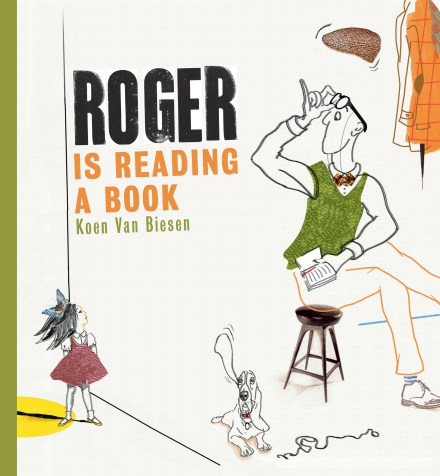
celebrate-picture-books-picture-book-review-roger-is-reading-a-book-cover

About the Holiday

For readers today’s holiday might be the best day of the year! With so many fantastic books to discover, one day doesn’t seem like enough! To make the most of it get up early and go to bed late, call in sick (Shhh…don’t tell them I told you to), order take out for lunch and dinner or read in a favorite restaurant, hire a baby sitter, go to the library or local bookstore….Just find a way to have quiet time to yourself—like Roger in today’s book!

Roger Is Reading a Book

By Koen Van Biesen | Translated by Laura Watkinson


Roger is a minimalist. His room consists of a black padded stool, a hook holding an orange coat, scarf, and umbrella, an extendable lamp jutting from the wall, and a basset hound pining for its leash crumpled on the floor. And—oh yes—there is Roger. Roger is sitting on the stool, reading. The little volume is engrossing, and Roger, in his tweed cap, plaid bowtie, green sweater vest, white shirt, orange outlined pants, and blue striped socks tucked into white shoes, is pondering a page.

Suddenly from the other side of the wall/left-hand page comes a resounding BOING BOING. It’s Emily bouncing a basketball! Roger flips his lid and the dog’s ear springs to attention. Emily, herself, and her room are a sight to behold. Emily’s thick unruly hair sports an enormous butterfly, she wears a number 2 on her pink dress, and her room is cluttered with the trappings of her hobbies. Roger rises, sets his book on the stool, and knocks on the wall while his dog offers his leash with hope. Emily stops her bouncing to listen.

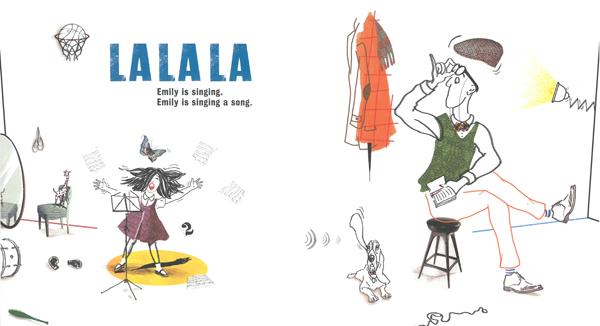
celebrate-picture-books-picture-book-review-roger-is-reading-emily-singing

Image copyright Koen Van Biesen

Ah! Silence reigns once more and Roger goes back to his book. But what’s this?! Emily is singing. The song is “LALALA” loud! Once again Roger knocks—“KNOCKITY KNOCK.” His dog wags his tail at the door. Okay, order has been restored and Roger, a little distracted, goes back to reading. What on Earth??!! “BOOM BOOM BOOM” Emily is playing the drum. The noise shakes Roger to his core. A shoe flies off, the lamp leaps upward, the book bounds away, Roger whips his head around. “KNOCK KNOCK KNOCKITY KNOCK” Ugh! Thinks Emily. Not this too!

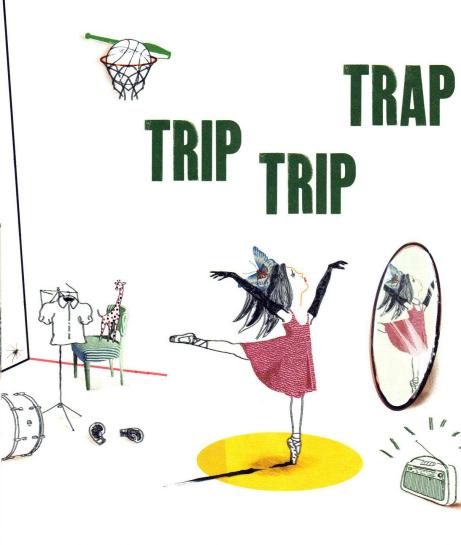
“POK POK POK” Emily juggles colorful clubs while poor Roger rubs his eyes, his book languishing in his hand. Even the basset hound has a paw over his snout. “TRIP TRIP TRAP” Emily is now practicing ballet. Despondent Roger has turned his back on the whole thing—as has his dog and his lamp. The book lies abandoned in the corner. “BAF BAF BAF” Emily is boxing! Something must be done! Roger paces. “Is Roger reading? No, Roger is not reading now.”

celebrate-picture-books-picture-book-review-roger-is-reading-emily-dancing

Image copyright Koen Van Biesen

“Book down. Coat on. Scarf on. Light off. Roger has made up his mind.” “KNOCK KNOCK KNOCK.” Roger knocks on Emily’s door. With a package. Emily tears it open. “OH…A book.” Roger returns to his room and his coat and scarf to the hook. He turns on the lamp and sits down on the stool. “Shhhh! Quiet. Emily is reading. Emily is reading a book.” It’s about juggling and basketball and other things. She holds her stuffed giraffe for company. “Shhhh! Quiet. Roger is reading. Roger is reading a book.” His failthful dog lies nearby for company.

Late into the night they read, their rooms illuminated only by a single lamp. “WOOF WOOF WOOF WOOF WOOF WOOF WOOF WOOF WOOF WOOF WOOF WOOF WOOF ….” Both Roger and Emily jump, startled out of their reverie. There’s only one thing to do. Roger and Emily take the dog for a walk.

With just a glance at the cover of Koen Van Biesen’s Roger Is Reading a Book, readers know they are in for a treat. The distinctive artwork defies simple explanation. Part outline, part optical illusion, the illustrations combine the immediacy of an art installation with the humor of a New Yorker cartoon. You feel for Roger, who just wants to sit quietly and read his book. But perhaps also for Emily, alone, who is trying to fill the empty hours. And of course for Roger’s basset hound, who has a very real need to go out.

The trio’s circumstances come together on a rainy afternoon to create escalating hilarity and finally the perfect solution. The minimal text, displayed in various sizes and colors of type, enhances the droll nature of Roger and Emily’s contest of wills and allows for the illustrations to depict Roger’s growing discontent and Emily’s dedication to her activities. Roger’s basset hound and lamp are funny foils empathizing with Roger’s pain.

The unique art and fun animated read-aloud opportunities presented in this picture book make Roger Is Reading a Book a must for kids’ (or adults’) libraries.

Ages 4 – 8 (and up)

Eerdmans Books for Young Readers, 2015 | ISBN 978-0802854421

Book Lovers Day Activity

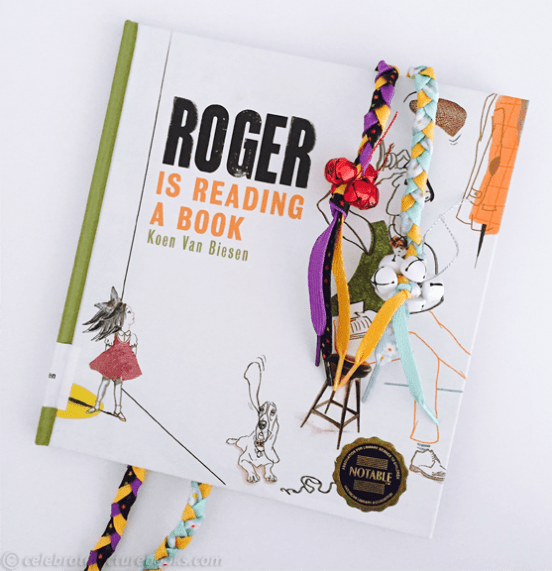
celebrate-picture-books-picture-book-review-bell-bookmark-craft

Read aLOUD Bookmark


Make some noise for your favorite book with this bell-tastic bookmark! It’s easy to make, and everywhere you go you’ll give your book a ringing endorsement!

Supplies

  • 3 novelty shoe laces or three strands of thin ribbon in different designs
  • 6 small jingle bells

Directions

  1. Cut the shoelaces or ribbon to the length you want for your books
  2. Knot the three shoelaces or strands of ribbon together at one end
  3. Braid the three shoelaces or strands of ribbon together
  4. Knot the strands together at the top, leaving about two inches of unbraided shoelace or ribbon hanging
  5. Thread the bells on a piece of string or cord
  6. At the knot tie the bells around the shoelaces or ribbon

Picture Book Review

August 8 – Happiness Happens Day

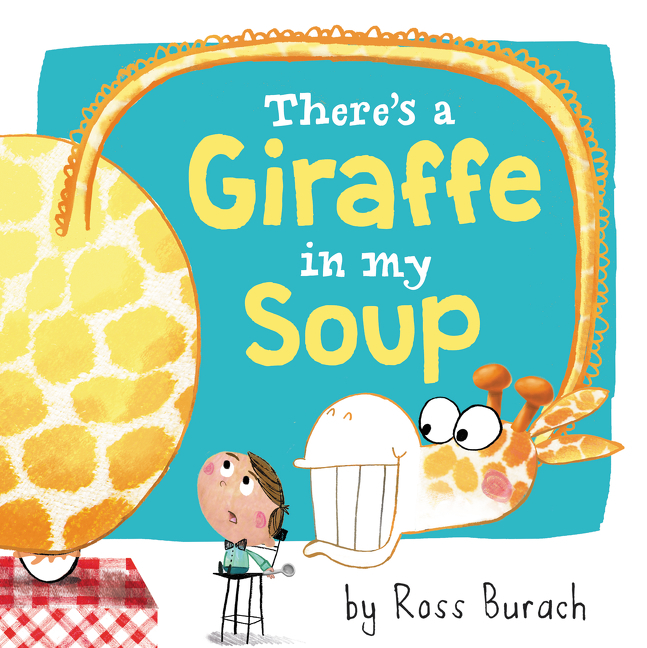
celebrate-picture-books-picture-book-review-there's-a-giraffe-in-my-soup-cover

About the Holiday

The aim of today’s holiday is to give you a chance to “admit you’re happy.” A smile or laugh at some of the absurdities of life as well as a true appreciation for the good things all around us makes each day better. So find your “happy place” and giggle along with today’s book!

There’s a Giraffe in My Soup

By Ross Burach


It seems that in such a fine establishment ordering the Special of the Day—Sonia’s Tomato Soup—would be easy, but for one little boy it is anything but. “Excuse me, waiter?” The boy politely summons the red-tuxedoed attendant, who is polishing crystal to a diamond sheen. “There’s a giraffe in my soup!” Offended, the waiter pokes his verrrry long nose in the air and says, “That simply cannot be.” But when he comes nose to teeth with said errant ingredient, he speeds with the giraffe on his tray through the kitchen door.

celebrate-picture-books-picture-book-review-there's-a-giraffe-in-my-soup-waiter-and-giraffe

Image copyright Ross Burach, courtesy of rossburach.com

Ah, a new bowl of soup is delivered post haste! But as soon as the bowl is set on the table, a little frog pokes its bulging eyes over the rim. Only it’s not a frog, but an alligator with its chompers ready to reverse the dining experience. It’s even seasoning the poor boy with pepper! Once again the waiter comes to the rescue.

Before the waiter even lifts the cover from the next bowl of soup, a suspicious blue trunk emerges. The elephant flails in the small bowl of soup as the boy yells for help. “Save her! Save her! Please hurry!” Before the elephant drowns, the waiter is on the scene. The next bowl fares no better. “Yak! Yak! Yak!” the boy shouts. “Yuck? Yuck? Yuck?” the waiter thinks, insulted by the young food critic. But no, indeed a hairy, horned yak has invaded the soup.

celebrate-picture-books-picture-book-review-there's-a-giraffe-in-my-soup-waiter-feeding-giraffe

Image copyright Ross Burach, courtesy of rossburach.com

Bowl after bowl is delivered and with bowl after bowl the boy encounters a walrus (that balances the chair and the boy on his nose), an ostrich (with its head in the soup), a koala bear (shhh…it’s sleeping), a snake (burp…it swallowed the boy!), and a whale (well…you can imagine). The bruised and sweating waiter slumps on the table with his last offering. “Here, huff at last. Your soup, huff roaring with flavor.”  “Lying? Lying? Lying?” the waiter has had enough and loses his cool. “Sure, I made a minor gaffe with the giraffe. Maybe I overlooked a whale. But when it comes to taste, I am a professional. Do not dare accuse me of…LION!! Why didn’t you say something!”

Trying to tame the lion with his platter and a fork, the waiter runs for the kitchen. He returns to the boy bandaged and on crutches to reveal that there has been a mix up. It seems the zoo was sent the restaurant’s food and the restaurant was sent the zoo’s animals. The little boy is magnanimous and ready to let bygones be bygones. “Let’s skip the soup. Maybe dessert?” The waiter agrees.

He wheels out the dessert cart to present “one mousse…with a cherry on top!” And while the whipped cream and sprinkles look appetizing, the hooves and antlers? Not so much. “Never mind!” says the boy. “I’m eating somewhere else!” He quickly hops on his Big Wheel tricycle to follow the parade of animals on their way back to the zoo.

celebrate-picture-books-picture-book-review-there's-a-giraffe-in-my-soup-lion-and-alligator-eating

Image copyright Ross Burach, courtesy of rossburach.com

Just as it’s impossible not to laugh at the perennial favorite restaurant joke—“Waiter, there’s a fly in my soup!” / “What’s a fly doing in your soup?” / “The backstroke”—There’s a Giraffe in My Soup creates giggles on every page. Ross Burach creates a great comedy team in the little boy who only wants a bowl of soup and the snooty waiter who aims to please. Their dialogue crackles with puns, misunderstandings, and witty banter. Mixed in to the recipe are the creatures—some clueless, some dangerous, and some just out of their element—that act as the catalyst for the animated facial expressions and frenetic action that propel the story. Vivid colors, a variety of typography, and some of the cutest zoo animals ever complete the entertaining effect.

There’s a Giraffe in My Soup is sure to be asked for again and again and would be a very welcome addition to any child’s library.

Ages 4 – 8

HarperCollins, 2016 | ISBN 978-0062360144

Learn more about Ross Burach and view his illustrations on his website!

Reader! There’s a book trailer in this blog post!

Happiness Happens Day

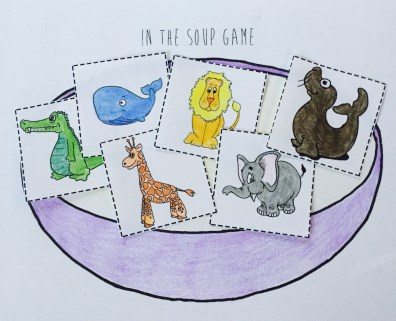
celebrate-picture-books-picture-book-review-animal-soup-game

In the Soup! Game


Play this fun and easy game to fill your bowl with a variety of animals!

Supplies

Directions

  1. Print out the bowl and playing card templates, one of each for every player
  2. Color the cards and bowl if you would like to
  3. Roll the die to see who goes first
  4. Each player takes turn rolling the die to collect animals to fill their bowl:
  • 1 = Elephant
  • 2 = Giraffe
  • 3 = Seal
  • 4 = Lion
  • 5 = Alligator
  • 6 = Whale

The first player to fill their bowl with all six animals is the winner

August 7 – National Lighthouse Day

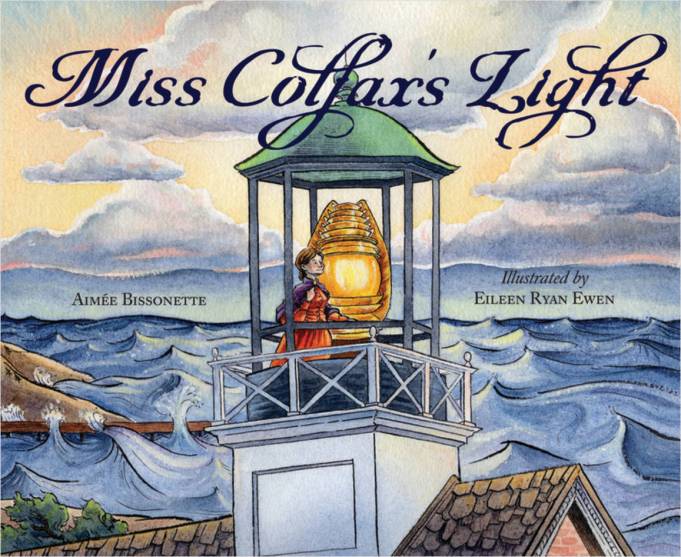
celebrate-picture-books-picture-book-review-miss-colfax's-light-cover

About the Holiday

Lighthouses have been in use since the earliest days of sea-going vessels. Built to warn sailors of dangerous and damaging rocks and reefs, these sentinels are a picturesque and fascinating part of history. From man—and woman—tended lights to today’s automated systems, lighthouses are a beacon of inspiration and imagination.

Miss Colfax’s Light

Written by Aimée Bissonette | Illustrated by Eileen Ryan Ewen


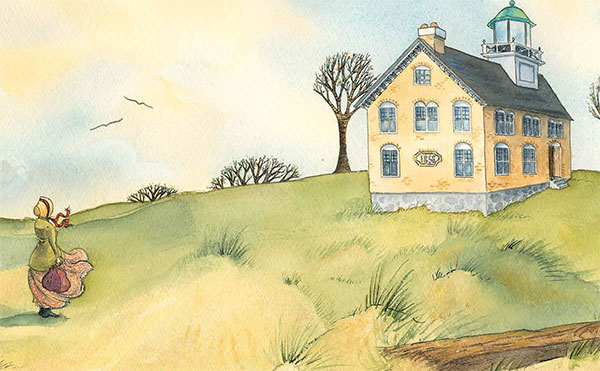
In 1861 when Harriet Colfax’s brother fell ill and decided to leave Indiana, Harriet had two options: she could leave with him—after all she had come to Indiana with him and worked with him at their newspaper—or she could stay on as the lighthouse keeper of the Michigan City Lighthouse, making $350 a year. Most women might have chosen to leave, but Harriet did not want to give up her independence or leave her best friend, Ann. She took the job as lighthouse keeper even though many in town thought she was too weak or too inexperienced to do the work.

celebrate-picture-books-picture-book-review-miss-colfax's-light-Michigan-city-lighthouse

Image copyright Eileen Ryan Ewen, courtesy of sleepingbearpress.com

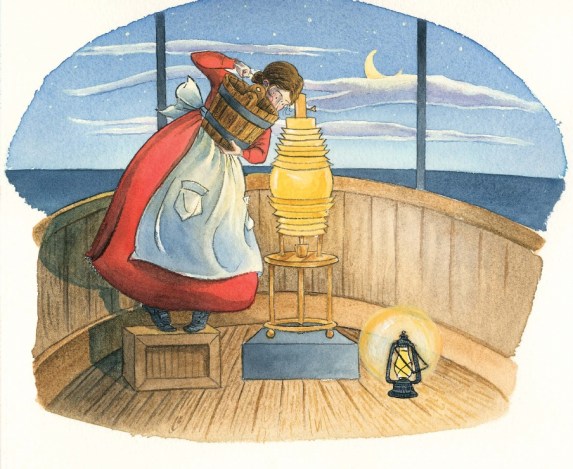
Harriet knew the ships on the sometimes wild waters of Lake Michigan—one of the northern United States’ Great Lakes—relied on the lighthouse to keep them from danger. Twice every night she had to carry “whale oil in a bucket up narrow stairs to the top of the lantern tower” to refill the light and then polish the Fresnel lens. During the day, she “cleaned and painted…varnished the woodwork and shined the brass…and wrote notes in her log.”

It didn’t matter if Harriet was tired or sick or if winter storms rocked the shore, Harriet’s work went on. In 1871 a beacon light was installed at the end of the Michigan City east pier. Now in addition to the main lighthouse, Harriet had to keep this signal lit too. To do so required a long walk down a wooden catwalk that jutted far out into the lake. At times the freezing water roiled and splashed over the catwalk, making the walk tricky and dangerous. By this time lard had replaced whale oil as fuel. While it was cheaper and easier to get, it also had to be heated to pour. Sometimes on frigid winter nights “the lard oil hardened in the cold and Harriet had to fight back through the wind to reheat the oil” on her stove.

celebrate-picture-books-picture-book-review-miss-colfax's-light-harriet-adding-oil

Image copyright Eileen Ryan Ewen, courtesy of sleepingbearpress.com

In 1874 the beacon light was moved to the west pier—farther away. Instead of being within walking distance, Harriet now had to “row a small boat across a creek, hike the far shore, and cross a longer catwalk to light the beacon light.” One night in 1886 storms raged as Harriet made her way down the west pier. “Driving sleet covered her coat with ice. Sand from the dunes along the lake pelted Harriet’s face, stinging her cheeks. Her boots slipped and slid on the catwalk.” Only moments after she finished filling the beacon light and stepped off the catwalk, “a deafening screech filled the air” as the beacon tower “ripped from its moorings and crashed into the lake.”

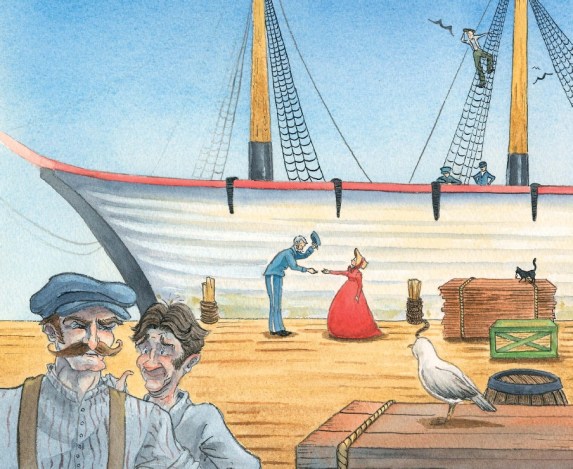
Harriet’s dedication to the Michigan City Lighthouse continued every day and every night for 43 years. People in town came to call the landmark “Miss Colfax’s Light,” and ship captains named it “Old Faithful.” Over the years her vantage point on the tip of the shore allowed Harriet to experience more than stormy seas. She also saw “brilliant sunsets, lunar eclipses, and silent, dancing northern lights. She saw tall-masted schooners with white sails give way to steamships of iron and steel.”

celebrate-picture-books-picture-book-review-miss-colfax's-light-meeting-a-ship-captain

Image copyright Eileen Ryan Ewen, courtesy of sleepingbearpress.com

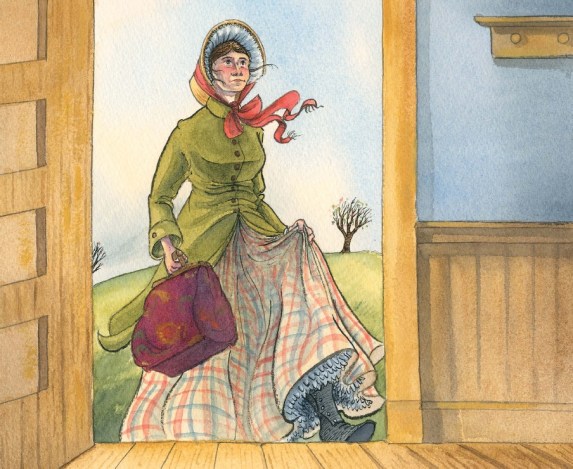
In 1904, when Harriet was 80 years old, the Michigan City Lighthouse underwent a renovation. It acquired a fog signal, and the oil-burning mechanism was replaced with a steam engine and boilers with huge coal-fired furnaces that required several keepers. Although Harriet was sad to leave her life as a lighthouse keeper behind, she understood. With the same bravery that had brought her to the lighthouse, she opened the door and stepped out to what came next.

The life of Harriet Colfax needs no embellishment to reveal the kind of determination and dedication it took to keep the Michigan City Lighthouse shining. Aimée Bissonette tells this brave woman’s story straightforwardly, focusing on particular moments when her duties were increased or her resolve challenged. Harriet’s personal motto that kept her going: “I can do this” is repeated throughout the book, echoing the revolving beacon that shines continuously on the shore of Lake Michigan. Actual entries from Harriet’s log punctuate the text, lending authenticity and Harriet’s voice to the story.Children will be fascinated by this snapshot of American (and world) history.

celebrate-picture-books-picture-book-review-miss-colfax's-light-harriet

Image copyright Eileen Ryan Ewen, courtesy of sleepingbearpress.com

Eileen Ryan Ewen’s action-filled paintings of Harriet and her work beautifully demonstrate to readers Harriet’s incredible will and perseverance under the most difficult circumstances. The narrow stairs of the lighthouse pose daunting in the middle of the night; the seas of Lake Michigan surge and lap at Harriet and the winds buffet her as she navigates the catwalk; and an exhausted Harriet stands at the stove melting lard to light the lens. Children interested in ships and the sea will find much here to excite their imaginations.

An author’s note about Harriet Colfax follows the text along with a glossary of terms used in the book.

Ages 6 – 9

Sleeping Bear Press, 2016 | ISBN 978-1585369553

Meet Aimée Bissonette and learn more about her books and work on her website!

To view Eileen Ryan Ewen‘s portfolio, sketchbook, and other books, visit her website!

National Lighthouse Day Activity

celebrate-picture-books-picture-book-review-lighthouse-coloring-sheet

Lighthouse Coloring Page


Lighthouses are a striking part of any seashore landscape. Here is a printable Lighthouse Coloring Page for you to decorate!

August 2 – It’s Water Quality Month

celebrate-picture-books-picture-book-review-water-can-be-cover

About the Holiday

Water Quality is a crucial world-wide issue. In fact, 2015 closed out a decade-long United Nations initiative “Water for Life” to promote awareness of the importance of water quality as it relates to sanitation, geography, human rights, urbanization, and sustainability. The Audobon Society emphasizes the interconnectedness of all water systems and urges people to be mindful of the dangers that can lurk in runoff from construction, forestry, factories, agriculture, and personal yards as it combines in rivers, lakes, or the ocean. To observe this month be conscious of what is in your water. Limit the use of anti-bacterial soaps that contain a certain pesticide harmful to marine life, don’t flush unused medications, choose nontoxic household cleaners, avoid using fertilizers and pesticides, and clean up leaks from cars and other machinery. Protecting our water sources protects us.

Water Can Be…

Written by Laura Purdie Salas | Illustrated by Violeta Dabija


“Water is water— / it’s puddle, pond, sea. / When springtime comes splashing, / the water flows free.” So begins an inventive journey through the ways that water enriches our lives. With four-word rhyming couplets Laura Purdie Salas illuminates specific moments or circumstances to reveal water’s important role from season to season. From filling ponds, lakes, oceans, and even puddles to roaring down hillsides to floating in misty fogs and forming snowflakes, water sustains us and makes the world a more beautiful place.

During spring and summer when ponds nurture new life and rain puddles reflect, “Water can be…a tadpole hatcher / Picture catcher.” In hot weather water refreshes as a “Thirst quencher / Kid drencher.” And the seas, at times calm and at others roiling, can be both “Home maker / Ship breaker.”

As the air cools in autumn, water can be found in alternate forms. It squirts from fountains for the “school drink-er” and hardens to ice for a “Bruise shrinker.” A river’s winding trail becomes a “Salmon highway / Eagle flyway.” Winter brings water in a more solid form. Whipped by wind snow swirls as a “Storm creator” or gently sticks to surfaces as a “Decorator.” Outside, both animals and people enjoy the frozen precipitation. Snow serves as a “Woodchuck warmer / Snowman former.”

On the final pages as ice sculptors carve castles and dragons, moon beams and rabbits, Laura Purdie Salas encourages readers: “Water is water— / it’s ice, snow, and sea. / Now go and discover / what else it can be.”

Fascinating facts concerning the subject of each rhyme, a glossary, and a bibliography for further reading follow the text. Laura Purdie Salas donates a portion of the royalties from Water Can Be… to WaterAid, an international non-profit organization that transforms lives by improving and providing access to safe water, hygiene, and sanitation.

Laura Purdie Salas always surprises with her selection of examples and clever rhymes leading readers to more fully appreciate the world around them. Water doesn’t just flow, it feeds, speeds, cloaks and soaks, it decorates and bejewels, fluffs and snuffs. After reading Sala’s poetic tribute, readers will never experience water the same way and will be on the lookout for how they can interpret water’s gifts.

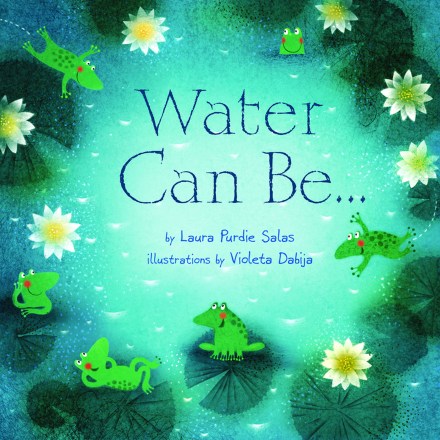
Violeta Dabija has created gorgeous, ethereal interpretations of each two-word rhyme. The nourishing blues and aquas of the sea, gauzy whites of fog and clouds, and brilliant whites of snow and ice are subtly crosshatched giving each illustration depth and movement. While the words on each page are short, kids will want to spend a long time taking in the beauty of Dabija’s paintings.

Ages 3 – 8

Millbrook Press, Lerner Books, 2014 | ISBN 978-1467705912

Check out the book trailer for Water Can Be…. It really makes a splash!

There’s so much to see and do on Laura Purdie Salas’s website!

View more beautiful art by Violeta Dabija on her website!

Water Quality Month Activity

celebrate-picture-books-picture-book-review-angel-fish-coloring-page

Angel Fish Coloring Page


Clean water is important for all fish to survive! You can make the ocean sparkling clear by adding a bit of glitter to your printable Angel Fish Coloring Page!

July 31 – Uncommon Instrument Awareness Day

celebrate-picture-books-picture-book-review-ada's-violin-cover

About the Holiday

Today is the day to be musically experimental. Intriguing, inventive instruments that make a wide variety of sounds exist in every corner of the world. From Russia comes the contrabass balalaika, a triangular stringed instrument. The cimbalom, a concert hammered dulcimer, originated in Hungary. And only the Welsh could give us an instrument with no vowels: the crwth. Glass, water, and lightning are also used to make beautiful sounds, and the Holophonor—a musical instrument and hologram projector all in one—is perfect for Elvis sightings wherever he is! So, play a different instrument or research one, and read the inspiring story in today’s book!

Ada’s Violin: The Story of the Recycled Orchestra of Paraguay

Written by Susan Hood | Illustrated by Sally Wern Comport


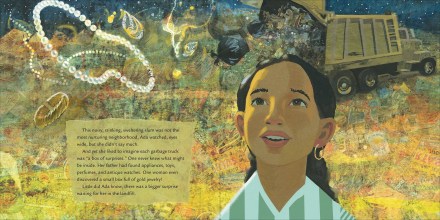
Ada Ríos is growing up in Cateura, a town built of trash as the main garbage dump for the capital city of Paraguay. Every morning the refuse trucks rumble into town to deposit their loads—1,500 tons of trash every day. The citizens of Cateura—gancheros or recyclers—go to work sifting through the mounds and tearing into bags looking for anything valuable enough to recycle or sell. Cardboard is worth 5 cents a pound, plastic 10 cents a pound.

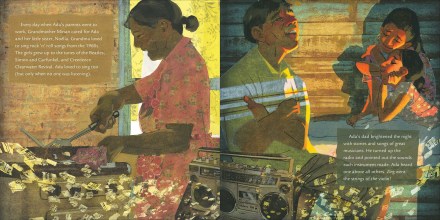
Ada knows the landfill can hold surprises—“Her father, a ganchero, had found appliances, toys, perfumes, and antique watches.”—but she can never imagine what it holds for her. When Ada and her sister were little, their grandmother watched them while their parents worked. They loved to listen to music, to sing, and to learn stories of musicians and the sounds of different instruments. Ada fell in love with the violin.
celebrate-picture-books-picture-book-review-ada's-violin-making-singing

Image copyright Sally Wern Comport, courtesy of simonandschuster.com

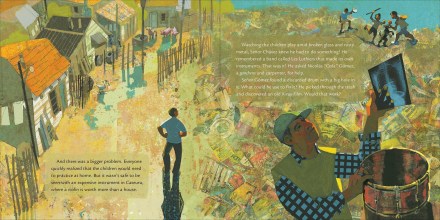
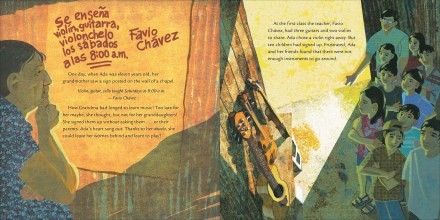
As the girls grow older and go to school, they venture farther into town, but there is little to fill their time. Many kids join gangs or get into fights. When Ada is 11 her grandmother signs her and her sister up for music lessons being offered by a new man in town named Favio Chávez. “Ada’s heart sang out” when she hears the news. On the first day ten children show up to play the five instruments available. But a bigger problem looms: the three guitars and two violins cannot be taken home for practicing as they are magnets for thieves. In Cateura a violin is worth more than a house.

But Favio Chávez has an idea. With help from Nicolás Gómez, a ganchero and carpenter, they pull bits and pieces from the landfill. An old broken drum and an X-ray film become a workable drum, water pipes become flutes, packing crates become guitars and violins, and oil drums become cellos. “Ada chose a violin made from an old paint can, an aluminum baking tray, a fork, and pieces of wooden crates. Worthless to thieves, it was invaluable to her. It was a violin of her very own.”
celebrate-picture-books-picture-book-review-ada's-violin-making-instruments

Image copyright Sally Wern Comport, courtesy of simonandschuster.com

The children practice tirelessly outside in 100-degree heat until the initial “screeches, twangs, and tweets hit all the right notes. Their class became ‘a small island’ where Chávez taught them to respect themselves and one another.” They become known as The Recycled Orchestra. Music now fills the air, adding a soundtrack of beauty to the grueling work. The orchestra is soon invited to play concerts in Cateura and the capital city of Asunción. When word spreads of their talent, they receive offers to play from other cities and even other countries.

When Ada is 16 The Recycled Orchestra is invited to tour with a world-famous rock band. As Ada takes the stage in front of 35,000 people in Bogotá, Colombia, she is afraid, but the audience cheers for them and sings along as they play. On that night the children discover a new life. “Buried in the trash was music. And buried in themselves was something to be proud of.”
celebrate-picture-books-picture-book-review-ada's-violin-lessons

Image copyright Sally Wern Comport, courtesy of simonandschuster.com

An extensive author’s note plus a photograph of The Recycled Orchestra, websites, and videos follow the text, as well as a list of sources.

Ada’s Violin is also available in a Spanish edition—El violín de Ada: La Historia de la Orquesta de Instrumentos Reciclados del Paraguay.

Susan Hood has brought to light an incredible story of perseverance, hope, and the ability of music and other arts to provide opportunities and self-confidence that change lives. Told with unstinting honesty and sensitivity, Hood’s biography of Ada Ríos, Favio Chávez, and The Recycled Orchestra will inspire all who read it. The well-paced text offers revealing details on every page and flows with a lyrical quality that enhances the effect of the story and its impact. From the first sentence to the last, both children and adults will be riveted to The Recycled Orchestra.
celebrate-picture-books-picture-book-review-ada's-violin-hope

Image copyright Sally Wern Comport, courtesy of simonandschuster.com

Sally Wern Comport’s paintings beautifully capture the human spirit that shines through and drives people to astonishing achievements even in the most adverse conditions. With intricately created collages of rich hues, Comport depicts the town of Cateura and the mountains of trash the citizens work and play on. Warm lighting illuminates faces full of dreams and love, and readers will linger over depictions of the instruments workshop and cheer along with the concert audience as the children receive recognition. The full-bleed, two-page spreads echo the expanded world music gave to the children in the orchestra and the adults who heard them as music score confetti flutters throughout.

Both school classrooms and home libraries will benefit from the stirring message of Ada’s Violin.

Ages 4 and up

Simon & Schuster Books for Young Readers, 2016 | ISBN 978-1481430951 (English edition); 978-1481466578 (Spanish edition)

Discover more about Susan Hood and her books, plus fun activities for kids and information for teachers and parents on her website!

View a gallery of Sally Wern Comport’s artwork on her website!

Uncommon Instrument Awareness Day Activity
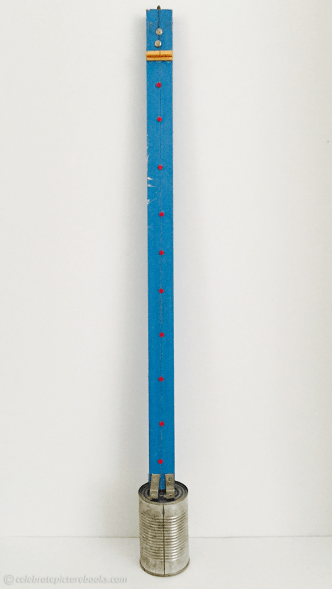
celebrate-picture-books-picture-book-review-homemade-musical-instrument


Make Your Own Musical Instrument


Inspiration for sound can come from almost any object! Look around your house or classroom and discover the music in boxes, cans, blocks of wood, plastic egg cartons or deli containers, and more. Add string or wire for plucking, sticks for drumming, or beans for shaking. With a little glue, tape, or hardware and some creativity, you’ll be making your own rhythms in no time!

Supplies for the instrument shown in the picture above

  • Tin can
  • Two small L brackets
  • Piece of wooden molding, 2 1/2 feet by 1 1/2 inches by 3/4 inches
  • Five small strips of wood to raise the wire off the neck of the instrument. I used long wooden fireplace matches cut into 1 1/2″ sections 
  • Thin wire
  • Small circular hook screw or regular screw
  • Two tacks
  • A nail, screw, or piece of wood that will fit horizontally in the mouth of the can
  • a small nail to make a hole in the can
  • Hammer
  • Strong Glue
  • Paint
  • Foam decorative dots

Directions

  1. Paint the wood and let dry
  2. Paint the small strips of wood and let dry
  3. Decorate the can with paint, sticker, duct tape, or paper
  4. With the hammer and small nail, make a hole in the center of the bottom of the can
  5. Wrap one end of the wire around the nail and glue so it is firmly in place
  6. Feed the other end of the wire through the hole in the bottom of the can
  7. Screw or glue two L brackets to one end of the wood molding so that the bottom of the L is flush with the bottom of the wood molding and there is space between the brackets. This makes the neck of the instrument
  8. Screw the circular or regular screw into the top, center of the wooden molding
  9. When the wooden strips are dry, glue three side by side 3 inches from the top of the molding. Glue two more matches, one on top of the other on the center strip.
  10. When the L brackets are dry, glue them (and the neck of the instrument) to the can, making sure the brackets are on either side of the hole in the can. Make sure the wire is out of the hole. 
  11. When the brackets are firmly attached to the can, pull the wire to the top of the neck. Settle it in the center of the small pieces of wood, so that the wire is not touching the neck.
  12. Wrap the wire around the screw at the top of the molding until it is firmly in place and the wire is taut. 
  13. Secure the wire to the neck with the tacks
  14. Mark the “frets” with the foam dots

Picture Book Review