December 3 – Read a New Book Month

celebrate-picture-books-picture-book-review-a-dinosaur-a-day-cover

About the Holiday

Yesterday for Read a New Book Month, I shared the amazing encyclopedic An Animal a Day, which introduces children to the vast diversity of animals that populate our always-astonishing Earth. Today I’m highlighting another book in this series that takes readers back millions of years to meet dinosaurs both small and mammoth. These books—one or both—make perfect gifts that will keep on giving throughout the year for kids to dip into by themselves or to share with adults.  

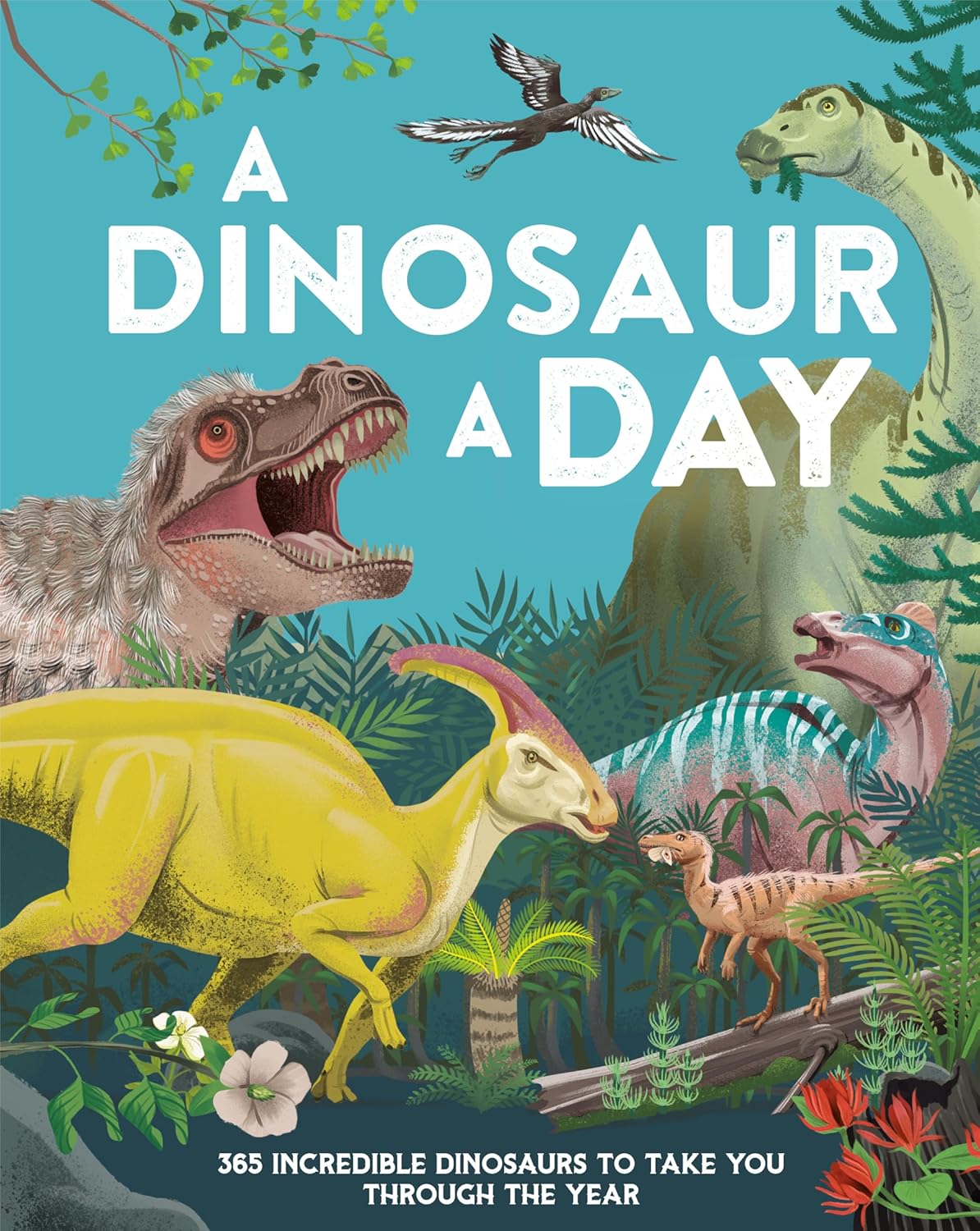
A Dinosaur a Day: 365 Incredible Dinosaurs to Take You through the Year

Written by Miranda Smith

Illustrated by Jenny Wren, Juan Calle, Xuan Le, Max Rambaldi, and Olga Baumert


What kid wouldn’t like to share their birthday date with a dinosaur? Or learn about the “tyrannosaur tyrants” whose descendants included the fearsome favorite Tyrannosaurus Rex? Or be able to impress their friends and teachers by rattling off the names and details of such dinos as the Huehuecanauhtlus, the Aepyornithomimus, or the Eustreptospondylus? All of these are easily—and enjoyably—accomplished with this day-by-day walk through prehistoric times.
celebrate-picture-books-picture-book-review-a-dinosaur-a-day-march

Image copyright Jenny Wren, Juan Calle, Xuan Le, Max Rambaldi, and Olga Baumert. Text copyright Miranda Smith. Courtesy of Bright Matter Books.

Before kids dive into the year, they can learn a bit about early life on Earth, events leading to the rise of the dinosaurs, and the three time periods that ushered in (and out) the wide variety of dinosaurs and other reptiles the earth has hosted. Readers also get a quick primer on fossils and discover other creatures, including lizards, insects, and mammals who coexisted with the dinosaurs.

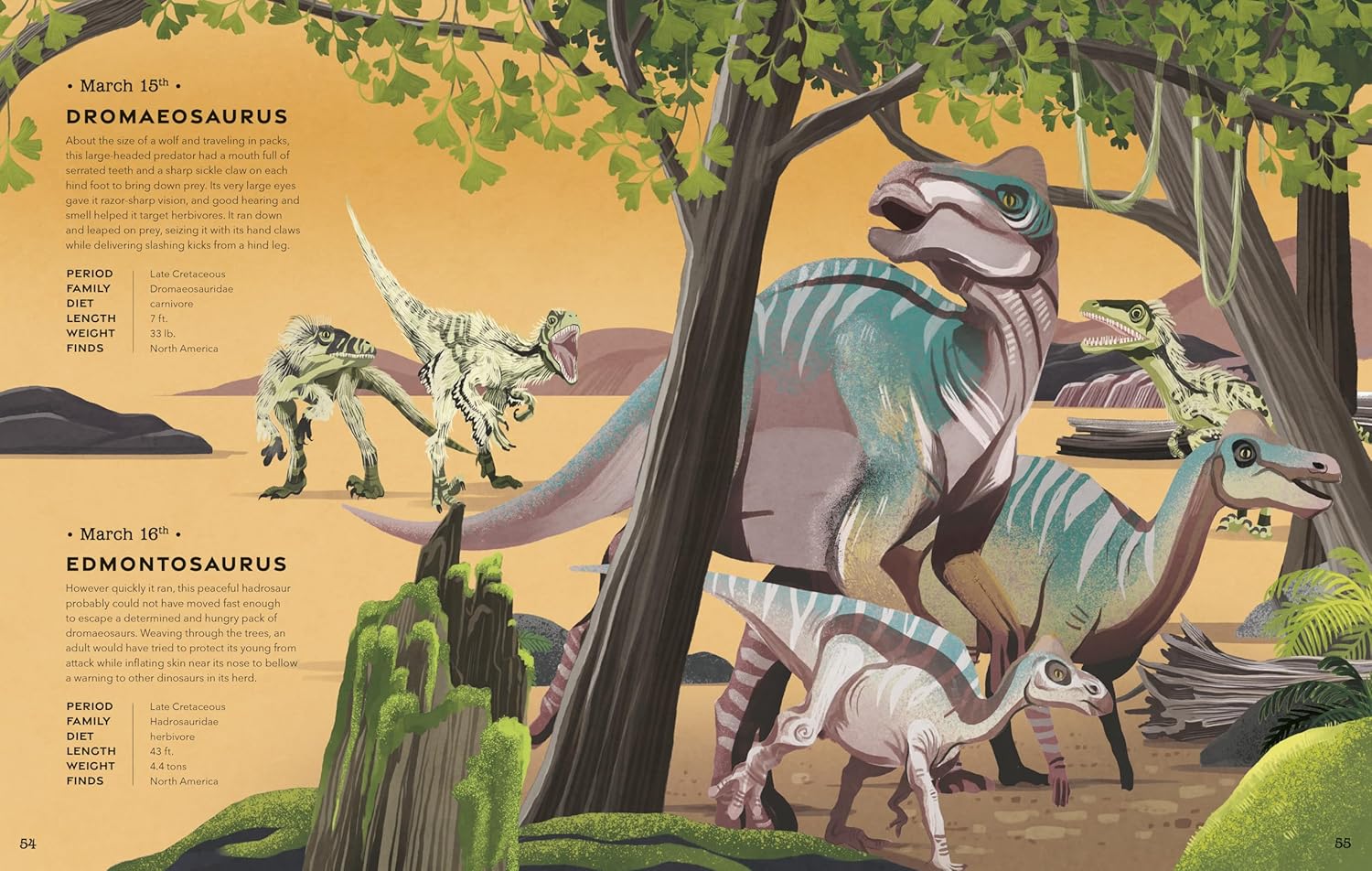
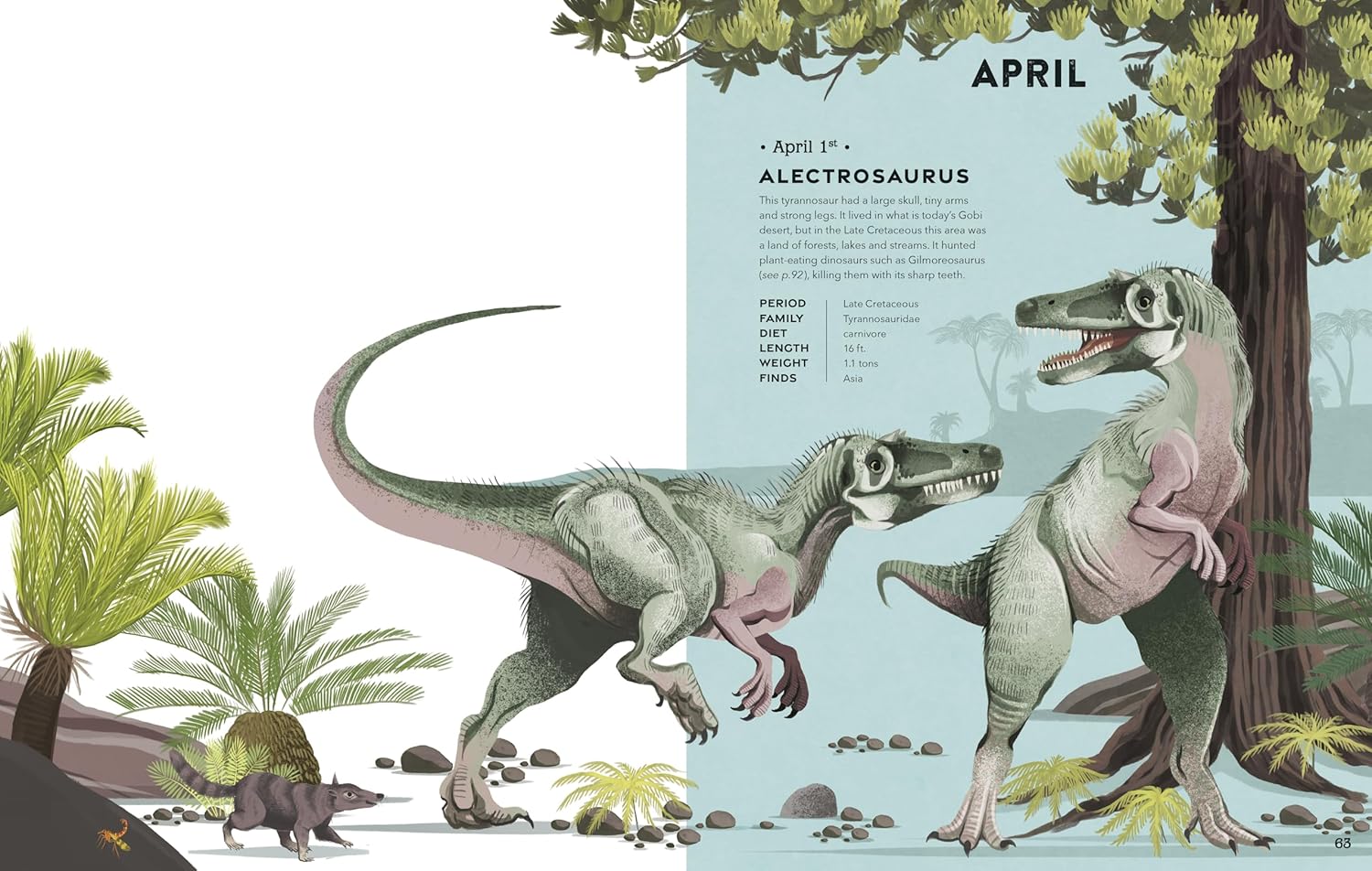
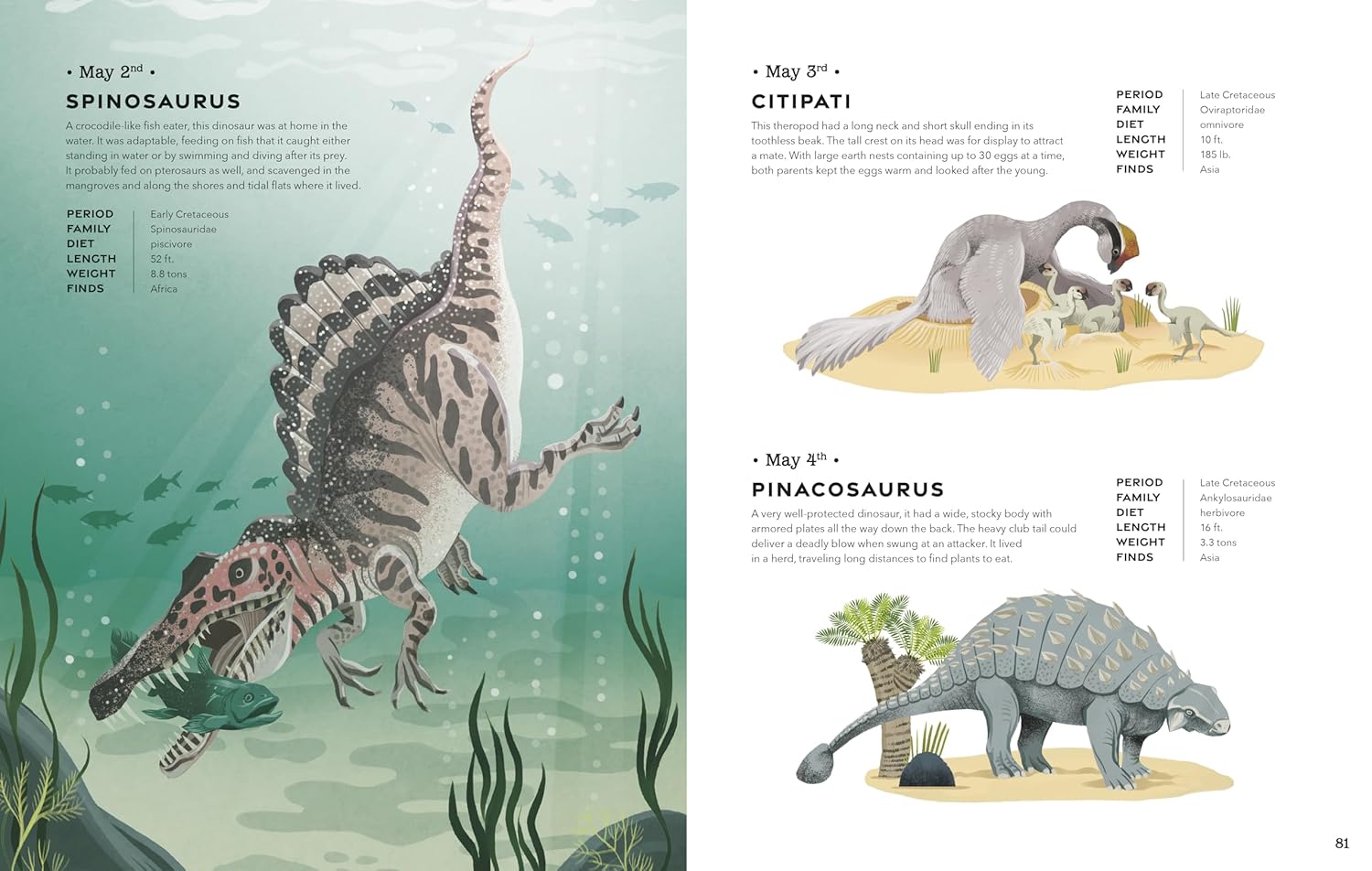
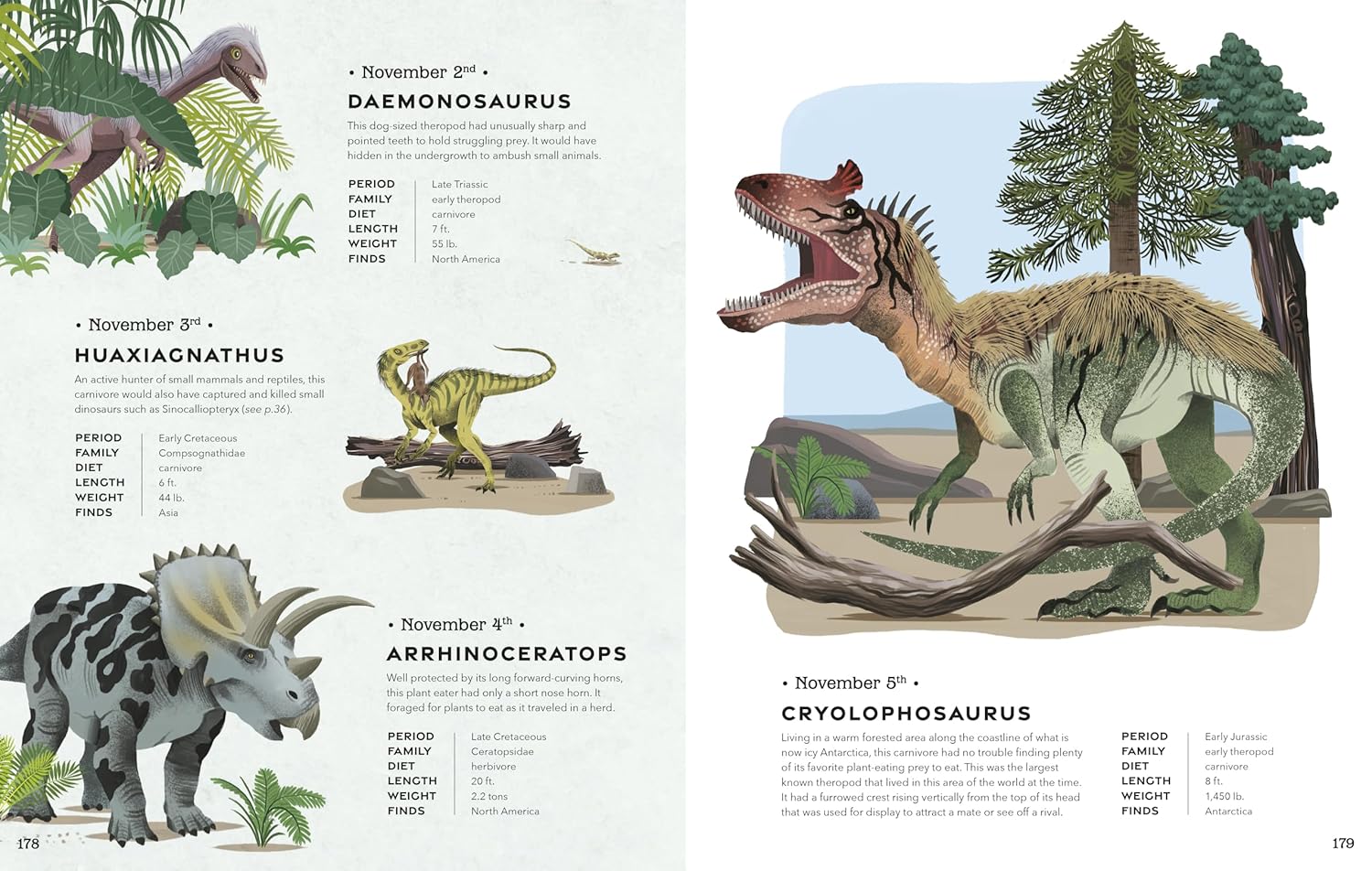
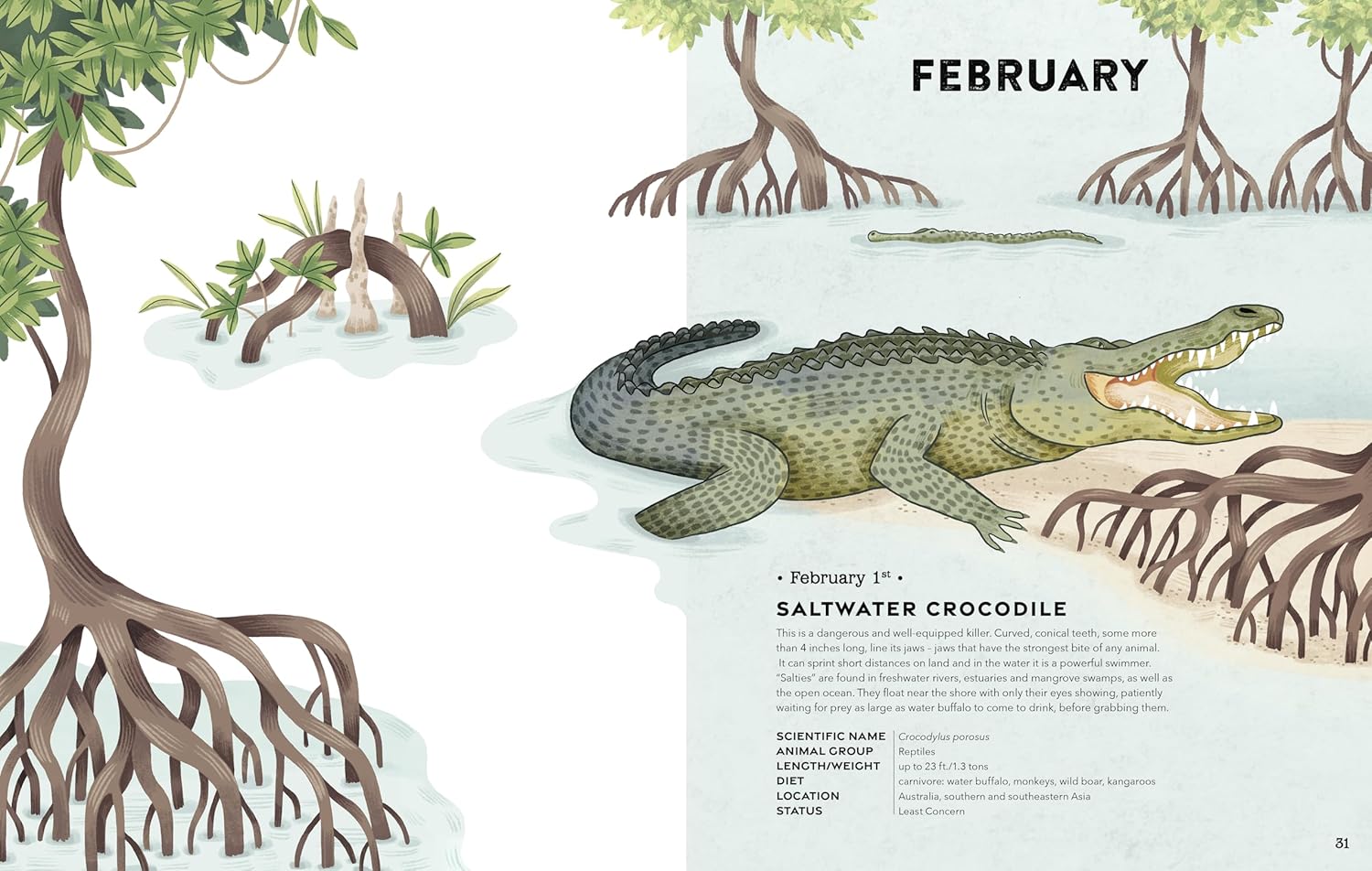
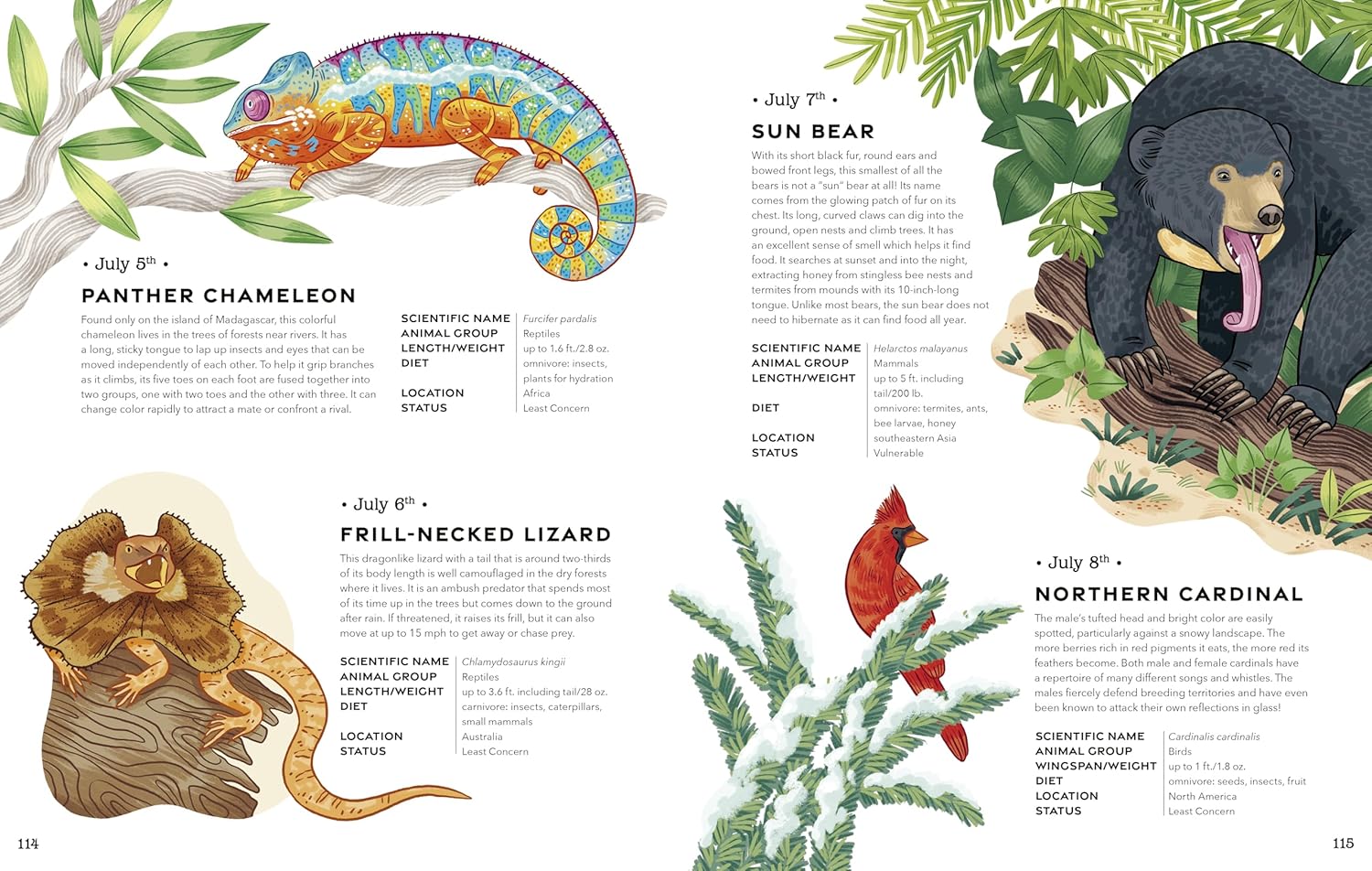
Getting to the meat of the book, readers find short, info-packed paragraphs about each dinosaur along with the particulars of its period, family, diet, length, weight, and where fossils have been found. Children can also see what these dinosaurs looked like with the lifelike drawings accompanying each entry.
celebrate-picture-books-picture-book-review-a-dinosaur-a-day-april

Image copyright Jenny Wren, Juan Calle, Xuan Le, Max Rambaldi, and Olga Baumert. Text copyright Miranda Smith. Courtesy of Bright Matter Books.

Fittingly, on January 1 when the year is new, dino-dreamers are introduced to “one of the earliest and smallest dinosaurs”—the Eoraptor, a carnivorous beast that weighed only 22 pounds and measured three feet tail to snout. A special two-page spread spanning January 10th through the 15th describes six more of the smallest, including the feathered and gliding Microraptor at just two pounds and two feet long, the Saltopus, which hopped to nab insects from the air, and the Wannanosaurus that defended itself with its “hard, flat-topped skull.”
celebrate-picture-books-picture-book-review-a-dinosaur-a-day-may

Image copyright Jenny Wren, Juan Calle, Xuan Le, Max Rambaldi, and Olga Baumert. Text copyright Miranda Smith. Courtesy of Bright Matter Books.

Jumping from the beginning of the year to December 31, readers meet the Ruyangosaurus, which “moved through the floodplains and forests of what is today’s China” in herds, “their long necks swaying as they reached for and snipped off the leaves and branches of the trees and shrubs at all levels.” In between kids encounter all of their well-known favorites as well as some truly unusual multi-horned and -spiked specimens; mammoth long-necked herbivores; underwater beauties; those with features that seem to mirror future animals, such as the Concavenator, which has humps along its back similar to a camel; and almost comical-looking dinos like the Nomingia, whose feathered body and peacock-like fan at the end of its tail looked almost Dr. Seussian. 

celebrate-picture-books-picture-book-review-a-dinosaur-a-day-roof-lizards

Image copyright Jenny Wren, Juan Calle, Xuan Le, Max Rambaldi, and Olga Baumert. Text copyright Miranda Smith. Courtesy of Bright Matter Books.

Following the year’s end, Miranda Smith discusses what brought about the end of the reign of the dinosaurs, the survivors of this disastrous event, and the relatives of those once-dominating creatures: today’s birds. Each month also includes two two-page spreads that group together some dinosaurs according to a shared trait—duck-billed dinosaurs, sea reptiles, dinosaur weaponry, and Tyrannosaur tyrants—for example. A pronunciation guide to dinosaur names, a glossary, and an index wrap up this comprehensive encyclopedic look at the world of dinosaurs.
celebrate-picture-books-picture-book-review-a-dinosaur-a-day-november

Image copyright Jenny Wren, Juan Calle, Xuan Le, Max Rambaldi, and Olga Baumert. Text copyright Miranda Smith. Courtesy of Bright Matter Books.

Miranda Smith presents each of these 365 dinosaurs with scientific facts and fascinating tidbits about the behavior, appearance, environment, defenses, and eating habits, among other things that will satisfy kids’ curiosity and perhaps send them digging to learn more. Her text is clear, comprehensible, and a pleasure to read for a wide age range, from the youngest dinosaur aficionados to the adults who share this book with them.

Show-stopping illustrations from Jenny Wren, Juan Calle, Xuan Le, Max Rambaldi, and Olga Baumert will wow readers with their careful attention to details and dynamic poses. Horns, feathers, spikes, teeth, claws and other features are clearly delineated. You can almost hear these dinosaurs roar at rivals, thrash through underlying vegetation while on the hunt, or call to their herd mates. Full-page illustrations place dinosaurs in their natural environments, where they drink from clean water, butt heads over territorial disputes, raise their young, or ply the depths of oceans in search of food.

Any dinosaur buff would be thrilled to add to their knowledge of these endlessly fascinating creatures with A Dinosaur a Day. The book is sure to be a favorite go-to read on home bookshelves and for public and school libraries.

Ages 6 – 9 and up

Bright Matter Books, 2024 | ISBN 978-0593903339

Read a New Book Month Activity
celebrate-picture-books-picture-book-review-dinosaur-eggs-craft-nest

Hatch Your Own Dinosaur Eggs


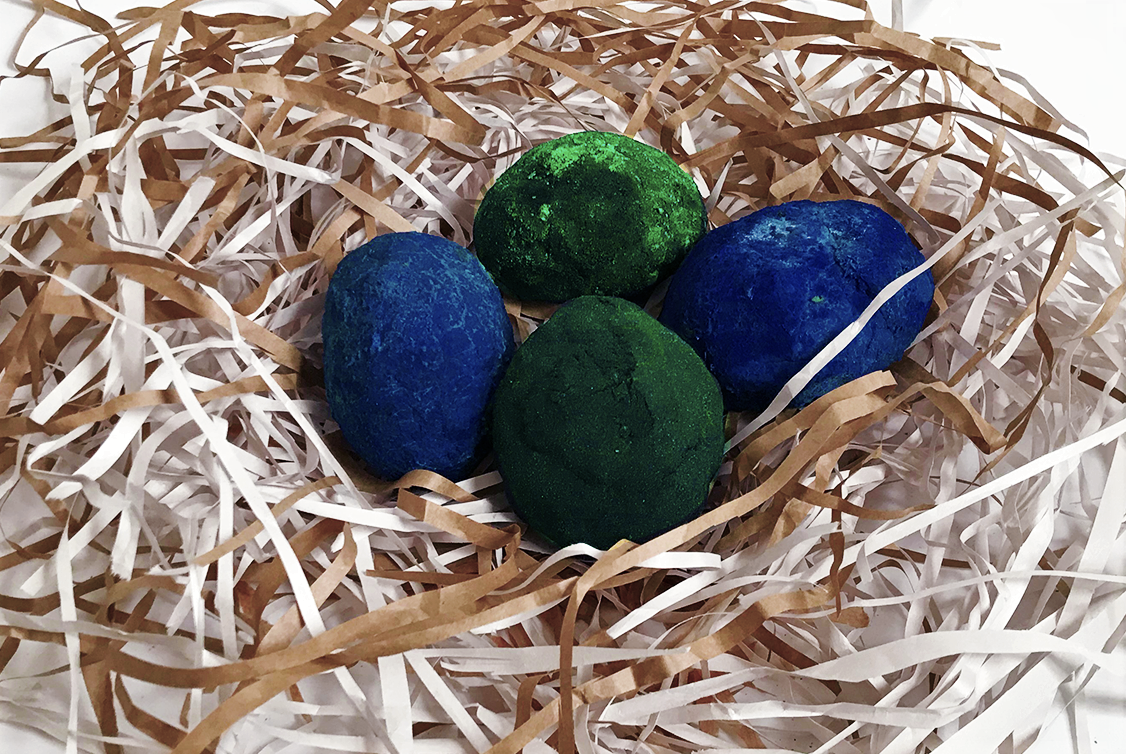
Think there are no more dinosaur eggs to be found? Think again! You can make your own with this easy craft that will have you hatching some T.-rex-size fun! All you need are a few simple ingredients – and don’t forget to wear an apron or old clothes!
celebrate-picture-books-picture-book-review-dinosaur-eggs-craft-open-eggs

Supplies

  • Old clothes or apron
  • Large box of baking soda (makes between 6 and 8 eggs)
  • Food coloring
  • Water
  • Plastic dinosaur toys
  • Bowl
  • Fork
  • Spoon
  • Wax paper
  • Baking sheet
  • Foil
  • Vinegar
  • Spray bottle (optional)
  • Plastic or metal spoon, stick, popsicle stick, or other implement to chisel with
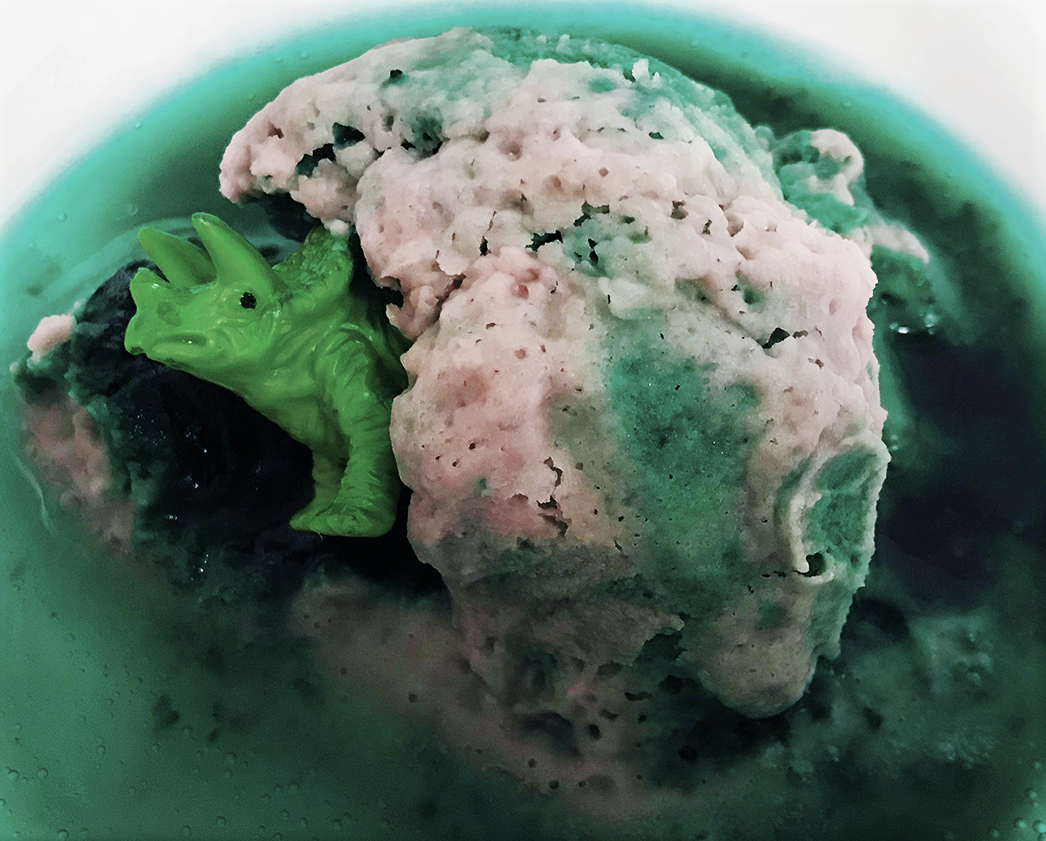
celebrate-picture-books-picture-book-review-dinosaur-eggs-craft-vinegar-egg-open-darker

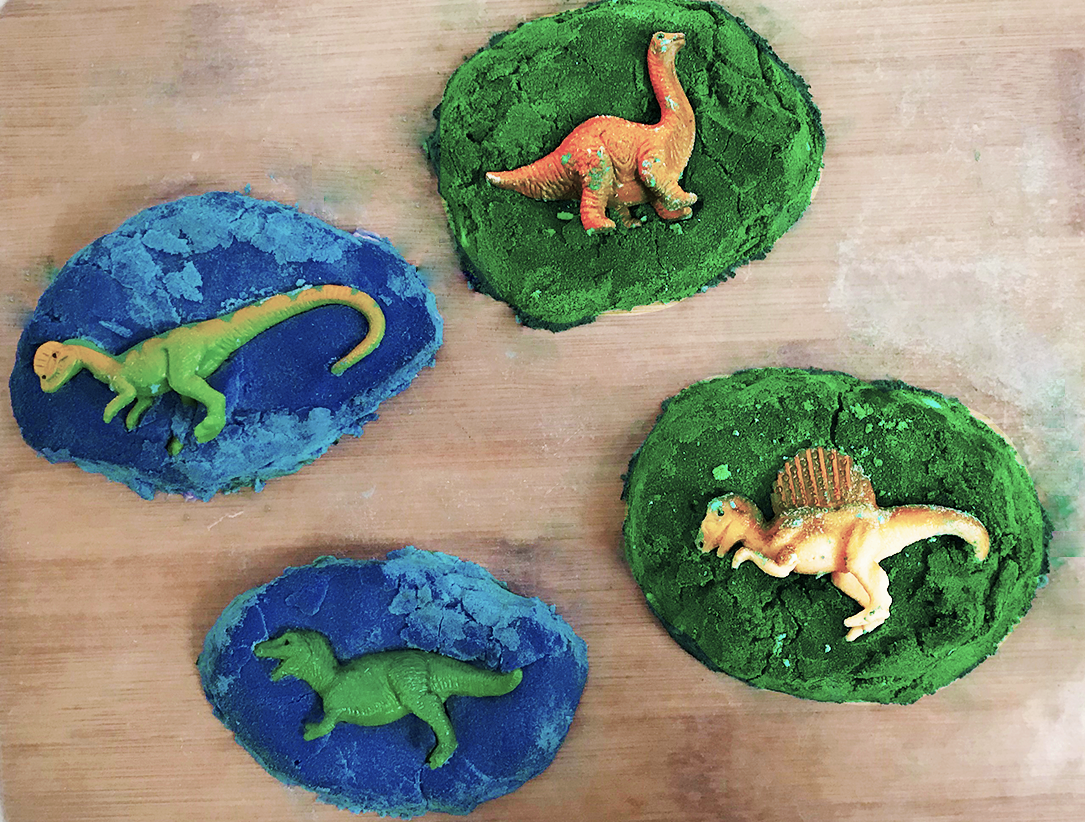
Spray the egg with vinegar to hatch your dinosaur

Directions

  1. Wear old clothes or an apron
  2. Cover work surface with wax paper, parchment paper, newspaper, or other protection. Food coloring can stain some surfaces
  3. Pour baking soda into the bowl
  4. Add drops of food coloring in whatever color you’d like your eggs to be. The eggs will darken when baked.
  5. Mix in the food coloring with the fork. You may want to use your hands, too
  6. When the baking soda is the color you want it, begin adding water a little at a time
  7. Add water until the baking soda holds together when you squeeze it in your hand
  8. When the baking soda is the right consistency, spoon some out into your hand or onto wax paper
  9. Push one plastic dinosaur into the middle
  10. Cover the dinosaur with more of the baking soda mixture
  11. Carefully form it into an egg shape
  12. Repeat with other dinosaurs
celebrate-picture-books-picture-book-review-dinosaur-eggs-craft-chiseled -darker

Chisel the egg open to hatch your dinosaur

To Bake the Eggs

  1. Set the oven or toaster oven to 200 to 225 degrees
  2. Set the eggs on a baking sheet lined with foil
  3. Bake the eggs for 15 minutes, check
  4. Turn the eggs over and bake for 10 to 15 more minutes
  5. Remove from oven and let cool

To Hatch the Eggs

  1. Eggs can be hatched by chiseling them with a spoon, stick, or other implement
  2. Eggs can also be hatched by spraying or sprinkling them with vinegar
celebrate-picture-books-picture-book-review-a-dinosaur-a-day-cover

You can purchase A Dinosaur a Day at these booksellers

Amazon | Barnes & Noble | Bookshop (to support your local independent bookstore)

Picture Book Review

December 2 – It’s Read a New Book Month

celebrate-picture-books-picture-book-review-an-animal-a-day-cover

About the Holiday

The month of December is a gift-giver’s delight, and there’s no better gift for everyone on your list than a book (or two or . . .). With so many new books hitting bookstore shelves and the long winter days stretching in front of us, this is the perfect time to add to your home bookshelves. Today’s featured book is a gift that keeps giving every day of the year. How? Read on and see! 

Thank you to Bright Matter Books, an imprint of Random House Children’s Books and Barbara Fisch of Blue Slip Media for sharing An Animal a Day with me for review consideration. All opinions on the book are my own.

An Animal a Day: 365 Amazing Animals to Take You through the Year

Written by Miranda Smith

Illustrated by Kaja Kajfež, Santiago Calle, Mateo Markov and Max Rambaldi


The animal kingdom truly is diverse! From the land to the sea to the sky and even the most forbidding places on Earth, there live incredible creatures perfectly suited to their environments. Children are particularly fascinated by the range, size, behaviors, and survival skills of the world’s denizens. But how to get to know them all? A fantastic place to start is with An Animal a Day, which introduces readers to 365 mammals, birds, reptiles, amphibians, fish, and invertebrates in bite-sized paragraphs, accompanied by scientific facts.

celebrate-picture-books-picture-book-review-an-animal-a-day-february

Image copyright Kaja Kajfež, Santiago Calle, Mateo Markov and Max Rambaldi, 2023. Text copyright Miranda Smith, 2023. Courtesy of Bright Matter Books.

But before you dive in, there are two paragraphs of note: One explains how “new species of animals are being discovered all the time” and gives as an example the May, 2023 announcement that “more than 5,000 new species had been found living on the seabed of the Clarion-Clipperton Zone, an unexplored area of the Pacific Ocean.” Another defines the International Union for Conservation of Nature Red List conservation rating, which is also included in each animals’ description.

And now the year begins! January 1 introduces the Polar Bear, in which a mother bear leads her cubs over the ice to the water where she will teach them “how to swim, hunt seals and survive in the cold” while raising them over three years to be self-sufficient. As the month progresses, children meet the Goliath Frog (a frog as big as a cat), a Hoopoe bird (the males engage in song duels to deter rivals), and the Indian Flying Fox (which, besides having an imposing 5-foot wingspan, looks like a combination of a bat and a fox), among 27 other critters.

celebrate-picture-books-picture-book-review-an-animal-a-day-april

Image copyright Kaja Kajfež, Santiago Calle, Mateo Markov and Max Rambaldi, 2023. Text copyright Miranda Smith, 2023. Courtesy of Bright Matter Books.

Each month also contains two, two-page spreads that present animals that, while very different, are connected by some special feature, such as being record breakers, where they live, mimicry, even harboring some stealthy strategy for survival.

Just a quick dip into the pages, led me to the Nudibranch, a blue sea slug that devours animals larger than it is, “including the highly venomous Portuguese man-o-war,” from which it “. . . stores the stinging nematocysts . . . in the tips of its extremities [and] uses these stinging ‘fingers’ to defend itself when necessary.”

celebrate-picture-books-picture-book-review-an-animal-a-day-migration

Image copyright Kaja Kajfež, Santiago Calle, Mateo Markov and Max Rambaldi, 2023. Text copyright Miranda Smith, 2023. Courtesy of Bright Matter Books.

I also met the Tiger Quoll, a creature of the rainforest that travels for miles each night in search of food, and the Peacock Mantis Shrimp, a colorful but fearsome 7-inch long crustacean that moves so fast it can “hit prey, such as a crab, with a force that smashes its shell” and which can create “bubbles in the water as hot as the sun, causing a shockwave strong enough to stun or kill.” I finally had to say auld lang syne to the year with the Asian Elephant and a view of a mother elephant and her youngster foraging for the “up to 285 pounds of vegetation” they each will eat that day. 

celebrate-picture-books-picture-book-review-an-animal-a-day-july

Image copyright Kaja Kajfež, Santiago Calle, Mateo Markov and Max Rambaldi, 2023. Text copyright Miranda Smith, 2023. Courtesy of Bright Matter Books.

But why should I have all the fun? Just imagine the wide-eyes, the “wow!”s, and the eager anticipation for the next day’s animal that your kids will experience as they meet each of these distinctive creatures through Miranda Smith’s clear, accessible, and captivating text for all ages. Each entry is punctuated with the kinds of nifty details that enthrall children and get them excited to learn more.

Accompanying each animal’s description is a lifelike drawing of the creature in its environment. Colorful and active, these illustrations allow kids to really bond with each animal and understand the whys and hows of their behaviors. In the case of the Amazon Leaf Fish, it may even take a moment before readers see the camouflaged fish among the dead leaves sunk beneath the water. The double-page spreads with their black backgrounds and highlighted animals are worthy of natural history museum displays and will entice readers to stop and stay awhile.

An Animal a Day would make a much-appreciated gift for any animal-loving child and is a must for public and school library collections as well as elementary school classrooms.

Ages 5 – 10 and up

Bright Matter Books, 2024 | ISBN 978-0593903353

Read a New Book Month Activity

ebrate-picture-books-picture-book-review-savanah-coloring-page

Animal Coloring Pages


Enjoy these coloring pages of some favorite animals!

Giraffe and Elephant on the Savanah | Hanging Snake | Tiger

celebrate-picture-books-picture-book-review-an-animal-a-day-cover

You can purchase An Animal a Day at these booksellers

Amazon | Barnes & Noble | Bookshop (to support your local independent bookstore)

Picture Book Review

November 29 – National Family Literacy Month

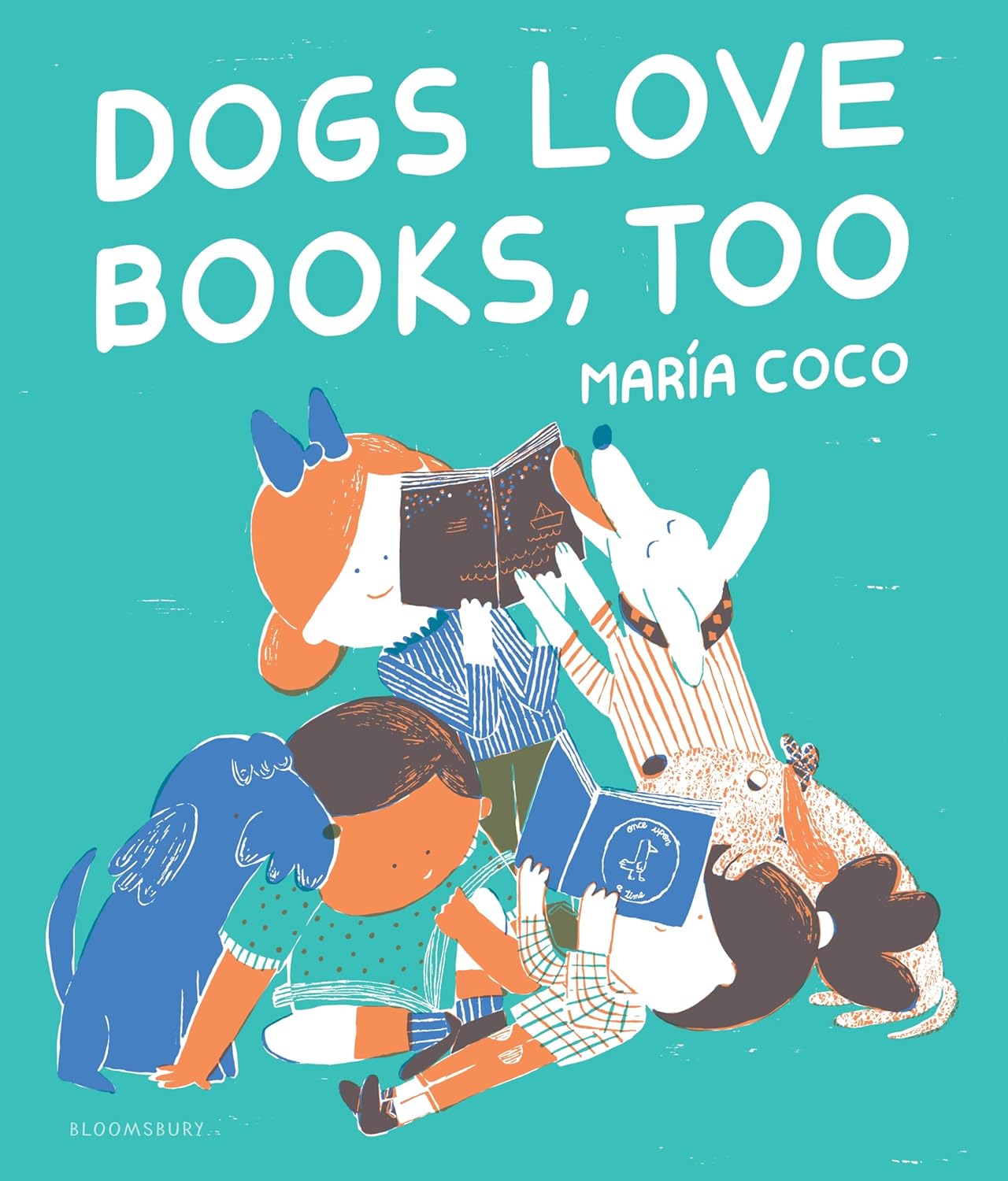
celebrate-picture-books-picture-book-review-dogs-love-books-too-cover

About the Holiday

National Family Literacy Month was established in 1994 to encourage parents and other adults to read together with the children in their life. Studies show that children who are read to are better prepared to read on their own and do better in school. Cuddling together before bedtime or during special story times with favorite books instills a love of reading that can last a lifetime. As children begin learning to read, they benefit from reading to family, friends, and even a pet or friendly therapy dog. To celebrate, plan some special reading-related activities and schedule extra reading time, especially with grandparents or other family members who may be visiting for the holidays. 

Dogs Love Books, Too

By María Coco


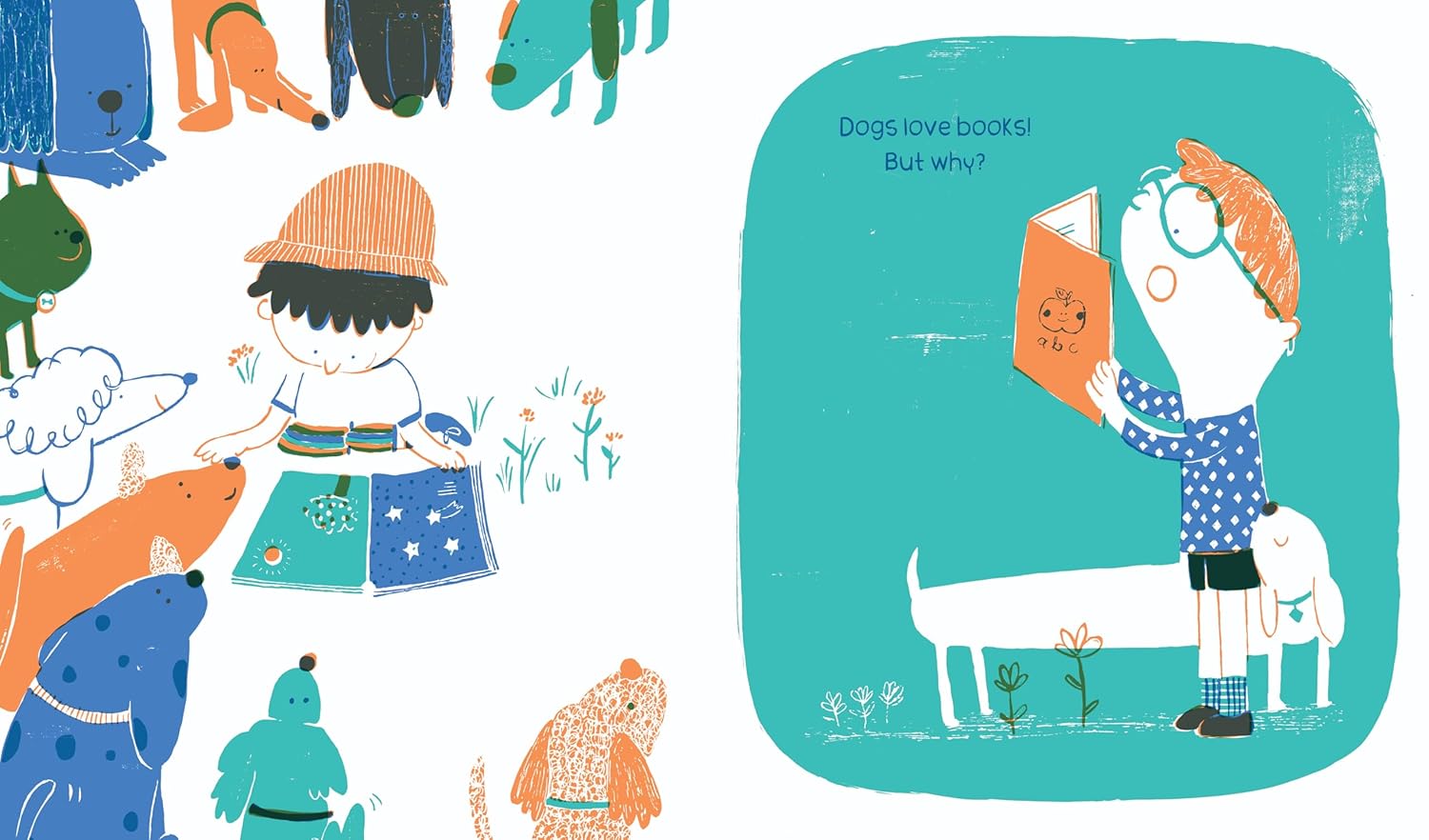
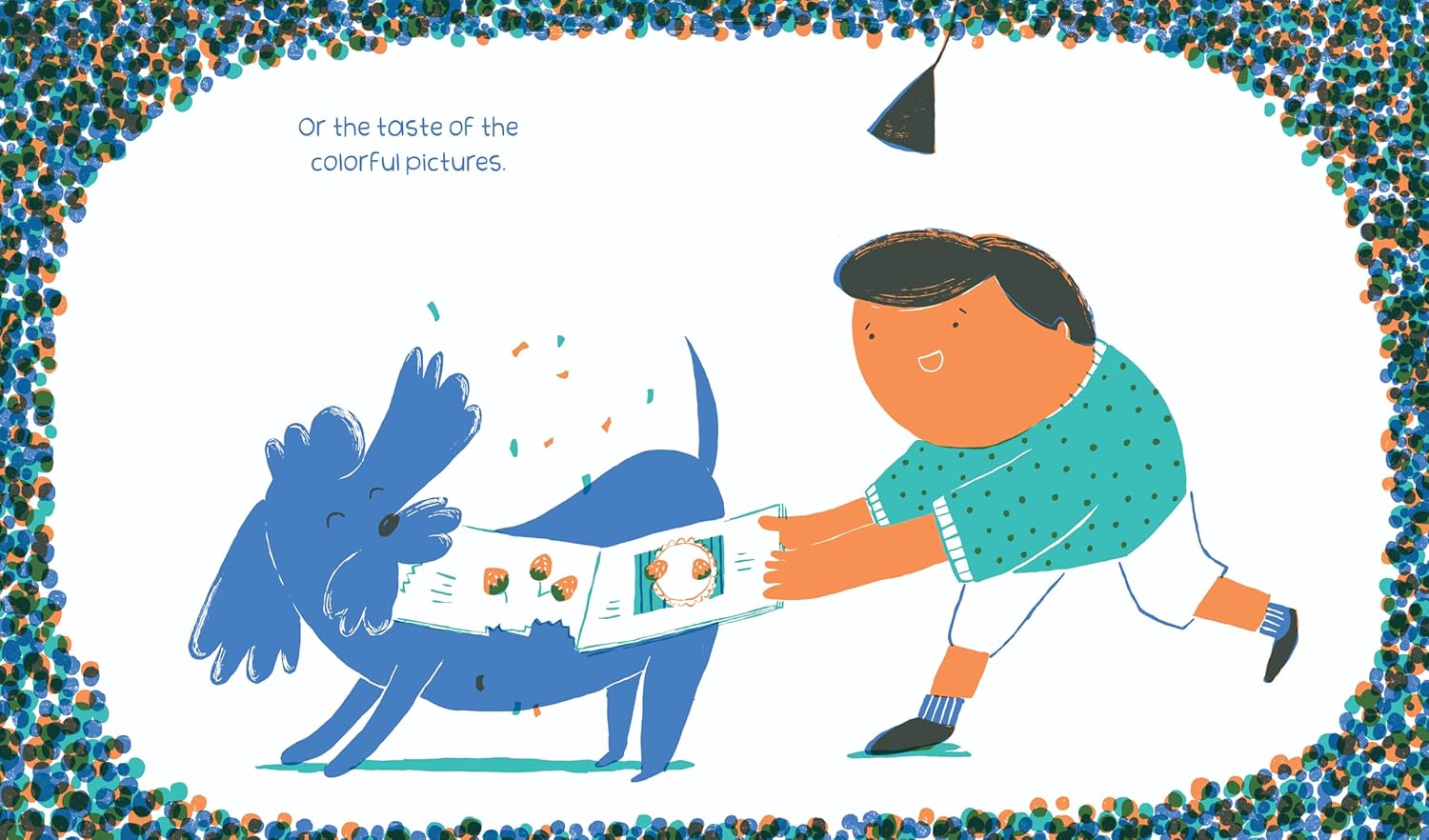
If your family has a dog (or two), you may have noticed that they become extra excited or, perhaps at bedtime, more snuggly when the books come out. As María Coco observes and then wonders, “Dogs love books! But why?” She proposes that it might have something to do with “the smell of the pages.” Or maybe for those dogs who like to take a chomp, the pages taste like fine cuisine.

celebrate-picture-books-picture-book-review-dogs-love-books-too-why-do-they

Copyright María Coco, 2024. Courtesy of Bloomsbury Children’s Books.

Could it be that they like hearing their people read aloud? Do they, too, like to imagine far-off places or drift into magical dreams? It could be one or all of these, but Coco thinks one reason stands above the rest: “I think dogs love books because they make us feel like we are not alone.” But does that feeling apply to dogs only? What do you think?

celebrate-picture-books-picture-book-review-dogs-love-books-too-tasty-pictures

Copyright María Coco, 2024. Courtesy of Bloomsbury Children’s Books.

María Coco’s short and evocative story, accompanied by engaging illustrations, is a perfect read for so many occasions and readers. With a single sentence written in a non-serif font created by Coco herself on each page or spread, the text invites emergent and new readers to join in on recognized sight words or read the story themselves. Hesitant readers will respond to the confidence-building inherent in the story. Coco also leaves the text open-ended to encourage readers of all ages to talk about why they love to read.

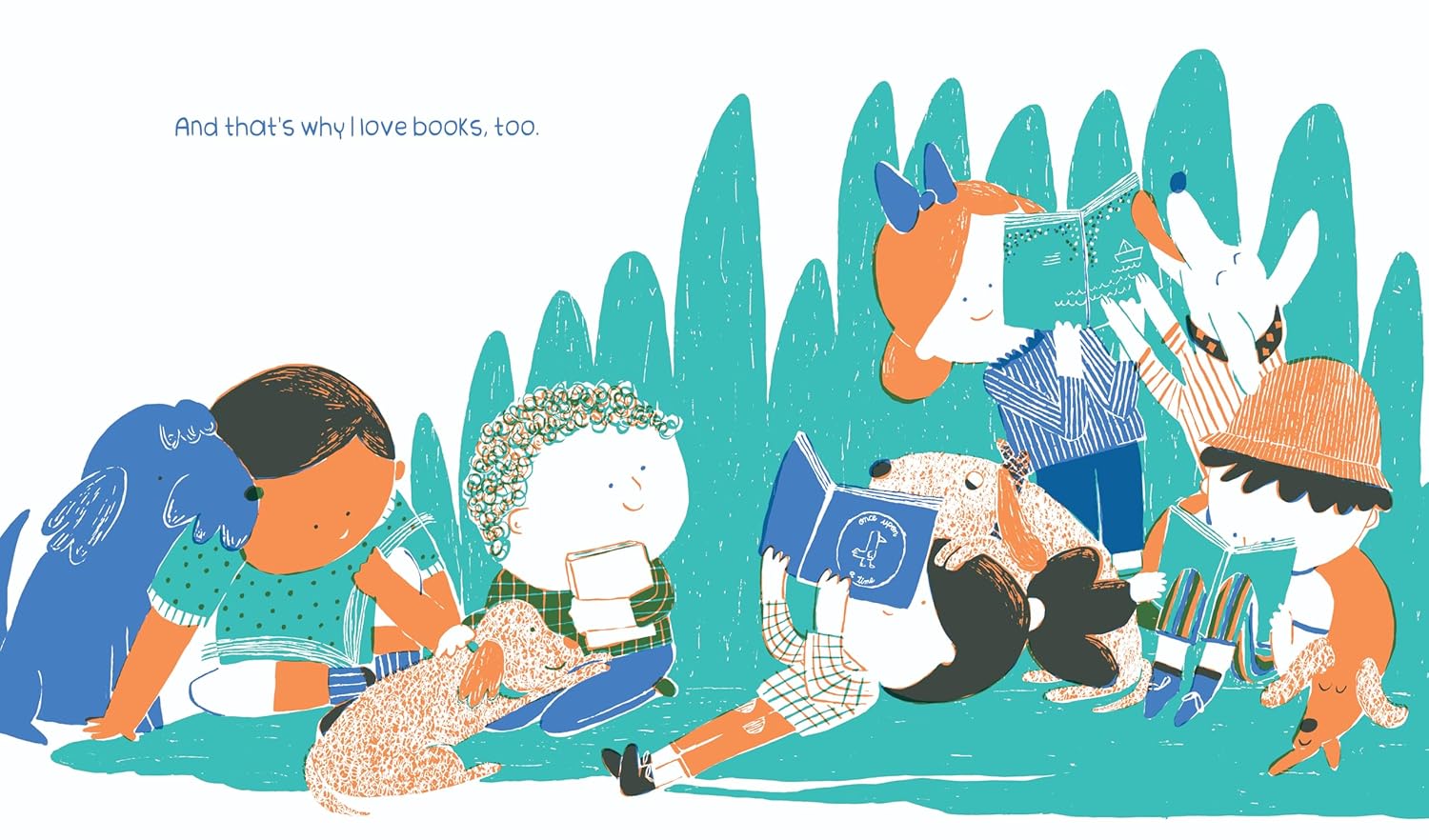
celebrate-picture-books-picture-book-review-dogs-love-books-too-final-page

Copyright María Coco, 2024. Courtesy of Bloomsbury Children’s Books.

Coco’s layered and textured illustrations are full of humor, imagination, and—in answer to the question Coco first poses—camaraderie. Images of children and their canine friends are warm and heartfelt, and the final spread, in which five kids from the story gather with their dogs to read, is a true picture of the contentment books can bring. 

Dogs Love to Read, Too is a natural choice for bedtime or other home story times as well as for any Read-to-a Dog program at schools, libraries, humane societies, or through other organizations.

Ages 2 – 5

Bloomsbury Children’s Books, 2024 | ISBN 978-1547613656

About the Author/Illustrator

Maria Coco is a Mexican designer, illustrator, and storyteller. She has a degree in Graphic Design and an MA in Children’s Book Illustration from the Cambridge School of Art. Her artwork has earned praise from The Templar Illustration Prize, The Macmillan Prize for Children’s Picture Book Illustration (UK), the Faber Andlyn BAME Prize, and the Salariya/Stratford Literary Festival Children’s Picture Book Prize. Connect with her on Instagram @mariacoco and at her website maria-coco.com.

National Family Literacy Month Activity

celebrate-picture-books-picture-book-review-book-bag-craft

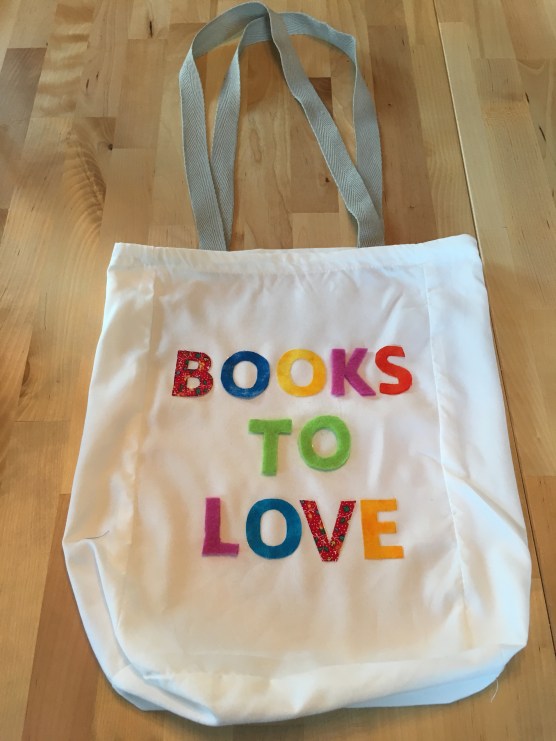
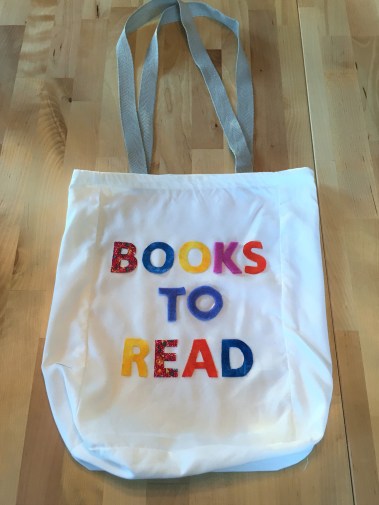
Books to Love, Books to Read Book Bag


True book lovers can’t go anywhere without a book (or two or three) to read along the way. With this easy craft you can turn a cloth bag into a kid-size book bag perfect for the car, the library, or anywhere you read!

Supplies

  • Printable Templates: Books to Read Template | Books to Love Template
  • Small cloth bag, available from craft or sewing stores—Recyclable Idea: I used the bag that sheet sets now come in
  • Cloth trim or strong ribbon, available from craft or sewing stores—Recyclable Idea: I used the cloth handles from shopping bags provided from some clothing stores
  • Scraps of different colored and patterned cloth. Or use quilting squares, available at craft and sewing stores
  • Pen or pencil for tracing letters onto cloth
  • Scissors
  • Small sharp scissors (or cuticle scissors) for cutting out the center of the letters
  • Fabric glue
  • Thread (optional)
  • Needle (optional)

celebrate-picture-books-picture-book-review-books-bag-craft

Directions

  1. Print the sayings and cut out the letters
  2. Trace letters onto different kinds of cloth
  3. Cut out cloth letters
  4. Iron cloth bag if necessary
  5. Attach words “Books to Read” to one side of bag with fabric glue
  6. Attach words “Books to Love” to other side of bag with fabric glue
  7. Cut cloth trim or ribbon to desired length to create handles
  8. Glue (or sew) handles onto the inside edge of bag

celebrate-picture-books-picture-book-review-dogs-love-books-too-cover

You can purchase Dogs Love Books, Too at these booksellers

Amazon | Barnes & Noble | Bookshop (to support your local independent bookstore)

Picture Book Review
November 25 – It’s Sleep Comfort Month

celebrate-picture-books-picture-book-review-goodnight-sounds-cover

About the Holiday

As days grow shorter and nights longer, November calls on us to get snuggly and dedicate time to rest. It is aptly time for Sleep Comfort Month, a holiday designed to raise awareness of the importance of quality rest and sleep. In times of flux and chaos, focus on rest and relaxation is more crucial than ever. This month can serve as a reminder that everyone needs and deserves peaceful rest and recuperation time in order to face the ever-changing, curious planet that is our home.

Thanks to Bloomsbury Children’s Books for sharing a copy of Goodnight Sounds with me for review consideration. All opinions on the book are my own.

Review by Dorothy Levine

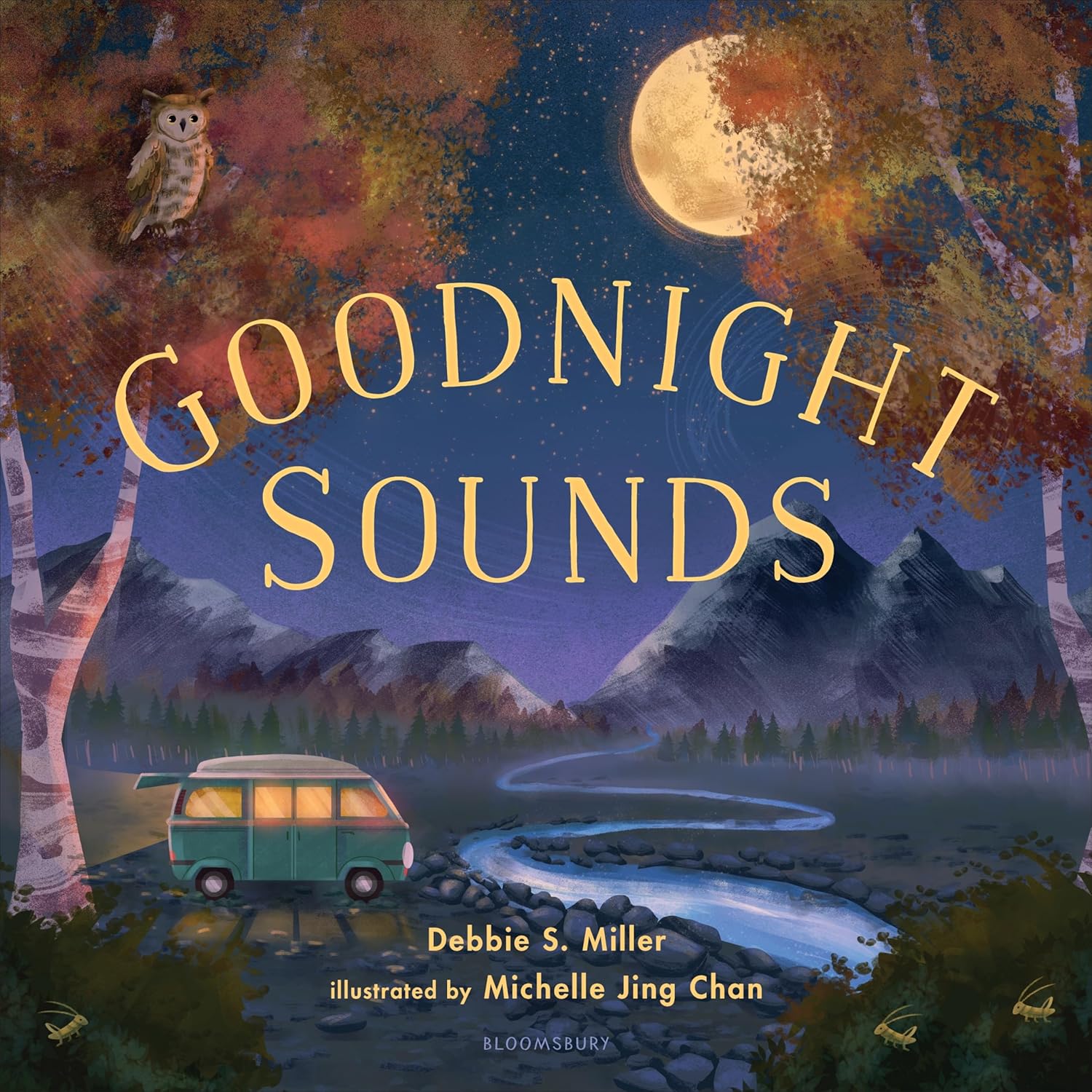
 Goodnight Sounds

Written by Debbie S Miller | Illustrated by Michelle Jing Chan


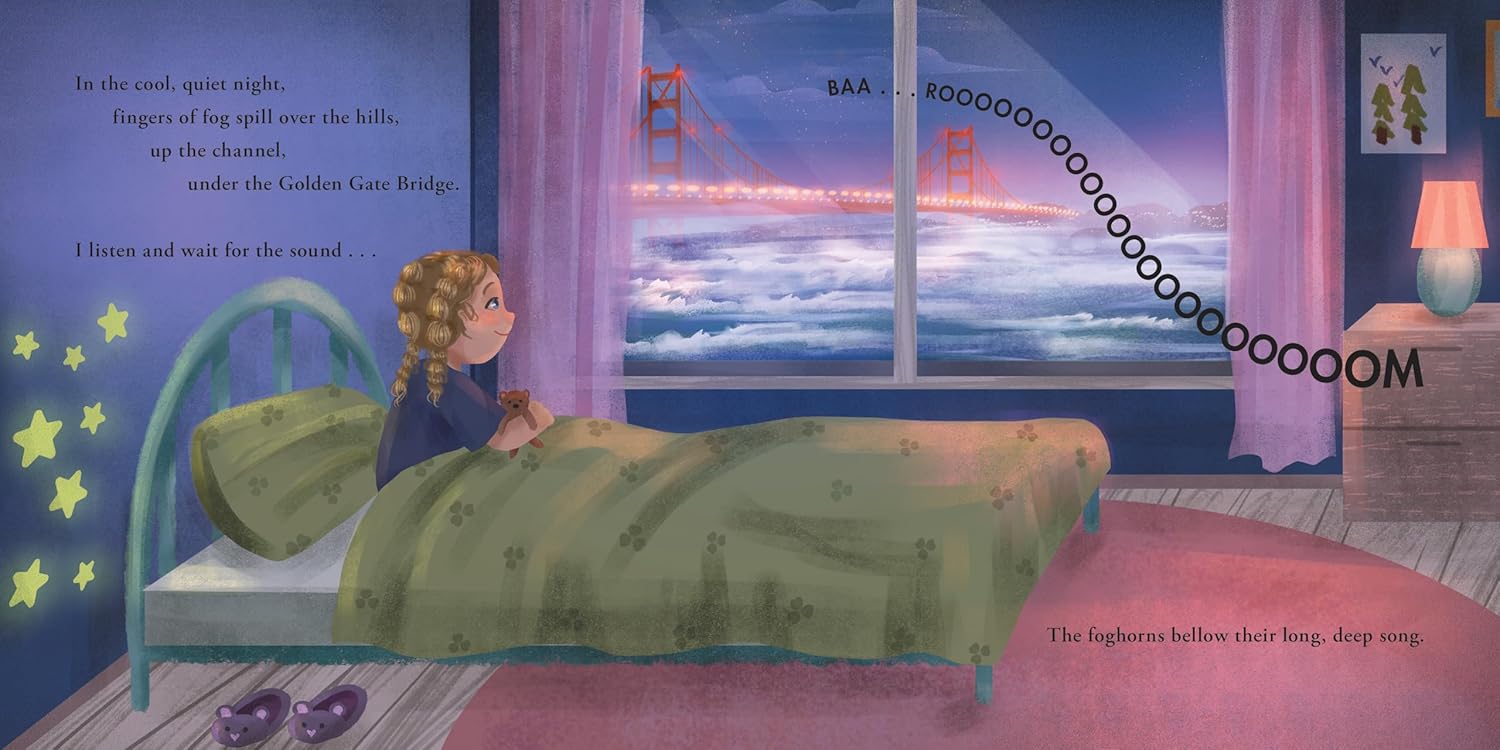
Goodnight Sounds is a lyrical bedtime story that invites readers to get cozy and listen closely. The story begins with a child whose home is tucked under the looming light of California’s Golden Gate Bridge. Illustrations depict the girl sitting up in bed, teddy bear in hand, observing the bridge and crashing waves beneath from her bedroom window.

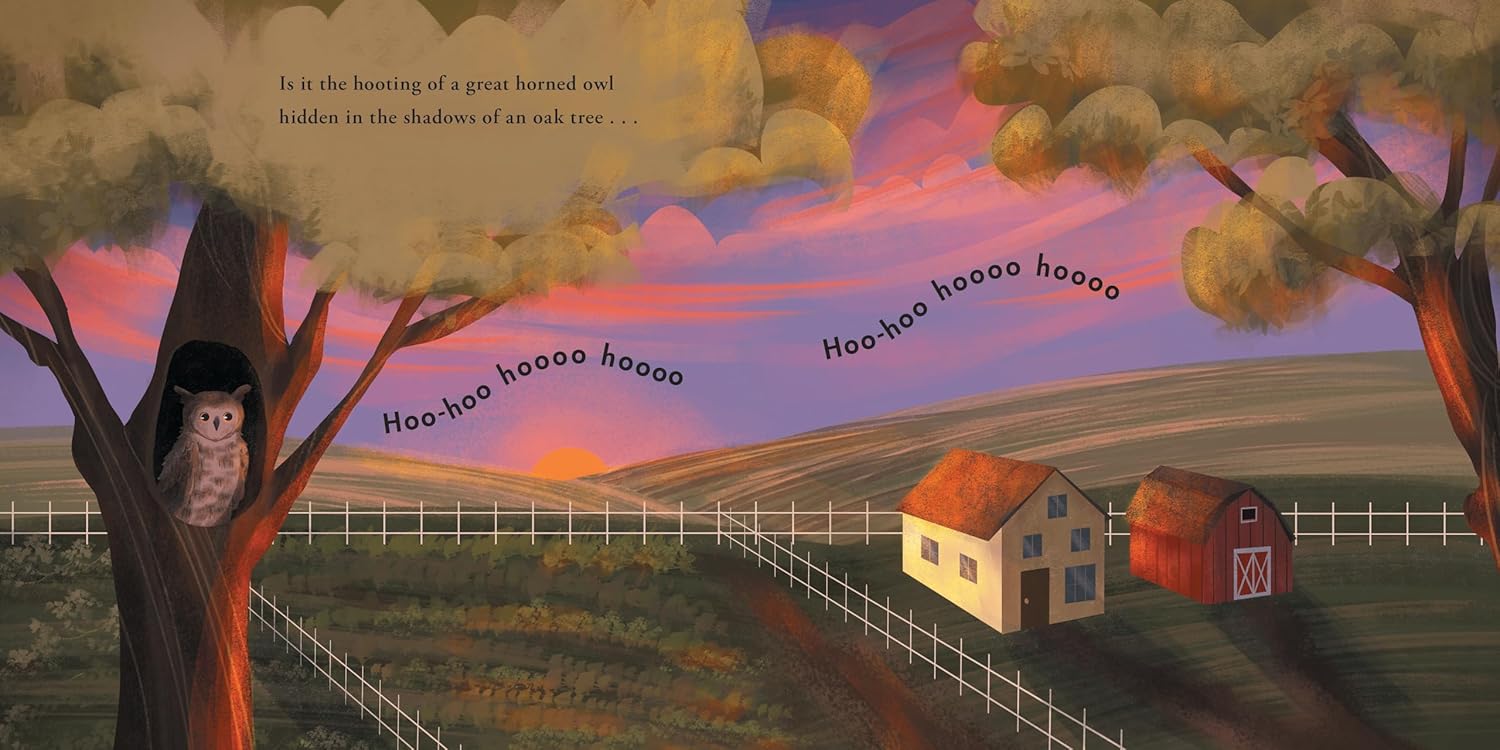
The words of the first page set the scene: “In the cool, quiet, night / fingers of fog spill over the hills…I listen and wait for the sound…”. On the next page the “BAA…ROOOOOOM” of a foghorn stretches across the cozy bedroom, the ‘O’ sound flowing through her window like the wisps of fog to help lull her to sleep. The girl then invites readers into the story, asking “what sound helps you fall asleep?”

celebrate-picture-books-picture-book-review-goodnight-sounds-foghorn

Image copyright Michelle Jing Chan, 2024, text copyright Debbie S. Miller, 2024. Courtesy of Bloomsbury Children’s Books.

The rest of the story contains follow-up poetic questions, each paired with unique onomatopoeic interpretations of the nighttime sounds: “Is it the trilling of a thousand crickets / wings shivering in the moonlight?” In the corners of this spread, nestled by the crickets are iterations of: “Treeek-treeeek.”

The pages’ settings range from urban to suburban to wilderness, with their accompanying broad range of nighttime sounds—some as large as foghorns and others as tiny as crickets. At the end of the story, Miller returns readers to the first bedtime character, now asleep, with the words: “The sounds of the night are your lullaby.”

celebrate-picture-books-picture-book-review-goodnight-sounds-owl

Image copyright Michelle Jing Chan, 2024, text copyright Debbie S. Miller, 2024. Courtesy of Bloomsbury Children’s Books.

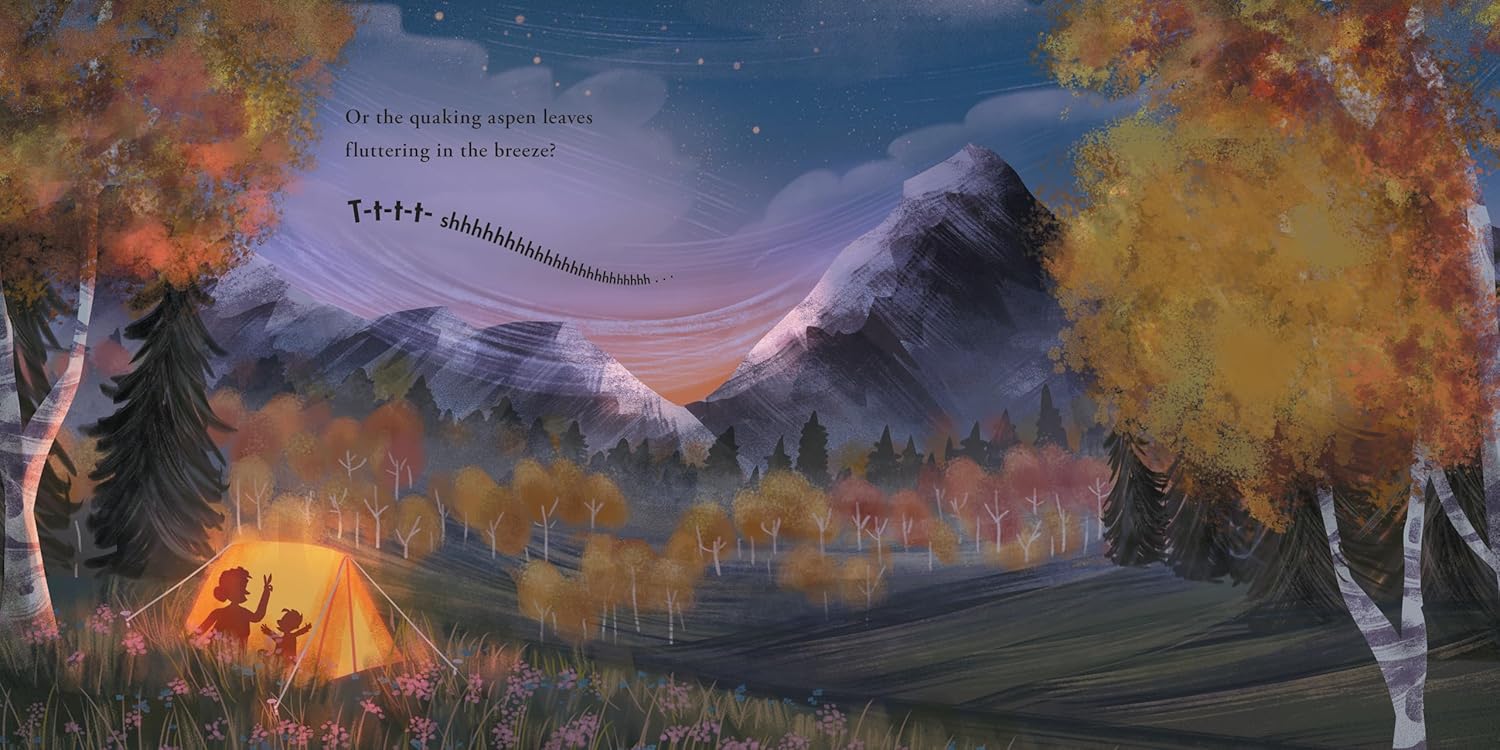
Illustrator Jing Chan depicts a series of serene landscapes, each containing a unique sleeping space (an apartment, a tent, and a camper van, for example). Every picturesque scene also features a unique source of light—a starry sky, a train window, a lamp, string lights, glow-in-the-dark stickers on a wall.

As the nighttime sounds change from outside sources to indoors, so do the illustrations, with a few of the panoramic scenes now taking readers inside a tent (where a grandmother makes a shadow puppet on the wall), a variety of bedrooms (where children fall asleep to the tick-tock of a grandfather clock, the chime of a music box, or the purr of a cat), and other cozy spaces. Along with the richly illustrated array of settings, Jing Chan also shows cultural, racial, and family-structural diversity among the page’s cast of happy sleepers. 

celebrate-picture-books-picture-book-review-goodnight-sounds-leaves

Image copyright Michelle Jing Chan, 2024, text copyright Debbie S. Miller, 2024. Courtesy of Bloomsbury Children’s Books.

Throughout Goodnight Sounds Debbie S. Miller includes onomatopoeia to her lines, offering opportunities for readers to lend their voices to the sounds and inviting them to listen closer to their own surroundings as they settle in for sleep. Her poetic language adds a peaceful rhythm to the book, almost echoing a lullaby. The illustrations and words of the story evoke a sense of both comfort and wonder for the nocturnal world around us.

A joyful addition to both home and library collections, Goodnight Sounds is sure to put young ones to sleep with new soundscapes and landscapes to dream of fondly.

Ages 2 – 5

Bloomsbury Children’s Books, 2024 | ISBN 978-168119199

About the Author

Debbie S. Miller is the author of Survival at 40 Below, an NTSA/CBC Outstanding Science Trade Book; Arctic Lights, Arctic NightsThe Great Serum Race; and Big Alaska. Visit Debbie at debbiemilleralaska.com.

About the Illustrator

Michelle Jing Chan is a queer Chinese American illustrator who grew up in Colorado and lives in the Pacific Northwest. Inspired by nature, cultural folklore, and fantasy, Michelle aspires to illustrate diverse, empowering stories her younger self would have loved. When she’s not drawing, she can be found attempting new recipes, reading, or watching spooky TV shows. Visit Michelle at michellejingchan.com.

Sleep Comfort Month Activities

Reading Goodnight Sounds before bed is a perfect way to celebrate sleep comfort month with children. Other activity ideas include crafting a DIY blanket or pillow together or making up a bedtime song and other creative ideas with the following instructions!

celebrate-picture-books-picture-book-review-sleep-buddy-craft

No-Sew Blanket and Pillow

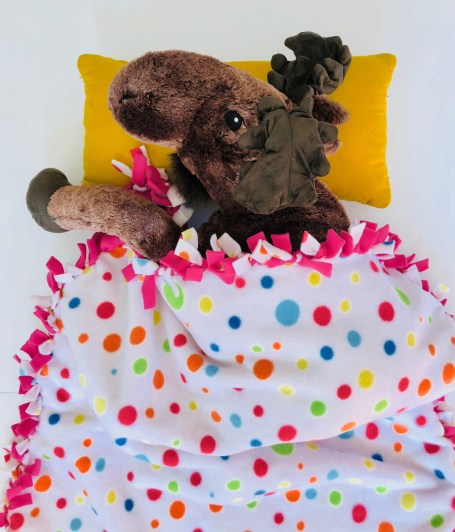
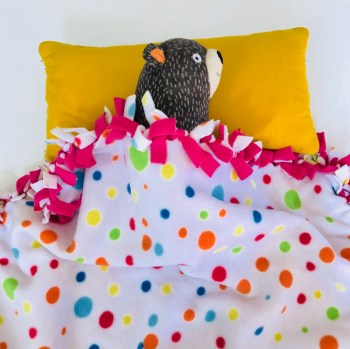
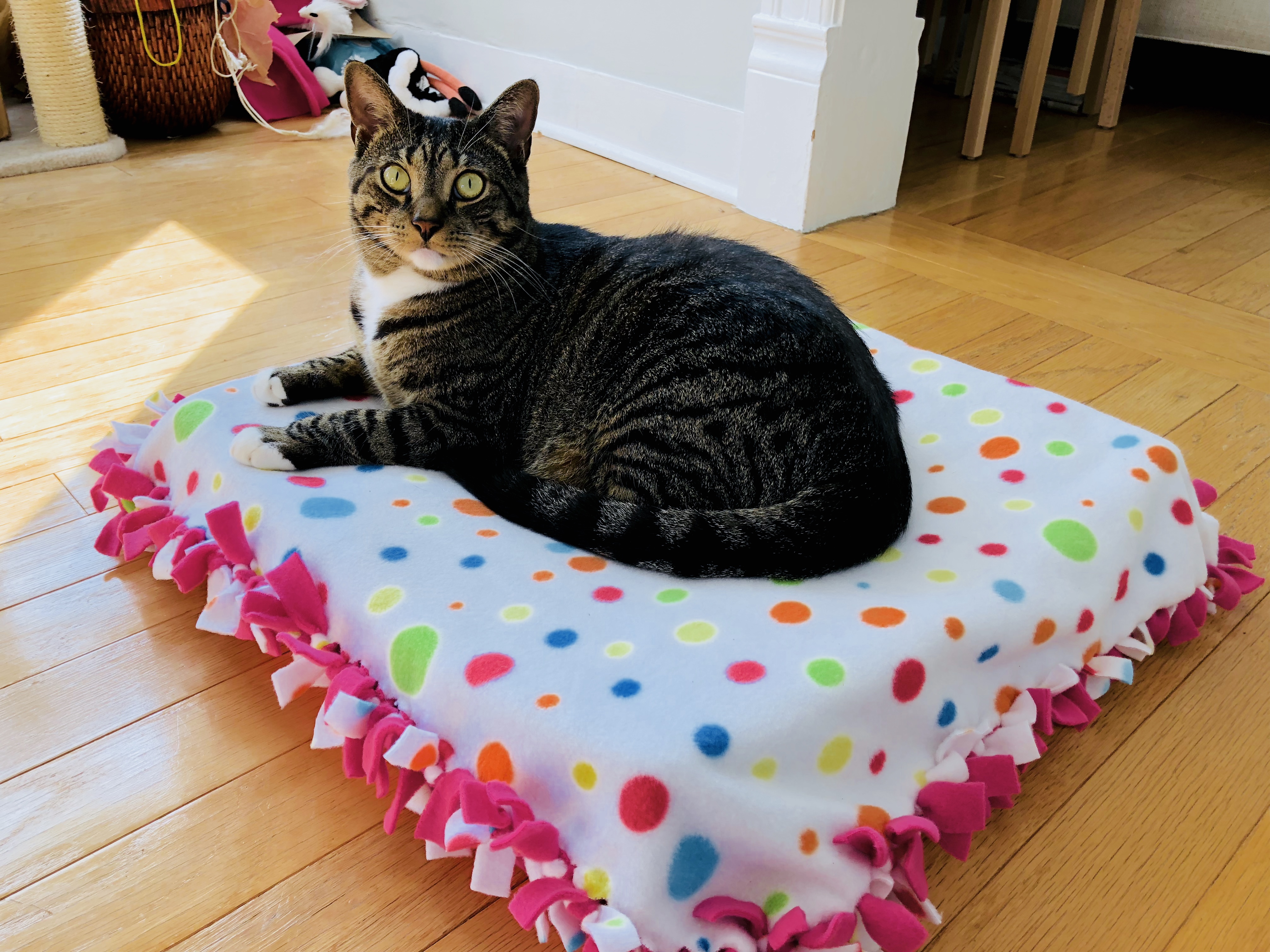
With this craft you and your child can have fun making a kid-size blanket, a cozy cover for a favorite toy or a soft bed for a pet! Children from ages 5 or 6 and up will enjoy helping to tie the tabs. For younger children, using fabric glue to attach the two pieces of fleece or cutting just one piece of fleece allows them to join in the craft fun.

Supplies

  • 2 pieces of fleece cut to size for your project: a child’s blanket or pillow, a toy’s blanket, or a pet bed
  • Scissors
  • Measuring tape
  • Poly-fil, cushion insert, or pillow (for child’s pillow or pet bed)
  • Fabric glue (optional)

celebrate-picture-books-picture-book-review-sleep-buddy-craft

Directions

  1. Lay out fleece and measure a size that will make a comfortable blanket for your child, a favorite teddy bear or other sleep buddy, or your pet  
  2. Add 3 inches to that measurement on each side for the strips to tie together
  3. Cut 2 pieces of fleece
  4. With the pieces of fleece together, cut 3-inch long by ¾ -inch wide strips all along each side. 
  5. At the corners, cut four tabs (or a 3-inch square) off each side

To Make a Blanket

  • Tie the top and bottom strips together on all sides

To Make a Pillow

  • Measure two pieces of fleece to fit a pillow or fill with poly-fil
  • Add 3 inches to that measurement on each side for the strips to tie together
  • Follow main directions above

To Make a Bed for your Pet

celebrate-picture-books-picture-book-review-cat-bed-craft

  1. Measure two pieces of fleece to fit a pillow or fill with poly-fil
  2. Add 3 inches to that measurement on each side for the strips to tie together
  3. Follow main directions above
  4. Tie strips together on three sides
  5. Insert pillow, cushion insert, or poly-fil
  6. Tie the strips together on the final side

Fun Bedtime Ideas

Screen Shot 2024-11-24 at 7.02.35 PM

For more ideas on how to make bedtime an engaging and peaceful transition, here is a list of some fun and silly switch-ups to bedtime routines from Parents with Confidence, a website dedicated to helping parents raise emotionally healthy children.

50 Bedtime Activities to Calm and Connect

celebrate-picture-books-picture-book-review-goodnight-sounds-cover

You can purchase Goodnight Sounds at these booksellers

Amazon | Barnes & Noble | Bookshop (to support your local independent bookstore)

Picture Book Review

November 21 – Get Ready for Hanukkah

celebrate-picture-books-picture-book-review-little-dreidel-learns-to-spin-cover

About the Holiday

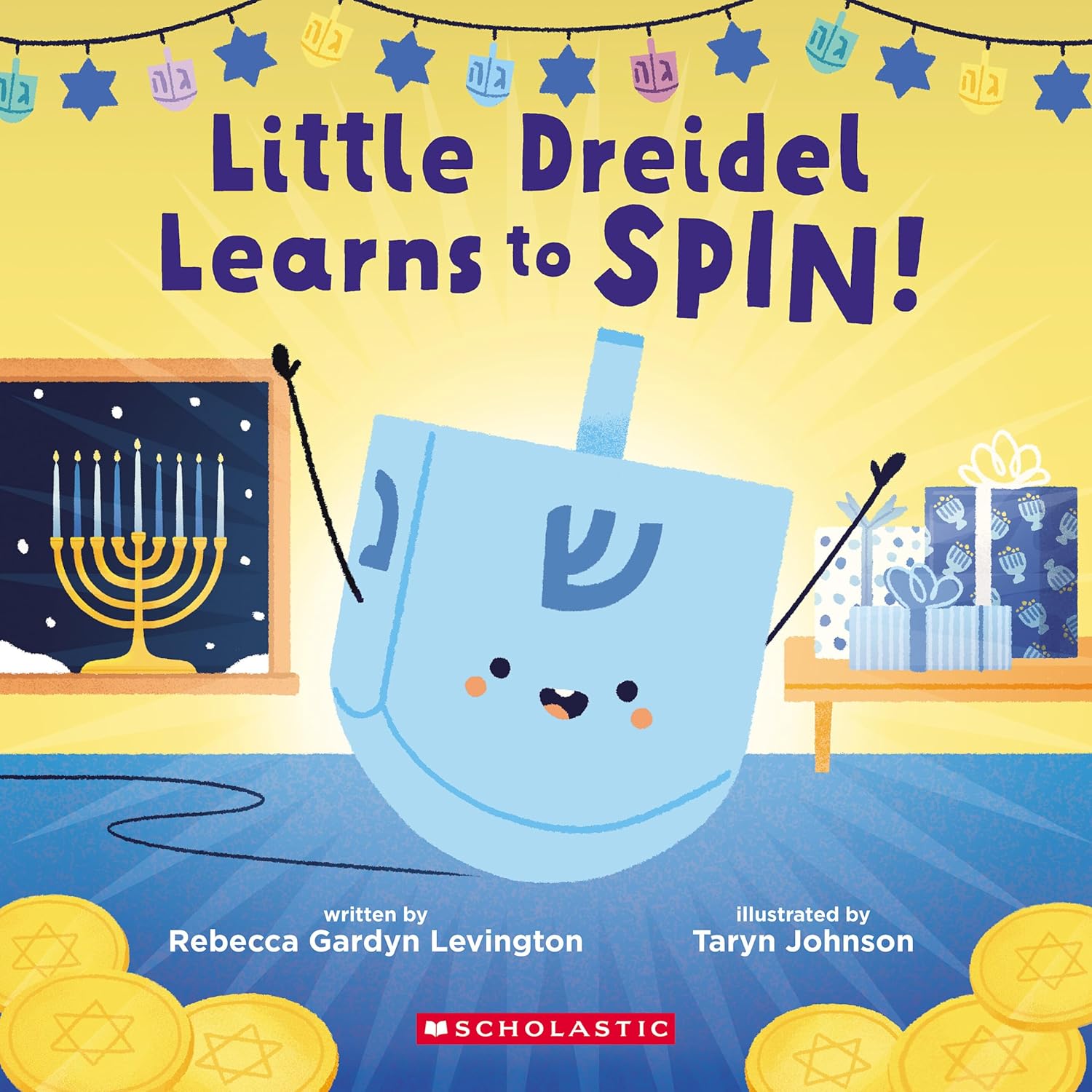
To get into the spin of this eight-day celebration of light and remembrance, we have a book perfect for young ones getting ready to learn a new skill and a bit more about this Jewish holiday. Little Dreidel Learns to Spin takes the stage with a rhythmic, twirling tale packed with Yiddish words and glossary in the back to learn more.

Thank you to Rebecca Gardyn Levington and Cartwheel Books for sharing a digital copy of Little Dreidel Learns to Spin with me for review consideration. All opinions on the book are my own.

Review by Dorothy Levine

Little Dreidel Learns to Spin

Written by Rebecca Gardyn Levington | Illustrated by Taryn Johnson


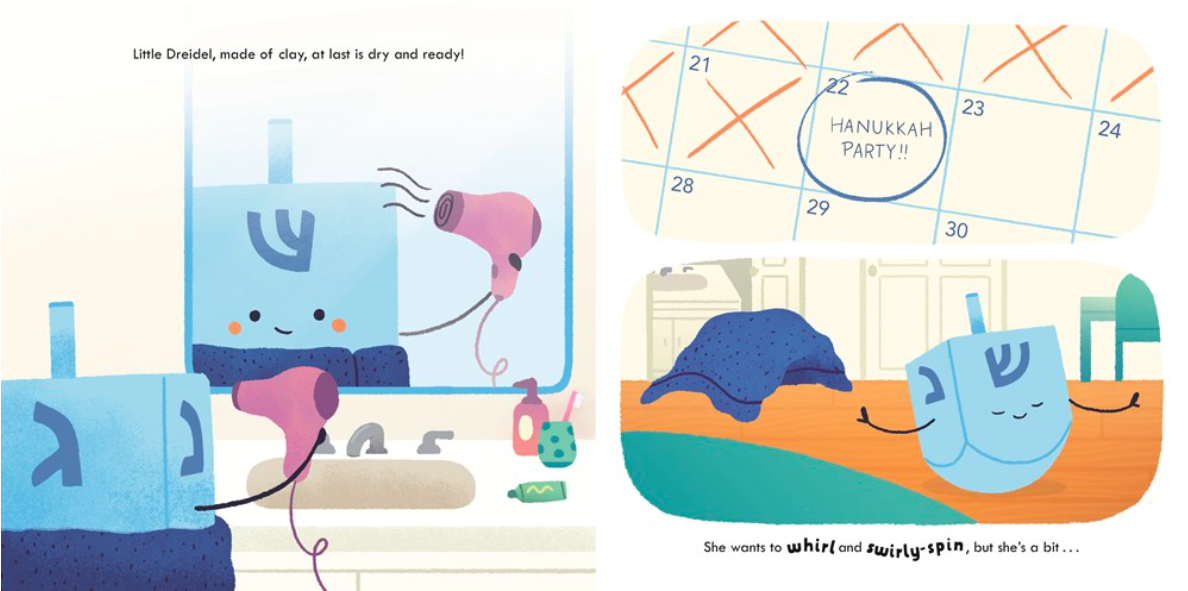
Little Dreidel’s clay body is all dry, so she is ready to start twirling and spinning just like her older cousins. But, when she tries, “she flails and fumble-tumbles. ‘I’m such a klutz! I stink at this’ she mopes and mumble tumbles.” Dreidel’s grandmother, her Bubbie, tries to console her, but to no avail. As the rest of the family gets ready for Hanukkah—cooking up some latkes, setting up the menorah—Little Dreidel collects herself.

celebrate-picture-books-picture-book-review-little-dreidel-learns-to-spin-ready-for-party

Image copyright Taryn Johnson, 2024, text copyright Rebecca Gardyn Levington, 2024. Courtesy of Cartwheel Books.

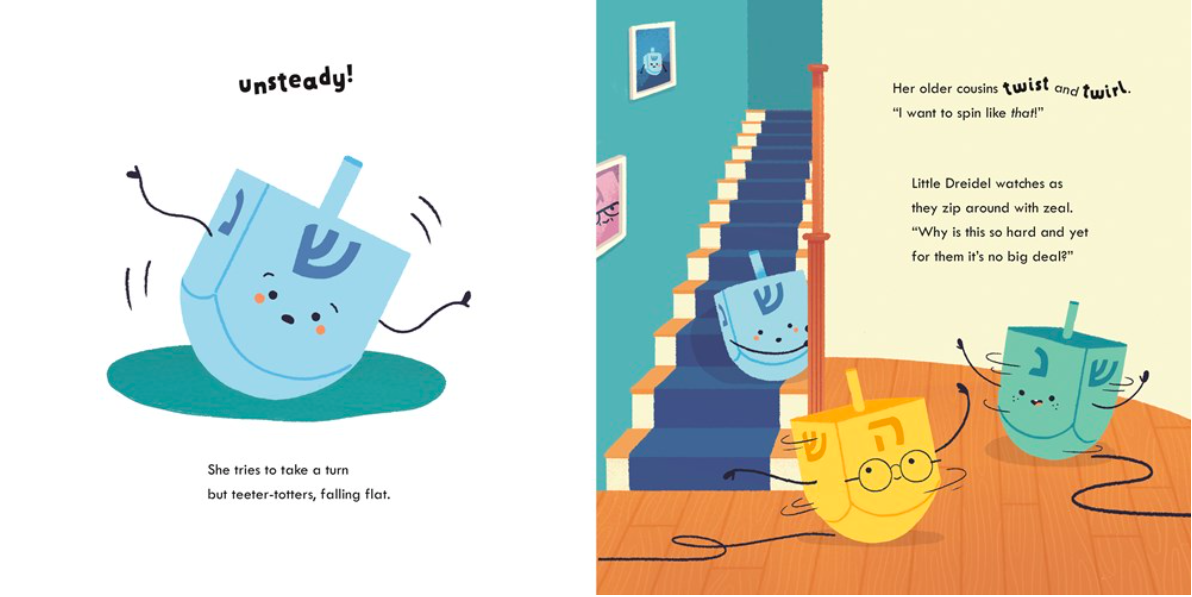
After some careful observation of her cousins’ techniques, she learns about momentum and gains some more of her own. She’s ready to try again. At first too slow, then too fast, Little Dreidel “plotzes on the ground” again and again. But when day turns to night, and Hanukkah is about to begin, a miracle occurs: “dizzy-dazed” Little Dreidel competently joins the rest of the cousin crew spinning into celebration!

celebrate-picture-books-picture-book-review-little-dreidel-learns-to-spin-unsteady

Image copyright Taryn Johnson, 2024, text copyright Rebecca Gardyn Levington, 2024. Courtesy of Cartwheel Books.

The story of Little Dreidel Learns to Spin subtly mirrors the Hanukkah story—a narrative that centers on a miracle of oil lasting to light a lamp for eight days rather than just one and success against all odds. Gardyn Levington takes a simple tale of determination and weaves in Hanukkah charm, rhymes, Yiddish vocabulary and witty puns—like when Little Dreidel spins awry and almost breaks her shin, the Hebrew letter painted on one side of the top and denoting the worst luck of the four facings.

Johnson’s illustrations add layers of humor and context to the story. For example, Little Dreidel’s face is painted on the less lucky shin side, whereas Bubbie’s face is painted on gimel— the luckiest letter of the four dreidel faces. The first page depicts Little Dreidel blow-drying his top half with a hair dryer, as the story shares that Little Dreidel’s clay has just dried. Johnson depicts emotion cleverly and adorably through the expressions and body language of the Dreidel family. The pages are lush with color, with an emphasis on Hanukkah’s classic blues and yellows.

A sweet introduction to the traditions of Hanukkah and a natural way to teach children some common Yiddish words, Little Dreidel Learns to Spin would be the perfect addition to home collections and libraries.

Ages 3 – 5

Cartwheel Books, 2024 | ISBN 978-1338864625

About the Author

Rebecca Gardyn Levington is a children’s book author and poet with a penchant for penning playful picture books and poems. She lives in Summit, New Jersey. You can visit Rebecca at rebeccagardynlevington.com.

About the Illustrator

Taryn Johnson is an illustrator, animator, and designer who loves to bring a playful appreciation of nature to her work with bright colors, patterns, and a little imagination. Visit Taryn at tarynjohnson.com.

Get Ready for Hanukkah Activities

Clay Dreidel Craft from Crayola

Photo courtesy of Crayola

 Homemade Hanukkah Crafts


You can teach your very own homemade clay dreidel to spin or make a paper dreidel with these instructions from Crayola! 

To find more Hanukkah themed activities—from making LEGO dreidels to tissue paper stained glass decorations to a creative shamash candle holder and more—visit PJ Library’s Hanukkah activities page!

celebrate-picture-books-picture-book-review-little-dreidel-learns-to-spin-cover

You can purchase Little Dreidel Learns to Spin from these booksellers

Amazon | Barnes & Noble | Bookshop (to support your local independent bookstore)

Picture Book Review

November 20 — It’s Family Stories Month

celebrate-picture-books-picture-book-review-still-there-was-bread-cover

About the Holiday

Do you have a favorite family story to tell or tradition to share? Then this month is for you! No matter if your stories are funny or poignant tales of a family member or they’re tied to a special recipe or heirloom, everyone—especially children—benefits by these reminiscences. Family Stories Month encourages people to gather together and engage in the tradition of oral storytelling, which has been part of people’s lives and cultures since ancient times. It’s a wonderful way to stay connected to your own family heritage and build bonds that last forever. 

Thank you to HarperCollins and Barbara Fisch at BlueSlip Media for sharing a copy of Still there was Bread with me for review consideration. All opinions on the book are my own.

Still there was Bread

Written by Lisl H. Detlefsen | Illustrated by David Soman


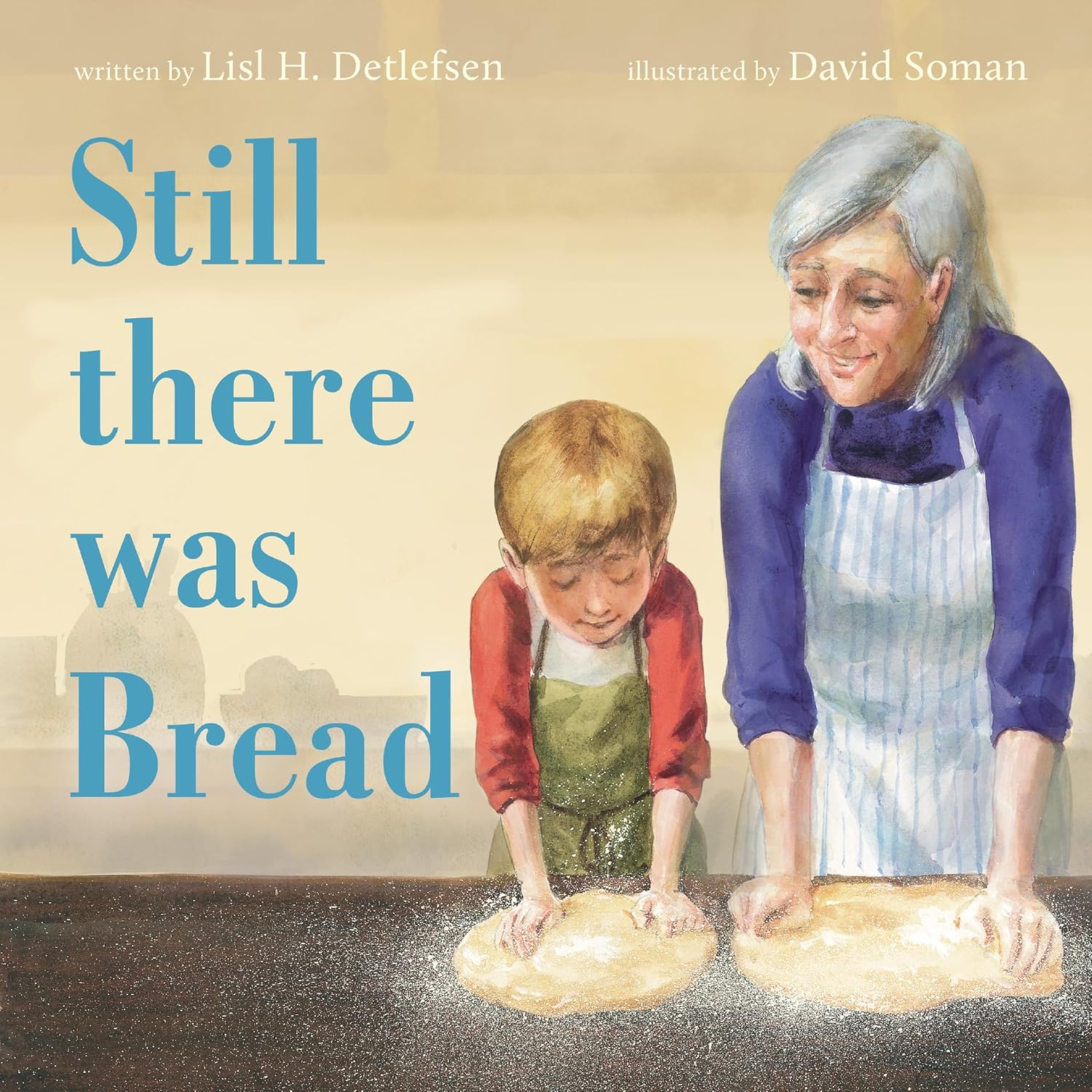
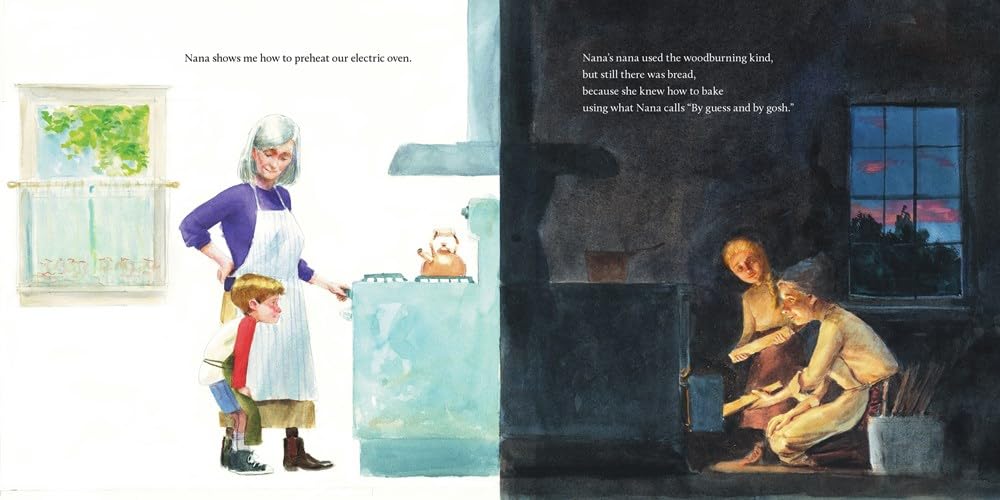
Nana comes to visit her daughter’s family and to teach her grandson—her “Little Pickle”—how to bake the family’s traditional pull-apart “Nana rolls.” Nana and Little Pickle gather the ingredients and turn on the oven while Nana talks about how “her nana had to collect eggs from the chicken coop and milk a cow to get what she needed” and stoke a woodburning stove to bake the rolls.

Nana and Little Pickle move on to combining the ingredients and easily mixing the dough in a stand mixer, a modern contrast to the child narrator’s great-great-grandmother using a wooden spoon. They knead the dough and put it in a bowl to rise in a sunny spot—no different from how it was done all those years ago.

celebrate-picture-books-picture-book-review-still-there-was-bread-stove-vs-woodburner

Image copyright David Soman, 2024, text copyright Lisl H. Detlefsen, 2024. Courtesy of HarperCollins.

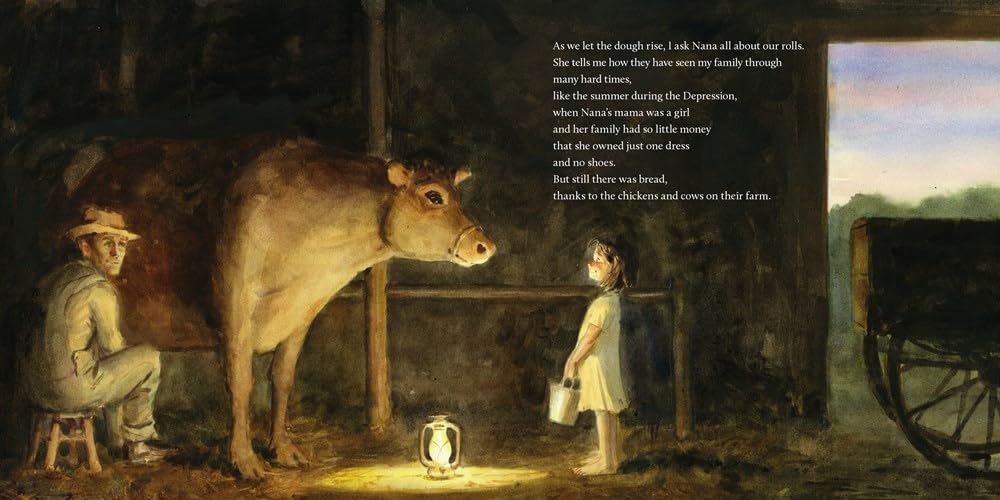
While they wait for the dough to rise, Little Pickle asks Nana to tell stories about the rolls they’re making, and she readily reveals how important their homemade bread was through lean times—like during the Great Depression, when “Nana’s mama was a girl and her family had so little money that she owned just one dress and no shoes. But still there was bread, thanks to the chickens and cows on their farm.” Or when Nana, herself, was a baby and “the whole house was quarantined because she and her daddy had something called polio,” but eggs and milk were delivered. This leads Nana to connect it to a recent quarantine, when people rediscovered the comforts of homemade bread.

celebrate-picture-books-picture-book-review-still-there-was-bread-barn-during-depression

Image copyright David Soman, 2024, text copyright Lisl H. Detlefsen, 2024. Courtesy of HarperCollins.

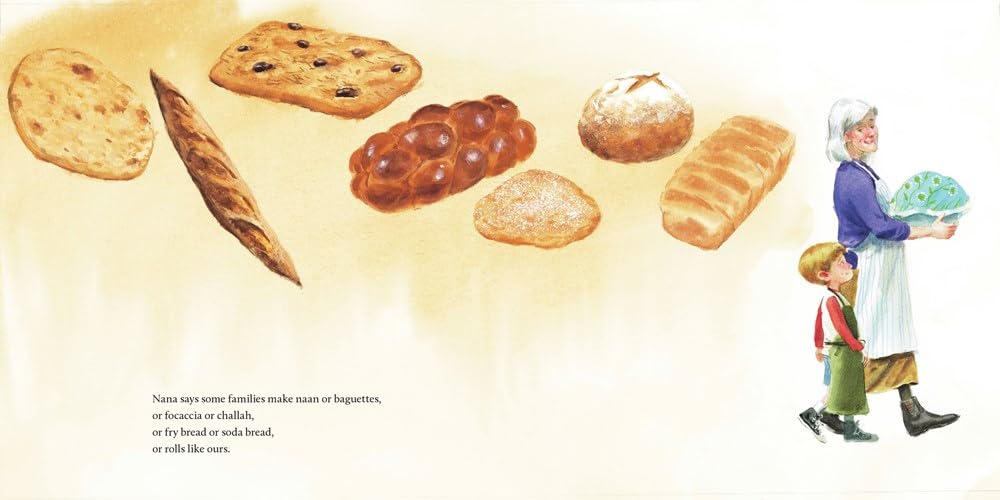
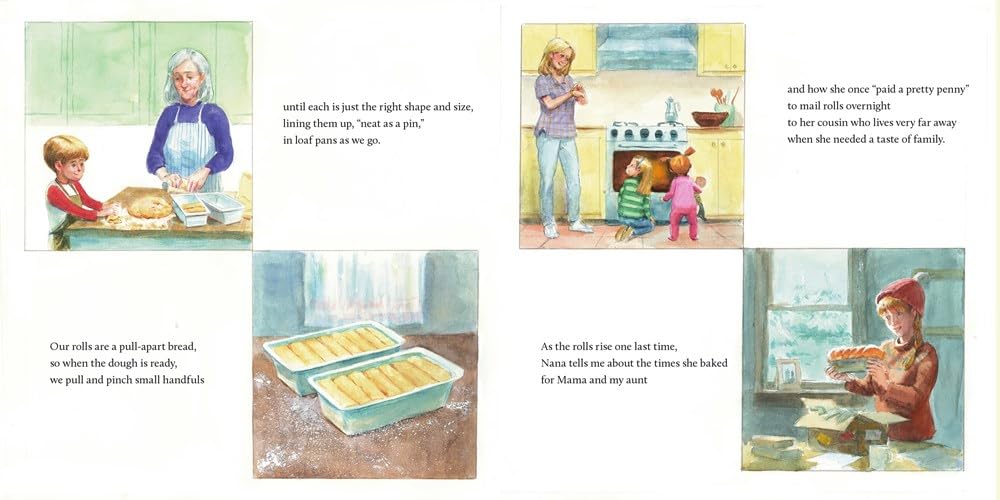
During the second rise of the dough, Nana and Little Pickle talk about the different kinds of bread people make with the “same simple ingredients” for “times they can be together, and times they can’t.” At last the dough is ready to pinch off and shape and put in pans. One more rising allows Nana to tell stories of how she baked bread for Little Pickle’s mom and aunt, and how she “‘paid a pretty penny'” to mail bread to a homesick cousin who was far away. 

celebrate-picture-books-picture-book-review-still-there-was-bread-different-kinds-of-bread

Image copyright David Soman, 2024, text copyright Lisl H. Detlefsen, 2024. Courtesy of HarperCollins.

Little Pickle asks Nana how many times she’s made the rolls, and she replies, “‘Who could say?'” She’s made them for sick neighbors and as gifts for a whole list of occasions. “‘All of them were kneaded. And needed,” she says. The rolls are finally ready to pop into the oven, and as they bake, their “toasty smell brings the rest of the family to the kitchen.” When the rolls are ready, everyone gathers around and “the kitchen becomes a blur of butter and honey and jam and laughter.” Little Pickle is happy and satisfied knowing that years from now “I will share our recipe and the stories that go with it with my kids or grandkids,” but for now whenever someone “needs a warm, fresh-baked hug, I’ll know just what to do.”

celebrate-picture-books-picture-book-review-still-there-was-bread-vignettes

Image copyright David Soman, 2024, text copyright Lisl H. Detlefsen, 2024. Courtesy of HarperCollins.

Filled with warmth, family love, and connectedness, Lisl H. Detlefsen’s Still there was Bread, is a heartening read aloud that will foster a child’s curiosity about the past as well as their own family history and long-held traditions while also being grounded in today. Deftly combining lyrical storytelling with the young narrator’s voice, Detlefsen has created a tale that appeals across generations. The rhythm and easy cadence of the text is as comforting as the homemade rolls depicted. 

David Soman’s pen-and-ink and watercolor illustrations shine for their realistic portrayals of home, the baking process, and especially the expressive faces and shared looks between family members, from Nana and Little Pickle to their ancestors. Soman’s soft textures and glowing lighting bring to life Nana’s stories about her grandmother, the Great Depression, and Nana’s early life. His use of vignettes coupled with full-page illustrations creates a rich tapestry from page to page, not unlike a family photo album. The final image of the family gathered around the dinner table, with Little Pickle, roll in hand and looking out from the page invites readers to join in on the “warm, fresh-baked hug” offered here. 

Still there was Bread would be a welcome addition to family gatherings, especially at holidays and family reunions, and is highly recommended for home, public library, and school library bookshelves.

Ages 4 – 8+

HarperCollins, 2024 | ISBN 978-0063216556

About the Author

Lisl H. Detlefsen is the author of a growing number of picture books, including Farm Boots, illustrated by Renée Kurilla, and At the End of the Day, illustrated by Lynnor Bontigao. She lives with her husband and two sons in a restored farmhouse on a family-owned cranberry marsh in Wisconsin. You can visit her online at lislhdbooks.com.

About the Illustrator

David Soman has illustrated many beautiful picture books, including The Impossible Mountain and the New York Times bestselling Ladybug Girl series, which he cocreated with his wife, Jacky Davis. He is an instructor at the School of Visual Arts in New York City and lives with his family in Upstate New York. Visit him at davidsoman.com.

Family Stories Month Activities

Celebrate Picture Books Family Story Starters 2

Family Story Starters


Getting together with family and/or friends over the holidays, for regular visits, or for other events? Have fun and get to know each other better with these story starters that can lead to fascinating memories and discoveries that build bonds. Use these Family Story Starters to prompt conversations or even play charades. Just print, cut, and place in a bowl or basket then have family members or friends randomly choose among them to get the fun going!

StoryCorps Logo

Connect with Others through Family Stories on StoryCorps

StoryCorps was established on the idea that everyone has an important story to tell and that listening to others’ stories helps us “believe in each other by illuminating the humanity and possibility in us all.” Since their founding in 2003, nearly 700,000 people across the country have recorded short recollections about their lives. Each story is accompanied by animation that helps listeners, and children especially, visualize the narrative. The stories are accessible on the StoryCorps website and in the U.S. Library of Congress. The StoryCorp online archive is “now the largest single collection of human voices ever gathered.”

A perfect way to celebrate Family Stories Month, to share our common bonds, and to introduce children to the wonders of storytelling, listen to some of the incredible stories on StoryCorps. You can also get involved in the project by recording your own family stories! Visit StoryCorps to learn more. 

celebrate-picture-books-picture-book-review-still-there-was-bread-cover

You can purchase Still there was Bread at these booksellers

Amazon | Barnes & Noble | Bookshop (to support your local independent bookstore)

Picture Book Review
November 14 – Human-Animal Relationship Week

celebrate-picture-books-picture-book-review-the-cat-way-cover

About the Holiday

Established in 2016 by the Animals & Society Institute, a scholarly non-profit organization which works to increase knowledge about the relationships between people and animals, Human-Animal Relationship Awareness Week, aims to raise an appreciation for the ways in which humans and animals live and work together while sharing the resources of our planet. During the week and throughout the year, we are asked to strive to improve the lives of animals at home and across the globe while “building communities that are more humane and compassionate.”

Thank you to Eerdmans Books for Young Readers for sharing a copy of The Cat Way with me for review consideration. All opinions on the book are my own.

The Cat Way

By Sara Lundberg | Translated by B. J. Woodstein


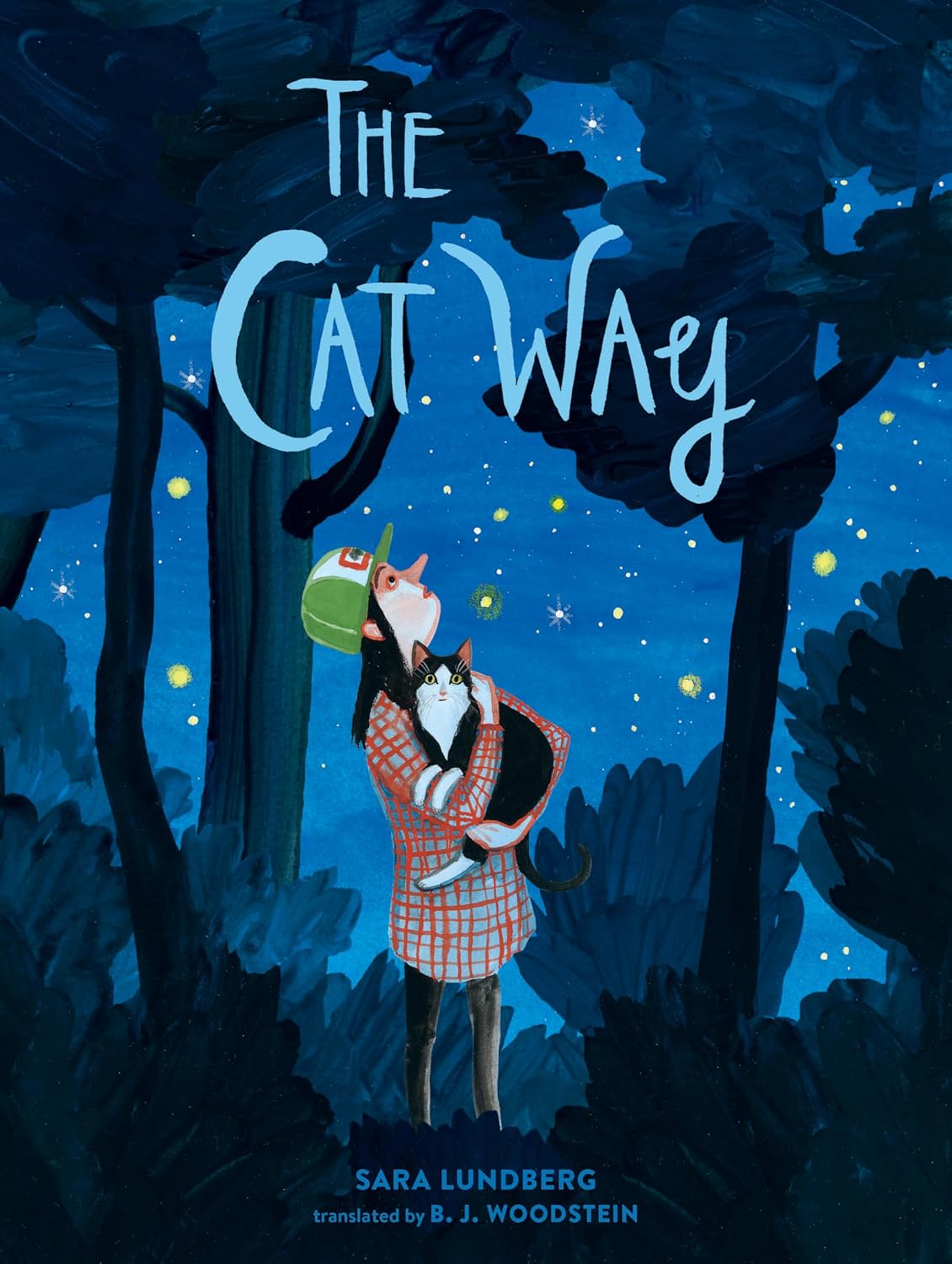
Part 1 of Sara Lundberg’s story begins with a black-and-white cat and her human taking their usual walk down the sidewalk in their neighborhood. “‘I’m the one in charge,'” the cat’s owner declares. The young person ducks behind a tree to play their typical game of hide and seek, but today the cat is distracted by a white cat sitting nearby. She approaches, and the two cats begin to frolic while the narrator can only sit and watch. The narrator is ready to leave, to put a stop to their play, and while their cat comes, so does the white cat side-by-side, their tails linking the two. The young pet owner hears the cats “giggling and giggling” at them and, jealous, isn’t having it: “‘Stop it,” I say. I stamp my foot. Then the other one runs off.'”

celebrate-picture-books-picture-book-review-the-cat-way-belly-scratch

Image and text copyright Sara Lundberg, 2024, translation copyright B. J. Woodstein, 2024. Courtesy of Eerdman’s Books for Young Readers.

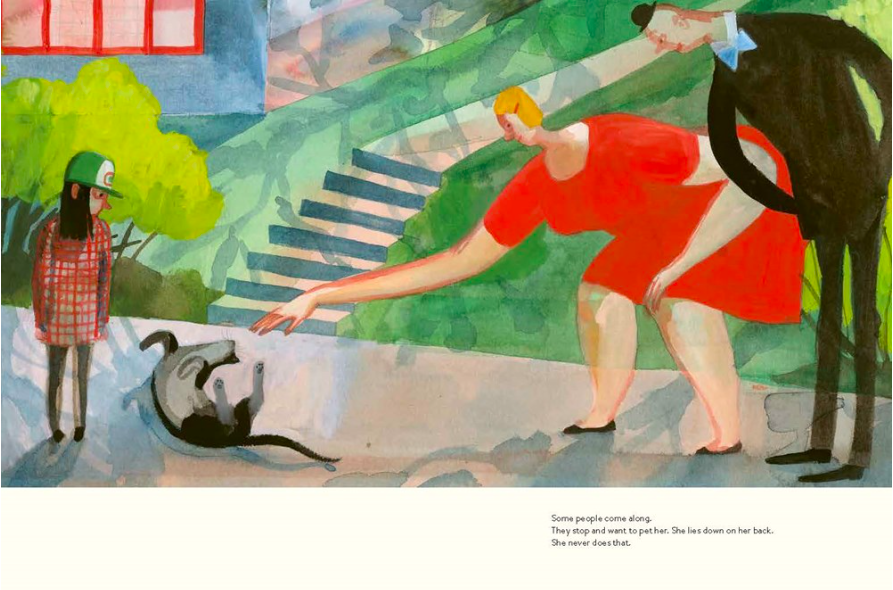
The cat and her human “glare at one another” until the cat says, “‘Why are you always in charge?'” Just then an older couple approaches, and the cat demonstrates her independence by immediately rolling over to offer her belly for a scratch—something “she never does.” Despite the narrator’s calling her to come, the cat lies there, soaking up the attention, extending her rebellion. Her owner decides on a subtle power play and walks away, continually turning back, however, to see if their cat is coming. She isn’t.

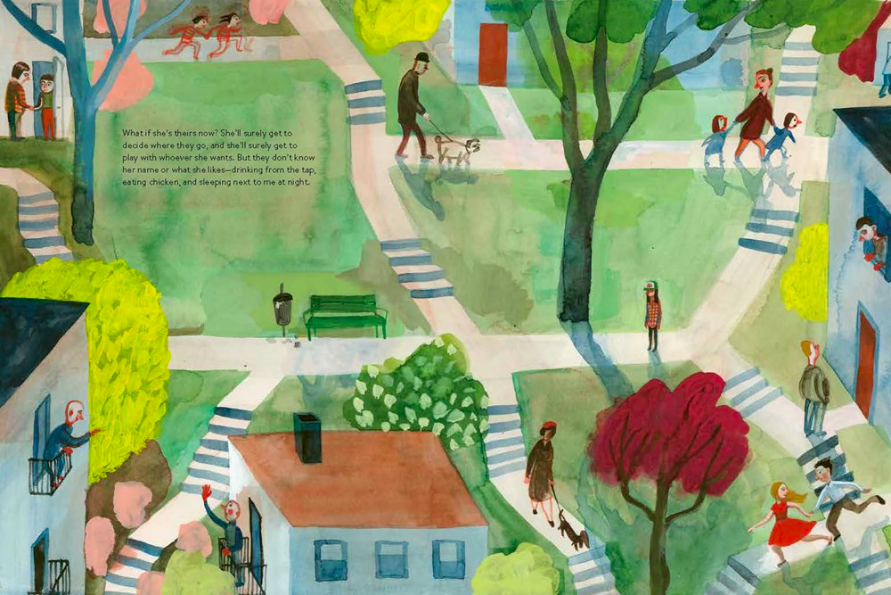
The young person, full of doubt, stops in the middle of the neighborhood, out of sight of the cat and the couple, wondering if the cat is “theirs now” and taking stock: the couple will surely be more lenient, but they don’t know her name, her quirks, her favorite food, or that she likes “sleeping next to me at night.” 

celebrate-picture-books-picture-book-review-the-cat-way-neighborhood

Image and text copyright Sara Lundberg, 2024, translation copyright B. J. Woodstein, 2024. Courtesy of Eerdman’s Books for Young Readers.

Here, Sara Lundberg does something astounding, metaphorically reflecting how time elongates and an icy fear grips those searching for a lost pet. The beautiful summer day turns dark and rainy. The narrator, rooted in place, gets soaked while shouting for the cat and getting no response. They think, “If I go home, she might disappear forever.” On the next page, autumn has come, and yellow leaves fall to the ground—the foreboding of something ending. Turn the page, and it’s now snowing. Inches have accumulated, covering the narrator’s hat and crossed arms. They trudge home, a freezing distress and self-recriminations lodged in their heart.

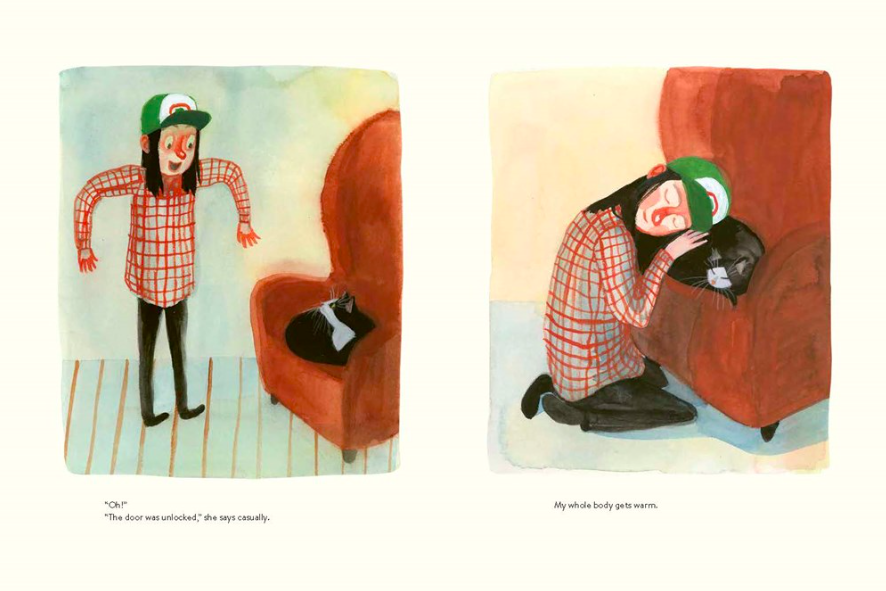
At home, the narrator can’t thaw out but then discovers with joy their cat curled up in their favorite chair. During tomorrow’s walk, the narrator promises, the cat will lead.

celebrate-picture-books-picture-book-review-the-cat-way-cat-comes-home

Image and text copyright Sara Lundberg, 2024, translation copyright B. J. Woodstein, 2024. Courtesy of Eerdman’s Books for Young Readers.

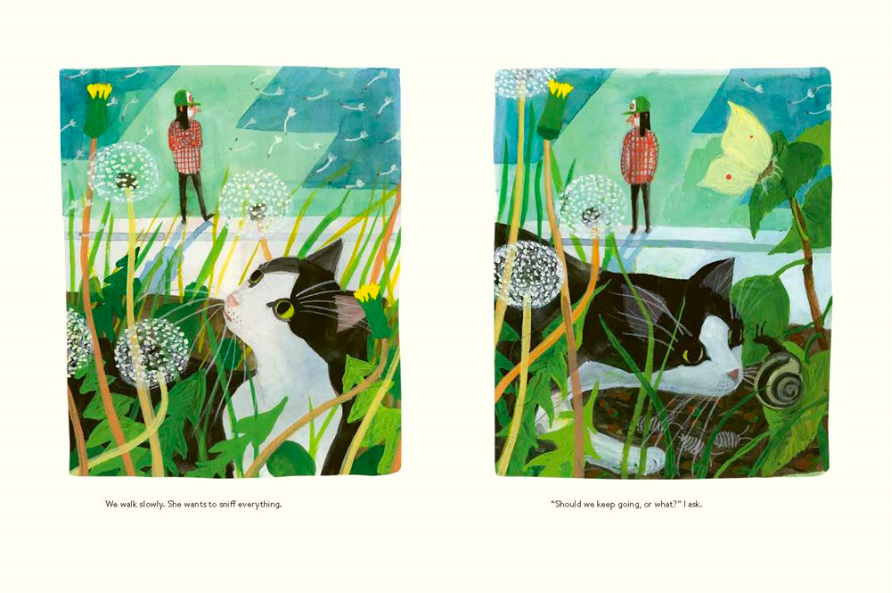
Part 2 takes up the story the next day as the narrator and the cat head out. Just a step outside the door, readers are treated to the cat’s eye view of the neighborhood. Whereas during Part 1, the landscape presents buildings, the sidewalk, cars, signs, benches, trash cans, and other cityscape objects, Part 2 lands readers in nature, like one of the dandelion seeds the cat dislodges while roaming the woods. Flowers, a snail, a butterfly, and pill bugs attract the cat’s eagle eye, while her owner stands on the barren sidewalk across the street, tapping her foot, glancing left and right.

As the cat ventures further, the narrator follows reluctantly. Without a path to follow, the narrator feels lost, unsure of the way home. Farther and farther into the woods the cat creeps, finding squirrel and communicating eye-to-eye the way only animals can. It’s getting dark and the narrator blindly tumbles down a small cliff. “‘Stupid cat!'” the narrator says from a prone position on the ground. Perched on a thin branch, the cat, in silhouette, seems to ask, “what are you doing down there?”

celebrate-picture-books-picture-book-review-the-cat-way-snail

Image and text copyright Sara Lundberg, 2024, translation copyright B. J. Woodstein, 2024. Courtesy of Eerdman’s Books for Young Readers.

Tears stream down the cat owner’s face, and the cat comes over to comfort her human. It’s then, drying their tears and looking up, that the narrator realizes…. The glorious star-filled night sky stretches out in front of them. The narrator, holding the cat in their arms, stands gazing at this silent spectacle. For readers, the page opens with a majestic gatefold that will elicit appreciative “Oohs!” They stay until dawn edges the horizon and the cat gets hungry. This time, the narrator follows as the cat expertly leads them out of the woods and back home. Still, the narrator isn’t completely ready to relinquish control, seeking assurance that tomorrow they will return to their regular routine. With a look the cat quells that thought, and her human offers a more equitable every-other-day solution. The cat blinks and continues leading her human home.

celebrate-picture-books-picture-book-review-the-cat-way-night-sky

mage and text copyright Sara Lundberg, 2024, translation copyright B. J. Woodstein, 2024. Courtesy of Eerdman’s Books for Young Readers.

Originally written in Swedish by Sara Lundberg and beautifully translated by B. J. Woodstein, The Cat Way is a multi-layered story for relationships of all kinds—between parents and children; friendships (between children, between adults, and between family members); between educators and students; and, more literally, between pets and their humans.

Through her self-assured narrator and inquisitive cat, Lundberg explores how we can get stuck in ruts and routines, ignoring or not recognizing opportunities to grow, learn, play, and see aspects of the world (both small and large) in fresh ways. As the narrator stolidly walks the same, well-worn paths and reacts critically when their cat welcomes something or someone new, Lundberg shows not only how easy it can be to quash another’s curiosity and creativity but also what a lonely and dull life this can lead to. 

When, in Part 2, the cat gets to lead and heads for the woods, Lundberg acknowledges how unfamiliar paths can feel scary and difficult to navigate at first as well as how discovery can feel overwhelming with impediments, stumbles, and even blind faith. But the cat is engaged, sure-footed, and aware of each snail, butterfly, squirrel, and way forward. She instinctively understands encouragement and that the journey is worth it all. And in the poignant ending, she reassures her human that home is where her heart is.

In her lush,  illustrations, Sara Lundberg uses a variety of perspectives (many charmingly surreal) throughout the story to enhance her message. A few standout illustrations include a spread early on when the narrator’s cat and the white cat tumble playfully, creating a yin and yang image that mirrors an underlying theme of balance in a relationship. The couple who scratch the cat’s tummy tower over the cat and the narrator, a reflection, perhaps, of how outsized the narrator feels their influence on their pet. A two-page spread showing interactions among people in the neighborhood as the narrator stands paralyzed by the idea they’ve lost their cat provides an opportunity for readers to stop and imagine the relationships and what is happening. 
Thoughtful, resonant, and visually arresting, The Cat Way is a story of exploration—of one’s immediate surrounding, the world, their relationships, and their own essence—that rewards multiple readings and is a must for home, public library, and school library collections.

Ages 5 – 9+

Eerdman’s Books for Young Readers, 2024 | ISBN 978-0802856333

About the Author

Sara Lundberg is a Stockholm-based illustrator and author who has created over thirty books, including two recipients of Sweden’s August Prize for the best children’s book of the year. In the United States, The Summer of Diving (Triangle Square) was named a New York Times Best Children’s Book, and The Bird in Me Flies (Groundwood) was named a Bank Street College Best Children’s Book. The Cat Way was inspired by Sara’s memories and photos of her cat Sassa, who often joined her family on walks. Follow Sara on Instagram at saralundbergart

About the Translator

B.J. Woodstein is a writer, editor, and Swedish-to-English translator. Her translations for children include The Book that Did Not Want to Be Read (Simon & Schuster) as well as the previous Sara Lundberg books The Bird in Me Flies (Groundwood) and The Summer of Diving (Triangle Square). A native of Chicago, B.J. currently lives in Norwich, England, where she is a lecturer at the University of East Anglia. Visit her website at bjwoodstein.com.

Human-Animal Relationship Month Activity

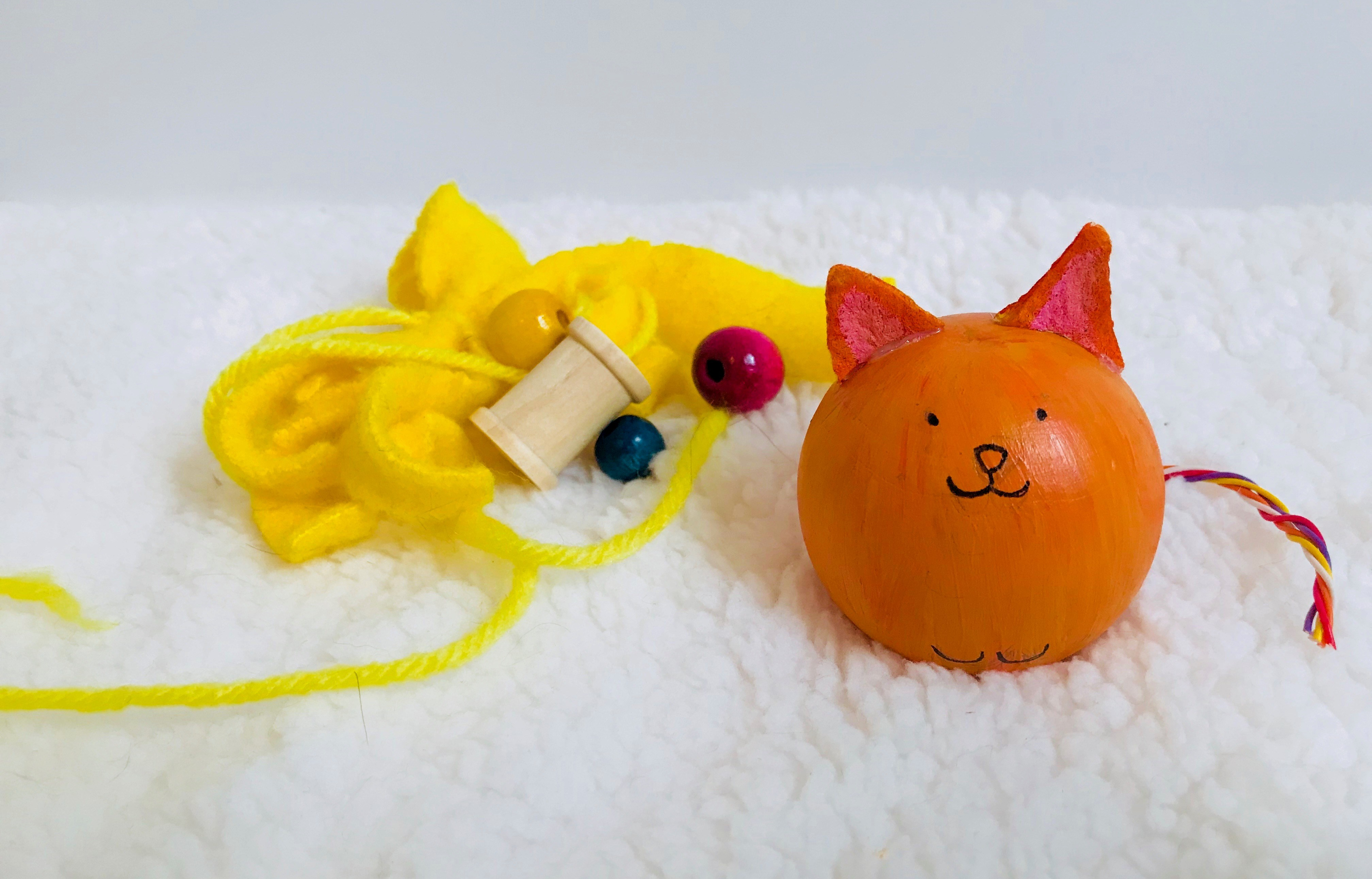
celebrate-picture-books-picture-book-review-wooden-bead-cat-craft

A Little Ball of Kitten Love

There’s nothing quite like the relationship between a cat and their human! If you have a cat or just love kitties, this sweet ball of fun is easy to make and can keep you company on your desk or shelf! Since every kitten is different, make your feline friend look just the way you want.

Supplies

  • Wooden ball with a flat bottom, available in craft stores and in different sizes
  • Craft paint in any color kitten you’d like (I used red and yellow and mixed it to make a mottled orange)
  • Craft paint in pink or white for the inner ear
  • Scrap of fleece for the ears. Fleece is easily shaped to the rounded ball and when painted is stiff enough to stand up on its own.
  • Thin, colored wire in several colors for the tail (string or twine, wrapped wire, fleece, stiff paper, and other materials could also be used)
  • Paint brush
  • Permanent marker for making the face
  • Hot glue gun or strong glue

Directions

  1. Paint the wooden ball and let dry
  2. Paint the scrap of fleece to match the wooden ball, let dry
  3. Cut out small triangular shapes for the ears. Round the bottom of the ears slightly so they fit the shape of the ball
  4. If making a tail from several colors of thin wire, twist them together, leaving one end untwisted
  5. With the glue gun or strong glue attach the ears to the top of the head
  6. With the glue gun attach the tail to the back of the wooden ball in the center near the base
  7. With the marker, draw eyes, nose, and mouth for the face and semicircles near the bottom for the paws

celebrate-picture-books-picture-book-review-the-cat-way-cover

You can purchase The Cat Way at these booksellers

Amazon | Barnes & Noble | Bookshop (to support your local independent bookstore)


Picture Book Review