March 12 – Get Ready for Passover

About the Holiday

Passover, or Pesach in Hebrew, is one of the most sacred Jewish holidays and celebrates the Jews’ liberation from slavery in Egypt and their freedom as a nation under Moses. The holiday begins on the fourteenth day of the Hebrew month Nisan and continues for seven days in Israel or eight days outside of Israell. The holiday begins with a seder meal, for which family and friends gather to remember their history, have symbolic dishes, and celebrate the joy of freedom. Games for children, a reading of the Exodus story, and other meaningful traditions also mark the holiday.

Thank you to Random House Books for Children and Barbara Fisch at Blue Slip Media for gifting me a copy of Next Year in the White House for review.

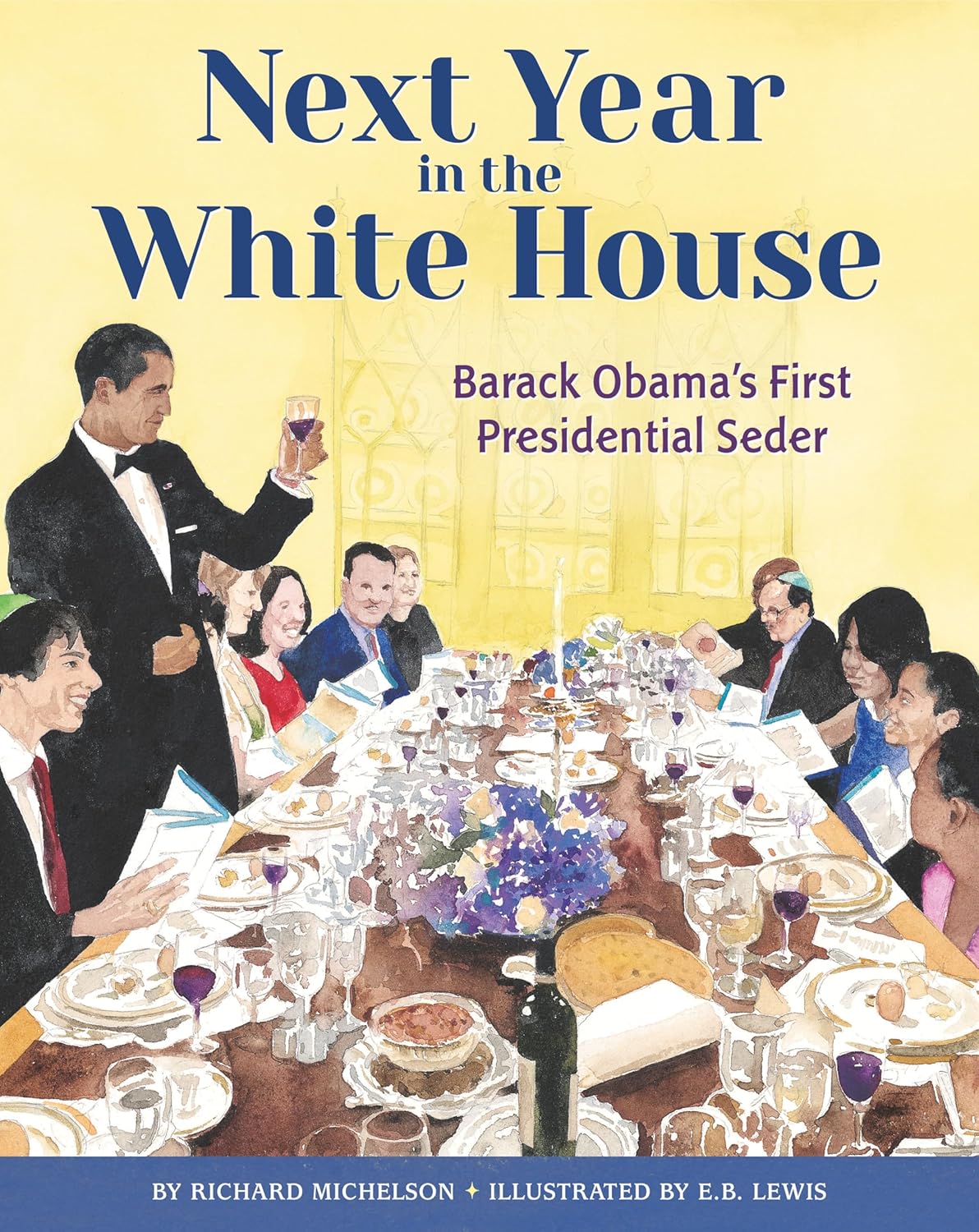
Next Year in the White House: Barack Obama’s First Presidential Seder

By Richard Michelson | Illustrated by E.B. Lewis


Review by Dorothy Levine


“Malia and Sasha watch White House chefs arrange gefilte fish on fine china. Matzoh ball soup simmers in a sterling silver tureen…Bo wags his tail and sniffs as new smells waft through the Old Family Dining Room.”

Michelson’s story begins right in the action, with everyone preparing for the White House Seder. Barack Obama’s daughter Sasha says, “I bet Bo is wondering why this night is different from all other nights.” She is jokingly referencing the four questions recited by the youngest child in a Passover seder. And why is this night different, you may be wondering? Read on to find out! 
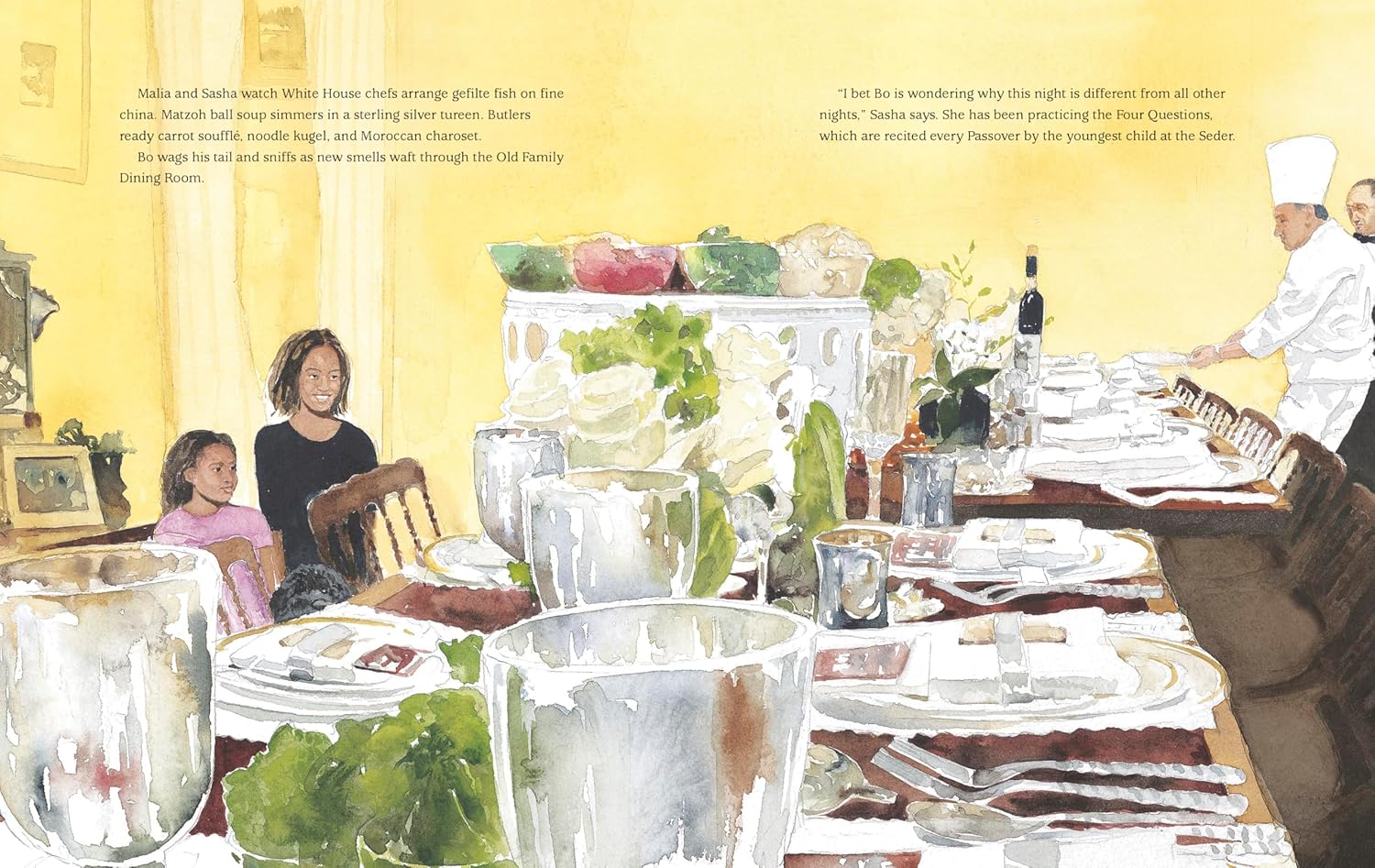
Illustration © 2025 by E.B. Lewis, text © 2025 by Richard Michelson. Courtesy of Random House Children’s Books.

When Eric, Arun, and Herbie set out on the campaign trail with Senator Obama as he ran for president in 2008, they did not expect to find themselves seated in the White House celebrating Passover for the next eight years. These young men joined the campaign trail in hopes that “they could help [Obama] make America a place where all people—regardless of their race, gender or religion—would have an equal opportunity to succeed.” But, “helping others doesn’t mean you don’t get homesick, or hungry, or tired.”

Holidays are especially a time when homesickness can hit for folks far from home. And this was the case for Eric, Arun, and Herbie. When Passover came around, they decided to have their own Passover ceremony, or Seder, in the basement of the hotel where they were staying. The trio managed to snag some matzoh, macaroons and Manishewitz wine along with Haggadahs (booklets of the prayers, songs and story of Passover) to tell the story of Passover—the exodus of enslaved Jews in Egypt who escaped through a parting sea to freedom, one of many miracles that ensured their eventual getaway. “Tonight, they would celebrate the sweet taste of freedom and pledge not to rest until all people are free.”
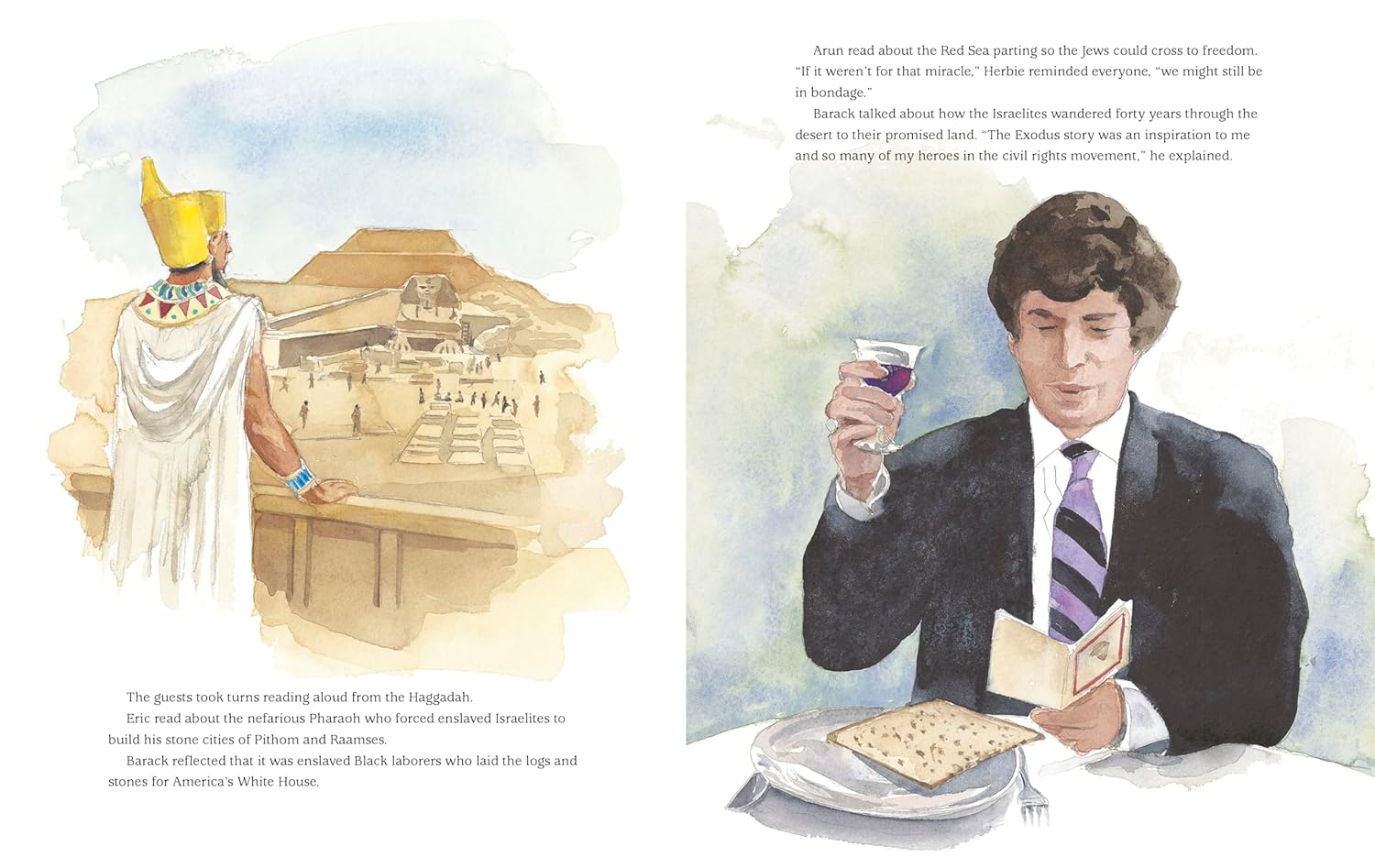
Illustration © 2025 by E.B. Lewis, text © 2025 by Richard Michelson. Courtesy of Random House Children’s Books.

When the three young men rose for the tradition of letting the prophet, Elijah, in through the door they were surprised to find Barack Obama on the other side, requesting to join the gathering. Obama brought to the table connections between the Passover freedom tale and the civil rights movement—how activists throughout time have drawn from the Passover pilgrimage in their protests and speeches. He told of how enslaved Black laborers were the ones who carried the first building blocks for the White House, like how the ancient Pharaoh had made the enslaved Israelites build his stone cities. When Eric called out a traditional Passover expression “Next year in Jerusalem,” a phrase that has come to signify hope for a better tomorrow, Barack replied, “Next year in the White House!”

In the following pages, we return to the prologue scene of the book—a description of the first White House Seder, performed in 2009, hundreds of years after both the first White House Christmas and Easter ceremonies. We read of two previously enslaved peoples joining together in resistance and solidarity, to celebrate in the historic White House, where neither group would have been invited years ago. We learn about the traditional Passover foods and games for children—such as piping hot matzoh ball soup and the race to find the afikomen, a hidden piece of matzoh wrapped in a special cloth. And we’re invited in as dozens of people gather to celebrate and cherish the holiday’s call of freedom. When the prize for finding the hidden afikomen is a dog toy for Bo, Sasha remarks, “Now Bo definitely knows why this night is different from all other nights.”
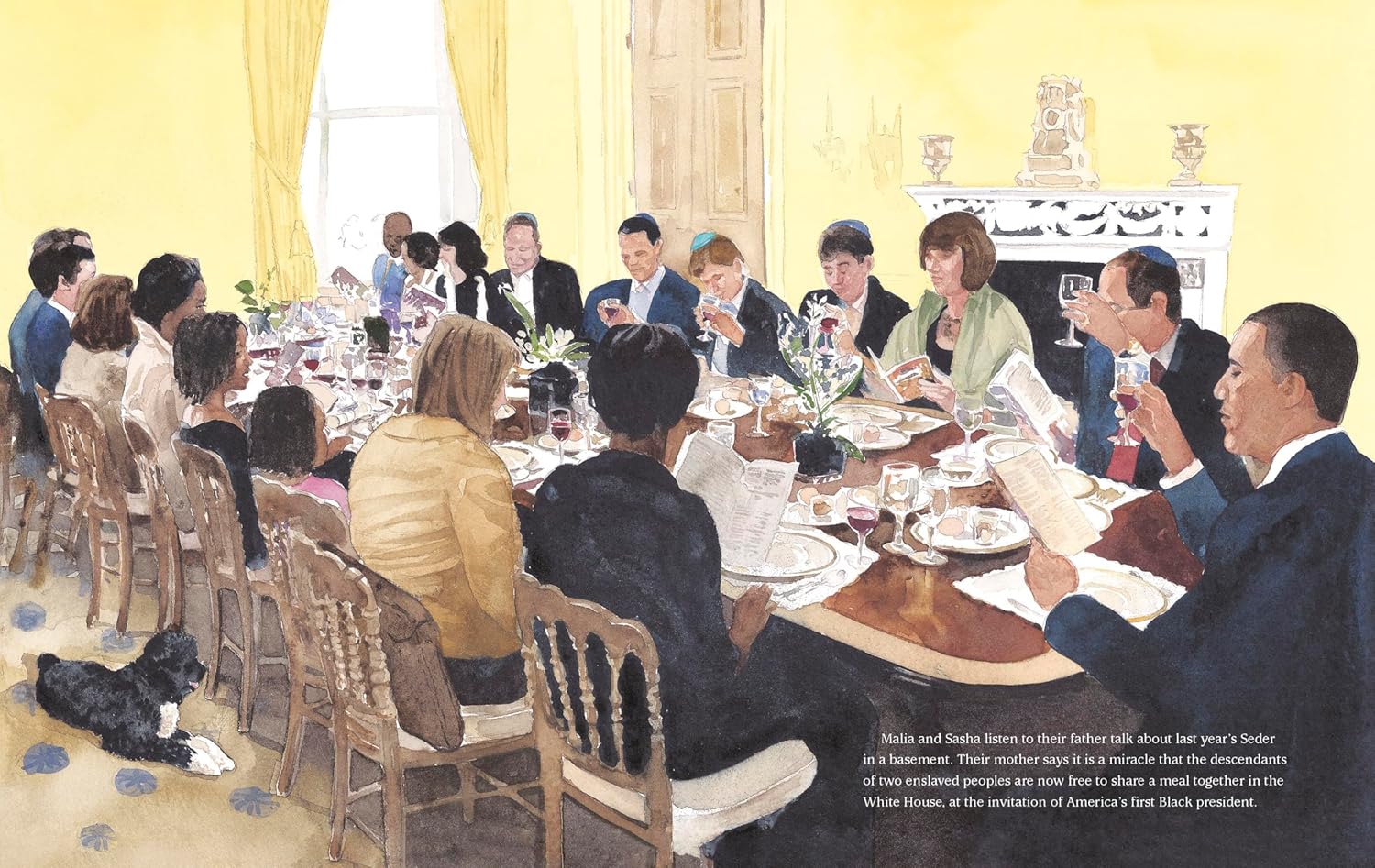
Illustration © 2025 by E.B. Lewis, text © 2025 by Richard Michelson. Courtesy of Random House Children’s Books.

Richard Michelson’s writing is thought provoking, lively and packed with themes of hope and resilience interspersed with knowledge of the Passover traditions. The story contains many references to Passover phrases and themes, such as the call for the homesick, tired, and hungry to come eat and the four questions, which are both part of Passover prayers and motifs shared in Michelson’s story.

Michelson adds a prologue scene to draw readers in, as well as extensive back matter including: a note from Herbie Ziskend, Eric Lesser, and Arum Chaudhary; an annotated page of the Haggadah used at the first White House Seder; more information about the attendees and connections between Black History and Passover; a detailed explanation of Passover traditions; and a special Passover dessert recipe from Arun. His writing instills a sense of social justice, with undertones of the importance of intersectional empowerment and unity.

E.B. Lewis’s signature watercolor spreads bring the book to life with distinctly recognizable characters displaying detailed facial expressions and richly colored backgrounds. Readers will feel immersed in the comradery of the dinner table scenes and the crowds at protests and campaign speeches. The illustrative masterpiece depicting the parting of the sea in the background when Eric, Arun, and Herbie retell the Passover story will inspire awe and mystery. Close-ups of each of the characters also intersperse text and larger detailed scenes. When Arun, Herbie, and Eric are introduced, they each receive their own small illustrative snapshot, as these three unlikely characters become center stage for a Passover miracle story.

Next Year in the White House brings a unique and important historical moment to light and a new story to the table to re-read time and time again, as is tradition with the Passover tale. 

Ages 4 – 8+

Crown Books for Young Readers, 2025 | ISBN 978-0593711583

About the Author

Richard Michelson is a poet, children’s book author, and art dealer whose children’s books have been listed among the 10 Best Books of the Year by The New York Times, Publishers Weekly, and The New Yorker; and among the 12 Best Books of the Decade by Amazon.com. He has been a finalist for the Massachusetts Book Award, the Harlem Book Fest Wheatley Award, and the National Jewish Book Award, as well as receiving two Skipping Stones Multicultural Book Awards, a National Parenting Publication Gold Medal and an International Reading Association Teacher’s Choice Award. In 2009 Michelson received both a Sydney Taylor Gold and Silver Medal from the Association of Jewish Librarians, the only author so honored in AJL’s 50 year history. Michelson received his 2nd Silver Medal in 2017 and his 2nd Gold Medal in 2018. Additionally, Michelson won the 2017 National Jewish Book Award. Michelson is the owner of R. Michelson Galleries, the host of Northampton Poetry Radio, and the current Poet Laureate of Northampton. Massachusetts. You can learn more by visiting him at richardmichelson.com and on Facebook.

About the Illustrator

E.B. Lewis has illustrated over seventy books for children, including the New York Times Best Illustrated Book Award, Kirkus Best Illustrated Book Award, and the Golden Kite Honor Award winner Jabari Asim’s Preaching to the Chickens as well as the Caldecott Honor Award Winner, Jacqueline Woodson’s Coming on Home SoonHe is also a five-time Coretta Scott King winner.
Presently, Lewis teaches at the Pennsylvania Academy of Fine Arts. He is also a member of The Society of Illustrators in New York City, and an artist member of Salamagundi Art Club of New York. Learn more about E.B. Lewis and his work at eblewis.com.

Get Ready for Passover Activity
8 Days of Activity Plans from 18 Doors


Celebrate Passover with your family and these Activity Plan Ideas from 18 Doors! For each of the 8 Days you’ll find a song or video, a craft, and a recipe to help you have a fun Passover!
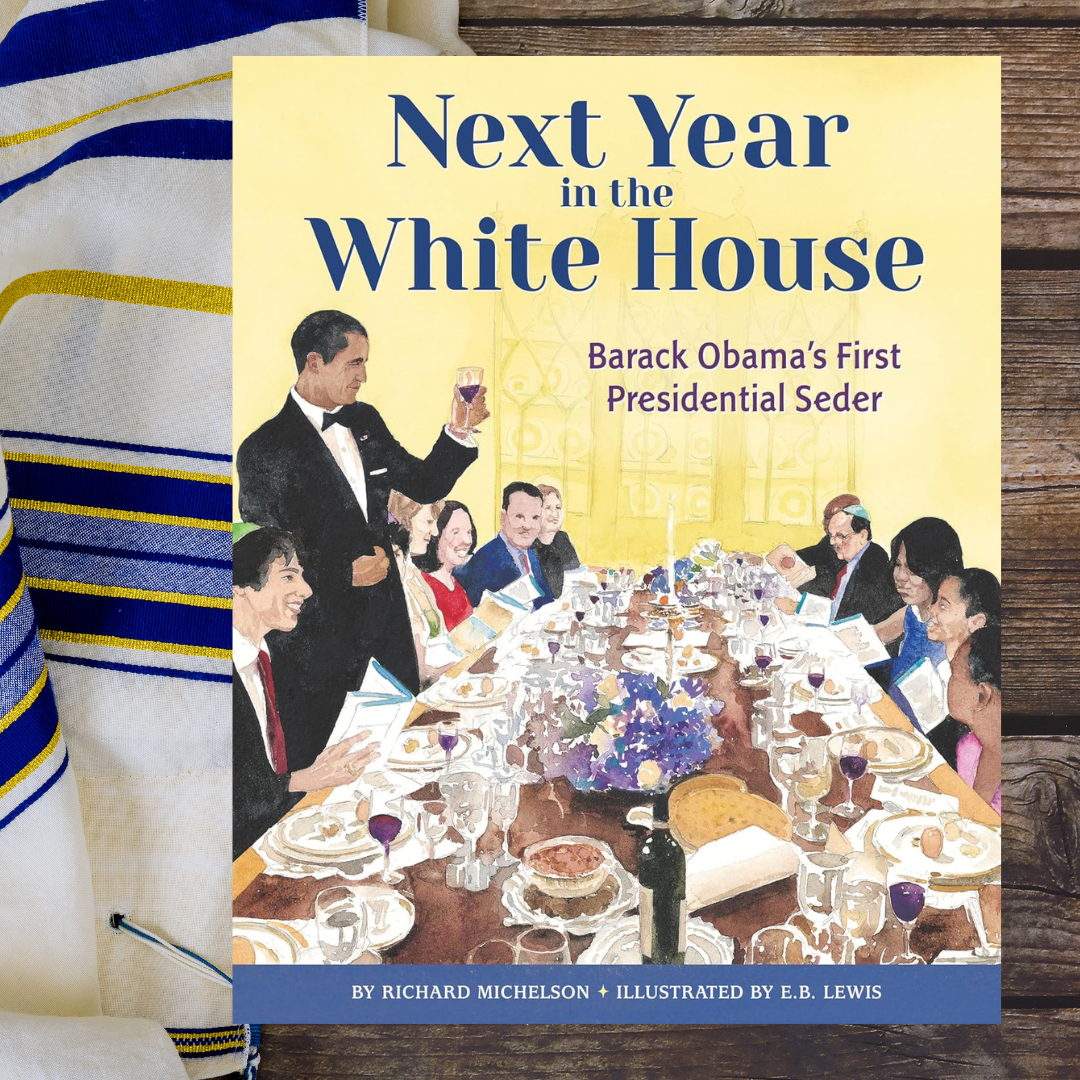
You can purchase Next Year at the White House from these booksellers

Amazon | Barnes & Noble | Bookshop (to support your local independent bookstore)

Picture Book Review

March 11 – It’s Gardening, Nature, and Ecology Books Month

About the Holiday

Established in the early 2000s by the Children’s Book Council, this month-long holiday encourages people to read books about gardening, nature, and ecology to foster a deeper connection with the environment and appreciation for our planet, encouraging more people to adopt sustainable practices in their daily lives.

I’d like to thank G.P. Putnam’s Sons Books for Young Readers for sharing a digital copy of Hello, I’m an Axolotl with me for review.

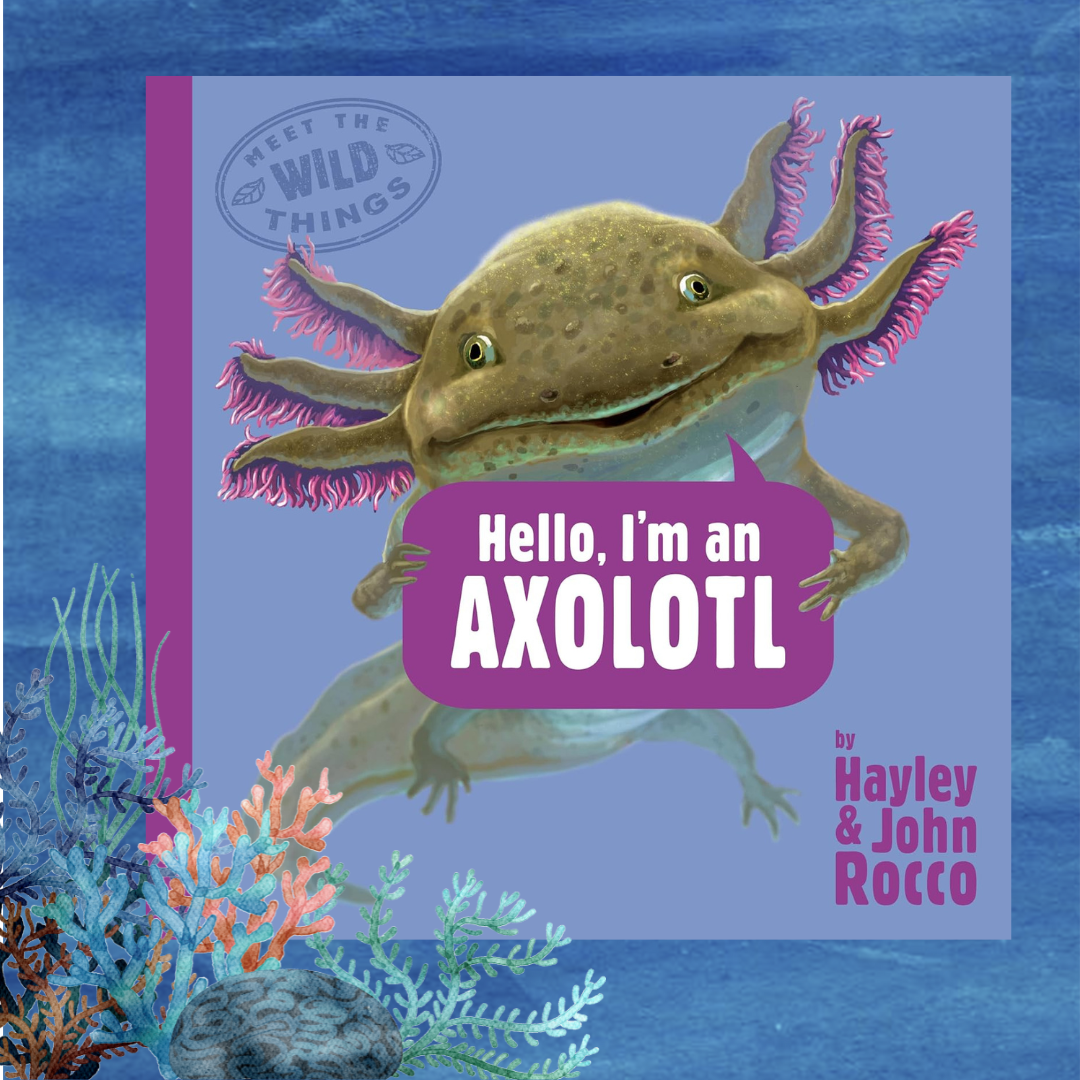
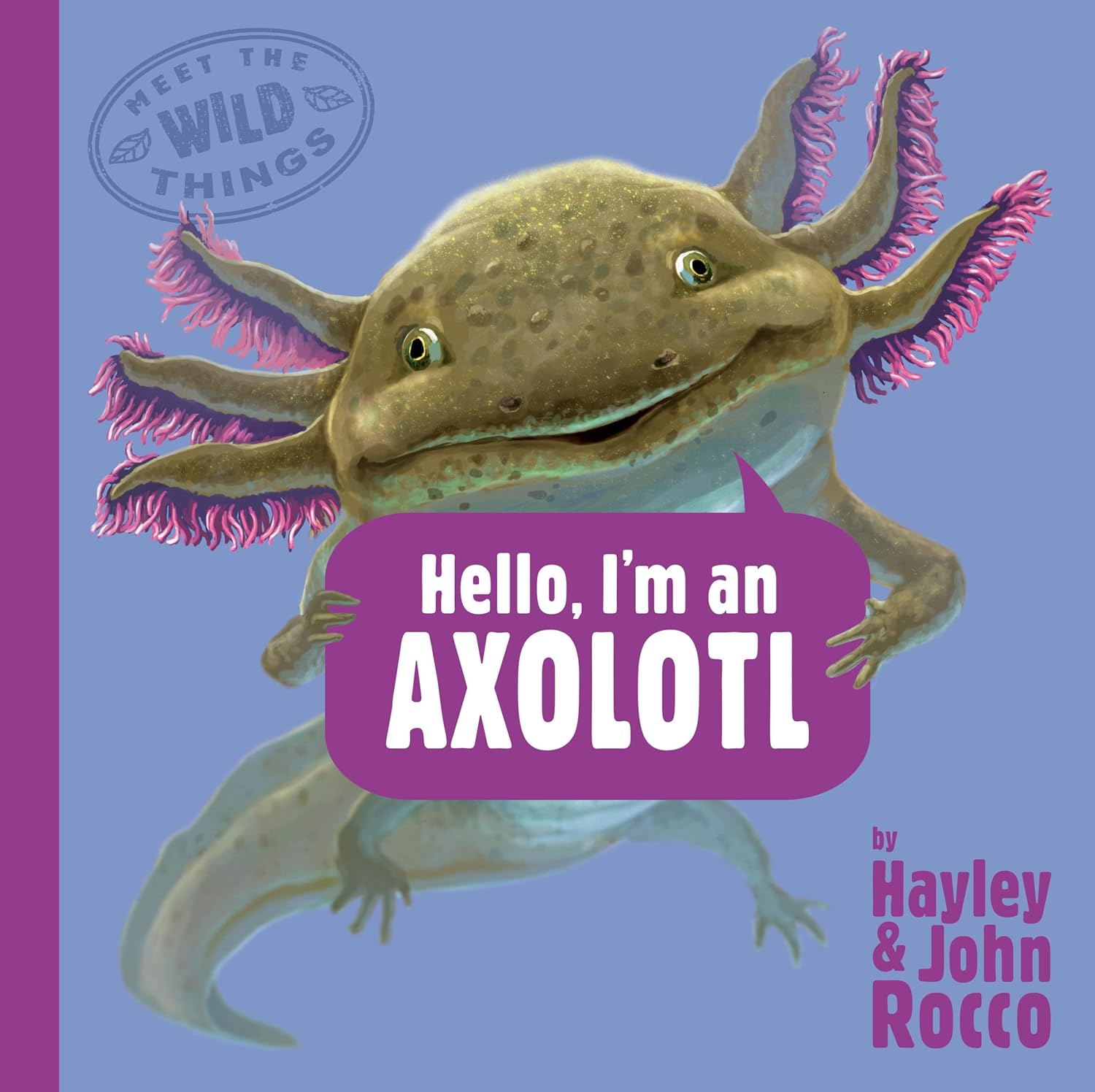
Hello, I’m an Axolotl

Written by Haley Rocco | Illustrated by John Rocco


Swimming into the popular Meet the Wild Things series that introduces kids to unusual and endangered animals is Hello, I’m an Axolotl and its spirited narrator who wastes no time in telling readers “I am A-M-A-Z-I-N-G!” And it’s not kidding!

First off, it’s named after a super hero-sounding Aztec god and then we learn that even though axolotl’s are related to salamanders, they’re a bit like an underwater Peter Pan because they “never really grow up,” which actually gives axolotls another superpower: the ability to breathe in two ways.

Illustration © 2025 by John Rocco, text © 2025 by Haley Rocco. Courtesy of G.P. Putnam’s Sons Books for Young Readers.

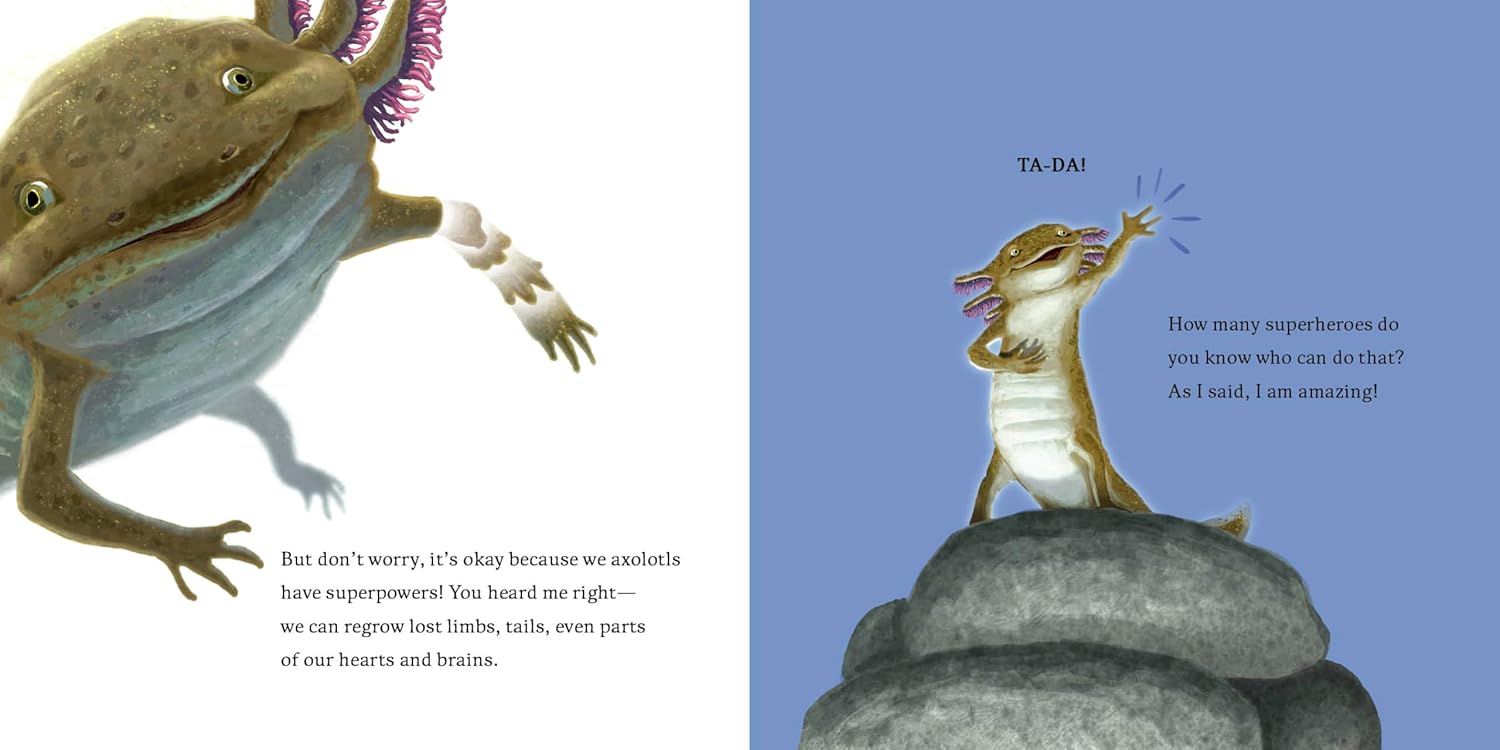
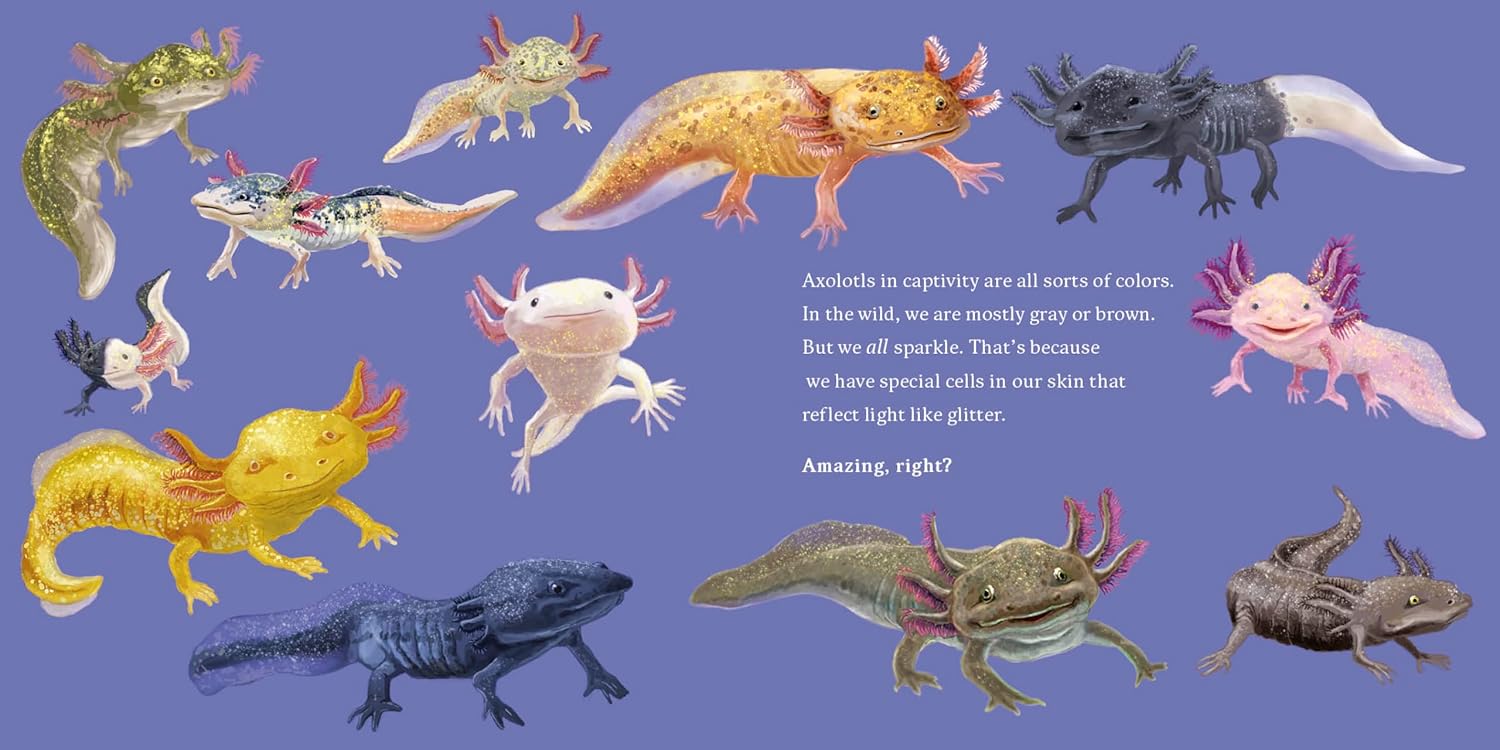
And if that doesn’t convince you that these little cuties are special, the fact that their skin sparkles like glitter certainly will! The book’s host then reveals how that’s possible. Pretty neat, huh? Still not convinced that the axolotl is one of the most fascinating animals on the planet? How about if you knew they can regrow “lost limbs, tails, even parts of [their] hearts and brains?!” This comes in handy, especially if one of their 1,000 siblings has mistaken them for a snack. Scientists are even studying how they do it with hopes of applying what they learn to humans one day.

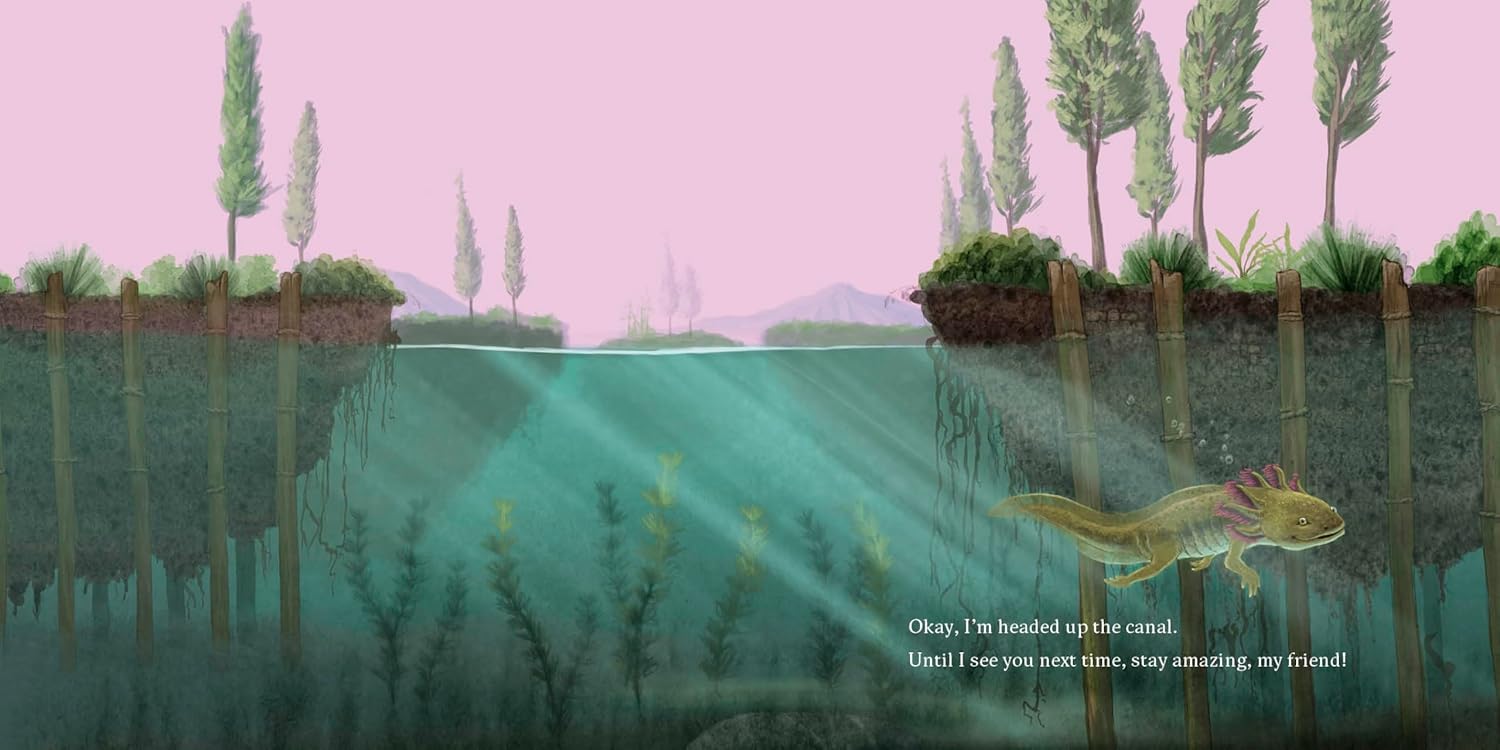
But everything isn’t rosy for axolotls. While “there about a million axolotls all over the world living in tanks and aquariums,” there are fewer than 500 living in the wild—and these are only found in one “lake and some canals outside Mexico City.” You’ll be able to see why when you compare an illustration of Lake Xochimilco from the 1500s to one from current times.

Illustration © 2025 by John Rocco, text © 2025 by Haley Rocco. Courtesy of G.P. Putnam’s Sons Books for Young Readers.

There is hope, however, as conservationists are reintroducing “an ancient Aztec farming method” that provides conditions axolotls need to survive. World-wide notoriety that shines a light on the plight of these A-M-A-Z-I-N-G creatures helps too.

Back matter expands on the facts presented in the text, including short paragraphs on the Aztec people, the origins of all axolotls in captivity today, the science behind their sparkly skin, why axolotls are endangered, and much more. 

Illustration © 2025 by John Rocco, text © 2025 by Haley Rocco. Courtesy of G.P. Putnam’s Sons Books for Young Readers.

Haley Rocco’s superpower is introducing incredible animals in a witty, personal voice that immediately endears them to kids. In Hello, I’m an Axalotl, her charming first-person narration rivets readers to the fascinating facts about axolotls, providing plenty of eye-opening and “awww”-inspiring moments as well as heartfelt concern about the future of these one-of-a-kind creatures and how they can help.

John Rocco’s stunning mixed media illustrations put kids eye-to-eye with the feisty and adorable axolotl narrator as it takes kids on a tour of its home, a lab where scientists are studying the regenerative abilities of axolotls, and to ancient and modern Lake Xochimilco. Readers of all ages will be intrigued by the image of the Aztec farming method making a comeback to protect axolotls. There’s even an “actual size” depiction of an axolotl that will captivate kids.

Unforgettable learning at its best, Hello, I’m an Axolotl is a must addition for school and public library collections and would make a perfect choice for families with children who love animals and care about the environment.

Ages 3 – 7

G.P. Putnam’s Sons Books for Young Readers, 2025 | ISBN 978-0593618219

Discover all the books in the “Meet the Wild Things” series!

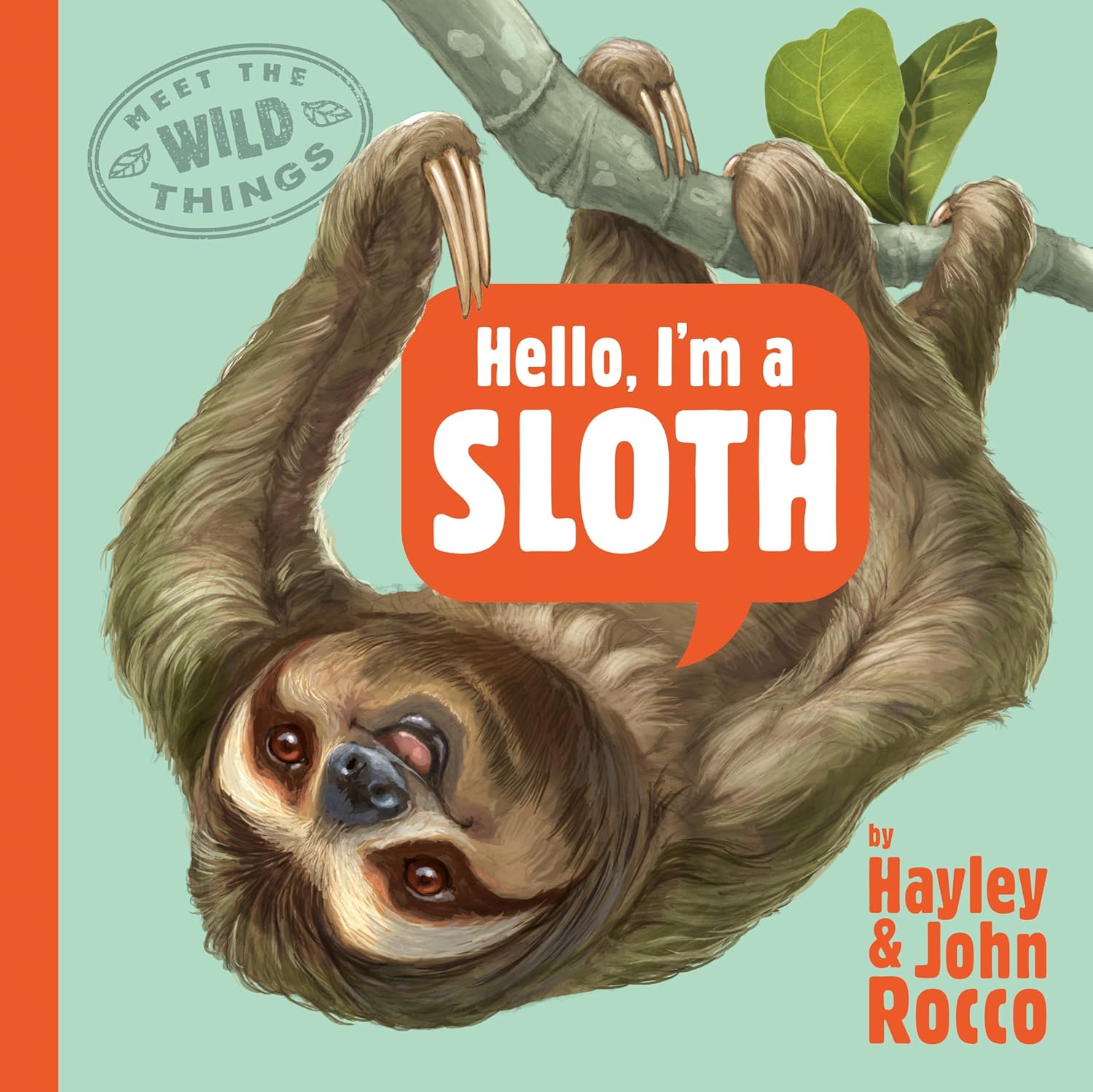
Hello, I’m a Sloth

Say hello to a sloth! Did you know sloths only poop once a week and can fall up to 100 feet without getting hurt? They also have hundreds of bugs living on them, including a species of moth that only lives on sloths! And they move so slowly that algae grows on their fur, which can actually help sloths camouflage!

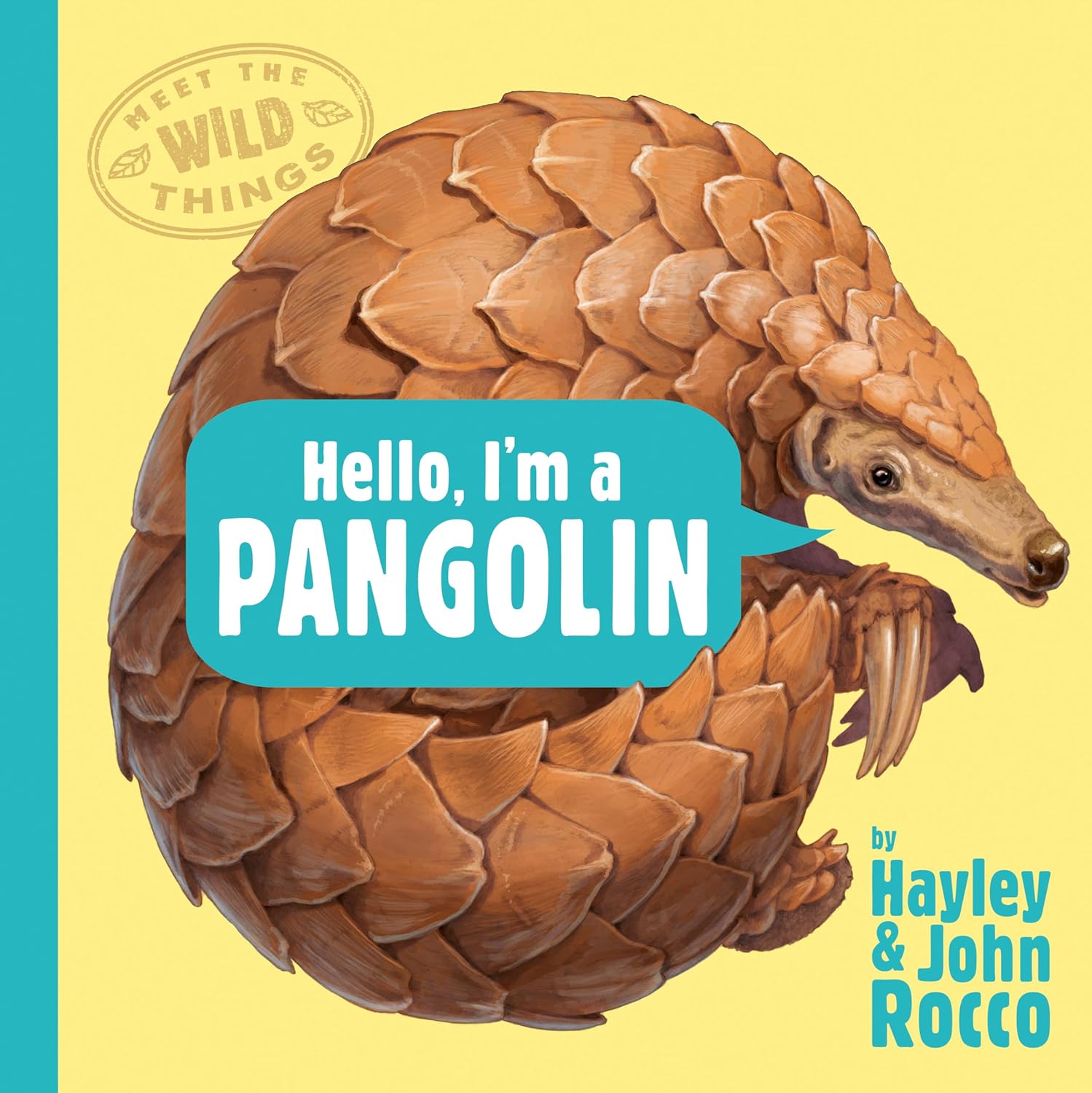
Hello, I’m a Pangolin

Say hello to a pangolin! Did you know pangolins are the only mammals with scales? And did you know pangolins have a super-sticky tongue as long as their entire body (the better to eat 20,000 bugs a day with!)?


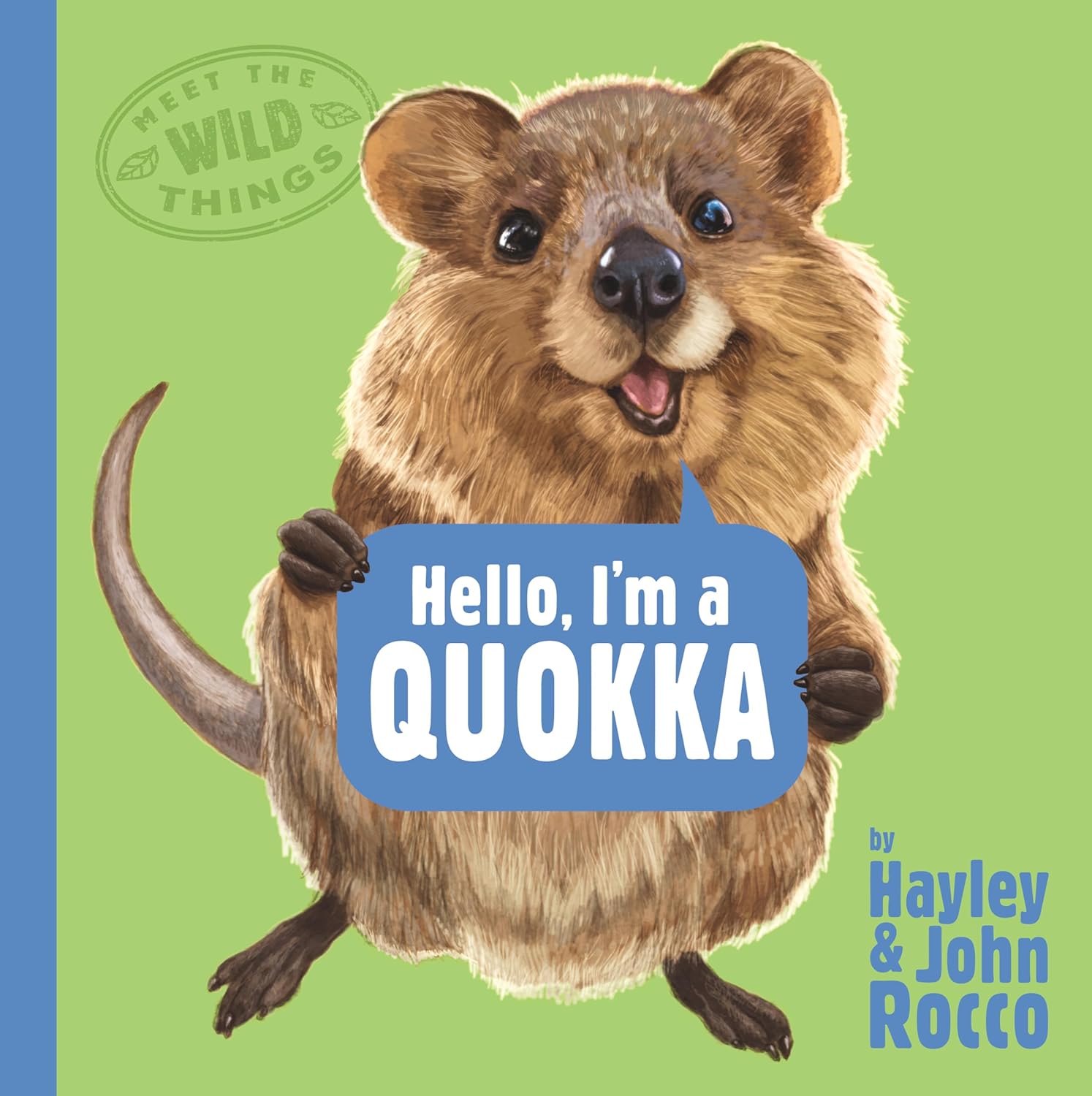
Hello, I’m a Quokka

Say hello to a quokka. Most of them live on a tiny island off of Western Australia. Like their relatives kangaroos and wallabies, they hop to get around and carry their babies in pouches. People say they are the happiest animal in the world. That’s because they’re very friendly, and their faces look like they are built for smiling—perfect for taking selfies with!

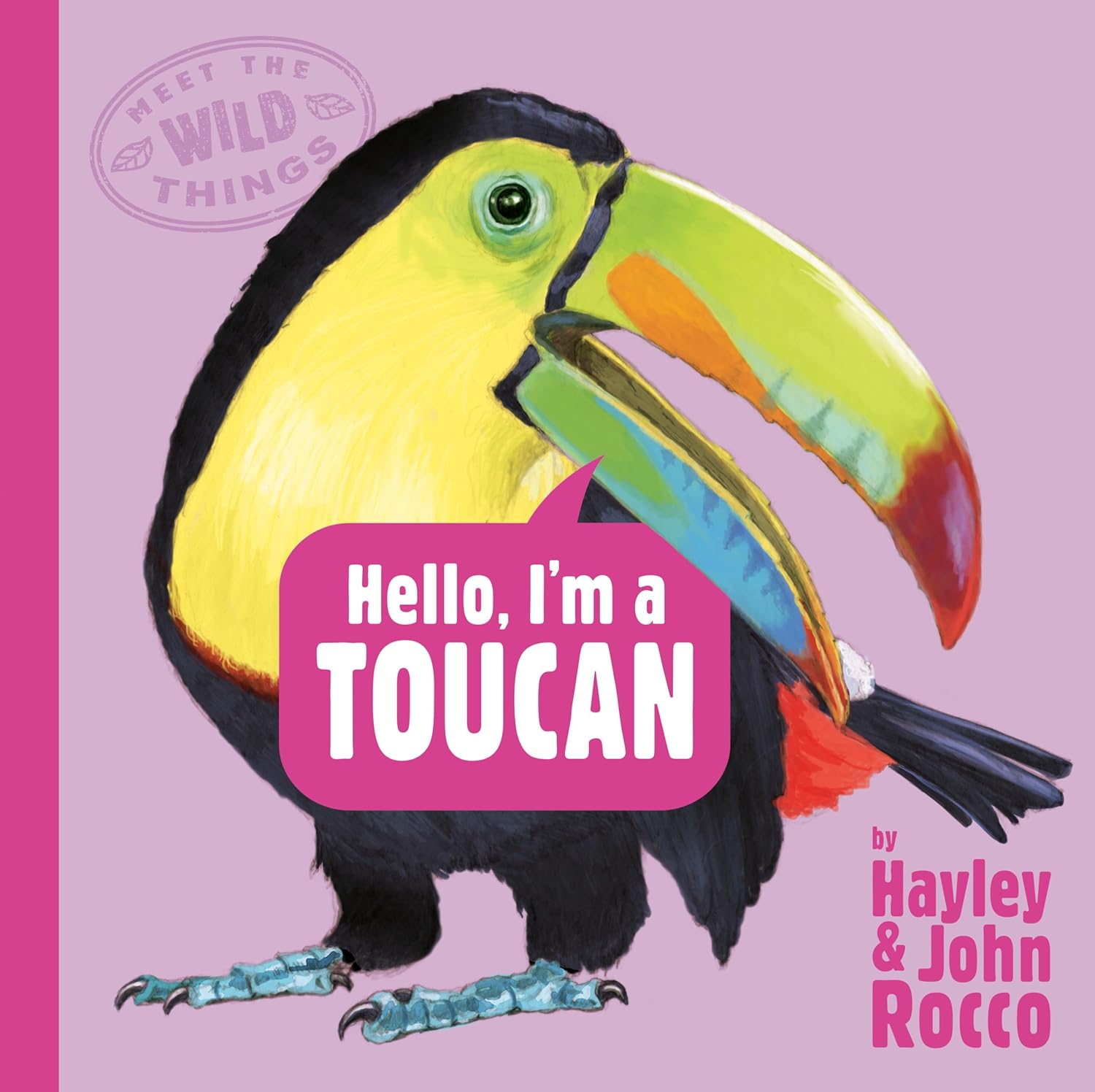
Hello, I’m a Toucan — Coming June 24!

Did you know a toucan’s bill is four times the size of its head? But you might be surprised by how lightweight and strong it is. And did you know that toucans use their bills to keep cool when it’s hot outside, by increasing blood flow from the rest of their body to maintain the perfect temperature? You can’t get much cooler than that.

About the Author

Hayley Rocco is the author of Wild Places: The Life of Naturalist David Attenborough, How to Send a Hug, and the Meet the Wild Things series, all in collaboration with her husband, John Rocco. Before dedicating herself to writing for children full-time, Hayley worked as a publicist at several major publishers. Visit Hayley at hayleyrocco.com and follow her on Instagram @hayleyroccobooks.

About the Illustrator

John Rocco is the #1 New York Times bestselling author and illustrator of many acclaimed books for children, including Blackout, the recipient of a Caldecott Honor, and How We Got to the Moon, which received a Sibert Honor and was longlisted for the National Book Award. John and Hayley live in Rhode Island in an old house tucked in the woods near the sea. Visit John at roccoart.com and follow him on Instagram @roccoart.

Hayley and John are also ambassadors for the nonprofit Wild Tomorrow and cofounders of Children’s Book Creators for Conservation.

You can purchase Hello, I’m an Axolotl at these booksellers

Amazon | Barnes & Noble | Bookshop (to support your local independent bookstore)

Picture Book Review
March 7 – National Cereal Day

About the Holiday

Did you know that breakfast in a bowl actually began with an experiment that went wrong? Or just maybe it was right! John Harvey Kellogg and his brother Will Keith Kellogg were experimenting with boiled wheat in 1877 when they left some out overnight. In the morning the wheat was stale. The brothers decided to roll it out instead of throwing it away, and they found that each wheat berry created a flake. Boiled corn worked the same way, and from this process the Kellogg brothers invented Corn Flakes, the first dry cereal!

Today’s holiday celebrates all the varieties of your favorite cereal—whether it’s made of corn, wheat, bran, rice, or a mixture of flakes, fruit, and nuts. So pour yourself a big bowlful and enjoy!

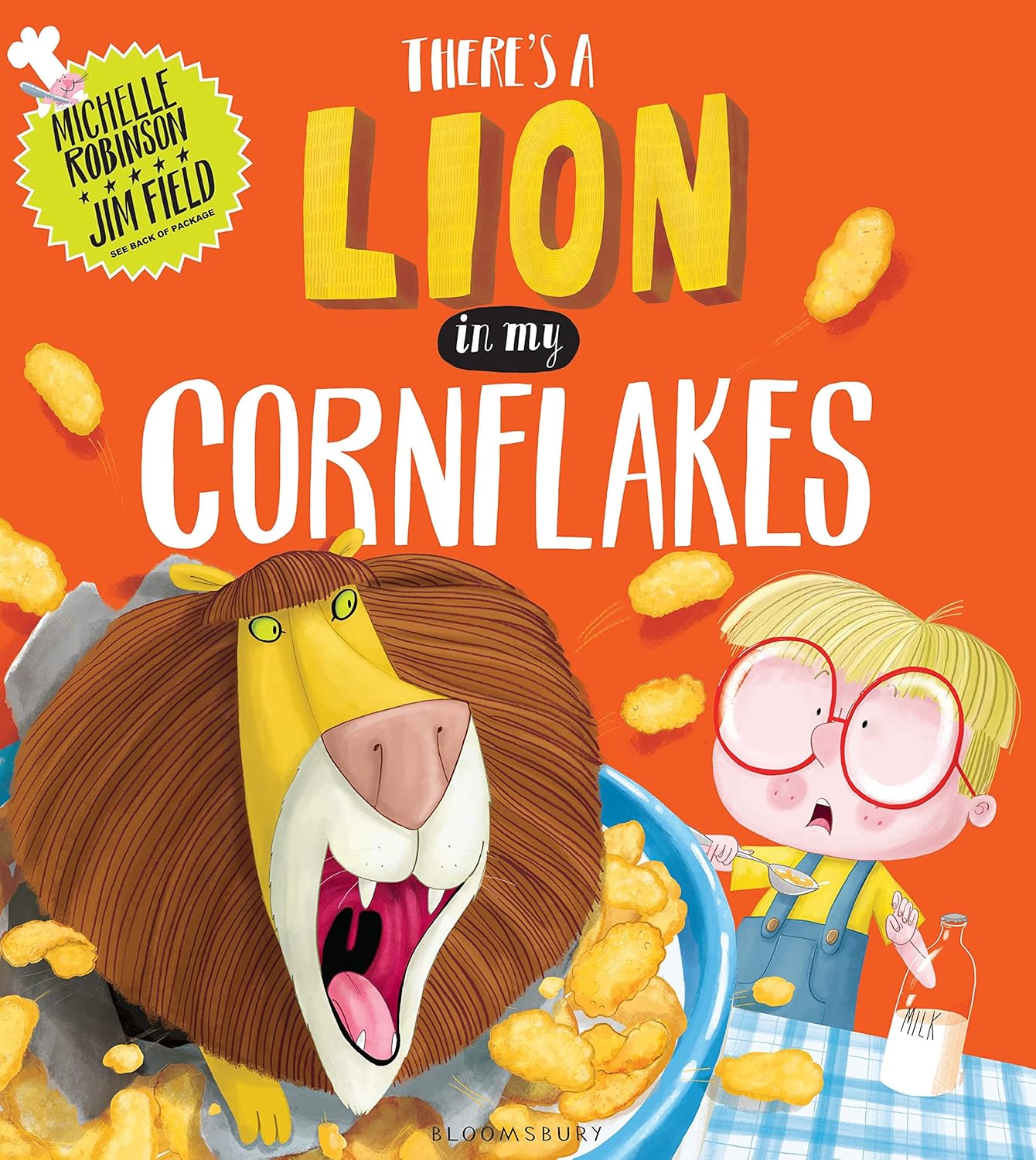
There’s a Lion in my Cornflakes

Written by Michelle Robinson | Illustrated by Jim Field

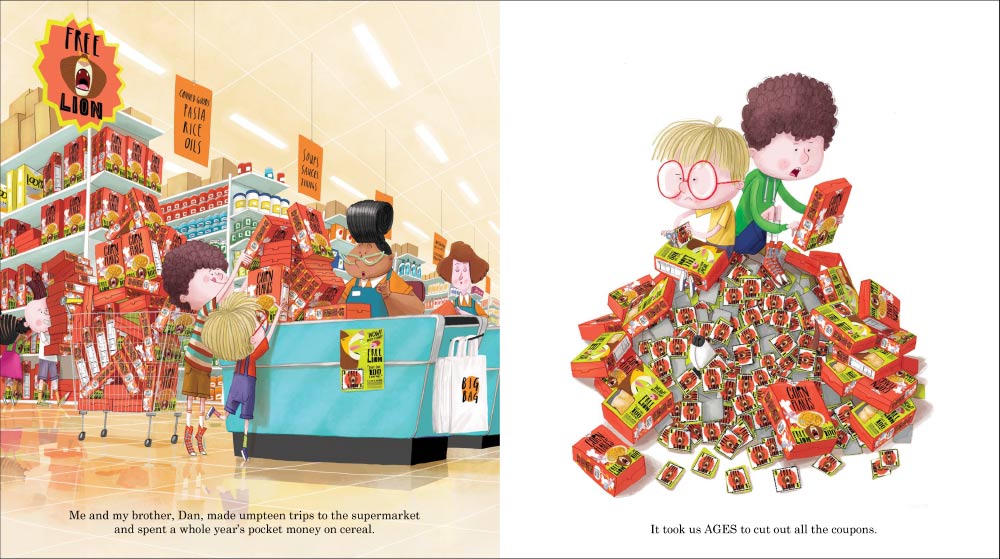
Who could resist clipping coupons to receive a free lion? Nobody, that’s who! I mean, it would be so cool, right? A lion to take on walks, ride to school, and open tin cans—awesome! So a little boy and his brother Dan take a year’s worth of their allowance, make “a million” trips to the grocery store, and start cutting.

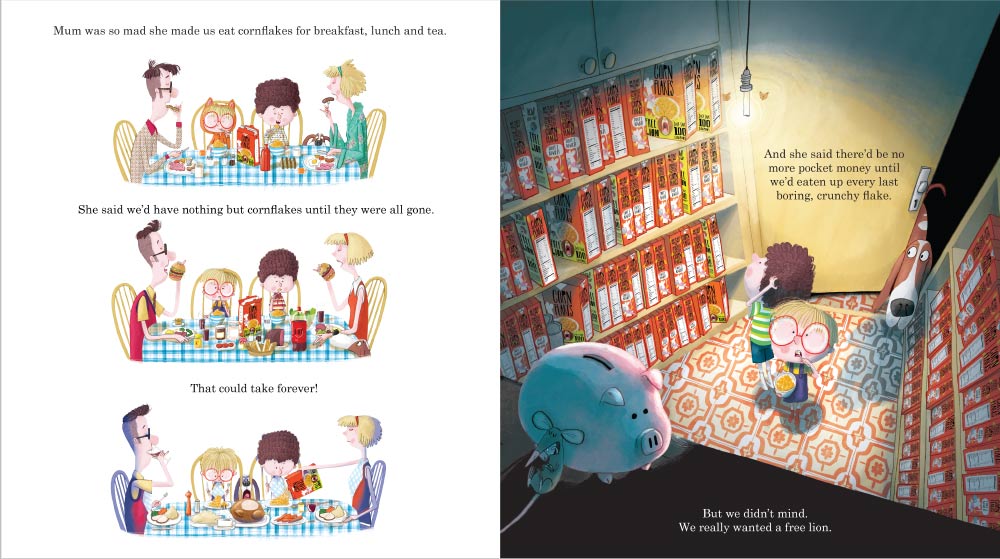
But all those boxes of cereal squeeze out the other food on the pantry shelves, so Mom says the boys have to eat cornflakes for breakfast, lunch, and dinner until it’s gone—and, oh yeah, they don’t get an allowance until then either. It’s all worth it, though, because they’re going to get a real live lion.

Illustration © 2015 Jim Field, text © 2015 Michelle Robinson. Courtesy of Jim Field and Bloomsbury Children’s Books.

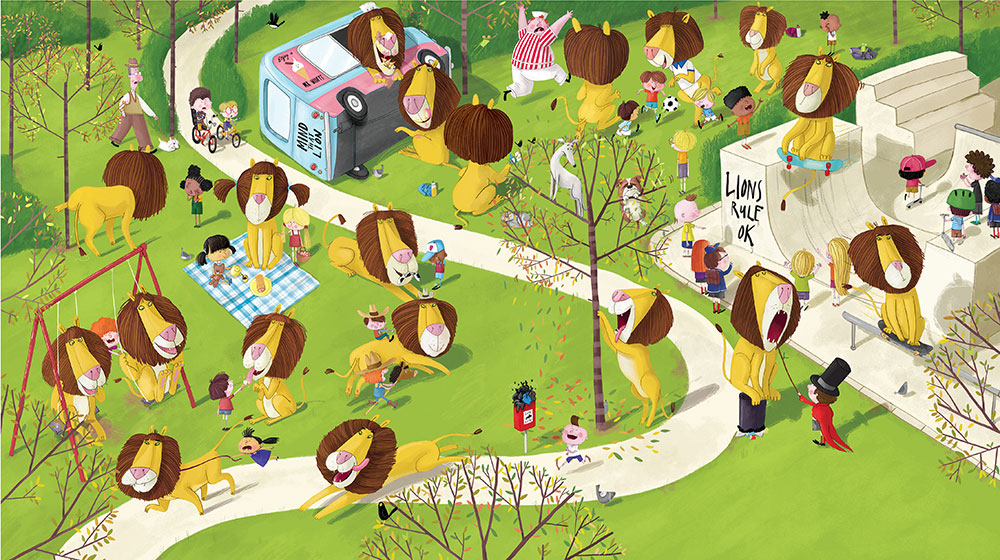
There’s just one hitch—every other kid in town has the same idea, and while the brothers wait for their lion to arrive, everyone else is out playing with their new pet. Finally, the delivery truck pulls up in front of the house, and out walks . . . a grizzly bear?! That’s not right, and it’s even delivered to the wrong house. Well, the bear’s not too crazy about the situation either. 

A letter of complaint to the cereal company brings resolution in the form of . . . a crocodile?! The crocodile spends all its time in the bathroom, and the grizzly bear is still causing havoc. Dad calls the cereal company and to make up for their mistake they send . . . a gorilla?! The gorilla stomps on Dad’s car and rips the door off. Still, the whole crew piles in so Dad can “give those cereal people a piece of my mind.”

Illustration © 2015 Jim Field, text © 2015 Michelle Robinson. Courtesy of Jim Field and Bloomsbury Children’s Books.

The cereal people sure are sorry for the mix-up. They make amends by letting the family keep the grizzly bear, the crocodile, and the gorilla, AND the company gives them…a lifetime’s supply of cornflakes! But really, what good are cornflakes? The boys can’t walk them or ride them or even open cans with them.

You know what, though? Mom’s discovered the crocodile has some pretty sharp, can-opening chompers. The grizzly bear can walk forever and even wear a fanny pack. And the gorilla makes a very cool chauffeur. Why bother having a lion when everyone else has one?

But what are those cereal people offering now—a free tiger?! Hmmm . . . .

Illustration © 2015 Jim Field, text © 2015 Michelle Robinson. Courtesy of Jim Field and Bloomsbury Children’s Books.

Michelle Robinson has taken the lure of free stuff to its ridiculous best. With comical flair she aptly portrays the consternation on all sides, from the earnest kids to the flummoxed parents, that grounds this story in the recognizable while also providing hilarious suspense. The silly, over-the-top scenario of There’s a Lion in My Cornflakes serves up the benefits of individuality and drawbacks of consumerism that will have kids laughing at every page and escalation of the brothers’ problem.

Jim Field’s bold, vibrant illustrations are the perfect accompaniment to this boisterous tale. The boxes of cornflakes and clipped coupons are piled high, the boys are excited, nonplussed, shocked, and finally accepting as day after day brings new and unexpected results of their actions, and the parents are perfectly perplexed. Kids will love the funny details on every page that highlight the story.

Ages 3 – 7

Bloomsbury Children’s, 2015 | ISBN 978-0802738363

About the Author

Michelle Robinson’s many picture books include bestsellers, The World Made a Rainbow and the Goodnight Tractor series. Her books are popular in homes and classrooms all over the world, and include Ten Fat Sausages, winner of the Laugh Out Loud Book Awards, and There’s a Lion in my Cornflakes, winner of the Sainsbury’s Children’s Book Award.

Her YouTube channel, MICHELLE ROBINSON – CHILDREN’S AUTHOR, is full of ideas to encourage young children to read, write and have fun. You can also download free teacher’s notes and activity sheets at: www.michellerobinson.co.uk.

About the Illustrator

Jim Field is an illustrator, character designer and animation director. He has won multiple awards for the children’s books he has illustrated; including the Lollies, The Roald Dahl Funny Prize, The Evening Standards Oscars Prize and The Sainsbury’s Award. He was the 4th bestselling children’s book illustrator of 2021. Jim now lives in Paris with his wife, daughter and a small grumpy cat. Visit him at jimfield.me.

There’s a Book Trailer in this Review!

National Cereal Day Activity

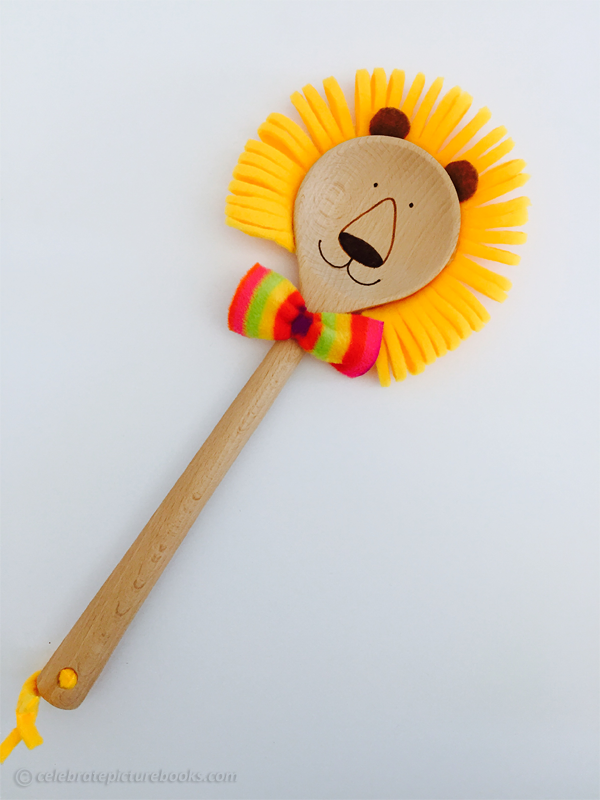
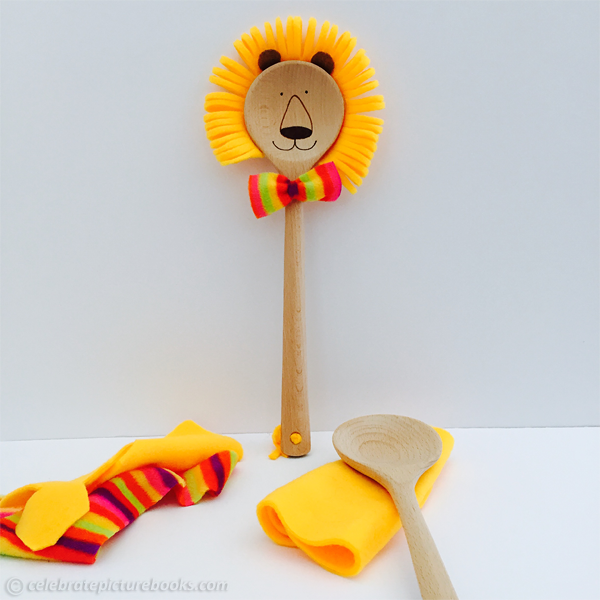
celebrate-picture-books-picture-book-review-wooden-spoon-lion-craft

Spoon Lion Puppet

Spoons are just the thing for eating cereal! But with this craft you can make a ROARingly cute lion puppet!

Supplies

  • Wooden mixing spoon
  • Yellow Fleece
  • Brown felt
  • Colorful Fleece or felt
  • Fabric glue
  • Light brown marker
  • Dark brown marker
  • Hot glue gun or super glue

CPB - Spoon Lion with stuff

Directions

To make the lion’s face

  1. Draw a nose, mouth, and eyes on the front/bowl of the spoon

To make the mane

  1. Measure the rim of the spoon from one side of the handle to the other
  2. Cut a strip of yellow fleece as long as rim measurement and 4 inches wide
  3. Fold the piece of fleece in half long-ways
  4. Glue the open edges of the fleece together
  5. Along the folded side cut a fringe, leaving the loops intact

To make the ears

  1. Cut round ears from the brown felt.

Assembling the lion

  1. Glue the ears to the back of the spoon
  2. Glue the mane to the back of the spoon

To make the bow

  1. Cut a 3-inch x 1 ½-inch piece of colorful fleece or felt
  2. Cut a long thin strip of fleece or felt
  3. Pinch the bow in the middle and tie with the longer piece of cloth. Trim as necessary
  4. Glue the bow to the handle

To make the tail

  1. Cut three thin 4-inch-long strips of yellow fleece
  2. With fabric glue, glue the tops of the strips together
  3. Braid the strips
  4. At the bottom, glue the strips together, leaving the ends free
  5. Fold the top of the tail and push it into the hole in the handle of the spoon

You can purchase There’s a Lion in My Cornflakes at Amazon Picture Book ReviewPicture Book Review

March 6 – It’s Read Across America Week

About the Holiday

Today’s holiday, established by the National Education Association in 1997, encourages children across the country to celebrate reading and all of its joys and benefits. A love of reading is one of life’s greatest pleasures and begun early can be a powerful force for future success. Celebrate today by reading with a child or on your own. There are fabulous worlds and stories waiting to be discovered!

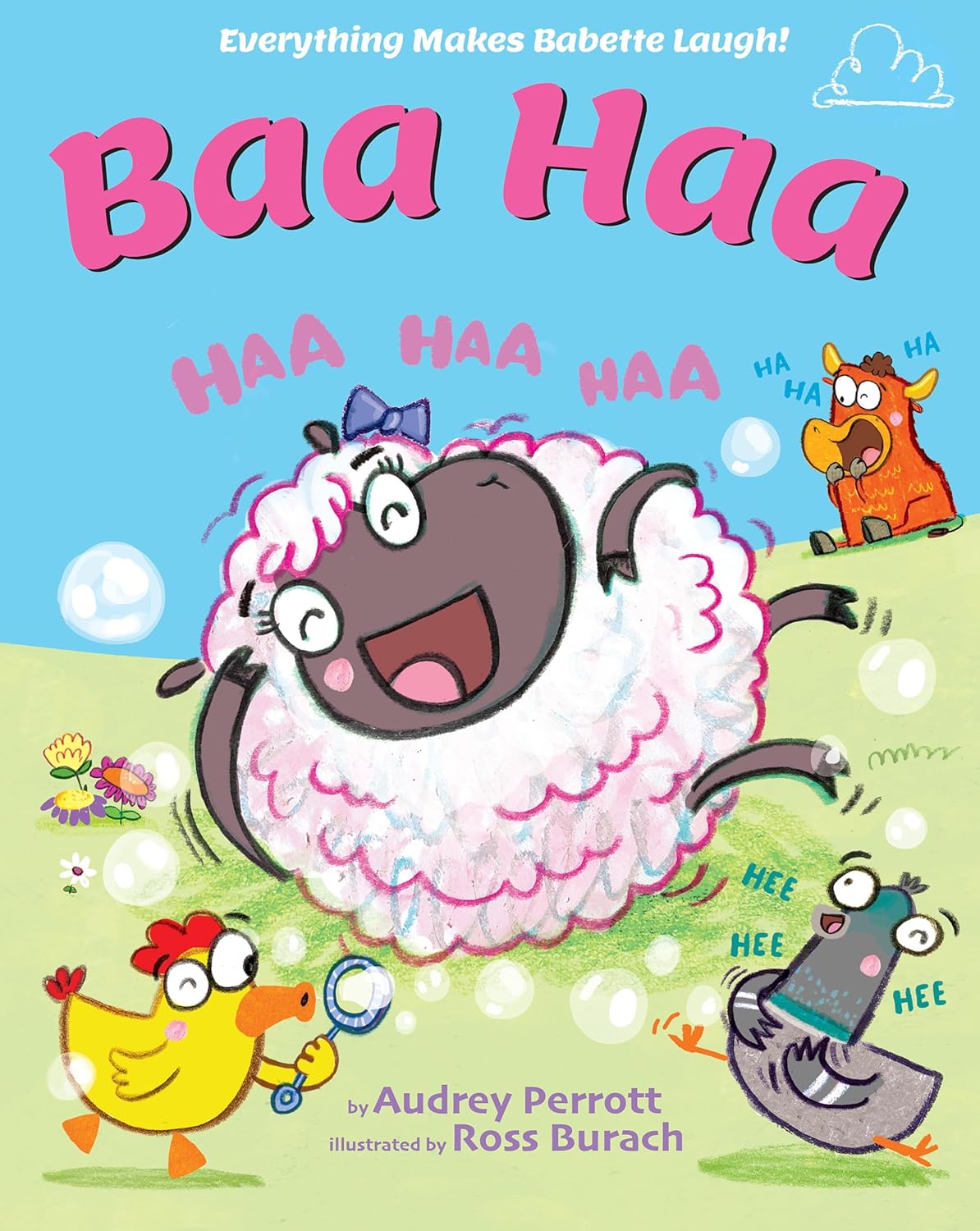
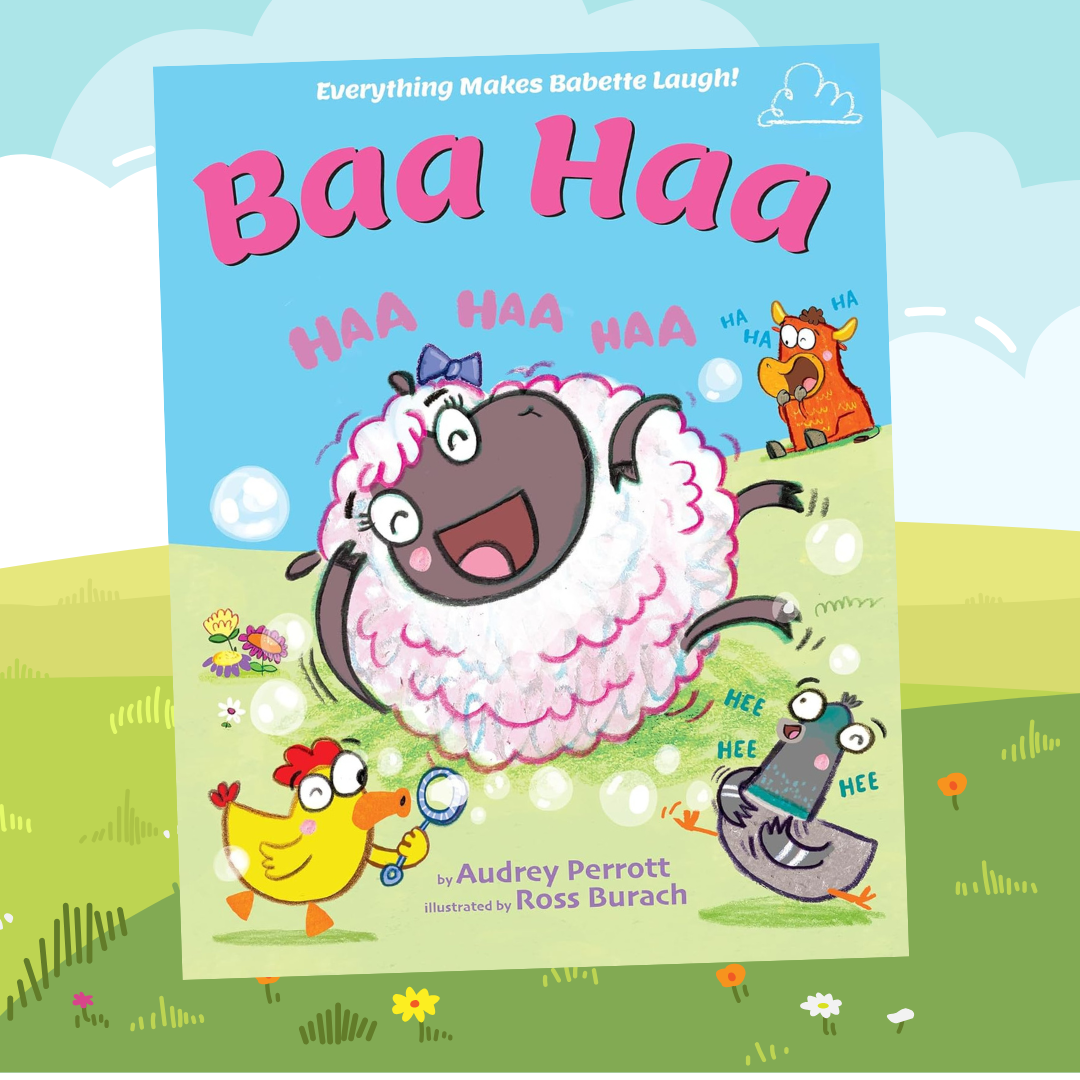
Baa Haa

Written by Audrey Perrott | Illustrated by Ross Burach

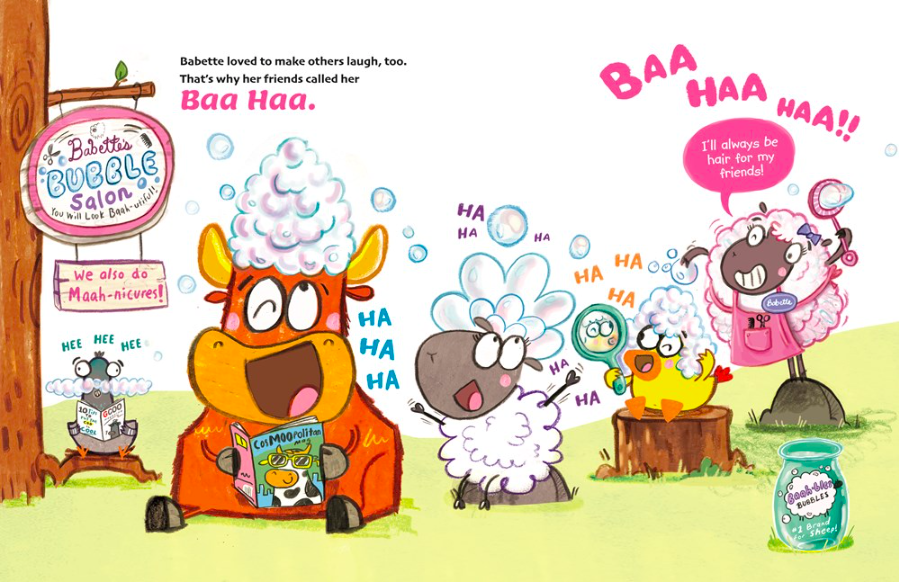
Babette was a happy sheep. Anyone on the farm and beyond could tell you, since “her laughter could be heard across the pasture for miles.” In fact, Babette’s friends all called her “Baa Haa” because she made them hee hee and ha ha, and even guffaw with all of her jokes and antics.

Yes, Babette loved to laugh, and her bubbly personality burst out no matter what she was doing or feeling. When she was surprised, she laughed. When she was “glaaaaad,” she laughed. She even laughed when things didn’t quite go her way. Wait a minute . . . really?

Illustration © 2025 Ross Burach, text © 2025 Audrey Perrott. Courtesy of Scholastic Press.

Really. Babette didn’t like feeling nervous or scared or disappointed, so whenever she felt “baaaaad,” the giggles let her escape. But all this laughter and hiding her real feelings was “tangling her insides into a knot,” and the problem was getting worse. Nothing she tried helped her to feel better. Then one day she couldn’t keep her tears from welling up and spilling out. She tried putting “on a big fake smile” for her friends, but she couldn’t keep the tears from falling.

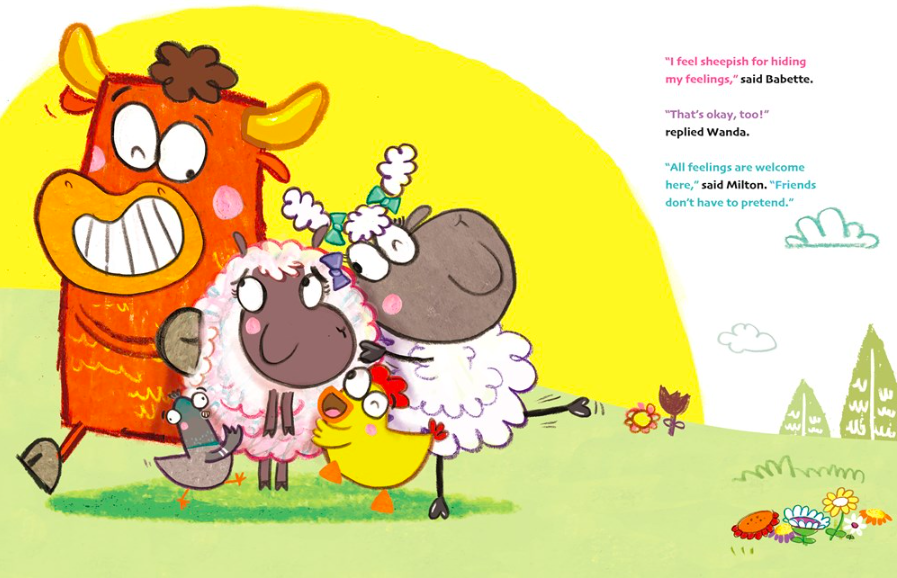
The other animals assured her that “It’s okay if you’re not okay,” and that she should feel free to show her real feelings. “‘We love ewe for ewe,'” her friend Wanda said. Babette began to feel better and was even able to acknowledge that sometimes she did feel sad or mad or nervous. From then on, Babette “let all her feelings show” and shared them with her friends. “Because that’s what true friends do.”

Illustration © 2025 Ross Burach, text © 2025 Audrey Perrott. Courtesy of Scholastic Press.

Audrey Perrott’s follow up to Moo Hoo gently and with plenty of humor reassures children that they don’t have to be happy all the time, and that expressing their true emotions is better than bottling them up. Filled with puns, jokes, and word play, Perrott’s story will have kids giggling as they embrace her message that everyone shares the same feelings and that showing them can bring support, understanding, and quicker recovery.  

Kids will love Ross Burach’s goofy and kind-hearted farmyard animals. His animated illustrations effectively demonstrate the disconnect between Babette’s mirthful reactions and disappointing or nerve-wracking events. As Babette’s true emotions begin to emerge, Burach’s characters clearly show their empathy and understanding. Throughout the story, readers will have fun finding all of the visual puns Burach has added to his illustrations.

An engaging read aloud with an essential, heartening message, Baa Haa is highly recommended for home and library collections.

Ages 4 – 8

Scholastic Press, 2025 | ISBN 978-1546134039

About the Author

Audrey Perrott is the author of Moo Hoo, her debut picture book, as well as nine nonfiction and board book projects with Tangerine Press/Scholastic, including her most recent, Five Buzzy Bees, and A Hat for House with Putnam. An SCBWI Rising Kite Honorable Mention recipient, she lives with her family in North Carolina. You can visit her online at audreyperrott.com.

About the Illustrator

Ross Burach is the creator of the riotously funny Very Impatient Caterpillar series that includes The Very Impatient Caterpillar; The Little Butterfly That Could; Goodnight, Butterfly; and Make Way for Butterfly. All the books combine humor with curriculum-friendly science topics and relatable social-emotional themes. Ross’s other acclaimed books include the picture book Truck Full of Ducksthe board books I Love My Tutu Too!, Potty All-Star, Hi-Five Farm!, and Hi-Five Animals!—named the best board book of the year by Parents Magazine—and the Acorn early reader series Bumble and Bee. He also illustrated Audrey Perrott’s Moo Hoo and Baa Haa. Ross lives with his family in Brooklyn, New York. You can visit him online at rossburach.com.

Read Across America Week Activity

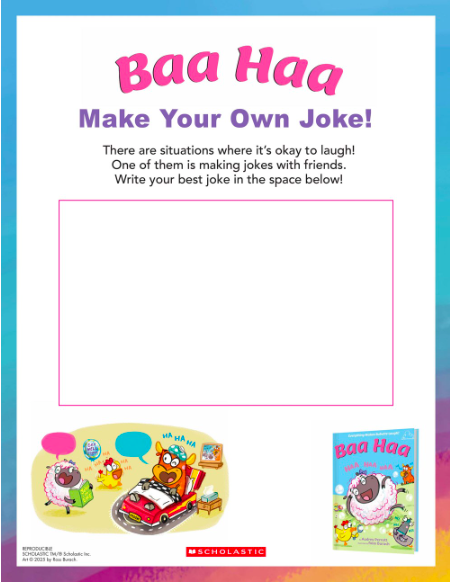
Baa Haa Fun Sheets

Kids will have fun giggling through these Baa Haa Make a Joke and Word Search Activity Sheets!

You can purchase Baa Haa at these booksellers

Amazon | Barnes & Noble | Bookshop (to support your local independent bookseller)

Picture Book Review

March 5 – It’s International Ideas Month

About the Holiday

This month we celebrate something that you can’t see or hold but which is real all the same. What is it? An idea! Ideas are amazing things. Sometimes seemingly conjured up out of thin air; sometimes borne out of necessity; and sometimes the “Eureka!” result of long, hard work, ideas fuel our arts, sciences, education, and home life. So today, write down those ideas you have while driving or commuting to work, while in the shower, when you’re daydreaming, or just as you turn off the light to go to sleep. You never know what they might become!

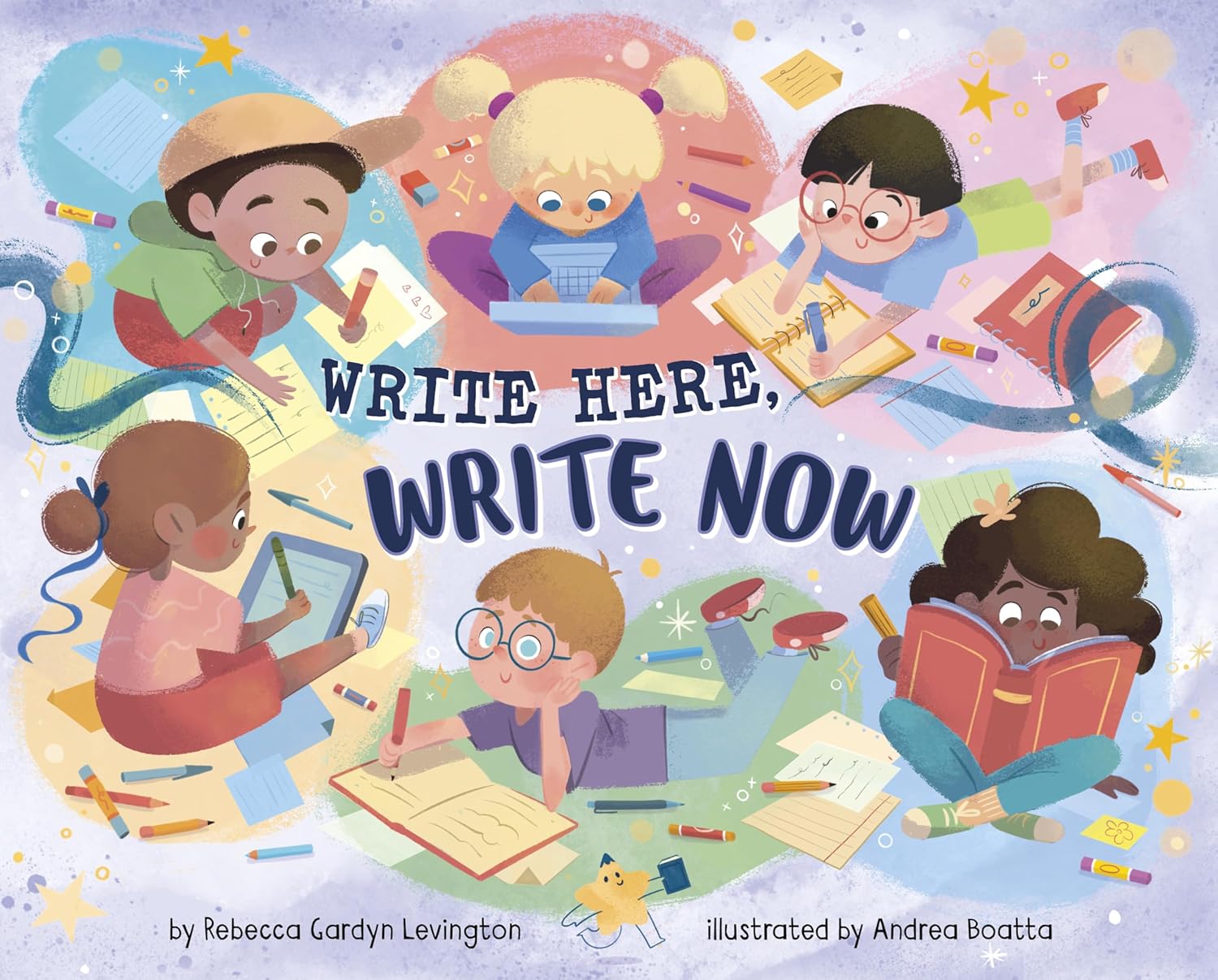
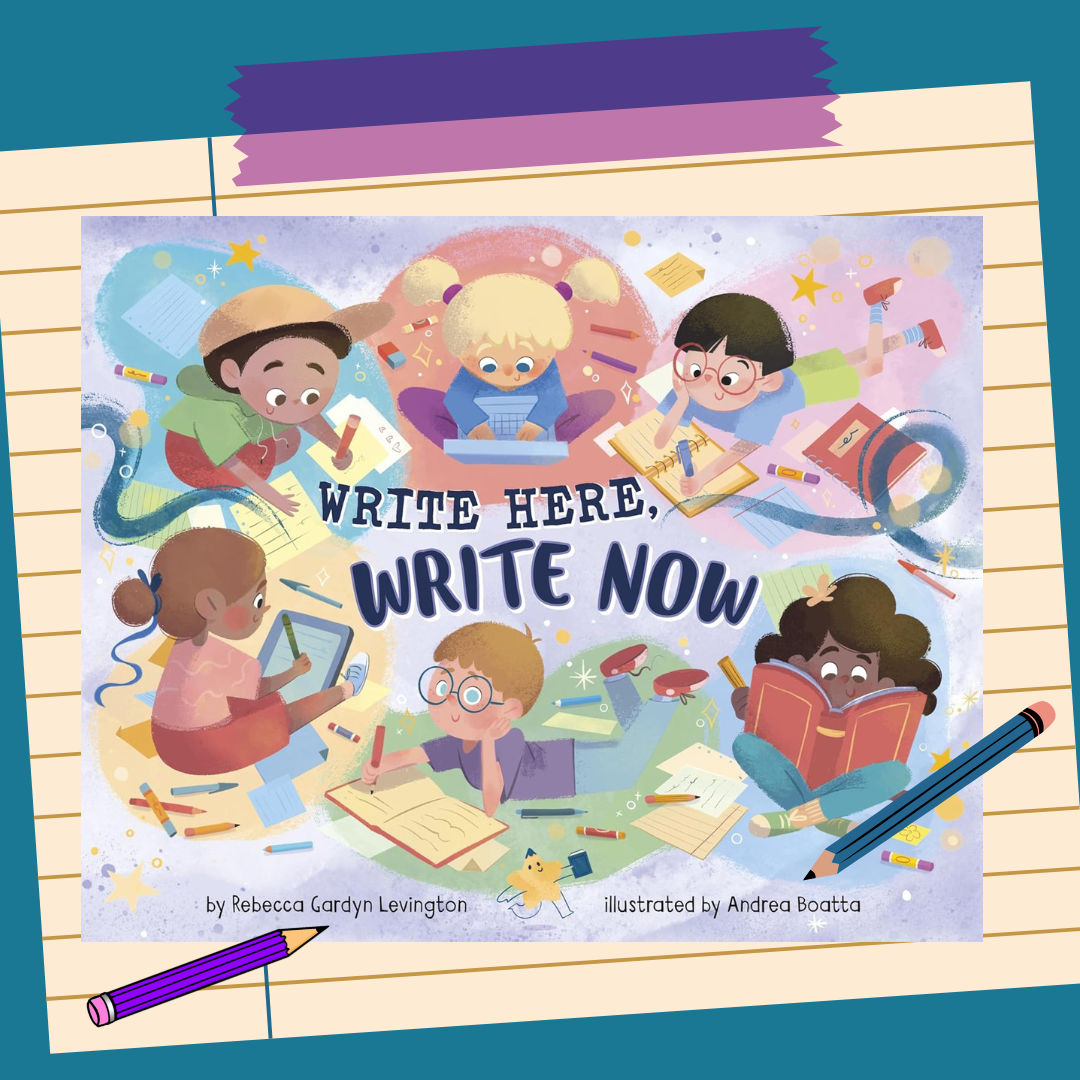
Write Here, Write Now

Written by Rebecca Gardyn Levington | Illustrated by Andrea Boatta

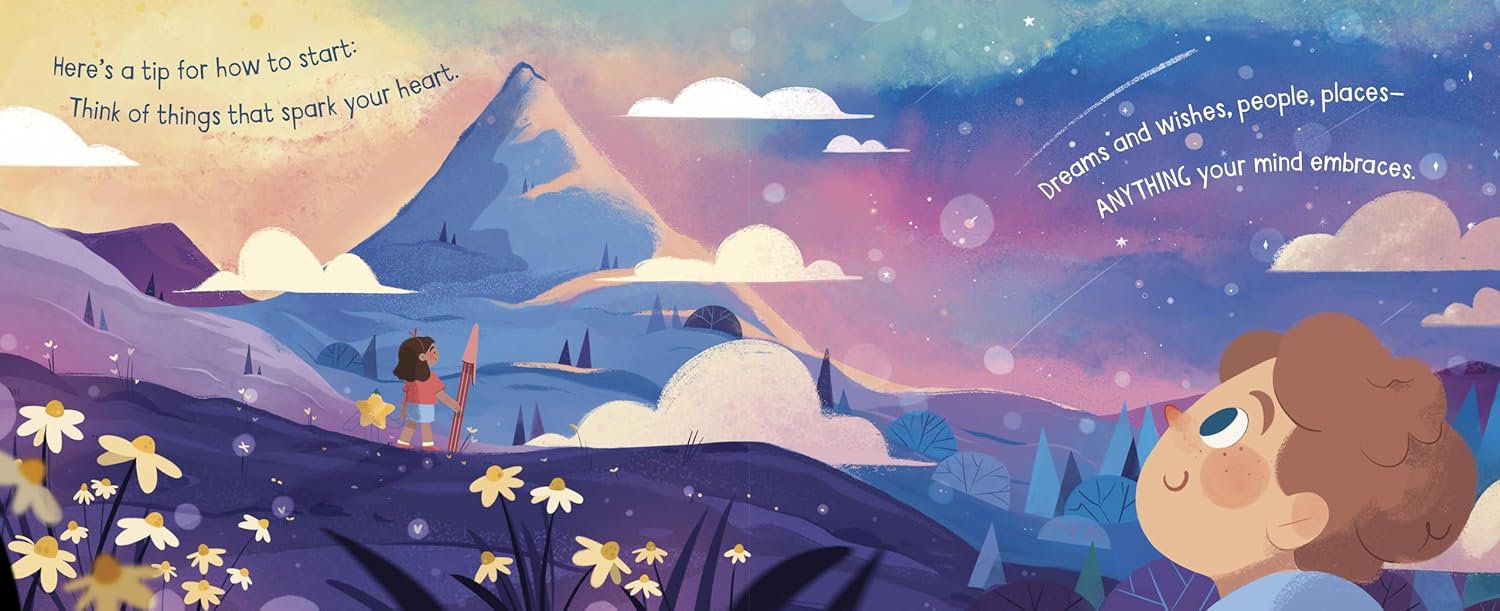
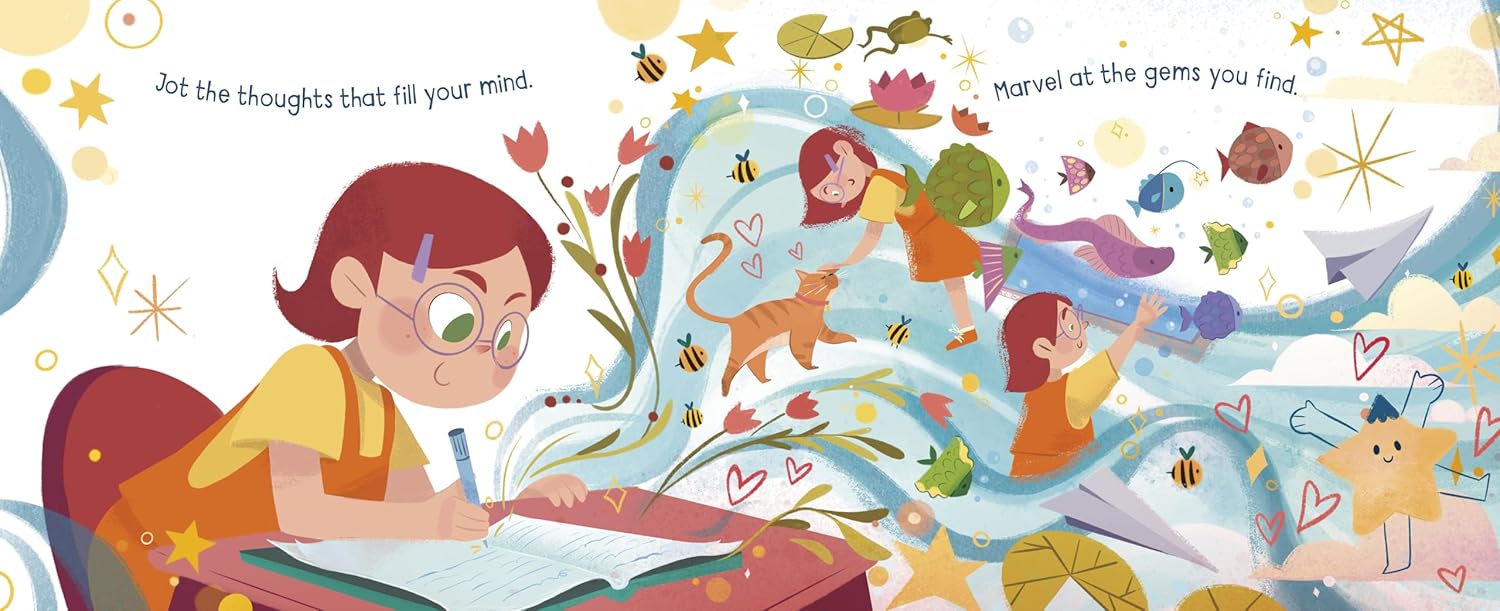
Opening the book, readers are met by a child who looks right at them and makes a very astute observation: “You’re a writer. Did you know?” And before the reader can think “Who, me? nah!” the boy has whisked them off for a trip through the amazing world of writing, offering “Here’s a tip for how to start. / Think of things that spark your heart. / Dreams and wishes, people, places—ANYTHING your mind embraces.”

Illustration © 2025 Andrea Boatta, text © 2025 Rebecca Gardyn Levington. Courtesy of Capstone Editions.

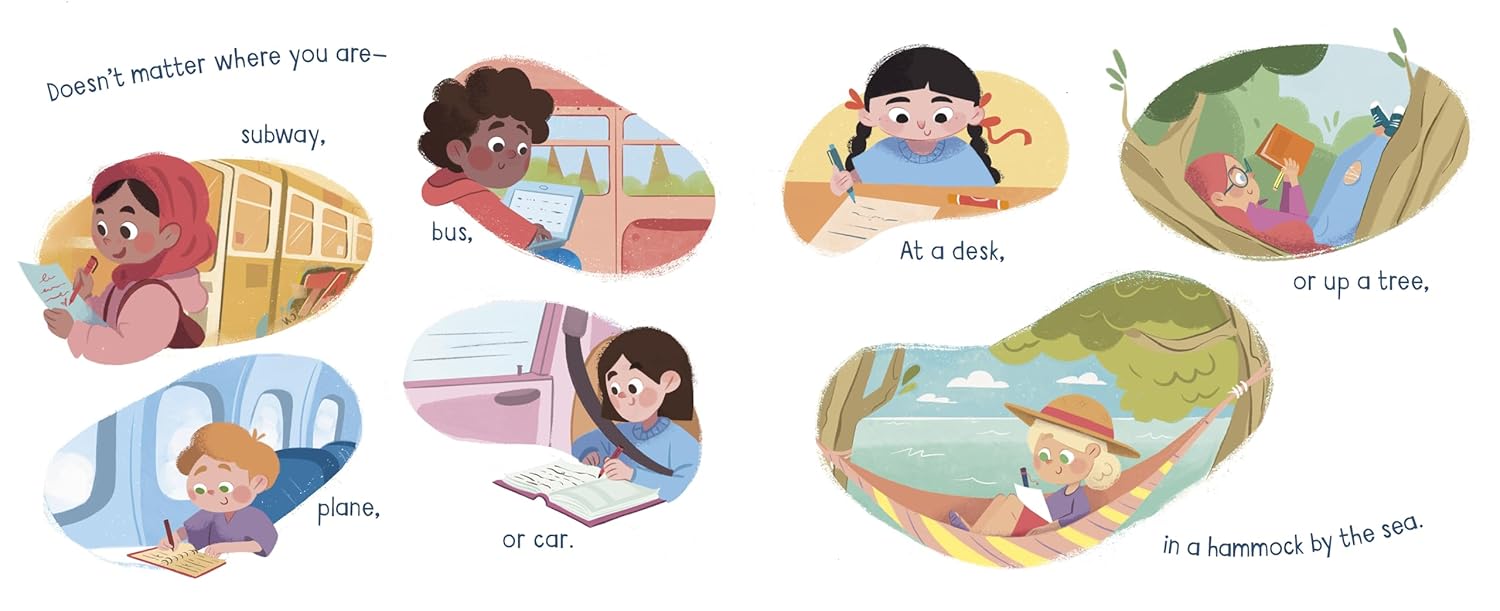
But there can be so many niggling questions that can make the idea of writing intimidating! Like where should I write? What should I write with? What if I like to draw or just tell my stories? The narrator puts all these doubts to rest with the simplest of answers: write wherever and however is best for you! The narrator even addresses the fear that what you write has to be perfect with the encouraging advice to “Scribble fast, or take it slow. / Play with words and let them flow.”

But, a would-be writer might think, is there a type of writing that’s better than others? Nope, the narrator assures. All writing is good writing. “Write a poem, play, or song / Write a note to right a wrong. / Write a joke, a script, a speech. Can’t decide? Write one of each.”

Illustration © 2025 Andrea Boatta, text © 2025 Rebecca Gardyn Levington. Courtesy of Capstone Editions.

So are there any rules to writing? Maybe just this one: to “let imagination lead!” The narrator leaves young writers with one more note of encouragement, reminding them that their writing is as unique as they are, and that their words or pictures or voice will find a place to flourish.

Following her story, Rebecca Gardyn Levington offers advice and encouragement to young writers in answers to those six proverbial writerly questions: Who? What? Where? Why? When? and How? 

Illustration © 2025 Andrea Boatta, text © 2025 Rebecca Gardyn Levington. Courtesy of Capstone Editions.

Rebecca Gardyn Levington’s enthusiastic ode to the wonders of writing is sure to spark any child to embrace their own personal method of creative expression. Her perfectly flowing, uplifting verses melt away any doubt or hesitance about putting pencil to paper or fingers to keyboard. Levington gives children freedom, inspiration, and encouragment. In short, she makes writing fun!

Andrea Boatta’s vivid, soft-hued illustrations sparkle with imagination and the flow of ideas as diverse children happily engage in writing wherever they are and whenever inspiration strikes. Children, whether new to writing or more experienced will find themselves right at home in Boatta’s dynamic imagery. Readers will also like following the little golden star that eagerly guides them from spread to spread. 

Write Here, Write Now is a joyful celebration of imagination and writing as well as a lively read aloud that kids will want to hear again and again. The book is highly recommended for classrooms, homeschoolers, school and public libraries, and family bookshelves. 

Ages 5 – 8

Capstone Publishing, 2025 | ISBN 978-1684469611

About the Author

Rebecca Gardyn Levington is a children’s book author, poet, and journalist with a particular penchant for penning both playful and poignant picture books and poems—primarily in rhyme. She is the author of BRAINSTORM!, WHATEVER COMES TOMORROW, and many other incredible picture books. Rebecca’s award-winning poems and articles have appeared in numerous anthologies, newspapers, and magazines. She lives in New Jersey with her family. Visit her at rebeccagardynlevington.com.

About the Illustrator

Andrea Boatta was born in a seaside town in southern Italy and grew up around vibrant colors and nature. After graduating from the Academy of Fine Arts, she came to love illustration and animation and continued her post-graduate studies at the National School of Cinema. Today she works in Naples, Italy, as a freelance illustrator and concept and background artist in the world of animation. You can follow Andrea on Instagram.

International Ideas Month Activity

CPB - Fairy Tale box

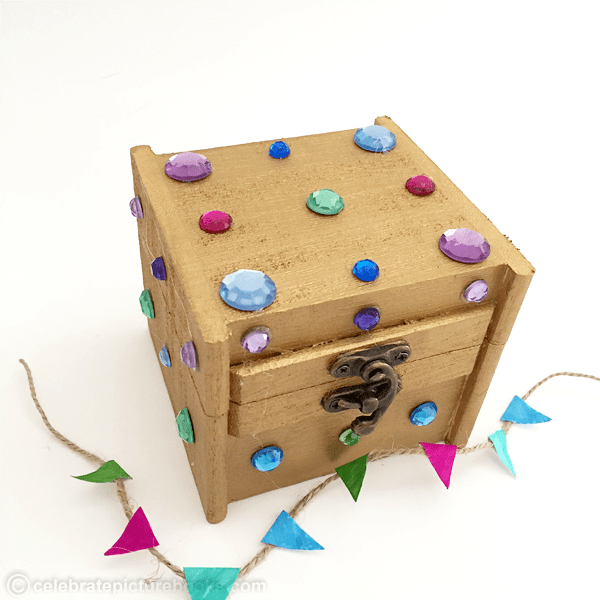
Treasure Box of Imagination

Writers often collect bits of imagination, wisps of dreams, snatches of memory, and treasures found along the way to use in their writing. With this craft, kids can make a treasure box to jot down and save ideas and tidbits to spark their own writing, drawing, and other creative endeavors.

Supplies

  • 1 small wooden box, available at craft stores
  • Acrylic craft paint – I used gold
  • Craft gems
  • Paint brush
  • Hot glue gun or strong glue

Directions

  1. Paint your wooden box 
  2. After the paint dries, decorate your Treasure Box of Imagination with gems

You can purchase Write Here, Write Now at these booksellers

Amazon | Barnes & Noble | Bookshop (to support your local independent bookstore.

Picture Book Review

March 4 – It’s National Reading Month

About the Holiday

National Reading Month was designed to  encourage children and adults to read every day and celebrates the joys and benefits that reading together can bring. Reading with your child can be fun and frivolous, but it can also offer ways for children to share their feelings about serious or poignant topics and begin discussions that can lead to understanding or healing.  As the month progresses, look for books to share for all the aspects of your life. 

I’d like to thank Kokila Books/Penguin Random House for sharing a digital copy of Our Lake with me to review. 

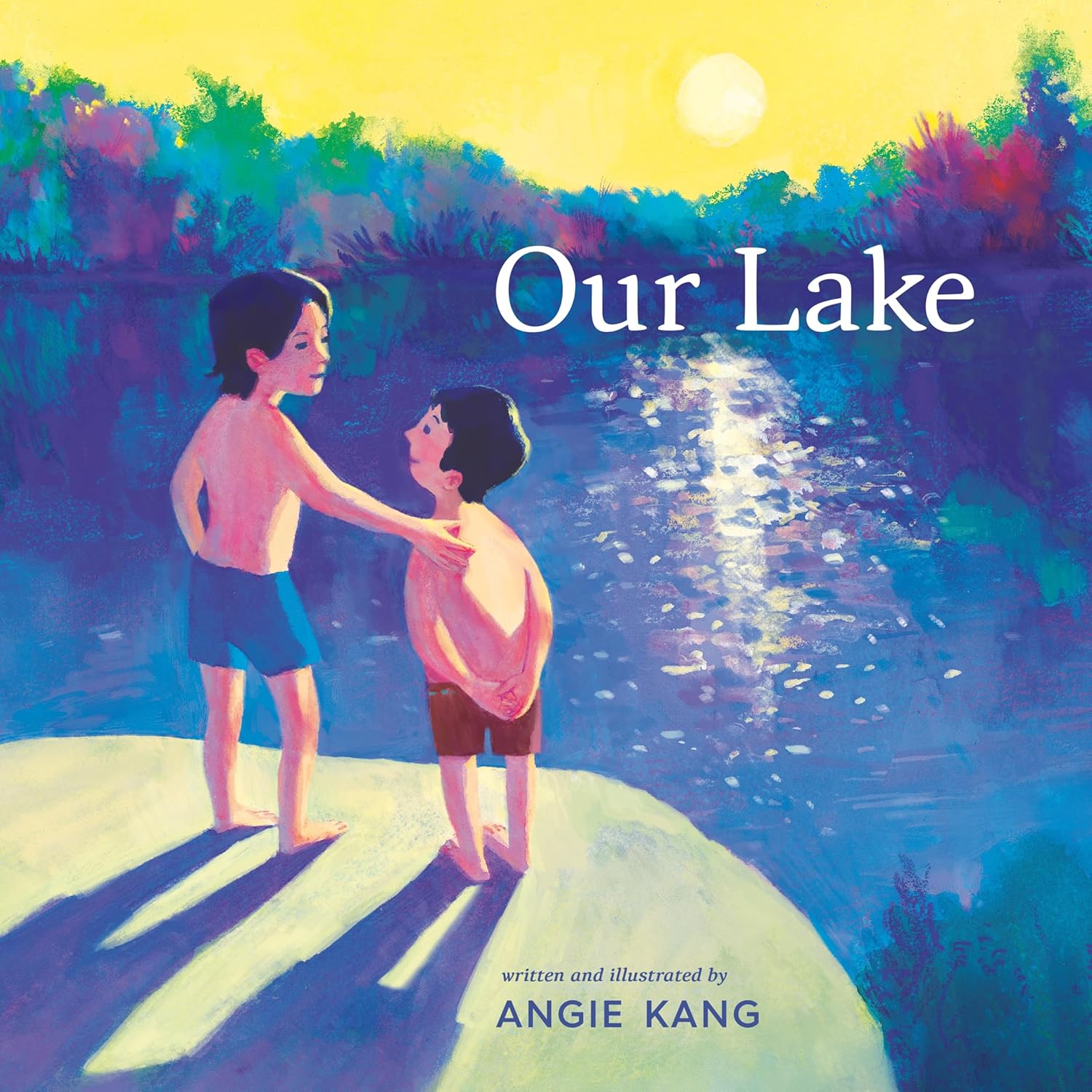
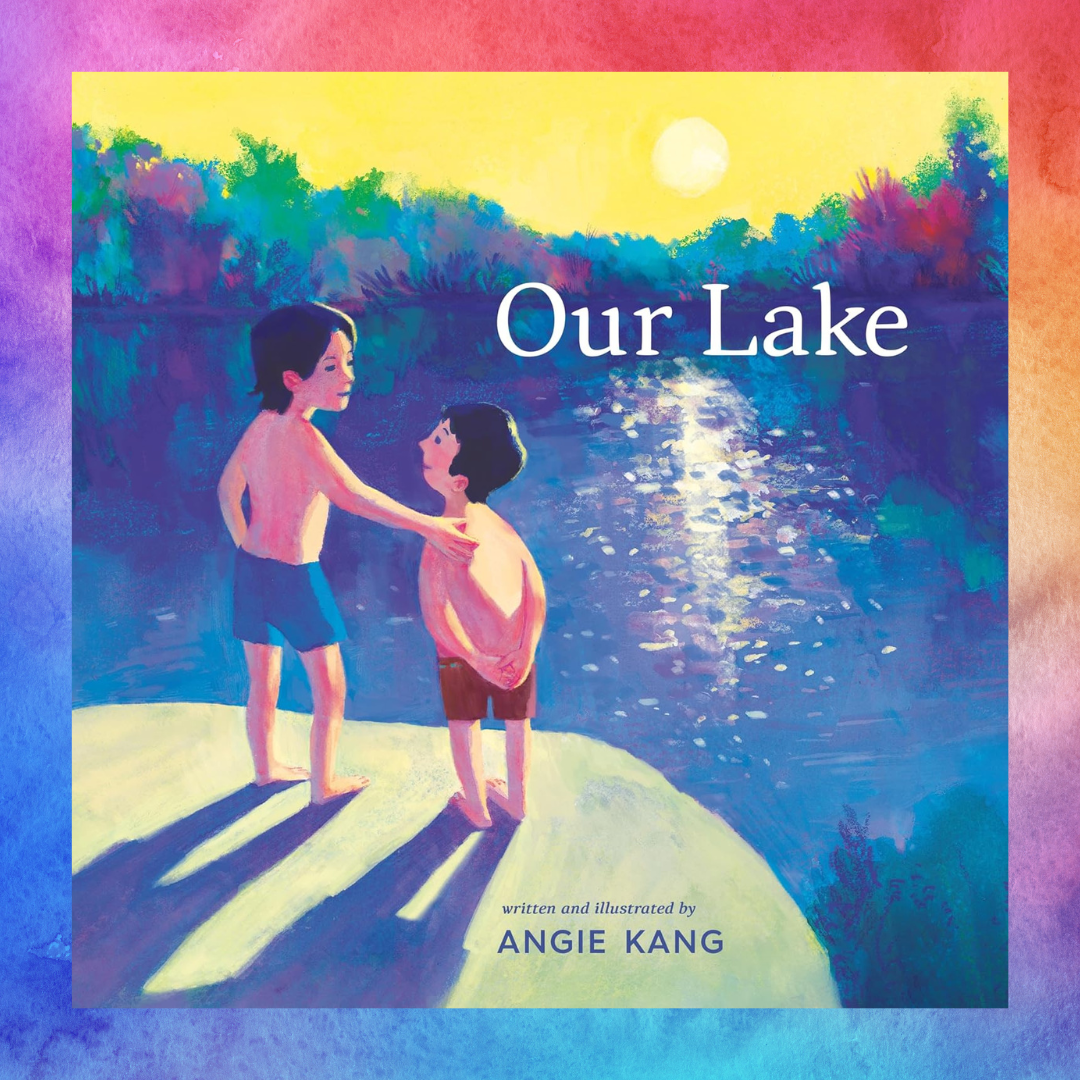
Our Lake

By Angie Kang


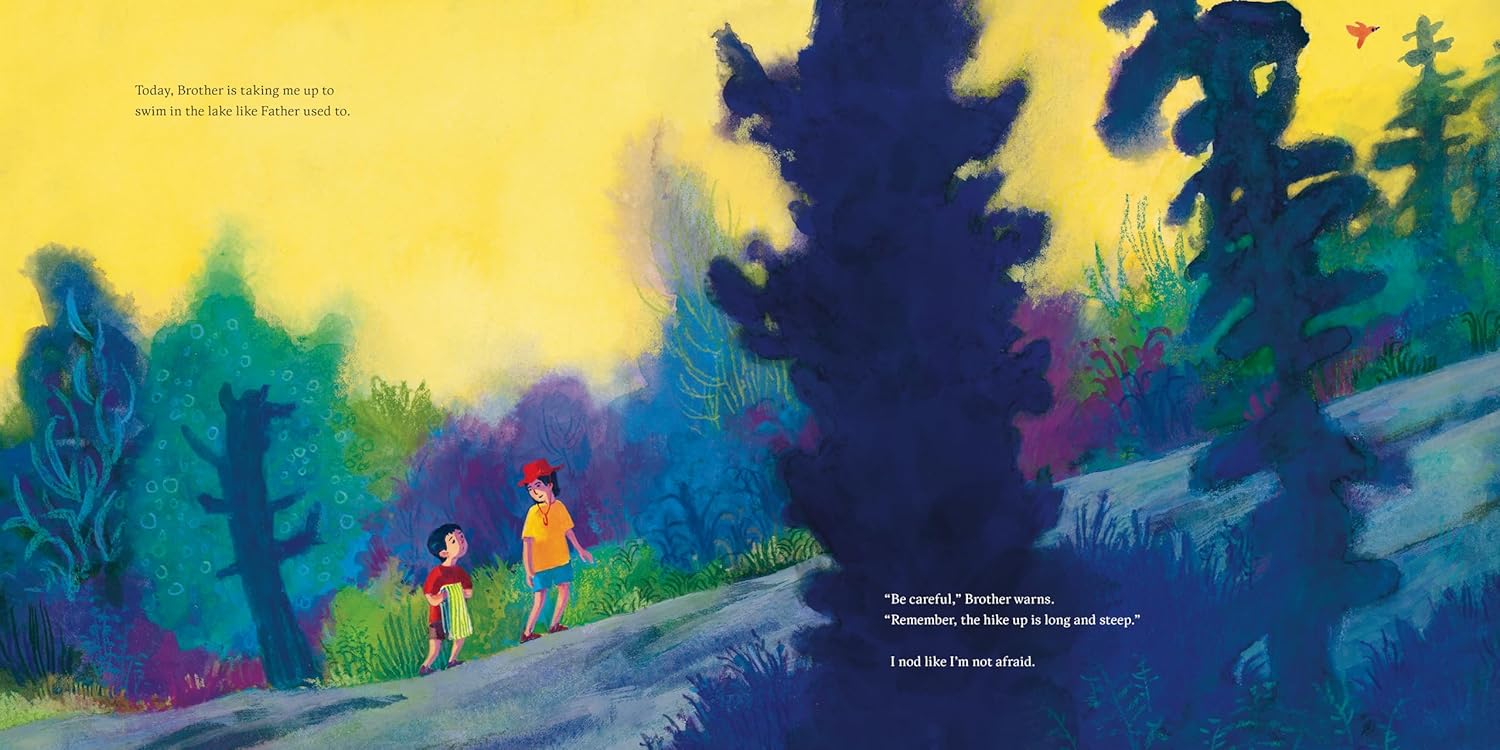
A young boy follows his older brother up a “long and steep” hill to the tip of a boulder overlooking a glistening lake, where their father, now gone, used to take them swimming. He mimics his brother, who has taken on the mantel of responsibility, in their old traditions—taking off his shirt, stretching. But while his brother approaches the lip of the rock, he hangs back, watching him “press his arms tight to his head and slip neatly into the lake.” The water ripples, and then his brother shoots upward, “triumphant.”

Illustration and text © 2025 by Angie Kang. Courtesy of Kokila/Penguin Random House.

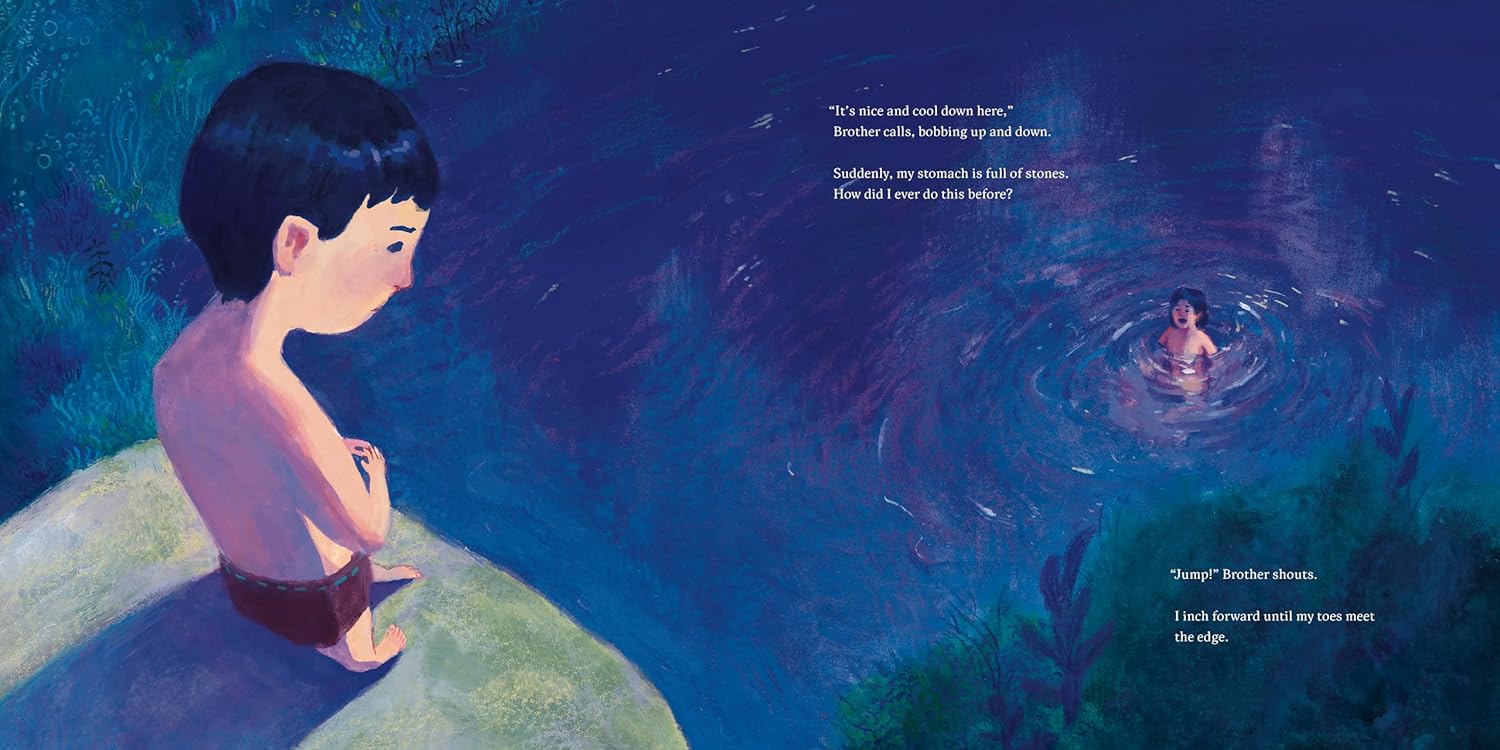
His brother calls for him to jump, but his nerves overtake him and he closes his eyes. “On the insides of my eyelids,” he says, “I see Father.” He recalls their routine, the way his father soared before splashing down, and the sound of his laugh as he beckoned his sons to follow.

“When I open my eyes, he joy is still there, humming in my limbs,” the boy says. He hears his brother call to him again and shakes off his fear. As he nears the water, he sees his father meet him, arms outstretched. His brother cheers as he splashes in. They embrace, both feeling the presence of the father they miss.

Illustration and text © 2025 by Angie Kang. Courtesy of Kokila/Penguin Random House.

Angie Kang’s lyrical storytelling soars on the openhearted voice of her young narrator and the caring guidance of his big brother. The boys’ uplifting memories of their father and their joyful embrace of returning to one of their favorite places are moving and comforting, and ultimately inspire reassurance that the spirit of loved ones lives on within the heart. 

Kang’s gloriously rich gouache, crayon, and colored pencil illustrations illuminate the close relationship between the brothers and, individually, with their father, as exemplified by a red hat the older brother is wearing as the story begins. Later, readers learn—in a symbolic image—that this hat belonged to the boys’ father. Each boy’s facial expressions and stances also carry the story forward. Kang’s saturated paintings also offer metaphorical undertones that resonate with the truth of life’s sometimes difficult climbs as well as the wonders of shaking off fear and diving into it headfirst.

A beautiful and poignant story to help any child affected by grief or loss to find peace and joy again, Our Lake is highly recommended for families and is a must for school and public library collections.

Ages 4 – 8

Kokila/Penguin Random House, 2025 | ISBN 978-0593698235

About the Author/Illustrator

Angie Kang is a Chinese American writer and illustrator living in LA. Her work has appeared in The New YorkerNarrativeThe Believer, and elsewhere, and has been generously supported by MacDowell and other organizations. Angie graduated from the Brown-RISD Dual Degree Program with a BFA in Illustration from the Rhode Island School of Design and a BA in Literary Arts from Brown University. She enjoys painting places she remembers and places she would like to go. Learn more about Angie’s writing and art at AngieKang.net and @anqiekanq on Instagram.

You can purchase Our Lake at these booksellers

Amazon | Barnes & Noble | Bookshop (to support your local independent bookstore)

Picture Book Review
March 3 – World Wildlife Day

About the Holiday

In December of 2013 the United Nations General Assembly proclaimed March 3rd as World Wildlife Day to promote awareness of our environment and the dangers to it. Every year a different theme is chosen to spotlight an area of the world, a particular species, or a group of activists. This year’s theme is “Wildlife Conservation Finance: Investing in People and Planet” and focuses on innovative ideas for financing can contribute to halting biodiversity loss, raising the interest of private sector stakeholders to invest in wildlife conservation, and creating a sustainable future. The day also celebrates successful conservation and sustainability initiatives. To learn more about the day, special events, and how you and your kids can get involved today and throughout the year, visit the World Wildlife Day website.

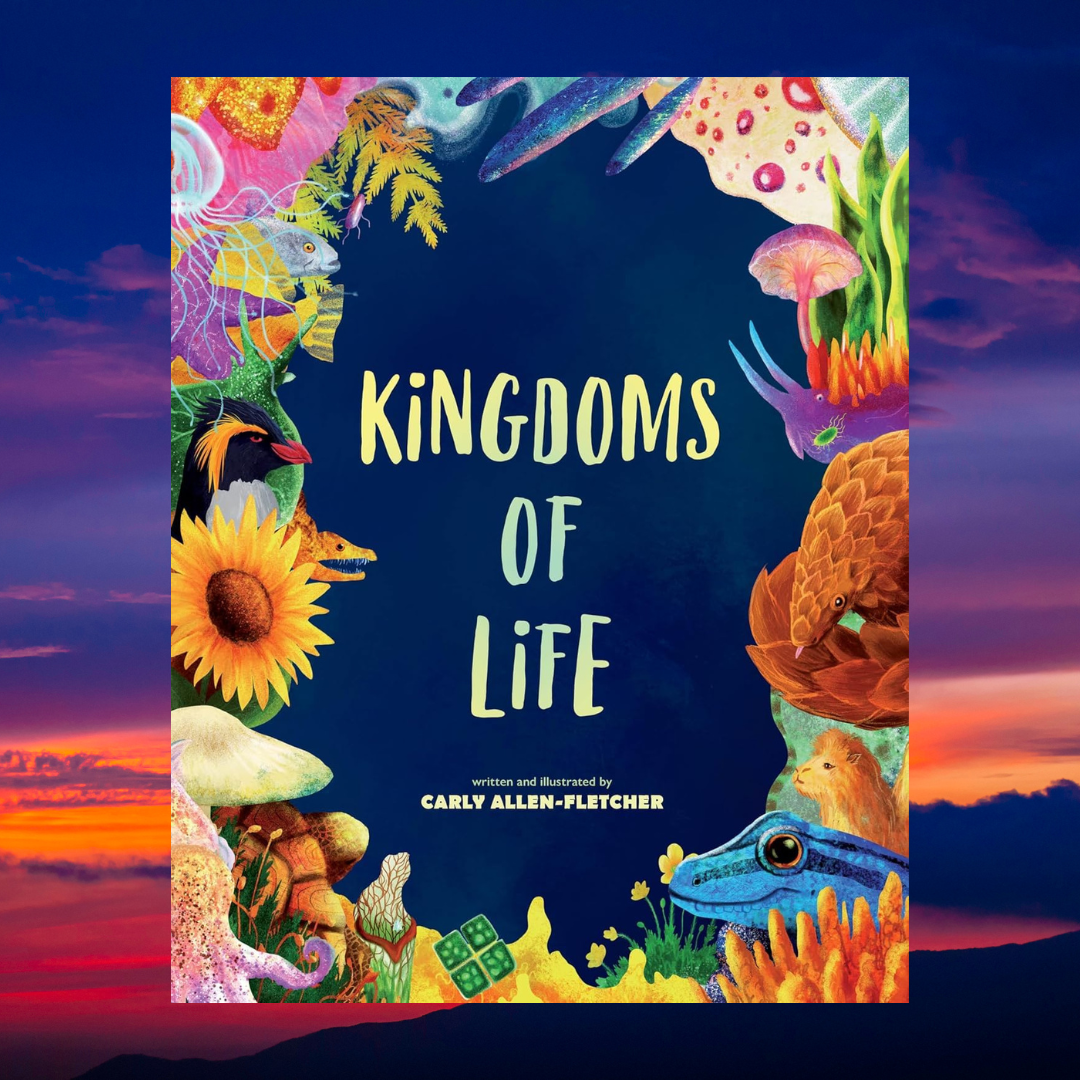
Thanks to Eerdman’s Books for Young Readers for gifting us a copy of Kingdoms of Life for review.

Reviewed by Dorothy Levine

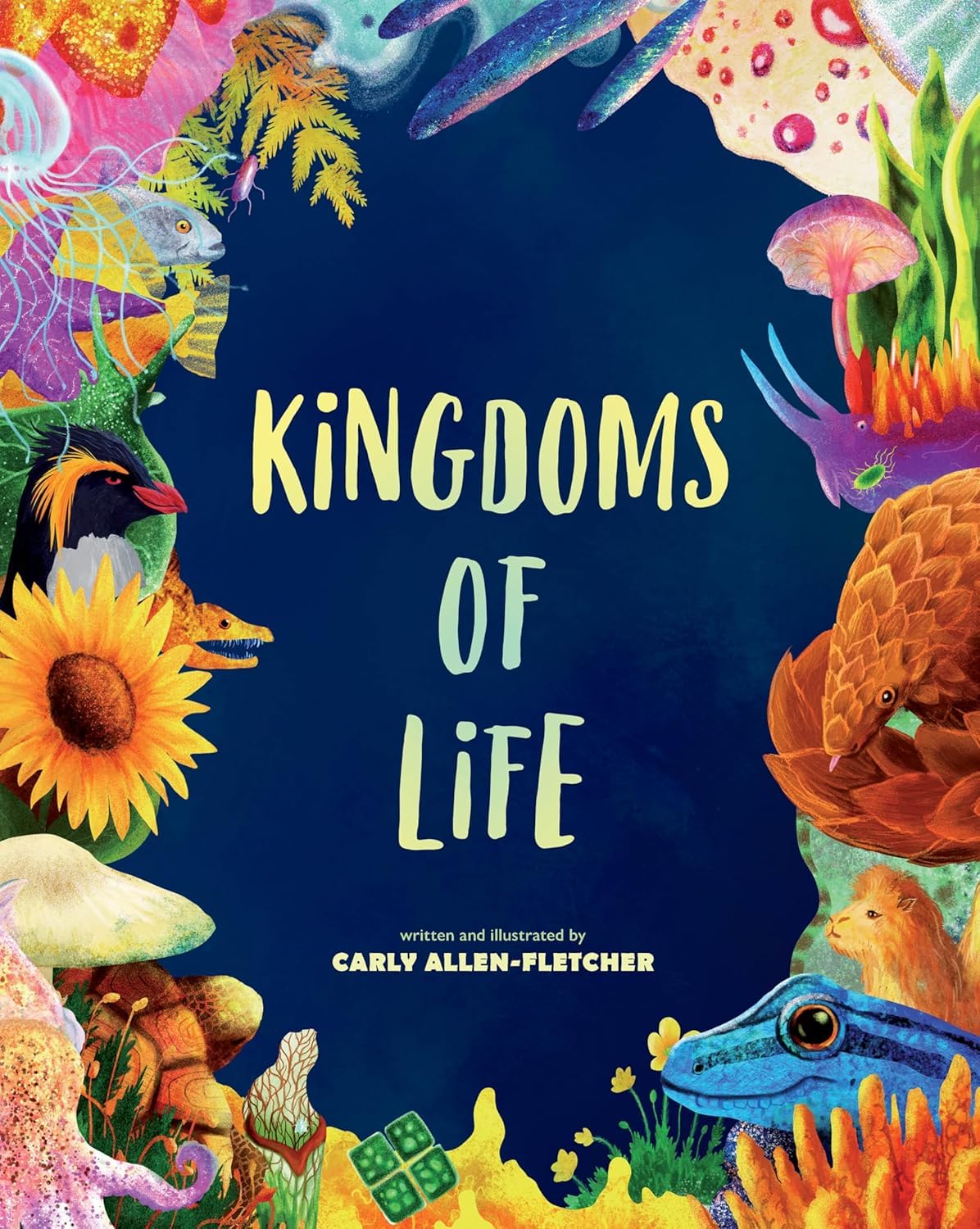
Kingdoms of Life

By Carly Allen-Fletcher


“Life is all around us…In the sky, the sea, and the soil, life exists in millions of different incredible ways.” 

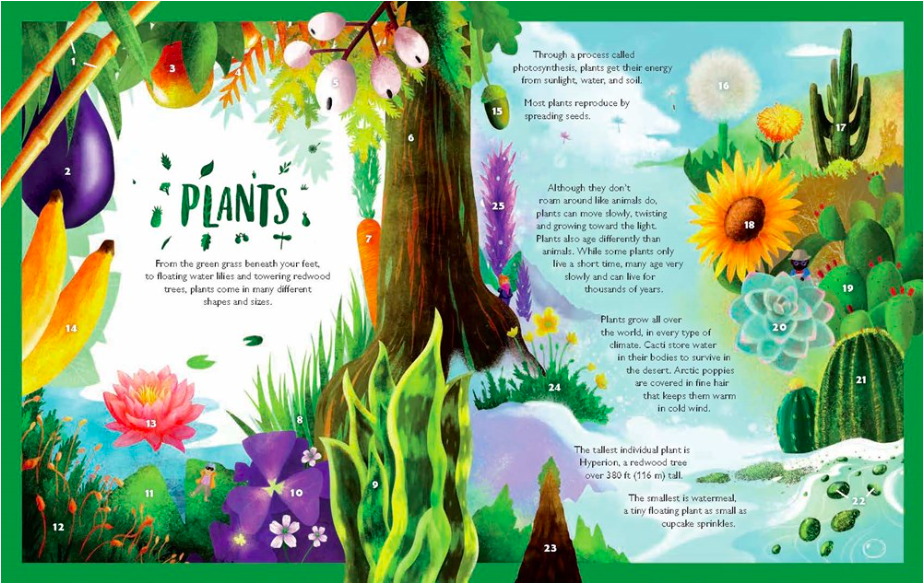
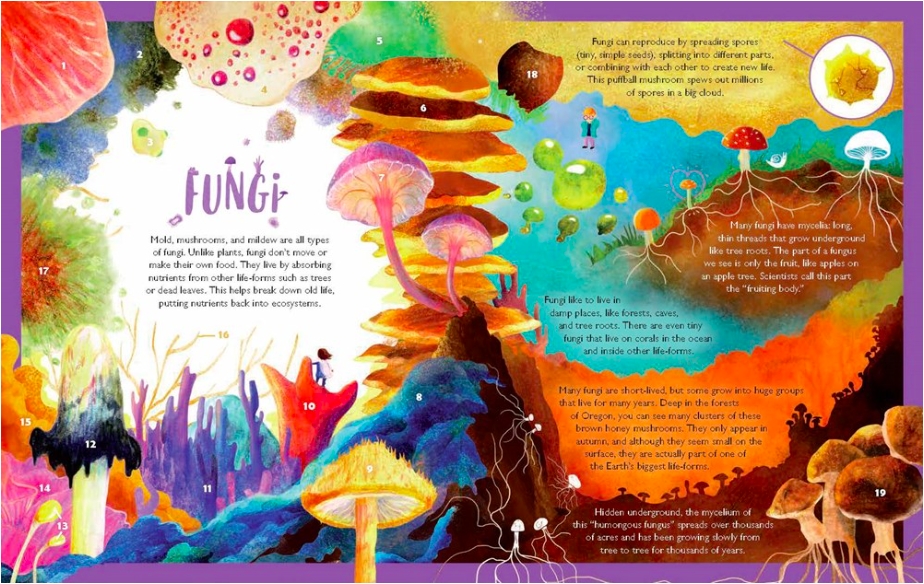
Jump into Carly Allen-Fletcher’s vibrant fact-filled guidebook for kids for a deep-dive exploration of the kingdoms of life. Each Kingdom rules over its own color-coded section, jam-packed with information on how the classified organisms feed, grow, and reproduce. Information also includes the ways in which the organisms across Kingdoms are related or work together with other lifeforms. The pages are royally packed with vibrant illustrations that appear to burst out from the very edges of the book. 

Allen-Fletcher begins with an explanation of how all life is formed—from tiny building blocks called cells. These cells can join to create complex multicellular life forms or just exist on their own as unicellular forms of life. She then zooms out to examine the six biggest categories of life. Allen-Fletcher makes sure to note that these categories are not fixed; they change as scientists learn more and arrange beings in different ways. 

Illustration and text © 2025 Carly Allen-Fletcher. Courtesy of Eerdmans Books for Young Readers.

The first category investigated in depth is the most complex of the life-form groups—animals. The animal pages are filled with a diverse range of species, each numerated to a corresponding key at the back. Allen-Fletcher shows the wide range of animals by comparing the smallest species (fairy wasps) to the largest (blue whales), while also explaining how even within one species (dogs) there can be glorious variety. Examples of animals that don’t quite fit in the animal category, such as a sea slug that can make energy from the sun, as well as animals that can survive extreme conditions or are thought to be practically immortal, are also discussed.

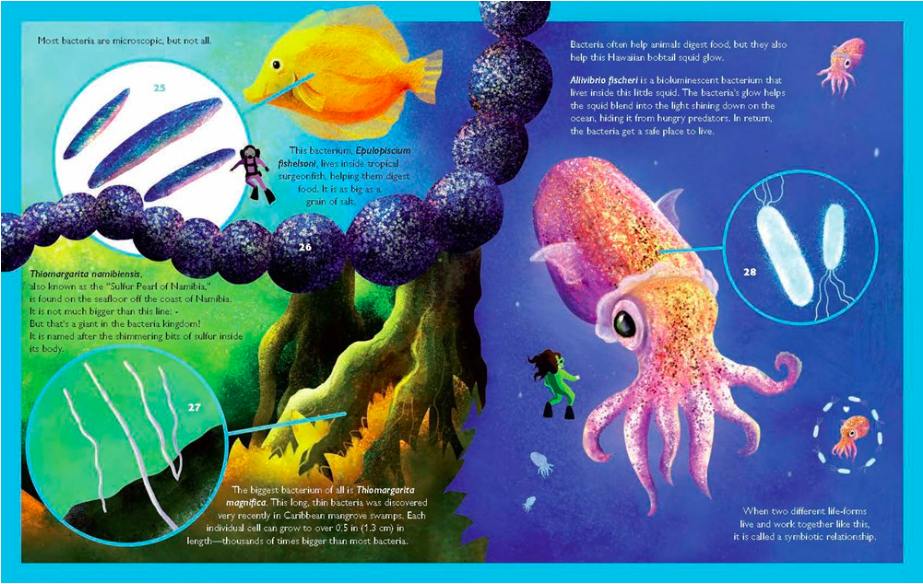
In addition to the animals, plants, fungi, protists, bacteria, and archaea are each given equal attention in their respective kingdom sections. From protists like giant kelp and slime mold to bacteria in our gut and bioluminescent bacteria found in squid, each kingdom is filled with fascinating examples of life and interesting facts on specific organisms. 

Illustration and text © 2025 Carly Allen-Fletcher. Courtesy of Eerdmans Books for Young Readers.

Kingdoms, Allen-Fletcher explains, can also be broken down further, into smaller and smaller groups such as family, genus, and species. A few taxonomists (scientists who study and sort lifeforms into categories) from around the world and throughout many different centuries are highlighted for their contributions to the field.

The book ends with a last dose of wonder: “We know more about the moon than we do about the deepest parts of our oceans. / Every year, we learn more about our home and the incredible life-forms we share it with. / What will we discover next?” The inclusion of “we” in this ending invites readers to feel welcome in this process of study and discovery. Taxonomy need not be only for adult scientists, but anyone who shares a passion for nature and careful observation. 

Back matter features each of the categories taxonomists use to sort life into groups as well as all the names of the featured life-forms throughout the book. The science is detailed while also distributed into easy-to-read bite-sized chunks.

Illustration and text © 2025 Carly Allen-Fletcher. Courtesy of Eerdmans Books for Young Readers.

Carly Allen-Fletcher illuminates a topic that is usually reserved for upper-level biology courses making it accessible and intriguing for young learners. The facts from her book will inspire a passion for all species—large or small, animal or bacteria—and help children to understand where in this big wide world we as humans stand and the symbiotic relationships that exist between creatures. Mini scientists dot the lusciously illustrated pages, comically examining life-forms in all the kingdoms up close.

Kingdoms of Life would make a valuable addition to home, school and library collections.

Ages 6 – 10

Eerdmans Books for Young Readers, 2025 | ISBN 978-0802855916

About the Author/Illustrator

Carly Allen-Fletcher is a British illustrator and author whose books include Goodnight Forest (Muddy Boots), Beastly Biomes (Creston), and Animal Antipodes (Creston). Inspired by nature and science, she creates her art by combining hand-drawn elements, painted textures, and graphic shapes. Carly loves reading about the latest biological discoveries, and if she hadn’t become a professional illustrator, she would have become a scientist instead. Follow Carly on Instagram or visit her website at carlydraws.com.

World Wildlife Day Activity

It Takes All Kinds game illustration courtesy of Science Trek.


Kingdoms of Life Fun

Watch a Kingdoms of Life Classification Video with Science Trek

  • As Allen-Fletcher notes in Kingdoms of Life, scientists are constantly evolving the categories for living organisms as they learn more. Do you notice any differences between the book and video kingdom categories? Since this video was published, scientists have started using the kingdom names bacteria and archaea instead of the previously used term, monera!

You can also explore their Online Games on kingdoms of life and animal classification, and practice sorting with Generation Genius’s Candy Classification Activity

You can purchase Kingdoms of Life at these booksellers

Amazon | Barnes & Noble | Bookshop (to support your local independent bookstore)

Picture Book Revie