November 29 – National Family Literacy Month

celebrate-picture-books-picture-book-review-dogs-love-books-too-cover

About the Holiday

National Family Literacy Month was established in 1994 to encourage parents and other adults to read together with the children in their life. Studies show that children who are read to are better prepared to read on their own and do better in school. Cuddling together before bedtime or during special story times with favorite books instills a love of reading that can last a lifetime. As children begin learning to read, they benefit from reading to family, friends, and even a pet or friendly therapy dog. To celebrate, plan some special reading-related activities and schedule extra reading time, especially with grandparents or other family members who may be visiting for the holidays. 

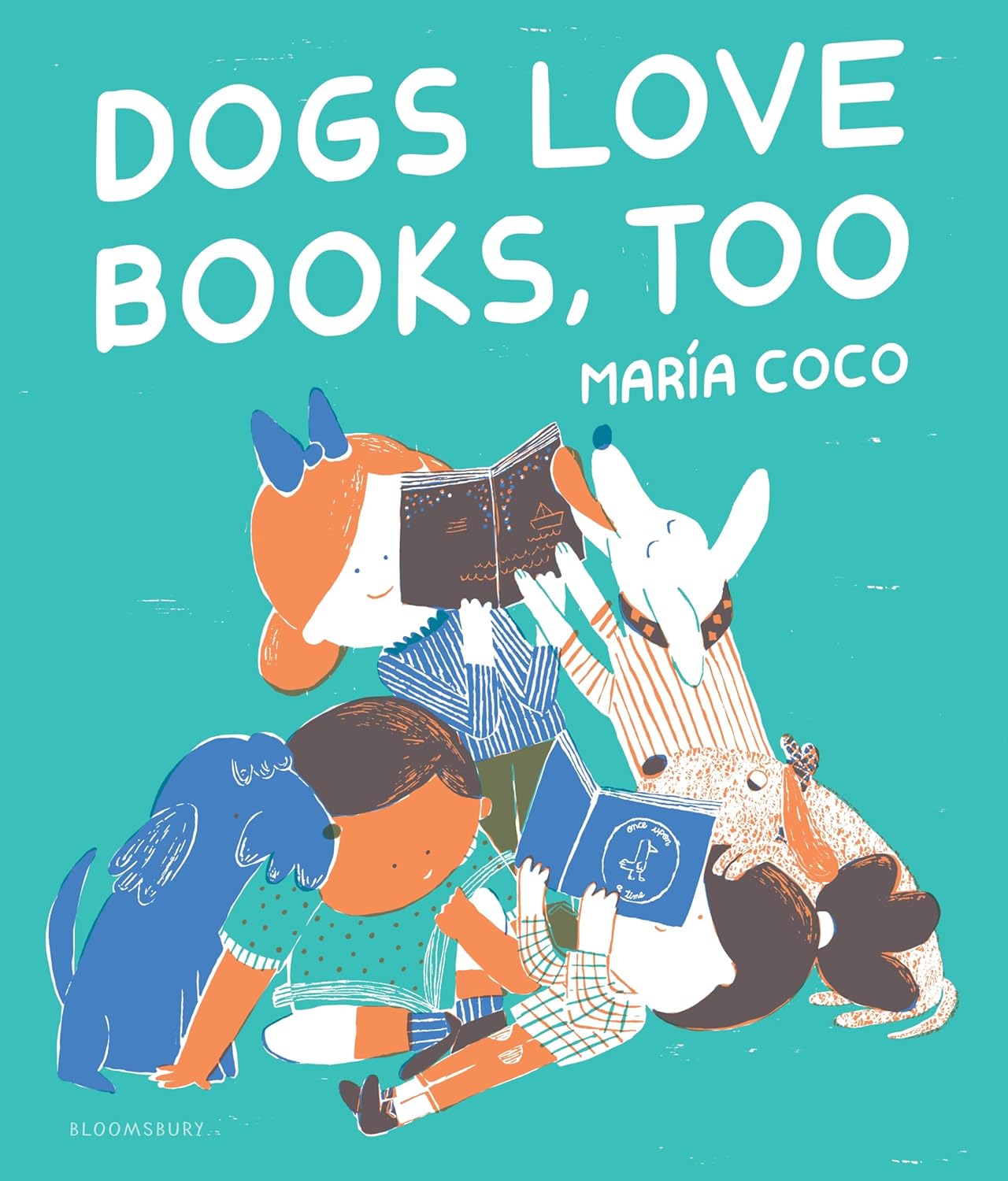
Dogs Love Books, Too

By María Coco


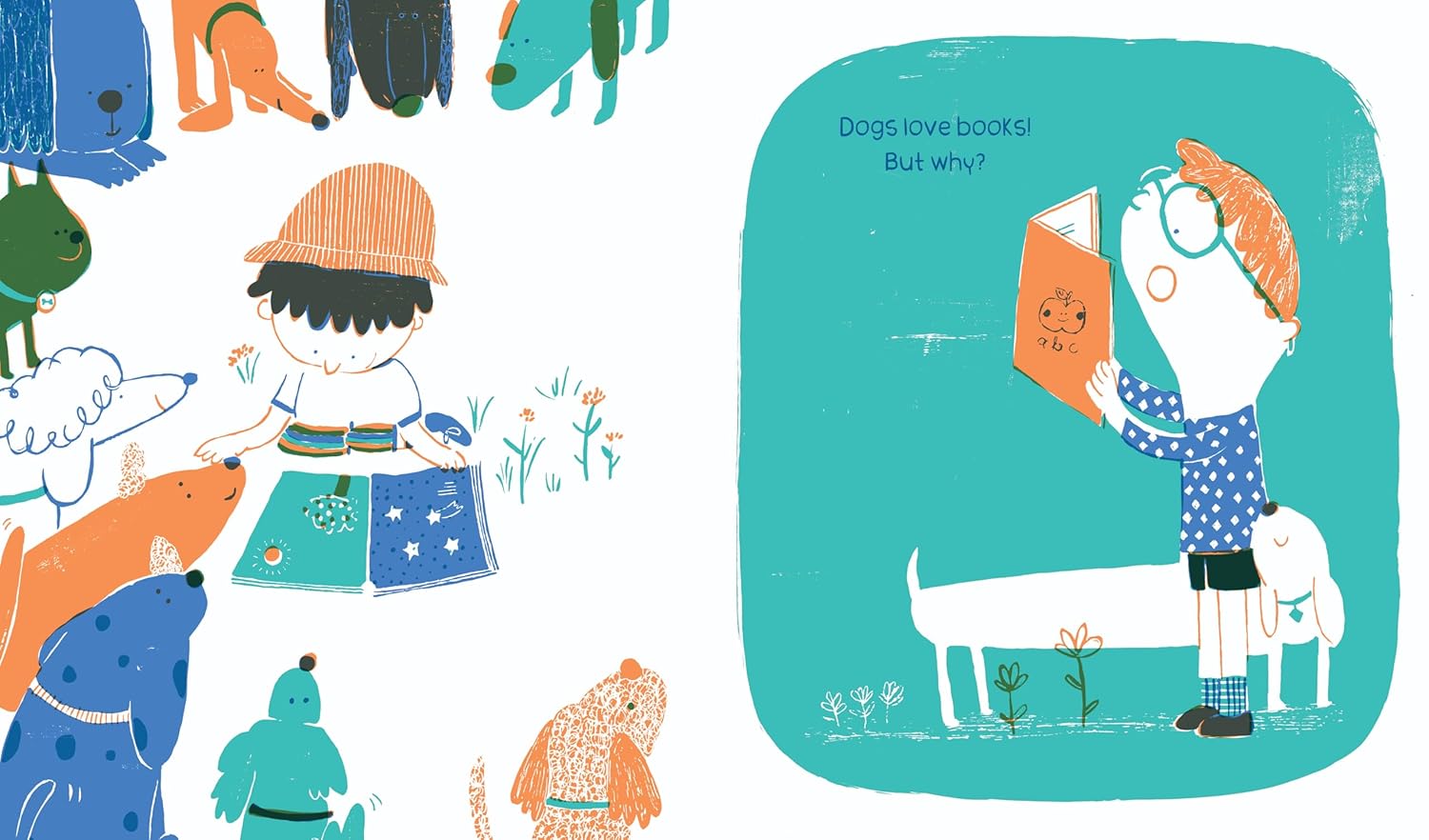
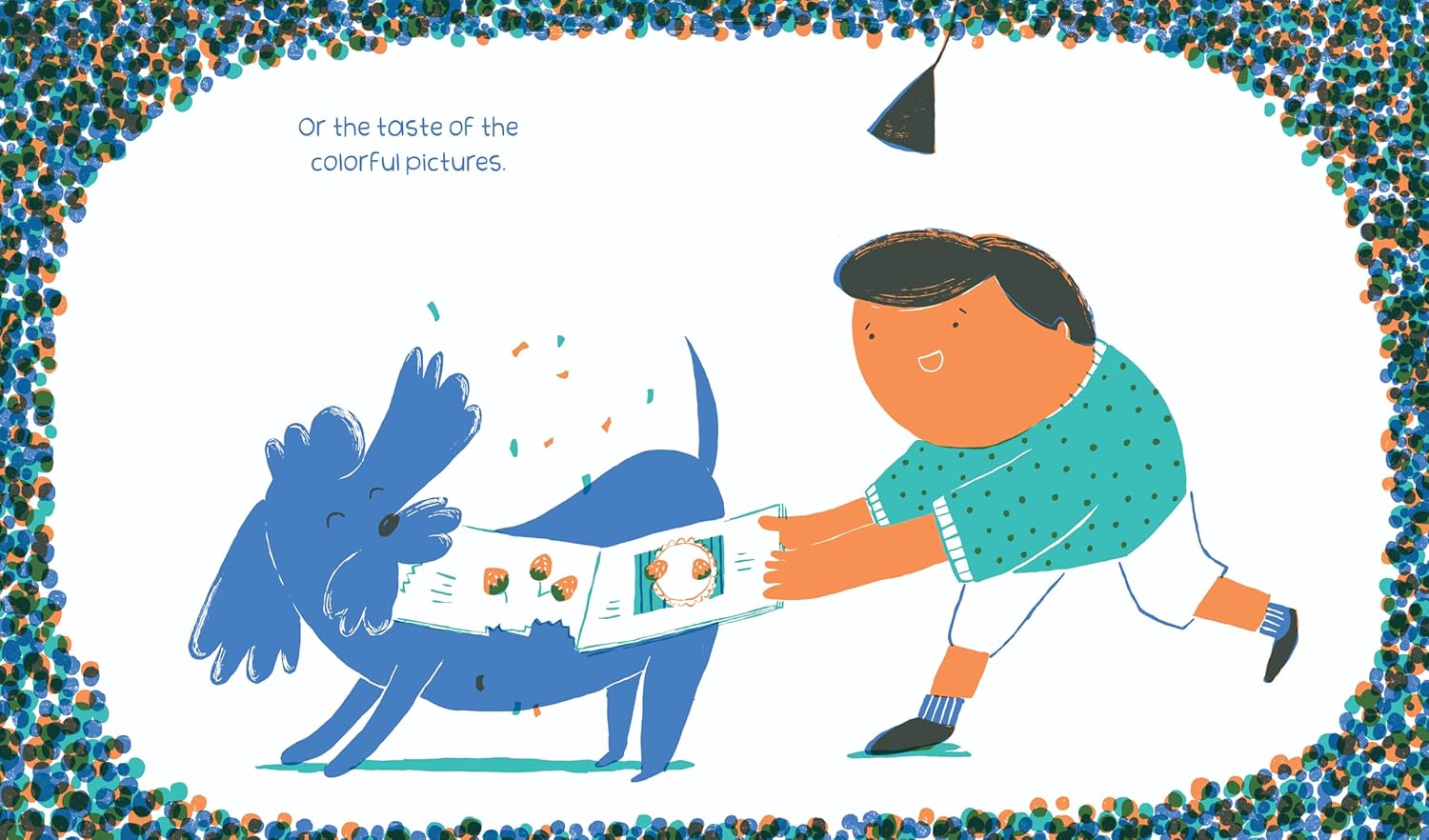
If your family has a dog (or two), you may have noticed that they become extra excited or, perhaps at bedtime, more snuggly when the books come out. As María Coco observes and then wonders, “Dogs love books! But why?” She proposes that it might have something to do with “the smell of the pages.” Or maybe for those dogs who like to take a chomp, the pages taste like fine cuisine.

celebrate-picture-books-picture-book-review-dogs-love-books-too-why-do-they

Copyright María Coco, 2024. Courtesy of Bloomsbury Children’s Books.

Could it be that they like hearing their people read aloud? Do they, too, like to imagine far-off places or drift into magical dreams? It could be one or all of these, but Coco thinks one reason stands above the rest: “I think dogs love books because they make us feel like we are not alone.” But does that feeling apply to dogs only? What do you think?

celebrate-picture-books-picture-book-review-dogs-love-books-too-tasty-pictures

Copyright María Coco, 2024. Courtesy of Bloomsbury Children’s Books.

María Coco’s short and evocative story, accompanied by engaging illustrations, is a perfect read for so many occasions and readers. With a single sentence written in a non-serif font created by Coco herself on each page or spread, the text invites emergent and new readers to join in on recognized sight words or read the story themselves. Hesitant readers will respond to the confidence-building inherent in the story. Coco also leaves the text open-ended to encourage readers of all ages to talk about why they love to read.

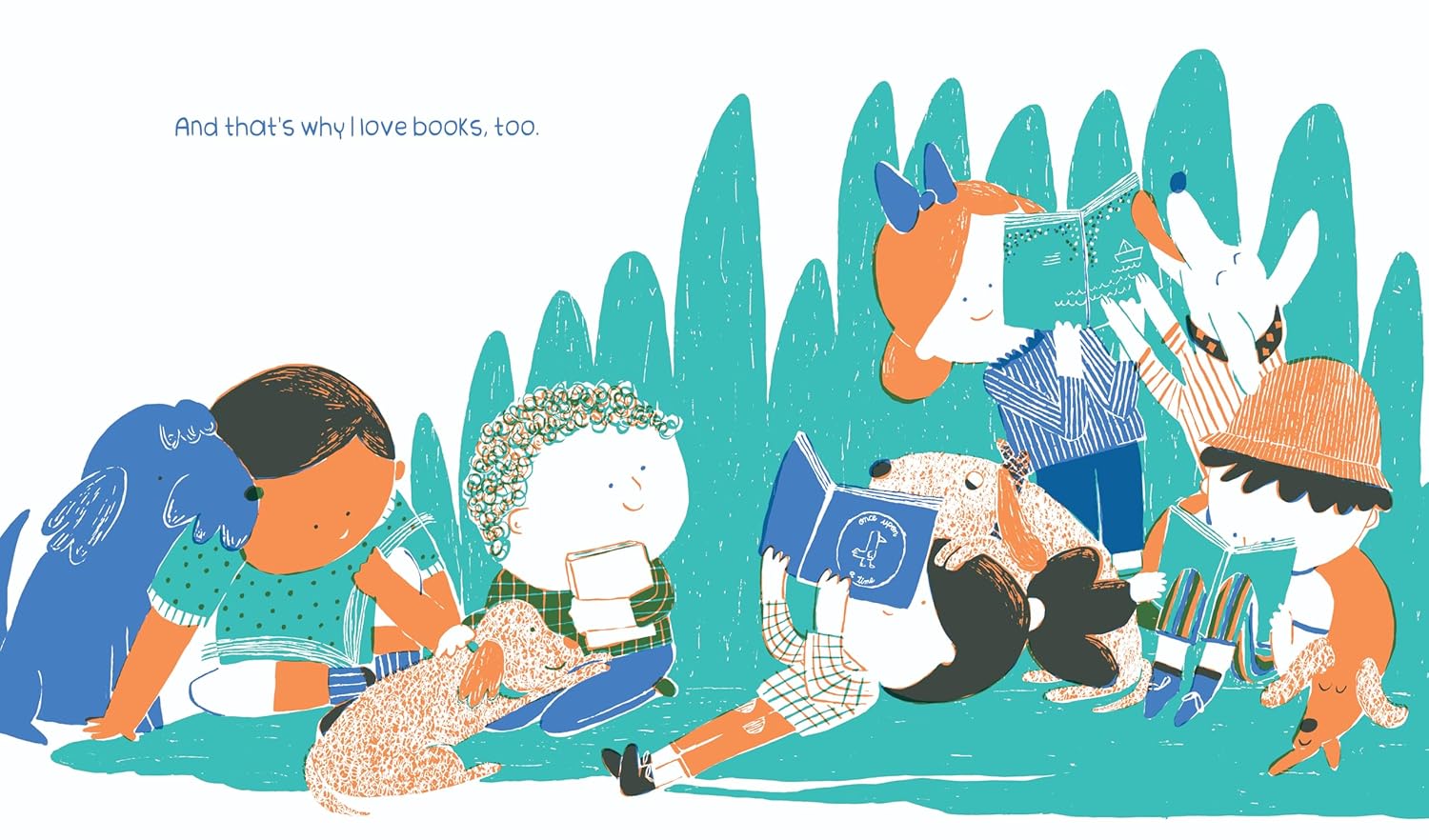
celebrate-picture-books-picture-book-review-dogs-love-books-too-final-page

Copyright María Coco, 2024. Courtesy of Bloomsbury Children’s Books.

Coco’s layered and textured illustrations are full of humor, imagination, and—in answer to the question Coco first poses—camaraderie. Images of children and their canine friends are warm and heartfelt, and the final spread, in which five kids from the story gather with their dogs to read, is a true picture of the contentment books can bring. 

Dogs Love to Read, Too is a natural choice for bedtime or other home story times as well as for any Read-to-a Dog program at schools, libraries, humane societies, or through other organizations.

Ages 2 – 5

Bloomsbury Children’s Books, 2024 | ISBN 978-1547613656

About the Author/Illustrator

Maria Coco is a Mexican designer, illustrator, and storyteller. She has a degree in Graphic Design and an MA in Children’s Book Illustration from the Cambridge School of Art. Her artwork has earned praise from The Templar Illustration Prize, The Macmillan Prize for Children’s Picture Book Illustration (UK), the Faber Andlyn BAME Prize, and the Salariya/Stratford Literary Festival Children’s Picture Book Prize. Connect with her on Instagram @mariacoco and at her website maria-coco.com.

National Family Literacy Month Activity

celebrate-picture-books-picture-book-review-book-bag-craft

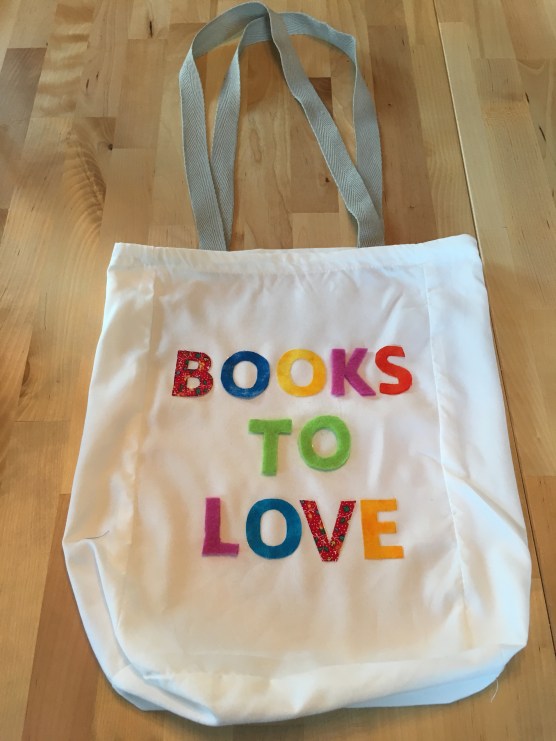
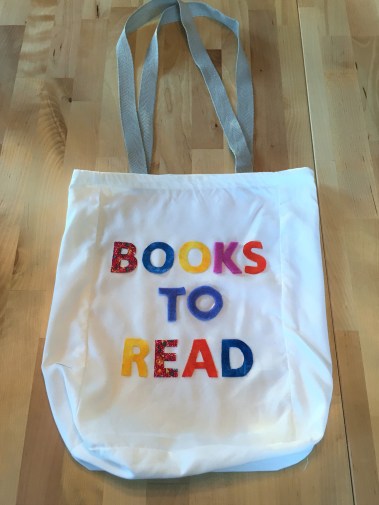
Books to Love, Books to Read Book Bag


True book lovers can’t go anywhere without a book (or two or three) to read along the way. With this easy craft you can turn a cloth bag into a kid-size book bag perfect for the car, the library, or anywhere you read!

Supplies

  • Printable Templates: Books to Read Template | Books to Love Template
  • Small cloth bag, available from craft or sewing stores—Recyclable Idea: I used the bag that sheet sets now come in
  • Cloth trim or strong ribbon, available from craft or sewing stores—Recyclable Idea: I used the cloth handles from shopping bags provided from some clothing stores
  • Scraps of different colored and patterned cloth. Or use quilting squares, available at craft and sewing stores
  • Pen or pencil for tracing letters onto cloth
  • Scissors
  • Small sharp scissors (or cuticle scissors) for cutting out the center of the letters
  • Fabric glue
  • Thread (optional)
  • Needle (optional)

celebrate-picture-books-picture-book-review-books-bag-craft

Directions

  1. Print the sayings and cut out the letters
  2. Trace letters onto different kinds of cloth
  3. Cut out cloth letters
  4. Iron cloth bag if necessary
  5. Attach words “Books to Read” to one side of bag with fabric glue
  6. Attach words “Books to Love” to other side of bag with fabric glue
  7. Cut cloth trim or ribbon to desired length to create handles
  8. Glue (or sew) handles onto the inside edge of bag

celebrate-picture-books-picture-book-review-dogs-love-books-too-cover

You can purchase Dogs Love Books, Too at these booksellers

Amazon | Barnes & Noble | Bookshop (to support your local independent bookstore)

Picture Book Review

November 25 – It’s Sleep Comfort Month

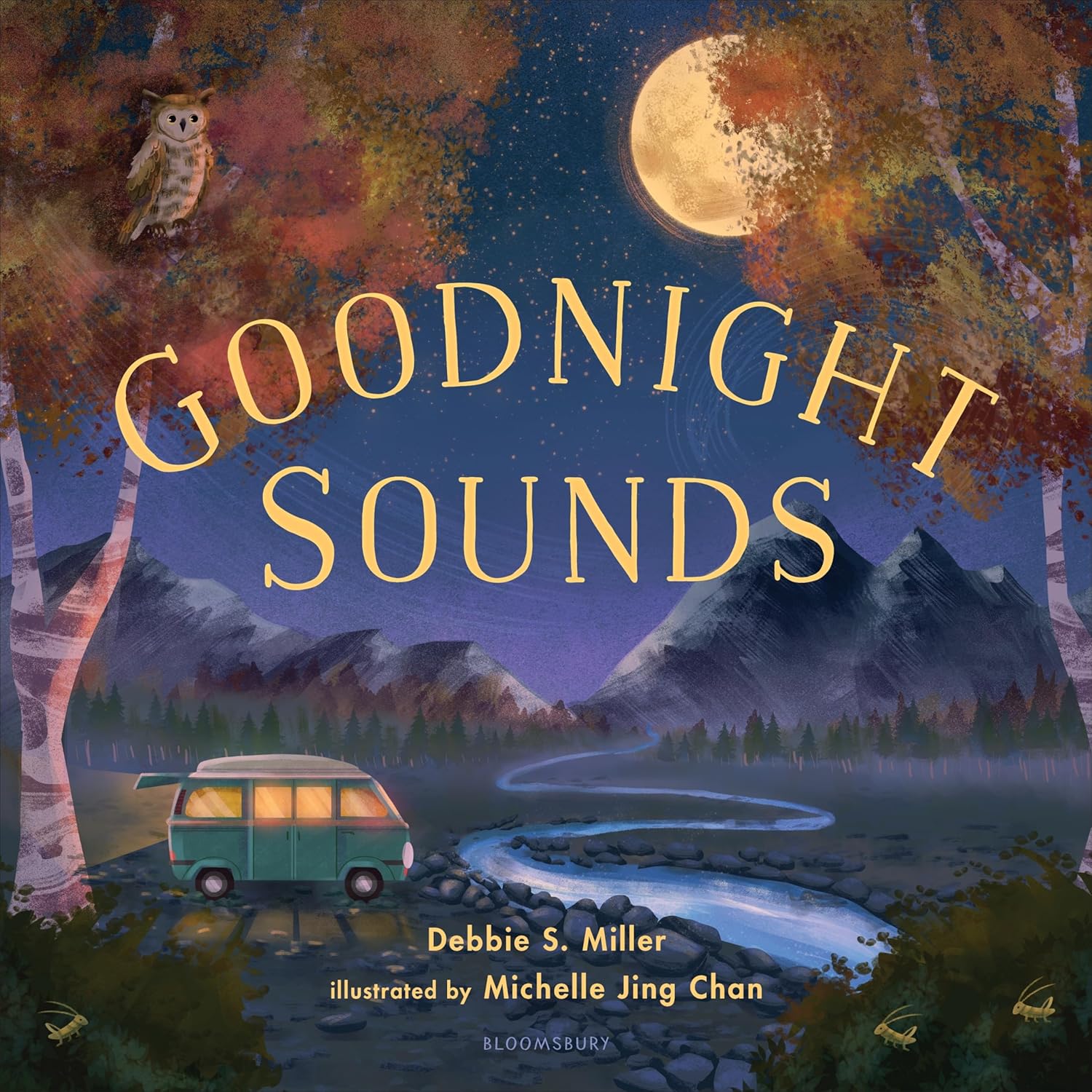
celebrate-picture-books-picture-book-review-goodnight-sounds-cover

About the Holiday

As days grow shorter and nights longer, November calls on us to get snuggly and dedicate time to rest. It is aptly time for Sleep Comfort Month, a holiday designed to raise awareness of the importance of quality rest and sleep. In times of flux and chaos, focus on rest and relaxation is more crucial than ever. This month can serve as a reminder that everyone needs and deserves peaceful rest and recuperation time in order to face the ever-changing, curious planet that is our home.

Thanks to Bloomsbury Children’s Books for sharing a copy of Goodnight Sounds with me for review consideration. All opinions on the book are my own.

Review by Dorothy Levine

 Goodnight Sounds

Written by Debbie S Miller | Illustrated by Michelle Jing Chan


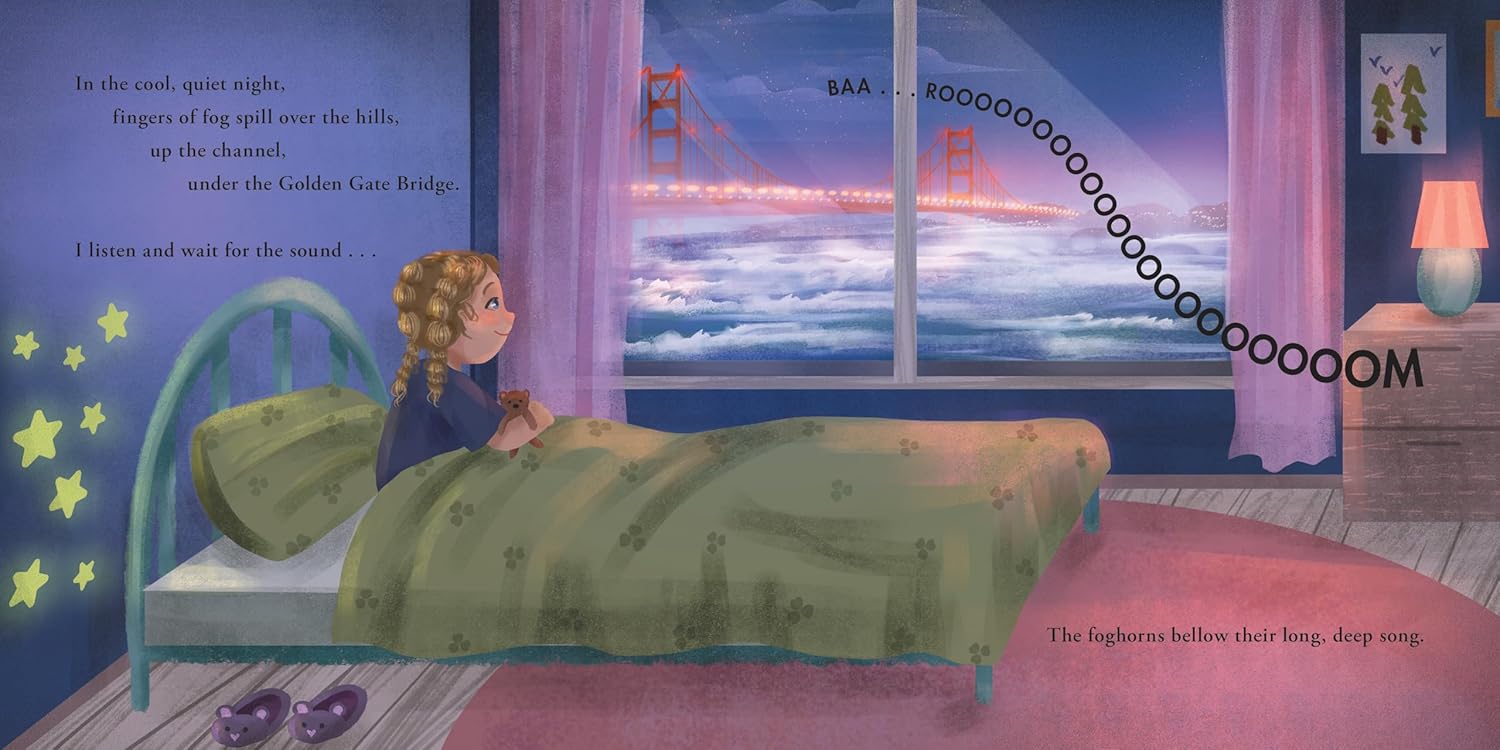
Goodnight Sounds is a lyrical bedtime story that invites readers to get cozy and listen closely. The story begins with a child whose home is tucked under the looming light of California’s Golden Gate Bridge. Illustrations depict the girl sitting up in bed, teddy bear in hand, observing the bridge and crashing waves beneath from her bedroom window.

The words of the first page set the scene: “In the cool, quiet, night / fingers of fog spill over the hills…I listen and wait for the sound…”. On the next page the “BAA…ROOOOOOM” of a foghorn stretches across the cozy bedroom, the ‘O’ sound flowing through her window like the wisps of fog to help lull her to sleep. The girl then invites readers into the story, asking “what sound helps you fall asleep?”

celebrate-picture-books-picture-book-review-goodnight-sounds-foghorn

Image copyright Michelle Jing Chan, 2024, text copyright Debbie S. Miller, 2024. Courtesy of Bloomsbury Children’s Books.

The rest of the story contains follow-up poetic questions, each paired with unique onomatopoeic interpretations of the nighttime sounds: “Is it the trilling of a thousand crickets / wings shivering in the moonlight?” In the corners of this spread, nestled by the crickets are iterations of: “Treeek-treeeek.”

The pages’ settings range from urban to suburban to wilderness, with their accompanying broad range of nighttime sounds—some as large as foghorns and others as tiny as crickets. At the end of the story, Miller returns readers to the first bedtime character, now asleep, with the words: “The sounds of the night are your lullaby.”

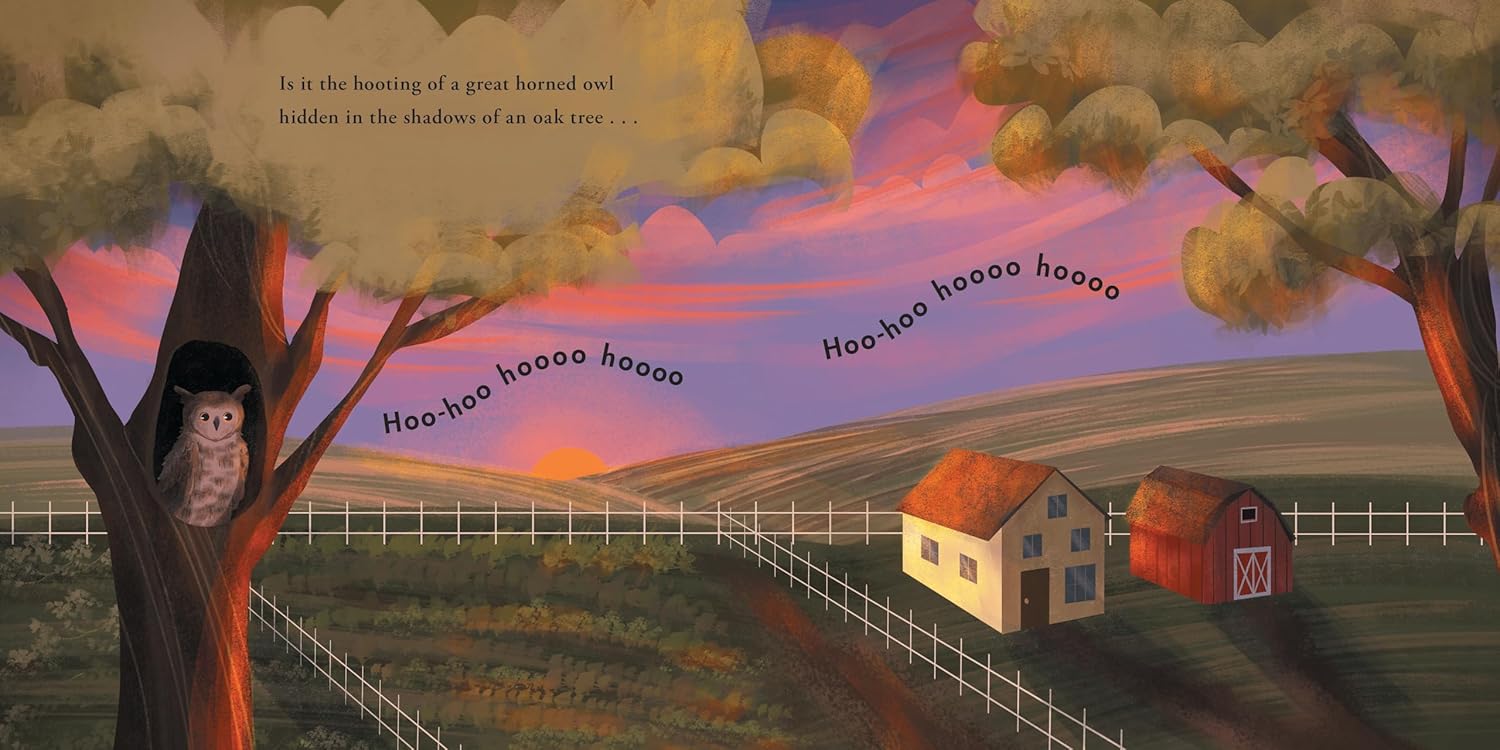
celebrate-picture-books-picture-book-review-goodnight-sounds-owl

Image copyright Michelle Jing Chan, 2024, text copyright Debbie S. Miller, 2024. Courtesy of Bloomsbury Children’s Books.

Illustrator Jing Chan depicts a series of serene landscapes, each containing a unique sleeping space (an apartment, a tent, and a camper van, for example). Every picturesque scene also features a unique source of light—a starry sky, a train window, a lamp, string lights, glow-in-the-dark stickers on a wall.

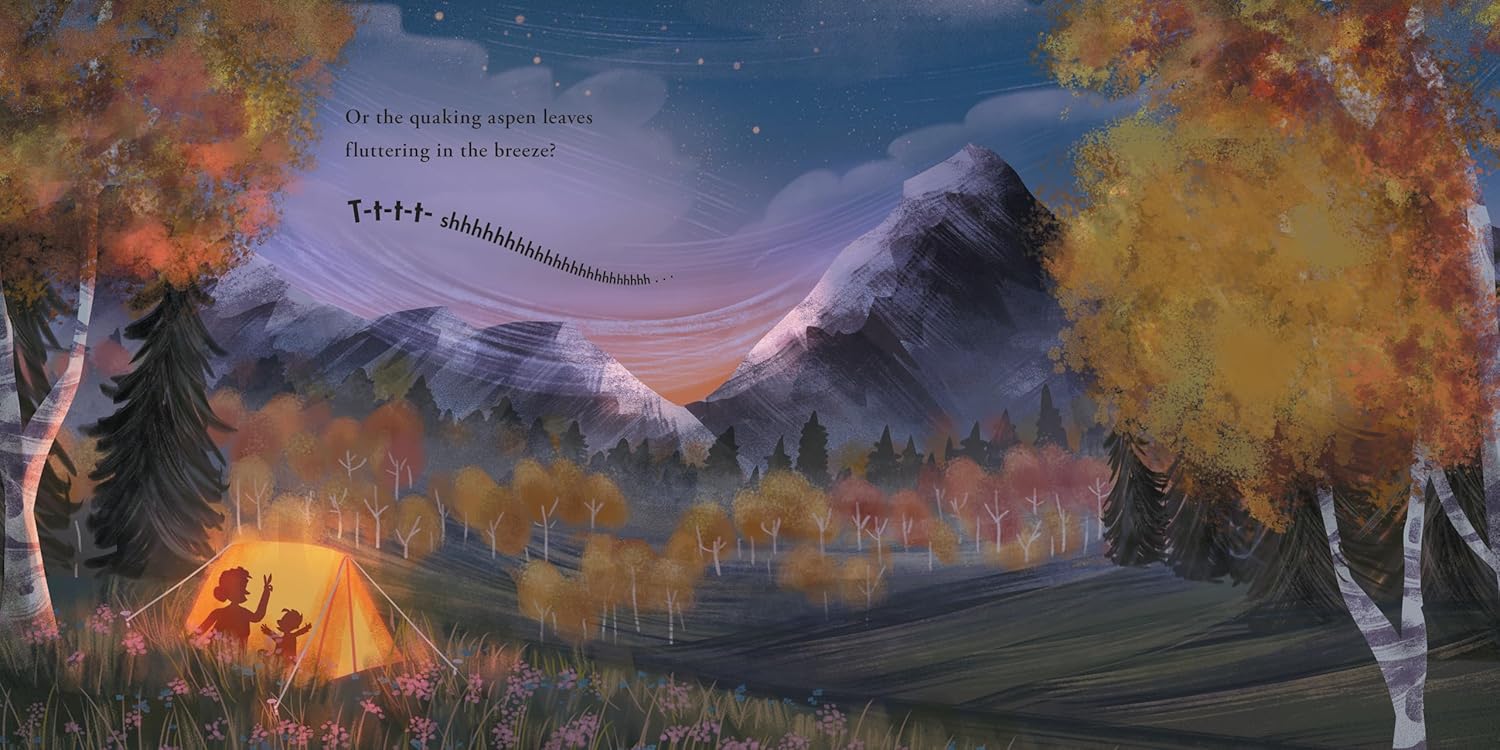
As the nighttime sounds change from outside sources to indoors, so do the illustrations, with a few of the panoramic scenes now taking readers inside a tent (where a grandmother makes a shadow puppet on the wall), a variety of bedrooms (where children fall asleep to the tick-tock of a grandfather clock, the chime of a music box, or the purr of a cat), and other cozy spaces. Along with the richly illustrated array of settings, Jing Chan also shows cultural, racial, and family-structural diversity among the page’s cast of happy sleepers. 

celebrate-picture-books-picture-book-review-goodnight-sounds-leaves

Image copyright Michelle Jing Chan, 2024, text copyright Debbie S. Miller, 2024. Courtesy of Bloomsbury Children’s Books.

Throughout Goodnight Sounds Debbie S. Miller includes onomatopoeia to her lines, offering opportunities for readers to lend their voices to the sounds and inviting them to listen closer to their own surroundings as they settle in for sleep. Her poetic language adds a peaceful rhythm to the book, almost echoing a lullaby. The illustrations and words of the story evoke a sense of both comfort and wonder for the nocturnal world around us.

A joyful addition to both home and library collections, Goodnight Sounds is sure to put young ones to sleep with new soundscapes and landscapes to dream of fondly.

Ages 2 – 5

Bloomsbury Children’s Books, 2024 | ISBN 978-168119199

About the Author

Debbie S. Miller is the author of Survival at 40 Below, an NTSA/CBC Outstanding Science Trade Book; Arctic Lights, Arctic NightsThe Great Serum Race; and Big Alaska. Visit Debbie at debbiemilleralaska.com.

About the Illustrator

Michelle Jing Chan is a queer Chinese American illustrator who grew up in Colorado and lives in the Pacific Northwest. Inspired by nature, cultural folklore, and fantasy, Michelle aspires to illustrate diverse, empowering stories her younger self would have loved. When she’s not drawing, she can be found attempting new recipes, reading, or watching spooky TV shows. Visit Michelle at michellejingchan.com.

Sleep Comfort Month Activities

Reading Goodnight Sounds before bed is a perfect way to celebrate sleep comfort month with children. Other activity ideas include crafting a DIY blanket or pillow together or making up a bedtime song and other creative ideas with the following instructions!

celebrate-picture-books-picture-book-review-sleep-buddy-craft

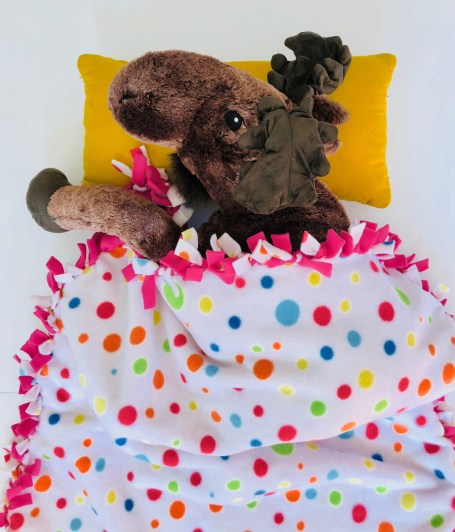
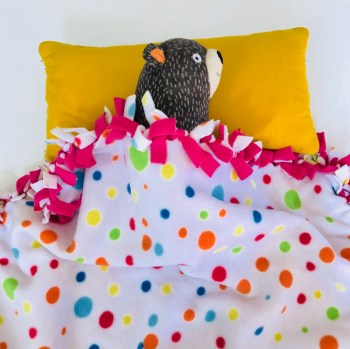
No-Sew Blanket and Pillow

With this craft you and your child can have fun making a kid-size blanket, a cozy cover for a favorite toy or a soft bed for a pet! Children from ages 5 or 6 and up will enjoy helping to tie the tabs. For younger children, using fabric glue to attach the two pieces of fleece or cutting just one piece of fleece allows them to join in the craft fun.

Supplies

  • 2 pieces of fleece cut to size for your project: a child’s blanket or pillow, a toy’s blanket, or a pet bed
  • Scissors
  • Measuring tape
  • Poly-fil, cushion insert, or pillow (for child’s pillow or pet bed)
  • Fabric glue (optional)

celebrate-picture-books-picture-book-review-sleep-buddy-craft

Directions

  1. Lay out fleece and measure a size that will make a comfortable blanket for your child, a favorite teddy bear or other sleep buddy, or your pet  
  2. Add 3 inches to that measurement on each side for the strips to tie together
  3. Cut 2 pieces of fleece
  4. With the pieces of fleece together, cut 3-inch long by ¾ -inch wide strips all along each side. 
  5. At the corners, cut four tabs (or a 3-inch square) off each side

To Make a Blanket

  • Tie the top and bottom strips together on all sides

To Make a Pillow

  • Measure two pieces of fleece to fit a pillow or fill with poly-fil
  • Add 3 inches to that measurement on each side for the strips to tie together
  • Follow main directions above

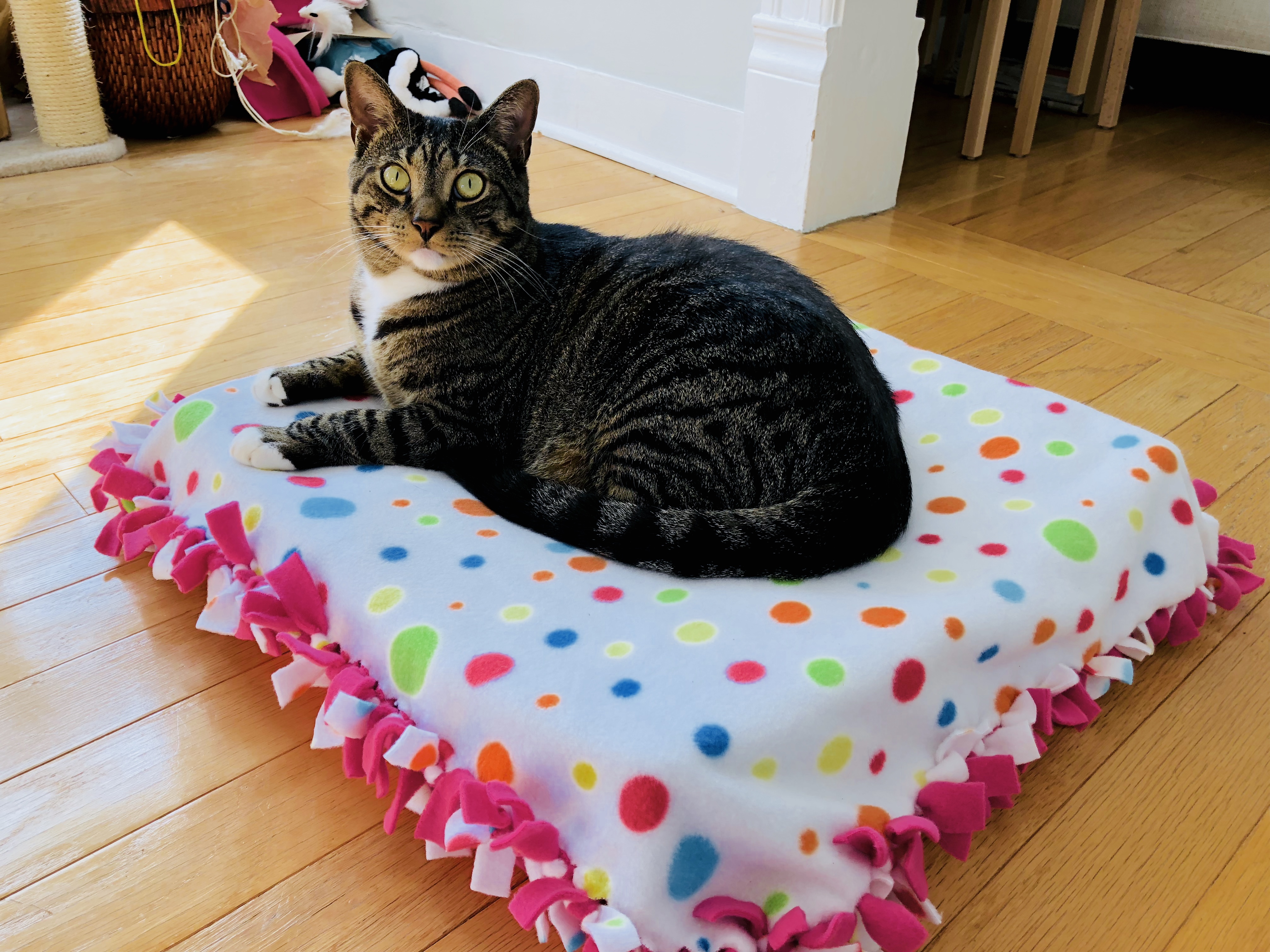
To Make a Bed for your Pet

celebrate-picture-books-picture-book-review-cat-bed-craft

  1. Measure two pieces of fleece to fit a pillow or fill with poly-fil
  2. Add 3 inches to that measurement on each side for the strips to tie together
  3. Follow main directions above
  4. Tie strips together on three sides
  5. Insert pillow, cushion insert, or poly-fil
  6. Tie the strips together on the final side

Fun Bedtime Ideas

Screen Shot 2024-11-24 at 7.02.35 PM

For more ideas on how to make bedtime an engaging and peaceful transition, here is a list of some fun and silly switch-ups to bedtime routines from Parents with Confidence, a website dedicated to helping parents raise emotionally healthy children.

50 Bedtime Activities to Calm and Connect

celebrate-picture-books-picture-book-review-goodnight-sounds-cover

You can purchase Goodnight Sounds at these booksellers

Amazon | Barnes & Noble | Bookshop (to support your local independent bookstore)

Picture Book Review

November 14 – Human-Animal Relationship Week

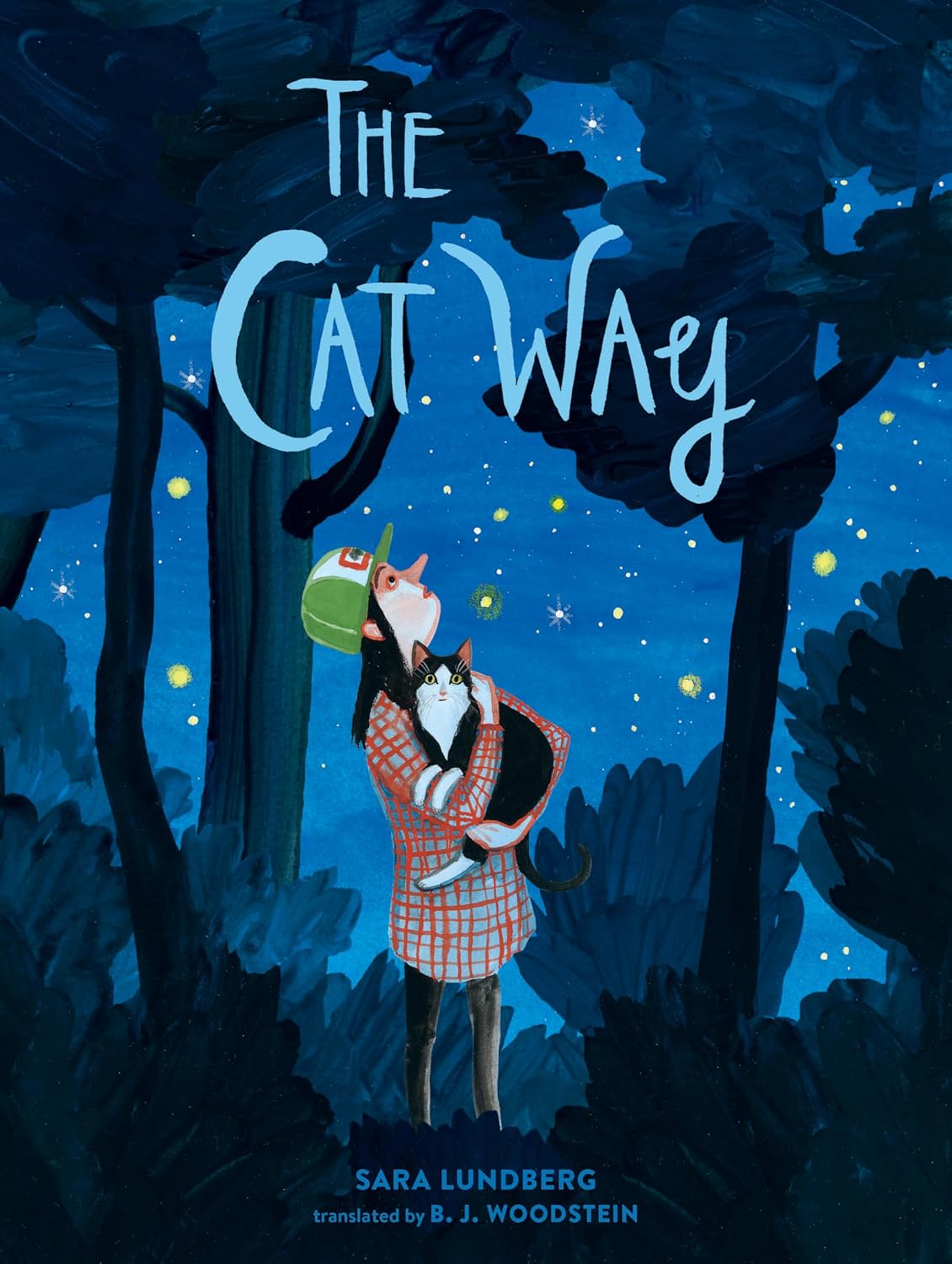
celebrate-picture-books-picture-book-review-the-cat-way-cover

About the Holiday

Established in 2016 by the Animals & Society Institute, a scholarly non-profit organization which works to increase knowledge about the relationships between people and animals, Human-Animal Relationship Awareness Week, aims to raise an appreciation for the ways in which humans and animals live and work together while sharing the resources of our planet. During the week and throughout the year, we are asked to strive to improve the lives of animals at home and across the globe while “building communities that are more humane and compassionate.”

Thank you to Eerdmans Books for Young Readers for sharing a copy of The Cat Way with me for review consideration. All opinions on the book are my own.

The Cat Way

By Sara Lundberg | Translated by B. J. Woodstein


Part 1 of Sara Lundberg’s story begins with a black-and-white cat and her human taking their usual walk down the sidewalk in their neighborhood. “‘I’m the one in charge,'” the cat’s owner declares. The young person ducks behind a tree to play their typical game of hide and seek, but today the cat is distracted by a white cat sitting nearby. She approaches, and the two cats begin to frolic while the narrator can only sit and watch. The narrator is ready to leave, to put a stop to their play, and while their cat comes, so does the white cat side-by-side, their tails linking the two. The young pet owner hears the cats “giggling and giggling” at them and, jealous, isn’t having it: “‘Stop it,” I say. I stamp my foot. Then the other one runs off.'”
celebrate-picture-books-picture-book-review-the-cat-way-belly-scratch

Image and text copyright Sara Lundberg, 2024, translation copyright B. J. Woodstein, 2024. Courtesy of Eerdman’s Books for Young Readers.

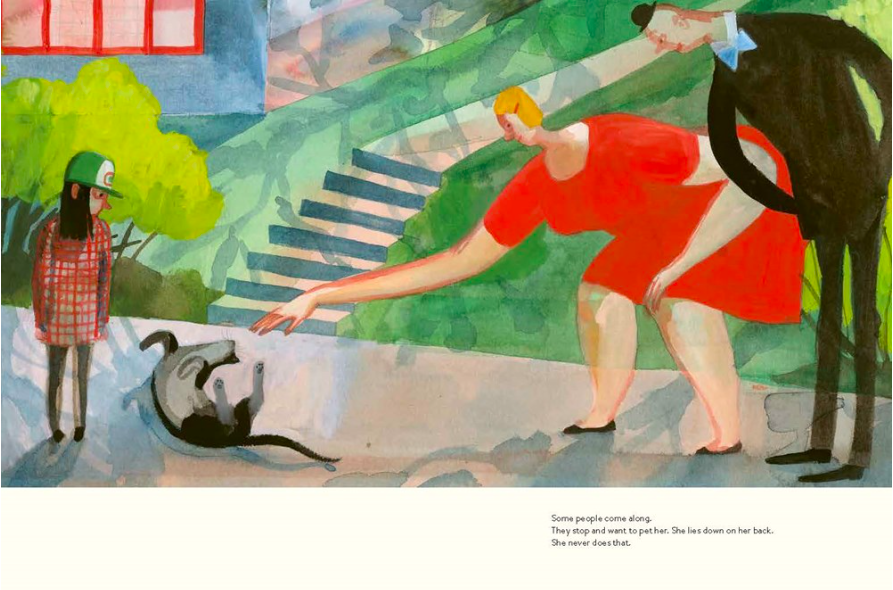
The cat and her human “glare at one another” until the cat says, “‘Why are you always in charge?'” Just then an older couple approaches, and the cat demonstrates her independence by immediately rolling over to offer her belly for a scratch—something “she never does.” Despite the narrator’s calling her to come, the cat lies there, soaking up the attention, extending her rebellion. Her owner decides on a subtle power play and walks away, continually turning back, however, to see if their cat is coming. She isn’t.

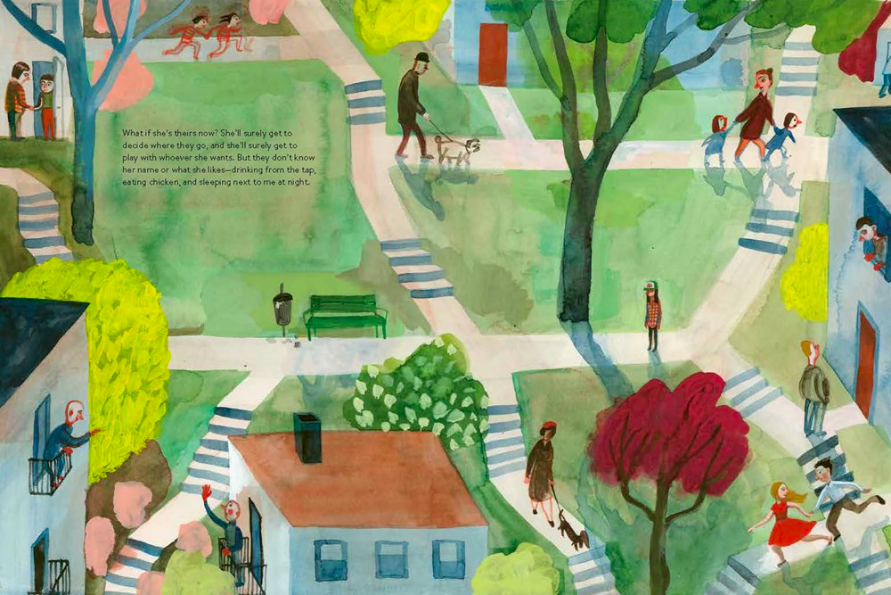
The young person, full of doubt, stops in the middle of the neighborhood, out of sight of the cat and the couple, wondering if the cat is “theirs now” and taking stock: the couple will surely be more lenient, but they don’t know her name, her quirks, her favorite food, or that she likes “sleeping next to me at night.” 
celebrate-picture-books-picture-book-review-the-cat-way-neighborhood

Image and text copyright Sara Lundberg, 2024, translation copyright B. J. Woodstein, 2024. Courtesy of Eerdman’s Books for Young Readers.

Here, Sara Lundberg does something astounding, metaphorically reflecting how time elongates and an icy fear grips those searching for a lost pet. The beautiful summer day turns dark and rainy. The narrator, rooted in place, gets soaked while shouting for the cat and getting no response. They think, “If I go home, she might disappear forever.” On the next page, autumn has come, and yellow leaves fall to the ground—the foreboding of something ending. Turn the page, and it’s now snowing. Inches have accumulated, covering the narrator’s hat and crossed arms. They trudge home, a freezing distress and self-recriminations lodged in their heart.

At home, the narrator can’t thaw out but then discovers with joy their cat curled up in their favorite chair. During tomorrow’s walk, the narrator promises, the cat will lead.
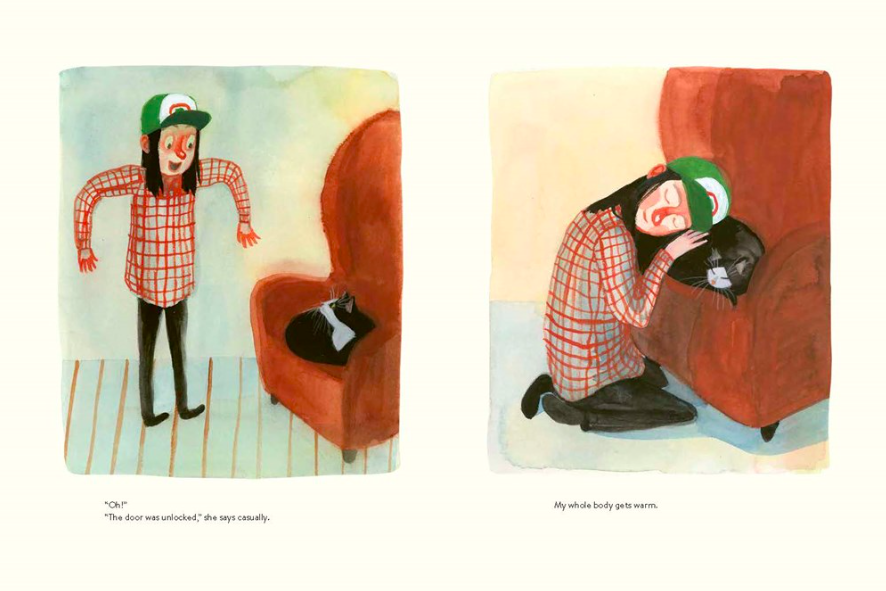
celebrate-picture-books-picture-book-review-the-cat-way-cat-comes-home

Image and text copyright Sara Lundberg, 2024, translation copyright B. J. Woodstein, 2024. Courtesy of Eerdman’s Books for Young Readers.

Part 2 takes up the story the next day as the narrator and the cat head out. Just a step outside the door, readers are treated to the cat’s eye view of the neighborhood. Whereas during Part 1, the landscape presents buildings, the sidewalk, cars, signs, benches, trash cans, and other cityscape objects, Part 2 lands readers in nature, like one of the dandelion seeds the cat dislodges while roaming the woods. Flowers, a snail, a butterfly, and pill bugs attract the cat’s eagle eye, while her owner stands on the barren sidewalk across the street, tapping her foot, glancing left and right.

As the cat ventures further, the narrator follows reluctantly. Without a path to follow, the narrator feels lost, unsure of the way home. Farther and farther into the woods the cat creeps, finding squirrel and communicating eye-to-eye the way only animals can. It’s getting dark and the narrator blindly tumbles down a small cliff. “‘Stupid cat!'” the narrator says from a prone position on the ground. Perched on a thin branch, the cat, in silhouette, seems to ask, “what are you doing down there?”
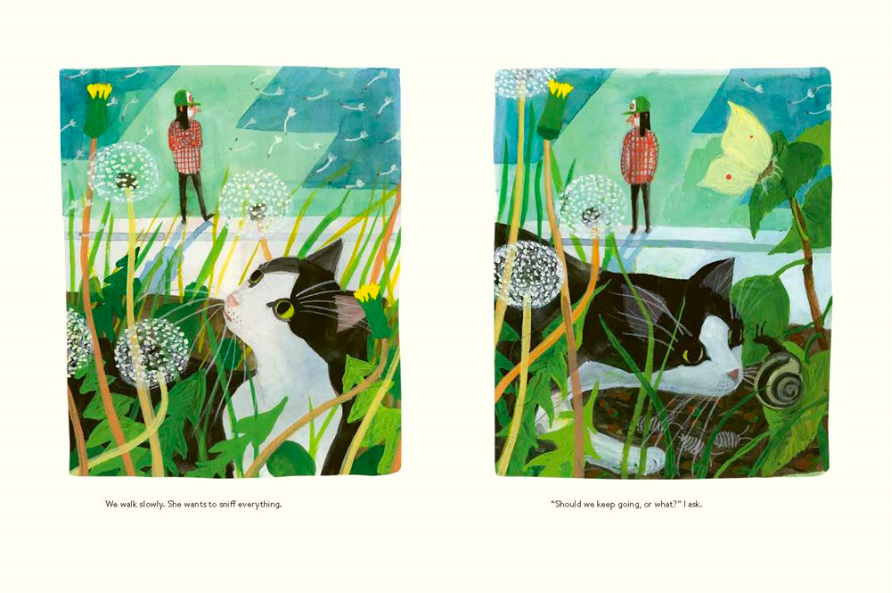
celebrate-picture-books-picture-book-review-the-cat-way-snail

Image and text copyright Sara Lundberg, 2024, translation copyright B. J. Woodstein, 2024. Courtesy of Eerdman’s Books for Young Readers.

Tears stream down the cat owner’s face, and the cat comes over to comfort her human. It’s then, drying their tears and looking up, that the narrator realizes…. The glorious star-filled night sky stretches out in front of them. The narrator, holding the cat in their arms, stands gazing at this silent spectacle. For readers, the page opens with a majestic gatefold that will elicit appreciative “Oohs!” They stay until dawn edges the horizon and the cat gets hungry. This time, the narrator follows as the cat expertly leads them out of the woods and back home. Still, the narrator isn’t completely ready to relinquish control, seeking assurance that tomorrow they will return to their regular routine. With a look the cat quells that thought, and her human offers a more equitable every-other-day solution. The cat blinks and continues leading her human home.
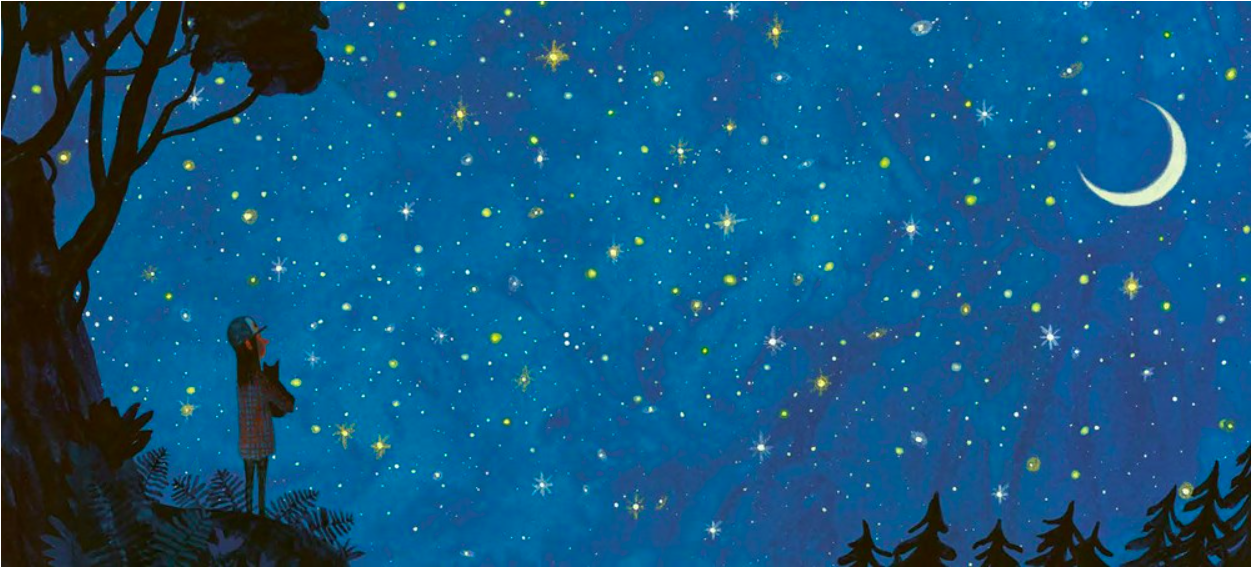
celebrate-picture-books-picture-book-review-the-cat-way-night-sky

mage and text copyright Sara Lundberg, 2024, translation copyright B. J. Woodstein, 2024. Courtesy of Eerdman’s Books for Young Readers.

Originally written in Swedish by Sara Lundberg and beautifully translated by B. J. Woodstein, The Cat Way is a multi-layered story for relationships of all kinds—between parents and children; friendships (between children, between adults, and between family members); between educators and students; and, more literally, between pets and their humans.

Through her self-assured narrator and inquisitive cat, Lundberg explores how we can get stuck in ruts and routines, ignoring or not recognizing opportunities to grow, learn, play, and see aspects of the world (both small and large) in fresh ways. As the narrator stolidly walks the same, well-worn paths and reacts critically when their cat welcomes something or someone new, Lundberg shows not only how easy it can be to quash another’s curiosity and creativity but also what a lonely and dull life this can lead to. 

When, in Part 2, the cat gets to lead and heads for the woods, Lundberg acknowledges how unfamiliar paths can feel scary and difficult to navigate at first as well as how discovery can feel overwhelming with impediments, stumbles, and even blind faith. But the cat is engaged, sure-footed, and aware of each snail, butterfly, squirrel, and way forward. She instinctively understands encouragement and that the journey is worth it all. And in the poignant ending, she reassures her human that home is where her heart is.

In her lush,  illustrations, Sara Lundberg uses a variety of perspectives (many charmingly surreal) throughout the story to enhance her message. A few standout illustrations include a spread early on when the narrator’s cat and the white cat tumble playfully, creating a yin and yang image that mirrors an underlying theme of balance in a relationship. The couple who scratch the cat’s tummy tower over the cat and the narrator, a reflection, perhaps, of how outsized the narrator feels their influence on their pet. A two-page spread showing interactions among people in the neighborhood as the narrator stands paralyzed by the idea they’ve lost their cat provides an opportunity for readers to stop and imagine the relationships and what is happening. 

Thoughtful, resonant, and visually arresting, The Cat Way is a story of exploration—of one’s immediate surrounding, the world, their relationships, and their own essence—that rewards multiple readings and is a must for home, public library, and school library collections.

Ages 5 – 9+

Eerdman’s Books for Young Readers, 2024 | ISBN 978-0802856333

About the Author

Sara Lundberg is a Stockholm-based illustrator and author who has created over thirty books, including two recipients of Sweden’s August Prize for the best children’s book of the year. In the United States, The Summer of Diving (Triangle Square) was named a New York Times Best Children’s Book, and The Bird in Me Flies (Groundwood) was named a Bank Street College Best Children’s Book. The Cat Way was inspired by Sara’s memories and photos of her cat Sassa, who often joined her family on walks. Follow Sara on Instagram at saralundbergart

About the Translator

B.J. Woodstein is a writer, editor, and Swedish-to-English translator. Her translations for children include The Book that Did Not Want to Be Read (Simon & Schuster) as well as the previous Sara Lundberg books The Bird in Me Flies (Groundwood) and The Summer of Diving (Triangle Square). A native of Chicago, B.J. currently lives in Norwich, England, where she is a lecturer at the University of East Anglia. Visit her website at bjwoodstein.com.

Human-Animal Relationship Month Activity
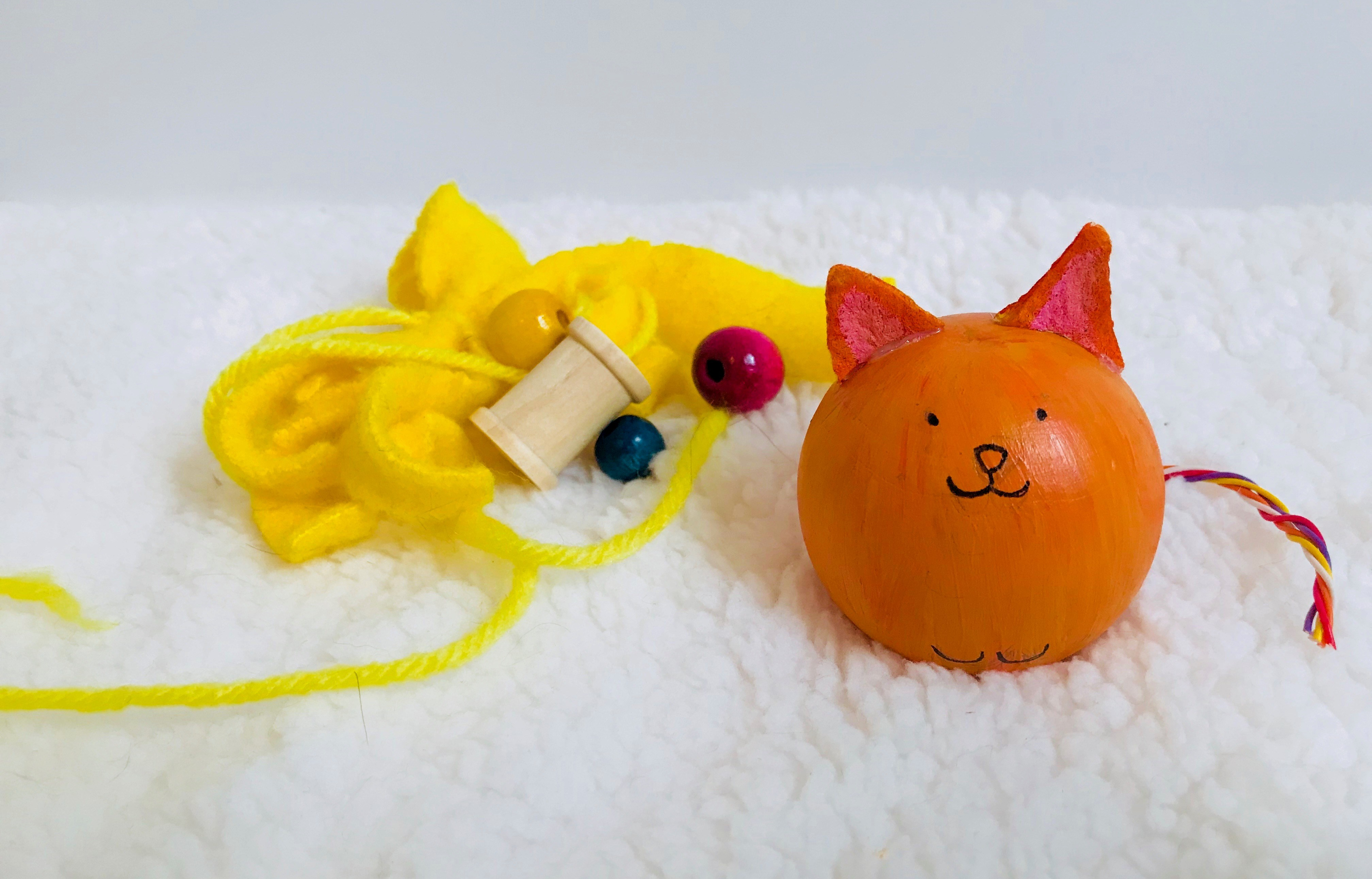
celebrate-picture-books-picture-book-review-wooden-bead-cat-craft

A Little Ball of Kitten Love

There’s nothing quite like the relationship between a cat and their human! If you have a cat or just love kitties, this sweet ball of fun is easy to make and can keep you company on your desk or shelf! Since every kitten is different, make your feline friend look just the way you want.

Supplies

  • Wooden ball with a flat bottom, available in craft stores and in different sizes
  • Craft paint in any color kitten you’d like (I used red and yellow and mixed it to make a mottled orange)
  • Craft paint in pink or white for the inner ear
  • Scrap of fleece for the ears. Fleece is easily shaped to the rounded ball and when painted is stiff enough to stand up on its own.
  • Thin, colored wire in several colors for the tail (string or twine, wrapped wire, fleece, stiff paper, and other materials could also be used)
  • Paint brush
  • Permanent marker for making the face
  • Hot glue gun or strong glue

Directions

  1. Paint the wooden ball and let dry
  2. Paint the scrap of fleece to match the wooden ball, let dry
  3. Cut out small triangular shapes for the ears. Round the bottom of the ears slightly so they fit the shape of the ball
  4. If making a tail from several colors of thin wire, twist them together, leaving one end untwisted
  5. With the glue gun or strong glue attach the ears to the top of the head
  6. With the glue gun attach the tail to the back of the wooden ball in the center near the base
  7. With the marker, draw eyes, nose, and mouth for the face and semicircles near the bottom for the paws

celebrate-picture-books-picture-book-review-the-cat-way-cover

You can purchase The Cat Way at these booksellers

Amazon | Barnes & Noble | Bookshop (to support your local independent bookstore)


Picture Book Review

November 13 – World Kindness Day

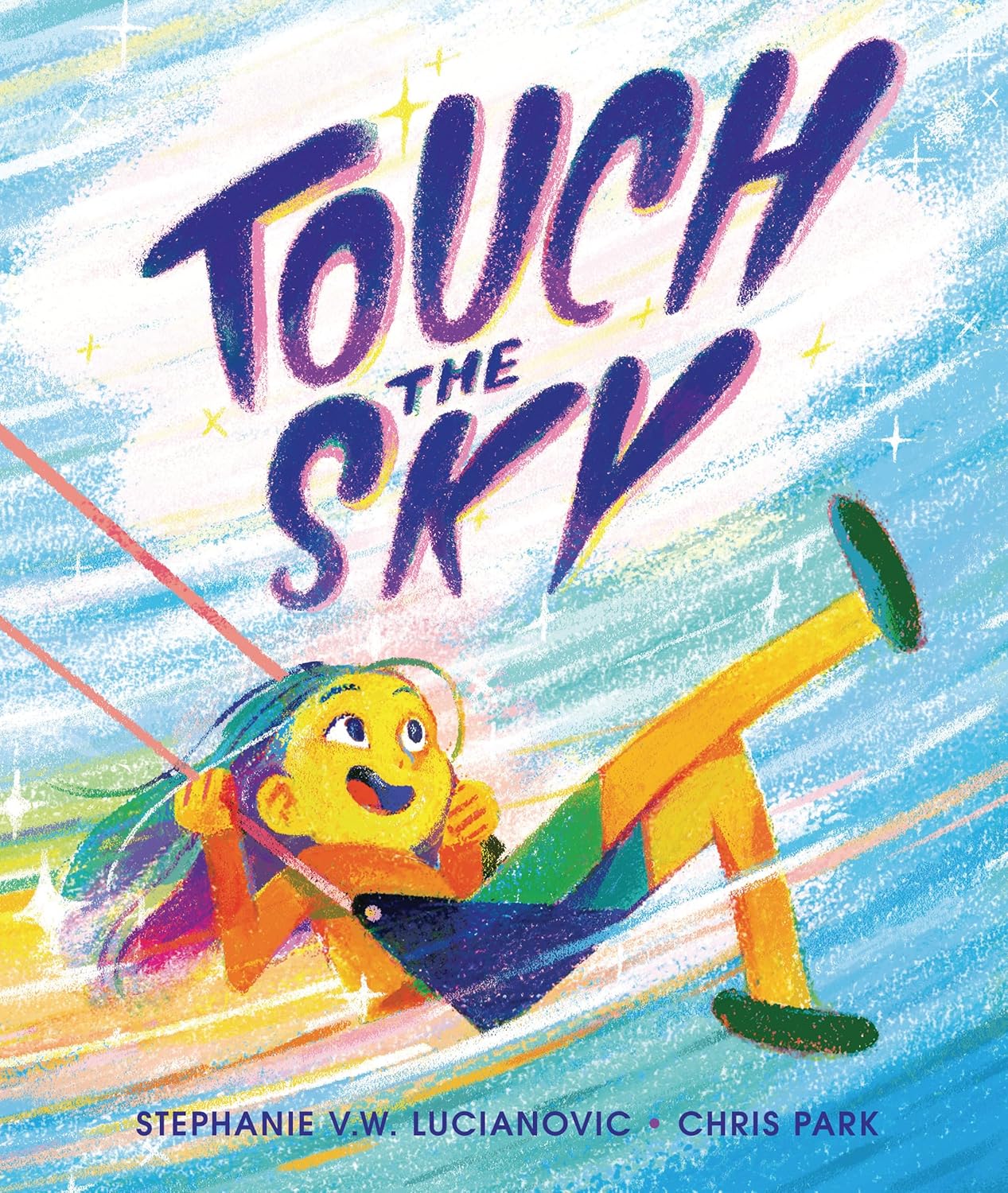
celebrate-picture-books-picture-book-review-touch-the-sky-cover

About the Holiday

World Kindness Day began with a conference in 1997 in which organizations from across the globe met in Japan for the purpose of uplifting and recognizing kindness on a global scale. From this meeting they created a “Declaration of Kindness” and, later, a nonprofit called the World Kindness Movement was formed to support and honor community-scale kindness initiatives. Kindness on any scale, on any day, is important to celebrate. To recognize today’s holiday, we follow a story that shows how just a touch of kindness from another person and a will to persist can help one child reach for the stars and, just maybe, end up touching the clouds. 

Thank you to Carolrhoda Books, an imprint of Lerner Publishing Group, for sharing a copy of Touch the Sky with me for review consideration. All opinions on the book are my own.

Review by Dorothy Levine

Touch the Sky

Written by Stephanie V.W. Lucianovic | Illustrated by Chris Park

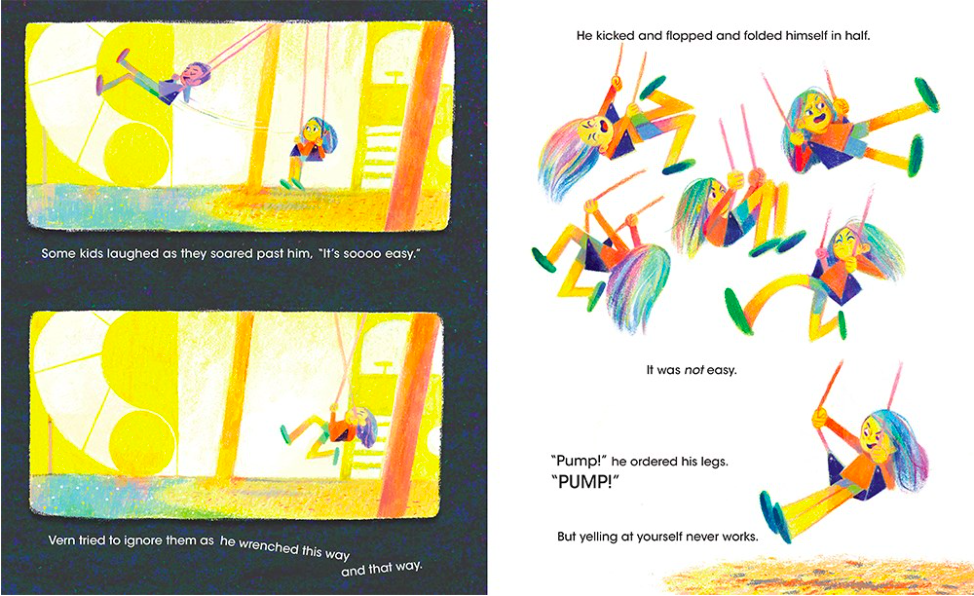
When Vern visits the playground, he yearns to be able to swing like the other children do, “to be one of the kids who swooped until their toes touched the sky.” The only problem is Vern does not (yet) know how to pump. And as much as he tries, yanking his body this way and that, ordering his legs with a scream, nothing seems to work. While Vern tries, other children on nearby swings laugh and swoop by him. 

celebrate-picture-books-picture-book-review-touch-the-sky-Vern-attempts-pumping

Image copyright Chris Park, 2024, text copyright Staphanie V.W. Lucianovic. Courtesy of Carolrhoda Books.

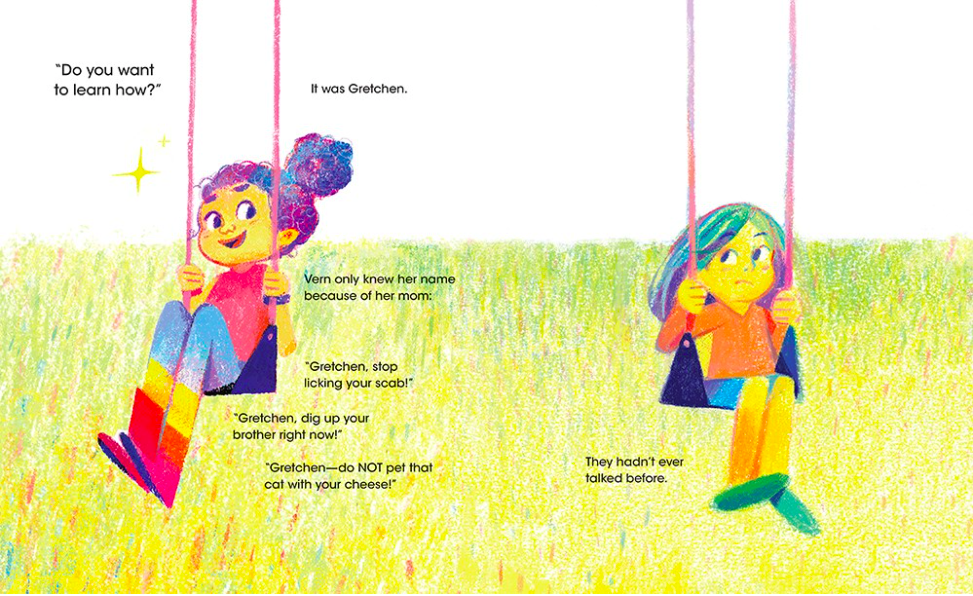
Vern is just about ready to give up, when Gretchen comes along. Even though Gretchen and Vern have never played together, Gretchen confidently snags the swing next to Vern and asks, “Do you want to learn how?”

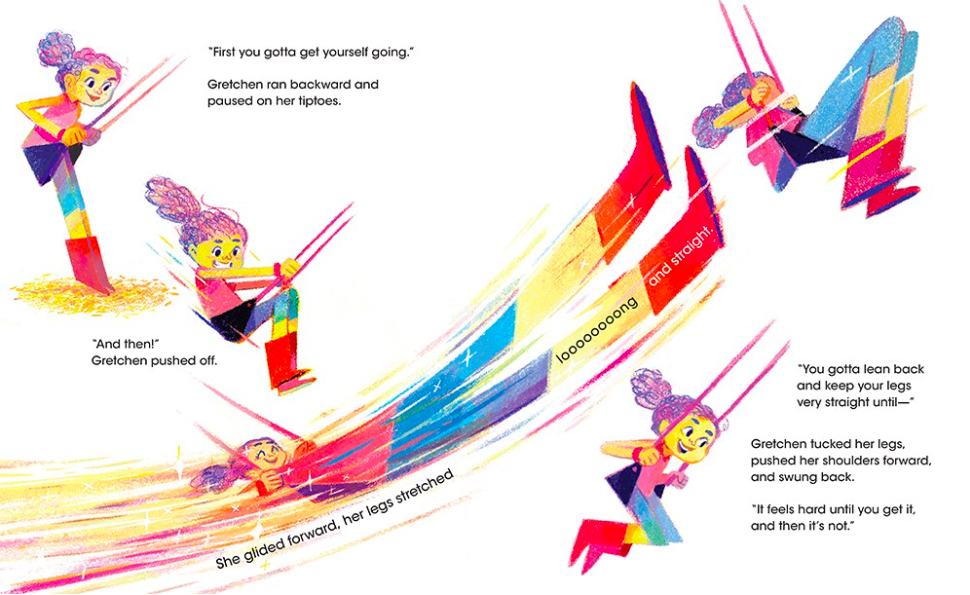
Through many attempts of running, pushing, swooping and trying again, Gretchen coaches and encourages Vern. When her verbal instructions land Vern in the wood chips a few too many times, she switches strategies, standing next to his swing and doing the motions with her own body upright.

celebrate-picture-books-picture-book-review-touch-the-sky-Gretchen-meets-Vern

Image copyright Chris Park, 2024, text copyright Staphanie V.W. Lucianovic. Courtesy of Carolrhoda Books.

Just as Vern starts to make progress, Gretchen must leave. Vern is left with a tough choice: to keep trying on his own or give up. When he decides to continue, the motions Gretchen taught tiptoe down the page along with Vern “Run / Hop / Lean / Stretch / Sweep / Pull / Tuck / Swing” until finally, wonderfully “He [takes] flight with the birds.”

The story then ends with this reminder of the cyclical nature of kindness: After a moment of basking in the meditative motion of pumping, Vern notices another kid in Gretchen’s swing watching him enviously. He repeats what Gretchen said when he felt stuck: “‘It feels hard until you get it, and then it’s not…Do you want to learn how?’”

celebrate-picture-books-picture-book-review-touch-the-sky-Gretchen-teaching

Image copyright Chris Park, 2024, text copyright Staphanie V.W. Lucianovic. Courtesy of Carolrhoda Books.

Touch the Sky brings to light a hurdle (learning to swing) that is common for many young folks but not often discussed in day-to-day life or in a picture book. While some new skills come with lessons (swimming, learning to ride a bike, reading) learning to swing is a challenge that children are often left to master on their own. Lucianovic creatively and accurately captures the process of learning to pump; her verbal instructions are catchy, succinct, and clear to follow. The composition of the words on the page mirrors the learning to pump process—sometimes twisting around like chains of a swing and other times flying colorfully across whole spreads. The story is centered in realistic dialogue, with age-appropriate humorous moments for readers (like when Gretchen’s mother admonishes her for petting a cat with cheese). The story is both literal and lyrical. Sweeping imagery of swinging for the first time adds a thrilling aspect to the tale.

Park’s illustrations add to the magical feeling of first coasting through a new skill. The illustrations are largely in crayon which gives the images a textured, child-like feel, adding a sense of wonder to the scenes. The pages of instructions include zoomed-in panels for readers to watch each step separately. These panels begin jumbled but then sort out into organized squares as Gretchen’s steps to pumping become clearer to Vern. Park’s use of rainbows and tiny stars when Vern’s situation metaphorically and literally begins to look up immerses readers in the journey he takes to “touch the sky.” 

A heartfelt tale of perseverance and kindness that can be appreciated by all who have struggled and received support from unlikely places, Touch the Sky invites readers to keep trying and to offer helping hands to others when they can. The book would be an excellent addition to home, public, and school libraries.

Ages 5 – 9

Carolrhoda Books, 2024 | ISBN 978-1728460451

About the Author

Stephanie V.W. Lucianovic writes books in the San Francisco Bay Area surrounded by a few kids, a few cats, and one husband. Her work includes The End of Something Wonderful, Hello Starand The League of Picky Eaters. Visit her at stephanielucianovic.com.

About the Illustrator

Chris Park has been a professional illustrator for over twelve years. Some of his previous clients include TBS, Team Coco, Rolling Stone, American Greetings Co., Cloudco Entertainment, Pro Publica, Sleeping Bear Press, Usborne Publishing and Lightspeed Magazine. He co-authored and illustrated his the picture books Little Sock and Little Sock Makes a Friend with his wife Kia. Chris lives in Minnesota with his wife and two sons. Visit him at chrispark.com.

World Kindness Day and World Kindness Week Activities

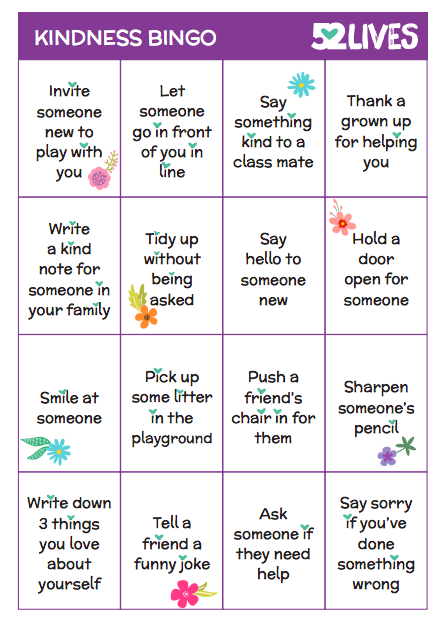
celebrate-picture-books-picture-book-review-school-of-kindness-bingo-card

Courtesy of the School of Kindness.

Kindness Bingo

Invite your child or class to spend World Kindness Day, World Kindness Week, or any day playing Kindness Bingo from the School of Kindness at 52 Lives with this game that includes 30 bingo cards, each containing 16 acts of kindness. Visit the School of Kindness website to learn more about their teaching resources.

Also available for free download is the World Kindness Day Pack, which also includes activities that connect to Anti-bullying week, which this year coincides nicely with kindness week.

celebrate-picture-books-picture-book-review-touch-the-sky-cover

You can purchase Touch the Sky from these booksellers

Amazon | Barnes & Noble | Bookshop (to support your local independent bookstore)

Picture Book Review
November 8 – National STEM/STEAM Day

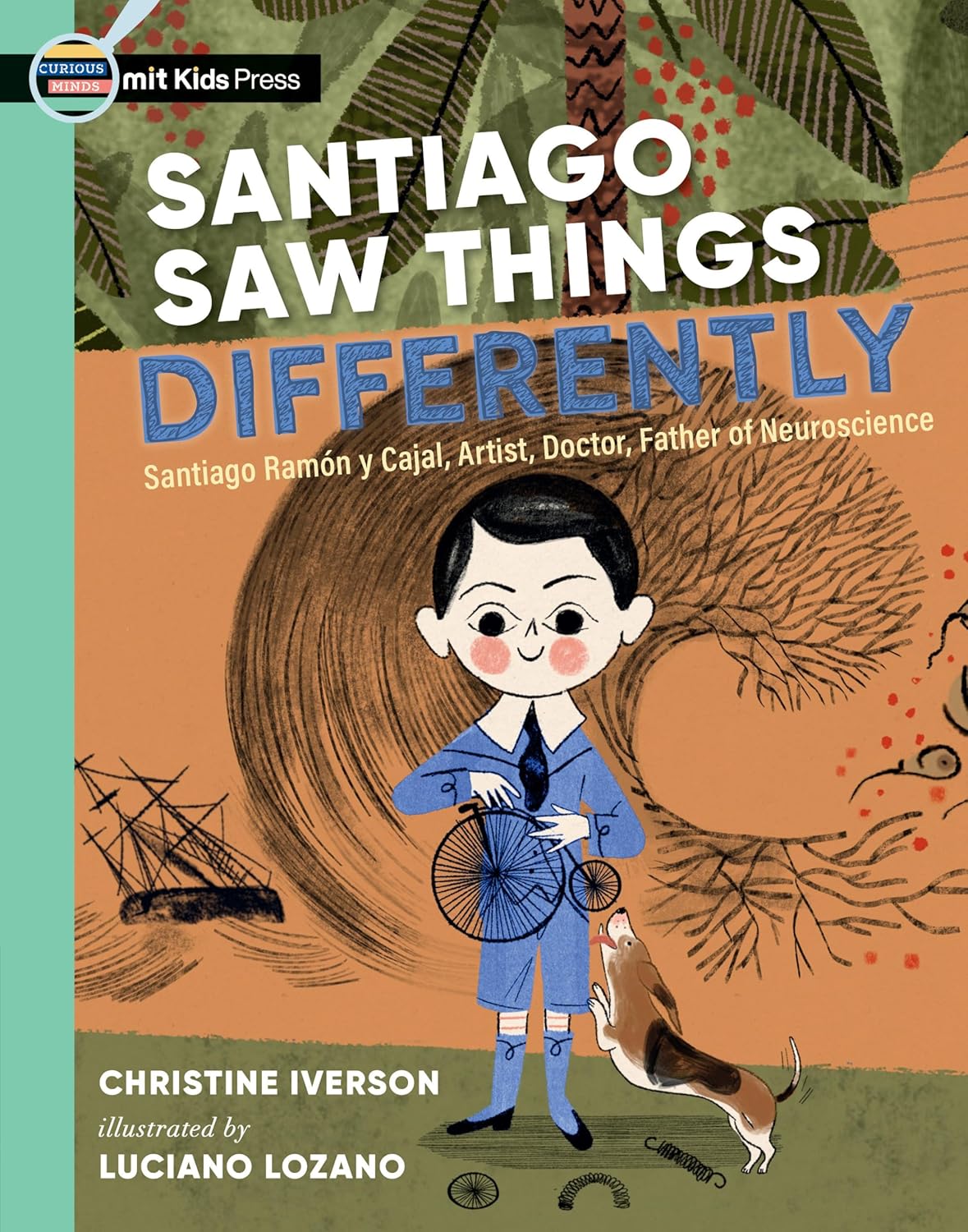
celebrate-picture-books-picture-book-review-santiago-saw-things-differently-cover

About the Holiday

November 8th is National STEM/STEAM Day. This holiday was founded in 2015, and the date was partially chosen for its secret play on words: “NOV 8” can be read as (in)novate! On this day, we highlight the importance of science, technology, engineering, art, and math in education and society at large. This holiday is also meant to uplift voices and perspectives that are often given less representation in STEAM careers and fields of study.

On this National STEM/STEAM Day we review a biography of Santiago Ramón y Cajal, Father of Neuroscience. Despite many people discouraging him along his journey Ramón y Cajal found ways to merge his love for art and observation with his scientific background to create new and important discoveries. 

Reviewed by Dorothy Levine

Santiago Saw Things Differently: Santiago Ramón y Cajal, Artist, Doctor, Father of Neuroscience

Written by Christine Iverson | Illustrated by Luciano Lozano


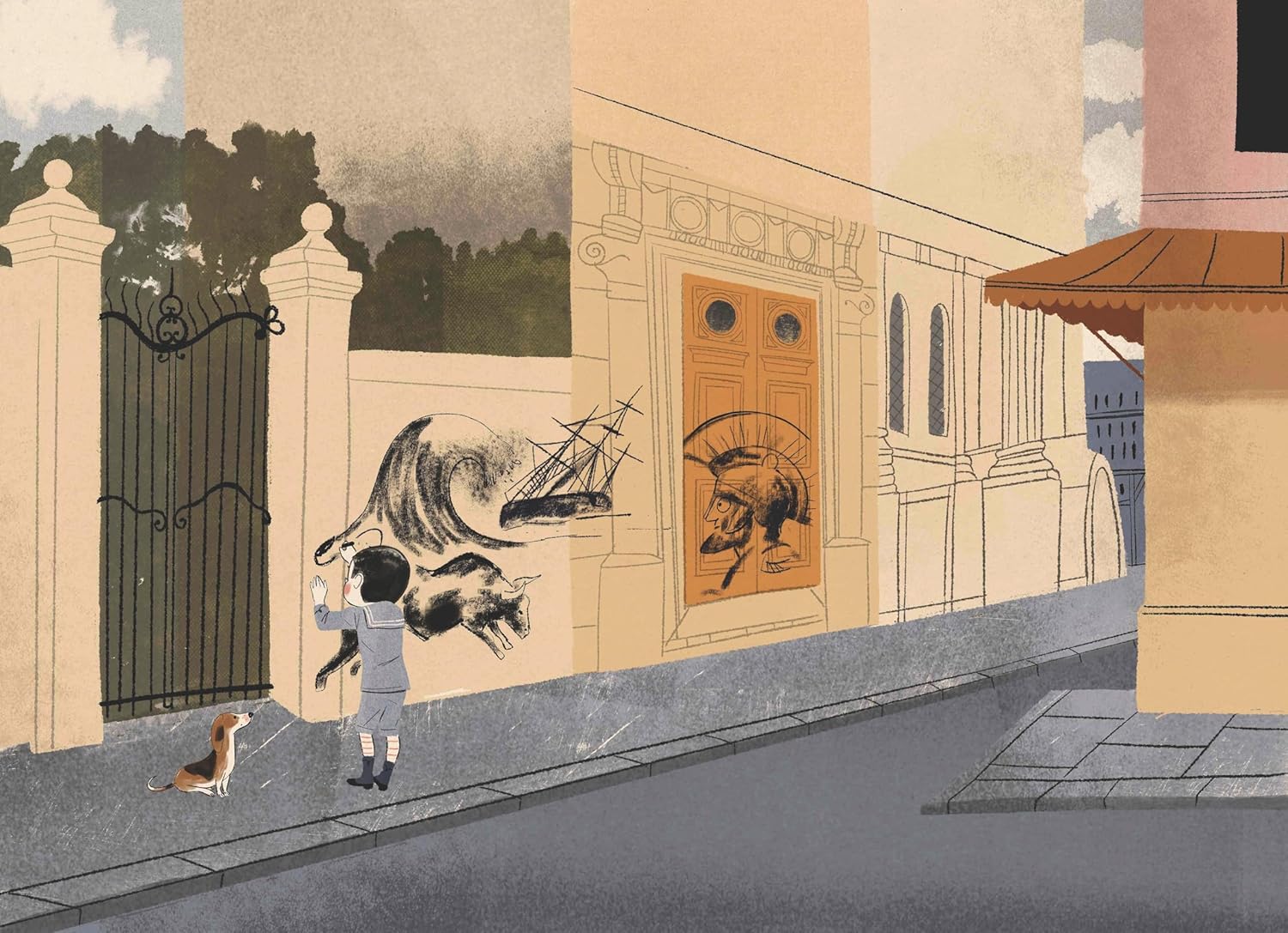
Santiago always had a passion for creating and exploring. As a child in Spain, he spent time creating music and inventing toys with any scraps he could find, drawing elaborate charcoal scenes across neighbors’ walls and racing around his grandfather’s loom shop. There, as “he twirled and tangled woolen thread…. Dust sparked and soared in a kaleidoscope of motion.” Unfortunately, not everybody understood the magic of his creations. Neighbors, and particularly Santiago’s father, believed Santiago’s public displays of art were more bothersome than intriguing. 

celebrate-picture-books-picture-book-review-santiago-saw-things-differently-drawing-on-wall

Image copyright Luciano Lozano, 2024, text copyright Christine Iverson, 2024. Courtesy of MIT Kids Press.

As Santiago’s father ushered him through many different schools, aiming to leave room for no “distractions” from study, Santiago held on to his artistic practice and passion for exploring the natural world in secret. When once admonished for drawing on the margins of his paper, Santiago was forced to spend time in his school’s dark basement. But, in a stroke of luck, “The room was lit by a wisp of light leaking through an old shutter—just enough for drawing.” Another time, stuck in a classroom with no paper, Santiago used his pencil to unlock the door. 

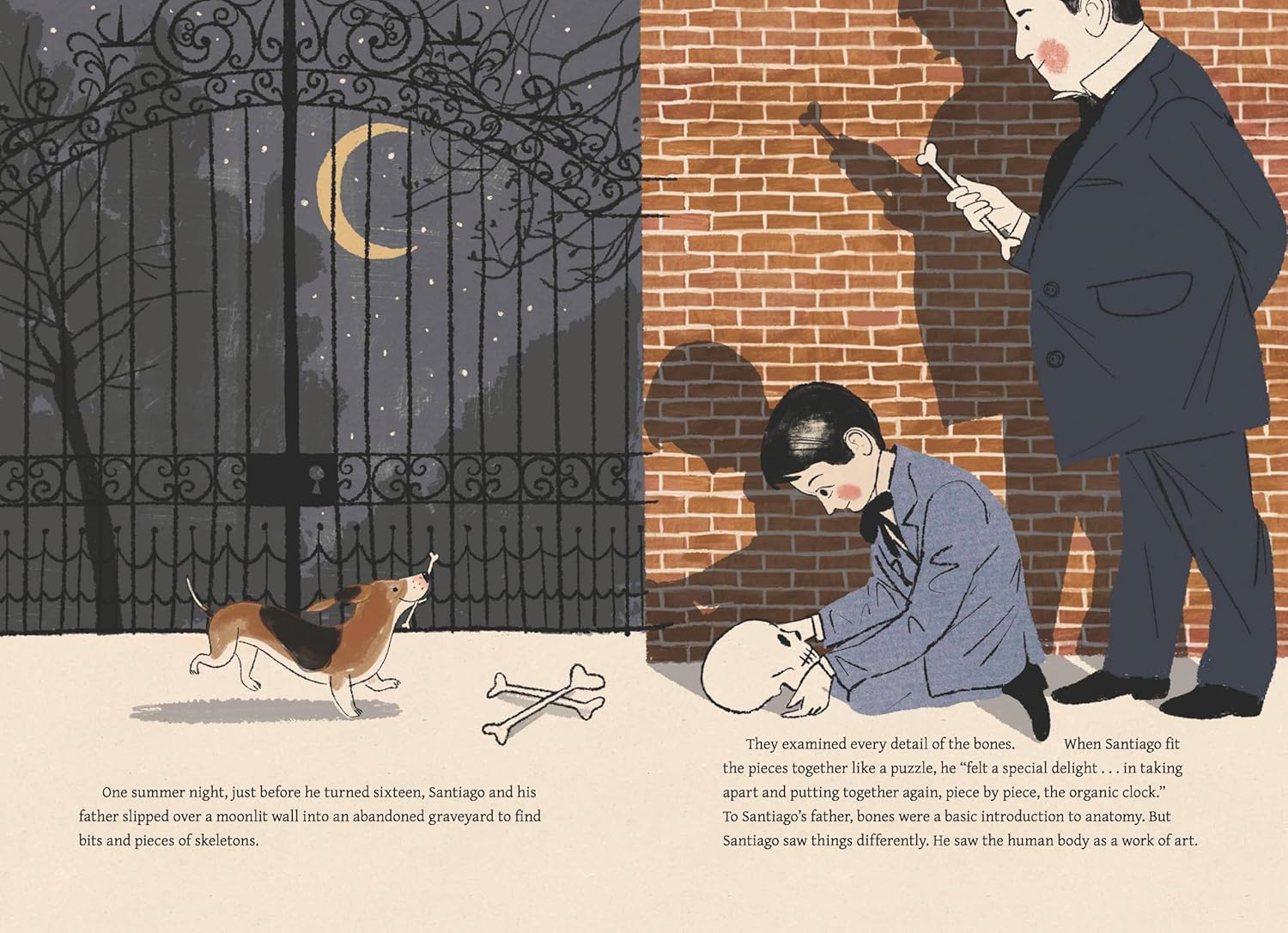
As he grew up, Santiago developed a specific fascination for the human body. At medical school, Santiago observed the way blood vessels in our bodies mirror the canals of the Ebro River near his university. “He saw the human body as a work of art,” a work that replicates in nature and is connected more broadly to the world at large.

celebrate-picture-books-picture-book-review-santiago-saw-things-differently-graveyard

Image copyright Luciano Lozano, 2024, text copyright Christine Iverson, 2024. Courtesy of MIT Kids Press.

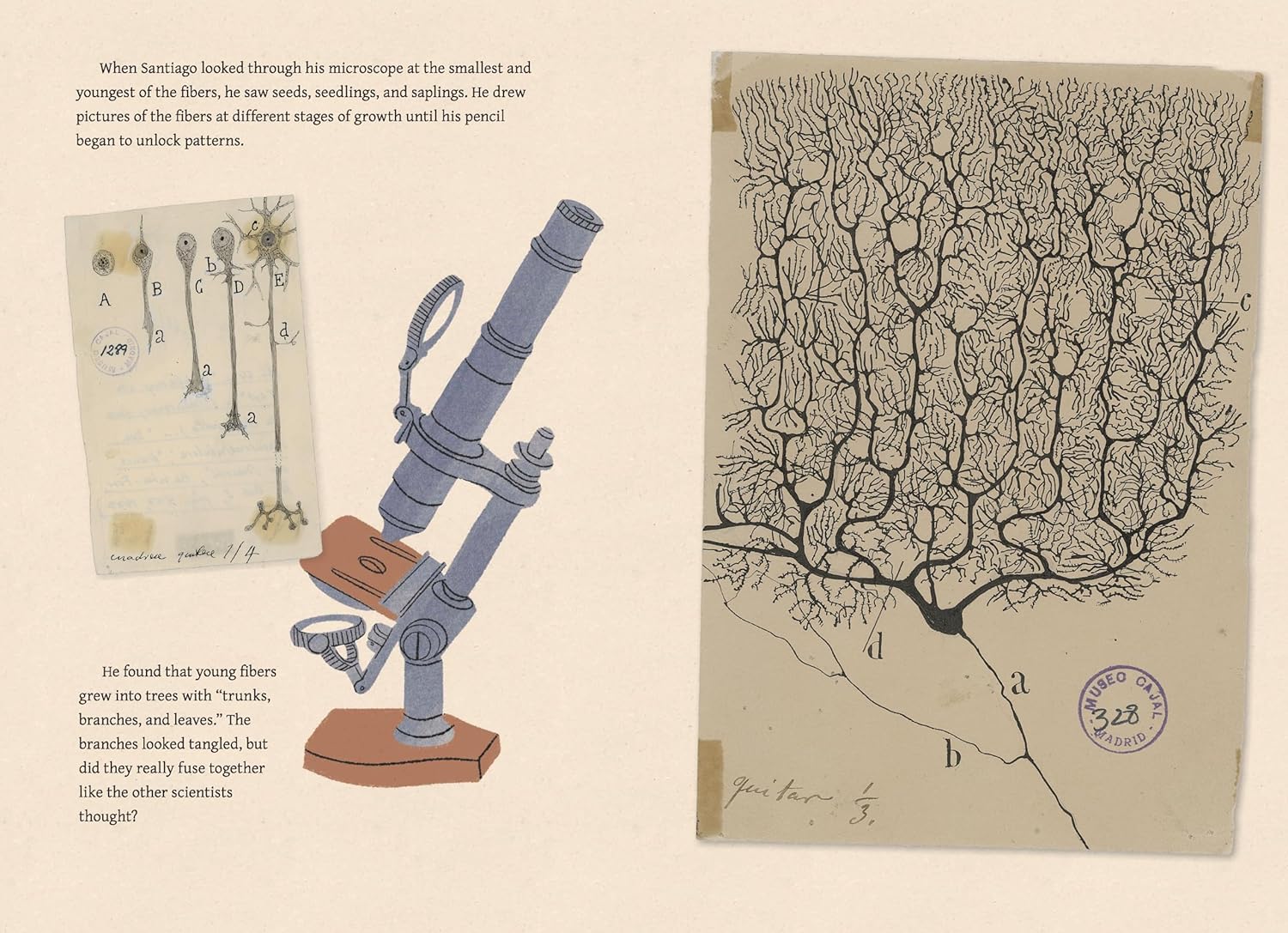
Years later, when scientists were focused on working out how the tiny connectors (or nerve fibers) in our brains worked, Santiago was able to use his microscope and drawing skills to sort out that the fibers spread in a similar fashion to the young trees he had spent so much of his time drawing and observing. With the help of ink stains, study, and lots of drawings of his observations, Santiago drew new conclusions about neurons and cells that helped scientists across the globe to understand the human brain better. 

All because “Santiago saw things differently” he was able to unlock new ways of understanding the brain, gaining him a Nobel prize and the eventual title of the Father of Neuroscience. 

celebrate-picture-books-picture-book-review-santiago-saw-things-differently-microscope-view

Image copyright Luciano Lozano, 2024, text copyright Christine Iverson, 2024. Courtesy of MIT Kids Press.

Iverson writes a detailed lyrical account of the life of Santiago Ramón y Cajal that is accessible for a wide range of readers. For interested older audiences, the book includes extensive back matter on the Anatomy of a Neuron, more biographical information on Santiago Ramón y Cajal and an explanation of the science behind one scene in the story. 

Interwoven with quotes and images from Ramón y Cajal’s original works are Lozano’s masterful swirling illustrations of Santiago and his environment as they both grow and change. Throughout the story, Lozano inserts details for readers to observe and make their own discoveries, such as the dog who follows Santiago throughout his childhood. Lozano illustrates the story mainly in blushing pinks, sky blues and light-yellow browns with accented vibrant greens and darker colors signifying location changes and key turning points in the story. There is a subtle humor helping to lighten the darker parts of Santiago’s life. The tale closes with the image of Santiago face-to-face with a cartoon-like human skeleton (filled with neurons) smiling back at him.

Santiago Sees Things Differently is a celebratory account of innovation, perseverance and appreciation for the often-interdisciplinary nature of outside-of-the-box thinkers. The title page opens with a poignant quote from Santiago Ramón y Cajal himself, encouraging “young investigators” to keep exploring the vast unknown of the natural world and to remember that what is left undiscovered is always larger than what has been already found. Santiago Sees Things Differently provides readers with the empowering knowledge that new perspectives are necessary for new discovery. And that while difference is often looked down upon, it is, often, in fact a superpower. 

(This book is available in both Spanish and English versions)

Ages 5 – 9

MIT Kids Press, 2024 | ISBN 978-1536238334

About the Author

Christine Iverson is a physical therapist with a strong interest in neural pathways. She holds a BS in history from the United States Military Academy at West Point, a doctoral degree in physical therapy from Baylor University, and an M.Ed. with a focus in children’s literature from Pennsylvania State University. She lives in Alexandria, Virginia. Visit her at christineiversonwrites. com.

About the Illustrator

Luciano Lozano is a Spanish author, illustrator, and graphic artist. He is the creator of several picture books, including Mayhem at the Museum: A Book in Pictures, and the illustrator of many others, including I (Don’t) Like Snakes by Nicola Davies. He lives in Spain. Visit him at lucianolozano.com.

STEM/STEAM Day Activities

celebrate-picture-books-brain-coloring-page


Neuroscience Coloring Pages

Follow Santiago’s footsteps by coloring pictures of different parts of the brain and scientific tools used in the story with these coloring pages from the University of Washington. You’ll also find brain games, plus loads of printable puzzles, worksheets, bookmarks, and even treasure hunts here too! (Coloring pages available in English and Spanish!)


Build a Hands-on Model of a Neuron

Have fun and learn about neurons by making a model! You can use almost any kind of material you like—clay, perler beads, bread dough, or even candy—to make it. So put on your thinking cap and get creative! You’ll find lots of ideas on this page from The University of Washington’s Neuroscience for Kids Page.

celebrate-picture-books-picture-book-review-santiago-saw-things-differently-cover

You can purchase Santiago Saw Things Differently at these booksellers

Amazon | Barnes & Noble | Bookshop (to support your local independent bookstore)

November 7 – It’s Picture Book Month

celebrate-picture-books-picture-book-review-when-you-find-a-rock-cover

About the Holiday

November is Picture Book Month, a month to remind us of the importance of picture books as a source of learning, growing and connecting for adults and children alike. While every day is a day to remember and celebrate our love for picture books, we challenge you this November to check out a few new titles, to share a book with a loved one, and keep on reading! To celebrate this month, we highlight a story that draws children and adults together in a meditation on the importance of connection, exploration, play and time for contemplation—all tied together by rocks!

I’m thrilled to welcome back Dorothy Levine, who has recently graduated from college and always lends a fresh, astute, and thoughtful perspective to her reviews. To learn more about Dorothy see our Welcome page.

Review by Dorothy Levine

When You Find the Right Rock 

Written by Mary Lyn Ray | Illustrated by Felicita Sala


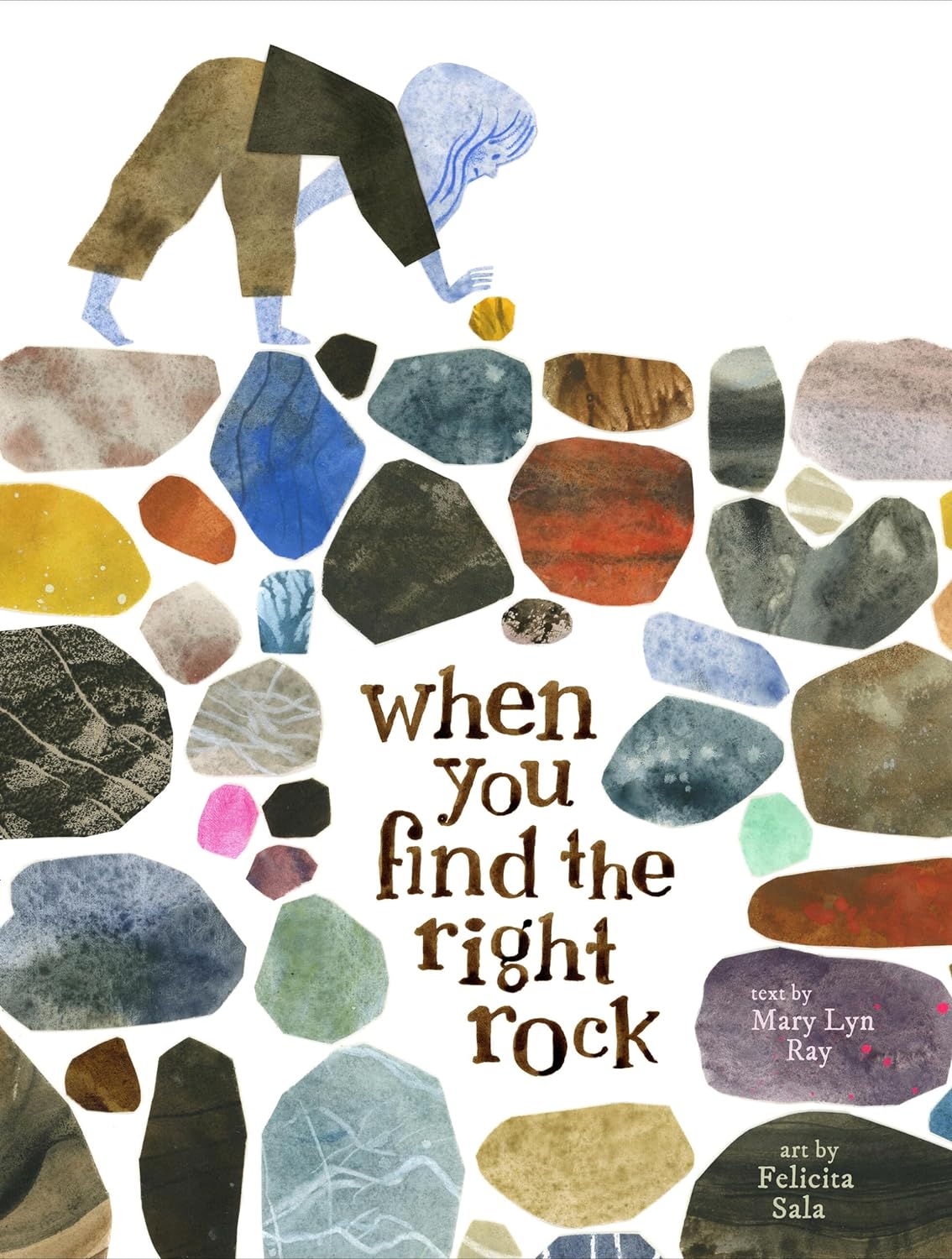
Calling all collectors, connectors, climbers, and thinkers. Find a seat to get cozy in as we mosey our way through the narrative of When You Find the Right Rock. Some of us tend to walk with our eyes cued into the scenery around us. Perhaps you are one to scan the ground for treasures as you walk or skim the skyline for birds. In a world of go-go-go, children and adults alike are often discouraged from taking the time to pause and ground themselves in place, to notice the details of the wide world that connect us all.

One of these connectors is rocks, particularly the biggest rock of all, the one that lives “far under grass and trees / and houses and schools,” the rock that Lyn Ray describes as “one big enough for / everyone to stand on.”

celebrate-picture-books-picture-book-review-when-you-find-a-rock-bolders

Image copyright Felicita Sala, 2024, text copyright Mary Lyn Ray, 2024. Courtesy of Chronicle Books.

The story begins as a continuation of the title sentence: “You may try to go around it, / Or to just keep thinking whatever / you were thinking.” Told from the second person “you” view, readers are immediately able to place themselves in this story. Artist Felicita Sala depicts a young child staring out at us, grasping hands with an adult and, facing forward, in a rush toward their destination.

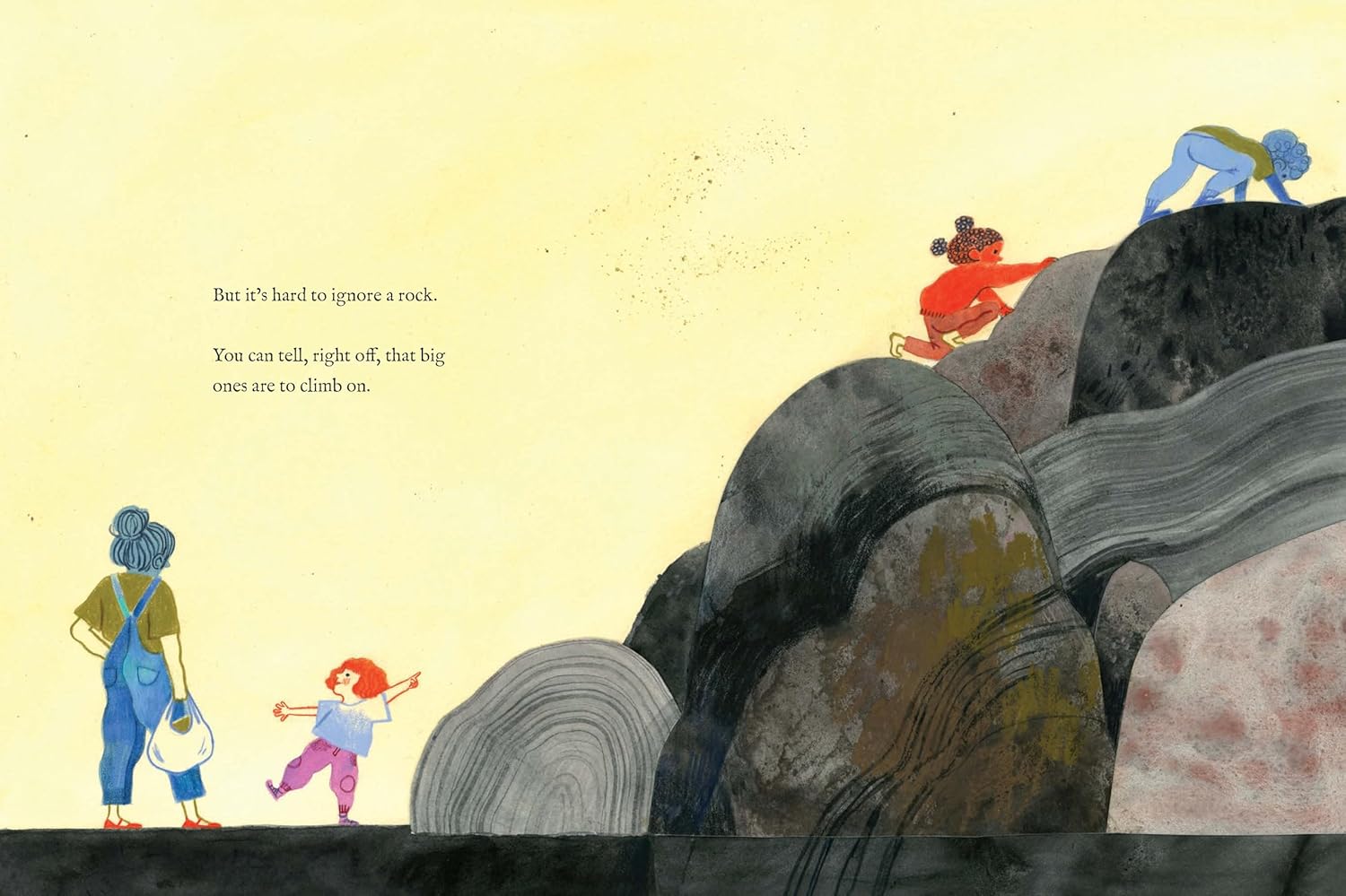
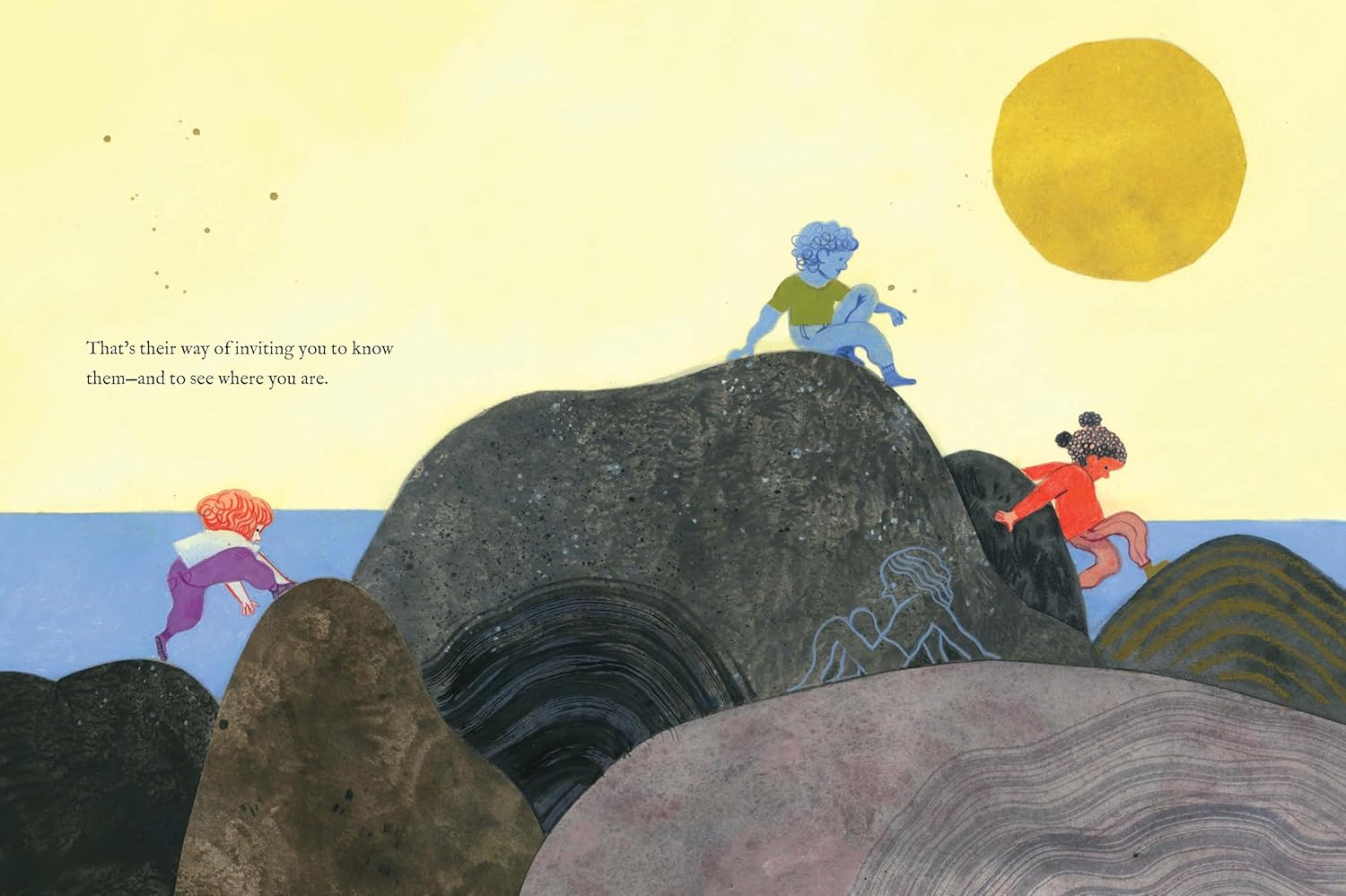
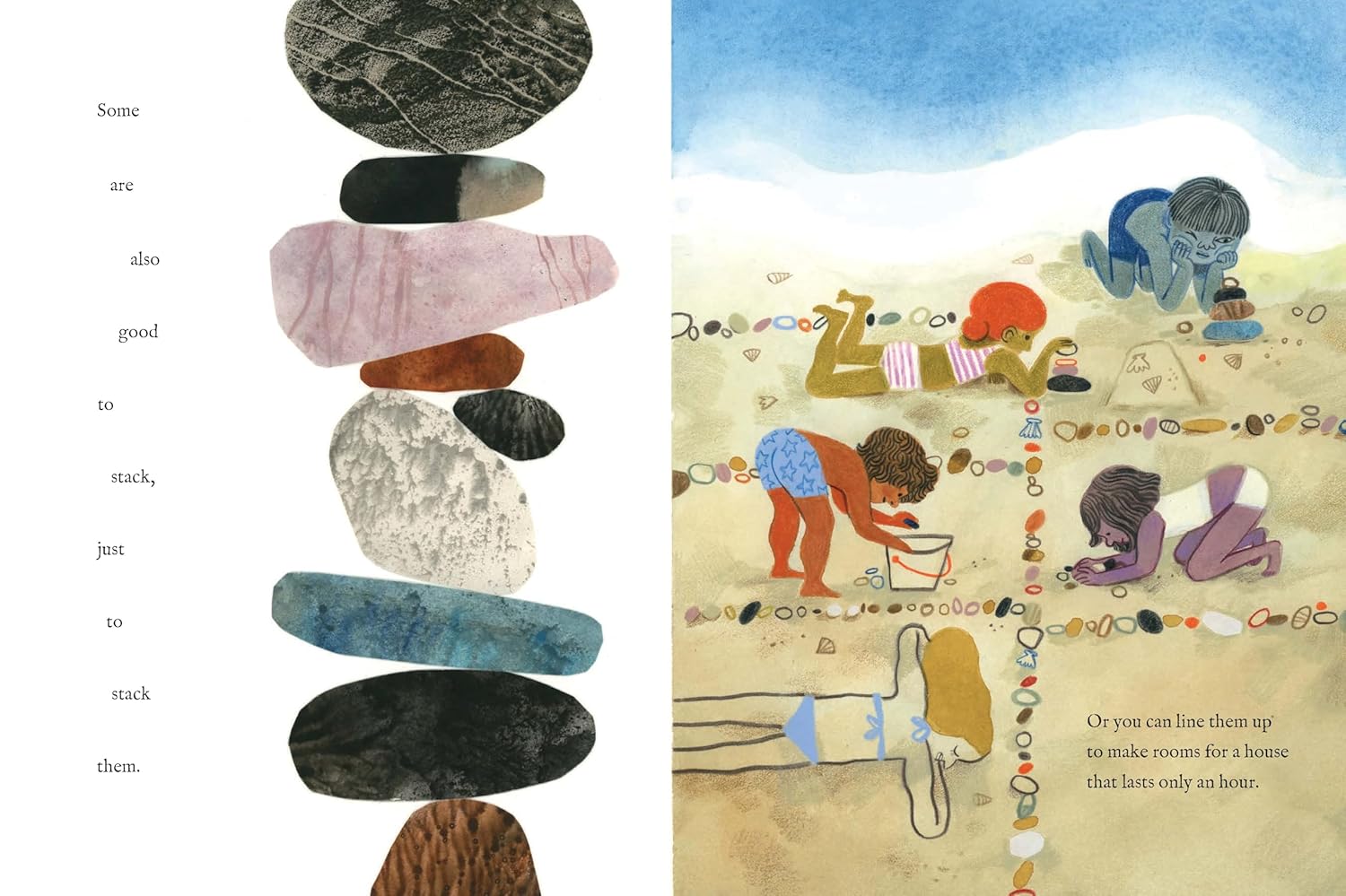
“But it’s hard to ignore a rock. You can tell, right off, that big ones are to climb on. That’s their way of inviting you to know them—and to see where you are.” When the child gestures to a large group of boulders, her adult puts a hand on her hip. Regardless, the child begins to climb and is met by others halfway up the rock. As the children climb, readers are lifted onwards and outwards from the original illustrated narrative, as Lyn Ray takes us through different sizes of rocks and some of the many fun and creative possibilities of what a rock can be and do.

celebrate-picture-books-picture-book-review-when-you-find-a-rock-climbing

Image copyright Felicita Sala, 2024, text copyright Mary Lyn Ray, 2024. Courtesy of Chronicle Books.

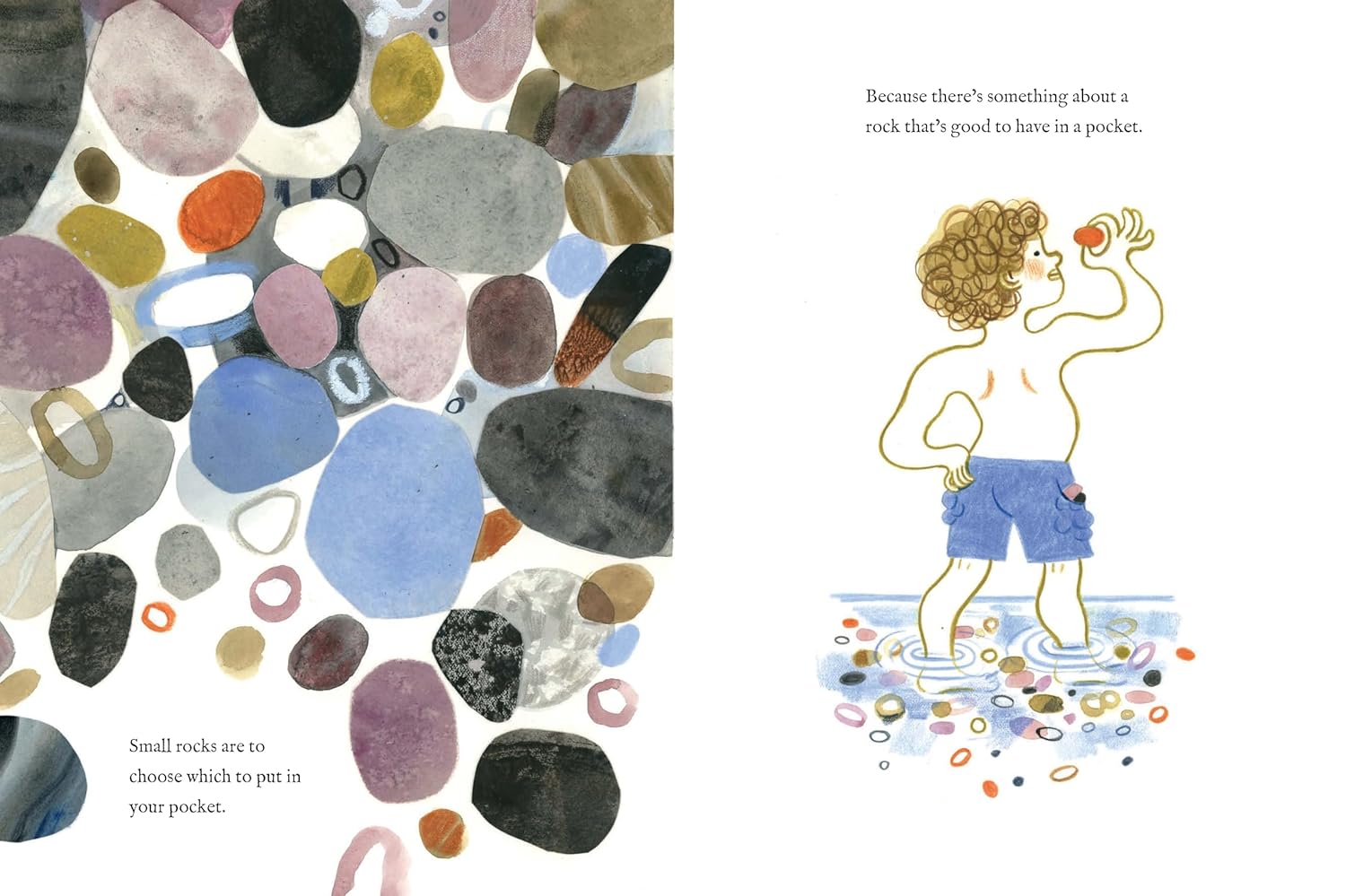
The purposes range from playful (to build a room of a pretend house on the beach) to explorative (“to show you / what heavy feels like”) and even philosophical (medium rocks are for perching on to see how your view of the world can change). Each spread shows a diverse cast of children. All these options hold equal weight. Lyn Ray writes: “Sometimes people might think you’re doing nothing, / same as they might think the rock is doing nothing. / But you and the rock know they’d be wrong.”

celebrate-picture-books-picture-book-review-when-you-find-a-rock-pocket

Image copyright Felicita Sala, 2024, text copyright Mary Lyn Ray, 2024. Courtesy of Chronicle Books.

The story then zooms out to a greater metaphorical sense of finding and grounding oneself in a world of shifting social relations and chaos. Lyn Ray compares finding something special or surprising within yourself (“just when you were maybe feeling sort of ordinary”) to finding a surprising rock in a less exciting bunch of pebbles. Readers are encouraged to reflect and hold on to these moments of inner finding: “You’ll want to keep that discovery in the place inside you where you remember certain things—Same as, maybe, you keep your special rocks somewhere.”

Readers are advised to take the time to “say hi to each rock you meet.” Because maybe if you find a rock that feels right in your hand, “you can feel like you’re holding hands with all the wide world.” On the final spread, we return to the scene of the child with the adult. This time, the child holds a small rock in one hand and rushes to hold the hand of her adult with her other. The two smile at each other, caught in a moment of connection.

celebrate-picture-books-picture-book-review-when-you-find-a-rock-stacked

Image copyright Felicita Sala, 2024, text copyright Mary Lyn Ray, 2024. Courtesy of Chronicle Books.

Illustrator Felicita Sala draws readers into the magic of rocks and relationships with others with detailed watercolor and colored pencil spreads that draw our focus from tiny to large scale as the words follow suit. Brightly colored pages are contrasted with darker-toned images where a rock or the child protagonist are the only ones highlighted. The illustrations masterfully weave in an under-narrative of the child and adult not told in the words, but on an emotional journey of their own, even in the singular one walk depicted.

The simplicity of the cover text, with the title displayed in the middle of a jumble of colorful textured rocks of different shapes and sizes—they even bump out of the cover in a glossed shine!—and the small choice to simplify the language to “text by” and “art by” rather than written and illustrated reflects the intentionality behind the beautiful simplicity of Mary Lyn Ray’s story as a whole; you don’t need to be a fancy geologist to admire rocks; you don’t need a reason beyond joy and admiration to stop and look at the world around you. Just like you don’t need to be a child to enjoy a picture book or a rock-lover to enjoy the story of When You Find the Right Rock.

Ages 3 – 8

Chronicle Books, 2024 | ISBN 978-1797214580

About the Author

Mary Lyn Ray has written many acclaimed books for children, including StarsPumpkinsMudThe Thank You Bookand Go to Sleep, Little Farm. She lives in South Danbury, New Hampshire, on an old farm where there are big rocks and pocket rocks, medium-sized and big, big rocks—all just right for saying hello to. Visit Mary at marylynray.com.

About the Illustrator

Felicita Sala is a self-taught illustrator. She studied philosophy and languages in Australia but then decided she wanted to create pictures. Since moving to Italy, she has worked on a few stop-motion animation projects along with her husband, Gianluca, but her passion lies in making picture books. She gets inspired by nature, children, mid-century illustration, folk art, and architecture. She lives in Rome with Gianluca and their daughter, Nina. Visit Felicita at felicitasala.com.

Picture Book Month Activity

celebrate-picture-books-picture-book-review-rock-collection-activity

Rock Exploration and Collection Ideas


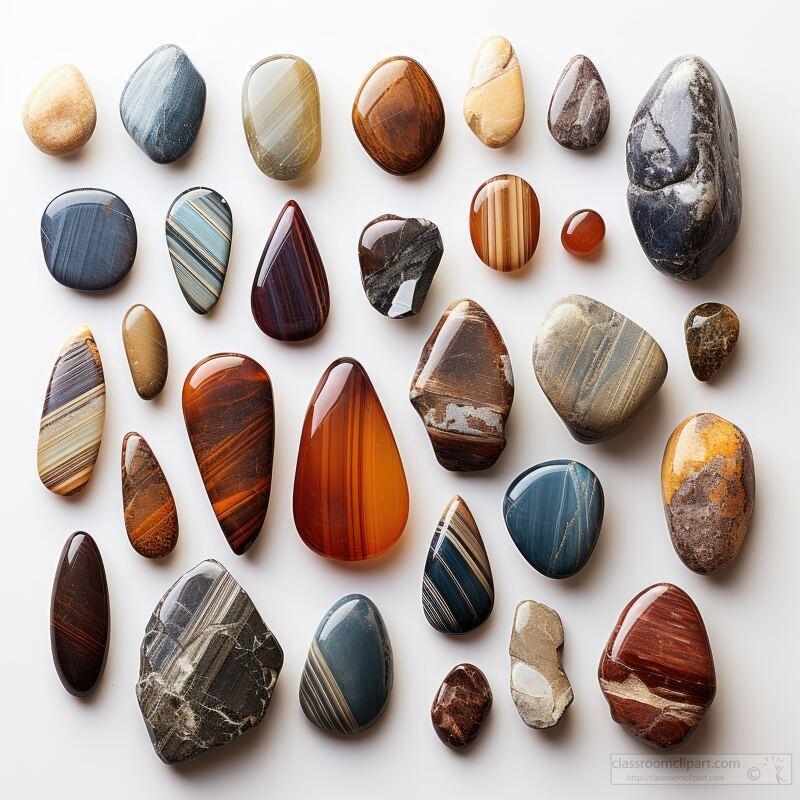
On her website Early Learning Ideas, Jennifer Hier offers kids and adults a variety of ideas for ways to explore and collect rocks with children. Check out her post: 20 Easy Activities with Rocks that Will Make Learning Fun.

celebrate-picture-books-picture-book-review-when-you-find-a-rock-cover

You can purchase When You Find the Right Rock at these booksellers

Amazon | Barnes & Noble | Bookshop (to support your local independent bookstore)

Picture Book Review
November 4 – Get Ready for Christmas Tree Trimming Day

celebrate-picture-books-picture-book-review-everett-green-cover

About the Holiday

Before Santa can put presents under the tree, the pine (or palm) needs to be chosen, and then the real fun begins! Stringing the lights, hanging the ornaments—each one with its own story—and topping it off with a star to turn a regular tree into a Christmas tree is a highlight of the holiday season. Add some hot cocoa, homemade cookies, family stories from Christmases past, and reading new and favorite holiday books, and you have one of the best days of the year.

Thanks go to Random House Books for Young Readers and Barbara Fisch at Blue Slip Media for sharing a copy of Everett Green: The Not-So-Christmas Tree with me for review consideration. All opinions on the book are my own.
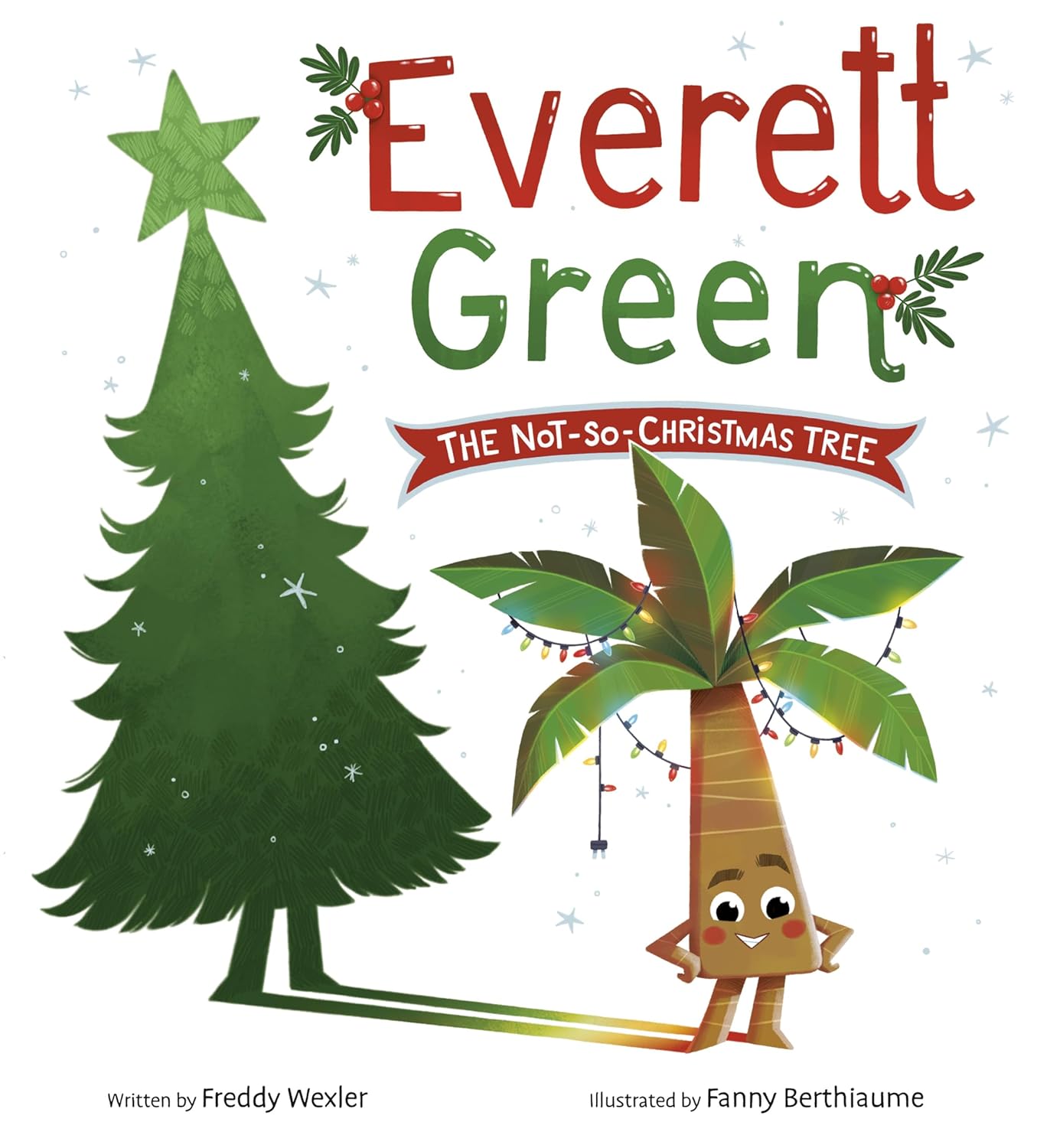
Everett Green: The Not-So-Christmas Tree

Written by Freddy Wexler | Illustrated by Fanny Berthiaume


Everett Green was a born entertainer. His “high notes soared. His dance moves dazzled. His punch lines were perfection.” He dreamed of being a star. But Everett was a palm tree living and working at The Sandy Straw restaurant, where no one seemed to take notice when he took the stage. Everett despaired, thinking there must be more out there somewhere.

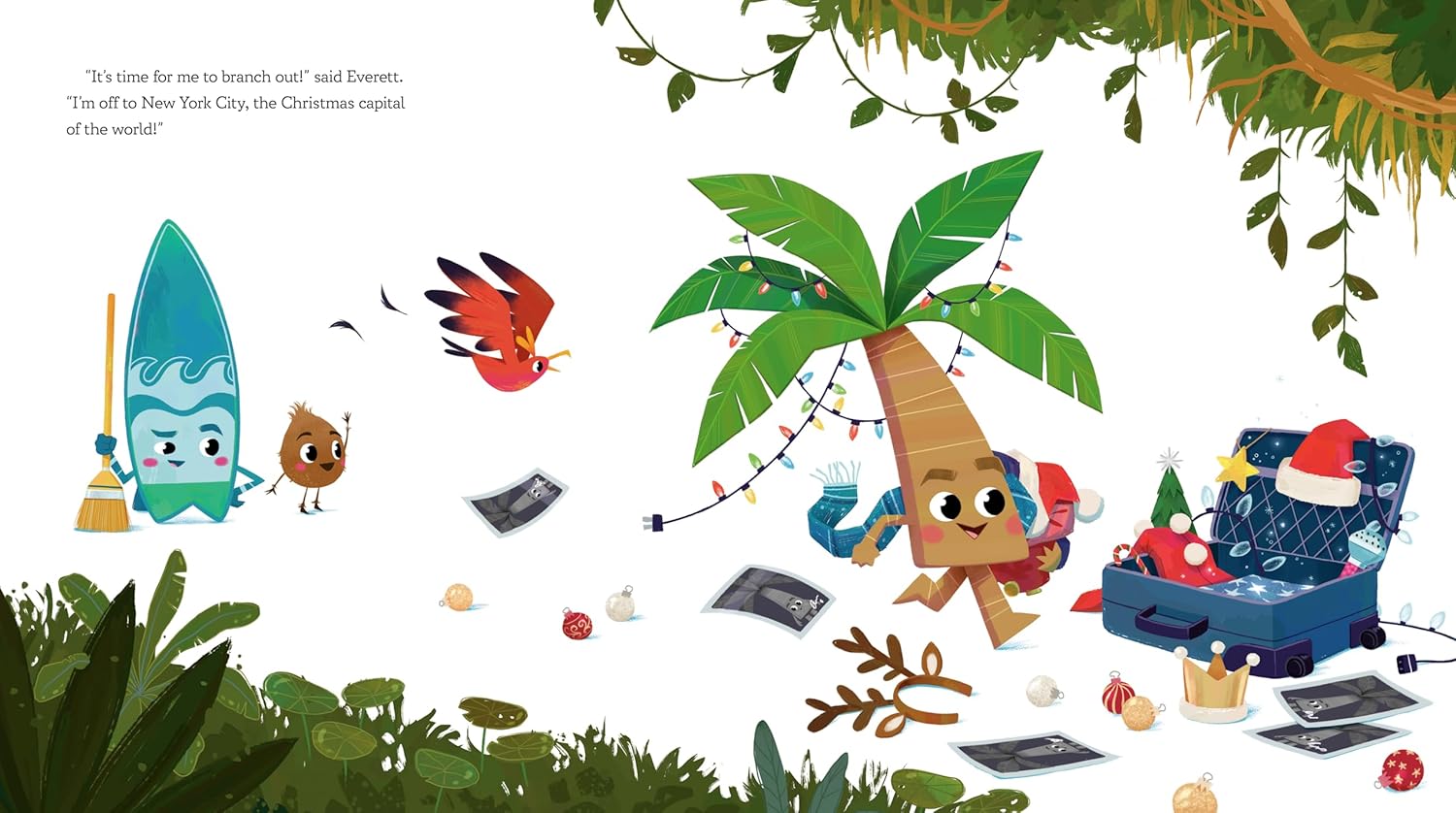
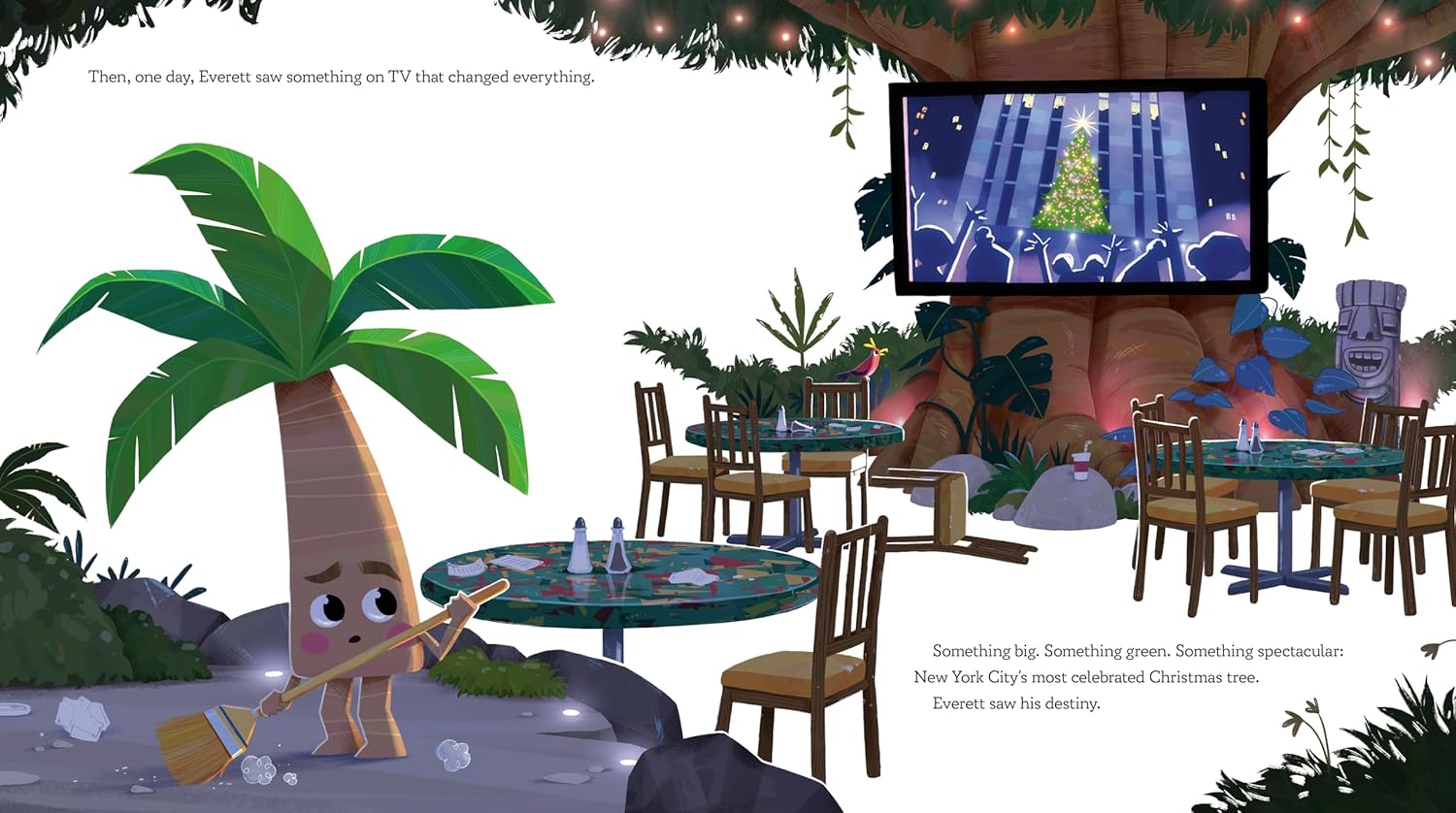
Then one day, while sweeping up after closing time at The Sandy Straw, he saw something amazing on the big screen TV: the Christmas tree lighting spectacular in New York City. Everett was jazzed and decided he was going to be “‘the most famous Christmas tree in the world.'” His friends were skeptical, but Everett threw on a string of colored lights, packed his microphone, a few Santa hats and reindeer headbands, sparkling ornaments, candy canes and other festive baubles, and headed for the airport.
celebrate-picture-books-picture-book-review-everett-green-new-york

Image copyright Fanny Berthiaume, 2024, text copyright Freddy Wexler, 2024. Courtesy of Random House Books for Young Readers.

At the airport, though, Everett ran into trouble at the security line. He didn’t have a ticket, money, or an ID. “Everett was stumped.” What Everett didn’t know was that his friend Bird had stowed away in his fronds and now popped out with a plan. While Bird created a distraction, Everett made a break for the departure gate. When he got there, though, he and Bird learned that all flights to New York were delayed by a snow storm.

All around the airport terminal, people were calling their families with the sad news. Everett was disheartened. If he couldn’t get to New York tonight, on Christmas Eve, he’d “never be a real Christmas tree.” Just then, a little girl and her mother walked by. “‘Mommy, look! A Christmas tree,” the girl said. Her mother disagreed, but the girl told Everett that he looked like a Christmas tree to her.

celebrate-picture-books-picture-book-review-everett-green-everett-packing

Image copyright Fanny Berthiaume, 2024, text copyright Freddy Wexler, 2024. Courtesy of Random House Books for Young Readers.

Everett looked around and saw no other Christmas trees. What he did see were disappointed travelers and shop employees working on Christmas Eve. He grabbed his microphone and took to the walkways. “‘Merry Christmas, Pretzel Palace! Merry Christmas, Gifts to Go!'” He wished everyone a Merry Christmas and made an announcement. “‘Our flight may be delayed, but Christmas is still on! Who’s with me?'” At first, everyone was too busy with their phones to respond. Then the little girl who’d noticed Everett earlier raised her hand. Another raised their hand, and then more.

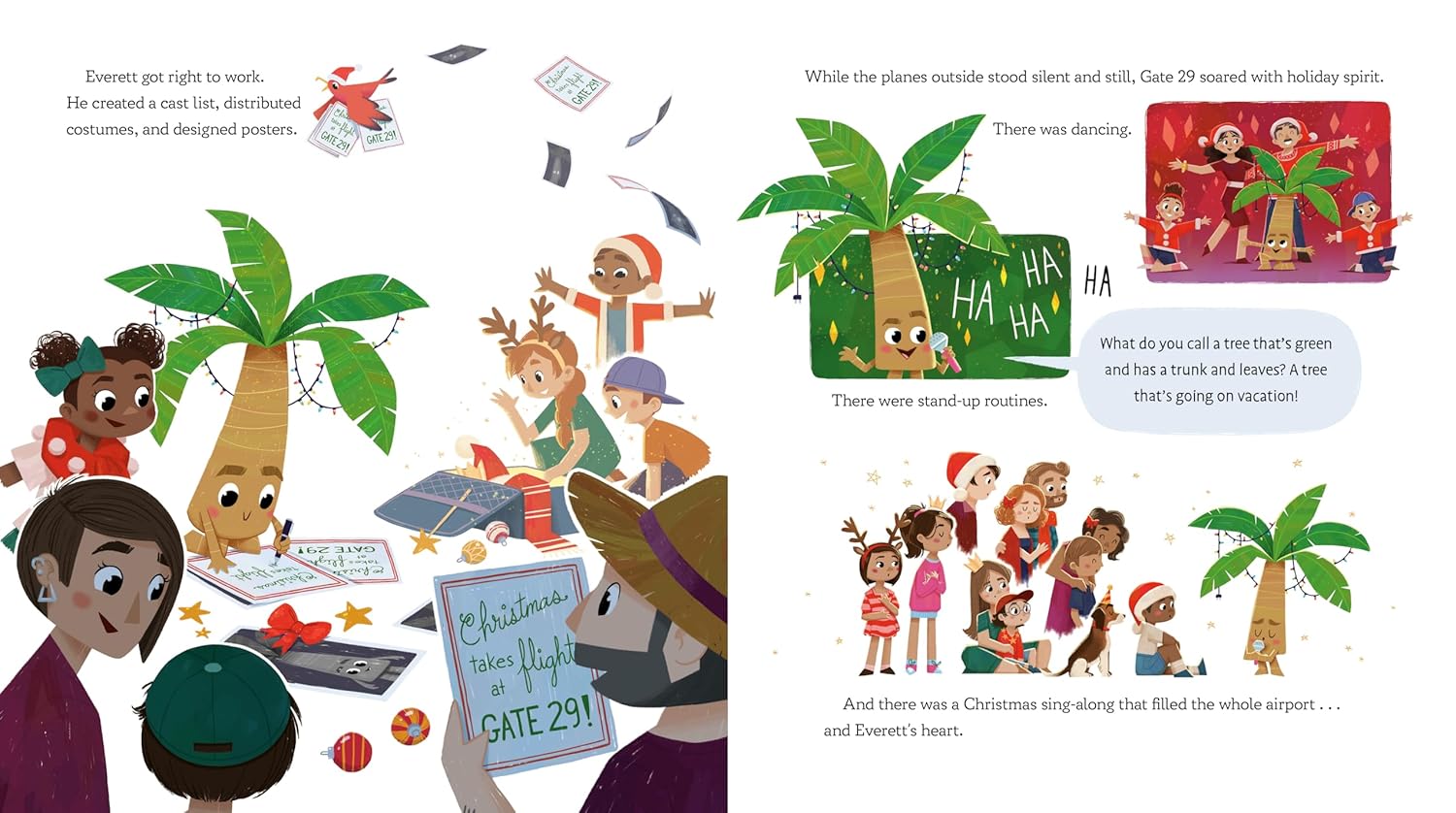
Everett opened his suitcase and began planning a show—”Christmas takes a flight at Gate 29!” Everyone joined in. Some wore the hats and headbands Everett had brought, others hung the ornaments. “While the planes outside stood silent and still, Gate 29 soared with holiday spirit.” Dancing, jokes, a sing-along brought everyone together with the true spirit of the holiday. The little girl even hung a shining star on Everett’s fronds.

Seeing all the joy he’d brought to the stranded travelers, Everett discovered that he didn’t need all the fancy trappings, the celebrity, or the bright lights of the city to feel fulfilled. In fact, he knew where he belonged—spreading happiness at home—at the Sandy Straw—where he realized his destiny to be a real Christmas tree.

celebrate-picture-books-picture-book-review-everett-green-airport

Image copyright Fanny Berthiaume, 2024, text copyright Freddy Wexler, 2024. Courtesy of Random House Books for Young Readers.

As someone who grew up in South Florida, I was excited to see a story that showcases Christmas palm trees. Kids and adults, whether they live in warm climates or cold, will be charmed by Freddy Wexler’s Everett Green, who has stars in his eyes, but more importantly love, creativity, and empathy in his heart. Wexler’s humorous and sensitive storytelling is fast-paced and heartfelt. As Everett puts aside his own disappointment to rally the stranded travelers, readers receive the gift of understanding that they don’t need adoring crowds, the flash of the cameras, or celebrity status to make a positive, joyful impact—that they can shine anywhere.

Fanny Berthiaume’s vibrant illustrations are action-packed and clearly show the characters’ emotions, from Everett’s disillusionment with the Sandy Straw customers to his big dreams of stardom to his enthusiastic pluck at the airport. Berthiaume also deftly depicts the transition from distracted and inconvenienced passengers to Christmas revelers willing to participate in Everett’s holiday pageant.

Shining with the true holiday spirit that can resonate all year around, Everett Green: The Not-So-Christmas Tree is an adorable and meaningful addition to Christmas collections for home and library collections.

Ages 4 – 8

Random House Books for Young Readers, 2024 | ISBN 978-0593567944

About the Author

Freddy Wexler is a Grammy-nominated, multiplatinum award-winning hit songwriter and film producer with an expansive film, TV, and animation slate. He was recently named in Variety’s Family Entertainment Impact Report List for Film and Television and included as one of the “World’s Greatest Songwriters” in Music Business Worldwide. As a songwriter, Wexler has contributed to ten Billboard #1s; his songs have been streamed billions of times and recorded by Ariana Grande, Justin Bieber, Post Malone, BlackPink, Selena Gomez, Lil Wayne, the Jonas Brothers, John Legend, Demi Lovato, Halsey, Pink, Marshmello, Shakira, Diana Ross, Enrique Iglesias, Celine Dion, Martin Garrix, Pusha T, Wyclef Jean, Tiesto, DNCE, Steve Aoki, and Avicii.

About the Illustrator

Fanny Berthiaume worked in the entertainment industry for 14 years. From miniature set builder for the National Film Board of Canada to 3D environment artist and matte painter on major Hollywood productions, she worked on a variety of exciting projects. Fanny now offers services in visual development and illustration to animation studios, publishers, and other creative businesses.

Get Ready for Christmas Tree Trimming Activity

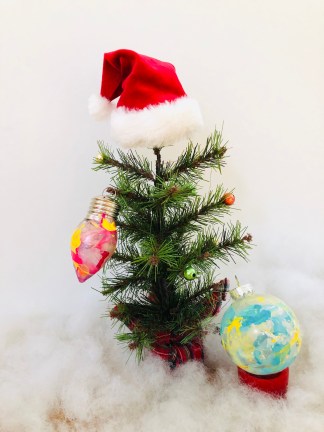
celebrate-picture-books-picture-book-review-christmas-ornaments-craft

Colorful Ornaments

These plastic ornaments swirled with colorful nail polish make the perfect decorations for your tree. Make some to give to friends too!

Supplies

  • Plastic ornaments, available at craft stores
  • Nail polish in various colors
  • Plastic bowl or container, deep enough to dip the ornament into the water
  • Drying stand – I used a clear, plastic egg carton, or string for hanging ornaments to dry

Directions

Fill the plastic container with warm to hot water

  1. Using two or three colors, gently “paint” the water with the nail polish, using the brush or a toothpick in dots and swirls
  2. Slowly dip the plastic ornament into the water and turn it to pick up the nail polish floating on the top of the water
  3. To dry, place the ornament on a stand or hang with a paper plate, wax paper, or other paper to catch drips

celebrate-picture-books-picture-book-review-everett-green-cover

You can purchase Everett Green: The Not-So-Christmas Tree at these booksellers

Amazon | Barnes & Noble | Bookshop (to support your local independent bookstore)

Picture Book Review