
About the Holiday
Launched in 2022 by Todd Stiefel, the founder and chair of ScienceSaves, Science Appreciation Day celebrates the power of science and scientific achievements. The holiday also raises awareness for the importance of critical thinking, thanks workers in the fields of science and medicine, and promotes the inclusion of science in public policy throughout the United States—and maybe even all over the world.” An appreciation for science begins early in life as children learn about their world and Earth’s long history through books like today’s stunning look at prehistoric times. To learn more about ScienceSaves and find resources for teachers and other educators from kindergarten through high school, visit ScienceSaves.org.
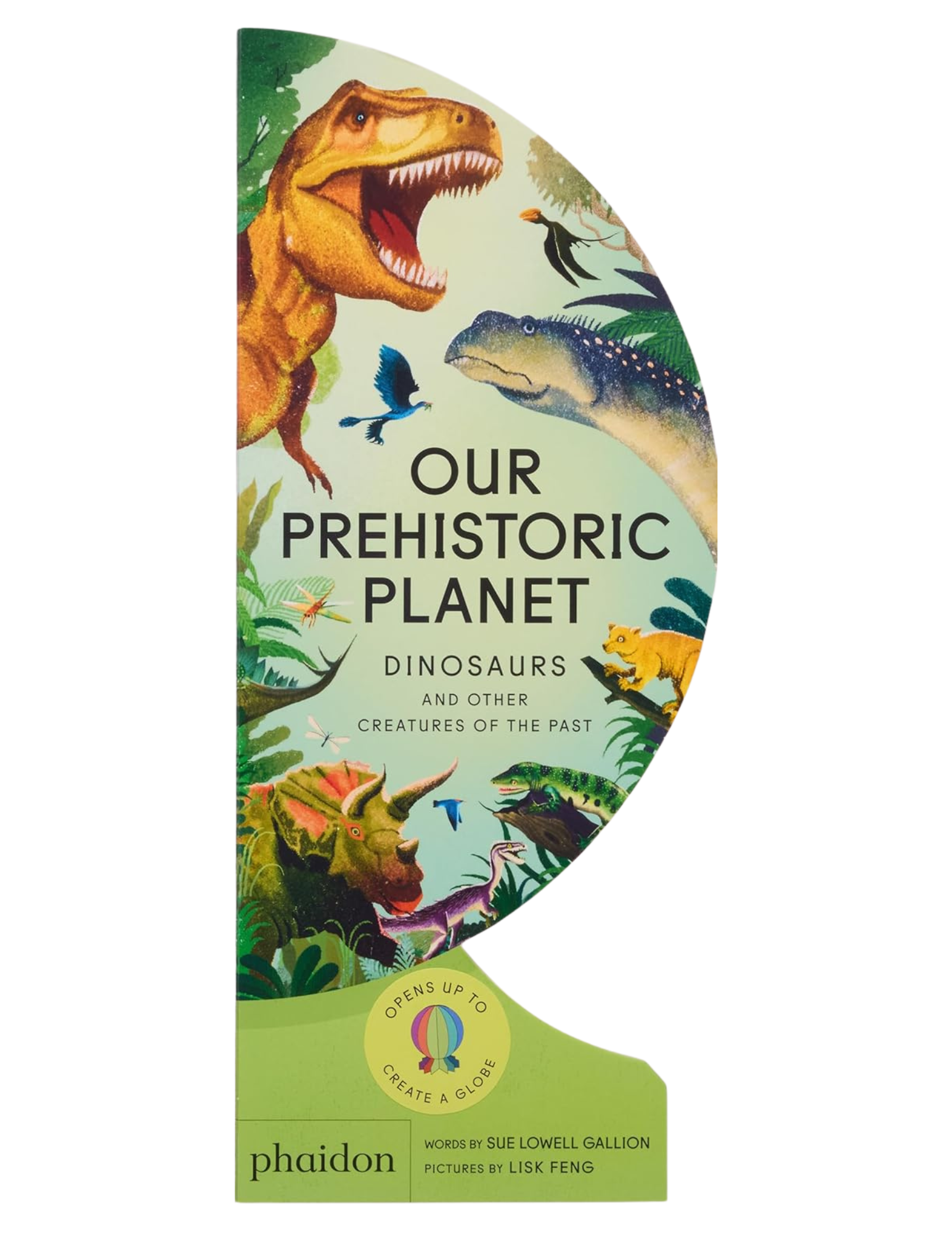
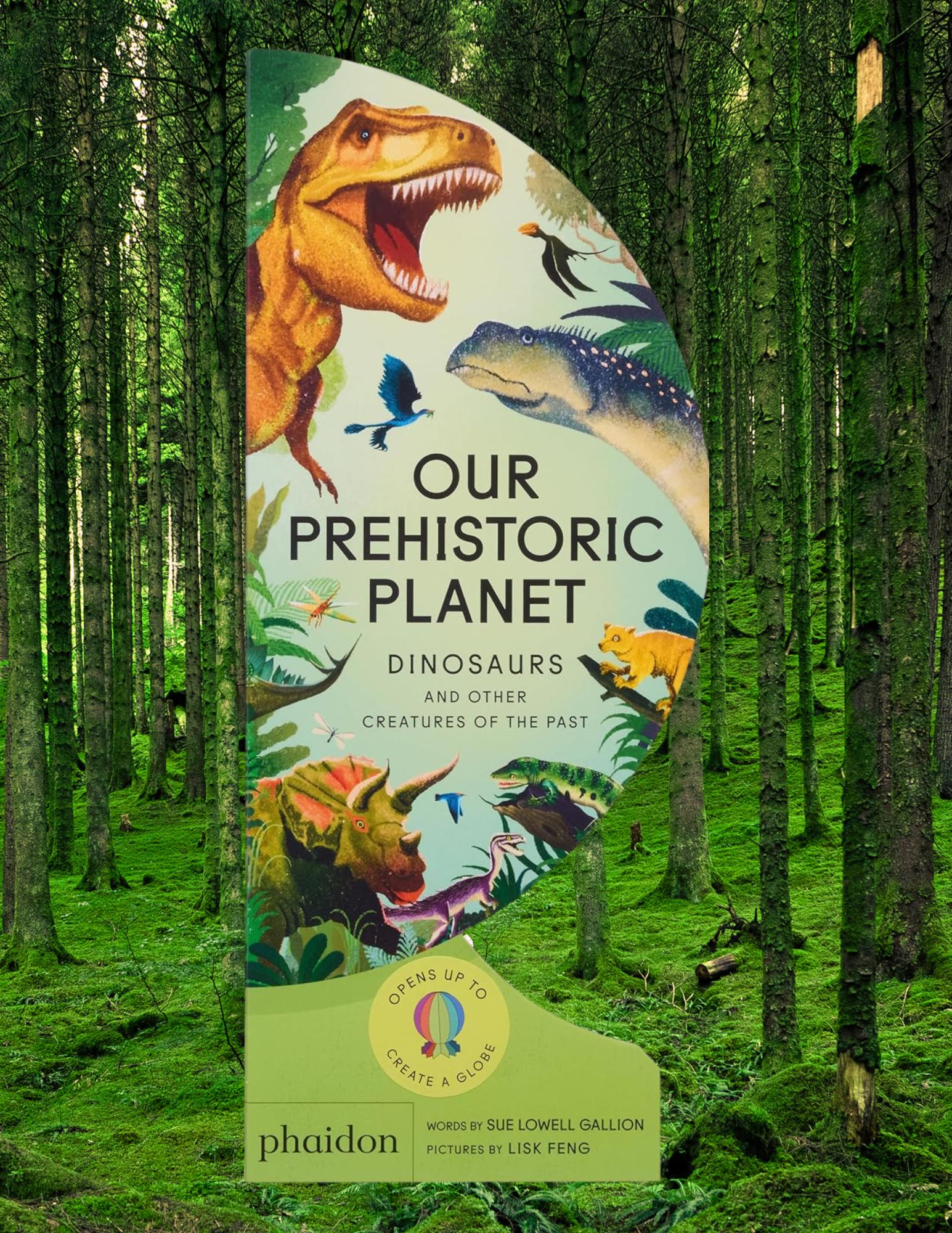
Our Prehistoric Planet: Dinosaurs and Other Creatures of the Past
Written by Sue Lowell Gallion | Illustrated by Lisk Feng
If you’re already a fan of Sue Lowell Gallion and Lisk Feng’s Our World collection of astounding books, you’re going to be excited about their newest one. If you’re new to this series of books, get ready to be amazed! Our Prehistoric Planet: Dinosaurs and Other Creatures of the Past not only takes us to a world we never knew yet are endlessly fascinated with, but opens to create a free-standing globe!
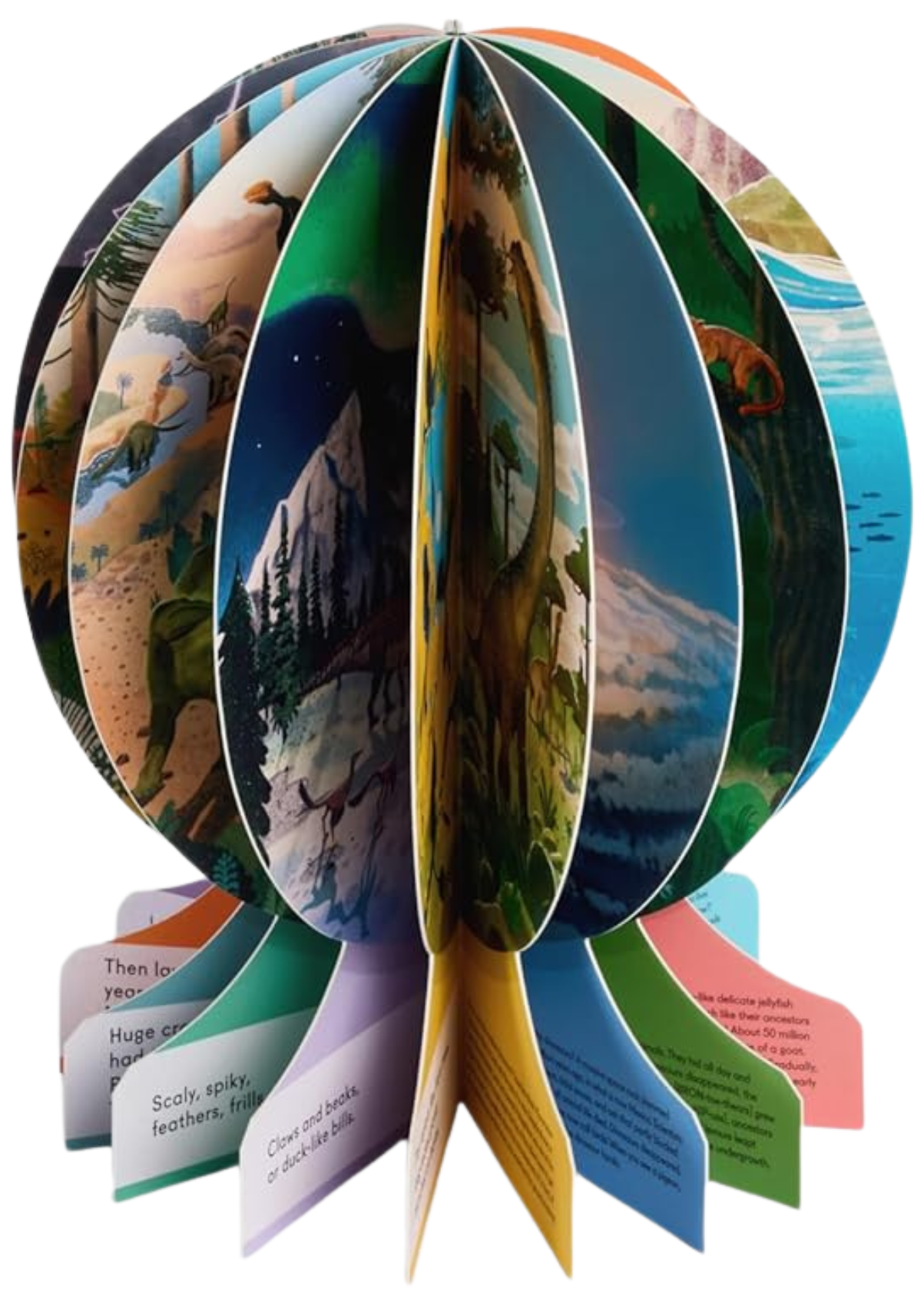
Illustration copyright © 2026 by Lisk Feng. Text copyright © 2026 by Sue Lowell Gallion. Courtesy of Phaidon.
With this invitation: “Let’s tour the world of long ago, / so different from the Earth we know,” kids are transported through the chronological changes our planet has undergone from it’s “wet and squishy” beginnings billions of years ago to today. Transformations include the appearance of land animals and insects, including a “dragonfly-like bug the size of a chicken” and the rise of Rauisuchians—giant ancestors of our crocodiles that “were almost as big as a bus” and snacked on “the first dinosaurs, which were little!”
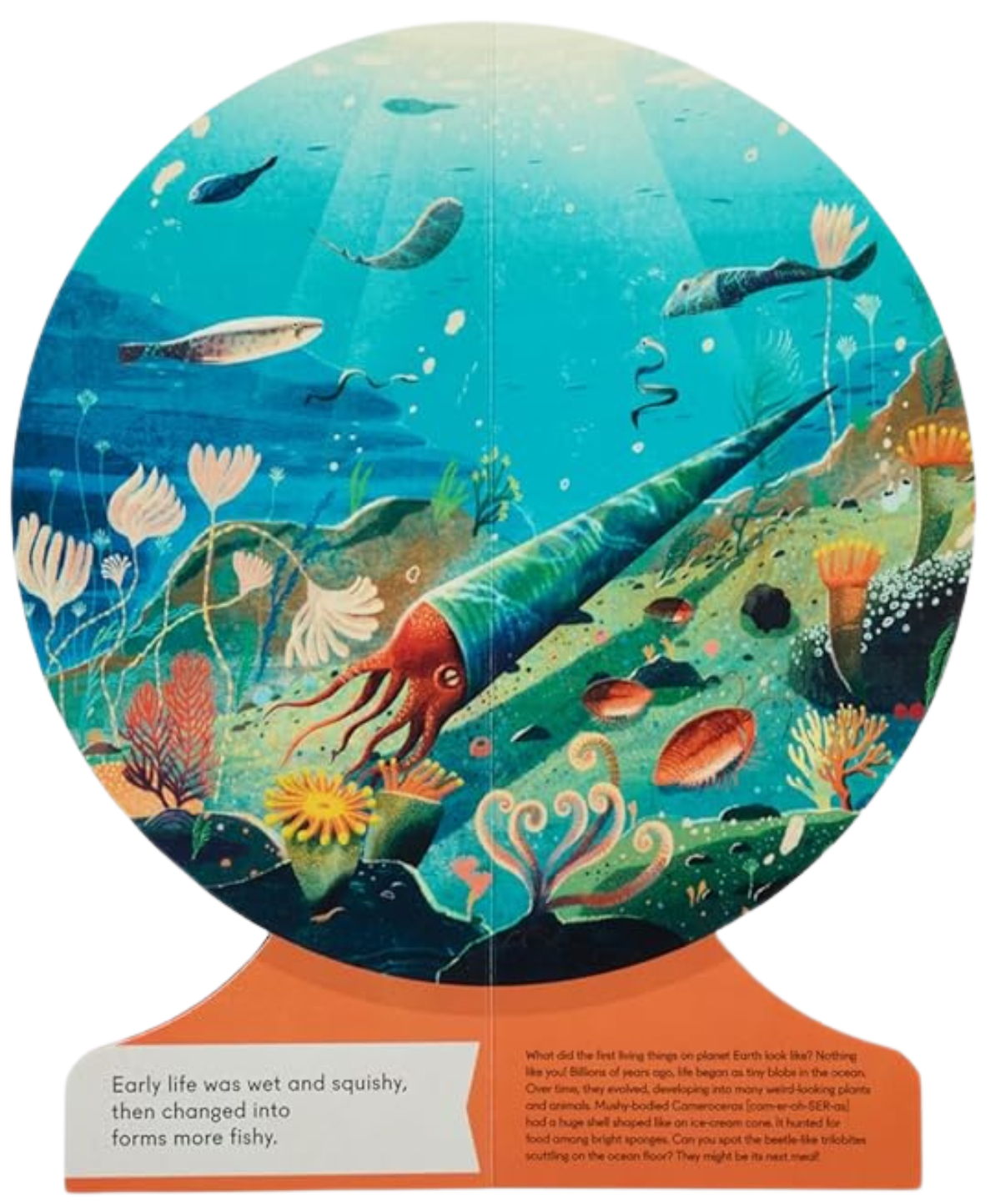
Illustration copyright © 2026 by Lisk Feng. Text copyright © 2026 by Sue Lowell Gallion. Courtesy of Phaidon.
Kids will learn how these bite-sized dinos evolved into the monstrous-sized Stegosaurus, Triceratops, and T-Rex as well as the heavy-weight Patagotitan. Following the end of the age of dinosaurs, readers meet the first mammals and discover how different animals are now from their ancestors. Along the way children witness the cataclysmic events that ushered in each new era of evolution, resulting in the astounding changes in the types of animals, birds, and plants that populated Earth in prehistoric ages. A final page talks about fossils and provides a world map that shows where certain dinosaurs and other prehistoric creatures lived.
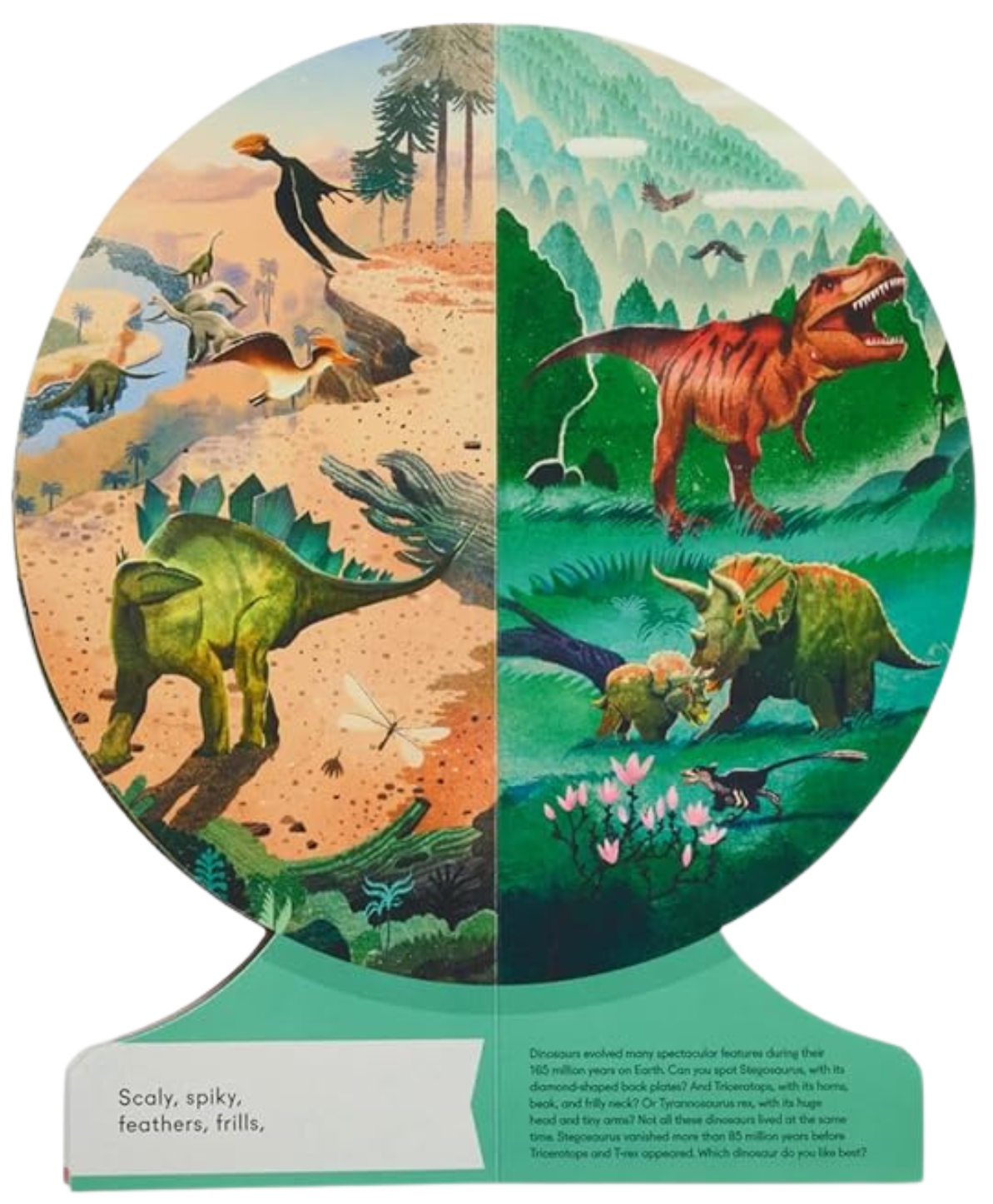
Illustration copyright © 2026 by Lisk Feng. Text copyright © 2026 by Sue Lowell Gallion. Courtesy of Phaidon.
On each two-page spread, Sue Lowell Gallion first captures readers attention with a short, rhyming verse that distills the scientific concepts into one easily grasped sentence. She then provides more information about the creatures’ traits, diet and size, the climate, scientists’ theories on extinction events, fossils, and more in a paragraph that combines detailed facts, kid-tantalizing language, pronunciation guides, and thought-provoking prompts.
Young readers get awe-inspiring views of our prehistoric past in Lisk Feng’s spectacular illustrations that provide realistic depictions of the animals, birds, insects, plants, and overall environments that thrived for millions of years. You can almost hear the buzz of enormous insects’ wings and feel the heat of bubbling lava. Children will love studying every fascinating page.
Open and display Our Prehistoric Planet: Dinosaurs and Other Creatures of the Past and watch kids gather ’round with exclamations of “Wow!” and eager excitement to learn. This book is a must addition to all classroom, school, and public library collections and would be a treasured favorite on home bookshelves for for dinosaur and prehistory buffs.
Ages 2+
Phaidon, 2026 | ISBN 978-1837290390
You can find an in-depth cross-curricular Our Prehistoric Planet Educator’s Guide on Sue Lowell Gallion’s website here.
About the Author
Sue Lowell Gallion is an award-winning children’s book author based in Kansas City. She is the author of Phaidon’s Our World: A First Book of Geography, Our Seasons: The World in Winter, Spring, Summer, and Autumn, Our Underwater World: A First Dive into Oceans, Lakes, and Rivers and Our Galaxy: A First Adventure in Space among others. Visit her at suegallion.com.
About the Illustrator
Lisk Feng is an award-winning illustrator from China. She graduated from the Maryland Institute College of Art in 2014 with an MFA in Illustration and has since worked as a commercial illustrator for clients such as the New Yorker, New York Times, and Chanel. Follow her on Instagram.
National Science Appreciation Day Activity
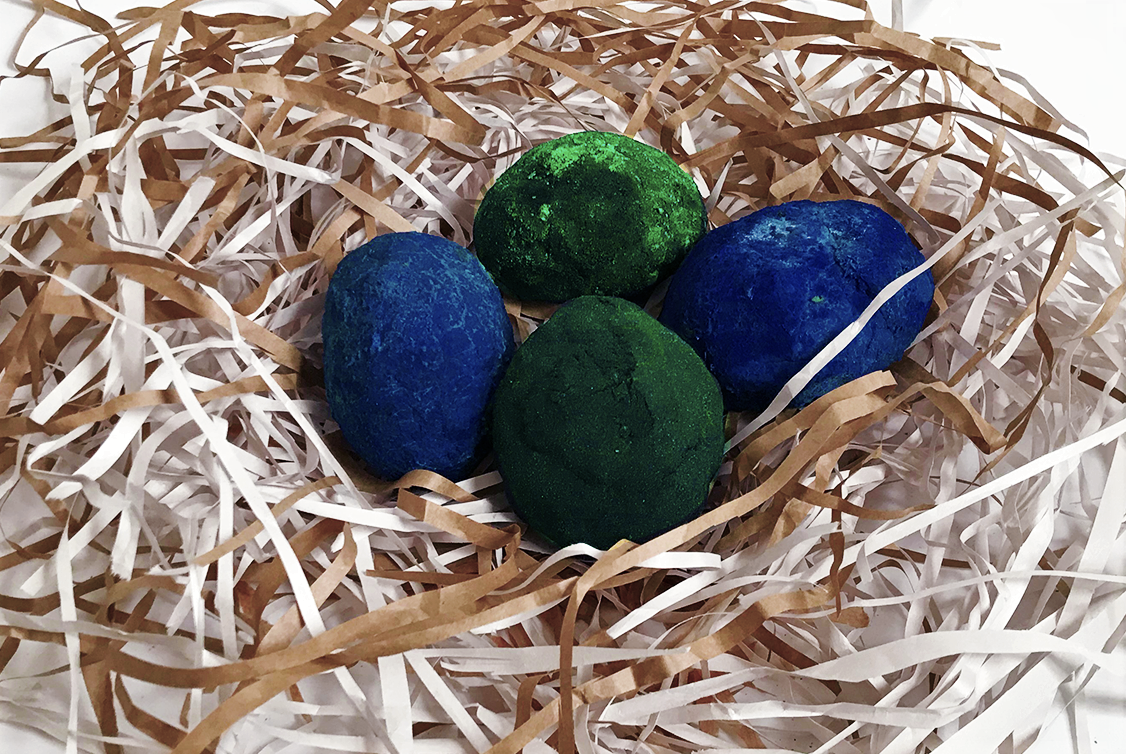
Hatch Your Own Dinosaur Eggs
Think there are no more dinosaur eggs to be found? Think again! You can make your own with this easy craft that will have you hatching some T.-rex-size fun! All you need are a few simple ingredients!
Supplies
- Old clothes or apron
- Large box of baking soda (makes between 6 and 8 eggs)
- Food coloring
- Water
- Plastic dinosaur toys
- Bowl
- Fork
- Spoon
- Wax paper
- Baking sheet
- Foil
- Vinegar
- Spray bottle (optional)
- Plastic or metal spoon, stick, popsicle stick, or other implement to chisel with
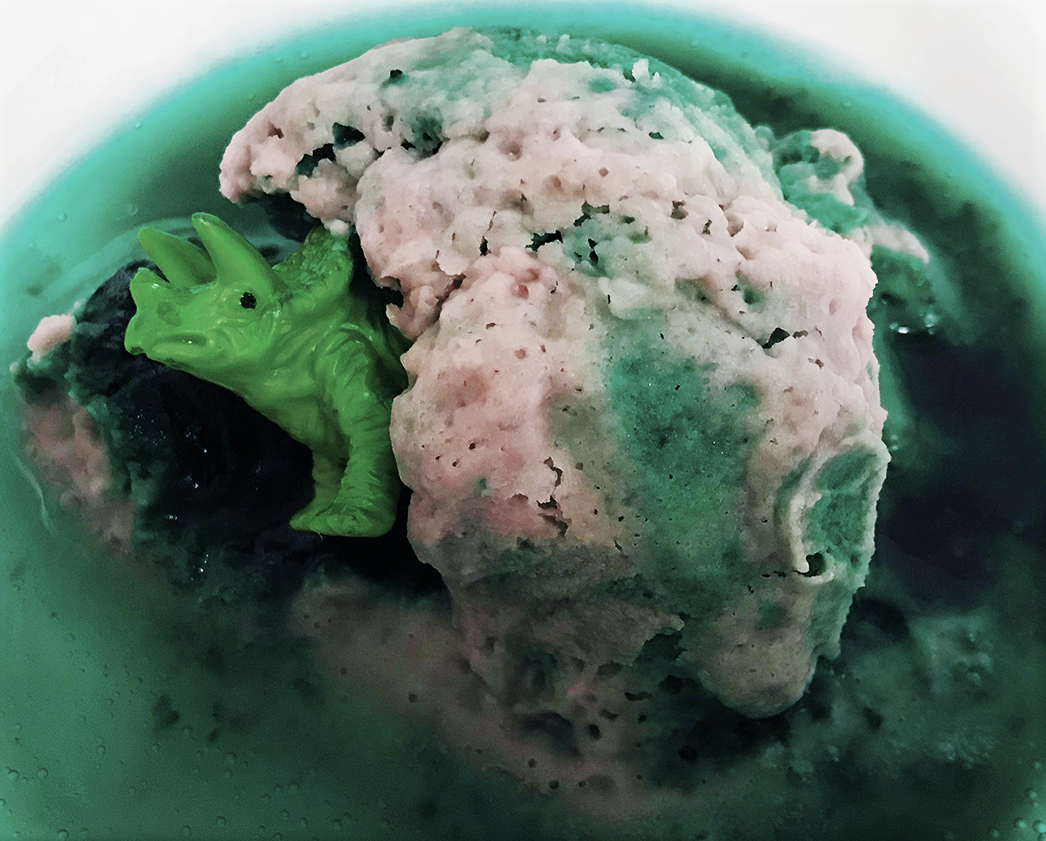
Spray the egg with vinegar to hatch your dinosaur
Directions
- Wear old clothes or an apron
- Cover work surface with wax paper, parchment paper, newspaper, or other protection. Food coloring can stain some surfaces
- Pour baking soda into the bowl
- Add drops of food coloring in whatever color you’d like your eggs to be. The eggs will darken when baked.
- Mix in the food coloring with the fork. You may want to use your hands, too
- When the baking soda is the color you want it, begin adding water a little at a time
- Add water until the baking soda holds together when you squeeze it in your hand
- When the baking soda is the right consistency, spoon some out into your hand or onto wax paper
- Push one plastic dinosaur into the middle
- Cover the dinosaur with more of the baking soda mixture
- Carefully form it into an egg shape
- Repeat with other dinosaurs

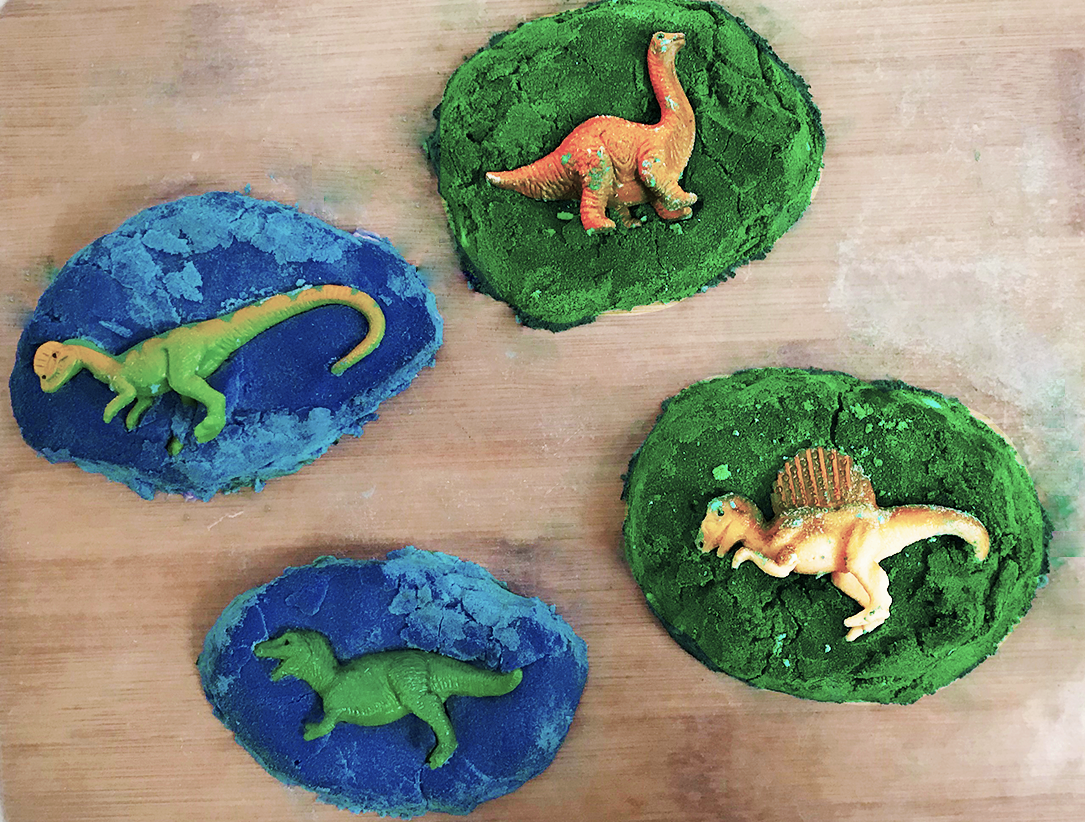
Chisel the egg open to hatch your dinosaur
To Bake the Eggs
- Set the oven or toaster oven to 200 to 225 degrees
- Set the eggs on a baking sheet lined with foil
- Bake the eggs for 15 minutes, check
- Turn the eggs over and bake for 10 to 15 more minutes
- Remove from oven and let cool
To Hatch the Eggs
- Eggs can be hatched by chiseling them with a spoon, stick, or other implement
- Eggs can also be hatched by spraying or sprinkling them with vinegar
You can purchase Our Prehistoric Planet: Dinosaurs and Other Creatures of the Past from these booksellers
Amazon | Barnes & Noble | Bookshop
Picture Book Review











 celebratepicturebooks.com