
About the Holiday
Since 1967, April 2—Hans Christian Andersen’s birthday—has served as the date for International Children’s Book Day. The International Board on Books for Young People (IBBY), a non-profit organization founded in Zurich, sponsors the day to promote a love of reading and call attention to children’s books. National Sections of IBBY around the world alternate in hosting the event. The host for 2026 is Cyprus, and this year’s theme is “plant stories and the world will bloom.” Each year a prominent author and illustrator from the sponsoring country prepare materials for the event. This year’s poster was designed by Sandra Elephteriou. Elena Perikleous wrote this year’s message, and Giorgos Hatzipieris wrote this year’s official song, “The Little Gardener.” To learn more about the initiative and download digital materials, visit the IBBY website.
Thank you to Levine Querido and Barbara Fisch at Blue Slip Media for sending me this book for review!
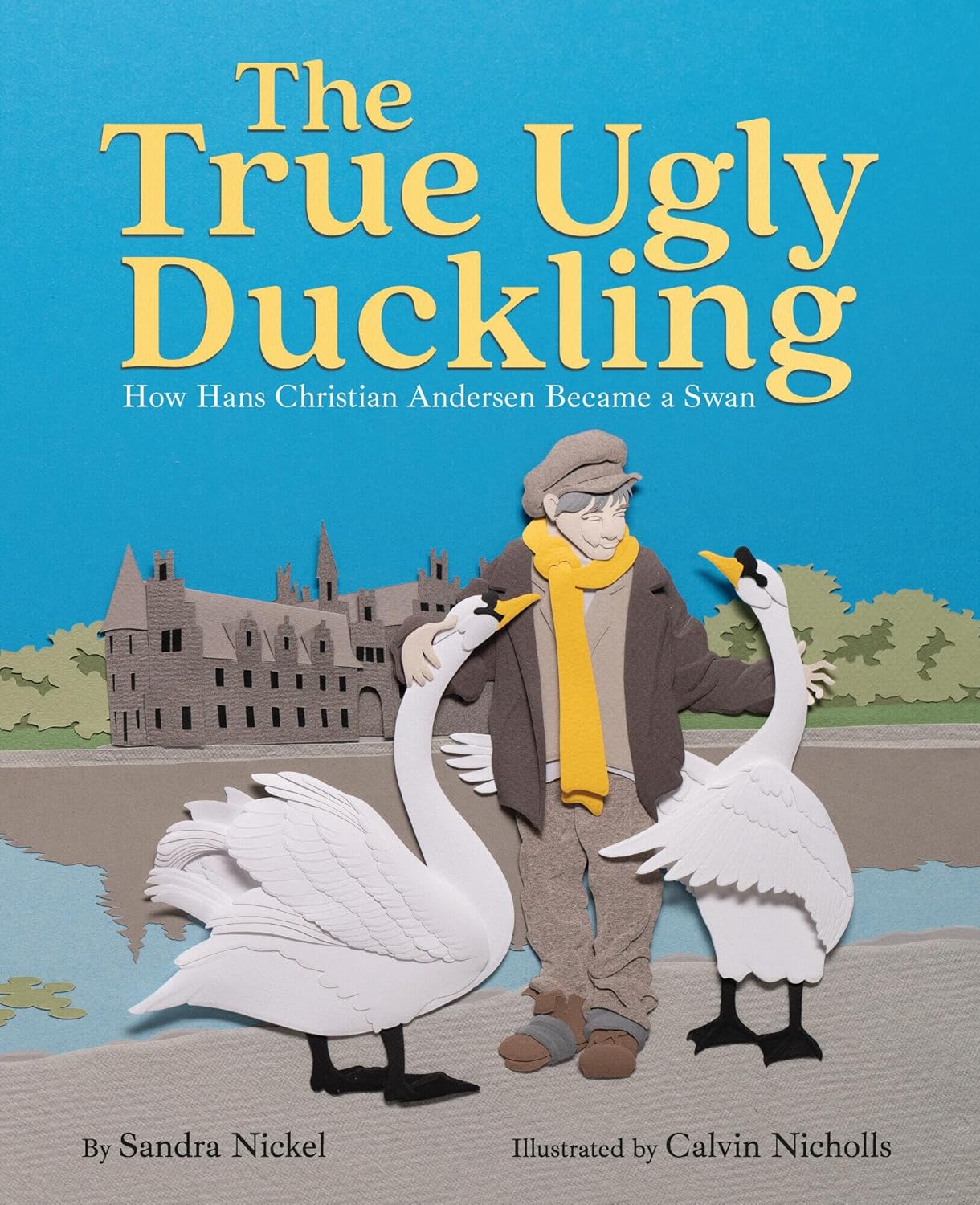
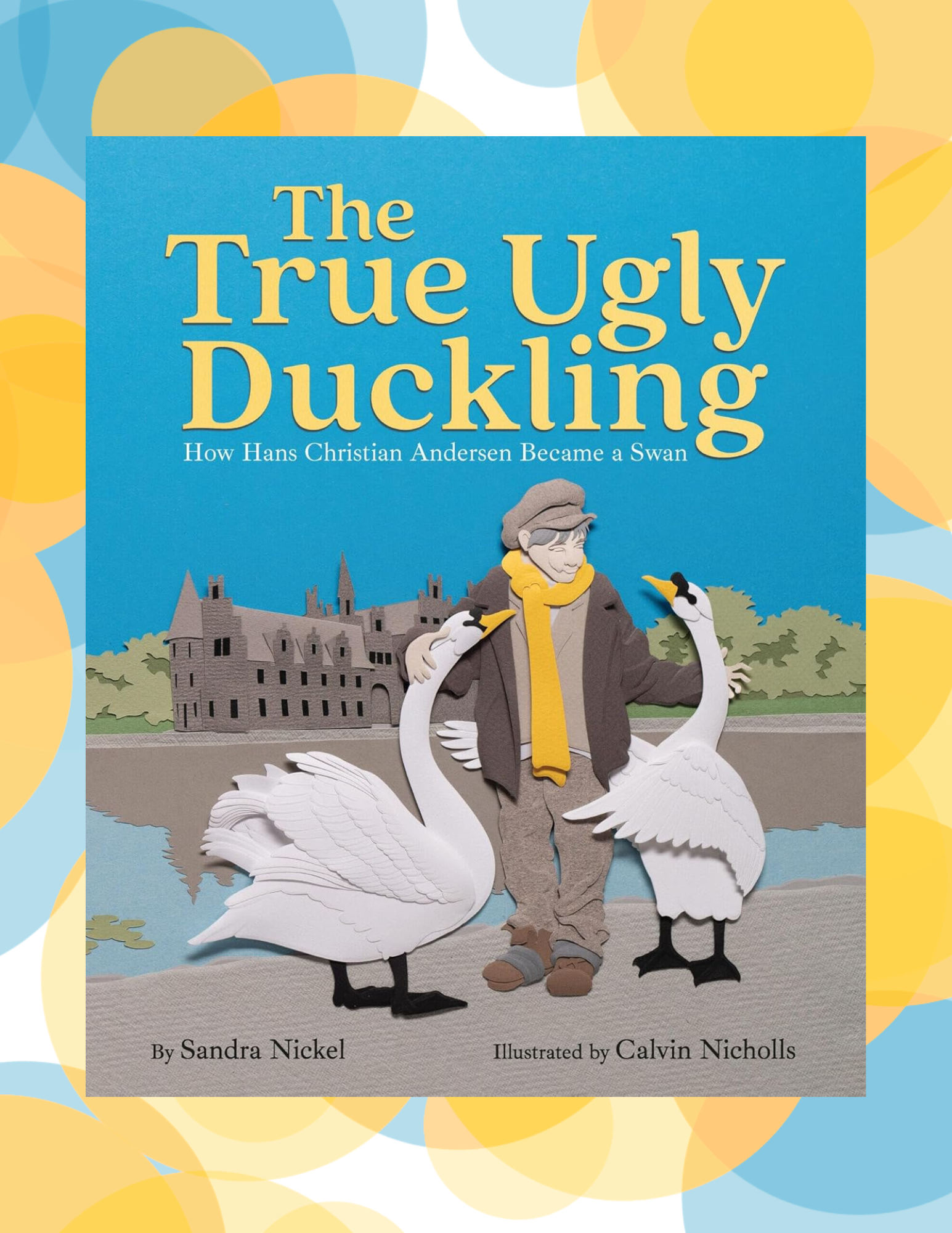
The True Ugly Duckling: How Hans Christian Andersen Became a Swan
Written by Sandra Nicken | Illustrated by Calvin Nicholls
“There once was a poor shoemaker’s son, who was tall and skinny. His nose was two times as long as everyone else’s and his heart two times as tender.” Thus begins not a fairy tale, but Sandra Nickel’s real life story of Hans Christian Anderson.
While most children spent their days working at the factory or going to school, Hans cut out costumes for his toys and invented stories that he performed for whomever would watch. Some neighbors gave him a few coins, but the factory workers and other children bullied and teased him. Hans “soothed his wounded heart by cutting out shapes from cloth.” At fourteen, knowing there was more for him in the world, Hans sailed alone for Copenhagen. There, he tried to find a place to express his talents, but each attempt ended in disappointment. Soon all his money was gone.
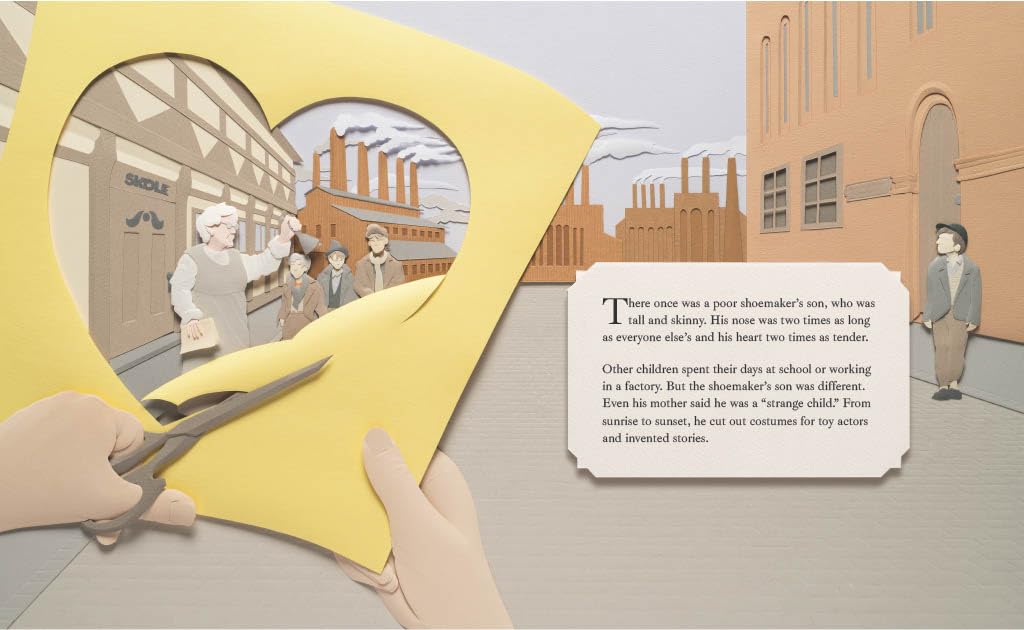
Illustration copyright © 2026 by Calvin Nicholls. Text copyright © 2026 by Sandra Nickel. Courtesy of Levine Querido.
When he sent a play to the Royal Theater, one director rejected it brutally, but another found a “few jewels” in it and arranged for him to go to school. At 17 Hans was taking classes for the first time. The other students laughed at him, and the headmaster dashed his dreams of becoming a storyteller, forbidding him to write. For six years Hans obeyed. “To comfort his heart, the boy cut out shapes from paper.”
Then one day when a girl asked him why her flowers had faded, Hans—now a young man—answered her by telling a story while cutting a scene in paper of hearts, dancers, flowers, and castles with working doors. The girl loved the story so much that Hans wrote it down and had it printed into a book. “The children of Copenhagen adored every word.”
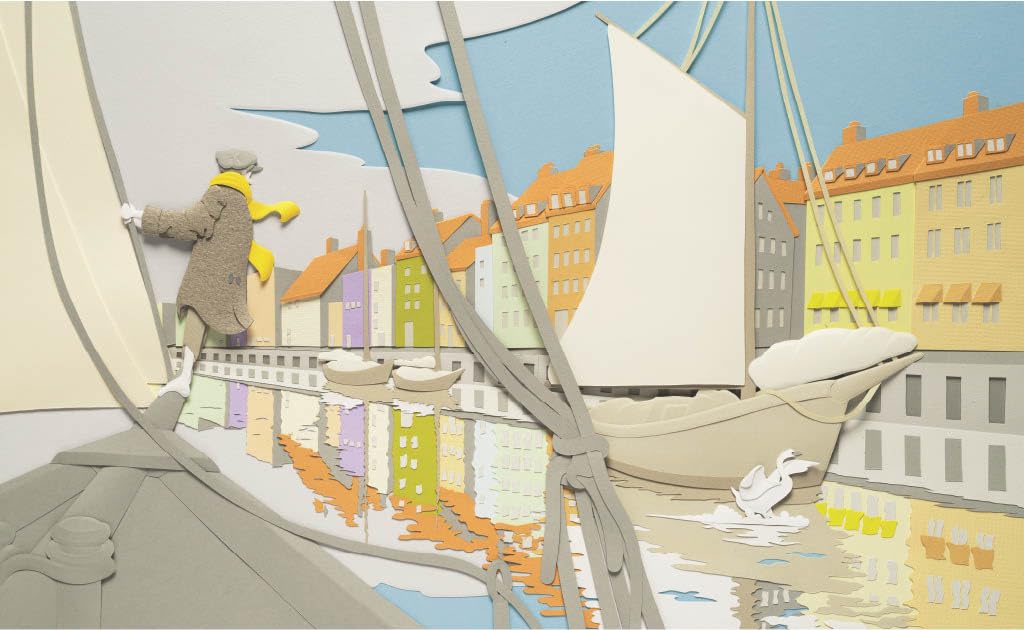
Illustration copyright © 2026 by Calvin Nicholls. Text copyright © 2026 by Sandra Nickel. Courtesy of Levine Querido.
Soon, Hans was telling and publishing more and more stories. Adults began reading them, and even Copenhagen royalty invited him to their castles for dinners and afterward to entertain the other guests by weaving “magic with his words and scissors.”
Back matter includes an Author’s Note recounting that experts now believe Hans Christian Andersen was likely on the autism spectrum and may also have had Marfan syndrome as well as her choice to follow the story arc of The Ugly Duckling in her biography to depict Andersen’s life and his finding his place in the world. Nickel has also included a bibliography and citations.
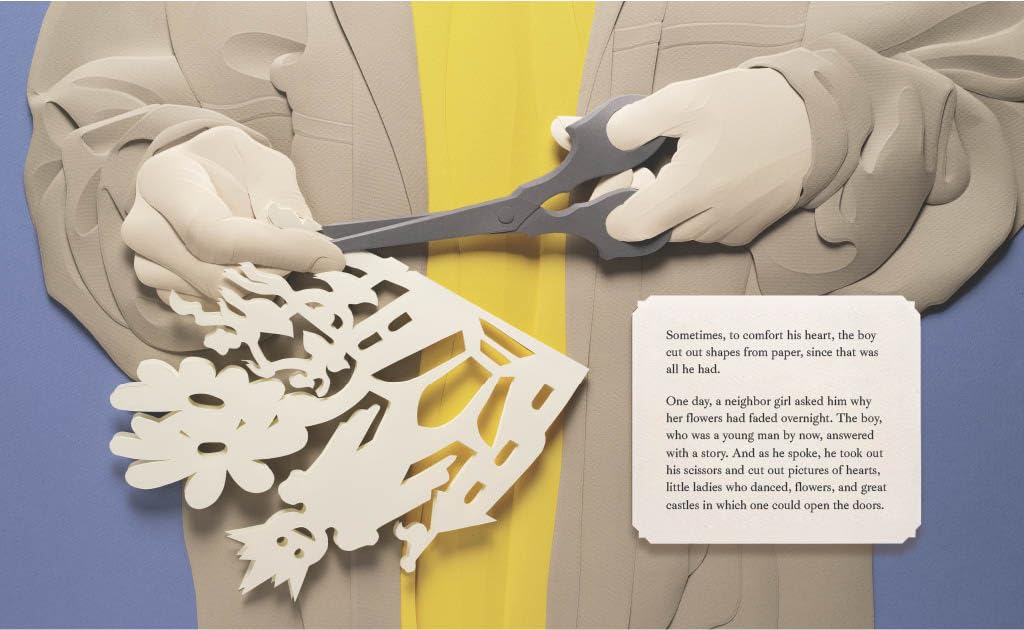
Illustration copyright © 2026 by Calvin Nicholls. Text copyright © 2026 by Sandra Nickel. Courtesy of Levine Querido.
Sandra Nickel’s mesmerizing and sensitive portrait of Hans Christian Andersen highlights his seemingly limitless creativity, imagination, and courage as he stays true to himself despite the treatment and rejections he endured. Her lyrical and moving biography is not only an inspiring tribute to this unique storyteller and artist, but a buoy for children struggling themselves and a reminder for all to embrace each person as a whole, recognizing and encouraging their talents, dreams, and contributions. Although his enduring popularity is already known to readers, her account of his ultimate triumph still has the power to astonish and prompt cheers.
Visually arresting, Calvin Nicholls’ extraordinary paper sculpture illustrations pop with action and emotion, immersing readers in the sights and sounds of Andersen’s factory hometown, his experiences in Copenhagen, and the joy of his long-dreamed-for success. The realism of Nicholls’ low-relief sculptures, assembled from various weight and textured papers then photographed, are astounding. Nicholls’ color scheme mirrors the theme of the “Ugly Duckling,” portraying Andersen in muted grays and browns until his full transformation when he dazzles Copenhagen royalty in a white tuxedo.
The True Ugly Duckling: How Hans Christian Andersen Became a Swan belongs in every classroom, school, and library collection to edify and inspire and would be an inspirational addition to home bookshelves, especially to pair with readings of his stories.
Ages 4 – 8
Levine Querido, 2026 | ISBN 978-1646146093
Hans Christian Andersen’s Birthday Activity
Easy Origami Swan
Kids can have fun on Hans Christian Andersen’s Birthday and International Children’s Book Day by making this easy origami swan to celebrate their unique personalities and talents! All you need is origami paper or you can cut your own 6-inch by 6-inch paper or any size square.
You can purchase The True Ugly Duckling: How Hans Christian Andersen Became a Swan from these booksellers
Amazon | Barnes & Noble | Bookshop
Picture Book Review









 celebratepicturebooks.com