February 14 – Frederick Douglass Day

CPB - Words Set Me Free

About the Holiday

Although the exact date is not known, history records Frederick Douglass’ birthday as around Valentine’s Day in 1818, so February 14 was chosen to honor this most unique and influential man. Born into slavery, Frederick Bailey (he later changed his last name to Douglass) learned how to read and write when still a child. As a young man he used his intellect and courage to secure his freedom. He became a compelling speaker, writer, leader of the abolition movement, and statesman. His writings, especially his autobiography Narrative of the Life of Frederick Douglass, an American Slave, are among the most powerful accounts of the slave experience and are still widely read today.

Words Set Me Free

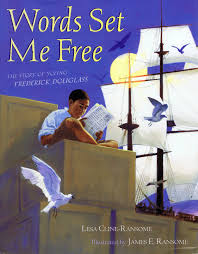
Written by Lesa Cline-Ransome | Illustrated by James E. Ransome


Born into slavery and separated from his mother in infancy, Frederick Bailey is raised by his Grandmama while his mother works on a separate plantation. When she is able Harriet Bailey walks the 12 miles between plantations to spend a few short hours with her son, watching him sleep, before making the long journey back. While Frederick is still a very young child, his mother falls ill and dies. Douglass recalls never seeing his mother’s face in daylight.

At the age of six, Frederick is moved from his Grandmama’s cabin to the plantation house. At eight, he is sent to the master’s brother in Baltimore, Maryland. Here, the master’s wife, Sophia Auld, treats Frederick more like a paid servant then as a slave. When Frederick says he wants to learn how to read and write, she immediately begins teaching him the alphabet. Frederick is always mindful, however, that he may be punished for these lessons, and he has only memorized the letters and a few words before his master puts an end to his education. Angrily, the master explains to his wife, “If you teach him how to read…it would forever unfit him to be a slave.”

These words are perhaps Frederick’s greatest lesson. He never forgets them, and they fuel his resolve to pursue an education. He makes clever use of the few resources he has and slowly learns to read and write. From the newspapers he discovers that the North offers freedom, and Frederick decides to escape. It’s many long years, however, before he can fulfill his dreams. At last, he sees an opportunity to leave the South behind, and using his talent for writing makes his escape a reality.

Lesa Cline-Ransome has written a compelling biography of Frederick Douglass for children in Words Set Me Free. In straightforward language and through first-person point of view, Cline-Ransome reveals the brutal truth of Douglass’s life as a slave and his fight against injustice. As the title suggests, the book focuses on Frederick’s desire to become educated and the obstacles he overcame to succeed. This universally important message continues the work Douglass engaged in long ago.

James Ransome’s stirring paintings highlight pivotal scenes of Frederick’s story. Readers witness the tender moments with his mother, the cruel contrast of slavery and his blossoming intellect, and Frederick’s growing resolve to educate himself and escape.

Ages 5 and up                                                                                                            

Simon & Schuster, New York, 2012 | ISBN 978-1416959038

Frederick Douglass Day Activity

CPB - Words Set Me Free word search

Words Set Me Free word search


Words were so important to Frederick Douglass that he risked everything to learn how to read and write. In this printable Words Set Me Free Word Search Puzzle you will find words about the man we honor today. Solution

February 13 – World Radio Day

CPB - Radio Man

About the Holiday

The radio has provided entertainment, news, comfort, and information and has united people both near and far ever since Guglielmo Marconi invented  it in 1895. Today, radio continues to be an important part of people’s lives around the world. February 13 was established as World Radio Day “to celebrate radio as a medium, improve international cooperation among broadcasters, and to encourage both major networks and community radio to promote access to information, freedom of expression and gender equality across the airwaves.” This year’s UNESCO theme is “Radio in times of emergency and disaster” and highlights the crucial role of radio and its journalists in times of crisis.

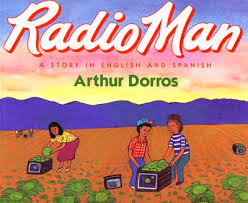
Radio Man

By Arthur Dorros | Translated by Sandra Marulanda Dorros


“Radio man” is Diego, a boy in a family of migrant workers who pick fruit and vegetables from the Southwest to as far north as Washington state. Although his family moves frequently, Diego has close relationships with his parents, sister, grandparents, cousins, and especially a friend named David.

Throughout the story, as his family moves from town to town searching for work, Diego listens to the radio. Stations broadcasting in both English and Spanish keep the family company, and Diego measures the distance of upcoming towns along their route by the clarity of the DJs’ voices. The radio also provides entertainment for end-of-picking season parties among the workers and serves as a catalyst for the grandfather’s stories of growing up in Mexico.

While Diego’s family is close-knit, their nomadic lifestyle separates Diego from his best friend, David, who is also the son of migrant workers. As the story begins Diego and David are leaving Texas and know they won’t see each other for a while. As Diego travels to different towns, going to school during the day and picking crops in the afternoon, he meets up with his cousins and other friends, but he never finds David. Finally, in Sunnyside, Washington Station KMPO allows people to send messages to others. Diego calls in and sends a message: “Hello, David! This is Diego. Are you here?”

And David, listening to his own radio, is there! Seeing David’s smile, children will identify with the pleasure that communicating with friends brings.

Each page of Radio Man is presented in English and Spanish, translated by Sandra Marulanda Dorros. The landscape and farms of the American southwest, the festive celebrations, the reality of driving from town to town, and the tight relationships among family members are all vividly illustrated by Arthur Dorros, giving children a glimpse into the life of migrant workers as well as the heart of friendship.

Ages 4 – 8

Trophy Picture Books, 1997 | ISBN 978-0064434829

World Radio Day Activity

CPB - Radio Man box radios from side

Box Radio Desk Organizer

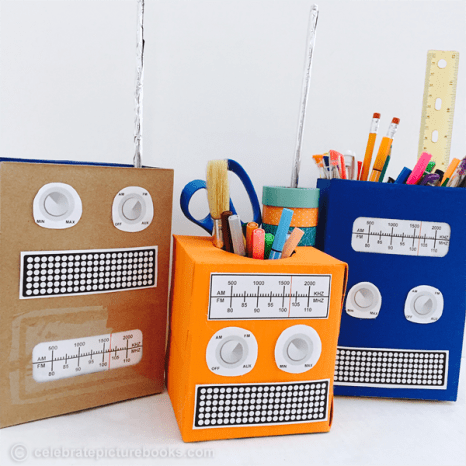
With a recycled box and the provided printable templates  you can make a desk organizer that looks like a radio with this fun craft!

Supplies

  • Cardboard box – Use an empty cube-shaped tissue box, pasta box, or any small box
  • Wooden chopstick
  • Printable Radio Face Template
  • Aluminum foil
  • Glue – a hot-glue gun works well on the cardboard; regular glue for the buttons and tape for the station tuner window
  • Paint – any color you like
  • Paint brush
  • Scissors

Directions

1. Prepare the box:

  • Choose a box to be your radio. In the pictures I used a cube-shaped tissue box and a penne pasta box with a cellophane window in it.
  • If you are using a box without an opening in the top, cut the top or bottom flaps off of one end of the box, depending on where you want the station tuner window to go.

2. Paint the box:

  • You can paint the printed front, back and sides of the box.
  • OR if you want a plain box to use “as-is” or to paint: take the recycled box apart at the seams and turn it “inside out.”
  • If you are using a pasta box with a window in it, tape the stations tuner template to the cellophane window before gluing the seams
  • Glue the original seam and flaps (a hot-glue gun works well). Let the glue dry. Then paint.

3. Let the box dry

4. Cut out the radio dials, speaker, and stations tuner window

5. Glue the parts of the radio to the box 

6. To make the antenna, wrap the wooden chopstick in a strip of aluminum foil: lay the stick on the foil and fold a foil flap (about 1 inch long) over each end of the stick. Roll the foil around the stick and press gently to close seam.

7. Attach the antenna to your box:

  • For pasta boxes tape the antenna to the inside corner of the box
  • For cube tissue boxes, make a hole in the right hand corner and push antenna in

8. Use your Radio Desk Organizer to hold pencils, rulers, bookmarks, anything!

February 12 – Abraham Lincoln’s Birthday

CPB - I am Abraham Lincoln

About the Holiday

Today we celebrate Abraham Lincoln’s birthday! Abe Lincoln was born in a one-room log cabin in Kentucky and later worked as a riverboat worker, a shopkeeper, and a postmaster in Illinois before becoming the 16th President of the United States. With compassion, bravery, and strength, Lincoln shepherded the country through the Civil War and signed the 13th Amendment to the Constitution outlawing slavery in the United States. Lincoln’s birthday is commemorated with wreath-laying ceremonies at his birthplace and at the Lincoln Memorial in Washington D.C.

I am Abraham Lincoln

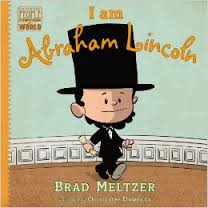
Written by Brad Meltzer / Illustrated by Christopher Eliopoulos


In his I am… series of biographies, Brad Meltzer writes about famous people as they grow from childhood into the influential adults they became. In I am Abraham Lincoln, Meltzer illuminates various experiences of Lincoln’s life that formed his beliefs of equality and inclusiveness. At a time when most children liked to hunt, fish, and tend the farm, young Abe spent his time reading, and he was one of the few people in town who could write. Even at the age of 10, his compassion showed when he stopped a group of his peers from treating a turtle roughly. Later, as a young man and newcomer to Illinois, he faced a group of bullies and dispersed them without throwing a punch.

It was when he witnessed the indignities of a slave boat, however, that his most deeply held beliefs took hold. As President, Lincoln acted on those beliefs, helping the country through the Civil War, gave speeches, and signing laws that ensured all people would be treated equally.

By relating stories from Abraham Lincoln’s childhood, Meltzer not only teaches children about his life, but demonstrates that his young readers can also make a difference by speaking up and helping others whenever they see injustice.

Christopher Eliopoulos’s cartoon-like illustrations are particularly effective in showing the earnestness of Abraham Lincoln’s personality from early childhood on. Speech bubbles display dialogue, modeling the simple words that can so often create great change. Part of the book’s charm is that even as a child Lincoln sports his iconic beard and top hat, making him instantly recognizable as the hero children are familiar with and emphasizing the “man in the child” theme.

Ages 4 – 8

Dial Books for Young Readers, Penguin Group, New York, 2014 | ISBN 978-0803740839

Abraham Lincoln’s Birthday Activities

CPB - Abe Lincoln's Top Hat chalkboard (2)

Abe Lincoln’s Top Hat Chalkboard

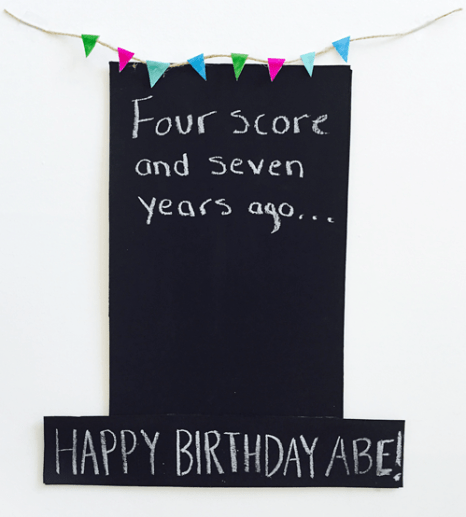
Abraham Lincoln was known for the black top hat he wore – and for his inspiring words In this activity you can learn how to make a top hat chalkboard to use for your own drawings or inspiring words!

Supplies

  • Cereal Box (I used a large sized cereal box), cardboard or poster board
  • Chalkboard Paint (black)
  • Paint brush
  • Hot Glue Gun or extra-strength glue
  • Removable mounting squares
  • Chalk

Directions

  1. If you are using cardboard or poster board: cut a rectangle at least 8 inches wide by 12 inches long for the hat and 12 inches long by 2 inches wide for the brim (but your top hat can be any size you’d like!)
  2. If you are using a Cereal Box: open the seams of the Cereal Box
  3. Cut the panels of the cereal box apart
  4. Take one face panel and one side panel
  5. With the chalkboard paint, paint both panels
  6. Let the panels dry
  7. Attach the side panel to the bottom of the face panel to create the shape of Lincoln’s top hat
  8. Hang Abe Lincoln’s Top Hat Chalkboard 

Donate to a Food Bank

Today can be a day to remember the hardships that many people still endure. Many still live with hunger every day. Today, gather a bag of non-perishable foods and donate them to your local food bank. This activity can also be done by a group—a classroom, scout troop, youth group, or group of friends. Even a little bit helps a lot!


February 11 – Make a Friend Day

celebrate-picture-books-picture-book-review-stick-and-stone-cover

About the Holiday

Whether you spend today with an old friend or make a new one, it’s a perfect time to remember those people who know our secrets, make us laugh, lend an ear, do silly things with us, and generally make life better! Today give an old friend a hug, a thank-you, or tell them how much they mean to you. Look around and see if there’s someone new you’d like to meet. They may be wanting to meet you too! Walk up and say “hi”—it may be the beginning of a new friendship!

Stick and Stone

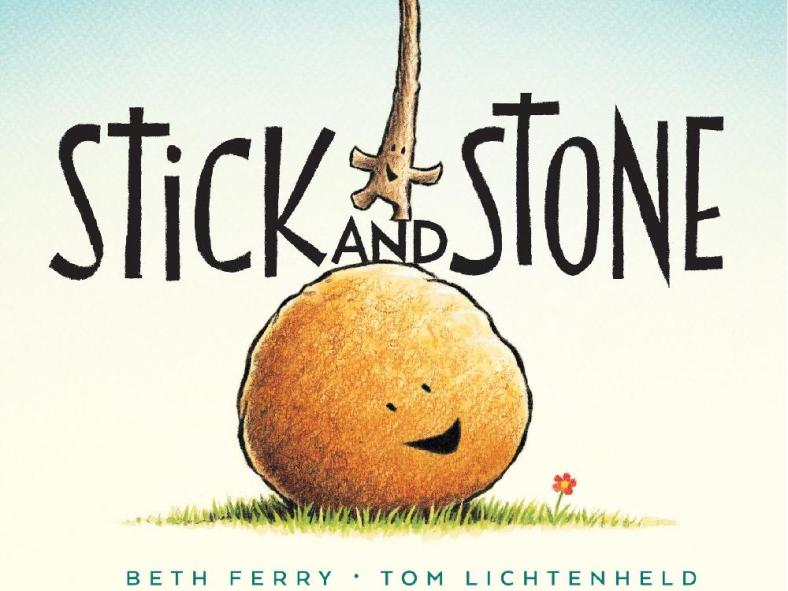
Written by Beth Ferry | Illustrated by Tom Lichtenheld


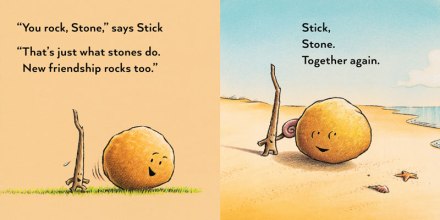
A stick and a stone live lonely lives until one day when they meet at the playground. As they playing on the swings together, a prickly pinecone comes along and makes fun of Stone for falling off the swing. Stone’s new friend “sticks” up for him, and Pinecone leaves them alone. Stick’s and Stone’s friendship grows as they explore new places, help each other complete fun activities, and relax together.

celebrate-picture-books-picture-book-review-stick-and-stone-at-the-beach

Image copyright Tom Lichtenheld, text copyright Beth Ferry, Courtesy of tomlichtenheld.com

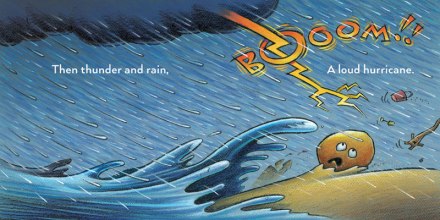
When a windstorm strikes, Stick and Pinecone are blown away, leaving Stone alone again. Stone searches everywhere and finally finds Stick upside down in a puddle. With ingenious creativity, Stone rescues Stick, proving that together they are a perfect 10.

celebrate-picture-books-picture-book-review-stick-and-stone-hurricane

Image copyright Tom Lichtenheld, text copyright Beth Ferry, Courtesy of tomlichtenheld.com

Using rhyme, puns, and perfect pacing, Beth Ferry infuses her spare text with just the right emotional tone for her young readers. A little conflict, a little suspense, and a little cleverness, add up to a big-hearted story.  

Tom Lichtenheld’s Stick and Stone are simply adorable. Kids will immediately identify with this whimsical duo and wish they could join them on their adventures. Clever pairings of text and illustrations enhance the meaningful relationship of these new friends.

Ages 3 – 7

Houghton Mifflin Harcourt, New York, 2015 | ISBN 978-0544032569

Discover more about Beth Ferry and her books – plus extra goodies – on her website!

You’ll love exploring the gallery of illustration and books on Tom Lichtenheld‘s website!

Stick around and watch this Stick and Stone book trailer!

Bake for Family Fun Month Activity

CPB - Hot Chocolate trio (2)

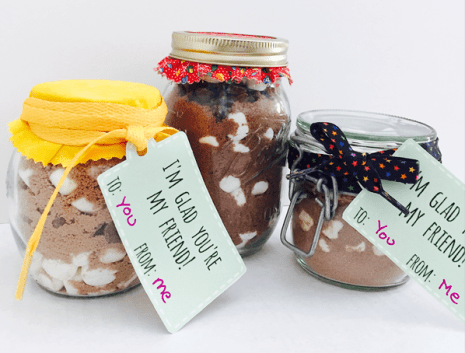
Special Friendship Hot Chocolate Jar 


There’s nothing better than sipping hot chocolate with a friend – either old or new! Snitching a couple of marshmallows when you load up your mug and wearing that stylish foamy mustache are all sure to make you and your friend giggle! And the rich chocolate flavor is guaranteed to make you happy!

Here’s an easy way to make a special gift to give to an old friend or to introduce you to a new one!

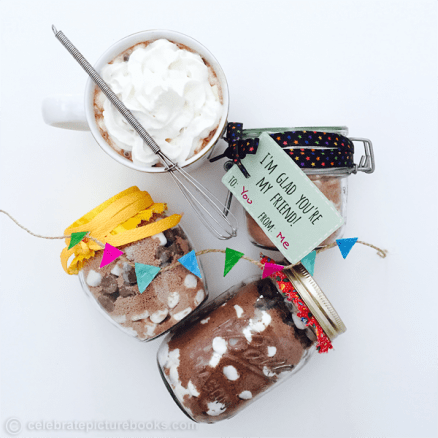
CPB - Hot Chocolate from above with whisk

Supplies

  • Mason jar, canning jar, or any recycled jar from home
  • Canister of your favorite hot chocolate mix
  • Bag of mini marshmallows
  • Bag of chocolate chips
  • Measuring cup
  • Spoon
  • Piece of cloth
  • Shoelace, string, elastic, or ribbon
  • Paper or card stock to make a Friendship Tag
  • Hole punch
  • Scissor

Directions for Filling the Jar

  1. Wash and completely dry the jar
  2. Drop a handful of mini marshmallows into the bottom of the jar. With the spoon push some of the marshmallows tight against the glass so they will show up when you add the hot chocolate mix.
  3. Measure 1/3 cup of hot chocolate mix and sprinkle it on top of the marshmallows. With the spoon gently spread the mix over the marshmallows.
  4. If you wish, add a layer of chocolate chips.
  5. Continue layering marshmallows and hot chocolate mix until you get to the top of the jar.
  6. At the top add another layer of chocolate chips and marshmallows.
  7. Put the lid on the jar and secure it tightly.

Directions for Decorating the Lid and Adding the Tag

  1. Cut a 6-inch circle from the cloth. To make the edges decorative, use a pinking sheers or other specialty scissor.
  2. Cover the lid of the jar with the cloth and secure with an elastic or rubber band.
  3. Tie the string, shoelace, or other tie around the rim of the lid.
  4. If using a Mason jar, place the cloth between the disk and the screw top
  5. Create a Friendship Tag and add your name and the name of your friend.
  6. Use a hole punch to make a hole in the Friendship Tag, slide it onto the tie, and knot it.

Directions for Making the Hot Chocolate

  1. With a spoon measure 1/2 cup of the hot chocolate, marshmallow, chocolate chip mix into a mug
  2. Fill the mug with boiling water, hot milk, or a combination of both
  3. Enjoy!

Picture Book Review

February 10 – Library Lovers Day

CPB - Jumping Off Library Shelves

About the Holiday

Today I’ve chosen to celebrate a month-long holiday. February is Library Lovers Month! Chances are if you’re reading this, you also love libraries! For readers there’s no better place than standing in the stacks, surrounded on all sides by shelves and shelves of books. In those pages you meet new friends, defeat the bad guys, discover poetry, laugh, sometimes cry, see astonishing art, find new hobbies, and learn fascinating facts about…wow! Anything and everything!

What’s your favorite library or thing about libraries? Mine is the East Lyme Public Library in Connecticut, where they have a fantastic selection of books and awesome librarians who feel like family! Tell me about your special library in the Comments section below.

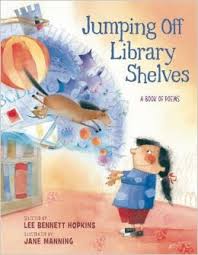
Jumping Off Library Shelves: A Book of Poems

Poems selected by Lee Bennett Hopkins | Illustrated by Jane Manning


From morning, which “pours spoons of sun through tall windows” of a library in Rebecca Kai Dotlich’s poem “Breakfast between the Shelves,” to night, when shadowed mice huddle to read a mystery in Dotlich’s closing poem “Midnight in a Library,” kids can enjoy a full day of poems in this delightful collection. Many of today’s best-loved poets for children are represented here, celebrating the power of a library card, the kindness of librarians, and the enchantment of reading.

Jane Manning’s soft, dreamy illustrations swirl with imagination, shimmer with the warm glow of a reading nook, and enchant with the smiles of children thrilled with the pleasures of reading.

Library Lovers Day Activity

CPB - Bookworm Book (2)


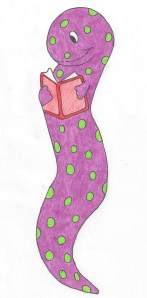
Bookworm Bookmark

For all you bookworms out there who love to read, here’s your very own Bookworm Bookmark to color and put between the pages of your favorite story!

Supplies

Directions

  1. Print out the Bookworm Bookmark template
  2. Color the bookworm
  3. Cut out the Bookworm
  4. Cut the Bookworm’s mouth at the dotted line. The top part of the bookworm’s mouth hangs over the page and marks your place!

February 9 – Pizza Day

celebrate-picture-books-picture-book-review-the-princess-and-the-pizza-cover

About the Holiday

Every day could be pizza day, but today’s holiday gives us a special reason to enjoy one of the world’s favorite foods! Since ancient times, people have been making pizzas of all kinds from flatbread to deep dish, but they all have one thing in common—they’re delicious! Here are just a few interesting facts about this most delectable of foods:

  • The very first pizzeria opened in Italy in 1738
  • The first pizzeria in America was opened in New York in 1895
  • Pepperoni is the most popular topping
  • Over 3 billion freshly made pizzas and 1 billion frozen pizzas are sold in the U.S. every year

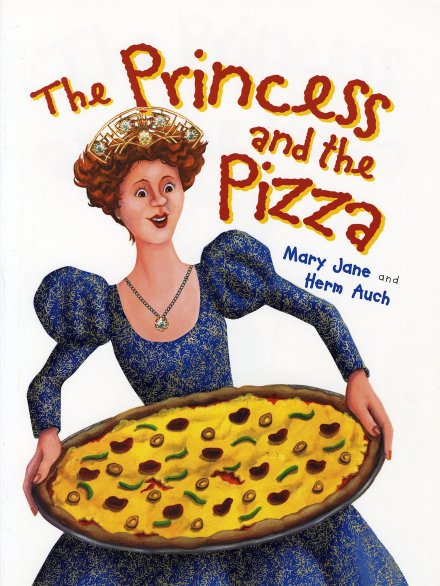
The Princess and the Pizza

 By Mary Jane and Herm Auch


Paulina loves being a princess. But when her father, the king, gives up his throne, Paulina needs a job! Things don’t go so smoothly, however, so when she hears that Queen Zelda is looking for a bride for her son, Drupert, she springs into action. Armed with her best ball gown, a tiara, garlic for good luck, and herbs to mask the garlic smell, Paulina is off to Blom to win a prince and her old life back.

Twelve women show up to woo Prince Drupert, and Queen Zelda has plans to find him the perfect wife. She pits the women against each other in three competitions—the pea-under-the-mattress test, the glass slipper fitting, and a feast-preparation contest. Paulina easily passes the first two but is thwarted in the third by the shenanigans of the remaining contestants.

By the time Paulina reaches the table that holds the ingredients for the feasts, the only items left are tomatoes, cheese, and the makings of a dough. Paulina throws them together then decides to take a nap (after first removing the sleep-depriving pea from the bed). Rudely awakened from slumber and given a threat she can’t ignore, Paulina tosses her creation on the fire and sprinkles it with her garlic for good luck and the herbs to mask the smell.

The time for tasting arrives and Paulina presents her tray, hoping for the best. Although the concoction may look a mess, it smells scrumptious and with one taste Prince Drupert proclaims it the winner. And so in one fell swoop our intrepid heroine has invented pizza and won the heart of Prince Drupert. But the whole experience has given Paulina a better idea. She dumps Drupert and opens a Pizza Palace. And while she may not actually be royalty anymore, the townspeople are so thrilled they treat her like a queen. Life again is good, but could her father be falling for Queen Zelda?

Paulina is an appealing modern princess—she’s loaded with self-confidence, never gives up, and knows how to play the game. Kids will love recognizing the references to other favorite fairy tales, and the humorous illustrations of the unflappable Paulina will have them giggling with every page.

Ages: 4 and up

Holiday House, New York 2003 / ISBN 978-0823417988

Pizza Day Activity

CPB - Pizza Day Toppings

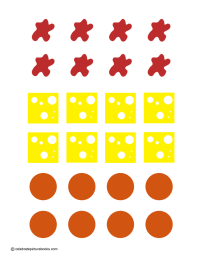
Create Your Pizza Game

Play this fun game to build your pizza ingredient by ingredient before the others!          For 2 – 8 players.

Supplies

Directions

February 8 – Opera Day

celebrate-picture-books-picture-book-review-father's-chinese-opera-cover

About the Holiday

Today celebrates a musical art form that began in the 1500s in Italy. An opera is a play that is entirely sung by the actors. Operas can be funny, romantic, or tragic. The actors must have amazing voices that can fill the whole opera house because they do not use microphones. The actors get to sing solos, called arias, that reveal their emotions about particular moments in the story. Because of its grand history in countries such as Italy, Germany, and France, operas are still more popular in Europe than in the U.S. In America we’re more familiar with musicals, like Frozen orAladdin, where some dialogue is spoken and songs tell more about the plot of the story than about the characters’ feelings. If you’d like to listen to a little bit of an opera for children, check out this video of parts of Little Red Riding Hood performed by the BCOpera.

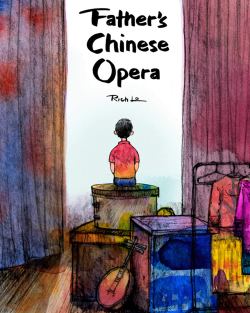
Father’s Chinese Opera

By Rich Lo


Recalling personal experience, author-illustrator Rich Lo writes a unique tale set within the Chinese opera. Revolving around themes pertinent to life, the Chinese opera employs actors as well as acrobats and flag carriers who add action and meaning to the play.

celebrate-picture-books-picture-book-review-father's-chinese-opera-acrobats

Copyright Rich Lo, 2014, courtesy of Sky Pony Press.

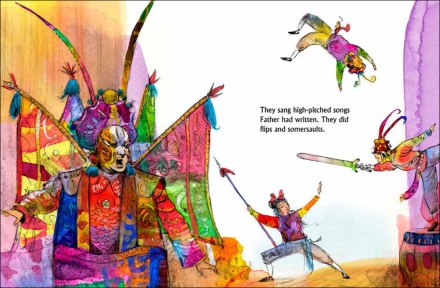
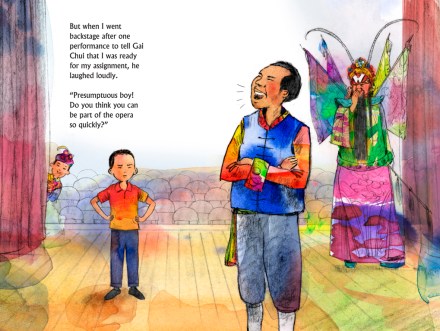
In Father’s Chinese Opera, the son of the band leader and composer for the Hong Kong opera watches the actors flip and somersault across the stage and dreams of joining them. He approaches Gai Chui, the best acrobat in the troupe and asks to be taught the martial arts. Gai Chui agrees and the little boy begins to learn the moves—Praying Mantis, Crouching Tiger, Striking Leopard, and more. The little boy practices hard and believes he is ready to join the other actors, but when he tells Gai Chui he is ready, the master acrobat laughs and tells him it’s not quite that easy.

celebrate-picture-books-picture-book-review-father's-chinese-opera-backstage

Copyright Rich Lo, 2014, courtesy of Sky Pony Press.

Dejected, the boy goes home. His father tells him about how hard he worked to become the leader of an opera troupe, and the boy takes the lesson to heart. The next day he goes back to the opera house and instead of watching the actors, he takes note of the flag carriers—the lowest position in the troupe. He asks if he can be a flag carrier, to which his father agrees—but only for the summer.

As a flag carrier, the boy makes new friends, becomes a better acrobat, and impresses Gai Chui, who tells him that with more practice he will be able to achieve his dreams.

celebrate-picture-books-picture-book-review-father's-chinese-opera-band-leader

Copyright Rich Lo, 2014, courtesy of Sky Pony Press.

Rich Lo’s story is full of truths about hard work and the benefits of developing a deep understanding of all aspects of one’s skills. Children may find a conversation like this seemingly unfair, but Lo reveals that such teaching on the part of a parent or other adult is one of the ultimate demonstrations of love. 

Lo’s watercolor illustrations are vibrant and dreamy, perfectly reflecting the beauty and action of the Chinese opera that so captivates the story’s young narrator. His father and the orchestra, dressed in their conservative blue and tan suits and sitting at the corner of the stage, contrast starkly with the bold, riotous mosaic of the actors’ costumes and the swirling moves of the acrobats. It’s easy to see why the boy is attracted to this art. It is back home—where the colors once again become muted and quiet—however, that the boy learns his greatest lesson.

Sharing Father’s Chinese Opera with children is an excellent way to discuss the idea that while a talent may be inborn, practice and patience are also needed to see it come to its full fruition. The book would be a valuable addition to home, classroom, and library collecions.

Ages: 3 – 7

Sky Pony Press, 2014 | ISBN 978-1628736106

Opera Day Activity

CPB - Opera Day word search

Opera Word Search


Today’s activity is a Word Search puzzle loaded with words about the Chinese opera. Just print out the puzzle and start looking! The Solution is also included.

celebrate-picture-books-picture-book-review-father's-chinese-opera-cover

You can find Father’s Chinese Opera at these booksellers

Amazon | Barnes & Noble | Books-a-Million | IndieBound