April 10 – National Wildlife Week

About the Holiday

National Wildlife Week, dating back to 1938, is the National Wildlife Federation’s longest-running education program. The celebration was designed to connect budding conservationists of all ages to the awesome wonders of wildlife. Each year, we pick a theme and provide fun educational materials and activities for educators and caregivers to use with kids. This year’s theme is Keep an Eye on the Wild. Conservationists and animal lovers are keeping a lookout for wildlife in the most unexpected places as we learn how we can keep their habitats safe and live in harmony with our incredible wild neighbors. Whether you keep your eyes out for the wildlife living near you with a “critter cam” or by walking around and paying attention to your backyard, neighborhood, and wider area, being aware of the creatures around you can help them survive for generations to come. To learn more about National Wildlife Week and find fun activities aimed at connecting kids with wildlife, visit the National Wildlife Week Kids Page!

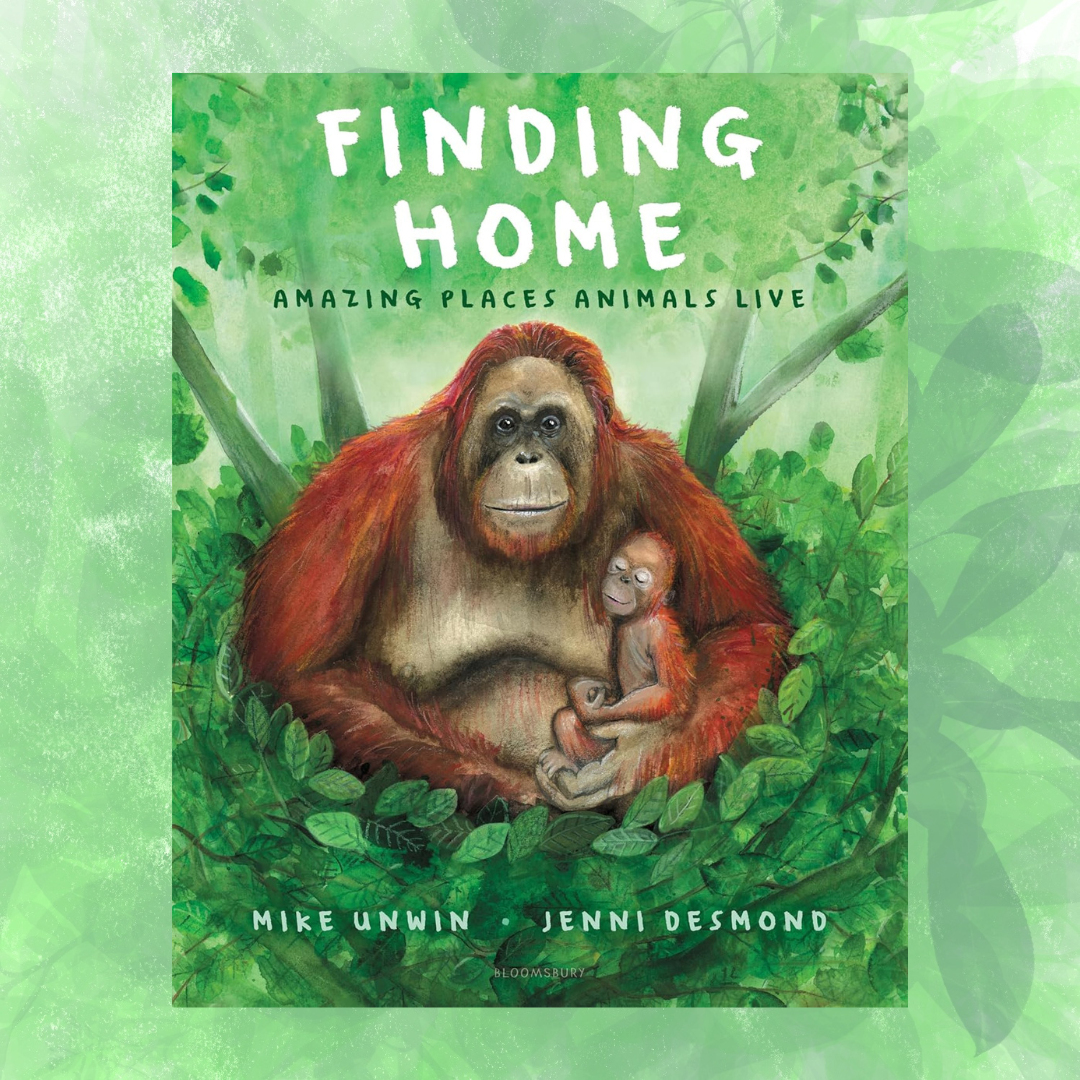
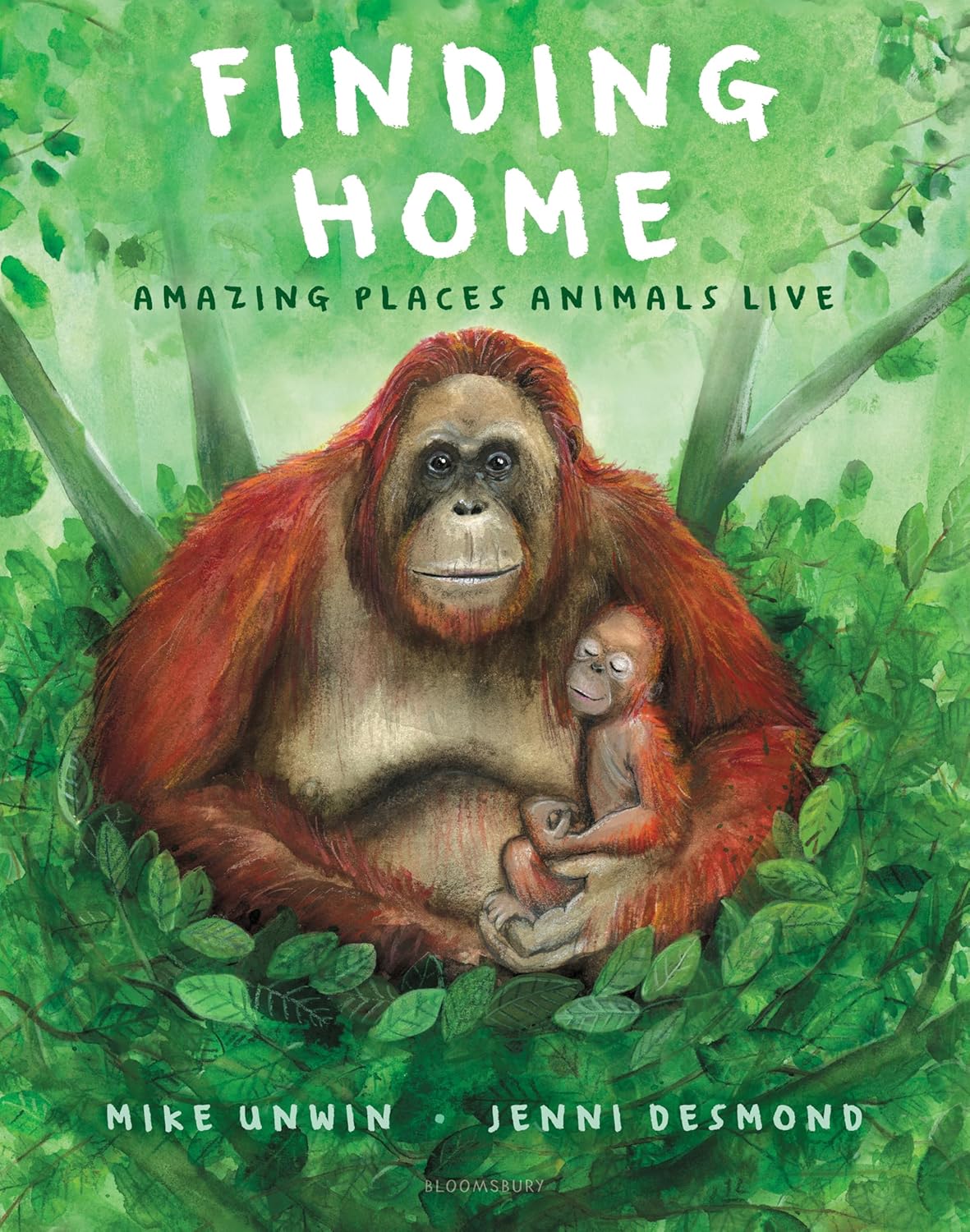
Finding Home: Amazing Places Animals Live

Written by Mike Unwin | Illustrated by Jenni Desmond


Finding Home begins: “Our planet is home to a mind-boggling number of different animals: at least 6,500 species of mammal, 10,000 species of reptile, 11,000 species of bird, and literally millions of insects. Every single one has its own home.” Just think of it! As your eye sweeps across any vista; as you walk across your yard, local playground, or favorite park, beach, or mountain trail, an untold number of creatures’ homes are within sight or underfoot. We know their names: Den. Nest. Burrow. Taxi (wait, what?). You’ll see, because in their astounding and gorgeous book, Mike Unwin and Jenni Desmond reveal that there is no such thing as a generic animal home.
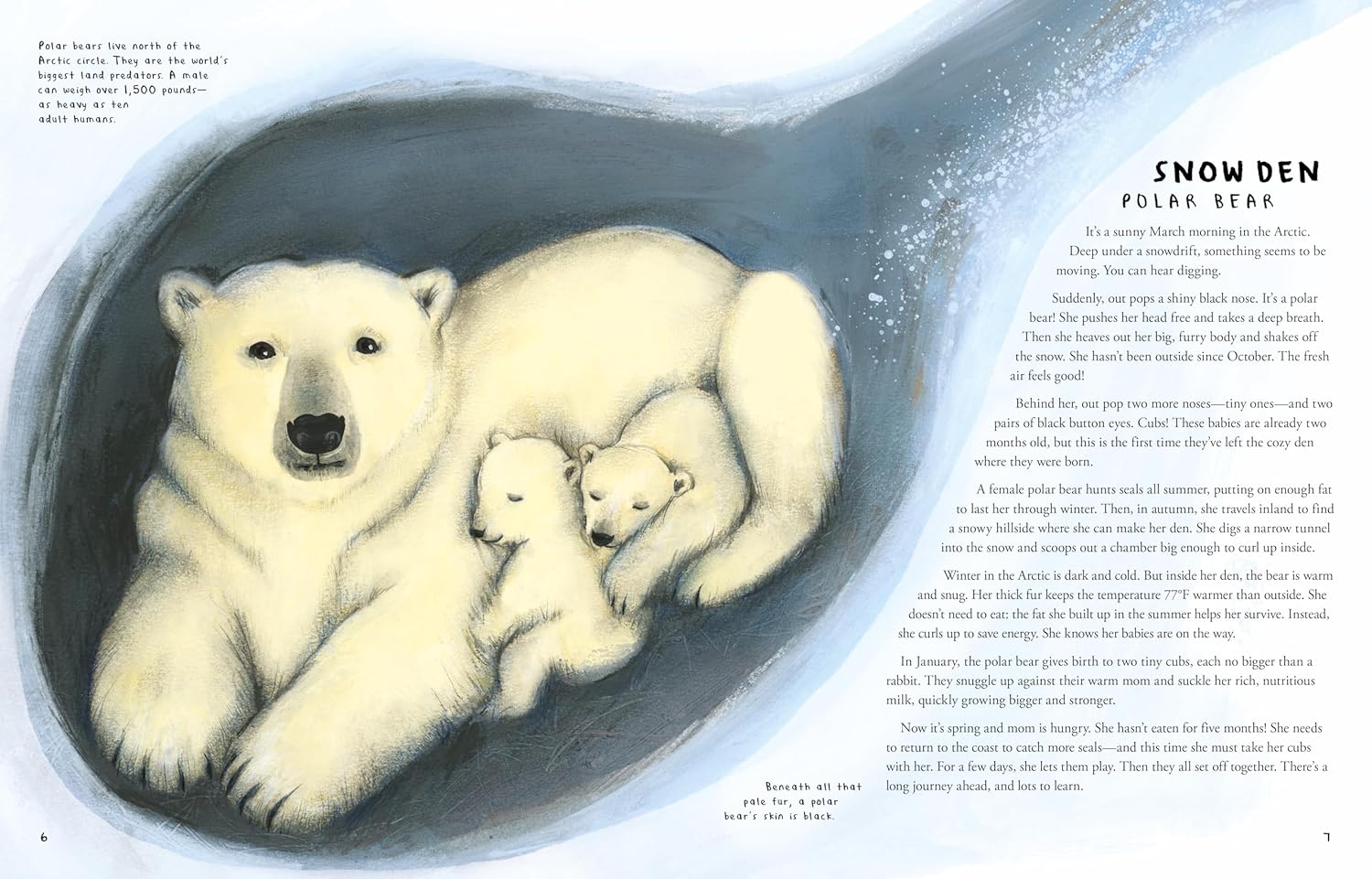
Illustration © 2025 by Jenni Desmond, text © 2025 by Mike Unwin. Courtesy of Bloomsbury Children’s Books.

Take “den,” for instance—a polar bear’s snow den. Unwin and Desmond take you right inside this winter home, where a mother polar bear and her two cubs (born here in the cold of January) welcome you. As you squeeze inside, don’t worry about being cold. The polar bear’s “thick fur keeps the temperature 77°F warmer than outside.” 

Next up is “nest.” These are bowls made from twigs, straw, and fluff and, sometimes, found objects like bits of paper or cloth, right? Well, yes—for some birds. But you won’t believe your eyes when you see what appears to be several haystacks lodged within a tree’s branches. This nest, constructed by a whole community of birds smaller than sparrows, can “grow as big as a car, weigh more than a ton, and last 100 years.” Like humans’ apartment buildings, the bird pairs that inhabit this nest look out for each other and help their neighbors. Kids will also be amazed by another type of bird that literally sews leaves together with “plant fiber and spider silk” to create their soft, deep nests.
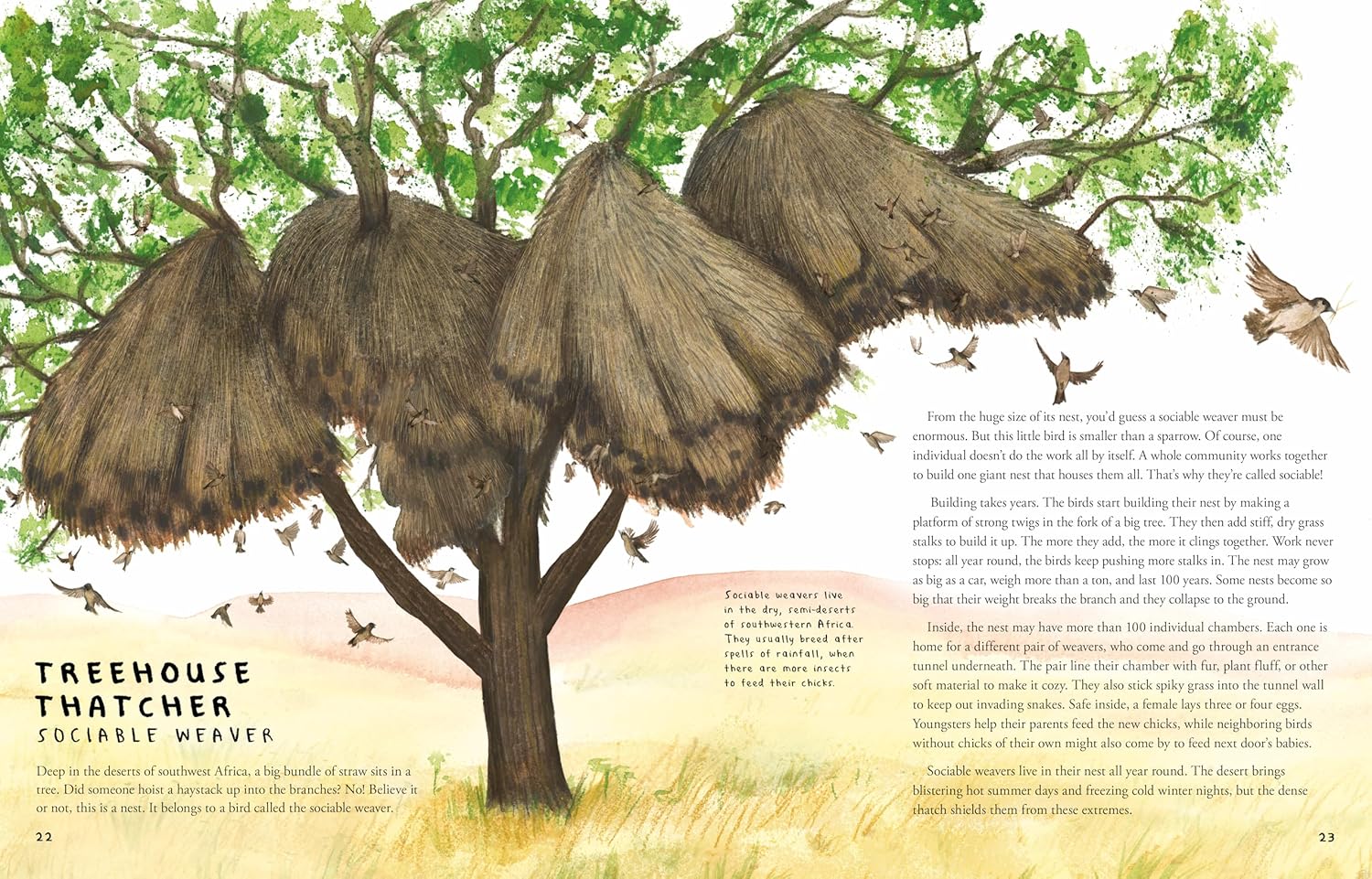
Illustration © 2025 by Jenni Desmond, text © 2025 by Mike Unwin. Courtesy of Bloomsbury Children’s Books.

And how about “burrows?” Yep, Unwin and Desmond showcase a couple of pretty spectacular burrows too. Take the aardvark’s home. You won’t see an aardvark during the day. While the sun is up, they stay below ground, sleeping and tending to their young. It’s only after sunset that these unusual, ant-eating animals (including two-week-old babies) make an appearance topside. This is when they do what they do best: sniff out anthills and termite mounds, dig them up, and have dinner. It takes a hearty meal to satisfy an aardvark: “One aardvark can eat an amazing 50,000 ants and termites in a single night!”

Now, about that “taxi.” Children will be wowed by two, very different types of animals who prefer moving from one area to another by hitching a ride on another creature, from whom they can get food and other necessities of life while helping their hosts as well. Of course, the variety of animal homes don’t stop at these four. Every page transports readers to a different part of the globe to witness creatures of the air, sea, and land living in the home of their choice.

Unwin ends this fascinating travelogue with a map showing different ways some of the animals in the book tend to the environment, protecting it and keeping it growing for themselves and humans. He also includes a caution, reminding readers that “all these habitats . . . fit together like jigsaw pieces to make up planet Earth. And just like a jigsaw needs all its pieces, a healthy planet needs all its animals and their habitats.” Sadly, humans have not been good stewards of Earth’s bounty. “Today, scientists and conservationists are working hard to put things right.” But everyone is needed to make sure our environment is cared for the way we care for our own families. “Only then will planet Earth truly be home, sweet home.”
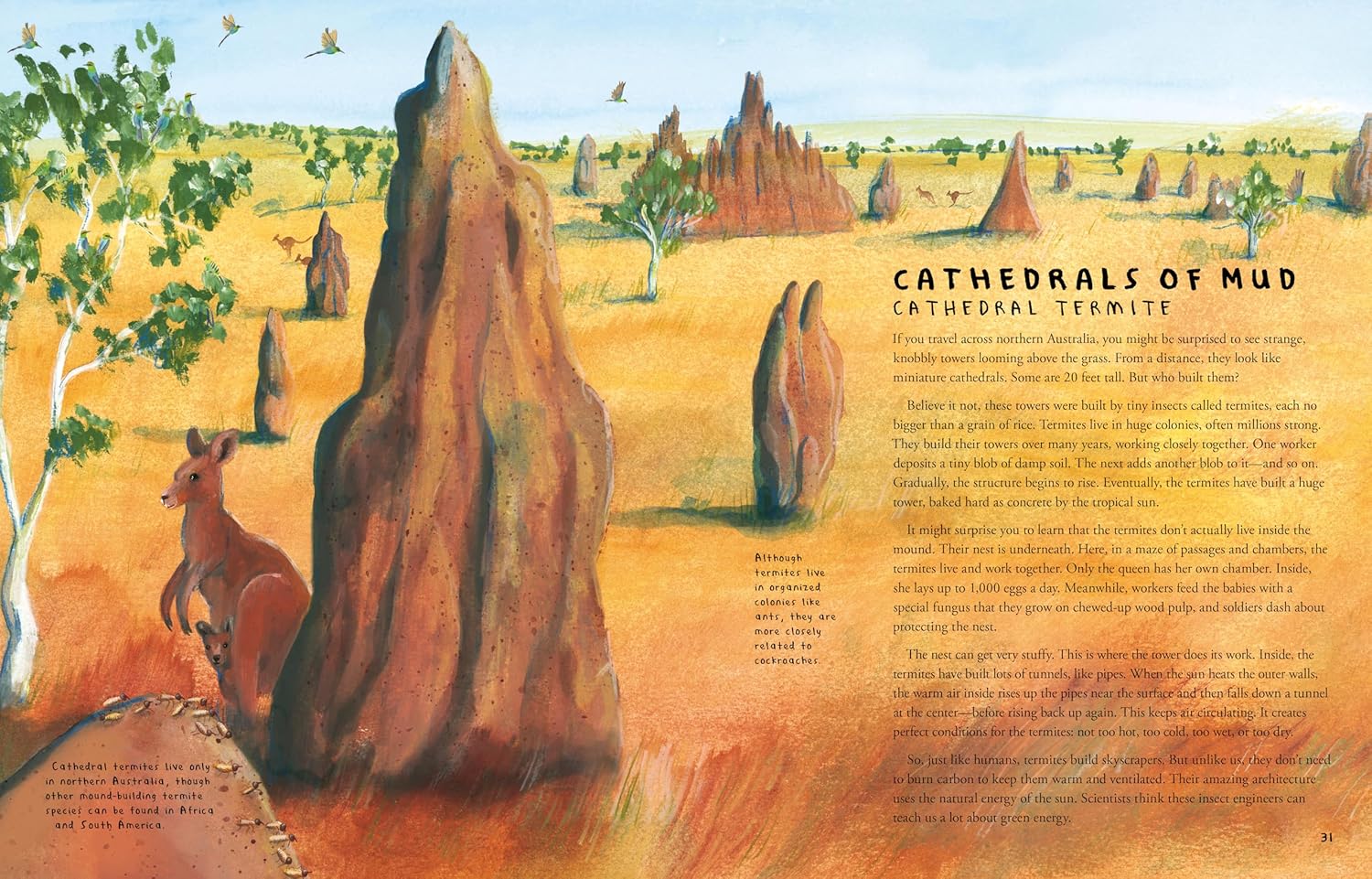
Illustration © 2025 by Jenni Desmond, text © 2025 by Mike Unwin. Courtesy of Bloomsbury Children’s Books.

Mike Unwin draws readers in with engaging storytelling that allows kids to easily understand how each animal goes about building their home and why it’s perfect for their lifestyle. Children also learn just as much about the animals as the homes they build, giving them deep and well-rounded knowledge of some of the most unusual birds, fish, mammals, and insects on our planet and how many of them benefit humankind. Unwin’s phrasing, vocabulary and conversational lilt make Finding Home a highly satisfying nonfiction read aloud for younger kids. Independent readers will eagerly dip into the book again and again to meet these intriguing creatures.

With the impact of a museum exhibit, Jenni Desmond’s rich, full-bleed illustrations will take your breath away with their stunning realism and personality. Some animals peek out at the reader, while others busily go about their work oblivious to outside interest. From grassy hillsides to treetop canopies to sunny Africa and the snowy Himalayas, Desmond takes readers on an around the world tour like no other.

Gorgeous, educational, and nature nonfiction at its best, Finding Home: Amazing Places Animals Live is a must for all classroom, school, and public libraries as well as for nature- and animal-loving kids and families.

Ages 5 – 8+

Bloomsbury Children’s Books, 2025 | ISBN 978-1547615100

About the Author

Mike Unwin has written more than 30 books for both adults and children, including the Encyclopedia of Birds and Migration. He is also a regular contributor to publications such as BBC Wildlife and RSPB Nature’s Home. In 2013 Mike was voted UK Travel Writer of the Year by the British Guild of Travel Writers. Follow Mike on Instagram @mikeunwin.wildtravel.

About the Illustrator

Jenni Desmond is the illustrator of more than 20 books, including MigrationThe Wolves of Yellowstone, and The Blue Whale. Her books have been translated into over a dozen languages. In 2016 she was made a Maurice Sendak Fellow and her book The Polar Bear became a New York Times Best Illustrated Children’s Book of the Year. When Jenni is not in her studio, you’ll find her cooking, cycling and looking for adventure. Visit her at jennidesmond.com and follow her on Instagram @jennidesmond.

National Wildlife Week Activity
celebrate-picture-books-picture-book-review-shark-fin-craft

Fintastic Shark Fun


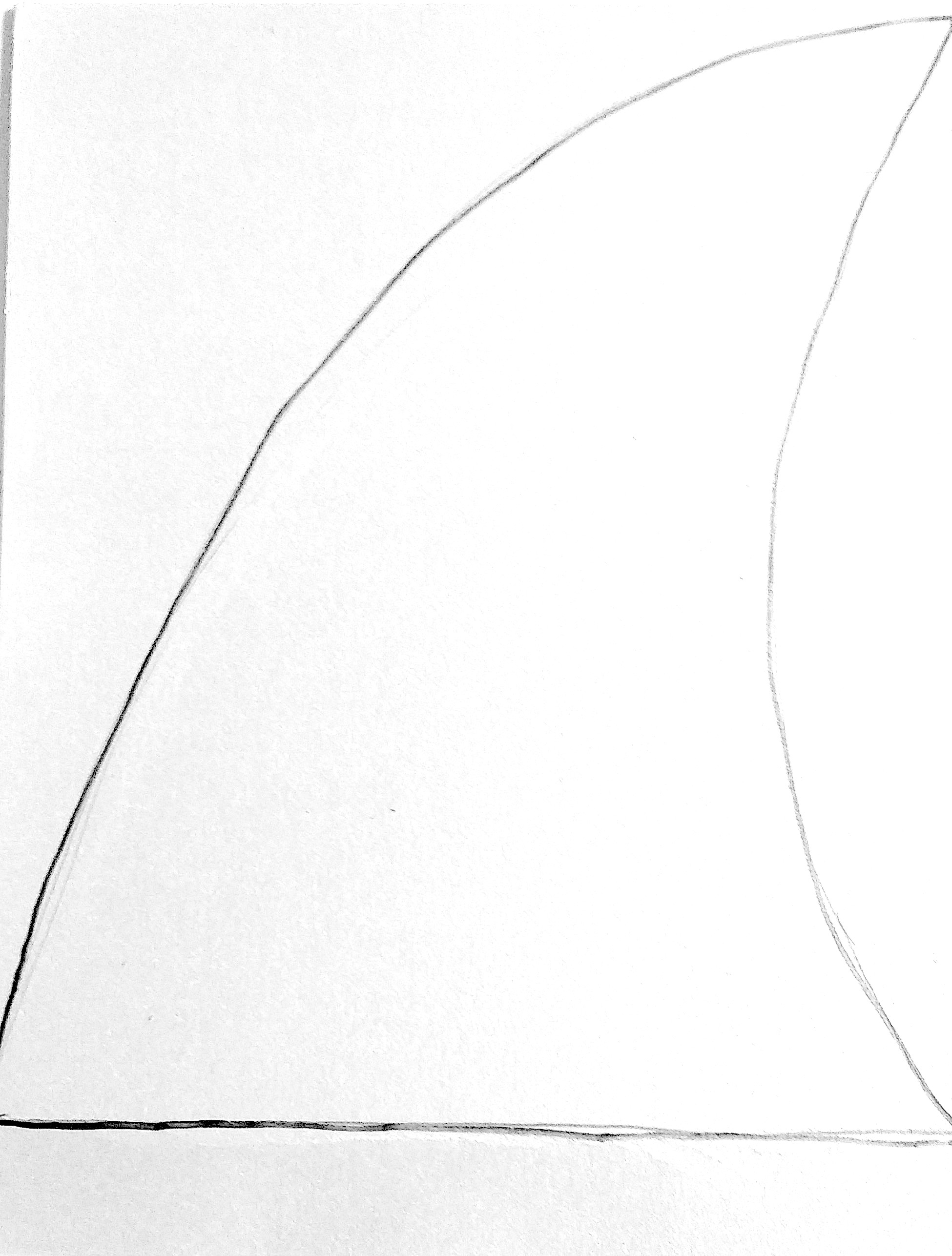
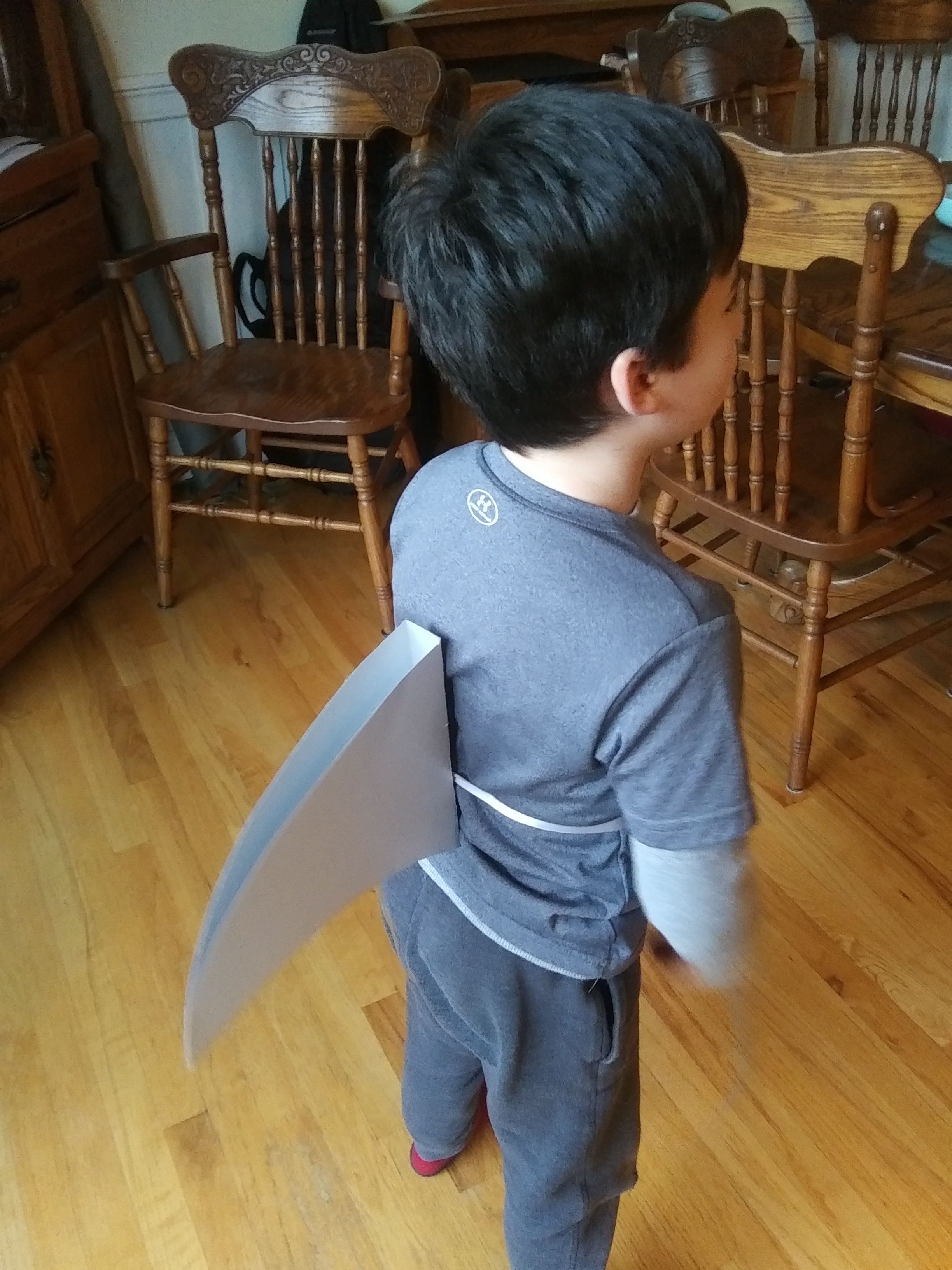
Sharks are awesome creatures and even feature as a home to another animal in today’s book! Follow the directions below and to make your own shark fin. 

Supplies

  • 2 pieces of 8.5 x 11 gray cardstock paper
  • Ribbon
  • Tape
  • Scissors
  • Pencil

fin outline white

celebrate-picture-books-picture-book-review-shark-fin

Directions

  1. Tape the top of the two pieces of paper together
  2. Fold them back together
  3. Measure an inch up from the bottom of the papers (the un-taped side) and trace a straight line across both papers
  4. Trace a shark fin outline onto your paper. The shark outline should stop an inch above the bottom
  5. Cut out the fin on both pieces of paper. If you should cut through the tape, re-tape the tops together
  6. Fold along the lines of both papers so the folds face towards each other.
  7. Tape the folds so the fin becomes a triangle
  8. Cut two slits parallel to the folded lines
  9. Thread ribbon through slits

You can purchase Finding Home: Amazing Places Animals Live from these booksellers

Amazon | Barnes & Noble | Bookshop (discounted books and support for your local independent bookstore)

Picture Book Review

March 22 – It’s Women’s History Month

celebrate-picture-books-picture-book-review-cactus-queen-cover

About the Holiday

National Women’s History Month is all about celebrating women who broke barriers with their intelligence, creativity, courage, persistence, and unwavering confidence in their abilities. In every discipline, women have brought and continue to bring new perspectives, experiences, and talents to make contributions toward a better world. The theme for Women’s History Month 2024 celebrates “’Women Who Advocate for Equity, Diversity and Inclusion.’ This theme recognizes women who understand the need to eliminate bias and discrimination from individuals’ lives and institutions.”

Today’s book celebrates a visionary woman who made it her life’s work to protect a unique ecosystem, educate people on the importance of the environment and conservation, and provide the US with one of its most stunning national parks. 

I’d like to thank Calkins Creek/Astra Books for sharing a copy of Cactus Queen” Minerva Hoyt Establishes Joshua Tree National Park with me for review consideration. All opinions on the book are mt own.

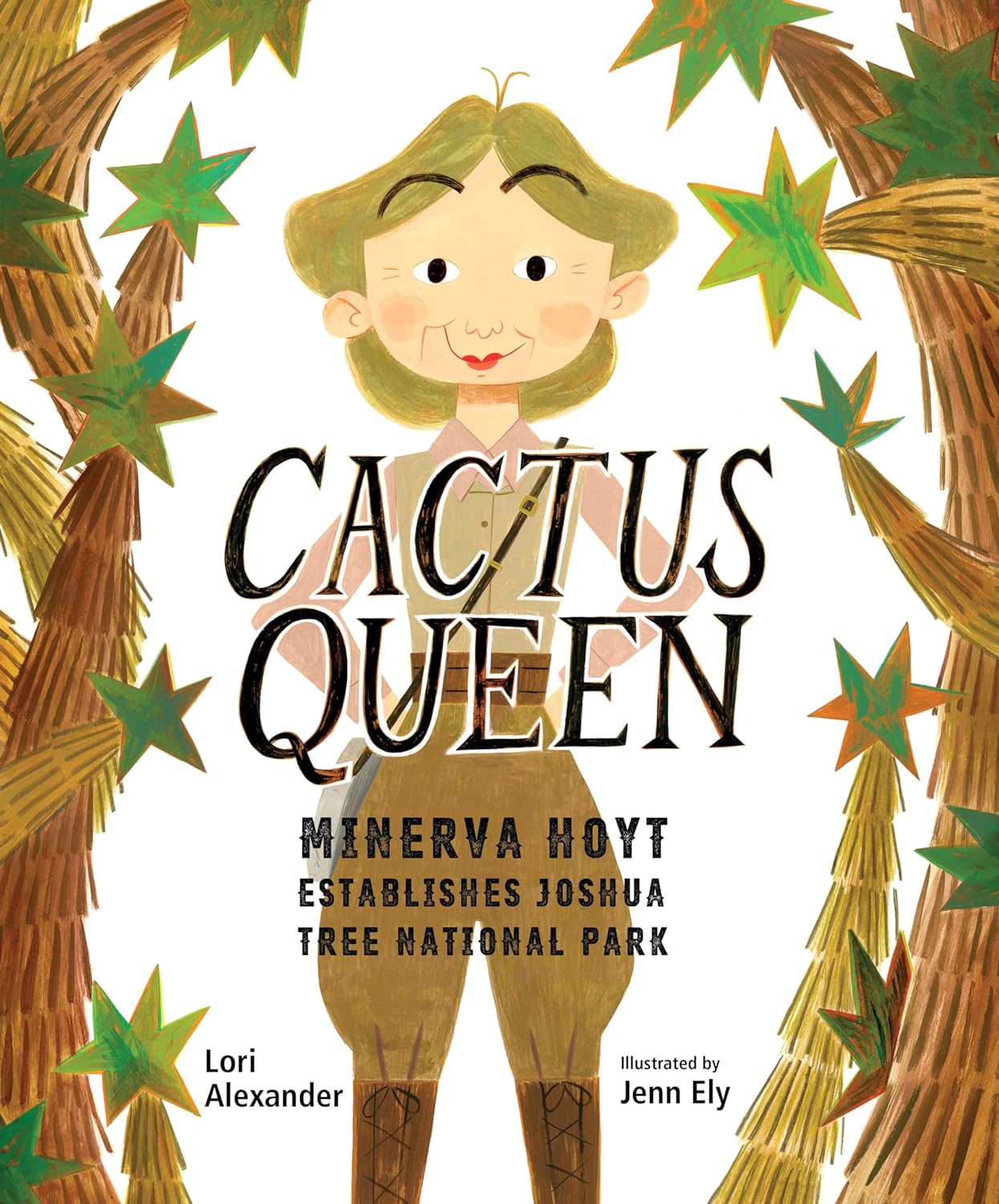
Cactus Queen: Minerva Hoyt Establishes Joshua Tree National Park

Written by Lori Alexander | Illustrated by Jenn Ely


Even as a child, Minerva loved the outdoors, was eager to share her thoughts and opinions, and enjoyed “long chats with friends.” When she grew up she married Dr. Albert Hoyt. In 1897 Minerva and her husband moved from Mississippi to Pasadena, California, close to Los Angeles. To meet new friends, Minerva hosted a backyard party, complete with games, food, and, of course, long chats.

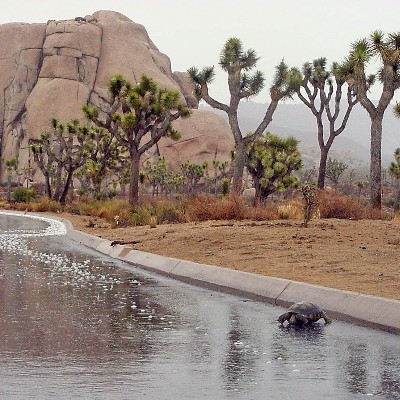
Settled into her new city, Minerva took to making trips to the Mojave Desert. She was awed by the Joshua trees, which grew nowhere else but here. After the death of her husband in 1918, Minerva spent more time in the desert, even camping out while “the wind whistled through the Joshua trees,” and “bright constellations swirled overhead.”

celebrate-picture-books-picture-book-review-cactus-queen-garden-party

Illustration copyright Jenn Ely, 2024, text copyright Lori Alexander, 2024. Courtesy of Calkins Creek, Astra Books for Young Readers.

As Los Angeles grew and grew, with more buildings, more cars, and more noise, people began to visit the desert frequently. They didn’t just visit, though, they wanted to take it home. People dug up the “… fuzzy cholla, spiky yucca, and barrel cacti to keep in their backyards.” They even dug up Joshua trees and carted them away. Many of these desert plants didn’t survive their new city surroundings. The Joshua trees were also cut down for construction materials, and motorists lost in the desert set them afire to communicate with other drivers.

By the late 1920s little remained of Minerva’s beloved desert. She wanted to save it . . . but how? Suddenly, “Minerva had a wild idea.” She would show the rest of the country just how special the desert was. With help from garden clubs, artists, taxidermists, and friends, she gathered samples of desert flora and fauna and took them east—by train.

celebrate-picture-books-picture-book-review-cactus-queen-camping

Illustration copyright Jenn Ely, 2024, text copyright Lori Alexander, 2024. Courtesy of Calkins Creek, Astra Books for Young Readers.

At the 1928 International Flower Show in New York City, Minerva erected a display of the desert. Crowds were thrilled to discover this “strange landscape,” and reporters took pictures for magazines and newspapers. Minerva won a gold medal for her exhibit, The Spirit of the Desert. Minerva also won awards in Boston and London for exhibits there. But more important than these accolades was that people were really listening to her and beginning to love the desert. When she donated her exhibits to museums, more people became interested in the desert.

By 1933, Minerva was ready to move on to the next stage in her plan. She wanted 1,000,000 acres of the desert to be declared a national park, protected by federal laws. Minerva garnered an audience with President Franklin D. Roosevelt and brought photographs to show him. She convinced the President—now it was up to Roger W. Toll, superintendent of Yellowstone National Park, to inspect Minerva’s desert and agree.

celebrate-picture-books-picture-book-review-cactus-queen-museum-exhibit

Illustration copyright Jenn Ely, 2024. Courtesy of Calkins Creek, Astra Books for Young Readers.

As Roger Toll stood in the middle of the desert on a rainswept day, he asked, “where are the lush trees, the waterfalls, and lakes?” When he later filed his report, he rejected the desert for National Park status. Minerva was disappointed but did not give up. She began a letter-writing campaign, convincing “scientists, teachers, politicians, and friends” to write to the National Park Service. Letters poured in—enough to convince the Service to send out a new inspector.

This time Assistant Director Harold C. Bryant, who lived in California, was sent. “He knew all about desert plants and animals.” When he arrived, Minerva and more than one hundred supporters greeted him. After touring the desert for three days, Bryant announced his decision: Yes! “Minerva’s desert was worth saving.”

celebrate-picture-books-picture-book-review-cactus-queen-park

Illustration copyright Jenn Ely, 2024, text copyright Lori Alexander, 2024. Courtesy of Calkins Creek, Astra Books for Young Readers.

Extensive backmatter, accompanied by photographs, offers more biographical information about Minerva, points about wildlife in Joshua Tree National Park, facts about other national parks in the United States, tips for how young people can help the environment through easy-to-implement actions, and a bibliography. In Lori Alexander’s Author’s Note, she relates the dangers and destruction that the fragile environment of Joshua Tree National Park and the surrounding desert continues to suffer from “vandalism, urban development, and the effects of climate change,” a report that demonstrates the need for continued education and care taking of our natural resources.

In Cactus Queen, Lori Alexander has created a compelling biography of a remarkable woman as well as a call to action for readers to stand up for the environmental or other causes that are important to them. Alexander highlights Minerva Hoyt’s love of the desert, her dedication, and her unflagging determination to overcome setbacks. Hoyt’s creativity, pragmatism, and lifelong focus serves as an inspirational roadmap for accomplishing goals for children, teens, and even the adults who read with them.

The first thing readers may notice upon opening Cactus Queen is Jenn Ely’s beautiful color palette that mirrors the unique hues of the desert. Her stunning images of the desert and Minerva’s ingenious ways of rallying the country and the President to her cause transport children from Hoyt’s earliest days through her long-fought success. Ely’s charming illustrations reveal not only the special plants and creatures of the Mojave Desert but Minerva’s distress at its destruction and her tenacity to enact change to protect it. 

Both a fascinating biography of Minerva Hoyt and an in-depth look at the multifaceted workings of conservation efforts, Cactus Queen: Minerva Hoyt Establishes Joshua Tree National Park will inspire readers to advocate for causes that are important to them. For educators the book would make an excellent addition to science and language arts curriculum. Cactus Queen would also be an engaging accompaniment to museum visits or field trips for families and teachers.

Cactus Queen is a top pick for classrooms, public and school libraries, museum shops, and families.

Ages 7 – 10

Calkins Creek, 2024 | ISBN 978-1662680212

About the Author

Lori Alexander is the award-winning author of several children’s books, including All in a Drop: How Antony van Leeuwenhoek Discovered an Invisible World, which won a Robert F. Sibert Honor, and A Sporting Chance: How Ludwig Guttmann Created the Paralympic Games, an NCSS Notable Book. Her work has received several starred reviews from KirkusSchool Library Journal, and Horn Book Magazine, has made the NSTA Outstanding Science Trade Book list, and has been selected by the Junior Library Guild. Visit Lori Alexander at lorialexanderbooks.com.

About the Illustrator

Jenn Ely is an artist and animator, who has worked on the movies The Boxtrolls and Guillermo Del Toro’s Pinocchio. In her recent foray into children’s books, she illustrated The Gardener of Alcatraz and If You Were a Kid Building a Pyramid. Visit Jenn Ely at jennely.com.

Women’s History Month Activity

celebrate-picture-books-picture-book-review-joshua-tree-national-park-wildlife

Become a Joshua Tree National Park Junior Ranger

How would you like to become a Joshua Tree National Park Junior Ranger? You can your badge with this online program full of fun and educational activities for all ages! You can learn how to draw a Joshua Tree, create your own constellation, learn all about desert tortoises, create your own rock formation, learn about adaptable plants and design your own, and more.

To earn your badge kids ages 5 – 7 are asked to complete 2 activities; kids ages 8 – 10 are asked to complete 3 activities; and kids ages 10 and above are asked to complete 4 or more. After finishing projects, you just need to send images of your work to receive your badge in the mail!

Simply visit the official Joshua Tree National Park website and learn more about their Junior Ranger program! Learn more about the park and view lots of pictures and videos here.

Joshua Tree National Park Coloring Page

celebrate-picture-books-picure-book-review-joshua-tree-national-park-coloring-page

Enjoy this activity page by filling it with all the colors of the desert.

Joshua Tree National Park Coloring Page

celebrate-picture-books-picture-book-review-cactus-queen-cover

Order from Bookshop to support your local independent bookstore.

You can also find Cactus Queen: Minerva Hoyt Establishes Joshua Tree National Park at these booksellers

Amazon | Barnes & Noble | Books-a-Million

Picture Book Review
December 2 – I AM TODAY Blog Tour Stop

celebrate-picture-books-picture-book-review-i-am-today-cover

About the Holiday

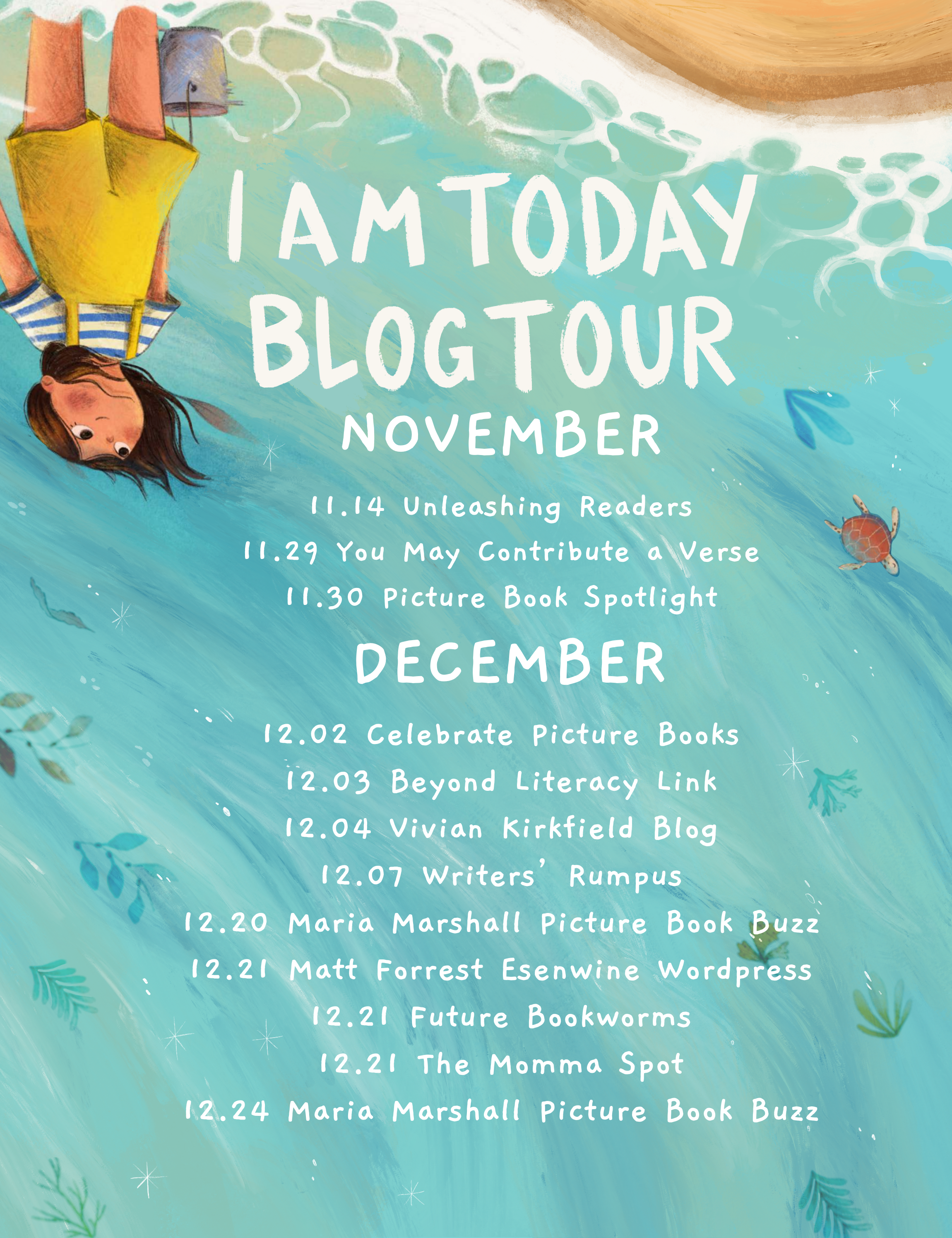
I’m thrilled to be a stop on the blog tour for I Am Today by Matt Forrest Esenwine and Patricia Pessoa. This season of giving is the perfect time to share this gorgeous book that reflects the desire of children to give their thoughts, talents, and actions to causes that are meaningful to them. If you’d like to follow I Am Today’s blog tour, see the graphic below for further dates and blogs.

I Am Today

Written by Matt Forrest Esenwine | Illustrated by Patricia Pessoa


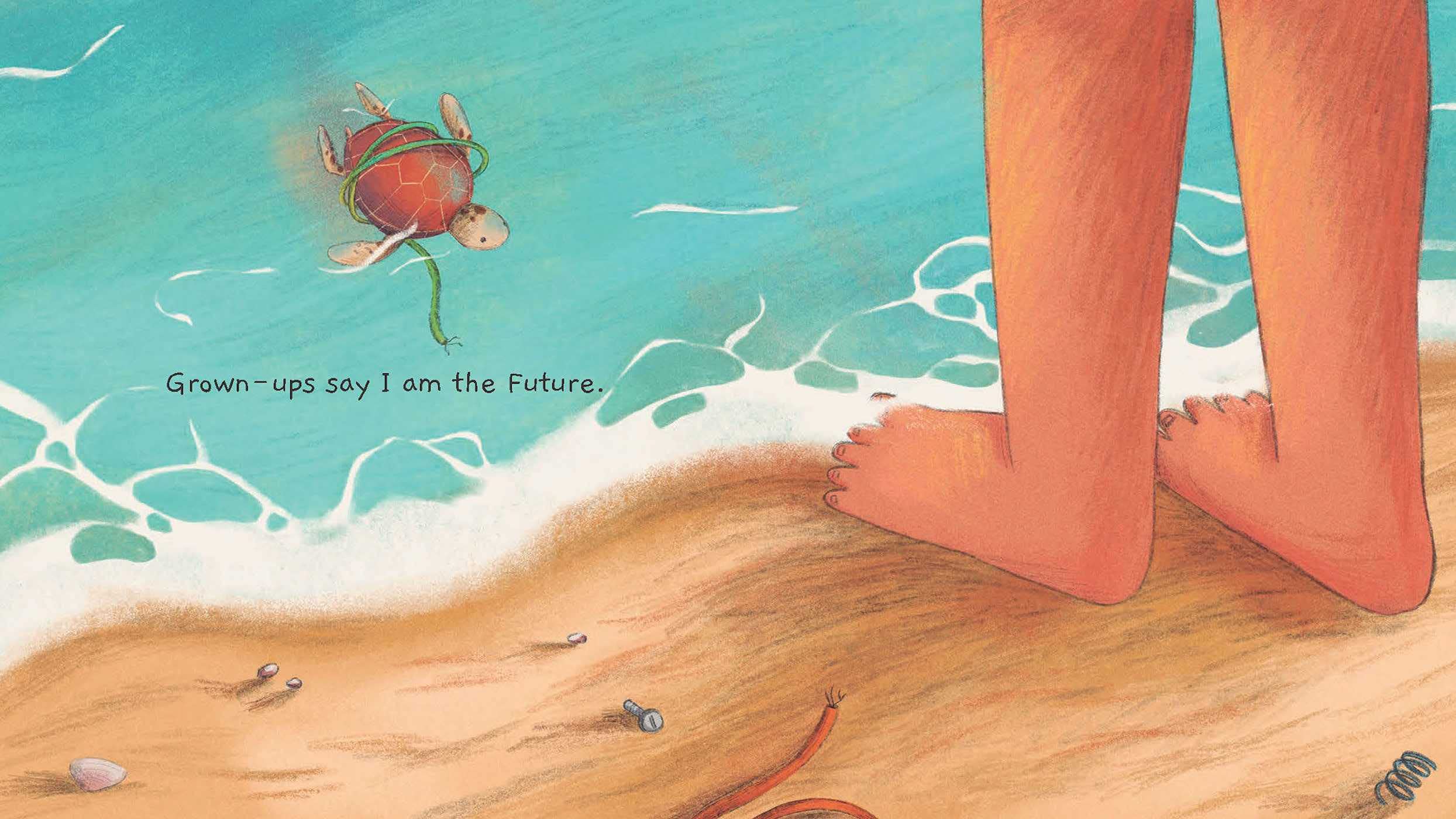
A child stands on the edge of the beach, letting the sea foam run over her bare toes. Below, a turtle wrapped in a strand of wire floats nearby, while in the background a factory belches smog into the air, and a pipe snakes over the dunes to the water, where it spills its industrial waste. As the child picks up the turtle and removes the wire, she states, “Grown-ups say I am the Future.” Then while releasing the freed turtle, she finishes her thought: “But I’d rather be the Now.” The child then makes her case, explaining that she’s ready to contribute in positive ways, having learned decency, fairness, and generosity from her family and other role models.

celebrate-picture-books-picture-book-review-i-am-today-turtle

Image copyright Patricia Pessoa, 2021, text copyright Matt Forrest Esenwine, 2021. Courtesy of POW! Kids Books.

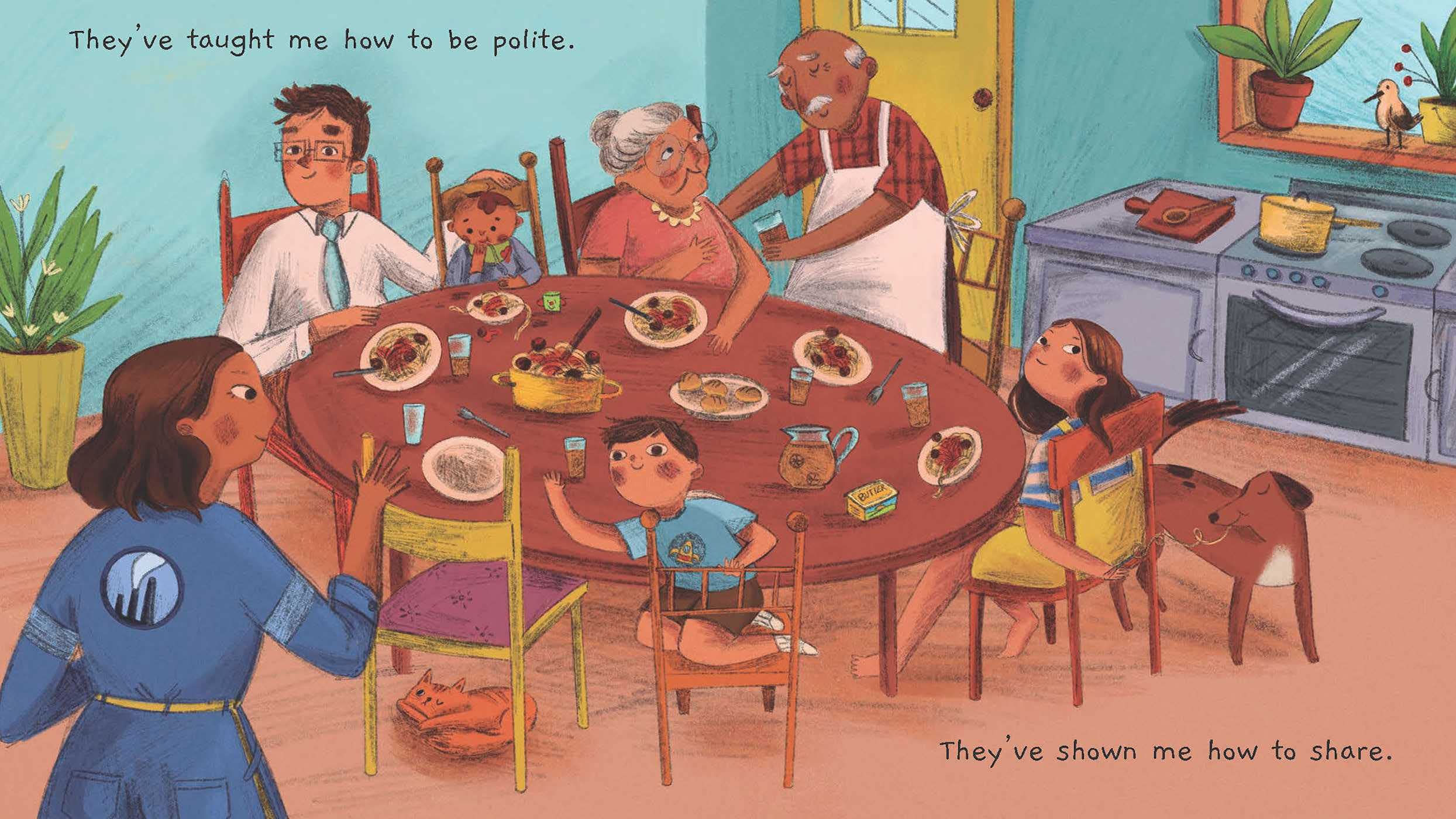
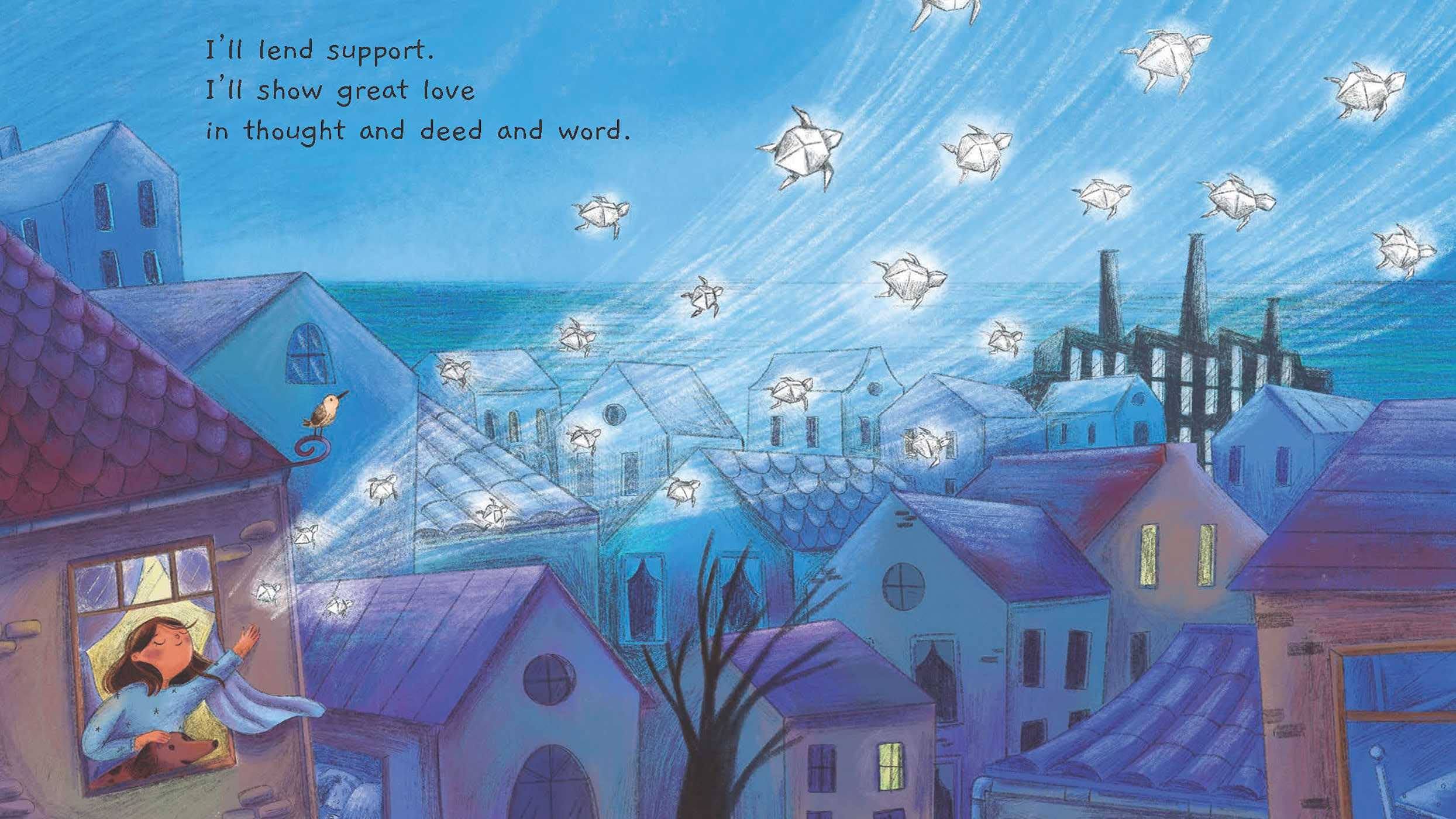
The memory of the turtle she saved stays with her—her one small act inspiring her to do more. She determines “if I see something isn’t right, / I need to take a stand! / Why wait to offer kindness? / Why wait to lend a hand?” While trying to go to sleep, the little turtle and a whole sea of fish and other creatures swim in her mind. Suddenly, she has an idea and gets out of bed. She writes note after note and folds each paper into origami turtles. She then goes to her window and releases them on the wind.

celebrate-picture-books-picture-book-review-i-am-today-dinner

Image copyright Patricia Pessoa, 2021, text copyright Matt Forrest Esenwine, 2021. Courtesy of POW! Kids Books.

The next morning, despite the rain, a crowd of children has gathered at the child’s door—all are holding her note. They and their parents and other adults, many carrying signs urging protection for the sea animals, march down the sidewalk and past the polluting factory to the beach. Living in that moment, they think: “The past is far behind us, / the future, well beyond. / There’s never been / a better time to listen… / …learn… / …respond!”

celebrate-picture-books-picture-book-review-i-am-today-origami

Image copyright Patricia Pessoa, 2021, text copyright Matt Forrest Esenwine, 2021. Courtesy of POW! Kids Books.

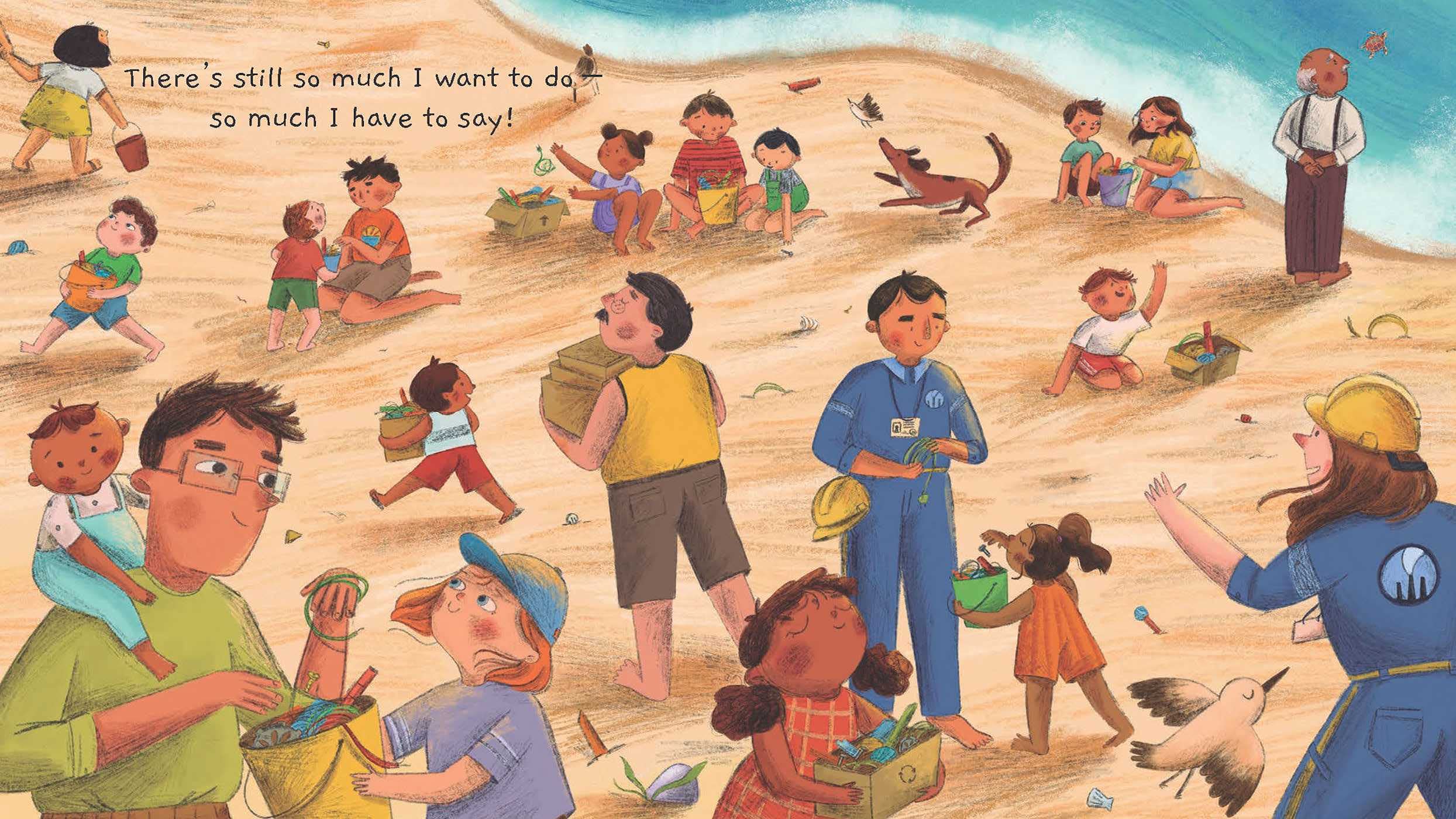
At the beach the group fans out across the sand to pick up debris, and a turn of the page reveals a clean beach and a newspaper containing a front-page article on the factory’s waste pipe that has been closed. “Someday I’ll be the Future” the child says, “But right now… / …I am Today.”

Illustrated instructions on how to make an origami turtle follow the story.

celebrate-picture-books-picture-book-review-i-am-today-beach

Image copyright Patricia Pessoa, 2021, text copyright Matt Forrest Esenwine, 2021. Courtesy of POW! Kids Books.

Children, having lived on our planet for only a few years, are all progress, moving forward, not looking back yet as each day they learn something new, develop another skill, break old barriers, and form unique opinions. So it’s no surprise that kids are concerned about what is happening today and how it will affect the future—their future and the world’s. In I Am Today, Matt Forrest Esenwine harnesses that power of wonder, confidence, and ambition that children possess and gives it a lyrical voice. Flowing with a rhythm as stirring as ocean swells, Esenwine’s story will resonate deeply within any child’s heart.

While Patricia Pessoa’s lovely illustrations depict a child concerned with protecting the ocean and its creatures, Esenwine’s text is universal and equally inspiring for any child and any cause. While recognizing the desire and ability of children and young people to bring about change, Esenwine also provides concrete ways that they can do so, from small gestures to larger actions, allowing all readers to feel included and important. I Am Today also presents a meaningful way for kids and adults to talk about causes that are important to them and ways that they can get involved.

With a warm, vivid color palette and fresh perspectives that allow readers to make some of their own deductions, Patricia Pessoa presents a lush landscape of a child’s family life, imagination, and ideas brought to fruition. Her images of the family’s picture wall and dinner time are full of heart and humor, and kids will enjoy lingering over the pages to catch all the action. Pessoa portrays the importance of saving the turtles and other sea creatures with clever imagery as the turtle appears in the bathroom mirror as the child brushes her teeth, swimming in the bathtub, and decorating the cup of water on her nightstand. Pessoa’s illustrations of the fish and other ocean creatures that fill the child’s mind are especially beautiful, as is the spread in which she sends her origami messengers out into the world.

I Am Today is an inspiring, uplifting, and motivational book that children will want to frequently revisit and one that families, classrooms, schools, and public libraries will want to add to their collections. The book’s beauty and message makes it a wonderful gift for any child on your list.

Ages 4 – 8 and up

POW! Kids Books, 2021 | ISBN 978-1576879948

Discover more about Matt Forrest Esenwine, his books, and his poetry on his website.

You can connect with Patricia Pessoa on Instagram.

Check out these upcoming dates and discover how other bloggers are celebrating I Am Today

I Am Today Blog Tour Schedule

This year many books have been delayed from their original publishing date to a later time due to shipping and supply issues. The best way to support authors and their wonderful new books is to preorder titles from your favorite bookseller. I Am Today will be available January 23, 2022.

celebrate-picture-books-picture-book-review-i-am-today-cover

You can preorder I Am Today at these booksellers

Amazon | Barnes & Noble | Books-a-Million

To support your local independent bookstore, order from

Bookshop | IndieBound

Picture Book Review
August 21 – World Honey Bee Day

celebrate-picture-books-picture-book-review-h-is-for-honey-bee-cover

About the Holiday

In 2009 National Honey Bee Day was proclaimed by US Secretary of Agriculture Thomas J. Vilsek. The holiday quickly spread and is now celebrated worldwide. World Honey Bee Day began as National Honey Bee Day in 2009 with a proclamation issued by the Secretary of Agriculture, Thomas J. Vilsek. The day recognizes both the honey bee and the beekeepers who tend the hives and encourages people to learn about and create supportive environments in their own yards to promote healthy bee populations. Of course, it’s also a day to buy and enjoy locally grown honey. To celebrate this holiday, explore a variety of honey flavors, try a few new recipes that incorporate honey, and learn all the buzz about bees, honey, and beekeeping with today’s book!

I’d like to thank Sleeping Bear Press for sharing H is for Honey Bee: A Beekeeping Alphabet with me for review consideration. All opinions are my own.

H is for Honey Bee: A Beekeeping Alphabet

Written by Robbyn Smith van Frankenhuyzen | Illustrated by Eileen Ryan Ewen


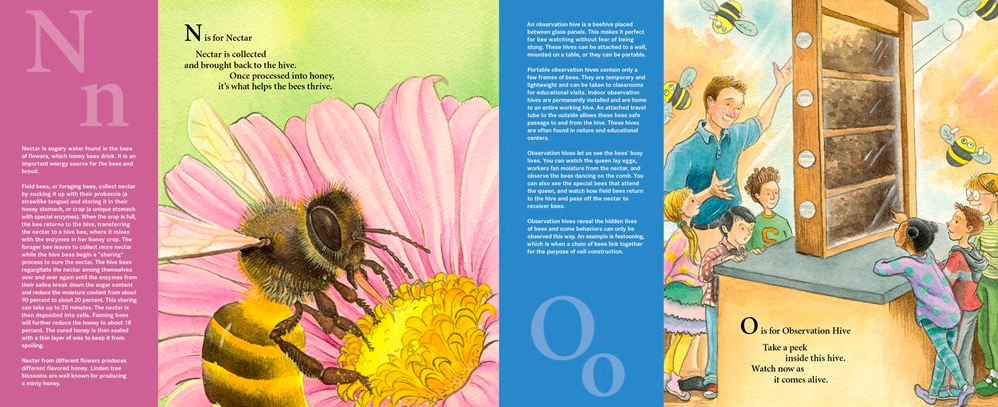
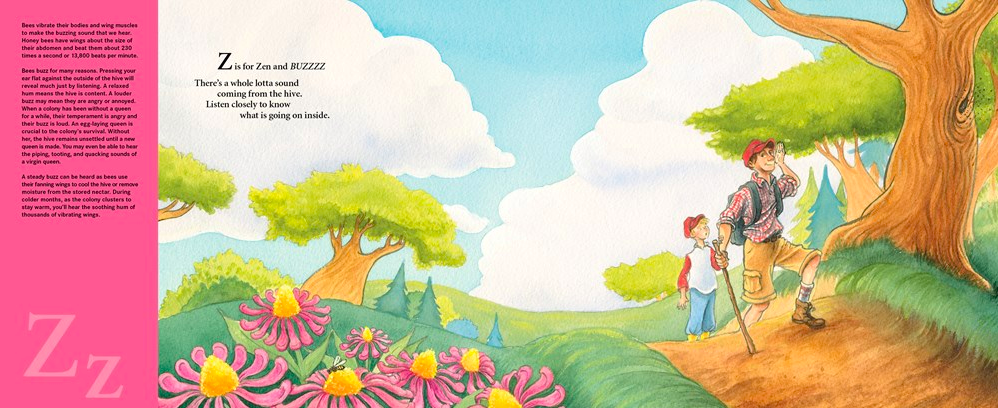
If your garden or yard is anything like mine, the bees are humming around late-summer blooms and tracing their circuitous route to nearby or far-flung hives. The mystery and marvel of how honey bees convert powdery pollen into sweet honey never fails to awe and delight. In H is for Honey Bee, readers of all ages discover fascinating facts and stories about Bees from Apis mellifera (“Apis is the clue that we’re talking about a bee. / And mellifera means it’s all about honey”) to Z “for Zen and BUZZZZ.”

celebrate-picture-books-picture-book-review-h-is-for-honey-bee-A-and-B

Image copyright Eileen Ryan Ewen, 2020, text copyright Robbyn Smith van Frankenhuyzen, 2020. Courtesy of Sleeping Bear Press.

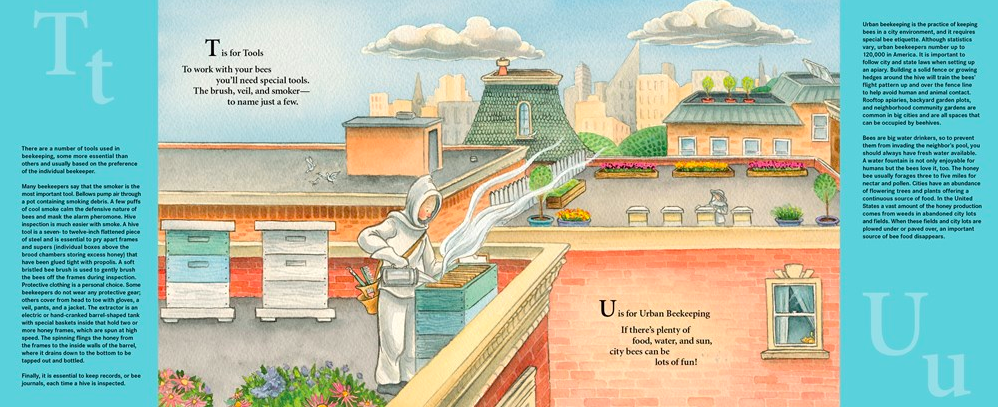
In between children learn all about a bee hive, its resident bees (from Drones to Guards to the Queen), how bees communicate, and at E how organized beekeeping dates back to 2400 BC and how important it was to Egyptian culture. “Found on hieroglyphs in the sun temple of Pharaoh Ne-user-re near Cairo, Egypt, an Egyptian peasant is depicted smoking stacked hives while other workers are storing and sealing honey in jars.”

celebrate-picture-books-picture-book-review-h-is-for-honey-bee-N-and-O

Image copyright Eileen Ryan Ewen, 2020, text copyright Robbyn Smith van Frankenhuyzen, 2020. Courtesy of Sleeping Bear Press.

At L kids learn about Lorenzo Langstroth, “the father of humane, practical beekeeping.” After discovering that natural hives had small passages that allowed bees to move freely though them, he invented a hive with removable frames that didn’t upset the other bees or damage the combs. Langstroth’s hive paved the way for other innovations, such as the Observation Hive at O, that gives people a clear view of bees at work. “You can watch the queen lay eggs, workers fan moisture from the nectar, and observe the bees dancing on the comb” and other marvels of a bee’s day.

celebrate-picture-books-picture-book-review-h-is-for-honey-bee-T-and-U

Image copyright Eileen Ryan Ewen, 2020, text copyright Robbyn Smith van Frankenhuyzen, 2020. Courtesy of Sleeping Bear Press.

Humans aren’t the only innovative ones, and readers will be fascinated to learn about Propolis at P, which bees make from their own saliva and other natural ingredients to protect their hive. V is for Venom—the bee’s defense that is more fun to learn about than experience. If you’re interested in where Beeswax comes from, just flip to W, and if you want to know how to tell if a hive is happy, Z is where you’ll find it.

Back matter includes resources on how you can create a safe and productive atmosphere for bees in your own yard, tips for becoming a beekeeper, and fun facts about busy bees.

celebrate-picture-books-picture-book-review-h-is-for-honey-bee-Z

Image copyright Eileen Ryan Ewen, 2020, text copyright Robbyn Smith van Frankenhuyzen, 2020. Courtesy of Sleeping Bear Press.

Through charming and informative four-line rhymes and a column of detailed facts for each letter of the alphabet, Robbyn Smith van Frankenhuyzen presents a full and exhilarating look at bees, honey, and the job of beekeeping. She describes the behavior of bees—from how they communicate to how they survive winter temperatures to how the queen rules the hive and more—as well as the dangers bees face, from inside the hive and out, in vivid language that will captivate kids. Discussions on the healthy properties of honey as well as the joys of amateur beekeeping are here as well.

Accompanying the text are Eileen Ryan Ewen’s vibrant illustrations that give readers an up-close view of honey bees developing from egg to adult, gathering nectar, and working in their hive. Kids also meet Lorenzo Langstroth, see beekeepers working at their hives in yards and on rooftops, and travel down the Nile River with ancient beekeepers who moved their hives to continually provide them with the nectar and pollen they needed. Each page invites lingering to see and discuss all the details.

A well-rounded and comprehensive resource for those interested in bees and insects, gardeners of any age, and kids who love nature as well as for elementary and middle-grade science classes, H is for Honey Bee: A Beekeeping Alphabet is highly recommended for home, school, and public libraries.

Ages 7 – 10 and up

Sleeping Bear Press, 2020 | ISBN 978-1534110700

Discover more about Robbyn Smith van Frankenhuyzen and her books on her website.

To learn more about Eileen Ryan Ewen, her books, and her art, visit her website.

World Honey Bee Day Activity

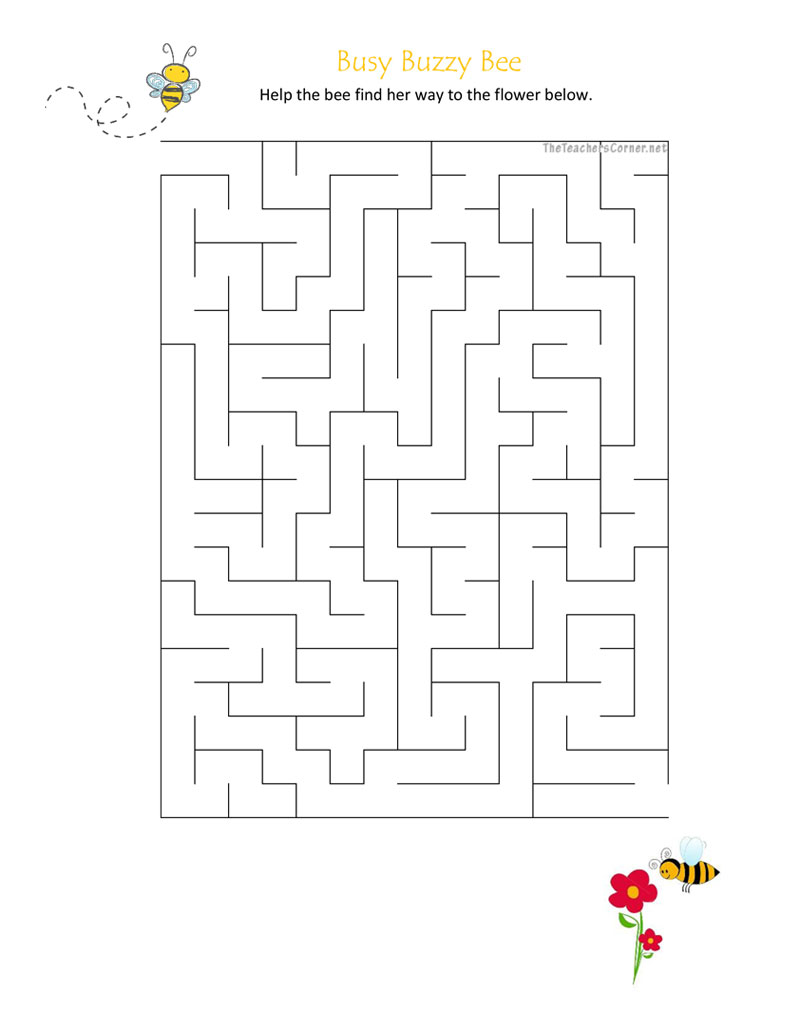
CPB---Busy-Buzzy-Bee-Maze

Busy Buzzy Bee Maze


Can you help the little bee find her way to the flower and her friend in this printable maze?

Busy Buzzy Bee Maze PuzzleBusy Buzzy Bee Maze Solution

celebrate-picture-books-picture-book-review-h-is-for-honey-bee-cover

You can find H is for Honey Bee: A Beekeeping Alphabet at these bookseller

Amazon | Barnes & Noble | Books-a-Million

To support your local independent bookstore, order from

Bookshop | IndieBound

Picture Book Review
November 14 – It’s Geography Awareness Week

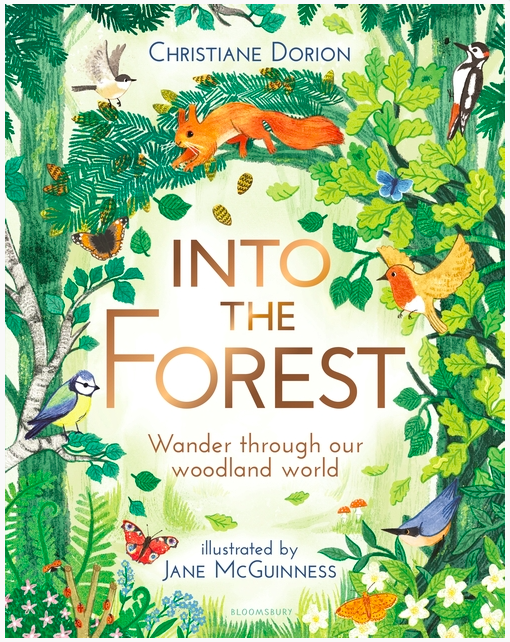
celebrate-picture-books-picture-book-review-into-the-forest-cover

About the Holiday

Today’s holiday was instituted in 1994 by National Geographic to get people excited about geography and its importance to education and everyday life. As defined by National Geographic, geography is “the study of places and the relationships between people and their environments.” This discipline includes how humans interact with the environment and the impact of location on people. These important questions affect a wide range of issues. More than 100,000 people across the country participate in Geography Awareness Week through special events, focused lessons and activities in classrooms, and attention by government and business policy-makers. To learn more about the week and discover resources for further education, visit the National Geographic website.

Into the Forest: Wander through Our Woodland World

Written by Christiane Dorion | Illustrated by Jane McGuinness


Forests, with their stands of ancient, towering trees capped with leafy canopies and thin saplings reaching for their bit of sun are mysterious, awe inspiring, and home to some of the world’s most fascinating creatures. In Into the Forest Christiane Dorion and Jane McGuinness take readers through coniferous forests, deciduous forests, and tropical rainforests around the world to introduce readers to the life found there.

Readers first learn how a single tree grows from a seed to a full-grown beauty and see how the tree is nurtured and how it nurtures insects and animals in return. But a single tree does not make a forest. Children discover the ways in which many trees work together to create a forest and how the creatures attracted to the forest interact as well.

celebrate-picture-books-picture-book-review-into-the-forest-winter

Image copyright Jane McGuinness, 2020, text copyright Christiane Dorion, 2020. Courtesy of Bloomsbury Children’s Books.

“Deciduous forests are found in places where there is plenty of rain and four distinct seasons through the year.” Animals roost in the trees’ trunks, root systems, and branches. “On the forest floor, small creatures snuffle, crawl, or hop under the thick carpet of fallen leaves in search of food and a safe place to shelter.” These trees have distinctive leaves and undergo changes as the seasons change. Like the trees, the animals that live in a deciduous forest also adapt to the weather, the abundance or scarcity of food, and sheltering needs. Readers learn fascinating facts about the ingenuity of the forest’s insects and animals.

After learning about the deciduous forest, readers will want to discover them for themselves. Through lyrical descriptions and charming, realistic illustrations, Dorion and McGuinness show children and adults how and where to look and listen to find the treasures the forest holds. But there can be so many different trees in a forest—or even in a backyard or neighborhood. How do you know which is which? Dorion and McGuinness provide an illustrated guide to the names, shape, size, and type of leaf of twenty deciduous trees.

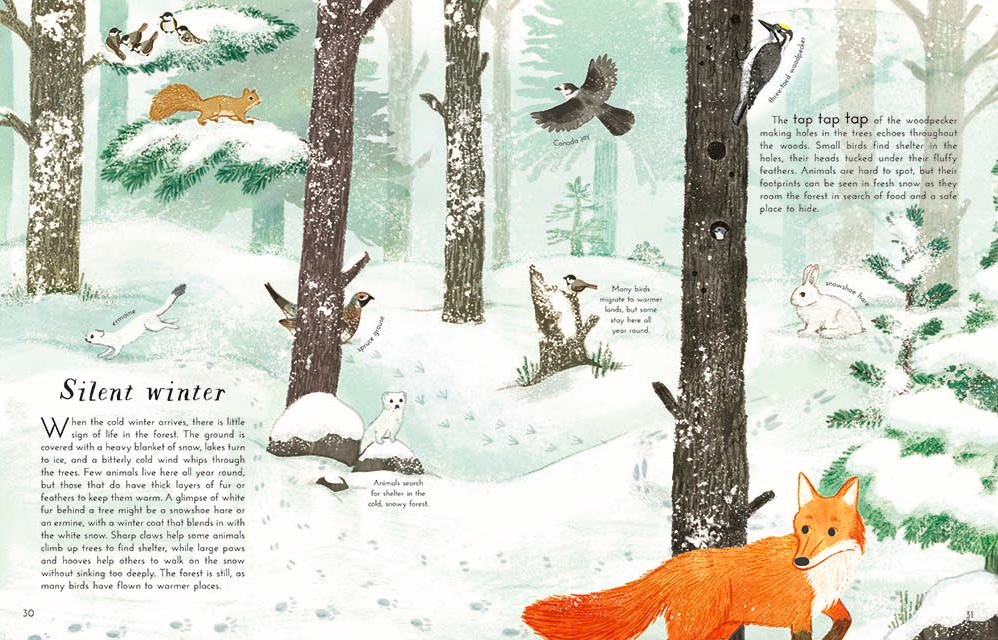
Across the northern hemisphere, coniferous forests stand tall and stalwart against bitterly cold winters while attracting some of the most majestic creatures in the animal kingdom. “Most trees in the coniferous forest are evergreens with needle-like leaves” that stay green and shed little-by-little all year round. Instead of flowers, coniferous trees produce their seeds in cones. Squirrels and birds, who can use their sharp beaks and acrobatic flying and hanging skills, find food in these cones during long winters.

celebrate-picture-books-picture-book-review-into-the-forest-redwoods

Image copyright Jane McGuinness, 2020, text copyright Christiane Dorion, 2020. Courtesy of Bloomsbury Children’s Books.

In coniferous forests, the floor is dark, wet, and can be rocky or even frozen year-round. Moss, fungi, lichen, and carnivorous plants are some of the vegetation found here. Readers learn how these plants grow, what they look like, and the animals that thrive on them. How do the forest animals survive the harsh winter conditions? Dorion and McGuinness follow ermine, grouse, a snowshoe hare, bats, chipmunks, bears, and other birds and animals as they navigate their cold home. They then take kids to the west coast to look up, up, up at the mammoth redwoods, some of which “have lived for more than two thousand years.”

There is a wide variety of coniferous trees, and again Dorion and McGuinness present a guide to the size, shape, and type of needles and cones of fourteen trees. And why are evergreens shaped like a triangle? The clever answer to that question is here too.

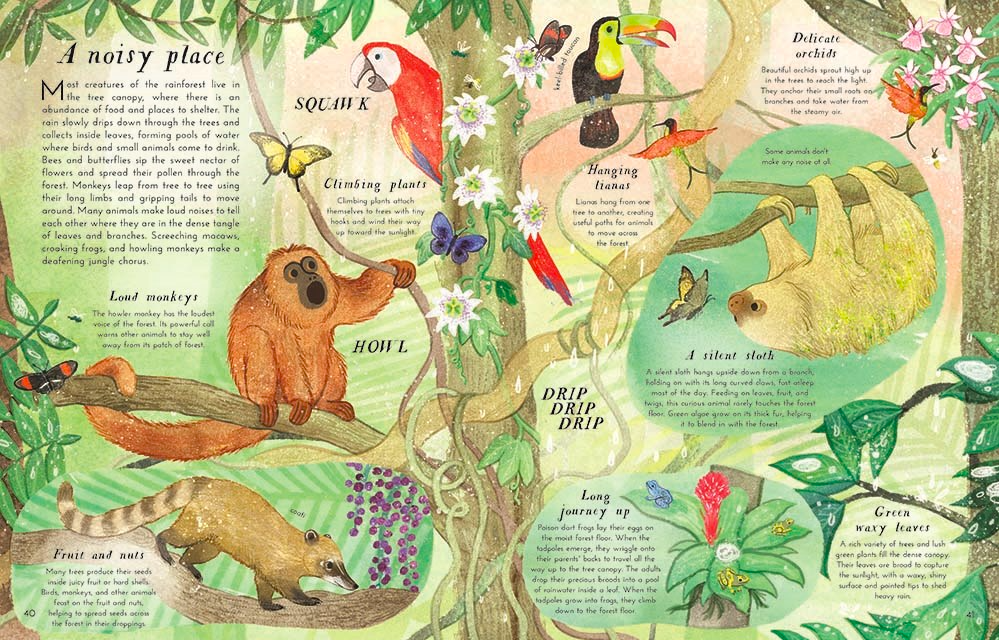
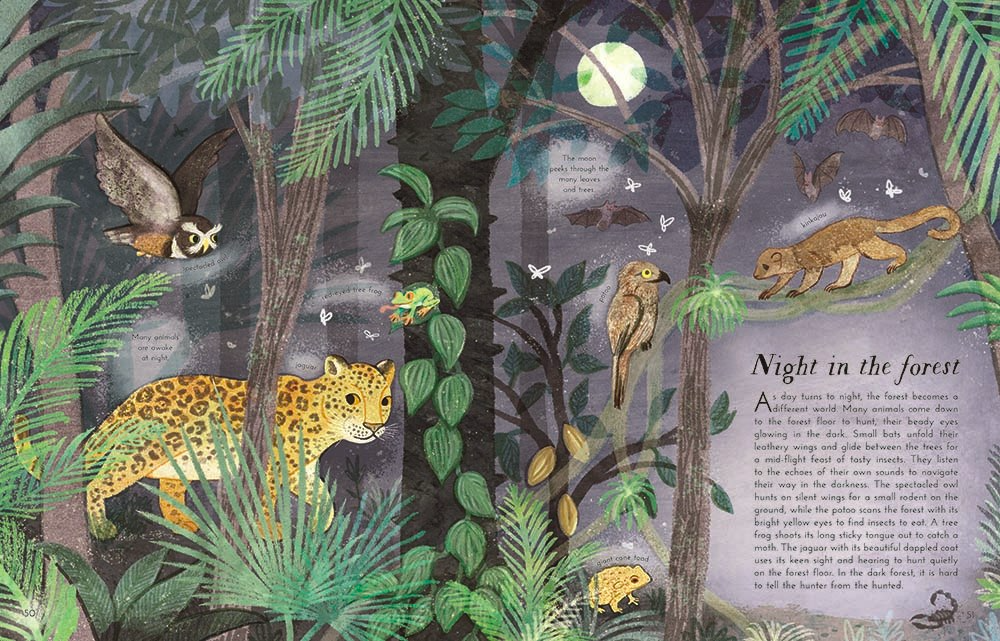
When you think of colorful birds and animals, you think about tropical rainforests. Dorion and McGuinness. Found near the equator, rainforests are home to “more than half of the know plants and animals in the world” and “more are yet to be discovered.” In a glorious riot of color, climbing vines, vibrant flowers and fruit, Dorion and McGuinness introduce readers to the denizens of these forests, where rain and warm weather provide plenty of food and water; “monkeys leap from tree to tree using their long limbs and gripping tails to move around;” and “screeching macaws, croaking frogs, and howling monkeys make a deafening jungle chorus” to “tell each other where they are in the dense tangle of leaves and branches.”

celebrate-picture-books-picture-book-review-into-the-forest-rainforest

Image copyright Jane McGuinness, 2020, text copyright Christiane Dorion, 2020. Courtesy of Bloomsbury Children’s Books.

Readers will meet animals including the howler monkey, coati, toucan, parrot, poison dart frog, and sloth. Kids also learn about hanging lianas, orchids, and why plants have waxy leaves. All of that vegetation above means that the forest floor is dark and damp, making it the perfect place for some of the world’s most unusual—and feared—creatures, including snakes, spiders, jaguars, the giant centipede, and the Hercules beetle.

Frequent rain is the lifeblood of these tropical forests, and Dorion and McGuinness describe and depict their unique atmosphere as well as the ingenious adaptations some animals use to hide in plain sight and fool predators and the way nighttime transforms the forest into a feeding ground for nocturnal animals. The guide to fourteen tropical trees introduces readers to a wide variety from palm trees to fruit trees, like mango and avocado, to trees that produce nuts, cinnamon, cacao, and chicle for gum.

Dorion and McGuinness close out their book with discussions on how plants, insects, and animals work together to ensure the growth and heath of a forest; the ways in which a forest benefits the planet; and how to plant a tree so that it will thrive. Readers will love the illustrated prompt to find twenty-seven creatures within the pages of the book, giving them an exciting way to turn back to discover all the gems included in the text.

A glossary defines twenty-two terms found in the text, and a list of organizations and links to their websites complete the back matter.

celebrate-picture-books-picture-book-review-into-the-forest-night

Image copyright Jane McGuinness, 2020, text copyright Christiane Dorion, 2020. Courtesy of Bloomsbury Children’s Books.

Christiane Dorion’s beautiful language and richly detailed narration take children into the three types of forests to see and hear how these natural communities of trees, plants, animals, birds, insects, and even weather patterns work together to maintain what are indispensable parts of our earth. The facts Dorion chooses to present will captivate young learners, telling them enough about each subject to educate while sparking a desire to know more. Perfectly paced, her text creates a lovely flow and visual accompaniment to Jane McGuinness’s gorgeous illustrations.

McGuinness astounds on every page with lush images of the various types of forests in warm weather and the coldest of conditions, during daylight and nighttime, during quiet periods and busy times. Her realistically portrayed intense textures, vivid colors, unique shapes, and furtive or carefree movements of nature invite readers into the depths of the forests to truly see what is there.

Lingering over the pages rewards readers with hidden delights, such as tiny animals peeking from the knot hole of a tree, little caterpillars inching their way across leaves, a nest with three eggs secured within the branches of a spring-green tree, and masters of camouflage motionless and nearly undetectable. Spotlighted facts and the intermittent detailed guides to specific trees, creatures, and the science of forests not only teach readers about these particular features but reinforce how nature collaborates to survive and grow.

Superbly conceived, Into the Forest is a must for home, classroom, and public library collections for nature lovers, school and homeschool lessons, and anyone who would like to learn more about our planet.

Ages 7 – 15

Bloomsbury Children’s Books, 2020 | ISBN 978-1526600707

Discover more about Christiane Dorion and her books on her website.

To learn more about Jane McGuinness, her books, and her art, visit her website.

Geography Awareness Week Activity

celebrate-picture-books-picture-book-review-wonderful-wildlife-board-game

Wonderful Wildlife Board Game


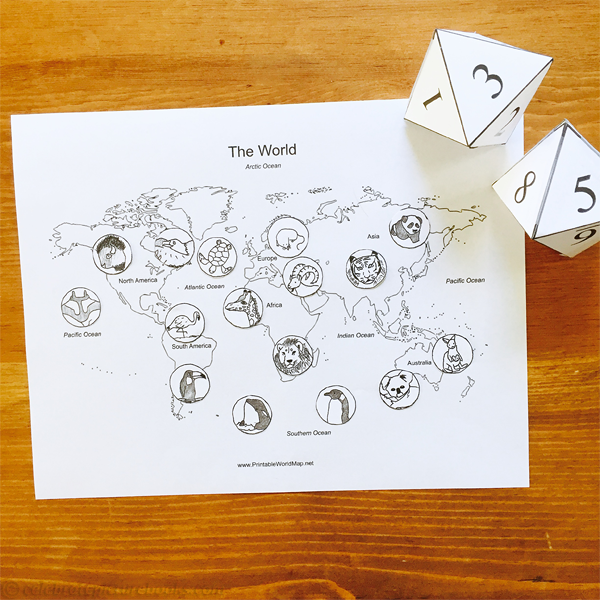
Fascinating animals are found in every part of the world. Play this fun printable Wonderful Wildlife Board Game to match each animal to the area where it lives.

Supplies

Directions

  1. Print a World Map for each player
  2. Print one set of 16 Wildlife Tokens for each player
  3. Print two copies of the 8-sided die, fold, and tape together
  4. If you would like, color the map and tokens
  5. Choose a player to go first
  6. Each player rolls both dice and places an animal on their map according to these corresponding sums of the dice below
  7. The first player to fill their map is the winner!
  • 1 = Flamingo – South America
  • 2 = Emperor Penguin – Antarctica (Southern Ocean)
  • 3 = Giraffe – Africa
  • 4 = Bald Eagle – North America
  • 5 = Ibex – Europe
  • 6 = Kangaroo – Australia
  • 7 = Panda – Asia
  • 8 = Orca – Antarctica (Southern Ocean)
  • 9 = Toucan – South America
  • 10 = Buffalo – North America
  • 11 = Koala – Australia
  • 12 = Lion – Africa
  • 13 = Etruscan Shrew – Europe
  • 14 = Manta Ray – Pacific Ocean
  • 15 = Sea Turtle – Atlantic Ocean
  • 16 = Tiger – Asia

celebrate-picture-books-picture-book-review-into-the-forest-cover

You can find Into the Forest at these booksellers

Amazon | Barnes & Noble | Books-a-Million

To support your local independent bookstore, order from

Bookshop | IndieBound

Picture Book Review


April 24 – Arbor Day

celebrate-picture-books-picture-book-review-peter-and-the-tree-children-cover

About the Holiday

Today is Arbor Day, a national celebration of trees that began as a campaign by J. Morton Sterling and his wife after they moved from Michigan to Nebraska in 1854. Morton advocated for the planting of trees not only for their beauty but as windbreaks for crops on the state’s flat farmland, to keep soil from washing away, as building materials, and for shade. In 1872, Morton proposed a tree-planting day to take place on April 10. On that day nearly one million trees were planted in Nebraska. The idea was made official in 1874, and soon, other states joined in. In 1882 schools began taking part. Today, most states celebrate Arbor Day either today or on a day more suited for their growing season. To learn about events in your area, find activities to download, and more, visit the Arbor Day Foundation website.

Peter and the Tree Children

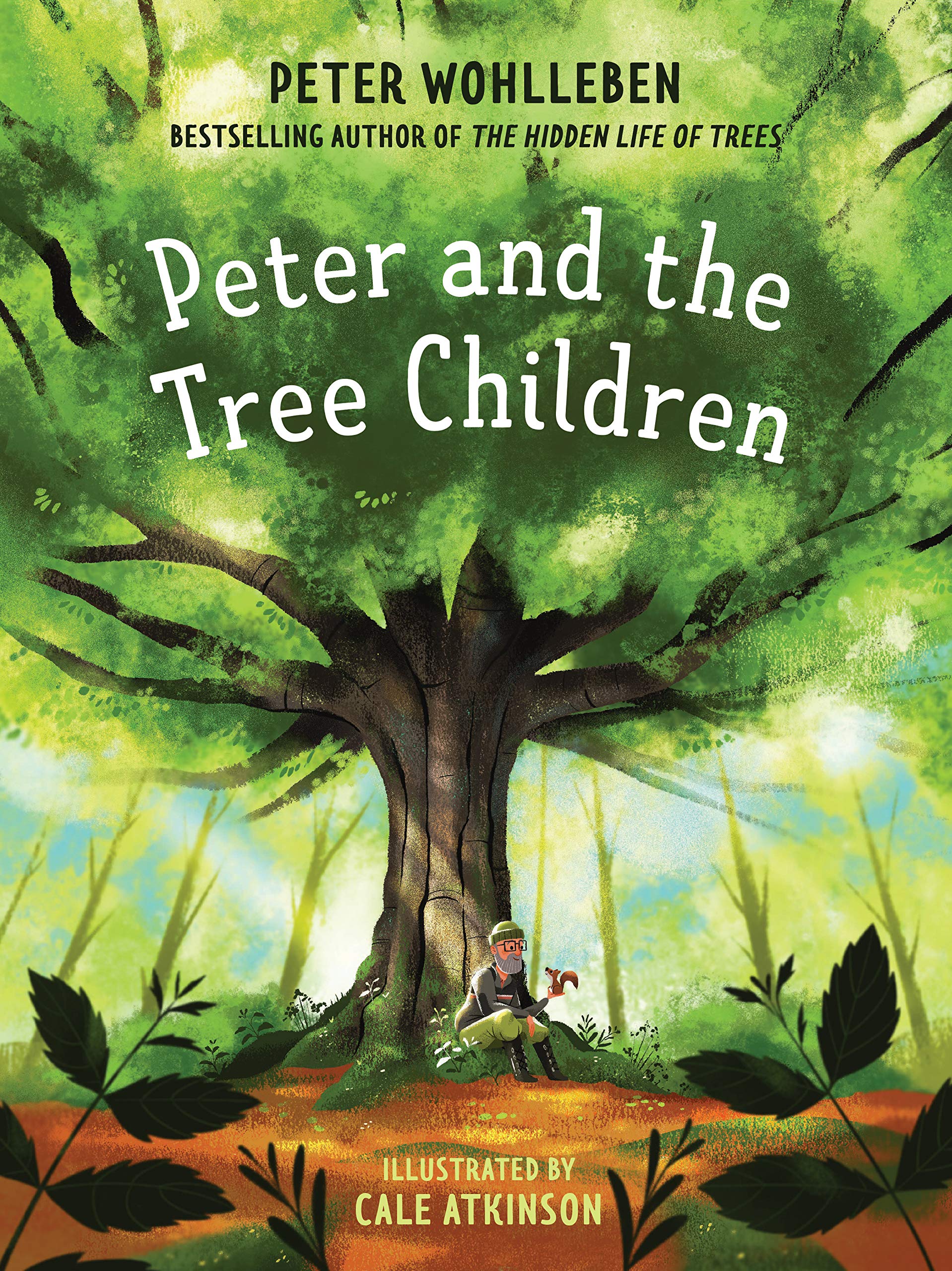
Written by Peter Wohlleben | Illustrated by Cale Atkinson


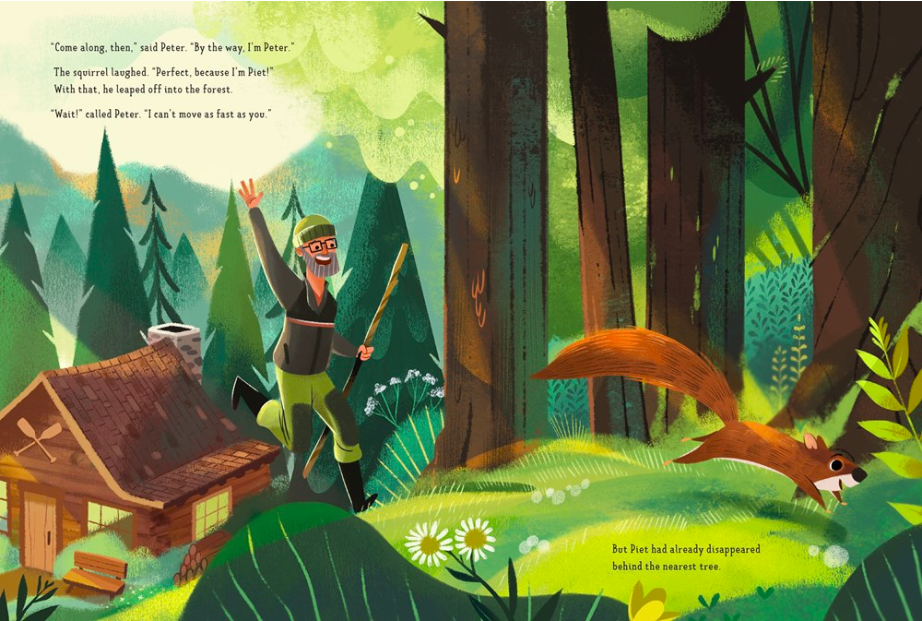
One day while Peter enjoyed his morning coffee on his porch while listening to the birds singing, “a squirrel scampered up and sat down next to him as though they were old friends.” With tears in his eyes, the squirrel told Peter that he was all alone with no family. Peter was empathetic—his children didn’t live with him anymore—but, he said, “‘I still have the trees.’” He then told the squirrel how tree families live in the forest and asked if he would like to go look for some. This cheered the squirrel, and they headed out into the woods. On the way, Peter introduced himself, and the squirrel said his name was Piet.

celebrate-picture-books-picture-book-review-peter-and-the-tree-children-piet

Image copyright Cale Atkinson, 2020, text copyright Peter Wahlleben. Courtesy of Greystone Kids.

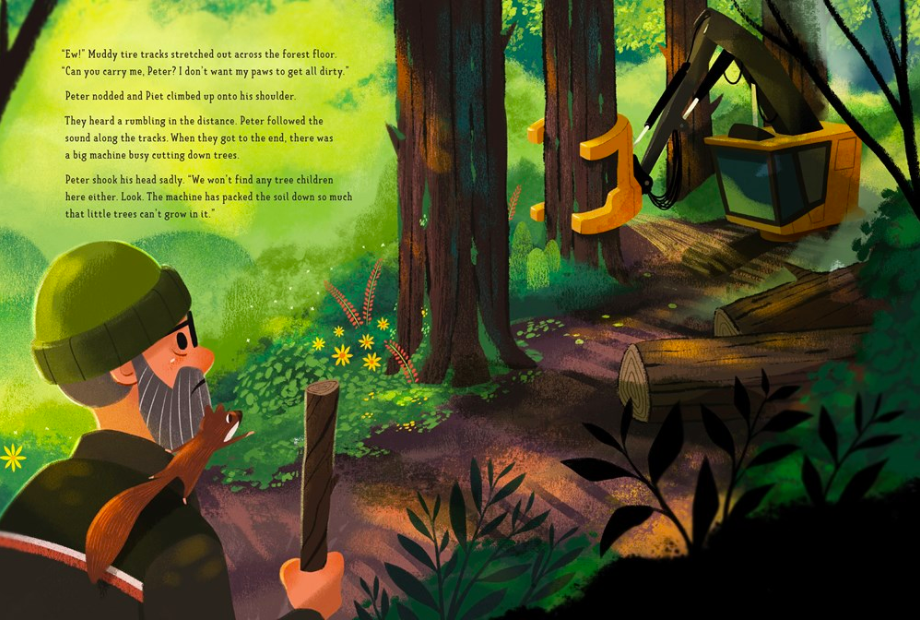
When they reached a sunny clearing, Piet wondered where the tree children were. Peter told him it was too hot there and led the way deeper into the woods. The way was muddy, so Piet climbed on Peter’s shoulders. In the distance, they could hear a loud rumbling. As they grew nearer, they saw a “big machine busy cutting down trees.” Peter told Piet that they wouldn’t find tree children here either because the heavy machine had “‘packed the soil down so much that the little trees can’t grow in it.’”

celebrate-picture-books-picture-book-review-peter-and-the-tree-children-machine

Image copyright Cale Atkinson, 2020, text copyright Peter Wahlleben. Courtesy of Greystone Kids.

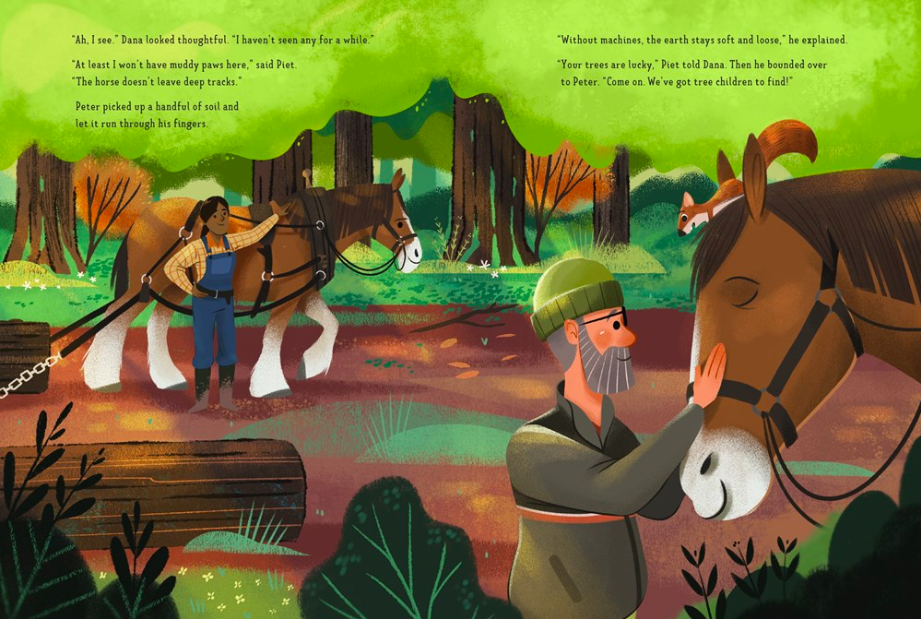
They walked on sadly until they heard another noise. It was Peter’s friend Dana and her horse dragging a tree trunk. Piet introduced himself and told Dana of their mission to find tree children. She said she hadn’t seen any for a long time while Peter explained to Piet that Dana’s horse left the soil soft and loose unlike the big machine. After a close call with a hawk, Piet rode in Peter’s jacket.

celebrate-picture-books-picture-book-review-peter-and-the-tree-children-Dana

Image copyright Cale Atkinson, 2020, text copyright Peter Wahlleben. Courtesy of Greystone Kids.

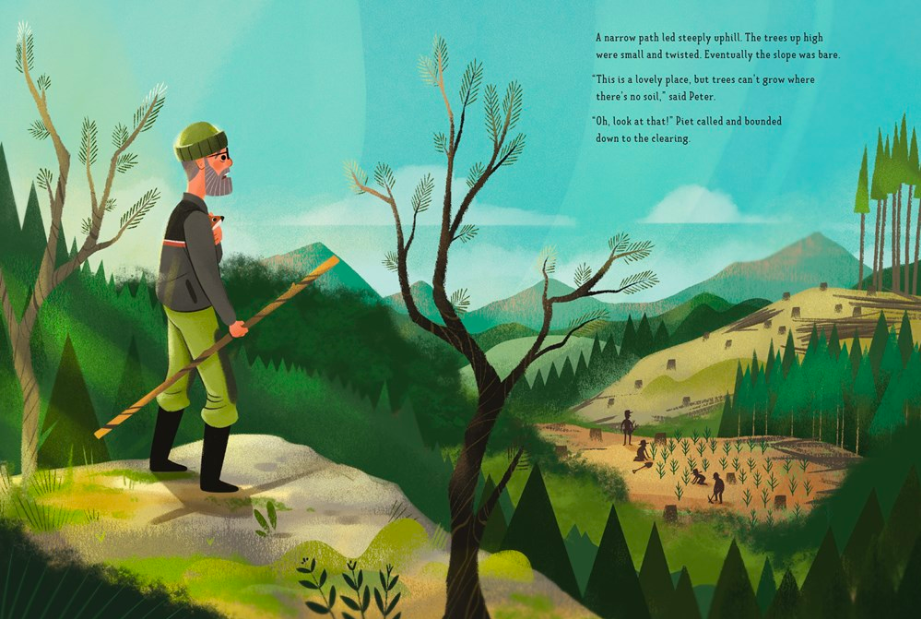
They came to a rocky overlook where they watched a crew planting small trees in a clearing below. Peter looked at all of the big trees that had been cut down, and his face turned red with anger. Piet sniffed one of the little trees, wondering if they’d found tree children at last. He liked the orangey scent the seedling gave off. But Peter told him the trees were sad. “‘This smell is how trees talk to each other, and it means that the trees don’t feel so well. They miss being shaded and protected by their families.’” He wanted to show Piet some happy trees.

celebrate-picture-books-picture-book-review-peter-and-the-tree-children-overlook

Image copyright Cale Atkinson, 2020, text copyright Peter Wahlleben. Courtesy of Greystone Kids.

At last they came to a dark, cool beech forest, where “the silvery-gray trees formed a roof of leaves way up high.” On the ground Piet noticed “‘butterflies everywhere.’” Peter chuckled and told him that those green fluttering wings weren’t butterflies but “‘freshly sprouted beech children.’” Now it was Piet’s turn to laugh. He told Peter how he had hidden beechnuts in this spot in the fall and then forgotten where he’d buried them. They both thought that this forest where beech trees and their children grew together was the most beautiful they’d ever seen.

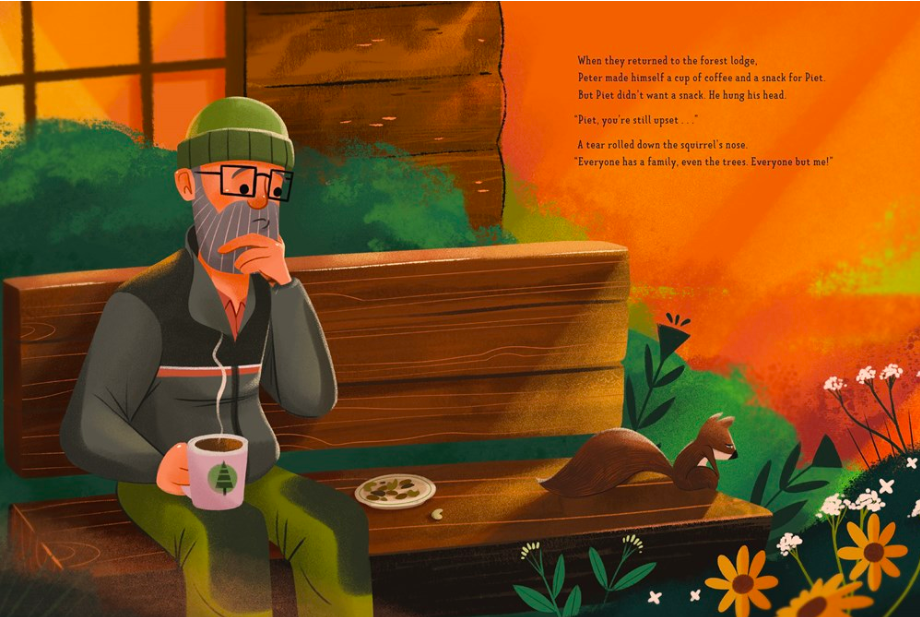
The sun was beginning to set, so they started the long walk home. Back on Peter’s porch, Piet looked sad again. He didn’t eat the snack Peter brought him and a tear rolled down his cheek. Everyone had a family except him, he said. Peter picked Piet up and told him that he liked him very much. Then he invited him to stay. “Piet’s eyes grew wide. ‘Does that mean we’re family now?’” Peter replied “‘Of course.’” Piet smiled, and then they made plans to visit the tree children again tomorrow.

Back matter reveals five more fascinating facts about how trees grow.

celebrate-picture-books-picture-book-review-peter-and-the-tree-children-lodge

Image copyright Cale Atkinson, 2020, text copyright Peter Wahlleben. Courtesy of Greystone Kids.

Peter Wohlleben’s engaging guides, Peter and Piet, educate children about the conditions necessary for trees to grow from seed to adult in his follow up to The Hidden Life of Trees for adults and Can You Hear the Trees Talking? For older children. In an attempt to cheer up Piet, Peter takes him into the forest in search of tree families and their little ones. Along the way, readers learn about the harmful effects of heavy logging machinery and the benefits of sustainable forestry. They also discover the fascinating fact that trees talk to each other through scent, which will inspire them to learn more. Adverse conditions and natural dangers draw Peter and Piet closer together, building a bond that culminates in Peter’s adopting Piet as a new family member. This turn of events, as well as Piet’s part in helping to foster the tree children they find, will cheer young readers.

Little ones will immediately empathize with Cale Atkinson’s cute squirrel, Piet, as he shares his sadness at not having a family with Peter. As Peter and Piet head into the forest, Atkinson’s sun-dappled pages invites readers to point out the butterflies, caterpillars, and flowers along their route. Kids may be surprised to see Dana and her horse and want to learn more about this type of forestry. Images of the impressive beech tree and thriving tree children will spur readers to look for young seedlings and saplings among stands of trees in their own area.

Ages 4 – 8

Greystone Kids, 2020 | ISBN 978-1771644570

Discover more about Peter Wohlleben, his books, and his work on his website.

To learn more about Cale Atkinson, his books, and his art, visit his website.

You can find Peter and the Tree Children at these booksellers

Amazon | Barnes & Noble | Books-a-Million | IndieBound

celebrate-picture-books-picture-book-review-can-you-hear-the-trees-talking-cover

Can You Hear the Trees Talking? Discovering the Hidden Life of the Forest

By Peter Wohlleben


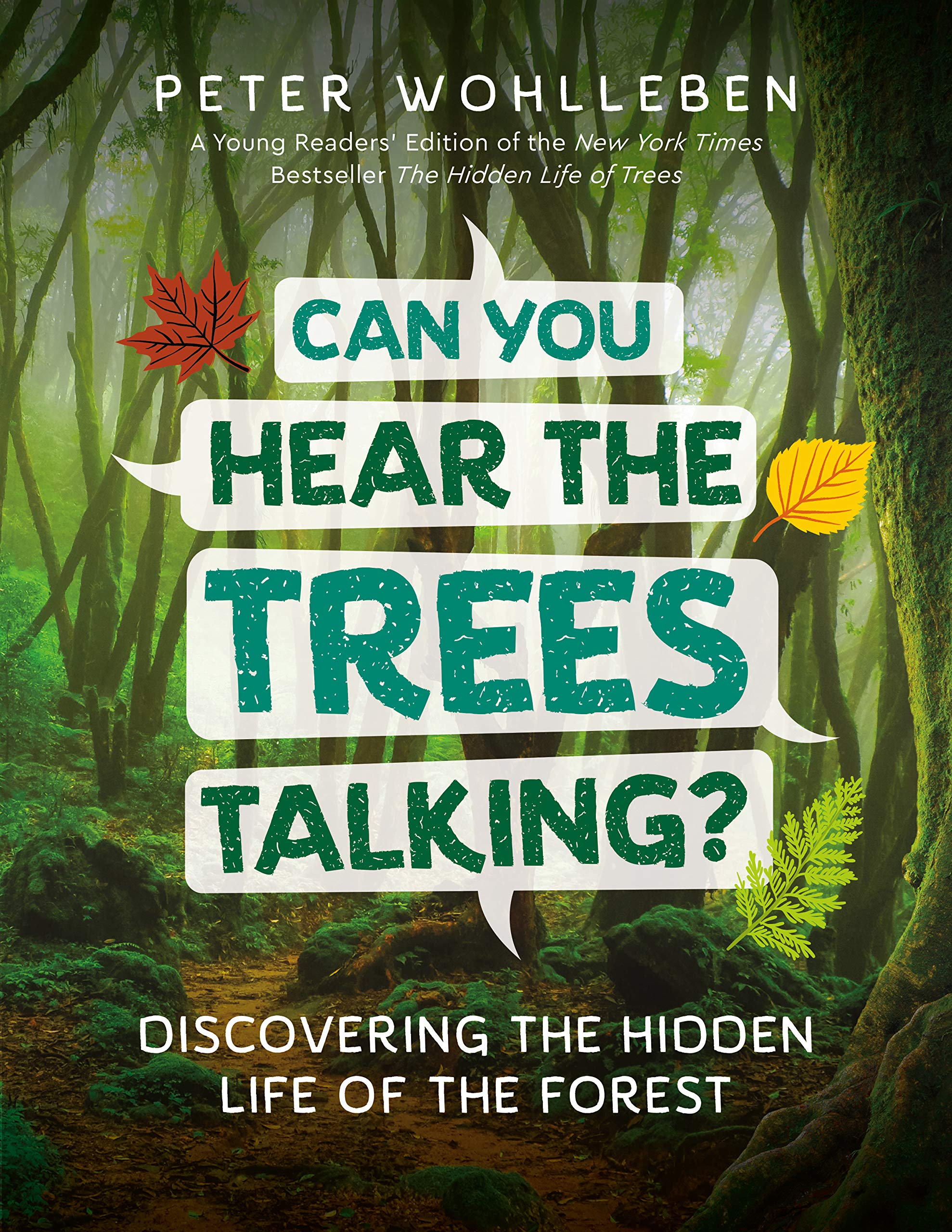
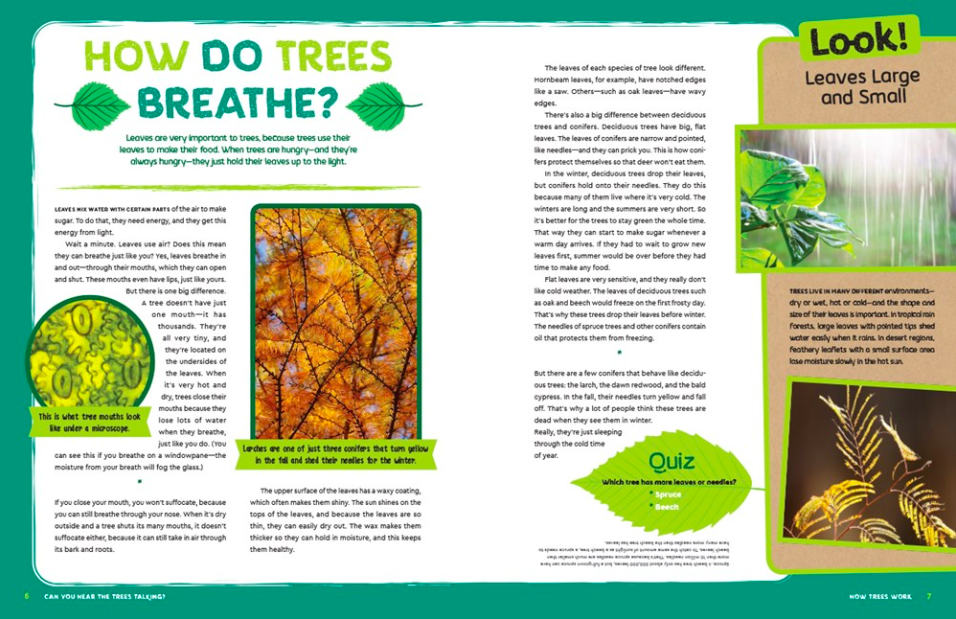
For older children, Peter Wohlleben’s endlessly astonishing Can You Hear the Trees Talking? Reveals the depth of senses, awareness, and long-lasting family bonds that trees possess. In seven chapters, Wohlleben discusses in a conversational tone how trees work, what it’s like for them growing up in a forest, trees’ friends and enemies, how types of trees are different, forest animals, the impact of trees, and a tree’s transformations over a year. Each chapter is broken into short sections of discussions on one topic, illustrated with stunning photographs that clearly depict the concept.

Here are just a few highlights:

From Do Trees Have Grandparents?: Trees can recognize members of their own family. How? Through their roots! “If a tree’s roots meet those of a neighboring tree, the can check whether they belong to the same species.” If they are related, “now their roots will grow together. The trees send messages and exchange the sugar they have made through this connection. It’s as if they’ve invited each other to dinner.” And what about old stumps? Looking at the condition of the stump can tell you a lot. “If the bark is falling off and the stump is rotten, the tree is out of touch with its neighbors” and is no longer alive. “If the edge of an old stump is very hard and still has solid bark, the stump is still alive… [and] getting food from its family through its roots.”

Screen Shot 2020-04-23 at 4.23.16 PMcelebrate-picture-books-picture-book-review-can-you-hear-the-trees-talking-breathe

Copyright Peter Wohlleben, 2019, courtesy of Greystone Kids.

In What Do Tree Children Learn at School? kids discover that mother trees don’t leave their children alone and on their own. Mother trees search out their children with their roots, and when they’ve found them, these caring mothers connect with their babies and nurse them with sugar water. They need this nourishment because “in an old-growth forest, it’s very dark at ground level. With so little light, the tree children can’t produce their own sugar with their leaves, so they have to rely on their parents.

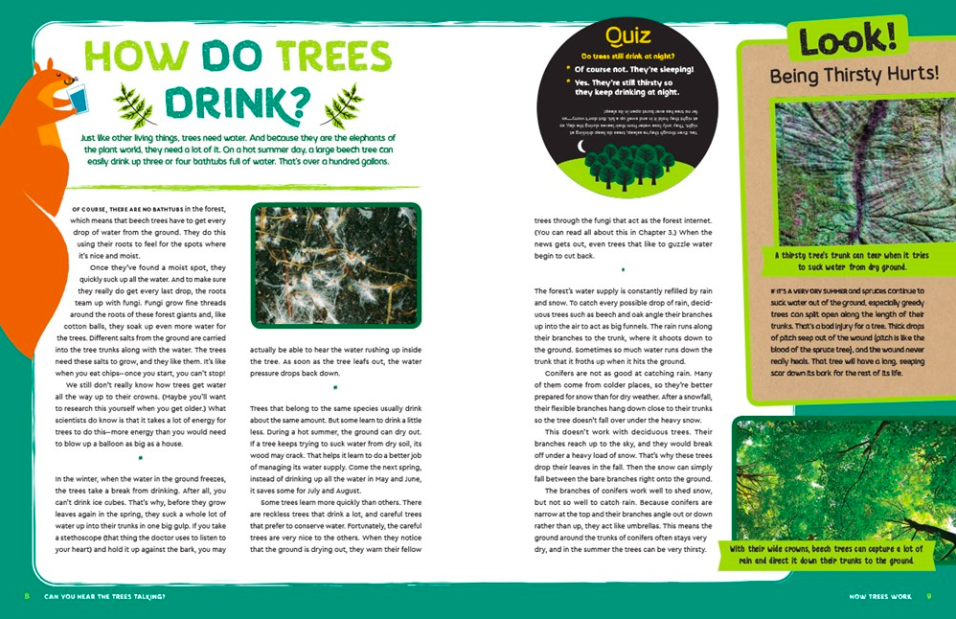
Can Trees Talk? Reveals that “a single tree notices when something bites it. After the initial shock, the tree will taste who is nibbling on it. Yes, you read that right: trees can taste. Because whenever an animal bites into the bark, a leaf, or a branch, it injects a bit of saliva into the wound. And every animal’s spit tastes different.” The tree then pumps a foul-tasting or even poisonous liquid into the site that wards off the predator. For example, to defeat bark beetles, trees “release a sticky, bitter substance called pitch” that trap beetles. The tree then alerts other trees to the danger by releasing a scent that causes nearby trees to begin generating pitch for themselves.

celebrate-picture-books-picture-book-review-can-you-hear-the-trees-talking-drink

Copyright Peter Wohlleben, 2019, courtesy of Greystone Kids.

We all know that animals, such as squirrels, hide food for the winter, but did you know that jays are masters of this autumn task? In Who’s the Best Forest Detective? Kids learn that when jays bury nuts and worms there are certain considerations. “Acorns and beechnuts remain fresh for more than six months, while dead earthworms only last a few days. The bird knows it has to eat the worms first so they don’t spoil.” And with the ability to “remember up to ten thousand hiding places,” quickly finding his stash is easy. “Usually, two thousand acorns and beechnuts are enough to see it through the winter. But because the jay can’t be sure that will be enough, it prefers to bury a few thousand more just in case.”

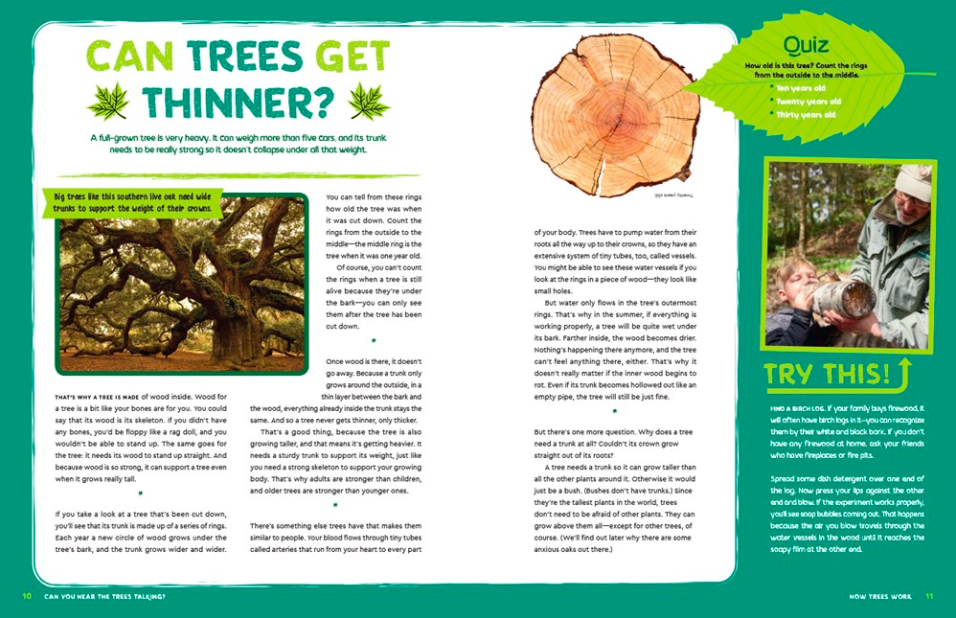
celebrate-picture-books-picture-book-review-can-you-hear-the-trees-talking-thinner

Copyright Peter Wohlleben, 2019, courtesy of Greystone Kids.

With quizzes, prompts for observation, and interesting experiments to try, Can You Hear the Trees Talking? will keep young readers riveted to the pages and eager to get out into nature to explore the trees in a forest, a park, in their neighborhood, and close to home. This book would make a superb and often-referred-to addition to home, school, and public library collections.

Ages 8 – 12 and up

Greystone Kids, 2019 | ISBN 978-1771644341

You’ll find a Can You Hear the Trees Talking? Companion Guide for parents and teachers to download on the Greystone Books website.

Discover more about Peter Wohlleben, his books, and his work on his website.

You can find Can You Hear the Trees Talking? at these booksellers

Amazon | Barnes & Noble | Books-a-Million | IndieBound

Arbor Day Activity

celebrate-picture-books-picture-book-review-paper-plate-tree-craft-2

Paper Plate Tree


On Arbor Day children love planting trees in their yard or as part of a community project. With this easy craft, they can also make a tree for the table or to hang on their wall or bulletin board.

Supplies

  • Two paper plates 
  • Paper towel tube
  • Brown craft paint
  • Green craft paint (using a variety of green paints adds interest)
  • Paintbrush, cork, or cut carrot can be used to apply paint
  • Glue or hot glue gun or stapler

Directions

  1. Paint the paper towel tube brown, let dry
  2. Paint the bottoms of the two paper plates with the green (or other color) paints, let dry
  3. Flatten about 4 inches of the paper towel tube 
  4. Glue or tape the flat part of the paper towel tube to the unpainted side of one paper plate
  5. Glue the edges of the two paper plates together, let dry.
  6. Pull out the bottom of the tube so the tree can stand up, or hang your tree on a wall or bulletin board or in a window

celebrate-picture-books-picture-book-review-peter-and-the-tree-children-cover

You can find Peter and the Tree Children at these booksellers

Amazon | Barnes & Noble | Books-a-Million | IndieBound

Picture Book Review
May 30 – National Water a Flower Day

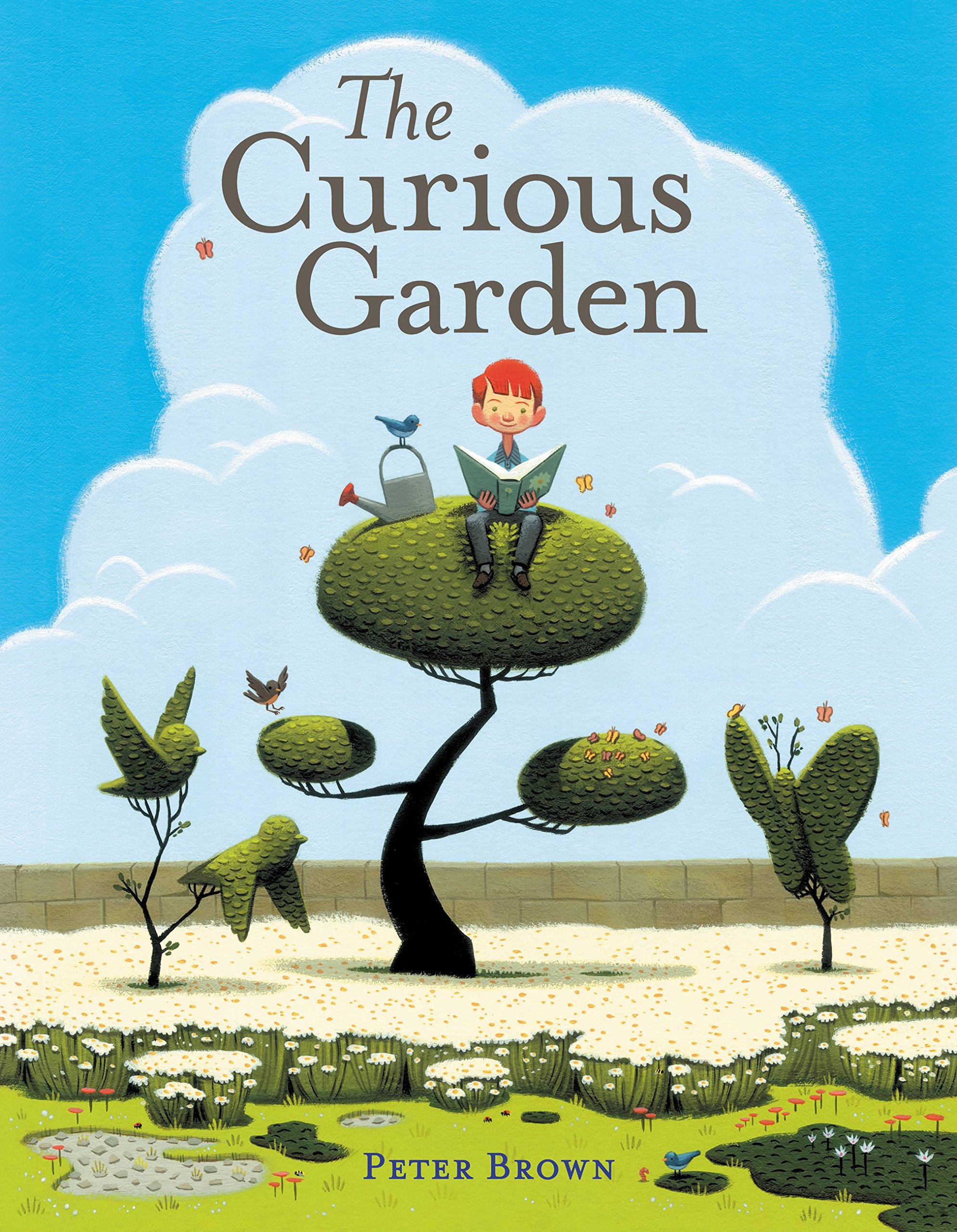
celebrate-picture-books-picture-book-review-the-curious-garden-cover

About the Holiday

If the showers of April have dried up where you are and the May flowers are getting a bit thirsty, today’s holiday makes the perfect reminder to fill the watering can or turn on the sprinkler and give them a drink. Colorful flowers are some of the joys of summer and provide food for birds and insects all season long. If you haven’t begun your garden yet, it’s not too late! Grab a packet of seeds or visit your local nursery and see what a wonderful, wild patch you can grow!

The Curious Garden

By Peter Brown


“There once was a city without gardens or trees or greenery of any kind.” People didn’t notice because they spent most of their time inside—working, going to school, or at home. “As you can imagine, it was a very dreary place.” There was one boy, though, who loved being outside. One rainy day Liam discovered a stairway leading to a bridge that held unused railway tracks. Of course, he was curious, and when he reached the top he discovered a scrawny patch of wildflowers. They needed water; they needed a gardener.

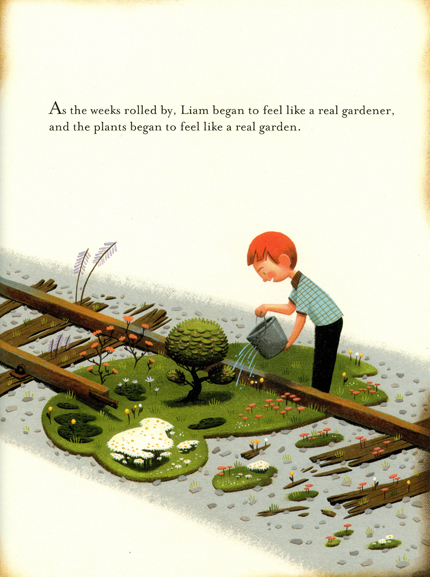
celebrate-picture-books-picture-book-review-the-curious-garden-railway-tracks

Copyright Peter Brown, 2009, courtesy of Little, Brown Books for Young Readers.

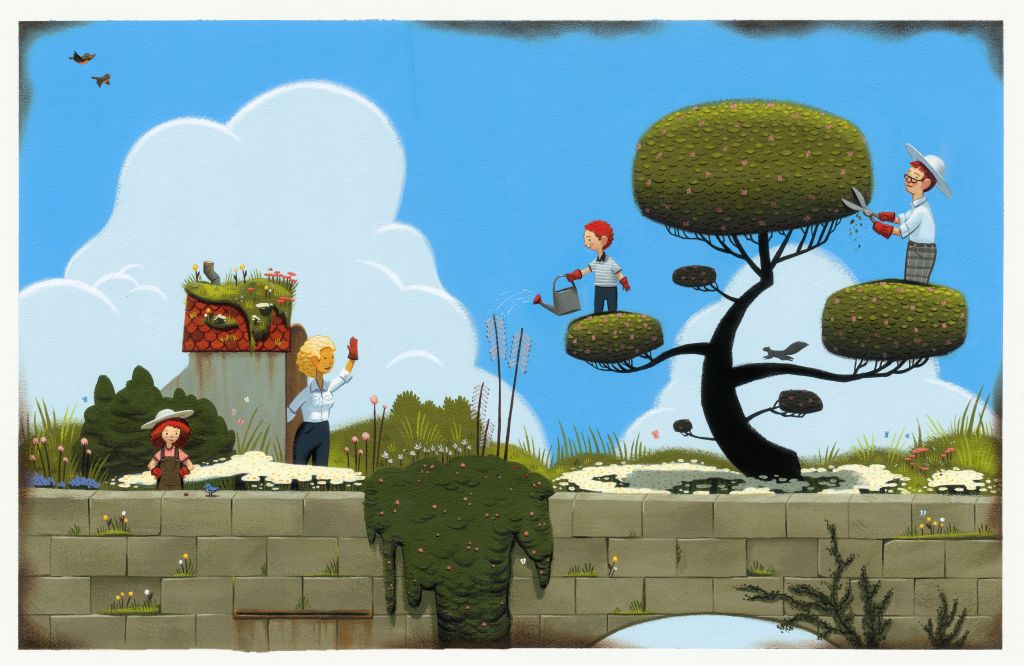
Liam wasn’t officially a gardener, “but he knew that he could help.” After a few false starts and a mis-snip here and there, the plants began to look better. After several weeks, “Liam began to feel like a real gardener, and the plants began to feel like a real garden.” Now that the garden was healthy, it began to be curious about what lay up and down the railway track. The weeds and mosses crept down the tracks while the “more delicate plants” plucked up their courage and followed. During the next few months, Liam and the garden explored all the nooks and crannies of the railway bridge. Liam looked out over his city with a new perspective.

When winter came, the garden lay under a blanket of snow and Liam stayed below, sledding and preparing for spring. With warmer weather, Liam gathered his new shovel, hoe, pruners, and watering can in his red wheelbarrow and went back to the railway. “Winter had taken a toll on the garden.” The grass and moss were brown, the flowers were just brittle twigs, and the little tree was dull and unkept. But Liam watered, snipped, and even sang to the plants, and soon they “awoke from their winter sleep.”

celebrate-picture-books-picture-book-review-the-curious-garden-garden-spreads

Copyright Peter Brown, 2009, courtesy of Little, Brown Books for Young Readers.

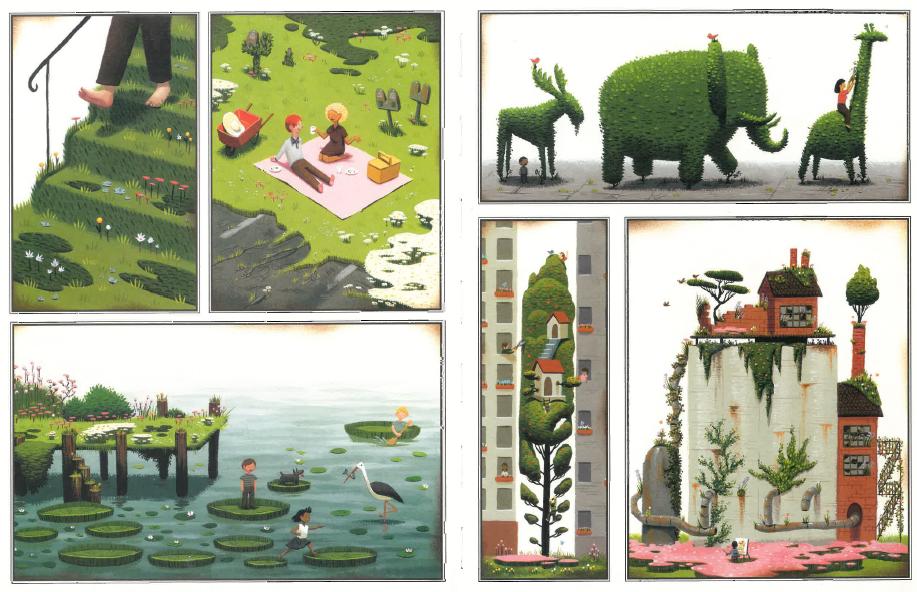
Now the garden was even more curious about the rest of the city, and the brave weeds and mosses led the way. “They popped up farther and farther from the railway and were closely followed by the more delicate plants.” They explored “old, forgotten things,” wiggled their way into sidewalk cracks, and even poked their heads out of broken basement windows. When some plants planted themselves where they didn’t belong, Liam moved them. He also began leaving them in surprising spots around town.

This led to an even more surprising thing: new gardeners also popped up all over the city. Now there were rooftop gardens, backyard gardens, and even gardens that climbed walls. Plants created soft carpets for stairs, huge lily pad boats, an animal parade, and high-rise tree houses for neighbors to share. “Many years later, the entire city had blossomed.” But Liam still loved his patch on the railway line the best.

An Author’s Note following the text reveals the true-life inspiration for the story.

celebrate-picture-books-picture-book-review-the-curious-garden-years-later

Copyright Peter Brown, 2009, courtesy of Little, Brown Books for Young Readers.

Peter Brown’s classic story about a little boy who brings new life to a city that has shut itself off from the natural world, reminds readers of the importance of the environment and getting outside to enjoy it and participate in its survival and growth. But Brown’s story is about so much more too. As Liam’s garden begins to branch out, readers see how one person can be instrumental in spreading ideas, happiness, good news, kindness, in fact any number of life-changing events. In the title and the description of the garden, Brown taps into a dual nature of “curious.” What may seem odd or new or even forgotten sparks interest and exploration and new, often better, perspectives that can bring people together.

Brown opens the story with a two-page, aerial-view spread of the drab city dotted in only two places with a bit of color and giving readers a bit of foreshadowing of the transformation to come. The scrubby patch of greenery next to the rotted tracks includes a tiny tree, cleverly imbued with personality. As the garden spreads, kids will love hunting for the itty-bitty birds, bees, and beetles that appear among the colorful flowers. Kids will “ooh” and “ahh” over the pages that show how and where the garden has spread (a parking lot reclamation is a bright spot) and its influence on new gardeners. The final spread completes the promise held in the first and is a true showstopper.
Ages 4 – 9

Little, Brown Books for Young Readers, 2009 | ISBN 978-0316015479

To learn more about Peter Brown, his books, and his art, visit his website.

National Water a Flower Day Activity

celebrate-picture-books-picture-book-spoon-flowers

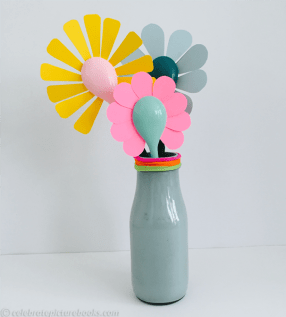
Spoon Flowers Craft


Plastic spoons aren’t just for enjoying yummy treats, they make cute flowers too! With this easy and quick craft, you can give everyone you love a bouquet!

Supplies

  • Colorful plastic spoons
  • Heavy stock paper or construction paper in various colors, including green for leaves
  • Multi-surface glue or hot glue gun

Directions

  1. Cut petals from the heavy stock paper or construction paper
  2. Glue the petals to the bowl of the spoon
  3. Cut leaves from the green paper (optional)
  4. Glue leaves to the handle of the spoon (optional)

celebrate-picture-books-picture-book-review-the-curious-garden-cover

You can find The Curious Garden at these booksellers

Amazon | Barnes & Noble | Books-a-Million

To support your local independent bookstore, order from

Bookshop | IndieBound

Picture Book Review