February 6 – It’s Hot Breakfast Month

celebrate-picture-books-picture-book-review-paul-bunyan-and-babe-the-blue-ox-the-great-pancake-adventure

About the Holiday

Hot Breakfast Month was established to encourage people to have a hot, healthy breakfast before they go off to work or school. A good breakfast can keep your brain and your body working longer and better, which will result in a good day and more happiness in your life! Isn’t that worth cracking a few eggs in a pan, toasting some bread, or—as Paul Bunyan preferred—mixing up a batch of pancakes?!

Paul Bunyan and Babe the Blue Ox: The Great Pancake Adventure

By Matt Luckhurst


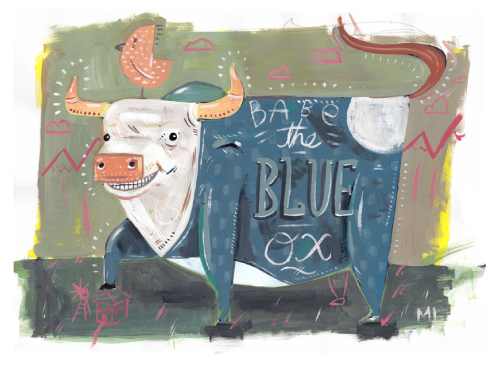
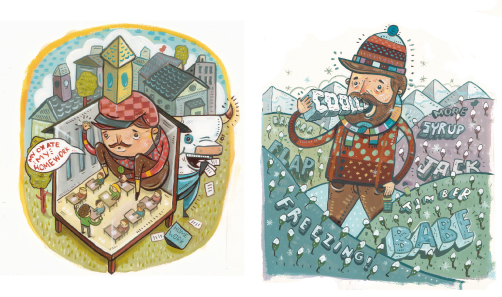
Everyone knows that Paul Bunyan and his best friend Babe the Blue Ox were “the greatest lumberjacks to every work the forests.” But not many people know just how that came to be. It all started because Paul was a very big boy in a very small town. He found it hard to concentrate on school because he was always thinking about his mom’s pancakes. “‘Math,” Paul said, “is just not very tasty.’”

celebrate-picture-book-picture-book-review-paul-bunyan-and-babe-the-blue-ox-and-the-great-pancake-adventure-babe-and-paul

Copyright Matt Luckhurst, courtesy of mattluckhurst.com

Now, Paul and Babe were lucky enough to live in an area where lots of fresh fruit and vegetables were grown, but they only wanted pancakes. In fact when their mom tried to feed them broccoli, they spit it right out! So Paul’s mom made stacks and stacks of pancakes until she was out of breath—but she still had fields to tend to. Paul and Babe tried to free up time for Mom to keep cooking by working in the fields, “but their big feet just squished and squashed everything in sight.”

Finally, there were just not enough pancakes at home, so Paul hugged his mom and set off into the deep dark forest to find his “pancake fortune” with Babe at his heels. With their heads in the clouds and their bellies empty, they happened upon a lumberman with a huge problem. The Syrup River was dammed up with pancakes and the logs couldn’t get through. It was just the job for Paul and Babe!

celebrate-picture-book-picture-book-review-paul-bunyan-and-babe-the-blue-ox-and-the-great-pancake-adventure-babe-smiling

Copyright Matt Luckhurst, courtesy of mattluckhurst.com

Paul and Babe ate every last pancake until the river was clear. The lumberman was so impressed he offered them a job on the spot! And the best part was that they would be paid in pancakes! The trio tromped from Wisconsin to California, logging the land and making their mark. In Minnesota it was “so cold that all of Paul’s words froze before they could make a sound. They say you can still hear his voice in the forests there today as they thaw out.” Further west Paul and Babe had a little something to do with creating the Rocky Mountains, and the Grand Canyon would still be a flat plateau if it weren’t for Babe’s voracious appetite.

celebrate-picture-book-picture-book-review-paul-bunyan-and-babe-the-blue-ox-and-the-great-pancake-adventure-paul's-words-freeze

Copyright Matt Luckhurst, courtesy of mattluckhurst.com

But one day Babe fell ill, and Paul was feeling a little under the weather himself. The doctor gave them a grave diagnosis. “‘You seem to have been eating too many pancakes!’” he announced. Paul was flabbergasted—how could there be such a thing as too many pancakes?! But the doctor explained that a balanced diet was best. Paul pondered where he could find good food. Then it hit him! Paul and Babe said goodbye and headed back home.

celebrate-picture-books-picture-book-review-paul-bunyan-and-babe-the-blue-ox-the-great-pancake-adventure

Copyright Matt Luckhurst, courtesy of mattluckhurst.com

Mom was thrilled to see them and cooked plenty of nutritious meals to make them healthy. They stayed in town and grew “Bunyan sized veggies,” helped the townspeople, and always listened to Mom. And they never ate another pancake ever again! Well….

As Matt Luckhurst so adroitly knows, there is no more fascinating figure of North American folklore than Paul Bunyan and no greater meal than a pancake breakfast! Combining the two is sweet genius and rollicking fun to boot! Tall tales capture the imagination, and Luckhurst has included plenty of fantastic events to keep kids enthralled from page to page. Luckhurst’s larger-than-life illustrations burst with color and dynamic 3-D typography that enhance the humor and heart of Paul and Babe’s predicament. The juxtaposition of sizes and folk-art influences create unique, eye-catching pages, and Paul and Babe’s endearing innocence make them loveable characters.

Perfect for folktale lovers, pancake aficionados, kids who follow a singular vision, and anyone who loves a good yarn, Paul Bunyan and Babe the Blue Ox: The Great Pancake Adventure is great fun and would be an often-read addition to a child’s bookshelf.

Ages 4 – 8

Abrams Books for Young Readers, 2012 | ISBN 978-1419704208

You’ll enjoy getting to know more about Matt Luckhurst and viewing a portfolio of his work on his website!

Take a peek at this awesome trailer for Paul Bunyan and Babe the Blue Ox: The Great Pancake Adventure!

Copyright Matt Luckhurst

Hot Breakfast Month Activity

celebrate-picture-books-picture-book-review-pancake-game

Pancake Flip-Out Game


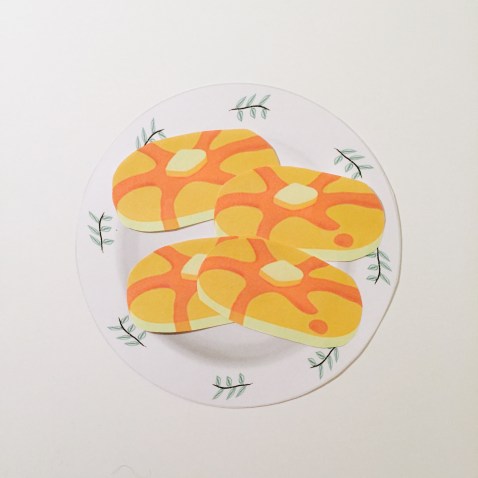
Pancakes are served in a stack because they’re so delicious that each one doesn’t last long! This game gives you the chance to see how many pancakes you can flip onto a plate! You can play this game several ways:

  1. Give each player the same number of pancakes and see how many they can toss onto the plate during their turn
  2. Make a target with the plate in the middle and draw 3 concentric circles around it. Hitting the target can earn you 20 points. Getting your pancake in the first circle around the plate earns you 15 point, the second circle is worth 10 points, and the third is worth 5 points. Rotate through the players as many times as you like and add up the points at the end. The player with the most points wins!
  3. Instead of tossing the pancakes with your hands, try throwing them with a spatula!
  4. Make up your own rules—and have fun!

Supplies

Directions

  1. Print the Pancakes and Breakfast Plates and cut them out
  2. Glue the pancakes and plate to poster board, cardboard, or foam to give the pancakes more weight for throwing and the plate more support
  3. Once dry, the game pieces are ready for fun!

Picture Book Review

November 1 – Dia de los Muertos (Day of the Dead)

celebrate-picture-books-picture-book-review-funny-bones-posada-and-his-day-of-the-dead-calaveras-cover

About the Holiday

Originating in Mexico, but celebrated throughout Latin America, Dia de los Muertos commemorates the lives of deceased loved ones with music, food, parties, and activities the person enjoyed in life. Dia de los Muertos revolves around the belief that death is just a natural part of the life cycle, and the dead are awakened from their eternal rest to once more join their community for this special day.

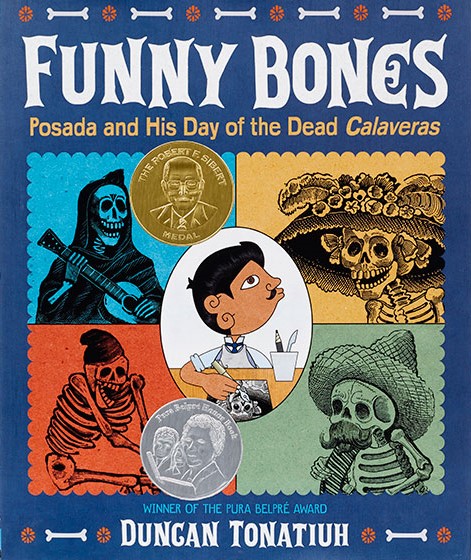
Funny Bones: Posada and His Day of the Dead Calaveras

By Duncan Tonatiuh


José Guadalupe Posada was born in 1852 in the Mexican city of Aguascalientes. His older brother, a teacher, taught Lupe how to read and write, and seeing how well he drew, helped him enroll in art classes. When Lupe was 18, he went to work in a print shop where he learned lithography and engraving. During working hours Lupe created labels, invitations, flyers, and other documents.

celebrate-picture-books-picture-book-review-funny-bones-posada-and-his-day-of-the-dead-calaveras-introduction

Copyright Duncan Tonatiuh, courtesy of abramsbooks.com

After work, he gathered with other artists and talked about the government. They didn’t like how their government officials ran things. Lupe’s boss, Don Trinidad Pedroza, at the print shop also published a newspaper, and he invited Lupe to create editorial drawings to be included in the paper. Lupe’s drawings were humorous, but also highlighted the officials’ bad traits. After the elections some of these politicians remained in power and were angry with Lupe and his boss. Lupe and Don Trinidad decided to move to the city of León.

In León Lupe opened his own print shop, he got married, and had a son. He became well known not only for his printing work but also for book and pamphlet illustrations. People began to call him Don Lupe as a sign of respect. “But in 1888 a terrible flood destroyed a large part of the city, including Don Lupe’s shop.” He and his family moved to Mexico City, where in time he was able to open another print shop.

celebrate-picture-books-picture-book-review-funny-bones-posada-and-his-day-of-the-dead-calaveras-calavera-love

Copyright Duncan Tonatiuh, courtesy of abramsbooks.com

He worked with Antonio Vanegas, a writer, who published his stories on large sheets of paper called ‘broadsides.’ “The tales were about a wide range of topics, including scary creatures, fires, miracles, violent crimes, heroes, bandits, cockfights, and bullfights.” Don Lupe drew illustrations for many of these stories. Even people who couldn’t read began buying the broadsides because they were fascinated by Don Lupe’s art.

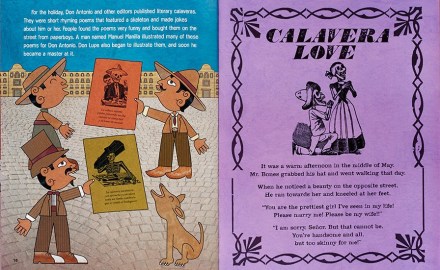
Every November first and second, during the Dia de Muertos celebrations venders sold special “pan de muerto (bread), cempasúchil (marigold flowers), alfeñiques (sugar skulls), and papel picado (paper cutouts). People bought these and other items to decorate the ofrendas (offerings) they made for their loved ones who had died.” Don Antonio and other editors published “literary Calaveras, which were “short rhyming poems that featured a skeleton and made jokes about him or her. People thought they were very funny. Soon Don Lupe began drawing illustrations for these poems.

celebrate-picture-books-picture-book-review-funny-bones-posada-and-his-day-of-the-dead-calaveras-fancy-hat

Copyright Duncan Tonatiuh, courtesy of abramsbooks.com

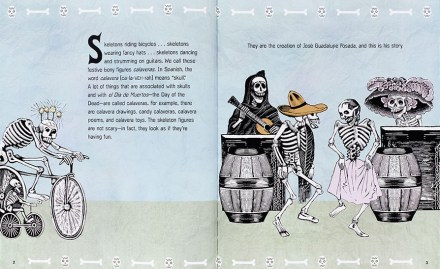
Over time Don Lupe began using the technique of etching, and his illustrations grew more complex. In his calaveras drawings Don Lupe interpreted and commented on what he saw not only on Dia de Muertos, but every day. For example, he watched families gather at loved ones’ graves with food, stories, and music then “drew skeletons dancing and partying. Was he saying that…El Dia de Muertos is not only a celebration of death but also a celebration of life? A day when the dead become alive?”

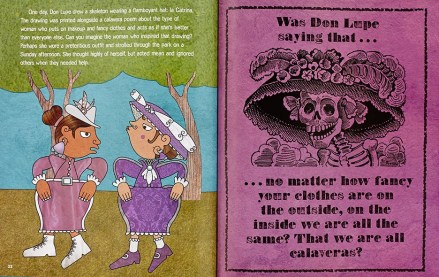
In another drawing a skeleton wears a large hat covered with lace, feathers, and flowers. This illustration accompanied a poem about a woman who wore expensive clothes and thought she was better than others and ignored them when they needed help. “Was Don Lupe saying that…no matter how fancy your clothes are on the outside, on the inside we are all the same? That we are all calaveras?

Don Lupe also commented on the ever increasing hustle and bustle of society, the Mexican Revolution of 1910, revolutionary leaders and government officials, and just common people and events. Perhaps the main idea Don Lupe was trying to communicate was that “calaveras are all around us. That we are all calaveras, whether we are rich or poor, famous or not.”

celebrate-picture-books-picture-book-review-funny-bones-posada-and-his-day-of-the-dead-calaveras-today

Copyright Duncan Tonatiuh, courtesy of abramsbooks.com

While many people loved and looked forward to Don Lupe’s artwork, they did not know the artist who drew them. It wasn’t until many years after his death in 1913 that “historians and artists such as Jean Charlot and Diego Rivera began to wonder who had drawn such wonderful images.” Today, we know Don Lupe by his last name—Posada—which is how he signed his work, and he and his work is still beloved around the world.

An extensive Author’s Note about El Dia de Muertos and Posada’s influence on other artists. A glossary, bibliography, art credits, and places where Posada’s work is displayed follow the text.

celebrate-picture-books-picture-book-review-funny-bones-posada-and-his-day-of-the-dead-calaveras-etching

Copyright Duncan Tonatiuh, courtesy of abramsbooks.com

In Funny Bones Posada and His Day of the Dead Calaveras, Duncan Tonatiuh accomplishes many things. First, his book is a fascinating look at the life of the man who entertained and enlightened the world with his distinctive talent and ideas. Tonatiuh’s straightforward storytelling reveals the personal and historical events that influenced Posada from childhood through adulthood, clearly explaining and highlighting each concept for his young audience. Second, Tonatiuh provides readers with brief primers on the printing processes of lithography, engraving, and etching with step-by-step descriptions of these interesting art forms.

Third, his own vibrant and expressive stylized illustrations both contrast with and complement the depictions of Posada’s life and his calaveras drawings. On nearly every two-page spread readers experience this biography through Tonatiuh’s portrayals of Don Lupe, the townspeople, and others as well as through Posada’s actual broadsides and editorial drawings. The juxtapositions allow children to fully appreciate the meaning and humor behind these famous drawings that are still so popular and resonant today.

Ages 6 – 10

Harry N. Abrams, 2015 | ISBN 978-1419716478

View a gallery of Duncan Tonatiuh‘s artwork for children and adults on his website!

Dia de los Muertas (Day of the Dead) Activity

celebrate-picture-books-picture-book-review-day-of-dead-coloring-page

Calaveras Coloring Page


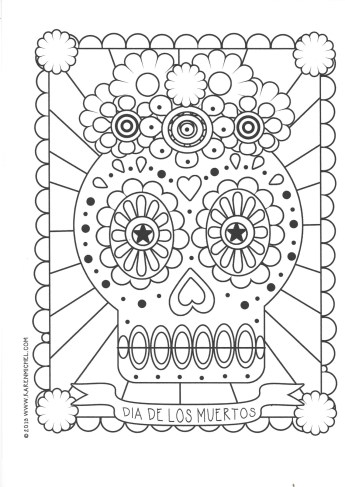
With their intricate designs and vibrant hues, calaveras are a joy to color. Grab your entire set of markers, pencils, or crayons and design a masterpiece with this printable Calaveras Coloring Page.

Picture Book Review
October 12 – Emergency Nurses Day

celebrate-picture-books-picture-book-review-nurse-soldier-spy-the-story-of-sarah-edmonds-cover

About the Holiday

Originating in Australia in 1989 and sponsored by the Emergency Nurses Association, today’s observance has become an international event and honors the dedication and care emergency nurses show for their patients in hospitals, at crisis centers, and in disaster and epidemic zones world-wide. This special day is part of Emergency Nurses Week, which runs from October 9 – 15. This year’s theme is Community. Connect. Care. Compassion, which defines the important role of nurses in both health care and wider society.

Nurse, Soldier, Spy: The Story of Sarah Edmonds, A Civil War Hero

Written by Marissa Moss | Illustrated by John Hendrix


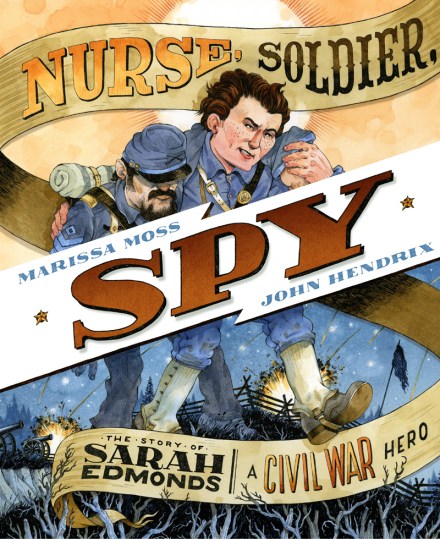
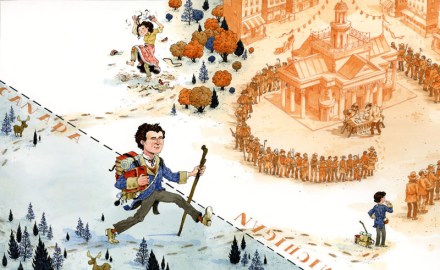
When President Abraham Lincoln called for young men to join the army fighting against the Southern states that wanted to secede from the Union, Frank Thompson signed up. One thing though, Frank wasn’t really a man but, instead, a 19-year-old woman named Sarah Edmonds. Sarah already knew the freedom that posing as a man could bring in her society. Three years earlier to escape a marriage arranged by her parents, Sarah cut her long hair, began wearing pants, and crossed “the border from Canada into the United States, trading a bridal gown for trousers, trading countries, without a single regret.”

celebrate-picture-books-picture-book-review-nurse-soldier-spy-the-story-of-sarah-edmonds-becoming-frank

Image copyright John Hendrix, courtesy of johnhendrix.com

Now, outside the Michigan courthouse, Sarah slowly moved her way along the line to the table where she could sign up to join the troops. When she finally stood in front of the recruiter, however, he stopped her. Sarah was mystified. How did he know she wasn’t a man? She had grown up on a farm, learning the work, copying the gestures, and even wearing the clothes of her brother. But the recruiter took one look at “Frank Thompson” and told her…she was too young to join the army. “He looked at her peachy cheeks free of any sign of a whisker. ‘We aren’t taking any sixteen-year-olds,’” he told her.

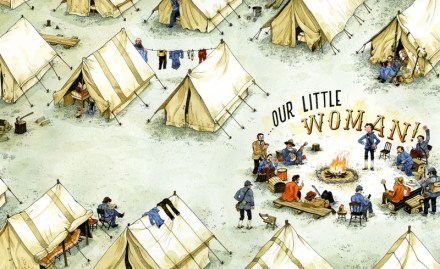
A month later, however, more men were needed, and Sarah was allowed to join up. Now a soldier, Frank was a valuable member of the corps. She was an expert at riding and shooting, and she felt at home among the men, enjoying the jokes, stories, and letters. Keeping her identity a secret was made easier by the fact that soldiers did not change clothes to go to sleep. Her small feet led the other soldiers to give her a nickname: “Our little woman.” A name Frank enjoyed immensely.

celebrate-picture-books-picture-book-review-nurse-soldier-spy-the-story-of-sarah-edmonds-union-camp

Image copyright John Hendrix, courtesy of johnhendrix.com

On the battlefield Frank trained to be a nurse, “which was something only men with the strongest stomachs did because of the long, draining hours and the horrors of surgery without anesthetic.” She fearlessly participated in the battles of Bull Run and Fair Oaks, risking her own life to rescue wounded soldiers. One night the regimental chaplain approached Frank. He wanted to recommend her for a very important—and very dangerous—job. The chaplain wanted to recommend to the generals that Frank become a spy for the North.

“Frank didn’t hesitate. ‘I’m your man!’” she said. Disguising herself as a freed slave, she infiltrated “a group of slaves bringing breakfast to the rebel pickets, the men who guarded the camp.” With so much work to do, the group quickly accepted her, but when the rest of the men, women, and children went off to their own assignments Frank hesitated, not knowing where to go next. Suddenly, a Confederate soldier caught Frank and ordered her to work on the fortifications. The work was backbreaking and left her hands blistered and bloody. The other workers helped when she had trouble.

celebrate-picture-books-picture-book-review-nurse-soldier-spy-the-story-of-sarah-edmonds-battlefield

Image copyright John Hendrix, courtesy of johnhendrix.com

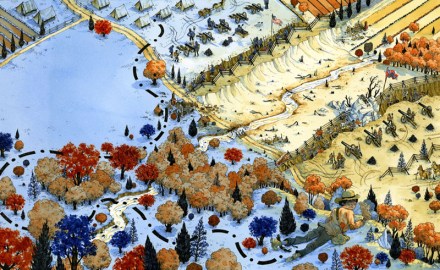
The work gave Frank an opportunity to count the number of guns the army had, sketch a layout of the fort, and notice that some cannons were fake—just logs painted to look like cannons. By switching jobs with the water boy, Frank was able to get closer to the troops, where she encountered another spy—one working for the Confederate army. When night fell, Frank returned to his Union battalion. Giving the password, Frank was let into camp and made her way to the general’s tent. “Freedom, she knew, wasn’t something to take for granted. It was something to fight for, to cherish. And so long as her heart was beating strong, that’s just what she would do.”

An extensive Author’s Note revealing more about Sarah Edmond’s life and an Artist’s Note on the creation of the illustrations follow the text.

Marissa Moss’s biography of Sarah Edmonds is a suspenseful, gripping, and enlightening story of a woman who broke molds, lived on her own terms, and paved the way for future generations of women. Her well-chosen vignettes from Edmonds’ time as a Union soldier demonstrate not only Edmonds’ bravery and abilities but also create a clear and exciting trajectory of her increasing responsibilities and the danger that went with them. Fascinating details of the Civil War period, the people and attitudes involved, and the duplicitous nature of warfare, add up to a rich account of Sarah Edmonds’ life as well as the Civil War era in general.

celebrate-picture-books-picture-book-review-nurse-soldier-spy-the-story-of-sarah-edmonds-as a spy

Image copyright John Hendrix, courtesy of johnhendrix.com

Meticulously researched and drawn, John Hendrix’s illustrations perfectly accompany and illuminate the text. Accurate depictions of Civil War-era buildings and clothing as well as Union and Confederate uniforms and weapons allow children to become fully immersed in the time period. Wide-view depictions of encampments and battlefields let readers peek into tents and scour trenches, and action abounds. In camp soldiers pick out tunes on banjos, write letters, and hang laundry; on the battlefield fires rage and ammunition explodes as soldiers follow the charge of their leaders; at the Confederate fortifications black workers steer wheelbarrows of rock; and in the medical tent Frank tends to wounded soldiers, the equipment used clearly visible. Scenes portrayed in both daylight and at night highlight the ongoing conflict and the dangerous, secretive work Sara Edmonds undertook.

Nurse, Soldier, Spy: the Story of Sarah Edmonds a Civil War Hero is historical and biographical work at its best. This fast-paced, fascinating look at one particular soldier informs readers about so many aspects of the Civil War era, including societal issues that shaped the United States and are still discussed today. The book is a must for school and public libraries and its in-depth, absorbing content makes it a welcome addition to home libraries for children who love history, art, biographies, and a well-told story.

Ages 5 – 12

Abrams Books for Young People, 2016 (Paperback edition) | ISBN 978-1419720659

Discover many more books, fun stuff, writing tips and more on Marissa Moss‘s website!

View a portfolio of picture book art, editorial illustration, a sketchbook, and more on John Hendrix‘s website!

Emergency Nurses Day Activity

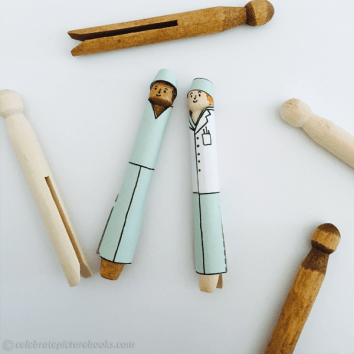
CPB - Doctors Clothespins

Emergency Nurse Clothespin Dolls


Make one of these clothespin figures that honors hard-working and compassionate emergency nurses!

Supplies

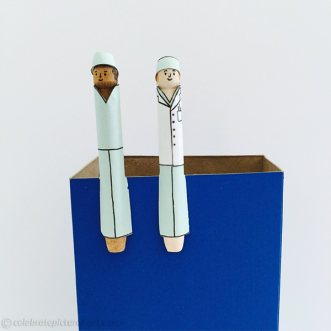
CPB - Doctors Clothespins on box

Directions

  1. Draw a face and hair on the clothespin
  2. Cut out the outfit you want your doctor to wear (color pants on your clothespin if you choose the lab coat)
  3. Wrap the coat or scrubs around the clothespin. The slit in the clothespin should be on the side.
  4. Tape the clothes together
  5. Wrap the cap around the head and tape it.
  6. If you’d like to display your clothespin doctor on a wire, string, or the edge of a box or other container, cut along the dotted lines of the clothes template.

Picture Book Review
June 28 – Paul Bunyan Day

celebrate-picture-books-picture-book-review-paul-bunyan-and-babe-the-blue-ox-the-great-pancake-adventure

About the Holiday

The tales of Paul Bunyan, a logger of superhuman size and strength, and his companion Babe the Blue Ox belong to some of the most popular folklore of early North America. Many think his name stemmed from the Quebec bon yenne!, which expresses surprise or astonishment. The phrase would be fitting as Paul Bunyan is said to have accomplished many feats, including creating the Grand Canyon when he walked through the area dragging his ax and forming the Great Lakes as a watering hole for Babe. In 1916 freelance writer and adman William B. Laughead took the figure of Paul Bunyan for an advertising campaign for the Red River Lumber Company, and the stories received new burnishing and popularity.

To celebrate today’s holiday research folklore about Paul Bunyan and Babe, take a walk in the woods Bunyan loved so well, and read today’s book!

Paul Bunyan and Babe the Blue Ox: The Great Pancake Adventure

By Matt Luckhurst

Everyone knows that Paul Bunyan and his best friend Babe the Blue Ox were “the greatest lumberjacks to every work the forests.” But not many people know just how that came to be. It all started because Paul was a very big boy in a very small town. He found it hard to concentrate on school because he was always thinking about his mom’s pancakes. “‘Math,” Paul said, “is just not very tasty.’”

Now, Paul and Babe were lucky enough to live in an area where lots of fresh fruit and vegetables were grown, but they only wanted pancakes. In fact when their mom tried to feed them broccoli, they spit it right out! So Paul’s mom baked stacks and stacks of pancakes until she was out of breath—plus she had fields to tend to. Paul and Babe tried to free up time for Mom by working in the fields, “but their big feet just squished and squashed everything in sight.”

celebrate-picture-books-picture-book-review-paul-bunyan-and-babe-the-blue-ox-the-great-pancake-adventure

Finally there were just not enough pancakes at home, so Paul hugged his mom and set off into the deep dark forest to find his “pancake fortune” with Babe at his heels. With their heads in the clouds and their bellies empty, they happened upon a lumberman with a huge problem. The Syrup River was dammed up with pancakes and the logs couldn’t get through. It was just the job for Paul and Babe!!

Paul and Babe ate every last pancake until the river was clear. The lumberman was so impressed he offered them a job on the spot! And the best part was that they would be paid in pancakes! The trio tromped from Wisconsin to California logging the land and making their mark. In Minnesota it was “so cold that al Paul’s words froze before they could make a sound. They say you can still hear his voice in the forests there today as they thaw out.” Further west Paul and Babe had a little something to do with creating the Rocky Mountains, and the Grand Canyon would still be a flat plateau if it weren’t for Babe’s voracious appetite.

But one day Babe fell ill, and Paul was feeling a little under the weather himself. The doctor gave them a grave diagnosis. “‘You seem to have been eating too many pancakes!’” he announced. Paul was flabbergasted—how could there be such a thing as too many pancakes?! But the doctor explained that a balanced diet was best. Paul pondered where he could find good food. Then it hit him! Paul and Babe said goodbye and headed back home.

celebrate-picture-books-picture-book-review-paul-bunyan-and-babe-the-blue-ox-the-great-pancake-adventure

All images courtesy of Matt Luckhurst (mattluckhurst.com)

Mom was thrilled to see them and cooked plenty of nutritious meals to make them healthy. They stayed in town and grew “Bunyan sized veggies,” helped the townspeople and always listened to Mom. And they never ate another pancake ever again! Well….

As Matt Luckhurst so adroitly knows, there is no more fascinating figure of North American folklore than Paul Bunyan and no greater meal than a pancake breakfast! Combining the two is sweet genius and rollicking fun to boot! Tall tales capture the imagination, and Luckhurst has included plenty of fantastic events to keep kids enthralled from page to page. Luckhurst’s larger-than-life illustrations burst with color and dynamic 3-D typography that enhance the humor and heart of Paul and Babe’s predicament. The juxtaposition of sizes and folk-art influences create unique, eye-catching pages, and Paul and Babe’s endearing innocence make them loveable characters.

Perfect for folktale lovers, pancake aficionados, kids who follow a singular vision, and anyone who loves a good yarn, Paul Bunyan and Babe the Blue Ox: The Great Pancake Adventure is great fun and would be an often-read addition to a child’s bookshelf.

Ages 4 – 8

Abrams Books for Young Readers, 2012 | ISBN 978-1419704208

Take a peek at this awesome trailer for Paul Bunyan and Babe the Blue Ox: The Great Pancake Adventure!

Copyright Matt Luckhurst

Paul Bunyan Day Activity

celebrate-picture-books-picture-book-review-pancake-game

Pancake Flip-Out

Pancakes are served in a stack because they’re so delicious each one doesn’t last long! This game gives you the chance to see how many pancakes you can flip onto a plate! You can play this game several ways:

  1. Give each player the same number of pancakes and see how many they can toss onto the plate during their turn
  2. Make a target with the plate in the middle and draw 3 concentric circles around it. Hitting the target can earn you 20 points. Getting your pancake in the first circle around the plate earns you 15 point, the second circle is worth 10 points, and the third is worth 5 points. Rotate through the players as many times as you like and add up the points at the end. The player with the most points wins!
  3. Instead of tossing the pancakes with your hands, try throwing them with a spatula!
  4. Make up your own rules—and have fun!

Supplies

Directions

  1. Print the Pancakes and Breakfast Plates and cut them out
  2. Glue the pancakes and plate to poster board, cardboard, or foam to give the pancakes more weight for throwing and the plate more support
  3. Once dry, the game pieces are ready for fun!

Picture Book Review