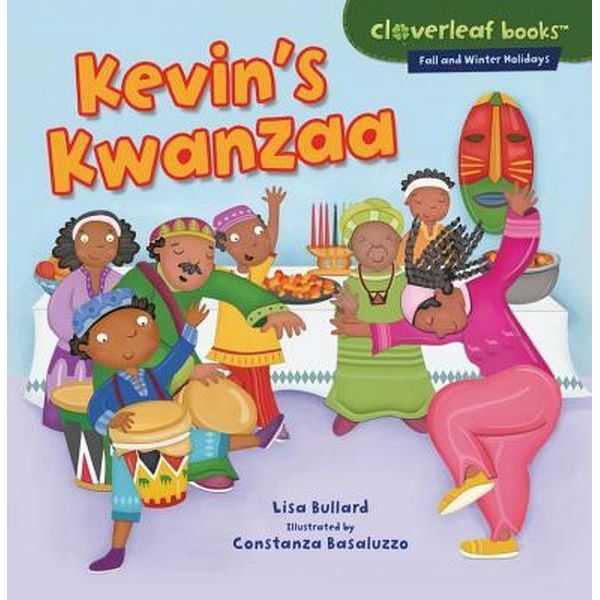
December 26 – Kwanzaa

celebrate-picture-books-picture-book-review-kevin's-kwanzaa-cover

About the Holiday

Today’s holiday is celebrating it’s 50th anniversary this year. Kwanzaa was established in 1966 by Dr. Maulana Karenga, professor and chairman of Black Studies at California State University, Long Beach as a way to unite African-Americans as a community. Derived from the Swahili phrase matunda ya kwanza, which translates as “first fruits,” Kwanzaa incorporates aspects of several African harvest celebrations. The seven-day holiday is observed from December 26 through January 1, and as the little boy in today’s book relates, offers excitement, togetherness, and meaningful reflection.

Kevin’s Kwanzaa

Written by Lisa Bullard | Illustrated by Constanza Basaluzzo


Surrounded by red, green, yellow, and black paper and his craft supplies, Kevin is excited to be making decorations for his family’s Kwanzaa celebration. “Mom says it celebrates our African American culture,” Kevin says. Together, Kevin and his mom set the table. First, his mom lays down a mat. Then Kevin adds the candleholder and the special Kwanzaa candles while his mom adds a bowl of fruit and vegetables. “There’s an ear of corn for each kid,” Kevin explains. “Next comes the unity cup. Didn’t I do a great job decorating it? We put out presents too! Now we’re ready for Kwanzaa,” he adds with pride.

On the first night of Kwanzaa, Kevin’s family gathers at the table as Kevin’s grandfather lights the first candle—the black candle in the center of the candleholder. Each night another candle will be lit. Kevin can’t wait for his turn on the last night. After the candle lighting, “Grandpa explains the Kwanzaa word for the first day. Every day has a special word in Swahili,” Kevin says. The first word is Umoja, which means unity, or “sticking together as a group.”

Grandpa explains that “sticking together is why Kwanzaa began.” The holiday was created by Dr. Maulana Karenga in 1966, who wanted African Americans to “feel proud of their shared African background.”  Each night another family member lights candles, so Kevin watches closely to be ready for his turn. On the third night, Kevin’s mom lights the candles, and the principle word is Ujima or “collective work and responsibility.” The family talks “about helping one another solve problems”—like Kevin’s “messy bedroom problem.” The fifth night belongs to Kevin’s brother, and the family discusses their goals to help the community. Kevin says that he has two goals: to become a teacher and to light the Kwanzaa candles.

The sixth night is Kevin’s favorite. His family attends a big party, and because the day’s word is Kuumba, which means “creativity,” there will be homemade decorations, presents, and drums. Kevin loves to “boom, boom with the drummers” and “stomp, stomp with the dancers” and “eat and eat!” At last, it is the seventh day of Kwanzaa! Kevin is excited to open his presents, but he says he “likes lighting the candles even more!” Grandpa tells Kevin his special word Imani means “faith,” and that he “should believe in our people every day.” Kevin agrees, thinking “that will be like living Kwanzaa all year long!”

Each two-page spread of Kevin’s Kwanzaa also presents facts about the holiday. Readers learn how the holiday began, where it is celebrated, and that it incorporates parts of African harvest festivals. They discover that the one black candle, three red candles, and three green candles are lit in a special order and learn the Nguzo Saba or “Seven Principles” of Kwanzaa. Shared activities, such as drinking from the unity cup, are also discussed.

Lisa Bullard’s story, told by a young boy proud to be celebrating Kwanzaa and lighting the candles for the first time, is an engaging introduction to the holiday. Through the narrator’s enthusiasm as he prepares for and takes part in the family celebrations, Bullard reveals the principles and traditions that make Kwanzaa so meaningful. Kids will also appreciate the sentiments expressed in the gentle bits of humor. Divided into short chapters, Kevin’s Kwanzaa allows young readers to feel more grown up—just as Kevin does as he joins the family in lighting the candles.

Through her vibrant illustrations, Constanza Basaluzzo brings the traditions and ceremonies of Kwanzaa to life for children. As the family gathers each night, the joy and pride they feel is clearly depicted. Images of the decorations, clothing, and homemade items as well as portrayals of the seven principles and the founding of Kwanzaa make the concepts easily understood.

Ages 4 – 7

Millbrook Press, Lerner Books, 2013 | ISBN 978-0761385882

Discover more about Lisa Bullard and her books as well as fun activities on her website!

Kwanzaa Activity

celebrate-picture-books-picture-book-review-kwanzaa-word-search

Kwanzaa Word Search


Kwanzaa is a holiday of fun as well as family and community togetherness. Discover 25 words related to the holiday in this Kwanzaa Word Search puzzle! Here’s the Solution!

Picture Book Review

December 25 – Christmas

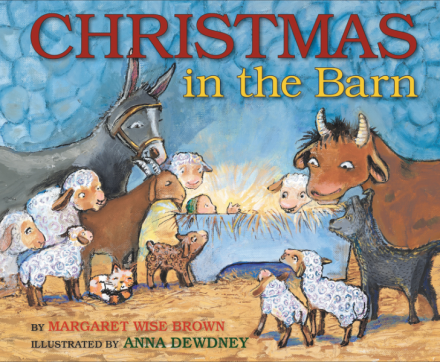
celebrate-picture-books-picture-book-review-christmas-in-the-barn-cover

About the Holiday

Christmas is anticipated all year round for the joy of giving, the fun of receiving, and the message of hope the holiday gives. Honoring the birth of Jesus, it is a religious observation celebrated with hymns, special services, prayers, and remembrance of others. Incorporating long-held traditions from around the world, the holiday also welcomes Santa Claus, also known as Father Christmas, Saint Nicholas, Papá Noel, Ded Moroz (“Grandfather Frost” in Russian), Julenissen (“Christmas Gnome” in Norway), and many other names, who brings gifts to children on Christmas Eve. The day inspires family dinners, home baking, parties with friends, and togetherness.

Christmas in the Barn

Written by Margaret Wise Brown | Illustrated by Anna Dewdney


“In a big warm barn in an ancient field / The oxen lowed, the donkey squealed, / The horses stomped, the cattle signed, / And quietly the daylight died / In the sunset of the west.” As the animals in the barn gathered for a meal of hay in the waning light, a star shining brighter than all the others rose in the sky. A couple and their donkey approach the barn, led there by the innkeeper who has no more rooms to give.

Welcomed by the farmyard animals, “…they were all safe and warm / All together in that ancient barn. / When hail—the first wail of a newborn babe reached the night / Where one great star was burning bright….” Shepherds tending their flocks come to watch the baby sleeping, and three wise men from far away travel to give him precious gifts. “What child is this who is born here / Where the oxen stomp and peer, / Away in a manger, no crib for his bed / What child is this who lays down his sweet head?”

With the dawning Christmas Day, the wise men rejoice while the special child still sleeps watched over by his mother and father, the sheep and the goats, the ox and the dog, the cat and the doves. “And there they were / All safe and warm / All together / In that ancient barn.”

From the first line of Christmas in the Barn, readers will delight in this Margaret Wise Brown picture book for little ones. Her distinctive rhythm and rhyme scheme brings the story of Mary and Joseph and baby Jesus close to the heart of listeners. Wise Brown describes the events of that first Christmas Eve night and dawning Christmas day with simple, lilting sentences that emphasize the tenderness and togetherness in that “ancient barn.” Children will respond to Wise Brown’s gentle animals and the recognition of lines from familiar carols. The openness of the text allows for personal discussion of the story, making this a wonderful choice that will become a favorite with young—and even older—children.

Originally published in 1952, Christmas in the Barn is given a new and stunning look by Anna Dewdney. Her mixed-media illustrations glow with the mystery and splendor of the story. As the couple travels to the little inn, they are portrayed in silhouette, tiny against the vast peach-colored desert. The animals eat their dinner, unaware of what will soon happen in their home. Their sweet faces welcome the two people to share their space, and when the baby is born, the midnight blue sky lightens with the onset of the guiding star. Dewdney’s depictions of the barn’s interior focuses on the newborn baby, while the reverence shown him are moving and beautifully portrayed.

Christmas in the Barn is sure to become an often-read Christmas tradition, and would make an excellent selection for holiday collections.

Ages 3 – 8

HarperCollins, 2016 | ISBN 978-0062379863

Christmas Day Activity

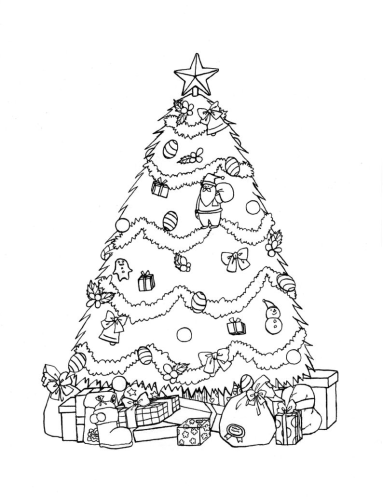
celebrate-picture-books-picture-book-review-christmas-coloring-page

Christmas Tree Coloring Page


Brightly wrapped presents under a pine tree decorated with traditional ornaments is a favorite sight at Christmas! Grab some pencils or crayons and color this printable Christmas Tree Coloring Page!

Picture Book Review
December 24 – Hanukkah

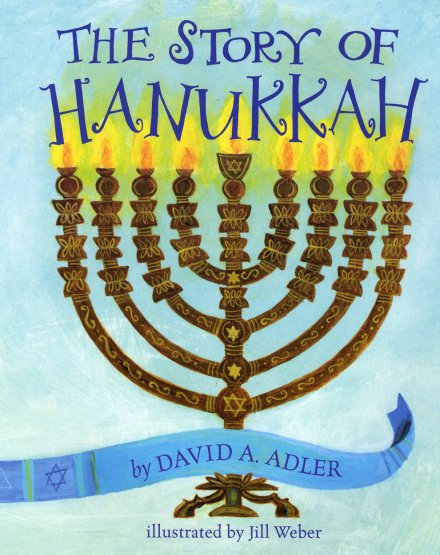
celebrate-picture-books-picture-book-review-story-of-hanukkah-cover

About the Holiday

Chanukah, also spelled Hanukkah, is the eight-day Jewish wintertime “festival of lights” that commemorates the rededication of the Holy Temple in Jerusalem in the 2nd century BCE. Special prayers, oil-based foods, and gifts are also part of this looked-forward to holiday. Today’s reviewed book reveals the history and traditions of Chanukah. If you are celebrating Chanukah this week—many wishes for a meaningful and enjoyable holiday!

The Story of Hanukkah

Written by David A. Adler | Illustrated by Jill Weber


The story of Hanukkah began many centuries ago when Israel was known as Judea and the Jews living there worked as farmers and shepherds. Holidays were spent at the beautiful Temple, where the gates were covered in gold and silver. and a light—the ner tamid—always burned. While the Jews did not rule their land, they lived in peace. “Then a Greek, Antiochus IV became king. He tore down the walls of Jerusalem. Thousands were killed. Anyone who lit Sabbath candles, studied Jewish law, or refused to bow to Greek idols was put to death.”

When Antiochus’s army came to the town of Modiin, “they demanded that Mattathias, an old priest, worship one of their gods.” He refused and with his five sons and other followers ran into the hills. The soldiers chased them, but were attacked by “brave Jews hiding behind large rocks and inside caves….” When Mattathias died his son Judah became the group’s leader. He was known as the Maccabee, or “the hammer,” and the people who fought with him were called Maccabees.

celebrate-picture-books-picture-book-review-the-story-of-hanukkah-battle

Image copyright Jill Weber, courtesy of Holiday House Publishing

Antiochus did not give up easily. He sent his soldiers back on horses and even armored elephants. They carried swords and bows and arrows and were well-trained fighters. But despite the fact that there were 600 soldiers for every one Maccabee, the Maccabees defeated the mighty army. “Judah then led the Maccabees to Jerusalem. The Maccabees cried when they saw the Temple ruined and filled with garbage.” They went to work to restore the Temple to its former beauty.

Finally, the Temple was rebuilt and it came time to light the ner tamid. When the people looked for oil to fuel the light, however, all they found was a single jar with only enough oil to burn for one day. They lit the ner tamidm and although supplied with only a meager amount of oil, it burned for eight days—enough time for more oil to be prepared. “On the twenty-fifth day of the Hebrew month of Kislev, the Temple again became the ‘House of God.’”

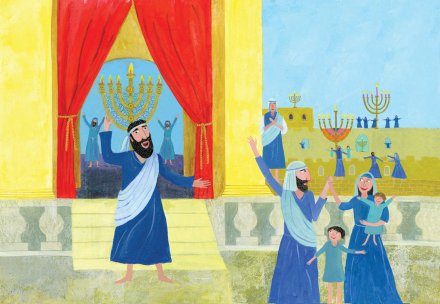
celebrate-picture-books-picture-book-review-the-story-of-hanukkah-celebrating-restored-temple

Image copyright Jill Weber, courtesy of Holiday House Publishing

Judah told his people that “every year on that date an eight-day holiday would begin.” The holiday would be called Hanukkah, meaning “dedication.” Today, Jews all over the world celebrate Hanukkah. Every night they light one more candle on the menorah. They sing special songs, eat latkes (potato pancakes) and sufganiyot (jelly doughnuts), and exchange gifts. Children also enjoy playing a game with a four-sided top called a dreidel. On each side of the dreidel “is a different Hebrew letter—the first letters of the Hebrew sentence Nes gadol hayah sham, which means ‘A great miracle happened there.’” “Hanukkah celebrates one of the first fights for religious freedom.”

With his exceptional storytelling skills, David A. Adler reveals the history of Hanukkah to children. In simple, yet compelling sentences, Adler clearly depicts the faith of the Jews and the dangers they faced from Antiochus and his army. Children will marvel over the astounding defeat of Antiochus’s soldiers at the hands of the Maccabees and be filled with awe as the Temple is rebuilt and the small amount of oil sustains the flame in the ner tamid for eight days. Children unfamiliar with Hanukkah celebrations will discover the meanings behind the traditional foods, dreidel game, and lighting of the Menorah in clear language full of the pride and emotions Jewish families feel during the holiday.

In her bright acrylic paintings Jill Weber brings to life the story of the Jews and the Maccabees, allowing children to fully experience the environment and perils of the time period. Her patchwork fields tended by farmers and shepherds give way to the majesty of the Temple with its central altar and glowing eternal flame. Weber’s battle scenes are particularly effective in presenting the destruction, fear, and final victory experienced by the Jews. Readers will be cheered by the joy depicted in the faces of the people celebrating the restoration of the Temple and the excitement of families observing Hanukkah today.

A recipe for Latkes as well as instructions on how to play Dreidel follow the text

The Story of Hanukkah is a wonderful introduction to the holiday for children learning their own heritage or for children discovering the traditions of friends, family, and others.

Ages 5 – 8

Holiday House, 2012 | ISBN 978-0823425471

To view more of the many, many books by David A. Adler, visit his website!

Discover a gallery of book illustration and other design work by Jill Weber on her website!

Hanukkah Activity

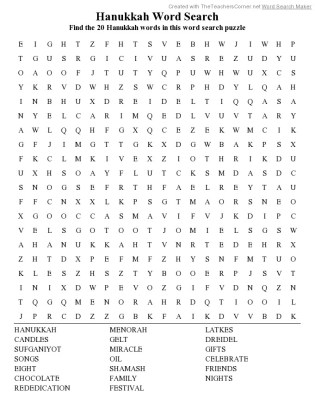
celebrate-picture-books-picture-book-hanukkah-word-search

Festival of Lights Word Search


Find 20 words related to Hanukkah celebrations in this printable Festival of Lights Word Search puzzle. Here’s the Solution.

Picture Book Review
December 23 – Roots Day

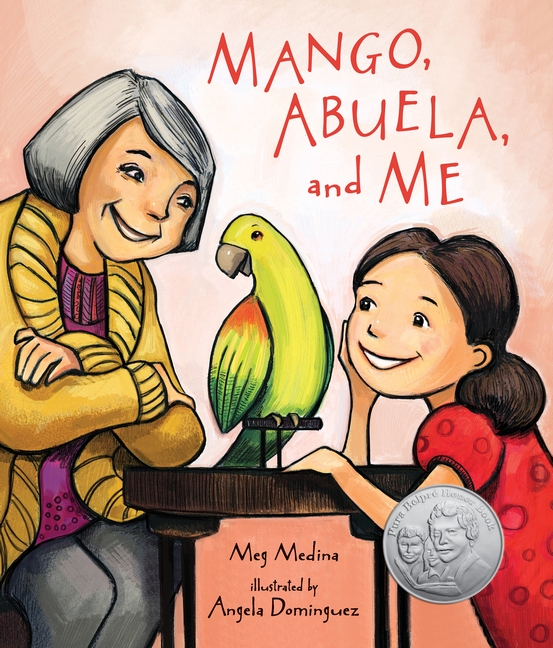
celebrate-picture-books-picture-book-review-mango-abuela-and-me

About the Holiday

Roots Day was established to inspire us to look into our family background and learn about our heritage. It’s fascinating to discover facts about our ancestors’s lives and the stories that have come down from generation to generation. If you will be with family this weekend, talk about your collective history and get to know each other in a whole new way!

Mango, Abuela, and Me

Written by Meg Medina | Illustrated by Angel Dominguez


During the winter Mia’s Abuela moves from her house far away to live with her family. Mia feels shy around her unfamiliar grandmother, but quickly adapts, sharing her room and her drawer space. The one thing they cannot share is language. Abuela “can’t unlock the English words” in Mia’s book, and Mia knows only a little Spanish.

celebrate-picture-books-picture-book-review-mango-abuela-and-me-letter

Image copyright Angela Domingues, text copyright Meg Medina. Courtesy of Candlewick Press

On the first night Abuela shows Mia two things she has carefully brought with her—a feather from a wild parrot that roosted in her mango trees and a photograph of her late husband. “Tu Abuelo,” she explains to Mia.

For the rest of the winter, Mia spends time with her grandmother, but regrets that she can never tell her important things about her life. Abuela does’t know that Mia’s good at art or can beat the boys in a race. Likewise, Abuela can’t tell Mia about her life or answer Mia’s many questions. 

celebrate-picture-books-picture-book-review-mango-abuela-and-me-language-barrier

Image copyright Angela Domingues, text copyright Meg Medina. Courtesy of Candlewick Press

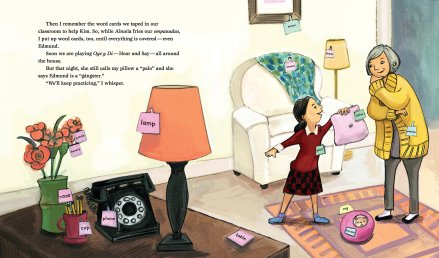
When Mia confides in her mother, her mom reminds her of how she helped her best friend, Kim, learn English when she was new at school. One day while Mia and her grandma bake meat pies, Mia pretends to be her teacher, naming each ingredient in English. Abuela reciprocates with the Spanish word. Mia suddenly has an idea. She tags everything in the house with its English name and the pair practices.

celebrate-picture-books-picture-book-review-mango-abuela-and-me-word-tags

Image copyright Angela Domingues, text copyright Meg Medina. Courtesy of Candlewick Press

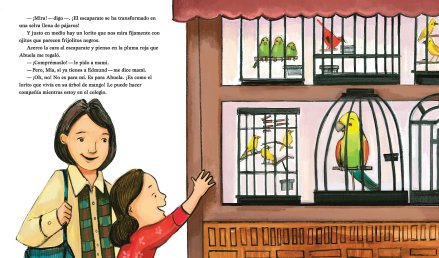
The next day on a trip to the pet shop to buy hamster food, Mia sees something in the window that gives her another exciting idea. Right in the middle of the display sits a colorful parrot. “Let’s buy him,” Mia exclaims. “For Abuela.” The parrot can keep Abuela company while she is in school, Mia thinks.

Abuela is thrilled with the gift, and they name the parrot Mango because he is the color of the tropical fruit. Abuela teaches him to say Buenos tardes. Good afternoon, Mia teaches him. “Buenos tardes, good afternoon,” Mango repeats. Abuela, Mia, and Mango spend the days practicing new English and Spanish words, learning the days of the week, the months, and the names of coins. Encouraged by her success, Abuela asks to learn more and harder words so she can meet people in the neighborhood.

celebrate-picture-books-picture-book-review-mango-abuela-and-me-pet-store

Image copyright Angela Domingues, text copyright Meg Medina. Courtesy of Candlewick Press

Best of all, Mia and Abuela can now talk about everything. Their “mouths are full of things to say,” and they tell each other about their day and their lives. From his perch Mango watches and listens. Night falls and as the light is turned off, Mia says “Hasta mañana, Abuela.” “Good night, Mia,” Abuela whispers.

celebrate-picture-books-picture-book-review-mango-abuela-and-me-baking-together

Image copyright Angela Domingues, text copyright Meg Medina. Courtesy of Candlewick Press

Meg Medina beautifully represents the relationship between a little girl and her grandmother who are unfamiliar with each other but bound by familial love. The little girl’s acceptance of her grandmother and desire to communicate is strongly depicted in the activities they do together. Mia’s clever ideas to promote the mutual learning of each other’s language shows the kind of inclusiveness that builds friendships. 

Angela Dominguez depicts the developing friendship between Mia and her Abuela in bright paintings that mirror the reds, blues, greens, and yellows of the tropics. The pair’s closeness grows organically from page to page as Mia first shies away from the grandmother who is a stranger to her to attempts at communication to deep feelings of love as they bridge the language barrier through dedication, hard work, and the help of a unique friend.

Ages 5 – 8

Candlewick Press, 2015 | ISBN 978-0763669003 (English) / 978-0763680992 (Spanish)

Learn more about Meg Medina and her books on her website

Discover more about Angela Dominguez and her books on her website!

Watch the Mango, Abuela, and Me book trailer!

Roots Day Activity

celebrate-picture-books-picture-book-review-recipe-card


Family Recipe Card


Every family has at least one favorite recipe. Maybe it’s a recipe handed down through the generations or maybe it’s a brand new treat! Print this Family Recipe Card on card stock or glue it to a 4″ x 6″ index card. Write down your recipe and save it. Why not start your own box of special recipes that you can pass down?

Picture Book Review
December 22 – National Regifting Day

celebrate-picture-books-picture-book-review-esther's-hanukkah-disaster-cover

About the Holiday

The Thursday before December 25 has been designated as National Regifting Day, owing to the number of office and other parties that hold gift exchanges. There is a certain art to regifting that requires special attention. Always remember to only regift quality, unopened or new items, be mindful of the person you are giving to, and do not return a present to its original giver! If you’re participating in today’s holiday, be creative and have fun!

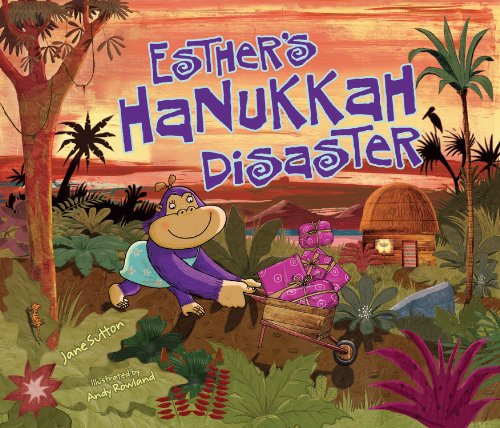
Esther’s Hanukkah Disaster

Written by Jane Sutton | Illustrated by Andy Rowland


While enjoying a breakfast of Gorilla Flakes and bananas, Esther viewed her calendar. Time had crept up on her, and she realized with a shock that Hanukkah was only one day away and she hadn’t bought her friends any presents. She hurried out to the Jungle Store and hit the clothing department. There she found a pair of striped and a pair of argyle socks for her friend Sarah. “Then she spotted a bright red turtleneck. ‘I’ll surprise my friend Zack with this,’ she decided.”

celebrate-picture-books-picture-book-review-esther's-hanukkah-disaster-jungle-market

Image copyright Andrew Rowland, courtesy of Andrew Rowland

In the sports department Esther spied a jogging suit. It was even on sale—“marked down from $13.00 to only $12.99.” Esther quickly put it in her cart for her friend Josephine. She also discovered a make-your-own jungle gym that would be perfect for Hal, and it wouldn’t even take that long to build. “Just 10 minutes…or 10 days at the most!” the directions on the box said. “In the book department, Esther picked up a paperback called 100 Jokes About Elephants.” The jokes were so funny that she bought it for her pal Oscar. Back home, Esther wrapped her gifts.

The next night “Esther placed two candles in her menorah. She lit the shamash candle and said the special blessing. Then she lit the candle for the first night of Hanukkah and said the other two blessings. She remembered the story of the Maccabees and the little jug of oil that lasted eight days.” Soon it was time for her to deliver her presents.

She was happy to stop first at Sarah’s house. Esther was sure she would love the socks she had gotten her. But when the little monkey opened her gift she burst out laughing and said, “‘These socks are big enough for an elephant!’” but added that the gifts were not the most important part of Hanukkah. Sarah’s gift for Esther was Gorilla-Vanilla perfume, which was the perfect thing to make Esther smell nice.

celebrate-picture-books-picture-book-review-esther's-hanukkah-disaster-dinner

Image copyright Andrew Rowland, courtesy of Andrew Rowland

Next, Esther headed over to Zack’s house. When the zebra unwrapped the red sweater Esther had chosen for him, he frowned. “‘I never, ever wear red clothing,’” he said, citing “‘that terrible riddle.’” When Zack related the riddle, ending with “an embarrassed zebra,” Esther laughed and agreed that red was probably not the best clothing choice. Zebra’s gift to Esther was membership in the Coconut of the Month Club—a perfect, yummy gift. Esther was beginning to feel bad about the gifts she was giving

At Josephine’s house Esther learned that the jogging suit she had picked for her turtle friend missed the mark, while the princess costume Josephine gave her fulfilled her dream of dressing up like a human. A little later when Oscar the Elephant opened the joke book, he gently told Esther that he thought “the book was in very poor taste” and that “there should be a law against elephant jokes.” Poor “Esther wasn’t laughing anymore. In fact she felt more like crying. ‘I’m sorry I hurt your feelings,’ she said.” She felt even worse when she opened Oscar’s thoughtful cookbook 1001 Ways to Serve Bananas.

With one gift left to deliver, Esther was sure there would be something wrong with it too, and when she reached Hal’s house she discovered what that was. “‘Hyenas can’t climb jungle gyms like monkeys can,’” he told her as he handed her two tickets to The Gorilla Theater. As Esther trudged away, she felt miserable, but at home with a cup of tea she had an idea. She sat down and wrote out invitations for all of her friends to join her on the Eighth Night of Hanukkah. “‘Make sure to bring the gift I gave you!’” she added.

celebrate-picture-books-picture-book-review-esther's-hanukkah-disaster-after-dinner

Image copyright Andrew Rowland, courtesy of Andrew Rowland

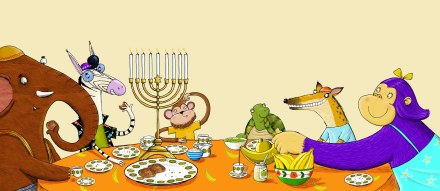
When her friends arrived, they lit the shamash candle, said the blessings, and sat down to a delicious dinner. Afterward, Esther admitted, “‘I know that my gifts to you were a total disaster, but now you can trade!’” She looked at Sarah. “‘The two pairs of socks I bought you would fit an elephant,’ she said. Sarah smiled and handed the socks to Oscar. Hal’s jungle gym turned out to be just right for Sarah. Zack Zebra was thrilled to get Josephine’s jogging suit, and Hal laughed like the hyena he was at 100 Jokes About Elephants. And that red turtleneck was the exact thing for their turtle friend, Josephine.

After her friends left, Esther thought that her gifts had not been so bad. After all, they brought everyone together for a perfect Hanukkah celebration.

Jane Sutton brings humor and meaning to her Hanukkah story that reveals the true nature of the holiday and friendship. With clever gift choices and a sweet plot twist, Sutton’s Esther’s Hanukkah Disaster will have kids giggling and empathizing as Esther’s plans go awry. Her easy-going delivery invites kids along on Esther’s shopping trip and sets up the jokes and final swap in a natural and engaging way. Sutton’s inclusion of Esther’s and her friend’s honest reactions to the gifts encourages discussion of how to choose gifts, how to make up for mistakes, how to graciously accept gifts, and more topics surrounding gift-giving.

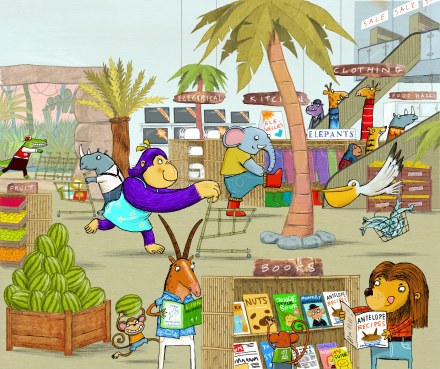
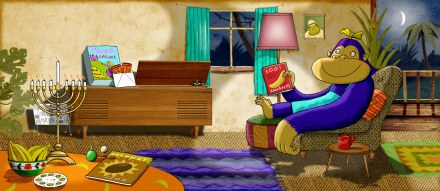
Andy Rowland’s purple gorilla Esther is sweetly expressive even as she is a bit oblivious to the needs of her friends and clearly disgruntled when her gifts don’t work out. Kids will love the brightly colored illustrations loaded with details appropriate to Esther’s world, especially the bowls, drawers, and hangers of bananas, banana cookbooks, banana-decorated table cloth and even a banana-shaped teapot in her kitchen. The Jungle Store is a riff on big-box stores with multiple departments where shoppers finding everything from fish for a pelican to a book of Antelope Recipes for a lion to Ele-Wellie boots for an elephant.

Esther’s nighttime neighborhood is likewise beautifully drawn with lush foliage; hanging lanterns; wood, bamboo, and stone homes; and even a waterfall. The window of each friend’s home frames a menorah.

With its humorous take on a common mishap and loveable characters, Esther’s Hanukkah Disaster is a book kids will enjoy no matter what the gift-giving occasion is!

Ages 4 – 7

Kar-Ben Publishing, 2013 | ISBN 978-0761390435

Discover more about Jane Sutton and her books as well as book-related activities on her website!

Become wrapped up in this swinging Esther’s Hanukkah Disaster book trailer!

Regifting Day Activity

celebrate-picture-books-picture-book-review-gift-tags

Whimsical Gift Tags


Every present needs a tag! With these printable Whimsical Gift Tags you can present your present in style! Just color them and add the names!

Picture Book Review

December 21 – Winter Solstice

celebrate-picture-books-picture-book-review-if-snowflakes-tasted-like-fruitcake-cover

About the Holiday

At exactly 5:44 a.m. today winter arrives in the Northern Hemisphere. This also means that today offers those living there the least amount of sunshine—only 9 hours, 15 minutes, and 6 seconds. While the earth’s tilt in relation to the sun at this time of year brings cold and snowy weather to the World’s northern half, the Southern Hemisphere is basking in longer days and warm temperatures. For those of us just beginning to enjoy another winter’s chill, the onset of snow brings special beauty, outdoor adventure, and the fun explored in today’s book!

If Snowflakes Tasted Like Fruitcake

By Stacey Previn

Snowflakes gently fluttering down from a gray winter sky seem to tease “catch me if you can!” Perhaps it’s their similarity to coconut shavings or confectioners’ sugar sifted over a delicious cake that inspires us to stick our tongues out to taste those little white flakes. But what do they really taste like? And what if they tasted like other yummy foods? Stacey Previn explores that idea, starting with a winter favorite—“If snowflakes tasted like sugar plums…they’d be dancing in my head.” Or perhaps they are better for breakfast—“If snowflakes tasted like oatmeal…they would get me out of bed.”

celebrate-picture-books-picture-book-review-if-snowflakes-tasted-like-fruitcake-sugar-plums

Image and text copyright Stacey Previn, courtesy of simonandschuster.com

Maybe snowflakes would be better in a mug—“If snowflakes tasted like cocoa…they would warm me to my toes” Or if they came in whipped cream dollops, “they would tickle me on my nose.” Imagine “if snowflakes tasted like apples…” you could “bake them in a pie.” And “if snowflakes tasted like peppermint…” we’d “wish more fell from the sky.”

celebrate-picture-books-picture-book-review-if-snowflakes-tasted-like-fruitcake-oatmeal

Image and text copyright Stacey Previn, courtesy of simonandschuster.com

Sometimes snowflakes twinkle like diamonds, but what if they were as shiny as gumdrops? Or imagine if they were as warm and soothing as noodle soup. Still, there is that title question: what “if snowflakes tasted like fruitcake?” Well, then, I’m afraid we “would give them all away.” So what is that special flavor that makes us stick out our tongues? “Winter,” of course!

celebrate-picture-books-picture-book-review-if-snowflakes-tasted-like-fruitcake-winter

Image and text copyright Stacey Previn, courtesy of simonandschuster.com

Stacey Previn offers up a whimsical, culinary menu of various taste sensations that might entice readers to eat up winter’s delicate, white morsels, including those above as well as honey, figs, chestnuts, gingerbread, popcorn, and marshmallows. Accompanying each verse are richly colored and wood-grain-textured folk-art illustrations that enhance the homey nature of the book. From verse to verse, a red-snowsuited child, joyful to wake to falling snow, imagines shaking snowflakes from tree branches, building a snowman and a snow choir, roasting snowflakes in a pan, catching snowflakes in a spoon, a net, a ladle, and more.

Kids who love playing in the snow—and for whom snowflakes are a delicacy—will delight in curling up with cup of hot chocolate and enjoying the sweet ideas and fanciful humor in this cozy wintertime book. Its sure to inspire kids to think up their own taste comparisons.

Ages 3 – 8

little bee books, 2016 | ISBN 978-1499801804

Discover more about Stacey Previn and her books on her website!

Winter Solstice Activity

celebrate-picture-books-picture-book-review-mind-jar

Snowy Day Mind Jar

You can capture the beauty of a glittering snowfall in this easy craft—that also makes a special gift for a friend!

Supplies

  • Small to medium mason jar or other decorative jar with a tight lid
  • White glitter glue,
  • Light blue glitter glue,
  • Fine white and/or blue glitter
  • Large white and/or blue glitter
  • Warm water

Directions

1.For every 1/2 cup of warm water add:

  • 1 1/2 teaspoons white glitter glue
  • 1/2 teaspoon blue glitter glue
  • 2 teaspoons fine glitter glue
  • 1/2 teaspoon large glitter

2. Close lid tight

3. Shake

4. As glue dissolves, the liquid will become clearer and the glitter will remain suspended in it

Picture Book Review

December 20 – It’s Write to a Friend Month

celebrate-picture-books-picture-book-review-kuma-kuma-chan's-home-cover

About the Holiday

As long as you have a pen or pencil and some paper out to write a list, why not jot a quick note to a friend? Even just a few words like “I’m thinking of you” or a few lines about what you’ve been doing make a special surprise when they appear in someone’s mailbox.

Kuma-Kuma Chan’s Home

By Kazue Takahashi


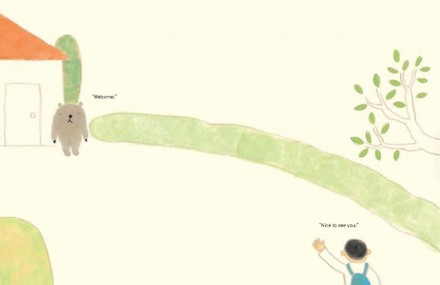
Framed by his window Kuma-Kuma Chan, the little bear, sits at his writing desk penning a letter. It says simply, “How are you? Come visit me soon.” When it is received, Kuma-Kuma Chan’s friend begins the long journey to see him. “I have to ride a train for an hour, take a bus for thirty minutes, then walk for fifteen minutes,” the boy states. From the bus stop, the boy can see the red roof of Kuma-Kuma Chan’s house in the distance, and as he approaches he sees hisfriend waiting outside to welcome him.

celebrate-picture-books-picture-book-review-kuma-kuma-chan's-home-welcome

Copyright Kazue Takahashi, courtesy of museyon.com

The boy has been here before and once more enjoys the routine as “Kuma-Kuma Chan serves bear tea. The first thing he always does is serve bear tea,” the boy explains. It seems that the time between visits has been long, and at first the silences are longer than the conversation. In the quiet the boy watches “the dust floating around in the afternoon sunbeams” and looks “at the books on the shelf,” reading “the titles one by one….” Meanwhile Kuma-Kuma Chan may be having second thoughts about his hospitality. He “gets up and opens the window to let in some fresh air” and checks the expiration date on the bear tea.

celebrate-picture-books-picture-book-review-kuma-kuma-chan's-home-dinner

Copyright Kazue Takahashi, courtesy of museyon.com

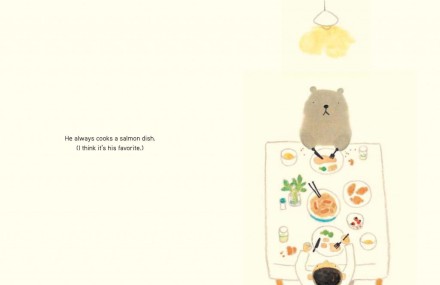
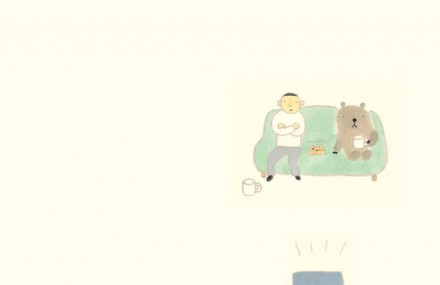
By the time Kuma-Kuma Chan serves the rice crackers conversation comes easier. For dinner Kuma-Kuma Chan prepares a salmon dish as always. It is, the boy thinks, his favorite and “perfect for a bear.” After dinner the two watch television and enjoy a mutually favorite snack of chocolate and hot milk. Soon all of the chocolates the boy brought are gone and it is time for him to catch the last bus home.

He slings his backpack over his shoulders and says goodbye to Kuma-Kuma Chan, who invites him to come back soon. Framed in the golden light of his doorway, the little bear waves farewell to his friend as he ventures out into the sapphire blue night.

celebrate-picture-books-picture-book-review-kuma-kuma-chan's-home-watching-tv

Copyright Kazue Takahashi, courtesy of museyon.com

Kazue Takahashi, a Japanese illustrator and children’s book author, employs kawaii—the quality of being cute and adorable—in creating her quiet, moment-in-time story that focuses on the essence of true friendship. The boy and the little bear are happy simply being together. The details of the day that Takahashi chooses to highlight are ones that we as adults choose to overlook, but which for children are still new and fascinating: the way Kuma-Kuma Chan’s house “smells slightly of bear,” a self-consciousness on the part of a host, the desire of each party to please the other.

celebrate-picture-books-picture-book-review-kuma-kuma-chan's-home-bear-tea

Copyright Kazue Takahashi, courtesy of museyon.com

Each right-hand page contains a central image that highlights the spare text presented on the left-hand page. The white space surrounding the illustrations, which are free of all extraneous details, echoes the openness of the storyline. The only two-page illustration spreads come at the beginning of the story, when Kuma-Kuma Chan stands at his door welcoming the boy, and at the end, when the two are saying goodbye, emphasizing the connection of their friendship and perhaps also the distance between them when they are apart. The muted colors and downy texture of the images enhances the sweet charm of Kuma-Kuma Chan, who is no bigger than a thumbprint.

Kuma-Kuma-Chan’s Home would appeal to a varying age-range of children—and even adults. Young children would enjoy discussing the story page-to-page, while older readers would like the quiet respite the book offers. It’s depiction of a one-on-one friendship would be welcomed by introverted children as well. Kuma-Kuma Chan’s Home is a perfect little book to keep on personal library shelves for those times when companionship—and cuteness—is needed.

Ages 3 and up

Museyon, 2016 | ISBN 978-1940842097

Write to a Friend Day Activity

celebrate-picture-books-picture-book-review-snowman-stationery

There’s Snow Time Like Now to Write! Stationery


Shorter days and colder weather usually means more indoor time. Why not write a short letter to a friend who’s far away or just down the street. Maybe make a game of it—see how many letters you can write to each other or send secret coded messages—and have fun writing! Print out this special Snowman Stationery and get started!

Picture Book Review