We’ve hit mid-summer, and maybe you’re looking for something to do. This month’s holiday encourages people to get out and enjoy some exercise and fun in parks, at home, at the gym, in the pool, on tennis courts, or wherever you like to play. Biking is another wonderful activity that adults and kids can share, whether you live in a small town or the city.
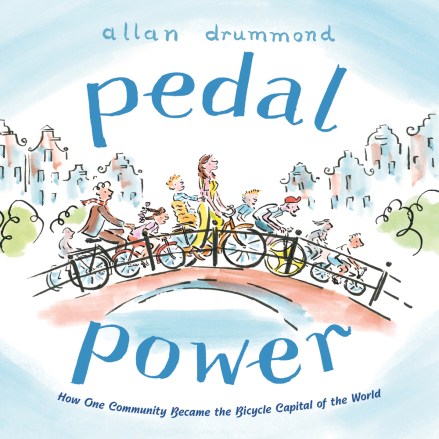
Pedal Power: How One Community Became the Bicycle Capital of the World
By Allan Drummond
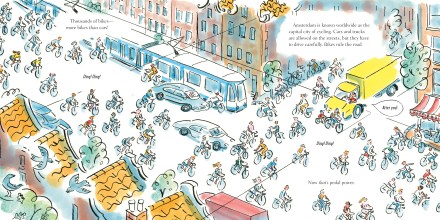
If you were to visit the city of Amsterdam in the Netherlands, you’d be amazed at the number of bicyclists sharing the roads with cars and trucks. In fact, if you could count all of the bicycles going here, there, and everywhere, you’d see that “bikes rule the road.” It wasn’t always like this. Back in the 1970s cars were still king, making the roads unsafe for cyclists.
Copyright Allan Drummond, 2017, courtesy of us.macmillan.com
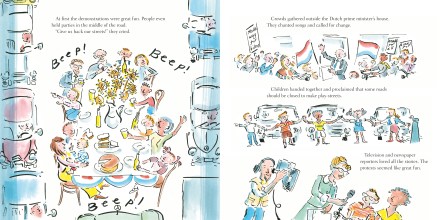
But then “young moms like Maartje Rutten and her friends—and their children” decided to make a change. They called their friends, who called their friends, and word started to get around that roads should be shared by all. People in Amsterdam and all over the Netherlands started protesting. “At first the demonstrations were great fun. People even held parties in the middle of the road.” People sang songs, made human chains across streets, and talked to the media.
Then a tragedy made people look at the issue more seriously. A little girl riding her bike to school was killed by a car. Her father was a newspaper reporter, and he wrote a story revealing that just in that year alone five hundred children had been killed on the roads and “many of them were riding bikes.” This situation made people angry. More and more citizens joined the protests.
Copyright Allan Drummond, 2017, courtesy of us.macmillan.com
At the same time, gas prices were rising and fuel was becoming scarce. The government even banned cars from the roads on Sundays. “That gave Maartje an incredible idea.” She gathered her friends and told them her plan: they would ride their bikes through the new tunnel that was strictly for cars. Many people were wary but they came anyway, and on a quiet Sunday they pedaled through the darkness.
As they neared the mouth of the tunnel, they could see the police waiting for them. Some of the riders wanted to turn around and go back, but Maartje pushed on and they followed. When they reached the end, the cops told them they had broken the law. The cyclists were taken to the police station. There, they were given lemonade and cookies. Maartje even “noticed that the policemen were smiling just a little bit. Maybe all of this protesting is working, she thought.”
Copyright Allan Drummond, 2017, courtesy of us.macmillan.com
She was right! After that Maartje and her friends thought of other ways cars and bikes could share the roads. “They proposed special bike lanes on busy routes, traffic bumps and curves in the roads to slow down vehicles, and new laws giving bikes the right-of-way over cars.” Finally, it all came together. Now Amsterdam is known as the bike capitol of the world. Their ideas, including bike lanes, bike sharing, and new laws, are used in countries all over the globe.
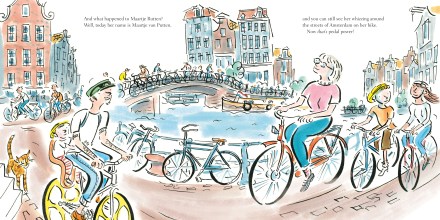
Biking offers so much more than just less-crowded streets. It provides exercise, a quiet form of transportation, and a pollution-free way to get around. And, of course, bikes don’t require fuel to go. If you visit Amsterdam, you might even see Maartje riding around town on her bike. “Now that’s pedal power!”
An Author’s Note about how Pedal Power came to be and about the past and future of city biking follows the text.
Copyright Allan Drummond, 2017, courtesy of us.macmillan.com
Allan Drummond’s city bike-ography is an interesting look at the revolution and evolution of bike-friendly roads in Amsterdam and other large cities. By following the story of Maartje Rutten and how she transformed the mindset of both local drivers and government officials, Drummond allows young readers to see how one person can make lasting changes that benefit all.
Drummond’s colorful and clearly depicted illustrations take children into the heart of Amsterdam—and Amsterdam traffic—to understand the problem and join in the protests. As Maartje and her friends ride through the dark tunnel to face the police, readers will wait in suspense to learn how this peaceful demonstration played out.
Pedal Power would be a great addition to Social Studies units and an engaging read for kids interested in biking, history, and environmental issues.
Ages 4 – 8
Farrar, Straus and Giroux, 2017 | ISBN 978-0374305277
Discover more about Allan Drummond, his books, and his art on his website!
Park and Recreation Month Activity
Everything on a Bicycle Coloring Page
Riding a bicycle is a fast, fun way to exercise, do shopping, and spend time with friends. This printable Everything on a Bicycle Coloring Page combines them all and then some! Grab your colored pencils, crayons, or markers and give it a go!
Today’s holiday envisions a day when there is no dishonesty or deception of any kind and encourages people to clear the air if there are hard feelings or to tell truths, even if they’re hard. If there is an honest statement you need to say, today may be the perfect opportunity to discuss it.
Kate Warne: Pinkerton Detective
Written by Marissa Moss | Illustrated by April Chu
As Kate read the newspaper advertisement from the Pinkerton Agency for the third time, she knew that this was the job for her. It said: “Wanted: Detective. Must be observant, determined, fearless, and willing to travel.” But in 1856 no one would hire a single woman, so Kate decided to present herself as a widow.
Kate had been raised by her father, a printer. Books had always been her companions, and she knew how to make up a story—even the story of her life. “So Kate Carter became Kate Warne…exactly the kind of person you’d want to hire as a detective.” As soon as she walked through the door, Allan Pinkerton began writing down his impressions of Kate. He thought she was a client seeking help. From her manner and appearance, he knew he would take her case—whatever it was.
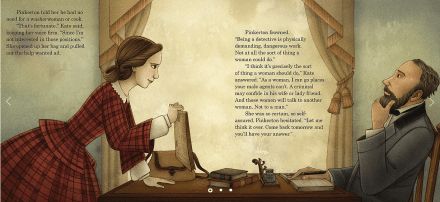
But when Kate told him she was applying for a job, he told her he “had no need for a washerwoman or cook.” Kate told him she was there to apply for the detective position. Pinkerton had reservations. The dangerous work was “not at all the sort of thing a woman could do,” he said. But Kate disagreed. She told him that she would be able to go into places his male detectives could not and could be the confidant of women witnesses. Pinkerton told her he would think it over.
Image copyright April Chu, text copyright Marissa Moss. Courtesy of Creston Books.
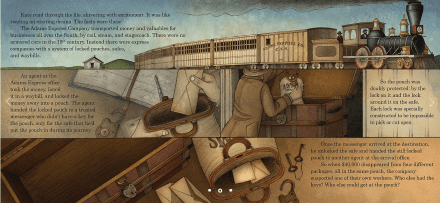
The next day Kate was at the office as soon as it opened. “Today, you’ve made some history,” Pinkerton told her, “You’re now the first woman detective in the country.” He handed her a file marked The Adams Express Case. As she read the case, Kate felt a thrill of excitement. “The Adams Express Company transported money and valuables for businesses all over the South, by rail, steamboat, and stagecoach.” Valuables were well protected by locks that couldn’t be picked.
But $40,000 had disappeared. One suspect stood out from the rest—Nathan Maroney, the manager of the Montgomery office where the packages had come from. He had been the last person to lock up the carrying pouch before the messenger, Mr. Chase, transported it to Atlanta, where it was found to be empty. Maroney was arrested, but there was little hard evidence—only a slit in the pouch that had not been there before Maroney was accused.
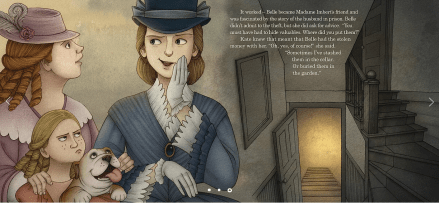
Kate considered the problem then remembered the sleight of hand tricks huskers used to fool people. She figured out how Maroney had stolen the money, but they needed more evidence and a confession. While a male agent pretended to be a fellow thief named “John White” in the same jail cell as Maroney, Kate befriended Maroney’s wife, Belle, pretending to be Madame Imbert. While Belle didn’t confess to the theft, she did ask her new friend for advice on where to hide valuables. Kate told her she hid her valuables in the basement or buried them in the garden.
Image copyright April Chu, text copyright Marissa Moss. Courtesy of Creston Books.
When Belle left town to visit her husband in jail, Kate took the opportunity to do some snooping at her house. Just as Kate found a freshly dug mound behind crates and barrels in the basement, she heard Belle returning home. She hurriedly put everything back in place and rushed upstairs. Belle was suspicious of the dust on Kate’s dress, and Kate knew she and the other agents had to act fast. She alerted another agent who crawled through the basement window while Belle slept. He tidied up the basement, and the next morning when Belle checked her hiding place, everything was in order. She could still trust her friend she thought.
The Pinkerton Agency plan was going like clockwork. Inside the jail cell, Maroney put his faith—and his money—in the detective’s hands. Maroney wrote to Belle, telling her that John White was going to help them. He instructed her to give John White all the money he had stolen. White was going to plant some of it on Mr. Chase, use some of it to bribe a judge to find Maroney not guilty at trial, and keep the rest for Maroney to collect later. At first, Belle didn’t trust John White, but one sentence from her friend “Madame Imbert” eased her mind and she went along with her husband’s plan.
As the ingenious plan was hatched and carried out, Kate made sure that all the money was secure. The money made its way to the Pinkerton agent “Mr. White” with Belle and Maroney none the wiser. As Maroney’s trial proceeded, and he heard Mr. White called as the first witness, Maroney suddenly changed his plea from “not guilty” to “guilty.” “The reputation of the Pinkerton agency was made. So was Kate Warne’s.”
Kate became one of the agency’s most valuable detectives. She was even put in charge of a women’s division and hired many more women who became “some of Pinkerton’s strongest agents.” But Kate Warne, the first woman detective in America, would always be considered the best.
Image copyright April Chu, text copyright Marissa Moss. Courtesy of Creston Books.
An Author’s Note explaining more about the Pinkerton Detective Agency and the first woman detective follow the text.
Children who love mysteries will be enthralled with this true tale of the first woman detective in America and her explosive first assignment. Marissa Moss’s suspenseful, compelling storytelling and excellent pacing reveal the facts of the case, Kate’s insightful reasoning, and the clever ruses the agents used in outsmarting and capturing the thief. Moss infuses the story with the feeling of the time period and a sense of pride in this little-known piece of women’s history.
April Chu’s detailed period drawings take kids to the mid-1800s to follow Kate Warne as she solves her first case. Depictions of Kate’s father’s printing press, the dirt roads traversed by horse-drawn wagons and carriages, the Adams Express locked pouches and secure rail car will excite history and mystery buffs. The full cast of characters are clearly portrayed, allowing young readers to become detectives themselves as they see the action through Kate’s eyes. The dramatic finale to the case will have children on the edge of their seats whether they are hearing the story aloud or reading it themselves.
Kate Warne: Pinkerton Detective is a thrilling picture book introduction to both biographies and mysteries for children. It offers a unique look at the contributions of strong women in history and is an excellent selection for school, public, and home libraries.
Ages 5 – 13
Creston Books, 2017 | ISBN 978-1939547330
Visit with Marissa Moss on her website to discover more about her, her books, and loads of fun activities!
View a gallery of artwork by April Chu on her website!
Olympic Day is celebrated by millions of people in more than 160 countries to commemorate the birth of the modern Olympic Games in 1894. The mission of Olympic Day is to promote fitness, well-being, culture and education, while promoting the Olympic values of excellence, friendship and respect. The Olympic Day pillars – move, learn and discover – are promoted in every corner of the globe. To have Olympic-size fun today, why not get together with friends or family and host your own mini-Olympic games? For more ideas and to learn more about today’s observance visitteamusa.org!
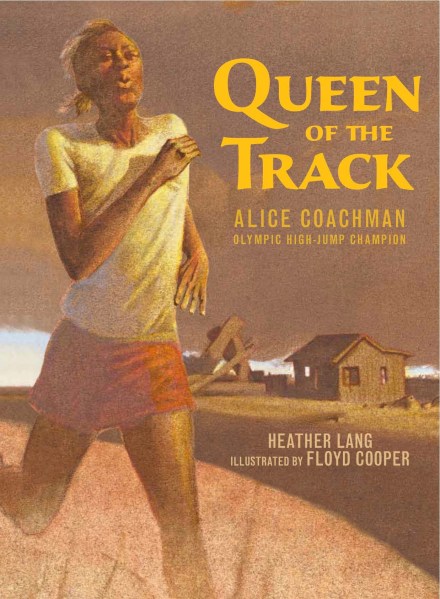
Queen of the Track: Alice Coachman, Olympic High-Jump Champion
Written by Heather Lang | Illustrated by Floyd Cooper
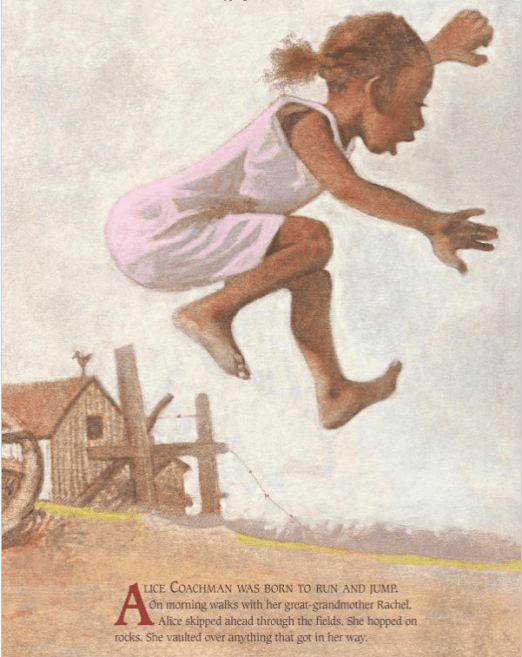
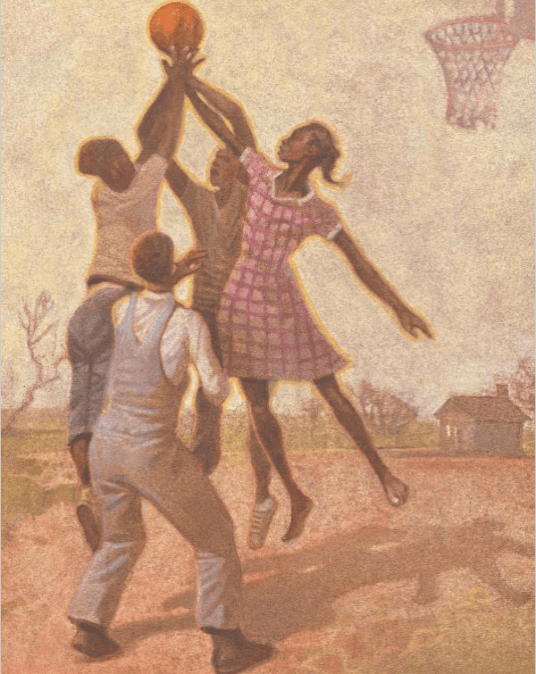
Alice Coachman was a born runner and jumper—skipping, hopping, and vaulting over every obstacle that came her way. As Alice grew older, however, the joy of running and jumping had to come a distant second to chores like cooking, laundry, picking cotton and peaches, and taking care of her younger siblings. Besides, her papa told her, “running and jumping weren’t considered ladylike.” Still, that was all Alice could think about, so after her chores were finished, she went out to play sports with the boys.
Image copyright Floyd Cooper, text copyright Heather Lang. Courtesy of Boyds Mills Press, 2012.
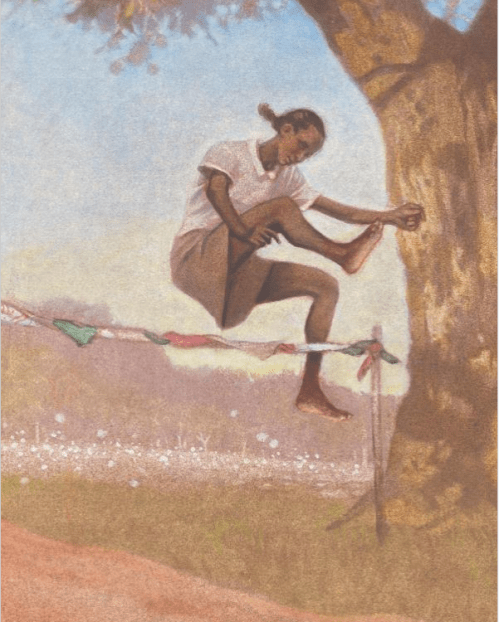
Living in the segregated South, Alice didn’t have the same rights as white people. She had nowhere to practice, but that didn’t stop her. Alice “ran barefoot on dirt roads. She collected sticks and tied rags together to make her own high jumps. Alice jumped so high, she soared like a bird above the cotton fields.” In seventh grade, Alice caught the attention of the high-school track coach. He arranged for her to join the track team at the Tuskegee Relays in Alabama, where the best black athletes from around the country competed. Alice had never worn track shoes or jumped over a real high-jump bar, she “won first place anyway, beating high-school and college girls.
Alice’s speed did more than win races. Once when a tornado ripped through Albany, she volunteered to deliver food to those in need. She ran so fast that the food stayed hot! Her talent won her a scholarship to finish high school at the Tuskegee Institute. Alice missed her family, and they didn’t have the money to really stay in touch. “One time she went home for a surprise visit, and her family had moved to a different house.”
Image copyright Floyd Cooper, courtesy of Boyds Mills Press, 2012
Alice competed on both the track-and-field and basketball teams. She won every event— the high jump, the 50-meter, the 100-meter, and the 400-meter relay—and led the basketball team to three straight championships. Alice was ready to compete in the Olympics. It was 1944, however, and the Olympic Games were canceled as the world was at war.
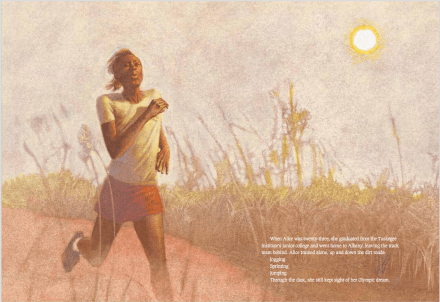
After graduating college from the Tuskegee Institute, Alice went home to continue practicing. Here, she trained alone on dirt roads. In 1948 with the war at an end, Alice qualified to compete in the London Olympics high jump. Even though years of hard training had weakened her back and made jumping painful, Alice pursued her dream. In London, the ravages of war were still visible, and “England faced serious food shortages. Alice and the other athletes were often hungry and thirsty.” The cold weather “pricked her like pins,” but here Alice and the other athletes—black and white—lived together, and Alice could sit anywhere she wanted on the buses as she toured the city.
Image copyright Floyd Cooper, text copyright Heather Lang. Courtesy of Boyds Mills Press, 2012.
As the Olympic Games opened with spectacular ceremonies, Alice marched into “Wembley Stadium to the applause of eighty-five thousand spectators.” Alice watched for eight days as her teammates lost event after event. Finally, it was Alice’s turn to compete. Her toughest opponent was Dorothy Tyler of Great Britain. “Inch by inch they battled it out—5 feet 3 2/5 inches, 5 feet 4 ½ inches. The sand in the landing pit was thinning out and the landings were tough on Alice’s back. 5 feet 5 1/3 inches.” The day was waning, and even though all of the other events were over, “the king and queen of England and thousands of spectators stayed to watch.”
The bar was placed at 5 feet 6 1/8 inches—as tall as Alice herself. She had never jumped so high before. “She sprinted, pumping her arms. She pushed off and flew…up…soaring…over the bar. Her leap set a new Olympic record!” But it was short lived. Dorothy also cleared the bar on her second attempt. The bar was placed at 5 feet 7 inches. Alice and Dorothy both jumped and missed. What would the judges decide? There are no ties allowed in the high jump.
Suddenly, Alice saw her name appear on the board! The judges awarded the medal to her because she “had made the record-breaking jump on her first try.” On that day—August 7, 1948—Alice Coachman stepped to the top of the podium and “became the first African American woman to win an Olympic gold medal.”
Image copyright Floyd Cooper, courtesy of Boyds Mills Press, 2012
Author’s Notes containing more information about Alice Coachman and the 1948 Olympics as well as lists of resources follow the text.
Heather Lang brings an athlete’s appreciation for the in-born talent and hard practicing that creates a world-class Olympian. Her story reveals not only the details of Alice’s physical training but also the social and economic hurdles she overcame in her quest to compete in the Olympics. Lang’s graceful and evocative prose carries readers down dirt roads and over obstacles, to the halls of the Tuskegee Institute, and into Wembley Stadium as they learn about the singular focus Alice Coachman dedicated to her sport. Children will feel as if they are sitting in the stands watching with suspense as the bar is raised again and again, pushing Coachman to a world record.
Floyd Cooper sets readers in the hot, dusty, sun-burned South, where Alice Coachman—as a little girl and then a teenager—runs barefoot on dirt roads, jumps over homemade bars, leaps to tip the basketball from her brothers’ hands, and delivers food to tornado victims. The golden-brown-hued illustrations catch Dorothy Taylor and Alice Coachman as they soar over the high bar in their fierce competition and capture Coachman’s hopes, dreams, and anticipation as she waits—hands clasped—to hear the judges’ final decision in the 1948 Olympic Games. Readers will cheer to see Coachman standing on the first-place podium, ready to receive her well-deserved gold medal.
A compelling and inspiring biography for children pursuing any talent, Queen of the Track: Alice Coachman, Olympic High Jump Champion would be a welcome addition to home, school, and public libraries.
Ages 5 and up
Boyds Mills Press, 2012 | ISBN 978-1590788509
Discover more about Heather Lang and her books plus videos, pictures, and fun activities that accompany each book on her website!
Learn more about Floyd Cooper, his books, and his artwork on his website!
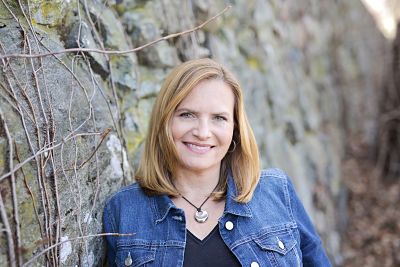
Today, I’m excited to talk with Heather Lang about her inspirations, her books, brave women, and writing and research lets her be a little like childhood heroine Nancy Drew!
How did you become a children’s writer?
As a child, I loved books and stories and creating things, but I struggled with writing. I was much better at math. I never thought I could become an author, because I wasn’t naturally good at writing. As an adult, with kids of my own, I rediscovered my love for picture books, and I kept thinking how fun it would be to create a picture book! By then I’d realized that the seemingly impossible could be possible with hard work and dedication. So I began writing. It took many years and many rejections, but with support from other writers and my critique group I’ve learned to embrace the process.
Why do you like to write books about brave women?
The women I write about inspire me every day to be brave and step outside of my comfort zone. It’s amazing the things you discover about life and yourself when you dream big, keep an open mind, and push yourself. My hope is that my books will do the same for kids.
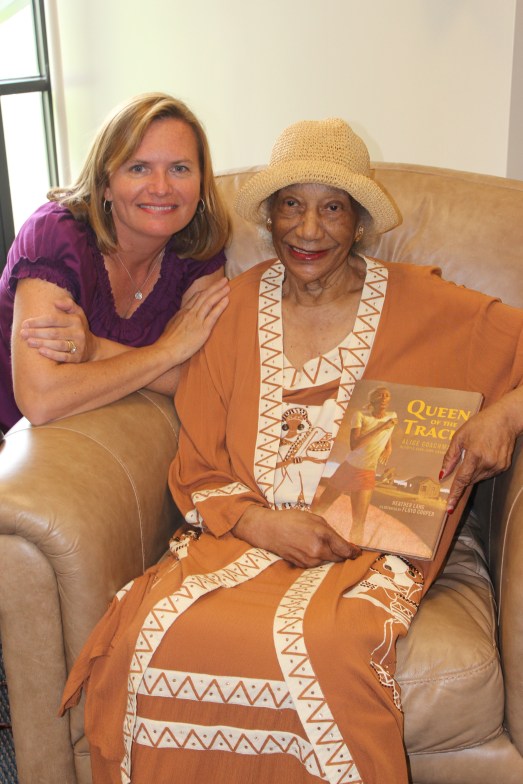
Heather meets Alice Coachman, the first African-American woman to win a gold medal at the Olympic Games.
What inspired you to write Queen of the Track?
After seven years of rejections on my fiction, I needed a little spark in my writing life to keep me going, so I decided to research and write a true story about an inspiring woman. Since I love sports, I looked for an athlete, and who better than the first black woman to win an Olympic gold medal? If Alice Coachman could overcome poverty and segregation and discrimination, surely I could overcome a few rejections. I kept one of Alice’s quotes on my desk: “When the going gets tough and you feel like throwing your hands in the air, listen to that voice that tells you, ‘Keep going. Hang in there.’ Guts and determination will pull you through.”
You seem to dig very deep when researching a book. What would you say is the biggest surprise you’ve discovered during your research?
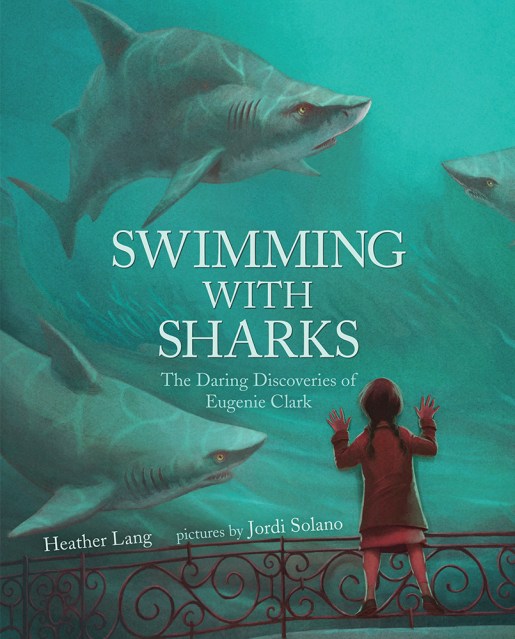
Every book is a treasure hunt, full of surprises and discoveries! My biggest surprise probably came with my most recent book Swimming with Sharks: The Daring Discoveries of Eugenie Clark. When I began my research journey, I was afraid of sharks and swimming in the ocean—terrified actually. As a child, I watched the movie Jaws and believed that sharks were swimming around looking for people to eat. That fear is what drew me to Eugenie Clark, an open-minded young scientist who never judged sharks based on rumors or appearance. I discovered that sharks are intelligent and important and that humans are NOT on the shark menu! I learned to scuba and snorkel, so I could experience Genie’s underwater world and swim with sharks myself. Writing that book transformed my fear of sharks into a passion for them!
Heather learned to scuba dive while writing Swimming With Sharks: The Daring Discoveries of Eugenie Clark.
With the titles “Diving into Nonfiction and the World of Sharks,” “Got Grit?” and “Girls with Grit: Researching and Writing about Brave Girls,” your interactive presentations sound fascinating. Do you have any anecdotes from your speaking engagements you’d like to share?
I have so much fun visiting with kids and am always amazed at some of their questions. “How big are great white sharks?” “How big are their teeth?” “How big are their pups?” “How do they have pups?” I LOVE their raw curiosity! It inspires me and helps me develop my school visit programs. In reaction to the endless questions kids were asking me about sharks, I designed a program that includes hands-on activities that teach kids about shark anatomy and behavior, as well as the food chain and why sharks are important for a healthy ocean. And in the process, I’ve learned even more cool facts about sharks!
You’ve mentioned that you were inspired by Nancy Drew and once wanted to become a spy, which you compare to researching and writing children’s books. What was your favorite Nancy Drew book and why?
I remember two favorites that I owned: The Mystery at Lilac Inn and The Hidden Staircase. For several summers it was my mission to read every Nancy Drew book in the library. If I couldn’t get there, I’d reread the two that I owned. I never tired of them. I worshipped Nancy’s courage, resourcefulness, and willingness to push boundaries. More than anything I wanted to be a spy, just like her. And in a way, that dream has come true. I do lots of spy work for my books. Ideas and stories are all around us if we look, listen, and investigate. I think solid sleuthing is the backbone of an authentic story.
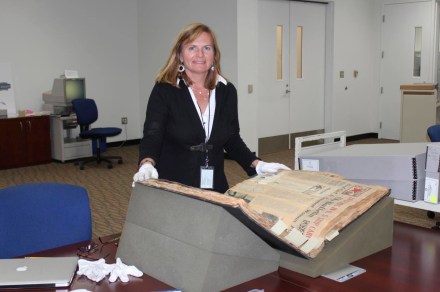
Heather researches Ruth Law’s Scrapbook while writing Fearless Flyer: Ruth Law and Her Flying Machine
If you have a particular place that you write, would you mind describing it a little?
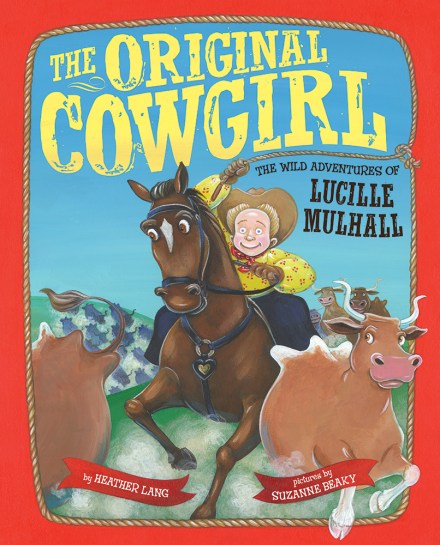
I enjoy mixing it up, depending on what I am working on. When I was writing The Original Cowgirl: The Wild Adventures of Lucille Mulhall, I enjoyed writing on a picnic table at a local barn, surrounded by fields and horses. Sometimes I write in my office, but if the weather’s nice I head out to the screened porch. In the winter, my favorite place to write is by a roaring fire with my dog curled up next to me. And often ideas come to me when I’m in the car or on a walk or out to dinner—not the most convenient places to write. But when an idea strikes, I write it down and do a quick free write if possible, or poof the idea can vanish!
What’s the best thing about being a children’s writer?
My favorite part of being a writer is opening kids’ minds and hearts! I grow tremendously with every book I write, and nothing makes me happier than when my books do the same for kids. Whether a book inspires a child to dream big and be brave or it sparks a new interest in sharks or aviation, those moments are powerful.
What’s up next for you?
My next picture book biography, Anybody’s Game: The Story of the First Girl to Play Little League Baseball, comes out in March 2018. I am also working on a new book about sharks. And I’m so excited for an upcoming research trip to the Amazon for a book I’m writing about the rain forest!
What is your favorite holiday and why?
Christmas in our house is a creative holiday. My daughters and I try to make most of our gifts—anything from soap and candles to knitted hats, woven coasters, and jewelry. And we love to make handmade notecards and ornaments, especially when they involve GLITTER!
Do you have an anecdote from any holiday that you’d like to share?
Every year on Mother’s Day I get to choose exactly what I want to do! No—It’s not going to a spa or a fancy lunch. I choose to get my hands dirty with my husband and kids. It’s the day when we plan our garden, make a trip to the garden center, and plant our seeds and seedlings.
Thanks so much for chatting with me today, Heather! I wish you the best with all of your books!
You can find Queen of the Track and Heather’s other Books at these booksellers:
As we say goodbye to Get Caught Reading Month, let’s remember all of the great stories we’ve read and eagerly anticipate those that still await us in the days and months ahead! The long, relaxing hours of summer vacation are nearing, giving readers even more time to enjoy their favorite pursuit. So why not make a list of titles you’d like to explore this summer, and lead it off with today’s book that tells the true story of a very original teenager!
The Original Cowgirl: The Wild Adventures of Lucille Mulhall
Written by Heather Lang | Illustrated by Suzanne Beaky
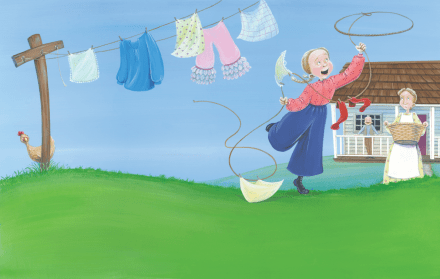
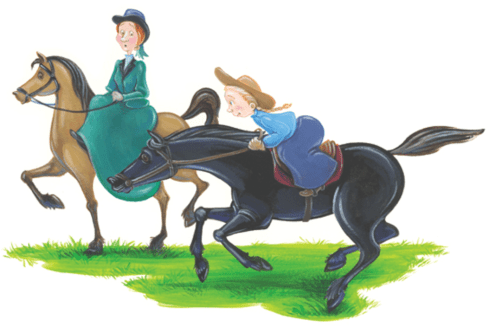
Unlike most girls in the 1890s, Lucille didn’t skip rope “with her mama’s clothesline, she twirled it like a lasso. Whoosh…whoosh…snap!” While Lucille’s papa thought his daughter would be a great help around the ranch, her mother considered riding horses and roping steers unladylike. Lucille wasn’t interested in the regular pursuits of becoming a lady, however. Sewing and cooking were boring, and “riding sidesaddle was slower than a snail climbing a greased log.”
Image copyright Suzanne Beaky, courtesy of suzannebeaky.com
By the age of ten, Lucille was well versed in “mending fences, training racehorses, and herding cattle.” When she asked her father for her own herd of cattle, he told her that she could have one when she was old enough to rope and brand her own—something she could already do. Lucille’s mother worried about her when she patrolled the pastures where her cows grazed. They were threatened by “longhorns, wolves, and coyotes so mean they could turn the strongest cowboy into buzzard food,” but Lucille could snatch those varmints with her lasso in no time flat. The only thing Lucille was afraid of was not being allowed to work on the ranch, so she hid her bumps and bruises.
When Lucille was thirteen, her papa took her along on some rough-riding and roping competitions he had organized. When people saw how talented she was, word got around. Newspapers called her a “daring young girl who ‘held the audience in a breathless spell’” and said she was “‘the envy of half the men.’” But now that she was a teenager, Lucille’s mama sent her to a boarding school where she was to learn how to be a lady.
Image copyright Suzanne Beaky, text copyright Heather Lang. Courtesy of albertwhitman.com
When she returned home at the end of the year, her papa presented her with a gift—a “beautiful sixteen-hand chestnut horse named Governor. Right off, Lucille could see that he would make a perfect trick horse. That summer Lucille, her papa, and the other cowboys were invited to perform for Vice Presidential candidate Teddy Roosevelt. At first Lucille’s mother said no, but she later relented, with the stipulation that “it would be Lucille’s last appearance.”
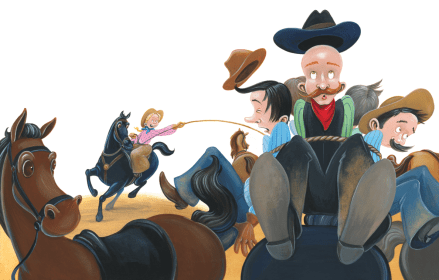
Lucille was a star, demonstrating her riding and roping skills for 25,000 people. Teddy Roosevelt was so impressed, he suggested Lucille have her own show. Soon, Lucille was traveling around the country, thrilling audiences by breaking broncos, lassoing and branding steers, and performing tricks like roping “five galloping cowboys all at once.”
Lucille entered her first professional steer-roping competition when she was just fifteen. She was the first women ever to compete in this kind of event. Some cowboys laughed at her, but she didn’t care. When the steer was released from the pen, Lucille took off after him. Her first throw of the lasso landed but broke. Quickly she tossed another and “flipped him up like a flapjack.” She jumped off her horse and in 29 ½ seconds tied the steer’s feet. Her time was “faster than all the men!”
Image copyright Suzanne Beaky, courtesy of suzannebeaky.com
Lucille went on to break the world record for steer roping. Plenty of people still thought Lucille belonged in the home instead of on horseback. “But her home was always on a horse with the sun on her cheeks a lariat coiled in her hand, and the boundless Oklahoma prairie rolling out in front of her.”
More information on and a timeline of Lucille Mulhall’s life follow the text.
With her folksy storytelling, Heather Lang transports readers to the prairies of the Wild West, where a girl with phenomenal riding skills captured the attention and hearts of Americans. Young readers will be fascinated by Lucille Mulhall’s development from a 10-year-old prodigy to the star of her own stage show in only a few short years. Lang’s expressive period-perfect vocabulary allows all kids to ride the range while they learn about this young woman who broke stereotypes, championed the cause of women, and still serves as a role model for all who wish to live life on their own terms.
Image copyright Suzanne Beaky, courtesy of suzannebeaky.com
With her downhome, action-packed illustrations, Suzanne Beaky lets kids watch as Lucille lassos a wolf, ropes a steer, preforms tricks, and celebrates her record-breaking performance. Lucille is a wide-eyed force of nature in her split skirt and braids as she twirls her rope for serious ranch business and for entertaining the crowds, whose stunned expressions reveal just how original Lucille was. Clothing, hair, and mustache styles, as well as depictions of horses, steers, and the vast green prairie make The Original Cowgirl as fun as it is informative.
For kids interested in the Wild West, early American history, biographies, or a story about true individuality, The Original Cowgirl: the Wild Adventures of Lucille Mulhall is a great addition to home bookshelves and public and school libraries.
Ages 4 – 8
Albert Whitman, 2015 | ISBN 978-0807529317
Discover more about Heather Lang and her books on her website!
To find out more about Lucille Mulhall through videos, photographs, and fun activities, click here!
Learn more about Suzanne Beaky and view a gallery of her artwork on her website!
Get Caught Reading Month Activity
Yee-haw! Word Search
Can you lasso the eighteen Wild West-inspired words in this printable Yee-haw! Word Search? Here’s the Solution!
March 29, 1848 was a cold day. How cold? It was so frigid that rivers feeding Niagara Falls turned to ice and reduced the flow of water to such an extent that Niagara Falls’ 3,160 tons of water per second came to a halt. Today, locals—and weather aficionados—remember this auspicious natural phenomenon.
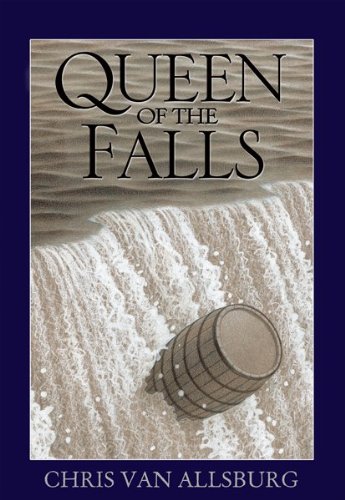
Queen of the Falls
By Chris Van Allsburg
Niagara Falls, spanning the border of Canada and New York state, has always attracted crowds of visitors who come to marvel over the roaring avalanche of water as it “drops from a height that is as tall as a seventeen-story building” and sends “up an endless cloud of mist at it crashes onto the rocks and water below.” But on October 24, 1901 the crowd was there for a very different reason. What was it? Well, that story begins back in Bay City, Michigan, where Annie Edson Taylor, “a short, plump, and fussy sixty-two-year-old widow” had just closed her charm school and was worried about how she’d pay the bills.
Image and text copyright Chris Van Allsburg, courtesy of Houghton Mifflin Harcourt
She mulled and pondered, pondered and mulled her situation. Then she saw a newspaper article about Niagara Falls, and “like a cork popping from a champagne bottle” she had the idea to make her fame and fortune by going over the falls in a barrel. No one had ever tried a stunt like this before, but Annie seemed to know just how to do it. She designed a special barrel, but when she asked the barrel maker to build it, he refused. He told her that “if she wanted to kill herself, she’d have to do it on her own.”
When Annie went back three days later, though, she was able to convince him to build her barrel, and so construction began. The finished barrel was “four and a half feet high, with wire bands wrapped around it, and weighed more than one hundred and sixty pounds.” Inside there were handles and pillows and a leather belt that would strap her in tightly.
Image and text copyright Chris Van Allsburg, courtesy of Houghton Mifflin Harcourt
Annie had the mind of an engineer and also the genius of a public relations guru. She hired Frank Russell to be her manager and visit Niagara Falls ahead of her to whip up enthusiasm for her daredevil exploit. To sweeten the pot, she told him that she was 42, believing people would be more interested in a younger adventurer. Frank Russell saw money in his—and Annie’s—future. He went to Niagara falls to arrange for newspaper reporters and hired Fred Truesdale to put the barrel into the river that would take her over the falls.
When Annie stepped off the train, she did not look the way reporters had expected. Many “wondered if the promised trip over the falls was just some kind of hoax: the barrel might go over, but would it really carry Annie Taylor inside?” As Annie answered questions, however, the reporters began to think she really might “go where no man or woman had gone before.”
Annie’s plunge was set for 10 days later. This gave them time to stir up excitement among the locals and anyone else who wished to come and witness her daring feat. Her barrel was put on display in the hotel lobby, and articles appeared in the newspaper touting the intentions of “the fearless Mrs. Taylor.” On the established day, Annie arrived at the cottage of Fred Truesdale. Her barrel was waiting and a small crowd had gathered to see her off.
Image and text copyright Chris Van Allsburg, courtesy of Houghton Mifflin Harcourt
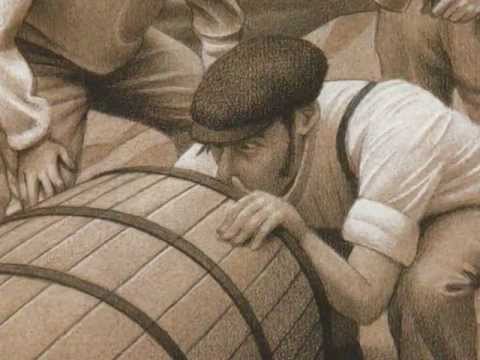
Fred and his assistant, Billy, rowed Annie and the barrel to a small island near the falls. There Annie took off her hat and jacket and crawled backwards into the barrel. She strapped herself in and packed the pillows around. Then Fred sealed the lid as Annie called, “‘So long, boys.’” Fred and Billy rolled the barrel into the river and secured it to the boat with a rope. The men rowed the boat near a spot in the river known as the “‘Point of No Return’” where the current was so strong that it would carry any boat over the falls. Fred “tapped on the barrel with his oar and told Annie he was going to cut the rope.” She answered back, “‘All righty.’” With a slice Annie’s barrel bobbed and spun in the raging river, “slamming against rocks and waves, sometimes disappearing entirely from sight, sucked beneath the surface.”
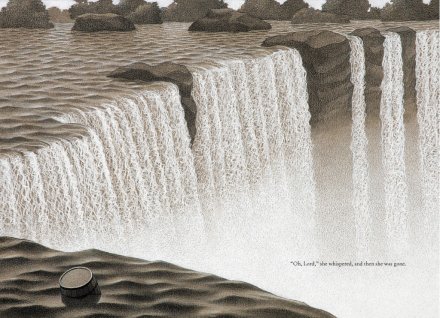
Annie held on for dear life. At the edge of the falls, Fred had told her, there would be a moment of calm. Suddenly, Annie felt this while at the same time hearing the roaring water. “‘Oh, Lord,’” she whispered, and then she was gone.” Some spectators screamed, some cheered, but most just stood still hunting for the barrel at the bottom of the falls.
“Suddenly, the barrel bobbed to the surface.” Still, everyone held their breath, wondering what had happened to Annie. When the barrel neared shore, men jumped in and dragged it onto the rocks. They removed the lid, and called her name. A weak “‘Where am I?’” answered back. Annie had survived the fall, although she was dizzy, bruised, and battered. Annie soon recovered from her injuries, and began traveling across the country to meet the hundreds of people who lined up for tickets in every city to see the ‘Queen of the Falls.’
Image and text copyright Chris Van Allsburg, courtesy of Houghton Mifflin Harcourt
When the people saw that Annie was an elderly widow instead of a dashing young adventurer, however, they lost interest. Fewer and fewer people came out to see her. When Fred Russell realized he would not be getting rich, he left Annie, taking her barrel with him. But Annie was not to be counted out. She recovered her barrel and hired a new manager named Billy Banks. Eventually, Billy also abandoned Annie and took her barrel for good.
Annie was down, but not out. She had a new barrel made and placed it in a park near Niagara Falls. She sat at a table nearby with postcards and a pamphlet about her amazing feat and invited passersby to buy them and meet the Queen of the Falls. Annie never did get rich and famous, but ten years after her wild ride she told a reporter that despite her disappointment on that point, she was proud to be able to say that she had done “the greatest feat ever performed.”
With his superb storytelling skills, Chris Van Allsburg reveals all the excitement and quirkiness of Annie Taylor’s wild idea and even wilder ride to readers. This true story of a bygone era and the utter audacity of a woman who tested her mettle against one of nature’s most formidable challenges will astound kids—and Annie’s nonchalance will make them (and adults) laugh. Perhaps more important than the facts of Annie’s stunt are the facts about Annie herself. Behind the etiquette teacher lay a smart, enterprising, and even scientific, woman who had the grit and self-confidence to attempt the “impossible.” Readers will also see that even when things don’t work out exactly as planned, they can be proud of their personal achievements. Van Allsburg’s sepia-toned photographic-style illustrations set readers in the early 1900s, catch Annie in the moment of her big idea and inside her barrel, and unveil the beauty of Niagara Falls.
Fascinating from beginning to end, Queen of the Falls is a wonderful book for kids interested in history, daredevils, and creative ideas.
Ages 6 – 9
Houghton Mifflin Harcourt, 2011 | ISBN 978-0547315812
Learn more about Chris Van Allsburg and his books as well as discover a gallery of illustrations, videos, and even a TED Talk on Queen of the Falls on his website!
Niagara Falls Runs Dry Day Activity
Eggs-citing Ride Experiment
Even though Annie Taylor’s barrel was strong on the outside, she knew that she needed to protect herself inside. She used pillows, a handle, and a leather strap to keep herself from getting hurt.
In this experiment I invite you to design a container that will protect a raw egg from breaking when it is dropped from different heights. I’ll let you ponder what materials you will use—because that’s the fun part!
So get your creative thinking caps on—and get cracking…Umm…I mean…get going!
Supplies
Raw egg
Some kind of small container
Materials to protect the egg
Directions
Using a variety of materials and your scientific knowledge, create a container that will protect a raw egg from breaking
Place the raw egg inside the container and seal it shut
Drop the container from as high as you can, for example, from the top of the stairs or a treehouse.
Be sure to ask for an adult’s help or permission when choosing where to drop your egg.
Women have been inventing, discovering, questioning, challenging, and changing the world in the same ways and for just as long as men have—but often without recognition, the ability to take jobs in their fields of expertise, or equal (or even any) pay. This month’s observance serves to educate people on the amazing women who have blazed trails in the past and those who are continuing that tradition today.
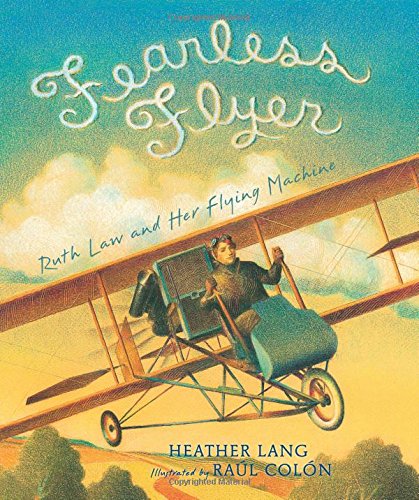
Fearless Flyer: Ruth Law and Her Flying Machine
Written by Heather Lang | Illustrated by Raúl Colón
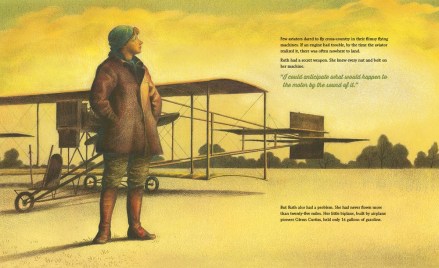
Entertained crowds knew Ruth Law for the loops, the spiral dives, and even the dip of death that she performed in her airshow. But for Ruth these stunts were like standing still. She “longed to fly to get somewhere…somewhere far away.” She decided to fly from Chicago to New York City. There weren’t too many aviators brave enough to attempt such a long flight in the type of biplane Ruth flew. They feared that if something went wrong with the engine, they’d never realize it in time to land. But Ruth knew her plane inside and out and figured she “could anticipate what would happen to the motor by the sound of it.”
A trip like the one Ruth envisioned posed another problem, though. Her small biplane held only 16 gallons of gasoline—not enough to make the journey. She asked Glenn Curtis, who built her plane, if she could buy his latest model. This much bigger plane held 205 gallons of gas and had already proven itself. But Curtis refused. He didn’t believe Ruth could handle the “powerful machine on such a long flight.”
Image copyright Raúl Colón, text copyright Heather Lang. Courtesy of Calkins Creek.
Ruth was not to be deterred. She added three more gas tanks so the plane could hold 53 gallons of gas, installed a cover to protect her legs, and created a scrolling map of the route. Aviation experts said she would fail, but Ruth disagreed. “‘What those men can do a woman can do. I can do,’” she said. On a windy November 19, 1916, Ruth took to the cockpit to begin her nonstop flight. Although she was a little scared of what lay ahead, she took off, believing that “the scare is part of the thrill” of any experience.
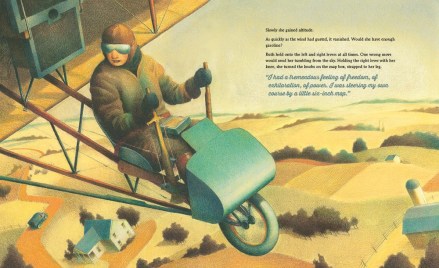
Ruth had counted on the strong wind to help push her farther faster, but just as quickly as it had blown up, it stopped. She wondered if she would have enough gasoline after all. As she flew over one landmark after another, Ruth felt exhilarated. As she passed over Cleveland, Ohio, though, “the oil gauge registered zero pressure. Something was wrong!” The sounds of her plane’s motors told Ruth a different story. She kept flying.
Soon she was passing over Erie, Pennsylvania—the site of the record-breaking flight by Victor Carlstrom. Even the icy stings of the frigid air couldn’t dispel her excitement. In a moment she was east of Erie and had broken Carlstrom’s record. The thrill of her achievement was tempered, however, by the sputtering of her engine. While there was still a little gas in the plane, it was “too low to feed into the engine.” Ruth tipped the plane forward to give it more gas. Two miles from Hornell, New York, the nearest landing spot, “the engine grumbled its last roar, leaving her with nothing but the silence of the wind.”
Image copyright Raúl Colón, text copyright Heather Lang. Courtesy of Calkins Creek.
Ruth steered the plane as it glided into Hornell—512 miles from Chicago. She was the new American nonstop flight record holder. Ruth’s original plan had been to fly to New York City, so after refueling and grabbing a bite to eat, she took off once again. Weighed down by the full gas tank, the plane barely made it over the hill and tall trees in her path. This was as close to crashing as Ruth ever was—or ever wanted to be.
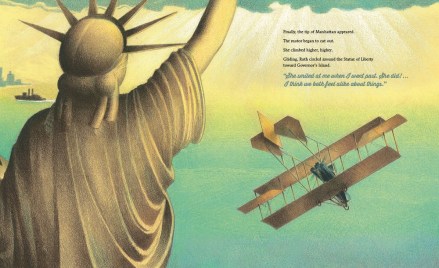
People had already heard about Ruth Law, and they came out to watch and wave. With darkness closing in, Ruth decided that she would have to land short of New York City. She touched down in Binghamton, NY and took up the rest of the flight the next morning. A thick blanket of fog obscured her view. She flew lower and lower to get her bearings and finally spied the tip of Manhattan. As she glided in, “Ruth circled around the Statue of Liberty toward Governor’s Island.” Of Lady Liberty, Ruth said, “‘She smiled at me when I went past. She did!…I think we both feel alike about things.’”
Image copyright Raúl Colón, text copyright Heather Lang. Courtesy of Calkins Creek.
Cheered by a crowd and a brass band, Ruth landed on the welcoming earth. Despite being numb with cold and the icicles that hung from her hair, Ruth smiled and waved. She realized then that not only had she broken an aviation record, she had made a point for all women. She later put her thoughts into words: “The sky was my limit and the horizon my sphere. It’s any woman’s sphere if she has nerve and courage and faith in herself.”
An Author’s Note about Ruth Law and her life, complete with photographs, follows the text.
Heather Lang’s thrilling account of Ruth Law’s record-breaking flight from Chicago to New York will have young aviators on the edge of their seat. Law’s flight was filled with suspense from its inception as an idea in a young woman’s mind to its final touchdown, and Lang deftly incorporates the facts as well as Law’s feelings into her well-rounded story. Along the way, readers learn about Ruth and also about early aviation. Ruth Law’s own words, included throughout the story, will inspire children as they see that even though she lived long ago, her thoughts and ideas still ring true today.
Young readers will be fascinated by Raúl Colón’s glowing illustrations of Ruth Law and her flying machine. His detailed drawings of Law’s biplane give children an excellent view of the open-air craft, fostering a true understanding of the courage it took for her to undertake such a flight. Images from Law’s viewpoint in the cockpit allow readers to vicariously travel her path to a record-breaking flight and also to self-realization.
Ages 5 – 8
Calkins Creek, 2016 | ISBN 978-1620916506
Check out Heather Lang’s website for more about her and her books. You’ll also find links to a video and photos about Ruth Law, a map of her route, and information about her plane as well as a Teacher’s Guide.
Fly along with Ruth in this Fearless Flyer book trailer!
Women’s History Month Activity
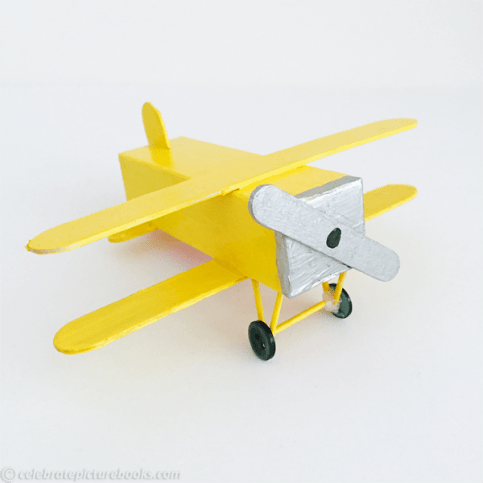
Head in the Clouds Biplane
If you love airplanes and flying, you’ll have fun making your own plane from recycled materials! Use your creativity to decorate your plane while you imagine yourself flying through the clouds on a beautiful day. Younger children will have fun sharing this activity with an adult or older sibling too!
Supplies
Travel-size toothpaste box
3 6-inch x 1/2-inch craft sticks
2 2 1/2-inch x 7/8-inch mini craft sticks
5 Round toothpicks, with points cut off
Paint in whatever colors you like for your design
4 small buttons
2 mini buttons
Paint brushes
Strong glue or glue gun
Directions
Empty toothpaste box
Paint toothpaste box and decorate it
Paint the craft sticks and 5 toothpicks
Paint one small craft stick to be the propeller
Let all objects dry
To assemble the biplane
For the Bottom Wing – Glue one 6-inch-long craft stick to the bottom of the plane about 1 inch from the end of the box that is the front of the plane
For the Top Wing – Glue the other 6-inch-long craft stick to the top of the plane about 1 inch from the front of the plane
For the Tail – Glue one mini craft stick to the bottom of the box about ¾ inches from the end that is the back of the plane
For the Vertical Rudder – Cut the end from one of the painted 6-inch-long craft sticks, glue this to the back of the box, placing it perpendicular against the edge and half-way between each side
To assemble the front wheels
Cut 4 painted toothpicks to a length of ¾-inches long
Cut one painted toothpick to a length of 1-inch long
Glue 2 of the 3/4-inch toothpicks to the back of 1 button, the ends of the toothpicks on the button should be touching and the other end apart so the toothpicks form a V
Repeat the above step for the other wheel
Let the glue dry
Glue the 1-inch long toothpick between the wheels at the center of each wheel to keep them together and give them stability. Let dry
To make the back wheel
Cut two ¼-inch lengths of painted toothpick and glue them together. Let dry
Glue two mini buttons together to form the back wheel. Let dry
Glue the ¼-inch toothpicks to the mini buttons. Let dry
Glue these to the bottom of the plane in the center of the box directly in front of and touching the tail
During the month of March we celebrate the roles and contributions of women throughout history. The theme for 2017 is “Honoring Trailblazing Women in Labor and Business.” From earliest times, women have participated in and influenced events, often without receiving recognition. This month encourages all women to stand up to discrimination and stand up for what they believe in.
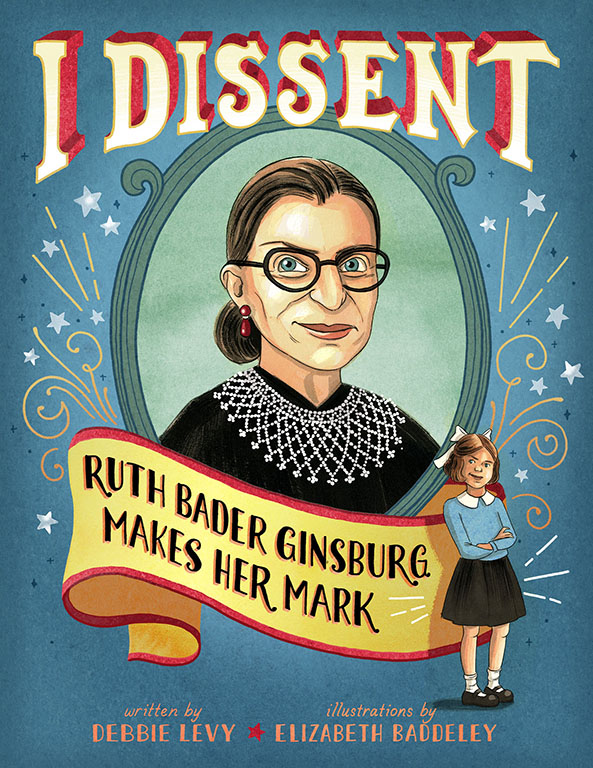
I Dissent: Ruth Bader Ginsburg Makes Her Mark
Written by Debbie Levy | Illustrated by Elizabeth Baddeley
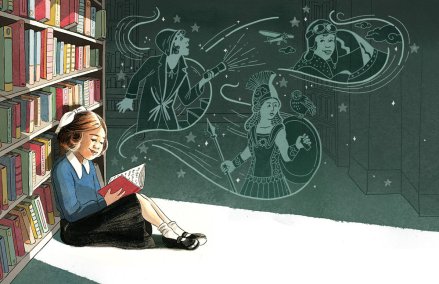
Ruth Bader grew up during the 1940s in Brooklyn, New York’s multicultural neighborhood. It was a time when boys were educated for jobs and bright futures while girls were expected to marry and raise children. Ruth’s mother, Celia Amster Bader, however, “thought girls should also have the chance to make their mark on the world.” She introduced Ruth to books in which she discovered women who used their strength, courage, and intelligence to do big things.
Image copyright Elizabeth Baddeley, text copyright Debbie Levy. Courtesy of simonandschuster.com.
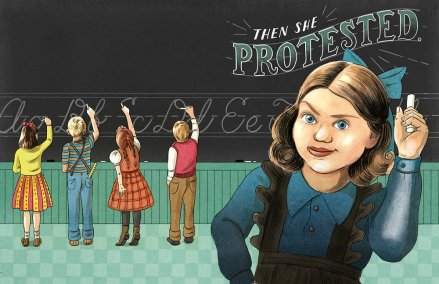
Ruth also saw and felt the sting of prejudice while growing up. Her family was Jewish, and at the time “hotels, restaurants, even entire neighborhoods” denied access to Jews, African Americans, Mexicans, and others. Ruth disagreed and never forgot. She was even discriminated against for being left-handed. In school she was instructed to write with her right hand, but her awkward penmanship earned a D. First, she cried; then she protested by only writing with her left hand—“it turned out she had quite nice handwriting!”
Image copyright Elizabeth Baddeley, text copyright Debbie Levy. Courtesy of simonandschuster.com.
During elementary school, Ruth was outstanding in some classes, such as history and English, and did not do so well in others, such as sewing and cooking. Music, especially opera, was another favorite subject—even though she did not have the voice to match her dreams. She excelled in high school and was even chosen as a graduation speaker. But Ruth had been hiding the fact that her mother was very ill. The day before graduation, her mother died. Ruth did not go to her graduation, but she did fulfill her mother’s wish and entered college.
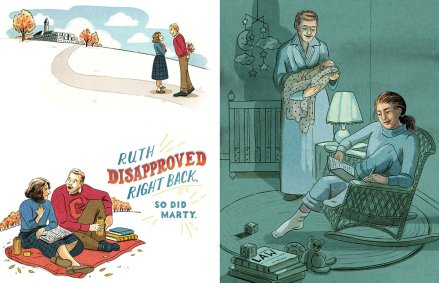
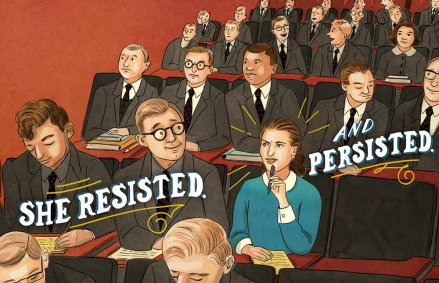
In college Ruth met Marty Ginsberg, and the two fell in love. They both decided to become lawyers to fight prejudice and unfairness in court. People thought this was a great idea for Marty, but disapproved of it for Ruth. “Ruth disapproved right back. So did Marty.” After college they got married, went to law school, and had a baby girl.
Image copyright Elizabeth Baddeley, text copyright Debbie Levy. Courtesy of simonandschuster.com.
In law school Ruth was one of nine women in a class of 500. She worked hard and tied with another student as first in the class, but after graduation she couldn’t find a job. Employers objected because she was a woman, a mother, and Jewish. Finally, she found work with a judge. Her excellent work for him translated into jobs at one law school after another, and she became “one of the few female law professors in the whole country.”
All around her Ruth saw other women who were denied jobs or paid less than men. Women also had very little voice in courtrooms or in government. Rulings by the Supreme Court, the highest court in America, had helped maintain this inequality. The Court had stated that women were unfit for many jobs because of their “natural and proper timidity and delicacy.” Besides, the Supreme Court also said, “Woman has always been dependent upon man.”
Image copyright Elizabeth Baddeley, text copyright Debbie Levy. Courtesy of simonandschuster.com.
“Ruth really, really disagreed with this!” So she began fighting in court for equal rights for women. But equal rights for women also meant equal rights for men: Ruth believed men should be able to stay home with children if they wanted to while women worked. “These were fresh ideas in the 1970s. Ruth did not win every case, but she won enough. With each victory, women and men and girls and boys enjoyed a little more equality.”
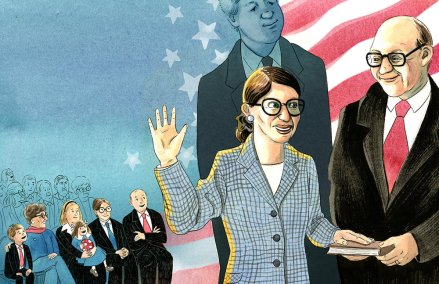
At home, Ruth’s own family agreed with her. Marty was a successful lawyer and also an accomplished chef who cooked the family’s meals. Ruth went on to become a well-known and well-respected lawyer. President Jimmy Carter asked her to be a judge in Washington DC. Then President Bill Clinton chose her to fill a vacancy on the Supreme Court. “Ruth agreed.
Image copyright Elizabeth Baddeley, text copyright Debbie Levy. Courtesy of simonandschuster.com.
In 1993, Justice Ruth Bader Ginsburg became the first Jewish woman on the nation’s highest court.” When the nine justices decide a case, they listen to both sides and then vote. The winning side then writes an opinion explaining their ruling. When Justice Ginsburg votes with the winning side, she wears a special lace collar over her robe. When she does not agree with the ruling, she says, “I dissent” and writes an opinion explaining why. She has a special collar for dissenting too.
Some of her dissensions were influenced by her early experiences. She dissented when “the court wouldn’t help women or African Americans or immigrants who had been treated unfairly at work.” She dissented when the court did not protect voting rights for all citizens. She dissented when the court disagreed with schools that offered African Americans a better chance to go to college.” And once when she dissented, Congress and the president agreed with her and overturned the Supreme Court’s ruling.
Image copyright Elizabeth Baddeley, text copyright Debbie Levy. Courtesy of simonandschuster.com.
Justice Ruth Bader Ginsburg is now the oldest member of the Supreme Court. Some people think she should retire, but she disagrees. She still has work to do. Over the years, she has “cleared a path for people to follow in her footsteps—girls in college, women in law school, and everyone who wants to be treated without prejudice….Step by step, she has made a difference…one disagreement after another.”
An extensive Author’s Note about Ruth Bader Ginsburg’s life, notes on Supreme Court Cases, and a selected bibliography follow the text.
Debbie Levy’s outstanding biography allows readers to journey with Ruth Bader Ginsburg as her experiences and beliefs lay the foundation for her life’s work. Well-chosen anecdotes from Ginsburg’s childhood make her accessible to kids and may even inspire them to look toward their own futures. Ginsburg’s trajectory from college student to lawyer to judge and finally to the Supreme Court is balanced and uplifting, emphasizing the positive impact of persistence and self-confidence.
Elizabeth Baddeley’s illustrations go hand-in-hand with Levy’s text to fully illuminate the life of Ruth Bader Ginsburg for children. Ginsburg’s intelligence, sense of humor, courage, and principles are evident as she matures from school girl to Supreme Court Justice. Dynamic typography highlights the theme of dissent and disagreement as a force for positive change. The color, expression, and spirit imbued in each page make I Dissent: Ruth Bader Ginsburg Makes Her Mark an exciting and eye-catching read for all children.
I Dissent: Ruth Bader Ginsburg Makes Her Mark is a superb and recommended book for girls and boys. The book’s focus on a woman who continues to make a difference will inspire children and even adult readers to speak up and act on their convictions.
Ages 5 – 9
Simon & Schuster Books for Young Readers, 2016
To learn more about Debbie Levy and her books for children and young adults, visit her website!
Discover a gallery of illustration by Elizabeth Baddeley on her website!
Women’s History Month Activity
Rosie the Riveter Coloring Page
Rosie the Riveter became a symbol of strong women during World War II and continues to be an iconic figure today. Print and color this Rosie the Riveter Page then display it to always remember that women can do anything!





















 celebratepicturebooks.com