March 29 – Smoke and Mirrors Day

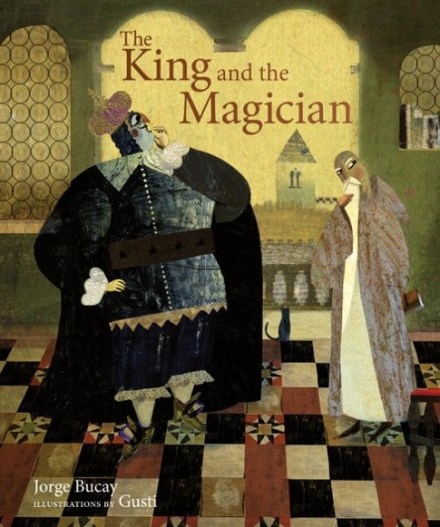
The King and the Magician by Jorge Bucay and Gusti Picture Book Review

About the Holiday

Abracadabra! With a puff of smoke and a few mirrors, I have made this blog post appear out of thin air! Okay, so maybe that’s not quite true, but today is the perfect day to try a little magic. On Smoke and Mirrors Day we celebrate the practitioners of this most mysterious art, who often extend and retract mirrors within a cloud of smoke to accomplish their deceptions. The term is also used generally whenever someone is trying to pull the wool over another person’s eyes. Whether you like sleight of hand, disappearing acts, or the magic of a soothing cup of tea, have fun, make a little mischief, and enjoy the day!

The King and the Magician

Written by Jorge Bucay | Illustrated by Gusti


In a faraway land there once lived a King who was very powerful. Not only does he love power, he commands that everyone in his kingdom obey and admire him. Trembling, his subjects reassure him every day that he is the most powerful man in the kingdom.

One day, however, the King hears a rumor that down in the village lives a Magician who can predict the future. The King fears that this man will become more powerful than he, and he sends his spies to learn more. The spies return and reveal that not only can the Magician tell the future, he is loved and admired by everyone.

The King becomes terribly jealous and plots to do away with his most hated enemy. He devises a plot to trick the Magician. He will host a party, and at the end will ask the Magician if he can truly predict the future. If the Magician says “No,” he will be exposed as a fraud, and the king will kill him. If the Magician answers “Yes,” the King will ask him to predict the date of the Magician’s death and will then kill him. The King is pleased with his scheme because either way, he will be rid of his rival.

On the night of the party, the King summons the Magician and asks him the fatal question. The Magician is more than just a seer or a sorcerer—he is wise. He looks at the King and states, “the Magician of this kingdom will die the exact same day as his King.

Now the King is in a terrible quandary. He does not want to risk the possibility that this old man’s prediction is true. He must now protect the Magician in order to save his own life. He quickly concocts a ruse and asks the Magician to stay the night in the castle, saying he wants to consult with him about some royal matters. In fact, he just wants to keep an eye on him.

The Magician agrees. The next morning the King goes to the Magician and asks his advice on some kingly decisions. The Magician offers good suggestions, and the king accepts them. As the months go by, the King continues to rely on the Magician for guidance, and slowly the King learns to be fair and wise. He becomes the respected and admired ruler he always wanted to be.

The King realizes that not only is the Magician a trusted advisor, he is a loyal and beloved friend. One day, wracked with guilt over his one-time plot to kill the Magician, the King reveals the story. The Magician listens to the King’s secret, and shares one of his own.

He relates that when the king questioned him on the night of the party, he saw the king reach for the hilt of his sword and realized his intentions. He then divulges that he made up the prediction of their shared death date to teach the King a lesson—one the King has learned. He says, “It is our lives that have become entwined, not our deaths.”

For many more years the King and the Magician live as friends and confidants. The kingdom grows stronger and the King kinder and more loved by his people. One day the Magician dies. The King is sad, and realizes he is no longer afraid of his own death. The King has learned the Magician’s lesson well, and even though his advisor is gone, he continues to make wise and beneficial decisions.

Ten years later the King writes a letter to his son and heir. In his letter, the King cautions his son that during his life he may come across someone or something that “will arouse fear and jealousy in your soul” and will want to destroy them or it to alleviate his fear. Instead, says his father, “open  your heart or your home” because “what you thought was your most feared enemy, is really your most powerful friend.”

Jorge Bucay has written a classic tale of wisdom verses power wrapped around a clever psychological trick that initiates the kind of thought which leads to true enlightenment. The straightforward storytelling and the pacing of the plot build suspense, while lyrical descriptions create a beautiful flow that depicts both the quandary of the King and the kindness of the Magician.

Gusti’s lavish illustrations, reminiscent of hieroglyphics and Medieval tapestries, are rendered in dark, rich brown, rust, black, olive and blue hues that gorgeously portray the splendor of the King and his castle, but also signal the somber weight in his soul. The regal tone even extends to the gilded text. The King is drawn as an imposing rounded figure, towering over everyone else in his kingdom, but his feet and hands are tiny, lending him a bit of a comical yet vulnerable air. The King’s eyes narrow with cunning as he plots his evil deed but widen in doubt and despair as the Magician works his special brand of magic.

Ages 4 – 8

Abbeville Kids, 2014 | ISBN 978-0789212047

Smoke and Mirrors Day Activity
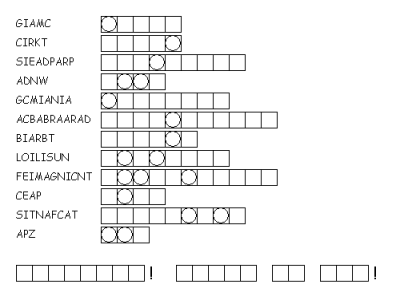
CPB - Magic Word Scramble II


Say the Magic Word! Word Scramble


Magic is all about mystery—and so is this scrambled word puzzle! Print the Say the Magic Word! word scramble. Then unscramble each magic-related word and, using the letters in the circles, discover the mystery phrase. Here’s the Solution!

March 28 – Music in Our Schools Day

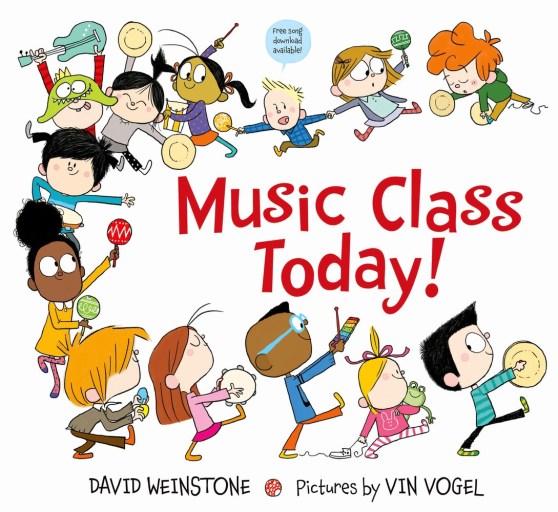
Music Class Today by David Weinstone and Vin Vogel

About the Holiday

The National Association for Music Education sponsors Music in Our Schools Month each March to promote greater awareness of the benefits and enjoyment high-quality music education brings to students and the community. Beginning in 1973 as a single Advocacy Day in New York, this celebration grew to include the entire month in 1985.

During the month special music programs, education, concerts, and classes take place to get kids and adults excited about the joys of music in schools.

Music Class Today

Written by David Weinstone | Illustrated by Vin Vogel


A little boy and his froggy toy join a music class full of other boys and girls led by a guitar-strumming teacher. The class starts with a song welcoming everyone by name and a verse inviting all to shake their musical eggs high and shake the eggs low. “One rolls away—where did it go?”

The new boy peeks around his mom’s back to watch the action, and when it’s time for a song he says, “I think I’ll just watch…But I’m listening!” The teacher gently sings, “That’s all right, that’s okay. / Whenever you’re ready, / come on over and play. / That’s all right, there’s no rush. / Whenever you’re ready, / come play with us!” These verses become a chorus repeated throughout the book, reassuring the little boy that he’s welcome, but that his own speed of acclimation is okay too.

The class continues with the kids kicking up their feet, drumming, and moving around the room in time with the music. The little boy comes out from behind his mom to sit on her lap and watches the fun. The teacher’s chorus brings the boy a little closer—to the edge of his mom’s feet—while clinging tightly to his froggy. He giggles as the kids swirl with scarves, getting dizzy, and falling down.

Now everyone’s dancing, being silly, and having a ball. Froggy joins in, dangling and wiggling at the ends of the boy’s hands. As dancing evolves into free-play time, the little boy accepts the teacher’s invitation to “come join the fun,” and leaves froggy at his mom’s feet with one more request for assurance—“Wait here till I’m done!”

“Good for you, that’s the way. / Everybody’s in the band!” the teacher sings as the little boy takes up the cymbals and leads the parade behind him. All too soon it’s clean-up time and class ends with a good-bye song. The boy is having so much fun that he tells the teacher he and froggy want to stay. The instructor knows just what to say to his happy, excited student: “That’s all right, that’s okay. / We’ll see you soon another day!”

In this cross-genre picture book, David Weinstone brings the musicality and movement of a toddler and preschool music class to the page. His song, also available as a free download, serves as the text of the story about a reluctant joiner who overcomes his apprehension to become a member of the group. The repeated chorus, that calmly and sincerely explains that it is okay for children to wait and watch until they feel comfortable, can be used for many situations and is a welcome message.

Vin Vogel’s sweet illustrations of a wide mix of kids kicking up their heels (literally, as a flying shoe bonks the instructor on the head in one giggle-inducing scene) and having fun are inspired in their focus on the children. The kids play instruments, dance, and cavort across the pages, filling the white space with joy. The view of the classroom changes from page to page to show other mother-child pairs, which helps emphasize that hesitant children are common, as well as baby siblings, toys, instruments, storage bins, and other sights familiar to children.

Ages 1 – 4

Farrar, Straus and Giroux, 2015 | ISBN 978-0374351311

Music in Our Schools Day Activity

CPB - Music in Schools Day game

It’s Instrumental! Game


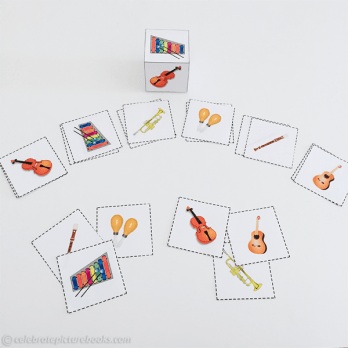
Play this fun game to gather all the instruments you need to create a music group. The first person to collect all 6 instrument cards is the winner!

Supplies

Directions

  1. Print the Paper Cube Template, cut it out and assemble the cube die.
  2. Print the Musical Instruments cards, cut out cards, and separate the instruments into piles
  3. Players take turns rolling the die cube to collect musical instrument cards
  4. The first player to collect all 6 instrument cards is the winner


March 25 – International Waffle Day

Lady Pancake and Sir French Toast by Josh Funk and Brendan Kearney Picture Book Review

About the Holiday

When someone made a spelling error, turning the Swedish holiday “Our Lady’s Day” (Vårfrudagen) into Waffle Day (Våffeldagen), a brand new culinary celebration began! Waffle Day also ushers in spring and offers the perfect excuse to enjoy these crispy concoctions whether you like them sweet, with syrup or confectioner’s sugar, or savory, as a base for meat and other toppings. So mix up some batter and pull out your favorite waffle maker and enjoy a delicious day!

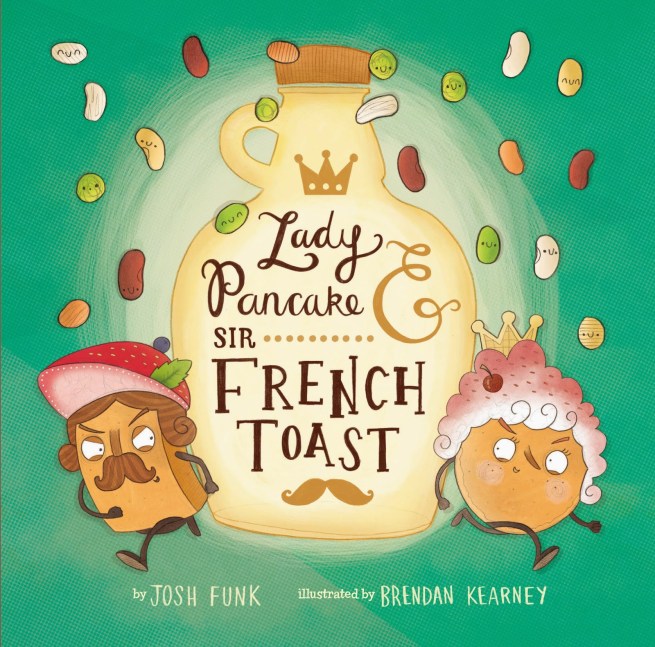
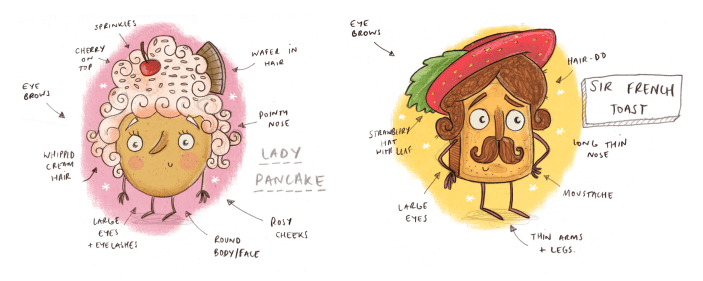
Lady Pancake and Sir French Toast

Written by Josh Funk | Illustrated by Brendan Kearney


You know those strange noises you sometimes hear coming from your refrigerator? And how you could have sworn the leftovers were on the top shelf? Well, Josh Funk’s Lady Pancake and Sir French Toast may solve those mysteries and more in this rambunctious tale about what happens when relationships grow frosty.

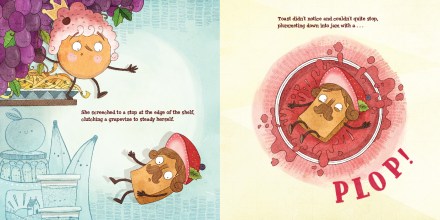
One day Lady Pancake and Sir French Toast are hanging out at the back of the fridge when they learn the syrup is almost gone. Lady Pancake claims it as her own, but Sir French Toast replies, “Not if I get there first!” And so off they race! “Through Broccoli Forest, past Orange Juice Fountain, they climbed to the top of Potato Mash Mountain.” But the race takes a turn as the two meet obstacles that are no fun at all: at the edge of a shelf “Toast couldn’t quite stop, plummeting down into jam with a plop.” And “Chili Lagoon slathered Pancake in muck and then at a fork in the road she got stuck.”

celebrate-picture-books-picture-book-review-lady-pancake-and-sir-french-toast-interior-art

The one-time friends call each other names and taunt each other with boasts of being the best breakfast food. As their competition upends the peace of the whole refrigerator from shelf to shelf, Lady Pancake and Sir French Toast find their energy wilting, and by the time they reach that sweet sought-after prize, they are “battered and soggy, exhausted and crumbling, too tired to push, they were limping and stumbling.”

With the bottle in sight, they are shocked to discover that the last drop of syrup is already gone. Who could have done this dastardly deed? None other than the sneaky Baron Von Waffle! With nothing to gain, Lady Pancake and Sir French Toast no longer have a reason to fight. In fact they realize that they lost out on the syrup because they were fighting. When they see that there is a little butter left, they decide to use the lesson they learned and share it.

celebrate-picture-books-picture-book-review-lady-pancake-and-sir-french-toast-interior-art

There are so many fantastic rhymes in this book that kids will want to hear again and again. One of my favorites comes as Sir French Toast catches up to Lady Pancake: “He scraped himself off and yelled up, / ‘You’re a meanie!’ / as Pancake rappelled / down a rope of linguini.” With such laugh-inducing verses, kids may never look at food the same way again. Josh Funk has created a tale about friendship that is both boisterous and unique and sure to quickly become a favorite.

The refrigerator world as envisioned by Brendan Kearney is as colorful as the food rainbow and as active as a playground in summer. It’s also stacked with the cutest array of legumes, yogurt, cake, juices, fruit, and veggies you’ll find anywhere. The final fold-down page of the entire refrigerator is a delight that kids of all ages will want to linger over even after the story of The Great Race between Lady Pancake and Sir French Toast is over.

Ages 5 and up

Sterling Children’s Books, 2015 | ISBN 978-1454914044

Visit Josh Funk’s Website to download a free Lady Pancake and Sir French Toast Activity Kit and to learn about more upcoming titles!

Discover more art and books by Brendan Kearney on his website!

Watch the trailer for this amazing race – you’ll be singing the Lady Pancake & Sir French Toast theme song in no time!

International Waffle Day Activity 


celebrate-picture-books-picture-book-review-lady-pancake-and-sir-french-toast

Sweet as Syrup Figure


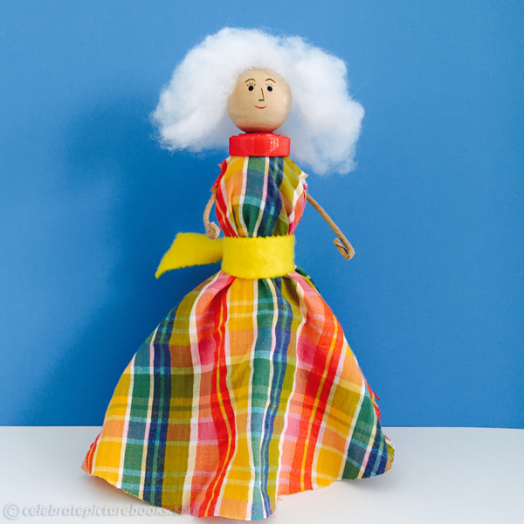
Fun shouldn’t be kept bottled up! Well…maybe just this once. Make your own figure to display or play with from a syrup bottle with this craft. It’s sure to be as sweet as you are!

Supplies

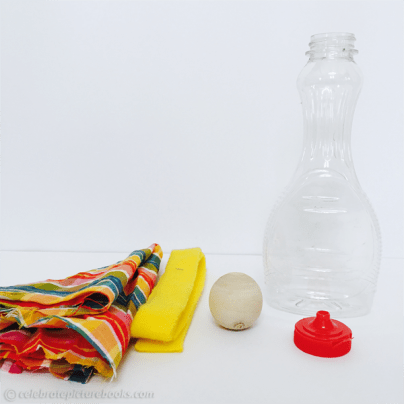
  • Small plastic syrup bottle with a narrow squeeze fliptop and without a handle, empty
  • 1 ½-inch wooden ball with ½-inch hole in bottom
  • 16-inch to 18-inch square piece of cloth
  • Ribbon or strip of material
  • 12 to 14-inch long medium-gauge craft wire
  • Gel pens, black, blue, brown, red (Gel pens work well on the wood as the ink doesn’t bleed into the wood and are easy to control)
  • Poly fill or needle-felting wool
  • Scissors
  • Strong glue

CPB - Syrup Bottle Figure II

Directions

To prepare the bottle

  1. Remove labels from syrup bottle
  2. Cut the flip top in half, keeping the narrow nozzle part

To make the head

  1. Holding the wooden ball with the hole at the bottom, draw a face on the wooden ball with the gel pens
  2. Glue a small handful of poly fill or needle-felting wool to the top of the wooden ball for hair. You can make the hair has long, short, or poofy as you wish.

To make the dress

  1. Cut a 16-inch diameter circle from the material

To assemble the figure

  1. To make the arms, wrap the wire around the neck of the syrup bottle, crossing it in the back and pulling tight
  2. Center the material over the opening of the syrup bottle
  3. Cut tiny slits in the material at the location of the wire on each side of the bottle, and pull the arms through the material
  4. Bend the ends of the wire into a small loop to form hands
  5. Screw the cap with the narrow nozzle over the material
  6. Tie the ribbon or strip of material around the narrow part of the bottle to make the figure’s waist
  7. Place the hole in the wooden ball over the nozzle in the cap and glue into place

Make up your own story with your new figure!

March 23 – National Puppy Day

The Octopuppy by Martin McKenna Picture Book Review

About the Holiday

National Puppy Day was founded in 2006 by Colleen Paige to recognize the joy and companionship that puppies bring to people. The day also promotes puppy rescue and adoption as well as education about puppy mills, and is quickly becoming an international observance. To celebrate consider donating to your local animal shelter or if you have room in your life for a new friend, adopt a puppy!

The Octopuppy

By Martin McKenna


Edgar wants a puppy for his birthday, but what he gets is so NOT a puppy. Out of the gift box pops Jarvis, a goggle-eyed octopus ready to party. Disappointing doesn’t even begin to describe it. Jarvis can’t do anything a dog could do. Sure, he might be clever—Jarvis buys Edgar an ice-cream cone instead of staying on his leash tied to the lamppost, for example—but Edgar wants a pet he can enter in the upcoming dog show.

celebrate-picture-books-picture-book-review-the-octopuppy-dog-show

Copyright Martin McKenna, courtesy of http://www.storycorner.scholastic.com

Perhaps with training Jarvis can learn to be more like a dog. But when Edgar tells him to lie down, Jarvis goes to sleep wearing PJs and socks, holding a teddy bear and surrounded with books. Edgar’s command to “play dead” elicits a surprise lunge from a wardrobe in a toilet-paper mummy costume. It’s just too much, and drives Edgar crazy! Finally, however, Jarvis learns to sit like a dog, and off they go to the dog show.

celebrate-picture-books-picture-book-review-the-octopuppy-lie-down

Copyright Martin McKenna, courtesy of http://www.storycorner.scholastic.com

At the dog show things go…well…Jarvis just can’t help being himself. He wears a tutu, plays the piano, does card tricks, and plays the drums—all at the same time. The other entrants are not amused, and Edgar is sooo embarrassed.

celebrate-picture-books-picture-book-review-the-octopuppy-sleeping

Copyright Martin McKenna, courtesy of http://www.storycorner.scholastic.com

Jarvis decides to leave, and after penning a note apologizing for being a bad dog, he slips down the toilet and out to sea. When Edgar discovers Jarvis is missing, he realizes he has been wrong. He remembers all the great things Jarvis did and thinks that Jarvis was the best Octopuppy in the world! Suddenly, he wants his pet back. He looks everywhere, but Jarvis is nowhere to be found.

As a last resort Edgar yells his apology into Jarvis’s escape route. His message is carried through the plumbing by various pipe and underground creatures until Jarvis hears it. Before Edgar can turn around, Jarvis is back! To celebrate his being home, Edgar’s family and friends throw Jarvis the kind of wild party he was looking for all along.

celebrate-picture-books-picture-book-review-the-octopuppy-edgar-has-change-of-heart

Copyright Martin McKenna, courtesy of http://www.storycorner.scholastic.com

This endearing story has just the right mix of craziness and sincerity to make it a favorite on any child’s bookshelf. Martin McKenna hits all the right notes in his tribute to friendship and the idea that true friends accept and appreciate each other the way they are. Jarvis is a sweetie doing very un-doglike things. He rescues a cat instead of chasing it, cooks sausages instead of stealing them, and performs surgery instead of biting the mailman. These vignettes make Edgar’s rejection all the more heartrending and his ultimate realization very satisfying. McKenna’s illustrations are loaded with silly and profound details that kids will want to linger over, and the two-page spread of Edgar leading Jarvis home after the dog show is an emotional marvel.

Ages 3 – 6

Scholastic Press, 2015 | ISBN 978-0545751407

National Puppy Day Activity

CPB - Dog Toy

Braided Puppy Toy


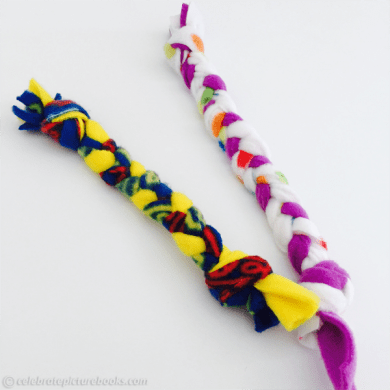
Your puppy or full-grown dog will love playing with you and this easy-to-make toy that’s perfect for tug-of-war, fetch, or any kind of fun.

Supplies

  • Fleece in two or three colors or patterns
  • Scissors

CPB - Dog Toy II

Directions

  1. Cut 3 strips of fleece 15 inches to 20 inches long. You can use just one color, two, or three!
  2. Holding all three strips of fleece together, make a knot by looping them at the top, feeding the ends through the loop, and pulling tight.
  3. Braid the 3 strands of fleece until there are 3” to 4” left at the end
  4. Holding all three strands together, knot them as before
  5. Your puppy or dog toy is ready to play with! (Cats and kittens like these too, just don’t tell your puppy—Shhh!)

Picture Book Review

March 15 – National Shoe the World Day

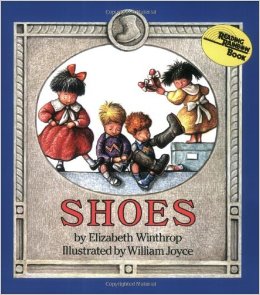
Shoes by Elizabeth Winthrop Illustrated by William Joyce Picture Book Review

About the Holiday

Today’s observance was begun in 2014 by Donald Zsemonadi and the United Indigenous People in Fontana, California to raise awareness of the more than 500 million people around the world who have no shoes to wear. These children, teenagers, and adults must walk barefoot wherever they go, enduring harsh terrain and long distances without relief or protection. Such conditions lead to further problems, which can be lifelong and life-threatening.

Some national and international organizations and companies provide ways you can help by donating new and gently worn shoes or through buy one/give one programs.

Shoes

Written by Elizabeth Winthrop | Illustrated by William Joyce

Kids love shoes—especially if their squeaky new or completely destroyed. In this classic picture book by Elizabeth Winthrop and William Joyce, an incredible array of feet coverings are introduced in a jaunty, bubbling perfectly rhymed poem that makes the reader look at shoes in a new and appreciative way.

Kids who are often stuck behind tall adults or seemingly sky-high counters will recognize “shoes too low.” And all kids know that wearing “Shoes to skate in, shoes to skip in, shoes to turn a double flip in” or “shoes for fishing, shoes for wishing, rubber shoes for muddy squishing” means the day is going to be awesome.

A fun-to-read rhyme at the end of the book sprints to an unexpected and completely satisfying twist.

Interpreting all of these shoes is William Joyce in his inimitable style. The rakish children ponder tangled laces; tower over friends with stilts; tumble, jump, and turn somersaults; skate, climb, and perform for an audience all while shod in the finest of shoes. Joyce’s adorable children make this a book kids will want to read and/or hear again and again.

Ages 4 – 8

Harper Collins, 1988 | ISBN 978-0064431712

National Shoe the World Day Activity

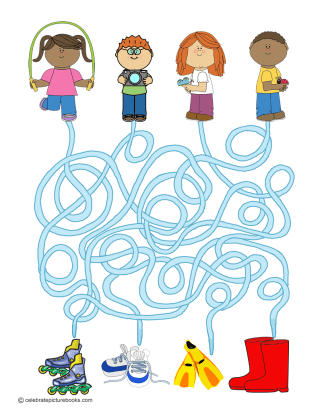
CPB - Shoe Day Maze

Tangled Laces Shoe Match

Four kids think today’s a perfect day to go swimming, stomping in the mud, roller skating, and climbing trees. But they can’t find the right shoes for their favorite activity! Can you untangle the shoelaces and help each kid have a fantastic day? Print the Tangled Laces Shoe Match puzzle and get started!

March 9 – Learn What Your Name Means Day

The Name Jar by Yangsook Choi Picture Book Review

About the Holiday


American onomotology enthusiast Jeffery Hill established Clelbrate Your Name Week in 1997. Each day of the first ful week of March is dedicated to self discovery and the fun of learning more about names and your name in particular. Today’s holiday encourages people to learn not only what your name means, but also to reach out to parents or other and discover why you were given the name you have. 

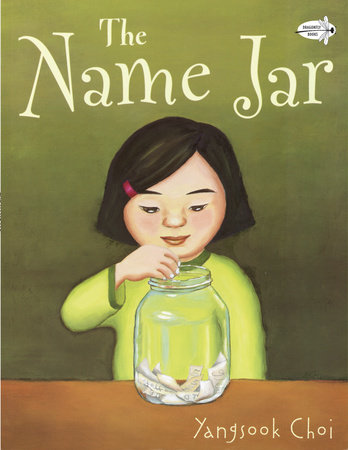
The Name Jar

By Yangsook Choi


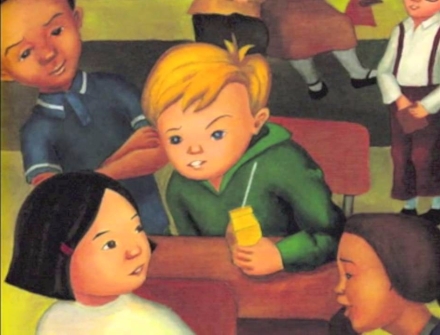
Unhei has recently moved to the United States from Korea. Although Unhei is excited about the first day of school, on the bus ride she misses her former home and looks at the wooden name stamp her grandmother gave her. A boy sitting behind Unhei notices the unfamiliar object and asks about it. Then other kids notice Unhei. They ask what her name is, and when she answers, they mispronounce it, laughing and making jokes.

celebrate-picture-books-picture-book-review-the-name-jar-on-the-bus

Image copyright Yangsook Choi, courtesy of Random House

Unhei is embarrassed and glad that those kids head to a different classroom than hers. As Unhei enters her own room, her classmates smile and greet her—it is obvious that their teacher has prepared them for a new student, and they are excited.

Of course, they first question her about her name, and remembering the experience on the bus, Unhei is reluctant to answer. She quickly says that she hasn’t picked a name yet, but will tell them next week. At home, Unhei tells her mother that she wants an American name, a name that is easy to pronounce.

Her mother is dismayed; Unhei’s name was chosen by a master so that it would describe her uniqueness. But Unhei doesn’t want to be different, she just wants to fit in. Later while she and her mother are at a Korean grocery store, she introduces herself to the owner, who exclaims that her name is beautiful and means “grace” in English. 

celebrate-picture-books-picture-book-review-the-name-jar-mom

Image copyright Yangsook Choi, courtesy of Random House

At home Unhei tries out American names in front of the mirror—Amanda, Laura, Susie—but they don’t feel or sound right. The next day at school Unhei finds a jar on her desk with pieces of paper in it. On each piece of paper is a name—suggestions from each of her classmates. Her new friends have chosen these names thoughtfully. Daisy is the nickname of one girl’s baby sister; Tamela is a smart and brave heroine from a story; and Wensdy is the day Unhei joined their class.

At the end of the school day, a classmate named Joey comes to her. He knows she actually does have a name, and Unhei, while not wanting to say it out loud, shows him the characters on her wooden stamp. Joey thinks it is beautiful and asks to keep the paper. Day by day the glass jar fills up with names. Unhei will have to choose soon.

One Saturday Unhei returns to the Korean grocery store. When Mr. Kim calls her by name, the one other customer turns around. It’s Joey! Carefully and slowly he says Unheis name until he gets it right. On Monday when Unhei enters the classroom, she discovers that the jar is missing. It’s all right, though, Unhei has chosen her name.

celebrate-picture-books-picture-book-review-the-name-jar-friend

Image copyright Yangsook Choi, courtesy of Random House

She walks to the chalkboard and writes her real name in English and Korean. She tells the class that her name means “grace.” Other kids reveal the meaning of their names, and they all practice saying Unhei’s name. That evening Joey comes to visit. He explains that he took the jar because he wanted Unhei to keep her original name. He suggests putting Korean nicknames into the jar for their classmates to pick—just as he already has. Mr. Kim helped him choose the prefect nickname: Chinku, which means “friend.”

Ages 3 – 8

Random House, Dragonfly Books,  New York, 2003 | ISBN  978-0440417996

Discover more about Yangsook Choi, her books, and her art on her website!

Yangsook Choi’s The Name Jar is as timely now as when it was first written. Through compelling and detailed storytelling, Choi explores the themes of identity, empathy, family, friendship, and more  with sometimes heartbreaking honesty. Unhei’s varied experiences at school, at home, and at the market provide an opportunity for adults and children to discuss and embrace the diversity of our multicultural world. Choi’s warm-toned illustrations reveal the conflicts that Unhei encounters and her growing confidence as she makes friends with Mr. Kim and Joey who accepts her as she is. 

Learn What Your Name Means Day Activity

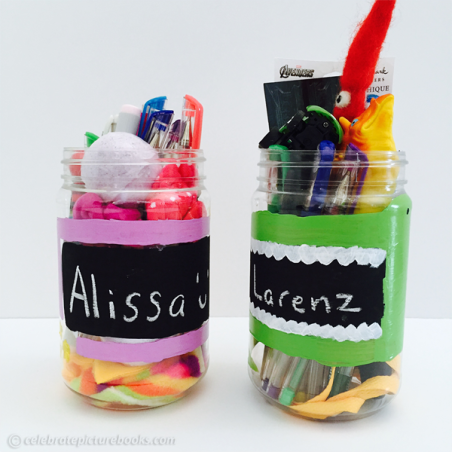
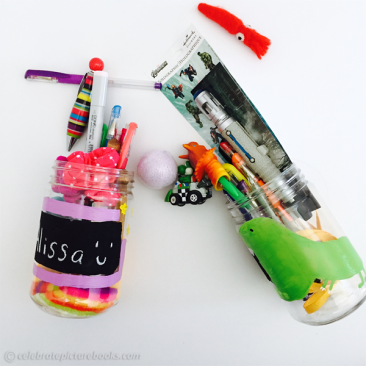
CPB - Name Jars standing

Love Your Name Organizer Jar


Everyone needs a place to store their special stuff! Here’s a way to recycle a plastic jar and make a cool organizer jar with your or your friend’s name on it.

Supplies

  • A large plastic jar, such as a peanut butter jar or mayonnaise jar with the label removed
  • Acrylic multi-surface paint or markers
  • Chalkboard paint
  • Paint brush
  • Chalk

CPB - Name Jars on sides

Directions

  1. Paint a rectangle on the front of the jar with chalkboard paint
  2. Decorate the rest of the jar with paint, markers, or paper


February 25 – National Chili Day

Armadilly Chili picture book review

About the Holiday

What could be more satisfying on a mid-winter day than a spicy bowl of chili?  Whether made with meat or veggies, combined with macaroni, or served in potato skins, the simmered flavors make for a scrumptious meal. Although the origins of chili are lost to history, it’s believed that the dish is a southwestern, specifically Texan, concoction. It began to attract attention in the early 1800s, and by the 1880s”Chili Queens” were selling “bowls o’red” at chili stands throughout San Antonio. In 1893 the San Antonio Chili Stand made an appearance at the Chicago World’s Fair. It’s popularity took off across Texas and throughout the west by the 1920s. When the Great Depression hit, chili became one of the only affordable meals for the hungry population.

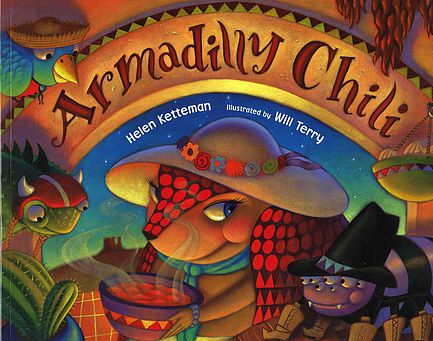
Armadilly Chili

Written by Helen Ketteman | Illustrated by Will Terry


What a hoot! The knee-slappin’, root-a-tootin’ phrasing in Hellen Ketteman’s Armadilly Chili is shor ‘nuf gonna make this a favorite on any child’s bookshelf. While the plot may be familiar, the southwest setting and Miss Billie Armadilly put a fresh, funny twist on it.

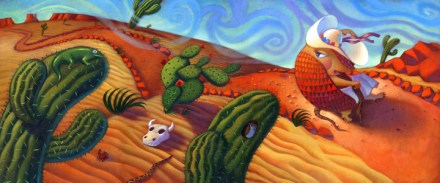
celebrate-picture-books-picture-book-review-armadilly-chili-gathering-ingredients

Image copyright Will Terry, courtesy of willterry.com

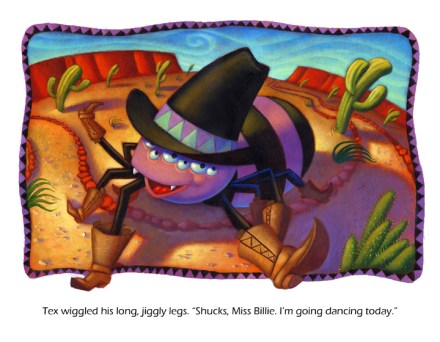
Miss Billie Armadilly is gathering ingredients for her hot armadilly chili as a blue norther blows in. She’s gathering beetles when her friend Tex, a many eyed tarantula tip taps by. When Billie asks him to help her collect beetles, he tells her he can’t because he’s going dancing. Miss Billie harrumphs and does it herself. Next Miss Billie is picking peppers, and when Mackie the bluebird flies in she thinks she has some help. Once again, though, she’s left on her own since Mackie is going to the movies. Her friend Taffy, the horned toad, begs off from chopping prickly pear, saying he’s got plans to go skating.

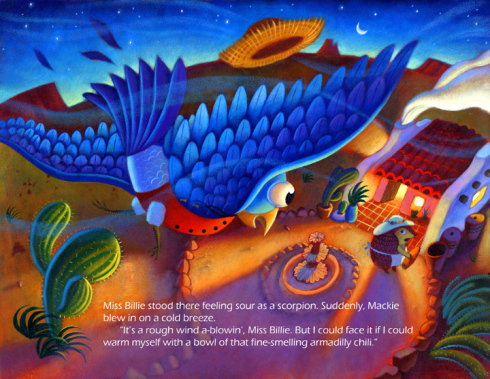
celebrate-picture-books-picture-book-review-armadilly-chili-Mackie-flies

Image copyright Will Terry, text copyright Helen Ketteman, courtesy of willterry.com

At home, Miss Billie stirs her chili to a scrumptious bubble. The aroma entices first Tex, then Mackie, and finally Taffy to come a’knockin’ at her door looking for a bowlful. Billie has something to say about that—specifically, “no workin’ with Billie, no sharin’ the chili!”

Billie’s friends hurry away, and Billie sits down to her feast. But after all that work, the chili tastes as “flat as a Texas prairie.” What’s wrong? She realizes what the missing ingredient is just as the doorbell rings. She opens the door to find her friends standing there with bags in their hands. What’s in those sacks? Apologies! And hot apple cider, jalapeno biscuits, and homemade chocolate fudge. Now that the friends are all together, the chili tastes just right, and they laugh and talk and eat throughout the blustery night.

celebrate-picture-books-picture-book-review-armadilly-chili-tex

Image copyright Will Terry, text copyright Helen Ketteman, courtesy of willterry.com

Helen Ketteman’s fast-paced Armadilly Chili is a welcome take on what it means to be a good friend. Her Western setting, lively language, and fast pacing will keep kids laughing and rooting for Billie and her pals. Will Terry’s bright illustrations washed with a palette of deep reds, oranges, greens, and yellows firmly sets the story in the Southwest. Billie’s facial expressions as each of her friends abandon her to her chores are priceless, and their final camaraderie is highly satisfying.

Ages 4 – 8

Albert Whitman & Company, 2008 | ISBN 978-0807504581

Discover more about Helen Ketteman and her books on her website!

View a gallery of illustration work, drawings, and picture books by Will Terry on his website!

National Chili Day Activity

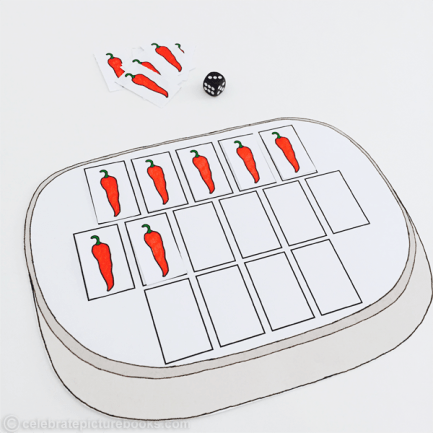
CPB - Chili Pepper Game

Hot, Hot, Hot! Chili Pepper Chili Game


Chili just isn’t chili without a little heat! But can you take 15 chili peppers in your bowl? If you want to win the Hot, Hot, Hot! Chili Pepper Chili Game you’ll have to!

Object of the Game

The object of the game is to collect 15 chili peppers in your bowl before any other player.

Supplies

Rules

  1. Any number of players can play at one time. Print 1 Chili Bowl game board and 1 set of 15 Chili Pepper cards for each player
  2. Give 1 Chili Bowl Game Board to each player
  3. Place the Chili Pepper Cards in a pile or in a bowl
  4. Roll the die to see who goes first. The person with the highest roll goes first
  5. To begin play, the first player must roll a 1, 2, or 3. They should roll until they get one of these numbers.
  6. Players roll the die and collect or lose chili pepper cards by the number of dots on the die. If you roll a:
  • 1 – Pick up 1 chili pepper card and place it on your chili bowl game board
  • 2 – Pick up 2 chili pepper cards and place them on your chili bowl game board
  • 3 – Pick up 3 chili pepper cards and place them on your chili bowl game board
  • 4 – Get a chili pepper card from the player on your left
  • 5 – Give a chili pepper card to the player on your left
  • 6 – Lose a turn

     7. If a player does not have chili pepper cards to give to another player or if the player on           their left has no cards to give, the player rolls again.

    8. Continue play until one player has filled their Chili Bowl with chili peppers!