April 10 – National Sibling Day

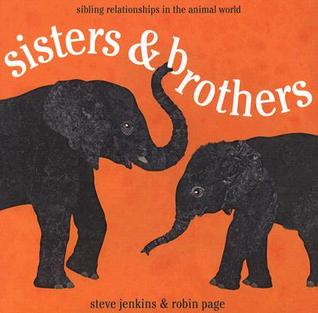
sisters & brothers by Steve Jenkins and Robin Page picture book review

About the Holiday

Brothers and sisters, huh? Sometimes you can’t live with them—but you’d never really want to live without them! Sure the bad part is that they know all your secrets and your quirks and you vie for that last cookie, but the good part is that they know all your secrets and your quirks and you didn’t really want that last cookie anyway.

Today do something fun with your sibling or siblings or tell them you love them—or both!

Sisters & Brothers: Sibling Relationships in the Animal World

By Steve Jenkins and Robin Page


You know that most animals are born in a litter or with one or two other siblings, but do you really consider that they are brothers and sisters just like human siblings? You might wonder if they have the same kind of relationship with each other that people do. How do they get along? How do they communicate? Do they stay together or go their separate ways? Sisters & Brothers: Sibling Relationships in the Animal World reveals the answers to these questions and more about 21 animals from around the world.

Would you like to be a clone of your brother or sister? Maybe not so much. If you were a nine-banded armadillo, though, you’d have no choice. These armadillos are always born four at a time—all females or all males—and are identical in every way! They stay with their mother until they are four months old and then set off on their own adventures.

If there are a lot of women and girls in your family, you may feel as if you’ve been born into a community of whiptail lizards. In the world of whiptails, there are no males! While their unusual reproduction method may avoid some battles, the identical traits of these creatures leaves them vulnerable to disease or changes in their environment.

Are you the youngest in your family? If you were a naked mole rat, you’d have to lie on the floor of your narrow tunnel and let your older siblings walk over you to pass. Mole rats aren’t the only ones who have worked out a hierarchical system. Brother bears fight fierce battles until the weaker one leaves to find his own territory, and black widow spiders even eat their weaker brothers and sisters!

Many animal siblings get along, however, and even help each other grow strong and develop important traits. Two of the fastest animals on earth—cheetahs and peregrine falcons—practice hunting techniques on each other, acquiring speed and accuracy along the way. There are even wildlife families that include adopted members, such as the cichlid fish and myna birds.

These are just a few of the intriguing animals readers will discover in this unique look at the world’s wild kingdom. Each animal is beautifully rendered through large cut or torn paper collages that enhance the short text, perfect for a child’s attention span. The final pages offer more information on each creature, and a list for further reading is also included.

Ages 4 – 8

Houghton Mifflin Harcourt, 2008 | ISBN 978-0547727387

National Sibling Day Activity

CPB - Heart Jar

I Heart You! Jar


Sometimes it’s hard to say “I love you” (or even “I like you”) to siblings. But sisters and brothers like to know they’re important to each other. Here’s a gift you can make to give them that will tell them what is in your heart.

Supplies

  • A clear jar with a lid—you can use a recyclable jar or buy a mason jar or other decorative jar at a craft store
  • Red felt
  • Scissors

Directions

1. Cut red hearts from the felt

2. Add hearts to the jar—you can add as many as you like and continue to fill the jar after you’ve given it to your sibling. Here are some ideas:

  • Add one heart for each year you have known your sibling
  • Add one heart for each thing you love about your sibling (write those traits on the hearts)
  • Give a new heart whenever your sibling does something nice for you

3. Give your I Heart You! jar to your sister(s) and/or brother(s)

April 2 – International Children’s Book Day

Written and Drawn by Henrietta by Liniers

About the Holiday

Each year since 1967 Hans Christian Andersen’s birthday has served as the date for Children’s Book Day. The International Board on Books for Young People, a non-profit organization founded in Zurich, sponsors the day to promote a love of reading. Seventy-five National Sections around the world alternate in hosting the event. The host for 2016 is Brazil, and this year’s theme is “Once Upon a Time.” A prominent author and illustrator from the sponsoring country prepare materials used to raise awareness of books and reading. Luciana Sandroni wrote this year’s message and the poster was designed by Ziraldo.

Children’s Book Day is celebrated with special events in schools and libraries, writing competitions, book awards, and opportunities to meet authors and illustrators. 

Written and Drawn by Henrietta

By Liniers

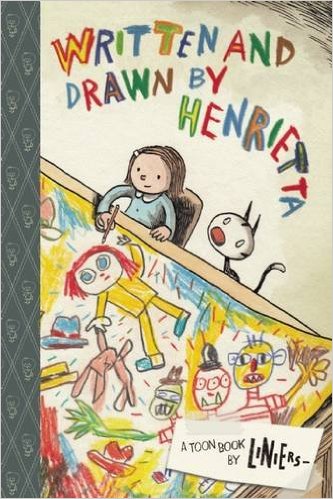
Henrietta’s mom gives her a new box of colored pencils, which Henrietta says is “as close as you can get to owning a piece of the rainbow.” She sits down to draw her own book and titles it “The Monster with Three Heads and Two Hats.” She begins with an illustration of a little girl, Emily, in bed at night. “I’m scaring myself…,” she thinks. Her thought is played out in her next page which shows Emily asking her stuffed rabbit if it will sleep with her because she’s scared of an unexplained Creak, Creak.

celebrate-picture-books-picture-book-review-written-and-drawn-by-henrietta-three-headed-monster

Copyright Liniers, 2015, courtesy of TOON Books

“Hmm…What’s that noise?” ponders the young writer. Her fears make it to the page—Creeak…Creeak…Thump…Crash…Boom. What are those noises, my favorite? Emily asks, her eyes now wide. The Noises! They’re getting closer!!

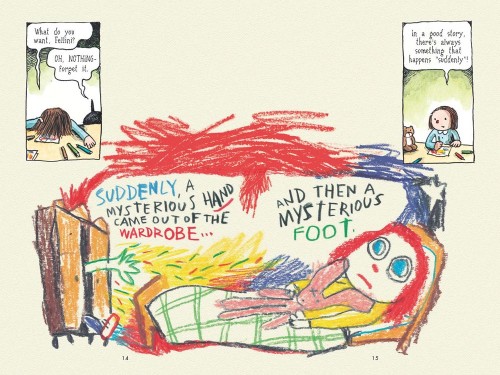
Henrietta knows that in a good story something always happens “suddenly,” and so she draws a mysterious hand and a mysterious foot emerging from Emily’s wardrobe. The plot thickens and finally the full terrifying monster with three heads pops out of the wardrobe.

celebrate-picture-books-picture-book-review-written-and-drawn-by-henrietta-in-bed

Copyright Liniers, 2015, courtesy of TOON Books

They acquire names from Henrietta’s imagination—Huey, Dewey, and Louie Bluie. . She is stuck for a bit as to how to go on, then gives Emily a question: What were you doing inside my wardrobe? The monster answers that it is looking for a hat. Emily joins them in their search, entering her wardrobe. She’s aghast to find that it is full of…clothes! (The wardrobe had been made in Narnia, the well-read Henrietta tells her cat, Fellini).

When the monster and Emily wonder which way to go, they meet a direction-giving mouse, and the story takes off—even Henrietta can’t wait to see what happens. She draws a huge pile of hats (she’s learned about “hat-o-logy” from the encyclopedia—the printed version!). The creature’s two heads with hats begs the third head to choose a hat before “the monster” shows up. Emily is terrified again—Another monster? What has Henrietta concocted this time? A monster with one head and three hats! This horrible beast suddenly appears and chases the crew through the wardrobe. Everyone is shouting Aaaaaaaaaaa—even the author.

celebrate-picture-books-picture-book-review-written-and-drawn-by-henrietta-wardrobe

Copyright Liniers, 2015, courtesy of TOON Books

Emily and the first monster lose the tremendous beast, ask the direction-giving mouse how to escape, and burst out of the wardrobe just in time. Henrietta thinks the story should have a happy ending, and before the monster with three heads and now three hats flies out the window, they give Emily a present. What could it be? Henrietta is so curious! It’s a wonderful hat, of course!

The End

“Now,” Henrietta says, “to find a publisher!”

This Toon Book by Liniers is a wonder as it reveals the inner-workings of children’s imaginations and the spontaneous nature of their brilliant creativity. Henrietta’s thought process as she conjures up her story is shown in neat comic-style panels with speech bubbles, while her story is depicted in colorful kid-like drawings and dialogue written in all capital letters. This interplay between the young artist/writer and her work enhances the fun, suspense, and surprise of this story-within-a-story. 

Ages 5 and up

TOON Books, and imprint of RAW Junior, LLC, 2015 | ISBN 978-1935179900

International Children’s Book Day Activity

Create Your Own Book

CPB - Comic Panel

It’s so much fun to let your imagination fly! Use this printable Comic Style Page to create a story as unique as you are!

Picture Book Review

April 1 – National One Cent Day

A Dollar, a Penny, How Much and How Many? by Brian Cleary and Brian Gable Picture Book Review

About the Holiday

Do you pick up a penny on the street or step over it as worthless? If you do the latter, you might want to reconsider. Today we celebrate the one-cent coin and its historical and artistic significance. The penny has been in circulation since 1793 and derives its name from the English “penny” but is pluralized in the US as “pennies” instead of the British “pence.”

It wasn’t until 1909 that Abraham Lincoln’s face appeared on the coin as part of President Roosevelt’s initiative to improve the artistic nature of the country’s coinage. Roosevelt enlisted famed sculptor August Saint-Gaudens to design the new penny, as well as the other gold pieces in use at the time. While the designs of other coins have changed over the years, Lincoln has remained the iconic image on the copper-colored penny.

While a single penny may not buy much these days, added together they can still make a difference. And remember the old adage: Find a penny pick it up. All the day you’ll have good luck!

A Dollar, a Penny, How Much and How Many?

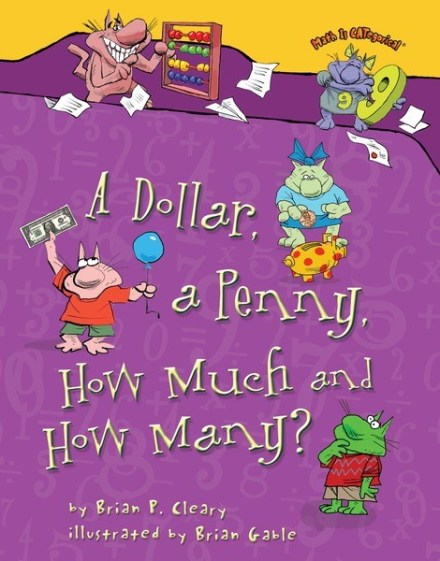
Written by Brian P. Cleary | Illustrated by Brian Gable


Part of the Math is CATegorical series, this book is all about money—what it looks like, what it’s used for, and how the different denominations add up to equal the same price for a desired or needed item. Each two-page spread relates in verse a little lesson. The book opens with a general definition of money: “Money is the term for coins and bills that people use / to buy things such as pizzas, pencils, planes, and chains and shoes.”

Kids learn the names of our coins, what they are made of, and the value of each. They discover that coins can be added together or mixed and matched—10 pennies equal a dime; two dimes and a nickel equal a quarter, and so on. The story moves to a dollar store, where the cats buy different items with various combinations of coins. Jenny has 4 quarters, while her brother has 10 dimes. Anna has 100 pennies and Zack is carrying 7 dimes, 1 quarter, and 5 pennies. Kids see that all of these combinations have the same value.

Paper money is up next. A short description of the minting process leads to a discussion of value as the cats purchase a $20 book with various bills.

Brian Cleary’s catchy rhymes and straightforward explanations make this a perfect book for introducing money, its value, and the mathematical concepts of addition, subtraction, and multiplication of using money to buy things.

Brian Gable’s well-known comical cats of the series walk kids through the pages as they ponder prices on items on the shelf and the amount of money in their pocket. The cats’ humorous expressions and silly situations turn this money math lesson into a funny and fun experience. The brightly colored pages focus on the coins and bills, which are clearly displayed, and the direct connections between this money and the objects being bought is obvious.

Ages 5 – 9

Millbrook Press, 2012 | ISBN 978-0822578826

National One Cent Day Activity

CPB - Penny matching

Count Your Pennies! Matching Game


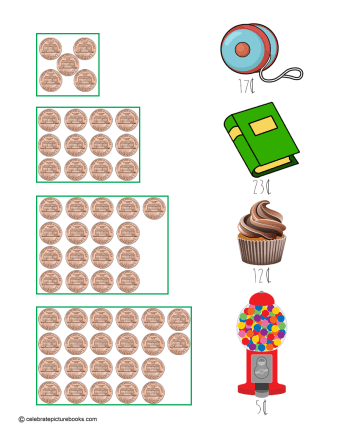
Counting pennies can be so much fun! Saving them can be even better! Collect enough pennies and you can buy something special or donate to your favorite cause! In this printable Count Your Pennies! matching game, draw a line from the stack of pennies to the object they will buy.

March 22 – Tuskegee Airmen Day

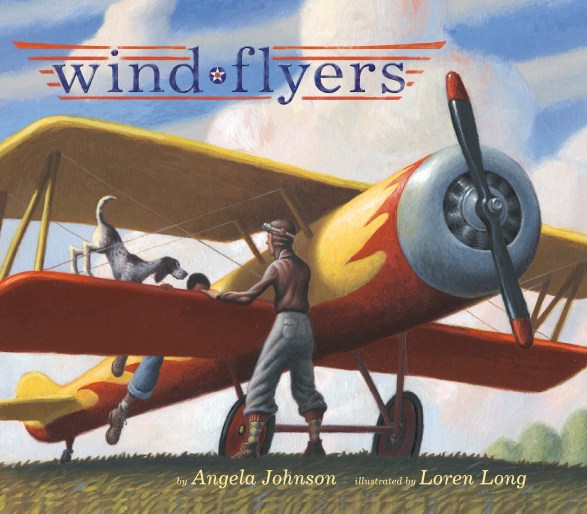
Wind Flyers by Angela Johnson and Loren Long Picture Book Review

About the Holiday

Today marks the 75th anniversary of the foundation of the Tuskegee Airmen, the first black military aviators in the U. S. armed forces during World War II. The regiment consisted of 996 pilots and more than 15,000 ground personnel who were trained at Tuskegee Army Air Field and other locations. These brave pilots have been credited with 15,500 combat sorties and earned more than 150 Distinguished Flying Crosses. The success of the Tuskegee Airmen paved the way for the integration of the U.S. military under President Harry S Truman in 1948.

Wind Flyers

Written by Angela Johnson | Illustrated by Loren Long


With pride a young African-American boy tells the story of his great-great-uncle who was a Tuskegee Airman in World War II. His uncle was “a smooth wind flyer. A Tuskegee wind flyer…” Like a bird, his uncle tells his nephew, he was born to fly, jumping off a chicken coop at the age of five and into a pile of hay from a barn when he was seven. He has his first real flight at the age of eleven, when he pays to be a passenger with a barnstormer.

Flying over lakes and fields, his uncle feels as if he’s in Heaven, among soft clouds that beckon for him to be a wind flyer too. The experience changes him forever, and always there is the desire to fly “into the wind, against the wind, beyond the wind.” As a young adult his uncle contributes his dream and his skills to the World War II effort, becoming a Tuskegee Airman, one of the first black pilots in the United States military.

The boy and his uncle look through old photographs, seeing once more those young and brave pilots—the Tuskegee wind flyers. After the war, his uncle crop dusted in order to fly. Now planes are different, he says, but the clouds remain the same. The boy and his uncle climb to the highest point of the uncle’s barn to watch the jets—and in those moments they once more become the smooth wind flyers, flying into the wind and beyond.

In her soaring, rhythmic language, Angela Johnson captures the dreams and yearning of a young boy whose greatest desire is to fly among the clouds. When he gets his chance by joining the Tuskegee Airman in World War II, Johnson combines straightforward narrative with poetic lines to enhance the sense of achievement and pride the young pilots felt. The structure of the story is well chosen, as the relating of the uncle’s life from childhood through old age through the eyes of his nephew, strengthens themes of strong familial relationships as well as shared dreams across generations.

Loren Long gives Wind Flyers additional power with his strong, vibrant paintings. Two-page spreads provide a sense of the vastness of the skies that so enticed the young would-be pilot. Even the clouds echo the emotion of the page—fluffy, floating, and alive in the flight scenes while linear, flat, and stationary when the plane and the uncle are earthbound. Realistic portrayals of the boy, his uncle, and the other Tuskegee Airmen are reminiscent of the WPA murals of the 1940s while still setting this book firmly in today for a new generation.

Wind Flyers is a wonderful book to share with aviation buffs and dreams of all types.

Ages 4 – 9

Simon & Schuster Books for Young People, 2007 | ISBN 978-0689848797

Tuskegee Airmen Day Activity

CPB - Biplane side

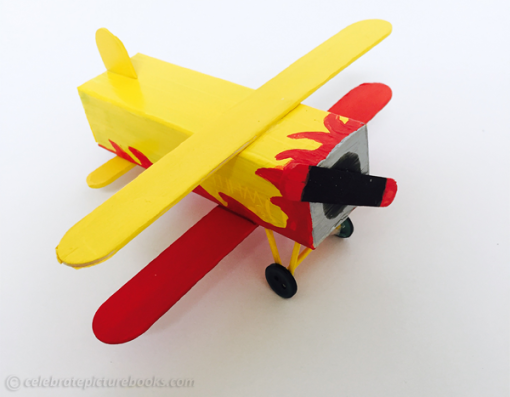
Head in the Clouds Box Biplane


If you love airplanes and flying, you’ll have fun making your own plane from recycled materials! Use your creativity to decorate your plane while you imagine yourself flying through the clouds on a beautiful day. Younger children will have fun sharing this activity with an adult or older sibling too!

Supplies

  • Travel-size toothpaste box
  • 3 6-inch x 1/2-inch craft sticks
  • 2  2 1/2-inch x 7/8-inch mini craft sticks
  • 5 Round toothpicks, with points cut off
  • Paint in whatever colors you like for your design
  • 4 small buttons 
  • 2 mini buttons
  • Paint brushes
  • Strong glue or glue gun

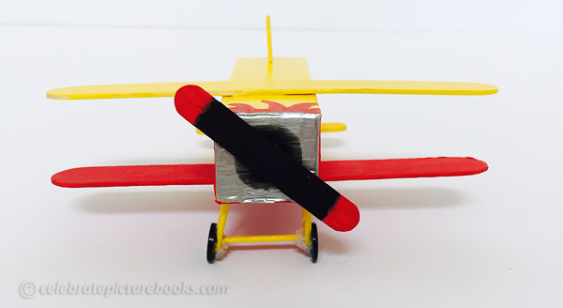
CPB - Biplane front

Directions

  1. Empty toothpaste box
  2. Paint toothpaste box and decorate it
  3. Paint the craft sticks and 5 toothpicks
  4. Paint one small craft stick to be the propeller
  5. Let all objects dry

To assemble the biplane

  1. For the Bottom Wing – Glue one 6-inch-long craft stick to the bottom of the plane about 1 inch from the end of the box that is the front of the plane
  2. For the Top Wing – Glue the other 6-inch-long craft stick to the top of the plane about 1 inch from the front of the plane
  3. For the Tail – Glue one mini craft stick to the bottom of the box about ¾ inches from the end that is the back of the plane
  4. For the Vertical Rudder – Cut the end from one of the painted 6-inch-long craft sticks, glue this to the back of the box, placing it perpendicular against the edge and half-way between each side

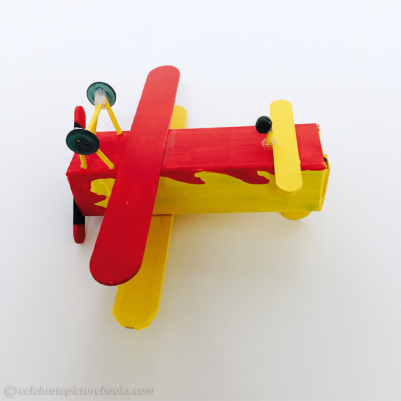
CPB - Biplane bottom

To assemble the front wheels

  1. Cut 4 painted toothpicks to a length of ¾-inches long
  2. Cut one painted toothpick to a length of 1-inch long
  3. Glue 2 of the 3/4-inch toothpicks to the back of 1 button, the ends of the toothpicks on the button should be touching and the other end apart so the toothpicks form a V
  4. Repeat the above step for the other wheel
  5. Let the glue dry
  6. Glue the 1-inch long toothpick between the wheels at the center of each wheel to keep them together and give them stability. Let dry

To make the back wheel

  1. Cut two ¼-inch lengths of painted toothpick and glue them together. Let dry
  2. Glue two mini buttons together to form the back wheel. Let dry
  3. Glue the ¼-inch toothpicks to the mini buttons. Let dry
  4. Glue these to the bottom of the plane in the center of the box directly in front of and touching the tail

Display your biplane!

March 21 – World Poetry Day

Nasty Bugs by Lee Bennett Hopkins and Will Terry Picture Book Review

About the Holiday

World Poetry Day, an initiative of the United Nations Educational, Scientific, and Cultural Organization, recognizes the important role poetry plays in people’s lives across the world and over time. The day promotes small publishers of poetry as well as oral poetry traditions and works to strengthen the connection between poetry and other forms of expression. Another objective is to “support linguistic diversity thorough poetic expression and to offer endangered languages the opportunity to be heard within their communities.”

Celebrations on this day include poetry readings, school lessons focused on poetry and poets, poetry writing sessions, and poetry readings by professional and amateur poets in schools and other venues.

Nasty Bugs

Poems Selected by Lee Bennett Hopkins | Illustrated by Will Terry


Who in the world can resist bugs? They’re in every country, every city, every town, even every house! And they have so much going for them—lots of legs, pincher mouths, transparent wings, amazing survival skills, and so much general creepy-crawliness! Bugs may be a little (or a lot) icky, but you can’t deny that they’re fascinating.

Nasty Bugs brings together 16 poets to turn the traits of all kinds of insects, from stink bugs to chiggers to water bugs and more, into creative odes that tickle the funny bone as well as teach. Readers learn from Cynthia S. Cotton’s “Stink Bug” that “Some spread their wings in flight, / Some look scary, / some taste bad, / some use camouflage / to blend in just right.”

Rebecca Kai Dotlich exposes the boll weevil: “I am an evil weevil, / a cotton-craving beetle / whose reputation’s rotton / ‘cause I gobble crops of cotton, / yes I do.” And the Colorado Potato Beetle? Among other quirks, X. J. Kennedy reveals its name is a bit of a misnomer: “His other name’s Potato Bug. / This munching desperado / infests our gardens coast to coast. / Not just in Colorado.”

April Halprin Wayland gives voice to the fire ants’ tribal cry “All for one and one for all!” as they jump into action when “Flood waters rise! / Quick, form a ball—/ our larvae, pupae, eggs, and Mother Queen inside! / We roll this writhing globe, / take turns on top / so all breathe air, so all survive.”

“Spoiled Rotton” by J. Patrick Lewis may make grammarians squirm with this pointed description: “I’m a comma / in a drama / of disgusting devastation.” while readers will be itchin’ to know more in Rebecca Andrew Loescher’s “Ode to Chigger” with lines such as “You hatch with six small legs for running, / then grow two more—for leaps most stunning,” Poems about flies (Ann Whitford Paul), wasps (Michele Krueger), fleas (Marilyn Singer), lice (Amy Ludwig VanDerwater), ticks (Kami Kinard), termites (Alice Schertle), cockroaches (Fran Haraway), and bedbugs (Kristine O’Connell George) also contribute to the buzzzzz of this anthology.

But if bugs, well…bug you, you may find these lines in Lee Bennett Hopkins’ “Ode to a Dead Mosquito” most satisfying: “You of little brain / didn’t you know / I felt your sting / the instant you / began to drain? / So— / I whacked you. / SMACK! / You dropped.”

Will Terry lends his distinctive talent to making this book as colorful, bold, and eye-popping as nature itself. Each insect, depicted in its favorite milieu, nearly flies, creeps, or chomps it’s way off the page. Brilliant greens, reds, yellow, oranges, and blues give life to these most prolific pests, and their prominent features – whether pinchers, stingers, gnawing mandibles, or even stinky odor – are inspiringly drawn.

More facts about each bug are given in the back of the book, and are a must read. Whether insects make you squirm with discomfort or squeal with delight, Nasty Bugs is fun.

Ages 5 – 9

Paperback: Puffin, Penguin Group, 2016 | ISBN 978-0147519146

Hardcover: Dial Books for Young Readers, Penguin Group, 2012 | ISBN 978-0803737167

World Poetry Day Activity

CPB - Nasty Bugs magnet II (2)

Rockin’ Bug Magnet or Paperweight


On World Poetry Day it’s fun to write a poem of your own. Whether your creation is long or short, you can proudly display it using one of these Rockin’ Bug Magnets.

Supplies

Rocks, small and flat work best for magnets. Larger rocks are great for paperweights. You can find rocks in your yard, at the beach or park, or buy them from craft stores or nurseries.

  • Paint in your favorite colors
  • Paint brush
  • Small to medium round magnets, available at craft and hardware stores
  • Googly eyes
  • Strong glue

CPB - Nasty Bugs magnet (2)

Directions

  1. Wash rocks and let them dry
  2. Create your own creepy, crawly bug on the front of the rock
  3. Paint your bug
  4. Let the paint dry
  5. If you want to give your insect buggy eyes, glue googly eyes to the rock.
  6. Glue a magnet to the back of the rock
  7. Hang it on the refrigerator or any metal surface


If you love books, you must have caught the reading bug! Check out another great book and craft on March 2—Read Across America Day and make an “I’ve Got the Reading Bug” Bookplate for your favorite books!

CPB - Reading Bug Book Plate (2)


March 14 – National Pi Day

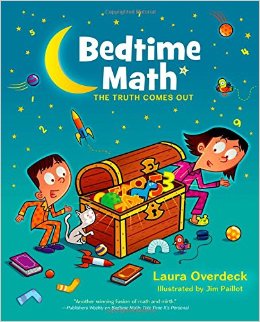
Bedtime Math The Truth Comes Out Picture Book Review

About the Holiday

What would we do without pie, huh? The flaky crust, the delicious filling….What? Oh, how embarrassing! It’s Pi Day! Well, what would we do without pi, huh? All those circles would go unmeasured, the world just wouldn’t fit together quite right…

Pi Day recognizes the usefulness of the mathematical constant Pi, the first three numbers of which are 3.14. In 1988 Larry Shaw noticed the correlation to March 14 and organized the first Pi Day celebration at the Exploratorium in San Francisco, California. In 2009 The U.S. House of Representatives officially named March 14 as National Pi Day. The day is celebrated by schools and other organizations with math projects, pie-eating contests, and other fun events.

Bedtime Math: The Truth Comes Out

Written by Laura Overdeck | Illustrated by Jim Paillot


Bedtime has never been so numerical! Oh sure, kids might count the stars out their window or sheep leaping a fence, but how about flavors of astronaut ice cream or towns named for food? Wouldn’t it be fun to figure out how far a marshmallow shot from a rubber band will go? Or how to stop a charging rhino? Or whether a snake can lose its tongue? You bet it would! And that’s the genius behind the Bedtime Math series, which also includesBedtime Math: A Fun Excuse to Stay up Late and Bedtime Math: This Time It’s Personal.

Bedtime Math goes way beyond simply presenting math problems for kids to solve. Each problem begins with fascinating facts or trivia about topics kids care about, such as space, animals, food, themselves, and the world they live in. Adults will find as much to like about these revealing tidbits as kids.

Reluctant math students will respond to this series, as the presentation is light-hearted, humorous, and educational in the best way. They may not even realize they’re doing higher math as they try to solve these brain ticklers.

Each mind boggler comes with three difficulty levels—Wee Ones, Little Kids, and Big Kids—plus a bonus question that’s more advanced so that everyone can join in the fun. An extensive introduction gives tips and suggestions for using the book and answers any questions readers may have about the approach.

Of course, these cool calculations don’t have to wait for bedtime. They’re a smart way to fill those “I’m bored” moments or to just spend time together no matter when it is. Bedtime Math has expanded to include its own website and a nation-wide afterschool math club, Crazy 8s.

Author Laura Overdeck began using this technique to math learning with her own children and with a BA in astrophysics is well-qualified to take your child’s math skills to the stars and beyond!

Jim Paillot enhances each page with colorful exaggerated and humorous takes on the math teaser at hand, which increase kids’ interest in and even understanding of the concepts being “taught.”

Ages 3 – 8

Feiwell & Friends Publishers, 2015 | ISBN 978-1250047755

National Pi Day Activity

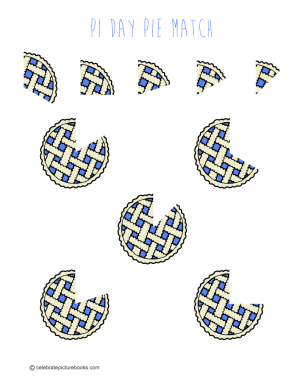
CPB - Pi Day Pie Match


Pi Day Pie Match


All this talk about math has made me hungry! You too? Well, just put these pies together and then you can enjoy a snack! Print the Pi Day Pie Match game here.

March 13 – National Earmuff Day

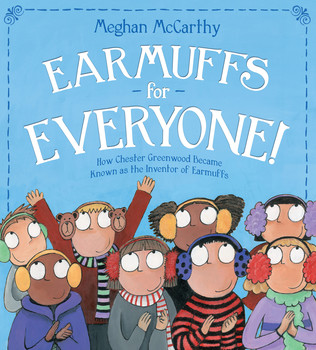
Earmuffs for Everyone! by Meghan McCarthy Picture Book Review

About the Holiday

On March 13, 1877 Chester Greenwood—a 19-year-old inventor—received a patent for “improvements in ear-mufflers” and forever sealed his place in history—as well as making winter more comfortable for millions of freezing ears! Today we honor Chester and his invention that brought attention to Farmington, Maine and jobs for many people in the area. So if you live in an area where the cold winds are still blowing, wear your earmuffs in pride!

Earmuffs for Everyone! How Chester Greenwood Became Known as the Inventor of Earmuffs

By Meghan McCarthy


In the mid-1800s inventors were trying to solve the problem of winter’s chill effects on tender ears. William Ware designed an “ear, cheek, and chin muff” that one wore somewhat like a false beard. Ear protecting hats, ear “slippers,” high collars, and other designs followed. But it wasn’t until Chester Greenwood and his sensitive protruding ears came along that earmuffs became practical. While the exact steps Chester took in creating his earmuffs aren’t known, he eventually perfected his invention and received a government patent on March 13, 1877—when he was only 19 years old!

Chester was no one-invention wonder, though. Always on the lookout for clever ways to make money, he went on to improve other products. He applied his foresight to the tea kettle, rounding the edges of the bottom to reduce wear; constructed an interchangeable-tooth rake; and built a collapsible, if cumbersome, tent.

His inventions brought him a comfortable life—a beautiful house for his family in Maine, the first steam car in his town, and a bicycle shop on the bottom floor of his workshop—that he shared with others. His wife, also a progressive thinker, worked for women’s suffrage, and inspired her husband to hire women in his workshops.

After Chester passed away, some people, most notably Mickey Maguire, thought he deserved more acclaim—even a day dedicated as Chester Greenwood Day. Maguire was so excited about this that he became a kind of inventor himself—an inventor of tall tales. Over time he told some whoppers and they were printed, making it hard to separate fact from myth. But even without the made-up stories, it’s easy to say that Chester Greenwood had a very remarkable life

Earmuffs for Everyone goes beyond the story of Chester Greenwood to include other inventors, a discussion of the patent system (using products well-known to today’s kids), and how an inventor’s legacy grows. Meghan McCarthy writes with verve and humor, making the story of Greenwood’s invention as well as others’ creations inviting, accessible, and fun. Her illustrations of the first attempts at earmuffs and other1800s products are sure to delight kids and make them curious about the time period.

In her author’s note at the back of the book, McCarthy expands on the story of Chester Greenwood and the process of applying for and earning a patent.

Ages 4 – 8

Simon & Schuster/Paula Wiseman Books, 2015 | ISBN 978-1481406376 

National Earmuff Day Activity

CPB - Earmuff Maze.png

Here’s to Warm Ears! Maze


One muff on each side of the head—Genius! But it took inventors a lot of trial and error to make the perfect warming headgear. Use your own creative thinking on this Here’s to Warm Ears!earmuff-shaped maze. Solution included.