August 13 – Garage Sale Day

celebrate-picture-books-picture-book-review-yard-sale-book-cover

About the Holiday

Isn’t every nice-weather Saturday garage sale day for someone? Nevertheless, the second Saturday in August has officially been designated with this special shopping moniker. Garage sales aka yard sales are fun to explore—you never know what treasures you might find. Hosting your own can free up space in your house to start fresh or, as in today’s book, reaffirm the most important things in life.

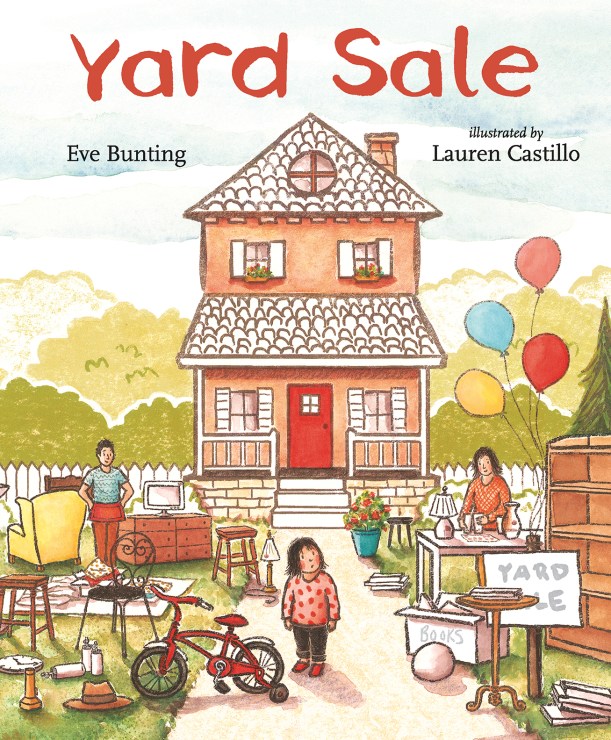
Yard Sale

Written by Eve Bunting | Illustrated by Lauren Castillo


From the first words—“Almost everything we own is spread out in our front yard”—readers realize that this is no ordinary yard sale. A little girl sits on the front porch of her tidy house gazing out sadly at the family’s furniture, toys, books, and knick-knacks that are all for sale. The family is moving to a small apartment: “‘Small but nice,’ my mom told me.” The apartment has a secret bed that opens down from the wall “right in the living room.”

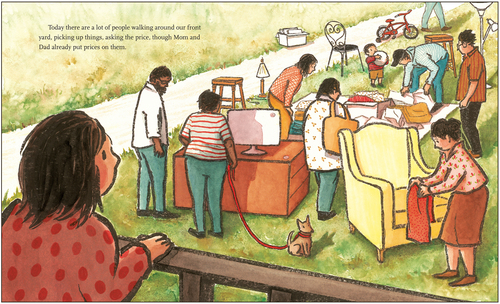
When the yard sale opens people stop by to look, “picking up things, asking the price, though Mom and Dad already put prices on them.” Even though the items are priced low, people haggle over how much they want to pay. A woman complains that ten dollars is too much for the little girl’s bed because the headboard has crayon marks on it. Watching, Callie now wishes she hadn’t made the marks to show how often she had read Goodnight Moon. Her mother settles for five dollars for the bed.

celebrate-picture-books-picture-book-review-yard-sale-bike-sold

Image copyright Lauren Castillo, courtesy of laurencastillo.com

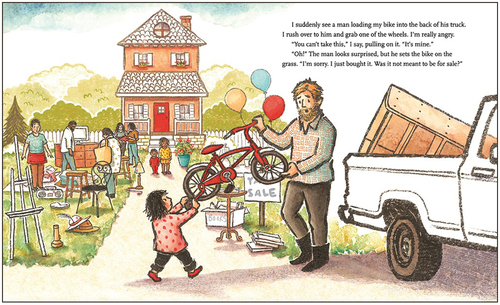
Suddenly, Callie sees a man loading her bike into a truck and runs to grab it. The man is confused, sorry for taking it, but tells her he has just bought it. Callie’s dad runs over and explains again that the apartment has no place for the bike or sidewalks nearby to ride it on. Callie looks at her dad who seems to have tears in his eyes, “but probably not,” she says. “My dad doesn’t cry.” She relinquishes the bike, but asks the man, “‘Will you give it back to me when we get our house back?’”

Callie’s best friend, Sara, is waiting for her. The two friends hug and talk about why Callie has to move. “‘I wish you didn’t have to go,’” Sara mutters. “‘Why do you, anyway?’” Callie shrugs. “‘I don’t know. It’s something to do with money.’” They don’t understand what has happened, and Sara offers, “‘I could ask my parents if you could stay with us.’” But Callie’s heart tells her where she belongs. “‘My parents would be lonely,’” she says. “‘…I’d miss my mom and dad.’”

The sale continues and people drive away with tables, chairs, and clothing. For a moment, Callie feels important when a man asks her if their large potted geranium is for sale and she directs him to her dad. By the end of the day almost everything is gone. Callie’s mom “looks droopy” and her dad is comforting her. Callie sits dejectedly watching the final things being carried away and thinking that she will give Sara her red heart necklace and invite her to visit their new apartment.

celebrate-picture-books-picture-book-review-yard-sale-callie-watching

Image copyright Lauren Castillo, courtesy of laurencastillo.com

At that moment a woman comes up to Callie and says, “‘Aren’t you just the cutest thing? Are you for sale?’” Callie has a visceral reaction: “A shiver runs through me, from my toes to my head.” She runs to her parents, crying. “‘I’m not for sale, am I? You wouldn’t sell me, would you?’” Her parents drop what they are doing to hug and reassure Callie that they would “‘not ever ever, ever’” sell her. “‘Not for a million, trillion dollars.’”

With everything gone, Callie and her parents go back inside their “almost empty house.” It’s okay, Callie thinks. None of the stuff is important, and it wouldn’t fit in their new place anyway. “But we will fit in our new place. And we are taking us.”

For so many children frequent relocations or sudden moves from a home they know is a reality. Eve Bunting’s Yard Sale treats this subject with sensitivity and honest emotion through the eyes of a little girl for whom the change is confusing but ultimately reassuring. Bunting does not stint on either the setting of the yard sale itself, where people quibble over a couple of dollars, or the toll the day takes on the family. Her dialogue always rings true, and her straightforward delivery allows for understanding and for the moments of humor to shine through.

Lauren Castillo’s ink-and-watercolor paintings anchor this emotional story in a homey, loving environment even as they realistically portray the atmosphere of the yard sale. The full range of feelings are apparent in the characters’ faces from sadness and doubt to kindness and acceptance. Children will respond to Callie with her earnest attempts to understand and feel the comfort and encouragement Callie receives as her parents bend down to talk to her, hold her hand, and give her hugs.

Yard Sale is a poignant story that offers assurance and insight both for children who are facing a move and the friends and classmates who will miss them. The book’s theme is applicable to other daunting circumstances and would be a welcome addition to classroom and local libraries as well as for individuals encountering change.

Ages 4 – 9

Candlewick Press, 2015 | ISBN 978-0763665425

To view more books and artwork by Lauren Castillo, visit her website!

Garage Sale Day Activity

celebrate-picture-books-picture-book-review-garage-sale-maze

Garage Sale Maze


A garage sale is a bit like a treasure hunt. Can you find your way through this printable Garage Sale Maze from the roadside sign to the items for sale? Here’s the Solution!

August 11 – Son and Daughter Day

celebrate-picture-books-picture-book-review-the-wonderful-things-you-will-be-cover

About the Holiday

Today’s holiday celebrates the special relationship between parents and their sons and daughters. The lifelong bond takes work, dedication, and most importantly unconditional love, and its rewards are innumerable. Whether your child or children are still small, have moved away, or are somewhere in between, spend some time with them, tell them why they are unique, and tell them that you love them.

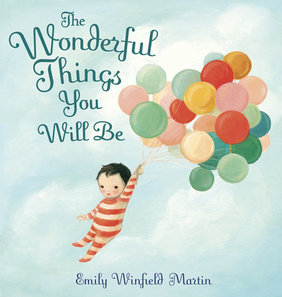
The Wonderful Things You Will Be

By Emily Winfield Martin


“When I look at you / and you look at me, / I wonder what wonderful / things you will be.” This opening sentence simply and beautifully expresses the emotions of parents and caregivers when first bringing a child home—and every subsequent day as they watch their kids grow and acquire their own talents, experiences, and opinions. From the first moments of a child’s life, the adults around them can’t wait to discover what is behind that sly smile, infectious laugh, even the pained cries. “When you were too small / to tell me hello, / I knew you were someone / I wanted to know.”

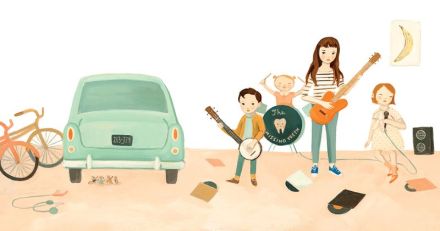
celebrate-picture-books-picture-book-review-the-wonderful-things-you-will-be-kids-in-band

Image copyright Emily Winfield Martin, courtesy of theblackapple.typepad.com

Martin reveals what caregivers know but children don’t yet realize—that the size of their heart, their wisdom, and their spirit is evident even when they are tiny, and because each child is unique the world holds a special place for them. Martin then opens that world to readers: “Will you stand up for good / By saving the day? / Or play a song only you / know how to play?” Perhaps the child will tell stories, help things to grow, or learn how to fly. Or will they “take care of things / Much smaller than you?” Whatever the child grows up to choose, parents or caregivers know that “they’ll be kind, and clever, and bold.” And when hard days come, being “brave” and “bright” will vanquish the “shadows.”

As each child matures and chooses a path in life, Martin leaves the reader of the book with these reassuring words any child needs to hear: “And then I’ll look at you / And you’ll look at me / And I’ll love you, / Whoever you’ve grown up to be.”

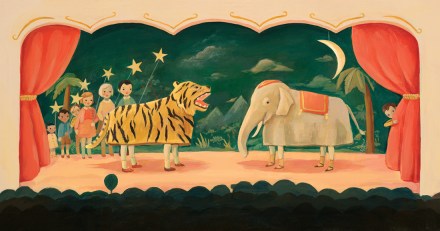
celebrate-picture-books-picture-book-review-the-wonderful-things-you-will-be-kids-in-tiger-and-elephant-play

Image copyright Emily Winfield Martin, courtesy of emilywinfieldmartin.com

When a child first comes into a home, parents or caregivers once again see the world in a new way—fresh and holding unlimited possibilities. Emily Winfield Martin captures that feeling with her lyrical words and delicate paintings. The vintage/retro illustrations populated with adorable children of various ethnicities, faithful pets, and favorite toys, give the book a universal feel. Throughout the book the children go about their tasks with confidence, thoughtfulness, and creativity—embodying the hopes and wishes adult readers have for their own children.

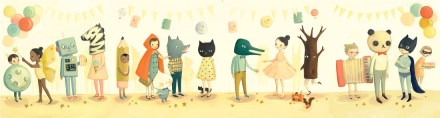
A gate-fold page toward the end of the book is a joy to explore as the illustrated children line up with costumes on as if for a school play or Halloween night. The different costumes invite readers to image what the children may grow up to be.

celebrate-picture-books-picture-book-review-the-wonderful-things-you-will-be-kids-in-kids-in-costumes

Image copyright Emily Winfield Martin, courtesy of emilywinfieldmartin.com

The Wonderful Things You Will Be is a perfect gift for new babies or for older children graduating from high school or college. The book invites multiple readings and makes a wonderful addition to anyone’s library.

Ages Birth and up

Random House Books for Young Readers, 2015 | ISBN 978-0385376716

Discover more distinctive artwork and books by Emily Winfield Martin on her website!

Son and Daughter Day Activity

celebrate-picture-books-picture-book-review-i-love-you-template

I Love You Because…


Children love to hear why you think they’re special and why you love them. With this printable I Love You Because…template, you can tell the children in your life what makes them so loveable and unique.

Picture Book Review

July 29 – International Tiger Day

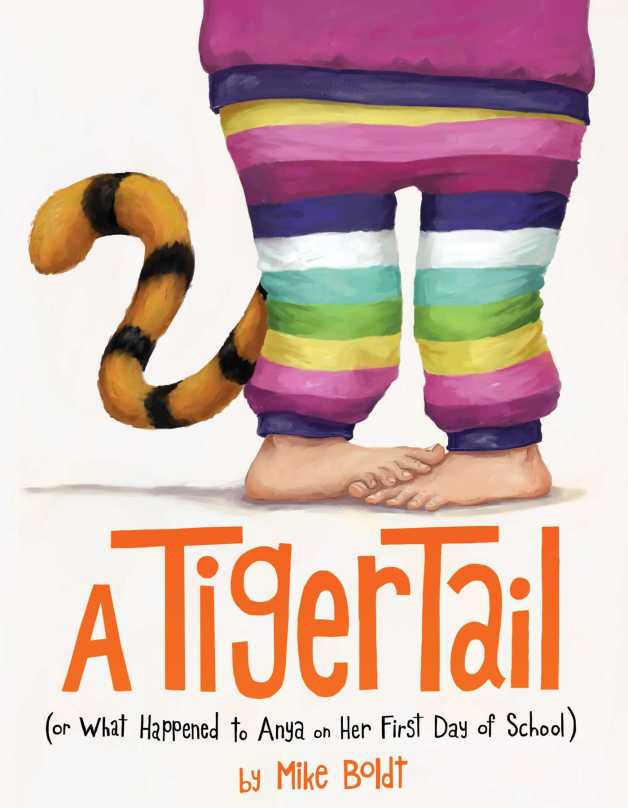
celebrate-picture-books-picture-book-review-a-tiger-tail-cover

About the Holiday

First observed in 2010 in response to the severely declining wild tiger population, International Tiger Day promotes awareness of these beautiful, distinctive animals. In the last century 97% of wild tigers have disappeared, with only 3,000 still in existence. Many factors have led to this devastating loss, including habitat destruction, climate change, and poaching. Environmental and other groups, such as the World Wildlife Federation, the International Fund for Animal Welfare, and the Smithsonian Institution, have come together to protect and preserve wild tigers.

A Tiger Tail (Or What Happened to Anya on Her First Day of School)

By Mike Boldt


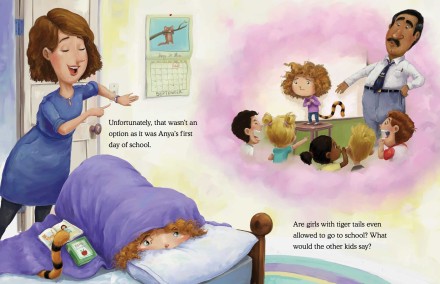
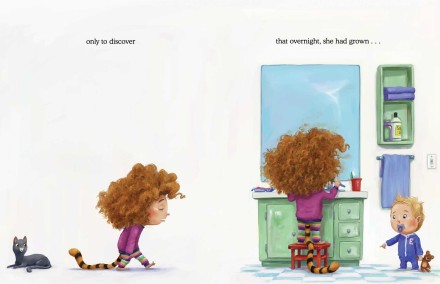
Even before the story properly begins, Anya discovers something incredible and incredibly disturbing. Overnight she has grown a tiger tail—not a pony tail or pigtails, but an honest-to-goodness black-and-orange-striped tiger tail! All she wants is to stay in bed, but unfortunately that’s not possible because it’s Anya’s first day of school.

celebrate-picture-books-picture-book-review-a-tiger-tail-interior-imagining-school

Image copyright Mike Boldt, courtesy of simonandschuster.com

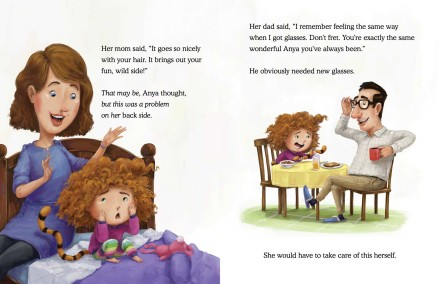
Anya wonders if “girls with tiger tails are even allowed to go to school” and what the other kids will say. Her mom thinks it’s wonderful. The tail goes so nicely with Anya’s red hair and brings out her “fun, wild side.” But Anya’s only worried about her back side! Her dad likens her predicament to when he got glasses and tells her she’s still “exactly the same wonderful Anya you’ve always been.”

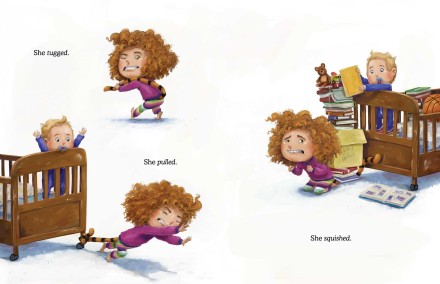
Anya figures she’s on her own with her problem. She tries tugging on her tail, pulling on it, and squishing it, but it remains firmly attached. Perhaps the right outfit from her closet—or all of them together—could hide her tail, but that solution had its own problems. There was just one last thing to do—panic! “‘Calm down,’” says her mom. “‘You’ll make yourself sick.’” Ah-ha! There’s a good idea! Anya thinks as she goes back to bed with tissues and feeling for a fever.

celebrate-picture-books-picture-book-review-a-tiger-tail-interior-parents

Image copyright Mike Boldt, courtesy of simonandschuster.com

Anya’s mom thinks her antics are so funny and that the kids will love her sense of humor, then she shoos her off so she doesn’t miss the bus. Ah-ha! There’s another good idea! Anya hides in the bushes, but her dad discovers her and considers it a “special treat” to drive her to school.

Walking up the sidewalk to the school’s front door, Anya realizes that she has only one option—running away to join the circus. How bad could that be? But as Anya daydreams about eating popcorn for dinner and swinging from a trapeze, she misses her chance to escape. The school bus pulls up to the door and all the kids pile out. “Anya was doomed.” But she watches all the kids race past her without a glance and doesn’t see the boy headed straight for her who also doesn’t see her. CRASH! Their impact sends them tumbling to the ground amid fluttering papers and flying books, shoes, and backpacks. Even the boy’s baseball cap pops off! Anya stares and then smiles. Standing straight up from the boy’s head are two long rabbit ears.

celebrate-picture-books-picture-book-review-a-tiger-tail-interior-art-grown-tail

Image copyright Mike Boldt, courtesy of simonandschuster.com

“‘Hi, my name is Ben,’” the boy says as he holds out Anya’s shoe. “‘I’m Anya,’” Anya replies. Joe takes his hat from Anya and bounds up the steps. “‘Come on, Anya! We don’t want to be late on the first day.’” Anya follows, and when she sees her class she knows she’ll fit right in.

Mike Boldt whimsically captures the first-day jitters—of school or any new experience—that can result in an explosion of self-consciousness, doubt, and fear. Boldt’s little girl with a wild cloud of red hair is a loveable, plucky heroine as she takes matters into her own hands when the adults around her seem oblivious to her plight. Boldt’s vivacious illustrations burst with energy and emotion that kids will recognize and respond to. Boldt depicts children so honestly, from their crinkled nose abhorrence to their enthusiastic smiles, and the adults, with their clueless dialogue and quirky expressions, are rendered through a child’s eyes.

celebrate-picture-books-picture-book-review-a-tiger-tail-interior-art-grown-tail

Image copyright Mike Boldt, courtesy of simonandschuster.com

Readers will laugh at Anya’s panicked face and her multi-layered getup designed to hide the tail that is still obvious through its ribbon wrapping. The crash meeting between Anya and Ben provides delightful surprise and insight, and the final spread of the classroom is inspired. Not only do most of the kids have unique traits, but the teacher also displays rabbit teeth as everyone poses for a class picture.

A Tiger Tail (Or What Happened to Anya on Her First Day of School) offers comfort and understanding as it reminds readers that everyone is an individual, and that one of humankind’s strongest and most common bonds is our diversity. A Tiger Tail should be embraced by every classroom and will make an often-asked-for addition to any child’s library.

Ages 4 – 8

Simon & Schuster Books for Young Readers, 2016 | ISBN 978-1481448857

Learn more about Mike Boldt and his books and view a portfolio of his artwork on his website!

Pounce on this awesome book trailer for A Tiger Tail!

International Tiger Day Activity

celebrate-picture-books-picture-book-review-tiger-find-the-differences

Tricky Tigers Find the Differences and Coloring Page


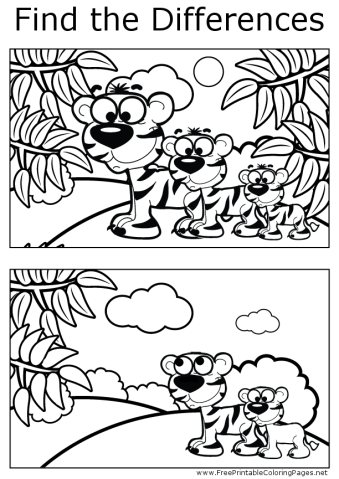
These two picture of tigers in the jungle have some differences—just like Anya and her classmates. Can you find all eleven changes? Have fun searching and coloring this printable Tricky Tigers Page!

July 27 – Dog Days of Summer Q & A with Ged Adamson

celebrate-picture-books-picture-book-review-ged-adamson-photo

About the Author

Ged Adamson is a writer and illustrator living in London with his partner Helen and their son Rex. His most recent book Douglas, You Need Glasses! was published by Random House and released this past May. Two previous books—Elsie Clarke and the Vampire Hairdresser (2013) and Meet the McKaws (2015)—were published by Sky Pony Press. Ged has two books hitting shelves in the summer and fall of 2017—Shark Dog from HarperCollins and I Want to Grow from Boyds Mills Press. Ged’s cartoons have appeared in magazines, such as Punch and Prospect, as well as in books and on film. He has worked as a storyboard artist and a caricaturist and also works as a composer for TV and film.

About the Holiday

Here we are in the Dog Days of Summer—that time from July 3 to late August—when the air is still, the sun is bright, and the beach beckons. Although the phrase “dog days” conjures up images of Fido panting and lethargic, the term actually refers to the dog star Sirius—the brightest star and, in Greek mythology, the hunter Orion’s dog. To the ancient Greeks and Romans, the “dog days” occurred when Sirius rose and set with the sun, lending its warmth to the day.

Q & A with Ged Adamson

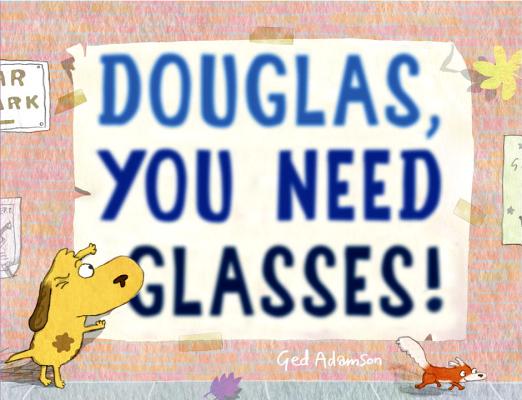
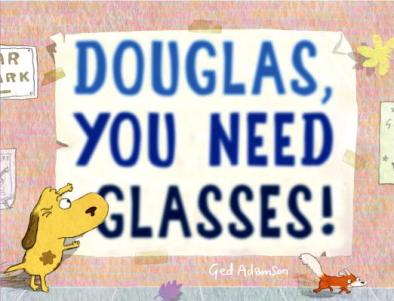
Today, Celebrate Picture Books is featuring another rising star—Ged Adamson. Ged took some time to talk about his work, his inspirations, and that stellar, spectacles-wearing canine Douglas of:
celebrate-picture-books-picture-book-review-douglas-you-need-glasses-cover

What books did you enjoy most as a child?


I wasn’t a great reader of chapter books as a child and I don’t remember us having picture books in the house but we did Roald Dahl stories at school. James and the Giant Peach and Charlie and the Chocolate Factory were favourites.

My mum and dad were avid readers. My dad had some great books. As well as novels, he had a lot of factual books about artists and history. One that I loved was about The Illustrated London News and it was full of beautiful Victorian etchings of everyday life in London. There were always books of cartoons by people like Giles and Frank Dickens. And we had loads of Charles Schultz Peanuts paperbacks.

celebrate-picture-books-picture-book-review-ged-adamson-interview-a-kestrel-for-a-knave-cover

My grandad was Scottish and we used to get a Scottish newspaper every weekend called The Sunday Post. There was a comic section for kids. The two main strips in it were The Broons and Oor Wullie. The characters inhabited a kind of 1950s world which I loved. We would get The Broons and Oor Wullie annuals every Christmas.

The first proper books I read of my own accord were collections of short horror stories that I borrowed from my older brothers. Reading them, I would be scared to death but I couldn’t stop. We did some great books in school that I really enjoyed like Animal Farm by George Orwell, A Kestral For A Knave by Barry Hines and Lord of the Flies by William Golding. And in the school library they had some decent novels for older kids and they had Tintin and Asterix the Gaul in French.

What influenced you to write Douglas, You Need Glasses!?


It was a little drawing I did of a dog in glasses smoking a pipe. Like most doodles, it was done without really thinking. But I was trying to come up with ideas for stories at the time so I wondered if I could do something with this character.
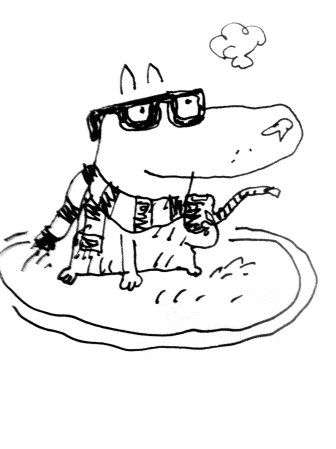
celebrate-picture-books-picture-book-review-ged-adamson-douglas-doodle

Image copyright Ged Adamson

I wear glasses myself so I thought I could use some of my own experiences with short sightedness to develop Douglas’s story. It went through many stages though. In one early idea, Douglas’s newly perfect vision causes him to be too honest about people’s appearances. Another had him befriending a group of insects.

I’d just started to take my illustration style in a different direction, and I wanted to do something that would be visually strong. So from the way Nancy is dressed, the coloured see-through trees, the skate park, the eye chart, through to the big glasses at the end. I was trying to create images that the reader would remember. And most importantly I wanted the story to be funny!
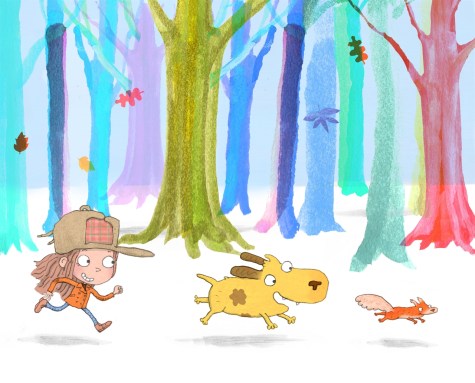
celebrate-picture-books-picture-book-review-ged-adamson-interview-douglas-you-need-glasses

Image copyright Ged Adamson, coiurtesy of gedadamson.com

Can you describe your process when writing and illustrating a picture book?


It will start with an idea. Sometimes, as with Douglas, that will come from a doodle. The next stage is sketches and thinking a lot about the shape of the story. Who are the characters? How will the art look? What is the story saying—what’s its message? I’ll talk to people whose opinions I respect and see what they think—my Agent Isy being one.

The next step is putting together three or four spreads so you get a feel for the tone of the story and how it will look. All the time I’m throwing in bits of text but this changes constantly. I never have a manuscript separate from the images for this reason. To me, the words and pictures can’t exist apart from each other. That’s why I’m always uneasy supplying a manuscript with submissions!

All through this process of me working on a story—and then if I’m lucky, with the publisher—I’ll be chopping things out and adding stuff to solve problems. In my next book, Shark Dog, I’d put a cute little penguin in the final spread. I really liked that penguin! But he had to go because the scene changed from an Arctic sea to a tropical one. And that is a pretty minor change in the grand scheme of things. You have to be prepared for the editor asking to make major overhauls to your book before it goes to the printers.
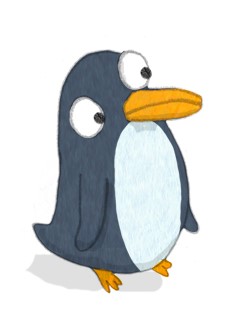
celebrate-picture-books-picture-book-review-ged-adamson-penguin-doodle

Image copyright Ged Adamson

Can you describe your work space a little?


It’s a small room, but it’s mine! I think, no matter how tiny it is, how you arrange the space where you work is important. I like to feel it’s my world and part of my personality. The centre of it is occupied by an old desk with an iMac on it. I replaced my chair recently and I love the new one. It’s like something from an ‘80s quiz show and super comfy. I sometimes record music in there so there are instruments as well as art stuff. There are things I’ve picked up from junk shops and our local market. There’s an old sofa against one wall which is so great when I want to have a break.

celebrate-picture-books-picture-book-review-ged-adamson-interview-ged's-writing-space

Most furniture in our house is second hand. I have bits of paper stuck to the wall with lists of things I need to get done and new book ideas. I’ve got a few pictures up too. There’s one which is just a scene of a rough sea, nothing else—it’s an old framed print. There’s something weirdly relaxing about it. I like that I can look out the window and see the backs of the tall Georgian houses on the other side of the railway tracks. It’s a very London view. I’d like to have a bigger space to work in but I do love my little room.

What is the favorite object on your desk and why?


I want to say something like “Ah, that would be the skull of my great grandfather. He spent his life studying the speech patterns of elk”. But I think it has to be my computer. Though it keeps dropping out of connection which is driving me mad. What the hell, Apple? 

What is the best part about writing picture books?


I remember working on the art for my second picture book Meet The McKaws. I could see the snow coming down outside the window of my little room. I suddenly thought, “I’m really happy doing this”! I hadn’t had that same feeling doing anything else.

Actually, the best part of writing picture books is what I’m experiencing right now with Douglas. People are getting in touch and saying they love the book and the characters. The response from readers is what you look forward to and when you get so much positive feedback for something you spent a long time working on, it’s such a great thing.

But there are other aspects that I love too. Working with talented editors and art directors is a lot of fun and you learn valuable stuff from them too.

It’s also thrilling to see your book on the shelves in a book shop!

What are you working on next?


I’m just finishing work on two books that will be out next year. The first is Shark Dog. It’s about a strange but very friendly animal that stows away on an explorer’s boat. HarperCollins is doing that one. The second is called I Want To Grow, and it’s about a little dinosaur called Herb who gets frustrated that his human friend Muriel is getting taller and he’s not. This one’s with Boyds Mill Press.
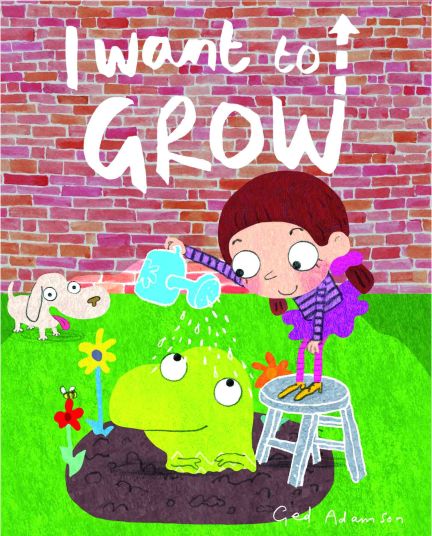
celebrate-picture-books-picture-book-review-ged-adamson-i-want-to-grow-cover

image copyright Ged Adamson

I’m also working on two new ideas. One of those is about a rainbow and it’s almost ready for submission, so I’m excited to see what publishers think.

I can’t properly call this a holiday themed blog without asking you a couple of questions about special dates, so here goes:

What is your favorite holiday?


Because I’ve always done stuff that doesn’t involve a nine to five working week, I feel slightly guilty that I don’t appreciate holidays. Even weekends. On Twitter and Instagram there’ll be loads of people going, “IT’S THE WEEKEND! HURRAY!!” and I’ll be like, “oh yes, yay!”

I do like Christmas though. My son is still quite little so it’s lovely to experience that kid version of Christmas again through him. I’m not the least bit religious, but I really like when people come to our road and sing carols. The TV’s good and there’s lots of drinking and eating. I mean, what’s not to like about that? 

Do you have an anecdote from any holiday you’d like to share?


I remember a school Summer trip where we all stayed for a week in an old country house in the middle of woodland. Rumours began circulating that the place was haunted. Everybody started to get nervous. This wasn’t helped by a drunken teacher one night on his way to bed telling everyone “Don’t worry, the ghosts won’t harm you”. We were now all terrified and a kind of hysteria took over. We started counting the minutes until we could be reunited with our families. Somebody said they saw a ‘misty figure’ as they made their way back from the disco hut. Panic ensued. Even on the coach home there was a sense of looming disaster. Back at school in September, it wasn’t talked about much. I think everyone was embarrassed that we’d allowed ourselves to get into such a state.

Has a holiday ever influenced your work?


In Shark Dog, the explorers and their new pet set off to the seaside in their Morris Minor. For me that is a very English holiday scene but obviously you don’t see many of those cars any more. My mum and dad didn’t drive so our holidays would involve hours on a coach to somewhere like Wales or Devon. In the new story I’m working on, there is a spread with a multitude of people getting off those kind of coaches. It definitely took me back to being a kid!

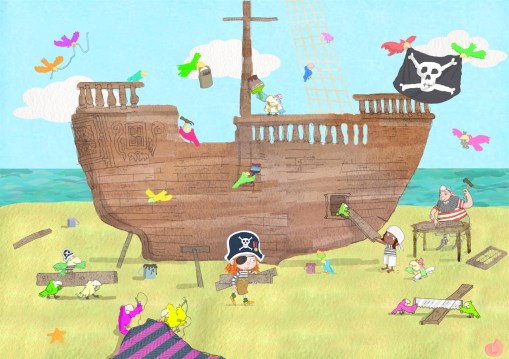
In Meet The McKaws, the story centres on a pirate’s parrot’s family members visiting for a few days. This is an aspect of holiday periods that is fraught with danger!
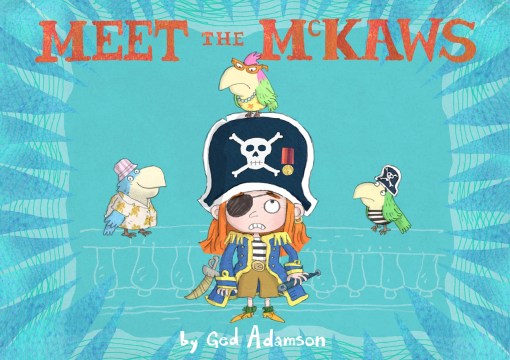
celebrate-picture-books-picture-book-review-ged-adamson-interview-meet-the-mckaws-cover

celebrate-picture-books-picture-book-review-ged-adamson-interview-meet-the-mckaws-rebuilding-the-ship

Image copyright and courtesy of Ged Adamson

I’d like to thank Ged for his insightful and engaging answers to my questions that prove that the Dog Days of Summer are definitely the best (especially when that dog is Douglas)! 
 

celebrate-picture-books-picture-book-review-douglas-you-need-glasses-cover

Ged is giving away a copy of Douglas, You Need Glasses! plus other goodies! Just click to enter the Rafflecopter Giveaway


You Can Connect with Ged Adamson on

Twitter | Instagram | Ged’s Website

You Can Find Ged Adamson’s Books at

Book Depository | Amazon UK | Amazon US | Barnes and Noble | IndieBound

Ged Adamson’s blog tour continues! Don’t miss it!
celebrate-picture-books-picture-book-review-ged-adamson-blog-tour-banner

Review of Douglas, You Need Glasses!

By Ged Adamson


Something may be amiss with Douglas. When Nancy and her playful pooch went out to chase squirrels recently, Douglas ran after a falling leaf while the squirrel escaped up a tree. It’s not the first time something like this has happened. You see, Douglas is a bit nearsighted. Sometimes he mistakes the stair post for Nancy, and his difficulty gets in the way of things (well, mostly Douglas gets in the way of things). He misses important signs—like the one that would have prevented him from tracking wet cement all over the skate park, where there are NO DOGS allowed—and he’s always causing something of a ruckus. Sometimes he even enters the wrong house! But when a game of fetch buzzzzzed toward disaster, Nancy decided something had to be done.
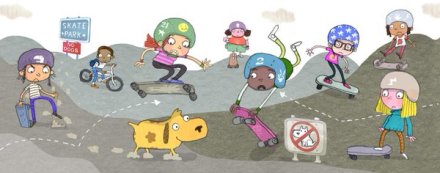
celebrate-picture-books-picture-book-review-douglas-you-need-glasses-skate-park-art

Image copyright Ged Adamson, courtesy gedadamson.com

She took Douglas to the eye doctor where he tried to read a most dog-friendly eye chart. His test revealed that he needed glasses. He found the shelves of Dog Glasses, which offered many options, and had fun trying some on. Each one made him feel different. In one pair he was a rock star; in another a scholar; and in yet another a hippy. He wore them all until he discovered the perfect pair!

On the way home he saw the world in a way he never had before. “‘Wow! Everything looks amazing!’” Douglas said. And it was!

celebrate-picture-books-picture-book-review-douglas-you-need-glasses-interior-art

Image copyright Ged Adamson, courtesy gedadamson.com

Ged Adamson’s funny look at a nearsighted dog will make kids laugh from the first page to the last. Earnest Douglas, going about his doggy days under a bit of a skewed perspective, is so endearing that readers cannot help but love him even as they giggle at his exploits. Adamson’s vibrant multi-hued trees, colorfully clothed kids, and vivid backgrounds with stylish sketched-in details gives the book a fresh, jaunty appeal for a lively, fun story time. Kids facing the prospect of wearing glasses will find lots to give them reassurance and confidence in this book.

Douglas, You Need Glasses is a great addition to any child’s bookshelf!

Ages 3 – 8

Schwartz & Wade, Random House Kids, 2016 | ISBN 978-0553522433

Dog Days of Summer Activity
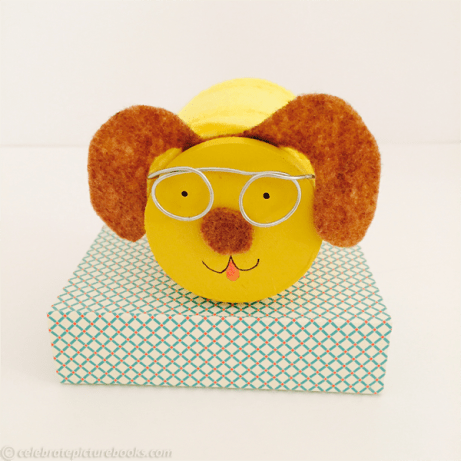
 

celebrate-picture-books-picture-book-review-spool-puppy-craft

Make a Stellar Spool Puppy


No matter where you go and whether you have a real dog or not, you can take this little guy along with you. And just as you would pick out your favorite from an animal shelter, you can make this puppy look any way you’d like!

Supplies

  • Printable ears and nose template
  • 2-inch round wooden spool, available at craft stores
  • 1 skein of yarn in the color you choose. Yardage needed will depend on the thickness of the yarn.
  • Felt
  • Craft paint
  • Paint brush
  • Fabric or strong glue
  • Thin gauge wire
  • Dowel or pencil to wrap wire around to make glasses

celebrate-picture-books-picture-book-review-spool-puppy-craft

Directions

  1. Paint the dowel the color you want your dog to be, let dry
  2. Trace the ears on the felt and cut out (or draw your own ears)
  3. Trace the nose on the felt and cut out
  4. When the spool is dry glue the ears to the body of the spool, allowing the ears to stick up from the top of the spool
  5. Wind the yarn around the spool back and forth until the dog’s body is the size you’d like
  6. Glue the yarn in place with fabric or strong glue

To make the face

  1. Glue the nose over the hole on one end of the spool
  2. Draw the mouth and tongue under the nose with a marker
  3. You will draw the eyes on after the glasses are in place

To make the glasses

  1. Wind the wire around a ½-inch dowel, thick pencil, or rounded handle to make two circles.
  2. Leave about two inches on either side of the circles for the ear pieces of the glasses.
  3. Adjust the size of the circles to fit the spool as glasses.
  4. Put the glasses on the face of the spool, tucking the ear pieces into the yarn on each side
  5. Draw eyes in the center of the glasses

To make the tail

  1. Cut a small square of felt and stuff the edges into the hole on the other end of the spool
  2. You can make the tail as long as you like

Picture Book Review

July 21 – It’s National Culinary Arts Month

celebrate-picture-books-picture-book-review-kitchen-dance-cover

About the Holiday

Culinary arts from entrees to desserts and everything in between are celebrated during July. Whether you like going out to restaurants or staying in for a home-cooked meal remember to thank the chef for their time and talents!

Kitchen Dance

By Maurie J. Manning


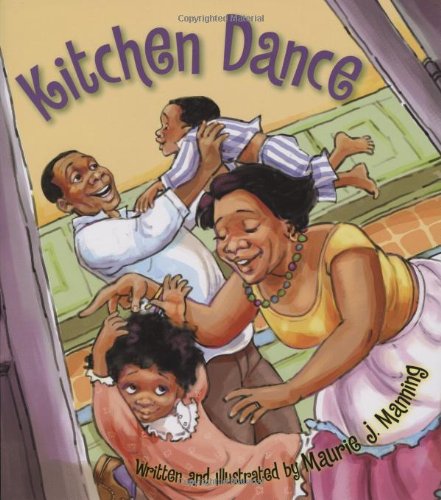
A little girl wakens to sounds coming from the kitchen—“Glasses clinking. Water swishing. Forks clattering.” Then more personal sounds—humming, laughing, and “hush!” The girl slips out of her blankets and climbs to the top bunk to wake her brother, Tito. Together they tiptoe downstairs and peek through the kitchen door. “A bright skirt flashes by! Four feet fly!”

With a wooden spoon microphone the kids’ father sings, “Cómo te quiero! Oh, how I love you. Umm, hmm.” Juggling stacked plates in one hand while using the other to dance hand-in-hand, the kids’ parents glide, slide, and twirl around the kitchen floor. Laughing, their mom closes cabinet doors with a bump of her hips as she spins into her husband’s arms “then out again, like a yo-yo on a string.”

celebrate-picture-books-picture-book-review-kitchen-dance-interior-art-dancing

Image copyright Maurie J. Manning

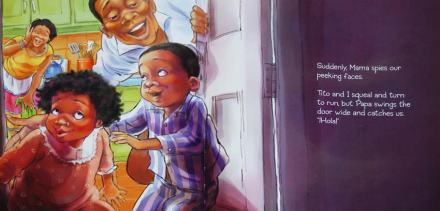
Pots and pans find their storage space with a swirl and a dip while another is dried with the swish of a towel. Around the kitchen the couple dances, “feet tapping, water dripping, sponge wiping, towel snapping.” While singing, “they tango across the room with the leftover tamales.” As they turn toward the door, Mama glimpses her little ones. The kids squeal and start to run, but Papa swings open the door—“Hola!” He pulls Tito into his arms, while Mama catches her tiny daughter.

As the four whirl around the kitchen, Tito and his sister sing into wooden spoons, “Cómo te quiero! Oh, how I love you!” They “twirl around and around in a circle of family.” The dance slows to a gentle swaying as Tito and his sister grow sleepy. Mama and Papa carry their drowsing children upstairs and cover them once more under their cozy blankets. “Cómo te quiero,” Papa whispers. “Besitos, mi’ja,” Mama says “Sweet dreams.”

celebrate-picture-books-picture-book-review-kitchen-dance-interior-art-kids-caught

Image copyright Maurie J. Manning

Maurie J. Manning’s sweet story of a private moment between parents that becomes a celebration of family love offers a fresh, fun, and lively glimpse of the small events that contribute to real connectedness. Telling the story from one of the children’s point of view adds a deeper level of understanding and recognition that of the strong bond between the parents. The repeated phrase, “Cómo te quiero! How I love you!” is reassuring and allows kids to read along with the book’s most important theme.

Manning’s vivacious and vibrant illustrations bring to life the swirling energy of the text. Tito and his sister creep downstairs in a house bathed in shadow only to open the door to flashing yellow, green, purple, and orange brilliance. The scenes of Mama and Papa dancing together, using a wooden spoon as a microphone and pot lids as cymbals as well as twirling hand in hand while balancing stacks of dishes are filled with happiness, and the  picture of the two tangoing with tamales will make kids giggle. Tito and his sister are adorable as they spy on their parents with astonished looks on their faces and then join the dance.

Kitchen Dance is a joy for story time or bedtime, and in these always busy days would be a welcome reminder that carefree moments carry their own special meaning.  Kitchen Dance is a great addition to a child’s bookshelf.

Ages 3 – 8

Clarion Books, 2008 | ISBN 978-0618991105

To learn more about Maurie J. Manning, her books, and her art, check out her website!

Take a look at the Kitchen Dance book trailer!


National Culinary Arts Month Activity

celebrate-picture-books-picture-book-review-wooden-spoon-microphone-craft

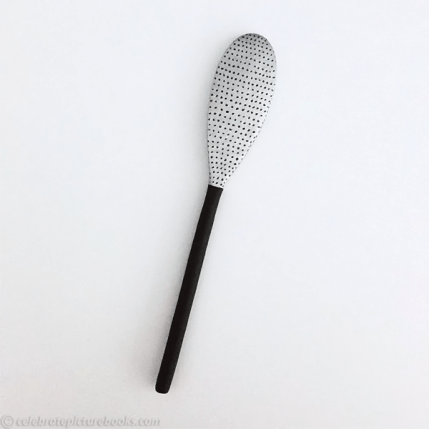
Wooden Spoon Microphone


With this easy craft you can turn a wooden cooking spoon into a fun microphone for playtime or in case you ever have to sing for your supper!

Supplies

  • Long-handled wooden spoon
  • Black craft paint
  • Silver craft paint
  • Black permanent marker

Directions

  1. Paint the handle of the spoon black, let dry
  2. Paint the head of the spoon silver, let dry
  3. After the paint is dry, make rows of small dots on the head of the spoon

July 17 – National Tattoo Day

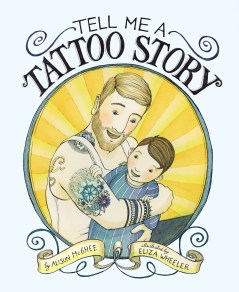
celebrate-picture-books-picture-book-review-tell-me-a-tattoo-story-cover

About the Holiday

As an emerging holiday, National Tattoo Day gives us an opportunity to learn about and appreciate this very personal form of art. As the Smithsonian reports, tattoos have been found on human remains dating to Ancient Egypt and is believed to have been designed for therapeutic reasons similar to acupuncture. Body art has long been associated with soldiers and sailors, seeing a surge in popularity during the American Civil War, with the establishment of modern tattoo artists, and World War II. Today people of all ages and cultures embrace body art as a way of self-expression, and as today’s book shows, each tattoo tells its own story.

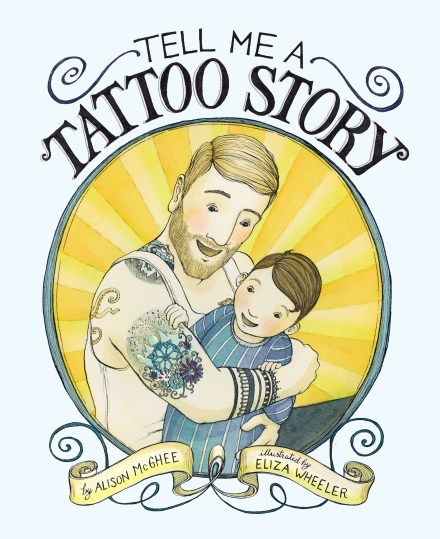
Tell Me a Tattoo Story

Written by Alison McGhee | Illustrated by Eliza Wheeler


A little boy tugs on his dad’s T-shirt, wanting to see his tattoos—again. His dad sits down with his son and patiently goes through them, like the pages of a favorite book. In fact, the tattoo on his shoulder—a dragon flying above mountain peaks—is from the book his mom read to him in childhood. “Did she read it to him over and over and over? She sure did,” he says.

celebrate-picture-books-picture-book-review-tell-me-a-tattoo-story-interior-art-at-home

Image copyright Eliza Wheeler, courtesy of abramsandchronicle.co.uk

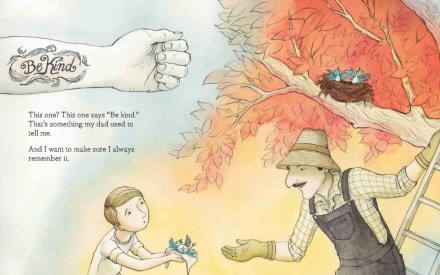
The elaborate design on the dad’s wrist reads “Be Kind,” advice his father used to give him. An intricate depiction of a carnival, complete with a Ferris wheel, fireworks, and flowers reminds him “of the day I met a pretty girl.” His son asks what made the girl so pretty, and his dad responds, “That’s a good question, little man. I’d have to say it was her smile.” In answer to his son’s wondering if he has ever met this girl, Dad looks at his wife and says, “You sure have.”

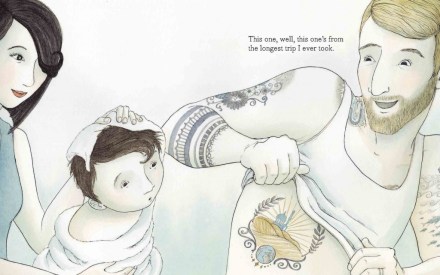
The tattoo picturing a globe and monument that covers the dad’s right side is from “the longest trip I ever took.” He reminisce—Did I miss home while I was there?”—and confesses, “I sure did.”  The last tattoo the little boy asks about is a small heart festooned with a banner that reads “7● 22 Two Thousand Twelve.” Father and son engage in banter that is most likely familiar to them both, with the boy asking the questions he already knows the answers to but loves to hear again and again: “Those numbers inside it? Just somebody’s birthday, I guess. Whose birthday? / Oh some little man I know, is all. / What do you mean, this one’s your favorite? This dinky little heart?” Then leaning in to learn a secret, the boy rediscovers that that tattoo is his dad’s favorite too.

celebrate-picture-books-picture-book-review-tell-me-a-tattoo-story-interior-art-be-kind

Image copyright Eliza Wheeler, courtesy of abramsandchronicle.co.uk

Alison McGhee’s Tell Me a Tattoo Story is such a sweet, original homage to the love between father and son. The use of body art to reveal not only seminal events in the dad’s life but the trajectory of his child’s birth is inspired. The minimal text highlights the deep emotion, giving the boy in the story as well as young readers the information they are really looking for. The soft-spoken dad is such an appealing character—emotionally available, honest, and offering just the right tone of humorous repartee—for today’s family dynamic.

Beautifully rendering McGhee’s text into art, Eliza Wheeler creates a homey atmosphere that emphasizes the theme of the book while creating tattoos that are immediately accessible to children. The dragon tattoo could come from The Hobbit or Harry Potter, kids will recognize the fun and excitement represented by the Ferris wheel, and the little heart is simplicity at its finest. While the pages depicting the dad’s tattoos are minimally hued, the father’s reminiscences burst with color and details—providing an overall feeling of warmth and affection. The image of the dad in his military uniform over the hot, golden sands on “the longest trip he ever took” will bring a tear to your eye.

celebrate-picture-books-picture-book-review-tell-me-a-tattoo-story-interior-art-longest-trip

Image copyright Eliza Wheeler, courtesy of abramsandchronicle.co.uk

The originality of the story and gorgeous illustrations make Tell Me a Tattoo Story a must for children’s bookshelves and will become an often-asked-for read during quiet story times or for bedtime.

Ages Birth – 6

Chronicle Books, 2016 | ISBN 978-1452119373

To discover more books for children and adults by Alison McGhee, visit her website!

View Eliza Wheeler’s portfolio and other books on her website!

National Tattoo Day Activity

celebrate-picture-books-picture-book-review-design-your-own-tattoo-template

Design Your Own Tattoo


Tattoos can be simple or elaborate, but they are always personal. They tell a story, commemorate an event, or reveal an emotion. What would your tattoo look like? Design your own body art on this printable Design Your Own Tattoo Template!

celebrate-picture-books-picture-book-review-tell-me-a-tattoo-story-cover

You can find Tell Me a Tattoo Story at these booksellers

Amazon | Barnes & Noble | Books-a-Million | IndieBound

June 23 – Let It Go Day

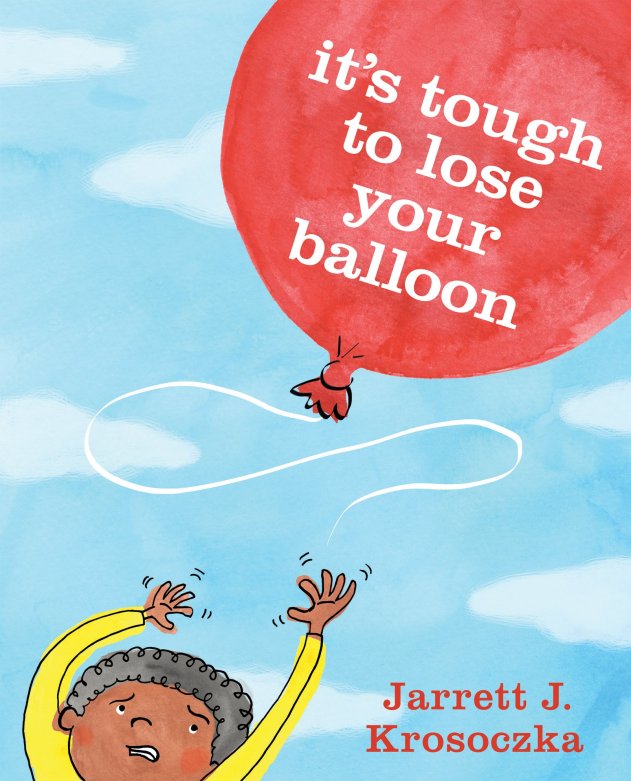
celebrate-picture-books-picture-book-review-it's-tough-to-lose-your-balloon

About the Holiday

No, this isn’t a day dedicated to re- re- re- re- re-watching that movie. It’s a day to take a step back and take stock of the feelings you’re keeping inside or the little irksome quirks that drive you crazy. Are they really worth all the stress? Today’s a day to find inner peace, make amends, or turn disadvantage into advantage.

It’s Tough to Lose Your Balloon

By Jarrett J. Krosoczka


Most people wake up each morning with great ideas for a having good day, but sometimes things don’t work out the way they’re planned. For kids, small mistakes, accidental mishaps, and unexpected disappointments can loom large. Frustrations and perceived unfairness can elicit tears or anger, and it’s sometimes hard to know how to comfort an unhappy or upset child.

In It’s Tough to Lose Your Balloon Jarrett Krosoczka acknowledges that sometimes bad or sad things happen, but he reveals to kids how looking at the event from a different perspective or through someone else’s eyes can bring consolation and even happiness. As the title states, it’s hard for kids to watch a balloon suddenly slip through their fingers and float away, but imagining all the other people who will see it and smile can help. Having a picnic on the beach when the unthinkable happens? “It’s sad to drop your sandwich in the sand…but it’ll make some seagulls very happy.” And you know it will make you laugh to watch those crazy guys swooping, diving, and squawking over that now-crunchy snack.

The idea of sharing hurts with others to create a new scenario or a different kind of enjoyment while forming closer bonds is another positive way to turn disappointments into teachable moments that benefit all. As most kids know “it’s never fun when you break a toy…” but with a upbeat attitude they can have “fun fixing it with Grandpa.”

Wet shoes? Melting Ice-cream cone? Scraped knee or new baby sitter? In Jarrett Krosoczka’s hands these letdowns can lead to new freedom, innovation, distinction, and joyful experiences. It’s Tough to Lose Your Balloon can help anyone see “disaster” in a whole new light!

Krosoczka’s illustrations ingeniously depict the way an unexpected mishap or disappointing moment can make someone feel—alone, exposed, and vulnerable. Left-hand pages present the problem while the right-hand page shows the crestfallen child in full color on a black-and-white sketched background. The positive transformation becomes a two-spread, full-color of happy pride and fun abandon. Life can be full of little bumps in the road, keeping a copy of It’s Tough to Lose Your Balloon on the shelf can help smooth the way.

Ages 3 – 7

Knopf Books for Young Readers, 2015 | ISBN 978-0385754798

Visit Jarrett J. Krosoczka’s Website to see more of his books and discover fun activities!

Let It Go Day Activity

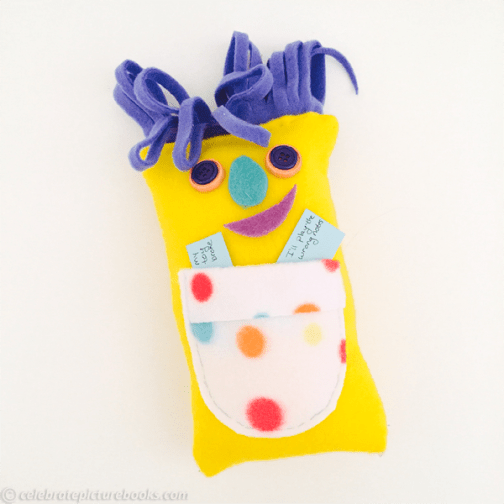
celebrate-picture-books-picture-book-review-worry-buddy-craft

Worry Buddy


Sometimes worries don’t seem as bad when they are shared with someone else or to at least set aside for awhile. With this craft you can make a friend to help lesson worries, disappointments, fears, and anxieties. And it’s pretty good at hugs too. Older children may like to create this as a sewing project, while younger kids can make it easily with fabric glue. Make your Worry Buddy as unique as you are!

Supplies

  • Fleece or felt in different colors
  • Buttons, two larger in the same color and two smaller in a different color
  • Fiber fill
  • Fabric glue or thread
  • Paper
  • Pen or pencil

Directions

To Make the Body

  1. Cut a 16-inch piece of fleece
  2. Fold the fleece in half
  3. Glue the sides together (older children may enjoy sewing the sides together with simple straight stitches)
  4. Leave the top open
  5. Turn the body inside out
  6. Fill the body with fiber fill

To Make the Hair

  1. Cut a 5-inch piece of fleece or felt
  2. Fold the fleece or felt in half
  3. Glue or sew the folded fleece into the opening in the body
  4. Cut the fleece or felt in ¼-inch strips across the top

To Make the Face

  1. Glue one set of larger and smaller buttons together, repeat with the other set
  2. Glue or sew the buttons to the top part of the body
  3. Cut a nose and mouth out of fleece or felt
  4. Glue or sew the nose and mouth to the face

To make the pocket

  1. Cut a 5-inch piece of felt in the shape of a square-bottom or rounded bottom pocket
  2. Fold down an inch of the top
  3. Glue or sew the pocket to the middle of the body

To share problems with the Worry Buddy, write worries or fears on a slip of paper and put them in the Worry Buddy’s pocket. Your Buddy will keep those problems so you don’t have to.