May 31 – It’s Get Caught Reading Month

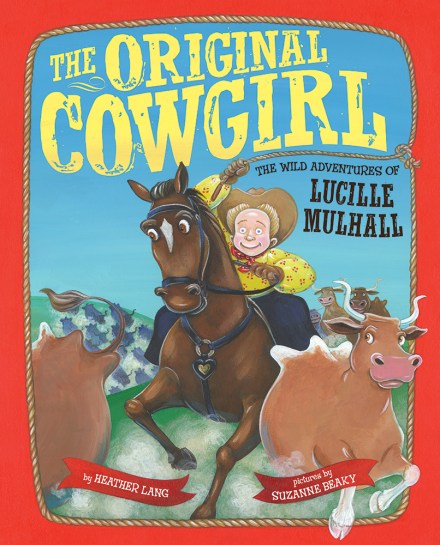
celebrate-picture-books-picture-book-review-the-original-cowgirl-cover

About the Holiday

As we say goodbye to Get Caught Reading Month, let’s remember all of the great stories we’ve read and eagerly anticipate those that still await us in the days and months ahead! The long, relaxing hours of summer vacation are nearing, giving readers even more time to enjoy their favorite pursuit. So why not make a list of titles you’d like to explore this summer, and lead it off with today’s book that tells the true story of a very original teenager!

The Original Cowgirl: The Wild Adventures of Lucille Mulhall

Written by Heather Lang | Illustrated by Suzanne Beaky


Unlike most girls in the 1890s, Lucille didn’t skip rope “with her mama’s clothesline, she twirled it like a lasso. Whoosh…whoosh…snap!” While Lucille’s papa thought his daughter would be a great help around the ranch, her mother considered riding horses and roping steers unladylike. Lucille wasn’t interested in the regular pursuits of becoming a lady, however. Sewing and cooking were boring, and “riding sidesaddle was slower than a snail climbing a greased log.”
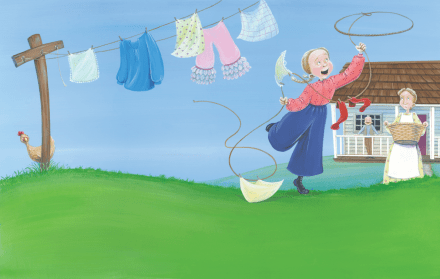
celebrate-picture-books-picture-book-review-the-original-cowgirl-clothesline

Image copyright Suzanne Beaky, courtesy of suzannebeaky.com

By the age of ten, Lucille was well versed in “mending fences, training racehorses, and herding cattle.” When she asked her father for her own herd of cattle, he told her that she could have one when she was old enough to rope and brand her own—something she could already do. Lucille’s mother worried about her when she patrolled the pastures where her cows grazed. They were threatened by “longhorns, wolves, and coyotes so mean they could turn the strongest cowboy into buzzard food,” but Lucille could snatch those varmints with her lasso in no time flat. The only thing Lucille was afraid of was not being allowed to work on the ranch, so she hid her bumps and bruises.

When Lucille was thirteen, her papa took her along on some rough-riding and roping competitions he had organized. When people saw how talented she was, word got around. Newspapers called her a “daring young girl who ‘held the audience in a breathless spell’” and said she was “‘the envy of half the men.’” But now that she was a teenager, Lucille’s mama sent her to a boarding school where she was to learn how to be a lady.

celebrate-picture-books-picture-book-review-the-original-cowgirl-lassoing-cow

Image copyright Suzanne Beaky, text copyright Heather Lang. Courtesy of albertwhitman.com

When she returned home at the end of the year, her papa presented her with a gift—a “beautiful sixteen-hand chestnut horse named Governor. Right off, Lucille could see that he would make a perfect trick horse. That summer Lucille, her papa, and the other cowboys were invited to perform for Vice Presidential candidate Teddy Roosevelt. At first Lucille’s mother said no, but she later relented, with the stipulation that “it would be Lucille’s last appearance.”

Lucille was a star, demonstrating her riding and roping skills for 25,000 people. Teddy Roosevelt was so impressed, he suggested Lucille have her own show. Soon, Lucille was traveling around the country, thrilling audiences by breaking broncos, lassoing and branding steers, and performing tricks like roping “five galloping cowboys all at once.”

Lucille entered her first professional steer-roping competition when she was just fifteen. She was the first women ever to compete in this kind of event. Some cowboys laughed at her, but she didn’t care. When the steer was released from the pen, Lucille took off after him. Her first throw of the lasso landed but broke. Quickly she tossed another and “flipped him up like a flapjack.” She jumped off her horse and in 29 ½ seconds tied the steer’s feet. Her time was “faster than all the men!”
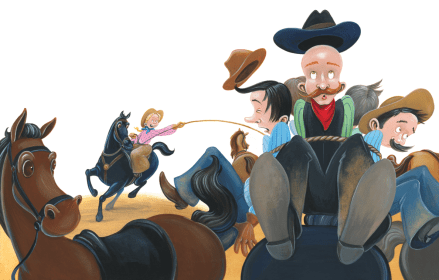
celebrate-picture-books-picture-book-review-the-original-cowgirl-roping-five-cowboys

Image copyright Suzanne Beaky, courtesy of suzannebeaky.com

Lucille went on to break the world record for steer roping. Plenty of people still thought Lucille belonged in the home instead of on horseback. “But her home was always on a horse with the sun on her cheeks a lariat coiled in her hand, and the boundless Oklahoma prairie rolling out in front of her.”

More information on and a timeline of Lucille Mulhall’s life follow the text.

With her folksy storytelling, Heather Lang transports readers to the prairies of the Wild West, where a girl with phenomenal riding skills captured the attention and hearts of Americans. Young readers will be fascinated by Lucille Mulhall’s development from a 10-year-old prodigy to the star of her own stage show in only a few short years. Lang’s expressive period-perfect vocabulary allows all kids to ride the range while they learn about this young woman who broke stereotypes, championed the cause of women, and still serves as a role model for all who wish to live life on their own terms.
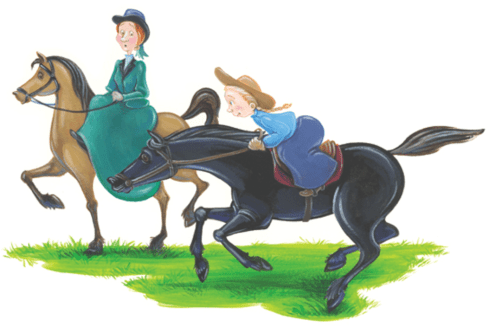
celebrate-picture-books-picture-book-review-the-original-cowgirl-roping-five-cowboys

Image copyright Suzanne Beaky, courtesy of suzannebeaky.com

With her downhome, action-packed illustrations, Suzanne Beaky lets kids watch as Lucille lassos a wolf, ropes a steer, preforms tricks, and celebrates her record-breaking performance. Lucille is a wide-eyed force of nature in her split skirt and braids as she twirls her rope for serious ranch business and for entertaining the crowds, whose stunned expressions reveal just how original Lucille was. Clothing, hair, and mustache styles, as well as depictions of horses, steers, and the vast green prairie make The Original Cowgirl as fun as it is informative.

For kids interested in the Wild West, early American history, biographies, or a story about true individuality, The Original Cowgirl: the Wild Adventures of Lucille Mulhall is a great addition to home bookshelves and public and school libraries.

Ages 4 – 8

Albert Whitman, 2015 | ISBN 978-0807529317

Discover more about Heather Lang and her books on her website!

To find out more about Lucille Mulhall through videos, photographs, and fun activities, click here!

Learn more about Suzanne Beaky and view a gallery of her artwork on her website!

Get Caught Reading Month Activity
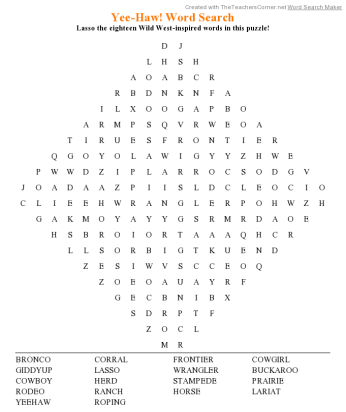
celebrate-picture-books-picture-book-review-Yee-haw-word-search

Yee-haw! Word Search


Can you lasso the eighteen Wild West-inspired words in this printable Yee-haw! Word Search? Here’s the Solution!

Picture Book Review

May 30 – Loomis Day

celebrate-picture-books-picture-book-review-jackrabbit-mccabe-&-the-electric-telegraph-cover

About the Holiday

On Loomis Day we remember Mahlon Loomis, a Washington DC dentist working in the mid-1800s who had a very inventive mind. Not only did he invent artificial teeth, he also had some revolutionary ideas on communication. He understood about the electrical properties of the atmosphere and experimented with sending signals long distances using kites flown many miles apart but at the same height. In July of 1872 he received a U. S. patent for “An Improvement in Telegraphing” on wireless telegraphy. Further research revealed that while his wireless telegraphic system worked, it did not work the way Loomis thought. His experiments, however, advanced the science at the time, leading to one of the world’s most transformative discoveries and an ongoing quest for better and faster communications.

Jackrabbit McCabe & the Electric Telegraph

Written by Lucy Margaret Rozier | Illustrated by Leo Espinosa


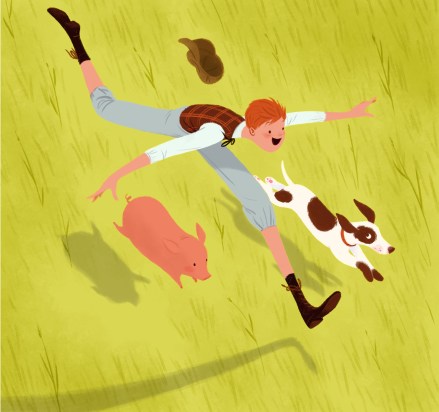
Anyone who looked at the baby with legs “so long they looped like a pretzel” and required a stroller with “an extra axle” knew that he’d been born to run. In fact, his legs grew so fast that if his mother dressed him in long pants in the morning, they were shorts by that evening. Little Jack McCabe used those legs to chase “whatever would run: hogs, dogs, even his own shadow” and “as he got older, he raced trains flying past his house in Windy Flats. By the time he turned eighteen, he’d beat every stagecoach, antelope, and locomotive in the territory.”

celebrate-picture-books-picture-book-review-jackrabbit-mccabe-&-the-electric-telegraph-racing-a-train

Image copyright Leo Espinosa, text copyright Lucy Margaret Rozier. Courtesy of Schwartz & Wade

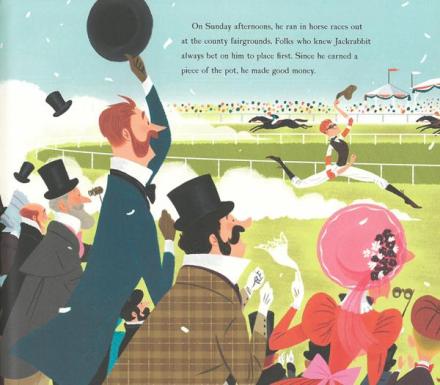
The people of Windy Flats called him Jackrabbit and relied on him to deliver messages that were urgent. On Sundays he joined the horses on the track, making money when people bet on him to come in first. One day, though, the electric telegraph came to Windy Flats. The poles and wires already crossed the eastern part of the country. Each connected city had “a telegraph and an operator who sent and received messages in Morse code, an alphabet of dots and dashes.”

The people of Windy Flats didn’t think this newfangled contraption could carry messages faster than Jackrabbit, so the telegraph man suggested, “‘How ‘bout a race between your fella and this here electric telegraph? Sandy Bluff’s just got themselves an operator, That’s pert near twenty-five miles, as the crow flies.’” Jackrabbit was all for it.

celebrate-picture-books-picture-book-review-jackrabbit-mccabe-&-the-electric-telegraph-racing-a-horse

Image copyright Leo Espinosa, text copyright Lucy Margaret Rozier. Courtesy of Schwartz & Wade

On the day of the race, the whole town of Windy Flats came out with flags, banners, and even a brass band. “The mayor carefully wrote down the same message on two slips of paper. He handed one to the telegraph man and the other to Jackrabbit.”  On the shout of “GO!” the telegraph man plunked his finger on the key sending the pulses through the wire while Jackrabbit took off down the road toward Sandy Bluff “like a tornado.”

The townspeople watched as in only a few moments “a reply came clattering back as that telegraph key jumped and smacked all on its own.” The telegraph man read the code and yelled, “‘Message received. Stop. Sandy Bluff Operator.’” But where was Jackrabbit McCabe? Although he made it to Sandy Bluff in only 9 ½ minutes, it was still too long to beat the telegraph. When he stopped short at the door of the depot, he was met by a telegram tacked to the door. Jackrabbit read it and then pulled the paper that contained the mayor’s message out of his pocket. The two were the same.

celebrate-picture-books-picture-book-review-jackrabbit-mccabe-&-the-electric-telegraph-racing-at-the-starting-line

Image copyright Leo Espinosa, text copyright Lucy Margaret Rozier. Courtesy of Schwartz & Wade

Riding home in a stagecoach, “Jackrabbit felt lower than a snake’s navel.” The mayor also felt pretty low, thinking of Jackrabbit, until he realized that if Jackrabbit’s fingers were as fast as his legs, he’d make an excellent telegraph operator. When Jackrabbit stepped out of the stagecoach and heard the mayor’s offer, he whooped with joy. It didn’t take long for Jackrabbit to learn the new code, and soon “his fingers flew like a banjo player’s strumming that telegraph key.” Every day he sent and received messages. He even “teamed up with the local typesetter, who printed the news that came over that wire, linking Windy Flats to the whole entire country,” and whenever a telegram or the newspaper needed to be delivered, Jackrabbit was there in a flash!

An Author’s Note outlining the pivotal event that sparked Samuel F. B. Morse’s interest in a quicker communication method and the history of the telegraph as well as a Morse code key and a riddle to translate follow the text.

celebrate-picture-books-picture-book-review-jackrabbit-mccabe-&-the-electric-telegraph-racing-hogs-and-dogs

Image copyright Leo Espinosa, courtesy of Schwartz & Wade

Lucy Margaret Rozier has written a funny and fact-based addition to the fine American tradition of tall tales with Jackrabbit McCabe & the Electric Telegraph. From her folksy delivery to her humorously exaggerated details, Rozier presents an engaging history of the telegraph through the story of one man affected by this new technology. Kids will love the fast-paced story full of crackling dialog and gripping suspense.

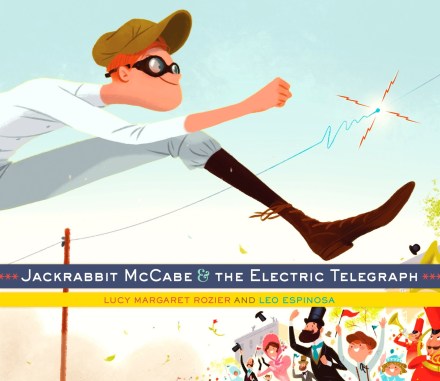
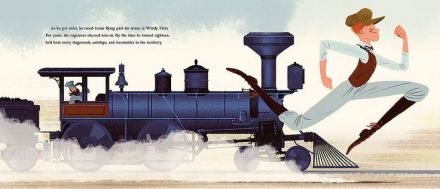
Leo Espinosa infuses his brightly colored, vintage-style illustrations with the charm and innocence of the mid-1800s while highlighting the humor of Rozier’s yarn. Jackrabbit’s looong legs take up a whole page—sometimes two—as he runs with dogs and hogs, sprints past steam trains, speeds off at the starting line, and wedges himself into the stagecoach, with one foot hanging out the window. The small town of Windy Flats and the townspeople are decked out in period details, and the enthusiasm of the time is infectious.

Jackrabbit McCabe & the Electric Telegraph will become a favorite read lightening quick. The book would make a fun addition to children’s bookshelves.

Ages 4 – 8

Schwartz & Wade Books, 2015 | ISBN 978-0385378437

Discover more about Lucy Margaret Rozier plus book-related resources on her website!

View a gallery of illustration work by Leo Espinosa on his website!

Loomis Day Activity

celebrate-picture-books-picture-book-review-morse-code-image

Morse Code Decoder


Sending secret messages in code is cool! Use this printable Morse Code Decoder to learn how to write your name and those notes you don’t want anyone else to read in this early method of communication.

Picture Book Review

May 29 – It’s National Smile Month

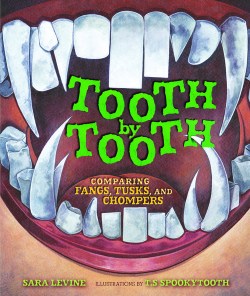
celebrate-picture-books-picture-book-review-tooth-by-tooth-cover

About the Holiday

Today we honor that happiest of expressions—the smile! Celebrating its 41st anniversary this year, National Smile Month was established as a weekly event in 1977 by the British Dental Health Foundation (now known as the Oral Health Foundation) to focus on good dental health practices. Over the years the initiative has grown in length and now includes countries worldwide. With the introduction of the Smiley—a bright smile on a stick—and the Smiley Photo campaign on social media in 2012, everyone now has an opportunity to join in the fun, spread the message, and become the face of National Smile Month. National Smile Month runs from May 15 to June 15. If you’d like to participate, visit nationalsmilemonth.org.

Tooth By Tooth: Comparing Fangs, Tusks, and Chompers

Written by Sara Levine | Illustrated by T. S. Spookytooth


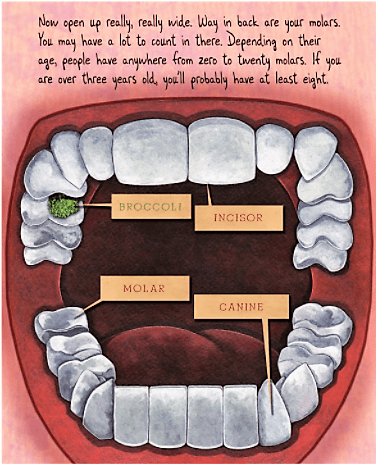
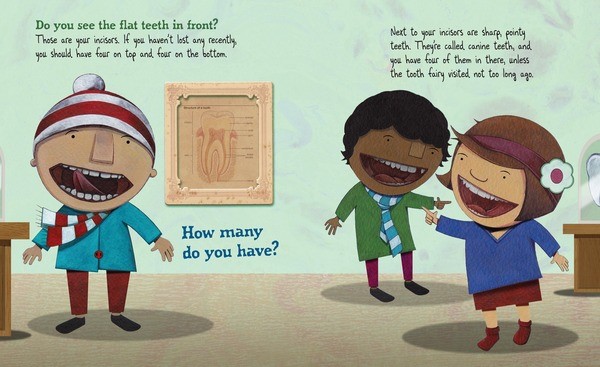
“Open wide!” a little girl with a good set of teeth herself encourages readers on the first page of this fun nonfiction book. “Look at all the chompers in there.” Mirror in hand she proceeds to reveal that human teeth are unusual because we are mammals, and mammal teeth come in different shapes and sizes. In fact there are three distinct types. A little boy takes over to describe them. Incisors are the four flat teeth in a person’s mouth—two on the top and two on the bottom right in front.

celebrate-picture-books-picture-book-review-tooth-by-tooth-human-mouth

Image copyright T. S. Spookytooth, text copyright Sara Levine. Courtesy of Lerner Books

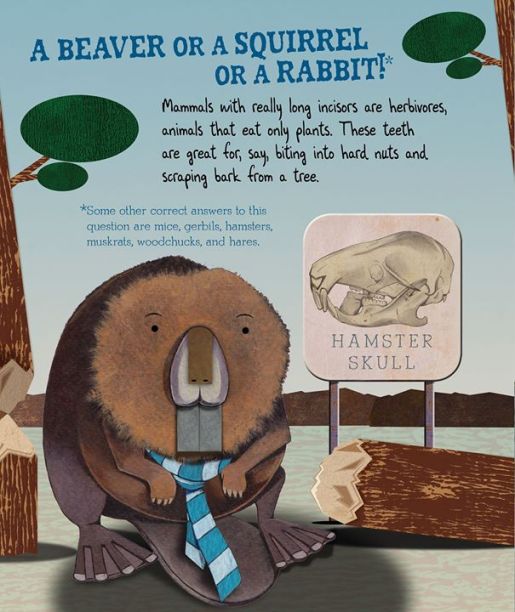
The four pointy teeth next to the incisors are canines, and the rest of the teeth are molars. Other mammals also have these teeth, and you can tell what an animal eats by which type is largest. For example, say your incisors were bigger than all your other teeth and they were so big they stuck out of your mouth even when it was closed, then you would be a beaver…or a squirrel…or a rabbit. These animals are herbivores and their oversized incisors help them break into nuts and scrape bark from trees.

celebrate-picture-books-picture-book-review-tooth-by-tooth-human-teeth

Image copyright T. S. Spookytooth, courtesy of Lerner Books

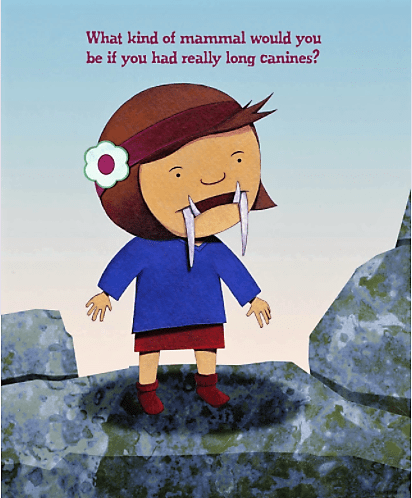
From here on Tooth by Tooth offers up amusing illustrations and “what kind of animal would you be if…” questions to spark kids’ powers of recognition. How about if your canines were so long they poked out of your mouth? Well, then you could be a “seal or a cat or a dog or a bear!” All these animals eat meat and need the sharp teeth to do it.

What if you had really tall molars? Then you’d be a “horse or a cow or a giraffe!” These guys use their molars to grind up grass. And if all your teeth were the same height? Come on…you know! You’d be you! Because humans eat plants and meat, we “need teeth that do many different jobs.”

But there are a lot more wacky teeth out there waiting for us to brush up on. So let’s get started. What if “two of your top incisors were so long that they grew out of your mouth and pointed to the sky? What if they were so long you could use them to carry your school bag?” You’ve probably guessed this one—you’d be an elephant. While an elephant’s tusks aren’t used for eating, they are used to procure the bark, roots, and other plant material that make up the elephant’s diet.

celebrate-picture-books-picture-book-review-tooth-by-tooth-beaver

Image copyright T. S. Spookytooth, text copyright Sara Levine. Courtesy of Lerner Books

What if you could almost trip over your canine teeth? Yep, you’d be a walrus, and you would use those sharp bad boys to poke holes in the ice to grab your favorite oysters and clams. But after eating they’re not done using their teeth. “After diving down for a meal, walruses can use their tusks to pull themselves back up onto the ice for a nap. Imagine if “your top and bottom canine teeth curled up out of your mouth so you had two pairs of tusks?” Or if your one upper canine grew through your upper lip and kept on growing?  Or if you had no teeth at all? Yikes! The remarkable answers are just a read away!

Fish, amphibians, and reptiles also have teeth of a sort, but because they are all the same shape and size, they don’t get special names—that doesn’t mean you can ignore them, though, because sharks are among this group, and you know what they can do!

celebrate-picture-books-picture-book-review-tooth-by-tooth-canines

Image copyright T. S. Spookytooth, text copyright Sara Levine. Courtesy of Lerner Books

More information about mammals, mammal teeth, a glossary, and a list of online and print references follow the text.

There’s nothing like the Wow! factor to capture kids’ attention, and Sara Levine uses it to humorous and fascinating effect in Tooth by Tooth: Comparing Fangs, Tusks, and Chompers. After giving a solid description of each kind of tooth and what it is used for in language that kids use and will relate to, Levine begins her guessing game that leads to even more discovery. We’ve all seen elephants and walruses with their mighty tusks, but how many know what they are really used for? And what about warthogs and narwhals? It’s all here in this creative nonfiction title.

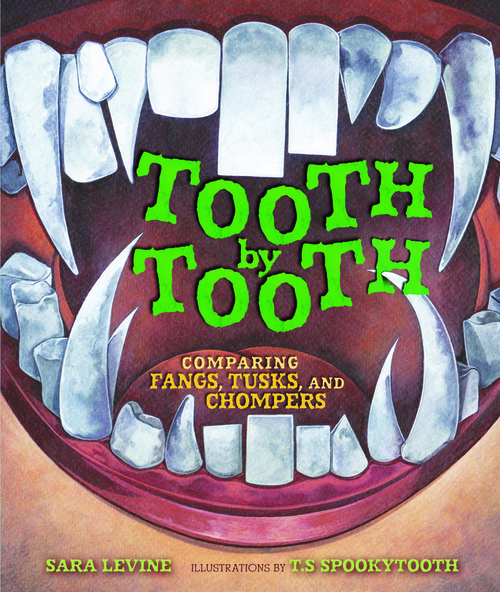
T. S. Spookytooth took a big bite out of the “how to make kids laugh” manual in illustrating each question and type of tooth. Pictures of girls and boys with enormous teeth jutting this way and that will make readers glad to be human. And while the animals that belong to each molar, incisor, or canine sport the scarf, bow, or head band of its human counterpart, they are clearly and scientifically drawn to provide full understanding. Animal skulls also demonstrate the placement of teeth. The cover, with its close-enough-to-eat-you view of a very scary mouth is a show stopper and will attract kids as soon as they see it.

Ages 5 – 9

Millbrook Press, Lerner Books, 2016 | ISBN 978-1467752152

Check out Sara Levine’s website for more books, stuff for kids, teachers’ resources, and more!

View a gallery of T. S. Spookytooth’s art and read his biography (?!) on his website!

National Smile Month Activity


celebrate-picture-books-picture-books-review-brush-up-on-your-smile-maze

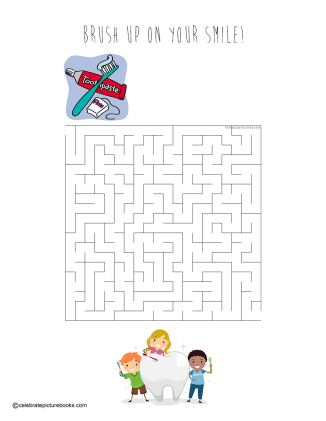
Brush Up On Your Smile! Maze


These kids are practicing good dental heath! Can you bring them the toothbrush, toothpaste, and floss they need in this printable Brush Up On Your Smile! Maze? Here’s the Solution!

celebrate-picture-books-picture-book-review-tooth-by-tooth-cover

You can find Tooth by Tooth: Comparing Fangs, Tusks, and Chompers at these booksellers

Amazon | Barnes & Noble | Books-a-Million | IndieBound

Picture Book Review

May 25 – National Tap Dance Day

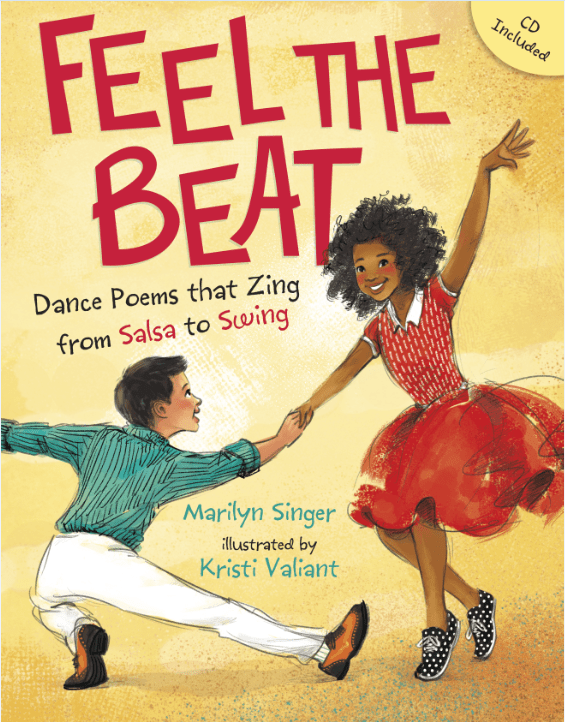
celebrate-picture-books-picture-book-review-feel-the-beat-cover

About the Holiday

Starting out as an assignment on Congressional legislation for George Washington University graduate student Linda Christensen, Tap Dance Day has become an international celebration of this quick-stepping, staccato-rhythmed art form that is a favorite in movies, on the stage, and in dance schools. Established in 1989, Tap Dance Day brings together professionals and amateurs in shows, workshops, and tap jams around the world. Why not take in—or even perform in—a tap dance show to celebrate?

Feel the Beat: Dance Poems that Zing from Salsa to Swing

Written by Marilyn Singer | Illustrated by Kristi Valiant


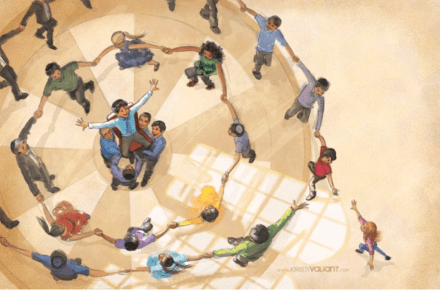
The rhythms of dance and the cadence of poetry create a natural pairing as these seventeen poems that celebrate the moves, music, and thrill of dances from around the world demonstrate with toe-tapping joy.

In Cha-Cha a boy attending his Uncle Nate’s birthday party learns the cha-cha from his grandma. At first he says “I don’t / know these moves. / My fee / feel like hooves.” But then “something clicks! / Okay, it’s old school. / I say, / cha-cha’s cool!”

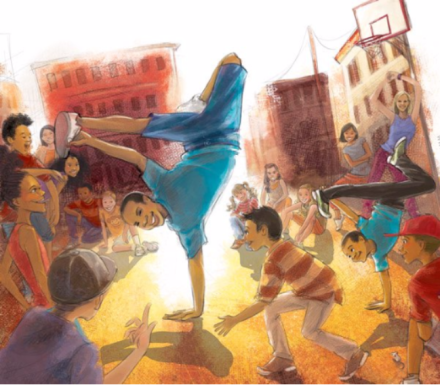
celebrate-picture-books-picture-book-review-feel-the-beat-hip-hop

Image copyright Kristi Valiant, courtesy of kristivaliant.com

While the kids at school brag about their parents’ jobs, one boy has them beat in Hip-Hop: “No fumbling, no bumbling, / my pops is tops at tumbling. / He’s elastic, so fantastic. / Papa’s so gymnastic!” But while Dad “will swipe and windmill” and “slide on his knees, / do lots of flares and coin-drops” and “boomerang and freeze,” the boy adds “…wait / until you see my mom!”

Is it meringue or Merengue? Maybe a bit of both…because doing it right means “Moving sideways, / turning wrists, / while we do / our pretzel twists. / We sway our hips, we shift our legs, like we’re whipping / lots of eggs.”

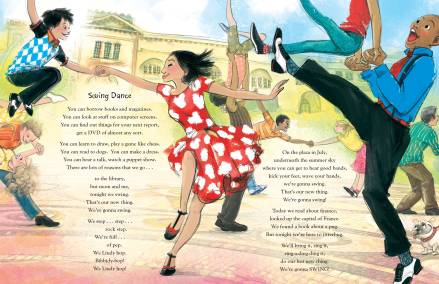
celebrate-picture-books-picture-book-review-feel-the-beat-swing-dance

Image copyright Kristi Valiant, test courtesy of Marilyn Singer. Courtesy of kristivaliant.com

It’s fun to let go when learning the Salsa. All you need is to “Feel the beat / in your feet, / in your heart. / Then you start.” So “Don’t be shy. / Come on try. / In this class, / show some sass.” If only shopping could be so entertaining…. But, wait! Maybe Conga is the solution. “We’re at the MALL. / I’m very BORED. / I hate the STORES, / I hate the HORDE…. / ‘Just one more SHOP’ / turns into FOUR. / I’m gonna SCREAM, / I’m gonna ROAR.” Then music starts and a line grows long—“Uh uh uh, KICK! / You cannot WHINE / when you are ON / a conga LINE! / Uh uh uh, KICK! / A flash mob BALL! / Keep shopping, MOM! / I love the MALL!”

celebrate-picture-books-picture-book-review-feel-the-beat-hora

Image copyright Kristi Valiant, courtesy of kristivaliant.com

The library may be a quiet, staid place most of the time, but Swing Dance takes over one special library. “On the plaza in July, / underneath the summer sky / where you can get to hear good bands, / kick your feet, wave your hands, / we’re gonna swing. / That’s our new thing / We’re gonna swing!” A boy and his mom have joined lots of other dancers having fun on the square— “We step…step… / rock step. / we’re full… / of pep. / We Lindy hop. / Bibbidy-bop! / We Lindy hop!”

And for those kids who look at the Square Dance unit in PE with trepidation, this girl feels the same: “Got a partner, lost my shoe. / Allemande left? I haven’t a clue….Did that caller give a cue? / Don’t promenade me. Shoo, boy, shoo!…Bow to Francisco, bow to Sue. / One more swing. It’s over! Whew! / I tried real hard, but alas, it’s true. / I’m flunking out of square dance!”

celebrate-picture-books-picture-book-review-feel-the-beat-wedding

Image copyright Kristi Valiant, courtesy of kristivaliant.com

Other poems introduce the Foxtrot, Hora, Samba, Two-Step, Argentine Tango, Waltz, Bhangra, and Polka. Notes about each dance, giving a description, a bit of history, and basic rhythms and steps, follow the text. A CD of dance music is also included.

Marilyn Singer begins her exuberant celebration of dances from around the world with a pair of the reverso poems for which she is well known: All Over the World, Dancing is Joy and Joy is Dancing All Over the World. With this start, Singer invites readers to put on their dancing shoes and enter ballrooms, classrooms, and outdoor spaces filled with music. From birthdays to bar mitzvahs to weddings to spontaneous parties, Singer imbues each experience with the beats, steps, and sometimes missteps of dance with expressive vocabulary and humorous asides. Reading the poems aloud offers its own special treat as the meter of each poem reflects the rhythm of the dance described.

Kristi Valiant’s vibrant two-page spreads put kids in the center of the action where individuals, couples, and groups enjoy groovin’ to the music in their own style. Dancers swirl, stomp, hop, twirl, sway, dip, and kick up their heels on sunny days and under glowing nighttime light. So join in—no experience or partner necessary!

For kids who love music and dance and for those who love poetry of all kinds, Feel the Beat; Dance Poems that Zing from Salsa to Swing is a fun addition to home libraries—and may spark an interest in learning how to perform these dances.

Ages 5 – 9

Dial Books, 2017 | ISBN 978-0803740211

Discover more about Marilyn Singer and her books on her website!

View a portfolio of artwork by Kristi Valiant on her website!

Tap Dance Day Activity

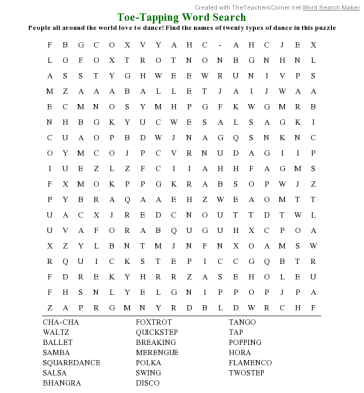
celebrate-picture-books-picture-book-review-dance-word-search

Toe-Tapping Word Search Puzzle


People all around the world love to dance! Can you find the names of twenty types of dances in this printable Toe-Tapping Word Search Puzzle? Here’s the Solution!

Picture Book Review
 

May 23 – It’s National Pet Month

celebrate-picture-books-picture-book-review-daisy-gets-lost-cover

About the Holiday

During the month of May we take time to be extra mindful of our pets. As the weather becomes hot, pet owners are encouraged to ensure that their pets have the proper care to keep them cool, hydrated, and healthy—and remember, never leave pets unattended in cars with the windows rolled up. Now that nice days are ahead of us, enjoy the opportunity to take dogs on long, leisurely walks or to the dog park and to spend extra time with indoor pets. If you are thinking of adopting a new pet, there are shelter animals that are looking for forever families.

Daisy Gets Lost

By Chris Raschka


Daisy, a sweet, energetic puppy, is enjoying a game of fetch with her little girl. She’s chased her blue ball into the woods where she happens upon a bushy-tailed squirrel gathering acorns. The squirrel knows the jig is up and, tossing away the acorn, takes off running with Daisy close at its tiny heels. Deeper and deeper into the woods they go until the squirrel leaps onto a tree trunk and with some quick scrambling is gone.

celebrate-picture-books-picture-book-review-daisy-gets-lost-forest

Copyright Chris Raschka, courtesy of Scwhartz & Wade

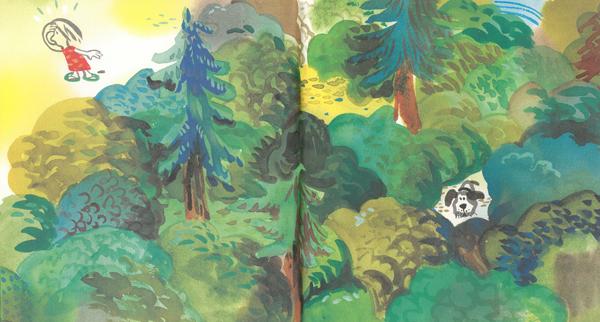
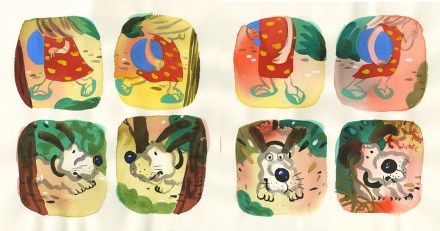
Daisy stops at the base of the tree and peers into the high branches. What does she see? It suddenly occurs to her who she doesn’t see. Where is her little girl? At the same time, the little girl is wondering where Daisy went. “Daisy!” she cries; but Daisy, surrounded by trees, can’t hear her. The little girl begins to search for her pet. She finds the blue ball, but no puppy. “Daisy?” she asks. She picks up the ball and looks right, left, and all around.

Meanwhile, Daisy is trying to find her way out of the forest. She runs right, left, and all around then realizes she is lost. She hunkers down and lets out a plaintive “Aaawoooooooooooooooooooo.” The little girl hears Daisy’s distress signal and rushes toward her, calling “Daisy!” Daisy hears the little girl’s joyful exclamation and bounds forward. They meet in a sweet, tight hug. And while Daisy gives her little girl kisses and the girl holds her close, who does Daisy see spying on them from high in the tree?

celebrate-picture-books-picture-book-review-daisy-gets-lost-searching

Copyright Chris Raschka, courtesy of Scwhartz & Wade

In this nearly wordless sequel to A Ball for Daisy, Chris Raschka once again tells a tale of emotional heft that will resonate with young readers. With a few wavy lines and several expressive smudges, Raschka creates one of the most loveable puppies to ever run across the pages of a picture book. As Daisy, with her ball clasped between her teeth, and the squirrel, with its acorn grasped in its paws, stare each other down, kids will know that the game’s afoot.

But when Daisy and the little girl realize that Daisy is lost, readers will understand their worry and fear, not only for the characters, but on a personal level. Raschka’s bold lines and dense colors depict the impenetrable forest as well as the intensity of Daisy’s and the girl’s feelings. The endearing reunion of Daisy and her little girl will reassure children that their loved ones are never far away. The sly squirrel, reappearing at the end, adds a bit of humor and gives kids an opportunity to extend the story as they imagine Daisy’s next move.

For kids with pets or who love animals, those looking for reassurance, or anyone who enjoys a great story artfully told, A Ball for Daisy would be a wonderful addition to any child’s bookshelf.

Ages 3 – 7

Schwartz & Wade, 2013 | ISBN 978-0449817414

You’ll find a gallery of artwork by Chris Raschka on his tumblr!

National Pet Month Activity

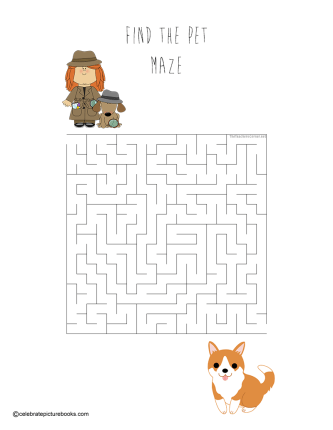
celebrate-picture-books-picture-book-review-find-the-pet-maze

Find the Pet Maze


This detective and her sidekick are searching for a lost pet! Can you help them find a path through the maze to the lost corgi in this printable Find the Pet Maze? Here’s the Solution!

May 22 – National Buy a Musical Instrument Day

celebrate-picture-books-picture-book-review-a-violin-for-elva-cover

About the Holiday

Each year on May 22 we celebrate music and the personal relationship musicians have with their instruments. Some musical artists even consider their instrument such a friend or part of the family that they give them names. Whether you are just starting out on your journey with music or are a seasoned professional, today may be a good day to think about buying your first instrument or adding to your collection.

A Violin for Elva

Written by Mary Lyn Ray | Illustrated by Tricia Tusa


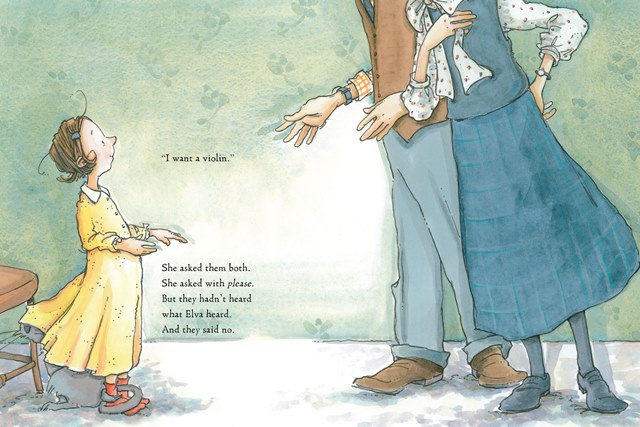
While out on a springtime jaunt, little Elva came upon a garden party. There were the sounds of voices and rustling clothes, but Elva heard none of this. Instead, her ears were trained on the music the violinist was playing. Later that night she told her mom and dad that she wanted a violin. She even said please, but they said no.

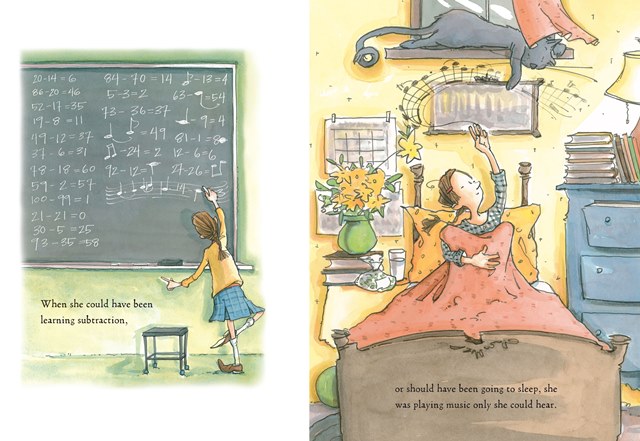
So Elva found violins elsewhere. She practiced with a tennis racquet and stick; she rehearsed with her toothbrush and tube of toothpaste. When she was called to the board in math class, she wrote more notes than numbers, and when she “should have been going to sleep, she was playing music only she could hear.” Years passed; she grew, made friends and pursued other activities. Soon she was an adult with a job, appointments, and meetings. “But if she saw a page tremulous with music, she remembered what she once had wanted.”

celebrate-picture-books-picture-book-review-a-violin-for-elva-asks-parents

Image copyright Tricia Tusa, text copyright Mary Lyn Ray. Courtesy of hmhco.com.

She told herself she was too busy to learn to play the violin now, but she began borrowing records from the library. When she listened to them, she felt as if she “had picked up her violin again” and was playing in an orchestra or performing a solo. At the end of the record, Elva filled the silence and empty feeling with all the other things she had to do.

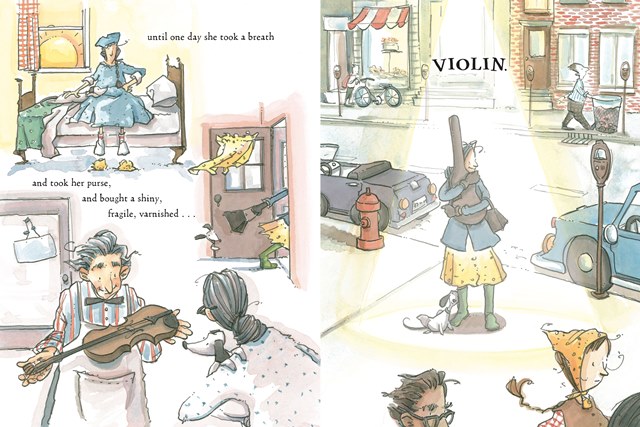
More years passed, and “Elva had many satisfactions and achievements,” but something was still missing. She told herself that she was too old now, “but more and more she kept imagining what might have been—” Then one day she took some money, went to the store, and bought “a shiny, fragile, varnished violin.”  She hugged it tightly on the way home and once there—without even taking off her coat—she removed it from its case, placed it under her chin, and “pushed the bow across a string.” The violin squeeeked and squeeeeeeeeeeked. But then “she drew the bow back toward her—and the string sang.”

celebrate-picture-books-picture-book-review-a-violin-for-elva-hears-music

Image copyright Tricia Tusa, text copyright Mary Lyn Ray. Courtesy of hmhco.com.

She tried other strings without success, but that one, clear note encouraged her. “‘I will improve,’ she said. But she didn’t” Playing the violin was difficult; she had to hold the bow just right, land on the correct notes, and figure out the fingering for sharps and flats. It was all so confusing that Elva put away her violin.

Then one day she read that “Madame Josephina was accepting beginning students.” Again, Elva took some money and signed up for lessons. Twice a week Elva went to Madame Josephina’s house, and on the days in between, she practiced. At the end of the year, there was a recital. Elva was nervous as she took the stage with the other students. But when she drew the bow across her violin’s strings, Elva realized she “was making music.” That night at home she played her piece again and again. “At last, Elva kissed her bow and went to bed, imagining all the tomorrows. And all the music there was to make.”

celebrate-picture-books-picture-book-review-a-violin-for-elva-buys-violin

Image copyright Tricia Tusa, text copyright Mary Lyn Ray. Courtesy of hmhco.com.

Mary Lyn Ray’s story of a little girl whose lifelong love of the violin is only satisfied in old age reveals to readers that while they may grow and change throughout the years, childhood passions often remain strong. While they may be rejected or forgotten for one reason or another, these interests sometimes indirectly guide career choices or reappear when the time is right for them to be fulfilled. Although it is a violin that captures Elva’s heart, Ray could have chosen from a long list of creative, daring, or professional pursuits that niggle at one’s brain to be acknowledged and expressed. A Violin for Elva offers encouragement and inspiration not only for those who feel that it’s too late to achieve their dreams but for those struggling to overcome the fear of trying.

Tricia Tusa’s watercolor and ink illustrations are as light and graceful as the music that captivates Elva. In lovely vignettes, a garden-party attendee wears an enormous flower hat, Elva’s pet cat swipes a paw at her imaginary music, Elva stops on her way to work to admire a street musician, and Elva hugs her dog close while having tea in sunny window. When Elva finally buys her own violin, all the hustle and bustle of her life stops for a moment and love fills the page as she hugs the instrument while her dog leans affectionately against her leg and both are bathed in a glorious spotlight. Seeing Elva on stage at her first recital surrounded by children half her size, readers will understand that true love never fades and is always attainable.

Ages 4 – 7 and up (adults will also appreciate the book’s message)

Houghton Mifflin Harcourt, 2015 | ISBN 978-0152254834

Discover more about Mary Lyn Ray and her books on her website!

You’ll find a gallery of art work by Tricia Tusa on her website!

National Buy a Musical Instrument Day Activity

celebrate-picture-books-picture-book-review-musical-instruments-word-search

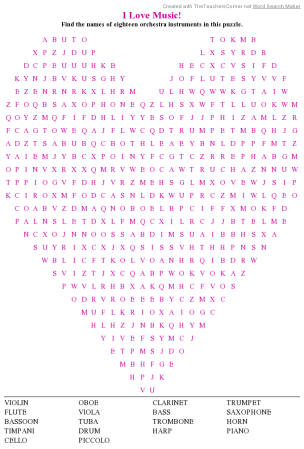
I Love Music! Word Search Puzzle


There’s an orchestra of instruments in this printable I Love Music! Word Search Puzzle. Can you find all eighteen different instruments? Here’s the Solution!

Picture Book Review
May 20 – Learn to Swim Day

celebrate-picture-books-picture-book-review-splatypus-coverAbout the Holiday

Established by Swimways in 2012, today’s holiday is dedicated to educating parents, caregivers, and children about water safety and the importance of learning to swim. With summer officially beginning this weekend, kids will be soon be cooling off at beaches, lakes, rivers, and pools. Knowing how to swim and learning to recognize dangers and water hazards are crucial skills for swimmers of all ages. To learn more about education programs and fun ways to celebrate Learn to Swim Day, visit the Swimways website!

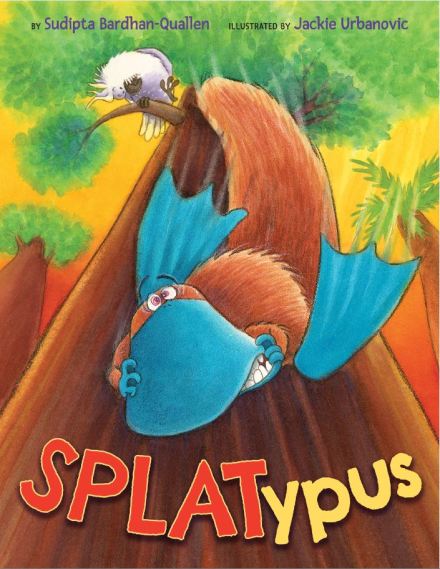
SPLATypus

Written by Sudipta Bardhan-Quallen | Illustrated by Jackie Urbanovic


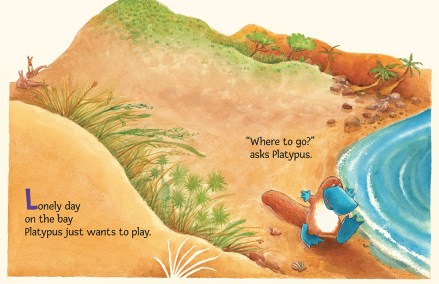
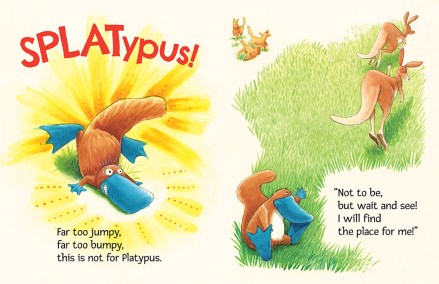
Platypus is feeling lonely as he walks along the shore looking for someone to play with. When a couple of kangaroos hop by, Platypus is happy to see them. “‘I’ll jump too!’” he shouts. He takes off on his blue, webbed feet “skipping, hopping, dipping, dropping.” But he loses control and falls flat on his bill—“Splatypus!” Platypus waves goodbye to the kangaroos, sure that he’ll soon find his place.

Next, two dingoes chase / and run with grace. / Platypus says, ‘I’ll go race!’” But where the dogs leap easily over a fallen log, Platypus struggles and strains to pull himself on top. Then—whoa!—he wobbles and teeters and tumbles and rolls—“Splatypus!” Although trying to be as agile as a dingo didn’t work out, Playpus isn’t giving up on finding where he belongs.

celebrate-picture-books-picture-book-review-splatypus-by-the-bay

Image copyright Jackie Urbanovic, text copyright Sudipta Bardhan-Quallen. Courtesy of Two Lions

Up in a tree, Platypus watches a group of possums playing in the branches. He scrambles to join them, but his hands and feet slip and slide on the smooth trunk and he lands bonk on his head. Suddenly, he sees “fruit bats fly / across the sky. / Platypus says, / ‘I’ll soar high!’” He runs up a cliff to launch himself into the air, but the rocky path trips him up. When he finally reaches the edge, he leaps, flapping his arms and legs. But instead of soaring he goes “Splatypus!”

Poor Platypus! “Nothing’s easy. / Tummy’s queasy. / So discouraged, / lost his courage.” He decides to give up on flying, climbing, and jumping. The day is almost over and still Platypus hasn’t found any friends. He goes to sleep in the shade of a palm tree. The next morning, still feeling dejected, Platypus worries that the day will be no fun. As he strolls near the edge of the bay, however, he spots some swans swimming by and then two “penguins cry / a soggy ‘Hi!’”

celebrate-picture-books-picture-book-review-splatypus-kangaroos

Image copyright Jackie Urbanovic, text copyright Sudipta Bardhan-Quallen. Courtesy of Two Lions

They look as if they are having so much fun that Platypus decides to try one more time to join in. He wades into the water and dives in. With a “ker-sploosh, ker-splash!” Platypus finds that he’s a natural! Now, “water wiggling, all are giggling.” As he floats and paddles with the penguins, swans, fish, and turtles, he “looks around, / at last he’s found / the perfect place for Splatypus.”

Little ones will giggle from beginning to end of this funny story that shows that sometimes you have to try a lot of different things before you find your perfect niche. Platypus’s can-do attitude and perseverance are great lessons for children beginning to navigate school, activities, and friendships. Sudipta Bardhan-Quallen’s rollicking rhythm and easy-to-repeat rhymes will have kids reading—and most likely moving—along with the story.

Jackie Urbanovic takes kids to the coast of Australia to meet kangaroos, dingoes, possums, fruit bats, and even a sea dragon in her sunny illustrations. Little Platypus, with his blue feet, hands, and bill, is adorable as he tries activity after activity with little success. When he finally finds some swimming buddies, kids will cheer to see the satisfied smile on his face.  The large type face will invite beginning readers to try reading for themselves—and persistent Platypus is a good role model along the journey.

Ages 3 – 7

Two Lions, 2017 | ISBN 978-1503939202

Discover more about Sudipta Bardhan-Quallen and her books as well as downloadable teacher’s guides on her website!

You’ll find books, a portfolio of art, coloring pages and more by Jackie Urbanovic on her website!

Learn to Swim Day Activity

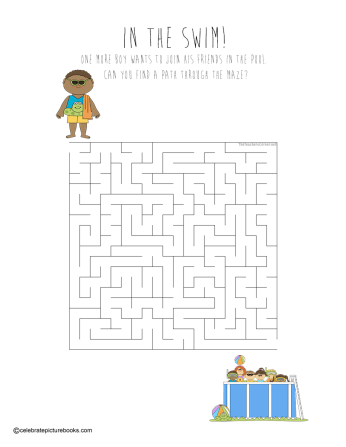
celebrate-picture-books-picture-book-review-in-the-swim-maze

In the Swim! Maze


One little boy would like to join his friends in the pool. Can you help him by finding a path through this printable In the Swim maze? Here’s the Solution!

Picture Book Review