October 26 – Howl at the Moon Day

celebrate-picture-books-picture-book-review-the-wolf-the-duck-and-the-mouse-cover

About the Holiday

Wolves, with their gleaming eyes, sharp teeth, and eerie resonating howl, evoke strong emotions in many people. Playing the role of both hero and villain in mythological tales, feared by farmers and ranchers, and well known as “big and bad” to children everywhere, wolves are part of our lives whether we’ve ever seen or heard one or not. While many people may have a negative view of wolves, the founders of today’s holiday want to change that. They want people to see the beauty, power, and environmental benefits of these majestic animals. Wolves don’t actually howl at the moon; they howl to communicate with the rest of their pack, but the inspirational nature of an image of the full moon framing the upturned head of a wolf cannot be denied. To celebrate today? Sure! Go out and howl your loudest at the moon!

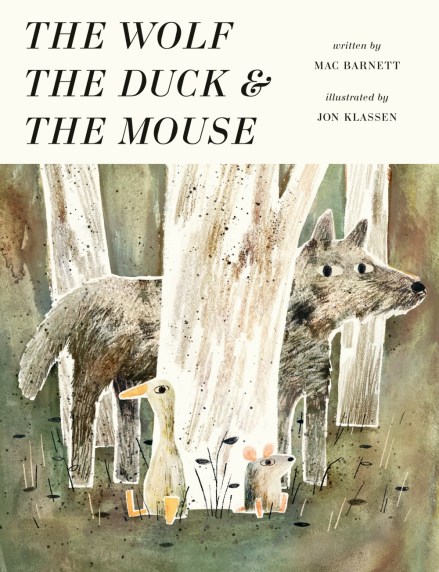
The Wolf, the Duck, and the Mouse

Written by Mac Barnett | Illustrated by Jon Klassen


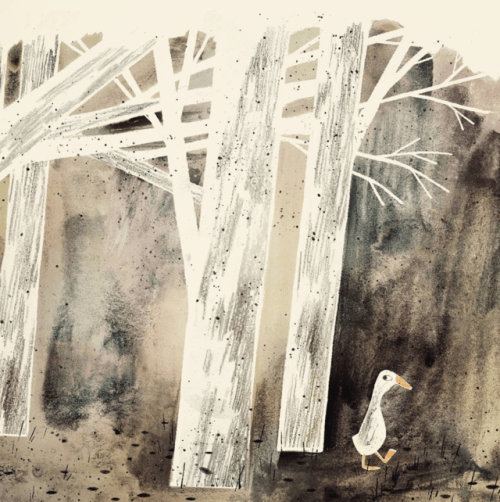
Early one morning a mouse came face to face with a wolf, “and he was quickly gobbled up.” The mouse was very elegant in his speech and proclaimed, “‘Oh woe!’… ‘Oh me! Here I am, caught in the belly of the beast. I fear this is the end.’” Imagine his surprise when he heard a not-so-elegant voice tell him to “‘Be quiet!’” because the mouse was disturbing his sleep. The mouse demanded to know who was there.

celebrate-picture-book-picture-book-review-the-wolf-the-duck-and-the-mouse-mouse-meets-wolf

Image copyright Jon Klassen, 2017, text copyright Mac Barnett, 2017. Courtesy of Candlewick Press.

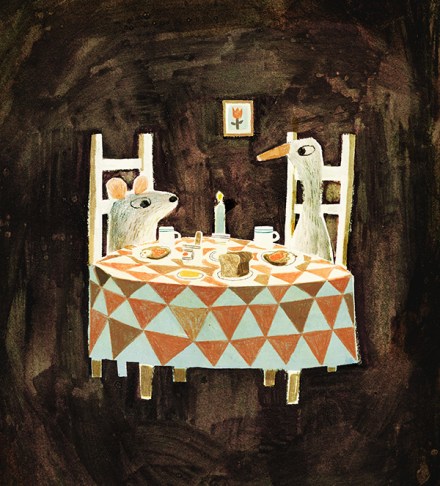
Suddenly, the wolf’s belly was illuminated by the flame of a candle, and the mouse saw a duck sitting up in bed. “‘Oh,’” he said. The duck was a bit perturbed by the mouse’s low-key response, especially since he had been wakened in the middle of the night. Now, though, it was the duck’s turn to be surprised as the mouse told him that it was not the  middle of the night outside, buy only morning. The duck admitted that he wished “this belly had a window or two,” and then graciously offered to make breakfast.

celebrate-picture-book-picture-book-review-the-wolf-the-duck-and-the-mouse-breakfast

Image copyright Jon Klassen, 2017, text copyright Mac Barnett, 2017. Courtesy of Candlewick Press.

The mouse declared the breakfast “‘delicious,’” and inquired where the duck found jam and a tablecloth. He may also have been curious about the dishware, the bread, and even the table, chairs, and framed picture, but he was satisfied with the duck’s answer that “‘you’d be surprised what you find inside of a wolf.’” As the duck continued to talk about his home, the mouse was astonished to learn that the duck lived there. “‘I live well!’” the duck said and went on to explain, “‘I may have been swallowed, but I have no intention of being eaten.’”

celebrate-picture-book-picture-book-review-the-wolf-the-duck-and-the-mouse-lunch

Image copyright Jon Klassen, 2017, text copyright Mac Barnett, 2017. Courtesy of Candlewick Press.

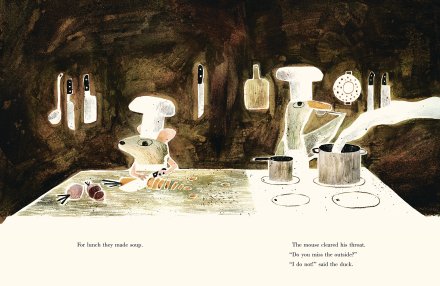
Making lunch was a joint effort, and when the mouse asked if the duck missed living outside, he emphatically stated, “‘I do not!’” It seemed that when he was outside, the duck was full of the fear of being eaten. Inside, he was free of that worry. The mouse considered the wisdom of this notion and asked if he could live there too. The duck agreed and then played a record and danced a celebratory jig.

All this commotion was making the wolf feel sick. He attributed his aches and pains to something he ate. The duck was no doctor, but he was clever. He shouted up from the depths of the wolf’s belly and gave him “the cure.” According to the duck, ingesting “‘a hunk of good cheese…a flagon of wind…and some beeswax candles’” would do the trick and make him better.

celebrate-picture-book-picture-book-review-the-wolf-the-duck-and-the-mouse-duck-outside

Image copyright Jon Klassen, 2017, text copyright Mac Barnett, 2017. Courtesy of Candlewick Press.

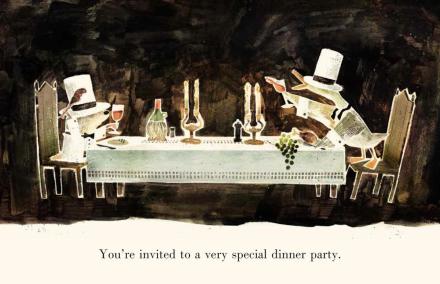
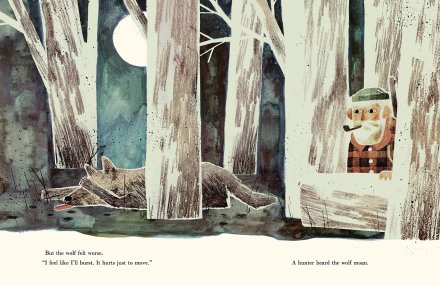
That night the mouse and the duck ate like kings and toasted the wolf’s good health. But the wolf was not feeling robust. In fact, he felt worse. A passing hunter heard the wolf groaning. He raised his gun and pulled the trigger, but missed. Realizing what the blast meant, the duck yelled for the wolf to “‘run for our lives!’” In trying to escape, however, the wolf got tangled in the roots of an old tree.

celebrate-picture-book-picture-book-review-the-wolf-the-duck-and-the-mouse-dinner

Image copyright Jon Klassen, 2017, text copyright Mac Barnett, 2017. Courtesy of Candlewick Press.

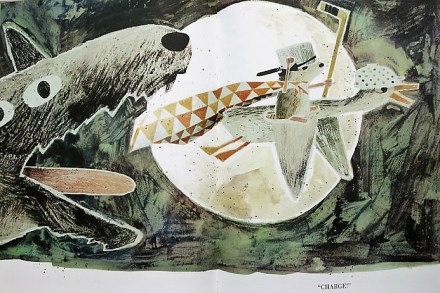
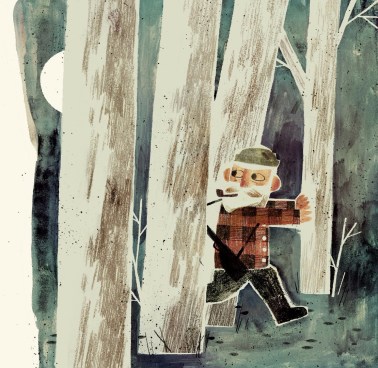
The duck and the mouse determined that that very night they would “‘ride to defend [their] home.’” When they were ready, the wolf opened his mouth, and the mouse and duck—armed with a hockey stick, protected with sauce pan and colander helmets, and yelling “‘Charge!’”—flew out and chased the hunter. “‘Oh woe!’” he cried. “‘Oh death! These woods are full of evil and wraiths!’” He ran and ran until he left the forest, and he never returned.

celebrate-picture-book-picture-book-review-the-wolf-the-duck-and-the-mouse-hunter

Image copyright Jon Klassen, 2017, text copyright Mac Barnett, 2017. Courtesy of Candlewick Press.

The wolf was humbled by the sacrifice the mouse and the duck had made for him and offered to grant any request. “You can guess what they asked for.” And while they dance the never-ending night away, “the wolf howls at the moon. ‘Oh woe! Oh woe!’ Every night he howls at the moon.”

celebrate-picture-books-picture-book-review-the-wolf-the-duck-and-the-mouse-charge

Image copyright Jon Klassen, 2017, text copyright Mac Barnett, 2017. Courtesy of Candlewick Press.

Remember when the Big Bad Wolf gobbled up Granny and Little Red Riding Hood and they survived in his belly until the huntsman cut them out? How was that possible? Mac Barnett reveals the inner workings of this conundrum in this laugh-out-loud fable. The archaic, melodramatic dialog will have readers giggling and participating aloud, as they have to agree with the ingenious duck’s “when life gives you lemons…” philosophy. It’s a good attitude to adopt as we all “get swallowed up” at some point. The trick is learning how to turn misfortune into fortune—or at least a fortunate happenstance. The suitably silly, non-sentimental circumstances will delight kids who relish a bit of the macabre—and, really, who doesn’t?

celebrate-picture-book-picture-book-review-the-wolf-the-duck-and-the-mouse-hunter-runs

Image copyright Jon Klassen, 2017, text copyright Mac Barnett, 2017. Courtesy of Candlewick Press.

Jon Klassen brings his signature deadpan style to this funny story, enhancing the humor with his matter-of-fact drawings that let the scenes speak eloquently and humorously for themselves. As the recently gobbled-up mouse sits gazing forlornly into the wolf’s cavernous belly, readers will experience a tickle of suspense imagining what else lies within. When kids see the stash of good stuff the duck has amassed, their little eyes will grow wide with delight. This amusingly dark tale is fittingly lit with candlelight, the errant blast of the hunter’s gun, and the full moon that hears the wolf’s lament. 

Put the The Wolf, the Duck, and the Mouse on your bookshelf and it won’t stay idle long. For quirky, comical home, classroom, and library story times this book can’t be eat…I mean beat.

Ages 4 – 8

Candlewick Press, 2017 | ISBN 978-0763677541

Discover more about Mac Barnett and his books on his website.

You’ll find a gallery of illustration work by Jon Klassen on tumblr.

You know you want to gobble up this The Wolf, the Duck, and the Mouse book trailer! 

Howl at the Moon Day Activity

Wolf_Howling_Dot-To-Dot (1)

Who is Howling? Dot-to-Dot Puzzle


How’ll you know who’s howling? Complete this printable Who is Howling? Dot-to-Dot Puzzle to find out! Then add your own sky and landscape!

Picture Book Review

October 25 – National Animal Safety and Protection Month

About the Holiday

This month’s holiday was established by the PALS Foundation to promote safe practices of handling and caring for pets and other animals. There are many ways in which you can participate. If you have pets, make sure they’re up-to-date on all of their  health needs, ensure that they are microchipped and tagged in case they are ever lost, and spend time with your pet, which benefits their emotional and physical health. Wild backyard animals can also use your help. As cold weather approaches make plans to feed the birds and small animals that must rely on supplemented food during the winter. You can also visit a zoo, aquarium, or wildlife refuge and learn more about animal behavior and care. Volunteering at or donating to an animal shelter is another wonderful way to take care of animals in your local area.

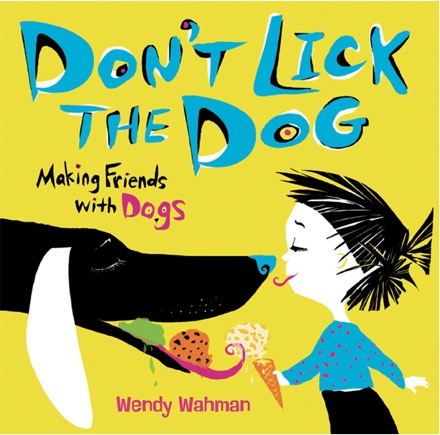
celebrate-picture-books-picture-book-review-don't-lick-the-dog-cover

Don’t Lick the Dog: Making Friends with Dogs


By Wendy Wahman


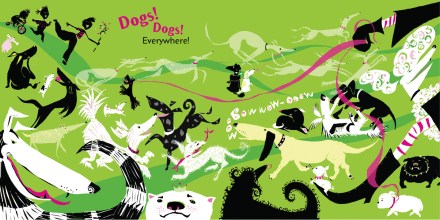
There are “Dogs! Dogs! Everywhere!” Big dogs and little dogs, long-haired dogs and curly-haired dogs, purebreds and mutts. They’re bounding, leaping, wrestling, and bow-wow-wowing. Three kids come running into the park to meet all the dogs but before they do, a hand stops them. The children smile and ask if they can pet the woman’s six dogs. The woman appreciates that they are so polite and reveals that five of her dogs would love a pat, even the tiny Chihuahua sitting on her loooong, pointy shoe. But her sixth puppy, “Maddie might bite.”

celebrate-picture-books-picture-book-review-don't-lick-the-dog-dogs-everywhere

Copyright Wendy Wahman, Don’t Lick the Dog, 2009. Courtesy of wendywahman.com.

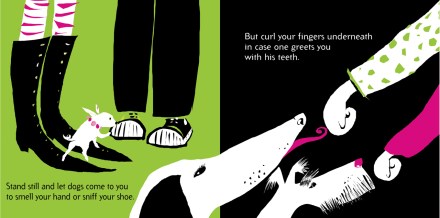
The youngest tyke jumps forward, eager to meet the soft poodle, but the woman’s elegantly gloved hand cautions, “Easy now, take it slow / when meeting dogs / that you don’t know. / Don’t stick your nose in Stella’s face— / until you’re friends, / she needs her space.” The woman also explains that dogs like to meet new people with a sniff and a lick and advises the kids to stand still while the dogs check out their shoes and curl their fingers in while offering the back of their hands.

celebrate-picture-books-picture-book-review-don't-lick-the-dog-meeting

Copyright Wendy Wahman, Don’t Lick the Dog, 2009. Courtesy of wendywahman.com.

Small pups like Bootsy are scared when “noisy kids arrive.” But if you pretend to be shy as well, “she’ll come to you; / just give her time.” Even if you’re excited to see a dog, gentle strokes are what they like best, and they will gobble up treats served from a hand held as flat as a plate. Dogs show their love with a “lick, lick, lick!” But when you find “too much is ick, / it’s all right to say enough / to all that sloppy kissy stuff.”

Some dogs like to jump and hug, but if this dance is not for you, “cross your arms and turn your back / when Jake jumps up and barks like that.” Just like people at different times, some dogs want to be left alone. If you hear a growling, grrr-ing rumble, you should know that “this spells trouble.” If you “stand up straight, / stay very still,” and “let her walk away, / she will.”

celebrate-picture-books-picture-book-review-don't-lick-the-dog-personalities

Copyright Wendy Wahman, Don’t Lick the Dog, 2009. Courtesy of wendywahman.com.

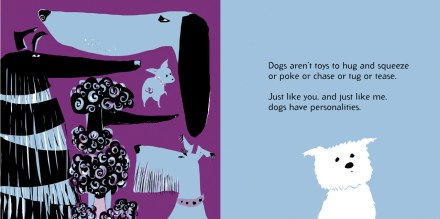
Yes, dogs are fun and like to play, but they “aren’t toys to…poke or chase or tug or tease,” they each have their own personalities. So show that you have good dog manners, and you’ll make lots and lots of canine friends.

Ages 4 – 8

Henry Holt & Company, 2009 | ISBN 978-0805087338

celebrate-picture-books-picture-book-review-a-cat-like-that-cover

A Cat Like That

By Wendy Wahman


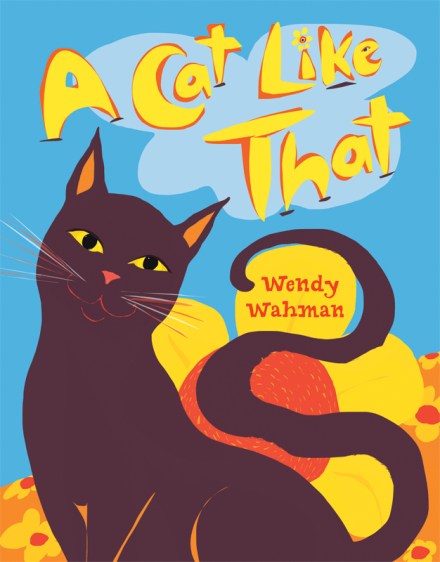
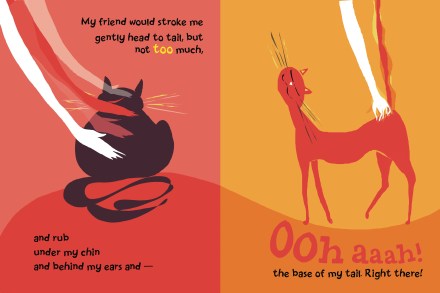
A sweet back cat sits on a flowered patchwork hill dreaming of the perfect friend: one who doesn’t “yell in [her] ear and knows “all the right games, with all the best toys, like a paper bag and catnip mouse, Ping-Ping balls and a twirly bird.” That friend would know just how to stroke behind her ears, under her chin, and right at the base of her tail. But no tickling tummies—that’s for dogs. Another no-no is experimenting to see if cats really do land on their feet—because sometimes, the cat says, she doesn’t.

celebrate-picture-books-picture-book-review-a-cat-like-that-dragging

Copyright Wendy Wahman, A Cat Like That, 2011. Courtesy of wendywahman.com.

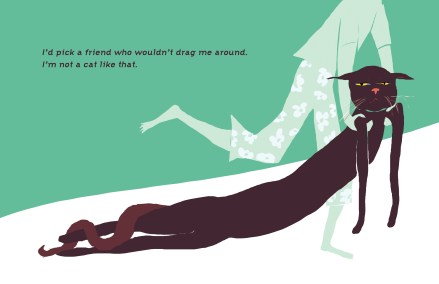
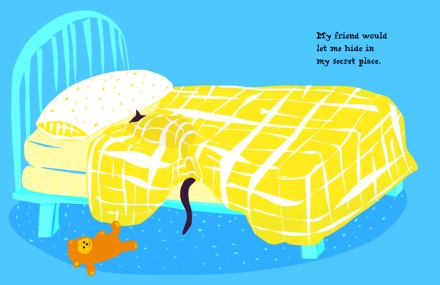
The sleek black kitty would “pick a friend who wouldn’t drag [her] around. I’m not a cat like that!” she thinks. A best friend would let her hide and not seek her out, and would let her “bask in the sun” for as long as she liked. A real pal would allow dining to be a solitary affair—well, just the cat and her prey. And her claws? She’d like to keep those to herself too. That friend would also give her privacy at her box and when bathing.

celebrate-picture-books-picture-book-review-a-cat-like-that-hiding

Copyright Wendy Wahman, A Cat Like That, 2011. Courtesy of wendywahman.com.

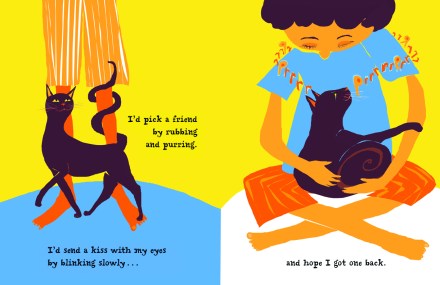
A real friend would recognize her moods—the little flicks of a tail when happy and the big swishes when not. How would someone know they had been picked as a bestie? They’d feel that sweet kitty winding around their legs and purring, and she’d send them “a kiss with [her] eyes by blinking slowly…” And if the cat got a kiss like this back, she’d know she had found a forever friend. If that cat “could pick a best friend in the whole wide world,” do you know who she would pick? Yes, that’s right! She’d pick you!

celebrate-picture-books-picture-book-review-a-cat-like-that-meeting

Copyright Wendy Wahman, A Cat Like That, 2011. Courtesy of wendywahman.com.

Every little one or older child reacts to dogs and cats in their own way. Some love to meet new animals while others are shy or even afraid of them. Wendy Wahman offers two excellent picture books that explain the rules that allow kids to form successful bonds when engaging with cats and dogs. In Don’t Lick the Dog, Wahman’s advice is shared in humorous rhyming verses that help readers remember the particular behaviors that dogs respond to.

Kids will love the park full of dogs with their distinct looks and personalities all drawn with Wahman’s singular sophistication and style. As the owner of the six dogs is revealed, readers will giggle at her long nose and pockets brimming with treats. Kids will also enjoy following miniscule Bootsy as she rides along on her owner’s shoe from page to page. Each behavior by dogs and children is shown clearly so that readers can fully see and understand how to approach any dog.

celebrate-picture-books-picture-book-review-a-cat-like-that-petting

Copyright Wendy Wahman, A Cat Like That, 2011. Courtesy of wendywahman.com.

A Cat Like That turns the adoption process around and reveals the inner thoughts of a feline contemplating the friend she’d pick—all in keeping with a cat’s personality. Wahman’s smart, bold, and vibrant artwork creates eye-catching portraits of a cat’s day. Shown in purple light against a black background the lithe cat playfully pounces on a ball, explores the inside of a paper bag, and chews a catnip mouse. She snoozes under a vivid yellow bedspread and lounges in the golden rays of the sun. As the happy cat winds her tail around a new friend’s leg and purrs contentedly in their lap, kids will wish they had a cat like that.

Both Don’t Lick the Dog and A Cat Like That would be valuable additions to home and classroom libraries to teach children how to approach and engage with cats and dogs, whether they are their own pets, friends’ pets, or animals that are unfamiliar to them.

Ages 4 – 8

Henry Holt & Company Books for Young Readers, 2011 | ISBN 978-0805089424    

Discover more about Wendy Wahman, her books, and her art on her website.

Stop right there and watch this Don’t Lick the Dog book trailer!

You’ll love a A Cat Like That and a book trailer like this!

National Animal Safety and Protection Month Activity

celebrate-picture-books-picture-book-review-fleece-dog-toy-craft

Homemade Dog or Cat Toy


With just a little bit of fleece, you can make a toy that both dogs and cats will love to play with! You can make one for your friend’s pets too!

Supplies

  • Fleece, 18 inches long or longer. You can use a single color or mix two or three colors or patterns.
  • Scissors


Directions

For throwing, tug-of-war, and joint animal/child play

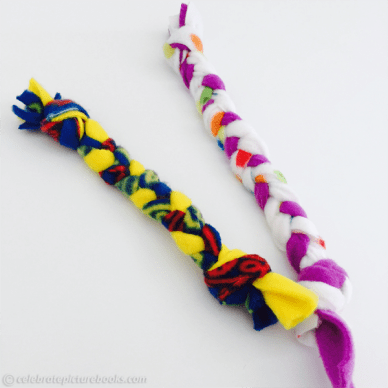
  1. Cut three strips of fleece 1 to 2 inches wide and at least 18 inches long
  2. Holding all three strips together, knot them at the top by making a loop and pulling the ends through
  3. Braid the three strips together
  4. Knot at the strips together at the bottom as you did the top.

celebrate-picture-books-picture-book-review-fleece-dog-toy-craft

For throwing or batting

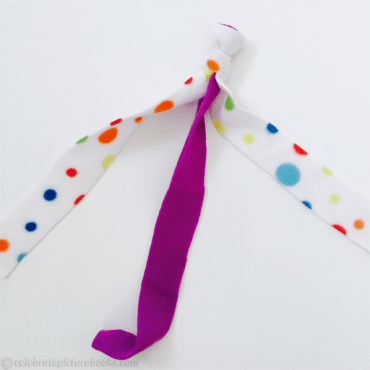
  1. Cut three strips of fleece ¾ to 1 inch wide and about 8 inches long
  2. Holding all three strips together, knot them at the top by making a loop and pulling the ends through
  3. Braid the three strips together
  4. Knot at the strips together at the bottom as you did the top

Picture Book Review

September 29 – It’s National Courtesy Month

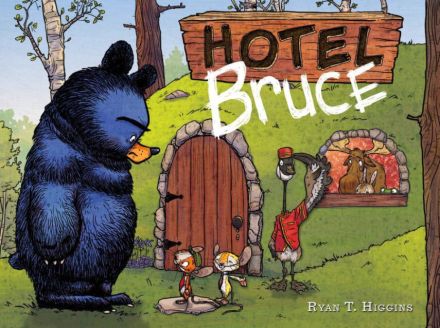
celebrate-picture-books-picture-book-review-hotel-bruce-cover

About the Holiday

A bit of common courtesy goes a long way. Just think of how two little words, like “I’m sorry,” “Excuse me,” and “Thank you,” can make a frown turn into a smile and make a bad day suddenly feel okay.  Today’s holiday encourages people to use good manners, watch out for others, and treat everyone the way you would like to be treated. When these niceties are forgotten…. Well, today’s book shows us what can happen….

Hotel Bruce

Written by Ryan T. Higgins


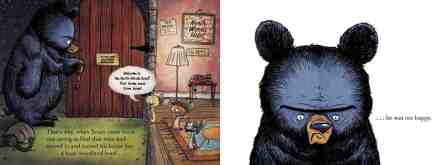
“Bruce was a bear who lived with four geese,” but he was not happy about it. Since he was their mom, however, it meant going south with them every winter even though he would rather have taken a loooong nap. Leaving home, taking public transport, and hanging out on crowded beaches took a toll on Bruce. So one spring when Bruce returned home to discover mice had turned his home into the Woodland Hotel, he went on a grouch-fueled rampage and swept the mice out into the night.

celebrate-picture-books-picture-book-review-hotel-bruce-bruce-not-happy

Copyright Ryan T. Higgins, courtesy of Disney-Hyperion

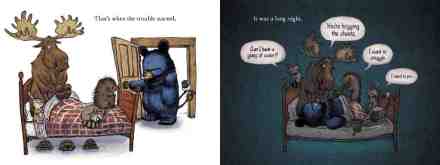
Satisfied, he climbed the stairs to bed only to find it overrun with a moose, a porcupine, a raccoon, and a rabbit; three turtles were snoozing underneath. Let’s just say quarters were a bit snug. “The next morning Bruce woke to the sounds of birds chirping, and squirrels chattering, and possums having a pillow fight.” He found a frog in his toilet, got porcupine prickles in his posterior, was sprayed with skunk perfume right after showering…and a beaver gnawed the corner off his kitchen table. There was even a fox at the stove trying to convince the turtles to jump into a hot, veggie-filled “bath.” But when the mice tried to politely usher Bruce out of the Woodland Hotel, he’d had enough and asked to see the manager.

celebrate-picture-books-picture-book-review-hotel-bruce-full-bed

Copyright Ryan T. Higgins, courtesy of Disney-Hyperion

While the mice argued over who was the manager, things in the kitchen were getting steamy. The fox’s turtle soup had “turned bad.” The kitchen looked as if a turtlenado had blown through—even Bruce’s best silverware was missing! “Bruce started to lose his cool.” Just then a vanload of elephants arrived for a vacation. “Finally, Bruce lost his temper. ‘THIS IS NOT A HOTEL! THIS IS MY HOUSE! EVERYBODY OUT RIGHT NOW!’”

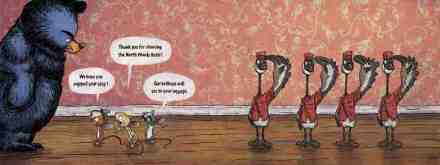
Drooping with dejection, the “guests” tromped away. “Sheesh! I thought they’d never leave,” one mouse snarked. At that, Bruce tossed the interlopers out into the rain, where they sat sad and bedraggled. “Bruce’s house was a quiet, peaceful place once again.” At least until the geese honked sympathetic honks. Bruce sighed and opened the door….

celebrate-picture-books-picture-book-review-hotel-bruce-geese-bellhop

Copyright Ryan T. Higgins, courtesy of Disney-Hyperion

Ryan T. Higgins’ curmudgeonly bear is back with a fine, funny sequel that will have kids giggling at poor Bruce’s plight. Adults will appreciate the sly wink to the penchant of woodland animals to take up roost in any warm, unoccupied space and will perhaps feel more than a little sympathy with Bruce as he finally rousts his “guests” from his home. The wise-cracking mice add levity and a few well-placed honks from Bruce’s “kids” tug at his heart.

Higgin’s madcap illustrations put readers in Bruce’s big, burly paws as he endures one predicament after another. While the woodland animals run wild, their slightly guilty faces reveal that even they know all is not on the up-and-up as they watch Bruce’s unibrow rise with surprise and furrow in anger. The geese, so eager to follow and fit in, look ridiculously cute in their bellhop uniforms, and Higgin’s detailed depictions of Bruce’s home will have kids lingering over each page.

Ages 5 – 8

Disney – Hyperion, 2016 | ISBN 978-1484743621

Connect with Ryan T. Higgins on his website and learn more about his books, school visits, and summer camp for kids.

National Courtesy Month Activity


celebrate-picture-books-picture-book-review-Courtesy-is-Contagious-word-scramble

Courtesy is Contagious Word Scramble


When you use good manners and courtesy, people notice and are inspired to do the same! Can you unscramble the twelve words or phrases in this printable Courtesy is Contagious Word Scramble. Here’s the Solution.

Picture Book Review


September 26 – Love Note Day

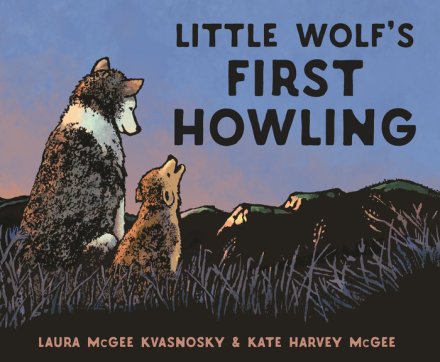
celebrate-picture-books-picture-book-review-little-wolf's-first-howling-cover

About the Holiday

Today’s holiday was established to encourage people to communicate how they feel about each other by writing a note of affection to their special someone, child, or friend. Sure, you can always text your note, but why not get creative? Leave your note on the bathroom mirror, tuck a written message into a lunch bag, hide a post-it in your loved-one’s shoe, or drop a letter off in person and share a cup of tea. Of course, you may choose to send a different kind of love note—as you’ll see in today’s book!

Little Wolf’s First Howling

Written by Laura McGee Kvasnosky | Illustrated by Kate Harvey McGee


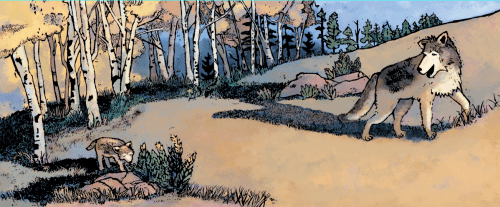
The day had come for a big step in Little Wolf’s education. As Big Wolf led his son to the top of the hill, Little Wolf hung back, exploring every plant and rock formation. “‘Tonight’s the night,’ said Big Wolf, “‘Your first howling.’ Little Wolf’s ears shivered with excitement. ‘I’m ready,’ he said. ‘I’m ready to howl!’” They sat on the hill watching the stars and the moon appear. Little Wolf was eager to start.

celebrate-picture-books-picture-book-review-little-wolf's-first-howling-exploring

Image copyright Kate Harvey McGee, 2017, text copyright Laura McGee Kvasnosky, 2017. Courtesy of Candlewick Press.

First, however, Big Wolf needed to “demonstrate proper howling form.” He stood up, breathed deeply, and lifted his face to the dark sky. “AAAAAAAAAAOOOOOOOOOOOOO,” he howled, letting the last notes fade into the night air. The sound thrilled Little Wolf. He leaped on a fallen tree, raised his head and let out an “aaaaaaaaaaooooooooooooo I’m hoooowling, ‘oooowling, ‘ooooowling!”

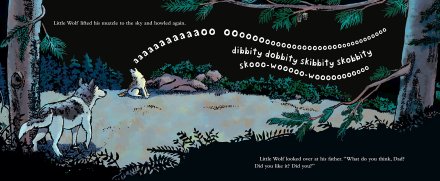
Big Wolf gazed at his son with amusement and surprise and gently told him that he did not use proper finishing form. Again he demonstrated. Little Wolf was sure he knew how to do it now. He raised his head high and gave it all his might. “aaaaaaaaaaoooooooo…dibbity dobbity skibbity skobbity skooo-wooooo-wooooooooooo.” Little Wolf enthusiastically waited for his father’s opinion.

celebrate-picture-books-picture-book-review-little-wolf's-first-howling-small-howl

Image copyright Kate Harvey McGee, 2017, text copyright Laura McGee Kvasnosky, 2017. Courtesy of Candlewick Press.

Big Wolf wanted to be supportive; he wanted to be a good dad. “‘Son, I am proud of your nose, which has led to many new trails. I admire your strength when you tumble with the other pups. Most of all, I love how your ears express your thoughts. But your howling? It is not proper howling form.’”

Little Wolf felt listened carefully one more time as his father showed him again how to howl. The call was beautiful as it echoed over the hills. Then it was Little Wolf’s turn. Inside, his “heart swelled with wildness and joy,” and even though he knew what was welling up inside of him was not correct form, he opened his muzzle and let it out: “skiddily skoddily beep bop, a booobooo booooooooo…boppita boppita wheeee bop, a diddily daddily doooooooooooooo…”

celebrate-picture-books-picture-book-review-little-wolf's-first-howling-big-wolf-demonstrating

Image copyright Kate Harvey McGee, 2017, text copyright Laura McGee Kvasnosky, 2017. Courtesy of Candlewick Press.

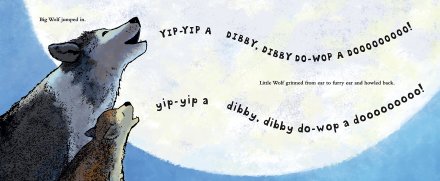
Big Wolf cocked his head and perked up his hears and listened closely. As the notes floated past him, “his tail started wagging. His ears started twitching. His paws started tapping.” Then, before he knew it, he joined in with a “yip-yip a dibby, dibby, do-wop a dooooooooo!,” and Little Wolf repeated it back. As the sky grew darker and the moon rose high, the two voiced filled the valley with jazzy music.

The time grew late, and father and son headed back home. Little Wolf couldn’t wait to tell the others about his first howling. “‘Big Wolf smiled. ‘Oh, I expect they already know,’” he said.

celebrate-picture-books-picture-book-review-little-wolf's-first-howling-howling-together

Image copyright Kate Harvey McGee, 2017, text copyright Laura McGee Kvasnosky, 2017. Courtesy of Candlewick Press.

Laura McGee Kvasnosky’s father and son story is heartening in many ways. Big Wolf’s gentle and patient teaching style shows the love he has for his child while Little Wolf’s eagerness to please his dad is equally warm, but also overflowing with his own personality. In Big Wolf, Kvasnosky has created a wonderful adult character. By prefacing his instructions with Little Wolf’s strengths, Big Wolf demonstrates not only proper howling form, but also a beautiful understanding of how to build Little Wolf’s self-confidence and self-image. His willingness to really listen to Little Wolf’s howling and allow his son to take the lead is a lesson that is enriching for both children and adult readers. Kids will adore howling like Little Wolf, and adults will smile at the last line, which is full of humor and love.

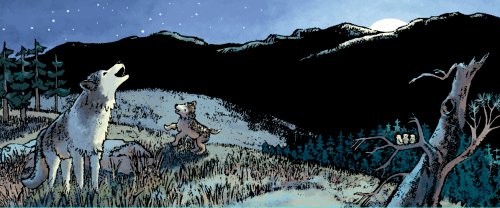
Kate Harvey McGee’s gorgeous nighttime scenery provides the perfect backdrop to this sweet story. As the night grows darker, her blues become lush and deep, highlighting Big and Little Wolf as they raise their voices to the bright full moon. Yellow accents in the flowers, typography, and tiny owlets create a cozy glow that reflects the love between father and son. Stippling of the wolves fur coats brings these beautiful animals to life. Images of the father and son, both close together and a bit farther apart, mirror their relationship and the pup’s growing independence.

Little Wolf’s First Howling is a fantastic read aloud and a cozy book to snuggle up with at bedtime. It would be a much-asked for favorite for home libraries and classrooms.

Ages 3 – 7

Candlewick, 2017 | ISBN 978-0763689711

You can learn more about Laura McGee Kvasnosky and her books—and find cool projects to do too—on her website!

Love Note Day Activity

celebrate-picture-books-picture-book-review-kindness-cards

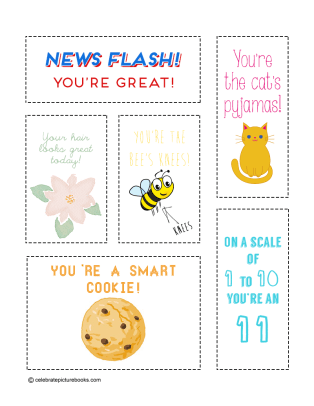
Love Notes to Share


Today’s a perfect time to share your feelings with those you love! Print out these cute Love Notes and give them to your favorite people!

Picture Book Review

September 23 – International Rabbit Day

celebrate-picture-books-picture-book-review-old-lion-and-little-rabbit-cover

About the Holiday

With their little pink noses, long ears, and soft fur, rabbits make your heart melt. Today’s holiday was established to promote the protection and care of rabbits—both domestic and wild. Found in almost all types of environments—with more than one half of their total population living in North America—rabbits need protection from habitat destruction and predators. They are also a popular gift in spring, and families are encouraged to learn all about their needs and behaviors to determine if a rabbit is the best fit for the household. Because of their sweet, innocent nature, bunnies are often featured in children’s books. To celebrate the holiday, read a few of your favorites—including today’s book!

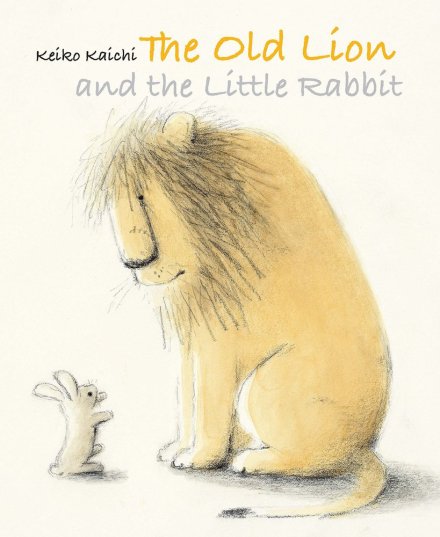
The Old Lion and the Little Rabbit

By Keiko Kaichi


Once King of the Plains, Old Lion had given up his place in the herd to his sons and now lived a quiet life alone. One day while napping, he felt a tickle in his mane and smelled a tantalizing aroma nearby. Old Lion discovered a tiny baby rabbit sleeping peacefully in the soft fur of his mane. “‘Hey,’ Old Lion thought, ‘this little one won’t fill my belly. But if I let him eat enough, he’ll grow up to be big and delicious!’” So Old Lion gathered as much grass as he could and fed the baby rabbit well, all the while feeling hunger growing in his stomach.

celebrate-picture-books-picture-book-review-old-lion-and-little-rabbit-herd

Copyright Keiko Kaichi, 2017, courtesy of minedition.

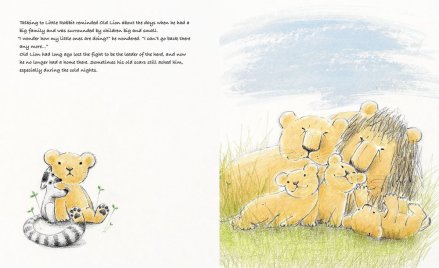
To pass the time between feedings, Old Lion told Little Rabbit about his younger days on the savanna. “Little Rabbit crinkled up his nose with joy when he listened to Old Lion’s stories.” When other animals saw Old Lion and Little Rabbit together, they couldn’t believe it. As Old Lion talked to Little Rabbit, he remembered his big family and the joy of having children around him. He wondered how they were doing. But he knew that he couldn’t go back once he had “lost the fight to be the leader of the herd. Sometimes his old scars still ached him, especially during the cold nights.”

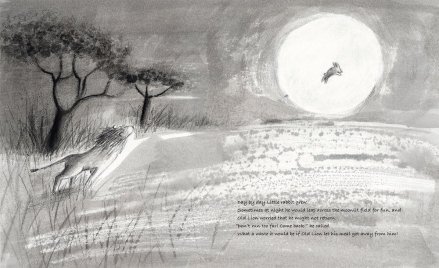
Now that Little Rabbit was growing bigger, he sometimes hopped far into the field, exploring just for fun. Then Old Lion worried that he might not come back, fearful that all his time and hard work would be wasted. He would call after Little Rabbit, reminding him to come back, and Little Rabbit always did.

celebrate-picture-books-picture-book-review-old-lion-and-little-rabbit-hopping-in-moonlight

Copyright Keiko Kaichi, 2017, courtesy of minedition.

They spent their days watching the other animals, Little Rabbit perched on top of the lion’s head in order to see better. As time went by, Old Lion began to wish he could be satisfied with a diet of plants and wondered about the unfamiliar feeling in his heart. “Could it be that he was starting to care about this little creature who trusted him so blindly? Such a thing made no sense. Still, he had to admit that something warm stirred in him when he saw Little Rabbit each morning.”

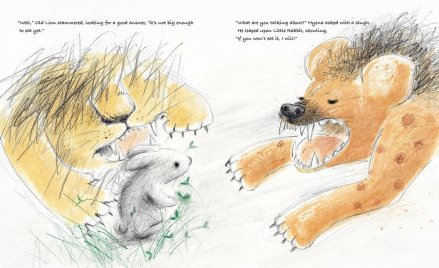
One day as Little Rabbit played among the weeds while Old Lion rested, Hyena came calling. When he saw the little bunny, he immediately asked to share in the delicious meal as he often did. Old Lion was taken off guard and stammered that Little Rabbit was not nearly big enough to make a meal of. Hyena protested and pounced. Old Lion found his former quick reflexes and “with one gulp he snatched up Little Rabbit into his jaws.”

celebrate-picture-books-picture-book-review-old-lion-and-little-rabbit-hyenna

Copyright Keiko Kaichi, 2017, courtesy of minedition.

With a bit of regret but admiration for his old friend, Hyena turned and skulked away. When they were alone, Old Lion opened his mouth wide and let Little Rabbit climb out. He saw that his tiny friend had suffered a cut on his paw and bandaged it carefully. Then he placed Little Rabbit on his head and began to walk in the direction of the wind. “He could no longer deny that he loved Little Rabbit.”

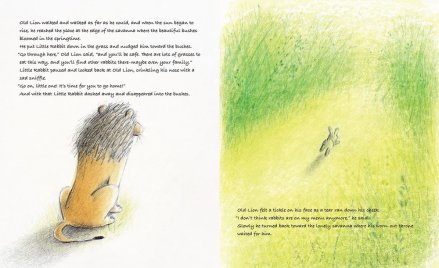
Old Lion walked and walked to the edge of the savanna, where bushes and tall grasses blossomed. He set Little Rabbit down gently and nudged him forward. “You’ll be safe” there, Old Lion told him. “You’ll find other rabbits there—maybe even your family.” Little Rabbit gazed at Old Lion sadly, but the lion reassured him that it was time to go home. Old Lion watched Little Rabbit bound away and “felt a tickle on his face as a tear ran down his cheek.” Then he turned and walked back to where his throne waited.

celebrate-picture-books-picture-book-review-old-lion-and-little-rabbit-letting-rabbit-go

Copyright Keiko Kaichi, 2017, courtesy of minedition.

Keiko Kaichi’s books masterfully tug at readers’ heartstrings with poignant stories populated with adorable characters that immediately inspire love and empathy. In The Old Lion and the Little Rabbit, the lion’s history is revealed naturally and at a pace that makes his transformation believable and all the more emotional. Just as do children within a family, Little Rabbit alters Old Lion’s life simply through trust and dependence. Children will respond to the growing love between Old Lion and Little Rabbit. They will also find the solution to the mystery established at the beginning both surprising and satisfying. Adult readers cannot be faulted for feeling a small lump in their throat when Old Lion unselfishly protects Little Rabbit from Hyena and then takes him to safety.

Kaichi’s acrylic and pencil drawings are both evocative of the golden savanna and filled with tender sentiments. Old Lion may once have been a fierce predator, but he is now a contemplative and caring elder statesman while Little Rabbit is a wee nubbin of cuteness. As he sits next to the much bigger lion, his tiny paw touching Old Lion’s arm, or collects a bouquet of weeds under Old Lion’s watchful gaze, Little Rabbit swells readers hearts.

Superb in every way, The Old Lion and the Little Rabbit would make a wonderful choice for home bookshelves as well as for public and school libraries.

Ages 3 – 7

minedition, 2017 | ISBN 978-9888341245

International Rabbit Day Activity

Adorable Bunnies Coloring Pages


Bunnies are such loveable little creatures that you just can’t help but say “Awwww!” when you see one. Here are two printable Adorable Bunnies Coloring Pages for you to enjoy!

Bunny Coloring Page | Three Bunnies Coloring Page 

Picture Book Review

September 7 – Buy a Book Day and Interview with Sara Levine

celebrate-picture-books-picture-book-review-bone-by-bone-cover

About the Holiday

Today is one of the best days of the year! Anyone who loves books will want to take the opportunity of the holiday to visit their favorite bookstore and buy one of those books you’ve been hearing and reading about. And why stop at just one? Winter is coming—that time when there’s nothing more cozy than snuggling in with a cup of tea or hot chocolate and reading late into the night. As the school year begins, children benefit from having new books in their home libraries that reflect their changing interests and maturing thoughts. Take a little time to look through the children’s or tween sections of the bookstore and let your kids pick out some new favorites! Yes, today is a wonderful day, no bones about it! 

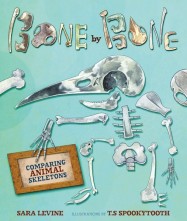
Bone by Bone: Comparing Animal Skeletons

Written by Sara Levine | Illustrated by T.S Spookytooth


Can you imagine if we sloshed through life like soup without a bowl? What would we set our hats on? Where would we carry our phones? How could we sit in class or the office or perform our favorite activities? And what would happen to our organs, our hair, our homes? It’s all a little disturbing! Fortunately, we don’t have to worry about that scenario because “we’re vertebrates, animals with bones. Our bones hold us up.” Phew!

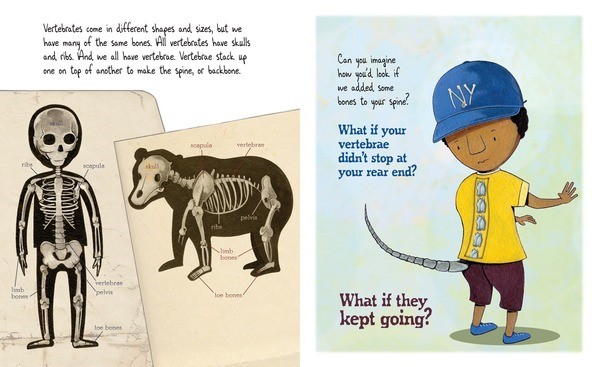
There are different kinds of vertebrates—mammals, reptiles, fish, and more—but many of our bones are similar. For example, “all vertebrates have skulls and ribs. And we all have vertebrae. Vertebrae stack up one on top of another to make the spine, or backbone.” Humans have vertebrae that end…well…you know where, but imagine for a minute if your vertebra kept on going. What if they poked a hole right through your shorts? Yes! You’re right—you’d have a tail. Tails are pretty helpful for some animals. They help them swim, communicate, even keep their balance.
celebrate-picture-books-picture-book-review-bone-by-bone-tailbone

Image copyright T. S Spookytooth, text copyright Sara Levine. Courtesy of Lerner Publishing

Good job! Let’s try again…how about if you only had a skull, vertebrae, and ribs. No arm bones; no leg bones. You’ve got it! A slithery snake! Nah…really…you’d look great! Okay, maybe you’d prefer if you had a skull, vertebrae, and arm bones—but no leg bones—and your nose was transferred to the top of your head. Sounds fishy? Maybe, but not quite. Oh! Did I give it away? Yep, you’d be a whale or a dolphin, and you’d use those powerful vertebrae to propel yourself to the ocean’s surface to grab a breath.

Imagine what kind of gloves and shoes you’d need if your “middle fingers and middle toes were so thick that they supported your whole body.” Hey, you’re good at this! It was a trick question. You wouldn’t need gloves, but you’d wear horse shoes (or no shoes if you’re a less domesticated animal like a zebra). Now, let’s take a trip through a room full of fun-house mirrors. What kind of animal would you be if your neck was reeeaally long and each vertebrae was “as big as your head?” Or if your legs were muuuuuch longer than your arms? Or your “finger bones grew so long that they reached your feet? Seeing those transformations is definitely worth the price of admission, right?

celebrate-picture-books-picture-book-review-bone-by-bone-bat

Image copyright T. S Spookytooth, text copyright Sara Levine. Courtesy of Lerner Publishing

But getting back to the bowl of soup: “Could you be an animal if you didn’t have any bones at all?” Sure! Some insects and sea creatures “have their hard parts on the outside,” and some are just “mushy.” Think of worms, slugs, and jellyfish, just to name a few. But bones make life more fun, don’t ya think? So if all vertebrates have bones, what makes humans different? Well, for one thing we (as well as some apes and monkeys) have opposable thumbs, which means that “we can move our thumbs in a special way that allows us to do many things, including turning the pages of a book,” using tools, and picking up objects. “Did you get that one? If so, give yourself a thumbs-up!”

An Author’s Note including more about bones, the types of vertebrates, a glossary, and resources for further reading follow the text.

With humor and a kid’s sensibility of the bizarre, Sara Levine presents an anatomy lesson that young readers will respond to. Juxtaposing individual bony features of humans and animals is a brilliant idea to give children perspective on the differences in animal skeletons and the uses of each unique trait. Levine’s quiz-like format engages readers, encouraging independent thought and active participation as well as building suspense for what transformation comes next. Kids will laugh and learn and be on the lookout for other ways human and animal skeletons differ as they become more aware of the natural world around them.

With illustrations of tailbones sticking out of pants, empty socks, two fingered hands and two toed feet, a neck that needs two scarves, and more, T. S Spookytooth illuminates what it means to be human in an animal world or an animal in a human world. Kids will laugh imagining themselves as Spookytooth depicts them with animal features and “Ewww” when their portrayal dissolves into a muddy mess. The accurate drawings of human and animal skeletons educate readers on the names and placement of particular bones.

The unique approach to the study of human and animal skeletons, the wide range of animals presented, and the enticing writing and illustrations make Bone by Bone: Comparing Animal Skeletons a wonderful choice for libraries and home bookshelves of budding scientists and nature lovers.

Ages 5 – 10

Millbrook Press, 2014 | ISBN 978-0761384649

To learn more about Sara Levine and her books, visit her website! You’ll also discover fun Bone by Bone activities to enhance your reading!

View a gallery of artwork by T. S Spookytooth, plus videos and more on his website!

Buy a Book Day Activity

celebrate-picture-books-picture-book-review-x-ray-craft-dog-paw

Dog Paw and Human Hand X-Ray Craft


X-rays are cool to look at, but they always stay at the doctor’s office! With this craft you can simulate an X-ray of a dog’s paw and a human hand!

Supplies

  • Printable skeleton templates: Human Hand Template | Dog Paw Template
  • Black chalkboard drawing paper, 8 ½ inches by 11 inches
  • White colored pencil
  • White chalk
  • Clear Plastic Report Sheet Protectors
  • Magnetic clip to hang your x-ray on the refrigerator or other metal surface (optional) OR
  • String or wire, adhesive squares, and clothes pins to hang x-ray on the wall (optional)
  • Scissors

Directions

  1. Print the Human Hand and Dog Paw Templates (you may want to print two—one to cut and one to follow when transferring the bones to the black paper)
  2. Cut the bones apart
  3. Lay the bones on the black chalkboard paper
  4. Trace the bones with the white colored pencil
  5. Color in the bones with the white chalk
  6. Slip the black paper into the plastic report sheet protector
  7. If desired, hang the x-ray on the refrigerator with the magnetic clip or on the wall using string, adhesive squares and clothespins


Q & A with Author Sara Levine

celebrate-picture-books-picture-book-review-author-sara-levine

Today, I’m thrilled to talk to Sara Levine about her writing as well as to learn about her early experiences with animals and to discover a kid’s-eye-view of women in science.

Your writing for kids is so infused with humor that really captures their attention. What were some of the books that you liked best as a child?

When I was younger, one of my favorite picture books was Katerine and the Box by Patricia Lee Gauch. I’ve noticed that this book has gone back into print; I was so happy to find it online. It’s basically about creativity. A girl and her friend keep finding new uses for a large cardboard box—a house, a car, a dance platform. I can still recall my feeling of excitement when hearing it read to me—it made me want to go make something. It’s actually a feeling very similar to what I have today when I think of a new idea for a book. There was also a book called Wisher, which was about difference—about a cat who dreamt he was really a fish. I remember that the illustrations were beautiful and somewhat scary—just done in blues, browns and yellows.  As an older child, I loved Charlotte’s Web by E.B White, Lizard Music by Daniel Pinkwater and pretty much everything by Judy Blume.

I don’t suppose any of these books are like the books I write. I used to tell people that I liked my science and my books separate. I just wanted to go outside to learn about science. But, I wanted stories in my books. I don’t think there were any of the sorts of books I write about science out for kids when I was young. At least I didn’t find them. But if I had, I think I would have enjoyed them—the fact that they were funny and interactive. But here’s a picture book I LOVE that I found as an adult that is certainly infused with humor and captures a kid’s (and a grown-up’s) attention: Bark, George, by Jules Feiffer. I think this is currently my favorite picture book.

You grew up on a farm in Guilford, Connecticut. Can you tell me a little about the farm and how or if it influenced your current work?

Calling it a “farm” might be a bit of a stretch. My parents were two kids who grew up in Brooklyn and then moved to CT and decided to get some animals, cheered on by their enthusiastic offspring. First there was a goat, who got lonely. So then there was another goat. And they had a baby. And there was a chicken at school who needed a place to go for the summer. And then never went back to school… And so on. We ended up having over 100 named animals—a horse, a cow, peacocks, geese, a donkey and more. I loved taking care of the animals, with my siblings. It was a wonderful experience, one that I’m very grateful for. But it wasn’t at all lucrative. I think the only money made was by my brother who would sell extra eggs to his teachers.

How did it influence my current work? I’m not sure. Certainly my interest in animals is a lifelong one. I think the stories about the animals actually show up more in my writing for adults than in my picture books. The ideas for the books for children come more from teaching ideas that I think will translate well into a picture book format.

You have a doctorate in veterinary medicine and a masters in fine art. When and how did the two merge into your work as an author?

What a great question. I have always had this science side and this humanities side. A lot of my life, I’ve been struggling with how to balance and feed both sides of myself. It’s taken me a long time to find a way to merge the two interests, and it’s been very satisfying to do so in writing about science, especially for kids.

You offer four different school and library programs, all of which sound fascinating. Do you have any anecdotes from a presentation you’d like to share?

In one of my workshops, the one for Bone by Bone: Comparing Animal Skeletons, I bring in an articulated skeleton for the kids to see and a disarticulated skeleton in a box. The kids learn the bones, and I then hand them each a bone which they take up to the standing skeleton to figure out which bone it is, and then work together to put together the second skeleton on the floor. Inevitably, someone asks if the skeletons are real. They are. I literally found them in the closets, when I started my teaching at Wheelock. There are all sorts of questions about that, generated by the kids, and then, often, someone will ask if the skeletons are “boys or girls.” Recently, at a school near Boston, I was explaining to a group of second graders that both were female, that we could tell by the shape of the hips, and I heard one girl, going, “YES!” and pumping her arm up and down, in victory. The boy next to her says, “Why are you so happy? That means a girl died.” To which she responds, “That’s true. But it also means one more girl in science!”

celebrate-picture-books-picture-book-review-bone-by-bone-workshop

Sara Levine leads a workshop at Cold Spring School

What’s the best thing about writing for kids?

I enjoy trying to think of engaging and interactive ways to teach something that hasn’t been taught before. I like the creativity involved. And, of course, reading it to the kids when I’m done and seeing them respond!

celebrate-picture-books-picture-book-review-bone-by-bone-students-at-al-hamra-school

Students at Al Hamra Academy examine a skeleton

You also write articles for adults and were nominated for a Pushcart Prize in 2007. Can you tell me more about your writing for adults?

I write science related essays for adults. The writing comes more from my own experiences.  I do have a handful of essays published. I think the one that was nominated for the Pushcart, “What Hands Can Do” is still available to read online. Here’s a link to it on Fictionaut. It’s about spaying a dog. And more, of course. I think my most successful essay is “The Body of a Cow” which originally appeared in the Massachusetts Review. It’s also on Fictionaut, if anyone wants to have a look. Eventually, I hope to work the essays into a memoir for adults.

What’s up next for you?

I have a book on dinosaur bones which will be published by Lerner next year. I also have three children’s books written which I’m trying to find homes for at the moment—one on animal classification (but interactive, written like a “do your own adventure” story), one on how plants communicate with animals, and one very funny one (if I can say so myself) called “Breakfast at the Omnivore Café,” which is about what animals eat. This one might never get published because it falls into the cracks between nonfiction and narrative fiction, but I haven’t given up on it yet. The book I’m currently working on is an attempt to explain climate change through stories of the carbon cycle. Doesn’t sound very interesting when put that way, but it’s written as an interactive story, and is also actually quite funny in parts, so I think kids will like it.

Since Celebrate Picture Books is a holiday-themed blog, I can’t let you get away without asking you what your favorite holiday is…

Passover. You get to tell a story to children in a way that is interactive and engaging for kids, AND it involves food. What could be better?

Thanks so much for chatting and sharing your unique perspective on the natural world, Sara! I, for one, would love to read Breakfast at the Omnivore Café—that would be one interesting menu, I bet! I wish you the best with all of your books!

You can connect with Sara Levine on:

Her Website | FacebookTwitter

celebrate-picture-books-picture-book-review-bone-by-bone-cover

Bone by Bone: Comparing Animal Skeletons and Sara’s other books can be found at:

Amazon | Barnes & Noble | Books-a-Million | Lerner Publishing

About Sara Levine

Sara Levine is an assistant professor of biology at Wheelock College and a veterinarian.  Her science books for children include Bone by Bone: Comparing Animal Skeletons (2013) and Tooth by Tooth: Comparing Fangs, Tusks and Chompers (2016).  Her third book, Fossil by Fossil: Comparing Dinosaur Bones will be published in 2018.  Bone by Bone: Comparing Animal Skeletons has received much recognition, including the Utah Beehive Book Award, selection as a Bank Street College Best Children’s Book of the Year, and finalist for the Cook Prize for best STEM picture book.

Sara also writes science-related essays for adults, one of which was nominated for a Pushcart Prize in 2007.  Her writing has appeared in the Boston Globe, the Massachusetts Review, Bayou, and in the anthology And Baby Makes More. In addition to teaching college students, she has taught children’s environmental education classes for the Massachusetts Audubon Society and other nature centers in Massachusetts and Connecticut for over 15 years. 

Sara holds a doctorate in veterinary medicine (DVM) from Tufts University, a master of fine arts degree (MFA) in creative nonfiction writing from Lesley University and a bachelor of arts degree (BA) in English from Haverford College.  She is a native New Englander and lives with her daughter and their dogs and cat in Cambridge, Massachusetts.  

Picture Book Review

September 4 – National Wildlife Day

celebrate-picture-books-picture-book-review-swimming-with-sharks-cover

About the Holiday

National Wildlife Day, founded in 2005, serves to bring awareness to the number of endangered animals that need to be preserved and rescued each year. The holiday also acknowledges the zoos, outstanding animal sanctuaries, and other global organizations for everything they do to help preserve this planet’s animals and educate the public about conservation – especially the children, who are our future conservationists and animal’s caretakers.


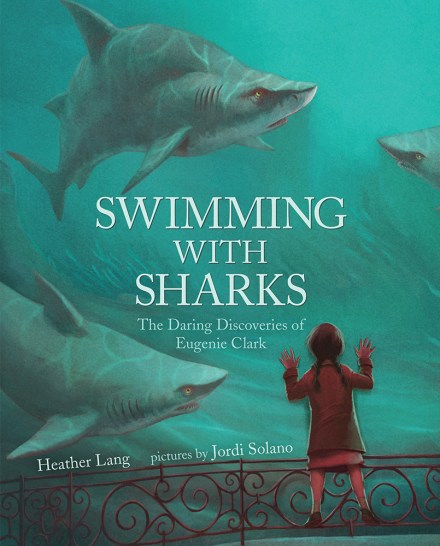
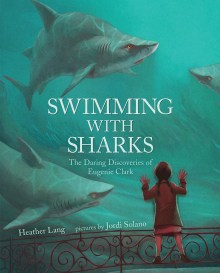
Swimming with Sharks: The Daring Discoveries of Eugenie Clark

Written by Heather Lang | Illustrated by Jordi Solano


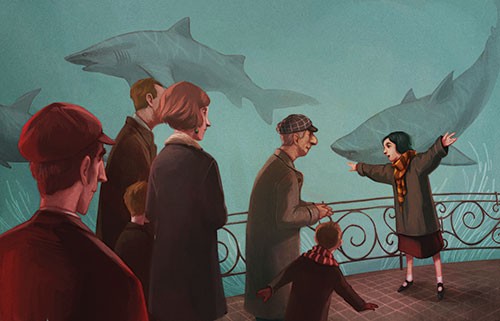
When young Eugenie Clark pressed her face against the aquarium window at the sharks swimming by, she did not see “piercing eyes…rows of sharp teeth…vicious, bloodthirsty killers.” Instead she saw “sleek, graceful fish” and dreamed of being inside the tank to swim among them. She loved to spend Saturdays at the New York Aquarium sharing her knowledge of fish with visitors. She wished there was more information available about sharks and hoped for a day when she could learn more about them.

celebrate-picture-books-picture-book-review-swimming-with-sharks-at-aquarium

Image copyright Jordi Solano, 2016, courtesy of plumpuddingillustration.com

At home her mother bought Genie her own little fish tank, and soon the whole apartment was full of fish and reptiles. Genie kept careful notes on her pets as she tried to answer her many questions. William Beebe, a famous scientist who studied fish, was Genie’s hero. She too wished to explore the ocean like he did. But this was the 1930s and not many people “dared to study the depths of the sea, and none were women.” Eugenie’s mother suggested she study typing and try to become Beebe’s secretary. The life of a secretary was not what Genie had in mind.

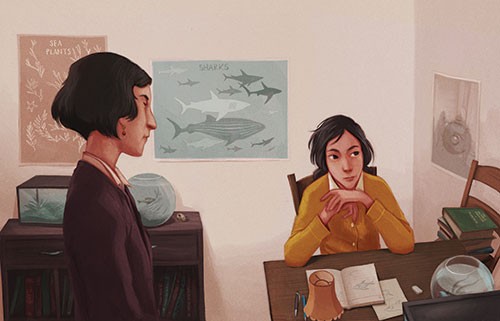
Eugenie received a Master’s Degree in zoology, and when a well-known ichthyologist offered her a job as his research assistant and an opportunity to take oceanography classes, she moved to California. There she collected fish and water samples. The beauty of the underwater world astonished her. In the lab she was able to dissect a swell shark to learn “how and why it puffs up.” But Genie wanted to dive deeper—to swim with sharks.

celebrate-picture-books-picture-book-review-swimming-with-sharks-studying

Image copyright Jordi Solano, 2016, courtesy of plumpuddingillustration.com

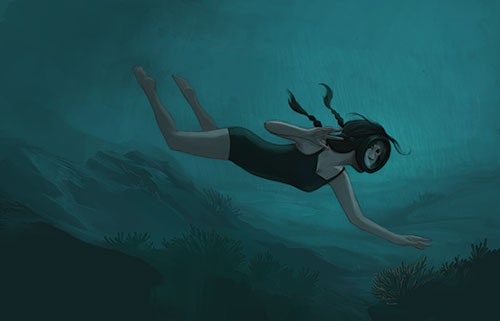
One day, Genie’s professor allowed her to try helmet diving. Wearing the heavy metal helmet, Genie was able to descend into the cold, murky deep where kelp forests waved with the current. “In 1949 the US Navy hired Genie to study poisonous fish in the South Seas. As she collected fish, she came face to face with a shark. The shark swam closer and closer then suddenly dove and disappeared out of sight. Genie was thrilled by the encounter.

In 1955 Eugenie moved to Florida and opened the Cape Haze Marine Laboratory, becoming the first to study sharks in their natural environment. The more she studied sharks, the more she realized that they were intelligent creatures, not stupid “eating machines” as most people thought. She wondered if sharks could be trained.

Eugenie set up an experiment in which a shark needed to press a white board to receive a reward a short swim away. Soon, the female shark of the pair realized that if the male shark pressed the board, she could swim to retrieve the reward. The pair remembered the exercise even after a ten-week break. Soon, scientists from around the world wanted to work with Genie. 

celebrate-picture-books-picture-book-review-swimming-with-sharks-swimming-under-water

Image copyright Jordi Solano, 2016, courtesy of plumpuddingillustration.com

Word reached her about “‘sleeping sharks,’” off the coast of Mexico. Instead of swimming around, these sharks stayed on the ocean floor. Eugenie was determined to learn how they breathed without moving. She dived deep into their territory, finding a requiem shark in an ocean cave. Here, she was face-to-face with one of the most feared fish in the sea. Genie swallowed any worry and watched as the fish opened and closed its mouth, providing itself with oxygen as a remora fish cleaned its gills.

Genie took water samples and completed other tests that revealed astonishing facts about the ocean caves and the habits of sharks. But while Genie was learning the facts about these mysterious sea creatures, most people still feared them and considered them with suspicion and superstition. As time went by, Genie began seeing fewer and fewer sharks on her dives. They were being killed out of fear, for their fins, and because people thought it would make beaches safer.

celebrate-picture-books-picture-book-review-swimming-with-sharks-sunset

Image copyright Jordi Solano, 2016, courtesy of plumpuddingillustration.com

Genie began talking about her research, and people listened. “Dr. Eugenie Clark had become one of the most respected fish scientists in the world.” She taught people that there is always more to learn and “always more surprises.”

An extensive Author’s Note about the life and work of Eugenie Clark as well as more information on sharks follows the text.

Heather Lang delves into the life’s work of a woman who fearlessly challenged herself and the prevailing science to increase our knowledge of sharks and change people’s perspective on these beautiful creatures. Readers will love Lang’s comprehensive storytelling—beginning with young Genie’s fascination with fish and the sea—that reveals the pivotal events which led to her discoveries. Fascinating anecdotes from Eugenie’s research and personal encounters with sharks will enthrall children, and the idea that there is much more to discover will resonated with young scientists in the making.

celebrate-picture-books-picture-book-review-swimming-with-sharks-looking-at-shark

Image copyright Jordi Solano, 2016, courtesy of plumpuddingillustration.com

Jordi Solano takes readers to the depths of the ocean in his sea-green, atmospheric illustrations that beautifully mirror the world of sharks. Textured and layered images of marine plants and a variety of creatures give children an up-close view of Eugenie Clark’s work and the fish she encountered on her dives. Each type of shark is magnificently and realistically drawn, giving kids an idea of coloring, size, movement, and more. Children will also see Eugenie’s research facilities and the equipment she used in her studies.
For anyone interested in marine science, history, biographies, or the environment in general, Swimming with Sharks: The Daring Discoveries of Eugenie Clark is a can’t-miss book.

Ages 5 – 9

Albert Whitman & Company, 2016 | ISBN 978-0807521878

Discover more about Heather Lang and her books on her website!

View a gallery of artwork by Jordi Solano on Plum Pudding Illustration!
National Wildlife Day Activity

celebrate-picture-books-picture-book-review-fascinating-sharks-word-scramble

Fascinating Sharks Word Scramble


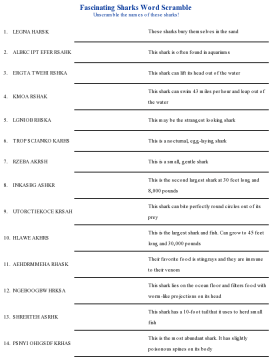
Read the clues and unscramble the names of 14 types of sharks in this printable Fascinating Sharks Word Scramble! Here’s the Solution!

celebrate-picture-books-picture-book-review-swimming-with-sharks-cover

You can find Swimming with Sharks at these booksellers

Amazon | Barnes & Noble | Books-a-Million | IndieBound

Picture Book Review