June 2 – Leave the Office Earlier Day

celebrate-picture-books-picture-book-review-the-secret-subway

About the Holiday

The brain child of Laura Stack, a specialist in employee motivation, Leave the Office Earlier Day urges a look at how employees and employers use the working hours of the day to best advantage. Today’s holiday motivates employees to finish their tasks before schedule by making a conscious effort to increase efficiency and productivity. Greater cooperation between workers and their bosses can lead to less downtime and more success. To celebrate today’s holiday, employees can ask their bosses if they can leave the office once their work is truly and well finished. Employers may want to allow their workers to leave as soon as they have completed all their tasks. Both sides may find this tactic improves productivity and creates a more positive work environment.

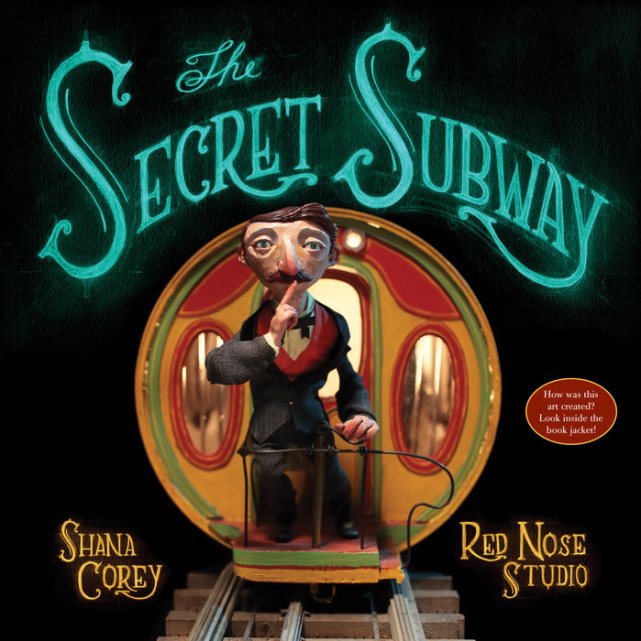
The Secret Subway

Written by Shana Corey | Illustrated by Red Nose Studio (Chris Sickels)


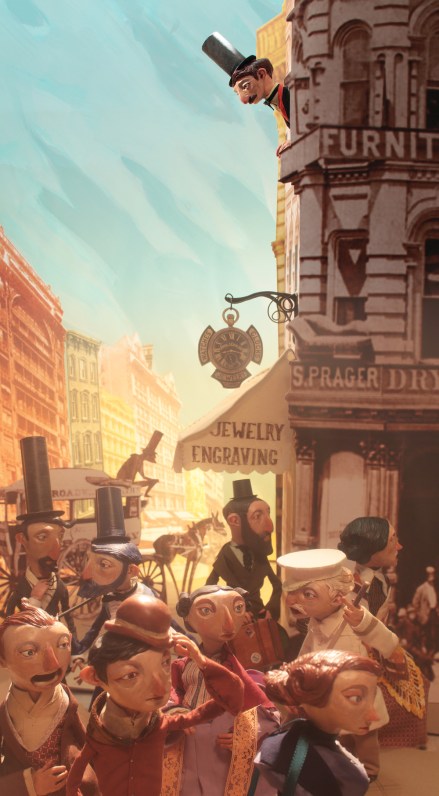
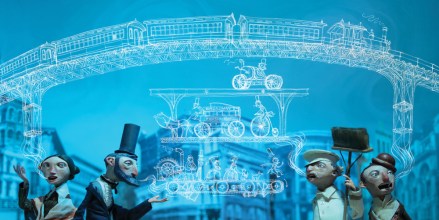
In the 1860s the streets of New York were…well, not to put too fine a point on it…disgusting. Cobblestone and filled with trash, waste, horse manure, dust, dirt, and throngs of people, the roads made for rough travel. Many people had ideas about what could be done to make the streets safer and cleaner. Some thought a moving sidewalk would work, others talked about double-decker roads or an elevated train system. But although there was a lot of talk, nothing ever got done.

celebrate-picture-books-picture-book-review-the-secret-subway-city

Image copyright Chris Sickles, courtesy of rednosestudio.com

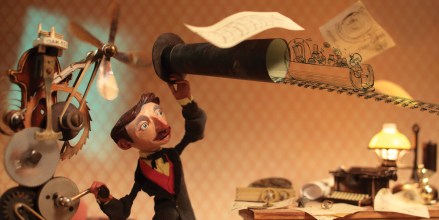
Alfred Ely Beach, however, peered down from his high office room and studied the street below him. Alfred Beach was a thinker, a publisher, and an inventor. He put his clever mind to work and came up with a solution. He envisioned a train powered by an enormous fan that would travel underground. “People would get where they needed to go as if by magic!” he thought. He couldn’t wait to start building. There was just one problem—he didn’t own the streets. And getting permission to dig them up would be hard. “So Beach hatched a sneaky plan. He would propose building an underground tube to carry mail instead.” As he had imagined, no one objected to this project when he proposed it—not even Boss Tweed, who unofficially ran the city.

celebrate-picture-books-picture-book-review-the-secret-subway-designing

Image copyright Chris Sickles, courtesy of rednosestudio.com

Given the okay, Beach rented the basement of Devlin’s Clothing Store. Every day he sent in workers to dig and every night wagons took away the debris. For 58 days and nights Beach’s men tunneled under the city, moving forward 8 feet each day. At last the tunnel was finished. It was 8 feet across and 294 feet long—large enough to hold a train full of people.

Beach then decorated the basement to be a beautiful, welcoming waiting room. Gaslight lamps and paintings dotted the walls, flowers added color, and a grandfather clock rang out the time. There was even a fountain with goldfish, a man playing a grand piano, and a delicious lunch. When everything was ready, Beach invited reporters, government officials, and distinguished citizens to join him on February 26, 1876 at the “Beach Pneumatic Transit Company.”

celebrate-picture-books-picture-book-review-the-secret-subway-designing

Image copyright Chris Sickles, courtesy of rednosestudio.com

That first day Alfred Beach’s guests only admired the train, but they gave it glowing praise. Soon Beach opened his train to the public. With a WHOOSH of a gigantic fan, the train zipped down the track and then back again. “Beach’s train was a SENSATION! All winter while wagons slipped and slid on the slushy streets above, people poured into Devlin’s for the twenty-five-cent ride.”

While riders loved it, some people objected. Shop keepers didn’t want potential buyers underground. Property owners were afraid the digging would hurt their buildings, and some felt Beach wanted too much power. Even Boss Tweed no longer supported it since some of his friends had their own ideas on building a subway. When the governor of New York refused to let Beach expand his train, the project came to a halt.

celebrate-picture-books-picture-book-review-the-secret-subway-invites-riders

Image copyright Chris Sickles, courtesy of rednosestudio.com

The idea didn’t die, however, and “many years later drilling could be heard once again under the streets of New York City” as a train system powered with electricity was being built. Diggers discovered many unusual things buried under the city. Perhaps the most surprising was a brick wall behind which stood a little railroad car rusting in its tracks, a memorial to innovation and the future.

Alfred Ely Beach was one clever man, and Shana Corey tells his story with historical perspective, wit, and suspense. Corey’s language crackles with evocative alliteration, stealth, and action. Kids will be excited to learn of the intrigue and imagination that led to this remarkable snippet of America’s history.

Fans of Claymation will love Chris Sickels’ multimedia artwork that combines sculpted characters, specially built props, photographs, and illustration. Sickels’ characters are nothing short of astounding. Their period clothing, hairstyles, and expressive faces lend an engaging and realistic dimension to the vintage scenes. Sickels cleverly depicts early New York City and people’s alternative ideas to the traffic problem. His use of color and lighting sets the perfect tone for this highly entertaining and educational picture book. Kids will want to linger over each page to catch all the details of The Secret Subway.

Ages 4 – 10

Schwartz & Wade, Random House Kids, 2016 | ISBN 978-0375870712

Leave the Office Early Day Activity


celebrate-picture-books-picture-book-review-the-secret-subway-chris-sickels-craft

Chris Sickels’ Secret Subway


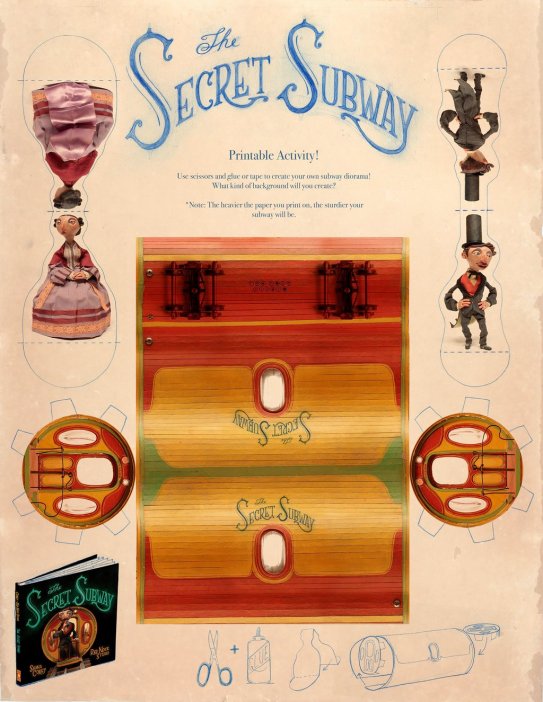
Chris Sickels of Red Nose Studio invites you to build your own Secret Subway with this printable play set, complete with Alfred Ely Beach and a passenger! Click here to download your printable Secret Subway Activity!

Build a Super Subway Car

celebrate-picture-books-picture-book-review-subway-car

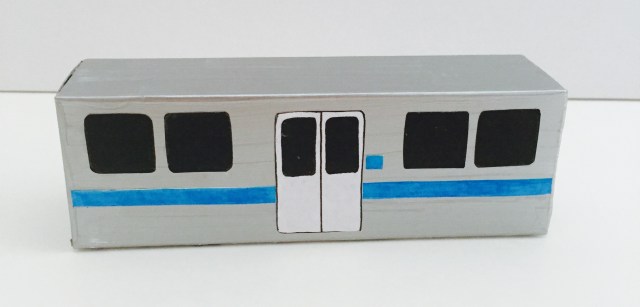
Every day, millions of people all over the world travel to work, school, and other activities by subway. Here’s an easy and fun way to build your own subway train from recycled materials. You can make just one car or make a few and connect them to create a long train worthy of any big city!

Supplies

  • Printable Subway Car Template
  • Medium or long toothpaste box
  • Silver paint
  • Glue
  • Paintbrush
  • Scissors

Directions

  1. Paint the toothpaste box with the silver paint, let dry
  2. Cut out the windows, doors, and stripe templates
  3. Trim the stripes to fit your box
  4. To make the little sign near the door, trim a small aquare from one of the stripes
  5. Glue the templates to the box

Picture Book Review

June 1 – Global Running Day

celebrate-picture-books-picture-book-review-the-wildest-race-ever

About the Holiday

On your mark, get set, run! More than 2 million people in 160 countries have pledged to run on today’s holiday. Global Running Day is the evolution of National Running Day in the United States, which was started in 2009 by leading running organizations and races throughout the nation. It has been held annually on the first Wednesday of June ever since. This year will mark the first-ever Million Kid Run that aims to have a million kids around the world pledge to run with the hope that they will discover the joys of running and will be inspired to continue the sport through life. Participating is as easy as running in your neighborhood, gathering with friends to run, or even playing tag with your kids.

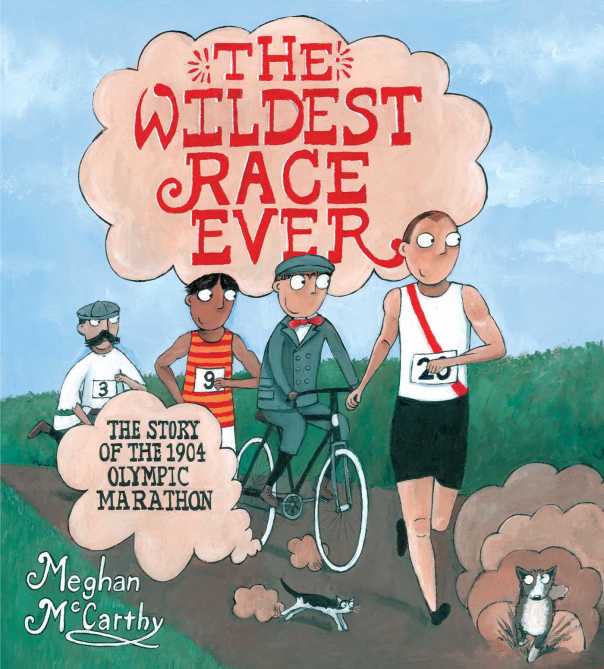
The Wildest Race Ever: The Story of the 1904 Olympic Marathon

By Meghan McCarthy


On August 30, 1904 the first United States Olympic Marathon took place at the World’s Fair in St. Louis, Missouri. Torrential rainstorms in the days before the race had washed away the original route, so a new, more difficult route was mapped out. Some of the 32 racers were:

Fred Lorz, a Boston bricklayer; John Lorden, the winner of the 1903 Boston Marathon; Sam Mellor from New York and the winner of two major marathons; Felix Carvajal, a mailman from Cuba; Arthur Newton; Albert Corey;  Len Tau, a long-distance running messenger from South Africa; William Garcia, the “greatest long-distance runner on the Pacific Coast”; and Thomas Hicks, who had only trained on flat terrain and was not ready for hilly St. Louis. There were also racers from countries all over the world.

At the starting line the racers waited in 90-degree heat for the signal. When the pistol shot rang out, they took off. The early leader was Fred Lorz. As the racers took to the hills outside the stadium so did cars full of reporters, judges, and doctors. Some spectators rode along side them on bicycles. All these vehicles stirred up so much dust that the runners choked on it.

At mile two, Sam Mellor and Fred Lorz were in the lead with Thomas Hicks only a little behind, but at mile 9 Lorz suffered terrible cramps and was driven away in a car. Now Albert Corey and William Garcia were neck and neck, and Hicks was catching up!

And what about Felix Carvajal? He ran and ran—but he also stopped and stopped. He loved talking to the spectators that cheered him on. It gave him an opportunity to practice his English! Arthur Newton, Sam Mellor, and Thomas Hicks exchanged the lead several times. No one knew who would win!

Where was Len Tau? Unfortunately, an angry dog chased him until he was a mile off course. Felix Carvajal also got distracted—not by a dog, but by an apple orchard! He settled down under a tree to satisfy his hunger. Soon, Mellor began suffering cramps and was suddenly out of the race.

Hicks suffering unbearable thirst in the staggering heat, began begging his trainers for water. They refused, instead giving him a concoction of strychnine and egg white. Another name for strychnine is rat poison! What would happen to Hicks after he drank it?Meanwhile who should appear out of the dust? Fred Lorz! He ran through the tape at the finish line and was declared the winner! Cheers erupted from the crowd. But wait! Someone said that Lorz had cheated. The cheers turned to boos, and even though Lorz said it was all a joke, the race committee banned Lorz from racing for life.

Hicks, somehow, kept running, buoyed by the cheering crowds. His trainers gave him more of the “health” drink, which made Hicks sluggish and confused. Nevertheless, he struggled on. When he came to the top of the last hill, seeing and hearing the crowds energized him. He pushed himself to run harder and harder until he broke through the tape. He collapsed on the ground just as he was declared the winner. He was rushed to the hospital, but was well enough to accept his award an hour later.

What happened to the other runners? All, except William Garcia who was overtaken by the clouds of dust, crossed the finish line at various times and with unique comments on their performance. These racers may have been very different, but they all had one thing in common. Each one accomplished an astounding feat: They competed side by side in the “killer marathon” of 1904 while upholding the Olympic spirit.

Meghan McCarthy with wit and suspense brings the story of the 1904 marathon to life for kids used to paved, well-marked routes, energizing sports drinks, supportive running shoes, and comfortable running clothes. Perhaps the only similarities to today’s races and yesteryear’s are the start and finish line and the cheering crowds! McCarthy’s inclusion of the humorous and the near-disastrous will keep readers’ hearts racing until the very end, when the topsy-turvy finish is revealed!

McCarthy illustrates The Wildest Race Ever with verve and comic flourishes that well-represent this extraordinary Olympics event. Kids will giggle and gasp to see what happens to the racers – and even a couple of spectators – during the race.

The Wildest Race Ever is a must-read for sports and history enthusiasts alike! 

Ages 4 – 9

Simon & Schuster, 2016 | ISBN 978-1481406390

Global Running Day Activity

celebrate-picture-books-picture-book-review-shoe-lace-craft

Sassy Shoe Laces


Did you know that having cool shoelaces makes you run faster? Well…that might not be exactly true, but you will definitely look good no matter what you’re doing if you make some unique laces for your shoes.

Supplies

  • Shoelaces in any color
  • Fabric paint or markers

Directions

  1. With the fabric paint or markers make dots, stripes, or any designs you like. You can even paint fish or flowers!
  2. Enjoy them on your run!

May 30 – Memorial Day

celebrate-picture-books-picture-book-review-the-poppy-lady

About the Holiday

Memorial Day, originally called Decoration Day to commemorate the laying of wreaths and flowers on soldiers’ gravesites, was first celebrated on May 30, 1868. In 1971 Congress passed the Uniform Monday Holiday Act and established the last Monday in May as Memorial Day. The day is honored with parades and special commemorative events. At Arlington National Cemetery in Washington DC, the President or Vice President lays a wreath at the Tomb of the Unknown Soldier

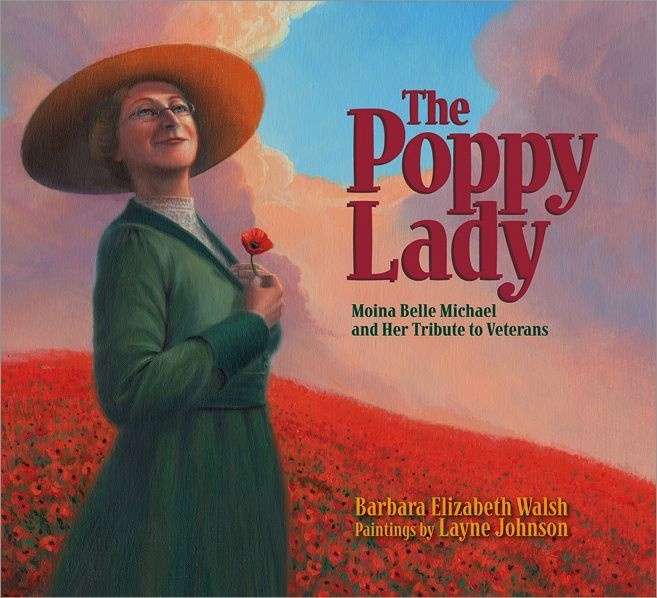
The Poppy Lady: Moina Belle Michael and Her Tribute to Veterans

Written by Barbara Elizabeth Walsh | Illustrated by Layne Johnson


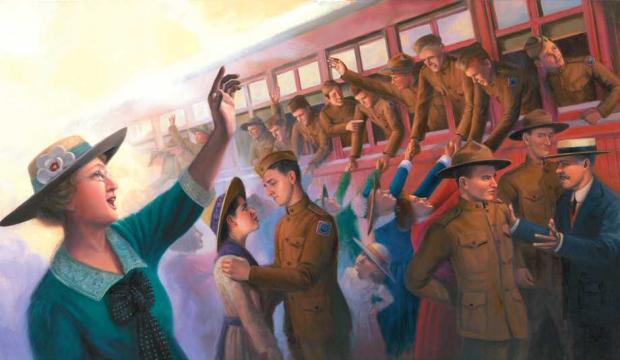
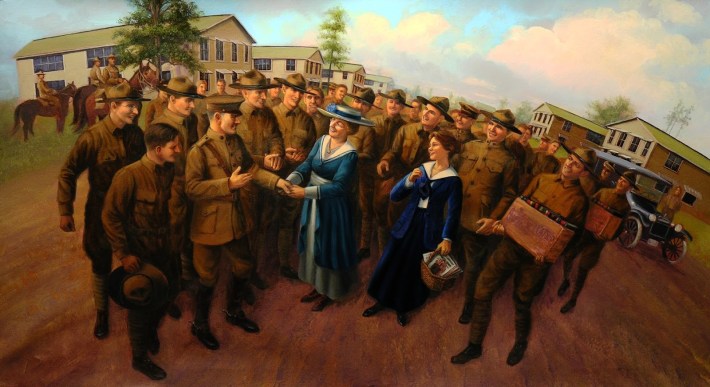
In April of 1917 President Woodrow Wilson declared that America was going to war in Europe. As a teacher and foster mother to girls at the University of Georgia’s Normal School, Moina Belle Michael wanted to do something to honor the boys going off to fight—boys who were the brothers, sweethearts, even fathers of her students. Moina did what the other women were doing to help—knitting socks and sweaters and rolling bandages—but she wanted to do more. She went to the soldiers’ camps nearby to deliver books, magazines, and candy, and she waved goodbye to them at the train station. But she still wanted to do more.

celebrate-picture-books-picture-book-review-the-poppy-lady-waving-goodbye

Image copyright Layne Johnson, 2012, text copyright Barbara Elizabeth Walsh, 2012. Courtesy of Boyds Mills Press.

Moina wanted to go overseas to help the young men with the Y.M.C.A, but after she finished her training at New York’s Columbia University, she was told she was too old to go. She then set up a desk in the basement of Hamilton Hall on the Columbia University campus where she assisted soldiers before they deployed, but the room was dark and dreary. Moina wanted them to have a more cheerful meeting place.

celebrate-picture-books-picture-book-review-the-poppy-lady-poppy-camp

Image copyright Layne Johnson, 2012, text copyright Barbara Elizabeth Walsh, 2012. Courtesy of Boyds Mills Press.

Moina brightened the room with fresh flowers she bought with her small salary. More soldiers came to spend time with her, to share their pictures, letters, and hometown news. But Moina wanted to do even more. One day she rediscovered a poem she had read many times. Titled We Shall Not Sleep, it was written by Lieutenant Colonel John McCrae and was a tribute to soldiers who had died on the battlefields of Flanders. The poem was illustrated with a field of nameless crosses and bright red poppies. The last verse of the poem urged others to take up the torch of the noble fight. Suddenly, Moina knew what she had to do.

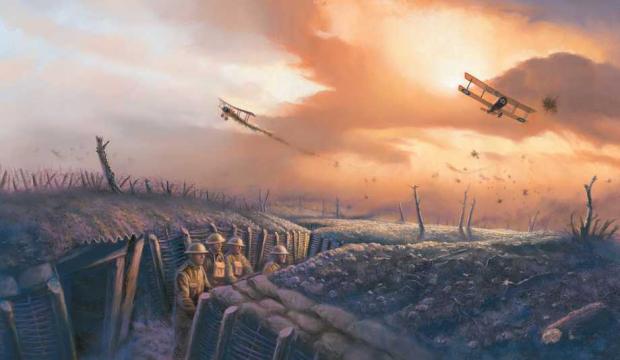
celebrate-picture-books-picture-book-review-the-poppy-lady-war

Image copyright Layne Johnson, 2012, text copyright Barbara Elizabeth Walsh, 2012. Courtesy of Boyds Mills Press.

She wrote a poem of her own, giving poppies a special meaning: “And now the Torch and Poppy red / We wear in honor of our dead. / Fear not that ye have died for naught; / We’ll teach the lesson that ye wrought / In Flanders Field.” Moina shared her poem with soldiers at the Y. Many wanted to wear red poppies on their uniforms to honor their fallen friends. With a ten dollar donation, Moina went shopping to find artificial red poppies that she and the soldiers could wear.

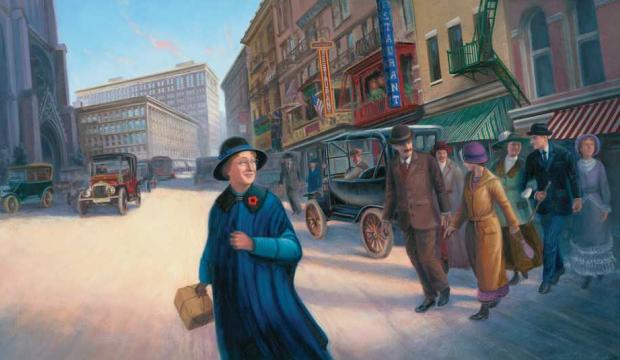
celebrate-picture-books-picture-book-review-the-poppy-lady-poppy-on-coat

Image copyright Layne Johnson, 2012, text copyright Barbara Elizabeth Walsh, 2012. Courtesy of Boyds Mills Press.

But finding these flowers was difficult. She finally found one large poppy and 24 smaller ones. She pinned the large one to her coat and with the others wrapped, hurried back to the Y. There she gave the small flowers to some of the men and women leaving for the war in France. But there were so few flowers to share. Moina wanted every American to wear a poppy to remember the soldiers. Always.

The epilogue goes on to reveal that two days after Moina bought those 24 poppies, World War I ended.  While everyone was happy to see the soldiers coming home, people wanted to move on, to forget the horrors of the war. But for veterans it wasn’t easy. Jobs were scarce, some veterans were disabled or suffered lingering effects of war.

Moina wanted to help. She wondered if the poppy could benefit returning veterans. After much work she convinced local and international veterans’ groups to adopt the poppy as their memorial flower. People began donating to veterans’ causes, and in return they received a red poppy. Millions of dollars were raised to help the soldiers. Even today, Moina’s red poppies benefit veterans and remind us of their sacrifices and service.

celebrate-picture-books-picture-book-review-the-poppy-lady-moina

Image copyright Layne Johnson, 2012, text copyright Barbara Elizabeth Walsh, 2012. Courtesy of Boyds Mills Press.

Through her detailed telling of how Moina Belle Michael discovered her life’s work, Barbara Elizabeth Walsh provides a realistic view of the World War I era and the desire of most citizens to do something to help the soldiers fighting the war. The sense of suspense, comaraderie, fear, and disappointment that fueled Moina Michael’s heart and actions are beautifully and straightforwardly presented and give children true knowledge of this time period.

Accompanying the text to maximum effect are Layne Johnson’s inspiring, realistic paintings of the scars of war on both the landscape and the human heart. In close-up portraits, Johnson captures the emotions of the women learning that their brothers, boyfriends, and fathers will be joining the war effort as well as scenes of soldiers training, deploying, and returning to tell their stories. Turning the pages is like stepping onto the university campus, visiting the basement gathering space, and walking the city streets. Especially evocative are the two battle scenes and the view of the Flanders Fields with their endless carpet of poppies and straight rows of white cross markers.

For anyone wanting to teach or learn about the origins and meaning of Memorial Day and the significance of the red poppy, The Poppy Lady: Moina Belle Michael and Her Tribute to Veterans is a must read.

Ages 7 – 12 and up

Calkins Creek, Boyds Mills Press, 2012 | ISBN 978-1590787540

Memorial Day Activity

celebrate-picture-books-picture-book-review-memorial-day-word-scramble

Memorial Day Word Scramble


Unscramble the words associated with today’s holiday and discover a secret message! Print your Memorial Day Word Scramble here!

Picture Book Review

May 19 – It’s National Photography Month

celebrate-picture-books-picture-book-review-dorothea's-eyes-cover

About the Holiday

National Photography Month was established in 1987 by the United States Congress to commemorate the importance of photos to present and future generations. National Photo month gives you an opportunity to consider what you photograph and how you can become more intentional about making photos that will be meaningful decades from now. Look at your subjects and see the colors, people, events, the culture—even the moment that you are documenting. Once you’ve taken your pictures, don’t just leave them on your phone, in the cloud, or on your hard drive. Print them and archive them for the future. Your inspiration, perspective, and opinions will live on in them.

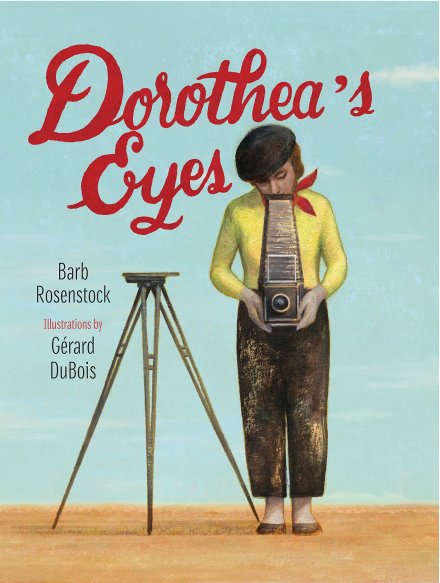
Dorothea’s Eyes: Dorothea Lange Photographs the Truth

Written by Barb Rosenstock | Illustrated by Gérard DuBois


When Dorothea Lange opens her green eyes, she sees things others miss. In the shadows, in patterns within the grain of wooden tables, in the repeated shapes of windows on a wall, and most especially in people’s faces. “Dorothea loves faces! When Dorothea looks at faces, it’s like she’s hugging the world.”

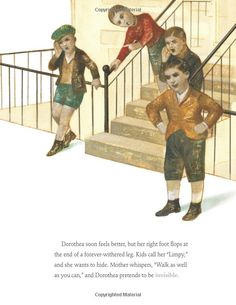
When Dorothea is seven she contracts polio. The disease withers her right leg and forever after she walks with a limp. Other kids tease her and make her want to hide. Her mother encourages her, but Dorothea pretends to be invisible. When her father leaves his family, her mother gets a job in New York and Dorothea goes to a new school. She is different and lonely.

celebrate-picture-books-picture-book-review-dorotheas-eyes-with-camera

Image copyright Gérard DuBois , text copyright Barb Rosenstock. Courtesy of Caulkins Creek

As Dorothea waits for her mother to finish work, she looks around her, spying “into crowded tenements where fathers, home from peddling, read newspapers, and mothers wash dishes, clothes, and babies in rusty sinks—happy and sad mixed together.” She begins to skip school to wander the city, gazing at it with her curious eyes and heart.

When Dorothea grows up she decides to become a photographer. Her family is surprised—it is not a ladylike profession. She works any job she can find in the photography industry, learning about cameras, darkrooms, negatives, and the printing process. “Alone in the darkroom’s amber glow, she studies the wet printing paper while faces appear in black and white. Dorothea loves faces!”

When she is 23 Dorothea travels west and when all her money is stolen in San Francisco, she stays, gets a job, and starts her own portrait studio. She becomes the sought-after photographer of the richest families in California. She makes money, gains friends, gets married, and starts a family of her own. But she always wonders, “Am I using my eyes and my heart?”

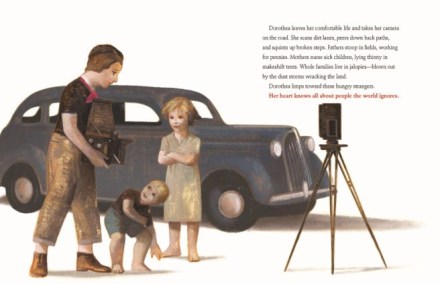
When the stock market crashes and the Great Depression sweeps the country, Dorothea focuses her camera on the desperate and the downtrodden. Her friends don’t understand, but Dorothea sees into these poor people’s hearts. She “knows all about people the world ignores.” For 5 years she goes out into the fields, peers into tents, documents families living in their cars, crouches in the dirt to reveal the stories of the people struggling with the devastation wrought by the Dust Bowl.

celebrate-picture-books-picture-book-review-dorotheas-eyes-with-car-and-camera

Image copyright Gérard DuBois , text copyright Barb Rosenstock. Courtesy of Caulkins Creek

Newspapers and magazines publish her pictures. “Her photographs help convince the government to provide parents with work, children with food, and families with safe, clean homes. “The truth, seen with love, becomes Dorothea’s art.” Dorothea’s photographs are still known today. Their subjects continues to help us see others with our hearts.

Six of Dorothea Lange’s most famous and recognizable photographs are reproduced on the last page—still as riveting today as they were in the 1930s. Further information on her life and work is provided as well as sources where her photographs can be viewed, resources for further study, and a timeline of her life.

celebrate-picture-books-picture-book-review-dorotheas-eyes-kids

Image copyright Gérard DuBois , text copyright Barb Rosenstock. Courtesy of Caulkins Creek

Barb Rosenstock brings Dorothea Lange’s vision to the page with love, honesty, and understanding in this excellent biography of a woman whose photographs defined the Great Depression and Dust Bowl era. Lange’s life-long connection to the poor and often overlooked people of the world is beautifully described and explained in a gentle, compassionate way that will resonate with children. Rosenstock’s language is lyrical with staccato sentences that echo the clicks of Lange’s shutter capturing life’s reality with her eyes and her heart.

Gérard DuBois’s illustrations are arresting and set Dorothea Lange’s story firmly in its historical and emotional landscape. Rendered in acrylic and digital imagery, they feature the muted colors and style of book illustrations from long ago. By placing the images of Dorothea, her family, and her photography subjects against white backgrounds, DuBois emphasizes Lange’s focus on the people she met and faces that inspired her. Distressed textures accentuate the troubled times and the anguish of both Dorothea and her subjects.

Ages 7 – 12

Calkins Creek, 2016 | ISBN 978-1629792088

Discover all the amazing books by Barb Rosenstock on her website!

View a portfolio of art and book illustration by Gérard DuBois on his website!

Here’s a snapshot of Dorothea’s Eyes!

National Photography Month Activity

CPB - New Professionals Picture

News Professionals Clothespin Figures


Make one of these clothespin figures that honors the men and women who work to keep the world informed.

Supplies

Directions

  1. Draw a face and hair on the clothespin
  2. Cut out the clothes you want your journalist or photographer to wear
  3. Wrap the clothes around the clothespin. The slit in the clothespin should be on the side.
  4. Tape the clothes together
  5. Cut out the camera
  6. Tape one end of a short length of thread to the right top corner of the camera and the other end of the thread to the left corner. Now you can hang the camera around the figure’s neck.

Idea for displaying the figures

  • Attach a wire or string to the wall and pin the figure to it
  • Pin it to your bulletin board or on the rim of a desk organizer


Picture Book Review

May 12 – National Odometer Day

celebrate-picture-books-picture-book-review-are-we-there-yet

About the Holiday

In 1847 William Clayton invented a little add-on to the automobile that provides perspective, history, and interesting information on our beloved cars—the odometer! Whether you like to keep track of how many miles you travel on a trip, how economical your gas mileage is, when your next tune-up is due, or just marvel at how long your car has lasted, the numbers on the odometer tell the story. Today, take your car out for a spin—perhaps to the car wash or out to the open road!

Are We There Yet?

By Dan Santat


When you’re invited to a very special birthday party and it’s far away, what do you do? Pack up the car, of course, and head out on an adventure! Going to Grandma’s house is always exciting—at least for the first hour, but after that each minute seems to take for- ev-er. You might even think “Are we there yet?” or “This is taking forever.” Wait! Did you say that out loud? The look on your parents’ faces tell you you did!

You can only stare out the window at the landscape for so long. “But what happens when your brain becomes too bored? That’s when your whole world can turn upside down. Minutes feel like hours. Hours turn to days. Days seem like months and then years. Pretty soon that “quick trip” feels like a million years.

As you ride in the car, tucked in the back seat, feeling a little sick, needing to use the bathroom, your butt growing numb—and bored, bored, bored—could time actually be going backward? While you’re zipping down the highway suddenly a steam train is chugging past, trying to outrun a team of bandits. Now pirates have captured your car and sent it down the plank toward the briny deep! I hope you’re good with a lance because somehow your family’s the main attraction at the royal jousting tournament. And there’s no stopping for the bathroom in Ancient Egypt, or you’ll be put to work building a pyramid.

You think you’ve reached the end of your patience? You’ve actually reached the beginning of time. You may love dinosaurs, but you don’t belong in the Cretaceous Period. So play fetch with T-Rex one time and then climb aboard his back for a wild ride back.

But as quickly as you turned back time you can find yourself in the future—a future you don’t even recognize, where everything you love is gone. So take time now—yes, while you’re bored, bored, bored—to really look around you and see what’s going on. After all, you don’t want to miss this party—it’s the one you’ve been invited to.

Dan Santat’s Are We There Yet? is a rambunctious reminder to enjoy the moment you’re in, because Time is a wily beast that creeps up on you when you’re not paying attention. The art in this book is the star, with its full, two-page vibrant spreads and topsy-turvy format. An old steam train is chased by bandits in the western heat. A rag-tag crew of scallywag pirates menace the family at sword point. Crowds roar at a medieval jousting tournament. Ancient Egyptians toil in the golden sun overshadowed by the Sphynx and pyramids. And it’s love at first sight when the boy comes eye to eye with T-rex in the lush jungles of early Earth.

The scenes of the future, complete with flying cars, neon colors, and helpful robots make clever use of QR codes, and kids will relate to the funny twist ending.

Ages 4 – 8

Little Brown and Company, 2016 | ISBN 978-0316199995

Gardening for Wildlife Activity

celebrate-picture-books-picture-book-review-flower-dot-to-dot

Who’s in the Garden Dot-to-Dots


Completing a dot-to-dot puzzle can be a little like taking a trip—you go from stop to stop, not knowing exactly what you’ll find at the end. In these dot-to-dots, you’ll discover who’s hiding in the garden.

Printable dot-to-dot, page 1

Printable  dot-to-dot, page 2

May 7 – National Train Day

celebrate-picture-books-picture-book-review-locomotive

About the Holiday

Falling at the end of National Tourism Week, National Train Day honors the history of train travel and its importance to the opening of new frontiers as well as its continued  use for pleasure and business transportation. Train museums and train enthusiasts across the country celebrate with special events, rides, and educational opportunities for all ages. Some celebrations occur today, while others are held on May 14.

Locomotive

By Brian Floca


“Here is a road made for crossing the country, a new road of rails made for people to ride.” So begins Brian Floca’s sprawling paeon to the locomotive and its influence on America and the Old West. Amid the Clank Clank Clank of hammers on iron spikes, men from all over toiled from coast to coast to build the rail lines that carried the trains across the country: “Three strokes to the spike, ten spikes to the rail!”

Families who have sold all their possessions to pay for tickets for the week-long trip west stand on the platform in Omaha, Nebraska watching for the approaching train. Suddenly, they hear the clang of the bell and “see a puff from her stack—a puff of smoke, a smudge in the sky.” The awesome train pulls up at the station huffing “like a beast.”

Her crew—the brakeman, fireman, engineer, and conductor—make the train ready. They gather the passengers, stoke the firebox, push forward the Johnson bar, and get the train underway. The passengers sit back, ready for the long journey. The engineer “is the master of his machine, he knows her moods and tempers, where to set her bars and levers….Westward, westward runs the train, through the prairies, to the Great Plains, on to the frontier.”

In the cars the travelers read, play games, meet their neighbors. In winter they are warmed by a coal stove in one corner, while in the other corner a “modern” convenience is provided. Eventually, the train must stop to refuel. The passengers scramble to the railroad restaurant at the station. They have 20 minutes to eat what the menu offers: buffalo steak, antelope chops, or chicken stew (which tastes suspiciously like prairie dog).

As night falls a new engine is carefully attached to the cars by the switchman, who has learned to be quick to avoid the rolling, jumping cars that can take a finger. “Through the night the engine runs. Those up late hear her whistle, her wild and lonesome cry. It echoes on far hills and homes, it sounds in distant dreams.”

By morning the train has reached the mountains. The going is steep and slow. A second engine must be attached to give the train power enough to climb. On the other side of the mountains the terrain is rugged, and the train must traverse long, rickety wooden bridges. Days pass as the train travels through beautiful, mysterious country, skirting land formations such as Castle Rock, The Witches, Devil’s Slide, and the 1000 Mile Tree.

In Utah at Promontory Summit, the train comes to the meeting place of the tracks built from the East and the tracks built from the West. The passengers disembark and change trains, changing train companies also, from the Union Pacific that brought them here to the Central Pacific who will take them the rest of the way. Now the train passes through desolate, dry country, home to the Paiute and the Shoshone.

The mighty Sierra Nevada rises up ahead. A second engine is again required. If the tracks are slick, the “engineers can pull a handle to drop some sand down a tube, onto the tracks. The wheels hit the grit, the traction does the trick!” Closer and closer the train comes to its final destination, puffing through long wooden sheds that keep the tracks clear in winter and into dark tunnels blasted through the mountain rock.

Down, down the train progresses to the end of the line. The weary but excited travelers jump from the train to meet their friends or family or to start a new life in San Francisco!

If you love trains, American history, or the Old West, or if you are simply enamored of travel, you will want to read Brian Floca’s Caldecott Medal Winning and Silbert Honor book, Locomotive. Floca’s lyrical language makes poetry of the steam train’s inception, from the laying of the rails to the inner workings of the engine to the long journey westward. Fascinating facts of the train crews’ work, conditions for the passengers, and the territory crossed make this a page turner that any age will enjoy.

Readers can almost hear the sounds of the clanging bell and huffing engine, as these sounds are represented in a variety of typefaces and sizes, growing larger and larger as the train approaches the station. Every page is a joy. As the train chugs across the country, the paintings are swept in rushing brush strokes and the train whooshes into view from the edges, filling the page. The vast empty plains nearly dwarf the locomotive, and the mountainous regions pose chilling challenges for the iron horse. The nighttime scenes are beautifully lit by starlight and the single headlight of the train, reflecting the dreams of a new nation.

Although Locomotive is a longer picture book, its rhythms, depth of description, and gorgeous language will appeal to even very young children. Make some tea and hot chocolate and settle in for a cozy read of wonderful book!

Ages 4 – 12 and up (adults will also enjoy this book)

Atheneum Books for Young Readers, 2013 | ISBN 978-1416994152

National Train Day Activity

celebrate-picture-books-picture-book-review-all-aboard-maze

All Aboard Maze!


Trains travel over intricate terrain, over mountains, across vast plains, and through exciting cities. It’s a little like finding your way through a maze! Have fun completing this printable All Aboard Maze! Here’s the Solution. Choo choo!

April 28 – Workers’ Memorial Day

celebrate-picture-books-picture-book-review-brave-girl

About the Holiday

Some jobs are so dangerous that workers get hurt or even die doing them. Around the world organizations have been established to help industries provide safer working environments for their employees by establishing standard rules and regulations for buildings, machinery, working hours, and more. Unions and other groups have also been founded that represent workers to ensure their rights are upheld and their needs are met. Today we honor the sacrifices of workers in dangerous professions and raise awareness for safe working conditions.

Brave Girl: Clara and the Shirtwaist Maker’s Strike of 1909

Written by Michelle Markel | Illustrated by Melissa Sweet


Among the immigrants sailing to New York, stands five-foot-tall Clara Lemlich. She may not know it now, but she’s going to change her new city. While her father can’t find work, Clara gets a job in the garment industry, which hires school-age girls to make women’s clothing. Instead of going to school, Clara spends her days hunched over her sewing machine in a dark, smelly factory with many other girls, making clothes as fast as she can.

The rules of the factory are severe. For minor mistakes workers can be fined or worse—fired, leaving their families without an income. The doors are locked so the girls can’t leave without being inspected to ensure they haven’t stolen anything. And the workers must toil long into the night. Despite it all Clara is determined to get an education even though it means walking to the library after work and missing sleep to read her lessons. 

At the factory the girls become friends and reveal stories and secrets. The working conditions make Clara angry. She hears that the men at the factory want to form a union. If all the workers team up, they can hold a strike and force the management to treat them better, the men say. But they don’t think the girls are tough enough.

Clara knows what the girls are capable of. Every day she talks to her friends and the other women, urging them to fight for their rights—and they do! But it’s not as easy as the men predicted. The bosses don’t want to give in. In fact Clara’s life is in danger! She is beaten and arrested. Despite the intimidation she continues to picket. These small strikes make little difference, however—the bosses just hire new girls and the work continues.

Clara and other union leaders think only a huge strike by all workers in every garment factory in New York will cause the bosses to listen and make changes. At a union meeting workers pack the seats to listen to leaders from across the country. Not one of them recommends such a large strike. Clara can keep silent no more. She moves to the front of the hall and calls out. People lift her to the stage. Shouting “Unity is strength” she rallies the crowd and begins the largest strike of women workers ever in United States history.

The next morning thousands of women take to the sidewalks, leaving their sewing machines empty and silent. New York is stunned! Newspapers call the strike a “revolt,” and the girls an “army.” But this is really an army of children—the girls range in age from only 12 to 25 years old. Clara knows how to lead and motivate the girls. She gives rousing pep talks, sings, and stands up to thugs sent to harass them.

All winter the girls join the men strikers. They are starving and cold and become the inspiration for newspaper articles and fundraising. Many wealthy women donate to their cause and join them on the picket lines. Finally the bosses relent. They agree to the formation of unions in their factories, raise salaries, and shorten the work week. Factory workers in Philadelphia and Chicago take heart from Clara’s work and improve conditions in their cities.

Even though Clara is young and small, she proves that anyone can right wrongs and make a difference.

The final pages include more information about the garment industry in the early 1900s as well as a bibliography.

Michelle Markel’s Brave Girl is a spirited biography of Clara Lemlich, clearly outlining the life and working conditions of immigrants in the early 1900s—especially industries’ use of children to fill low-paying, oppressive jobs. This true-life story of a girl who wouldn’t give up or give in is told with pride and balance, touching on the dangers Clara faced in a sensitive manner appropriate for children. Overall, the idea that one person can make a difference no matter how big or how old shines through, making this not only a tale of the past, but an inspiration for today’s children and the future.

Melissa Sweet cleverly combines watercolor and gouache paintings with colorful fabric, ribbon, sewing pattern paper, and ledger pages to create illustrations fitting to the story. The pictures appear sewn onto the pages with straight, zigzag, and embroidery stitches, and the vibrant colors depict the fiery nature of Clara and all the workers who strove for better lives.

Ages 4 – 9 (and up as Brave Girl makes a wonderful teaching text)

Balzar + Bray, Harper Collins, 2013 | ISBN 978-0061804427

Workers’ Memorial Day Activity

celebrate-picture-books-picture-book-review-dream-job-application

Dream Job Application


Work isn’t working when you love your job—it’s fun! What is your perfect job? Is it working with animals? Playing a sport? Being an artist, scientist, entrepreneur? Fill out this application and get started on following your dreams! Print the Dream Job Application below!

Dream Job Application