February 22 – World Yoga Day

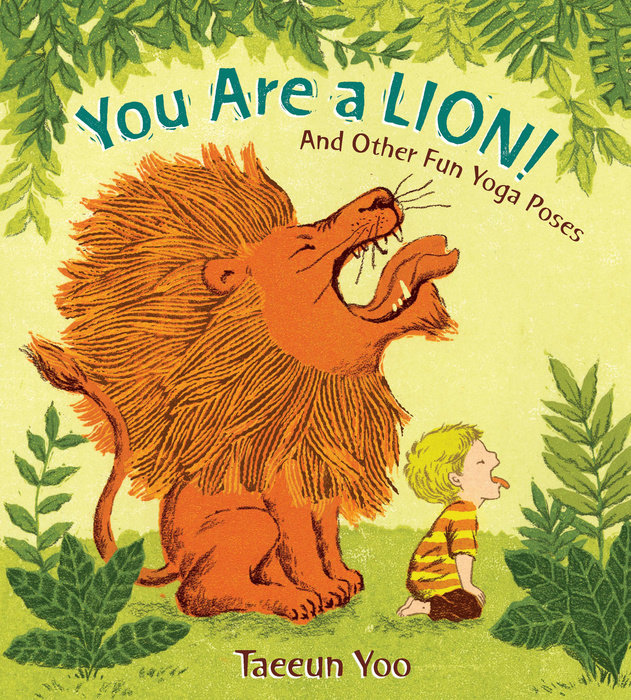
celebrate-picture-books-picture-book-review-you-are-a-lion-and-other-fun-yoga-poses-cover

About the Holiday

World Yoga Day was the idea of Samira Radsi, a yoga teacher from Berlin, Germany, who believed that harnessing the power of yogis worldwide could help the victims of human rights violations. With help from her friend, Bjoern Wyrich, a fellow yoga teacher, she contacted yoga schools across the globe and received positive responses from hundreds of schools. Now each year, yoga teachers, schools, students, and yogis around the world donate time, space, and money to human rights causes.

During the time of 11:00 a.m. and 1:00 p.m. local time, participating yoga schools hold a session during which everyone devotes all of their thoughts and energy to people who have suffered human rights violations in hope that they will help people feel stronger and more positive. The two-hour time period creates a twenty-four hour yoga marathon of positive energy to support those in need. Any funds raised go to charities that help the victims of injustice. To celebrate, why not seek out a local yoga school or group who is participating in today’s holiday and lend your support?

You Are a Lion! And Other Fun Yoga Poses

By Taeeun Yoo


When the bright, early sun begins to warm the garden, “children all gather / Namaste to the morning.” If you sit back on your heels with your hands on your knees and your tongue sticking out, what are you? “You are a…Lion / King of the jungle / Roaring so loud / Make the woods rumble.”
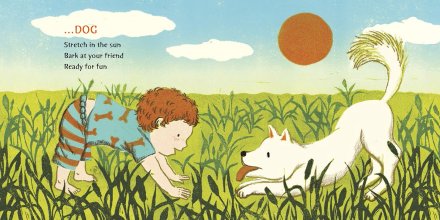
celebrate-picture-books-picture-book-review-you-are-a-lion-and-other-fun-yoga-poses-dog

Copyright Taeeun Yoo, 2012, courtesy of Nancy Paulson Books.

Now, sit up straight and press the bottoms of your feet together while you hold your toes and flap your knees. What are you? “You are a… Butterfly” Feel the breeze as you stretch your wings and flit through the air. What would you be if you stood and bent to touch the ground in front of your feet? You’d be a dog… “Stretch in the sun / Bark at your friend / Ready for fun.”
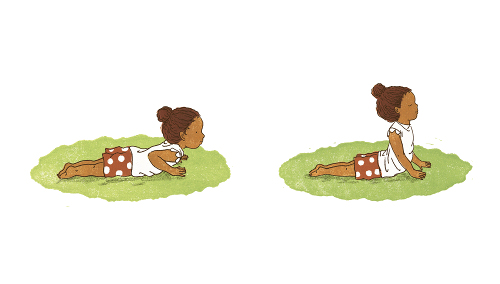
celebrate-picture-books-picture-book-review-you-are-a-lion-and-other-fun-yoga-poses-snake-girl

Copyright Taeeun Yoo, 2012, courtesy of Nancy Paulson Books.

Next try this! Lie on your stomach with your hands near your shoulders and push up. Do you feel like a…Snake? “In the cool grass / Slither and glide / Make a big hiss.” Ready for another one? Great! Crouch down with your feet flat on the floor and your hands on the ground in front of you and hop. You know what you are! A frog!
celebrate-picture-books-picture-book-review-you-are-a-lion-and-other-fun-yoga-poses-cat

Copyright Taeeun Yoo, 2012, courtesy of Nancy Paulson Books.

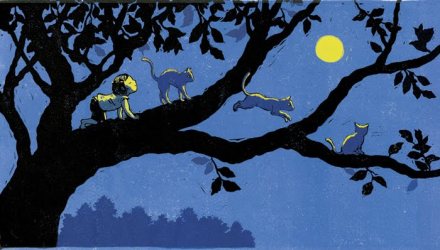
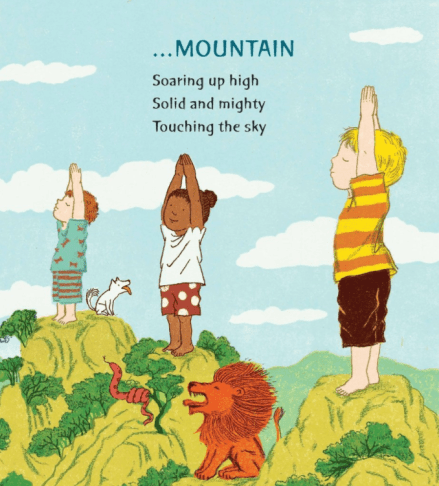
If you kneel down on all fours put your head down and arch your back, do you feel like a…Cat? “Frisky at night / Mew to the moon / Play till it’s light.” Then stand tall with your palms together and your arms stretched high over your head. You’re a mountain, “solid and mighty / Touching the sky.” Finally, lie down on the ground and slowly breathe as you listen to the silence. “Namaste to each other.”
celebrate-picture-books-picture-book-review-you-are-a-lion-mountain

Copyright Taeeun Yoo, 2012, courtesy of Nancy Paulson Books.

Taeeun Yoo’s charming illustrations of a diverse group of children sitting, standing, lying, and crouching in simple yoga positions give way to lush imaginative scenes as the child assumes the personality and traits of the animals in each particular yoga pose. Accompanying these scenes are three-line verses of four syllables each that offer cheerful, spirited descriptions of each animal and make You Are a Lion! as much a picture poetry book as a yoga book.

celebrate-picture-books-picture-book-review-you-are-a-lion-and-other-fun-yoga-poses-mountain-pose

Copyright Taeeun Yoo, 2012, courtesy of Nancy Paulson Books.

 A little girl relaxes in a gold and white field of daisies as the breeze ruffles her ponytails and butterflies flutter around her. A friendly puppy, nose to nose with a little boy, wags his tail, ready to run and leap. A long, coral-colored snake winds through the deep woods, showing a little girl how to demonstrate a regal presence, and a little boy stakes out his spot on a lily pad as frogs hop, leap, and swim among the reeds. As night falls, a girl follows a cat bounding along the strong branch of a tree under a full moon, and a mountain range of children stand tall, each one accompanied by their animal.

You Are a Lion! is a sweet way to introduce yoga to young children as a playful and healthy activity. For families or classrooms who want to entice young children to participate in this nurturing relaxation method, the book would be a welcome addition to their bookshelves.

Ages 3 and up

Nancy Paulson Books, Penguin, 2018 | Board book edition, ISBN 978-0525515128 | Hardcover, 2012 ISBN 978-0399256028

Discover more about Taeeun Yoo, her books, and her art on her website.

World Yoga Day Activity

celebrate-picture-books-picture-book-review-yoga-coloring-page-w-waterfall

Yoga Alphabet Coloring Pages


It’s fun to match yoga poses with letters of the alphabet! Grab your crayons and enjoy these yoga-inspired coloring pages then do the poses!

D is for Dog | K is for Kite | W is for Waterfall

Picture Book Review

August 28 – National Bow Tie Day

celebrate-picture-books-picture-book-review-bow-tie-pasta-acrostic-poems-cover

About the Holiday

We’ve all learned about the 30-year war in school, but I bet your teacher never mentioned that world-side use of the bow tie was one of the results. It seems the Croatian soldiers used a bow tie to close the collars of their shirts. The idea caught on, and, later, French tobacco magnate Pierre Lorillard wore a bow tie to a Tuxedo Club event. The black-and-white fashion statement gained popularity, and bow ties took off in all kinds of colorful, wacky, and iconic ways.

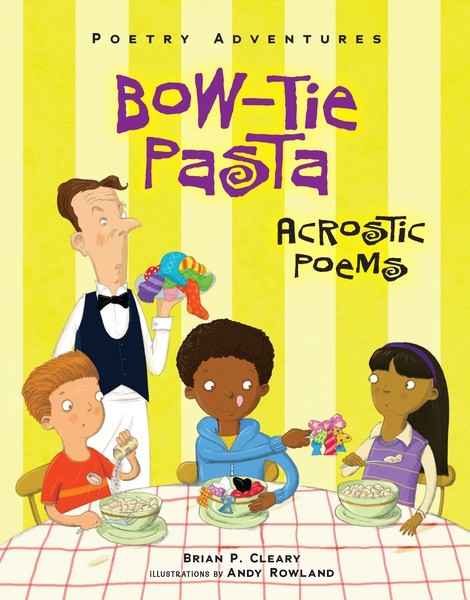
Bow-Tie Pasta: Acrostic Poems

Written by Brian P. Cleary | Illustrated by Andy Rowland


Acrostics are special nuggets of information or creativity formed by using the letters of a word to begin each new sentence. Writing poems in acrostic style takes thought and ingenuity—and that’s just what Brian P. Cleary offers in his twenty-seven poems that tackle all kinds of subjects, from pirates to spiders to sharks, from holidays to colors to food, and from people to places to things.

Bow-Tie Pasta riffs on the wearable and edible types of bow ties and comes to a conclusion we can all digest: “Blue gingham / Orange striped / White formal / Tartan plaid / Irish shamrocks / Embroidered stars / Polka dots / Argyle / Silky yellow / Tweed / Awful tasting.”

In Piano, a boy wistfully watches a parade go by: “Parading down Main Street / Is a sea of red-uniformed players of flute / And clarinet and drum / Navigating their way through confetti and applause / Only wish that I could march with my instrument.”

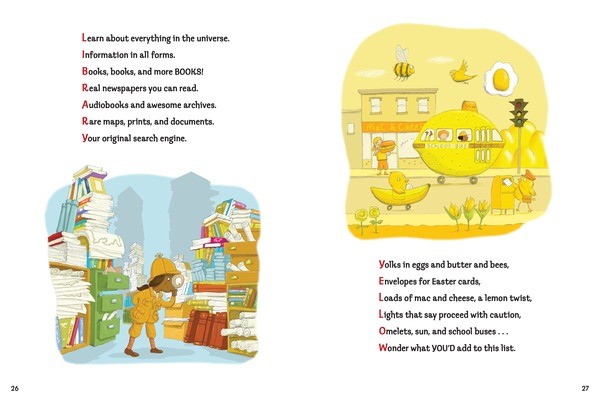
celebrate-picture-books-picture-book-review-bow-tie-pasta-acrostic-poems-library-yellow

Image copyright Andy Rowland, 2015, text copyright Brian P. Cleary, 2015. Courtesy of Millbrook Press.

A Rainy Day inspires another clever verse: Reading in a cozy nook / Asking for another book / I made cookies by the sheet / Next they cool. I dunk and eat. / Yo-yo, board games, watch the rain, / Draw a face inside each pane. / Afterwards I make s’mores. / Yes, I love the great indoors.”

Fish aficionados may want to heed the warning in Piranha: Peering into my aquarium, / I spy the fish with two rows of / Razor-sharp teeth. / As he swims towards my tapping finger / Near the top of the tank’s glass, / He serves as a reminder that there / Are some pets you should never pet.

For those who like their poems non-fiction, Triceratops reveals some fascinating facts about this prehistoric favorite: Two hard horns and a third soft one that’s / Really a snout made from soft proteins. / Inside its mouth: 200 to 800 teeth. / Can you imagine the dentist appointments? / Extinct, so none are living. / Rumored to be a slow walker. / Ate only plants. / T. rex wanted to have it for lunch. / Older than your parents and even your teacher! / Popular in dinosaur movies. / Seen last alive: 65 million years ago.

Just waiting for kids are more acrostics about some of their favorite things, such as fire trucks, snack time, lacrosse, Halloween, giggling, the library, and jokes. There’s even an acrostic poem explaining what acrostic poems are!

Brian P. Cleary’s supple wit and word play turn words into poems and poems into new ways of looking at his subjects. Young readers will laugh at his observations and juxtapositions and be tempted to try writing an acrostic poem of their own.

Andy Rowland accompanies each poem with bright, amusing illustrations that highlight the humor and “ah-ha!” moments of the verses. A boy tries to chew down the contents of a plate piled high with cloth bow ties of every color and pattern, a triceratops visits the dentist, kids go trick or treating with an green alien, the state of Kansas stretches out like a patchwork quilt, and a boy and girl toast marshmallows on a rainy day. Along the way readers also meet a wiener dog sporting a bun and ketchup, a toothy shark, and a rather sly spider.

For kids who love poetry and humor Bow-Tie Pasta: Acrostic Poems is a winner. The book is also perfect for classroom poetry units and fun library story times.

Ages 6 – 10

Millbrook Press, 2015 | ISBN 978-1467781077

Have a blast exploring all the nooks and crannies of Brian P. Cleary’s website!

Learn more about Andy Rowland on his website!

National Bow Tie Day Activity

celebrate-picture-books-pciture-book-review-bow-ties-coloring-page

Colorful Bow Ties


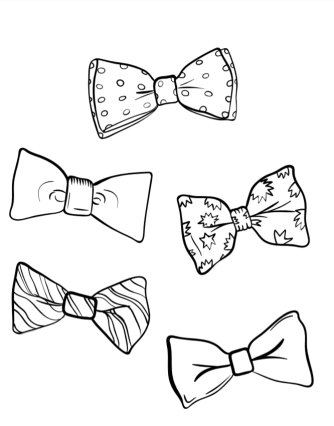
Bow ties come in all colors and patterns. Here is a printable Colorful Bow Ties page for you to decorate! You can then use your bow ties to play the game below!

Alternate Match the Bow Ties Game:

  1. Print two sheets of the Colorful Bow Ties page
  2. Color the bow ties to make matching pairs
  3. Cut the bow ties into separate cards
  4. Turn them face down and scramble them
  5. Turn one of the cards over and try to find its match. If the two ties are not the same, turn them face down and try again
  6. Keep playing until all the bow ties have been matched.

Picture Book Review

March 21 – World Poetry Day

celebrate-picture-books-picture-book-review-enormous-smallness-cover

About the Holiday

Sponsored by the United Nations Educational, Scientific, and Cultural Organization (UNESCO), World Poetry Day celebrates one of the world’s oldest and most treasured forms of linguistic expression. On this day we honor the poets who translate physical beauty into words, expose social injustice in heartrending verse, and make us laugh with quirky juxtapositions. To celebrate the holiday, attend a poetry reading, revisit poems from your favorite author or discover a new writer, or pen a poem yourself!

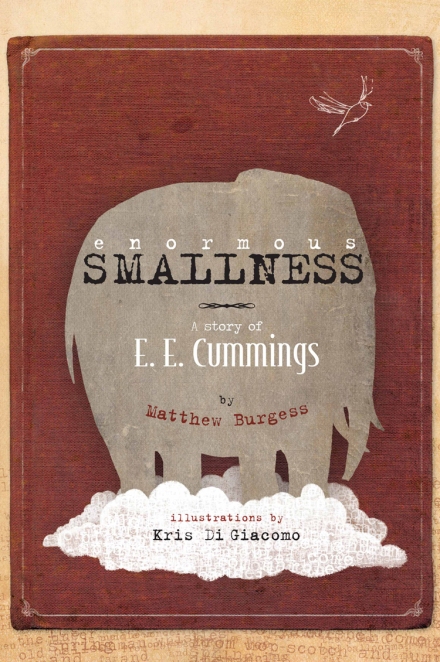
enormous SMALLNESS: A Story of E. E. Cummings

Written by Matthew Burgess | Illustrated by Kris Di Giacomo


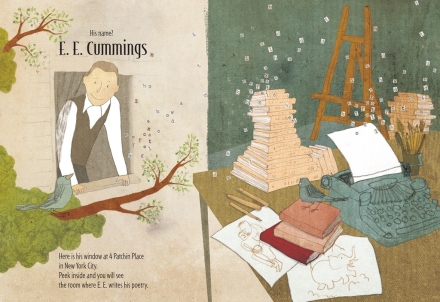
Hello! Welcome to 4 Patchin Place, the home of poet E. E. Cummings! This is where he wrote his poetry on a clackety typewriter, stopping only for tea poured out by the love of his life, Marion Moorehouse. How did he become a poet? That is an interesting story! E. E. was born Edward Estlin Cummings on October 14, 1894 in Cambridge, Massachusetts. His house was full of extended family, a handyman, a maid, and several pets. From an early age he loved to translate the things he saw into words. “His first poem flew out of his mouth when he was only three: “‘Oh, my little / birdie, Oh / with his little / toe, toe, toe!’”

celebrate-picture-books-picture-book-review-enormous-smallness-welcome

Image copyright Kris Di Giacomo, text copyright Matthew Burgess. Courtesy of Enchanted Lion Books

Estlin’s mother wrote down all the poems he told her and made a little book of them, titled “‘Estlin’s Original Poems.’” When he was six, he expressed his love of nature in a poem about trees, and when his mother asked him what else he saw, he “looked around as if his eyes were on tiptoes and when his heart jumped he said another poem: “‘On the chair is sitting / Daddy with his book. / Took it from the bookcase / Beaming in his look.’”

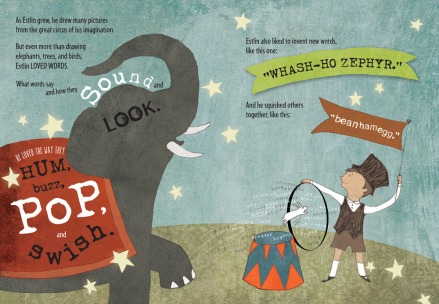
celebrate-picture-books-picture-book-review-enormous-smallness-elephant

Image copyright Kris Di Giacomo, text copyright Matthew Burgess. Courtesy of Enchanted Lion Books

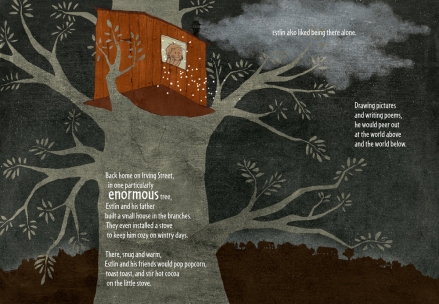
As he grew, Estlin was fascinated by the animals he saw at the circus and in the zoo. He drew pictures of them and wrote about them, using the words he loved so well—and even making up his own words. Estlin had a zest for life and for making life fun for himself and his little sister. During the summers, the family traveled to Joy Farm in New Hampshire, where Estlin swam, milked the cow, rode a donkey, and wandered through the fields and forest. His father had built him a little log cabin in the woods, and in the afternoons Estlin went there to draw and write. At home he also had a special place all his own. In an enormous tree his father built a tree house, complete with stove to keep him warm on cold days.

celebrate-picture-books-picture-book-review-enormous-smallness-tree-house

Image copyright Kris Di Giacomo, text copyright Matthew Burgess. Courtesy of matthewjohnburgess.com

Estlin had support for his writing at school too. His favorite teacher encouraged him saying, “anything is possible, / as long as you are true to yourself / and never give up, even when the world / seems to say, stop!” From his Uncle George, Estlin received a guide to writing poems. Estlin followed the rules in the book, penning poems nearly every day. When Estlin was 17 he attended Harvard College and began publishing his poems in the school’s magazines. While at Harvard, Estlin realized he had to follow his heart to be happy. He wanted to be like the new artists who were shaping the world—people like Gertrude Stein, Paul Cezanne, and Igor Stravinsky, “artists who were,” he once said, “challenging the way we think and see.”

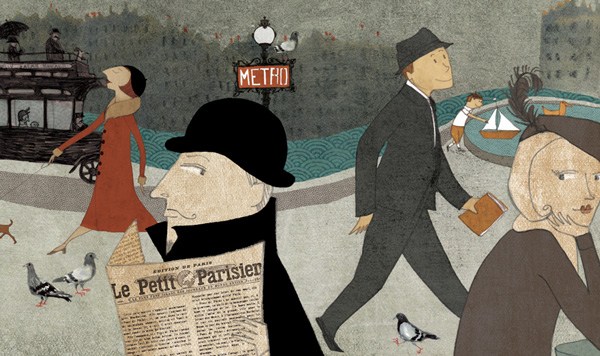
celebrate-picture-books-picture-book-review-enormous-smallness-paris

Image copyright Kris Di Giacomo, text copyright Matthew Burgess. Courtesy of Enchanted Lion Books

After he graduated, Estlin returned home, but when he had saved enough money he moved to New York and fell in love with the city immediately. He and his friends took in everything new the city had to offer. Soon, however, the United States entered World War II. On April 17, 1917 Estlin volunteered to be an ambulance driver in France. Before he received his assignment, though, he had time to explore Paris. He was “bowled over by the museums, the ballet, and the colorful, crowded streets.” He enjoyed the city so much he returned often during his lifetime.

During the war, Estlin was mistaken for a spy and sent to prison for several months. After the war he wrote a book about his experiences titled The Enormous Room by E. E. Cummings. “The book was published and praised! Estlin was becoming E. E.!” A year later he published his first book of poetry—Tulips & Chimneys. In his poems he experimented with punctuation and using lower case letters instead of capitals.

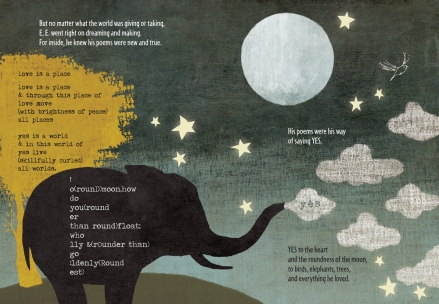
celebrate-picture-books-picture-book-review-enormous-smallness-yes

Image copyright Kris Di Giacomo, text copyright Matthew Burgess. Courtesy of matthewjohnburgess.com

Through his fanciful typography, E. E. “wanted his reader’s eyes to be on tiptoes too, seeing and reading poetry (inaway) that was new.” But some people didn’t understand or like his poetry; it was too strange and too small, they said. But E. E. knew he had to stay true to himself. He believed that “his poems were new and true” and “were his way of saying YES” to everything he loved. As time went on more and more people began to “see the beauty of E. E.’s poetry, and he became one of the most beloved poets in America.”

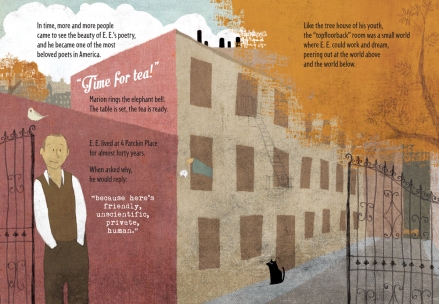
E. E. Cummings lived and worked at 4 Patchin Place for almost 40 years, but in his mind he would often return to his childhood home. He “could still see himself as a boy gazing out at the sunset”—a memory that he put into words: who are you,little i / (five or six years old) / peering from some high / window;at the gold / of November sunset / (and feeling:that if day has to become night / this is a beautiful way)”

celebrate-picture-books-picture-book-review-enormous-smallness-patchin-place

Image copyright Kris Di Giacomo, text copyright Matthew Burgess. Courtesy of matthewjohnburgess.com

Simply put, Matthew Burgess’s enormous SMALLNESS: A Story of E. E. Cummings is a biography that will make you smile. Upbeat and full of the wonder and whimsy that influenced Estlin Cummings’ prodigious talent, the story encourages readers to always follow their heart. Burgess’s easy-going, conversational style invites kids along on the journey of Cumming’s life, stopping off at points that resonate with kids—early imaginary play, school, family vacations, home life, college, travel, and ultimate success. Seeing the support Cummings received throughout his life will inspire young readers just starting out on their own roads of discovery.

Kris Di Giacomo’s enchanting illustrations will immediately capture the imagination of readers. The playful quality of Cummings’ personality and poems is mirrored in each spread as a variety of children’s drawings and typography are sprinkled throughout. As six-year-old Estlin composes poems for his mother, he stands on tiptoe in his nightshirt surrounded by toys; he experiences life from rooftop and treetop and gazes into the night from his tree house; New York lights up with fireworks and the lights of Broadway; and his poems spring from the pages in their own inimitable way.

For children interested in writing, biographies, history, the arts, and the life of the imagination, enormous SMALLNESS: A Story of E. E. Cummings is a perfect choice for their home bookshelves.

A chronology of E. E. Cummings’ life, five poems, and an Author’s Note follow the text.

Ages 4 – 9

Enchanted Lion Publishing, 2015 | ISBN 978-1592701711

To learn more about Matthew Burgess, his books, and his poetry, visit his website!

View a gallery of illustration by Kris Di Giacomo on her website!

World Poetry Day Activity

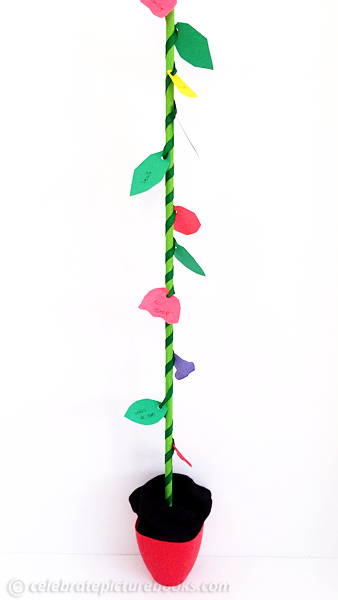
celebrate-picture-books-picture-book-review-grow-a-poem-craft


Grow a Poem


A poem often grows in your imagination like a beautiful plant—starting from the seed of an idea, breaking through your consciousness, and growing and blooming into full form. With this craft you can create a unique poem that is also an art piece!

Supplies

  • Printable Leaves Template
  • Printable Flower Template
  • Wooden dowel, 36-inch-long, ½-inch diameter, available in craft or hardware stores
  • Green ribbon, 48 inches long
  • Green craft paint
  • Green paper for printing leaves (white paper if children would like to color the leaves)
  • Colored paper for printing flowers (white paper if children would like to color the flowers)
  • Flower pot or box
  • Oasis, clay, or dirt
  • Hole punch
  • Glue
  • Markers or pens for writing words
  • Crayons or colored pencils if children are to color leaves and flowers

Directions

  1. Paint the dowel green, let dry
  2. Print the leaves and flower templates
  3. Cut out the leaves and flowers
  4. Punch a hole in the bottom of the leaves or flowers
  5. Write words, phrases, or full sentences of your poem on the leaf and flower templates
  6. String the leaves and flowers onto the green ribbon (if you want the poem to read from top to bottom string the words onto the ribbon in order from first to last)
  7. Attach the ribbon to the bottom of the pole with glue or tape
  8. Wrap the ribbon around the pole, leaving spaces between the ribbon
  9. Move the leaves and flowers so they stick out from the pole or look the way you want them to.
  10. Put oasis or clay in the flower pot or box
  11. Stick your poem pole in the pot
  12. Display your poem!

Picture Book Review