November 8 – National STEM/STEAM Day

celebrate-picture-books-picture-book-review-santiago-saw-things-differently-cover

About the Holiday

November 8th is National STEM/STEAM Day. This holiday was founded in 2015, and the date was partially chosen for its secret play on words: “NOV 8” can be read as (in)novate! On this day, we highlight the importance of science, technology, engineering, art, and math in education and society at large. This holiday is also meant to uplift voices and perspectives that are often given less representation in STEAM careers and fields of study.

On this National STEM/STEAM Day we review a biography of Santiago Ramón y Cajal, Father of Neuroscience. Despite many people discouraging him along his journey Ramón y Cajal found ways to merge his love for art and observation with his scientific background to create new and important discoveries. 

Reviewed by Dorothy Levine

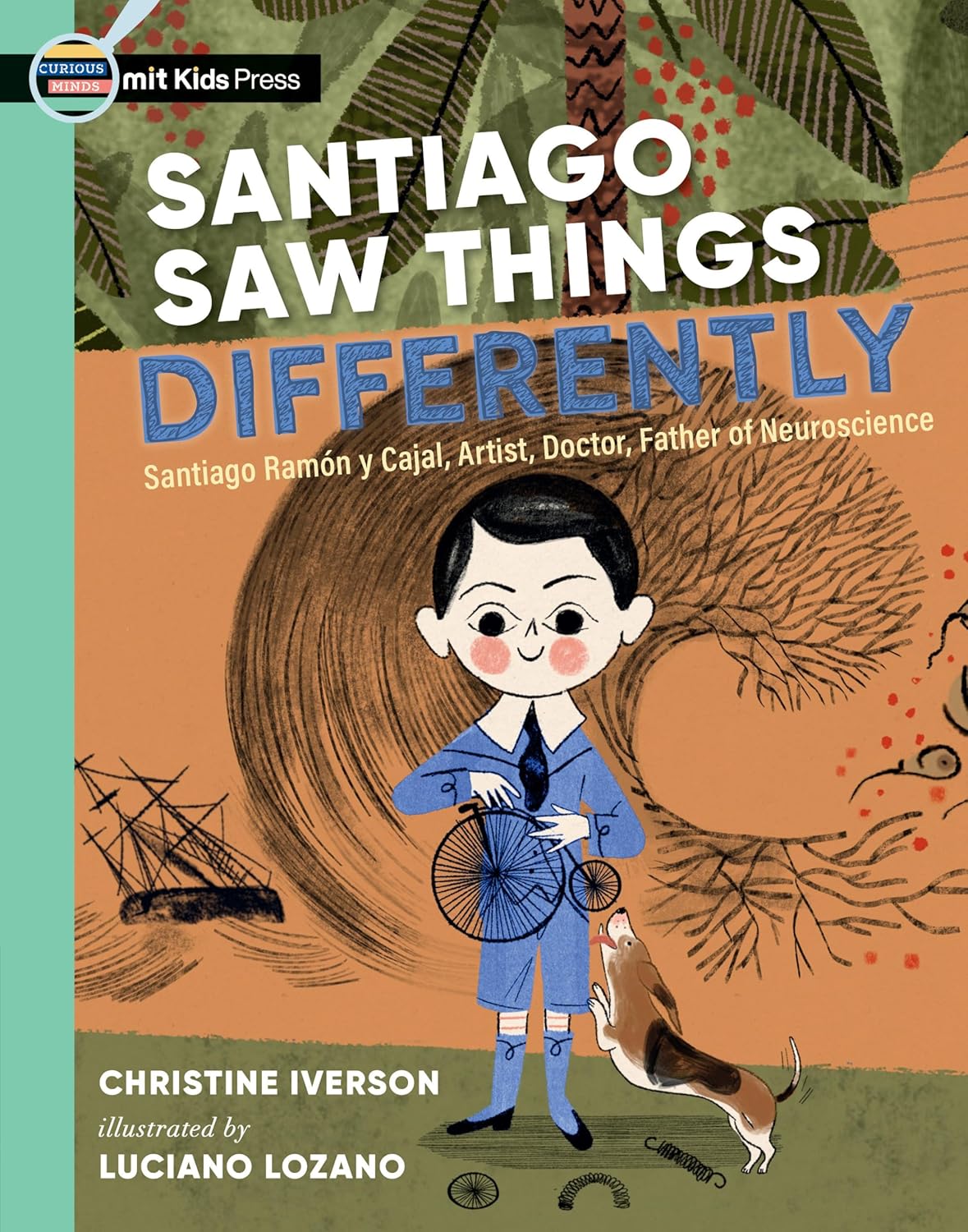
Santiago Saw Things Differently: Santiago Ramón y Cajal, Artist, Doctor, Father of Neuroscience

Written by Christine Iverson | Illustrated by Luciano Lozano


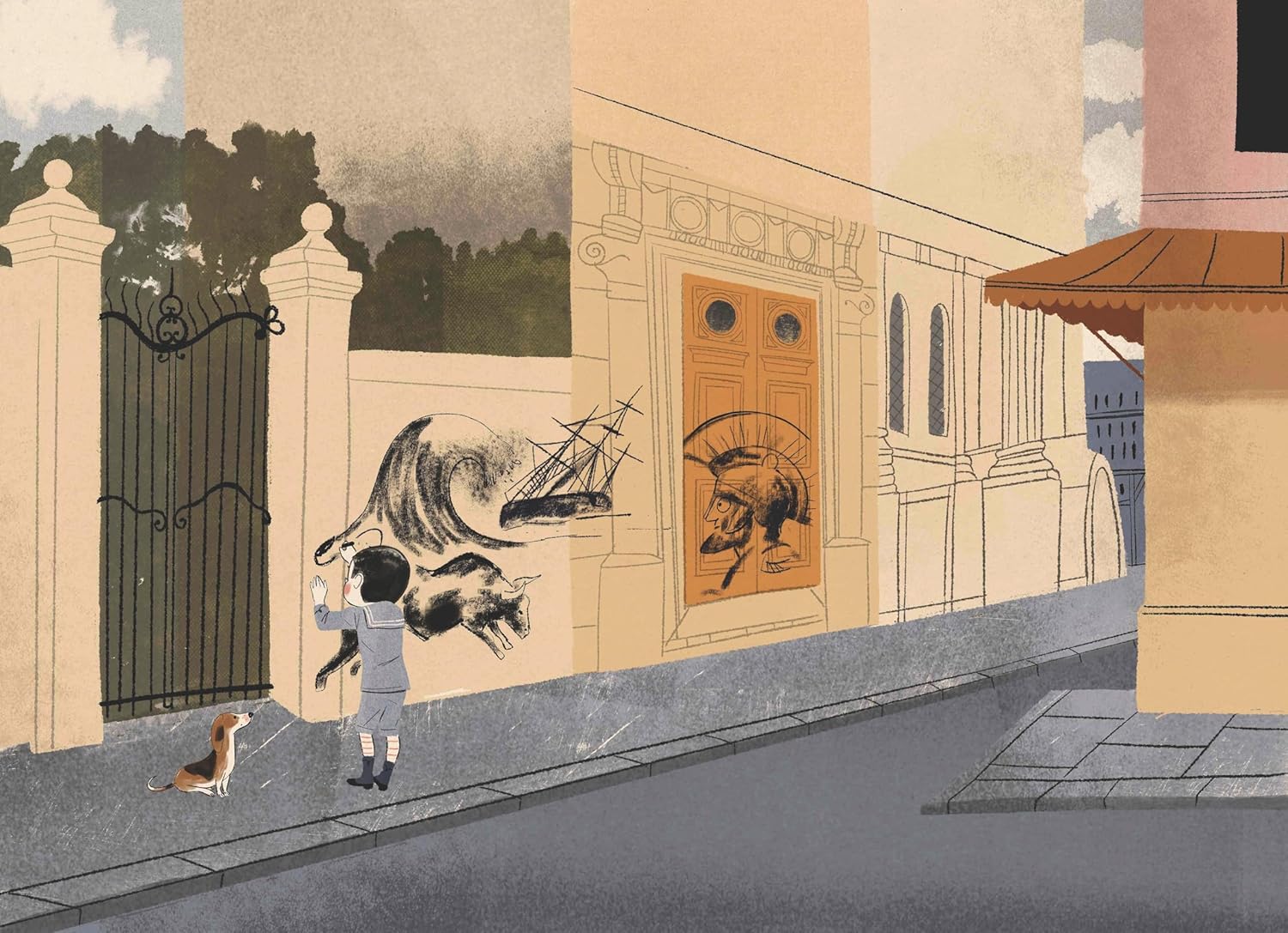
Santiago always had a passion for creating and exploring. As a child in Spain, he spent time creating music and inventing toys with any scraps he could find, drawing elaborate charcoal scenes across neighbors’ walls and racing around his grandfather’s loom shop. There, as “he twirled and tangled woolen thread…. Dust sparked and soared in a kaleidoscope of motion.” Unfortunately, not everybody understood the magic of his creations. Neighbors, and particularly Santiago’s father, believed Santiago’s public displays of art were more bothersome than intriguing. 
celebrate-picture-books-picture-book-review-santiago-saw-things-differently-drawing-on-wall

Image copyright Luciano Lozano, 2024, text copyright Christine Iverson, 2024. Courtesy of MIT Kids Press.

As Santiago’s father ushered him through many different schools, aiming to leave room for no “distractions” from study, Santiago held on to his artistic practice and passion for exploring the natural world in secret. When once admonished for drawing on the margins of his paper, Santiago was forced to spend time in his school’s dark basement. But, in a stroke of luck, “The room was lit by a wisp of light leaking through an old shutter—just enough for drawing.” Another time, stuck in a classroom with no paper, Santiago used his pencil to unlock the door. 

As he grew up, Santiago developed a specific fascination for the human body. At medical school, Santiago observed the way blood vessels in our bodies mirror the canals of the Ebro River near his university. “He saw the human body as a work of art,” a work that replicates in nature and is connected more broadly to the world at large.
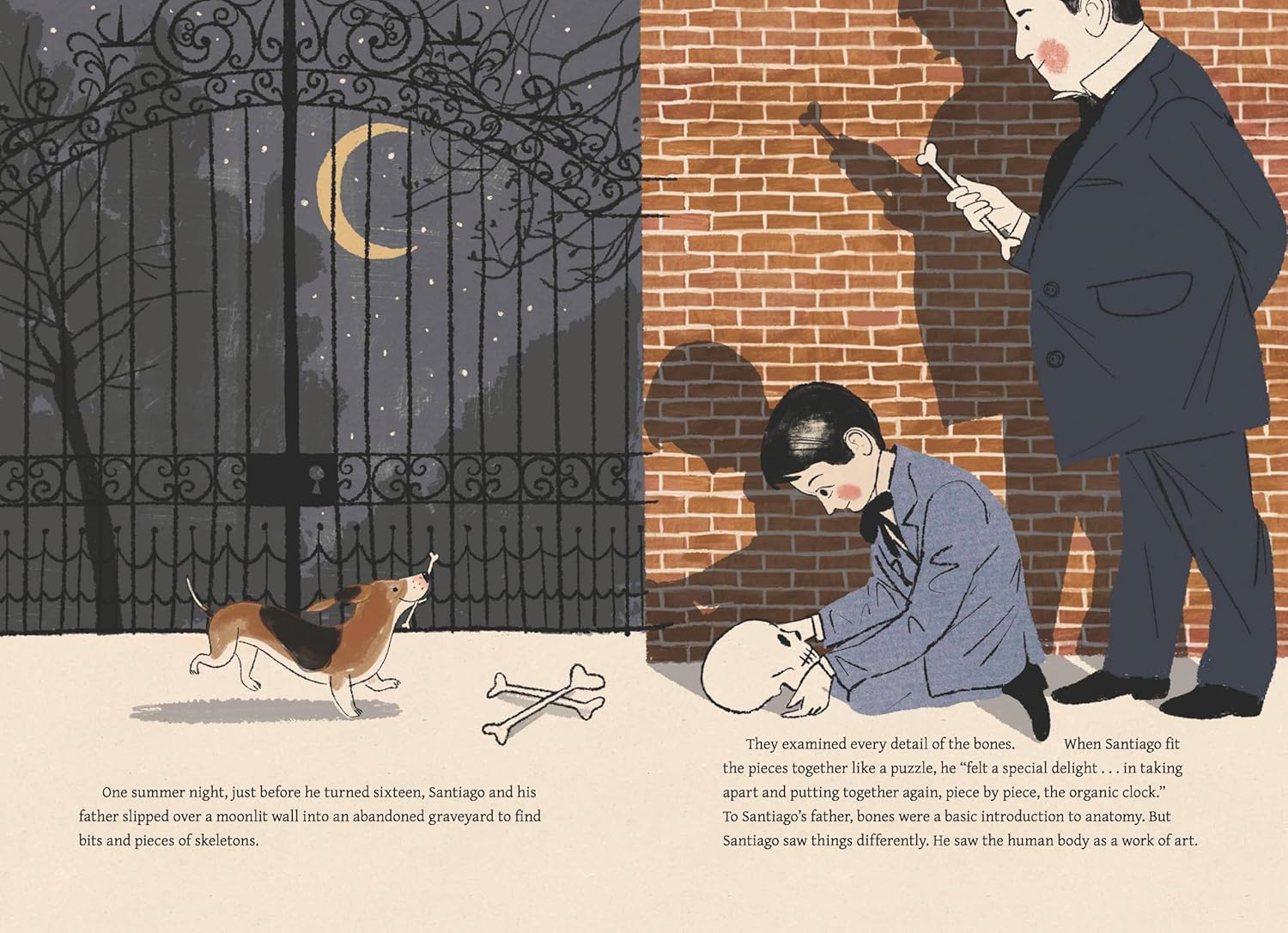
celebrate-picture-books-picture-book-review-santiago-saw-things-differently-graveyard

Image copyright Luciano Lozano, 2024, text copyright Christine Iverson, 2024. Courtesy of MIT Kids Press.

Years later, when scientists were focused on working out how the tiny connectors (or nerve fibers) in our brains worked, Santiago was able to use his microscope and drawing skills to sort out that the fibers spread in a similar fashion to the young trees he had spent so much of his time drawing and observing. With the help of ink stains, study, and lots of drawings of his observations, Santiago drew new conclusions about neurons and cells that helped scientists across the globe to understand the human brain better. 

All because “Santiago saw things differently” he was able to unlock new ways of understanding the brain, gaining him a Nobel prize and the eventual title of the Father of Neuroscience. 
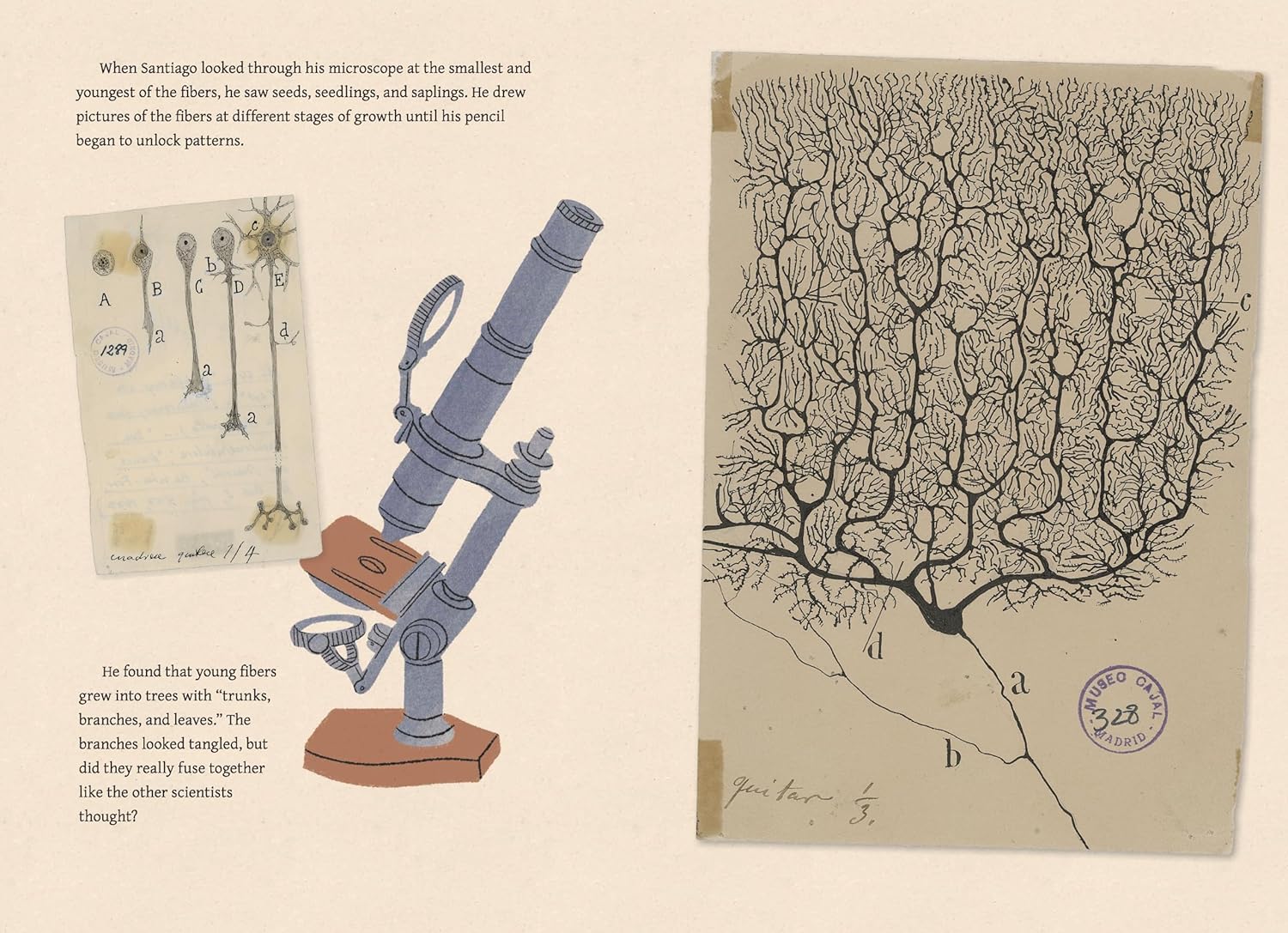
celebrate-picture-books-picture-book-review-santiago-saw-things-differently-microscope-view

Image copyright Luciano Lozano, 2024, text copyright Christine Iverson, 2024. Courtesy of MIT Kids Press.

Iverson writes a detailed lyrical account of the life of Santiago Ramón y Cajal that is accessible for a wide range of readers. For interested older audiences, the book includes extensive back matter on the Anatomy of a Neuron, more biographical information on Santiago Ramón y Cajal and an explanation of the science behind one scene in the story. 

Interwoven with quotes and images from Ramón y Cajal’s original works are Lozano’s masterful swirling illustrations of Santiago and his environment as they both grow and change. Throughout the story, Lozano inserts details for readers to observe and make their own discoveries, such as the dog who follows Santiago throughout his childhood. Lozano illustrates the story mainly in blushing pinks, sky blues and light-yellow browns with accented vibrant greens and darker colors signifying location changes and key turning points in the story. There is a subtle humor helping to lighten the darker parts of Santiago’s life. The tale closes with the image of Santiago face-to-face with a cartoon-like human skeleton (filled with neurons) smiling back at him.

Santiago Sees Things Differently is a celebratory account of innovation, perseverance and appreciation for the often-interdisciplinary nature of outside-of-the-box thinkers. The title page opens with a poignant quote from Santiago Ramón y Cajal himself, encouraging “young investigators” to keep exploring the vast unknown of the natural world and to remember that what is left undiscovered is always larger than what has been already found. Santiago Sees Things Differently provides readers with the empowering knowledge that new perspectives are necessary for new discovery. And that while difference is often looked down upon, it is, often, in fact a superpower. 

(This book is available in both Spanish and English versions)

Ages 5 – 9

MIT Kids Press, 2024 | ISBN 978-1536238334

About the Author

Christine Iverson is a physical therapist with a strong interest in neural pathways. She holds a BS in history from the United States Military Academy at West Point, a doctoral degree in physical therapy from Baylor University, and an M.Ed. with a focus in children’s literature from Pennsylvania State University. She lives in Alexandria, Virginia. Visit her at christineiversonwrites. com.

About the Illustrator

Luciano Lozano is a Spanish author, illustrator, and graphic artist. He is the creator of several picture books, including Mayhem at the Museum: A Book in Pictures, and the illustrator of many others, including I (Don’t) Like Snakes by Nicola Davies. He lives in Spain. Visit him at lucianolozano.com.

STEM/STEAM Day Activities
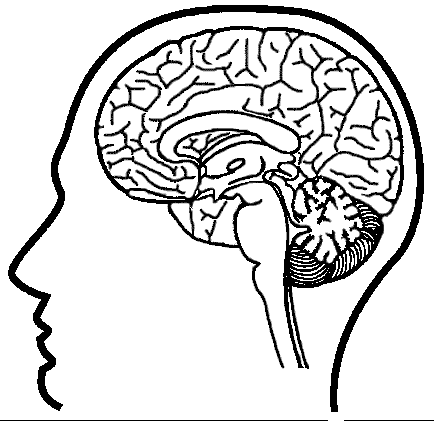
celebrate-picture-books-brain-coloring-page


Neuroscience Coloring Pages

Follow Santiago’s footsteps by coloring pictures of different parts of the brain and scientific tools used in the story with these coloring pages from the University of Washington. You’ll also find brain games, plus loads of printable puzzles, worksheets, bookmarks, and even treasure hunts here too! (Coloring pages available in English and Spanish!)


Build a Hands-on Model of a Neuron

Have fun and learn about neurons by making a model! You can use almost any kind of material you like—clay, perler beads, bread dough, or even candy—to make it. So put on your thinking cap and get creative! You’ll find lots of ideas on this page from The University of Washington’s Neuroscience for Kids Page.
celebrate-picture-books-picture-book-review-santiago-saw-things-differently-cover

You can purchase Santiago Saw Things Differently at these booksellers

Amazon | Barnes & Noble | Bookshop (to support your local independent bookstore)

July 22 – World Brain Day

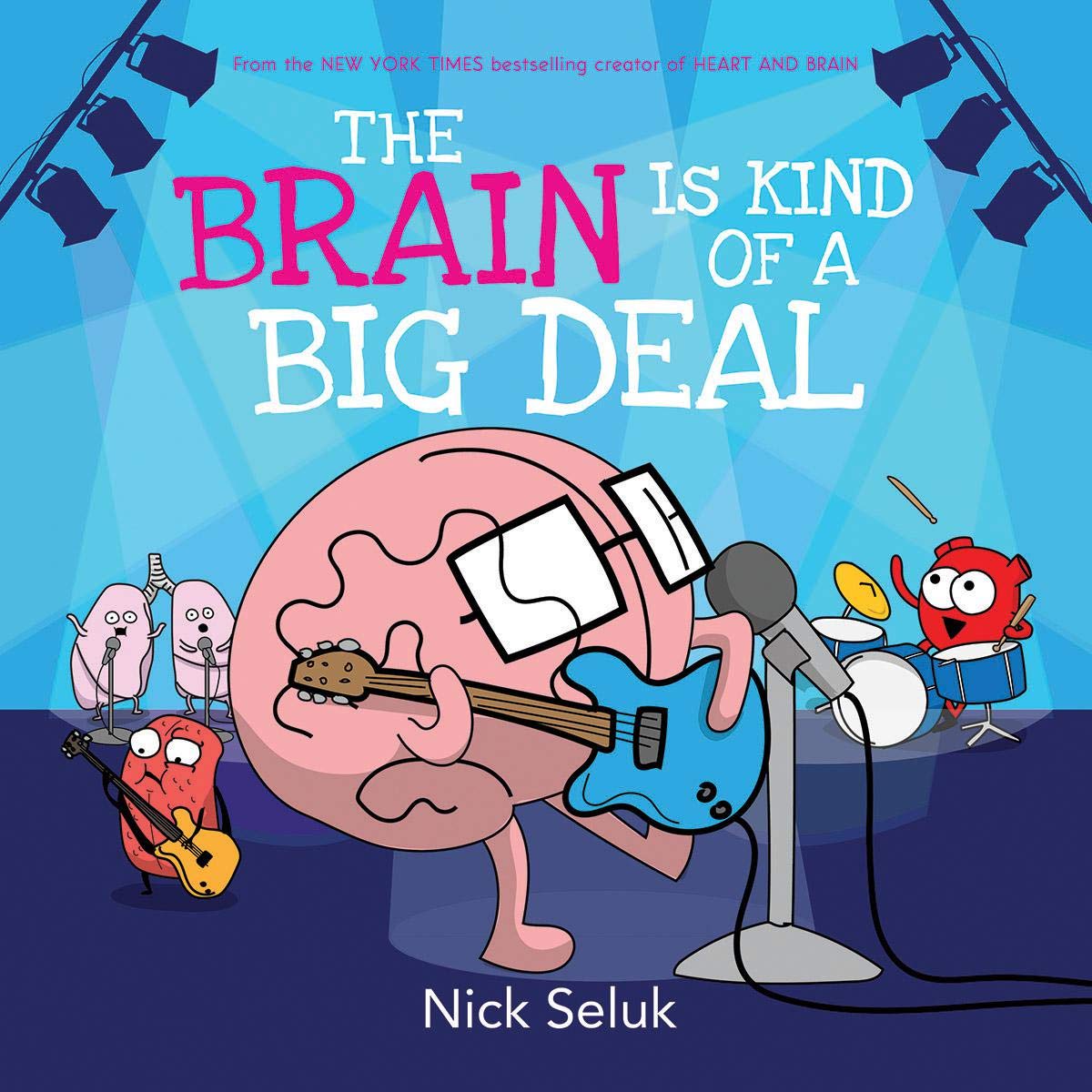
celebrate-picture-books-picture-book-review-the-brain-is-kind-of-a-big-deal-cover

About the Holiday

Established in 2014 by the World Federation of Neurology, the objective of the day is to raise public awareness and promote advocacy related to brain health. Each year the a new theme is chosen to inform the year’s research, policy, and action. This year’s theme is “Move Together to End Parkinson’s Disease.” Through this initiative, the World Federation of Neurology will coordinate with more than 122 global organizations to advocate for improved patient care, education, and additional research for those living with Parkinson’s Disease, a neurodegenerative brain disease that affects the mind, movement, and almost all aspects of brain function, as well as their caregivers. Learning about the brain and its functions early in life can inspire an interest in adopting a healthy diet and lifestyle as they grow up. Today’s book with its high-interest presentation is a perfect place to start.

The Brain Is Kind of a Big Deal

By Nick Seluk


Are you a fan of The Brainiacs? You know, that group led by the Brain that keeps you humming along all day, every day? Yeah, they’re at the top of the (medical) charts, and it’s the Brain that keeps them there. Want to know more about how their body of work all comes together? Then settle in with Nick Seluk’s hip, informative, and clever introduction to the brain and all that it does from its command center “inside of your head, behind your eyes, and under your hair.” From there the brain works continuously, collecting and remembering “information about everything you experience.”

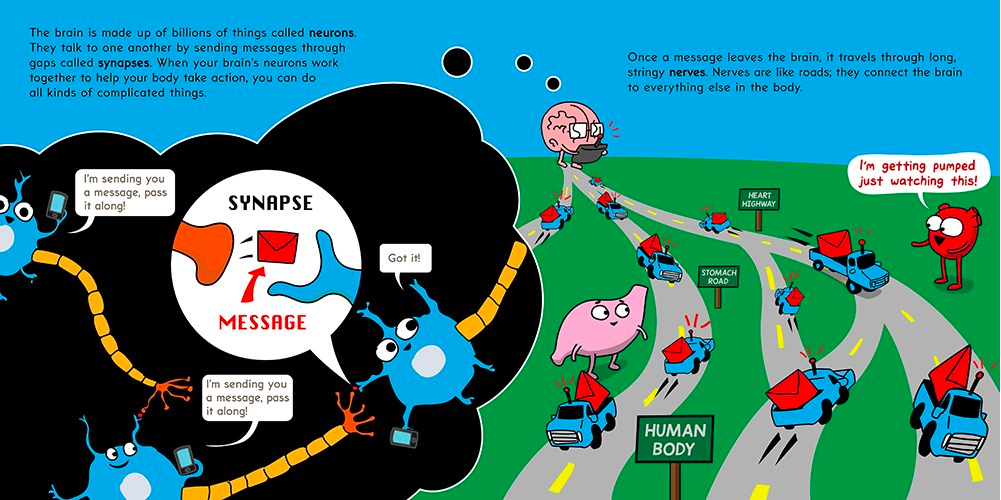
celebrate-picture-books-picture-book-review-the-brain-is-kind-of-a-big-deal-nervous-system

Copyright Nick Seluk, 2019, courtesy of Orchard Books, Scholastic, Inc.

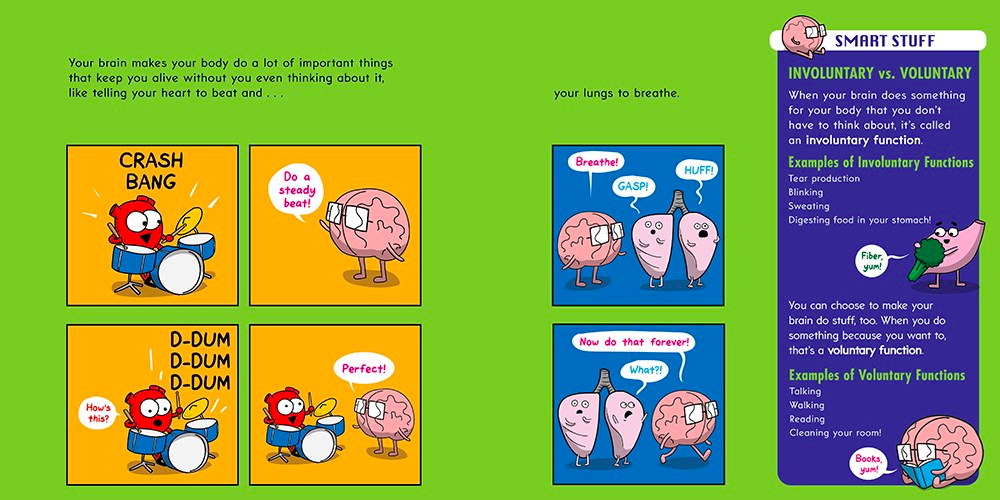
Ready to turn the page? You can’t do it without your brain telling your arm, your hand, and your fingers what to do—and in what seems like no time at all. As you turn the pages you’ll learn how the brain sends these messages to the muscles and organs through synapses, which is a little bit like passing notes in class, and along a “highway” of nerves. Turn a few more pages and you’ll learn about involuntary and voluntary functions, how you know when to eat and when you’re full, and how when you sleep and dream, your brain gets ready for the next day.” Even when “…it dreams about weird stuff.”

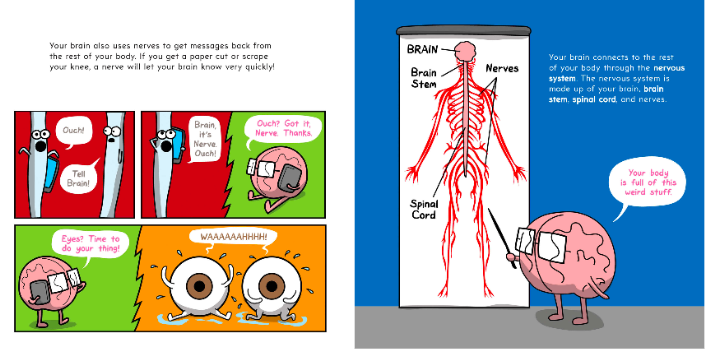
celebrate-picture-books-picture-book-review-the-brain-is-kind-of-a-big-deal-ouch

Copyright Nick Seluk, 2019, courtesy of Orchard Books, Scholastic, Inc.

But the Brain isn’t a solo act. He collaborates with the senses, which work through the eyes, ears, nose, tongue, and nervous system, to collect data that helps you remember what things look, sound, smell, and feel like. The brain is great at doing stuff, but it’s also an awesome thinker. With your own incredible brain “you can imagine things and solve problems just by thinking about them.” Ideas aren’t the only things that come from the brain; feelings to too. And the interesting thing about this is that while “you feel happy, sad, angry, or scared without ever having to learn how, you can control how you react when you feel something….” So, what does all of this brain power add up to? Everything that makes you YOU!”

celebrate-picture-books-picture-book-review-the-brain-is-kind-of-a-big-deal-heart

Copyright Nick Seluk, 2019, courtesy of Orchard Books, Scholastic, Inc.

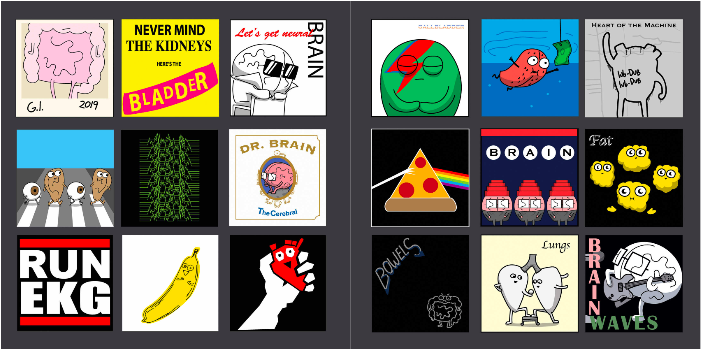
Back matter includes a glossary of terms found in the book, wild facts about animal brains (did you know “a cockroach can live for weeks without its head and brain?”), and a round up The Brainiacs bandmates’ social media posts. The reverse side of the book jacket contains a The Brainiacs concert poster. The front end papers’ riffs on album covers can make for fun adult/child nostalgia bonding,

celebrate-picture-books-picture-book-review-the-brain-is-kind-of-a-big-deal-sock

Copyright Nick Seluk, 2019, courtesy of Orchard Books, Scholastic, Inc.

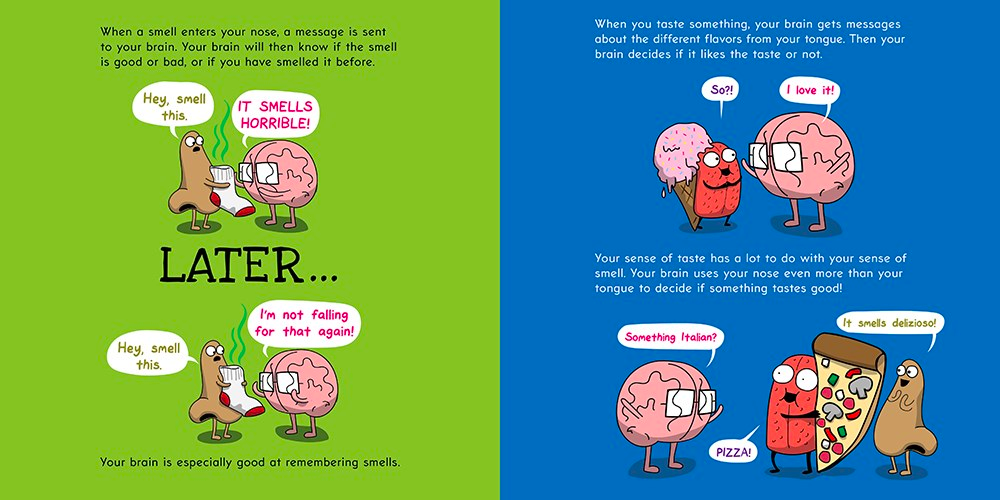
Fascinating facts about the brain and how it works are accompanied by Nick Seluk’s charming cartoon-style illustrations of anthropomorphized organs, muscles, neurons, and of course the star of the book, the brain—a spectacle-wearing pink orb. These characters are full of personality and puns while taking orders from upstairs. The heart is “pumped” watching messages speed along the nervous system; eyes cry when they receiving the command after an “ouch!” is sent from a nerve to the brain; and the lungs are astonished to learn they must gasp and huff “forever.” Seluk’s writing is clear and engaging, translating the communications from the brain to the rest of the body into steps and purposes that children can understand. Seluk’s sly humor, sprinkled throughout the book, is always in service of the text and allows kids to relate to the concept at hand.

Screen Shot 2019-11-07 at 8.38.00 PM

As the brain recalls information it’s learned, it huddles in a command center where the computer identifies a tree by these attributes. “Sight: Green and Brown; Sound: Rustling; Touch: Rough; Taste: Gross.” When the brain sees a hand hovering over a stove burner, it goes to work. The ring is “bright red, stove says ‘On,’ Mom said ‘No,’ smells hot.” The brain sends out its urgent warning: “Abort! Don’t touch that! Remember last time?! The brain sure does, as the picture of it with bandaged hands on the computer screen shows. Full-bleed, vibrant backgrounds set off the comic-strip panels, funny interactions between Brain and Nose, Ears, Tongue, and other body parts, and Smart Stuff sidebars full of interesting tidbits. Kids will gain valuable knowledge about the body as they giggle through the text in Seluk’s sharp presentation that deftly navigates the dual hemispheres of fun and learning to spotlight the brain for the rock star it is.

You can’t go wrong by adding The Brain is Kind of a Big Deal to your home, classroom, or public library. It is—as they say—a no brainer!

Ages 6 – 8

Orchard Books, 2019 | ISBN 978-1338167009

Discover more about Nick Seluk, his books, his art, and so much more on his website.

World Brain Day Activity

celebrate-picture-books-picture-book-review-scientists-word-search-puzzle

Be a Scientist!


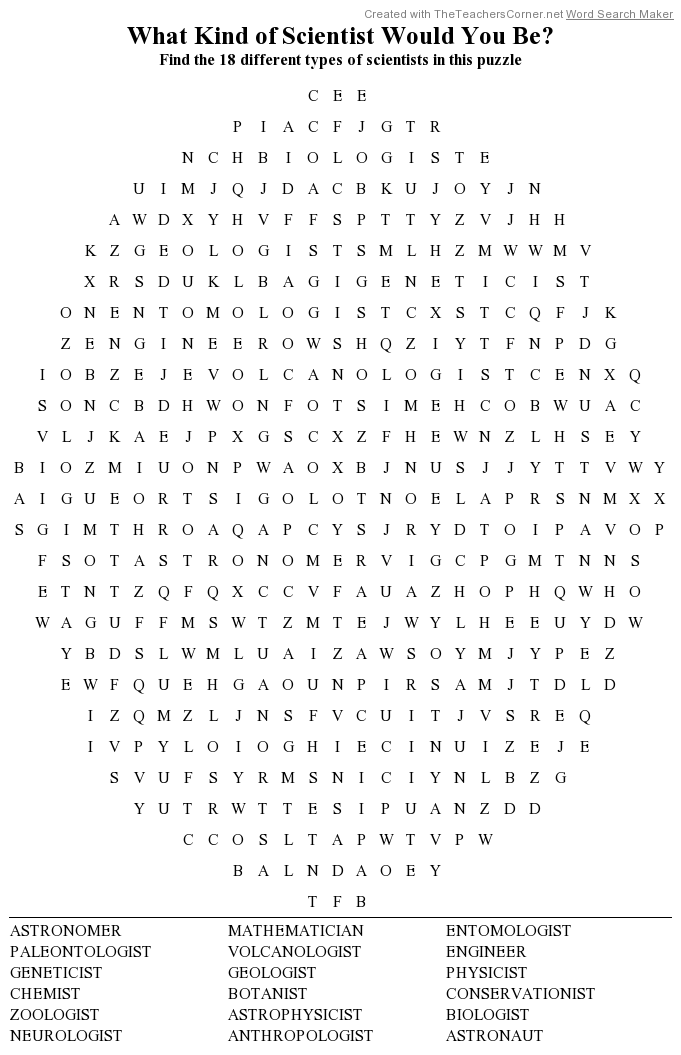
Do people call you a brain? Do you love STEM subjects at school? If so, you might want to consider science as a career. There are eighteen scientists in this printable word search puzzle. Which job would you choose?

What Kind of Scientist Would You Be? Puzzle and Solution

celebrate-picture-books-picture-book-review-the-brain-is-kind-of-a-big-deal-cover

You can find The Brain is Kind of a Big Deal at these booksellers

Amazon | Barnes & Noble | Books-a-Million

To support your local independent bookstore, order from

Bookshop |  IndieBound

Picture Book Review


November 8 – National STEM/STEAM Day

celebrate-picture-books-picture-book-review-the-brain-is-kind-of-a-big-deal-cover

About the Holiday

Instituted in 2015, National STEM/STEAM Day aims to encourage kids to explore the fields of science technology, engineering, art, and math. These subjects are the backbone of innovation and discovery. Children who are introduced early on to the workings of math and science do better as they advance through school and are more likely to choose science-based careers. Solving many of the problems that the world now faces relies on having a workforce who can think creatively and inventively to design a better future for us all. To learn more about STEM and STEAM and to find activities to get kids excited about these subjects, visit the TERC website.

The Brain Is Kind of a Big Deal

By Nick Seluk


Are you a fan of The Brainiacs? You know, that group led by the Brain that keeps you humming along all day, every day? Yeah, they’re at the top of the (medical) charts, and it’s the Brain that keeps them there. Want to know more about how their body of work all comes together? Then settle in with Nick Seluk’s hip, informative, and clever introduction to the brain and all that it does from its command center “inside of your head, behind your eyes, and under your hair.” From there the brain works continuously, collecting and remembering “information about everything you experience.”

celebrate-picture-books-picture-book-review-the-brain-is-kind-of-a-big-deal-nervous-system

Copyright Nick Seluk, 2019, courtesy of Orchard Books, Scholastic, Inc.

Ready to turn the page? You can’t do it without your brain telling your arm, your hand, and your fingers what to do—and in what seems like no time at all. As you turn the pages you’ll learn how the brain sends these messages to the muscles and organs through synapses, which is a little bit like passing notes in class, and along a “highway” of nerves. Turn a few more pages and you’ll learn about involuntary and voluntary functions, how you know when to eat and when you’re full, and how when you sleep and dream, your brain gets ready for the next day.” Even when “…it dreams about weird stuff.”

celebrate-picture-books-picture-book-review-the-brain-is-kind-of-a-big-deal-ouch

Copyright Nick Seluk, 2019, courtesy of Orchard Books, Scholastic, Inc.

But the Brain isn’t a solo act. He collaborates with the senses, which work through the eyes, ears, nose, tongue, and nervous system, to collect data that helps you remember what things look, sound, smell, and feel like. The brain is great at doing stuff, but it’s also an awesome thinker. With your own incredible brain “you can imagine things and solve problems just by thinking about them.” Ideas aren’t the only things that come from the brain; feelings to too. And the interesting thing about this is that while “you feel happy, sad, angry, or scared without ever having to learn how, you can control how you react when you feel something….” So, what does all of this brain power add up to? Everything that makes you YOU!”

celebrate-picture-books-picture-book-review-the-brain-is-kind-of-a-big-deal-heart

Copyright Nick Seluk, 2019, courtesy of Orchard Books, Scholastic, Inc.

Back matter includes a glossary of terms found in the book, wild facts about animal brains (did you know “a cockroach can live for weeks without its head and brain?”), and a round up The Brainiacs bandmates’ social media posts. The reverse side of the book jacket contains a The Brainiacs concert poster. The front end papers’ riffs on album covers can make for fun adult/child nostalgia bonding,

celebrate-picture-books-picture-book-review-the-brain-is-kind-of-a-big-deal-sock

Copyright Nick Seluk, 2019, courtesy of Orchard Books, Scholastic, Inc.

Fascinating facts about the brain and how it works are accompanied by Nick Seluk’s charming cartoon-style illustrations of anthropomorphized organs, muscles, neurons, and of course the star of the book, the brain—a spectacle-wearing pink orb. These characters are full of personality and puns while taking orders from upstairs. The heart is “pumped” watching messages speed along the nervous system; eyes cry when they receiving the command after an “ouch!” is sent from a nerve to the brain; and the lungs are astonished to learn they must gasp and huff “forever.” Seluk’s writing is clear and engaging, translating the communications from the brain to the rest of the body into steps and purposes that children can understand. Seluk’s sly humor, sprinkled throughout the book, is always in service of the text and allows kids to relate to the concept at hand.

Screen Shot 2019-11-07 at 8.38.00 PM

As the brain recalls information it’s learned, it huddles in a command center where the computer identifies a tree by these attributes. “Sight: Green and Brown; Sound: Rustling; Touch: Rough; Taste: Gross.” When the brain sees a hand hovering over a stove burner, it goes to work. The ring is “bright red, stove says ‘On,’ Mom said ‘No,’ smells hot.” The brain sends out its urgent warning: “Abort! Don’t touch that! Remember last time?! The brain sure does, as the picture of it with bandaged hands on the computer screen shows. Full-bleed, vibrant backgrounds set off the comic-strip panels, funny interactions between Brain and Nose, Ears, Tongue, and other body parts, and Smart Stuff sidebars full of interesting tidbits. Kids will gain valuable knowledge about the body as they giggle through the text in Seluk’s sharp presentation that deftly navigates the dual hemispheres of fun and learning to spotlight the brain for the rock star it is.

You can’t go wrong by adding The Brain is Kind of a Big Deal to your home, classroom, or public library. It is—as they say—a no brainer!

Ages 6 – 8

Orchard Books, 2019 | ISBN 978-1338167009

Discover more about Nick Seluk, his books, his art, and so much more on his website.

National STEM/STEAM Day Activity

celebrate-picture-books-picture-book-review-scientists-word-search-puzzle

Be a Scientist!


If you love STEAM subjects at school, you could grow up to be one of the scientists in this printable word search puzzle. Which would you choose?

What Kind of Scientist Would You Be? Puzzle and Solution

celebrate-picture-books-picture-book-review-the-brain-is-kind-of-a-big-deal-cover

You can find The Brain is Kind of a Big Deal at these booksellers

Amazon | Barnes & Noble | Books-a-Million | IndieBound

Picture Book Review