July 9 – National Fashion Day

About the Holiday

First celebrated in 2016, Fashion Day is a day to celebrate your own style, whether that’s following the latest trend or creating a look that’s as unique as you are. Since its very beginning, fashion has made a statement about the person, the times, what society values, even the weather. Of course before the invention of the sewing machine, pants, shirts, dresses, coats, and even socks and shoes were made entirely by hand. And many of these garments were festooned with elaborate decoration that boggles the mind. With the invention of the sewing machine in 1790, garments could be produced faster, and the rise of factory-made clothing made mass-market style fashionable. To learn more about Fashion Day and find lots of ideas on how to celebrate, visit Days of the Year.

Thank you to Phaidon Kids for sending me a copy of this book for review!

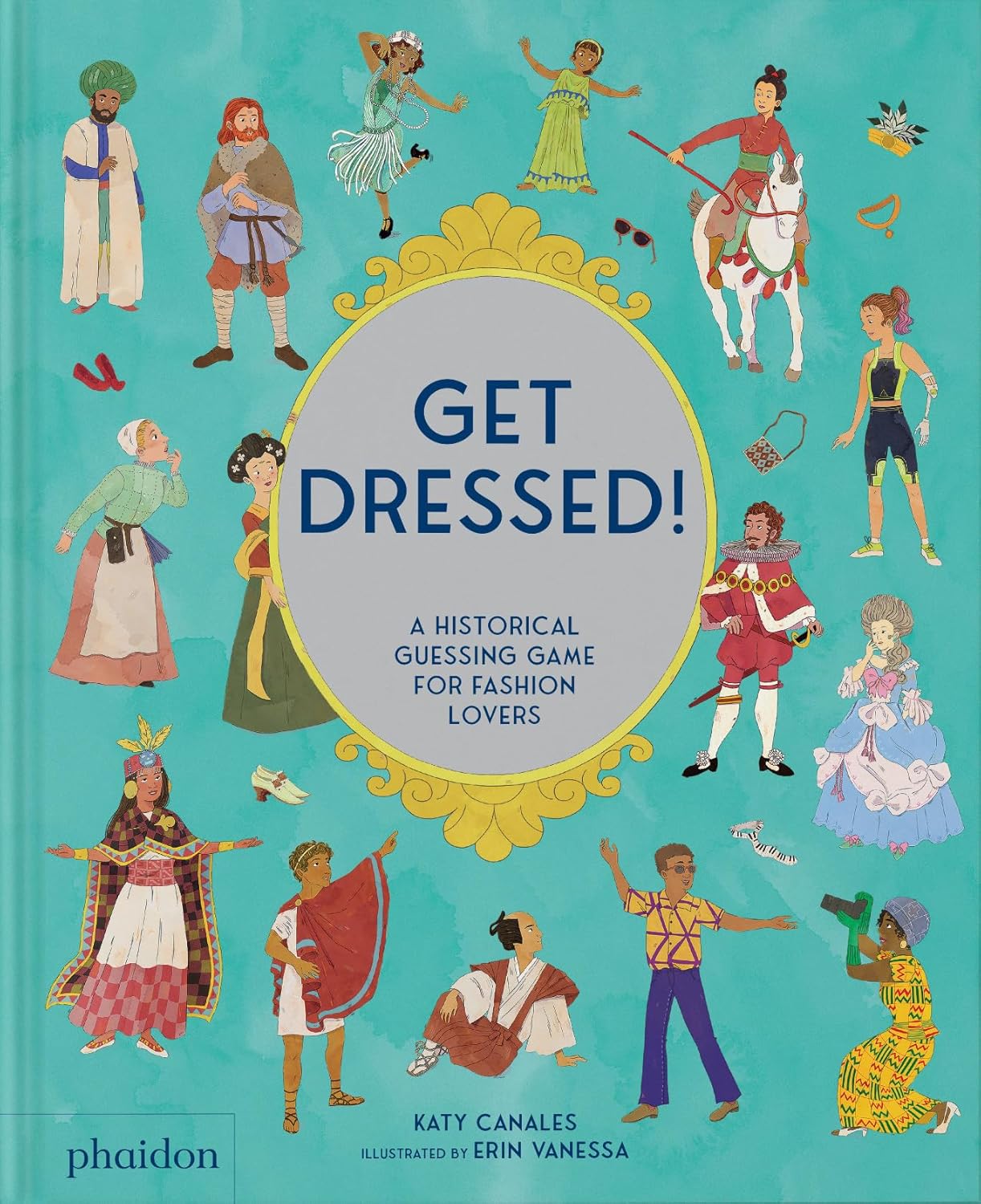
Get Dressed! A Historical Guessing Game for Fashion Lovers

Written by Katy Canales | Illustrated by Erin Vanessa


Throughout history people have worked, played, ruled and been ruled over, invented, engaged in the arts, made scientific discoveries—and dressed themselves. Through Get Dressed! today’s fashion-savvy kids can time travel to 10 influential eras and cultures throughout history—spanning from Ancient Greece to the Tang Dynasty, the Ottoman Empire, and Inca State to the Elizabethan and Edo eras to the French Revolution, the Roaring Twenties, and Independent Ghana—to learn fascinating facts about what people were wearing (or not wearing!) while they went about their days fulfilling their particular roles in society. 
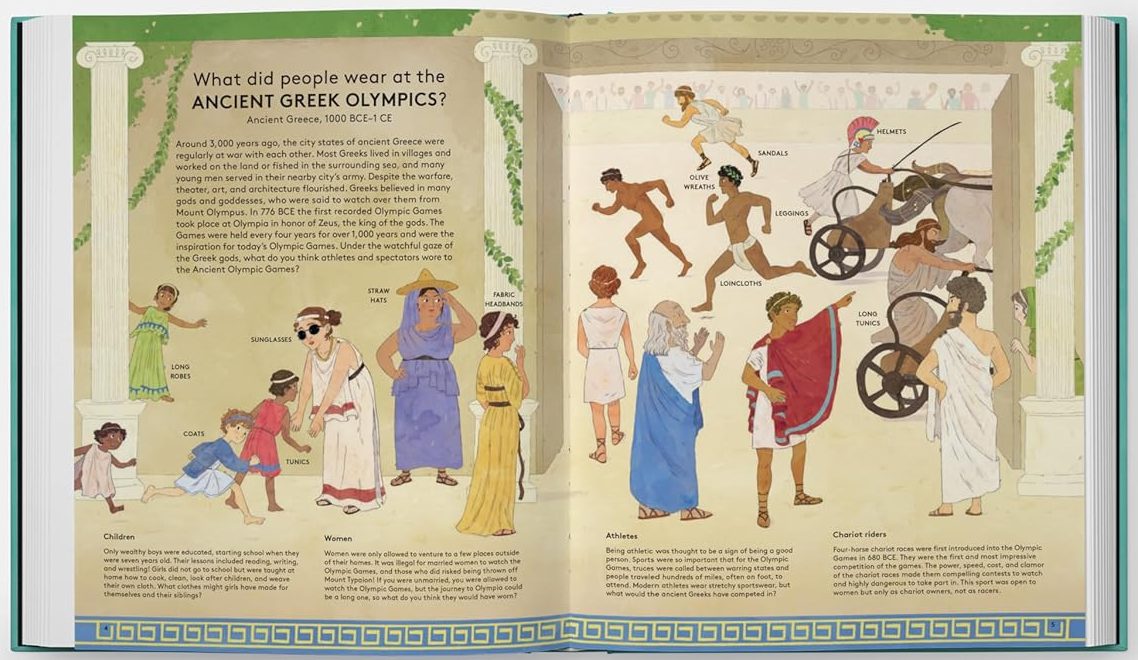
Illustration © 2025 by Erin Vanessa, text © 2025 by Katy Canales. Courtesy of Phaidon Press.

Dropping into each era, kids are oriented to the culture with a brief introduction that highlights it’s geographical reach, as well as its contributions to textiles, science, the arts, entertainment, and political thought. In addition, compelling paragraphs spotlight four important societal groups. As readers absorb this eye-opening information, they’re also set in the middle of a panoramic scene filled with action and appropriately dressed citizens.

But wait! Are all three people in each societal group of four really wearing a garment or accessory from the time period? Look closely! One out of each group is actually sporting an anachronistic item. It’s up to readers to determine which one it is. Ready to test your guess? Just turn the page to find out if you’re right—and to discover the intriguing reasons why people wore “this” and “this” but not “that.”
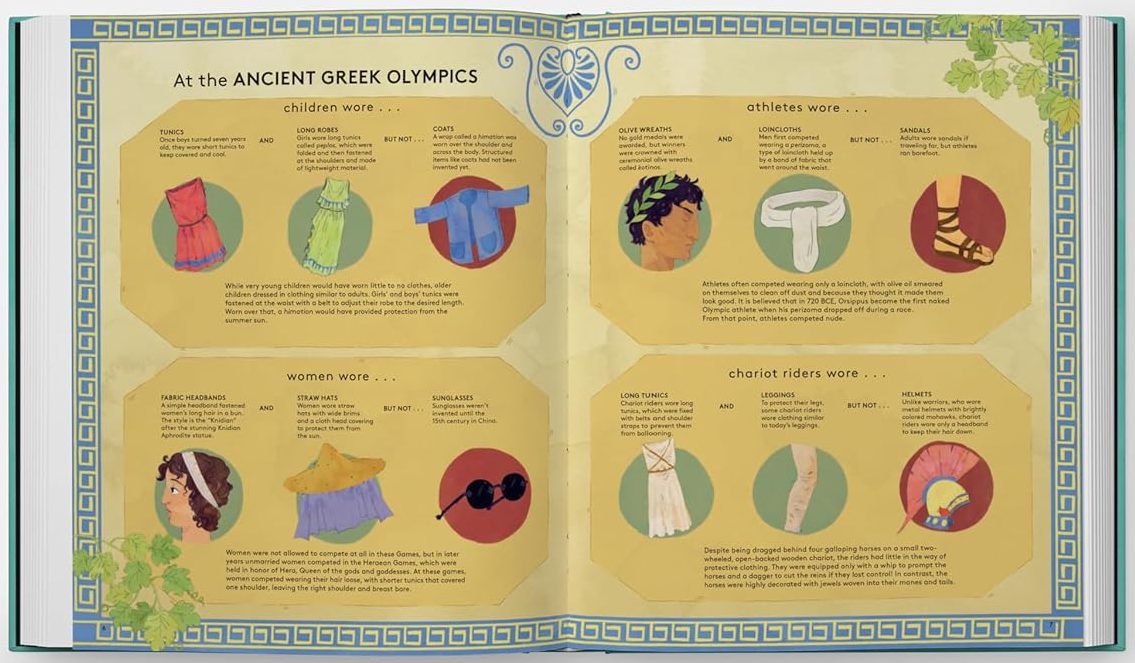
Illustration © 2025 by Erin Vanessa, text © 2025 by Katy Canales. Courtesy of Phaidon Press.

For example, zipping all the way back to 776 BCE Greece, readers find themselves dropped into the first Olympic Games, where they meet a group of children, three women, three athletes, and three chariot riders. Chariot races, kids learn, were “highly dangerous to take part in” due to the “power, speed, cost, and clamor” of the competition. The riders are presented wearing long tunics, leggings, and helmets. Which of these is wrong? Turns out, “despite being dragged behind four galloping horses on a small two-wheeled, open-backed wooden chariot,” riders only wore “a headband to keep their hair down.”
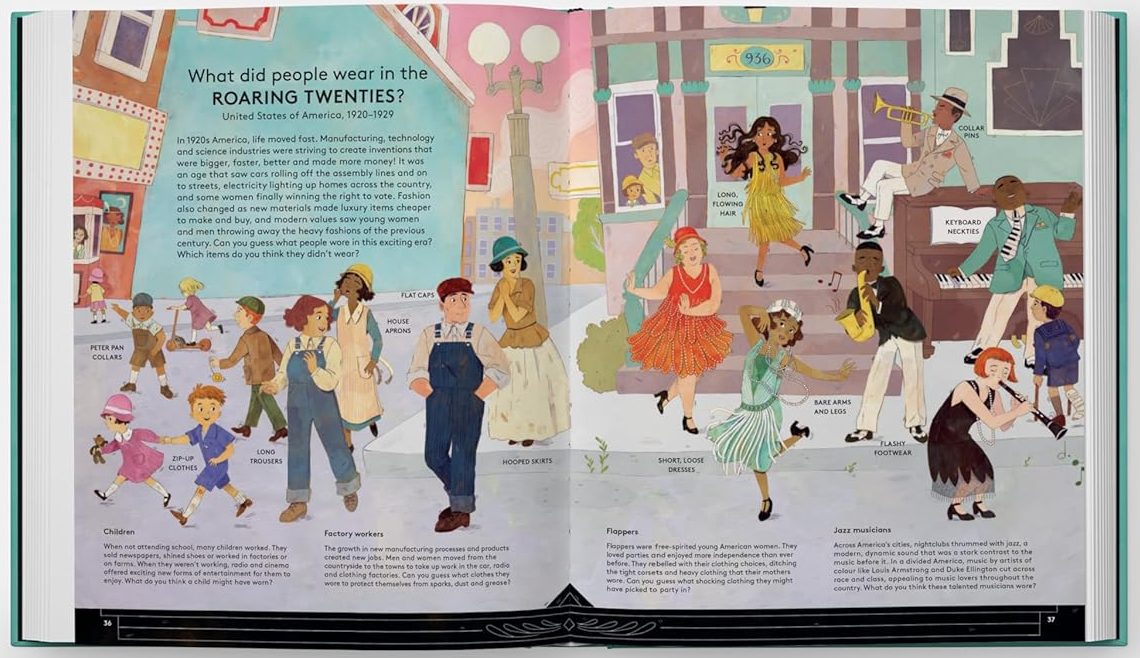
Illustration © 2025 by Erin Vanessa, text © 2025 by Katy Canales. Courtesy of Phaidon Press.

After visiting the past, kids may be hankering to take a peek at their fashion future. They can whisk off to see that too with a section dedicated to addressing contemporary issues such as sustainability to combat the problem of clothing pollution, technological advancements, and how designers adapt to changing needs and styles. A final spread gives readers a quick tour of ten museums with fashion exhibits, and a fun prompt to get kids thinking about what clothing item of theirs they would donate to a museum.
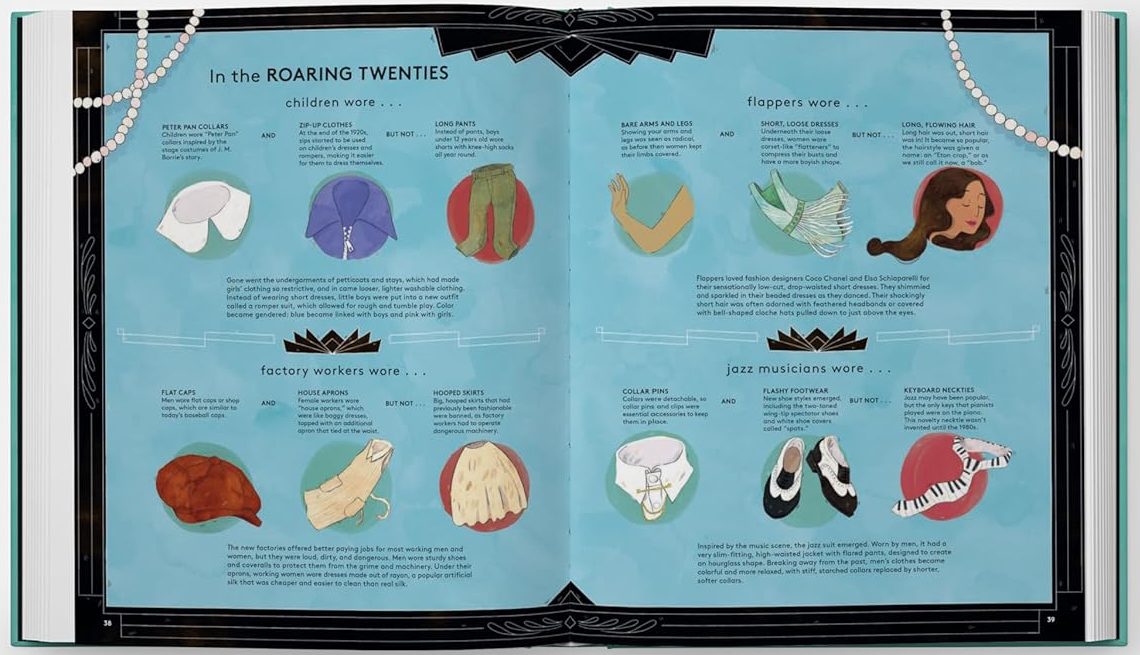
Illustration © 2025 by Erin Vanessa, text © 2025 by Katy Canales. Courtesy of Phaidon Press.

Through her dynamic writing, Katy Canales weaves engrossing facts about historical events, gender-specific roles and dress, cultural touchstones, and the fun of a fashion guessing game into a unique tapestry sure to captivate children and adults as well. Each section can be read in its entirety or easily divided into parts that allow readers to enjoy the text at their own pace. Canales’ accessible storytelling provides a perfect portal into expanded lessons and activities on world history and culture, inventions, and art for teachers and homeschool educators. 

Erin Vanessa’s vibrant and beguiling illustrations transport children to the cities and villages where commoners and the elite mingle clad in the attire of the day. They meet peat cutters and poets, sultans and embroiderers, herders and farriers, and even Queen Elizabeth. They attend a Kabuki theater performance, join revolutionaries as they protest beneath Marie Antoinette’s balcony, and get in the swing as jazz musicians and flappers bring the spirit of the 1920s to a city street.

Get Dressed! A Historical Guessing Game for Fashion Lovers provides a perfect portal into expanded lessons and activities on world history and culture, inventions, and art for teachers and homeschool educators. The book would be an exciting addition to any library collection and a much-appreciated gift for fashion and history buffs.

Ages 5 – 8+

Phaidon Press, 2025 | ISBN 978-1838669966

About the Author

Debut children’s author Katy Canales is the Beatrix Potter Curator. Katy joined the National Trust after a decade at Young V&A and the V&A Museum. As curator, she produced family-focused exhibitions, displays and public events. Katy was the V&A Museum’s children’s clothing collection specialist.

About the Illustrator

Erin Vanessa’s artwork is a blend of traditional and digital methods. Erin lives and works in Canada. She is the author/illustrator of two picture books: You Do You-nicorn and Swept Away at Witch Camp. Visit her at erinvanessa.com.

National Fashion Day Activity
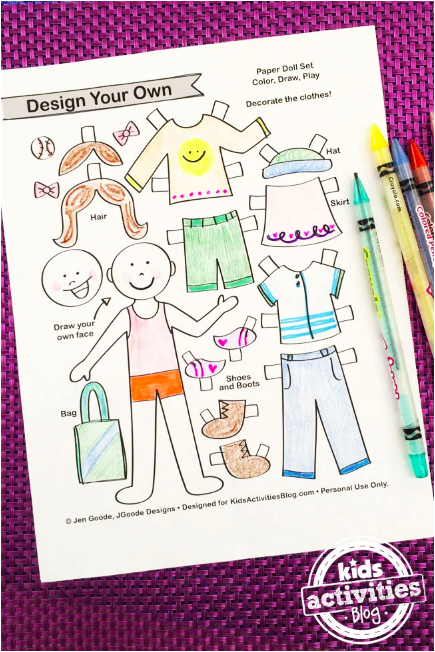
Paper dolls by Jen Goode from Kids Activities Blog.

Printable Paper Doll Kit


With these free printable Paper Doll Kits by Jen Goode found on Holly Homer’s Kids Activities Blog at kidsactivites.com, fashion lovers can decorate the clothing templates provided. They can then have fun designing their own fashion line with styles, costumes, accessories, and more! Use crayons, markers, or even cut out clothing and accessories from wrapping paper, scrapbooking paper, fabric, and other materials. Get creative!

Summer Paper Doll Set | Winter Paper Doll Set (scroll down for more paper doll and paper craft fun!)
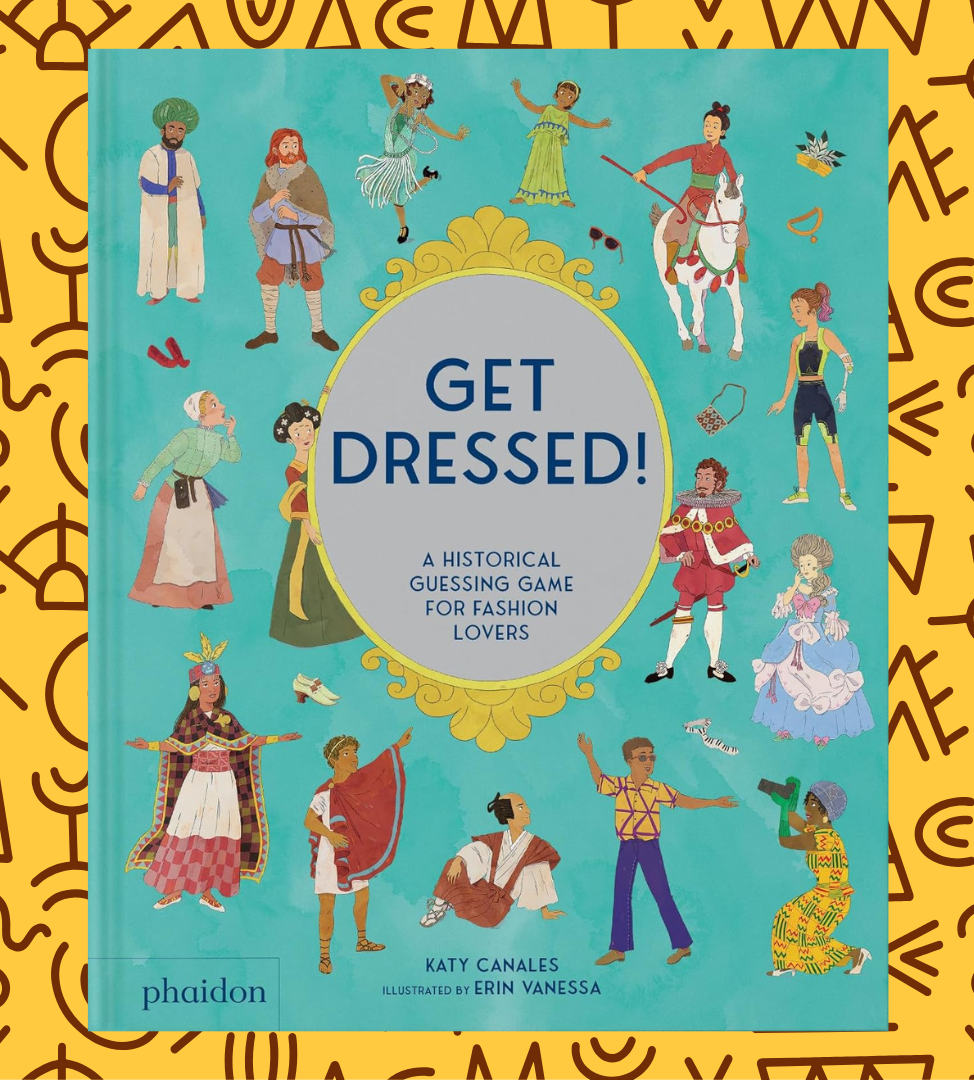
You can purchase Get Dressed! A Historical Guessing Game for Fashion Lovers from these booksellers

Amazon | Barnes & Noble | Bookshop

Picture Book Review

May 10 – National Train Day

About the Holiday

You just have to love the train. With its storied past and iconic whistle, train travel is imprinted in our minds as a fun, efficient way to get from here to there and back again. Today’s holiday was established in 2008 to commemorate all the mystery and romance of train travel while also remembering the history of the railroad, especially the the May, 1869 completion of the transcontinental railroad, and its importance to the development of the United States. Suddenly, distances didn’t seem as far, and those seeking a new life out West or wanting to visit family back East had a safe, quick way of spanning the miles.

Thank you to Marsha Diane Arnold and Sleeping Bear Press for sharing a digital copy of today’s book with me!

Big Boy 4014 and the Steam Team: The World’s Largest Steam Engine Roars Back to Life!

Written by Marsha Diane Arnold | Illustrated by Adam Gustavson


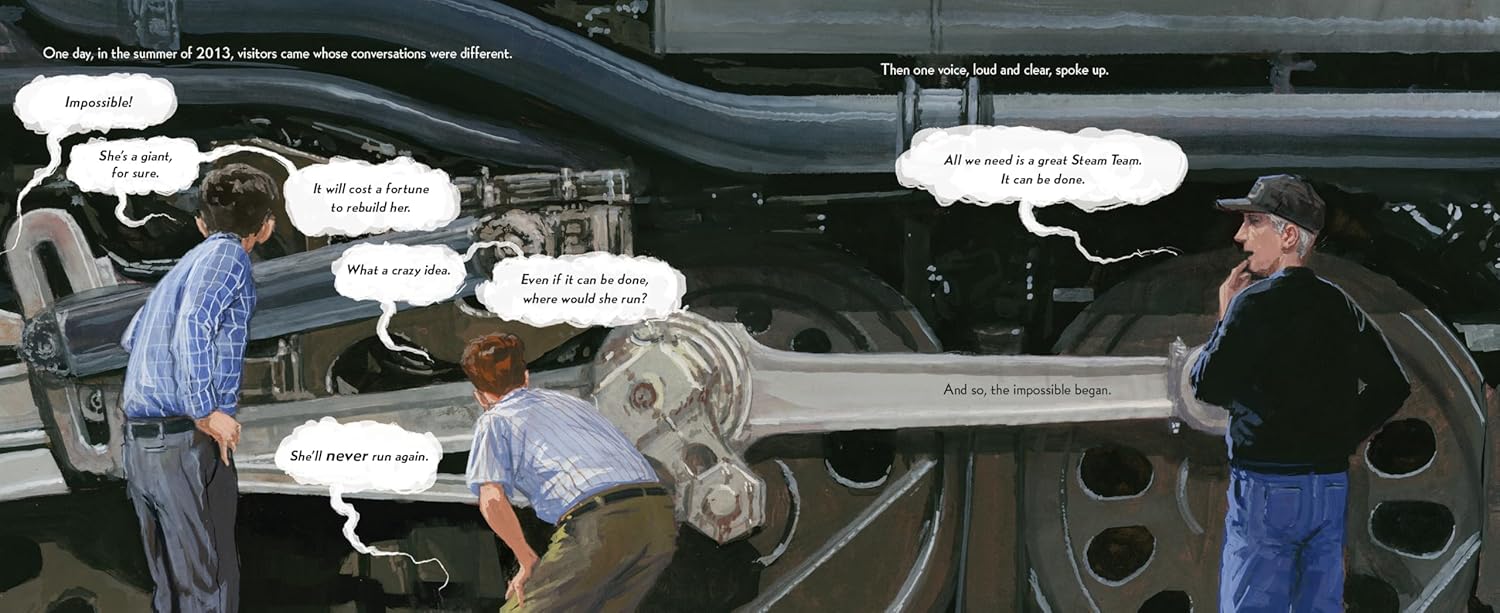
In 2013, Big Boy 4014, the largest steam train in the world, sat stranded in an outdoor museum in Pomona, California, her work carrying heavy freight across the Wasatch Mountains and her indispensable role in transporting American soldiers and military equipment across the western prairies only a memory (Arnold makes note that trains were referred to as “she” by engineers and crew). She had thrilled museum visitors for more than fifty years, but “cold ashes lay in her firebox / Cobwebs wove through her wheels. / Rust crept into her cab.”

Then one day men came to visit her. As they inspected her, most decided that restoring her would be too expensive, too crazy, impossible. But one voice disagreed, saying “All we need is a great steam team. It can be done.” Nine men signed onto the Steam Team, with the aim to restore Big Boy for the Golden Spike Celebration in 2019 that would commemorate the finishing of the transcontinental railroad—the first railroad to stretch all across the America from East to West.

illustration © 2025 by Adam Gustavson, text © 2025 by Marsha Diane Arnold. Courtesy of Sleeping Bear Books.

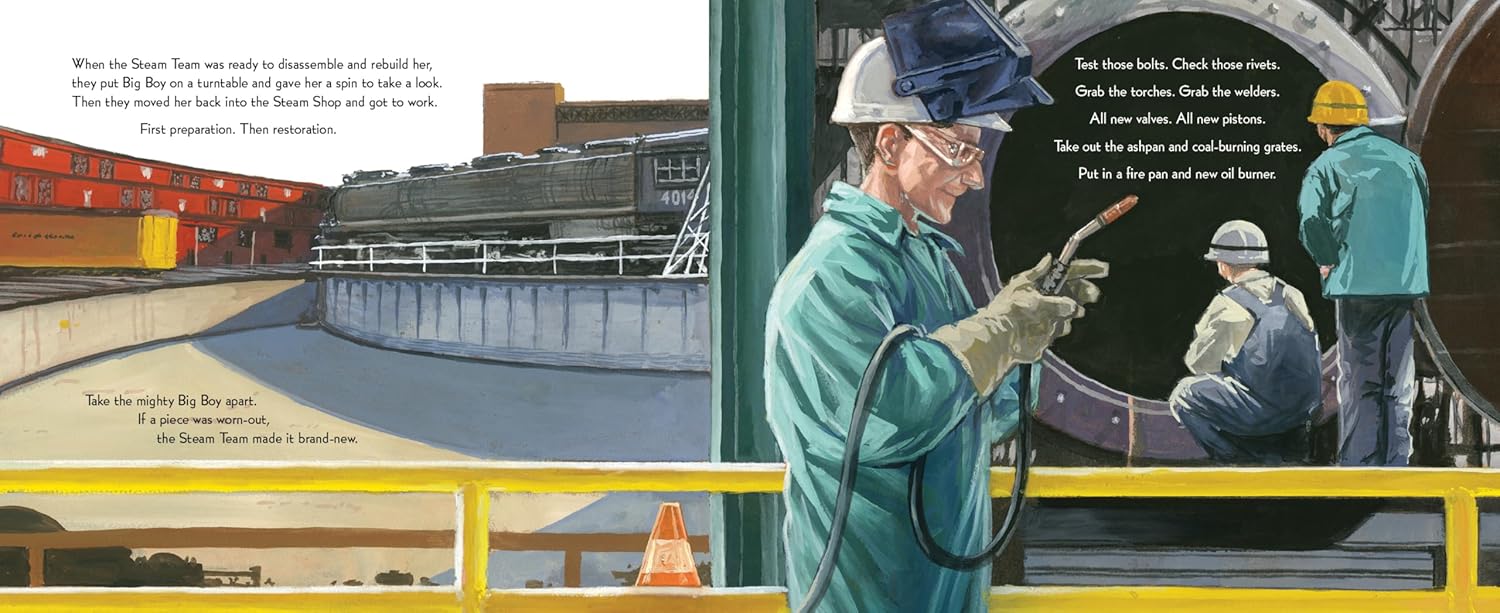
To move Big Boy from the museum to the tracks a mile away, temporary tracks were laid and a bulldozer slowly pulled her along inch by inch. She was then pulled and pushed 1,300 miles to Wyoming, where the work on her would be done. There, Big Boy underwent intensive scrutiny, getting new parts, being made to look like new. Years went by, the Golden Spike Celebration was months away, then days away. It was “time to test her out.” 

“Double-headed with the ‘Living Legend,’ locomotive 884,” Big Boy, pulling train cars behind her, chugged “to Ogden, Utah, for the celebration.” All along the route, people came out to watch, “to feel the rumble under their feet as Big Boy passed, to see the steam cloud billowing above her, to hear her whistle, loud and clear.” At the ceremony, Big Boy 4014 and Locomotive 884 faced each other, just as two steam engines had 150 years before, when a set of tracks moving east-to-west and another running west-to-east were united with a golden spike.

illustration © 2025 by Adam Gustavson, text © 2025 by Marsha Diane Arnold. Courtesy of Sleeping Bear Books.

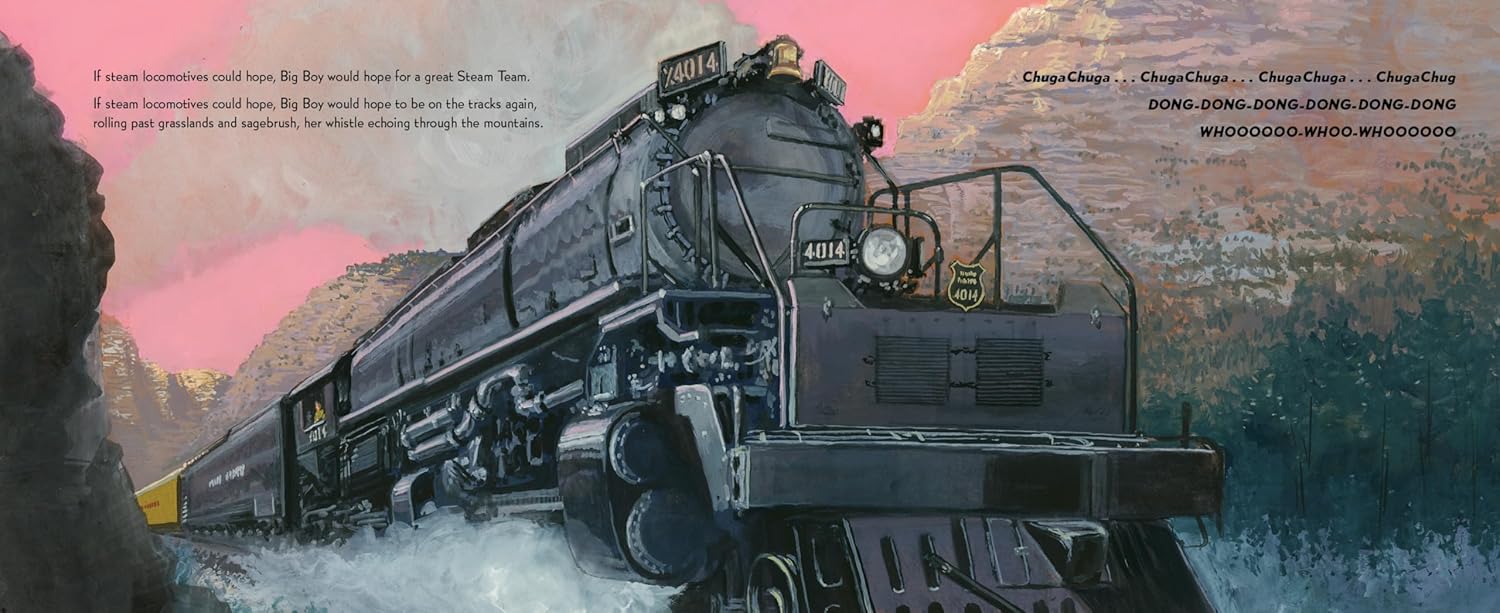
Following the Golden Spike Celebration, Big Boy 4014 took another trip, a tour of more than 8,000 miles “past grasslands and sagebrush. / Past farmlands and rivers. / Past fields and cities and towns.” Whether it was raining or snowing or blisteringly hot, people came out to cheer Big Boy on and feel that awesome rumble as she passed by. No longer is her time only a memory from long ago. With more tours planned, “if steam locomotives could talk, Big Boy would say . . . “I’m ringing my bell and sounding my whistle.” DONG-DONG-DONG-DONG-DONG-DONG WHOOOOOO-WHOO-WHOOOOOO / “I’m chugging up the Wasatch Mountains at top speed, feeling the warmth of the oil in my firebox, as powerful as 7,000 horses.”

An in-depth discussion about the origins of the twenty-five Big Boy steam locomotives; the incredible engineering feat of designing and building them; how a steam engine works, How Big Boy 4014 was chosen for restoration; short profiles of the men instrumental in Big Boy’s restoration; a brief history of the building of the transcontinental railroad; and the research involved in making tours of Big Boy 4014 possible.

illustration © 2025 by Adam Gustavson, text © 2025 by Marsha Diane Arnold. Courtesy of Sleeping Bear Books.

Combining imaginative lyrical text with compelling nonfiction storytelling, Marsha Diane Arnold weaves an immersive tale of the restoration and triumphant comeback of the steam locomotive Big Boy 4014. Where once 25 of these behemoth machines conquered mountains and rough terrain to move freight and people across the country and contributed to our success in World War II, they have been relegated to history as diesel and electric trains took prominence.

Arnold recalls the importance of these storied locomotives for young readers and train enthusiasts of all ages, bookending her story with wistful “If steam locomotives could dream/talk” re-imaginings of Big Boy 4014’s glory days of leaving a station, sounding her bell and whistle, and “chugging up mountains” with the “power of 7,000 horses.” Readers will be wowed by the dedicated and painstaking work that went into moving and restoring Big Boy 4014, a recounting Arnold accomplishes with a deft hand for details that don’t overwhelm. She leaves readers with a new appreciation for steam locomotives and a hope that they too will be able to witness a tour of this earth-rumbling beauty.

Adam Gustavson’s stunning realistic paintings depict Big Boy 4014 from various perspectives, giving readers a sense of her scale compared to the adults and children, the mountainous landscapes she traversed, and the crowds who came out to celebrate her. Up-close renderings allow train lovers to get a glimpse into the steam-powered mechanics that propelled her while also seeing how run-down she had become over her nearly 60 years of disuse. Each page spread is a showstopper to linger and marvel over as readers gain insight and admiration for these trains and those who created them.

For train enthusiasts, history buffs, and those who simply love a story masterfully told, Big Boy 4014 and the Steam Team: the World’s Largest Steam Engine Roars Back to Life! is a book you won’t want to miss. The book is an exciting must-addition for all school and public library collections.

Ages 6 – 9+

Sleeping Bear Press, 2025 | ISBN 978-1534113145

About the Author

Marsha Diane Arnold is a multiple-award–winning author whose books have sold over one million copies. Called a “born storyteller” by the media, Marsha’s works include Badger’s Perfect Garden (Florida Book Awards Bronze Medal), the bilingual Galápagos Girl/Galapagueña (Bank Street Best Book and Campoy-Ada honor book), and Lights Out (Golden Kite finalist). Among her many pastimes, Marsha especially enjoys reading to her grandchildren and visiting schools to talk about writing and books. Born in rural Kansas, Marsha now lives with her husband and dog Sailor in Alva, Florida. Visit her at marshadianearnold.com.

About the Illustrator

Adam Gustavson’s illustrations have appeared in over thirty books for children. He is a teaching professor of art at Rowan University, and lives in a quirky little house in New Jersey with his lovely wife, their two sons, and two rather small dogs.

National Train Day Activity

Steam Engine Coloring Page


Steam locomotives once carried passengers and freight. Enjoy this coloring page of a steam train from days gone by from Monday Mandala!

You can purchase Big Boy 4014 and the Steam Team: the World’s Largest Steam Engine Roars Back to Life! from these booksellers

Amazon | Barnes & Noble | Bookshop

Picture Book Review

December 15 – It’s Gift-Giving Season

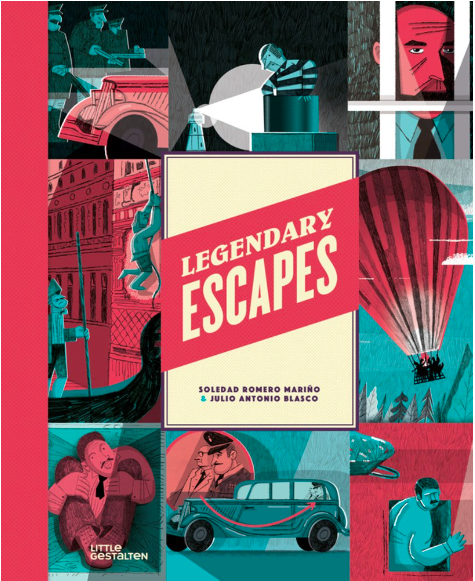
celebrate-picture-books-picture-book-review-legendary-escapes-cover

About the Holiday

If you’re looking for a gift for an older child or tween who’s curious about history, loves a good mystery, and is into puzzles, cyphers, and seemingly impossible feats, then you’ll want to put today’s book at the top of your shopping list. Books that encourage a child’s natural interests, stretches their knowledge, and sends them off to discover more about the world will always be gifts they appreciate.

I’d like to thank Little Gestalten for sending me a copy of Legendary Escapes for review consideration. All opinions on the book are my own.

Legendary Escapes

Written by Soledad Romero Mariño | Illustrated by Julio Antonio Blasco


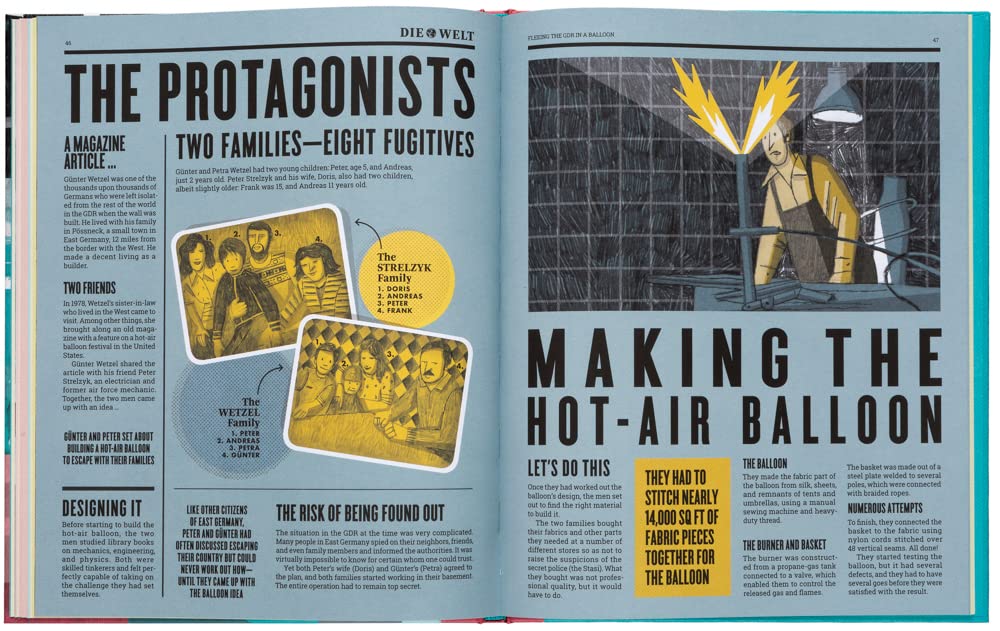
There may be nothing as as thrilling as a daring escape from a dangerous situation or as mind-boggling as a seemingly impossible breakout from a high-security location. “How did they do that?” we ask, and usually we’re left scratching our heads as a few details trickle out and then the information dries up. But that’s not what happens when you get your hands on Legendary Escapes! Here, children (and, I dare say, a good number of adults) will learn each escapee’s backstory, discover the conditions of the prison, territory, or situation left behind, become privy to the planning stages of the escape, and then follow along, step-by-step, as the escapee fools their captors.

celebrate-picture-books-picture-book-review-legendary-escapes-strelzyk-family

Image copyright Julio Antonio Blasco, 2022, text copyright Soledad Romero Mariño, 2022.

In nine information-packed chapters, Soledad Romero introduces readers not only to these ingenious masterminds but to history, geography, and culture from 1750s Venice to Mexico in 2015. Her compelling narrative style draws readers in with straightforward, easily understood descriptions that allow them to immerse themselves in every aspect of the case at hand. Fascinating tidbits sprinkled throughout each chapter will amaze and may spark further research, while the titles of movies made about some of these events will have families grabbing the remote.

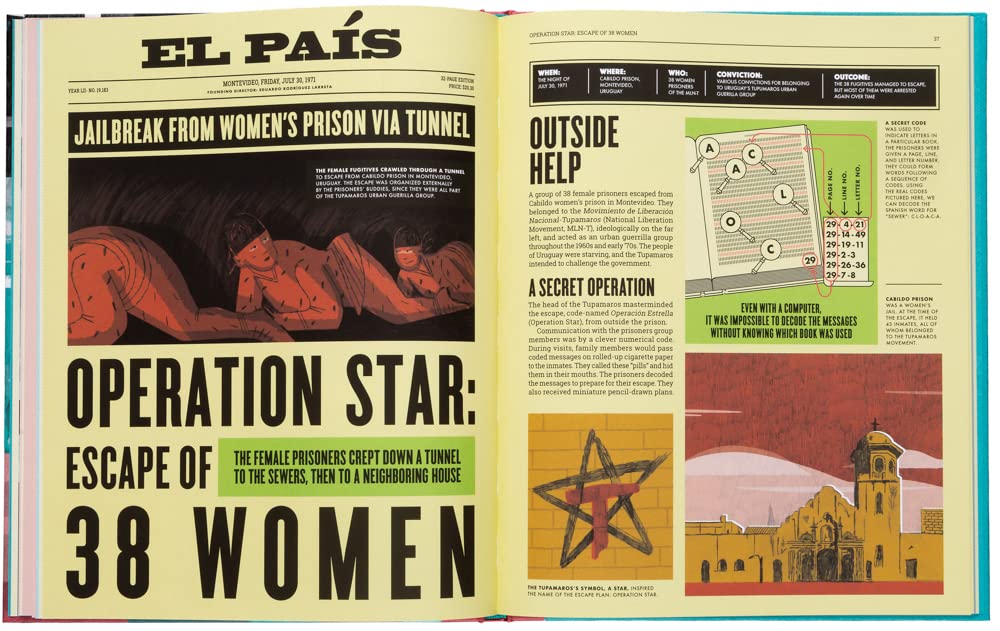
Among these astounding true stories, readers learn how one escapist “vanished” from prison by recreating the key to his cell from memory after seeing it in his jailer’s hand; how three prisoners fashioned papier-mâché heads to fool the guards at bed checks; how a man slipped through the meal-tray slot in his prison door to gain his freedom; how a slave fled the South for the free North with the help of the postal system; and how a charming rogue and conman, jailed for having a banned book, finally broke out of a notorious prison after a first attempt was thwarted. And that’s just to get you started!

celebrate-picture-books-picture-book-review-legendary-escapes-operation-star

Image copyright Julio Antonio Blasco, 2022, text copyright Soledad Romero Mariño, 2022.

Each color-coded chapter of this book, ingeniously designed by Julio Antonio Blasco, reads like above-the-fold newspaper articles published in The Los Angeles Examiner, the Daily Mirror, El País, Die Welt, and Korea Joongang Daily, among others, all complete with attention-grabbing headlines, sidebars, and eye-catching images that tell stories of their own. Stylized illustrations replicate over-the-wall scrambles, dangerous escape routes, WANTED posters, and insider views of some of the world’s toughest prisons. Readers will pore over each page, wanting to discover each fact, parse the clues, and find out what happened to each escapee.

Legendary Escapes is a book that will excite any history, journalism, mystery, or crime buff and offers a thrilling way to engage students in discovering the wider stories around these escapes. The book would make an excellent gift and is a must for any reader who loves to delve into the details of captivating true stories and compelling biographies. Legendary Escapes is a book that every school and public library should hold in its collection.

Ages 10 – 13 

Little Gestalten, 2022 | ISBN 978-3967047301

About the Author

Soledad Romero began her career as a creative director in advertising. In parallel, she founded her own publishing house where she collaborated with artists from all over the world. She now dedicates herself exclusively to the creation of children’s books as an author and editor. You can connect with her on Instagram.

About the Illustrator

Julio Antonio Blasco has worked as an illustrator and graphic designer for 15 years. He uses drawing, painting, collage, and other techniques in order to bring his books, and the characters within them, to life. You can view a portfolio of his work on his website.

celebrate-picture-books-picture-book-review-legendary-escapes-cover

You can find Legendary Escapes at these booksellers

Amazon | Barnes & Noble | Books-a-Million

To support your local independent bookstore, order from

Bookshop | IndieBound

Picture Book Review
October – It’s National Book Month

celebrate-picture-books-picture-book-review-professor-wooford-mcpaw's-history-of-astronomy-cover

About the Holiday

Readers might say that every month is National Book Month, but October is especially set aside to highlight books and the love of reading. Fall is a book bonanza as publishers release new books in all categories, and the holiday gift-giving season beckons. Books, of course, make superb gifts for all ages! So whether you’re looking for a new or new-to-you book to read right now or new titles to give to the family and friends who will be on your list, this month is a perfect time to check out your local bookstore to see what wonderful books are on the shelves! This month is also a great time to discover books that get kids excited about history, science, and technology in a whole new way – like today’s book!

Thanks to Cicada Books for sharing a digital copy of Professor Wooford McPaw’s History of Astonomy with me for review consideration. All opinions on the book are my own.

Professor Wooford McPaw’s History of Astronomy

By Elliot Kruszynski


The study of astronomy harkens back to the earliest days of scientific discovery, when “civilizations in Mesopotamia, Persia, China, India and Greece all examined the night sky. With only the naked eye, they mapped out the stars and used the information they gathered to create calendars, navigate great distances and keep time.” So begins this comprehensive, detailed, and even humorous compendium of our skies, scientists and thinkers, equipment, and a look to the future.

Professor Wooford McPaw and his telescope sidekick, Teley, takes kids back to 3000 BC, when religious leaders determined the longest day of the year by tracking the sun’s progress through the arches and columns erected at Stonehenge, and speeds forward to 1000 BC, when people connected the stars, creating the constellations and stories about them.

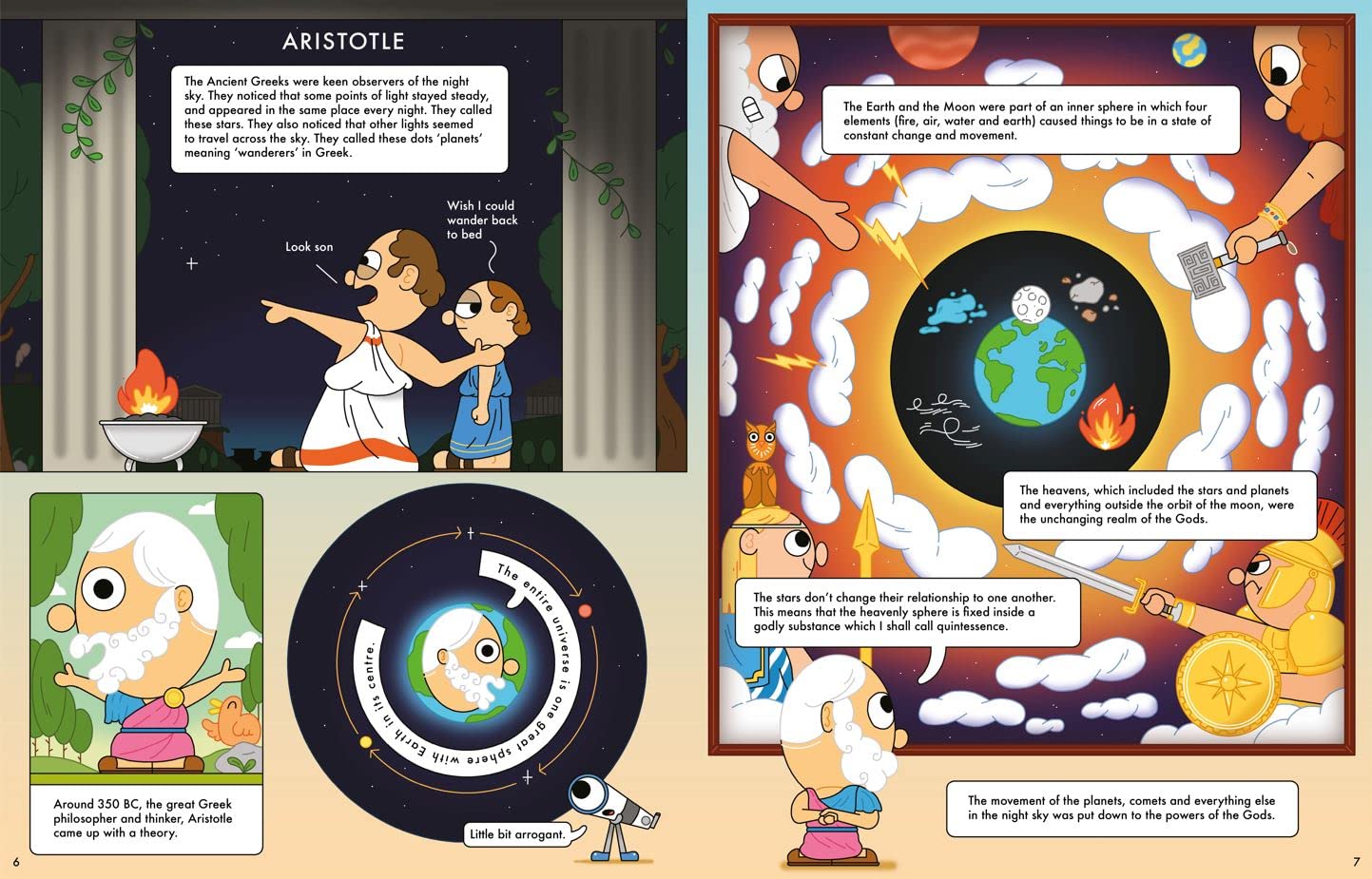
celebrate-picture-books-picture-book-review-professor-wooford-mcpaw's-history-of-astronomy-aristotle

Copyright Elliot Kruszynski, 2022, courtesy of Cicada Books.

Kids then meet Aristotle and learn about his theories on the placement of the earth, the four elements, and the role of the gods in the universe. Then they discover the conflict between the teachings of Claudius Ptolemy around 140 AD and the discoveries of Nicolaus Copernicus in the 16th century, who left it to future scientists to explore his theory that that the earth revolved around the sun (and not the other way around). And what happened to those scientists? Well, children learn about Galileo Galilei, who, in addition to inventing the telescope, spent a good part of his life under house arrest for saying the earth and the planets did indeed revolve around the sun.

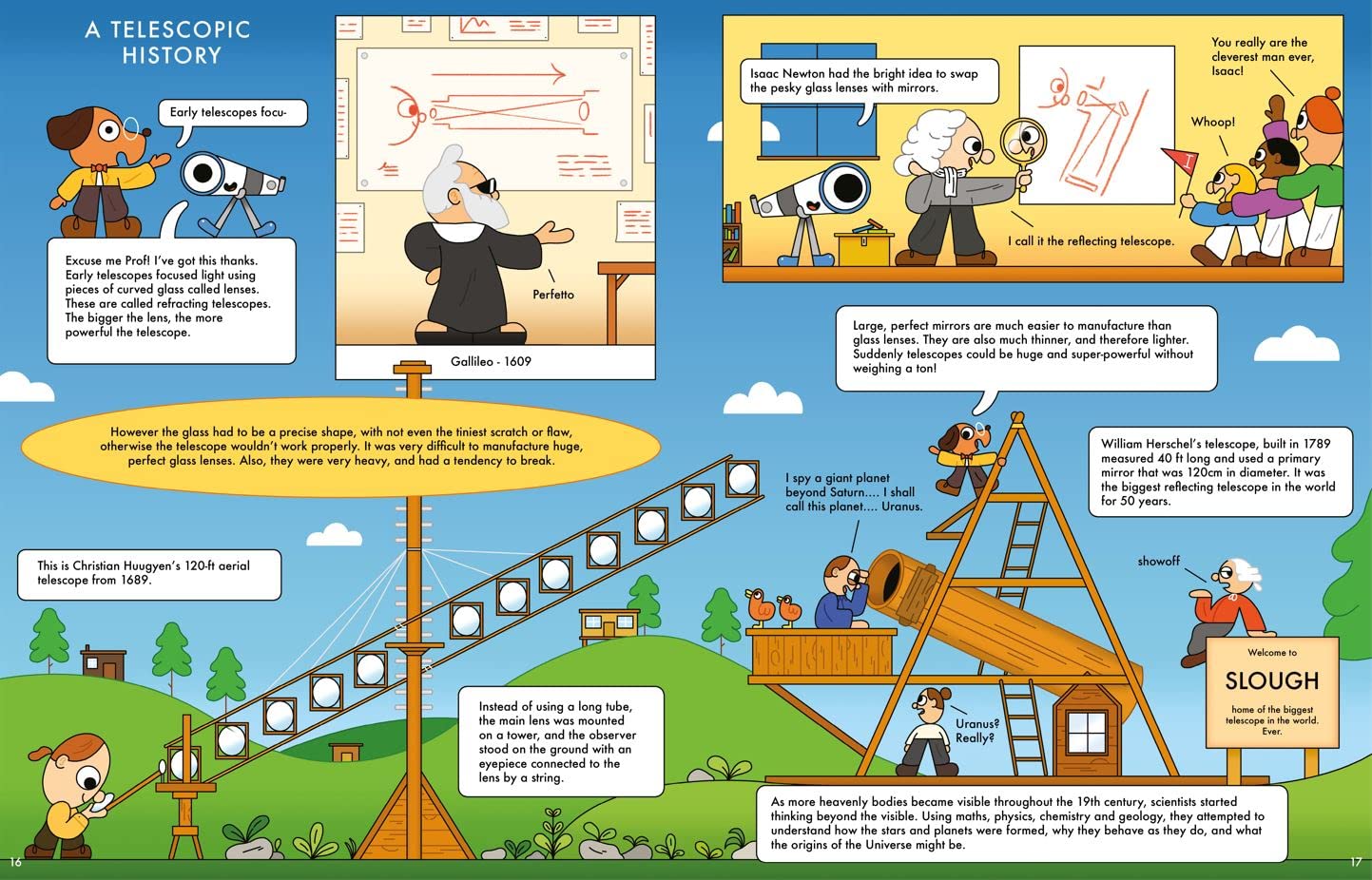
celebrate-picture-books-picture-book-review-professor-wooford-mcpaw's-history-of-astronomy-telescopic-history

Copyright Elliot Kruszynski, 2022, courtesy of Cicada Books.

Professor Wooford introduces readers to Isaac Newton, whose “findings, along with the improvement of telescope technology, changed the way that humans (and for some dogs) looked at our planet.” What kind of telescope technology is the Prof talking about? He gives kids a run down from Galileo’s invention in 1609 to a switch from glass lenses to mirrors in the 1700s to today’s Hubble Space Telescope and James Webb Space Telescope. Here’s Teley explaining about lenses:

“Early telescopes, like the one Galileo invented, focused light using pieces of curved glass called lenses. The bigger the lens, the more powerful the telescope. They were called refracting telescopes. However the glass had to be a precise shape, with not even the tiniest scratch or flaw, otherwise the telescope wouldn’t work properly. It was very difficult to manufacture huge, perfect glass lenses. Also, they were very heavy and had a tendency to break.” Teley goes on to explain that it was Isaac Newton who “had the bright idea to swap the pesky glass lenses with mirrors,” which are much easier to make and are thinner and lighter, allowing telescopes to “be huge and super-powerful without weighing a ton.”

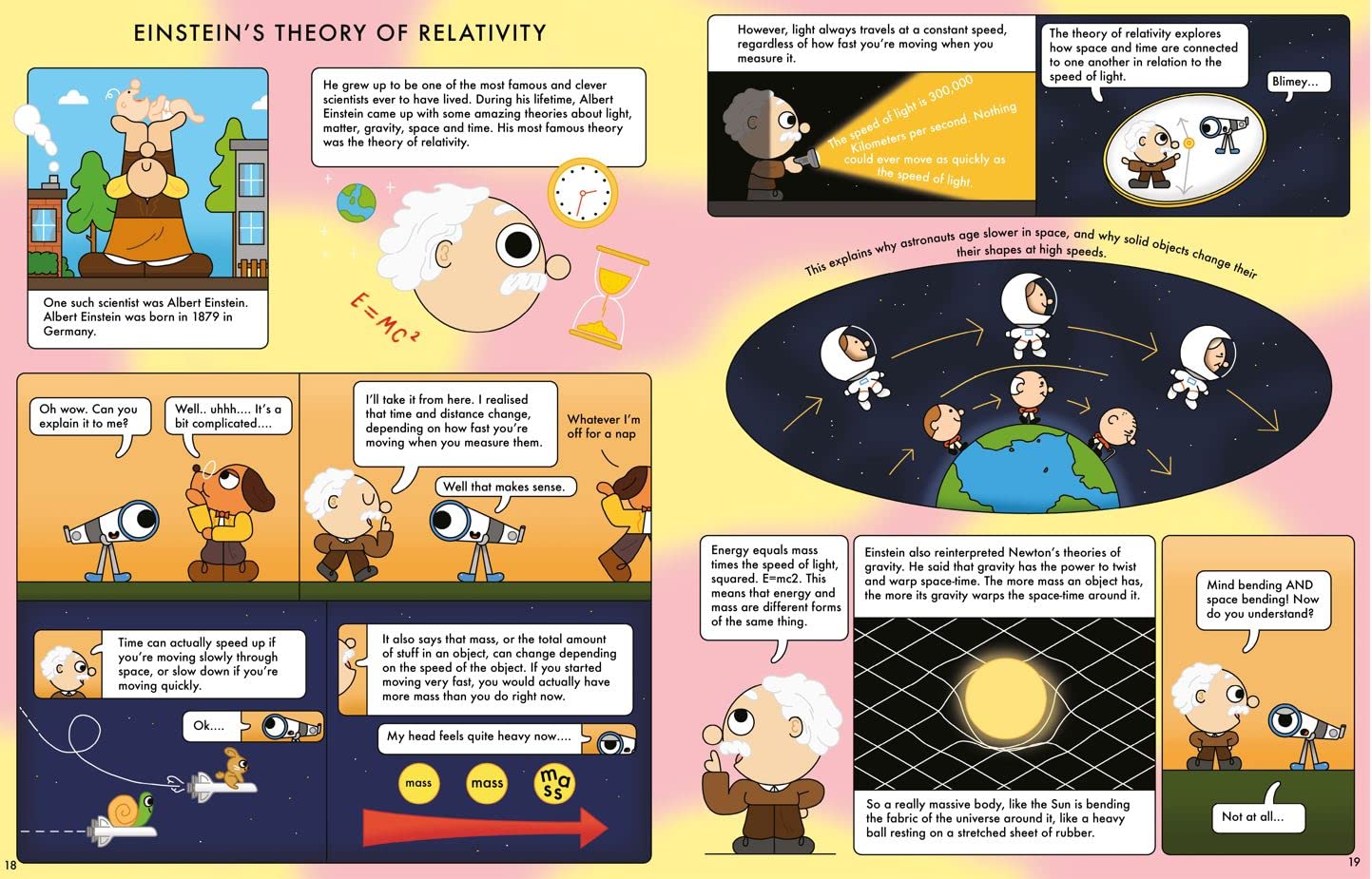
celebrate-picture-books-picture-book-review-professor-wooford-mcpaw's-history-of-astronomy-einstein

Copyright Elliot Kruszynski, 2022, courtesy of Cicada Books.

Albert Einstein travels back through time to explain his “mind bending and space bending” Theory of Relativity in terms that readers can understand. Then kids are launched into space—the space race, that is—where they learn about the advancements and setbacks of the Russian and American from 1957 to 1969, when the first moon walk occurred, as well as a weely … I mean … really unusual tradition among space-going astronauts.

celebrate-picture-books-picture-book-review-professor-wooford-mcpaw's-history-of-astronomy-space-probes

Copyright Elliot Kruszynski, 2022, courtesy of Cicada Books.

Children get info on different kinds of space probes from rovers to orbiters to interplanetary probes before blasting off into our solar system to find out about the planets (even little Pluto gets a cameo. But where is Earth and all of our other planets located? Professor McPaw explains: “Earth is located in a galaxy called the Milky Way. At its center is a supermassive black hole called Sagittarius A*, which contains as much mass as four million suns.” The prof goes on to teach kids about the three different shapes of galaxies, what dwarf galaxies are, how bigger galaxies cannibalize smaller galaxies, and where the term galaxy comes from.

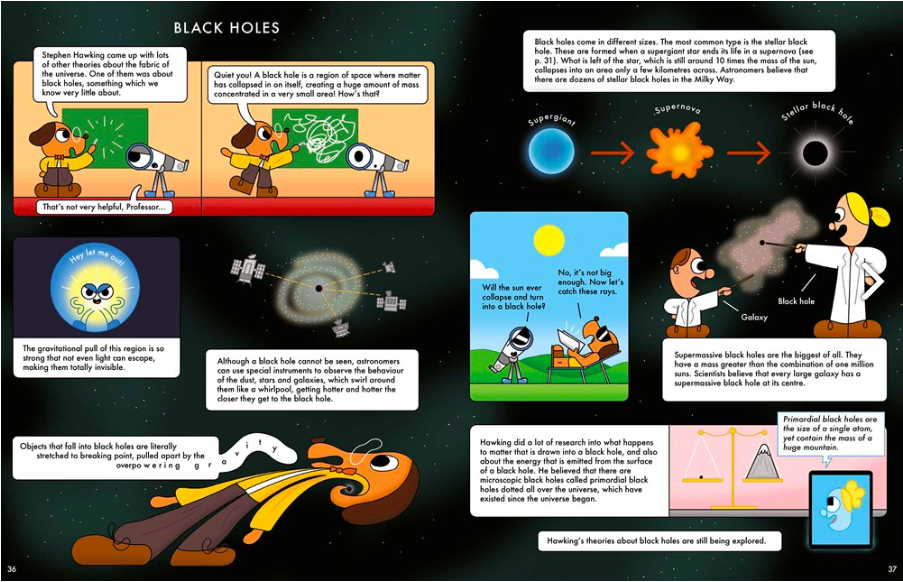
celebrate-picture-books-picture-book-review-professor-wooford-mcpaw's-history-of-astronomy-black-holes

Copyright Elliot Kruszynski, 2022, courtesy of Cicada Books.

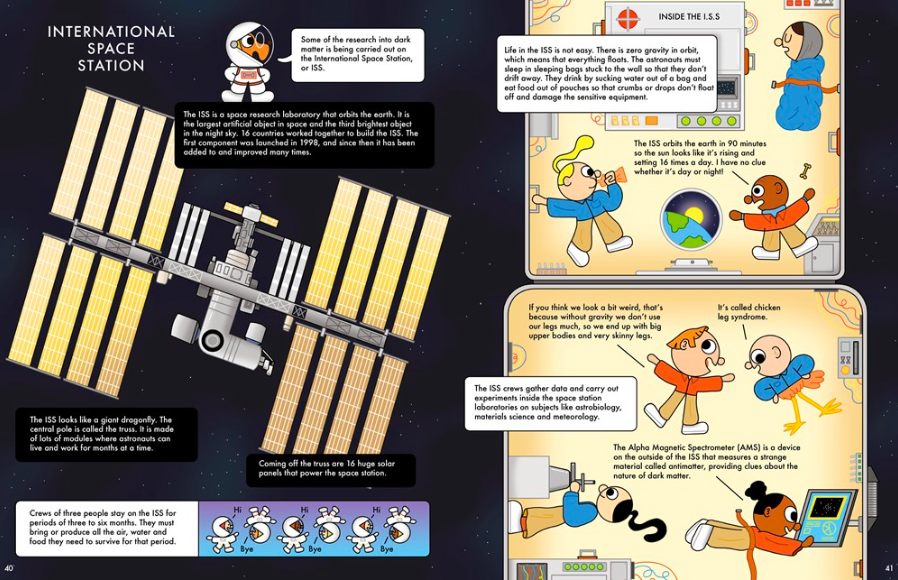
Professor Wooford McPaw and Teley also impart the same fascinating in-depth facts about stars, black holes, and dark matter. And what’s a trip into space without a ride on the International Space Station? Well, readers won’t find out because they get to explore the ISS and learn how the astronauts experience 16 sunrises and sunsets a day, sleep strapped to a wall, and develop “chicken leg syndrome” from not using their legs as much as their upper body in the no-gravity conditions.

By this time, kids are probably wondering about whether there’s life in other parts of the solar system or beyond as well as what the future might hold for astronomers, astrophysicists, other scientists, and even themselves. But are readers going to be abandoned in space? Not at all! Professor Wooford has thoughtfully included a Race to Earth “board game” on the last two-page spread that will get all astronauts … I mean readers … back home in time for dinner.

celebrate-picture-books-picture-book-review-professor-wooford-mcpaw's-history-of-astronomy-international-space-station

Copyright Elliot Kruszynski, 2022, courtesy of Cicada Books.

Elliot Kruszynski’s Professor Wooford McPaw’s History of Astonomy is just the kind of book that both kids who already love space and those who don’t yet know they do will devour, either bit-by-bit or all in one sitting. With affable hosts who give excellent easy-to-understand explanations, historical characters who add funny asides, and a quick-paced graphic-novel format, (title) will spark readers’ interest in learning all about the past, present, and future of astronomy. The book would make a perfect gift and very welcome addition to any home library. Educators and homeschoolers will find it a go-to text for introducing many scientific topics and an engaging way to heighten student’s eagerness for further research. School and public library librarians will find Professor Wooford McPaw’s History of Astonomy to be a favorite to recommend and to have on their shelves.

Ages 6 – 10 and up

Cicada Books, 2022 | ISBN 978-1800660236

To view a portfolio of work by Elliot Kruszynski and connect with him on Instagram, visit his website. 

National Book Month Activity

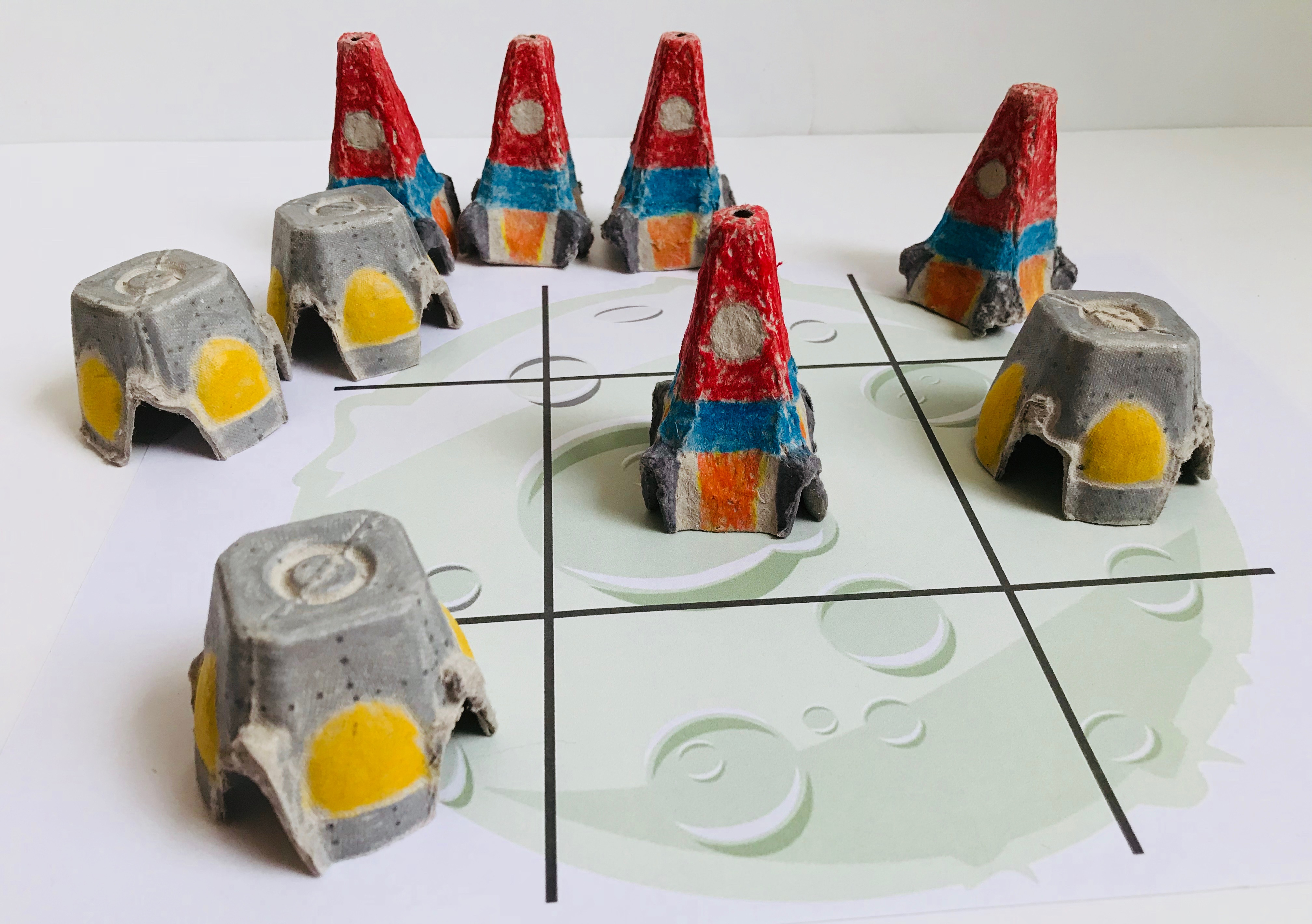
celebrate-picture-books-picture-book-review-rocket-to-the-moon-tic-tac-toe-game

Out of This World Tic-Tac-Toe Game

You can launch your own Tic-Tac-Toe Game with this set you make yourself! With just a couple of egg cartons, some crayons, and a printable game board, you’ll be off to the moon for some space-age fun! Opposing players can be designated by rockets and capsules. Each player will need 5 playing pieces. 

SUPPLIES

  • Printable Moon Tic-Tac-Toe Game Board
  • 2 cardboard egg cartons
  • Heavy stock paper or regular printer paper
  • Crayons
  • Black or gray fine-tip marker

DIRECTIONS

To Make the Rockets

  1. Cut the tall center cones from the egg carton
  2. Trim the bottoms of each form so they stand steadily, leaving the arched corners intact
  3. Pencil in a circular window on one side near the top of the cone
  4. Color the rocket body any colors you like, going around the window and stopping where the arched corners begin
  5. With the marker color the arched corners of the form to make legs
  6. On the cardboard between the legs, color flames for blast off

To Make the Capsule

  1. Cut the egg cups from an egg carton
  2. Color the sides silver, leaving the curved section uncolored. (If your egg cup has no pre-pressed curve on the sides of the cup, draw one on each side.)
  3. Color the curved section yellow to make windows
  4. With the marker, dot “rivets” across the capsule

Print the Moon Game Board and play!

celebrate-picture-books-picture-book-review-professor-wooford-mcpaw's-history-of-astronomy-cover

You can find Professor Wooford McPaw’s History of Astronomy at these booksellers

Amazon | Barnes & Noble | Books-a-Million

To support your local independent bookstore, order from

Bookshop | IndieBound

Picture Book Review

January 7 – Old Rock Day

celebrate-picture-books-picture-book-review-old-rock-is-not-boring-cover

About the Holiday

Do you love rocks—the history they tell, their versatility, intricate patterns, and glorious colors? Today’s holiday celebrates these wonders of nature and encourages geologists—both professionals and amateurs—to indulge their passion. You can learn a bit more about the history of the study of rocks, the first use of the term “geology,” and on to more modern times at NationalToday. To celebrate today’s holiday, take a walk in your backyard or neighborhood, pick up a few rocks, and research a little more about them. Then have fun with today’s craft.

Thank you to G. P. Putnam’s Sons for sharing a copy of Old Rock (is not boring) with me for review consideration. All opinions on the book are my own.

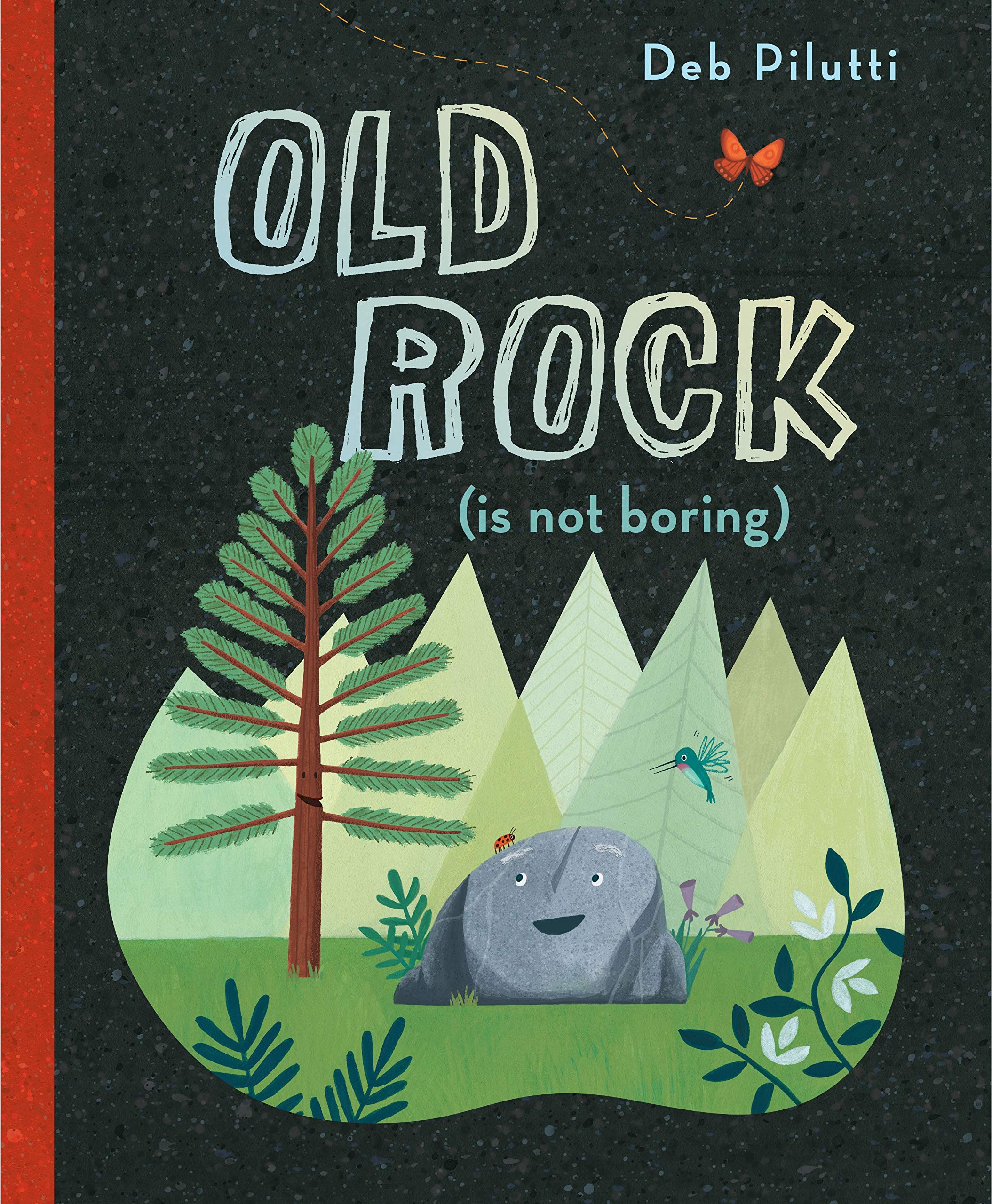
Old Rock (is not boring)

By Deb Pilutti


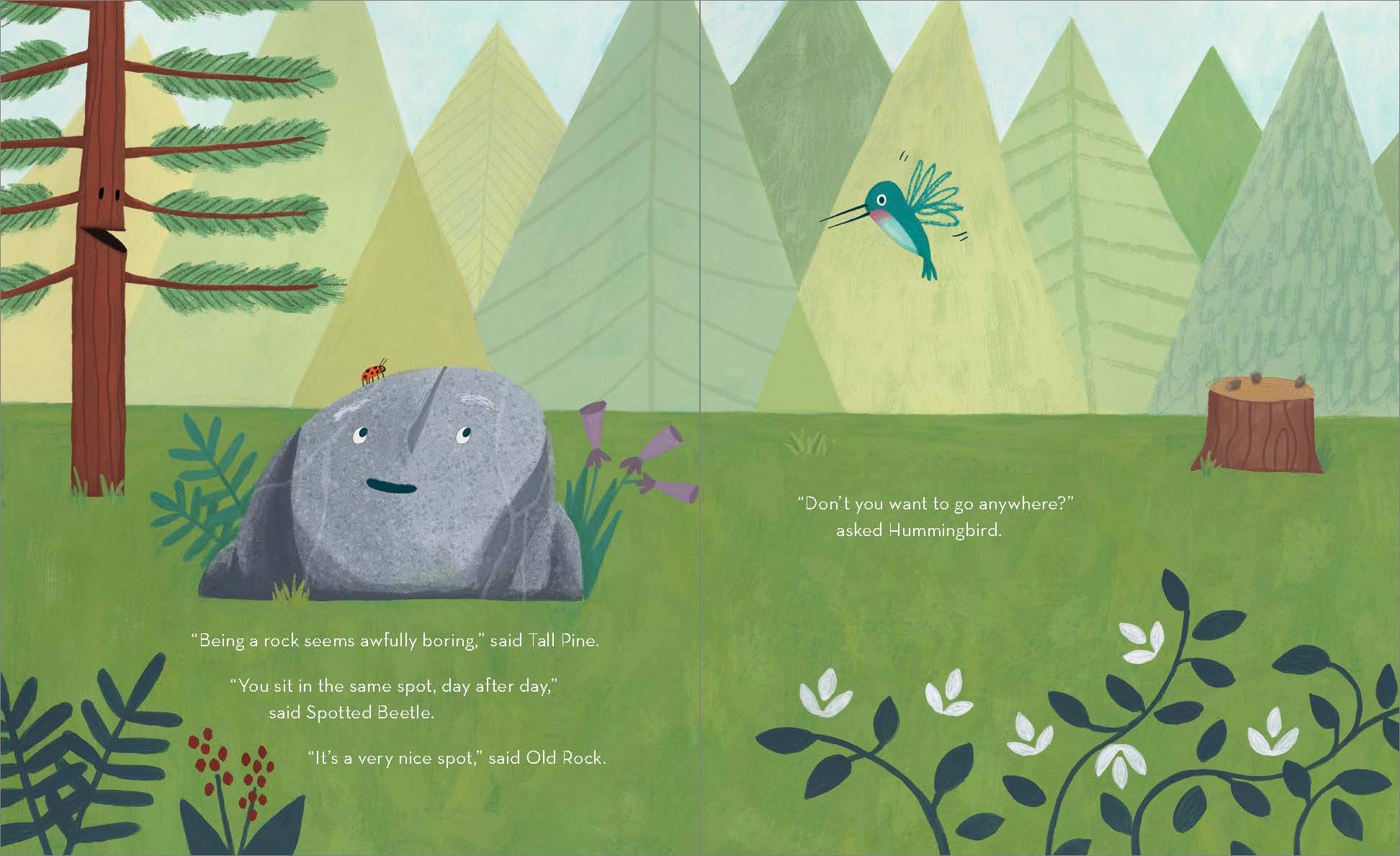
It seemed that Old Rock had been sitting in the same spot forever. Tall Pine and Spotted Beetle thought being a rock must be pretty boring. Hummingbird wondered, “‘Don’t you ever want to go anywhere?’” She knew she would be if she couldn’t fly all over the world and taste exotic nectars. But Old Rock had flown once, and he began to tell his story.

celebrate-picture-books-picture-book-review-old-rock-is-not-boring-hummingbird

Copyright Deb Pilutti, 2020, courtesy of G. P. Putnam’s Sons Books for Young Readers.

It was during the time when he was surrounded by darkness, but then the volcano erupted and Old Rock “‘soared through a fiery sky into the bright light of a new world.’” Tall Pine, Spotted Beetle, and Hummingbird weren’t very impressed. They still thought Old Rock must be bored. Spotted Beetle told him how much he might see if he climbed to Tall Pine’s very highest branch.

celebrate-picture-books-picture-book-review-old-rock-is-not-boring-volcano

Copyright Deb Pilutti, 2020, courtesy of G. P. Putnam’s Sons Books for Young Readers.

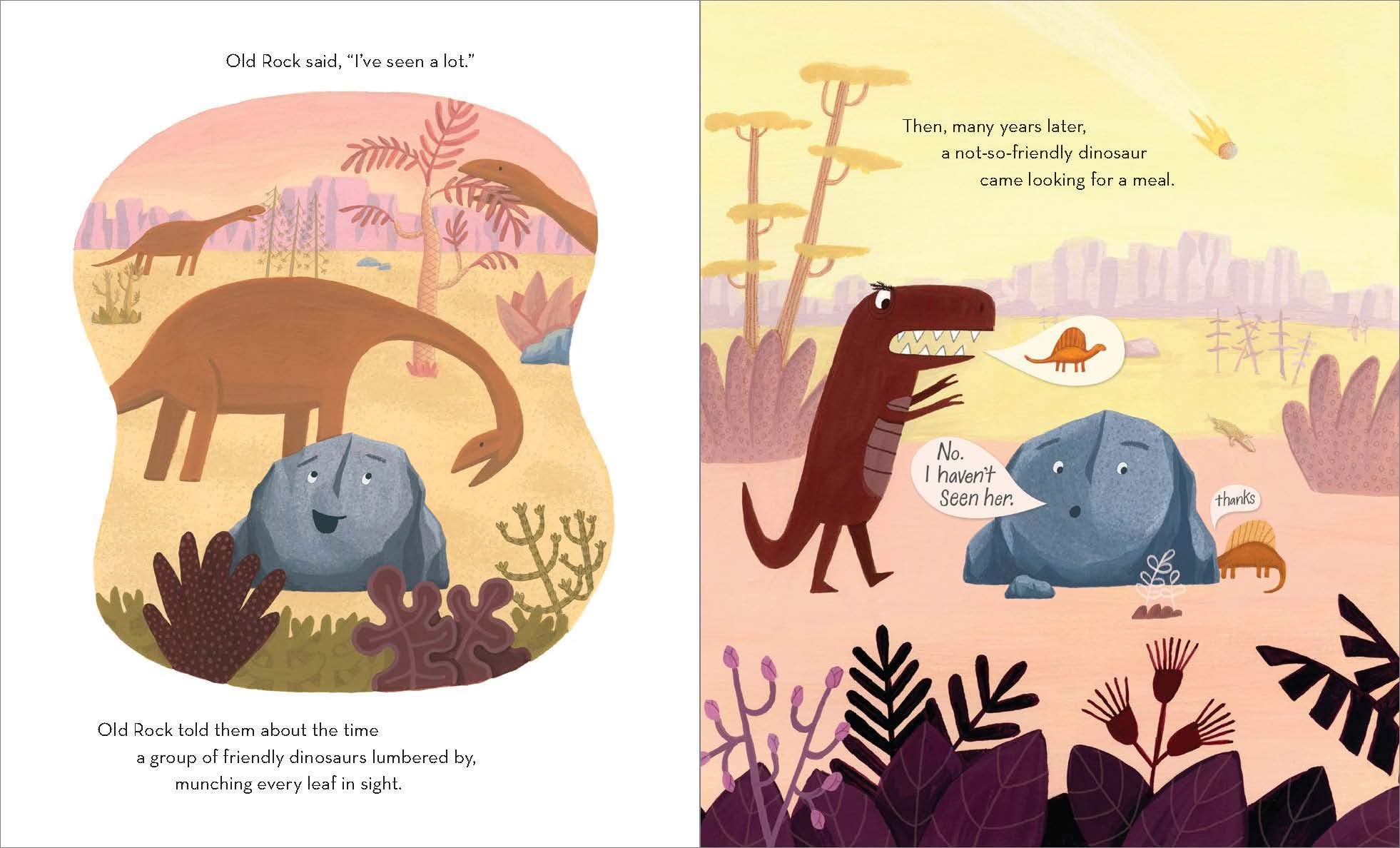
Old Rock countered that he had seen a lot. He’d watched dinosaurs pass by and had even hidden a spinosaurus from a hungry T. rex. He’d traveled in a glacier and been left teetering on a ridge overlooking a vast desert, where he “could see the place where the sky touches the earth.” Spotted Beetle and Hummingbird were intrigued, but Tall Pine dismissed these experiences as “ages ago.” He wanted to know about now. Didn’t Old Rock feel like moving? Tall Pine showed Old Rock how his limbs could dance in the wind.

celebrate-picture-books-picture-book-review-old-rock-is-not-boring-dinosaurs

Copyright Deb Pilutti, 2020, courtesy of G. P. Putnam’s Sons Books for Young Readers.

While Old Rock couldn’t dance, he did recall how he’d turned somersaults off the ridge, landing in a prairie where mastodons grazed near a lake. Tall Pine, Spotted Beetle, and Hummingbird were mesmerized by Old Rock’s story and wanted to know what had happened next. Out of the prairie, sprang a pine forest, Old Rock revealed. And from one of the pine trees a pinecone fell and a seed was released. That seed grew “to be the tall pine who dances in the wind and keeps me company.” Sometimes, he continued, a spotted beetle and a hummingbird meander by. Old Rock was very pleased with his spot, and the others had to agree that it was “very nice” and “not boring at all.”

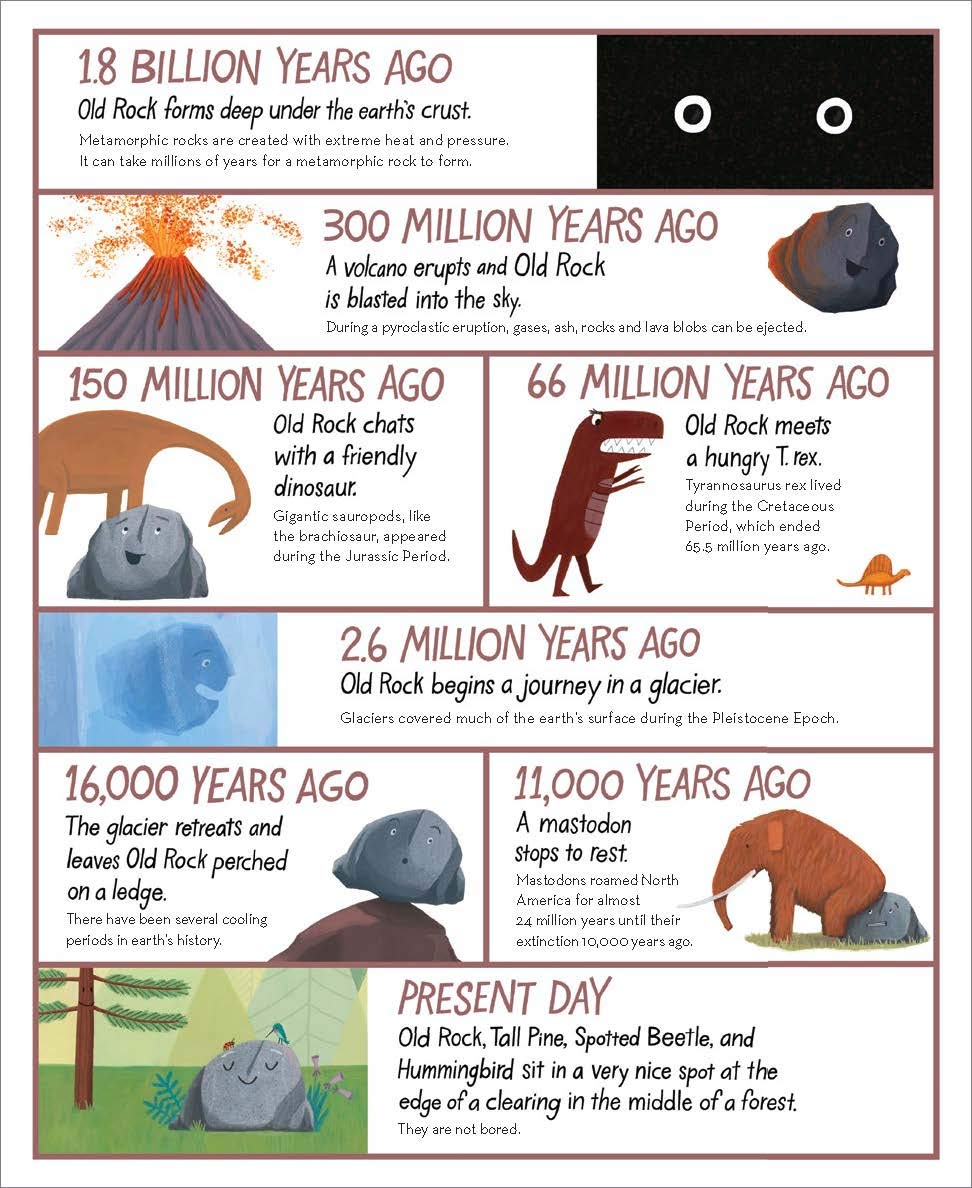
An illustrated timeline of Old Rock’s life from 18 billion years ago to the present day follows the text.

celebrate-picture-books-picture-book-review-old-rock-is-not-boring-time-line

Copyright Deb Pilutti, 2020, courtesy of G. P. Putnam’s Sons Books for Young Readers.

So much clever thought went into Deb Pilutti’s Old Rock as she reveals to kids what a fascinating and active life the rocks and boulders we see every day have had. Tall Pine, Spotted Beetle, and Hummingbird’s skepticism keeps the suspense building as Old Rock rolls out stories of his various travels and talents. Once he has them hooked, they—like young readers—want to hear more, leading to the just-right ending that sweetly encompasses shared history, happiness with one’s place in life, and friendship. The trio’s questions to Old Rock and their related experiences also engage children to think about issues and opinions from a variety of perspectives.

Pilutti’s mixed-media illustrations are nicely textured to bring out Old Rock’s grainy surface while highlighting nature’s vivid colors. Her vignettes from the dinosaur eras, the ice age (where the skeletons of dinosaurs are also swept up and away in the same glacier as Old Rock), and beyond impress upon readers the long time-frame involved, how the earth has changed, and even the fascinating science of the fossil record.

A multi-layered story, perfect for general story times or as a lead in to science lessons and to promote discussion and research in the classroom, Old Rock (is not boring) would be an original and exciting addition to home, classroom, and public library collections.

Ages 4 – 8

G. P. Putnam’s Sons Books for Young Readers, 2020 | ISBN 978-0525518181

To learn more about Deb Pilutti, her books, and her art, visit her website.

Old Rock Day Activity

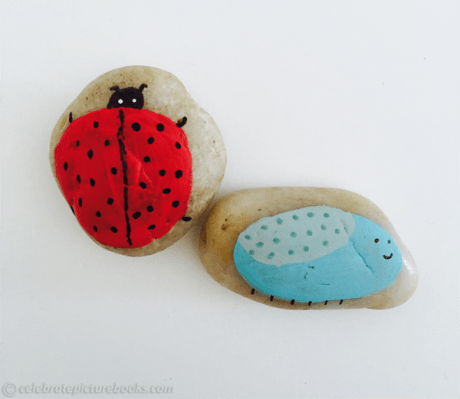
CPB - Nasty Bugs magnet II (2)

Rock This Craft!


Smooth stones can give you a natural canvas for your creativity! With a little bit of paint, pins or magnets, and some imagination, you can make refrigerator magnets, jewelry, paper weights, and more!

Supplies

  • Smooth stones in various sizes
  • Paint or markers
  • Small magnets, available at craft stores
  • Jewelry pins, available at craft stores
  • Paint brush
  • Strong glue

Directions

To make magnets

  1. Design and paint an image on a light-weight stone
  2. Attach a magnet to the back with strong glue, let dry
  3. Use to hang pictures, notes, or other bits of important stuff on your refrigerator or magnetic board

To make jewelry

  1. Using a smaller, flatter stone, design and paint an image on the stone
  2. Attach a jewelry pin to the back with the strong glue, let dry
  3. Wear your pin proudly

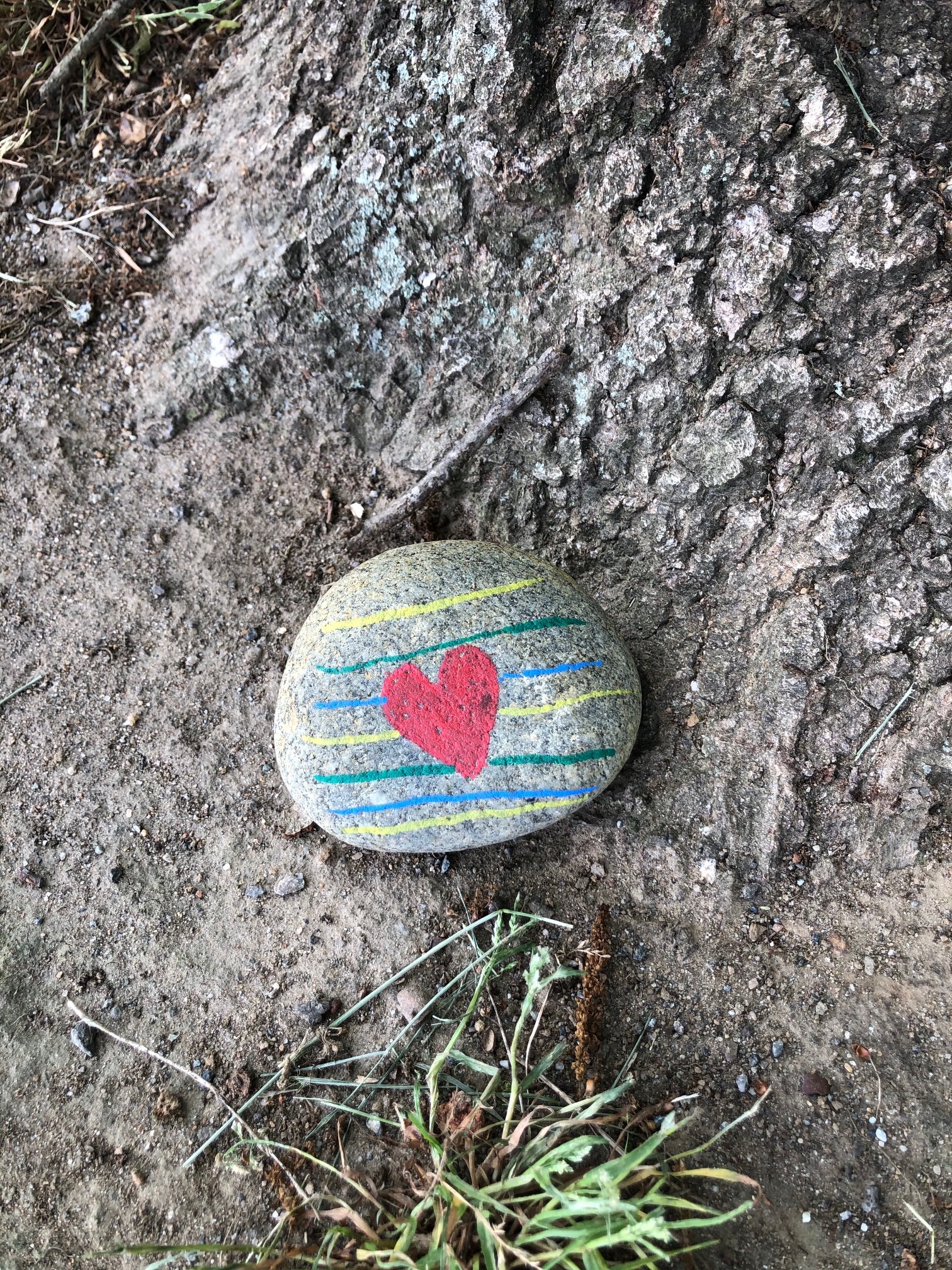
CPB - rock painting craft

To make a paper weight or kindness stone

  1. Using a large stone, design and paint an image on the stone, let dry
  2. Display and use on your desk to keep those papers in place or find a spot around town to leave your rock for someone to find and enjoy

celebrate-picture-books-picture-book-review-old-rock-is-not-boring-cover

You can find Old Rock (is not boring) at these booksellers

Amazon | Barnes & Noble | Books-a-Million

To support your local independent bookstore, order from

BookshopIndieBound

Picture Book Review
 

October 12 – National Savings Day

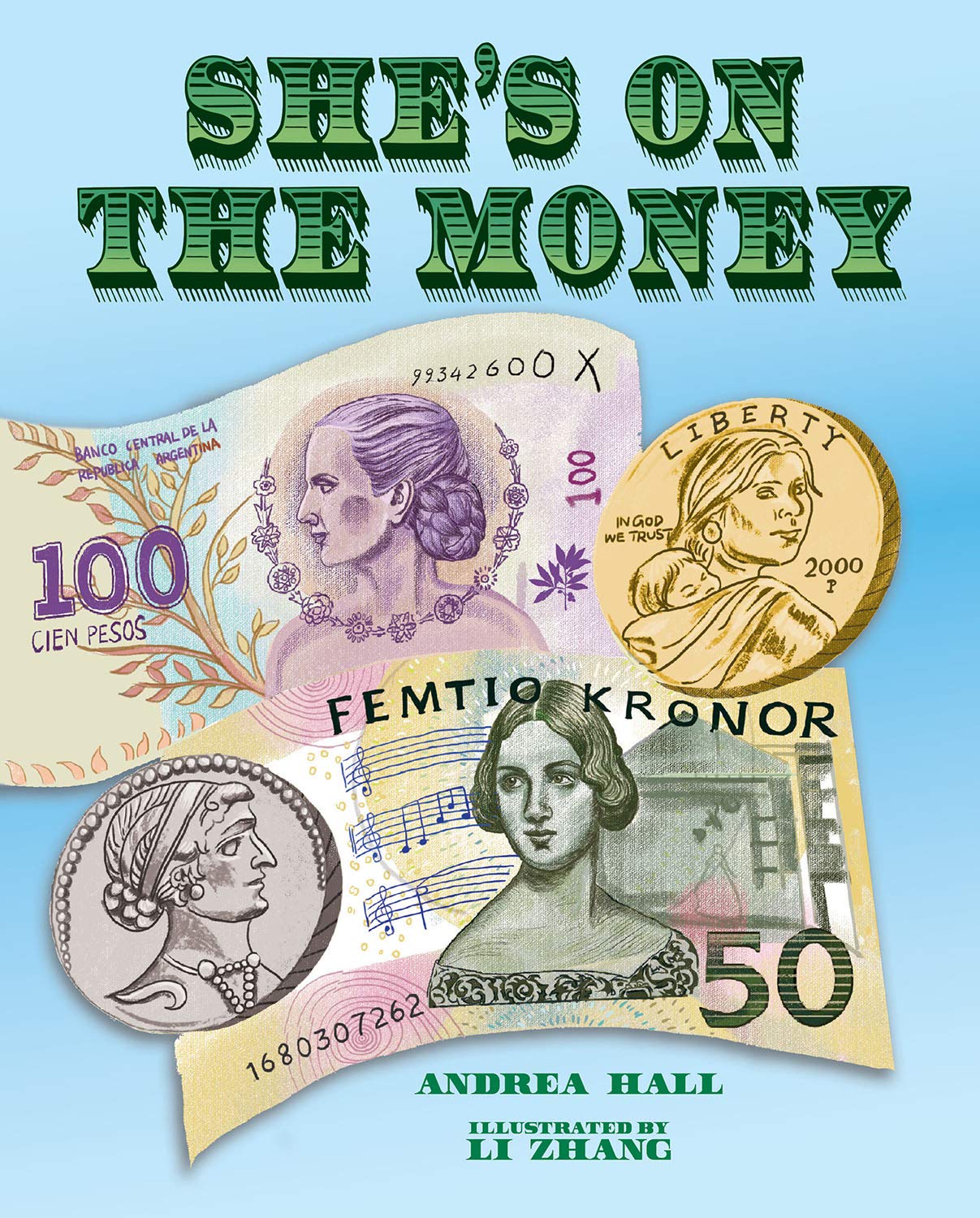
celebrate-picture-books-picture-book-review-she's-on-the-money-cover

About the Holiday

National Savings Day was established by Capitol One to educate people on saving money and taking control of their finances in ways that empower them now and in the future. Simple steps such as opening a savings account, saving a portion of each paycheck, and setting short-term and long-term goals can help people feel more confident about their relationship with money. Teaching children the value of money through their allowance or while shopping can help them learn important lessons they will take with them into adulthood.

She’s on the Money (She Made History series)

Written by Andrea Hall | Illustrated by Li Zhang


If you’re looking for a fascinating and inclusive way to introduce profiles of influential women from different cultures and time periods in your classroom, homeschool, or family reading time, you’ll find lots to love in She’s on the Money. The lives, work, and impact of thirteen woman involved in politics, science, the arts, education, and activism from ancient Egypt to modern times are presented in short biographies that include interesting facts about how the women changed their country, community, or the world and why each was chosen to represent her country on its currency. The beliefs, customs, atmosphere, and conditions of the historical periods are revealed in appealing captions that are accompanied by illustrations that help readers visualize the concepts. Beautifully detailed images of each country’s currency also graces the pages.

celebrate-picture-books-picture-book-review-she's-on-the-money-cleopatra

Image copyright Li Zhang, 2021, text copyright Andrea Hall, 2021. Courtesy of Albert Whitman & Company.

Cleopatra remains as intriguing today as she was centuries ago, so it’s fitting that she appears first in this book—just as she was the first woman to appear on currency. Why was her profile there? “Cleopatra appears on currency because she put herself on it. As ruler of Egypt, she had her own coins minted, or made.” In fact, “Unlike many women who came after them, Egyptian woman of Cleopatra’s time could buy property, divorce and remarry, and serve on juries. And like Cleopatra, they could be rulers.” Children will also learn how clever, fashionable, and “modern” Cleopatra really was. They’ll also discover facts about mummification.

Another leader represented is Queen Sālote Tupou III, the first queen of Tonga, who was the first Tongan chief to unite the 172 Pacific islands that make up the country. She appears on banknotes issued from 1967 – 1974. These intricately designed two-pa’anga bills feature Queen Tupou’s portrait on the front and an image of four women making tapa cloth on the back. Readers learn about and see an example of tapa cloth as well as information on the country’s produce and clothing.

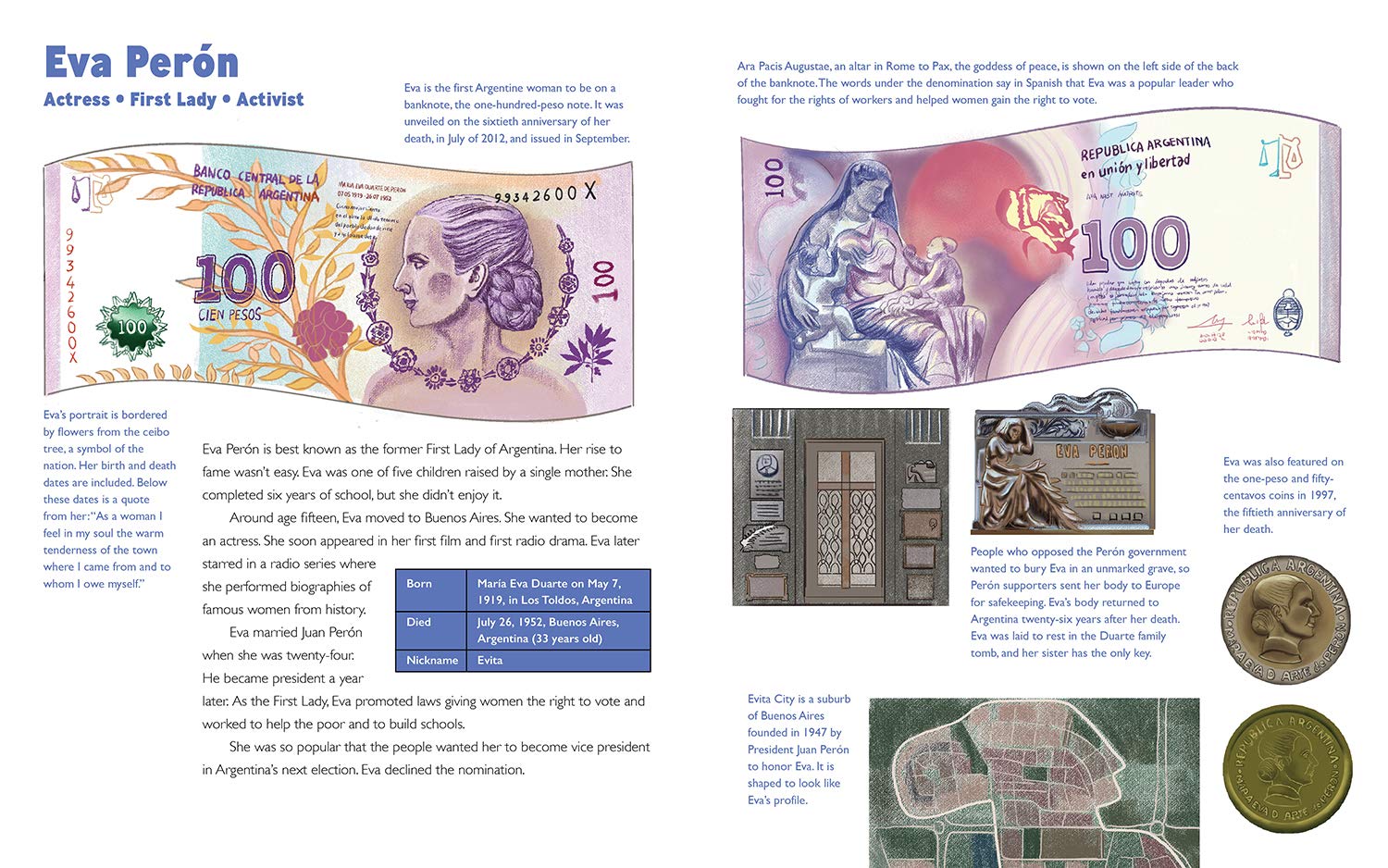
Other politicians include Indira Gandhi, the first—and so far only—female prime minister of India, who appears on a specially minted five-rupee coin that was issued in 1985 to commemorate of her birthday on November 19; and Eva Perón, the former first lady of Argentina, whose profile appears on a colorful one-hundred-peso banknote, “unveiled on the sixtieth anniversary of her death, in July of 2012.”

celebrate-picture-books-picture-book-review-she's-on-the-money-sacagawea

Image copyright Li Zhang, 2021, text copyright Andrea Hall, 2021. Courtesy of Albert Whitman & Company.

Kids will be inspired by entomologist Maria Sibylla Merian, who at a time when insects were believed to be “‘evil spirits’ because they came out of the ground, captured and studied insects in order to understand and draw them. She appears on the German “500-deutsche-mark banknote from October 27, 1992 to the end of 2001, when Germany began using he euro.”

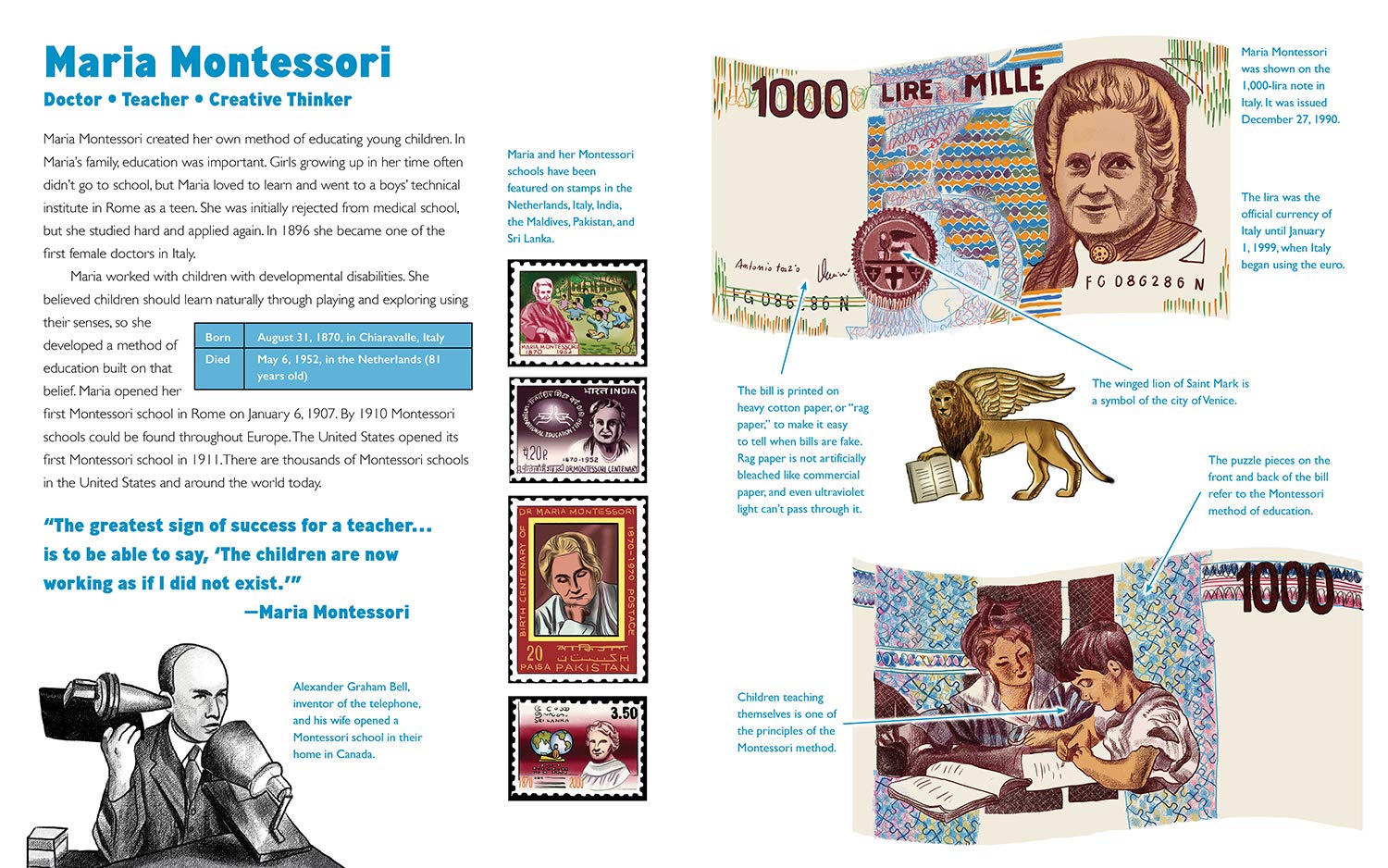
Educators include Maria Montessori, who developed Montessori schools and is featured on Italy’s elaborate 1,000-lira note, and Helen Keller, who is featured on the Alabama state quarter first released on March 17, 2003 as part of the program begun in 1999 to honor each American state. Her quarter also includes her name in both English and braille.

celebrate-picture-books-picture-book-review-she's-on-the-money-montessori

Image copyright Li Zhang, 2021, text copyright Andrea Hall, 2021. Courtesy of Albert Whitman & Company.

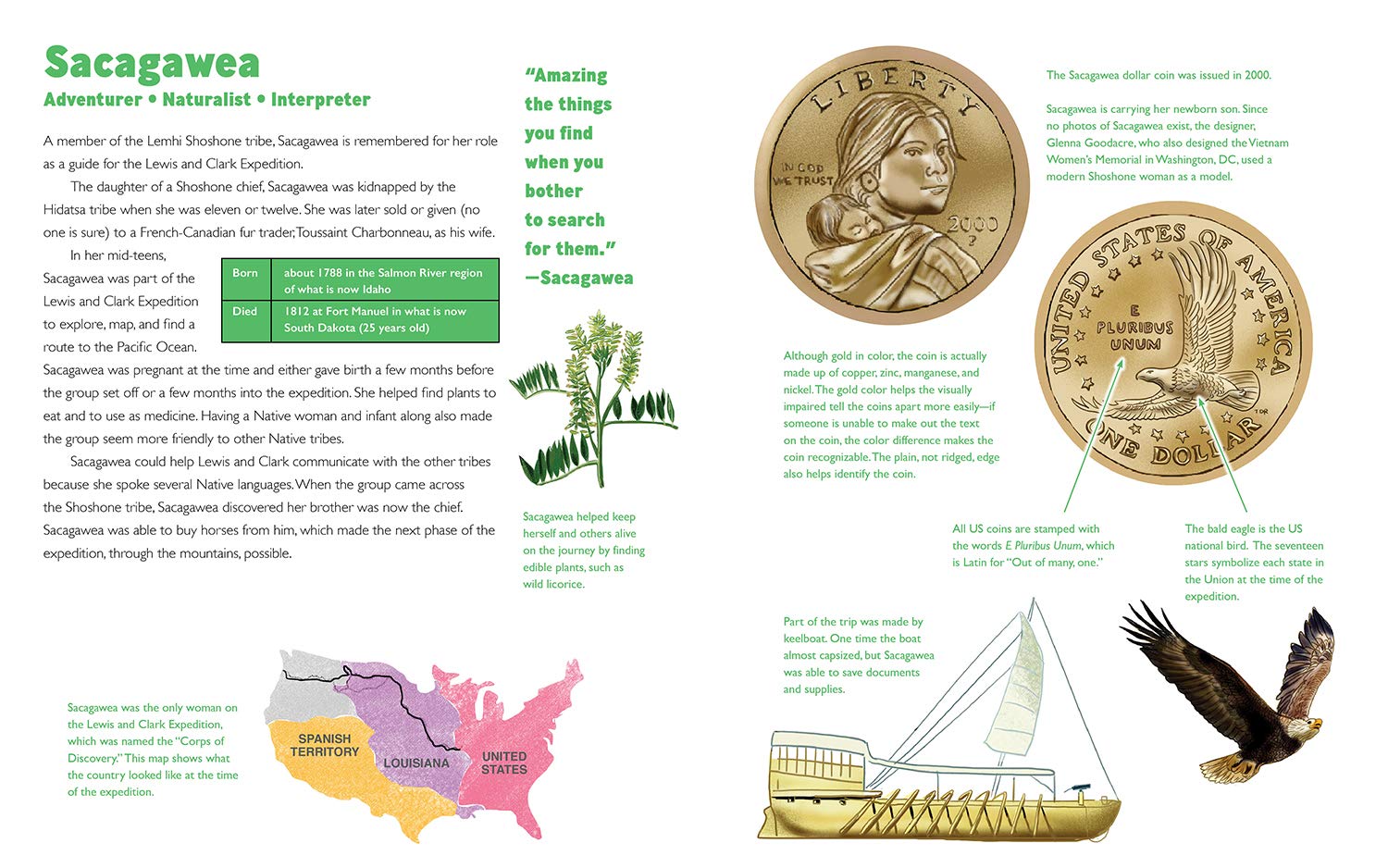
Readers also learn about the crucial role Sacagawea, a member of the Lemhi Shoshone tribe, played in the success of the Lewis and Clark’s expedition to explore and map the country from the Mississippi River to the Pacific Ocean. Sacagawea appears on the dollar coin, which was issued in 2000. The coin is also distinctive for its gold color and smooth edge, which make it easier for visually impaired people to identify.

Seamstress and revolutionary Catherine Flon of Haiti, opera singer Jenny Lind from Sweden, and revolutionaries and sisters Patria, Minerva, and María Teresa Mirabal of the Dominican Republic as well as writers Ichiyō Higuchi from Japan and Kate Shepard from New Zealand are also profiled.

An Introduction reveals information on the beginnings of the monetary system’s coins and paper bills and the choices governments make on who will appear on them. Discussions of the changing images of Britannia and Lady Liberty follow the biographies as well as an Author’s Note and a Glossary of words found in the text.

celebrate-picture-books-picture-book-review-she's-on-the-money-perón

Image copyright Li Zhang, 2021, text copyright Andrea Hall, 2021. Courtesy of Albert Whitman & Company.

Andrea Hall’s engaging, conversational style gives readers a wealth of knowledge on their way to learning about the money we use every day. Her well-chosen details provide kids with plenty of sparks for further research about the women and their work, how money is minted and protected from counterfeiters, and pivotal periods in world history.

Li Zhang’s textured and realistic reproductions of world currency are visually stunning, showing kids that much of the world’s coins and paper bills qualify as art in addition to their purchasing value. Her images of stamps, cultural fashions, iconic products, and more are equally beautiful, while her snapshots of insects, jewelry, flags, coats of arms, and other symbols provide readers with tangible views that set the women in their time period and further inform children’s reading.

Absorbing for anyone interested in money, history, art, and biographies, She’s on the Money is highly recommended as an addition to home, school, and public library collections.

Ages 4 – 9

Albert Whitman & Company, 2021 | ISBN 978-0807573426

Discover more about Andrea Hall and her books on her website.

To learn more about Li Zhang, her books, and her art, visit her website.

National Savings Day Activity

celebrate-picture-books-picture-book-review-penny-matching-puzzle

Count Your Pennies! Matching Game


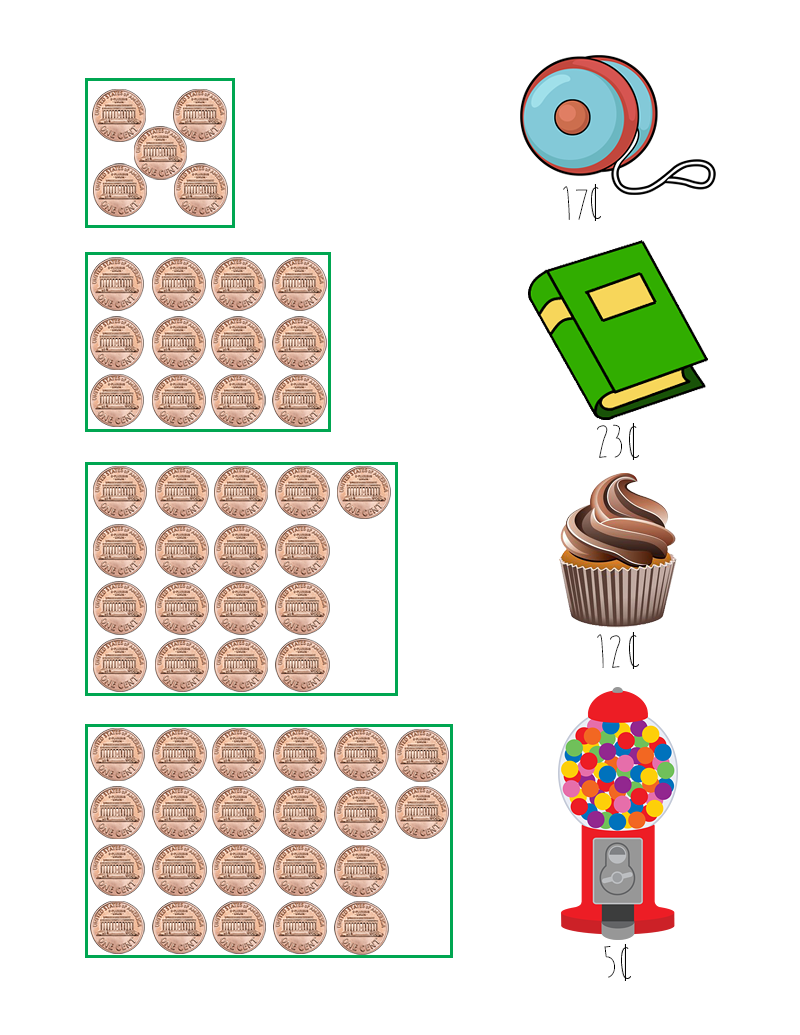
Counting pennies can be so much fun! Saving them can be even better! Collect enough pennies and you can buy something special or donate to your favorite cause! In this printable matching game, draw a line from the stack of pennies to the object they will buy.

Counting Your Pennies! Matching Game

celebrate-picture-books-picture-book-review-she's-on-the-money-cover

You can find She’s on the Money at these booksellers

Amazon | Barnes & Noble | Books-a-Million

To support your local independent bookstore, order from

Bookshop | IndieBound

Picture Book Review
August 31 – It’s National Inventor’s Month

celebrate-picture-books-picture-book-review-who-invented-this-cover

About the Holiday

Established in 1998 by the United Inventors Association of the USA, the Academy of Applied Science, and Inventors’ Digest magazine, this month-long holiday celebrates the imagination and talent of individuals who dare to think differently and create new products, services, and ways of doing things that make a positive contribution to the world. To join in, enjoy your favorite new inventions, and if you harbor dreams of being an inventor—on a large or small scale—look for opportunities to share your ideas.
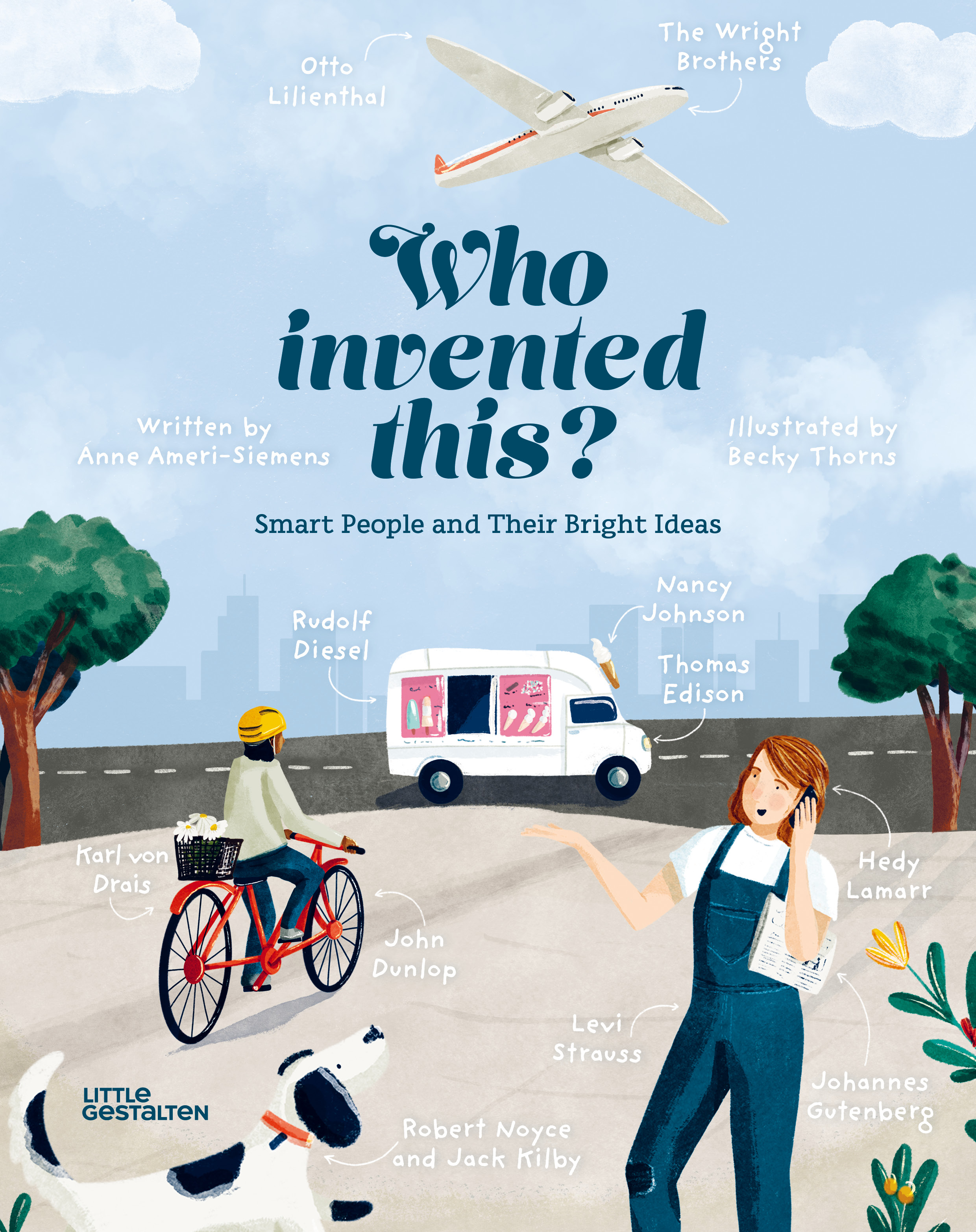
Who Invented This? Smart People and Their Bright Ideas

Written by Anne Ameri-Siemens | Illustrated by Becky Thorns


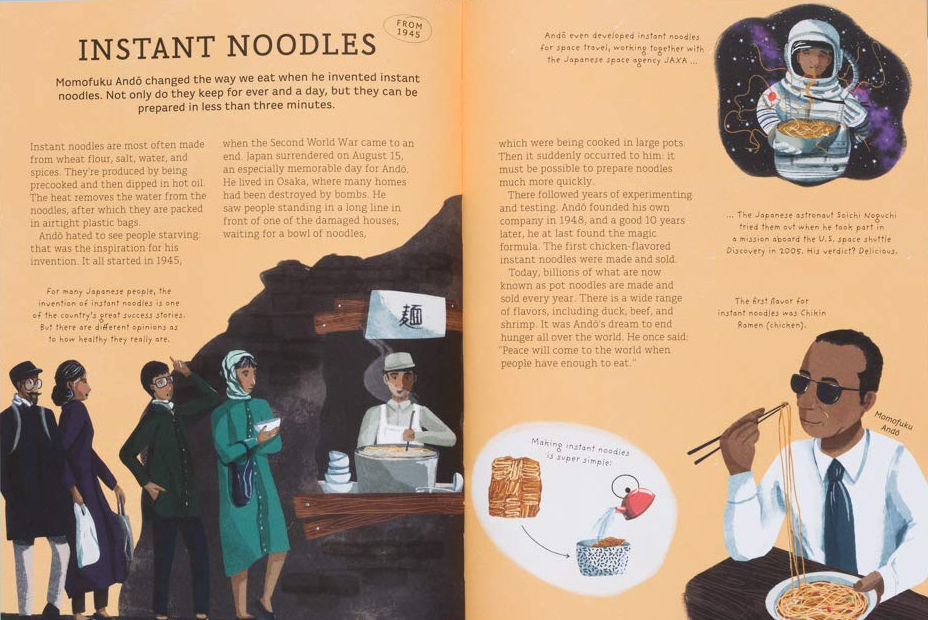
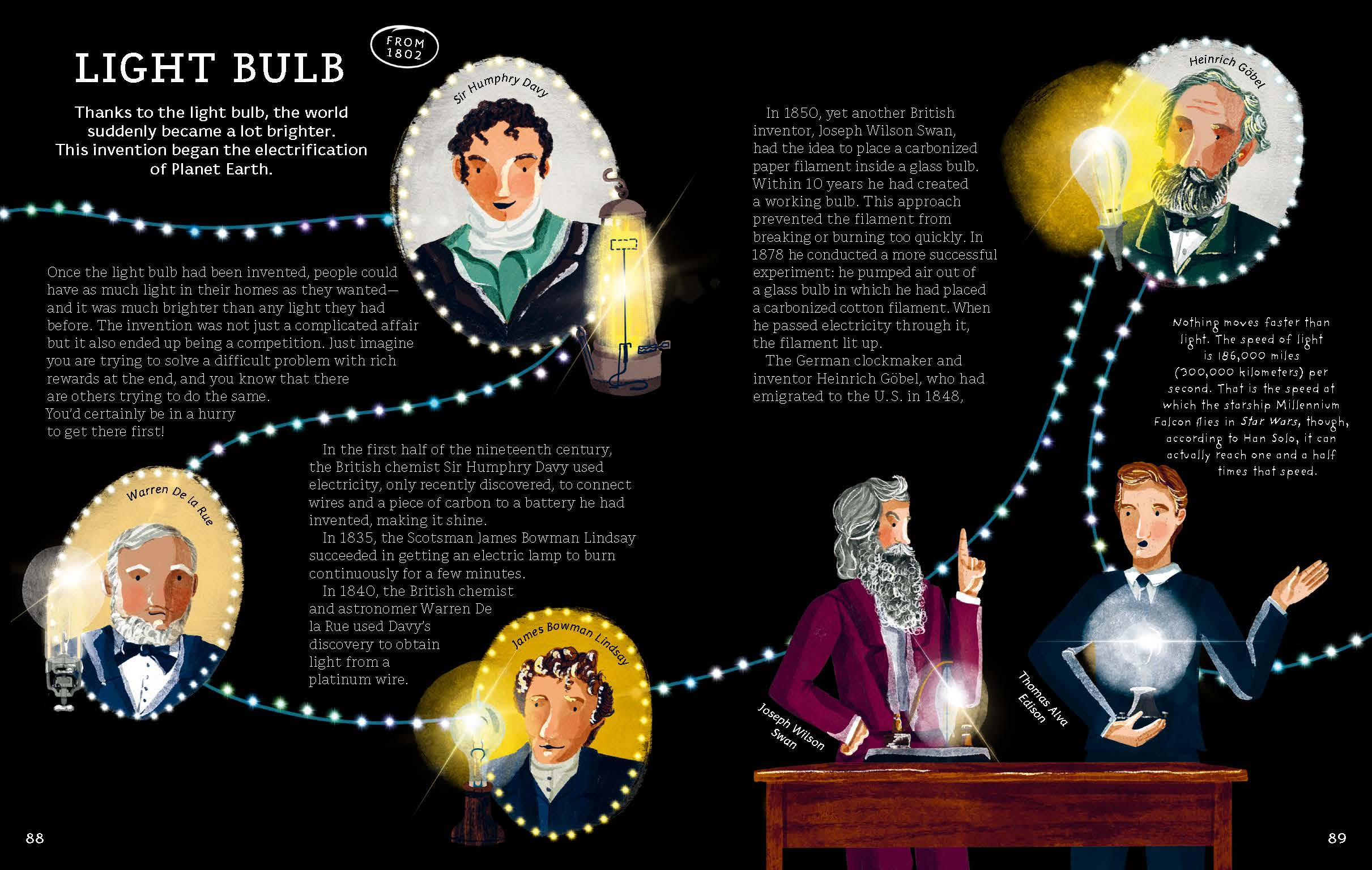
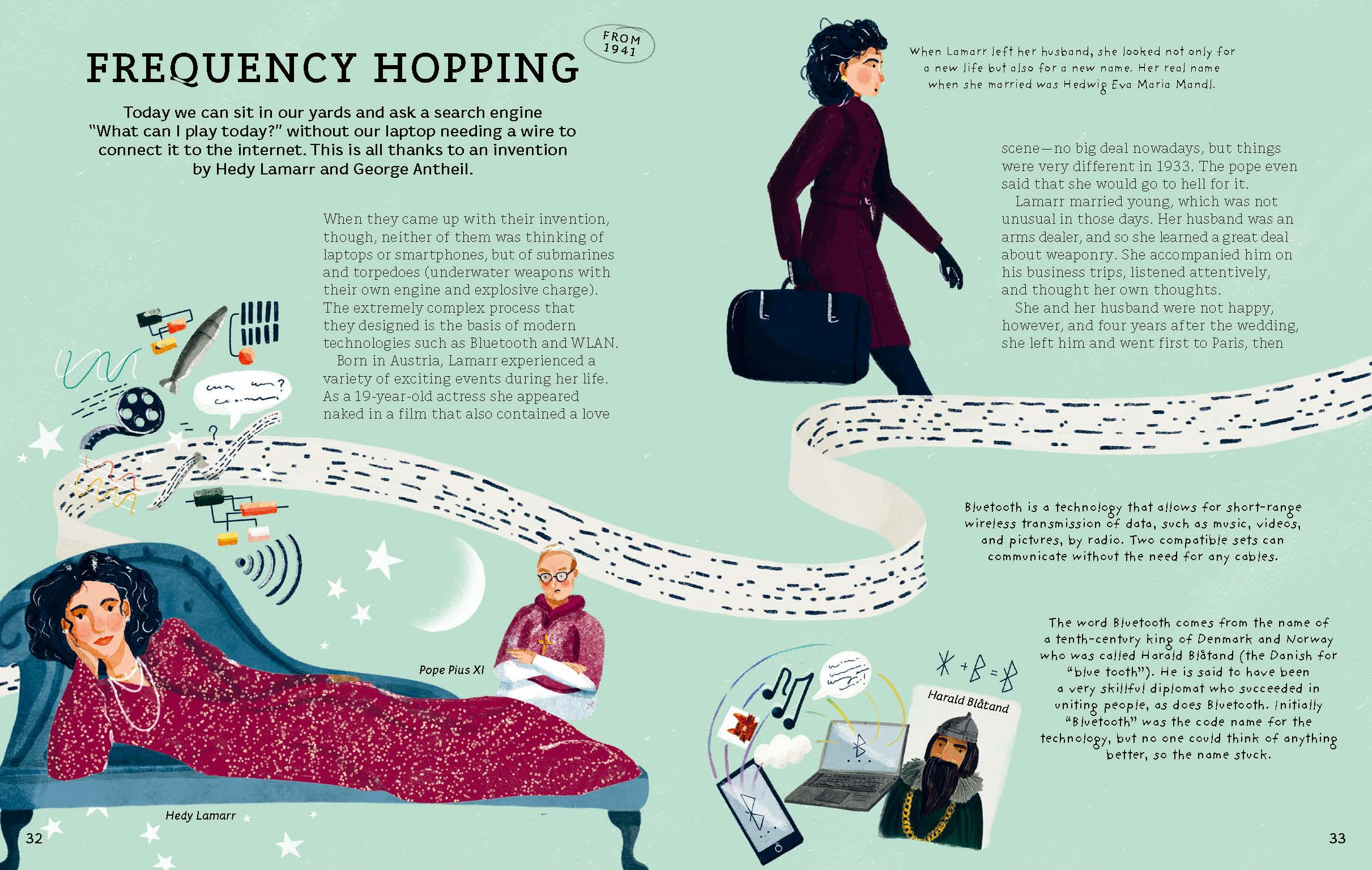
When you jump in the car or turn on a lamp, the idea that these were someone’s inventions (and even the names Henry Ford and Thomas Edison) may flash through your mind. But what about when you slurp up delicious Raman noodles, watch your pet fish through the aquarium glass, or squeeze out the last bit of toothpaste in the tube? In Who Invented This? Anne Ameri-Siemens introduces young readers to the brilliant minds behind some of the things we use every day.

celebrate-picture-books-picture-book-review-who-invented-this-light-bulb

Image copyright Becky Thorns, 2021, text copyright Anne Ameri-Siemans, 2021. Courtesy of Little Gestalten.

Take bicycles, for instance. You’ve probably seen pictures of those old bikes with a huge front wheel and a tiny back wheel. Was this the first bike? Not at all! Ameri-Siemens reveals that the first bicycle—called a “running machine”—had two wheels but didn’t have pedals. Invented by Karl von Drais in 1817, it had a steering bar in the front and was powered by the rider sitting on the seat and “running along the ground.” It may seem comical, but this invention led to more and more improvements until Pierre Michaux designed the first bike with pedals in the 1860s. You can read about all of the advancements in bikes and the other products it inspired too.

celebrate-picture-books-picture-book-review-who-invented-this-frequency-hopping

Image copyright Becky Thorns, 2021, text copyright Anne Ameri-Siemans, 2021. Courtesy of Little Gestalten.

As long as we’re talking about things that transport people here and there, have you ever thought about what drivers did before there were modern traffic lights? While the idea of indicating “stop” and “go” in red and green is universal across the world, the use of yellow for the transition came later from American policeman William Potts. “The first traffic lights in the world were built in London in 1868.” But they weren’t automatic. A policeman standing in the road had to move arms up and down to regulate the flow of traffic. “At night the arms were lit up in red and green.” Readers will find out more about how traffic lights progressed as well as how the timing of stop and go is controlled.

celebrate-picture-books-picture-book-review-who-invented-this-fizz

Image copyright Becky Thorns, 2021, text copyright Anne Ameri-Siemans, 2021. Courtesy of Little Gestalten.

Sometimes inventors get their ideas from nature—this is called bionics—and kids will learn how George de Mestral was ingeniously inspired by those sticky burrs that cling to socks to create a product most of them use all the time. There are other everyday products that are so important that they were invented long, long, long ago. One of these? Toothpaste! While Washington Sheffield invented the first smooth paste in 1850 by adding glycerin to the powder then used—“a mixture of pumice stone, powdered marble, grated oyster shells, ashes, peppermint oil or sage, and some soap power”—and his son realized the toothpaste could be packed in tubes like artists’ paints instead of sold in foil bags, prehistoric humans also brushed their teeth. Kids will be fascinated to learn more about the history of this morning and nighttime routine and even examples from the animal kingdom.

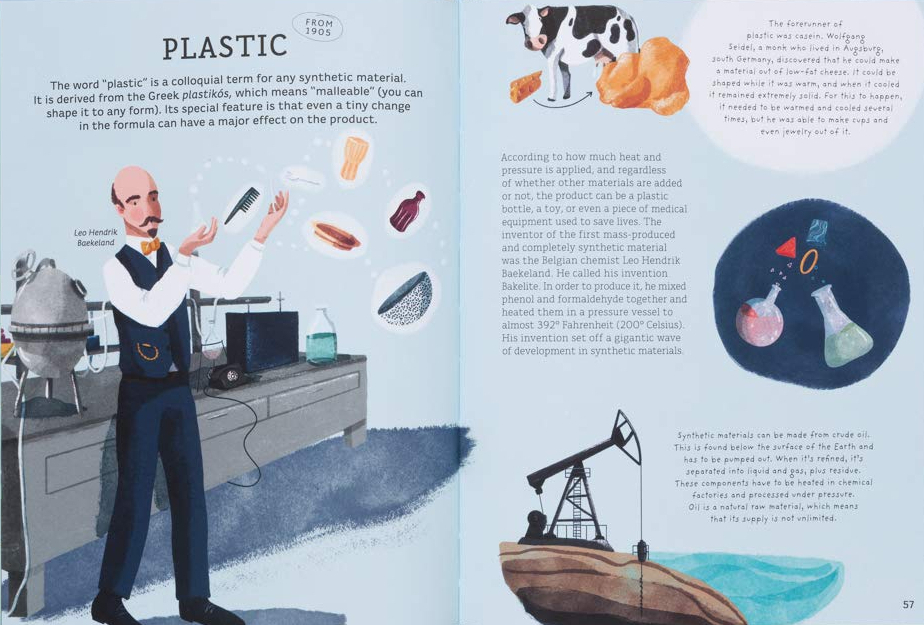
celebrate-picture-books-picture-book-review-who-invented-this-plastic

Image copyright Becky Thorns, 2021, text copyright Anne Ameri-Siemans, 2021. Courtesy of Little Gestalten.

Readers will be excited to learn about these inventions and many more that make up the fabric of our everyday lives and were conceived by talented inventors, scientists, and engineers. Some are the result of teamwork while some are the product of many years spent alone in a laboratory or even simply chance. In all, kids learn about 34 inventions that fall into diverse categories from transportation to communications, clothing to food, music to science and high-tech marvels.

celebrate-picture-books-picture-book-review-who-invented-this-instant-noodles

Image copyright Becky Thorns, 2021, text copyright Anne Ameri-Siemans, 2021. Courtesy of Little Gestalten.

Anne Ameri-Siemens’ conversational and engaging text will captivate readers interested in learning about how the world they know came to be. Ameri-Siemen’s storytelling beautifully balances the scientific and personal details of each invention to deliver compelling profiles. Interesting asides on each page reveal more about the inventions and the people who created them.

Accompanying each subject are Becky Thorns’ eye-catching illustrations that depict not only the invention but its creator or creators as well as how it is used or where it can be found. Thorns also employs clever ways to connect images on a page-spread that reinforcing their purpose and history. Each page spread offers plenty of ideas to spur research projects or extended lessons for classrooms and homeschoolers.

Packed with information on products, ideas, world-changing inventions, and the brilliant minds behind them, Who Invented This? Smart People and Their Bright Ideas will fascinate kids and spark an interest in further research, science, engineering, and technical studies. The book is highly recommended for young inventors, history buffs, and other creative thinkers as well as for classrooms and school and public library collections.

Ages 9 – 12 and up

Little Gestalten, 2021 | ISBN 978-3899551334

To learn more about Becky Thorns, her books, and her art, visit her website.

National Inventor’s Month Activity

celebrate-picture-books-picture-book-review-share-your-bright-idea-activity

Share Your Bright Idea! Page


Do you sometimes have a lightbulb moment when an idea seems just right? Use this printable Share Your Bright Idea! Page to write about or draw your idea!

celebrate-picture-books-picture-book-review-who-invented-this-cover

You can find Who Invented This? Smart People and Their Bright Ideas at these booksellers

Amazon | Barnes & Noble | Books-a-Million

To support your local independent bookstore, order from

Bookshop | IndieBound

Picture Book Review