August 18 – It’s Get Ready for Kindergarten Month

celebrate-picture-books-picture-book-review-sophie's-squash-go-to-school-cover

About the Holiday

Starting kindergarten is a huge step toward future learning and fun! This milestone can take a lot of preparation—from buying backpacks and school clothes to establishing different routines to becoming a new member of the school community. Most school years start during August and this month gives families an opportunity to talk about the changes, go shopping together, and look forward to the new experiences to come!

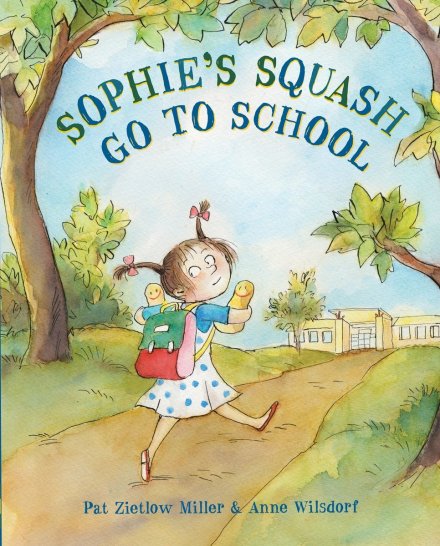
Sophie’s Squash Go to School

Written by Pat Zietlow Miller | Illustrated by Anne Wilsdorf


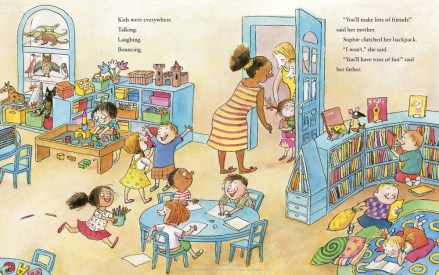
Backed up by her parents and clutching her best friends, two squash named Bonnie and Baxter, Sophie peeks into her classroom on the first day of school. She sees kids running everywhere, talking and laughing. Her parents assure Sophie that she’ll make a lot of friends and have tons of fun, but Sophie is adamant: “‘I won’t,’” she says. And Sophie’s right. “The chairs were uncomfortable. The milk tasted funny. And no one appreciated her two best friends, Bonnie and Baxter.”
celebrate-picture-books-picture-book-review-sophie's-squash-go-to-school-classroom

Image copyright Anne Wilsdorf, courtesy of Schwartz & Wade

The other kids surround her with questions about Bonnie and Baxter. “‘Are they toys? Do they bounce? Can we EAT them?’” Sophie has had enough. “‘No, no, no! I grew them in my garden. They’re my FRIENDS.’” And then there’s Steven Green. He sits near Sophie at circle time, plays near her on the playground, and stands over her breathing down her neck during art time. Ms. Park, the teacher, tells Sophie Steven is just being nice, but Sophie isn’t interested.

Steven does not give up so easily. He returns to show Sophie his best friend—Marvin, a stuffed frog that he got when the toy was just a tadpole. “‘Then you don’t need me,’” Sophie says and decides “that’s that.” But that isn’t that. The next day Steven is back, building a block tower near Sophie, reading her book over her shoulder, and even offering facts about fruit and vegetables during Sophie’s show and tell.

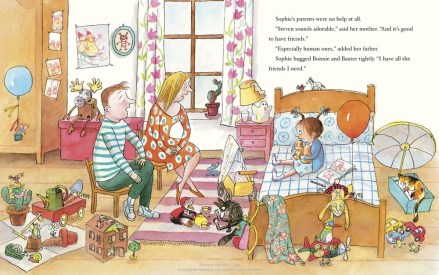
When her parents hear about Steven, they encourage Sophie to make a friend, but Sophie just clings tighter to Bonnie and Baxter. “Still, Sophie knew that Bonnie and Baxter wouldn’t last forever,” so when the other kids dance, spill their milk, or tell jokes, Sophie considers joining in. On the playground Sophie plays hopscotch while the other kids play tag, jump rope, and play other games together. When Steven asks if he can join Sophie, Bonnie, and Baxter, she refuses, leaving Steve and Marvin to sit alone.
celebrate-picture-books-picture-book-review-sophie's-squash-go-to-school-talk-with-mom-and-dad

Image copyright Anne Wilsdorf, courtesy of Schwartz & Wade

When the weekend comes Bonnie and Baxter look “too tired to hop. Or build towers. ‘It’s time,’” says Sophie’s mother. Sophie digs a hole to make “a garden bed and tucked her squash in for their winter nap. ‘Sleep tight,’” she says. “‘See you soon.’ But spring seemed very far away.” On Monday Ms. Park asks the class to tell her what makes a good friend. The kids answer that friends play with you, help you, and think you’re funny. Steven answers “‘They like what you like.’” Ms. Park sends the kids off to draw pictures of their friends.

When Steven wants to see Sophie’s drawing of Bonnie and Baxter, the two get into a scuffle over the paper and it tears in half. “‘You are NOT my friend,’” Sophie says as she walks away. On the way home from school, Sophie tells her mom what happened. “‘Sweet potato,’” her mom says. “‘That adorable boy didn’t mean to tear your picture.’” But Sophie’s not so sure.

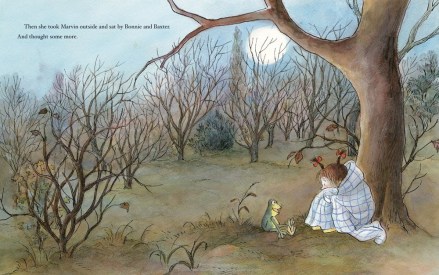
The next morning Sophie finds Marvin and a note in her cubby. She ignores it, and by lunchtime, Marvin is gone. Later that night, though, Sophie and her dad discover Marvin and the note inside her backpack. The note contains a drawing of Bonnie and Baxter as well as a packet of seeds.  “‘Do friends really like the same things you like?’” Sophie asks her dad. When he answers “Sometimes,” Sophie begins to think. She takes Marvin outside and sits near Bonnie and Baxter to think some more.
celebrate-picture-books-picture-book-review-sophie's-squash-go-to-school-nighttime-thinking

Image copyright Anne Wilsdorf, courtesy of Schwartz & Wade

The next day Sophie runs up to Steven to tell him the great idea that Marvin had. They then tell Ms. Park. The next day, Ms. Park hands each child “a cup, some dirt and one small seed.” “‘Can we EAT them?’” a classmate asks. “‘No!’” says Sophie, and Steven adds, “‘You never eat a friend.’” The kids plant the seeds and put the pots on the windowsill. Soon tiny shoots appear in the cups and Sophie and Steven invite the kids to do a new-plant dance.

“‘See?’” Sophie tells Steven. “‘Sometimes growing a friend just takes time.’”

Pat Zietlow Miller’s sequel to her award-winning Sophie’s Squash is a heartfelt story for kids for whom the definition of friendship runs deep. Sophie’s hesitancy to join in the freewheeling play of other kids echoes the feelings of many children entering new classrooms, joining unfamiliar groups, or meeting any new challenge. The excellent pacing of the story as well as Sophie’s honest emotions allow for development of the theme that sometimes friendship takes time. Steven’s persistence sets a positive example for not passing judgement too quickly. Sophie’s transition from squash friends to human is treated sensitively and with cleverness. In the end Sophie learns how to make a friend while still staying true to herself.
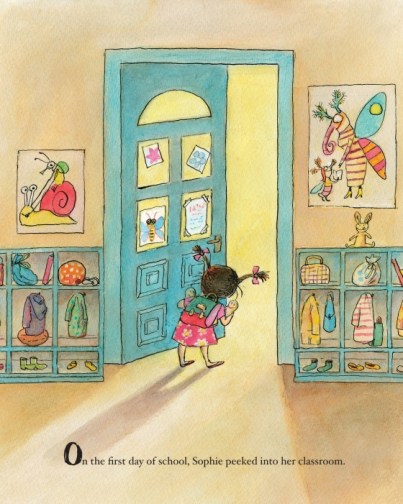
celebrate-picture-books-picture-book-review-sophie's-squash-go-to-school-peeking-in-classroom-door

Image copyright Anne Wilsdorf, courtesy of Schwartz & Wade

Anne Wilsdorf’s cartoon-inspired illustrations perfectly depict the world that Sophie reluctantly inhabits. Her classroom is boldly colorful, full of books, toys, separate spaces, and of course all sorts of kids. Sophie’s reactions to the comments and actions of her classmates are clearly registered on her face and will make kids giggle even while they recognize her feelings. Steadfast Steven is, as Sophie’s mom says, adorable, and readers will empathize with his plight in just wanting to make a friend. The nighttime scene beautifully sums up Sophie’s dilemma and provides her and readers a moment to reflect on the story’s ideas.

On so many levels, Sophie’s Squash Go to School makes a wonderful addition to children’s and school bookshelves.

Ages 4 – 9

Schwartz & Wade, Penguin/Random House, 2016 | ISBN 978-0553509441

Discover much more about Pat Zietlow Miller and her books on her website!

Get Ready for Kindergarten Month Activity
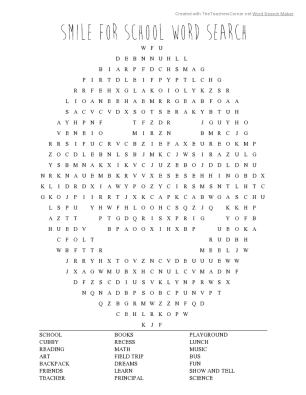
celebrate-picture-books-picture-book-review-smile-for-school-word-search

Smile for School! Word Search


Find 20 words about school in this printable Smile for School! Word Search. Here’s the Solution!

Picture Book Review

August 14 – It’s Family Fun Month

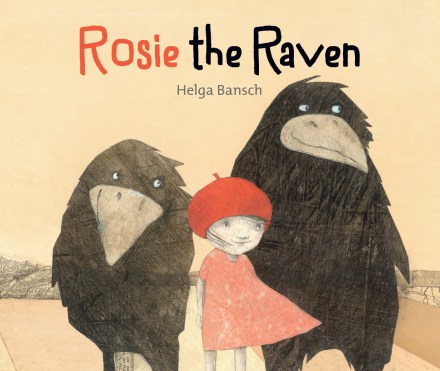
celebrate-picture-books-picture-book-review-rosie-the-raven-cover

About the Holiday

August is a perfect time to have fun with the family! The days are long and warm, and there are so many activities to discover. Get away from the heat at a pool, the beach, or on the cool shade of a forest path. Explore your adventurous side while camping or traveling to an unfamiliar town, or increase your knowledge by visiting a science, art, history, or other museum. Before school starts up for another year, get out there and have fun!

Rosie the Raven

By Helga Bansch | Translated by Shelley Tanaka


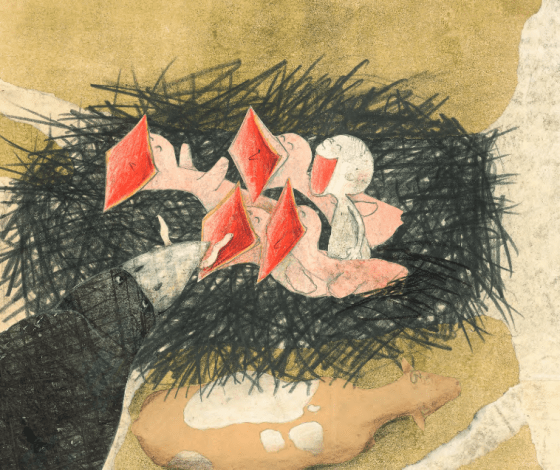
In a nest high in a tree, a little pink egg among the blue speckled ones hatches a little girl. As soon as all five babies are out of their shells, the hatchling says “Mama and Papa took us under their wings. It was nice and warm there.” The babies are hungry and the little girl, following the example of her brothers and sisters, opens her mouth wide to enjoy the “worms, flies, maggots, and snails.”

celebrate-picture-books-picture-book-review-rosie-the-raven-babies-eating

Image copyright Helga Bansch, courtesy of annickpress.com

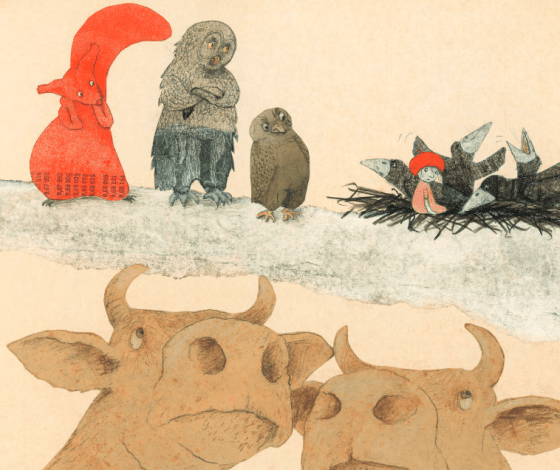
As they grow, the little ones “slept, had cawing contests and goofed around.” Because the little girl is always cold, her papa got her a red dress and hat. “‘Our little Rosie,’” Mama called me,” the girl says. Although Rosie and her nest mates are a happy family, Rosie says that “every day others would come and stare at us” as well as offer unsolicited advice: “‘It needs to exercise its wings” or, because they considered Rosie ugly without feathers, “Rub it with birch leaves. That will make its feathers grow.”

Under the critical gaze of these outsiders, Rosie looks at herself and notices for the first time that she is different than her Mama and Papa, her brothers and sisters. Her siblings are already learning how to fly, their caws are wild and resonant, and their feathers are fluffy and soft. In comparison, when Rosie flaps nothing happens, her voice sounds “pitiful,” and she has no fluff.

celebrate-picture-books-picture-book-review-rosie-the-raven-other-animals-judge

Image copyright Helga Bansch, courtesy of annickpress.com

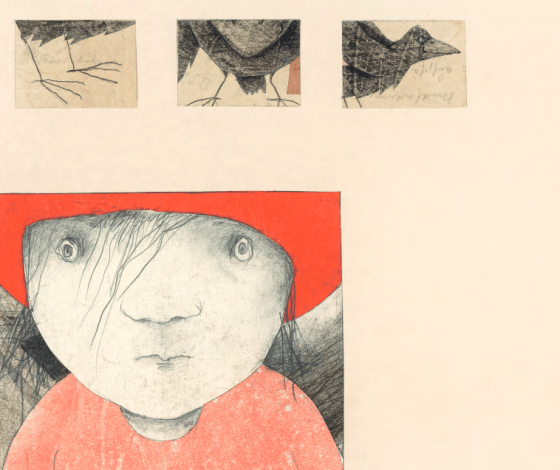
Rosie “so wanted to be like them” that she beats her “wings over and over.” She caws until she is hoarse and rubs herself with birch leaves until her skin glows green. Soon she decides that “all this was just silly.” “‘I’m just different. And if the others talk about me, what do I care,’” she thinks. Besides, she learns that her “kind of wings are quite useful for other things.”

When Rosie’s siblings fly away from the nest after several weeks, the nest seems quiet. As the weeks progress and “the air began to smell like autumn, it was time to set out for the south.” Rosie’s parents practice flying with Rosie on their back until she can ride safely. Finally the day comes when they make the trip, and they find a new home in a tree that is perfect for Rosie to climb. Now it is her job to gather food for the family—which will soon include four new babies.

In her new home Rosie meets a frog who is going to teach her to swim. After their first meeting, the frog asks, “‘So, what are you really?’” “‘I am Rosie the Raven!’” Rosie squawks loudly. Then she goes home and climbs up to her nest in the tree, looking forward to tomorrow.

celebrate-picture-books-picture-book-review-rosie-the-raven-rosie-realizes

Image copyright Helga Bansch, courtesy of annickpress.com

Helga Bansch’s Rosie the Raven, bathed in tones of beige and black and punctuated with the red of Rosie’s cap and dress, is a quiet, but powerful book of what it means to be different and who defines that difference. The story of the Raven family is all the more eloquent and compelling for its being told through straight narration and not as a fairy tale or fable. The moment when Rosie looks at herself through others’ eyes, but quickly rejects the notion that her identity as a Raven is based on her having wings or feathers as well as her decision to stay with Mama and Papa affirms the idea that the true self is found within.

Bansch’s little Ravens are endearing as they frolic in the nest under the watchful and loving eyes of Mama and Papa. Rosie exudes a strong sense of confidence and happiness that readers will respond to. Bansch’s pages are a mix of panels, collages, and beautiful two-page spreads that give the book a distinctive look and feel. Fields and mountains are created from maps and bits of printed material in a variety of languages that emphasizes the book’s theme. Rosie the Raven could easily become a child’s favorite for bedtime or quiet story time and would be a wonderful addition to home as well as school libraries.

Ages 4 – 8

annick press, 2016 | ISBN 978-1554518340 (Austrian edition Die Rabenrosa: 978-3702658748)

To view more books and artwork by Helga Bansch, visit her website!

Check out more books for children and young adults at annick press!

Family Fun Day Activity

celebrate-picture-books-picture-book-review-bungalow-house-coloring-page

Home is Where Your Heart Is Coloring Pages

Apartments Coloring Page

Bungalow Coloring Page

August 13 – Garage Sale Day

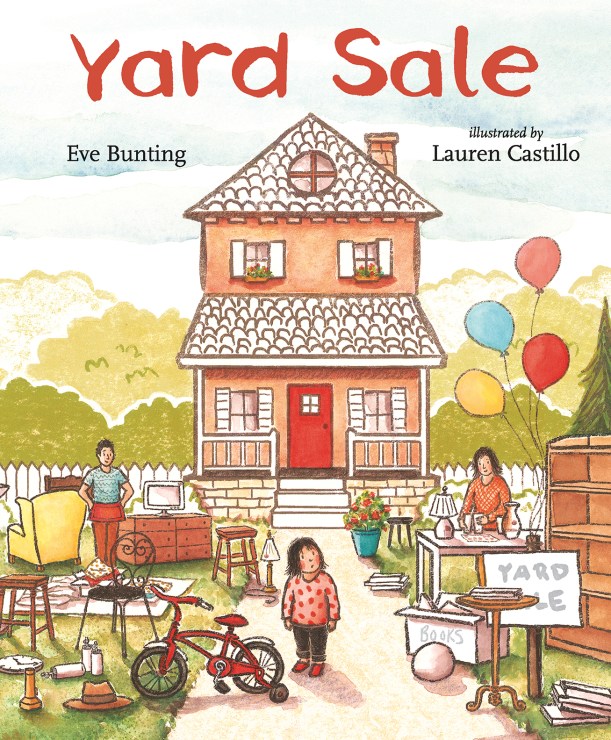
celebrate-picture-books-picture-book-review-yard-sale-book-cover

About the Holiday

Isn’t every nice-weather Saturday garage sale day for someone? Nevertheless, the second Saturday in August has officially been designated with this special shopping moniker. Garage sales aka yard sales are fun to explore—you never know what treasures you might find. Hosting your own can free up space in your house to start fresh or, as in today’s book, reaffirm the most important things in life.

Yard Sale

Written by Eve Bunting | Illustrated by Lauren Castillo


From the first words—“Almost everything we own is spread out in our front yard”—readers realize that this is no ordinary yard sale. A little girl sits on the front porch of her tidy house gazing out sadly at the family’s furniture, toys, books, and knick-knacks that are all for sale. The family is moving to a small apartment: “‘Small but nice,’ my mom told me.” The apartment has a secret bed that opens down from the wall “right in the living room.”

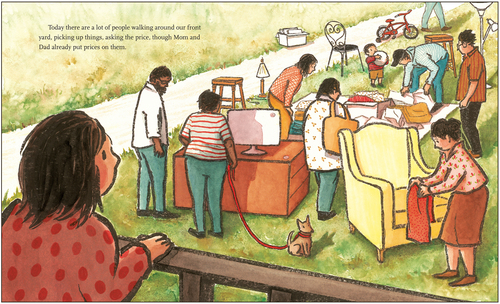
When the yard sale opens people stop by to look, “picking up things, asking the price, though Mom and Dad already put prices on them.” Even though the items are priced low, people haggle over how much they want to pay. A woman complains that ten dollars is too much for the little girl’s bed because the headboard has crayon marks on it. Watching, Callie now wishes she hadn’t made the marks to show how often she had read Goodnight Moon. Her mother settles for five dollars for the bed.

celebrate-picture-books-picture-book-review-yard-sale-bike-sold

Image copyright Lauren Castillo, courtesy of laurencastillo.com

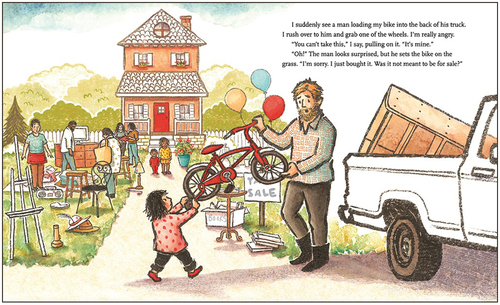
Suddenly, Callie sees a man loading her bike into a truck and runs to grab it. The man is confused, sorry for taking it, but tells her he has just bought it. Callie’s dad runs over and explains again that the apartment has no place for the bike or sidewalks nearby to ride it on. Callie looks at her dad who seems to have tears in his eyes, “but probably not,” she says. “My dad doesn’t cry.” She relinquishes the bike, but asks the man, “‘Will you give it back to me when we get our house back?’”

Callie’s best friend, Sara, is waiting for her. The two friends hug and talk about why Callie has to move. “‘I wish you didn’t have to go,’” Sara mutters. “‘Why do you, anyway?’” Callie shrugs. “‘I don’t know. It’s something to do with money.’” They don’t understand what has happened, and Sara offers, “‘I could ask my parents if you could stay with us.’” But Callie’s heart tells her where she belongs. “‘My parents would be lonely,’” she says. “‘…I’d miss my mom and dad.’”

The sale continues and people drive away with tables, chairs, and clothing. For a moment, Callie feels important when a man asks her if their large potted geranium is for sale and she directs him to her dad. By the end of the day almost everything is gone. Callie’s mom “looks droopy” and her dad is comforting her. Callie sits dejectedly watching the final things being carried away and thinking that she will give Sara her red heart necklace and invite her to visit their new apartment.

celebrate-picture-books-picture-book-review-yard-sale-callie-watching

Image copyright Lauren Castillo, courtesy of laurencastillo.com

At that moment a woman comes up to Callie and says, “‘Aren’t you just the cutest thing? Are you for sale?’” Callie has a visceral reaction: “A shiver runs through me, from my toes to my head.” She runs to her parents, crying. “‘I’m not for sale, am I? You wouldn’t sell me, would you?’” Her parents drop what they are doing to hug and reassure Callie that they would “‘not ever ever, ever’” sell her. “‘Not for a million, trillion dollars.’”

With everything gone, Callie and her parents go back inside their “almost empty house.” It’s okay, Callie thinks. None of the stuff is important, and it wouldn’t fit in their new place anyway. “But we will fit in our new place. And we are taking us.”

For so many children frequent relocations or sudden moves from a home they know is a reality. Eve Bunting’s Yard Sale treats this subject with sensitivity and honest emotion through the eyes of a little girl for whom the change is confusing but ultimately reassuring. Bunting does not stint on either the setting of the yard sale itself, where people quibble over a couple of dollars, or the toll the day takes on the family. Her dialogue always rings true, and her straightforward delivery allows for understanding and for the moments of humor to shine through.

Lauren Castillo’s ink-and-watercolor paintings anchor this emotional story in a homey, loving environment even as they realistically portray the atmosphere of the yard sale. The full range of feelings are apparent in the characters’ faces from sadness and doubt to kindness and acceptance. Children will respond to Callie with her earnest attempts to understand and feel the comfort and encouragement Callie receives as her parents bend down to talk to her, hold her hand, and give her hugs.

Yard Sale is a poignant story that offers assurance and insight both for children who are facing a move and the friends and classmates who will miss them. The book’s theme is applicable to other daunting circumstances and would be a welcome addition to classroom and local libraries as well as for individuals encountering change.

Ages 4 – 9

Candlewick Press, 2015 | ISBN 978-0763665425

To view more books and artwork by Lauren Castillo, visit her website!

Garage Sale Day Activity

celebrate-picture-books-picture-book-review-garage-sale-maze

Garage Sale Maze


A garage sale is a bit like a treasure hunt. Can you find your way through this printable Garage Sale Maze from the roadside sign to the items for sale? Here’s the Solution!

August 12 – International Youth Day

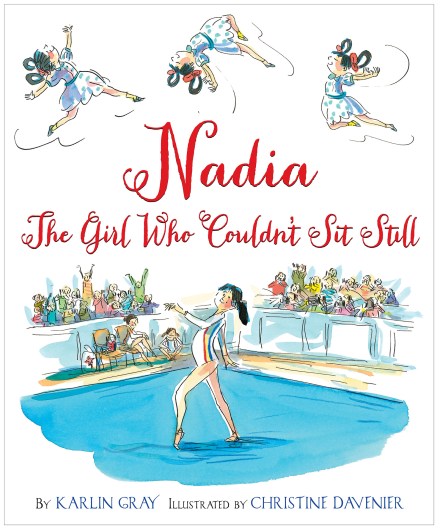
celebrate-picture-books-picture-book-review-nadia-the-girl-who-couldn't-sit-still-cover

Image copyright Christine Davenier, courtesy of Houghton Mifflin Harcourt Publishing Co.

About the Holiday

In so many ways children and young adults are not only our future but they lead the world forward now. In recognition of this, the United Nations established International Youth Day to work toward ensuring that all children have access to resources to make positive and progressive choices. The theme for this year’s International Youth Day revolves around sustainable consumption, an important topic for the world our young people are inheriting.

It’s fitting that today’s holiday comes during the Olympic Games, a showcase of the best determination, hope, and spirit of today’s youth and tomorrow’s promise. A “perfect” reminder of that is the subject of today’s book!

Nadia: The Girl Who Couldn’t Sit Still

Written by Karlin Gray | Illustrated by Christine Davenier


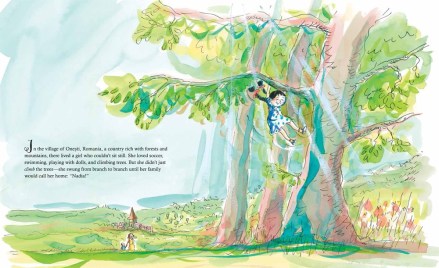
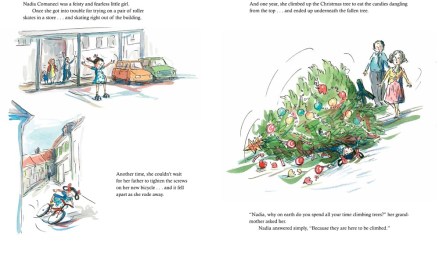
“In the village of Oneşti, Romania, a country rich with forests and mountains” Nadia Comaneci could often be seen swinging from tree branch to tree branch. She was a little girl who loved to play. She was “feisty and fearless,” attempting new things on a whim and always with a sense of adventure. Once she tried on a pair of roller skates and skated right out of the store! Another time she was so impatient to ride her new bike that she pedaled off before her father could even tighten the screws. The bike “fell apart as she rode away.” And one year her love of climbing trees extended to the family Christmas tree, which toppled over on her, pinning her to the ground.

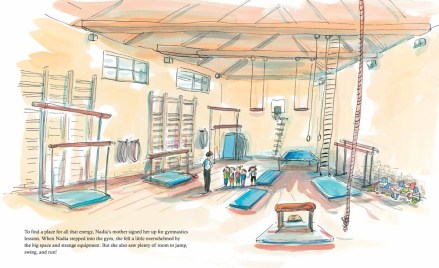
To channel all that energy, Nadia’s mother enrolled her in gymnastics lessons. Nadia’s eyes lit up when she saw the room full of ropes, ladders, bars, mats, and trampolines to discover, but she didn’t leave her new skills at the gym. Nadia and a friend cartwheeled around the school playground, capturing the attention of Bela and Marta Karolyi, who owned a gymnastics school. They invited the girls to join.

celebrate-picture-books-picture-book-review-nadia-the-girl-who-couldn't-sit-still-swinging-in-trees

Image copyright Christine Davenier, courtesy of karlingray.com

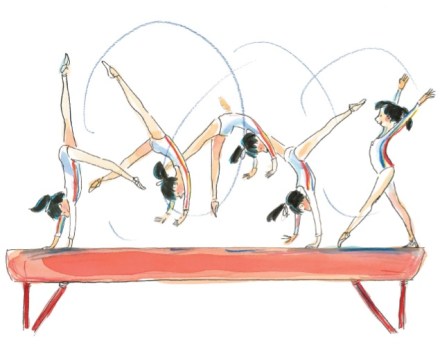
Nadia was only 6 when she began studying with Bela and Marta. Immediately, she discovered that she liked gymnastics better than her school subjects. She progressed quickly from performing “a straight cartwheel on a line painted on the floor” to doing it on a low balance beam and finally on the high balance beam. She began learning harder and harder moves, “flying from bar to bar, from floor to vault, and high above the beam.”

At 9 years old, Nadia competed in her first National Junior Championship. Despite her skill and hard work, she fell from the high beam during a leap not once but three times. Nadia finished the competition in 13th place. Her disappointment only strengthened her resolve. She went back to the gym and continued to practice many hours every day. Her determination paid off, “and at the next National Junior Championship games, she won first place.”

The ultimate recognition of her skill came when she was chosen to be part of the 1976 Romanian Olympic team. The games were held in Montreal, Canada, and all eyes were on the returning gold medalists from Russia, Olga Korbut and Lyudmila Turischeva. But excitement soon filled the venue as Nadia performed on the beam, the floor, and the vault where she scored 9.9, 9.75, and 9.7 on a scale of 1 (the lowest score) to 10 (a perfect score). The next event was the uneven parallel bars on which Olga Korbut had just scored a 9.9. “Nadia mounted the bars. Now fourteen years old, she was a long way from the forests in Romania. But she swung around as easily as she had jumped from branch to branch as a little girl. The audience gasped as she twirled and whipped and flipped.”

celebrate-picture-books-picture-book-review-nadia-the-girl-who-couldn't-sit-still-gym

Image copyright Christine Davenier, courtesy of karlingray.com

Nadia dismounted and landed perfectly on the mat below as the audience “exploded with applause.” Nadia returned to her team to wait for her score. And wait…and wait. Finally, the score appeared on the board—1.00. The worst score. How could that be? “‘What is Nadia’s score?’” Bela asked the judges. “One of the officials held up ten fingers as a voice announced over the loudspeaker: ‘Ladies and gentlemen, for the very first time in Olympic history, Nadia Comaneci has received the score of a perfect ten!’”

Because no one had ever achieved a 10 before, the scoreboards were programmed only for a high of 9.9. Nadia couldn’t bask in her accomplishment for long, however. She moved on to her next event—and her next perfect 10! “When the competition ended, she had earned seven perfect 10s.” At the medal ceremony both Olga and Lyudmila congratulated their competitor as the new Olympic champion. In all Nadia won five medals and became the youngest ever Olympic gold medalist in gymnastics.

celebrate-picture-books-picture-book-review-nadia-the-girl-who-couldn't-sit-still-balance-beam

Image copyright Christine Davenier, courtesy of karlingray.com

Nadia became a darling of the press. They surrounded her, asking “how it felt to have the world’s attention, if she had been confident she would win, and when she would retire.” She answered each reporter with enthusiasm and confidence, and promising that she was a long way from retiring. When she returned home, it seemed that all of Romania had come out to welcome her and her teammates—even the country’s president.

Now Nadia was famous all over the world. She returned to practicing and inventing new routines, preparing for other competitions and the 1980 Olympic Games. She had come far from swinging branch to branch in the trees of Oneşti, but she would always be that little girl who couldn’t sit still.

Karlin Gray’s compelling biography captures all the spunk and spirit of Nadia Comaneci that made the world fall in love with her at the 1976 Olympic Games. Adults of a certain age well remember watching her in astonishment as she seemed to effortlessly swirl, twirl, and flip through her routines, flashing her sweet smile as she waved to fans. In the first pages Gray reveals anecdotes of Nadia’s adventurous nature that will captivate readers even as they giggle at her predicaments.

celebrate-picture-books-picture-book-review-nadia-the-girl-who-couldn't-sit-still-mishaps

Image copyright Christine Davenier, courtesy of karlingray.com

The straightforward narration of Nadia’s trajectory from playground cartwheeler to Olympic champion enhances both the gritty determination of her studies with her coaches as well as the suspense of her competitions. All children—no matter what their talent—will draw inspiration from Nadia’s story, which includes disappointments as well as unbounded accomplishments. Gray’s lyrical language flows as smoothly as Nadia flew through the air and will land in readers’ hearts as a perfect 10.

From the cover, which sports Nadia in her iconic floor exercise pose, to the last page, Christine Davenier depicts the world of gymnastics with beauty and the kind of realistic details that create a classic. The two-page spread of the gym where 6-year-old Nadia learns to love gymnastics portrays the enormity of the space and the equipment for a small girl—as well as the enormity of her achievement.

Kids will love the almost “play-by-play” illustrations of how Nadia learned to perform her feats, from starting with a line on the floor to perfecting the high beam and more. Nadia is shown leaping, somersaulting, doing handstands, and even wavering and falling as she practices and competes. The thrill of the Olympic Games, from the opening ceremonies, to the rapt and cheering audiences to the awards ceremony are drawn with stirring action, color, and attention to the specifics of that very special 1976 summer in Montreal.

An Afterword expands on Nadia Comaneci’s courageous life choices and career post-gymnastics and includes a timeline, notes, a selected bibliography, and websites for further study.

Nadia: The Girl Who Couldn’t Sit Still will fascinate kids and would be a very welcome addition to school classroom—as well as home—libraries.

Ages 5 – 10

Houghton Mifflin Harcourt, 2016 | ISBN 978-0544319608

Visit Karlin Gray‘s website to learn more about her and to download fun activities!

View a gallery of artwork by Christine Davenier on her website!

Discover more about Nadia: The Girl Who Couldn’t Sit Still on the Houghton Mifflin Harcourt website!

International Youth Day Activity

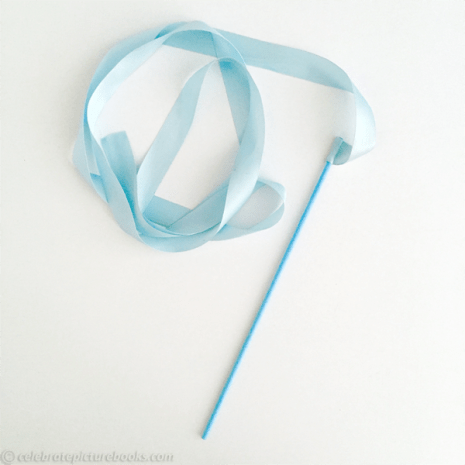
celebrate-picture-books-picture-book-review-rhythmic-gymnastics-ribbon-craft

Rhythmic Gymnastics Ribbon


You can recreate the grace of rhythmic gymnastics with this easy craft! The swirling beauty of the ribbon makes any movement fun!

Supplies

  • 12-inch dowel
  • 6-foot length of ribbon
  • Paint the same color as the ribbon
  • Hot glue gun or strong glue
  • Paint brush

Directions

  1. Paint the dowel and let dry
  2. Glue the edge of the ribbon to one end of the dowel. Wrap the ribbon about ½ inch around the dowel and secure with glue. Let glue dry.

Picture Book Review
August 11 – Son and Daughter Day

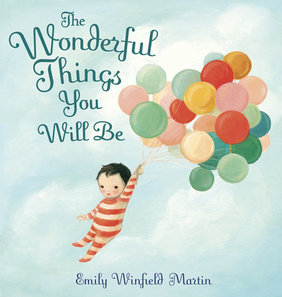
celebrate-picture-books-picture-book-review-the-wonderful-things-you-will-be-cover

About the Holiday

Today’s holiday celebrates the special relationship between parents and their sons and daughters. The lifelong bond takes work, dedication, and most importantly unconditional love, and its rewards are innumerable. Whether your child or children are still small, have moved away, or are somewhere in between, spend some time with them, tell them why they are unique, and tell them that you love them.

The Wonderful Things You Will Be

By Emily Winfield Martin


“When I look at you / and you look at me, / I wonder what wonderful / things you will be.” This opening sentence simply and beautifully expresses the emotions of parents and caregivers when first bringing a child home—and every subsequent day as they watch their kids grow and acquire their own talents, experiences, and opinions. From the first moments of a child’s life, the adults around them can’t wait to discover what is behind that sly smile, infectious laugh, even the pained cries. “When you were too small / to tell me hello, / I knew you were someone / I wanted to know.”

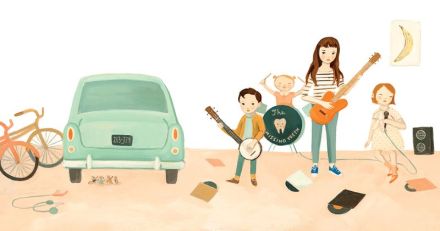
celebrate-picture-books-picture-book-review-the-wonderful-things-you-will-be-kids-in-band

Image copyright Emily Winfield Martin, courtesy of theblackapple.typepad.com

Martin reveals what caregivers know but children don’t yet realize—that the size of their heart, their wisdom, and their spirit is evident even when they are tiny, and because each child is unique the world holds a special place for them. Martin then opens that world to readers: “Will you stand up for good / By saving the day? / Or play a song only you / know how to play?” Perhaps the child will tell stories, help things to grow, or learn how to fly. Or will they “take care of things / Much smaller than you?” Whatever the child grows up to choose, parents or caregivers know that “they’ll be kind, and clever, and bold.” And when hard days come, being “brave” and “bright” will vanquish the “shadows.”

As each child matures and chooses a path in life, Martin leaves the reader of the book with these reassuring words any child needs to hear: “And then I’ll look at you / And you’ll look at me / And I’ll love you, / Whoever you’ve grown up to be.”

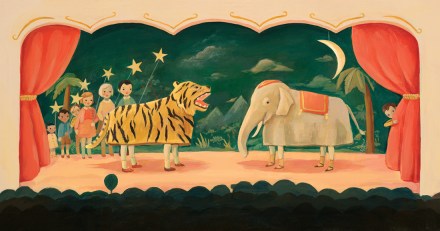
celebrate-picture-books-picture-book-review-the-wonderful-things-you-will-be-kids-in-tiger-and-elephant-play

Image copyright Emily Winfield Martin, courtesy of emilywinfieldmartin.com

When a child first comes into a home, parents or caregivers once again see the world in a new way—fresh and holding unlimited possibilities. Emily Winfield Martin captures that feeling with her lyrical words and delicate paintings. The vintage/retro illustrations populated with adorable children of various ethnicities, faithful pets, and favorite toys, give the book a universal feel. Throughout the book the children go about their tasks with confidence, thoughtfulness, and creativity—embodying the hopes and wishes adult readers have for their own children.

A gate-fold page toward the end of the book is a joy to explore as the illustrated children line up with costumes on as if for a school play or Halloween night. The different costumes invite readers to image what the children may grow up to be.

celebrate-picture-books-picture-book-review-the-wonderful-things-you-will-be-kids-in-kids-in-costumes

Image copyright Emily Winfield Martin, courtesy of emilywinfieldmartin.com

The Wonderful Things You Will Be is a perfect gift for new babies or for older children graduating from high school or college. The book invites multiple readings and makes a wonderful addition to anyone’s library.

Ages Birth and up

Random House Books for Young Readers, 2015 | ISBN 978-0385376716

Discover more distinctive artwork and books by Emily Winfield Martin on her website!

Son and Daughter Day Activity

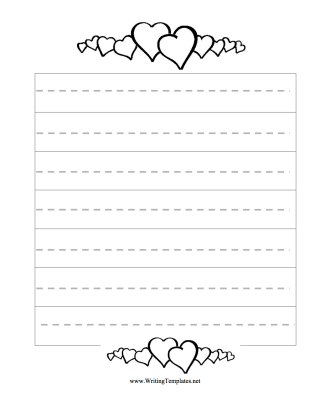
celebrate-picture-books-picture-book-review-i-love-you-template

I Love You Because…


Children love to hear why you think they’re special and why you love them. With this printable I Love You Because…template, you can tell the children in your life what makes them so loveable and unique.

Picture Book Review
July 31 – Uncommon Instrument Awareness Day

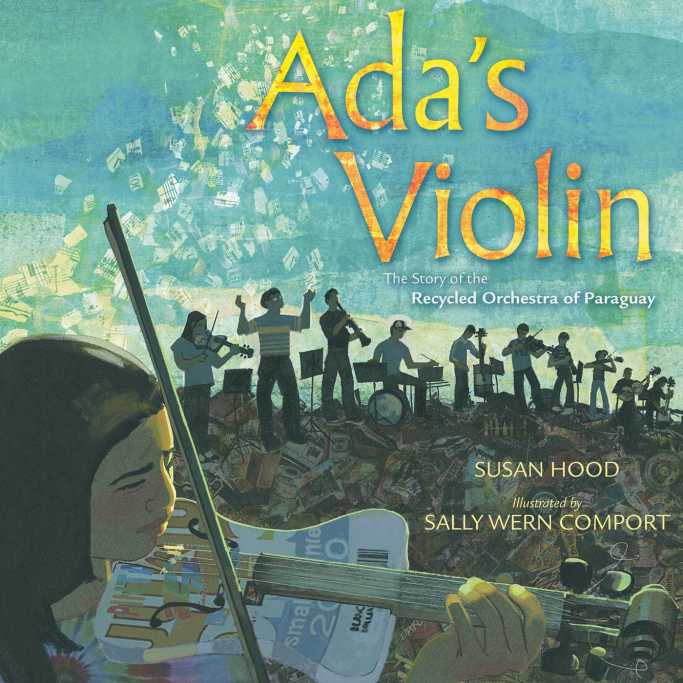
celebrate-picture-books-picture-book-review-ada's-violin-cover

About the Holiday

Today is the day to be musically experimental. Intriguing, inventive instruments that make a wide variety of sounds exist in every corner of the world. From Russia comes the contrabass balalaika, a triangular stringed instrument. The cimbalom, a concert hammered dulcimer, originated in Hungary. And only the Welsh could give us an instrument with no vowels: the crwth. Glass, water, and lightning are also used to make beautiful sounds, and the Holophonor—a musical instrument and hologram projector all in one—is perfect for Elvis sightings wherever he is! So, play a different instrument or research one, and read the inspiring story in today’s book!

Ada’s Violin: The Story of the Recycled Orchestra of Paraguay

Written by Susan Hood | Illustrated by Sally Wern Comport


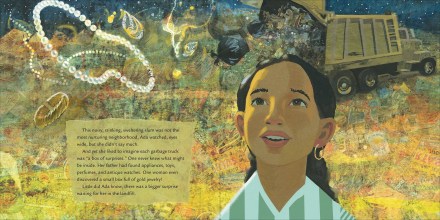
Ada Ríos is growing up in Cateura, a town built of trash as the main garbage dump for the capital city of Paraguay. Every morning the refuse trucks rumble into town to deposit their loads—1,500 tons of trash every day. The citizens of Cateura—gancheros or recyclers—go to work sifting through the mounds and tearing into bags looking for anything valuable enough to recycle or sell. Cardboard is worth 5 cents a pound, plastic 10 cents a pound.

Ada knows the landfill can hold surprises—“Her father, a ganchero, had found appliances, toys, perfumes, and antique watches.”—but she can never imagine what it holds for her. When Ada and her sister were little, their grandmother watched them while their parents worked. They loved to listen to music, to sing, and to learn stories of musicians and the sounds of different instruments. Ada fell in love with the violin.

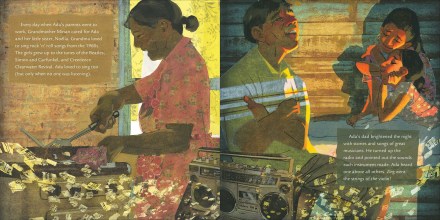
celebrate-picture-books-picture-book-review-ada's-violin-making-singing

Image copyright Sally Wern Comport, courtesy of simonandschuster.com

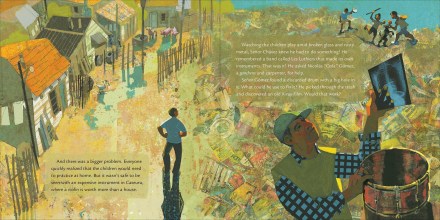
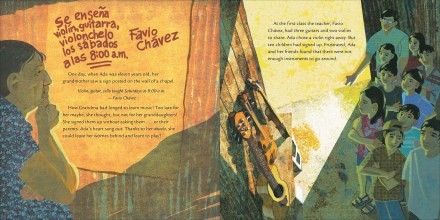
As the girls grow older and go to school, they venture farther into town, but there is little to fill their time. Many kids join gangs or get into fights. When Ada is 11 her grandmother signs her and her sister up for music lessons being offered by a new man in town named Favio Chávez. “Ada’s heart sang out” when she hears the news. On the first day ten children show up to play the five instruments available. But a bigger problem looms: the three guitars and two violins cannot be taken home for practicing as they are magnets for thieves. In Cateura a violin is worth more than a house.

But Favio Chávez has an idea. With help from Nicolás Gómez, a ganchero and carpenter, they pull bits and pieces from the landfill. An old broken drum and an X-ray film become a workable drum, water pipes become flutes, packing crates become guitars and violins, and oil drums become cellos. “Ada chose a violin made from an old paint can, an aluminum baking tray, a fork, and pieces of wooden crates. Worthless to thieves, it was invaluable to her. It was a violin of her very own.”

celebrate-picture-books-picture-book-review-ada's-violin-making-instruments

Image copyright Sally Wern Comport, courtesy of simonandschuster.com

The children practice tirelessly outside in 100-degree heat until the initial “screeches, twangs, and tweets hit all the right notes. Their class became ‘a small island’ where Chávez taught them to respect themselves and one another.” They become known as The Recycled Orchestra. Music now fills the air, adding a soundtrack of beauty to the grueling work. The orchestra is soon invited to play concerts in Cateura and the capital city of Asunción. When word spreads of their talent, they receive offers to play from other cities and even other countries.

When Ada is 16 The Recycled Orchestra is invited to tour with a world-famous rock band. As Ada takes the stage in front of 35,000 people in Bogotá, Colombia, she is afraid, but the audience cheers for them and sings along as they play. On that night the children discover a new life. “Buried in the trash was music. And buried in themselves was something to be proud of.”

celebrate-picture-books-picture-book-review-ada's-violin-lessons

Image copyright Sally Wern Comport, courtesy of simonandschuster.com

An extensive author’s note plus a photograph of The Recycled Orchestra, websites, and videos follow the text, as well as a list of sources.

Ada’s Violin is also available in a Spanish edition—El violín de Ada: La Historia de la Orquesta de Instrumentos Reciclados del Paraguay.

Susan Hood has brought to light an incredible story of perseverance, hope, and the ability of music and other arts to provide opportunities and self-confidence that change lives. Told with unstinting honesty and sensitivity, Hood’s biography of Ada Ríos, Favio Chávez, and The Recycled Orchestra will inspire all who read it. The well-paced text offers revealing details on every page and flows with a lyrical quality that enhances the effect of the story and its impact. From the first sentence to the last, both children and adults will be riveted to The Recycled Orchestra.

celebrate-picture-books-picture-book-review-ada's-violin-hope

Image copyright Sally Wern Comport, courtesy of simonandschuster.com

Sally Wern Comport’s paintings beautifully capture the human spirit that shines through and drives people to astonishing achievements even in the most adverse conditions. With intricately created collages of rich hues, Comport depicts the town of Cateura and the mountains of trash the citizens work and play on. Warm lighting illuminates faces full of dreams and love, and readers will linger over depictions of the instruments workshop and cheer along with the concert audience as the children receive recognition. The full-bleed, two-page spreads echo the expanded world music gave to the children in the orchestra and the adults who heard them as music score confetti flutters throughout.

Both school classrooms and home libraries will benefit from the stirring message of Ada’s Violin.

Ages 4 and up

Simon & Schuster Books for Young Readers, 2016 | ISBN 978-1481430951 (English edition); 978-1481466578 (Spanish edition)

Discover more about Susan Hood and her books, plus fun activities for kids and information for teachers and parents on her website!

View a gallery of Sally Wern Comport’s artwork on her website!

Uncommon Instrument Awareness Day Activity

celebrate-picture-books-picture-book-review-homemade-musical-instrument


Make Your Own Musical Instrument


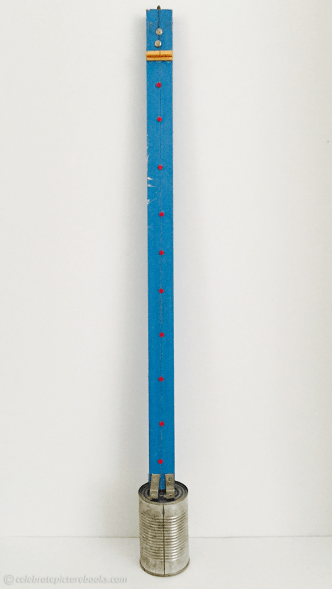
Inspiration for sound can come from almost any object! Look around your house or classroom and discover the music in boxes, cans, blocks of wood, plastic egg cartons or deli containers, and more. Add string or wire for plucking, sticks for drumming, or beans for shaking. With a little glue, tape, or hardware and some creativity, you’ll be making your own rhythms in no time!

Supplies for the instrument shown in the picture above

  • Tin can
  • Two small L brackets
  • Piece of wooden molding, 2 1/2 feet by 1 1/2 inches by 3/4 inches
  • Five small strips of wood to raise the wire off the neck of the instrument. I used long wooden fireplace matches cut into 1 1/2″ sections 
  • Thin wire
  • Small circular hook screw or regular screw
  • Two tacks
  • A nail, screw, or piece of wood that will fit horizontally in the mouth of the can
  • a small nail to make a hole in the can
  • Hammer
  • Strong Glue
  • Paint
  • Foam decorative dots

Directions

  1. Paint the wood and let dry
  2. Paint the small strips of wood and let dry
  3. Decorate the can with paint, sticker, duct tape, or paper
  4. With the hammer and small nail, make a hole in the center of the bottom of the can
  5. Wrap one end of the wire around the nail and glue so it is firmly in place
  6. Feed the other end of the wire through the hole in the bottom of the can
  7. Screw or glue two L brackets to one end of the wood molding so that the bottom of the L is flush with the bottom of the wood molding and there is space between the brackets. This makes the neck of the instrument
  8. Screw the circular or regular screw into the top, center of the wooden molding
  9. When the wooden strips are dry, glue three side by side 3 inches from the top of the molding. Glue two more matches, one on top of the other on the center strip.
  10. When the L brackets are dry, glue them (and the neck of the instrument) to the can, making sure the brackets are on either side of the hole in the can. Make sure the wire is out of the hole. 
  11. When the brackets are firmly attached to the can, pull the wire to the top of the neck. Settle it in the center of the small pieces of wood, so that the wire is not touching the neck.
  12. Wrap the wire around the screw at the top of the molding until it is firmly in place and the wire is taut. 
  13. Secure the wire to the neck with the tacks
  14. Mark the “frets” with the foam dots

Picture Book Review


July 29 – International Tiger Day

celebrate-picture-books-picture-book-review-a-tiger-tail-cover

About the Holiday

First observed in 2010 in response to the severely declining wild tiger population, International Tiger Day promotes awareness of these beautiful, distinctive animals. In the last century 97% of wild tigers have disappeared, with only 3,000 still in existence. Many factors have led to this devastating loss, including habitat destruction, climate change, and poaching. Environmental and other groups, such as the World Wildlife Federation, the International Fund for Animal Welfare, and the Smithsonian Institution, have come together to protect and preserve wild tigers.

A Tiger Tail (Or What Happened to Anya on Her First Day of School)

By Mike Boldt


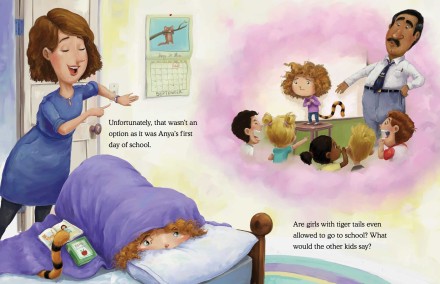
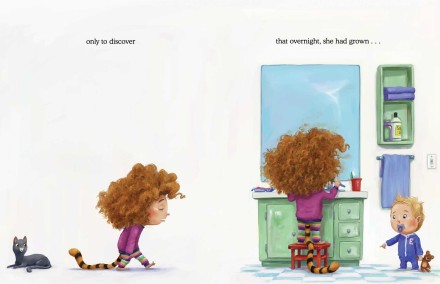
Even before the story properly begins, Anya discovers something incredible and incredibly disturbing. Overnight she has grown a tiger tail—not a pony tail or pigtails, but an honest-to-goodness black-and-orange-striped tiger tail! All she wants is to stay in bed, but unfortunately that’s not possible because it’s Anya’s first day of school.

celebrate-picture-books-picture-book-review-a-tiger-tail-interior-imagining-school

Image copyright Mike Boldt, courtesy of simonandschuster.com

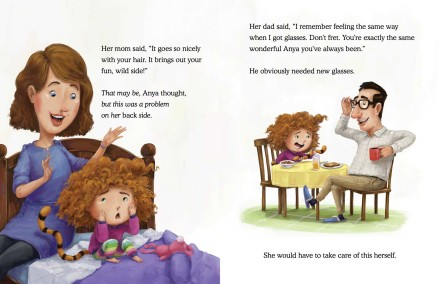
Anya wonders if “girls with tiger tails are even allowed to go to school” and what the other kids will say. Her mom thinks it’s wonderful. The tail goes so nicely with Anya’s red hair and brings out her “fun, wild side.” But Anya’s only worried about her back side! Her dad likens her predicament to when he got glasses and tells her she’s still “exactly the same wonderful Anya you’ve always been.”

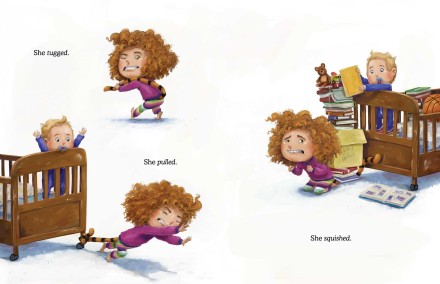
Anya figures she’s on her own with her problem. She tries tugging on her tail, pulling on it, and squishing it, but it remains firmly attached. Perhaps the right outfit from her closet—or all of them together—could hide her tail, but that solution had its own problems. There was just one last thing to do—panic! “‘Calm down,’” says her mom. “‘You’ll make yourself sick.’” Ah-ha! There’s a good idea! Anya thinks as she goes back to bed with tissues and feeling for a fever.

celebrate-picture-books-picture-book-review-a-tiger-tail-interior-parents

Image copyright Mike Boldt, courtesy of simonandschuster.com

Anya’s mom thinks her antics are so funny and that the kids will love her sense of humor, then she shoos her off so she doesn’t miss the bus. Ah-ha! There’s another good idea! Anya hides in the bushes, but her dad discovers her and considers it a “special treat” to drive her to school.

Walking up the sidewalk to the school’s front door, Anya realizes that she has only one option—running away to join the circus. How bad could that be? But as Anya daydreams about eating popcorn for dinner and swinging from a trapeze, she misses her chance to escape. The school bus pulls up to the door and all the kids pile out. “Anya was doomed.” But she watches all the kids race past her without a glance and doesn’t see the boy headed straight for her who also doesn’t see her. CRASH! Their impact sends them tumbling to the ground amid fluttering papers and flying books, shoes, and backpacks. Even the boy’s baseball cap pops off! Anya stares and then smiles. Standing straight up from the boy’s head are two long rabbit ears.

celebrate-picture-books-picture-book-review-a-tiger-tail-interior-art-grown-tail

Image copyright Mike Boldt, courtesy of simonandschuster.com

“‘Hi, my name is Ben,’” the boy says as he holds out Anya’s shoe. “‘I’m Anya,’” Anya replies. Joe takes his hat from Anya and bounds up the steps. “‘Come on, Anya! We don’t want to be late on the first day.’” Anya follows, and when she sees her class she knows she’ll fit right in.

Mike Boldt whimsically captures the first-day jitters—of school or any new experience—that can result in an explosion of self-consciousness, doubt, and fear. Boldt’s little girl with a wild cloud of red hair is a loveable, plucky heroine as she takes matters into her own hands when the adults around her seem oblivious to her plight. Boldt’s vivacious illustrations burst with energy and emotion that kids will recognize and respond to. Boldt depicts children so honestly, from their crinkled nose abhorrence to their enthusiastic smiles, and the adults, with their clueless dialogue and quirky expressions, are rendered through a child’s eyes.

celebrate-picture-books-picture-book-review-a-tiger-tail-interior-art-grown-tail

Image copyright Mike Boldt, courtesy of simonandschuster.com

Readers will laugh at Anya’s panicked face and her multi-layered getup designed to hide the tail that is still obvious through its ribbon wrapping. The crash meeting between Anya and Ben provides delightful surprise and insight, and the final spread of the classroom is inspired. Not only do most of the kids have unique traits, but the teacher also displays rabbit teeth as everyone poses for a class picture.

A Tiger Tail (Or What Happened to Anya on Her First Day of School) offers comfort and understanding as it reminds readers that everyone is an individual, and that one of humankind’s strongest and most common bonds is our diversity. A Tiger Tail should be embraced by every classroom and will make an often-asked-for addition to any child’s library.

Ages 4 – 8

Simon & Schuster Books for Young Readers, 2016 | ISBN 978-1481448857

Learn more about Mike Boldt and his books and view a portfolio of his artwork on his website!
Pounce on this awesome book trailer for A Tiger Tail!

International Tiger Day Activity

celebrate-picture-books-picture-book-review-tiger-find-the-differences

Tricky Tigers Find the Differences and Coloring Page


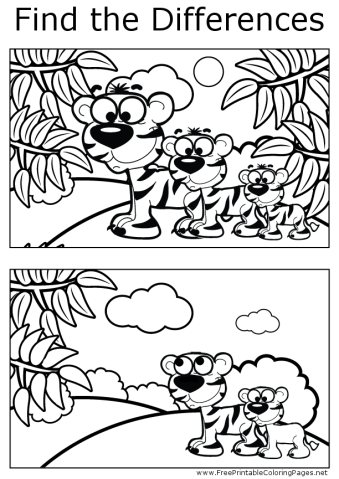
These two picture of tigers in the jungle have some differences—just like Anya and her classmates. Can you find all eleven changes? Have fun searching and coloring this printable Tricky Tigers Page!