February 10 – Library Lovers Day

CPB - Jumping Off Library Shelves

About the Holiday

Today I’ve chosen to celebrate a month-long holiday. February is Library Lovers Month! Chances are if you’re reading this, you also love libraries! For readers there’s no better place than standing in the stacks, surrounded on all sides by shelves and shelves of books. In those pages you meet new friends, defeat the bad guys, discover poetry, laugh, sometimes cry, see astonishing art, find new hobbies, and learn fascinating facts about…wow! Anything and everything!

What’s your favorite library or thing about libraries? Mine is the East Lyme Public Library in Connecticut, where they have a fantastic selection of books and awesome librarians who feel like family! Tell me about your special library in the Comments section below.

Jumping Off Library Shelves: A Book of Poems

Poems selected by Lee Bennett Hopkins | Illustrated by Jane Manning


From morning, which “pours spoons of sun through tall windows” of a library in Rebecca Kai Dotlich’s poem “Breakfast between the Shelves,” to night, when shadowed mice huddle to read a mystery in Dotlich’s closing poem “Midnight in a Library,” kids can enjoy a full day of poems in this delightful collection. Many of today’s best-loved poets for children are represented here, celebrating the power of a library card, the kindness of librarians, and the enchantment of reading.

Jane Manning’s soft, dreamy illustrations swirl with imagination, shimmer with the warm glow of a reading nook, and enchant with the smiles of children thrilled with the pleasures of reading.

Library Lovers Day Activity

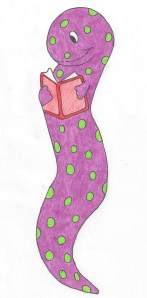
CPB - Bookworm Book (2)


Bookworm Bookmark

For all you bookworms out there who love to read, here’s your very own Bookworm Bookmark to color and put between the pages of your favorite story!

Supplies

Directions

  1. Print out the Bookworm Bookmark template
  2. Color the bookworm
  3. Cut out the Bookworm
  4. Cut the Bookworm’s mouth at the dotted line. The top part of the bookworm’s mouth hangs over the page and marks your place!

February 9 – Pizza Day

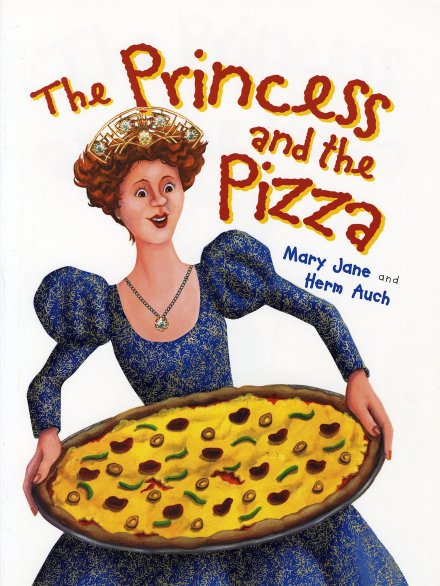
celebrate-picture-books-picture-book-review-the-princess-and-the-pizza-cover

About the Holiday

Every day could be pizza day, but today’s holiday gives us a special reason to enjoy one of the world’s favorite foods! Since ancient times, people have been making pizzas of all kinds from flatbread to deep dish, but they all have one thing in common—they’re delicious! Here are just a few interesting facts about this most delectable of foods:

  • The very first pizzeria opened in Italy in 1738
  • The first pizzeria in America was opened in New York in 1895
  • Pepperoni is the most popular topping
  • Over 3 billion freshly made pizzas and 1 billion frozen pizzas are sold in the U.S. every year

The Princess and the Pizza

 By Mary Jane and Herm Auch


Paulina loves being a princess. But when her father, the king, gives up his throne, Paulina needs a job! Things don’t go so smoothly, however, so when she hears that Queen Zelda is looking for a bride for her son, Drupert, she springs into action. Armed with her best ball gown, a tiara, garlic for good luck, and herbs to mask the garlic smell, Paulina is off to Blom to win a prince and her old life back.

Twelve women show up to woo Prince Drupert, and Queen Zelda has plans to find him the perfect wife. She pits the women against each other in three competitions—the pea-under-the-mattress test, the glass slipper fitting, and a feast-preparation contest. Paulina easily passes the first two but is thwarted in the third by the shenanigans of the remaining contestants.

By the time Paulina reaches the table that holds the ingredients for the feasts, the only items left are tomatoes, cheese, and the makings of a dough. Paulina throws them together then decides to take a nap (after first removing the sleep-depriving pea from the bed). Rudely awakened from slumber and given a threat she can’t ignore, Paulina tosses her creation on the fire and sprinkles it with her garlic for good luck and the herbs to mask the smell.

The time for tasting arrives and Paulina presents her tray, hoping for the best. Although the concoction may look a mess, it smells scrumptious and with one taste Prince Drupert proclaims it the winner. And so in one fell swoop our intrepid heroine has invented pizza and won the heart of Prince Drupert. But the whole experience has given Paulina a better idea. She dumps Drupert and opens a Pizza Palace. And while she may not actually be royalty anymore, the townspeople are so thrilled they treat her like a queen. Life again is good, but could her father be falling for Queen Zelda?

Paulina is an appealing modern princess—she’s loaded with self-confidence, never gives up, and knows how to play the game. Kids will love recognizing the references to other favorite fairy tales, and the humorous illustrations of the unflappable Paulina will have them giggling with every page.

Ages: 4 and up

Holiday House, New York 2003 / ISBN 978-0823417988

Pizza Day Activity

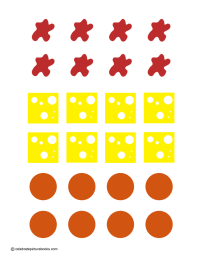
CPB - Pizza Day Toppings

Create Your Pizza Game

Play this fun game to build your pizza ingredient by ingredient before the others!          For 2 – 8 players.

Supplies

Directions

February 8 – Opera Day

celebrate-picture-books-picture-book-review-father's-chinese-opera-cover

About the Holiday

Today celebrates a musical art form that began in the 1500s in Italy. An opera is a play that is entirely sung by the actors. Operas can be funny, romantic, or tragic. The actors must have amazing voices that can fill the whole opera house because they do not use microphones. The actors get to sing solos, called arias, that reveal their emotions about particular moments in the story. Because of its grand history in countries such as Italy, Germany, and France, operas are still more popular in Europe than in the U.S. In America we’re more familiar with musicals, like Frozen orAladdin, where some dialogue is spoken and songs tell more about the plot of the story than about the characters’ feelings. If you’d like to listen to a little bit of an opera for children, check out this video of parts of Little Red Riding Hood performed by the BCOpera.

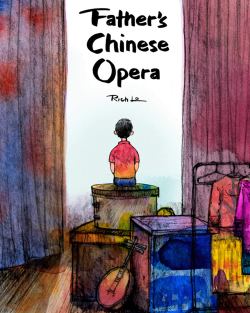
Father’s Chinese Opera

By Rich Lo


Recalling personal experience, author-illustrator Rich Lo writes a unique tale set within the Chinese opera. Revolving around themes pertinent to life, the Chinese opera employs actors as well as acrobats and flag carriers who add action and meaning to the play.

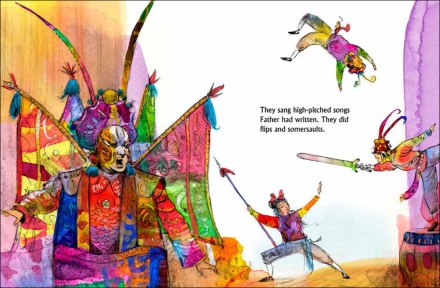
celebrate-picture-books-picture-book-review-father's-chinese-opera-acrobats

Copyright Rich Lo, 2014, courtesy of Sky Pony Press.

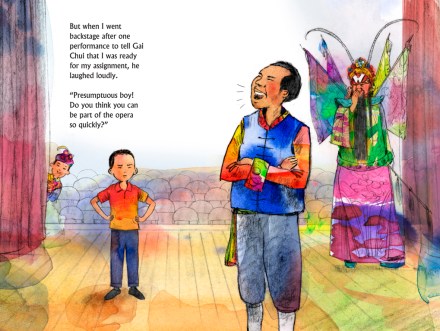
In Father’s Chinese Opera, the son of the band leader and composer for the Hong Kong opera watches the actors flip and somersault across the stage and dreams of joining them. He approaches Gai Chui, the best acrobat in the troupe and asks to be taught the martial arts. Gai Chui agrees and the little boy begins to learn the moves—Praying Mantis, Crouching Tiger, Striking Leopard, and more. The little boy practices hard and believes he is ready to join the other actors, but when he tells Gai Chui he is ready, the master acrobat laughs and tells him it’s not quite that easy.

celebrate-picture-books-picture-book-review-father's-chinese-opera-backstage

Copyright Rich Lo, 2014, courtesy of Sky Pony Press.

Dejected, the boy goes home. His father tells him about how hard he worked to become the leader of an opera troupe, and the boy takes the lesson to heart. The next day he goes back to the opera house and instead of watching the actors, he takes note of the flag carriers—the lowest position in the troupe. He asks if he can be a flag carrier, to which his father agrees—but only for the summer.

As a flag carrier, the boy makes new friends, becomes a better acrobat, and impresses Gai Chui, who tells him that with more practice he will be able to achieve his dreams.

celebrate-picture-books-picture-book-review-father's-chinese-opera-band-leader

Copyright Rich Lo, 2014, courtesy of Sky Pony Press.

Rich Lo’s story is full of truths about hard work and the benefits of developing a deep understanding of all aspects of one’s skills. Children may find a conversation like this seemingly unfair, but Lo reveals that such teaching on the part of a parent or other adult is one of the ultimate demonstrations of love. 

Lo’s watercolor illustrations are vibrant and dreamy, perfectly reflecting the beauty and action of the Chinese opera that so captivates the story’s young narrator. His father and the orchestra, dressed in their conservative blue and tan suits and sitting at the corner of the stage, contrast starkly with the bold, riotous mosaic of the actors’ costumes and the swirling moves of the acrobats. It’s easy to see why the boy is attracted to this art. It is back home—where the colors once again become muted and quiet—however, that the boy learns his greatest lesson.

Sharing Father’s Chinese Opera with children is an excellent way to discuss the idea that while a talent may be inborn, practice and patience are also needed to see it come to its full fruition. The book would be a valuable addition to home, classroom, and library collecions.

Ages: 3 – 7

Sky Pony Press, 2014 | ISBN 978-1628736106

Opera Day Activity

CPB - Opera Day word search

Opera Word Search


Today’s activity is a Word Search puzzle loaded with words about the Chinese opera. Just print out the puzzle and start looking! The Solution is also included.

celebrate-picture-books-picture-book-review-father's-chinese-opera-cover

You can find Father’s Chinese Opera at these booksellers

Amazon | Barnes & Noble | Books-a-Million | IndieBound


February 7 – Popcorn Day

CPB - Popcorn Astronauts

About the Holiday

While National Popcorn Day is often celebrated in January, some people believe that Superbowl Sunday is the perfect day to celebrate this tasty treat. I say why not celebrate it on both days! The history of popcorn goes back to the Aztecs and beyond. Early explorers of the 1500s wrote about native peoples roasting corn until it popped and described it as looking like a “white flower.” The natives ate it and strung it to use for decoration.

Most people now eat popcorn with salt and butter, but can you imagine having it with milk? Way before Corn Flakes and Cheerios came on the scene people ate it as cereal! And popcorn really became popular during the Great Depression, when it was one of the only inexpensive treats people could afford. Why not pop up a batch and snuggle in to read today’s reviewed  picture book. For more interesting Popcorn Facts visit www.popcorn.org.

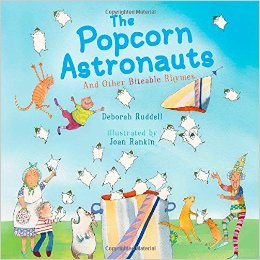
The Popcorn Astronauts and Other Biteable Rhymes

Written by Deborah Ruddell | Illustrated by Joan Rankin


Deborah Ruddell’s rollicking poems celebrate the delicacies each season offers, and they are as fresh and surprising as that first luscious taste of strawberries after a cold winter. For National Popcorn Day, and Ruddell and Rankin offer a unique take on those fluffy nuggets which, like floating astronauts, are as light as air.

In these rhymes that are as fun to say as they are to hear, kids will meet a strawberry queen, a picky ogre, and peaches with “flannelpajamaty” skin. They will also learn the ingredients for an impromptu picnic and wonder what ingredient creates that indescribable taste of the smoothie supreme. And if you’d like to know how a poet orders a milkshake or if Dracula ever gets tired of his nightly routine, you’ll find the clever answers here.

Joan Rankin’s vivid illustrations enhance each poem with plenty of action, humor, and expressive characters to keep kids giggling and lingering over each page.

Ages 4 – 8

Simon & Schuster, New York, 2015 | ISBN 978-1442465558

Popcorn Day Activity

CPB - popcorn1

Popcorn Blast-Off Game

The popcorn is flying! Can you catch it? This is a fun game to celebrate this most delicious day! And if you keep the popcorn socks, it will make a great quick activity for those times when you want to get up and move but just don’t know what to do.

Supplies

  • 6 pairs of girls socks – white
  • A large bag of cotton ballsCPB - popcorn2
  • Towel or small blanket

Instructions

  1. Stuff the socks with a large handful of cotton balls (about 25)
  2. Knot the sock as you would a balloon and fold down the remaining sock
  3. Squish the sock to move the cotton balls until your sock looks like a piece of popcorn
  4. Players hold each end of the towel or side of the blanket so it sags
  5. Place popcorn in the middle of the towel or blanket
  6. On the count of 3, players pull tight on the towel or blanket
  7. Try to catch as many flying popcorn pieces in the towel or blanket as you can


February 6 – Lace Day

celebrate-picture-books-picture-book-review-fionas-lace-cover

About the Holiday

Lace, that delicate material that trims clothing, covers tables, ties up hair, and makes anything seem more dainty and lovely, has been used since the 1500s. When you look at the intricate patterns and fine threads of lace, it’s hard to believe that people once made it all by hand. Lace makers were paid well for their art by the fashion industry, which used it to attract distinguished customers. While lace is mostly made by machines now, the handcraft is making a comeback. Today’s reviewed picture book is about a girl whose lace work was invaluable.

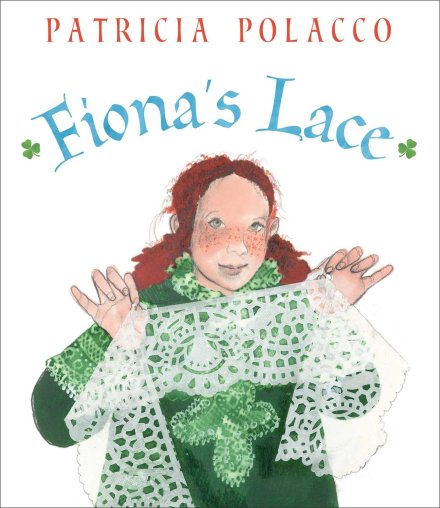
Fiona’s Lace

By Patricia Polacco


In Fiona’s Lace author-illustrator Patricia Polacco weaves a tale of family love and America’s early immigrant heritage that is as intricate and lovely as the material we celebrate today. The story begins in Ireland, where Fiona and her sister Ailish live with their muther and da. They live happily in Glen Kerry, where their father works in the textile mill and their mother teaches Fiona her art of lace making.

celebrate-picture-books-picture-book-review-fiona's-lace-ma-teaches-lacemaking

Copyright Patricia Polacco, courtesy of simonandschuster.com

In the evenings the girls are entertained by family stories, especially their favorite about how, when their parents first met, their mother left a trail of lace from the factory to her house for her young suitor to follow.

When the textile mill closes, Fiona’s family signs a contract indenturing themselves to a family in Chicago. The voyage to America is long and arduous, but when they arrive in Chicago they marvel at the grand houses and elegant clothes, imagining that this awaits them too in their new home. The reality, however, is much different. Their 2-room apartment is ramshackle, and only by working two jobs can their parents make enough money to live on.

celebrate-picture-books-picture-book-review-fiona's-lace-fiona-gets-job

Copyright Patricia Polacco, courtesy of simonandschuster.com

Fiona wants to help and soon finds that dressmakers will pay handsomely for the lace she makes. The family’s money tin begins to fill up and they are prospering. One night while Muther and Da are away working, a fire rages through Chicago. Fiona and Ailish escape with only the money tin and Fiona’s lace. They run far from home, but worry—how will their parents find them?

Remembering their favorite story, Fiona cuts her lace into strips and ties bits of it along their route to their hiding place. The girls cower in fear until they hear the familiar voices of their parents. Happily reunited, the family lets go of what they have lost, but Ailish cries over the now sooty, torn lace. Ma reassures her and brings comfort, revealing that far from being ruined, this scorched lace is the most valuable and cherished of all because it saved the family.

celebrate-picture-books-picture-book-review-fiona's-lace-trail-of-lace-story

Copyright Patricia Polacco, courtesy of simonandschuster.com

Patricia Polacco’s heartwarming and harrowing story of an Irish immigrant family is a beautiful reminder of the unique talents and strong bonds that built America. Readers will be enthralled by Polacco’s realistic dialogue and detailed storytelling in this compelling and suspenseful tale and will cheer as Ailish cleverly uses her ma and pa’s trick and her own skills to save her family.

Polacco’s gorgeous illustrations bring the time period alive for young readers, portraying the intricate art of lacemaking and the clothing styles that made use of this delicate trimming. Her depictions of tenement living are realistic, yet reveal the love and close family ties within through a warm color palette and the inclusion of cozy comforts brought from Ireland.

Fiona’s Lace is a wonderful book for classroom and home story times.

Ages: 4 – 8

Simon & Schuster, New York 2014 | ISBN 978-1442487246

Discover more about Patricia Polacco and her many, many books on her website!

Lace Day Activity

Hide-and-Seek Game

While Fiona and her sister used a lace trail to lead their parents to their hiding place, you can have fun making a hide-and-seek game for your friends. This game can be played inside or outside

Supplies

  • 1 or 2 yards of lace, cut into sections about 6-inches each. You can use lace to celebrate Lace Day or use string, ribbon, or other kinds of material
  • Choose something to hide – this can be a toy, a secret letter, a snack, or anything

Directions

  1. Hide the item you choose in a secret place
  2. Determine the starting place for your hide-and-seek game
  3. Along the route from the starting point to the hidden item, tie the sections of lace onto things like lamps, furniture, stair banisters, door knobs, etc. if  you’re playing inside. If you are playing outside, tie it onto trees, bushes, bird feeders, swing sets, etc.
  4. For very young children the trail of lace can be straightforward; for older children the trail can be longer and more difficult

February 5 – Western Monarch Day

CPB - Hurry and the Monarch - Monarch Day


About the Holiday

Western Monarch Day celebrates the migration of these beautiful butterflies from the Rocky Mountain area to California, where they spend the winter. Other monarchs make different journeys, as you will see in today’s reviewed picture book. Today the monarch population is in peril, but there is something you can do! In honor of today’s holiday, consider planting milkweed in your yard. Not only will you attract these fascinating creatures to your home, but you will be helping to feed them and increase the population.

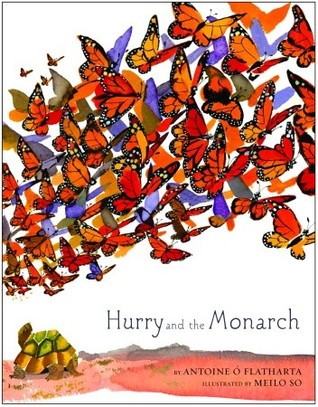
Hurry and the Monarch

Written by Antoine Ó Flatharta | Illustrated by Meilo So


A swift, graceful monarch butterfly and a slow, lumbering tortoise couldn’t be more different, but the friendship between these two creatures in Ó Flatharta’s Hurry and the Monarch, illuminates the majesty of life for all.

On an October day in Texas a monarch butterfly lands on Hurry the tortoise’s back and asks where she is. “Wichita Falls,” answers Hurry, and the monarch knows her trip from Canada is not over yet. Before she continues her flight, however, the monarch and Hurry talk about their differences. While the monarch is well traveled, Hurry feels he has been in Wichita Falls “forever.” The monarch suggests that Hurry may one day break out of his shell and fly away like she did, but Hurry doubts it. And when it comes to dealing with cold weather, the monarch seeks out a warmer climate, while Hurry sleeps the winter away.

The monarch flies away and joins other monarchs on their journey to Mexico. It is now November, and the monarch has found the green forest where she will spend the winter with millions of others. With the spring thaw, the monarch begins her return journey, stopping once again to visit Hurry. Here she lays eggs on a milkweed plant and flies away. Hurry watches as the eggs transform into caterpillars and finally into butterflies.

Before hurrying away to discover life, one newborn monarch asks Hurry what he thinks the world is like. “I imagine,” Hurry says, “that it is like my garden. A place full of astonishing things.”

Meilo So’s watercolor illustrations are full of color and motion that beautifully depict both the gentile friendship between Hurry and the monarch and the astounding migration of the millions of butterflies that occurs each year. The natural world these characters inhabit is rendered in bold, joyous colors, and children will love to linger over the details of each page.

The Author’s afterword is a must-read, as it contains many fascinating facts about the lives of monarch butterflies and tortoises.

Ages 4 – 8

Dragonfly Books, 2009 | ISBN 978-0385737197

Western Monarch Day Activity

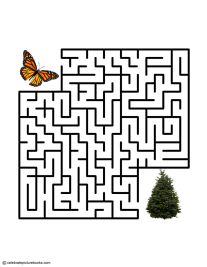
CPB - Monarch Maze

Monarch Migration Maze

The monarch needs help finding her way to the green forest. Print out the Monarch Migration Maze and show her the way! 

February 4 – Homemade Soup Day


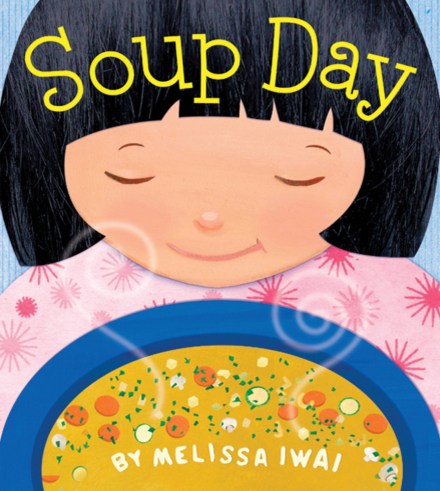
celebrate-picture-books-picture-book-review-soup-day-cover

About the Holiday

On a cold February day (or even a warm one if you live in a southern climate!), there’s nothing more satisfying than a steaming-hot bowl of your favorite soup! While there are many tasty canned soups, in honor of today you may want to try creating your own concoction. Why not check out recipes from your heritage, geographic location, or even your favorite book? Bon appétit!

Soup Day

By Melissa Iwai


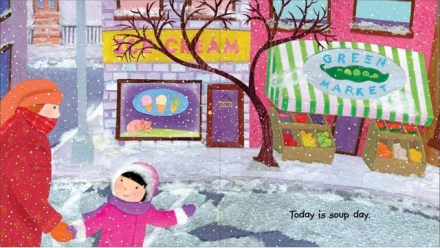
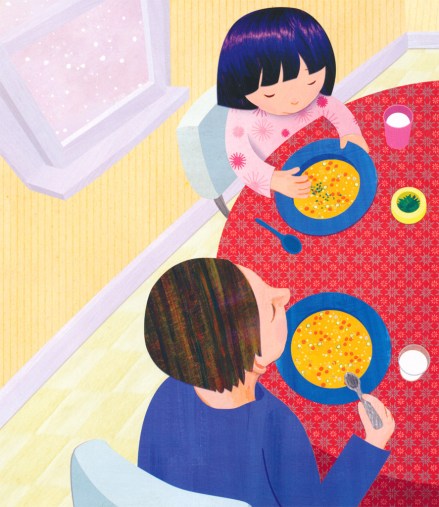
This is the perfect book for a cold winter day that celebrates the warmth and deliciousness of soup! In author-illustrator Melissa Iwai’s delightful book, the white flakes are falling and the sidewalks are piled high with snow as a little girl and her mother make their way to the market to buy ingredients for their homemade soup. At the store they fill their basket with celery, potatoes, mushrooms, carrots, onions, and more.

celebrate-picture-books-picture-book-review-soup-day-today-2

Copyright Melissa Iwai, courtesy of us.macmillan.com

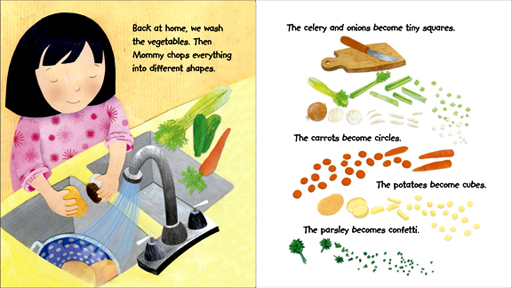
Back at home the little girl and her mom chop the vegetables, put the ingredients in a pot, and simmer the soup until its steamy. While they wait they play games and read together. Later the girl and her mother add spices and alphabet pasta to the bubbling soup. When Daddy comes home they enjoy the delicious meal.

celebrate-picture-books-picture-book-review-soup-day-cutting-veggies

Copyright Melissa Iwai, courtesy of us.macmillan.com

Smoothly integrated into the story are lessons in counting and shapes, which makes the book one that would be fun to replicate with older children—in fact there is a recipe for soup on the last page!

celebrate-picture-books-picture-book-review-soup-day-eating-soup

Copyright Melissa Iwai, courtesy of us.macmillan.com

Iwai’s bold, vivid images are tantalizing. As you turn through the pages you can almost taste the fresh vegetables and wish you could grab some of that produce for yourself. The sweet expressions of the girl and her mother show how much they enjoy spending time together making this special meal.

Ages 2 – 6

Henry Holt, Christy Ottaviano Books, New York, 2010 | ISBN 978-0805090048

Homemade Soup Day Activity

Make Silly Soup


You can create Silly Soup from anything but the kitchen sink in the kitchen sink! Just gather a bunch of fun “ingredients” and stir them together to make soup fit for a…monster? Ogre? Fairy? Your favorite stuffed animal? Who would you like to feed?

Note for Parents: This can be a fun way to teach your child about different foods and kitchen tools. Let your child see and smell different spices as they add them to their soup. Explain the different shapes of pasta. You can even teach about color by combining food colorings to see what happens. Add a science-based experiment by letting your child watch what happens to butter, sugar, or salt when they are placed in warm water.

When all the ingredients are added, use a variety of kitchen tools to stir it up! Show your child a big serving spoon, slotted spoon, whisk, spatula, ladle, teaspoons, and whatever other tool they may like to use.

*Remember, Silly Soup is just for making, not for eating!

Supplies

  • Big pot or bowl
  • Food coloring
  • Sprinkles
  • Glitter
  • Spices
  • Small pasta pieces
  • Butter
  • Sugar
  • Anything of your choice

Directions

  1. Add water to pot or bowl
  2. Add ingredients
  3. Stir
  4. Make up a story about who will eat your soup!