March 6 – Dentist’s Day

Just Going to the Dentist by Mercer Mayer Picture Book Review

About the Holiday

Most of us visit our dentist twice a year, but amid all the whirring and brushing and spitting do we thank them for keeping our teeth healthy? March 6 is recognized world-wide as a time to remember all the things dentists do to make our teeth stronger and our smile prettier.

Just Going to the Dentist

By Mercer Mayer


Little Critter needs to go to the dentist even though he doesn’t think he does. In the office the nurse gives Little Critter a big smile (he thinks she’s showing off her teeth) and asks him and his mom to wait. Little Critter sees a girl with braces and thinks they’re so neat that he wants some. While he waits, he plays with the toys and reads a book.

When the nurse calls Little Critter’s name, he goes off with her somewhat bravely to a room that looks like the inside of a spaceship, with its lights, monitors, tools, and the funny dentist chair. The hygienist cleans his teeth, which leads to the best part of the visit—spitting into the sink. After Little Critter’s X-rays are taken, the dentist examines his teeth. The dentist tells him he has one cavity. Little Critter gets a shot to numb his mouth, and before he knows it the cavity is filled!

Little Critter leaves the office with a free gift and, tuckered out from his adventure. sleeps on the ride home.

Mercer Mayer’s Little Critter books are an excellent way to introduce children to the people and places that may at first seem scary or intimidating. Told from Little Critter’s point of view, this book can be comforting to children who may be wary of visiting the dentist as he voices opinions and questions that most kids probably have themselves. By giving Little Critter and his frog companion humorous comments and facial expressions, Mayer hits just the right tone.

Ages 3 – 7

Random House Books for Young Readers, New York, 2001 | ISBN 978-0307125835

Dentist’s Day Activity

CPB - Dentist's Day Word Search (2)

Smile for the Dentist Word Search


Dentists make our smile brighter with regular checkups and good advice. Can you find the words that help our teeth stay healthy? Have fun with this Smile for the Dentist Word Search! Solution included.

February 26 – National Tell a Fairy Tale Day

CPB - There's a Wolf at the Door

About the Holiday

Today we celebrate the long tradition of oral and written stories that have captivated both children and adults since earliest times. While many of the fairy tales we love began as lessons in good manners or avoiding danger, they have remained popular and a part of our culture that we pass down to children through the generations. These tales stand up to traditional treatments as well as variations that turn the familiar plots on their heads.

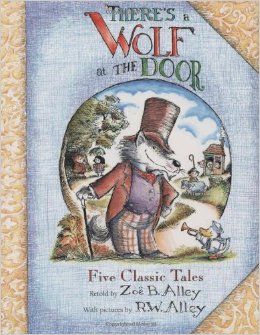
There’s a Wolf at the Door: Five Classic Tales

Retold by Zoë B. Alley | Illustrated by R.W. Alley


There are big books of fairy tales and then there’s There’s a Wolf at the Door! In this oversized graphic-novel style picture book, that big, bad wolf who is so familiar in children’s stories follows his nose and his hungry stomach through 5 classic tales.

In “The Three Little Pigs,” the wolf starts out with much confidence and bluster. He huffs and he puffs, but in the end he’s outsmarted by the third little pig. In quite a fright he follows the sign to “Greener Pastures” where he finds Barry, a shepherd boy with an unfortunate aversion to boredom. The wolf suddenly finds himself accused of eating sheep, but quickly realizes he can turn the boy’s foolish cries to his advantage. He doesn’t count on the crafty sheep, however, who thwart the wolf’s plans while their shepherd runs around in circles, screaming.

The wolf finds his escape on a path through the woods marked “To Granny’s House.” On the path he meets up with Rhonda, a fashionista who loves red clothing and appreciates her strange companion’s sense of style. While they walk toward Granny’s house together, discussing coats, hats, and flowers for Rhonda’s hair, the wolf gives Rhonda the slip and runs a frightened Granny out the back door. Rhonda scares him off with a well-aimed red shoe and a grab at Granny’s stolen nightgown. Not wanting to appear so naked, the wolf pulls the white wooly rug around his shoulders and hightails it to a peaceful meadow.

Here a family out for a picnic discovers him napping. The little girl mistakes him for a poodle, but her mother believes he is a sheep. When he tries to menace them with a display of fierceness, the unimpressed family simply calls him rude and wanders off to find another picnic spot. Who does he spy a short distance away, but Barry the shepherd and his sheep. Disguised under his rug, the wolf creeps up on the flock, who are not fooled. This time as Barry runs away, the sheep use his crook to toss the wolf around.

As the wolf catches his breath by the river, he receives a package from Rhonda, who has learned to be kind and considerate from her experience with the wolf. Inside, he discovers a new outfit, and he is once again restored to his dapper self. Hearing that the nearby house is full of unattended goslings, the wolf devises a plan to capture them and take them home for dinner. While these goslings may be rambunctious and disobedient to their brother Alphonse, when threatened they work together to foil their pesky visitor.

In the end the wolf decides that perhaps he’s better off as a vegetarian and readers leave him contemplating a shortcut through the woods to Farmer McGregor’s Garden.

Using clever inside jokes, humorous asides, sassy heroines and heroes, and a woebegone wolf out of his depth, the husband and wife team of Zoë B. Alley and R.W. Alley have transformed these well-known classics into unique, rib-tickling stories for a new generation. The comic strip style drawings fit the droll tone of the tales perfectly and are full of details kids will love to point out. While older children will enjoy reading this book on their own,There’s a Wolf at the Door also makes for an exciting read-aloud storytime.

Ages 4 – 8

Roaring Brook Press, 2008 | ISBN 978-1596432758

National Tell a Fairy Tale Day Activity

CPB - Fairy Tale box

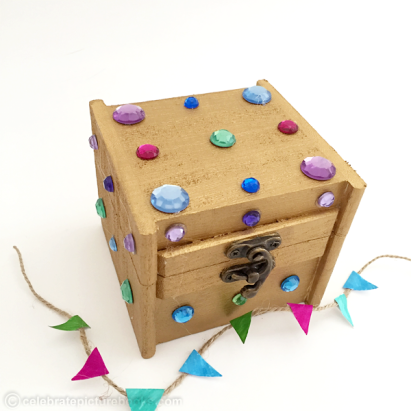
Treasure Box of Imagination

Whether it’s gold, silver, jewels, pirate loot, or just bits of nature or knick-knacks, our favorite things are our treasures and fuel our imaginations. For Fairy Tale Day make your own Treasure Box

Supplies

  • 1 small wooden box, available at craft stores
  • Gold acrylic craft paint
  • Craft gems
  • Paint brush
  • Hot glue gun or strong glue

Directions

  1. Paint your wooden box with the gold paint
  2. Let the box dry
  3. Decorate your Treasure Box of Imagination with gems

February 23 – National Dog Biscuit Day

CPB - Dog Biscuit

About the Holiday

People have holidays celebrating their favorite treats—like Cherry Pie Day and Chocolate Chip Cookie Day—so dogs should have a food holiday of their own, right? Well, today is it! Today we remember that our best furry friends like to be rewarded with a special treat or just shown a little extra love with a tasty morsel.

Before anyone thought about what dogs ate, dog “treats” included some pretty awful stuff—moldy bread, rotten leftovers…but an American named James Spratt was struck by an idea when he saw stray, hungry dogs looking for food on one of his travels in England in the 1800s. He created the first dog biscuit, which was more like cake, made of fresh ingredients such as meat, grain, and vegetables. The first commercial dog biscuit was developed in 1908 by the F. H. Bennett Biscuit Co. It was hard and made with meat products, milk, and important minerals.

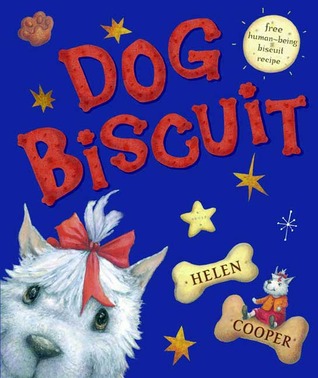
Dog Biscuit

By Helen Cooper


In Helen Cooper’s delightfully evocative Dog Biscuit, Bridget can’t resist eating a treat from the enticing bag she finds in Mrs. Blair’s shed. The biscuit looks like a people cookie; it even tastes good—salty and sweet—but really it’s meant for a dog, not a little girl! Mrs. Blair shakes her head when she recognizes the crumbs around Bridget’s mouth and teases that now Bridget will turn into a dog. As children often do with adults’ jokes, Bridget takes this notion literally, setting in motion a day-long flight of fancy—with a bit of trepidation.

Bridget’s imagination runs as wild as a pack of dogs—does that itch behind her ears mean they’re growing? How is it possible she’s wagging goodbye? And did Mrs. Blair’s dog really just say it used to be a real boy? She begins to regret eating that biscuit but is determined not to tell her mother, especially since she doesn’t seem to notice any difference in her daughter.

As she and her mother walk home from Mrs. Blair’s, Bridget suddenly finds herself awakened to a new world. She identifies with every dog she meets, savors the aroma of the butcher shop, and forgets her people manners at the dinner table. Still, her mother doesn’t notice. Before finally curling up and falling asleep, Bridget again wishes she hadn’t eaten that biscuit.

In sleep Bridget unleashes her full imagination, romping with a pack of new friends through familiar sites now transformed into a mystical doggy paradise that makes her very glad she ate that biscuit—that is until she thinks of her family and howls. At last her mom, who was indeed aware of her daughter’s turmoil, can comfort her. In her mother’s arms Bridget reveals her fears and allows herself to be reassured.

The next day Bridget visits Mrs. Blair, who explains that she was joking and apologizes for worrying her. Over tea and “human being treats” Bridget happily leaves puppyhood behind.

Author-illustrator Helen Cooper beautifully captures Bridget’s imagination, turmoil, and joyous abandon through her vibrant illustrations that are awash in color, swirling lines, clever details, and the use of various type sizes and fonts. Wide-eyed Bridget, her family, Mrs. Blair, and the many dogs that populate this book are exquisitely drawn. Kids will love sniffing out the hidden dogs on every page.

A recipe for Human-Being Treats is included.

Ages 4 – 8

Farrar Straus and Giroux, New York, 2009 | ISBN 978-0374318123

National Dog Biscuit Day Activity

CPB - Dog Biscuits

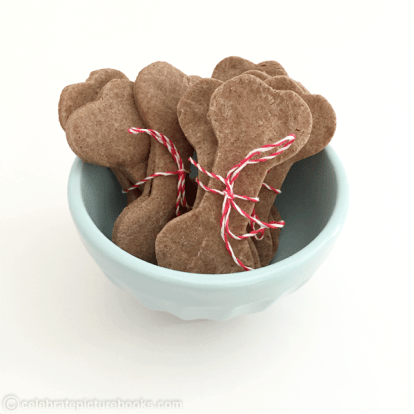
Homemade Dog Treats

Making homemade dog biscuits is a fun way to spend time together and benefit furry friends. These biscuits make tasty treats for your own pet or consider making a batch to donate to your local animal shelter. This recipe is easy and proven to be a favorite.

Children should get help from an adult when using the oven.

Supplies:

  • 1 large bowl
  • Large spoon or whisk
  • Cookie cutters – shaped like traditional dog biscuits or any favorite shape

Ingredients

  • 3 cups Buckwheat flour
  • ½ cup powdered milk
  • 1 teaspoon salt
  • ¾ cup water
  • 1/3 cup margarine or butter, melted
  • 1 egg beaten

Directions

  1. Preheat oven to 325 degrees
  2. Add buckwheat flour to bowl
  3. Add powdered milk to bowl
  4. Add salt to bowl
  5. Stir to mix dry ingredients
  6. Add water
  7. Add melted margarine or butter
  8. Add egg
  9. Stir until liquid is absorbed
  10. Knead for a few minutes to form a dough
  11. If the dough is too dry, add a little more water, 1 Tablespoon at a time
  12. Place the dough on a board
  13. Roll dough to ½ inch thickness
  14. Cut into shapes with cookie cutters
  15. Bake at 325 degrees for 35 minutes
  16. Biscuits will be hard when cool.

Makes about 40 biscuits

February 20 – National Cherry Pie Day

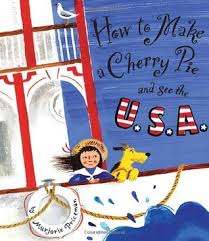
How to Make a Cherry Pie and See the U.S.A. picture book review

About the Holiday

Today we celebrate a most delicious day! It’s hard not to love pie with its flaky crust and sweet filling. Pies have been served since ancient days, originating with the Romans who, like our own English and American ancestors, discarded the crust before eating it (didn’t they know what they were missing?).

Here are a few rather surprising facts about pie

  • Early pies were mostly made of meat, poultry in particular. The legs of the bird were often left to hang over the side of the dish and used as handles (is this what’s called “getting a leg up”?).
  • Fruit pies probably originated in England in the 1500s.
  • We have the bakers for Queen Elizabeth I to thanks for the first cherry pie.
  • Pie was introduced to America by the first English settlers. It was baked in long narrow pans that the settlers called “coffyns” after pie crusts in their native country.
  • During the American Revolution the term coffyn was changed to “crust” (“Those pesky Redcoats! We don’t want our words to be like theirs!”)

To celebrate today’s holiday, enjoy a slice of cherry pie, read this book, and have fun with the puzzle!

How to Make a Cherry Pie and See the U.S.A.

By Marjorie Priceman


In this clever recipe/travelogue combination, Marjorie Priceman takes children on a tour of the United States as they gather the materials to make the tools needed to bake a cherry pie. Sure, it’s easy to buy the bowls, spoons, pie pan, baking sheet, pot holders, and other items required, but where do these things really come from?

With each page kids will vicariously travel across the country with the young baker as she visits Pennsylvania and Ohio for coal to make baking sheets, Mississippi for the cotton needed to sew pot holders, New Mexico for potting clay, and Washington, Hawaii, New Hampshire, Texas, and other states in her pursuit of materials. Along the way, they will learn fun facts about the states and what makes each one special.

The girl joins people playing and working at all kinds of job as she journeys by boat, plane, car, and bus in Priceman’s vibrant and engaging illustrations. Each state is depicted with its unique characteristics, and Priceman has included so many details that kids will love lingering over each page. Curious kids may want to explore more about the subjects they discover in this creative picture book.

Ages 5 – 8

Dragonfly Books, 2013 | ISBN 978-0385752930

Cherry Pie Day Activity

CPB - Cherry Pie Match

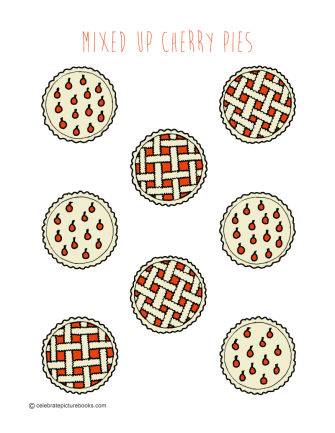
Mixed Up Cherry Pies Matching Game

You baked 8 cherry pies for the Cherry Pie Day Festival – 2 of each crust pattern. But they got mixed up! Can you connect the matching cherry pies? Print the Mixed Up Cherry Pies Matching Game Template and draw a line between the matching pies. 

February 17 – Random Acts of Kindness Day

celebrate-picture-books-picture-book-review-ordinary-mary's-extraordinary-deed-covers

About the Holiday

Random Acts of Kindness Day originated in New Zealand, where the holiday is celebrated nation wide every September 1st. In the U.S. the popularity of this day continues to grow, as people discover the pleasure of doing nice things for friends and strangers alike. Connecting with others and paying forward kind deeds can be infectious, making the world a better place for all!

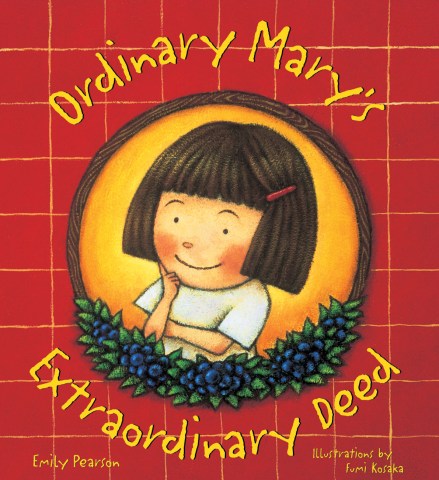
Ordinary Mary’s Extraordinary Deed

Written by Emily Pearson | Illustrated by Fumi Kosaka

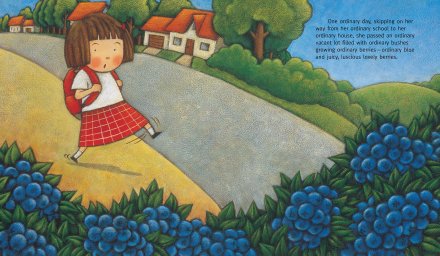
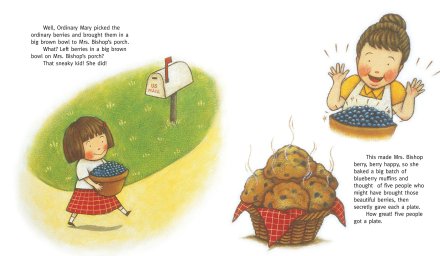
One day an ordinary girl named Mary begins her ordinary day. On her way home she spies ordinary blueberries in a field and picks them. She knows Mrs. Bishop would like them, so Mary leaves them in an ordinary bowl on her porch. Mrs. Bishop is so happy with the berries that she uses them to make blueberry muffins. But who gave her the blueberries? Mrs. Bishop can think of five people who might have, and she divides the muffins between them.

celebrate-picture-books-picture-book-review-Ordinary-Mary's-Extraordinary-Day-blueberries

Image copyright Fumi Kosaka, 2002, text copyright Emily Pearson, 2002. Courtesy of Gibbs Smith.

One of the five is Mrs. Bishop’s paperboy. He is so delighted with the muffins that he kindly hand delivers the newspapers to the next five people on his route. One of these is Mr. Stevens, who is so happy he spends the next 10 hours smiling on an airplane and helps five people lift heavy bags.

celebrate-picture-books-picture-book-review-Ordinary-Mary's-Extraordinary-Day-mrs-bishop

Image copyright Fumi Kosaka, 2002, text copyright Emily Pearson, 2002. Courtesy of Gibbs Smith.

One of these is Maria, who later does nice things for five other people. One of these cheers up the next five people she sees, who in turn brightens the day of five people. By now these random acts of kindness have spread through town and farther. People everywhere are watching out for others, being generous, smiling, becoming friends, and more! And in a surprising happenchance, ordinary Mary’s original act of kindness comes back to her!

celebrate-picture-books-picture-book-review-Ordinary-Mary's-Extraordinary-Day-joseph

Image copyright Fumi Kosaka, 2002, text copyright Emily Pearson, 2002. Courtesy of Gibbs Smith.

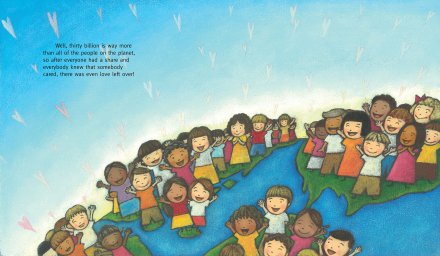
What Mary doesn’t know, though, is that her extraordinary deed actually changes the whole world for the better—because each person touched by kindness shares it with five others, who share it with five more until the one act of leaving blueberries on Mrs. Bishop’s porch multiplies to 6 billion other people!

celebrate-picture-books-picture-book-review-Ordinary-Mary's-Extraordinary-Day-world

Image copyright Fumi Kosaka, 2002, text copyright Emily Pearson, 2002. Courtesy of Gibbs Smith.

Emily Pearson’s story is a delightful tale of how one person can make a positive difference in the lives of others. The thread of simple deeds shared from one character to the next demonstrates to young and old alike how just a smile, a compliment, or an unexpected act can transform another person’s day and even the way they view themselves and the world. This is a perfect book for spurring random acts of kindness, and its straightforward treatment of the way random acts build on each other makes it a great reminder for all ages.

Fumi Kosaka has populated Mary’s world and beyond with people whose wide smiles and twinkling eyes make you want to share the excitement of giving right along with them. Her simple, colorful drawings focus on the people affected and highlight the simple acts that bring them so much pleasure.

Ages 4 and up

Gibbs Smith Publishers, Reprint edition, 2017 | ISBN 978-1423648871 Paperback

Random Acts of Kindness Day Activity

CPB - Random Acts of Kindness cards

Random Acts of Kindness Cards to Share

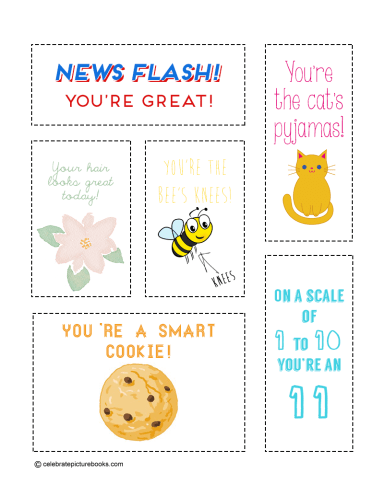
It’s fun to surprise someone with an unexpected gift or compliment! It makes the other person and you feel happier! Here are some printable Random Acts of Kindness Cards that you can give to anyone you meet today—or any day. If you’d like to write your own, here is a set of Blank Cards. You can give one to your teacher, librarian, favorite store clerk, your postal worker, your neighbors and friends, the person next to you on the bus or train. Or why not brighten someone’s day by leaving a note where they might find it—in a book at the library or bookstore, in a friend’s lunchbox, in your mailbox, on a store shelf, or anywhere you go!

Picture Book Review

February 13 – World Radio Day

CPB - Radio Man

About the Holiday

The radio has provided entertainment, news, comfort, and information and has united people both near and far ever since Guglielmo Marconi invented  it in 1895. Today, radio continues to be an important part of people’s lives around the world. February 13 was established as World Radio Day “to celebrate radio as a medium, improve international cooperation among broadcasters, and to encourage both major networks and community radio to promote access to information, freedom of expression and gender equality across the airwaves.” This year’s UNESCO theme is “Radio in times of emergency and disaster” and highlights the crucial role of radio and its journalists in times of crisis.

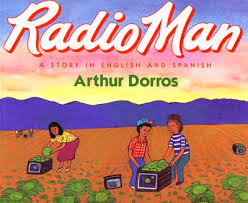
Radio Man

By Arthur Dorros | Translated by Sandra Marulanda Dorros


“Radio man” is Diego, a boy in a family of migrant workers who pick fruit and vegetables from the Southwest to as far north as Washington state. Although his family moves frequently, Diego has close relationships with his parents, sister, grandparents, cousins, and especially a friend named David.

Throughout the story, as his family moves from town to town searching for work, Diego listens to the radio. Stations broadcasting in both English and Spanish keep the family company, and Diego measures the distance of upcoming towns along their route by the clarity of the DJs’ voices. The radio also provides entertainment for end-of-picking season parties among the workers and serves as a catalyst for the grandfather’s stories of growing up in Mexico.

While Diego’s family is close-knit, their nomadic lifestyle separates Diego from his best friend, David, who is also the son of migrant workers. As the story begins Diego and David are leaving Texas and know they won’t see each other for a while. As Diego travels to different towns, going to school during the day and picking crops in the afternoon, he meets up with his cousins and other friends, but he never finds David. Finally, in Sunnyside, Washington Station KMPO allows people to send messages to others. Diego calls in and sends a message: “Hello, David! This is Diego. Are you here?”

And David, listening to his own radio, is there! Seeing David’s smile, children will identify with the pleasure that communicating with friends brings.

Each page of Radio Man is presented in English and Spanish, translated by Sandra Marulanda Dorros. The landscape and farms of the American southwest, the festive celebrations, the reality of driving from town to town, and the tight relationships among family members are all vividly illustrated by Arthur Dorros, giving children a glimpse into the life of migrant workers as well as the heart of friendship.

Ages 4 – 8

Trophy Picture Books, 1997 | ISBN 978-0064434829

World Radio Day Activity
CPB - Radio Man box radios from side

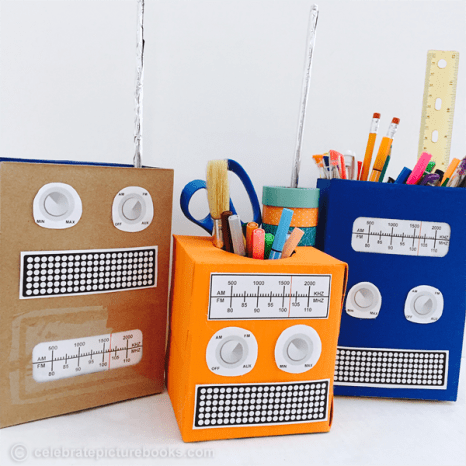
Box Radio Desk Organizer

With a recycled box and the provided printable templates  you can make a desk organizer that looks like a radio with this fun craft!

Supplies

  • Cardboard box – Use an empty cube-shaped tissue box, pasta box, or any small box
  • Wooden chopstick
  • Printable Radio Face Template
  • Aluminum foil
  • Glue – a hot-glue gun works well on the cardboard; regular glue for the buttons and tape for the station tuner window
  • Paint – any color you like
  • Paint brush
  • Scissors

Directions

1. Prepare the box:

  • Choose a box to be your radio. In the pictures I used a cube-shaped tissue box and a penne pasta box with a cellophane window in it.
  • If you are using a box without an opening in the top, cut the top or bottom flaps off of one end of the box, depending on where you want the station tuner window to go.

2. Paint the box:

  • You can paint the printed front, back and sides of the box.
  • OR if you want a plain box to use “as-is” or to paint: take the recycled box apart at the seams and turn it “inside out.”
  • If you are using a pasta box with a window in it, tape the stations tuner template to the cellophane window before gluing the seams
  • Glue the original seam and flaps (a hot-glue gun works well). Let the glue dry. Then paint.

3. Let the box dry

4. Cut out the radio dials, speaker, and stations tuner window

5. Glue the parts of the radio to the box 

6. To make the antenna, wrap the wooden chopstick in a strip of aluminum foil: lay the stick on the foil and fold a foil flap (about 1 inch long) over each end of the stick. Roll the foil around the stick and press gently to close seam.

7. Attach the antenna to your box:

  • For pasta boxes tape the antenna to the inside corner of the box
  • For cube tissue boxes, make a hole in the right hand corner and push antenna in

8. Use your Radio Desk Organizer to hold pencils, rulers, bookmarks, anything!

February 10 – Library Lovers Day

CPB - Jumping Off Library Shelves

About the Holiday

Today I’ve chosen to celebrate a month-long holiday. February is Library Lovers Month! Chances are if you’re reading this, you also love libraries! For readers there’s no better place than standing in the stacks, surrounded on all sides by shelves and shelves of books. In those pages you meet new friends, defeat the bad guys, discover poetry, laugh, sometimes cry, see astonishing art, find new hobbies, and learn fascinating facts about…wow! Anything and everything!

What’s your favorite library or thing about libraries? Mine is the East Lyme Public Library in Connecticut, where they have a fantastic selection of books and awesome librarians who feel like family! Tell me about your special library in the Comments section below.

Jumping Off Library Shelves: A Book of Poems

Poems selected by Lee Bennett Hopkins | Illustrated by Jane Manning


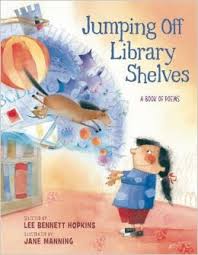
From morning, which “pours spoons of sun through tall windows” of a library in Rebecca Kai Dotlich’s poem “Breakfast between the Shelves,” to night, when shadowed mice huddle to read a mystery in Dotlich’s closing poem “Midnight in a Library,” kids can enjoy a full day of poems in this delightful collection. Many of today’s best-loved poets for children are represented here, celebrating the power of a library card, the kindness of librarians, and the enchantment of reading.

Jane Manning’s soft, dreamy illustrations swirl with imagination, shimmer with the warm glow of a reading nook, and enchant with the smiles of children thrilled with the pleasures of reading.

Library Lovers Day Activity

CPB - Bookworm Book (2)


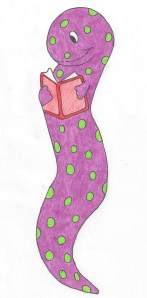
Bookworm Bookmark

For all you bookworms out there who love to read, here’s your very own Bookworm Bookmark to color and put between the pages of your favorite story!

Supplies

Directions

  1. Print out the Bookworm Bookmark template
  2. Color the bookworm
  3. Cut out the Bookworm
  4. Cut the Bookworm’s mouth at the dotted line. The top part of the bookworm’s mouth hangs over the page and marks your place!