February 5 – National Weatherperson’s Day

celebrate-picture-books-picture-book-review-when-the-wind-blows-cover

About the Holiday

When you flip on the weather report in the morning, do you ever wonder who the first weather reporter was? Well, In America that honor may well go to native Bostonian John Jeffries, who was born on this date in 1745 and who in 1774 began measuring the weather and making others aware of its importance. In 1784 he became the first to gather weather information during a hot-air balloon flight over London. If meteorological science is your thing, enjoy this day—and this poem by an anonymous British poet:

Whether the weather be fine
Or whether the weather be not,
Whether the weather be cold
Or whether the weather be hot,
We’ll weather the weather
Whatever the weather,
Whether we like it or not.

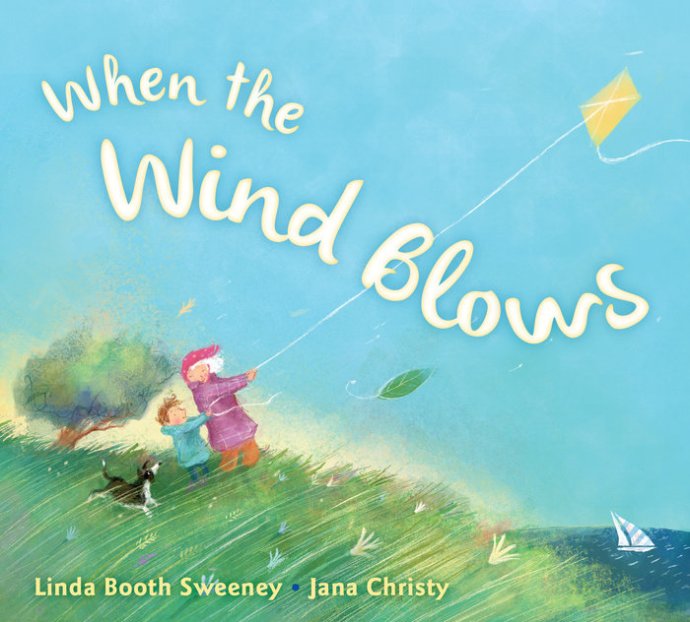
When the Wind Blows

Written by Linda Booth Sweeney | Illustrated by Jana Christy


A little boy peeks out of his rattling window as the wind sends chimes ringing and doors creeaaaking. Jumbled into their jackets the boy’s mom, baby sister, and grandmother go out to enjoy the day. They fly a kite while nearby bells clang and walkers stroll hand in hand. In the sweeping wind “Trees dance. / Spiders curl. / Mice shiver. / Leaves swirl.”

celebrate-picture-books-picture-book-review-when-the-wind-blows-chase

Image copyright Jana Christy, text copyright Linda Booth Sweeney. Courtesy of G. P. Putnam Sons

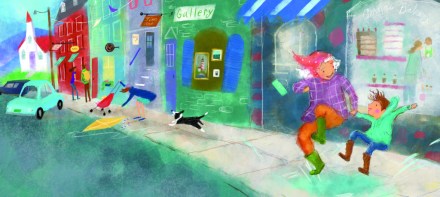
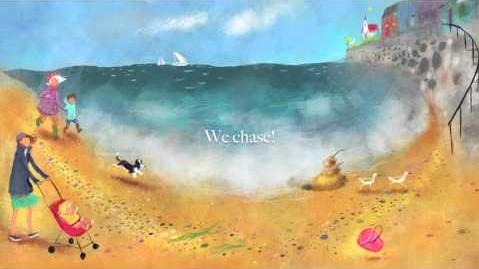
When the wind snatches the kite, the boy and his grandma chase after it amid clouds racing across the sky and seeds scattering to and fro. Running after the kite through waving beach grass, the family sees “Sails puff. / Boats wobble. / Gulls float. / buoys bobble.” Their pursuit takes them into town where they track down their kite lying on a sidewalk. When the wind blows on these narrow seaside village lanes, “Signs shake. / Lights jiggle. / Puddles splosh. / We giggle.”

With the kite safely in hand the foursome ventures to the park for some rolling, swaying, whirling play. But the day is graying—“Skies darken. / Thunder BOOMS. / Rain falls. / We zoom!” Back at home all is cozy as the family dries off and the little boy takes a bath. Tucked into bed the little boy and his mom cuddle while their pets curl up on the blankets. As they sleep, “Skies clear. / Stars gleam. / Earth sleeps. / We dream.”

celebrate-picture-books-picture-book-review-when-the-wind-blows-city

Image copyright Jana Christy, courtesy of G. P. Putnam Sons

Linda Booth Sweeney’s charming tale of a day spent in the midst of a windy day perfectly captures the sights and sounds of such a gusty natural event. Sweeney’s eye for detail and talent for evocative verbs elevate the two-word lines in these short verses, letting readers fully experience the effects of a wild squall. Kids will appreciate the original imagery and love repeating the lyrical lines.

The blustery wind is evident in Jana Christy’s vibrant pastel illustrations, where clouds swirl in scribbles, flowers bow, and buffeted grasses protect small creatures. Everywhere, the wind flutters head scarves and clothing, bends signs, and tears hats and kites from unsuspecting hands. As rain approaches Christy’s skies acquire a gray, gauzy texture, and when the family again reaches home, the colors turn warm and bright, as comforting as a cup of tea or hot chocolate. Readers will be rewarded for lingering over the beautiful pages by seeing details and people carried over from page to page, uniting the story.

Ages 3 – 6

G. P. Putnam’s Sons, Penguin Group, 2015 | ISBN 978-0399160158

Meet Linda Booth Sweeney and find fun activities to extend the fun of When the Wind Blows on her Children’s Books website. You can find detailed information as well as videos, podcasts, and activities about her Systems work on lindaboothsweeney.net.

Learn more about Jana Christy and view galleries of her children’s books and illustration and sculpture work on her website.

Watch this windblown book trailer by animator Xin Xin and Linda Booth Sweeney.

National Weatherperson’s Day Activity

CPB - Windsock

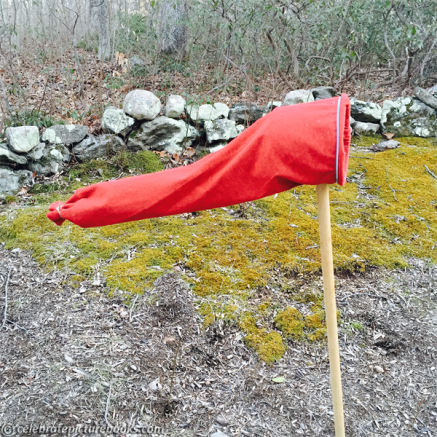
Catch the Wind! Windsock Craft


You can feel the wind in your hair and see it blowing through the trees, but can you actually catch it? You can with this easy-to-make windsock!

Supplies

  • 1 large yogurt container (32 oz) or 1-pound deli salad container
  • 1 long-sleeve T-shirt
  • Strong glue
  • Dowel, 5/8 diameter x 48-inches long or longer
  • String
  • Rubber band
  • sewing seam ripper or cuticle scissors
  • X-acto knife
  • Scissors

Directions

  1. Remove the sleeve from a long-sleeve t-shirt with the seam ripper or cuticle scissors
  2. Cut the shoulder off the sleeve by cutting straight across from the underarm seam
  3. Cut 2 inches from the bottom of the yogurt container OR cut the bottom out of the deli container with the x-acto knife or scissors
  4. With the x-acto knife or scissors, make a hole a little smaller than the diameter of the dowel about 1 inch from the rim of the container
  5. Slide the container into the large opening of the sleeve
  6. Fold about a ¾ -inch edge over the rim of the container and attach all along the rim with strong glue
  7. Put the rubber band around the outside edge of the opening
  8. Tie the bottom of the sleeve’s cuff together with the string
  9. To attach the dowel: Option 1: leaving the t-shirt in place, push the dowel and material through the hole in the container. The t-shirt material will hold the dowel in place (I used this option).  Option 2: cut a small hole in the t-shirt at the location of the hole in the container. Push the dowel through this hole and the hole in the container. Secure with strong glue
  10. Stick your windsock in the ground in an open area where it can catch the wind. As the wind changes direction, you can turn your windsock so the opening faces the wind.

Picture Book Review

January 23 – National Pie Day

celebrate-picture-books-picture-book-review-edgar-allan-poe's-apple-pie-cover

About the Holiday

National Pie day is perfect for…well…pie! Whether you love fruity pies or meat pies, pies with lattice tops or crumble crusts this day is for you! There’s only one true way to celebrate—make or buy your favorite kind of pie and enjoy! 

Edgar Allan Poe’s Pie: Math Puzzlers in Classic Poems

Written by J. Patrick Lewis | Illustrated by Michael Slack


There’s something about poetry with its iambic pentameters, feet, meter, sonnets, couplets, and more countable qualities that just seems to lend itself to math. J. Patrick Lewis must have thought so too because he penned a clever volume of poems inspired by well-known verses. First up is Edgar Allan Poe’s Apple Pie, which is inspired by “The Raven” and begins: “Once upon a midnight rotten, / Cold, and rainy, I’d forgotten / All about the apple pie / Still cooling from the hour before.” But now, even though there is a “knocking, knocking…” at the door, the narrator takes up a knife and slices the night with a cutting question, only to hear the stranger’s mysterious clue “‘Never four!’”

celebrate-picture-books-picture-book-review-edgar-allan-poe's-apple-pie-hotdog

Image copyright Michael Slack, text copyright J. Patrick Lewis. Courtesty slackart.com

All the narrator of Emily Dickenson’s Telephone Book, inspired by “My Life Closed Twice Before its Close,” wants to do after napping is to find a certain phone number in her directory, but where is it? She knew where it was before she went to bed—in fact its “two opposing pages / that added up to 113— / Were smudged around the edges—” but now she’s so confused…. Can you help?

Those who think that “Stopping by Woods on a Snowy Evening” has no link to underwear possibly are not aware of Robert Frost’s Boxer Shorts, in which the lilt and the rhythm of the original are perfectly matched in a priceless, pricey puzzle that ends “My tightie whities look so sad. / My tightie whities look so sad.” How can you resist?

celebrate-picture-books-picture-book-review-edgar-allan-poe's-apple-pie-hippo

Image copyright Michael Slack, text copyright J. Patrick Lewis. Courtesty slackart.com

You may know about William Carlos Williams’s red wheelbarrow and where it stood, but what if that handy implement was replaced by a… “fifteen-inch square pizza” that is missing “nineteen and a half pieces”?! Well, there may not be any rainwater glaze, but it sure does make for a delicious arithmetic conundrum in William Carlos Williams’s Pizza.

You’re eating up these poems, aren’t you? Well, next come three poems in which termites, sharks, and a “hippo-po-tah-tum” do a bit of nibbling of their own. The fun multiplies in Ogden Nash’s Buggy Rugs, where 313 little wood chompers hide; in John Ciardi’s Shark Dentist, in which you’ll want to brace yourself for the ending; and in Shel Silverstein’s Hippo-po-tah-tum, which is fractionally frightening.

These seven poems are added to seven more, plus two pages full of “prose about the poets,” to equal one smart, tantalizing poetic brainteaser of a book!

celebrate-picture-books-picture-book-review-edgar-allan-poe's-apple-pie-shark

Image copyright Michael Slack, text copyright J. Patrick Lewis. Courtesty slackart.com

Patrick Lewis, who served as the US Children’s Poet Lauriat from 2011 to 2013, has honored 16 of the world’s most beloved poets the way kids love best—with humor. Adapting the original poem’s rhythm, rhyme scheme, and length with a dash of the ridiculous and a dose of numerical heft, Lewis has created poems that will have kids giggling while they ponder the answers to the lyrical math problems the verses pose. While arithmetic aficionados will gobble these poems up, there’s plenty for language arts lovers to sink their teeth into too. Each witty poem just begs to be compared to the original, which would make for a fun afternoon at home or lesson in the classroom. Admit it—aren’t you just the tiniest bit curious what Edward Lear’s “There was an Old Man with a Beard” has to do with an 80-foot hotdog?

celebrate-picture-books-picture-book-review-edgar-allan-poe's-pie-train

Image copyright Michael Slack Lewis, courtesty slackart.com

Michael Slack gets things off and running on the first spread, where a sharp-taloned blackbird stands over a knife that’s plunged into the center of a pie. While readers of Walt Whitman’s Web-Covered Shoe may wonder exactly how long the boot has been untouched, they’ll be more distracted by the number of eyes on two very fierce-looking spiders. And there may be nothing more diverting than the potbellied cowboy wearing only his tightie whities as he waits for his snowflake, flame, spaceship, and other uniquely decorated boxers to dry. Slack illustrates each poem with distinctive, vibrant images that ramp up the humor and give every page an individual look.

Answers to the math problems proposed are included with every poem, and brief biographies accompanied by tiny portraits, reveal information about the poets represented and their work.

Edgar Allan Poe’s Pie is a fantastic way to get kids interested in math and poetry. The brain ticklers, as well as the wonderful wordplay and illustrations, make this a book that should be on classroom shelves and would be welcome in home libraries too.

Ages 6 – 9

Houghton Mifflin Harcourt Books for Young Readers, 2015 (paperback) | ISBN 978-0544456129

To learn more about J. Patrick Lewis, his books, and resources for kids and teachers, visit his website!

View a gallery of books, illustration, and other art by Michael Slack on his website!

National Pie Day Activity

celebrate-picture-books-picture-book-review-cherry-pie-match

Mixed Up Cherry Pies Puzzle


Each winner of a poetry contest were supposed to get two identical pies, but they got mixed up! Can you find the matching pies in this printable Mixed Up Cherry Pies Puzzle and save the day?

Picture Book Review

January 9 – It’s International Creativity Month

celebrate-picture-books-picture-book-review-the-marvelous-thing-that-came-from-a-spring-cover

About the Holiday

There’s no better time than the beginning of the year to start letting your creative juices flow! Quick fixes or long-leisurely projects are all within your grasp! Want to repaint a room? Build a tree house in the spring? Learn some new recipes? Discover a new hobby? Start planning today how you will accomplish the inventive inspirations that swirl through your imagination.

The Marvelous Thing That Came from a Spring: The Accidental Invention of the Toy That Swept the Nation

By Gilbert Ford


In 1943, during World War II, the United States Navy asked one of their engineers, Richard James, to “invent a device that would keep fragile ship equipment from vibrating in choppy seas.” Richard tried all kinds of springs, but none worked just right. “One day a torsion spring fell from a shelf onto his desk, and “its coils took a walk…” This sparked Richard’s imagination. While Richard knew the spring wasn’t right for his Navy work, he recognized that it might be perfect for something else. But what?

celebrate-picture-books-picture-book-review-the-marvelous-thing-that-came-from-a-spring-spring-walks-spring-falls-off-shelf

Copyright Gilbert Ford, courtesy of simonandschuster.com

He took the spring home from work that day, showed it to his wife Betty, and gave it to his young son Tom. Tom took it to the top of the stairs and let it go. “The family watched in astonishment as it…walked all the way down!” They lost no time in realizing that this spring made a marvelous toy. But what to call it? “Betty thumbed through a dictionary for two days, underlining words. None really caught her fancy, until she came to ‘slinky,’ which means “‘graceful’ and ‘curvy in movement.’” It also “sounded like the swish and clink of the spring’s coils in motion.”

celebrate-picture-books-picture-book-review-the-marvelous-thing-that-came-from-a-spring-spring-walks-downstairs

Copyright Gilbert Ford, courtesy of simonandschuster.com

Richard and Betty thought they had a unique hit on their hands, so Richard went to the bank and borrowed five-hundred dollars to make 400 Slinkys. But while Richard and Betty loved their Slinky, toy store managers did not. Finally, Richard went to Gimbels, the big department store. The manager there didn’t see the merits of the Slinky either, but when Richard begged to be allowed to demonstrate it just once, he relented.

It was now November 1945 and the Christmas shoppers were out looking for stocking stuffers. Richard set up a ramp in the middle of the toy department and placed the Slinky at the top. He looked around for Betty, but she was nowhere to be seen. In fact, Betty was still at home worried that no one would like their toy. She was so concerned that she convinced a friend to “pose as an excited shopper” and buy one with the dollar Betty gave her. At Gimbels, however, time—and shoppers—were passing, so Richard let go of the Slinky. The astonished faces of the children and adults crowded around the ramp said it all. By the time Betty and her friend reached Gimbels, all 400 Slinkys had been sold—in only 90 minutes!

celebrate-picture-books-picture-book-review-the-marvelous-thing-that-came-from-a-spring-spring-walks-spring-richard-begs-gimbels

Copyright Gilbert Ford, courtesy of simonandschuster.com

With the end of the war that same year, troops returned home and a baby boom soon followed. “Demand for the Slinky skyrocketed.” Production needed to speed up, so Richard devised a “machine that could coil eighty feet of steel wire into a Slinky in ten seconds.” The Slinky business became a family business with Betty filling orders and doing the accounting while Richard made and delivered Slinkys. Pretty soon they needed a factory to satisfy demand. That demand still exists today as kids all over the world love the Slinky.

celebrate-picture-books-picture-book-review-the-marvelous-thing-that-came-from-a-spring-spring-walks-spring-at-gimbels

Copyright Gilbert Ford, courtesy of simonandschuster.com

An extended Author’s Note picks up the story of the Slinky where the text leaves off, revealing other creative ways the Slinky has been used and the fact that when Richard went to Bolivia in 1960 to do missionary work, Betty took over the business, relocated the factory to Hollidaysburg, Pennsylvania, and gave the toy a rebirth in popularity. More than 250 million Slinkys have been produced, and in 2001 Betty was inducted into the Toy Industry Hall of Fame.

Gilbert Ford’s Slinky-ography of the man and woman behind one of the world’s most beloved toys is a skip, jump, and bounce through the ingenious brainstorm that transposed a simple spring into a phenomenon. The down-to-earth details of how this invention came to be harken back to a simpler time but also reaffirm that even today there are dreamers sitting in homes across the world imagining the next big thing. Ford’s story is well paced, leading readers through the production process to experience cheerful surprise when the Slinkys sell out at Gimbels. Kids will appreciate the easy-going language that suits its subject perfectly and the emphasis on the teamwork of both Richard and Betty James that made the Slinky possible.

Ford’s illustrations are ingenious in themselves. Careful observation reveals that each page is not merely a drawing, but a 3D experience. As the front matter explains, the illustrations were drawn and colored then printed, assembled into dioramas that incorporate found objects and other popular toys of the period, such as dominoes, jacks, and pick-up sticks, and finally photographed. The effect drops readers into the middle of a 1940s home and department store, giving them a personal stake in the drama.

The Marvelous Thing That Came from a Spring is a fun book for would-be-inventors and kids interested in the history of objects they use and play with.

Ages 4 – 8

Atheneum Books for Young Readers, Simon & Schuster, 2016 | ISBN 978-1481450652

Discover a portfolio of work by Gilbert Ford for books, book jackets, advertising, and more on his website!

International Creativity Month Activity

celebrate-picture-books-picture-book-review-national-archives-coloring-book-of-patents

National Archives Coloring Book of Patents


The people at the National Archives of the United States in Washington DC chose some of their favorite patents from the past to share with you as a coloring book. As you have fun coloring these pages of ideas, let yours fly too!

Click here to get your printable National Archives Coloring Book of Patents

Picture Book Review

January 4 – World Hypnotism Day

celebrate-picture-books-picture-book-reviews-mesmerized-cover

About the Holiday

Today’s holiday was established in 2006 to honor Dr. Jack Gibson, an Irish hypnotherapist who used hypnosis extensively in his practice. Its purpose is to dispel the myths surrounding hypnosis as “mind control,” which is a popular misconception perpetuated by movies and other types of entertainment. To celebrate, learn more about hypnotism and check out local special events, including free hypnotherapy sessions.

Mesmerized: How Ben Franklin Solved a Mystery that Baffled All of France

Written by Mara Rockliff | Illustrated by Iacopo Bruno


During the colonists’ war with England, the rag-tag American army needed France’s help. Who better to send than Benjamin Franklin, the charming and experienced statesman? Ben hoped to convince King Louis the Sixteenth and Queen Marie Antoinette to send money and soldiers to America, “but it turned out that they needed Ben’s help too….” At the time, Paris was enthralled by Science. This “new” discipline was introducing new materials, new inventions, and new ideas into society.

One of these notions was Ben Franklin’s own—and when the people of Paris saw him “they went absolutely gaga over the American in the peculiar fur hat. Because everyone had heard about Ben Franklin’s famous kite experiment, which showed that lightning was the same as electricity.” Soon, however, even Ben couldn’t hold a candle to Dr. Mesmer—the “elegant and mysterious” man who wielded “an astonishing new force.” “Dr. Mesmer said this force streamed from the stars and flowed into his wand. When he stared into his patients’ eyes and waved the wand, things happened. Women swooned. Men sobbed. Children fell down in fits.”

celebrate-picture-books-picture-book-reviews-mesmerized-science

Image copyright Iacopo Bruno, text copyright Mara Rockliff. Courtesy Candlewick Press

Dr. Mesmer seemed to do the impossible. He could make the same glass of water taste like strawberries or vinegar just by telling his patient what to taste. He said he could use this force to help people who were sick, and indeed, after a session with Dr. Mesmer “in a room hidden behind heavy drapes covered with signs and symbols” many people emerged saying they had been cured. Those rich enough paid 100 gold louis to learn his secrets, and everyone considered Dr. Mesmer’s force the “most remarkable thing that science had discovered yet!”

Everyone that is, except the city’s doctors, who “griped, and groused, and fussed, and fumed” because their patients only wanted to be treated by Dr. Mesmer. The doctors went to the King to complain. They even suggested that Dr. Mesmer’s force didn’t exist at all. Louis didn’t know what to think, but he did know who to consult—Ben Franklin! Ben wanted to observe this force in action for himself. As he watched, Dr. Mesmer’s helper, Charles, made a group of patients gasp, groan, twitch, and tremble. Some even fainted.

celebrate-picture-books-picture-book-reviews-mesmerized-ben-franklin

Image copyright Iacopo Bruno, text copyright Mara Rockliff. Courtesy Candlewick Press

When it came time for Ben Franklin’s turn, “He didn’t gasp and groan or twitch and tremble. And he didn’t faint. In fact…he didn’t feel a thing.” Dr. Mesmer said that Ben must be “special” and that’s why the force didn’t work on him. Ben hypothesized a different reason. He said that instead of the force being “in Dr. Mesmer’s wand…it was in the patient’s mind.” They acted and felt the way they did because they expected to.

To test his theory, Ben had Charles wave his fingers near a woman’s face. She screamed and “said she felt a burning flame.” Next Ben told Charles to perform the same routine, but with the woman blindfolded. This time when Charles waved his fingers near her stomach, “she said she felt the heat—IN HER EAR. When he “moved behind her back, the woman shrieked that she felt burning—IN HER LEG!” Ben brought in another patient, blindfolded him, and told him he was being mesmerized. He said he could feel it—even though “Charles was not even in the room.” When Charles came back and waved his fingers and wand, the patient felt nothing.

“Ben tested patient after patient, but it was always the same. If the patient believed something would happen, something did—even without the force! If the patient did not expect anything to happen, nothing did—even with the force!” He revealed his observations to the king, and soon all of Paris was talking—and laughing. And Dr. Mesmer? He took his wand and ran. Ben Franklin soon returned to America—with the help from France he had sought and to his scientific work.

celebrate-picture-books-picture-book-reviews-mesmerized-blind-test

Image copyright Iacopo Bruno, text copyright Mara Rockliff. Courtesy Candlewick Press

The world benefited greatly from the meeting between Ben Franklin and Dr. Mesmer. Ben’s blind test is still used today when new medicines are being developed, and Dr. Mesmer’s force brought to light what we call the placebo effect and also the state of hypnosis, two powerful abilities of the brain that scientists are still studying.

Throughout Mesmerized Ben Franklin studies Dr. Mesmer and his force, using the scientific method. As Franklin observes, hypothesizes, tests, and finds his theory supported, each particular step of the scientific method applied appears highlighted and explained on the page. An extensive Author’s Note about the events of the story also follows the text

Mara Rockliff’s—dare I say it?—mesmerizing true tale of a meeting between two of the most fascinating figures of the late 1770s is the type of nonfiction that can get kids excited about science and history. Intrigue, mystery, charismatic personalities, wit, and a familiar topic are blended together to reveal the uses and steps of the scientific method and to highlight one event in time that still resonates today. Rockliff’s story crackles with fabulous vocbulary—doctors gripe, grouse, fume, are peeved; the king is in a quandary; patients twitch and tremble; plain Ben Franklin is an “apple pie” while elegant Dr. Mesmer a “layered torte.” Rockliff’s story flows at an enthralling pace, keeping readers riveted to discover Dr. Mesmer’s secret.

Iacopo Bruno’s sumptuous illustrations are nothing short of astounding. If the Oscars gave out awards to books, Bruno would certainly win for best costume and set. Every page is gilded with the opulence of the French court as gold buttons, collars, candle sticks, and drawing rooms glint with a polished sheen. Period dress is depicted in the women’s full flowing gowns of red, purple, and green, and in men’s top coats, breeches, lace cuffs, and high buckle shoes. Powdered wigs curl at men’s ears and climb high above women’s heads, festooned with flowers, ribbons, and pearls while Ben’s white, wavy locks fall naturally on his shoulders. In addition to setting the historical scene, Bruno depicts the effects of Dr. Mesmer’s force and the scientific methods Franklin used to debunk it with just the right amount of humor to entice kids and allow them to fully understand and appreciate Dr. Mesmer’s impact on society.

Ages 6 – 10

Candlewick, 2015 | ISBN 978-0763663513

To learn more about Mara Rockliff and her books, visit her website!

View a gallery of book jacket and other illustration work by Iacopo Bruno on his blog!

World Hypnotism Day Activity

celebrate-picture-books-picture-book-review-hypnosis-maze


You Are Getting Sleeeepy Maze


The roundabout pattern of this printable You’re Getting Sleeeepy Maze may make you feel as if you’re in a trance, but don’t zone out before you solve it! Quick! Here’s the Solution!

celebrate-picture-books-picture-book-reviews-mesmerized-cover

You can find Mesmerized: How Ben Franklin Solved a Mystery that Baffled all of France at these booksellers

Amazon | Barnes & Noble | Books-a-Million | IndieBound

Picture Book Review

December 29 – Tick Tock Day

celebrate-picture-books-picture-book-review-ticktock-banneker's-clock-cover

About the Holiday

As the year winds down Tick Tock Day reminds us of the passage of time and encourages us to examine our life and find opportunities to accomplish the things we really want to. While the day only has 24 hours, a little creative scheduling, letting go of those tasks that aren’t so important, and even saying “no,” can help us achieve the things that matter.

Ticktock Banneker’s Clock

Written by Shana Keller | Illustrated by David C. Gardner


With winter approaching Benjamin Banneker has finished up his autumn chores and is looking forward to time to indulge his creative dreams. He finds his favorite spot under the chestnut tree—the place where during the summer he plays his violin and flute, “blending his soft music with the bird’s songs”—and pulls out a pocket watch he has borrowed from a gentleman. Benjamin is fascinated by the ticking and the movement of the small hands. He carefully opens the back of the watch and discovers “a world of wonderful whirls. There were gears of all shapes and sizes. Such a tiny maze!”

celebrate-picture-books-picture-book-review-ticktock-banneker's-clock-studying-pocket-watch

Image copyright David C. Gardner, courtesy of flyingdogstudio.com

The miniature timepiece is mesmerizing, but Benjamin’s mind holds a challenge—a big challenge. He envisions a large clock, one that chimes to tell the time. Remembering his math skills, Benjamin mulls over the scale needed to turn “something small into something big.” As the snow falls, Benjamin goes to work. First, he dismantles the pocket watch and draws careful diagrams of the gears and workings. Then he begins transposing these into larger drawings.

celebrate-picture-books-picture-book-review-ticktock-banneker's-clock-flute

Image copyright David C. Gardner, courtesy of flyingdogstudio.com

With the coming of spring and his drawings finished, Benjamin plans how he will build his clock. While the little pocket watch is made of metal, that material is much too expensive for a large version. As he ponders the problem under his favorite tree, Benjamin looks around him. Suddenly he knows! The answer is “right in front of him, even in his hands! The very instrument he played was made of wood!” There is a forest of trees on his farm, and this material is free.

During the summer between farm chores, Benjamin uses “every spare moment he had to find the perfect pieces of wood.” Once he has enough he begins to convert his drawings into carvings, whittling the gears and other pieces he will need. Soon, however, he becomes discouraged. The wood begins to split and come apart. Benjamin thinks about how his family cures tobacco leaves—drying them out until all the moisture evaporates. Perhaps, he thinks, he can do the same with wood to make it stronger. The process would take months, but Benjamin is patient.

celebrate-picture-books-picture-book-review-ticktock-banneker's-clock-carving

Image copyright David C. Gardner, courtesy of flyingdogstudio.com

Winter has come around again, and the wood is finally ready. In his warm house Benjamin sets about carving again. During the day he carves near the sunny window, and at night he works by candlelight. At last he has all the parts he needs to build his clock. Gears, wheels, tiny pins, and the boards that will become the case are scattered across Benjamin’s work table. There is only one piece missing. A piece that cannot be made of wood—the bell!

Benjamin buys a bell from a metalsmith, and back home begins to build his clock. With his drawings to guide him, he fits the gears together and then sets the hands to “match up perfectly with the second, minute, and hour of each day. It took more than one try, but Benjamin had learned to be patient.” Using the sun to determine the correct time, Benjamin positions the hands and steps back. His clock works! “The little iron bell chimed every hour, on the dot, for the next forty years.” Benjamin becomes famous, and neighbors from near and far come “to see his amazing invention.”  

An Author’s Note expanding on Benjamin Banneker’s life and work follows the text.

celebrate-picture-books-picture-book-review-ticktock-banneker's-clock-winter

Image copyright David C. Gardner, courtesy of flyingdogstudio.com

With lyrical language that glides as smoothly as a well-oiled timepiece, Shana Keller reveals the remarkable story of Benjamin Banneker, born free during the time of slavery, who possessed exceptional math and scientific skills and used them to help his friends and neighbors and to make real his vision of a striking clock. Keller’s detailed and descriptive storytelling animates this life story, allowing readers to take the journey with Banneker as he experiences excitement, setbacks, and ultimately success. Banneker, embodying determination, persistence, and creativity, is an excellent role model for kids with big dreams of their own.

celebrate-picture-books-picture-book-review-ticktock-banneker's-clock-studying-fall-chores

Image copyright David C. Gardner, courtesy of flyingdogstudio.com

David C. Gardner’s lovely full-page and two-page-spread illustrations gloriously portray Benjamin Banneker’s farm and home as well as his dedicated commitment to building a striking clock despite—or perhaps spurred on by—the challenges he faced. Gardner’s detailed images set the biography firmly in its time period, letting children experience farm and home life in the 1750s. Banneker carries wooden buckets to feed the animals, tobacco leaves hang in a dry shed, a fire blazes in a large, open fireplace, and a candle flickers as Banneker whittles wheels and gears with his pocket knife. The realistic paintings that depict Banneker’s emotions as he imagines creating a large clock, overcomes obstacles, and studiously works on his drawings and carvings will inspire readers to attempt their own inventions—whatever they may be.

For any would-be inventors, history lovers, tinkerers, and science buffs, Ticktock Banneker’s Clock is a stirring biography that would make an inspirational addition to home, school and public libraries.

Ages 6 – 10

Sleeping Bear Press, 2016 | ISBN 978-1585369560

Learn more about Shana Keller and her work on her website!

Discover a portfolio of picture book art, fine art, animation, and videos by David C. Gardner on his website!

Tick Tock Day Activity

celebrate-picture-books-picture-book-review-cuckoo-clock-coloring-page

Cuckoo Clock Coloring Page


The chirp of a cuckoo clock keeps you on time—or at least aware of the passing of time! Here’s a printable Cuckoo Clock Coloring Page for you to enjoy!

Picture Book Review

November 23 – Fibonacci Day

celebrate-picture-books-picture-book-review-blockhead-the-life-of-fibonacci-cover

About the Holiday

Today’s holiday is dedicated to the man—Leonardo of Pisa, today known as Fibonacci—who promoted awareness throughtout Europe of the number sequence that now bears his name. First appearing in Indian mathematics and linked to the golden triangle and the golden ratio, the number pattern states that each consecutive number in the series is the sum of the two preceding numbers: 1, 2, 3, 5, 8, 13, 21, 34…. This sequence is found again and again in nature in such arrangements as leaves on a flower stem, seeds in a sunflower, the tapering of a pinecone, the swirl of a seashell, and manys. These precise compositions allow each leaf to get enough sunlight, make room for the correct number of petals, or squeeze in as many seeds as possible. To celebrate, learn more about this sequence and then observe patterns in nature. A good place to start is with today’s book!

Blockhead: The Life of Fibonacci

Written by Joseph D’Agnese | Illustrated by John O’Brien


Leonardo Fibonacci introduces himself this way: “You can call be blockhead. Everyone else does.” He goes on to reveal that he acquired that nickname because he loved to think about numbers. Once when his teacher gave the class ten minutes to solve a math problem, he knew the answer in two seconds. At home he counted everything he saw. When he was bored his mind pondered the patterns he saw. For instance, on that school day while his classmates worked on the problem, Leonardo spent the time gazing out the window. H e noticed 12 birds sitting in a tree. How many eyes was that? How many legs? “And if each bird sang for two seconds, one bird after the other, how long would it take all of them to sing?” He was counting these answers in his head when his teacher yelled, “‘How dare you daydream in my class!’” He told Leonardo there would “‘be no thinking in this classroom—only working! You’re nothing but an absent-minded, lazy dreamer, you…you BLOCKHEAD!’”

celebrate-picture-books-picture-book-review-blockhead-the-life-of-fibonacci-story-starts

Image copyright John O’Brien, courtesy of Henry Holt and Company

Leonardo ran from the room into the city he loved—Pisa, one of the greatest cities in 1178 Italy. A new tower was being constructed—although the builders were having trouble with their math and the tower stood at an angle. He was so enthralled with the math he saw all around him that he nearly walked into danger. “‘What are you, a blockhead?’” a woman shouted. Leonardo’s father was angry and embarrassed by his son’s reputation in town. He wanted Leonardo to become a merchant, and took him to northern Africa to learn the business.

celebrate-picture-books-picture-book-review-blockhead-the-life-of-fibonacci-tower-of-pisa

Image copyright John O’Brien, courtesy of Henry Holt and Company

In Africa Leonardo learned a new number system. Instead of Roman numerals, the people used numbers “they had borrowed from the Hindu people of India.” In this system XVIII became the much easier 18. During the day Leonardo handled his father’s business accounts, but at night Alfredo, his father’s advisor and Leonardo’s champion, accompanied him as he learned the new number system. As Leonardo grew older, his father sent him on trips to other countries to conduct business. In each Leonardo learned new mathematics concepts. In Egypt he learned about fractions. In Turkey and Syria he discovered methods of measurement. In Greece he learned geometry, and in Sicily he used division and subtraction.

celebrate-picture-books-picture-book-review-blockhead-the-life-of-fibonacci-kitchen

Image copyright John O’Brien, courtesy of Henry Holt and Company

One day Leonardo “began to write a book about Hindu-Arabic numerals” and included riddles to demonstrate the ideas. One was about a pair of rabbits. Leonardo asked Alfredo to tell him how many baby rabbits would be born within one year if it took a baby one month to grow old enough to have babies of its own and one more month to have a pair of babies. Alfredo tried to solve it but couldn’t. As Leonardo explained the sequence of adult pairs and baby pairs of rabbits to Alfredo, he noticed a pattern. At the end of month two, there would be 1 grown-up pair of rabbits and 1 baby pair; at the end of month three there would be 2 grown-up pairs and 1 baby pair; at the end of month 4 there would be 3 grown-up pairs and 2 baby pairs…. Leonardo saw that by adding “any two consecutive numbers in the pattern,” you’d get the next correct number. This discovery made solving the problem even easier.

celebrate-picture-books-picture-book-review-blockhead-the-life-of-fibonacci-sea-shells

Image copyright John O’Brien, courtesy of Henry Holt and Company

Leonardo’s work with math soon spread across Europe. Frederick II, the ruler of the Holy Roman Empire invited Leonardo to visit. There Frederick’s wise men challenged him with math problems that were no match for Leonardo’s quick brain. Frederick II didn’t call Leonardo a blockhead, instead he said he was “‘one smart cookie.’” When Leonardo went home, however, the people of Pisa grumbled and complained. They thought the old Roman numerals were good enough.

Leonardo set out to prove how valuable Hindu-Arabic numerals were. He began observing nature, and everywhere, from the petals of a flower to the arms of a starfish to the seeds in an apple, Leonardo discovered the same numbers—the sequence he had discovered in the rabbit riddle. He realized that these numbers could be used in different ways—to draw a spiral; the same type of spiral found within pinecones and the center of a sunflower.

celebrate-picture-books-picture-book-review-blockhead-the-life-of-fibonacci-old-man

Image copyright John O’Brien, courtesy of Henry Holt and Company

Leonardo finishes his story by relating that even though he is now old, numbers still delight him, as does the secret Mother Nature cleverly uses to organize the world and even the universe. He invites readers to look again through his story and find the places where his Fibonacci sequence appears.

More biographical information about Leonardo of Pisa plus a discussion of where readers can find Fibonacci number patterns in nature and a scavenger hunt through the book follow the text.

Blockhead: The Life of Fibonacci is an engaging, accessible biography that describes this mathematical scholar’s life and theory in a clear and entertaining way, whether their thing is math and science or English, history, and art. Joseph D’Agnese immediately entices kids into the story with the revelation of how Leonardo acquired the nickname that gives the book its title. Using anecdotes such as the birds in the trees and the rabbit riddle, he invites readers to think like Fibonacci, leading to a better understanding and enjoyment of his life story and the mathematical concept. The idea of using your talents and passions wherever you are—as Leonardo does in his work for his father—is a valuable lesson on its own.

John O’Brien’s wonderfully detailed illustrations take children back to early Italy and the Mediterranean with his depictions of Leonardo’s school and town, as well as the under-construction Tower of Pisa and the influential cultures of other countries he visited. Cleverly inserted into each page are examples of the Fibonacci sequence at work—in whorls of wood grain, the spirals of women’s hats, the web of a spider and horns on a passing goat, and so many more. The rabbit riddle is neatly portrayed for a visual representation of the math involved, and the way nature uses the pattern is also organically portrayed. Children will love searching for and counting the various ways Fibonacci’s seuqence is used throughout the illustrations.

Blockhead: The Life of Fibonacci is a fantastic book to share with all children, especially as they begin to learn mathematical problem solving, the value of math, how it is used, and how it occurs naturally in the world. The book makes a marvelous teaching resource and addition to classroom libraries and also a great addition to home bookshelves.

Ages 5 – 9

Henry Holt and Company, 2010 | ISBN 978-0805063059

To discover more books by Joseph D’Agnese for children and adults visit his website!

Find a vast portfolio of cartoon and illustration work by John O’Brien for kids and adults on his website!

Watch the Blockhead: The Life of Fibonacci book trailer!

Fibonacci Day Activity

celebrate-picture-books-picture-book-review-spiral-coloring-page

Spiral Coloring Page


Have fun coloring this printable Spiral Coloring Page that is inspired by Leonardo Fibonacci’s work.

Picture Book Review

November 16 – It’s Global Entrepreneurship Week

The Most Magnificent Thing by Ashley Spires picture book review
About the Holiday

Do you have a great idea to make the world a better place, a job easier, or life just a little more fun? Then this week is for you! All over the world inventors, thinkers, mentors, universities, and investors collaborate at events, conferences, and competitions to discover new products, creative ideas, and alternate ways of doing things. World leaders from 160 countries and more than 150,000 global organizations work together during this week to improve the lives of all.
The Most Magnificent Thing

By Ashley Spires


A little pony-tailed girl and her puppy do everything together. They race, eat, explore, and relax. When she makes things, her best friend unmakes them. One day the girl has a brilliant idea—she is going to make “the most MAGNIFICENT thing!” In her mind it’s going to be “easy-peasy.” She knows exactly how it will look and how it will work. With her faithful assistant following at her heels, the girl gathers materials and goes to work on the sidewalk outside her home.
celebrate-picture-books-picture-book-review-the-most-magnificent-thing-easy-peasy

Image and text copyright Ashley Spires, courtesy of Kids Can Press

The girl “tinkers and hammers and measures” while her assistant “pounces and growls and chews.” When the little invention is finished, they stand back to examine it. Hmmm…it doesn’t look quite right. It doesn’t feel quite right either. In fact it is all wrong! The girl tries again. She “smooths and wrenches and fiddles” while her assistant “circles and tugs and wags.” It still turns out wrong. Determined to make her vision reality, she gives it another go…and another…and another. She makes her invention different shapes, gives it various textures, measures out assorted sizes. One attempt even smells like stinky cheese! But none of these creations are MAGNIFICENT.

celebrate-picture-books-picture-book-review-the-most-magnificent-thing-neighbors-come-by

Image and text copyright Ashley Spires, courtesy of Kids Can Press

People stop by and offer encouraging—even admiring—remarks, but the little girl just gets mad. Can’t they see how wrong her invention is? In her anger the little girl works at a fevered pitch, shoving parts together, her brain fogged by “all the not-right things.” In her haste she hurts her finger. This is the last straw. She explodes and declares that she QUITS!

celebrate=picture-books-picture-book-review-magnificent-thing-not-magnificent

Image and text copyright Ashley Spires, courtesy of Kids Can Press

The ever-watchful assistant suggests a bit of fresh air. The girl takes her puppy for a walk and at first her feelings of defeat stay with her. Little by little, though, she pays attention to the world around her and her mind clears. Coming home, she encounters all the wrong things she has made lined up on the sidewalk. Her disappointment threatens to return, but then she notices something surprising—there are parts of each iteration that she likes!

celebrate-picture-books-picture-book-review-the-most-magnificent-thing-tinkering

Image and text copyright Ashley Spires, courtesy of Kids Can Press

After studying each earlier attempt, she knows just what to do! Slowly and carefully she once more begins to tinker. At the end of the day she and her assistant stand back to look. The machine may lean a bit, and be a little heavy, and it may need a coat of paint…but as the girl and her puppy climb aboard, they both agree that “it really is THE MOST MAGNIFICENT THING!”

You are never too young or too old for Ashley Spires’ inspiring and inspired story. The journey from idea to realization—so often fraught with disaster (or apparent disaster)—is depicted here honestly and with humor as the on-going process it is. Step-by-step the little girl thinks, gathers materials, tinkers, discovers, tinkers some more, and triumphs. It is this last step that is so “magnificently” presented—it’s only by not giving up that success can be achieved.

celebrate-picture-books-picture-book-review-the-most-magnificent-thing-the-girl-and-her-dog

Image and text copyright Ashley Spires, courtesy of Kids Can Press

Spires’ tale is a delight of language—the girl “smooths, wrenches, fiddles, twists, tweaks, and fastens, pummels, jams, and smashes.” Likewise, her illustrations wonderfully depict the changing emotions of this thoughtful, steely-eyed, shocked, and ultimately thrilled young inventor. Her faithful puppy is a charming companion and foil, and kids will love examining the early inventions that lead up to the final product.

The Most Magnificent Thing is a fabulous book to keep on any child’s or adult’s bookshelf for those times when inspiration hits but achievement seems elusive.

Ages 3 – 7 and up 

Kids Can Press, 2014 | ISBN 978-155453704

Discover more books by Ashley Spires on her website!

Global Entrepreneurship Week Activity

CPB - Inventor's Tool Kit II (2)

Entrepreneur’s Tool Kit


Every idea begins as a jumble of seemingly unrelated parts. Gathering whatever types of material inspires you and keeping it in a box ready to go when inspiration hits is a great way to support innovation and spark experimentation.

Supplies

  • Small parts organizer with drawers or compartments, available at hardware stores and craft stores
  • A variety of parts or craft materials that can be combined, built with, or built on
  • Some hardware ideas—pulleys, wheels, small to medium pieces of wood, wire, nuts, bolts, screws, hooks, knobs, hinges, recyclable materials
  • Some craft ideas—clay, beads, wooden pieces, sticks, paints, pipe cleaners, string, spools, buttons, glitter, scraps of material, recyclable materials

Directions

  1. Fill the organizer with the materials of your choice
  2. Let your imagination go to work! Build something cool, crazy, silly, useful—Amazing!

Picture Book Review