April 10 – National Sibling Day

sisters & brothers by Steve Jenkins and Robin Page picture book review

About the Holiday

Brothers and sisters, huh? Sometimes you can’t live with them—but you’d never really want to live without them! Sure the bad part is that they know all your secrets and your quirks and you vie for that last cookie, but the good part is that they know all your secrets and your quirks and you didn’t really want that last cookie anyway.

Today do something fun with your sibling or siblings or tell them you love them—or both!

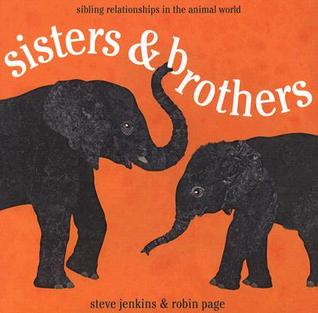
Sisters & Brothers: Sibling Relationships in the Animal World

By Steve Jenkins and Robin Page


You know that most animals are born in a litter or with one or two other siblings, but do you really consider that they are brothers and sisters just like human siblings? You might wonder if they have the same kind of relationship with each other that people do. How do they get along? How do they communicate? Do they stay together or go their separate ways? Sisters & Brothers: Sibling Relationships in the Animal World reveals the answers to these questions and more about 21 animals from around the world.

Would you like to be a clone of your brother or sister? Maybe not so much. If you were a nine-banded armadillo, though, you’d have no choice. These armadillos are always born four at a time—all females or all males—and are identical in every way! They stay with their mother until they are four months old and then set off on their own adventures.

If there are a lot of women and girls in your family, you may feel as if you’ve been born into a community of whiptail lizards. In the world of whiptails, there are no males! While their unusual reproduction method may avoid some battles, the identical traits of these creatures leaves them vulnerable to disease or changes in their environment.

Are you the youngest in your family? If you were a naked mole rat, you’d have to lie on the floor of your narrow tunnel and let your older siblings walk over you to pass. Mole rats aren’t the only ones who have worked out a hierarchical system. Brother bears fight fierce battles until the weaker one leaves to find his own territory, and black widow spiders even eat their weaker brothers and sisters!

Many animal siblings get along, however, and even help each other grow strong and develop important traits. Two of the fastest animals on earth—cheetahs and peregrine falcons—practice hunting techniques on each other, acquiring speed and accuracy along the way. There are even wildlife families that include adopted members, such as the cichlid fish and myna birds.

These are just a few of the intriguing animals readers will discover in this unique look at the world’s wild kingdom. Each animal is beautifully rendered through large cut or torn paper collages that enhance the short text, perfect for a child’s attention span. The final pages offer more information on each creature, and a list for further reading is also included.

Ages 4 – 8

Houghton Mifflin Harcourt, 2008 | ISBN 978-0547727387

National Sibling Day Activity
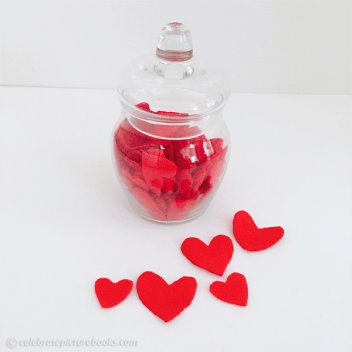
CPB - Heart Jar

I Heart You! Jar


Sometimes it’s hard to say “I love you” (or even “I like you”) to siblings. But sisters and brothers like to know they’re important to each other. Here’s a gift you can make to give them that will tell them what is in your heart.

Supplies

  • A clear jar with a lid—you can use a recyclable jar or buy a mason jar or other decorative jar at a craft store
  • Red felt
  • Scissors

Directions

1. Cut red hearts from the felt

2. Add hearts to the jar—you can add as many as you like and continue to fill the jar after you’ve given it to your sibling. Here are some ideas:

  • Add one heart for each year you have known your sibling
  • Add one heart for each thing you love about your sibling (write those traits on the hearts)
  • Give a new heart whenever your sibling does something nice for you

3. Give your I Heart You! jar to your sister(s) and/or brother(s)

April 9 – Cherish an Antique Day

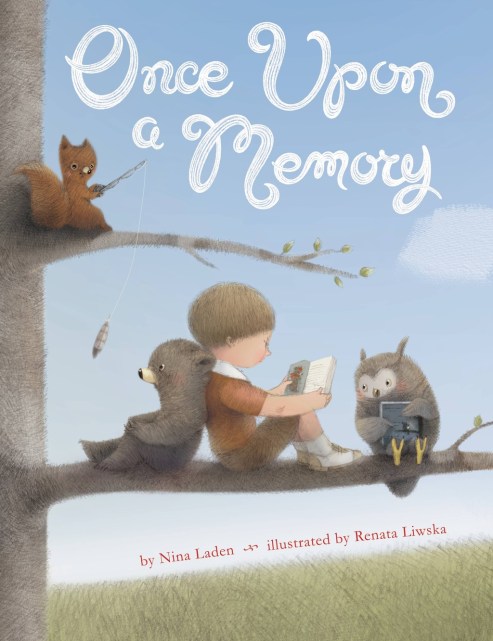
Once Upon a Memory by Nina Laden and Renata Liwska Picture Book Reivew

About the Holiday

When you look at an antique chair with its faded upholstery or a brooch handed down from your great-great-grandmother, do you ever think about the day when it was new? Imagine the excitement of sitting in the chair for the first time or opening the jewelry box on a shining pin. Today we remember our collective and individual treasured past, held in the objects of days gone by. Cherish an Antique Day is a perfect time to learn more about the stories of any antiques you may own.

Once Upon a Memory

Written by Nina Laden | Illustrated by Renata Liwska


This stunning, quiet book is so evocative in its premise that certain lines can bring a lump to your throat even before you reach the endearing end. A little boy sits in his playroom surrounded by his stuffed toys and pet dog, enjoying a tea party. A feather blows through the window, eliciting the question, “Does a feather remember it once was…a bird?” and then more musings: “Does a book remember it once was…a word?”

The simple patterned phrasing and rhyming couplets lend the story a surprising suspense as the reader tries to guess what one-time material or emotion transformed into another before the clever answer is revealed: “Does a statue remember it once was…stone? Does an island remember it once was…unknown?”

In the last pages the queries become more personal—“Does love remember it once was…new? Does a family remember it once was…two?” Adult readers will recognize where the reflective path leads, giving this book a deeper level of meaning for both adults and children: “Does the world remember it once was…wild? Will you remember you once were…a child?”

The question is not an idle one. In these busy, stressful times it’s good to remember what it meant—and means—to be a child.

Nina Laden’s subtly anthropomorphic world invites readers into a new realm of imagination as well as reality. Readers and listeners receive a new perspective on life as Laden’s poetic voice opens up a wide world of possibilities.

Renata Liwska’s illustrations are simply adorable and represent each couplet with depth and imagination. The feather that blows in the little boy’s window comes not from some single, random bird, but from a happy barber shop where an owl is getting a haircut. “Book” is both the volume lovingly read by the boy and the word painted on a busy bookshop sign. Liwska’s sweet bears, squirrels, beavers, birds, raccoons, bats and more as well as the tiny boy are rendered in gauzy browns, grays, reds, and yellows that are as soft and comforting as a favorite memory.  Once Upon a Memory would be a perfect companion on a walk, a trip, or during times of waiting, where readers and listeners could make up their own “once was” pairs. Its cadence also makes it a nice, comforting bedtime book.

Ages 4 – 7

Little Brown and Company, 2013 | ISBN 978-0316208161

Cherish an Antique Day Activity

CPB - Antique Day

Share the Stories of Your Antiques


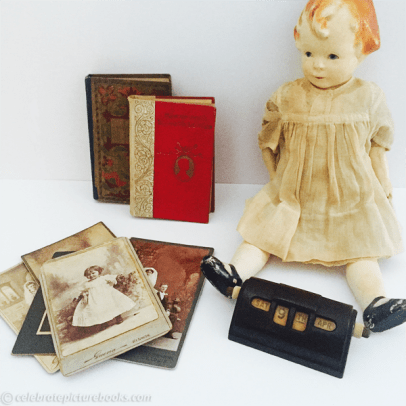
Whether you have old photographs of great-great-grandparents or special heirlooms, today’s holiday is a wonderful time to share them and the stories behind them with children. The feeling of being part of several generations or holding history in your hands is exciting and comforting and can lead to more understanding and closer relationships.

Adults can collect a few family heirlooms and/or photographs to share with children. Children can choose which of their toys, books, or other favorite objects they think will last to become a cherished antique in the future.

Take time to get together and discuss the objects you’ve collected with a cup of tea or hot chocolate and some special treats.

April 8 – National Zoo Lovers Day

The View at the Zoo by Kathleen Long Bostrom and Guy FrancisAbout the Holiday

Zoos are wonderful places to see and learn about exotic animals from around the world. In addition to creating educational exhibits, zoological experts are involved in the preservation of endangered species. To celebrate the day, you might visit your local zoo, donate your time or money to further a zoo’s mission, or consider “adopting” a zoo animal—many zoological institutions offer this fun and rewarding program.

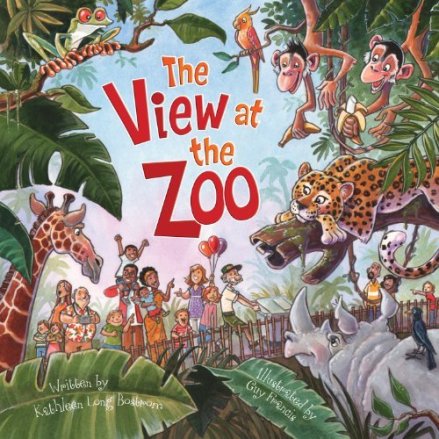
The View at the Zoo

Written by Kathleen Long Bostrom | Illustrated by Guy Francis


“Rise and shine! Attention, please! Monkeys get down from those trees!” So calls the zookeeper as he begins his rounds, waking up the zoo animals to greet another day of visitors. Once the bear cubs are up, the lion’s mane is combed, the elephant has wiped his nose, and the giraffes are standing tall, the gates are flung open.

The day is full of excitement, observations, and education—“My, what silly things they do, all these creatures at the zoo.” Some creatures walk and waddle to an inner beat. Some carry babies in pouches or on their backs while others are noisy—howling and shrieking. And look at how some love to eat! There are those who primp to stay neat and clean, and those that will nip your fingers if you get too close!

Yes, the zoo is full of intriguing specimens! As the sun goes down the visitors head for the exit, and the animals watch them leave. It’s been another good day; those people put on quite a show! The owl exclaims, “What a hoot! Folks have no clue the view that we have at the zoo!”

The View at the Zoo is a perfect union of words and illustration. Kathleen Long Bostrom’s text tells the story while Guy Francis’s illustrations reveal the meaning of the story. Kids will have fun picking the animal and people pairs out of the crowd who are “dancing to their own inner beat,” carrying babies on their backs or in pouches, making noise, chowing down, getting clean, and flashing dangerous teeth. This zoo is colorful, wild, and populated with animals happy to study the exotic creatures on the other side of the fence.

Ages 3 – 6

Ideals Children’s Books, 2010 | ISBN 978-0824956295

National Zoo Lovers Day Activity

CPB - Zoo Day Word Search II (2)

Round up the Animals! Word Search


Find all the animals in the zoo! Print this Round Up the Animals! word search and have fun! Here’s the Solution.

April 7 – International Beaver Day

The Flying Beaver Brothers and the Crazy Critter Race by Maxwell Eaton III

About the Holiday

Beavers are pretty amazing creatures. With their prominent teeth these largest members of the rodent family cut down large trees. They use the bark, buds, and small twigs for food then gnaw the trunk and branches into smaller parts and build dams that are just about as strong as anything people can construct. These dams can help prevent floods, clean the water supply, and restore wetlands. The largest beaver dam is in Wood Buffalo National Park in Alberta, Canada.

Beaver Day is celebrated to bring awareness to the declining beaver population and to promote their protection.

The Flying Beaver Brothers and the Crazy Critter Race

By Maxwell Eaton III


The flying Beaver brothers are back in a vine-popping, lasso-swirling adventure! Bub is reading Penguin Giant to Bob and Bob when Ace comes home with an intriguing ad for The Crazy Critter Race. The winner will receive—not pancakes as the penguins hope—but a free houseboat. The house Bob and Bob built for the Beaver brothers is a little less than desirable, so Ace and Bub swim over to Critter Houseboat Sales and Service to sign up.

There they meet the yeehawin’ cowboy hat-wearin’ crazy critter who has organized this unusual event. They also encounter the rope-snapping Raccoon sisters, and the competition is on! Crazy Critter explains the rules of the race: It seems the islands’ trees have been destroyed by ornery baboons, so the object of the race is to replant trees from a jar of seeds Crazy Critter gives them. The first team to reach the top of each mountain must plant one seed. The team who completes the race and rings the bell at the finish line will win a houseboat.

The racers take off, but the Beaver brothers and Raccoon sisters soon leave the rest of the competition in their wake. They both run to the top of the first mountain and plant their seeds. With a Rugga Rugga and a loud Brorg! two enormous vines break the earth and thunder toward the sky! In all the mayhem Ace and Bub’s jar of seeds opens and spills its contents on the beach.

In the blink of an eye, vines are shooting out of the ground and grabbing everything in sight. In fact, “Everything Vine” is the name of this Kudzu cousin because it covers everything. Ace and Bub go to work with their gnawing teeth, but even they are no match for the vine. Unaware of the disastrous consequences, the Beaver sisters use some pretty impressive moves to get ahead even as they continue planting seeds.

Now vines are erupting willy-nilly, threatening every land mass and even Beaver Island. Crazy Critter denies all knowledge of the fatal seeds, but has a solution of his own—if the islands are uninhabitable, he will sell houseboats to all the ex-habitants. Crazy Critter finally fesses up to his evil plan, but what can anyone do now? The vines are taking over!

The Beaver brothers look at the Raccoon sisters and the Raccoon sisters look at the Beaver brothers. They know that by working together they can save the islands. The Raccoon sisters use their awesome roping skills to gather the vines while the Beaver brothers chomp them in half, destroying them. Beaver Island is saved!

But who wins the houseboat? Let’s just say Crazy Critter isn’t so crazy after all.

This graphic novel-style book—the 6th in the series—will appeal to reluctant readers as  well as kids who enjoy a wild, humorous adventure. The quick pace of the story, teamed with action-packed drawings, will keep fans of the series cheering for their familiar friends in this race that just doesn’t seem right. Kids will laugh out loud at the funny asides and sound effects. A light-hearted lesson on competition and cooperation ties the story together in a satisfying finish.

Ages 6 – 9

Knopf Books for Young Readers, 2015 | ISBN 978-0385754699

International Beaver Day Activity

CPB - Beaver craft picture (2)

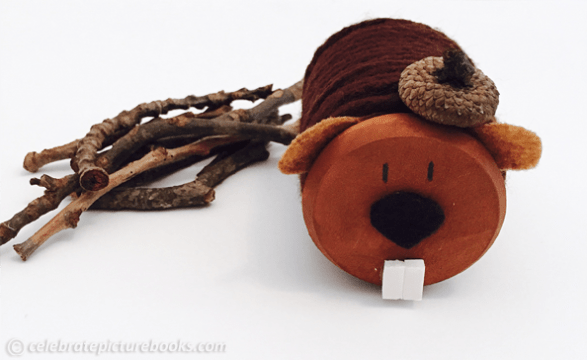
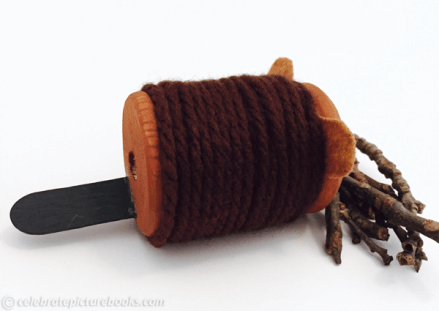
Make a Spool Beaver


Do you have a gnawing need to have a beaver of your own? Make one with this Spool Beaver craft!

Supplies

  • Printable Ears and Nose Template
  • 2-inch wooden spool, available at craft stores
  • 1 6-inch long x ¾ inch wide craft stick
  • Small piece of foam board
  • Brown “chunky” yarn
  • Brown felt, small piece for ears and tail
  • Black felt, small piece for nose
  • Acorn top for hat (optional)
  • Brown craft paint
  • Black craft paint
  • Black marker
  • Strong glue
  • Paint brush
  • Scissors

CPB - Beaver craft picture with tail

Directions

  1. Print the Ears and Nose template
  2. Paint the spool with the brown paint, let dry
  3. Cut the ears from the brown felt
  4. Cut the nose from the black felt
  5. Cut a piece from the end of the craft stick
  6. Paint the craft stick brown or black, let dry
  7. Cut two small pieces from the foam board, ½-inch long x 3/8 inch wide
  8. When the spool is dry, glue the ears to the spool, leaving the ears sticking up over the rim of the spool
  9. Glue one end of the yarn to the spool
  10. Holding the spool horizontally, wind the rest of the yarn around the spool back and forth from front to back. Glue the end to the body of yarn. This will be the bottom of the beaver.
  11. Glue the nose over the hole in the spool
  12. Glue the teeth below the nose
  13. Glue the flat edge of the craft stick to the back of the spool to make the tail


April 5 – National Read a Road Map Day

Maps by Aleksandra and Daniel Mizielinski Picture Book Review

About the Holiday

Sure, GPS can get you where you want to go—even with voiced directions—but how do you know where you want to go? How do you discover what’s out there in your neighborhood, town, state, country? You can read a road map! It’s fascinating to see how roads snake along the terrain, around lakes, and over hills as well as crisscross in dozens of places but still get you where you want to go. And if you want to see how a place has changed over time, compare an old road map to a current one. So get out your road maps and start investigating!

Maps

By Aleksandra Mizielińska and Daniel Mizielińska


The world is a big and intriguing place in this oversized picture book. Forty-two countries are represented within its pages and populated from border to border and even from page edge to edge with cultural, historical, zoological, economic, agricultural, culinary, and linguistic information, all illustrated in stunning thumb-sized detail.

Whether you’re casually flipping through the book or examining each page, a colorful or unusual detail will capture your attention and demand a lingering look, which leads to discovering more and more intriguing facts. Opening the book to Switzerland, I noticed the Appenzeller sheepdog then the Appenzeller cheese round, both from the town of Appenzell. But what’s this? Schwingen? And why are the two guys wearing their shorts on the outside of their pants? It’s Swiss Wrestling! A quick Google search tells me that the wrestlers wear special “breeches” with belts for getting a good grip for tossing opponents!

Another flip of the pages brings me to Nepal, which is so mountainous! It’s home to the Himalayas which include Mount Everest (the tallest peak on earth), as well as Kangchenjunga, Lhotse, and Makalu (the third, fourth, and fifth highest peaks). As you might imagine you can engage in mountain biking, but beware of the Mugger Crocodile!

G’day, Mate! Welcome to Australia! Here you’ll find a Superb Lyrebird with a phenomenal tail, sneak a peek at a short-beaked echidna with a spiky coat and a mole-like snout, and learn to duck for a gliding possum. If you’re a sports fan, you’ll be interested in the didgeridoo, and remember vegemite? This is where it’s from!

I could go on and on! There are so many amazing animals, monuments, people, and structures around the world just waiting for you to discover them! The thick, matte, softly muted pages of Aleksandra and Daniel Mizielińska’s Maps are reminiscent of fine cartographers’ volumes. This book is a fantastic resource for teachers, homeschoolers, and students with curiosity or a report to write. Just a glance will give readers ideas, and a more thorough examination will open up a world of possibilities! Maps is a must-have for any young person’s or armchair traveler’s bookshelf.

Ages 5 and up

Big Picture Press, 2013 | ISBN 978-0763668969

National Read a Road Map Day Activity

CPB - Map Day II

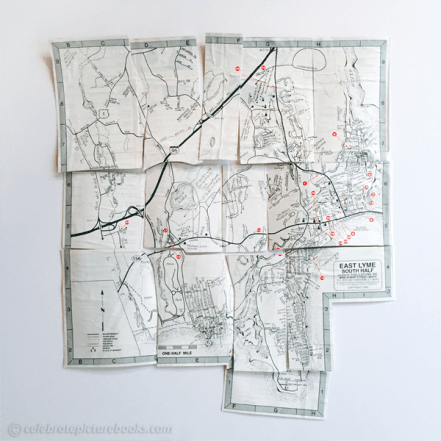
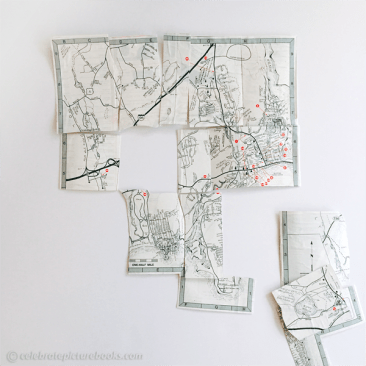
Map Jigsaw Puzzle


Sometimes reading a map is like putting together a puzzle—so why not make a puzzle out of a map? It can be fun to use a map of your town or state or to use a map of a state or country you’d like to visit!

Supplies

  • Small to medium size map (maps are often offered free at tourist stops, town halls, or other tourist information offices or racks)
  • Poster board
  • Glue
  • Scissors

CPB - Map Day

Directions

  1. Use the entire map or cut a desired-sized section from a map
  2. Glue the map to the poster board, let dry
  3. Cut the map from the poster board
  4. Cut the map into puzzle sections, these can be straight-sided sections or ones with interconnecting parts

April 2 – International Children’s Book Day

Written and Drawn by Henrietta by Liniers

About the Holiday

Each year since 1967 Hans Christian Andersen’s birthday has served as the date for Children’s Book Day. The International Board on Books for Young People, a non-profit organization founded in Zurich, sponsors the day to promote a love of reading. Seventy-five National Sections around the world alternate in hosting the event. The host for 2016 is Brazil, and this year’s theme is “Once Upon a Time.” A prominent author and illustrator from the sponsoring country prepare materials used to raise awareness of books and reading. Luciana Sandroni wrote this year’s message and the poster was designed by Ziraldo.

Children’s Book Day is celebrated with special events in schools and libraries, writing competitions, book awards, and opportunities to meet authors and illustrators. 

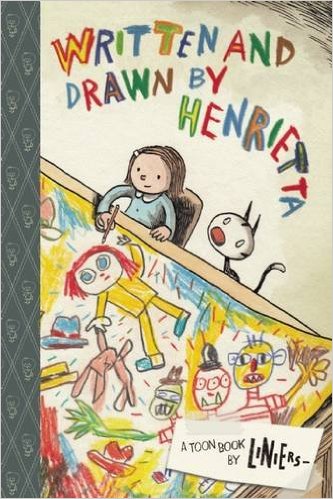
Written and Drawn by Henrietta

By Liniers

Henrietta’s mom gives her a new box of colored pencils, which Henrietta says is “as close as you can get to owning a piece of the rainbow.” She sits down to draw her own book and titles it “The Monster with Three Heads and Two Hats.” She begins with an illustration of a little girl, Emily, in bed at night. “I’m scaring myself…,” she thinks. Her thought is played out in her next page which shows Emily asking her stuffed rabbit if it will sleep with her because she’s scared of an unexplained Creak, Creak.

celebrate-picture-books-picture-book-review-written-and-drawn-by-henrietta-three-headed-monster

Copyright Liniers, 2015, courtesy of TOON Books

“Hmm…What’s that noise?” ponders the young writer. Her fears make it to the page—Creeak…Creeak…Thump…Crash…Boom. What are those noises, my favorite? Emily asks, her eyes now wide. The Noises! They’re getting closer!!

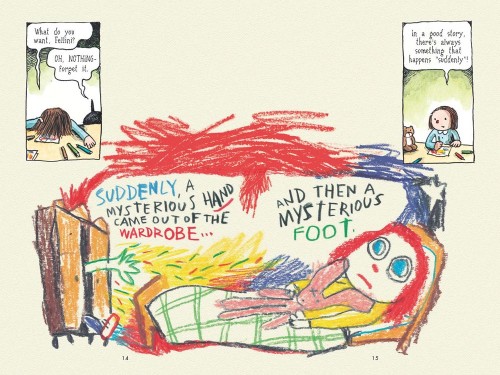
Henrietta knows that in a good story something always happens “suddenly,” and so she draws a mysterious hand and a mysterious foot emerging from Emily’s wardrobe. The plot thickens and finally the full terrifying monster with three heads pops out of the wardrobe.

celebrate-picture-books-picture-book-review-written-and-drawn-by-henrietta-in-bed

Copyright Liniers, 2015, courtesy of TOON Books

They acquire names from Henrietta’s imagination—Huey, Dewey, and Louie Bluie. . She is stuck for a bit as to how to go on, then gives Emily a question: What were you doing inside my wardrobe? The monster answers that it is looking for a hat. Emily joins them in their search, entering her wardrobe. She’s aghast to find that it is full of…clothes! (The wardrobe had been made in Narnia, the well-read Henrietta tells her cat, Fellini).

When the monster and Emily wonder which way to go, they meet a direction-giving mouse, and the story takes off—even Henrietta can’t wait to see what happens. She draws a huge pile of hats (she’s learned about “hat-o-logy” from the encyclopedia—the printed version!). The creature’s two heads with hats begs the third head to choose a hat before “the monster” shows up. Emily is terrified again—Another monster? What has Henrietta concocted this time? A monster with one head and three hats! This horrible beast suddenly appears and chases the crew through the wardrobe. Everyone is shouting Aaaaaaaaaaa—even the author.

celebrate-picture-books-picture-book-review-written-and-drawn-by-henrietta-wardrobe

Copyright Liniers, 2015, courtesy of TOON Books

Emily and the first monster lose the tremendous beast, ask the direction-giving mouse how to escape, and burst out of the wardrobe just in time. Henrietta thinks the story should have a happy ending, and before the monster with three heads and now three hats flies out the window, they give Emily a present. What could it be? Henrietta is so curious! It’s a wonderful hat, of course!

The End

“Now,” Henrietta says, “to find a publisher!”

This Toon Book by Liniers is a wonder as it reveals the inner-workings of children’s imaginations and the spontaneous nature of their brilliant creativity. Henrietta’s thought process as she conjures up her story is shown in neat comic-style panels with speech bubbles, while her story is depicted in colorful kid-like drawings and dialogue written in all capital letters. This interplay between the young artist/writer and her work enhances the fun, suspense, and surprise of this story-within-a-story. 

Ages 5 and up

TOON Books, and imprint of RAW Junior, LLC, 2015 | ISBN 978-1935179900

International Children’s Book Day Activity

Create Your Own Book

CPB - Comic Panel

It’s so much fun to let your imagination fly! Use this printable Comic Style Page to create a story as unique as you are!

Picture Book Review

April 1 – National One Cent Day

A Dollar, a Penny, How Much and How Many? by Brian Cleary and Brian Gable Picture Book Review

About the Holiday

Do you pick up a penny on the street or step over it as worthless? If you do the latter, you might want to reconsider. Today we celebrate the one-cent coin and its historical and artistic significance. The penny has been in circulation since 1793 and derives its name from the English “penny” but is pluralized in the US as “pennies” instead of the British “pence.”

It wasn’t until 1909 that Abraham Lincoln’s face appeared on the coin as part of President Roosevelt’s initiative to improve the artistic nature of the country’s coinage. Roosevelt enlisted famed sculptor August Saint-Gaudens to design the new penny, as well as the other gold pieces in use at the time. While the designs of other coins have changed over the years, Lincoln has remained the iconic image on the copper-colored penny.

While a single penny may not buy much these days, added together they can still make a difference. And remember the old adage: Find a penny pick it up. All the day you’ll have good luck!

A Dollar, a Penny, How Much and How Many?

Written by Brian P. Cleary | Illustrated by Brian Gable


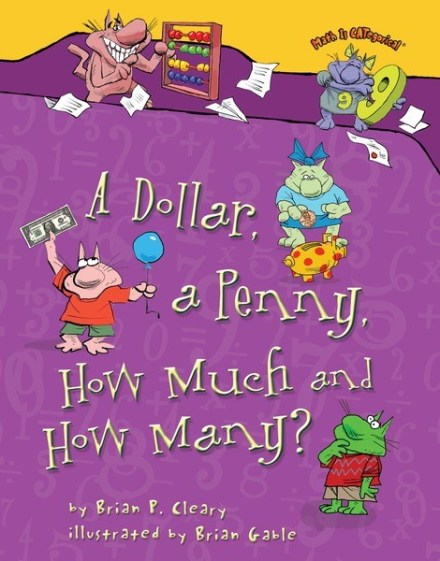
Part of the Math is CATegorical series, this book is all about money—what it looks like, what it’s used for, and how the different denominations add up to equal the same price for a desired or needed item. Each two-page spread relates in verse a little lesson. The book opens with a general definition of money: “Money is the term for coins and bills that people use / to buy things such as pizzas, pencils, planes, and chains and shoes.”

Kids learn the names of our coins, what they are made of, and the value of each. They discover that coins can be added together or mixed and matched—10 pennies equal a dime; two dimes and a nickel equal a quarter, and so on. The story moves to a dollar store, where the cats buy different items with various combinations of coins. Jenny has 4 quarters, while her brother has 10 dimes. Anna has 100 pennies and Zack is carrying 7 dimes, 1 quarter, and 5 pennies. Kids see that all of these combinations have the same value.

Paper money is up next. A short description of the minting process leads to a discussion of value as the cats purchase a $20 book with various bills.

Brian Cleary’s catchy rhymes and straightforward explanations make this a perfect book for introducing money, its value, and the mathematical concepts of addition, subtraction, and multiplication of using money to buy things.

Brian Gable’s well-known comical cats of the series walk kids through the pages as they ponder prices on items on the shelf and the amount of money in their pocket. The cats’ humorous expressions and silly situations turn this money math lesson into a funny and fun experience. The brightly colored pages focus on the coins and bills, which are clearly displayed, and the direct connections between this money and the objects being bought is obvious.

Ages 5 – 9

Millbrook Press, 2012 | ISBN 978-0822578826

National One Cent Day Activity

CPB - Penny matching

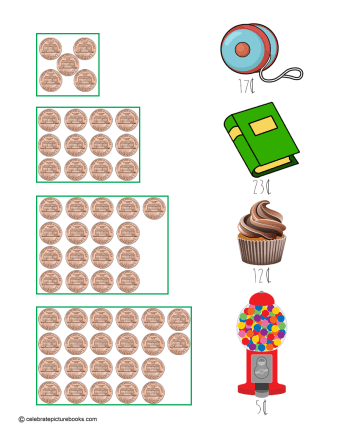
Count Your Pennies! Matching Game


Counting pennies can be so much fun! Saving them can be even better! Collect enough pennies and you can buy something special or donate to your favorite cause! In this printable Count Your Pennies! matching game, draw a line from the stack of pennies to the object they will buy.