March 27 – Quirky Country Music Song Titles Day

celebrate-picture-books-picture-book-review-talkin-guitar-cover

About the Holiday

Song titles can be evocative of so many emotions, and country song titles seem to take this fact to a whole nuther level. Sure, the travails of heartbreak may cause misery and despair, but I bet you can’t help smiling—just a little—when you read titles like this: I Would Have Writ You A Letter, But I Couldn’t Spell Yuck!, You Were Only A Splinter As I Slid Down The Bannister Of Life, and Did I Shave My Legs for This? So, today, celebrate by finding and listening to some quirky country songs that tickle your fancy.

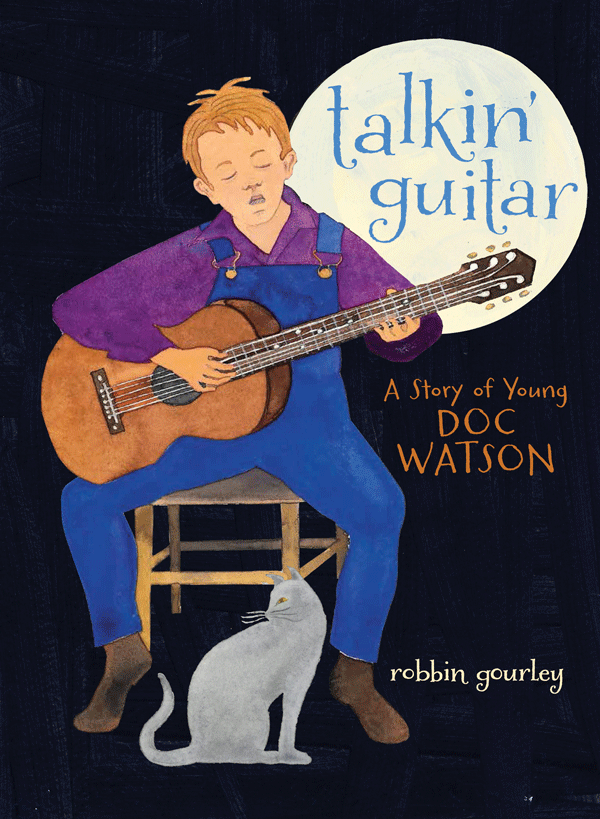
Talkin’ Guitar: A Story of Young Doc Watson

By Robin Gourley

“Yonder, where blue mountains meet the sky, Arthel Watson was born into a world of music.” Music, for Arthel, was much more than his mama’s singing at the end of the day. It was the calls of animals and birds, the burbling river, the whistles of trains, and the clatter of farm machinery. He loved to listen to the rain and the wind and the silence between sounds too. “Arthel had ears like a cat. Maybe it was because he was blind.”
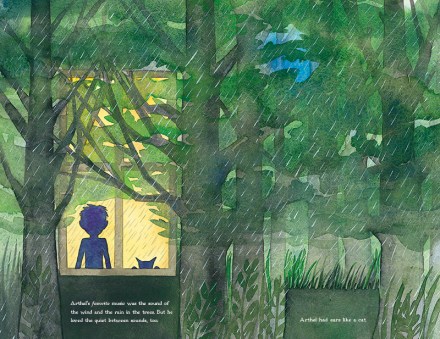
celebrate-picture-books-picture-book-review-talkin-guitar-rain

Image and text copyright Robbin Gourley, courtesy of robbingourley.com

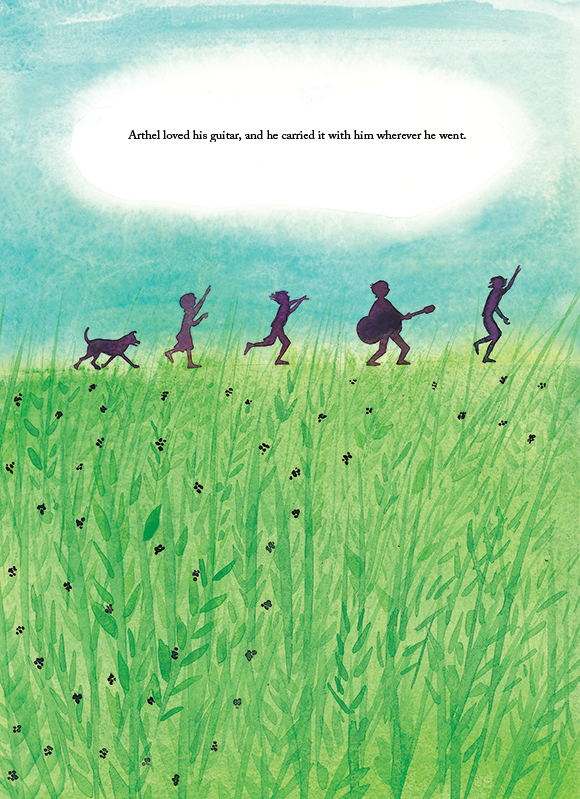
Arthel just couldn’t help but make music whenever and wherever he could. Pots became drums, and cowbells rang like cymbals. Arthel even strung a steel wire across the barn door to strum. When Pappy gave him a harmonica, Arthel practiced until the screechy notes settled into a purr. When Pappy made him a banjo, he practiced until the “rusty door hinge” creak was replaced by spritely melody. One day when Arthel plinked out a few notes on his cousin’s guitar, his father made him a promise. “‘Son, if you can play a song by the time I git home from work, we’ll go into town and buy you your own guitar.’”
celebrate-picture-books-picture-book-review-talkin-guitar-played-guitar-everywhere

Image and text copyright Robbin Gourley, courtesy of robbingourley.com

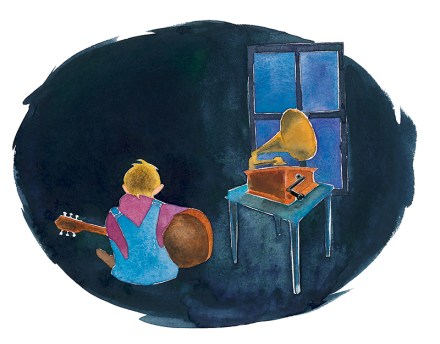
By the end of the day, Arthel had composed a “sweet, simple song” from the few chords he had learned. With a “belly full of butterflies,” he played it for his family and earned himself a guitar. From then on Arthel carried his guitar everywhere, learning from records at home and from songs on the radio. He memorized the rhythms of farm work and the songs of various animals, and between chores he practiced, practiced, practiced. “All those chores and all that practice made him sharp as a whittling knife and tough as a hickory.”
celebrate-picture-books-picture-book-review-talkin-guitar-listening-to-victrola

Image and text copyright Robbin Gourley, courtesy of robbingourley.com

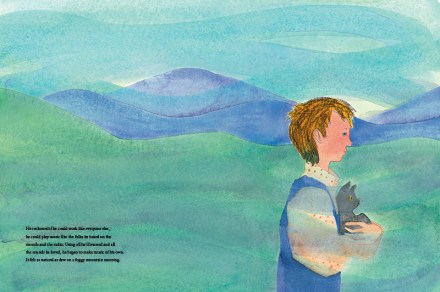
Arthel decided that if he could work just like everyone else, he could probably play music as well as the artists he listened to on records and on the radio. He began to compose his own music. “It felt as natural as dew on a foggy mountain morning.” Arthel played “what he couldn’t see. He could make his guitar sound like a muskrat or a groundhog or a ‘wooly boogie bee’” and sing the stories of the countryside he loved.

An Author’s Note following the text reveals more about Arthel’s life, the influences on his music, and how he earned the nickname “Doc.”
celebrate-picture-books-picture-book-review-talkin-guitar-inspired

Image and text copyright Robbin Gourley, courtesy of robbingourley.com

Robin Gourley’s heartening biography of Doc Watson is perfectly attuned to her young audience. Readers are introduced to Arthel as he soaks in the sounds of life around him and only learn several pages into the story that he was blind. His blindness is not mentioned again except for the subtle acknowledgement that “he reckoned if he could work like everyone else, he could play music like the folks he heard on the records and the radio”—which becomes universal inspiration for all. The emphasis that practice develops natural talent and pays off is also a great lesson for readers who may just be discovering their own talents.

Gourley’s soothing watercolors are suffused with the beautiful pastels of Appalachia, which was both home and muse to Anthel. Vignettes take readers inside Anthel’s home to discover the Victrola and the old radio that were his early teachers and introduce his family, who surrounded him with encouragement as he grew from a child to a young man—always with a guitar in his hands.

Ages 4 – 7

Clarion Books, 2015 | ISBN 978-0544129887

To discover more about Robbin Gourley, her books, and her art, visit her website!

Quirky Country Music Song Titles Day

celebrate-picture-books-picture-book-review-guitar-dot-to-dot

Musical Dot-to-Dot

When a musician follows notes, they create a song. What will you find when you follow the numbers on this printable Musical Dot-to-Dot?

Picture Book Review

March 18 – National Quilting Day

celebrate-picture-books-picture-book-review-the-quilt-story-cover

About the Holiday

Today’s holiday got its start in 1989 when the Kentucky Heritage Quilt Society held a “Quilters Day Out” on the third Saturday of March to honor the history of quilting in that state. The event was such a success that in 1991 the National Quilting Association decided to make it a country-wide event. Since then the idea has spread across the globe. Whether you celebrate National Quilting Day or Worldwide Quilting Day, you may want to take in an event that highlights these “stories in cloth” or even consider becoming a quilter yourself!

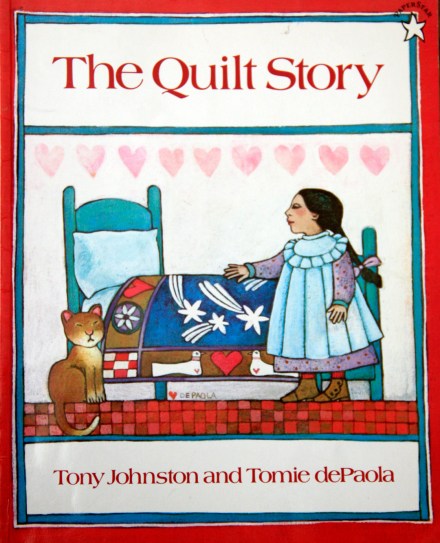
The Quilt Story

Written by Tony Johnston | Illustrated by Tomie dePaola


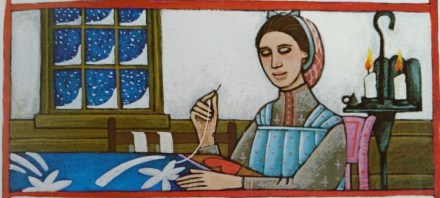
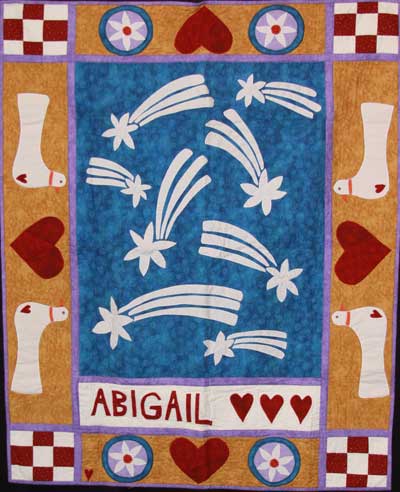
Long ago while the snow fell and the log cabin was filled with candlelight, a little girl’s mother sewed her a quilt “to keep her warm.” While “she stitched the tails of falling stars” and Abigail’s, the mother hummed with happiness. Abigail loved to wrap herself in the quilt as she gazed out at the winter night. “Sometimes she saw a falling star” like the ones on her blanket.

celebrate-picture-books-picture-book-review-the-quilt-story-mother-sewing

Image copyright Tomie dePaola, courtesy of Puffin Books

The quilt went with Abigail into the woods, where she had tea parties with her dolls. “She had tea. Her dolls had tea. And the quilt had tea all over it.” Inside, her quilt became an elegant gown that she wore on trips into town on her hobby horse—until it tore. Then her mother stitched it up again. The quilt was a secret hiding place for games of hide-and-seek, even though her sisters always knew where to find her. When Abigail was sick, she snuggled under the quilt until she was better.

The time came when Abigail’s family had to move. They packed their Conestoga wagon and headed west, taking the quilt with them in front where “it kept the little girls warm from the wild winds. Warm from the rain. Warm from the sparkling nights.” On new land, in a new place, Abigail’s father built a new home “with his hatchet, chop, chop, chop.” He built Abigail a comfortable bed and even a new rocking horse, but Abigail still felt sad.

celebrate-picture-books-picture-book-review-the-quilt-story-little-girl

Image copyright Tomie dePaola, courtesy of Puffin Books

Among all the newness, only the quilt had its old, comforting smell. Abigail’s mother “rocked her as mothers do. Then tucked her in. And Abigail felt at home again under the quilt.” Many years passed. The quilt became old and faded, and Abigail packed it away in the attic. There a gray mouse found it. It’s soft warmth provided a bed for baby mice. “When they got hungry, they ate a falling star.” A curious raccoon also found the quilt. She scratched a hole in the quilt and hid her apple in the corner. A cat exploring the attic discovered the quilt. As it rolled on the fragile material, “stuffing spilled out like snow. Then the cat curled up in the snow and purred.”

One day another little girl was looking for her cat and “found the quilt, splashed with patterns of sun.” She immediately loved the quilt and took it to her mother. Her mother filled it with new stuffing and patched the holes. “She stitched long tails on the stars to swish across the quilt again.” The time came for this little girl’s family to move far away. Their new house was clean and fresh and empty. After the long trip everyone was happy to be in their new home—everyone but the little girl.

She wrapped herself in the familiar quilt, and “her mother rocked her as mothers do. Then tucked her in. She felt at home again under the quilt.”

celebrate-picture-books-picture-book-review-the-quilt-story-mother-quilt

Image copyright Tomie dePaola, courtesy of Puffin Books

This classic story by Tony Johnston was one of my daughter’s favorites when she was young. She loved the comfort the quilt represented and the texture of the illustrations—both aspects of the story that children will still respond to today. Following the antique quilt from its creation to its rediscovery and new life with a different family is a wonderful way to introduce children to the value of history, family stories, and interconnectedness. The soothing cadence of Johnston’s multigenerational tale is perfect for bedtime or quiet story times.  

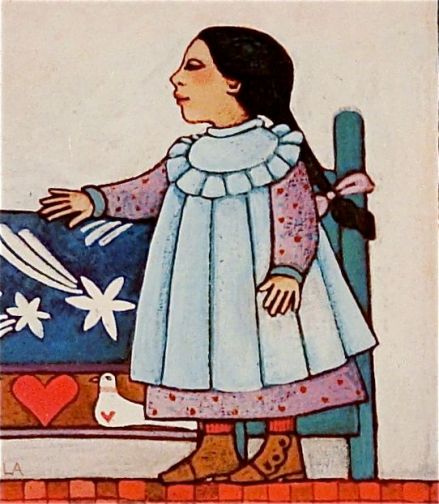
Tomie dePaola’s folk-style illustrations in warm muted colors depict the close relationships among the members of two families who both take comfort in a homemade quilt. Under dePaola’s brush the cozy quilt is a canvas of hearts, doves, and shooting stars, symbols of peace, love, and dreams that transcend generations. DePaola’s similar images of two mothers stitching the quilt, two daughters snuggling under the quilt, and two families traveling far from one home to another reinforce the idea that while homes, hairstyles, and clothing may change, hearts do not.

The Quilt Story  would be an often-read addition to any child’s home library!

Ages 4 – 8

Puffin Books, Penguin, 2002 (reissue edition) | ISBN 978-0698113688

You can discover the world of Tomie dePaola‘s art and books as well as his thoughts on being an artist on his website!

National Quilting Day Activity

celebrate-picture-books-picture-book-review-bed-coloring-page

Snuggle In Coloring Page


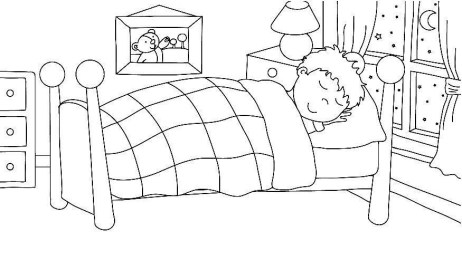
There’s nothing cozier than cuddling under a warm quilt. What would your quilt look like? Print out this Snuggle In Coloring Page and decorate the quilt. Then have fun coloring the rest of the page!

January 21 – Hugging Day

celebrate-picture-books-picture-book-review-hug-it-out-cover

About the Holiday

This is one of those lovely, simple holidays that’s just what it seems. So go ahead and hug someone today.

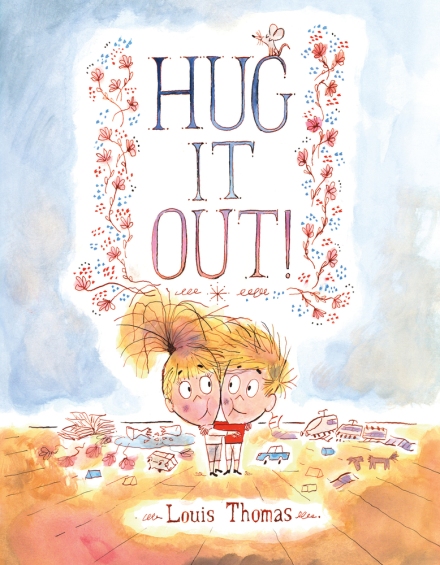
Hug it Out!

By Louis Thomas


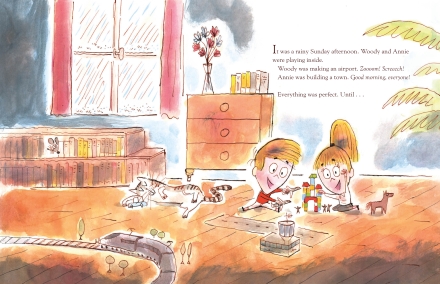
With rain pelting the windows, brother and sister Woody and Annie were playing inside. Woody was building an airport while Annie was creating a town from blocks. Everything was going great “until…they both reached for the car.” Then a tug-of-war began. Woody “wanted the car to pick up travelers from his airport” and Annie needed a little traffic in her town. They both yelled for Mom, who made them promise to be better sharers. Woody and Annie agreed with a pinky swear.

celebrate-picture-books-picture-book-review-hug-it-out-playing-happily

Image and text copyright Louis Thomas, courtesy of us.macmillan.com

But the sharing didn’t last long. Time with the car seemed unfair, and then there was the name-calling: Annie called Woody a “‘dumb-dumb,’” and Woody retaliated with “‘ding-dong,’” and they both called for “‘Mommm….’” Mom returned with coffee in hand and requested that Annie and Woody apologize to each other. A couple of mumbles later, Mom proclaimed it “‘Good enough’” until little feet started getting involved, and cries of “‘Ow!’” and “‘Quit it!’” filled the air. And…oh yeah… “‘Mommmm!’”

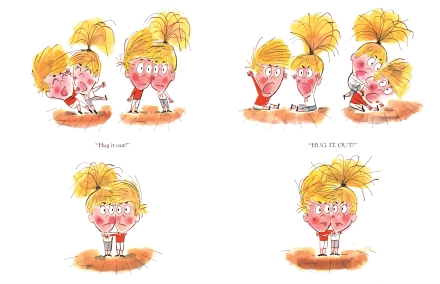
Mom had had enough! This time she laid down the law, and Woody and Annie—eyes wide in and hands to their cheeks in horror—heard her say, “From now on, any time you argue, you’re going to have to…HUG IT OUT.’” Annie and Woody were flummoxed, confused, perplexed. Mom pushed them together cheek to cheek to demonstrate, and with frowny faces and stiff arms, they hugged.

celebrate-picture-books-picture-book-review-hug-it-out-fighting-over-car

Image and text copyright Louis Thomas, courtesy of us.macmillan.com

Still, the chasing— “‘Hug it out!’” —the hair pulling— “‘Hug it out!’” —the squabbling— “‘Hug it out!’” —and the wrestling— “‘HUG IT OUT!’” (this time with stuck-out tongues) continued. Finally, Annie confessed that she couldn’t “‘take one more hug,’” and Woody agreed. The two went back to playing—apart. Woody flew his planes, and Annie took care of her town. “And they both found a way to play with the car.”

After a while they looked at each other with an unexpected realization. “‘Mommmm!’ Annie screamed. ‘Mommmm!’ Woody screamed louder.” And their mom answered “‘HUG IT OUT!’” And with big smiles, “they did.”

celebrate-picture-books-picture-book-review-hug-it-out-wrestling

Image and text copyright Louis Thomas, courtesy of us.macmillan.com

Louis Thomas is onto something in this timely, sibling-rivalry story. Kids—and adults—will recognize the realistic dialogue and circumstances that makes Hug It Out! a laugh-out-loud tug at the heart. Thomas’s positive “punishment” is a clever solution to those sister and brother squabbles and might inspire parents and caregivers to give it a try. Readers will love shouting out “Mommm!” and “Hug it Out!” in this perfect—and perfectly fun—read-along. Thomas’s bright-eyed, straw-haired siblings are adorable, and kids will giggle to see the two smooshed together in a forced hug that becomes closer and closer with every attempt to make up and later becomes a sought-out part of the day.

With it’s wry take on the daily travails of sister- and brotherhood, Hug It Out! would make an amusing addition to home bookshelves—one that might reached for with every “Mommm!” 

Ages 3 – 7

Farrar, Straus and Giroux, 2017 | ISBN 978-0374303143

To view galleries of illustration work by Louis Thomas, visit his blog and tumblr!

Hugging Day Activity

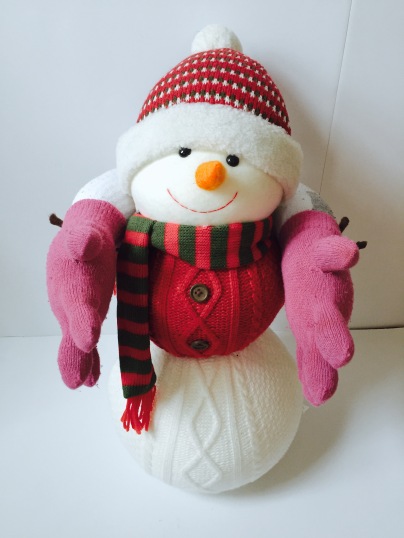
celebrate-picture-books-picture-book-review-sock-and-mitten-neck-warmer-and-pillow

Warm Hugs Neck Warmer or Pillow

Supplies

  • Knee sock or tall crew sock
  • 2 knit gloves
  • Fiber Fill (for pillow and mittens)
  • Uncooked rice (for neck warmer)
  • Thread
  • Needle

celebrate-picture-books-picture-book-review-sock-and-mitten-neck-warmer-and-pillow

Directions

For Pillow

  1. Fill knee sock or crew sock with fiber fill
  2. Sew open end of sock closed 
  3. Fill knit gloves with fiber fill
  4. Sew one mitten to each end of the sock 
  5. Curve sock pillow around neck and relax!

For Neck Warmer

  1. Fill knee sock with uncooked rice
  2. Sew open end of sock closed
  3. Fill knit mittens with fiber fill
  4. Sew one mitten to each end of the sock
  5. Heat in microwave for 1 minute and then in 30-second increments until desired warmth

Picture Book Review


December 26 – Kwanzaa

celebrate-picture-books-picture-book-review-kevin's-kwanzaa-cover

About the Holiday

Today’s holiday is celebrating it’s 50th anniversary this year. Kwanzaa was established in 1966 by Dr. Maulana Karenga, professor and chairman of Black Studies at California State University, Long Beach as a way to unite African-Americans as a community. Derived from the Swahili phrase matunda ya kwanza, which translates as “first fruits,” Kwanzaa incorporates aspects of several African harvest celebrations. The seven-day holiday is observed from December 26 through January 1, and as the little boy in today’s book relates, offers excitement, togetherness, and meaningful reflection.

Kevin’s Kwanzaa

Written by Lisa Bullard | Illustrated by Constanza Basaluzzo


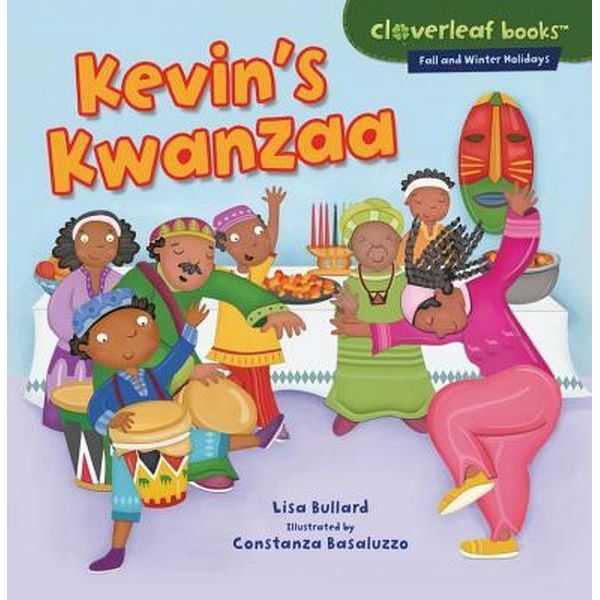
Surrounded by red, green, yellow, and black paper and his craft supplies, Kevin is excited to be making decorations for his family’s Kwanzaa celebration. “Mom says it celebrates our African American culture,” Kevin says. Together, Kevin and his mom set the table. First, his mom lays down a mat. Then Kevin adds the candleholder and the special Kwanzaa candles while his mom adds a bowl of fruit and vegetables. “There’s an ear of corn for each kid,” Kevin explains. “Next comes the unity cup. Didn’t I do a great job decorating it? We put out presents too! Now we’re ready for Kwanzaa,” he adds with pride.

On the first night of Kwanzaa, Kevin’s family gathers at the table as Kevin’s grandfather lights the first candle—the black candle in the center of the candleholder. Each night another candle will be lit. Kevin can’t wait for his turn on the last night. After the candle lighting, “Grandpa explains the Kwanzaa word for the first day. Every day has a special word in Swahili,” Kevin says. The first word is Umoja, which means unity, or “sticking together as a group.”

Grandpa explains that “sticking together is why Kwanzaa began.” The holiday was created by Dr. Maulana Karenga in 1966, who wanted African Americans to “feel proud of their shared African background.”  Each night another family member lights candles, so Kevin watches closely to be ready for his turn. On the third night, Kevin’s mom lights the candles, and the principle word is Ujima or “collective work and responsibility.” The family talks “about helping one another solve problems”—like Kevin’s “messy bedroom problem.” The fifth night belongs to Kevin’s brother, and the family discusses their goals to help the community. Kevin says that he has two goals: to become a teacher and to light the Kwanzaa candles.

The sixth night is Kevin’s favorite. His family attends a big party, and because the day’s word is Kuumba, which means “creativity,” there will be homemade decorations, presents, and drums. Kevin loves to “boom, boom with the drummers” and “stomp, stomp with the dancers” and “eat and eat!” At last, it is the seventh day of Kwanzaa! Kevin is excited to open his presents, but he says he “likes lighting the candles even more!” Grandpa tells Kevin his special word Imani means “faith,” and that he “should believe in our people every day.” Kevin agrees, thinking “that will be like living Kwanzaa all year long!”

Each two-page spread of Kevin’s Kwanzaa also presents facts about the holiday. Readers learn how the holiday began, where it is celebrated, and that it incorporates parts of African harvest festivals. They discover that the one black candle, three red candles, and three green candles are lit in a special order and learn the Nguzo Saba or “Seven Principles” of Kwanzaa. Shared activities, such as drinking from the unity cup, are also discussed.

Lisa Bullard’s story, told by a young boy proud to be celebrating Kwanzaa and lighting the candles for the first time, is an engaging introduction to the holiday. Through the narrator’s enthusiasm as he prepares for and takes part in the family celebrations, Bullard reveals the principles and traditions that make Kwanzaa so meaningful. Kids will also appreciate the sentiments expressed in the gentle bits of humor. Divided into short chapters, Kevin’s Kwanzaa allows young readers to feel more grown up—just as Kevin does as he joins the family in lighting the candles.

Through her vibrant illustrations, Constanza Basaluzzo brings the traditions and ceremonies of Kwanzaa to life for children. As the family gathers each night, the joy and pride they feel is clearly depicted. Images of the decorations, clothing, and homemade items as well as portrayals of the seven principles and the founding of Kwanzaa make the concepts easily understood.

Ages 4 – 7

Millbrook Press, Lerner Books, 2013 | ISBN 978-0761385882

Discover more about Lisa Bullard and her books as well as fun activities on her website!

Kwanzaa Activity

celebrate-picture-books-picture-book-review-kwanzaa-word-search

Kwanzaa Word Search


Kwanzaa is a holiday of fun as well as family and community togetherness. Discover 25 words related to the holiday in this Kwanzaa Word Search puzzle! Here’s the Solution!

Picture Book Review

December 25 – Christmas

celebrate-picture-books-picture-book-review-christmas-in-the-barn-cover

About the Holiday

Christmas is anticipated all year round for the joy of giving, the fun of receiving, and the message of hope the holiday gives. Honoring the birth of Jesus, it is a religious observation celebrated with hymns, special services, prayers, and remembrance of others. Incorporating long-held traditions from around the world, the holiday also welcomes Santa Claus, also known as Father Christmas, Saint Nicholas, Papá Noel, Ded Moroz (“Grandfather Frost” in Russian), Julenissen (“Christmas Gnome” in Norway), and many other names, who brings gifts to children on Christmas Eve. The day inspires family dinners, home baking, parties with friends, and togetherness.

Christmas in the Barn

Written by Margaret Wise Brown | Illustrated by Anna Dewdney


“In a big warm barn in an ancient field / The oxen lowed, the donkey squealed, / The horses stomped, the cattle signed, / And quietly the daylight died / In the sunset of the west.” As the animals in the barn gathered for a meal of hay in the waning light, a star shining brighter than all the others rose in the sky. A couple and their donkey approach the barn, led there by the innkeeper who has no more rooms to give.

Welcomed by the farmyard animals, “…they were all safe and warm / All together in that ancient barn. / When hail—the first wail of a newborn babe reached the night / Where one great star was burning bright….” Shepherds tending their flocks come to watch the baby sleeping, and three wise men from far away travel to give him precious gifts. “What child is this who is born here / Where the oxen stomp and peer, / Away in a manger, no crib for his bed / What child is this who lays down his sweet head?”

With the dawning Christmas Day, the wise men rejoice while the special child still sleeps watched over by his mother and father, the sheep and the goats, the ox and the dog, the cat and the doves. “And there they were / All safe and warm / All together / In that ancient barn.”

From the first line of Christmas in the Barn, readers will delight in this Margaret Wise Brown picture book for little ones. Her distinctive rhythm and rhyme scheme brings the story of Mary and Joseph and baby Jesus close to the heart of listeners. Wise Brown describes the events of that first Christmas Eve night and dawning Christmas day with simple, lilting sentences that emphasize the tenderness and togetherness in that “ancient barn.” Children will respond to Wise Brown’s gentle animals and the recognition of lines from familiar carols. The openness of the text allows for personal discussion of the story, making this a wonderful choice that will become a favorite with young—and even older—children.

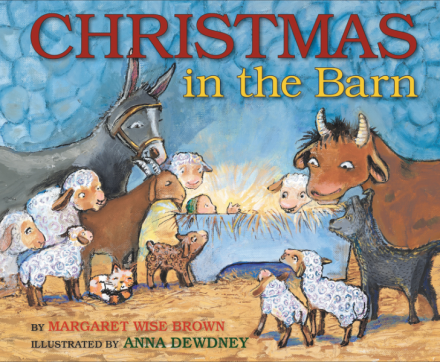
Originally published in 1952, Christmas in the Barn is given a new and stunning look by Anna Dewdney. Her mixed-media illustrations glow with the mystery and splendor of the story. As the couple travels to the little inn, they are portrayed in silhouette, tiny against the vast peach-colored desert. The animals eat their dinner, unaware of what will soon happen in their home. Their sweet faces welcome the two people to share their space, and when the baby is born, the midnight blue sky lightens with the onset of the guiding star. Dewdney’s depictions of the barn’s interior focuses on the newborn baby, while the reverence shown him are moving and beautifully portrayed.

Christmas in the Barn is sure to become an often-read Christmas tradition, and would make an excellent selection for holiday collections.

Ages 3 – 8

HarperCollins, 2016 | ISBN 978-0062379863

Christmas Day Activity

celebrate-picture-books-picture-book-review-christmas-coloring-page

Christmas Tree Coloring Page


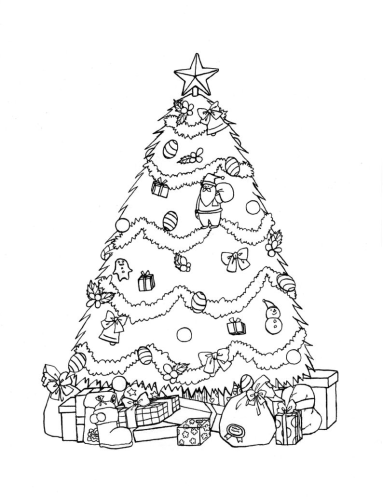
Brightly wrapped presents under a pine tree decorated with traditional ornaments is a favorite sight at Christmas! Grab some pencils or crayons and color this printable Christmas Tree Coloring Page!

Picture Book Review

December 7 – Letter Writing Day

celebrate-picture-books-book-review-exclamation-mark-cover

About the Holiday

With all the letter writing going on during December by young wishers, it should be no surprise that a letter-writing day be included in this month’s calendar. Today’s holiday celebrates all forms of personal communication written by hand and remembers the correspondence of the past that has given us such insight into our favorite poets, novelists, historical figures, and more. Sure email might be faster, but there’s a certain luxury in taking the time to write your thoughts and an unexplainable excitement in holding a heartfelt letter in your hands. The punctuation marks in today’s reviewed book not only help correspondents write more dramatically, but they remind us that we all have unique things to say!

Exclamation Mark

Written by Amy Krouse Rosenthal | Illustrated by Tom Lichtenheld


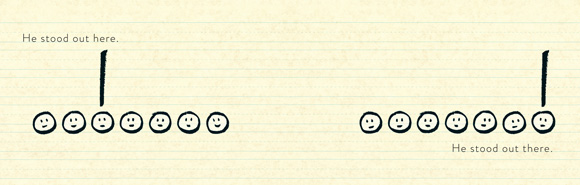
! “stood out from the very beginning.” When he was standing in a row of ……, it didn’t matter if he was in the middle or at the end—he still stuck out. The only time he wasn’t so noticeable was when he laid down to go to sleep. Sometimes he twisted himself into coils and did somersaults to be like the others, but nothing worked. “He just wasn’t like everyone else. Period.” This left him feeling “confused, flummoxed, and deflated.”

celebrate-picture-books-book-review-exclamation-mark-stands-out

Image copyright Tom Lichtenheld, text copyright Amy Krouse Rosenthal. Courtesy of Scholastic Press

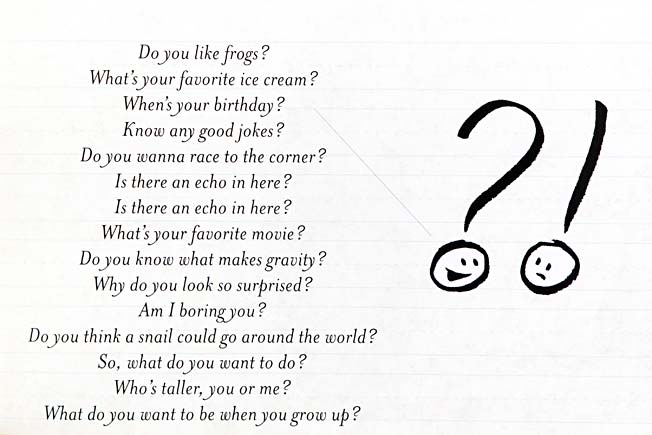
He was just about to run away from all his problems when he met ?. ? rushed right up to him and wanted to know everything. “Who are you?…What’s your favorite color? Do you like frogs?…Do you wanna race to the corner? Is there an echo in here? Is there an echo in here?…Why do you look so surprised?….” The list went on and on.

celebrate-picture-books-book-review-exclamation-mark-lots-of-questions

Image copyright Tom Lichtenheld, text copyright Amy Krouse Rosenthal. Courtesy of Scholastic Press

“STOP!” ! shouted. The sound stunned him. ? smiled and wanted him to do it again. ! didn’t know if he could, so he tried a small “Hi!” “That felt right, so he tried something bigger. Howdy!” And then he said, “Wow!” After that there was no stopping him: “You’re it!…Home run!…Yum!…Look out!…Thanks!…Boo!…Go!”

He rushed off to show everyone what he could do. The …… were delighted and “there was much exclaiming.” Now feeling happy and confident, ! “went off to make his mark.”

celebrate-picture-books-book-review-exclamation-mark-yippee

Image copyright Tom Lichtenheld, text copyright Amy Krouse Rosenthal. Courtesy of Scholastic Press

Amy Krouse Rosenthal’s clever story of an exclamation point searching for self expression is as moving as it is original. Kids will recognize his feelings of sticking out in a crowd and uncertainty of purpose and applaude when ? comes on the scene to befriend !. Readers will giggle knowingly at the barrage of questions, and feel emboldened themselves as ! finds his voice and his own unique contribution.

Tom Lichtenheld’s adorable punctuation marks hanging out on kid-ruled paper demonstrate all the expression and expressions of this well-crafted story. With simple dot eyes and small streak mouths, Lichtenheld animates the various emotions of the periods, exclamation mark, and question mark as they discover !’s special talent with individuality for each. The unbridled exuberance of ?‘s and !’s meeting makes this a terrific book about friendship as well.

! deftly points out “What would we do without exclamation points?” Likewise it asks, “What would we do without each one of us?” The positive message, creatively and humorously presented, makes this book a terrific addition to any child’s library.

Scholastic Press, 2013 | ISBN 978-054543679

You’ll find more about Amy Krouse Rosenthal, her books for children and adults, videos, other projects, and so much more on her website!

Discover a portfolio of books by Tom Lichtenheld as well as fun book-related activities and resources for teachers on his website!

!!!! for this ! book trailer!

National Letter Writing Day Activity

celebrate-picture-books-picture-book-review-pencil-riding-kids-find-the-differencesLetter-Writing Kids Find the Differences Puzzle


Sometimes writing a letter is a flight of fancy through the thoughts and stories you want to tell someone else. Can you find the 12 differences in this printable Letter-Writing Kids Find the Differences Puzzle?

Picture Book Review 
November 24 -Thanksgiving Day

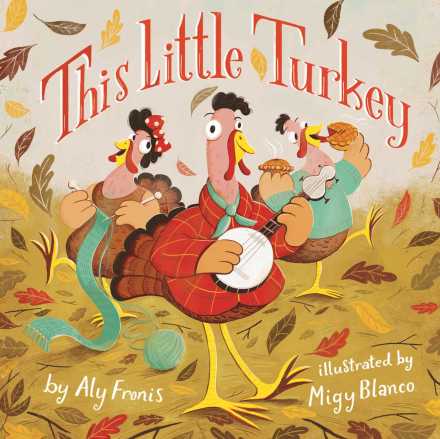
celebrate-picture-books-picture-book-review-this-little-turkey-cover

About the Holiday

The American holiday of Thanksgiving dates back to 1621 and a harvest feast shared by a group of colonists, who had sailed from England in 1620 to “the new world” seeking freedoms and prosperity, and the Wampanoag tribe, who had helped the settlers survive the harsh conditions of their new home. The feast, organized by Governor William Bradford, was held to give thanks for the success of the colonist’s first crops and their settlement. During America’s early years, days of thanksgiving were proclaimed periodically by Congress and Presidents to celebrate particular important events.

In 1817 New York became the first state to proclaim an official day of thanks. Other states followed. In 1827 Sarah Josepha Hale began a 36-year campaign to make Thanksgiving a national holiday. Abraham Lincoln finally signed a proclamation in 1863, making the forth Thursday in November the official holiday. Today, the holiday is celebrated by families with a traditional dinner of turkey, stuffing, potatoes, vegetables, and other goodies, and is finished off with pumpkin pie, apple pie or other favorite sweets.

This Little Turkey

Written by Aly Fronis | Illustrated by Migy Blanco


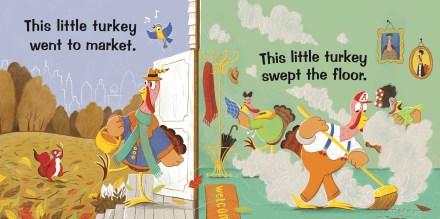
Perhaps you know about “this little piggy” and his cohorts and the way they spend a day, but have you heard of “this little turkey” and his friends and their shenanigans on Thanksgiving Day? Well, let me tell you! “This little turkey went to market”… Wait? Isn’t that what the first little piggie did? Do you think they might have met there? What do you think they bought? Oh, right, I’m getting off track. What about the second little turkey?

celebrate-picture-books-picture-book-review-this-little-turkey-market

Image copyright Migy Blanco, text copyright Aly Fronis. Courtesy of little bee books

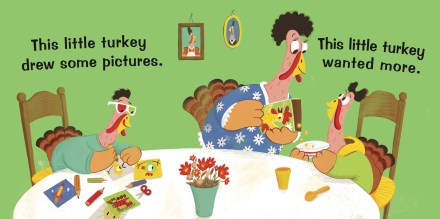
“This little turkey swept the floor.” And did it need it! Wow! So much dust! And the sneezing! Maybe it’s best to see what the third little turkey’s up to. Awww!—“This little turkey drew some pictures” while a little snacking turkey “wanted more.” Elsewhere, a creative turkey is preparing for cold weather, and a sneaky turkey is up to a little mischief!

At home the dinner table is being set in a most entertaining way, but will there be enough plates left for all the little turkeys? You’ll have to read on to see…. Finally, a little turkey calls, “‘Let’s eat!’” and all the turkeys come running to say, “we…we…we…wish you a happy Thanksgiving!’”

celebrate-picture-books-picture-book-review-this-little-turkey-drawing

Image copyright Migy Blanco, text copyright Aly Fronis. Courtesy of little bee books

Little ones love the excitement of a holiday! Special planning and traditions mingle with delicious, sometimes once-a-year aromas, and relatives and friends gather to have fun and swap stories. Aly Fronis’s sweet take on the familiar “This Little Piggie” rhyme invites the youngest children to take part in the preparations and enjoyment of Thanksgiving with phrases that are joyful to read and easy to memorize for read alongs. Young readers will giggle at the foibles and tricks of these little turkeys and recognize common activities they partake in themselves during the holiday weekend.

Migy Blanco’s vibrant pages, populated with an array of cute turkeys and their squirrel and bird friends, are whimsically eye-catching, perfect for the book’s young audience. Depicting the traditions of the holiday—from cleaning and cooking by older family members to drawing and table setting by younger members—each scene is both cozy and playful. Kids will love the small details, such as family portraits hinting at the family’s history, and the tiny plates for the bird and squirrel on the festive dinner table.

Young children will love repeating the holiday-themed verse in This Little Turkey. Drawing turkey faces on children’s fingertips could also turn this book into a fun game that kids will gobble up!

Ages 2 – 5

little bee books, 2016 | ISBN 978-1499803020

Discover more books and illustration for children as well as for adults by Migy Blanco on her website!

Thanksgiving Day Activity

celebrate-picture-books-picture-book-review-turkey-coloring-page

Hats Off for Thanksgiving! Fun Pages


Here are two holiday activity sheets to have fun with on Thanksgiving!

Pilgrim Maze | Turkey Coloring Page

Picture Book Review