July 6 – National Fried Chicken Day

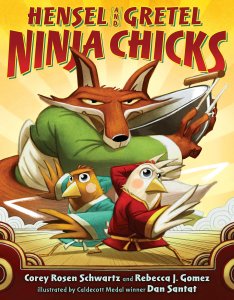
celebrate-picture-books-picture-book-review-hensel-and-gretel-ninja-chicks-cover

About the Holiday

Fried chicken with its crispy outside and tender, juicy inside is the star of American Southern home style cooking. The tradition, brought to America by Scottish immigrants, is a favorite for summer picnics and has spawned many an on-the-go restaurant. There’s only one way to celebrate this holiday…well, maybe two—sink your teeth into some delicious fried chicken and devour today’s book!

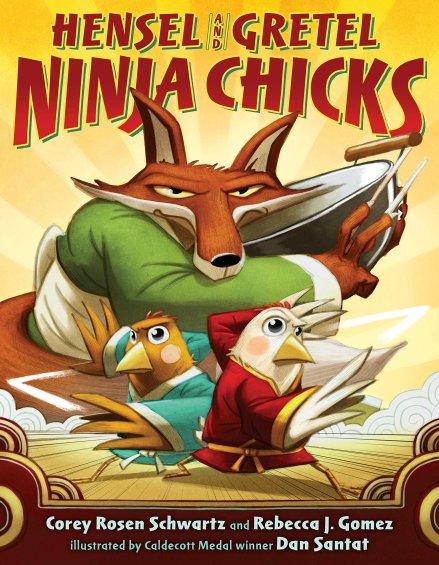
Hensel and Gretel Ninja Chicks

Written by Corey Rosen Schwartz and Rebecca J. Gomez | Illustrated by Dan Santat


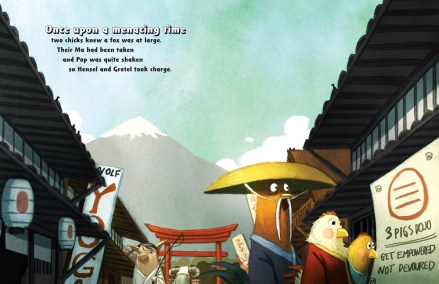
The times, they are a’menacing. A fox is prowling and has already chicken napped Hensel and Gretel’s ma, shaking up their pa. Hensel and Gretel know just what to do—they enroll at the 3 Pigs Dojo and “they trained in the art of ninjutsu / and practiced their wing throws and blocks. / They learned how to creep / without making a peep / so they wouldn’t fall prey to that fox.” Their training proves advantageous as the day soon comes when Hensel and Gretel have to put their training into practice.

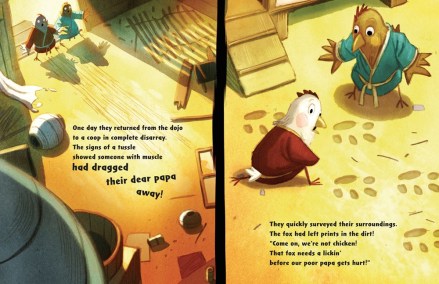
One day they return home to find that their pa has also been nabbed by the fox. While they may be chickens the sisters definitely aren’t chicken so they go in search of their pop. They drop crumbs on their trail to lead them back home, but the forest grows “twisted and tangled” and they soon discover that the breadcrumbs are gone. Bravely, they trek through the woods until they see a light. “It came from a cottage of corn bread! / ‘Let’s eat!’ Hensel clucked with delight. / She nibbled away till she heard someone say, / ‘My dear, come on in for a bite.’”
celebrate-picture-books-picture-book-review-hensel-and-gretel-ninja-chicks-menacing

Image copyright Dan Santat, 2016, text copyright Corey Rosen Schwartz and Rebecca J. Gomez, 2016. Courtesy of G. P. Putnam’s Sons.

Caught off guard, Hensel enters the house but quickly realizes her mistake when she sees a pan in the oven. In the corner she finds her pa locked away in a crate. The fox grabs her and adds her to the crate with her dad. While she is fattening up, the fox tells her, he’ll eat another hen from his stock. That hen turns out to be Hensel and Gretel’s mom! Meanwhile, Gretel has squeezed her way through the chimney “with ninja-like silence and speed.” She frees her ma and with “one feathered sweep” blocks the fox’s advance.

The fox fights back, but Mama comes to Gretel’s rescue with a well-aimed wok just as Hensel and Papa break free. But the crate doesn’t stay empty for long: “With one wicked spin, / Hensel kicked the fox in! / ‘You’re done with your chick-frying spree!’” Back home Hensel and Gretel are congratulated, and “from then on they made it their mission / to rescue, protect and defend. / They’d work night and day / to liberate prey / till bird-napping came to an end.”
celebrate-picture-books-picture-book-review-hensel-and-gretel-ninja-chicks-dojo

Image copyright Dan Santat, 2016, text copyright Corey Rosen Schwartz and Rebecca J. Gomez, 2016. Courtesy of G. P. Putnam’s Sons.

Ninja pandemonium is back! This time the martial arts are served up chicken style in Corey Rosen Schwartz and Rebecca J. Gomez’s take on Grimm’s Hansel and Gretel story. All the intrigue and suspense of the original is here, but blazingly spiced and fried up with delicious puns, sizzling verbs, and some of the most riotous rhymes you’ll ever read.

Dan Santat again lends his agile artwork to the springs, spins, and stealth of the world of the dojo. Feathers fly; the fox leaps, chops, and winces; and Hensel and Gretel perform some serious Kiya! Santat’s forest is gloomy and forbidding, the air shimmers with the force of well-placed kicks, and the large close-up images put readers in the middle of the action.

Everyone from small-fries to hens and roosters will flip over Hensel and Gretel Ninja Chicks. It’s a must addition to any child’s library.

Ages 4 – 9

G. P. Putnam’s Sons Books for Young Readers, 2016 | ISBN 978-0399176265 | ISBN 978-1338203868 (Paperback, 2017)

Watch Hensel and Gretel kick some tail feathers in the trailer for their book!

To discover more books by Corey Rosen Schwartz as well as fun activities and how to be a Book Ninja, visit her website.

Activities, tips, books, and more by Rebecca J. Gomez can be found on her website.

A gallery of art, list of books, and more information about Dan Santat is available on his website.

National Fried Chicken Day Activity

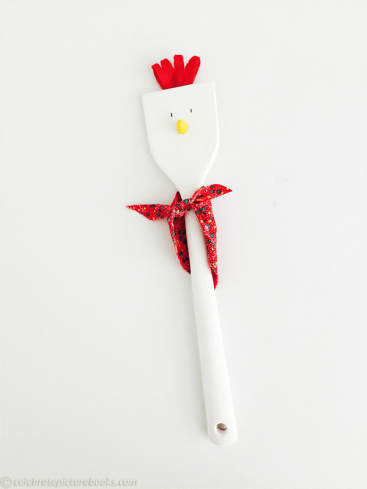
celebrate-picture-books-picture-book-review-chicken-craft

Turn Over a New Chicken


A long-handled wooden turner makes a plucky decoration for your room or kitchen! With a few simple additions, you’ll have a cute companion you’ll want to crow about!

Supplies

  • Printable Comb and Scarf Template
  • Long-handled wooded turner, available in kitchen supply stores
  • Red felt
  • Yellow bakable clay
  • Fabric, 12 inches square
  • A small piece of white felt or fleece (optional)
  • White paint (or any color you would like)
  • Black marker
  • Fabric glue
  • Glue gun
  • Paint brush

celebrate-picture-books-picture-book-review-chicken-craft

Directions

  1. Paint the wooden turner, let dry
  2. Cut the scarf from the piece of fabric
  3. Make a beak from the yellow clay and bake it according to package directions

To make the comb

  1. Cut out the comb from the red felt
  2. Fold the felt in half and glue the end together with the fabric glue
  3. Cut short strips from the folded top of the felt, about ½-inch to ¾ -inch in length
  4. Round the corners of the strips slightly

To make the scarf

  1. Fold the fabric in half
  2. With the long, straight edge of the scarf template along the fold, cut out the scarf
  3. With the fabric glue, glue the two sides of the scarf together so that you have two “right” sides
  4. Let dry

To assemble the chicken

  1. Pinch the bottom of the comb together so that the strips open and the felt pleats a little
  2. With the glue gun attach the comb to the back of the painted turner, keeping the bottom pinched together
  3. Attach the beak to the front of the turner
  4. Draw eyes on the chicken with the black marker
  5. Tie the scarf around the neck of the handle, hold in place with a drop of glue in the back if necessary
  6. To make tail feathers in a turner with a hole in the handle, pinch together a small folded piece of white felt or fleece and push it through the hole in the handle of the turner.
  7. Cut or arrange to look like feathers

celebrate-picture-books-picture-book-review-hensel-and-gretel-ninja-chicks-cover

You can find Hensel and Gretel: Ninja Chicks at these booksellers

Amazon | Barnes & Noble | Books-a-Million | IndieBound


June 23 – Let It Go Day

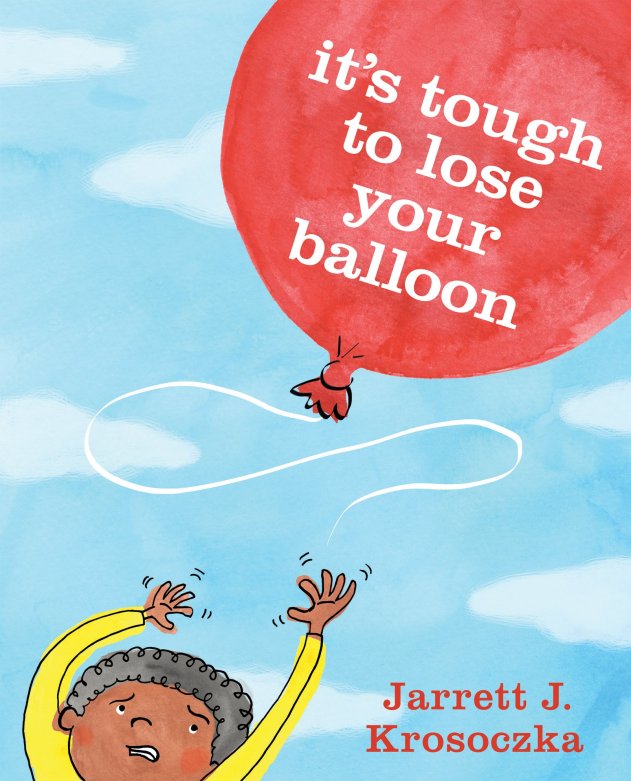
celebrate-picture-books-picture-book-review-it's-tough-to-lose-your-balloon

About the Holiday

No, this isn’t a day dedicated to re- re- re- re- re-watching that movie. It’s a day to take a step back and take stock of the feelings you’re keeping inside or the little irksome quirks that drive you crazy. Are they really worth all the stress? Today’s a day to find inner peace, make amends, or turn disadvantage into advantage.

It’s Tough to Lose Your Balloon

By Jarrett J. Krosoczka


Most people wake up each morning with great ideas for a having good day, but sometimes things don’t work out the way they’re planned. For kids, small mistakes, accidental mishaps, and unexpected disappointments can loom large. Frustrations and perceived unfairness can elicit tears or anger, and it’s sometimes hard to know how to comfort an unhappy or upset child.

In It’s Tough to Lose Your Balloon Jarrett Krosoczka acknowledges that sometimes bad or sad things happen, but he reveals to kids how looking at the event from a different perspective or through someone else’s eyes can bring consolation and even happiness. As the title states, it’s hard for kids to watch a balloon suddenly slip through their fingers and float away, but imagining all the other people who will see it and smile can help. Having a picnic on the beach when the unthinkable happens? “It’s sad to drop your sandwich in the sand…but it’ll make some seagulls very happy.” And you know it will make you laugh to watch those crazy guys swooping, diving, and squawking over that now-crunchy snack.

The idea of sharing hurts with others to create a new scenario or a different kind of enjoyment while forming closer bonds is another positive way to turn disappointments into teachable moments that benefit all. As most kids know “it’s never fun when you break a toy…” but with a upbeat attitude they can have “fun fixing it with Grandpa.”

Wet shoes? Melting Ice-cream cone? Scraped knee or new baby sitter? In Jarrett Krosoczka’s hands these letdowns can lead to new freedom, innovation, distinction, and joyful experiences. It’s Tough to Lose Your Balloon can help anyone see “disaster” in a whole new light!

Krosoczka’s illustrations ingeniously depict the way an unexpected mishap or disappointing moment can make someone feel—alone, exposed, and vulnerable. Left-hand pages present the problem while the right-hand page shows the crestfallen child in full color on a black-and-white sketched background. The positive transformation becomes a two-spread, full-color of happy pride and fun abandon. Life can be full of little bumps in the road, keeping a copy of It’s Tough to Lose Your Balloon on the shelf can help smooth the way.

Ages 3 – 7

Knopf Books for Young Readers, 2015 | ISBN 978-0385754798

Visit Jarrett J. Krosoczka’s Website to see more of his books and discover fun activities!

Let It Go Day Activity

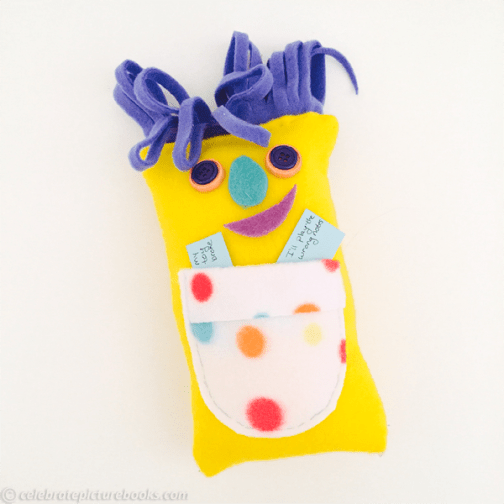
celebrate-picture-books-picture-book-review-worry-buddy-craft

Worry Buddy


Sometimes worries don’t seem as bad when they are shared with someone else or to at least set aside for awhile. With this craft you can make a friend to help lesson worries, disappointments, fears, and anxieties. And it’s pretty good at hugs too. Older children may like to create this as a sewing project, while younger kids can make it easily with fabric glue. Make your Worry Buddy as unique as you are!

Supplies

  • Fleece or felt in different colors
  • Buttons, two larger in the same color and two smaller in a different color
  • Fiber fill
  • Fabric glue or thread
  • Paper
  • Pen or pencil

Directions

To Make the Body

  1. Cut a 16-inch piece of fleece
  2. Fold the fleece in half
  3. Glue the sides together (older children may enjoy sewing the sides together with simple straight stitches)
  4. Leave the top open
  5. Turn the body inside out
  6. Fill the body with fiber fill

To Make the Hair

  1. Cut a 5-inch piece of fleece or felt
  2. Fold the fleece or felt in half
  3. Glue or sew the folded fleece into the opening in the body
  4. Cut the fleece or felt in ¼-inch strips across the top

To Make the Face

  1. Glue one set of larger and smaller buttons together, repeat with the other set
  2. Glue or sew the buttons to the top part of the body
  3. Cut a nose and mouth out of fleece or felt
  4. Glue or sew the nose and mouth to the face

To make the pocket

  1. Cut a 5-inch piece of felt in the shape of a square-bottom or rounded bottom pocket
  2. Fold down an inch of the top
  3. Glue or sew the pocket to the middle of the body

To share problems with the Worry Buddy, write worries or fears on a slip of paper and put them in the Worry Buddy’s pocket. Your Buddy will keep those problems so you don’t have to.

June 19 – Father’s Day

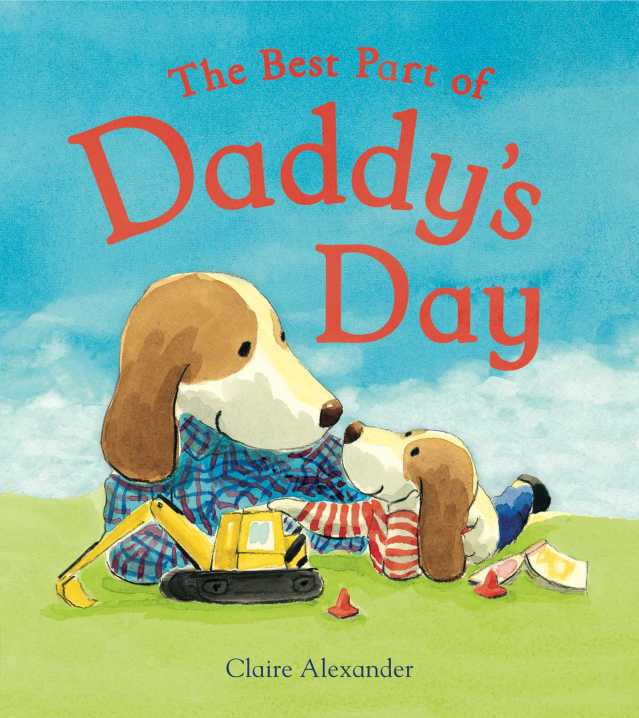
celebrate-picture-books-picture-book-review-the-best-part-of-daddy's-day-cover

About the Holiday

While celebrations of Mother’s Day caught on very quickly after the first ceremony in 1908, proclaiming Father’s Day as a national institution took a little longer. On July 19, 1910 the governor of Washington State held the first Father’s Day event. In 1916 President Woodrow Wilson, trying to attract attention to the holiday with a little technology, unfurled a flag in Spokane, Washington by pushing a button in Washington DC. This clever ploy, however, did not convince the men of the time, who scoffed at a holiday dedicated to fathers as somehow too “domesticated” and “unmanly.” During World War II celebrating Father’s Day began to be seen as a way to honor American troops and to help the war effort. The holiday entered the mainstream, but it wasn’t until 1972, when President Richard Nixon signed a proclamation, that Father’s Day became a federal holiday.

The Best Part of Daddy’s Day

By Claire Alexander


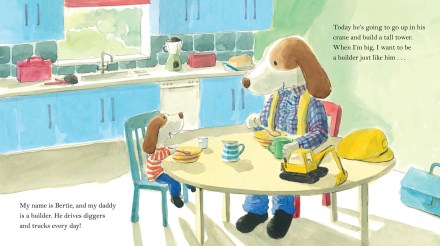
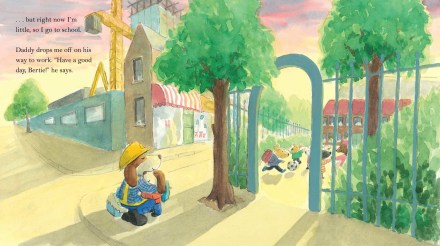
Little Bertie is proud to introduce his daddy to readers. His dad is a builder who drives diggers and trucks every day. Today he’s going to be in a crane high up in the sky working on a tall tower. “When I’m big,” Bertie says, “I want to be a builder just like him….” But right now Bertie’s dad is dropping him off at school. “‘Have a good day, Bertie!’” he says as he gives his son a hug.

With the BRRRIIING of the bell, Bertie runs into class, where he’s in for a surprise. “‘Today we’re going to be builders,’” his teacher tells her class, and Bertie knows it’s going to be a great day! First the teacher reads “an exciting story about a digger” then Bertie paints a picture of a crane like his daddy’s. But just as he’s finishing it, a classmate with paint on his shoes tracks green footprints across the paper.

celebrate-picture-books-picture-book-review-the-best-part-of-daddy's-day-interior-art

At lunchtime Bertie trips over his shoelace and spills his lunch. His great day is having some bumps along the way, and Bertie wishes he could see his daddy. He knows just what to do. He runs to the playground and climbs “up, up, UP…to the top of the jungle gym.” Bertie is so high up he “can see the top of Daddy’s tower!” Bertie can even see someone driving the crane and knows it must be his dad.

After lunch the class constructs an enormous tower. Bertie pretends to be a small crane, while his teacher, in her high-heeled shoes, is a big crane, able to place boxes higher and higher. The building they make is amazing! As the day progresses it begins to rain, but when Bertie’s dad picks him up he gives Bertie his hat to keep his ears dry. Bertie is excited to tell his dad about building the tower—it was the best part of his day, he says.

At home Bertie tells his dad “the not so good parts” of his day—about his spoiled painting and about tripping and falling. “‘I bet things like that never happen to you, Daddy,’” Bertie says. “‘Well, actually…they do sometimes!’” Bertie’s dad answers, and he tells his son about the bumps in his day—how someone walked across his new, wet cement floor and that he also tripped and fell over an untied shoelace, just like Bertie. But then, his dad says, he went back up in the crane and “‘finished my tower, and I think I saw you, Bertie, on the jungle gym!’”

celebrate-picture-books-picture-book-review-the-best-part-of-daddy's-day-interior-art

“‘It WAS me, Daddy!” Bertie exclaims. Then he asks his dad “if the best part of his day was finishing the tower.” His dad looks at his son, snuggled on his lap and answers, “‘Actually, the best part of my day is right now, being here with you, Bertie.” Bertie agrees. “‘I think this is the best part of my day, too.”

Claire Alexander hits all the right notes in her heartfelt tribute to loving father-son relationships. Brilliantly paced toward an emotional surprise twist, Alexander’s story is sweet and satisfying. The open communication between father and son adds poignancy, and the truth that while kids are inspired by their parents, parents are equally inspired by their kids may amaze children and will bring a lump to parents’ throats. This father and son aren’t just building towers, they’re building a life-long bond.

Alexander’s vivid, cheerful watercolor illustrations glow with the enthusiasm and love that Bertie and his dad feel for each other. Large two-page spreads invite kids into Bertie and his dad’s world as they eat breakfast together in the tidy kitchen, say goodbye outside the school gate, and read together in their comfy, overstuffed chair. Kids will love the view of Bertie’s playground with the gleaming glass tower and red crane rising above it and the sweeping vista of the city as seen by Bertie’s dad from atop the crane. A vertical spread of the tall tower Bertie’s class builds adds a fun element to the story and emphasizes the tower’s height for young children. 

The Best Part of Daddy’s Day  is an excellent addition to a child’s bookshelf and makes a wonderful gift. It will quickly become a favorite for bedtime or story time.

Ages 3 – 8

little bee books, 2016 | ISBN 978-1499801965

To see more of adorable books for children by Claire Alexander visit her website!

The Best Part of Daddy’s Day and more excellent books for children are available from little bee books!

Father’s Day Activity

celebrate-picture-books-picture-book-review-building-blocks-craft

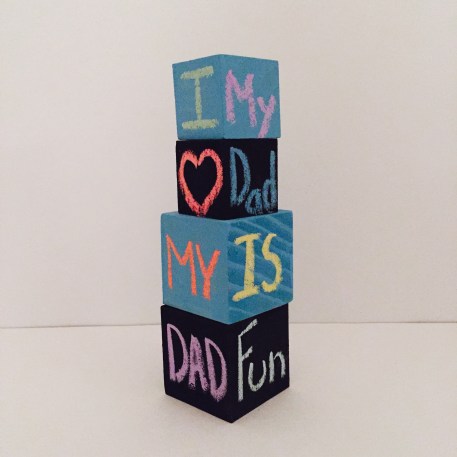
I Love Dad Building Blocks


This craft will stack up to be a favorite with kids! With wooden blocks and a little chalkboard paint, it’s easy to make unique building materials. They’re great for gifts, decorating, party favors, or when you just have a little time to play!

Supplies

  • Wooden blocks in various sizes, available from craft stores
  • Chalkboard paint in various colors
  • Paint brush
  • Chalk in various colors

Directions

  1. Paint the wooden blocks with the chalkboard paint, let dry
  2. Write words or draw pictures on the blocks
  3. Have fun!

June 13 – Sewing Machine Day

celebrate-picture-books-picture-book-review-sewing-school-2

About the Holiday

Patented in 1790 by Thomas Saint, the sewing machine revolutionized the textile industry. No longer did clothes and other fabric items need to be made by hand. The sewing machine made this job faster and less tedious. Long a favorite hobby for clothes makers and crafters of all types and ages, sewing is creative and fun! If you like to sew celebrate today by making something new or sharing your talent with a beginner. If you’ve never sewn, consider trying it—needle crafts, either by hand or using a sewing machine can become a life-long enjoyable activity!

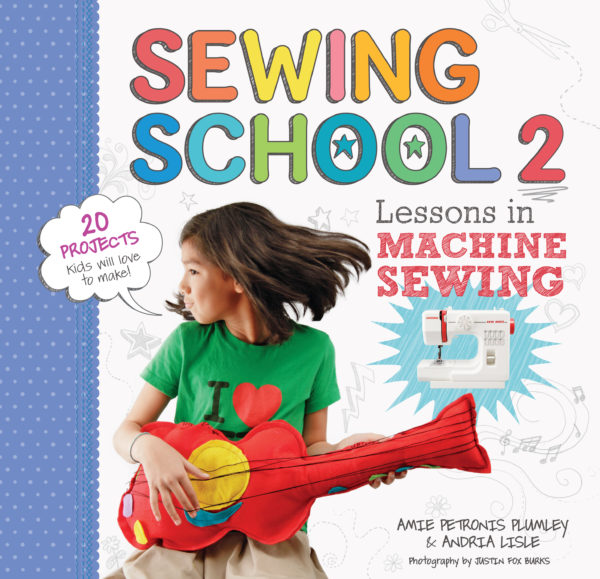
Sewing School 2: Lessons in Machine Sewing

By Amie Petronis Plumley & Andria Lisle | Photography by Justin Fox Burks


Sewing and crafting are popular hobbies shared between friends and family. Skills that were once passed down from generation to generation are being rediscovered by kids and adults alike through widely available craft and sewing chain stores and books like the Sewing School series. In this second edition, kids are taught everything they need to know to feel comfortable at a sewing machine and create awesome projects they can really use.

Divided into five sections, Sewing School 2 is easy to navigate and builds on skills presented in previous chapters. The first section “Getting Started” provides 13 lessons that cover choosing a sewing machine, the elements of a well-stocked sewing kit, learning about different fabrics, how to do basic stitches and techniques, and laying out and cutting patterns.

With clear photographs on every page, kids will easily be able to understand the concepts being described. “Anatomy of a Sewing Machine” points out each part of a machine, from the spool spindle to the take-up lever, presser foot, stitch selector, and more. The most common stitches are depicted here too—straight, reverse, stay, and reinforcement stitches share the page with short discussions of what a bodkin and pinking shears are for.

Budding sewers will learn about the right and wrong sides of fabrics, how to sew “right” sides together and turn the project inside out, and the way to stuff a pillow and finish the opening. One chapter is devoted to starting off right as well as tips on guiding the material through the machine.

After kids have been introduced to the basics, it’s time to try out those new skills! Four sections containing five projects each let kids make items for all the important aspects of their lives. “In My Room” shows them how to make a pillow with a space for secret messages, a welcome sign, a pocket organizer, a sleepy teddy bear, and a striped blanket. The “Let’s Go” section is perfect for kids on the run. Projects include a coin holder, a handy pouch for carrying extras, and a safe place for their electronic gadgets.

The projects in “Time to Play” prove that sewing results in plenty of fun! Things like stuffed guitars, microphones, backpacks, game boards, and decorative hangings are just a stitch away. Finally it’s time to take sewing outside with a section titled “The Great Outdoors.” Kids will wonder how they ever got along without their snack pouch, belt with pocket, water bottle carrier, scarf, and portable tree stump—huh? You’ll just have to get the book and see!

Each project comes with a one-to-three star difficulty rating, a list of all materials needed, a list of the skills used, how to personalize each project, and tips for adult helpers.

The final pages help kids out when things just don’t go as planned, how to do hand-sewn work, and tips for adults who are working with a group.

Amie Petronis Plumley and Andria Lisle have created a wonderful resource for anyone wanting to get in on the fun of sewing. The easy-to-understand directions and conversational tone of the book will put kids at ease, and Justin Fox Burks’ photographs of children using the concepts and happily displaying their work will make beginners excited to start sewing. Burks’ up-close photos of the parts of the sewing machine as well as each technique make Sewing School 2: Lessons in Machine Sewing a leader in its field.

Ages 7 and up

Storey Publishing, 2013 | ISBN 978-1612120492

Sewing School Takeaway Project

celebrate-picture-books-picture-book-review-sewing-school-t-shirt-project

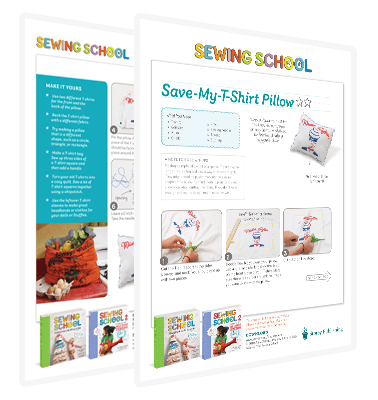
Save-My-T-Shirt Pillow


Sometimes it’s so hard to give away a favorite t-shirt! With this project from Sewing School you don’t have to! Use your hand-stitching skills to create a pillow that will make your room even more awesome! Click here for the Save-My-T-Shirt Pillow directions.

Sewing Machine Day Activity

celebrate-picture-books-picture-book-review-sewing-word-search

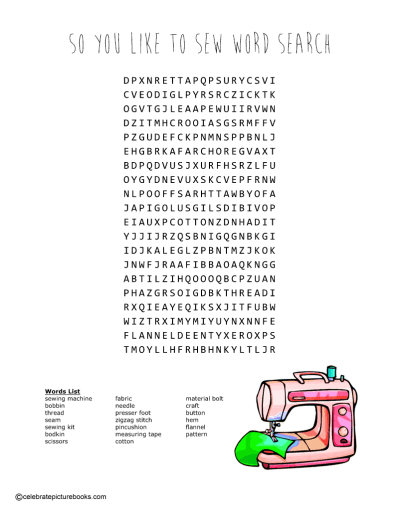
So You Like to Sew Word Search


Sewing has a vocabulary all its own! Find the words related to this fun hobby in this So You Like to Sew Word Search puzzle! And here’s the Solution!

June 1 – Global Running Day

celebrate-picture-books-picture-book-review-the-wildest-race-ever

About the Holiday

On your mark, get set, run! More than 2 million people in 160 countries have pledged to run on today’s holiday. Global Running Day is the evolution of National Running Day in the United States, which was started in 2009 by leading running organizations and races throughout the nation. It has been held annually on the first Wednesday of June ever since. This year will mark the first-ever Million Kid Run that aims to have a million kids around the world pledge to run with the hope that they will discover the joys of running and will be inspired to continue the sport through life. Participating is as easy as running in your neighborhood, gathering with friends to run, or even playing tag with your kids.

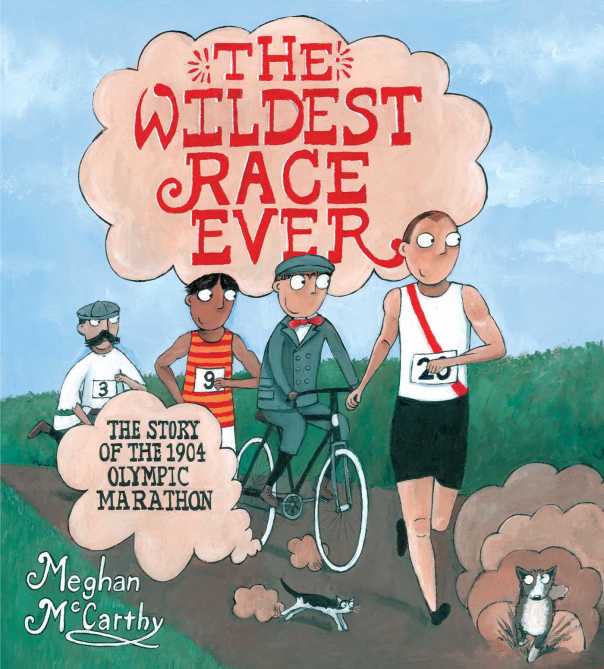
The Wildest Race Ever: The Story of the 1904 Olympic Marathon

By Meghan McCarthy


On August 30, 1904 the first United States Olympic Marathon took place at the World’s Fair in St. Louis, Missouri. Torrential rainstorms in the days before the race had washed away the original route, so a new, more difficult route was mapped out. Some of the 32 racers were:

Fred Lorz, a Boston bricklayer; John Lorden, the winner of the 1903 Boston Marathon; Sam Mellor from New York and the winner of two major marathons; Felix Carvajal, a mailman from Cuba; Arthur Newton; Albert Corey;  Len Tau, a long-distance running messenger from South Africa; William Garcia, the “greatest long-distance runner on the Pacific Coast”; and Thomas Hicks, who had only trained on flat terrain and was not ready for hilly St. Louis. There were also racers from countries all over the world.

At the starting line the racers waited in 90-degree heat for the signal. When the pistol shot rang out, they took off. The early leader was Fred Lorz. As the racers took to the hills outside the stadium so did cars full of reporters, judges, and doctors. Some spectators rode along side them on bicycles. All these vehicles stirred up so much dust that the runners choked on it.

At mile two, Sam Mellor and Fred Lorz were in the lead with Thomas Hicks only a little behind, but at mile 9 Lorz suffered terrible cramps and was driven away in a car. Now Albert Corey and William Garcia were neck and neck, and Hicks was catching up!

And what about Felix Carvajal? He ran and ran—but he also stopped and stopped. He loved talking to the spectators that cheered him on. It gave him an opportunity to practice his English! Arthur Newton, Sam Mellor, and Thomas Hicks exchanged the lead several times. No one knew who would win!

Where was Len Tau? Unfortunately, an angry dog chased him until he was a mile off course. Felix Carvajal also got distracted—not by a dog, but by an apple orchard! He settled down under a tree to satisfy his hunger. Soon, Mellor began suffering cramps and was suddenly out of the race.

Hicks suffering unbearable thirst in the staggering heat, began begging his trainers for water. They refused, instead giving him a concoction of strychnine and egg white. Another name for strychnine is rat poison! What would happen to Hicks after he drank it?Meanwhile who should appear out of the dust? Fred Lorz! He ran through the tape at the finish line and was declared the winner! Cheers erupted from the crowd. But wait! Someone said that Lorz had cheated. The cheers turned to boos, and even though Lorz said it was all a joke, the race committee banned Lorz from racing for life.

Hicks, somehow, kept running, buoyed by the cheering crowds. His trainers gave him more of the “health” drink, which made Hicks sluggish and confused. Nevertheless, he struggled on. When he came to the top of the last hill, seeing and hearing the crowds energized him. He pushed himself to run harder and harder until he broke through the tape. He collapsed on the ground just as he was declared the winner. He was rushed to the hospital, but was well enough to accept his award an hour later.

What happened to the other runners? All, except William Garcia who was overtaken by the clouds of dust, crossed the finish line at various times and with unique comments on their performance. These racers may have been very different, but they all had one thing in common. Each one accomplished an astounding feat: They competed side by side in the “killer marathon” of 1904 while upholding the Olympic spirit.

Meghan McCarthy with wit and suspense brings the story of the 1904 marathon to life for kids used to paved, well-marked routes, energizing sports drinks, supportive running shoes, and comfortable running clothes. Perhaps the only similarities to today’s races and yesteryear’s are the start and finish line and the cheering crowds! McCarthy’s inclusion of the humorous and the near-disastrous will keep readers’ hearts racing until the very end, when the topsy-turvy finish is revealed!

McCarthy illustrates The Wildest Race Ever with verve and comic flourishes that well-represent this extraordinary Olympics event. Kids will giggle and gasp to see what happens to the racers – and even a couple of spectators – during the race.

The Wildest Race Ever is a must-read for sports and history enthusiasts alike! 

Ages 4 – 9

Simon & Schuster, 2016 | ISBN 978-1481406390

Global Running Day Activity

celebrate-picture-books-picture-book-review-shoe-lace-craft

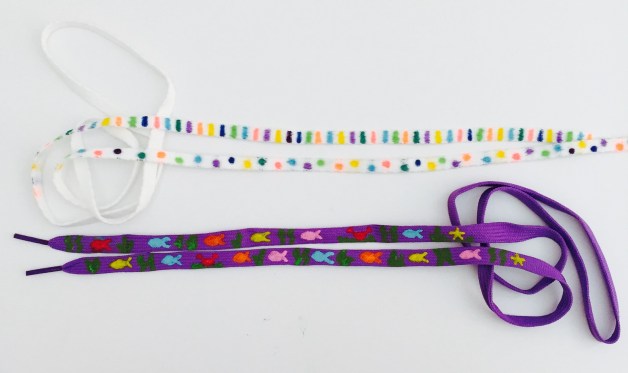
Sassy Shoe Laces


Did you know that having cool shoelaces makes you run faster? Well…that might not be exactly true, but you will definitely look good no matter what you’re doing if you make some unique laces for your shoes.

Supplies

  • Shoelaces in any color
  • Fabric paint or markers

Directions

  1. With the fabric paint or markers make dots, stripes, or any designs you like. You can even paint fish or flowers!
  2. Enjoy them on your run!

May 11 – National Night Shift Workers Day

celebrate-picture-books-picture-book-review-frankie-works-the-night-shift

About the Holiday

Today’s holiday honors all the people—medical personnel, firefighters, police officers, bakers, maintenance workers, and others who work the 3rd or night shift. These night owls work to keep us safe and protected, prepare treats for our morning repast, and maintain our living and work spaces for the next day. Take some time to thank a night shift worker and ask them about their perspective on the world.

Frankie Works the Night Shift

By Lisa Westberg Peters | Illustrated by Jennifer Taylor


In a quiet town after most people have gone to bed, Frankie the cat begins his work. He keeps busy emptying a wastebasket and cleaning two counters. From his doorway he calls other night workers to three meetings.

When the geraniums need watering, he sees that they are fed. It’s also his job to inspect the tool shelves, and tonight he discovers a stray intruder among the hammers. He chases it as it makes for the ladders—up and down, up and down—between the nail bins, ad up the stairs, causing a mess where there had just been order.

Frankie’s bosses wouldn’t approve, but he can’t worry about that now. He has his important job to attend to. But tonight is a wild night, and Frankie has awakened the management. “Be quiet, Frankie,” they shout. From their comfortable beds they ask, “What’s going on? Some of us have to work in the morning!”

And then the day workers see it—“Agh! A mouse!” They give him a task: “Go get it, Frankie!” and try to help by pointing out its whereabouts here and there. But Frankie is good at his job and pursues it through the cat door and into the backyard. It’s a night’s work well done! Frankie yawns and stretches. As he looks back at his domain, he’s glad he doesn’t work the day shift—there’s so much to clean up!

Frankie goes to bed in his red paint bucket in the hardware store window and dreams of relaxing at the beach on his well-deserved vacation.

Kids will love Lisa Westberg Peters’ frisky Frankie who is only doing his job but ends up creating chaos. Sometimes when you’re all in and concentrating on the work at hand, it’s like that, as kids and adults involved in play or projects well know. Peters’ clever story builds from Frankie’s playful antics in the hardware store to his necessary role of family protector and mouse dispatcher. The story contains an element of counting (Frankie empties one trash can, cleans two counters, calls three meetings…) which serves to enhance the humor.

Jennifer Taylor’s stunning mixed media illustrations make excellent use of digital photography. You almost want to reach out and pet Frankie or catch the objects flying in his wake. And when the little mouse peeks out from the broom or scampers across the floor, kids will say “aww!” or “eek!” depending on their courage. The first page of the streetscape at night is arresting for its uniquely designed old buildings. When I opened to this page, my graphics-loving daughter exclaimed, “Oh! What’s this book?!” and settled in to read it with me. Definitely a great beginning to an enjoyable read!

Ages 4 – 8

Greenwillow Books, Harper Collins Publishers, 2010 | ISBN 978-0060090951

Gardening for Wildlife Activity

celebrate-picture-books-picture-book-review-cattails

Creative Cattails


Cattails are so cool, just like their namesake felines. They’re sleek and sophisticated and inside holds mystery that bursts out when you least expect it! Here’s a simple craft for making cattails that will enhance any bouquet or décor.

Supplies

  • 6-inch by 5/8-inch craft stick
  • 3/16–inch by 12-inch dowel
  • Chunky brown yarn,  
  • Green origami paper, 8-inch square
  • Green craft paint
  • Paint brush
  • Glue gun

Directions

To make the cattail:

  1. Paint the dowel green, let dry
  2. Glue 1 inch of the dowel to one end of the craft stick with the glue gun
  3. Starting at the bottom of the craft stick, glue an end of the brown yarn to the end of the craft stick meets the dowel
  4. Wind the yarn upward around the dowel and craft stick to the top. You will leave the 1/2 –inch curved part of the craft stick open.  Then reverse.
  5. Wind the yarn downward, going past the end of the craft stick about ½ inch to make the end of the cattail
  6. Wind the yarn upward once more to the top
  7. When you reach the top, put glue on either side of the curved top of the craft stick and pull a little of existing yarn into the glued area, pinching it closed.
  8. Cut the end of the yarn from the skein and tuck the end into the glued top.

To add the leaf:

  1. Cut a thin triangle from one side of the origami paper, starting with a 1-inch base and angling to the top of the paper
  2. Glue the base to the dowel about 1 ½ inches from the bottom
  3. Wind the paper upward around the dowel, leaving 5 inches unwound
  4. Glue the paper to the dowel, letting the 5-inch section stick up

If you’d like to make another craft using chunky brown yarn, see my April 7 post on The Flying Beaver Brothers and the Crazy Critter Race by Maxwell Eaton III to create a cute spool beaver.

May 10 – Mother Ocean Day

celebrate-picture-books-picture-book-review-at-the-sea-floor-cafe

About the Holiday

The brain child of the South Florida Kayak Fishing Club and enacted in 2013, Mother Ocean Day promotes awareness of the beauty and wonder of the world’s oceans. Teeming with rare and surprising creatures and plants, the ocean remains one of Earth’s most amazing mysteries. Today, take time to enjoy all the ocean has to offer—go to the beach and walk, snorkel, swim, or fish—or if you’re more of a landlubber read a book about our Mother Ocean.

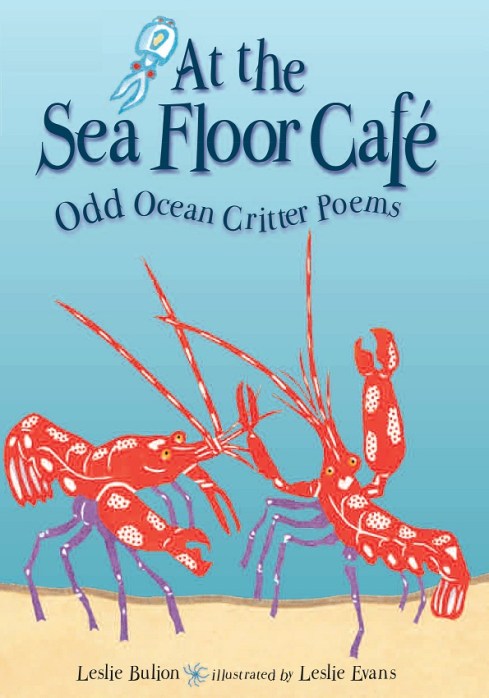
At the Sea Floor Café: Odd Ocean Critter Poems

Written by Leslie Bulion | Illustrated by Leslie Evans


With a jaunty exhortation to “Dive In!” Leslie Bulion invites readers to “…visit a habitat shallow and deep. / and boiling hot, where acids seep, / and frigid and pressured and mountainy-steep, / Come explore the sea! Seventeen species of “odd critters, enormous and tiny…hunters and foragers, hiders and peekers” are described in clever, informative verse.

The Coconut Octopus is a wily creature: “This octopus walks backwards on two arms, / And wraps the other six around its top. / It ambles free of predatory harms, / And thus avoids becoming shark-chewed slop.” The symbiotic relationship between the Leopard Sea Cucumber and the Emperor Shrimp is told in alternating lines of blue and red.

“I inch along.”

“We hitch a ride. / We tour the seafloor country side.”

“I’m ship,”

We’re crew. / We swab the decks / By eating scummy algae specks.”

I’m camouflaged / in leopard spots.

While not the swiftest / Of the yachts, / A top-notch spot to meet a mate.”

When threatened I eviscerate.

To spew my guts / Is quite a chore, / And it takes weeks / To grow some more. / But I keep predators away.

We live to crew / Another day.

The unexplained habit of the convict fish, which “eats” its young every night just to spit them out again, is described in “Fish Food,” and readers can dig their teeth into another meal-related relationship between the reef shark and the cleaner wrasse in “Healthy Eating.” In “Dental Health” readers learn that narwhal’s tusks are much more than defense mechanisms. Instead, each tooth “contains ten million nerves to sense / environmental evidence.” And what’s more—“…when we see them crossing spars / and jousting underneath the stars, / one’s tusk above and one’s beneath, / it’s not a fight; their brushing teeth.”

“Crabby Camouflage” has never been so elaborate or decorative as that concocted by the jeweled anemone crab, and “Dolphin Fashion” reveals an ingenious way to protect a tender snout: “A bottlenose counseled her daughter: / Put this sponge on your beak underwater. / You can scare out more fish, / Poke sharp stones as you wish, / And your skin’ll stay smooth like it oughter.”

Snapping shrimp, epaulette sharks, the violet snail, sea spiders, krill, the broody squid, sipohonophores, erenna, larvaceans, osedax, and the remotely operated vehicles that give us a view of the ocean floor are also celebrated in this fun poetry collection.

Each poem is followed by scientific information about the subject of the verse.

Leslie Bulion piques readers’ interest in these fascinating ocean creatures with her smart, witty rhymes that reveal little-known facts.

Leslie Evans, with her printmaker’s eye, illustrates the deep blue pages with stylized depictions of the fish and animals that populate the sea, allowing readers to visualize the quirks and adaptations written about.

Ages 6 and up

Peachtree Publishers, 2011 | ISBN 978-1561455652

Gardening for Wildlife Month Activity

celebrate-picture-books-picture-book-review-flower-vase

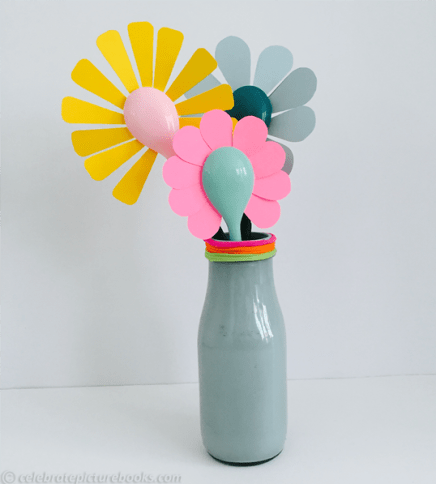
Spoon Flowers

The rounded scoop and long “stem” of plastic ice-cream spoons make a perfect base for pretty wildflowers. You can use the printable petal template or make petals of your own design to fill your vase with color

Supplies

  • Printable Petal Template
  • 3 – 4 plastic ice-cream spoons, these are available in different colors at party supply stores or you can paint them the color you’d like
  • Multi-purpose paint in colors of your choice, if you are painting the spoons
  • Heavy craft paper in your favorite flower colors
  • Green ribbon
  • Ribbon, hairbands, weaving loom bands, or colored wire
  • Glue gun or strong glue
  • Paintbrush 
  • Scissors
  • Beans, sand, pebbles, or glass or plastic beads to fill the vase

Directions

  1. Print or trace the petals onto colored paper. The number of petals you need for each flower will depend on the size of the spoon
  2. Cut out the petals
  3. With the glue gun or strong glue, attach the petals to the spoon, gluing the end of the petals around the inside edge of the spoon, Let dry
  4. Wrap the handle of the spoon with the green ribbon and glue in place
  5. Fill the vase ¾ full with beans, sand, pebbles, or beads
  6. Decorate the rim of the bottle with the ribbon, bands, or wire
  7. Push the flower stems into the vase and arrange