April 9 – Cherish an Antique Day

Once Upon a Memory by Nina Laden and Renata Liwska Picture Book Reivew

About the Holiday

When you look at an antique chair with its faded upholstery or a brooch handed down from your great-great-grandmother, do you ever think about the day when it was new? Imagine the excitement of sitting in the chair for the first time or opening the jewelry box on a shining pin. Today we remember our collective and individual treasured past, held in the objects of days gone by. Cherish an Antique Day is a perfect time to learn more about the stories of any antiques you may own.

Once Upon a Memory

Written by Nina Laden | Illustrated by Renata Liwska


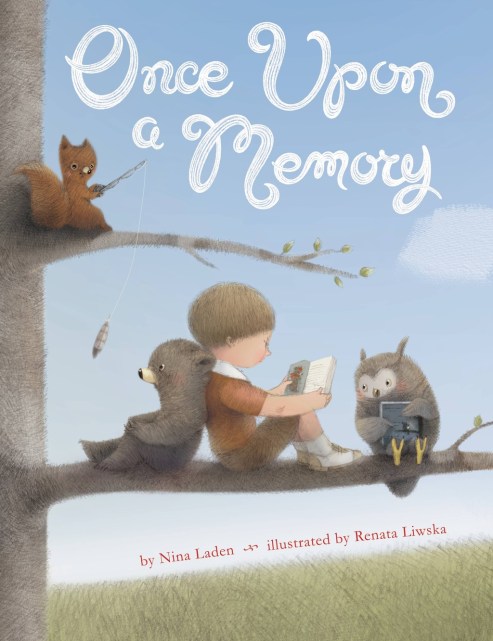
This stunning, quiet book is so evocative in its premise that certain lines can bring a lump to your throat even before you reach the endearing end. A little boy sits in his playroom surrounded by his stuffed toys and pet dog, enjoying a tea party. A feather blows through the window, eliciting the question, “Does a feather remember it once was…a bird?” and then more musings: “Does a book remember it once was…a word?”

The simple patterned phrasing and rhyming couplets lend the story a surprising suspense as the reader tries to guess what one-time material or emotion transformed into another before the clever answer is revealed: “Does a statue remember it once was…stone? Does an island remember it once was…unknown?”

In the last pages the queries become more personal—“Does love remember it once was…new? Does a family remember it once was…two?” Adult readers will recognize where the reflective path leads, giving this book a deeper level of meaning for both adults and children: “Does the world remember it once was…wild? Will you remember you once were…a child?”

The question is not an idle one. In these busy, stressful times it’s good to remember what it meant—and means—to be a child.

Nina Laden’s subtly anthropomorphic world invites readers into a new realm of imagination as well as reality. Readers and listeners receive a new perspective on life as Laden’s poetic voice opens up a wide world of possibilities.

Renata Liwska’s illustrations are simply adorable and represent each couplet with depth and imagination. The feather that blows in the little boy’s window comes not from some single, random bird, but from a happy barber shop where an owl is getting a haircut. “Book” is both the volume lovingly read by the boy and the word painted on a busy bookshop sign. Liwska’s sweet bears, squirrels, beavers, birds, raccoons, bats and more as well as the tiny boy are rendered in gauzy browns, grays, reds, and yellows that are as soft and comforting as a favorite memory.  Once Upon a Memory would be a perfect companion on a walk, a trip, or during times of waiting, where readers and listeners could make up their own “once was” pairs. Its cadence also makes it a nice, comforting bedtime book.

Ages 4 – 7

Little Brown and Company, 2013 | ISBN 978-0316208161

Cherish an Antique Day Activity
CPB - Antique Day

Share the Stories of Your Antiques


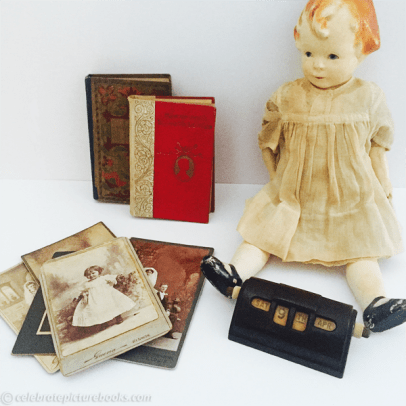
Whether you have old photographs of great-great-grandparents or special heirlooms, today’s holiday is a wonderful time to share them and the stories behind them with children. The feeling of being part of several generations or holding history in your hands is exciting and comforting and can lead to more understanding and closer relationships.

Adults can collect a few family heirlooms and/or photographs to share with children. Children can choose which of their toys, books, or other favorite objects they think will last to become a cherished antique in the future.

Take time to get together and discuss the objects you’ve collected with a cup of tea or hot chocolate and some special treats.

April 8 – National Zoo Lovers Day

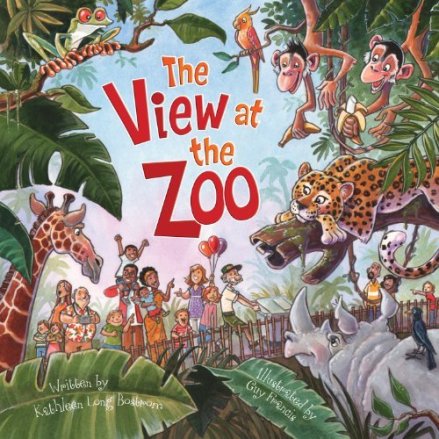
The View at the Zoo by Kathleen Long Bostrom and Guy FrancisAbout the Holiday

Zoos are wonderful places to see and learn about exotic animals from around the world. In addition to creating educational exhibits, zoological experts are involved in the preservation of endangered species. To celebrate the day, you might visit your local zoo, donate your time or money to further a zoo’s mission, or consider “adopting” a zoo animal—many zoological institutions offer this fun and rewarding program.

The View at the Zoo

Written by Kathleen Long Bostrom | Illustrated by Guy Francis


“Rise and shine! Attention, please! Monkeys get down from those trees!” So calls the zookeeper as he begins his rounds, waking up the zoo animals to greet another day of visitors. Once the bear cubs are up, the lion’s mane is combed, the elephant has wiped his nose, and the giraffes are standing tall, the gates are flung open.

The day is full of excitement, observations, and education—“My, what silly things they do, all these creatures at the zoo.” Some creatures walk and waddle to an inner beat. Some carry babies in pouches or on their backs while others are noisy—howling and shrieking. And look at how some love to eat! There are those who primp to stay neat and clean, and those that will nip your fingers if you get too close!

Yes, the zoo is full of intriguing specimens! As the sun goes down the visitors head for the exit, and the animals watch them leave. It’s been another good day; those people put on quite a show! The owl exclaims, “What a hoot! Folks have no clue the view that we have at the zoo!”

The View at the Zoo is a perfect union of words and illustration. Kathleen Long Bostrom’s text tells the story while Guy Francis’s illustrations reveal the meaning of the story. Kids will have fun picking the animal and people pairs out of the crowd who are “dancing to their own inner beat,” carrying babies on their backs or in pouches, making noise, chowing down, getting clean, and flashing dangerous teeth. This zoo is colorful, wild, and populated with animals happy to study the exotic creatures on the other side of the fence.

Ages 3 – 6

Ideals Children’s Books, 2010 | ISBN 978-0824956295

National Zoo Lovers Day Activity

CPB - Zoo Day Word Search II (2)

Round up the Animals! Word Search


Find all the animals in the zoo! Print this Round Up the Animals! word search and have fun! Here’s the Solution.

April 7 – International Beaver Day

The Flying Beaver Brothers and the Crazy Critter Race by Maxwell Eaton III

About the Holiday

Beavers are pretty amazing creatures. With their prominent teeth these largest members of the rodent family cut down large trees. They use the bark, buds, and small twigs for food then gnaw the trunk and branches into smaller parts and build dams that are just about as strong as anything people can construct. These dams can help prevent floods, clean the water supply, and restore wetlands. The largest beaver dam is in Wood Buffalo National Park in Alberta, Canada.

Beaver Day is celebrated to bring awareness to the declining beaver population and to promote their protection.

The Flying Beaver Brothers and the Crazy Critter Race

By Maxwell Eaton III


The flying Beaver brothers are back in a vine-popping, lasso-swirling adventure! Bub is reading Penguin Giant to Bob and Bob when Ace comes home with an intriguing ad for The Crazy Critter Race. The winner will receive—not pancakes as the penguins hope—but a free houseboat. The house Bob and Bob built for the Beaver brothers is a little less than desirable, so Ace and Bub swim over to Critter Houseboat Sales and Service to sign up.

There they meet the yeehawin’ cowboy hat-wearin’ crazy critter who has organized this unusual event. They also encounter the rope-snapping Raccoon sisters, and the competition is on! Crazy Critter explains the rules of the race: It seems the islands’ trees have been destroyed by ornery baboons, so the object of the race is to replant trees from a jar of seeds Crazy Critter gives them. The first team to reach the top of each mountain must plant one seed. The team who completes the race and rings the bell at the finish line will win a houseboat.

The racers take off, but the Beaver brothers and Raccoon sisters soon leave the rest of the competition in their wake. They both run to the top of the first mountain and plant their seeds. With a Rugga Rugga and a loud Brorg! two enormous vines break the earth and thunder toward the sky! In all the mayhem Ace and Bub’s jar of seeds opens and spills its contents on the beach.

In the blink of an eye, vines are shooting out of the ground and grabbing everything in sight. In fact, “Everything Vine” is the name of this Kudzu cousin because it covers everything. Ace and Bub go to work with their gnawing teeth, but even they are no match for the vine. Unaware of the disastrous consequences, the Beaver sisters use some pretty impressive moves to get ahead even as they continue planting seeds.

Now vines are erupting willy-nilly, threatening every land mass and even Beaver Island. Crazy Critter denies all knowledge of the fatal seeds, but has a solution of his own—if the islands are uninhabitable, he will sell houseboats to all the ex-habitants. Crazy Critter finally fesses up to his evil plan, but what can anyone do now? The vines are taking over!

The Beaver brothers look at the Raccoon sisters and the Raccoon sisters look at the Beaver brothers. They know that by working together they can save the islands. The Raccoon sisters use their awesome roping skills to gather the vines while the Beaver brothers chomp them in half, destroying them. Beaver Island is saved!

But who wins the houseboat? Let’s just say Crazy Critter isn’t so crazy after all.

This graphic novel-style book—the 6th in the series—will appeal to reluctant readers as  well as kids who enjoy a wild, humorous adventure. The quick pace of the story, teamed with action-packed drawings, will keep fans of the series cheering for their familiar friends in this race that just doesn’t seem right. Kids will laugh out loud at the funny asides and sound effects. A light-hearted lesson on competition and cooperation ties the story together in a satisfying finish.

Ages 6 – 9

Knopf Books for Young Readers, 2015 | ISBN 978-0385754699

International Beaver Day Activity

CPB - Beaver craft picture (2)

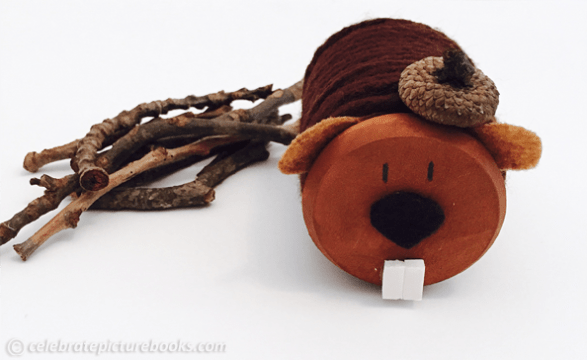
Make a Spool Beaver


Do you have a gnawing need to have a beaver of your own? Make one with this Spool Beaver craft!

Supplies

  • Printable Ears and Nose Template
  • 2-inch wooden spool, available at craft stores
  • 1 6-inch long x ¾ inch wide craft stick
  • Small piece of foam board
  • Brown “chunky” yarn
  • Brown felt, small piece for ears and tail
  • Black felt, small piece for nose
  • Acorn top for hat (optional)
  • Brown craft paint
  • Black craft paint
  • Black marker
  • Strong glue
  • Paint brush
  • Scissors

CPB - Beaver craft picture with tail

Directions

  1. Print the Ears and Nose template
  2. Paint the spool with the brown paint, let dry
  3. Cut the ears from the brown felt
  4. Cut the nose from the black felt
  5. Cut a piece from the end of the craft stick
  6. Paint the craft stick brown or black, let dry
  7. Cut two small pieces from the foam board, ½-inch long x 3/8 inch wide
  8. When the spool is dry, glue the ears to the spool, leaving the ears sticking up over the rim of the spool
  9. Glue one end of the yarn to the spool
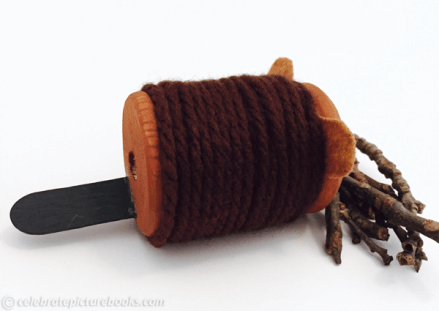
  10. Holding the spool horizontally, wind the rest of the yarn around the spool back and forth from front to back. Glue the end to the body of yarn. This will be the bottom of the beaver.
  11. Glue the nose over the hole in the spool
  12. Glue the teeth below the nose
  13. Glue the flat edge of the craft stick to the back of the spool to make the tail


April 5 – National Read a Road Map Day

Maps by Aleksandra and Daniel Mizielinski Picture Book Review

About the Holiday

Sure, GPS can get you where you want to go—even with voiced directions—but how do you know where you want to go? How do you discover what’s out there in your neighborhood, town, state, country? You can read a road map! It’s fascinating to see how roads snake along the terrain, around lakes, and over hills as well as crisscross in dozens of places but still get you where you want to go. And if you want to see how a place has changed over time, compare an old road map to a current one. So get out your road maps and start investigating!

Maps

By Aleksandra Mizielińska and Daniel Mizielińska


The world is a big and intriguing place in this oversized picture book. Forty-two countries are represented within its pages and populated from border to border and even from page edge to edge with cultural, historical, zoological, economic, agricultural, culinary, and linguistic information, all illustrated in stunning thumb-sized detail.

Whether you’re casually flipping through the book or examining each page, a colorful or unusual detail will capture your attention and demand a lingering look, which leads to discovering more and more intriguing facts. Opening the book to Switzerland, I noticed the Appenzeller sheepdog then the Appenzeller cheese round, both from the town of Appenzell. But what’s this? Schwingen? And why are the two guys wearing their shorts on the outside of their pants? It’s Swiss Wrestling! A quick Google search tells me that the wrestlers wear special “breeches” with belts for getting a good grip for tossing opponents!

Another flip of the pages brings me to Nepal, which is so mountainous! It’s home to the Himalayas which include Mount Everest (the tallest peak on earth), as well as Kangchenjunga, Lhotse, and Makalu (the third, fourth, and fifth highest peaks). As you might imagine you can engage in mountain biking, but beware of the Mugger Crocodile!

G’day, Mate! Welcome to Australia! Here you’ll find a Superb Lyrebird with a phenomenal tail, sneak a peek at a short-beaked echidna with a spiky coat and a mole-like snout, and learn to duck for a gliding possum. If you’re a sports fan, you’ll be interested in the didgeridoo, and remember vegemite? This is where it’s from!

I could go on and on! There are so many amazing animals, monuments, people, and structures around the world just waiting for you to discover them! The thick, matte, softly muted pages of Aleksandra and Daniel Mizielińska’s Maps are reminiscent of fine cartographers’ volumes. This book is a fantastic resource for teachers, homeschoolers, and students with curiosity or a report to write. Just a glance will give readers ideas, and a more thorough examination will open up a world of possibilities! Maps is a must-have for any young person’s or armchair traveler’s bookshelf.

Ages 5 and up

Big Picture Press, 2013 | ISBN 978-0763668969

National Read a Road Map Day Activity

CPB - Map Day II

Map Jigsaw Puzzle


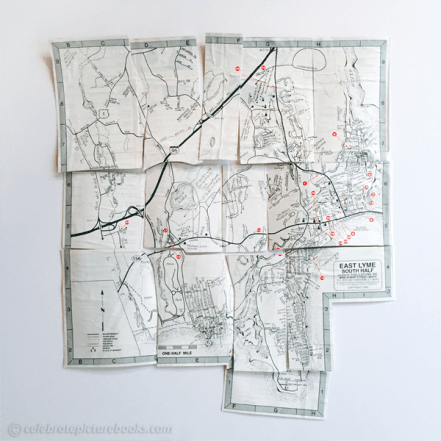
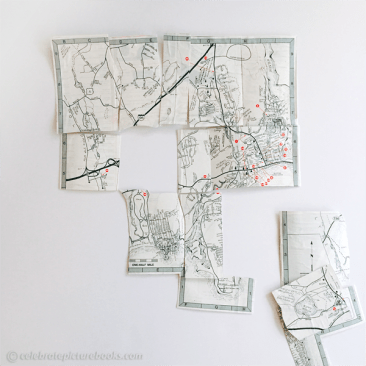
Sometimes reading a map is like putting together a puzzle—so why not make a puzzle out of a map? It can be fun to use a map of your town or state or to use a map of a state or country you’d like to visit!

Supplies

  • Small to medium size map (maps are often offered free at tourist stops, town halls, or other tourist information offices or racks)
  • Poster board
  • Glue
  • Scissors

CPB - Map Day

Directions

  1. Use the entire map or cut a desired-sized section from a map
  2. Glue the map to the poster board, let dry
  3. Cut the map from the poster board
  4. Cut the map into puzzle sections, these can be straight-sided sections or ones with interconnecting parts

April 1 – National One Cent Day

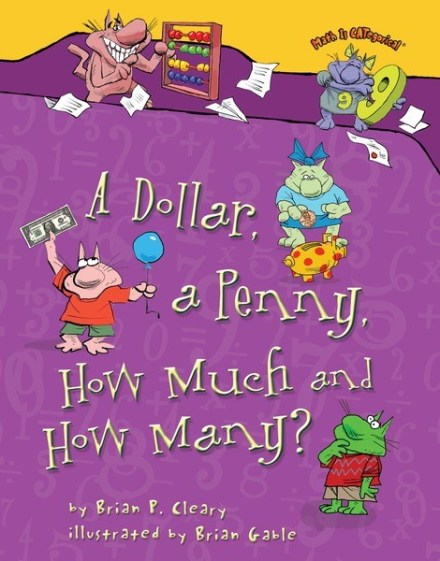
A Dollar, a Penny, How Much and How Many? by Brian Cleary and Brian Gable Picture Book Review

About the Holiday

Do you pick up a penny on the street or step over it as worthless? If you do the latter, you might want to reconsider. Today we celebrate the one-cent coin and its historical and artistic significance. The penny has been in circulation since 1793 and derives its name from the English “penny” but is pluralized in the US as “pennies” instead of the British “pence.”

It wasn’t until 1909 that Abraham Lincoln’s face appeared on the coin as part of President Roosevelt’s initiative to improve the artistic nature of the country’s coinage. Roosevelt enlisted famed sculptor August Saint-Gaudens to design the new penny, as well as the other gold pieces in use at the time. While the designs of other coins have changed over the years, Lincoln has remained the iconic image on the copper-colored penny.

While a single penny may not buy much these days, added together they can still make a difference. And remember the old adage: Find a penny pick it up. All the day you’ll have good luck!

A Dollar, a Penny, How Much and How Many?

Written by Brian P. Cleary | Illustrated by Brian Gable


Part of the Math is CATegorical series, this book is all about money—what it looks like, what it’s used for, and how the different denominations add up to equal the same price for a desired or needed item. Each two-page spread relates in verse a little lesson. The book opens with a general definition of money: “Money is the term for coins and bills that people use / to buy things such as pizzas, pencils, planes, and chains and shoes.”

Kids learn the names of our coins, what they are made of, and the value of each. They discover that coins can be added together or mixed and matched—10 pennies equal a dime; two dimes and a nickel equal a quarter, and so on. The story moves to a dollar store, where the cats buy different items with various combinations of coins. Jenny has 4 quarters, while her brother has 10 dimes. Anna has 100 pennies and Zack is carrying 7 dimes, 1 quarter, and 5 pennies. Kids see that all of these combinations have the same value.

Paper money is up next. A short description of the minting process leads to a discussion of value as the cats purchase a $20 book with various bills.

Brian Cleary’s catchy rhymes and straightforward explanations make this a perfect book for introducing money, its value, and the mathematical concepts of addition, subtraction, and multiplication of using money to buy things.

Brian Gable’s well-known comical cats of the series walk kids through the pages as they ponder prices on items on the shelf and the amount of money in their pocket. The cats’ humorous expressions and silly situations turn this money math lesson into a funny and fun experience. The brightly colored pages focus on the coins and bills, which are clearly displayed, and the direct connections between this money and the objects being bought is obvious.

Ages 5 – 9

Millbrook Press, 2012 | ISBN 978-0822578826

National One Cent Day Activity

CPB - Penny matching

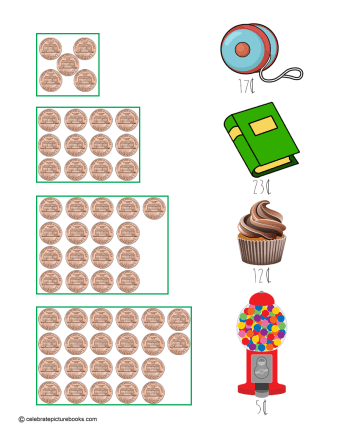
Count Your Pennies! Matching Game


Counting pennies can be so much fun! Saving them can be even better! Collect enough pennies and you can buy something special or donate to your favorite cause! In this printable Count Your Pennies! matching game, draw a line from the stack of pennies to the object they will buy.

March 31 – Eiffel Tower Day

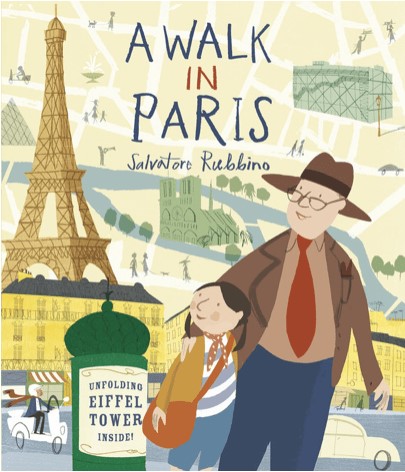
A Walk in Paris by Salvatore Rubbino Picture Book Review

About the Holiday

The Eiffel Tower is one of the most recognized monuments in the world. Its iconic shape was designed by Gustav Eiffel, for whom the tower is named. It was built for the International Exhibition of Paris and opened on March 31, 1889 to commemorate the 100th anniversary of the French Revolution.

The Eiffel Tower stands 984 feet high and was at the time of its opening the world’s tallest building, an honor it held until the Chrysler Building was erected in New York in 1930. When the International Exhibition’s 20-year lease on the land expired, the Eiffel Tower was almost taken down, until people realized it could be used as a radio antennae.

Of course, all these facts don’t convey the magic of the tower itself. To celebrate this auspicious date, visit the Eiffel tower if you live close or take a vicarious walk in the fabled city of Paris with today’s book. You can also make and enjoy the French Butter cookie recipe found below.

A Walk in Paris

By Salvatore Rubbino


A girl and her grandpa visiting the city of Paris emerge from the metro at Place Maubert just in time to join the throng of shoppers perusing the colorful food stalls on Market Day and to buy some famous French cheese. They continue on their tour through old streets and new boulevards, avoiding the gushing water for the street cleaners, until they reach the fountain at Place Saint-Michel. Their meanderings take them to the River Seine and Notre-Dame. After a long wait in line, they climb to the Chimera Gallery, 151 feet above the ground. From there they look out on the city, all the way to the Eiffel Tower.

On the ground once more they pass salons and boutiques and settle into a cozy bistro for lunch. They visit the Marais, a fashionable area of shops and cafes built on what was once marshland. Up next is a structure that seems to have been built inside-out since all its pipes and escalators are on the outside! This is Pompidou Center, a famous gallery of modern art. The little girl proclaims it formidable!, which means “wonderful!”

Time for a snack! The grandpa-granddaughter duo find themselves in front of a pâtisserie window full of delectable cakes. It’s so hard to choose! Back on the boulevard, they make their way to the majestic building and glass pyramids of the Louvre Art Museum, where perhaps the world’s most famous painting—the Mona Lisa—hangs. A well-deserved rest comes in Tuileries Gardens, where the grandfather enjoys his favorite view and the girl makes a friend by the fountain pool.

It’s getting late and time to leave, but there is one more site to see. As the sun goes down and the night sky darkens, the grandfather treats his granddaughter to a magnificent event – the bright, twinkling lights of the Eiffel Tower!

Through A Walk in Paris Salvatore Rubbino has created a beautiful armchair tour of one of the world’s great cities. The large format of this picture book allows for broad views of the landmarks and vistas, giving children a good idea of the vastness of the city. Each page is dotted with trivia and factual information, printed in small type that does not disturb the flow of the illustrations.

The illustrations in muted yet rich tones and with fine details aptly capture the culture and grandeur of the City of Lights. A fold-out page of the luminescent Eiffel Tower is sure to elicit some oohs and ahhs from children.

Ages 4 – 9 (the embedded facts and illustrations make this a good book for older children and research projects also)

Candlewick Press, 2014 | ISBN 978-0763669843

Eiffel Tower Day Activity

CPB - Eiffel Tower Cookies

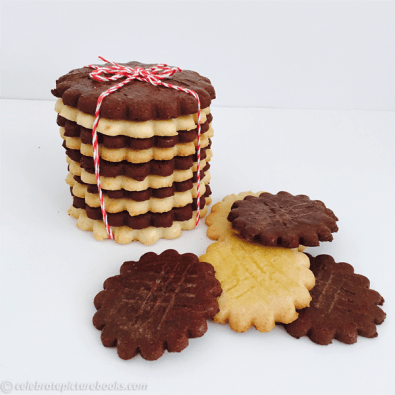
French Butter Cookies – Lemon and Chocolate


Whip up a batch of these delicious cookies to eat while enjoying A Walk in Paris. There’s no better way to spend a day than to take a trip for a new place—even if you do it in the coziness of your own room!

Ingredients for Lemon Cookies

  • 10 tablespoons unsalted butter (room temperature)
  • 1/2 cup sugar
  • 1 large egg
  • 1 1/4 teaspoons vanilla extract
  • 2 cups flour
  • 1/2 teaspoon baking powder
  • 1/4 teaspoon salt
  • 2 teaspoons lemon zest (or to taste)

For Egg Wash

  • 1 egg
  • 1 tablespoon water

For Chocolate Cookies

  • 1 ½ cups flour
  • ½ cup cocoa powder
  • ½ teaspoon cinnamon
  • ¼ teaspoon ground ginger

Directions

  1. In a bowl beat butter and sugar until light and fluffy
  2. Add the egg and vanilla extract and beat until blended
  3. Add the flour, baking powder and salt and beat just until incorporated. Do not over mix the dough. **For Chocolate Cookies use 1 ½ cups flour and add cocoa powder, cinnamon, and ground ginger before mixing**
  4. Transfer the dough to a lightly floured work surface, knead the dough a few times to bring it together, and then divide the dough in half.
  5. Wrap each half in plastic wrap and refrigerate for at least one hour or until firm
  6. Preheat oven to 350 degrees F (177 degrees C) and place rack in the center of the oven.
  7. Line two baking sheets with parchment paper and set aside.
  8. Remove one portion of the dough from the refrigerator and place on a lightly floured work surface. Roll out the dough until it is 1/4 inch (1 cm) thick.
  9. Using a lightly floured 2 inch (5 cm) round, fluted cookie cutter (or other cookie cutter of your choice), cut out the cookies and place them on the prepared baking sheet.
  10. Put the baking sheet of cut out cookies in the refrigerator for about 15 -20 minutes to chill the dough.
  11. Meanwhile, in a small bowl, whisk the egg with the water for the egg wash. Remove the cookies from the refrigerator and brush the tops with the egg wash.
  12. Then, with the tines of a fork or a toothpick, make a crisscross pattern on the top of each cookie.
  13. Bake cookies for about 12-14 minutes or until golden brown around the edges.
  14. Cool cookies on wire rack.

March 30 – National Pencil Day

The Pencil by Allan Ahlberg and Bruce Ingman Picture Book Review

About the Holiday

Writers and artists, this day is for you! On this date in 1858 Hymen Lipman received a patent for the very first graphite pencil with an eraser attached. Lipman must have been an optimist because the pencil he created was ¾ graphite and ¼ India rubber eraser. The user would sharpen both ends to expose the material. There are conflicting reports on why most pencils sport that familiar yellow hue, but both agree that the color was associated with grandeur. One fascinating fact about this most noble instrument is that a single one can pen pencil 45,000 words or draw a line 35 miles long!

So sharpen those pencils—whatever color they are—and spend this day creating something wonderful!

The Pencil

Written by Allan Ahlberg | Illustrated by Bruce Ingman


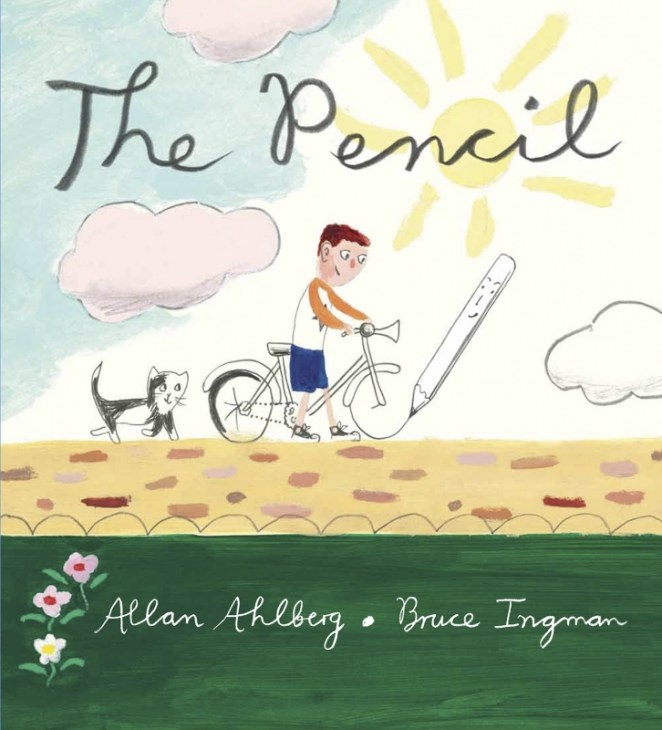
Even before the title page readers learn of a little pencil, alone in the world. One day the pencil quivers and begins to draw. The pencil draws a boy, who asks for a name, and receives “Banjo” in reply. The boy wants a dog, and the pencil obliges. Bruce is the dog’s name, and he wants a cat. Mildred is immediately created, and of course Bruce chases Mildred. Banjo chases Bruce. They need a place to run, so the pencil draws a house, a town, and a park.

All this excitement makes the trio hungry and tired. Banjo demands the pencil draw him an apple, Bruce wants a bone, and Mildred really wants a mouse but settles for cat food. There’s just one problem—the food is so unappetizing in black and white. The pencil thinks for a bit and comes up with a solution. He draws a paintbrush named Kitty. Kitty colors the food, the boy, the dog, the house, the town, and the park. Mildred is left as created – she’s a black-and-white cat anyway.

The team of Pencil and Paintbrush create a family, a friend for Bruce, a ball (Sebastian) for Banjo, and a kitten for Mildred. But all these extra characters cause trouble. Sebastian breaks a window, and the mom, dad, sister, and grandpa aren’t completely satisfied with their traits. What’s a pencil to do? Draw an Eraser, of course!

The eraser takes care of the problems, but grows fond of his power to rub things out. He erases the table, chair, front door—the whole house. And that’s not all! Nothing the Pencil and Paintbrush have created is safe. Eraser rubs everything out until all that’s left is the pencil and the eraser locked in opposition.

The pencil draws a wall, a cage, a river and mountains with fierce animals but none of it is a match for the eraser. Then the pencil has a brainstorm and draws…another eraser! The two erasers engage in an epic battle, and in the end they rub each other out.

The Pencil recreates everything he had before, and Kitty colors it all in, including a new picnic with a runaway boiled egg named Billy and 10 A-named ants to clean up the crumbs. As the day fades into night, a moon appears in the sky along with a cozy box for Pencil and Paintbrush to sleep in.

Allen Ahlberg’s endearing story of a little pencil who creates himself a world full of friends and excitement as well as the inevitable conflict will appeal to kids for whom the imagination looms large and even competes with and enhances reality. On a subtle metaphorical level, as the eraser rubs out everything in its path, kids may see that simply getting rid of problems can sometimes cause more, and that resolution is a better tact.

Bruce Ingman’s illustrations deftly depict the friendship and collaboration between Pencil and Paintbrush. Graphite lines outline the characters and objects that Pencil draws, and the colorful accents from Paintbrush are vivid and joyful.

Ages 4 – 8

Candlewick Press, 2012 | ISBN 978-0763660888

National Pencil Day Activity

CPB - Pencil Maze

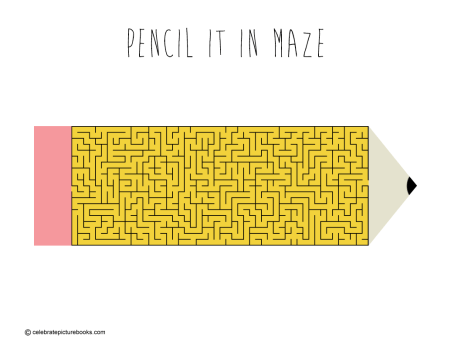
Pencil It In! Maze


Line up here to test your skills against this printable Pencil It In! pencil-shaped maze. Solution included. Sharpen your pencil and start having fun!

Picture Book Review