March 21 – World Poetry Day

Nasty Bugs by Lee Bennett Hopkins and Will Terry Picture Book Review

About the Holiday

World Poetry Day, an initiative of the United Nations Educational, Scientific, and Cultural Organization, recognizes the important role poetry plays in people’s lives across the world and over time. The day promotes small publishers of poetry as well as oral poetry traditions and works to strengthen the connection between poetry and other forms of expression. Another objective is to “support linguistic diversity thorough poetic expression and to offer endangered languages the opportunity to be heard within their communities.”

Celebrations on this day include poetry readings, school lessons focused on poetry and poets, poetry writing sessions, and poetry readings by professional and amateur poets in schools and other venues.

Nasty Bugs

Poems Selected by Lee Bennett Hopkins | Illustrated by Will Terry


Who in the world can resist bugs? They’re in every country, every city, every town, even every house! And they have so much going for them—lots of legs, pincher mouths, transparent wings, amazing survival skills, and so much general creepy-crawliness! Bugs may be a little (or a lot) icky, but you can’t deny that they’re fascinating.

Nasty Bugs brings together 16 poets to turn the traits of all kinds of insects, from stink bugs to chiggers to water bugs and more, into creative odes that tickle the funny bone as well as teach. Readers learn from Cynthia S. Cotton’s “Stink Bug” that “Some spread their wings in flight, / Some look scary, / some taste bad, / some use camouflage / to blend in just right.”

Rebecca Kai Dotlich exposes the boll weevil: “I am an evil weevil, / a cotton-craving beetle / whose reputation’s rotton / ‘cause I gobble crops of cotton, / yes I do.” And the Colorado Potato Beetle? Among other quirks, X. J. Kennedy reveals its name is a bit of a misnomer: “His other name’s Potato Bug. / This munching desperado / infests our gardens coast to coast. / Not just in Colorado.”

April Halprin Wayland gives voice to the fire ants’ tribal cry “All for one and one for all!” as they jump into action when “Flood waters rise! / Quick, form a ball—/ our larvae, pupae, eggs, and Mother Queen inside! / We roll this writhing globe, / take turns on top / so all breathe air, so all survive.”

“Spoiled Rotton” by J. Patrick Lewis may make grammarians squirm with this pointed description: “I’m a comma / in a drama / of disgusting devastation.” while readers will be itchin’ to know more in Rebecca Andrew Loescher’s “Ode to Chigger” with lines such as “You hatch with six small legs for running, / then grow two more—for leaps most stunning,” Poems about flies (Ann Whitford Paul), wasps (Michele Krueger), fleas (Marilyn Singer), lice (Amy Ludwig VanDerwater), ticks (Kami Kinard), termites (Alice Schertle), cockroaches (Fran Haraway), and bedbugs (Kristine O’Connell George) also contribute to the buzzzzz of this anthology.

But if bugs, well…bug you, you may find these lines in Lee Bennett Hopkins’ “Ode to a Dead Mosquito” most satisfying: “You of little brain / didn’t you know / I felt your sting / the instant you / began to drain? / So— / I whacked you. / SMACK! / You dropped.”

Will Terry lends his distinctive talent to making this book as colorful, bold, and eye-popping as nature itself. Each insect, depicted in its favorite milieu, nearly flies, creeps, or chomps it’s way off the page. Brilliant greens, reds, yellow, oranges, and blues give life to these most prolific pests, and their prominent features – whether pinchers, stingers, gnawing mandibles, or even stinky odor – are inspiringly drawn.

More facts about each bug are given in the back of the book, and are a must read. Whether insects make you squirm with discomfort or squeal with delight, Nasty Bugs is fun.

Ages 5 – 9

Paperback: Puffin, Penguin Group, 2016 | ISBN 978-0147519146

Hardcover: Dial Books for Young Readers, Penguin Group, 2012 | ISBN 978-0803737167

World Poetry Day Activity

CPB - Nasty Bugs magnet II (2)

Rockin’ Bug Magnet or Paperweight


On World Poetry Day it’s fun to write a poem of your own. Whether your creation is long or short, you can proudly display it using one of these Rockin’ Bug Magnets.

Supplies

Rocks, small and flat work best for magnets. Larger rocks are great for paperweights. You can find rocks in your yard, at the beach or park, or buy them from craft stores or nurseries.

  • Paint in your favorite colors
  • Paint brush
  • Small to medium round magnets, available at craft and hardware stores
  • Googly eyes
  • Strong glue

CPB - Nasty Bugs magnet (2)

Directions

  1. Wash rocks and let them dry
  2. Create your own creepy, crawly bug on the front of the rock
  3. Paint your bug
  4. Let the paint dry
  5. If you want to give your insect buggy eyes, glue googly eyes to the rock.
  6. Glue a magnet to the back of the rock
  7. Hang it on the refrigerator or any metal surface


If you love books, you must have caught the reading bug! Check out another great book and craft on March 2—Read Across America Day and make an “I’ve Got the Reading Bug” Bookplate for your favorite books!

CPB - Reading Bug Book Plate (2)


March 19 – National Poultry Day

Chicken Big by Keith Graves Picture Book Review

About the Holiday

Perhaps someone’s too chicken to publish much information about this holiday, but even without the details, it’s certainly an eggsellent day to remember our feathered friends of the barnyard variety, who also happen to feature prominently in picture books of all kinds.

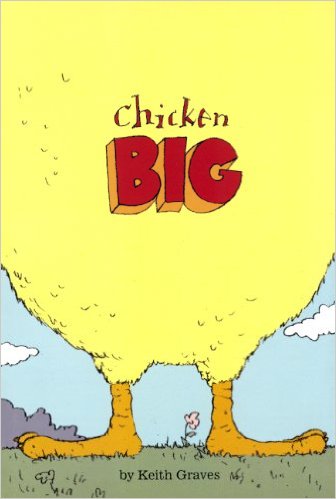
Chicken Big

By Keith Graves


Something big is hatching at the teeny little farm. Not only big, but humongous! Chicks aren’t supposed to be that big, so what is it? The small chicken agrees that whatever it is, it’s big; the smaller chicken goes so far as to call it enormous; and the smallest chicken declares it’s an elephant, and warns that indoor elephants are dangerous! The chickens all concur on one thing, though—this creature is too big to stay in the itty-bitty coop. The newly hatched chick, listening to all this squabbling, doesn’t feel like an elephant and wishes he were a chicken.

The next day an acorn conks the smallest chicken on the head, causing the familiar “the sky is falling” panic to hit the teeny farm. While the chickens are running around like chickens with…well, you know, the big chick discovers that acorns are tasty. Seeing the chick eating acorns convinces the smallest chicken that their coopmate is indeed a…squirrel!

When the rains come, the big chick protects the others under his wing, so the smallest chicken decides this barnyard biggie is an….umbrella! It doesn’t take long for the smallest chicken to realize she is wrong, and that the yellow fellow with the chilly wind blocking skills is a…sweater!

When the chickens return to the coop for naptime and discover their eggs have been stolen, they boo hoo hoo into their feathers while the humongous chick scouts out the fox, who is carrying the precious cargo into his den. With a hop and a jump the big chick spans the mile and peeps into the fox’s home just as he is about to fry up some lunch. Frightened by the “hippopotamus,” the fox scampers away.

Big chick brings back the eggs and is proclaimed a hero. Finally the chick’s intelligence, kindness, and bravery convince the chickens that he is one of them (well, most of them believe so anyway), and they welcome him into the coop. There’s just one problem…. But the smallest chicken is the first to say they’ll make room.

Keith Graves has hatched up a crazy tale of mistaken identity that will keep kids giggling and groaning with delight as the possible aliases grow more and more ridiculous. The feather-brained chickens are drawn with comic masterstrokes as they frantically try to determine who or what has invaded their farmyard. The big chick is indeed big—dominating the page and towering over his coopmates. Incorporating comic-style conventions on some pages, such as speech bubbles and small panels, as well as mixed typefaces adds to the humor.

Ages 4 – 8

Chronicle Books, 2014 | ISBN 978-1452131467

National Poultry Day Activity

CPB - Chick single

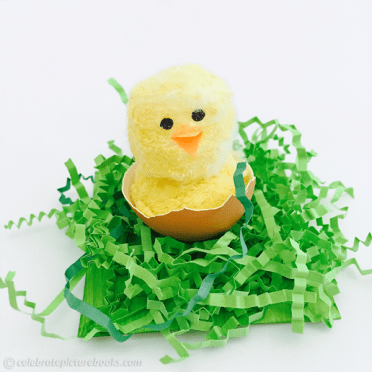
Hatch a Chick of Your Own


Chicks are so cute and fluffy—you just wish you could have one of your very own! Now you can! Hatch your own chick with this craft.

Supplies

  • Cotton balls
  • Yellow chalk
  • Orange paper
  • Black paper
  • Egg shell
  • Paper grass
  • Cardboard or poster board
  • Cheese grater
  • Bowl
  • Green paint
  • Glue
  • Scissors

CPB - Chick triple

Directions

To make the shell

  1. Crack an egg and save the two halves
  2. Soak the eggshells in soapy water or wash gently with soap
  3. Dry eggshell

To make the chick

  1. Grate the chalk with the cheese grater into the bowl
  2. Roll the cotton balls in the chalk dust until they are covered
  3. Choose one cotton ball to be the head
  4. Make the beak from the orange paper by folding the paper and cutting a small triangle. The triangle’s base should be along the fold.
  5. Cut two small eyes from the black paper
  6. Glue the beak and eyes to the head cotton ball
  7. Glue the head cotton ball to the body cotton ball
  8. Set the chick into one of the eggshell halves (you can glue it in if you wish)

To make the stand

  1. Cut a 3-inch by 3-inch square from the cardboard or poster board
  2. If you wish, paint the square green
  3. Glue green paper grass to the square
  4. Glue the eggshell halve to the stand.

March 18 – World Sleep Day

I'll See You in the Morning by Mike Jolley Picture Book Review

About the Holiday

Established by the World Association of Sleep Medicine, World Sleep Day raises awareness of sleep problems and the remedies and ongoing research focused on helping adults and children get good, healthy sleep every day. This year’s theme is “Good Sleep is a Reachable Dream.”  The day will be observed with publicity, workshops, and speeches around the world on the important issues related to sleep—including medicine, education, social aspects, and driving—and better prevention and management of sleep disorders.

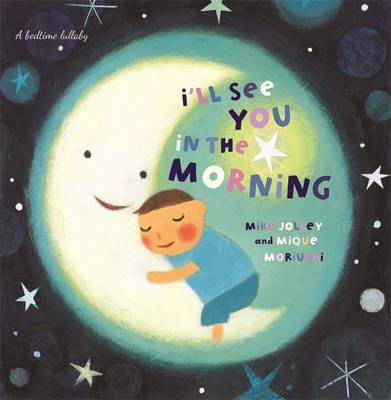
I’ll See You in the Morning

Written by Mike Jolley | Illustrated by Mique Moriuchi


Somehow the world seems different in the dark, making sleep elusive—especially for children. Are Mom and Dad still there if I can’t even see my toys? When will the sun come up again? How long is the night? I’ll See You in the Morning is a lyrical little book about nighttime and sleeping that answers these questions in soothing words that are both concrete and metaphorical and at all times familiar to a child. The reader becomes the comforter with such lines as “Don’t be afraid of darkness. / Don’t be afraid, my sweet. / The night is just a blanket / That helps the earth to sleep.”

The sleepy child can be reassured knowing that they are not alone in closing their eyes and drifting into dreamland: “Creatures great and / Creatures small / Will all be sleeping soon. / Under the same blanket… / Under the same moon.” Elsewhere, the child learns that a loved one, only steps away, stays with them until they go to sleep, and that through the night the twinkling stars keep watch.

The floating rhythm of Mike Jolley’s poem will quickly become a favorite part of any child’s bedtime routine. Mique Moriuchi’s soft, dreamy illustrations of a bright, smiling moon lighting the darkness where sheep frolic, kittens watch, bunnies sleep, and a child snuggles happily with his teddy bear are interspersed with all of these characters dancing and soaring together under the same moon. The palette of blues, purples, greens, and yellows unifies the story and creates a visual environment that invites the best, deepest slumber.

Ages Birth – 3

Chronicle Books, 2008 | ISBN 978-0811865432

World Sleep Day Activity

CPB - Pillowcase

Personalized Pillowcase


A Pillowcase all your own makes for a good night’s sleep or a fun storage bag for toys, clothes, or other stuff!

Supplies

  • Pillowcase
  • Fabric markers
  • Cardboard, as large as the pillow case or area you will decorate

Directions

  1. Iron the pillowcase
  2. Slip the cardboard inside the pillowcase to keep the markers from bleeding through to the other side
  3. Decorate your pillowcase in any design you like

March 17 – Absolutely Incredible Kid Day

The Incredible Book Eating Boy by Oliver Jeffers Picture Book Review

About the Holiday

Every kid is incredible! This special day, established by Camp Fire USA in 1997, gives adults an opportunity to tell the kids in their life how much they mean to them. Whether you write your special young person a letter or just sit down and have a heart-to-heart talk, your words of encouragement and appreciation will make a difference.

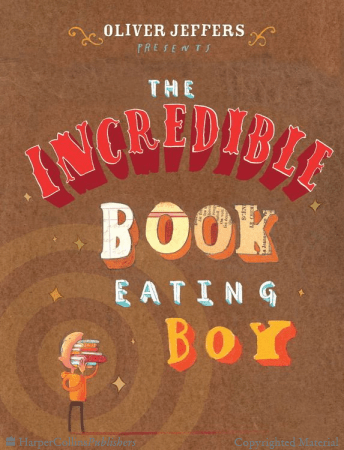
The Incredible Book Eating Boy

By Oliver Jeffers


Henry is a little boy who loves books. He loves them for dinner, he loves them with French fries…Wait! What? Yup! Henry loves to eat books! This quirk all began by mistake when Henry isn’t paying attention. But his love of words grows until he’s eating a sentence then a page and finally a whole book!

Henry doesn’t have a favorite kind of book either. He’ll eat anything—even math books and dictionaries. And he’s eating them as if they’re going out of style! Henry discovers something amazing about his diet—with every book he devours, he gets smarter. He digests every bit of information, which comes in handy when helping his dad with the crossword puzzle or his teacher in school.

If a few books can make him smart, thinks Henry, then a lot of books can make him smarter—possibly the smartest person in the world! And so he tests his hypothesis. He eats every book he sees. But things begin to go wrong. He has nightmares; his stomach hurts; and in a frightening twist everything he knows gets jumbled up. Suddenly, Henry doesn’t feel so smart anymore.

After getting some advice, Henry gives up books cold turkey. He feels lost and out-of-sorts. Then he spies a half-eaten book on the floor of his room and picks it up. Instead of eating it, though, he opens it and begins to read. And that book tastes was sooo good! Henry discovers that he loves to read, and figures if he reads enough he may still become the smartest person on earth. Besides…broccoli is actually pretty tasty.

In this picture book about the love of reading, Oliver Jeffers has created a feast for the eyes as well as an extended pun. The story of Henry devouring book after book in the quest for brilliance is played out in typewriter text on a backdrop of various colors of notebook paper, book pages, graph paper, book bindings, maps, ledger pages, and more. Henry is as adorable as all of Jeffers’ kids, and the story is funny and as satisfying as your favorite meal. The page (and cover) cut at the end of the book leaves the reader happy that maybe, just maybe Henry didn’t give up his favorite snack entirely.

Philomel Books, Penguin Young Readers, 2006 | ISBN 978-0399247491

Absolutely Incredible Kid Day Activity

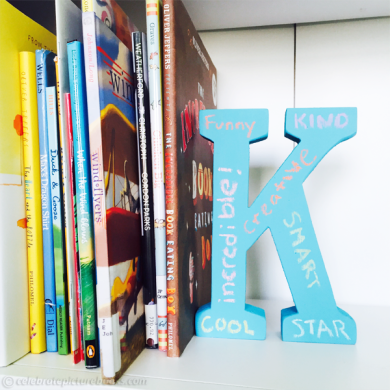
CPB - Bookend 1

 Absolutely Incredible You Bookend


Do you devour so many books that they’re falling off your shelves? Keep them neat with a bookend that’s as incredible as you are!

Supplies

  • Wooden initial of your first and/or last name, available at craft stores
  • Chalkboard paint in your favorite color
  • Paint brush
  • Chalk

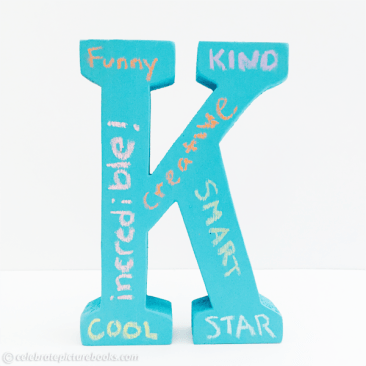
CPB - Bookend 2

Directions

  1. Paint the wooden letter with the chalkboard paint
  2. Let dry
  3. With the chalk, write words that describe what makes you absolutely incredible!

March 16 – Freedom of Information Day

Gordon Parks: How the Photographer Captured Black and White America Picture Book Review

About the Holiday

Freedom of Information Day is observed today to honor James Madison, who was born March 16, 1751 in Port Conway, Virginia. Madison is widely regarded as the Father of the Constitution and was the 4th President of the United States. He was a leading proponent of openness in government. The Freedom of Information Act, which took effect on July 4 1967, was enacted to promote transparency in government, but the idea of openness and inclusion can pertain to all aspects of society and relationships.

Today we remember all those who work to provide free and honest information and portrayals of government as well as other conditions and situations around the world.

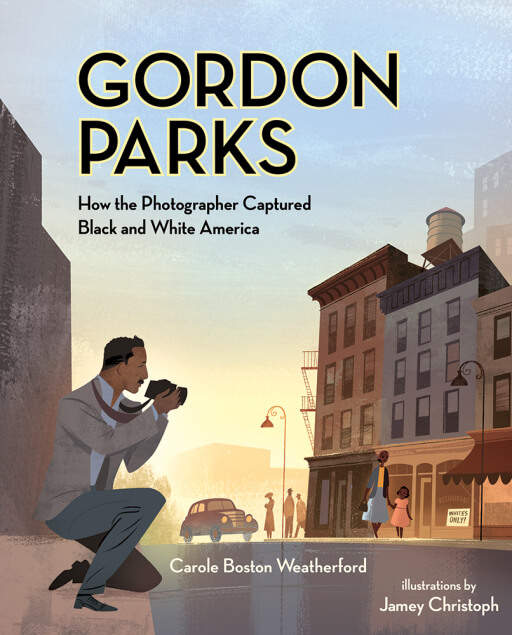
Gordon Parks: How the Photographer Captured Black and White America

Written by Carole Boston Weatherford | Illustrated by Jamey Christoph


When the 15th child of the Parks family is born, he has neither a heartbeat nor a name. But the doctor is able to revive the nearly dead infant in an ice bath, and the appreciative mother gives her child his name—Gordon. Gordon Parks’ dramatic entry into the world may have given him the unique perspective he used in becoming a renowned photographer and the first black movie director in Hollywood.

celebrate-picture-books-picture-book-review-gordon-parks-how-the-photographer-captured-black-and-white-america-gordon-works

Image copyright Jamey Christoph, 2015, text copyright Carole Boston Weatherford, 2015. Courtesy of Albert Whitman & Company.

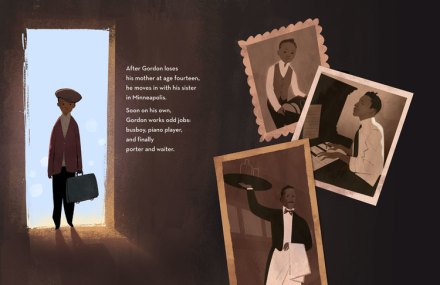
Gordon rides a horse across the wide open fields of Kansas to school, but once there his prospects narrow with a white teacher who tells her all-black class that their education will go to waste as they are destined to work as waiters and porters. When he is 14 Gordon’s mother dies, and Gordon moves to Minneapolis. He soon must make his own way, and he finds jobs as a busboy, a piano player, and the predicted waiter and porter.

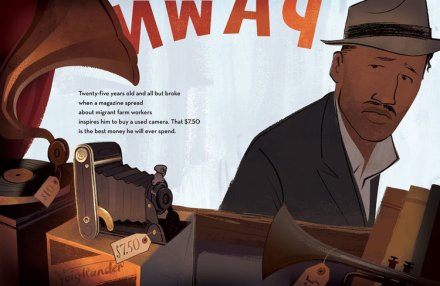
At the age of 25 Gordon reads about the plight of migrant workers and, inspired, buys a camera. Gordon has discovered his natural talent—a unique eye on the world. After only a month he exhibits his photographs in a camera store and is soon engaged in fashion and portrait photography. His work takes him to Chicago, where he documents the struggling families living on the South Side and wins a job with the government in Washington DC. Encouraged by his boss to find a subject for his work, Gordon focuses his lens on the black families living in the back alleys and in the shadows of the Capitol’s great monuments.

celebrate-picture-books-picture-book-review-gordon-parks-how-the-photographer-captured-black-and-white-america-gordon-sees-a-camera

Image copyright Jamey Christoph, 2015, text copyright Carole Boston Weatherford 2015. Courtesy of Albert Whitman & Company.

Through his photographs Gordon vows to expose the racism blacks face in housing, shops, restaurants, and other institutions. Looking for a personal subject, Gordon talks to Ella Watson, a cleaning lady in his office building. Ella supports five children on only $1,000 a year and knows hardship. Gordon accompanies her and her grandchildren, taking pictures wherever they go and of whatever they are doing. They become the inspiration for his greatest work.

Over his lifetime Gordon Parks will break barriers in the publishing and entertainment industries, becoming the first black photographer for Vogue and Life magazines and the first black director in Hollywood. He writes novels and poetry and composes music. But the work that becomes his most famous is a photograph of Ella Watson standing in front of the American flag, with her broom in hand. Called “American Gothic,” this picture fulfills Park’s determination to expose segregation and the hopes of all people struggling under its inequality.

celebrate-picture-books-picture-book-review-gordon-parks-how-the-photographer-captured-black-and-white-america-gordon-in-washington

Image copyright Jamey Christoph, 2015, text copyright Carole Boston Weatherford, 2015. Courtesy of Albert Whitman & Company.

Carole Boston Weatherford’s portrayal of Gordon Parks’ life is as starkly revealing as her subject’s photographs. With her writer’s skills, however, she deftly contrasts the facts of his life and turns his story into a universal metaphor for freedom and the struggle to attain it: “When young Gordon crosses the prairie on horseback, nothing seems beyond reach. But his white teacher tells her all-black class, you’ll all wind up porters and waiters. What did she know?” Weatherford’s pacing also adds to the story’s power. Although Parks attained wide acclaim, this biography ends with one of his earlier photographs—a picture of Ella Watson, a cleaning lady, who inspired Parks and came to symbolize the hopes of her generation and beyond. This is not only Parks’ story, but the story of millions of others.

Jamey Christoph continues and strengthens the metaphorical force of this biography in his illustrations. Readers first see Gordon Parks as a much-loved, smiling infant. He goes to school and grows up, his expression changing, slightly but importantly. He acquires his camera, and the pages are filled with drawn representations of his black-and-white photographs. Alternating dark and light pages further emphasize Parks’ world. The darkroom contrasts with Parks’ new bright office and prospects; the shadowed back alleys of Washington DC contrast with the city’s gleaming white marble monuments. Later photographs are also depicted, and “American Gothic” is represented on two pages. Christoph provides readers with much to see and ponder.

Ages 5 – 8

Albert Whitman & Company, 2015 | ISBN 978-0807530177

Ages 5 – 8

Albert Whitman & Company, 2015 | ISBN 978-0807530177

Freedom of Information Day Activity

CPB - New Professionals Picture

News Professionals Clothespin Figures

Make one of these clothespin figures that honors the men and women who work to keep the world informed.

Supplies

Directions

  1. Draw a face and hair on the clothespin
  2. Cut out the clothes you want your journalist or photographer to wear
  3. Wrap the clothes around the clothespin. The slit in the clothespin should be on the side.
  4. Tape the clothes together
  5. Cut out the camera
  6. Tape one end of a short length of thread to the right top corner of the camera and the other end of the thread to the left corner. Now you can hang the camera around the figure’s neck.

Idea for displaying the figures

  • Attach a wire or string to the wall and pin the figure to it
  • Pin it to your bulletin board or on the rim of a desk organizer


March 12 – National Plant a Flower Day

MIss Maple's Seeds by Eliza Wheeler Picture Book Review

About the Holiday

It’s March—that funny month when some people are basking in 80-degree sunshine and others are still shoveling snow. But no mater where we live, we’re thinking about the same thing—Spring! Spring brings new green leaves, gentle rains, and little shoots that will grow to be trees, vegetable and fruit plants, and flowers. Whether you live somewhere warm and can already plant outside or somewhere that’s still a little chilly and requires indoor propagation, planting flower seeds is a perfect way to beautify your home and your life.

Miss Maple’s Seeds 

By Eliza Wheeler


Late in the summer, Miss Maple hurries to prepare for some very special guests. She has searched all summer for unplanted “orphan” seeds, and baskets full of them are winging their way to her home on the backs of bluebirds. Once they arrive she “learns each seed by heart.” There are poppy, wild rice, maple, water lily, pine, impatiens, apple raspberry, sunflower, acorn, pea, fern seeds, and as many more as make up our world.

As she lovingly tends to each one, she says, “Take care, my little ones, for the world is big and you are small.” Miss Maple takes them on field trips and shows them the world they will inhabit—the muddy soil along riverbanks, grassy fields, and thick forests. She cautions them about “weedy characters” who can show up even in a “bustling garden.”

At night Miss Maple snuggles each seed into a comfy bed and reads to them by the light of fireflies. During the winter Miss Maple entertains other guests—woodland creatures who gather in her maple tree home and share food, stories, and songs. With the spring come rains and new lessons on burrowing into the ground.

May ushers in another summer, and Miss Maple knows it’s time for her little ones to “find roots of their own.” She sends them out into the world, knowing that she has prepared them well for what they will become. Her seeds say goodbye and sail off to begin their futures, and Miss Maple is left alone. But soon another summer day comes, and Miss Maple sets off to gather more orphan seeds, because “the world is big and they are small.”

Eliza Wheeler’s Miss Maple’s Seeds is a triumph—as comforting as a warm blanket and as empowering as a master key. Wheeler’s beautiful language floats quietly and unhurried like the flight of a leaf on a gentle breeze. The metaphor of seeds and children is so sweetly made, and Miss Marple’s wish for her little charges can bring a tear to the eye of any caretaker.

Wheeler’s luminous artwork is breathtaking in its fully realized details of the wide world Miss Maple’s seeds and all of us inhabit. Each season is gorgeously rendered in soft blues, roses, browns, and yellows, and she imbues the little seeds with personality without making them anthropomorphic. The reader may wish they could be friends with these future beauties and Miss Maple as well.

Miss Maple’s Seeds would be a wonderful gift for high school graduates, teachers, and anyone who loves taking care of children.

Ages 3 – 7, all ages

Nancy Paulsen Books, an imprint of Penguin Group | ISBN 978-0399257926

Plant a Flower Day Activity

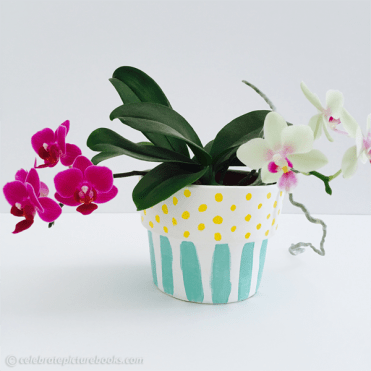
CPB - Flower Pot

Decorated Flower Pot


Spring is almost here, and that means flowers will soon be blooming. If you want to beautify your home plant your favorite flower seeds in a pot you’ve decorated yourself!

Supplies

  • Terra cotta pot in any size
  • Acrylic multi-surface paint in various colors
  • Flower seeds
  • Soil

Directions

  1. Paint your terra cotta pot—be creative!
  2. Let paint dry
  3. Fill pot with soil
  4. Plant flower seeds

March 10 – National Pack Your Lunch Day

Lunch Money and Other Poems About School by Carol Diggory Shields and Paul Meisel picture book review

About the Holiday

When you pack your own lunch, you can’t wait for the clock to strike lunchtime! Today is a day to celebrate the joy of a midday meal featuring your favorite foods and snacks. So if you usually just eat what the cafeteria offers, think outside the tray and create a lunch that’s delicious, nutritious, and even fun!

Lunch Money and Other Poems About School

Written by Carol Diggory Shields | Illustrated by Paul Meisel


Ask a kid what their favorite part of school is and they’re likely to say, “Lunch!” So it’s appropriate that this poetry collection about the fun and foibles of school contains several poems scrutinizing that special half hour out of the classroom. In “Decisions” a boy contemplates the school menu stuck to the refrigerator. Tacos, pizza, burger, nachos? Buy it! Beef stew, baked beans, tuna-cabbage crunch, mushroom-chicken bake? Bag it!

“Lunch Money” finds a boy asking first Dad, then Grandma, and finally Mom for cash. But who can he rely on? Only his own piggy bank. “Swap” is a rollicking round robin rhyme of traded sandwiches, swapped fruit, bought and sold drinks, bartered cookies, exchanged bagels, and great deals made. But does the result on the plate look oddly familiar?

Lunch isn’t the only subject in this delightful collection, though. In “Eight-Oh-Three” a boy “Legs pumping, heart thumping, / Running down the drive,” and late for the bus—“A moaning-growning, blinking-winking / Yellow dinosaur”—asks the ironic question: “How come I have to run so fast / To catch a bus so slow?”

“Code” is medical code for “cold” in a short poem about the linguistic acrobatics of a stuffy nose. “And the Answer Is…?” offers an impassioned debate between one student who likes to answer the teacher’s questions and another who just wants to hide under the table. And “Whew!” is a delight in which a student who isn’t prepared for the day finds a substitute standing at the front of the class. Other topics that make an appearance are the school mischief maker, the class pet, recess rules, homework, recess, and the inevitable school nightmare that follows you into adulthood.

Carol Diggory Shields understands school—the moments of camaraderie, embarrassment, mayhem, wishful thinking, and more—that make up each day. Her flowing, easy-to-read rhythms and humorous twists makes this poetry collection enchanting and an excellent addition to any home library.

Paul Meisel’s illustrations are populated with all kinds of kids you’d want to meet. With curly hair or straight, pony tails or bows, wearing stripes or polka dots, shorts or pants, each child is given his or her own personality as they romp through the scenario of their accompanying poem. Whether the kids are in a classroom or at home or on the playground, the details of their environment are richly drawn. The counters are lined with science projects, the clock moves so slowly a spider has spun a web on its hands, and the kindergarten play as well as the lunch room are humorously chaotic. There is so much to see on each page that kids will recognize, but experience anew.

Ages 4 – 8

Puffin Books, 1998 | ISBN 978-0140558906

National Pack Your Lunch Day Activity

CPB - Bento Box (2)

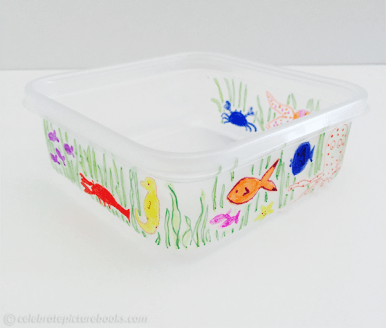
Decorated Sandwich or Snack Container


Who says your snack or sandwich container has to be boring? Take your lunch to school in a container you decorate yourself! It’s easy with a few colored markers and your imagination!

Supplies

  • Disposable plastic food containers with lids
  • Colorful markers

Directions

  1. Decorate sandwich or snack size containers with your favorite designs or characters