August 3 – It’s National Back to School Month

celebrate-picture-books-picture-book-review-idea-jar-cover

About the Holiday

It may seem like summer vacation just began, but it’s already time to start thinking about the new school year. The stores are stocked with clothes, supplies, and plenty of gear to make the new school year the best ever. But the stuff of going to school is just part of getting ready. Kids are looking forward—eagerly or maybe with a little trepidation—to meeting new friends, having new teachers, and exploring new subjects and ideas. Making the transition to a different grade easier and exciting is what National Back to School Month is all about.

Simon & Schuster sent me a copy of Idea Jar to check out. All opinions are my own. I’m also thrilled to be partnering with Simon & Schuster in a giveaway of a copy of Idea Jar. See details below.

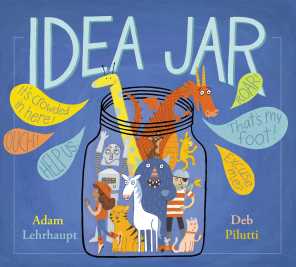
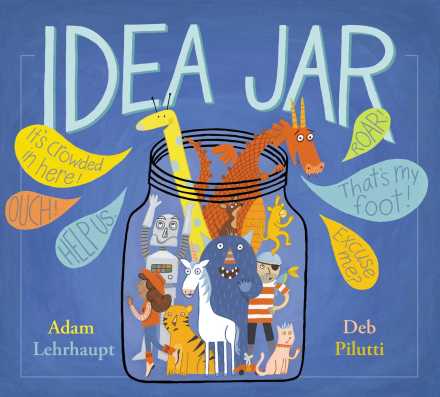
Idea Jar

Written by Adam Lehrhaupt | Illustrated by Deb Pilutti


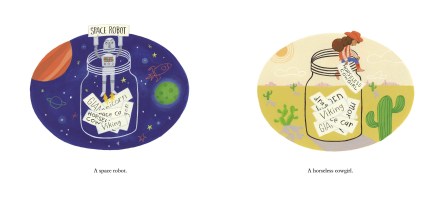
On the teacher’s desk sits an Idea Jar that holds her student’s story ideas. The teacher “says a story can be about anything” the kids want it to be. Like maybe “a space robot” or a “horseless cowgirl” or, yes, even that Viking who is trying to hoist himself over the edge of the jar to freedom. See, “there’s no such thing as a bad story idea,” and there are so many ways to tell your story.
celebrate-picture-books-picture-book-review-idea-jar-space-robot

Image copyright Deb Pilutti, 2018, text copyright Adam Lehrhaupt, 2018. Courtesy of simonandschuster.com.

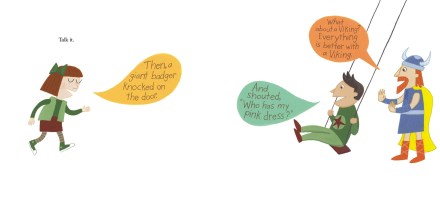
You can even combine your own ideas or make up a story with a friend. And maybe even that Viking in the back of your mind would make a good character too. He certainly thinks so. His motto is “Everything is better with a Viking”—even a giant badger who has lost her pink dress.

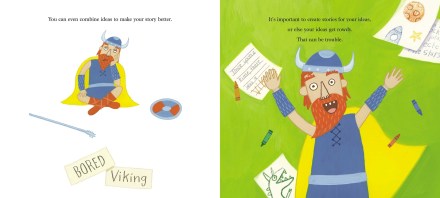
There is one thing about the Idea Jar, though. “It’s important to create stories for your ideas, or else your ideas get rowdy.” Just look at that Viking, who’s poking…at…the…jar! “Oh no! The ideas!”  They’re all loose! Now the robot is shooting his laser eyes and the dragon is swishing its enormous tail and the ideas are running amok!
celebrate-picture-books-picture-book-review-idea-jar-bored-giant-badger

Image copyright Deb Pilutti, 2018, text copyright Adam Lehrhaupt, 2018. Courtesy of simonandschuster.com.

“These ideas need a story. Will you help?” Great! Should we? Should we start with the Viking? What if he gets into a battle with the space robot? Then gets rescued by the dragon? Who’s ridden by the horseless cowgirl! What? You’d like to change some ideas around? Go for it! This is your story, after all! “Wow! You were awesome!” You made all of those story ideas very, very happy. But it’s time that they went back in the jar to meet some other ideas for next time.
celebrate-picture-books-picture-book-review-idea-jar-bored-viking

Image copyright Deb Pilutti, 2018, text copyright Adam Lehrhaupt, 2018. Courtesy of simonandschuster.com.

As the award-winning author of Warning: Do Not Open this Book, Please Open this Book, This is a Good Story, and many others, Adam Lehrhaupt knows a thing or two—or three—about corralling ideas into a story. By appealing directly to students and any story creator, the narrator of the madcap Idea Jar will excite kids to pay attention to the ideas rattling around and flashing through their minds and inspire them to write, draw, or tell their own stories. The persistent Viking, who gives story suggestions throughout the book and nudges the story along, will delight kids and can serve two purposes for teachers or other writing coaches.

With his infectious enthusiasm, the Viking is that great idea that knocks at your consciousness until it is used. His whispered recommendations may also remind writers and artists of that little self-editor who so often can keep great ideas from running free. Learning to manage both of these is what great storytelling is all about. As the Viking sails into the classroom portrayed in the book, kids will jump at the chance to turn on their imaginations and give him—and their own characters—a story full of suspense, humor, and unexpected twists and turns.

celebrate-picture-books-picture-book-review-idea-jar-viking-climbing-out-of-jar

Image copyright Deb Pilutti, courtesy of simonandschuster.com.

As a space robot rockets from the Idea Jar, a horseless cowgirl lifts herself over the edge, and a big, scaly arm reaches from within to pull out the words “dragon” and “giant,” kids will be instantly invested in these characters without a story…yet. Deb Pilutti’s vibrant and dynamic illustrations show the creative process in action, whether a child’s talent lies in writing, drawing, or even reciting ideas aloud. The crafty Viking makes a frequent appearance—just like any good idea does—to prod the ideas in the jar (including the horseless cowgirl, the space robot, and the dragon as well as a pirate, a unicorn, a giraffe, a monster, and various animals) to unleash their inventive power. As the story comes together, the students and teacher cheer as they see their creation come to life. 

Kids will love answering the call to create a story and interacting with the ideas in Idea Jar. Idea Jar is infused with the natural spontaneity and inventiveness of children’s imaginations, making it a winner for jump-starting writing or art lessons in classrooms and inspiring creativity at home for kids and adults.

Ages 4 – 8 (and up)

Simon & Schuster/Paula Wiseman Books, 2018 | ISBN 978-1481451666

Discover more about Adam Lehrhaupt and his books on his website.

To learn more about Deb Pilutti, her books, and her art, visit her website.

Meet Deb Pilutti
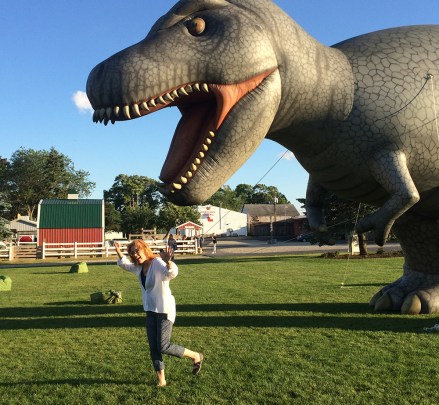
celebrate-picture-books-picture-book-review-deb-pilutti-intreview-chased-by-t-rex

Today I’m excited to talk with author/illustrator Deb Pilutti about her new book Idea Jar with Adam Lehrhaupt, her branding work inspired by vintage signs, and the old Creepy Crawlies Thingmaker, a toy which I was surprised and delighted to discover we both loved as children.

Readers will love the way the characters interact with each other and with the kids writing and drawing stories in Idea Jar. Can you describe your journey from when you first received Adam Lehrhaupt’s manuscript for Idea Jar to the finished book?

I am a fan of Adam’s Warning: Do Not Open this Book! so I was quite excited when Paula Wiseman at Simon & Schuster asked me if I would like to illustrate IDEA JAR. Who wouldn’t want to illustrate a book with a Space Robot, a Viking, a cowgirl and a Dragon as the main characters? Adam left a lot of room for me to play. He did not specify what the other ideas in the jar would be, only the characters he had written into the text. It was fun to develop additional characters and their relationships and mini-side stories, like the developing friendship between the Yeti and the small dog, and the mouse driving a race car.

Kids’ imaginations are always so full of possibilities, and they can make such funny and amazing leaps of character and plot. What are some steps you’d give young writers and illustrators for capturing those snatches of imagination and developing an idea into their own story?

Keep a journal. I have several that I write or doodle in. If there is something I find interesting, like an idea or a character, I go back to it and try to work out a story. I start by asking questions of the character or situation. What would happen if… type of questions.
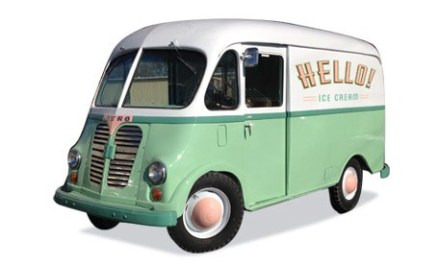
celebrate-picture-books-picture-book-review-deb-pilutti-interview-hello!-ice-cream-truck

Your branding work for Sea World, Warner Brothers, artists, food trucks, and more are infused with such a fun vintage vibe. Do you have a favorite decade to draw design ideas from, and why?

I absolutely love vintage signage and type from the 50s and 60s. Some of it is so campy while others can be evocative or elegant. The colors used were bold and saturated.
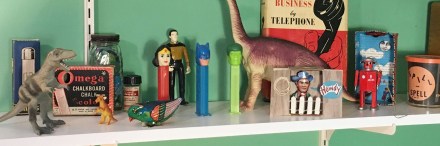
celebrate-picture-books-picture-book-review-deb-pilutti-intreview-studio-toys

Before you began illustrating and writing for children, you designed toys, and in your recent release The Secrets of Ninja School, the main character makes dragon stuffies for all of her classmates. Why do you think playing with traditional toys is so important for children? What was your favorite toy when you were a child?

Mostly because it’s fun. I also think it’s a way to navigate the world, but that isn’t something I thought about as a child. When I was young, I loved making Creepy Crawlers, which was an incredibly dangerous toy at that time. You pored possibly toxic goop into a metal mold and cooked it in a blisteringly hot ThingmakerTM oven, which resulted in many scorched fingers. But totally worth it, because once the plate cooled, you would have an army of colorful and stretchy bugs.
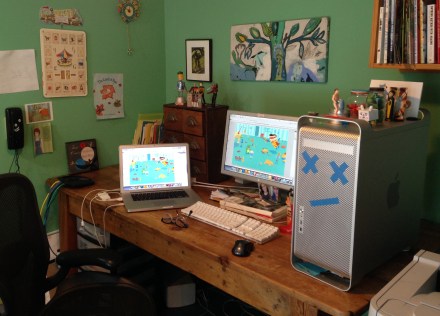
celebrate-picture-books-picture-book-review-deb-pilutti-intreview-srudio-desk

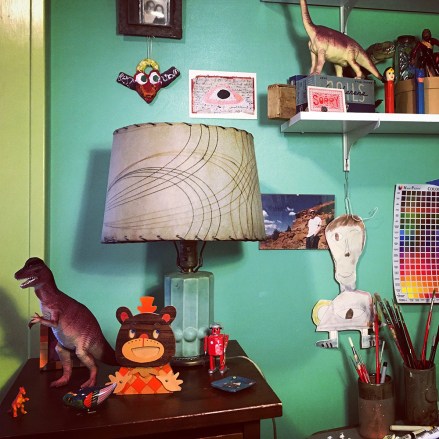
My cousin is a graphic designer and whenever I visited her as a child I loved seeing her special corner of the house. It was so full of color and knick-knacks (inspiration, really, I guess) and works in progress, that I developed a fascination with artists’ studios. Do you mind describing your work space a little? What is your favorite thing in it?

My studio is in a small bedroom. I have a long table with a computer and extra monitor set up on it, and I sometimes sketch here as well. A painting easel is in the corner of the room. It’s a very messy place, with papers everywhere and knick-knacks and toys and bits of shiny things on every surface. I like all of my toys, but my favorite one is a realistic toy model of a T-rex with a moveable jaw.
celebrate-picture-books-picture-book-review-deb-pilutti-intreview-studio-knick-knacks

What’s the best part of being a children’s illustrator and author?

I have always loved books. To be involved with the art of bookmaking is a wondrous thing. My favorite part of the process is making the final illustrations.

Do you have any anecdotes from a reading or event that you’d like to share?

I was visiting a school last April and had a blast creating stories with the students using an Idea Jar. We made some pretty silly stories together. One student came up with a zombie tomato for a character, which was brilliant!

What’s up next for you?

I’m currently working on final illustrations for two books. The first is Old Rock (is not boring). A story about a rock sounds like it could be boring, right? At least Old Rock’s friends think so. Old Rock reveals her own surprising story, slowly and languidly, as rocks do. I’m also illustrating a sequel to Ten Rules of Being a Superhero. It’s called Ten Steps to Flying Like a Superhero. I had so much fun with the characters from the first book that they are back for another adventure. Lava Boy’s superhero toy, Captain Magma, wants to fly more than anything. They devise a plan, which does not go as anticipated.

What is your favorite holiday and why?

Summer Solstice. I live in Michigan, which is quite lovely, but the cold and dark of winter can get a bit old. I miss the light. Our summer nights are very long. On Summer Solstice, I try to stay outside until the last vestiges of daylight disappear at around 9:45.

Has a holiday ever influenced your work?

Yes, I illustrated The Twelve Days of Christmas in Michigan, illustrated by Susan Collins Thoms.

Thanks so much for chatting, Deb! I wish you all the best with Idea Jar and all of your books!

National Back to School Month Activities
celebrate-picture-books-picture-books-review-adam-lehrhaupt-create-your-own-idea-jar

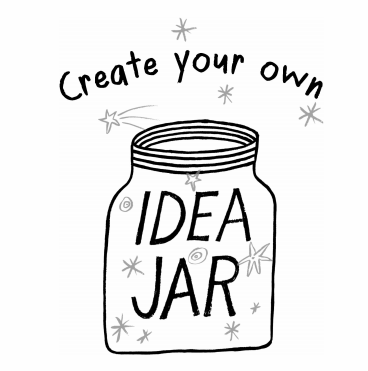
Make Your Own Idea Jar

If you have lots of ideas looking for a place to hang out, discover how to make your own Idea Jar and find some cool starter ideas from Adam Lehrhaupt! Make your own IDEA JAR!

celebrate-picture-books-picture-books-review-deb-pilutti-5-methods-to-generate-stories-logo

Dream up Story Ideas

Do your kids (or maybe you!) want to think up awesome story ideas? Check out Deb Pilutti’s 5 Methods of Generating Story Ideas

celebrate-picture-books-picture-book-review-idea-jar-cover

You can find Idea Jar at these booksellers

Amazon | Barnes & Noble | Books-a-Million | IndieBound

Picture Book Review

August 2 – It’s National Crayon Collection Month

celebrate-picture-books-picture-book-review-the-day-the-crayons-came-home-cover

About the Holiday

Kids love going to restaurants that provide a fun placemat and crayons to color with while they wait. But what happens to those crayons when the meal is over? Most times they’re thrown in the trash with the napkins and straws and other items left behind. Wouldn’t it be great if those gently used crayons could go on to be used by other kids at schools that can’t afford such supplies? They can! Begun by Crayon Collection, National Crayon Collection Month encourages restaurants, hotels, and other organizations that provide free crayons to collect the ones left behind and donate them to under-serviced schools. As school arts programs are threatened with budget cuts, these important supplies can make a big difference in the lives of students. The ability of children to express their creativity is a crucial part of their education and growth.  You can get involved too! To learn how you can make an impact, visit CrayonCollection.org. Or look into donating crayons (and other supplies) to a school in your area.

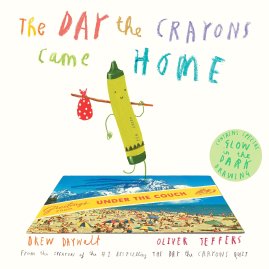
The Day the Crayons Came Home

Written by Drew Daywalt | Illustrated by Oliver Jeffers


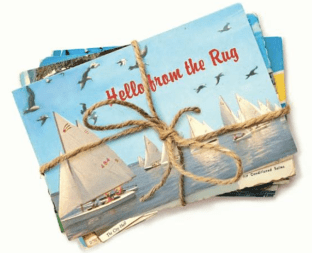
One day, as Duncan and his crayons were creating something together, Duncan received a mysterious package of postcards. The first postcard Duncan read was from Maroon Crayon, who, it turned out had been marooned in the couch, broken in half when Duncan’s dad sat on him, and then “nursed back to health” by paperclip. Now ready to rejoin the pack, Maroon Crayon was asking to be rescued.

celebrate-picture-books-picture-book-review-the-day-the-crayons-came-home-pea-green-crayon

Image copyright Oliver Jeffers, 2015, text copyright Drew Daywalt, 2015. Courtesy of Philomel Books.

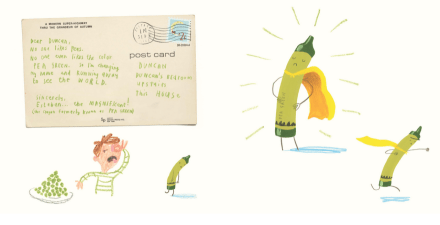
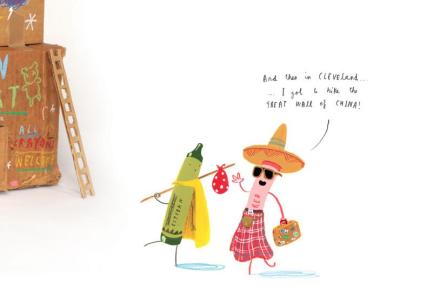
The next postcard brought distressing news from Pea Green Crayon, who feeling unloved, had changed his name to Esteban the Magnificent and was “running away to see the world.” Neon Red Crayon was feeling similarly dismissed and was writing—with a bit of well-earned pique—from the side of the pool at the Ritz Motel. “REMEMBER that great vacation we had with your family? Remember how we laughed when we drew a picture of your dad’s sunburn? Remember dropping me by the hotel pool when you left? Clearly you do NOT, BECAUSE I’M STILL HERE!” Still, Neon Red Crayon was taking it upon herself to walk home.

celebrate-picture-books-picture-book-review-the-day-the-crayons-came-home-red-neon-crayon

Image copyright Oliver Jeffers, 2015, text copyright Drew Daywalt, 2015. Courtesy of Philomel Books.

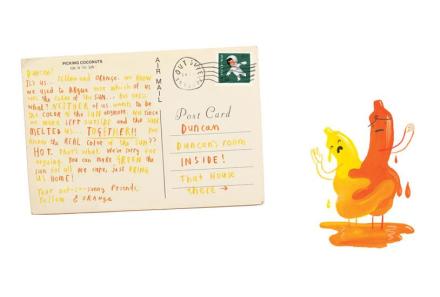
Yellow and Orange crayons wrote to let Duncan know they’ve put their argument “over which of us was the color of the sun” aside now that the sun has fused them together forever in the backyard. They don’t care what color the sun is anymore—they just want to come home. But perhaps “Tan (or possibly Burnt Sienna?) Crayon” has the saddest tale to tell. He’s had a hard time of it since being eaten by the dog and is now “more carpet fuzz than crayon.”

celebrate-picture-books-picture-book-review-the-day-the-crayons-came-home-yellow-and-orange-crayon

Image copyright Oliver Jeffers, 2015, text copyright Drew Daywalt, 2015. Courtesy of Philomel Books.

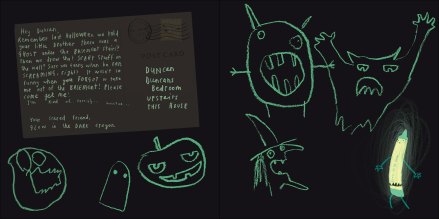
Up from the basement comes a postcard from Glow in the Dark Crayon, who was abandoned there last Halloween after Duncan used him to draw scary stuff on the wall. He just wants to be brought into the light because he’s “kind of … terribly … horrified ….” Meanwhile, Esteban has reached the front door, seen that the world is rainy, and has decided to return.

A dryer mishap has left Turquoise Crayon with one of Duncan’s socks stuck to his head, one compelling question, and one big desire to be reunited with the other crayons. But it’s not just Duncan’s crayons who are begging to be brought back into the fold. Duncan’s baby brother’s “Chunky Toddler Crayon” wants to be saved from another week like the last one in which the little tyke had “bitten the top of my head, put me in the cat’s nose, drawn on the wall and tried to color GARBAGE with me!”

celebrate-picture-books-picture-book-review-the-day-the-crayons-came-home-glow-in-the-dark-crayon

Image copyright Oliver Jeffers, 2015, text copyright Drew Daywalt, 2015. Courtesy of Philomel Books.

Brown Crayon admits that he’s embarrassed by what Duncan used him for, but still wants to come back, and Neon Red Crayon has sent postcards from all over the world as she’s made her way back, at last sending a card picturing herself skiing in the Amazon Rain Forest. After reading all of these missives, Duncan felt bad and ran around the house collecting them. But where would he put them? They “were all so damaged and differently shaped than they used to be that they no longer fit in the crayon box.”

But why did the crayons have to fit the box? Duncan had a better idea. He built a box to fit the crayons—“a place where each crayon would always feel at home.”

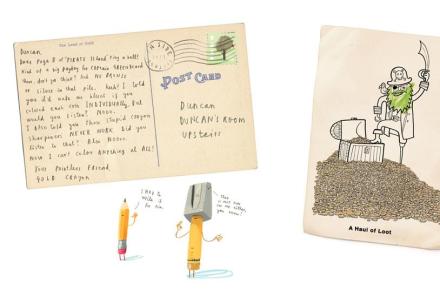
celebrate-picture-books-picture-book-review-the-day-the-crayons-came-home-gold-crayon

Image copyright Oliver Jeffers, 2015, text copyright Drew Daywalt, 2015. Courtesy of Philomel Books.

An instant classic, Drew Daywalt ‘s and Oliver Jeffers’ sequel to the equally loved The Day the Crayons Quit, The Day the Crayons Came Home is a laugh-out-loud look at life as a forgotten crayon. As given voice by Drew Daywalt, these crayons, with personality, attitude, and some legitimate gripes, make hilarious champions for any story time. Daywalt’s selection of colors and mishaps is inspired, and his recurring characters, Esteban and Neon Red Crayon, add just the right touch of silly cluelessness as they wax poetic.

Screen Shot 2018-08-01 at 5.28.44 PM

From the first glimpse of Maroon Crayon facing the indignity of being sat upon and emerging from the wreckage with a full beard, tattered paper, and paperclip bandage, kids will be hooked on the lives of these misplaced, misused crayons. Each crayon’s expression reveals the personality and predicament of these little heroes. Vintage postcards and crayon-drawn backdrops add to the distinctive look of this very original story in letters. A page of glow-in-the-dark drawings and text will have kids running for the nearest closet or dark corner to check it out, and the final reveal of the crayons’ new home will inspire readers to create one of their own.

A colorful, creative addition to any home or classroom library, The Day the Crayons Came Home (and its companion The Day the Crayons Quit) will be asked for again and again…and again.

Discover more about Drew Daywalt and his books on his website.

To learn more about Oliver Jeffers, his books, and his art, visit his website.

National Crayon Collection Month Activity

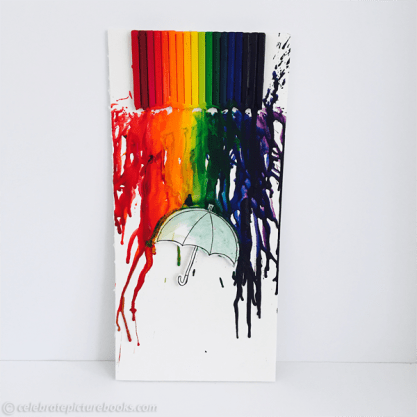
CPB - Rainbow Crayon Art 3

Crayon Rainbow Art


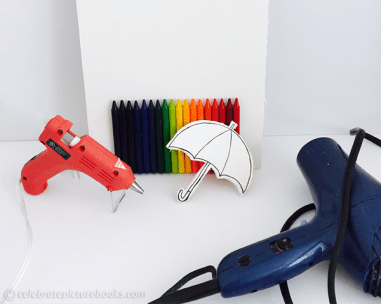
With this cool project you can create an art piece that’s as colorful as a rainbow and as unique as you are! Adult help is needed for children.

Supplies

  • Box of 24 crayons
  • White foam board or thick poster board, 8 inches by 17 inches
  • A small piece of corrugated cardboard, about 5 inches by 5 inches (a piece of the foam board can also be used for this step)
  • A small piece of poster board, about 5 inches by 5 inches
  • Scissors
  • X-acto knife (optional)
  • Hot glue gun
  • Hair dryer
  • Old sheets or towels, newspapers, a large box, or a trifold display board

CPB - Rainbow Crayon Art 2

CPB - Rainbow Crayon Art 1 (2)

Directions

  1. Remove the various red, orange, yellow, blue, indigo, and violet hued crayons from the box of crayons
  2. Strip the paper from the crayons by slicing the paper with the x-acto knife, or removing it by hand
  3. Line them up in order at the top of the white foam board
  4. Glue the crayons with their tips facing down to the board with the hot glue gun
  5. Cut an umbrella or other shape of your choice from the poster board
  6. Trace the umbrella or other shape onto the corrugated cardboard or a piece of the foam board and cut out
  7. Glue the poster board shape onto the corrugated cardboard, let dry
  8. Glue the umbrella or other shape to the foam board, about 4 ½ inches below the crayons
  9. Set up a space to melt the crayons. The wax will fly, so protect the floor and walls by placing the art piece in a large box or hanging newspapers, old sheets or towels on the walls and placing newspapers on the floor. A trifold display board and newspapers works well.
  10. Stand the art piece upright with the crayons at the top
  11. With the hot setting of the hair dryer, blow air at the crayons until they start to melt
  12. Move the hair dryer gently back and forth across the line of crayons from a distance of about 6 to 12 inches away. The closer you are to the crayons, the more they will splatter
  13. The crayons will begin to melt and drip downward
  14. You can experiment with aiming the hair dryer straight on or at an angle to mix colors
  15. Wax that drips onto the umbrella or other shape can be chipped off after it dries or wiped off to create a “watercolor” effect on the shape
  16. Once the hair dryer is turned off, the wax cools and dries quickly
  17. Hang or display your art!

celebrate-picture-books-picture-book-review-the-day-the-crayons-came-home-cover

You can find The Day the Crayons Came Home at these booksellers

Amazon | Barnes & Noble | Books-a-Million | IndieBound

Picture Book Review

August 1 – It’s National Fishing Month

celebrate-picture-books-picture-book-review-hooked-cover

About the Holiday

Is fishing your thing? Do you like nothing better than heading down to the lake or stream and spending a relaxing day with a fishing pole, some bait, and the possibility of reeling in a “big one?” Perhaps you like fly fishing better, challenging yourself to flick that hook in just the right place. Then again, maybe taking a boat out to deep water and pitting yourself against the truly big fish is more your style. However you like to fish, make some time to enjoy your hobby this month!

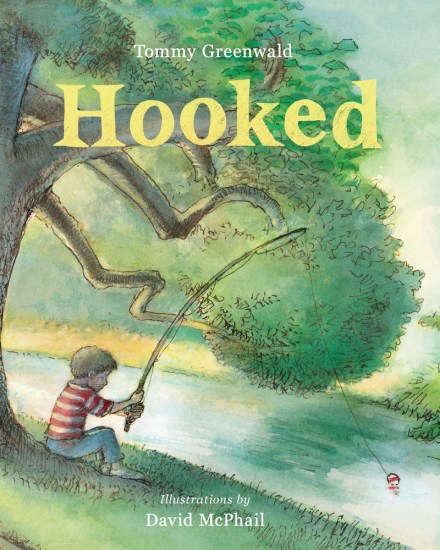
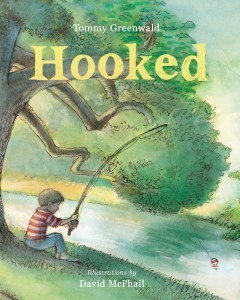
Hooked

Written by Tommy Greenwald | Illustrated by David McPhail


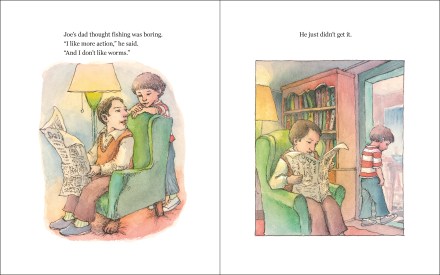
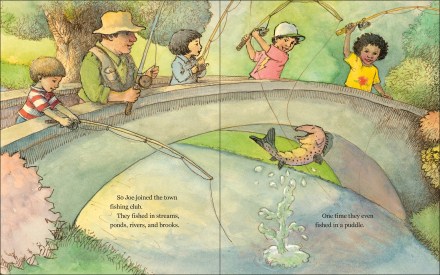
Joe is a little boy who loved to fish. He didn’t mind that “nothing much happened” while he waited for the fish to bite. “Joe’s dad thought fishing was boring. ‘I like more action,’ he said. ‘And I don’t like worms.’” Joe always wished his dad would change his mind. Joe decided to join the town’s fishing club. He and the other kids “fished in streams, ponds, rivers, and brooks.”

celebrate-picture-books-picture-book-review-hooked-Joe-asks-dad

Image copyright David McPhail, 2018, text copyright Tommy Greenwald, 2018. Courtesy of us.macmillan.com.

All this fun made Joe love fishing even more. He tried to get his dad to try it, but he always said, “‘No, thank you.’” One winter day, the fishing club planned to go ice fishing. Each child needed to be accompanied by an adult. When Joe asked his dad if he would go, he agreed—as long as he never had to go fishing again. On Saturday, Joe and his dad headed out in the twelve-degree weather to meet the other kids at the lake.

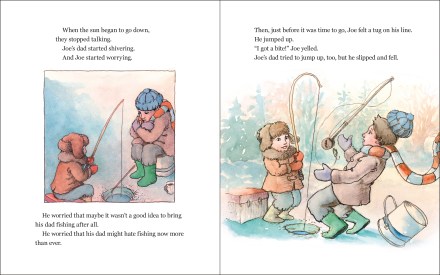
After Joe’s dad made a hole in the ice, they put in their lines. They waited and looked around and waited some more. “Then Joe and his dad started to talk. They talked about everything: baseball, movies, music, food, school, animals, and a bunch of other stuff.” By the end of the day, they still hadn’t caught anything, and Joe’s dad was freezing. Joe worried that his dad would never like fishing after today.

celebrate-picture-books-picture-book-review-hooked-fishing-club

Image copyright David McPhail, 2018, text copyright Tommy Greenwald, 2018. Courtesy of us.macmillan.com.

Just as they were about to leave, though, Joe got a bite on his line. He and his dad both jumped up, but Joe’s dad slipped on the ice and fell. With one huge pull, Joe reeled in his catch. At first, Joe didn’t know what kind of fish he’d caught, but then he realized it wasn’t a fish but a soggy, stuffed, pink elephant. Everyone laughed, and Joe was embarrassed. He wanted to throw the elephant back in, but his dad stopped him.

In the car, Joe and his dad talked about all the things that had happened that day, laughing the whole way home. At home, Joe’s dad washed and dried the elephant. “It came out warm and fluffy,” and Joe’s dad suggested they name it Ella. When spring rolled around and Joe was planning his first fishing trip, his dad asked if he could go too.

They sat under a tree and “talked and laughed and had a great time.” It didn’t matter that they only caught one little fish. After that, Joe’s dad loved going along on every fishing trip. “You could say he was hooked.”

celebrate-picture-books-picture-book-review-hooked-ice-fishing

Image copyright David McPhail, 2018, text copyright Tommy Greenwald, 2018. Courtesy of us.macmillan.com.

A heartening and tender story for children to share with their dads, Tommy Greenwald’s Hooked is also a gentle reminder that there’s much more to sharing an activity with kids than the activity itself. Parents wanting to share their own hobbies and knowledge with their children will also find a whole world of new experiences open up if they sometimes follow their child’s lead. Greenwald’s straightforward storytelling honestly portrays the relationship between Joe and his dad through realistic dialogue and clearly exhibited thoughts and feelings. The growth and strengthening of the pair’s relationship is uplifting and moving.

Screen Shot 2018-07-31 at 4.24.01 PM

David McPhail lends his well-known talent for portraying children to Greenwald’s poignant family story. His line drawings, softly washed in watercolor and pastel, wistfully depict Joe’s hope that his father will join him in fishing and his disappointment when he refuses. As Joe’s dad warms to spending the day ice fishing and later accompanies Joe on future trips, children will be cheered to see Joe and his dad smiling and laughing together. Young readers will love the detailed images of Joe’s home life and fishing trips.

A book to spur discussions and bonding between fathers and sons or daughters, Hooked would make a meaningful addition to home bookshelves and is a must for school and children’s libraries.

Ages 4 – 8

Roaring Brook Press, 2018 | ISBN 978-1596439962

To learn more about David McPhail, his books, and his art, visit his website.

National Fishing Month Activity

 celebrate-picture-books-picture-book-review-go-fishing-game-4

Go Fishing Game


Kids can go fishing right at home with this easy-to-make game! With a paper plate pond, a few printable fish, and a few other supplies, kids will be catching a whole lot of fun!

Supplies

celebrate-picture-books-picture-book-review-go-fishing-game-1

Directions

  1. Color the paper plate blue
  2. Print the Go Fishing! Game Playing Die (optional)

To Make the Fish

  1. Print the fish templates, color fish, and cut out
  2. Tape a paper clip to the back of the fish or slip a paperclip on the nose of the fish
  3. If using back-to-back templates, cut fish out, put a paper clip between the sides and glue or tape the two sides together

To Make the Fishing Pole

  1. Tie a length of string to the straw, pencil, or dowel
  2. Sandwich the other end of the string between the two circular magnets
  3. Lay the fish on the plate
  4. Go fishing!

Optional Game: Kids can roll the die to determine which fish to catch

celebrate-picture-books-picture-book-review-hooked-cover

You can find Hooked at these booksellers

Amazon | Barnes & Noble | Books-a-Million | IndieBound

Picture Book Review