August 25 – It’s National Water Quality Month

celebrate-picture-books-picture-book-review-water-is-water-cover

About the Holiday

The Clean Water Act was passed in 1972, and the years from 2005 to 2015 were declared an International Decade for Action: Water is Life by the United Nations to focus on the necessity of clean water around the world. Today, the work continues. The importance of clean water cannot be understated. The quality of life and the survival of all ecosystems depends on the availability of good quality water. The fact that the water systems and the water cycle are intrinsically linked not only to bodies of water but to what occurs on land, makes it critical that we treat all parts of the environment with care. Runoff from businesses, industries, and homes can quickly pollute local and remote water system. National Water Quality Month encourages people to be mindful of the amount of water and the household products they use, and it advocates for responsible and environmentally protective policies on the part of industry and governments. To honor this month’s holiday, learn more about what you can do to protect the world’s water supply.

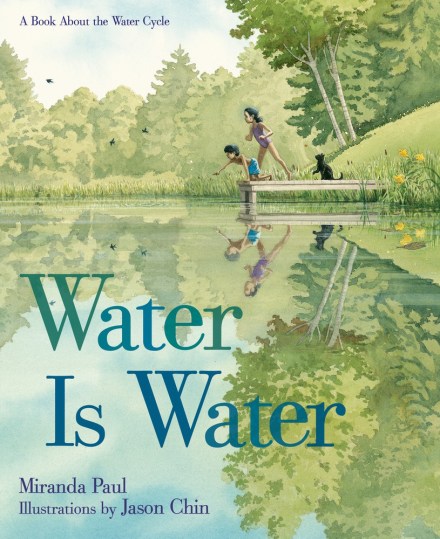
Water Is Water: A Book About the Water Cycle

Written by Miranda Paul | Illustrated by Jason Chin


On a soaking rainy day a sister and brother run up to the house with a turtle they’ve caught in the pond out back. They drink glasses of water and offer a bowlful for the turtle too. “Drip. Sip. Pour me a cup.” Out on the porch Dad is ready with warm mugs of hot chocolate. The ghostly steam tickles their noses. “Whirl. Swirl. Watch it curl by. Steam is steam unless…it cools high.” As the kids return the turtle to the pond they watch a dragon and an eagle play across the sky. “Clouds are clouds unless…they form low.”

celebrate-picture-books-picture-book-review-water-is-water-rain-at-school

Image copyright Jason Chin, text copyright Miranda Paul. Courtesy of us.macmillan.com

Through the misty fog the school bus rumbles up the hill as a little garter snake wriggles in the fallen leaves at the end of the children’s driveway. By the time the bus drops the kids off at school the fog has turned to rain. It plinks on the sidewalks and pounds the earth, creating puddles just in time for recess. “Slosh in galoshes. Splash to your knees! Puddles are puddles unless…puddles freeze.”

celebrate-picture-books-picture-book-review-water-is-water-snowman

Image copyright Jason Chin, text copyright Miranda Paul. Courtesy of us.macmillan.com

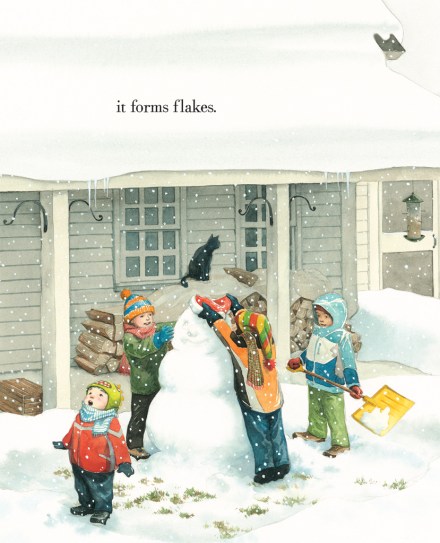
The turtle is hiding now that winter’s come, and a group of friends slip and speed across the pond, some playing hockey, some figure skating, and a couple just learning the ropes. Then suddenly it’s snowing! A brilliant red cardinal watches from the birdfeeder as three sneaky kids with snowballs spy on their friends who are building a snowman. With a “smack!” the snowball fight begins. Soon, however, spring is back with rushing streams and “Creep. Seep. Squish in your boots” mud. And that “mud is mud unless…there are roots.”

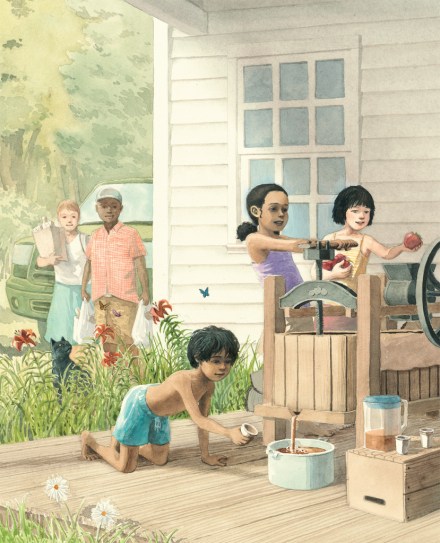
The apple trees in the backyard soak up the spring rains that feed the red, plump apples that are apples “unless…they get pressed. Drip. Sip. Pour me a cup. Cider is cider…until we drink it up!”

More information about water, including illustrated definitions of water-related terms, percentages of water in a variety of plants and creatures, and its importance to the world as well as suggestions for further reading, follow the text.

celebrate-picture-books-picture-book-review-water-is-water-making cider

Image copyright Jason Chin, courtesy of us.macmillan.com

Miranda Paul’s lyrical journey through a year of our interactions with water is a beautiful reminder of all the forms water takes. From life-filled ponds to pouring rains to glasses of refreshment, water sustains every creature and plant on earth. Paul’s transitional “unless…” elegantly introduces each transformation in the natural water cycle in a way that children recognize and appreciate. Her rich rhyming and rhythmical language is a joy to read and makes Water an active character in the story.

celebrate-picture-books-picture-book-review-water-is-water-drinking-cider

Image copyright Jason Chin, courtesy of us.macmillan.com

Jason Chin’s superb artwork is as lush and dynamic as the world around us. Each two-page spread is a masterpiece of atmosphere and details that bring not only water’s cycle to life but also that of the children, growing and playing in and around water throughout the year. As the children shelter from the rain at the beginning of the book, a bushel of apples sits snug against the cider press in the corner of the porch foreshadowing the final pages where fresh cider fuels summer fun. Chin’s children are real kids—joyful and playful, enthusiastically and humorously interacting with nature and each other with the kind of abandon that makes hearts sing. Young readers and adults will love lingering over each page.

Water is Water: A Story of the Water Cycle is the kind of book that can get kids excited about one of the quieter aspects of science—but one that is so important to our daily lives. It would make a wonderful accompaniment to elementary school lesson plans and a gorgeous addition to library and home bookshelves.

Ages 5 – 10

Roaring Brook Press, 2015 | ISBN 978-1596439849

Discover more about Miranda Paul and her books plus resources for teachers and writers on her website!

View a portfolio of artwork by Jason Chin and learn more about him and his books on his website!

National Water Quality Month Activity

celebrate-picture-books-picture-book-review-water-words-word-search

A Sprinkling of Water Words Word Search


This tree grew tall and strong by soaking up water through its roots. Can you find the 20 water-related words that are hidden inside this printable tree-shaped A Sprinkling of Water Word Word Search Puzzle? Here’s the Solution.

celebrate-picture-books-picture-book-review-water-is-water-cover

You can find Water is Water: A Book about the Water Cycle at these booksellers

Amazon | Barnes & Noble | Books-a-Million | IndieBound

Picture Book Review

April 22 – Earth Day

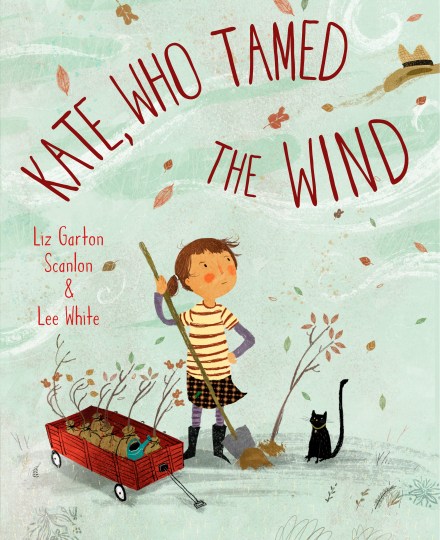
celebrate-picture-books-picture-book-review-kate-who-tamed-the-wind-cover

About the Holiday

Earth Day, the largest global civic-focused day of action, is celebrated in 192 countries and aims to raise awareness of issues concerning the sustainability and protection of our earth. This year’s theme is End Plastic Pollution with the goal of eliminating single-use plastics while promoting global regulation for the disposal of plastics. Plastics are a danger on land, in our oceans, and in our food. 2018 begins a multi-year effort to bring about alternatives to fossil fuel-based materials, one hundred percent recycling of plastics, “corporate and government accountability,” and our own attitudes concerning plastics. Around the world people also celebrate Earth Day by picking up trash along roadways and waterways, recycling, making family and business plans for using less water and electricity, and by planting trees bushes, and flowers that benefit both humans and animals.  For more information on how to get involved, visit the Earth Day Network.

Kate, Who Tamed the Wind

Written by Liz Garton Scanlon | Illustrated by Lee White


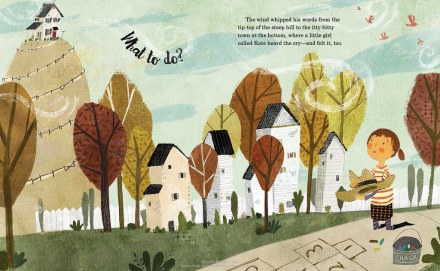
There once was a man who lived in a house on top of very tall, dusty hill. Being so high up, the man’s house captured breezes that set his curtains fluttering and his wind chimes tinkling. Sometimes the wind blew, rattling the shutters, sending the laundry flying from the line, and tearing boards from the house. Inside, the wind whipped, the “table tipped, and the tea spilled.” The man’s hat flew off and out the window, joining the birds who were leaving too.

celebrate-picture-books-picture-book-review-kate-who-tamed-the-wind-spilled-tea

Image copyright Lee White, 2018. text copyright Liz Garton Scanlon, 2018. Courtesy of Schwartz & Wade.

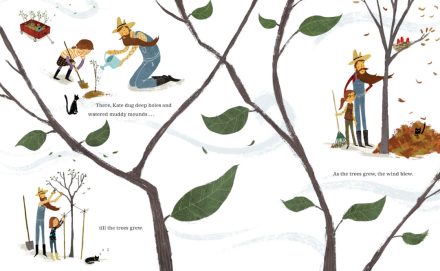
The man cried, “What to do?” Down on the sidewalk below, a little girl named Kate caught the man’s hat and the man’s cry too. Kate wanted to help. She “couldn’t stop the wind,” but she knew of something that could slow it down. When she returned the man’s hat, she also brought a wagon full of saplings. Kate and the man planted the trees, and they tended them as they grew—even while the wind blew.

celebrate-picture-books-picture-book-review-kate-who-tamed-the-wind-kate-catches-hat

Image copyright Lee White, 2018. text copyright Liz Garton Scanlon, 2018. Courtesy of Schwartz & Wade.

“The trees grew, the wind blew, and the time flew. The time flew as the trees grew…and grew…and Kate did too.” As the trees got bigger, taller, and stronger, the “leaves fluttered,” but the shutters quieted and the board stayed still. Inside, the tea brewed, the dust settled down, and the man’s hat stayed put. Even the birds came back. With the house ringed in trees, Kate and the man enjoyed a picnic in the yard, cooled just enough by the gentle breeze.

celebrate-picture-books-picture-book-review-kate-who-tamed-the-wind-planting-trees

Image copyright Lee White, 2018. text copyright Liz Garton Scanlon, 2018. Courtesy of Schwartz & Wade.

Readers will love getting carried away by Liz Garton Scanlon’s breezy lines that through alliteration and rhyme replicate a windy day as things bang, flap, whip, and go flying. As the trees that Kate and the man plant grow and begin to shelter the house from the wind, the rhythm of Scanlon’s text becomes more staccato and rooted. Little Kate is a terrific role model for young readers for her environmental know-how and her stick-to-itiveness as the trees grow from saplings to maturity. The long friendship between the man and Kate is also endearing.

Lee White’s softly hued pages swirl with swipes and swishes that whip curtains, steal laundry, and upend the table and tea. The man’s bewilderment serves as a foil to Kate’s determination and problem-solving, and the difference she makes in the man’s quality of life is evident as the trees grow, their friendship develops, and the wind is finally tamed. Kids will identify with this kind and intelligent child who grows up to be a caring adult.

Beautifully conceived and with lovely details, Kate, Who Tamed the Wind is an environmentally conscious story that will inspire young readers at home and in the classroom.

Ages 4 – 8

Schwartz & Wade, 2018 | ISBN 978-1101934791

Discover more about Liz Garton Scanlon and her books on her website

To learn more about Lee White, her books, and his art, visit his website.

Earth Day Activity

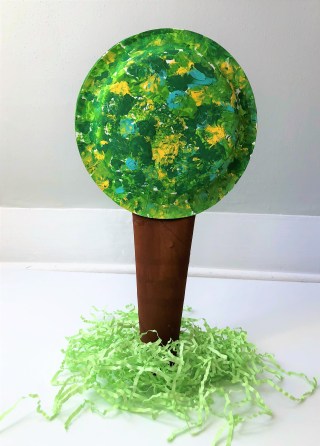
celebrate-picture-books-picture-book-review-paper-plate-tree-craft-2

Paper Plate Tree


On Earth Day children love planting trees in their yard or as part of a community project. With this easy craft, they can also plant a tree on their wall or bulletin board.

Supplies

  • Two paper plates 
  • Paper towel tube
  • Brown craft paint
  • Green craft paint (using a variety of green paints adds interest)
  • Paintbrush, cork, or cut carrot can be used to apply paint
  • Glue or hot glue gun or stapler

Directions

  1. Paint the paper towel tube brown, let dry
  2. Paint the bottoms of the two paper plates with the green (or other color) paints, let dry
  3. Flatten about 4 inches of the paper towel tube 
  4. Glue or tape the flat part of the paper towel tube to the unpainted side of one paper plate
  5. Glue the edges of the two paper plates together, let dry.
  6. Straighten the tree so that it can stand up, or hang your tree on a wall, bulletin board, in a window

Picture Book Review


March 23 – National Near Miss Day and Interview with Astronaut Clayton C. Anderson

celebrate-picture-books-picture-book-review-a-is-for-astronaut-cover

About the Holiday

Today we remember a cosmic fly-by that occurred on March 23, 1989. On that day the 300-meter-wide asteroid 4581 Asclepius, named for the Greek god of medicine and healing, came within 430,000 miles of hitting Earth—actually passing through the exact position Earth had held only six hours earlier. This near miss wasn’t discovered until nine days later by astronomers Henry E. Holt and Norman G. Thomas. “On the cosmic scale of things, that was a close call,” Dr. Holt said at the time. To celebrate today, you can thank your lucky stars for this near miss or any others you’ve experienced recently or in your lifetime. Another stellar way to spend the day is to learn more about space and our universe!

Sleeping Bear Press sent me a copy of A is for Astronaut to check out. All opinions are my own. I’m also thrilled to be partnering with Sleeping Bear Press in a giveaway of a signed copy of A is for Astronaut and a tote bag. View details below.

A is for Astronaut: Blasting Through the Alphabet

Written by Astronaut Clayton Anderson | Illustrated by Scott Brundage


There are some books that just make you say “Wow!” when you open the cover. A is for Astronaut is one of these. Leafing through the pages is like stepping out into a clear, starry night, visiting a space museum, and letting your own dreams soar all rolled into one. When you settle in to read, you discover that each letter of the alphabet introduces both poetry and facts to enthrall space lovers.
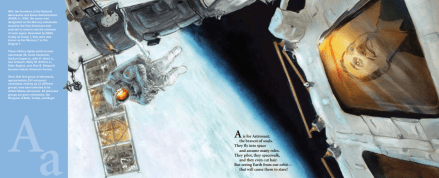
celebrate-picture-books-picture-book-review-a-is-for-astronaut-letter-A

Image copyright Scott Brundage, 2018, text copyright Clayton C. Anderson, 2018. Courtesy of Sleeping Bear Press.

To get things started, “A is for Astronaut, / the bravest of souls. / They fly into space / and assume many roles. / They pilot, they spacewalk, / and they even cut hair. / But seeing Earth from our orbit— / that will cause them to stare!” A sidebar reveals more about astronauts—even astronaut nicknames!

“B is for Blastoff, a powerful thing! / When those engines are fired, it’ll make your ears ring.” And did you know that two and a half minutes after blastoff, the engines are cut off and everything begins to float? Pretty amazing! Blasting through the alphabet we come to G, where readers learn about our Galaxy that is “shaped like a spiral filled with billions of stars.”

celebrate-picture-books-picture-book-review-a-is-for-astronaut-letter-N

Image copyright Scott Brundage, 2018, text copyright Clayton C. Anderson, 2018. Courtesy of Sleeping Bear Press.

How are astronauts able to walk and work in space? “Space Helmets are crucial and H is their letter.” At K kids meet John F. Kennedy, who helped develop the space program, and L is for the Landing that brings astronauts back to Earth. M is for Meteors with their very long tails, and N, of course, is for NASA, which was formed in 1958 with a “goal to better understand our planet and solar system.”

How do astronauts do that? “Working outside in space is sure to impress. / We call it a Space Walk, and its letter is S. / Floating weightless, with tools and a bulky white suit, / we can fix and install things—it’s really a hoot!” And there’s also V for  “Voyager, two NASA space probes. / They are still sending data, / having long left our globe.”

At Z, time is up—that’s Zulu time and “our reference to England, when London’s clocks chime. / As we fly ‘round the Earth, folks must know our day’s plan, / so we all set our watches to match that time span.” 

celebrate-picture-books-picture-book-review-a-is-for-astronaut-letter-P

Image copyright Scott Brundage, 2018, text copyright Clayton C. Anderson, 2018. Courtesy of Sleeping Bear Press.

Both children and adults who have an affinity for space travel and all things related to astronomy will want to dip into A is for Astronaut again and again. With his wealth of knowledge and engaging voice, astronaut Clayton Anderson presents a book that will have readers starry-eyed and full of the kinds of facts and tidbits that answer questions and spur further discovery. A is for Astronaut can be read through from A to Z for its vivid poetry or explored in small chunks to absorb the fascinating facts included with each letter—or both. Expertly written for kids of all ages, Anderson’s A is for Astronaut is a stellar achievement.

Scott Brundage’s incredibly beautiful and detailed illustrations will thrill space buffs and serious scientists and engineers alike. Readers will love meeting astronauts tethered to their ship while working in space, experiencing the vibrant, mottled colors of a darkened sky or distant planet, and viewing the technological marvel that is the NASA control room. With the precision of a photograph and the illumination of true artistry, Brundage’s images put readers in the center of the action, where they can learn and understand more about this favorite science.

A is for Astronaut is a must for classroom, school, and public libraries and would be a favorite on home bookshelves for children (and adults) who love space, technology, math, science, and learning about our universe.

Ages 5 – 10

Sleeping Bear Press, 2018 | ISBN 978-1585363964

Discover more about retired astronaut Clayton Anderson and access resources on his website, or follow him on Facebook | Twitter | or InstaFor speaking events and appearances visit www.AstronautClayAnderson.com

To learn more about Scott Brundage and view a portfolio of his publishing and editorial work, visit his website.

Visit Sleeping Bear Press to learn more about A is for AstronautYou can download two A is for Astronaut Activity Sheets here:

A is for Astronaut Vocabulary Sheet | A is for Astronaut Fill in the Blanks

Meet Astronaut Clayton Anderson
celebrate-picture-books-picture-book-review-astronaut-clayton-anderson-photo

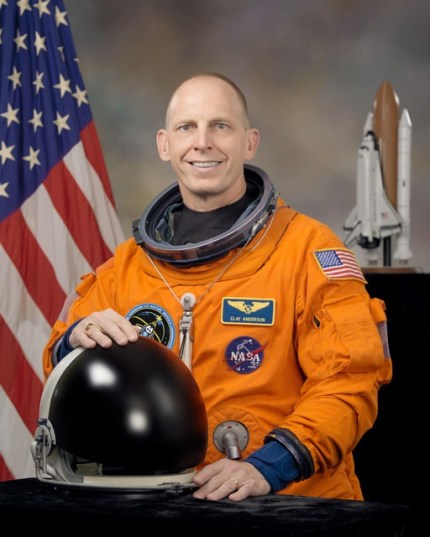
Today, I’m honored to speak with retired astronaut Clayton Anderson about a pivotal childhood moment that inspired his life’s work, the challenges of being an astronaut, and his most vivid memories from space.  

What inspired you to make the journey to become an astronaut?

It was Christmas Eve, 1968.  I was nine years old when my parents put my brother and sister and me on the floor in front of a black-and-white TV around midnight. We sat on an old throw-rug gifted from our grandmother to watch humans circumvent the moon for the first time in human history. As I watched the control center team and listened to the flight director bark out commands, I was enthralled. “I need a Go/NoGo for the trans-lunar injection burn… FIDO? GO!  Retro…? GO!  Surgeon…? GO!  GPO…? GO! The entire team was GO! The craft disappeared behind the moon, leaving me to enjoy the rapid-fire chatter no more. It was simple static on our TV… for about 15 minutes. Then, after a couple of non-answered calls from the Houston CAPCOM to the Apollo 8 crew, I heard the quindar tone (famous “space-beep” you hear on TV), and the first words from the Apollo 8 commander, Frank Borman: “Houston, Apollo 8. Please be informed there is a Santa Claus!” That’s all I needed. The bit was set in my mind that one day, I would become a United States Astronaut.

How did your perspectives change while on the International Space Station?

I am a man of faith. Seeing our earth from orbit did allow me to have the “orbital perspective” so many astronauts speak of. However, while I totally agree that this perspective changed my outlook and my willingness to do better with trying to protect and preserve our “spaceship earth,” it strengthened my faith in God much more. The earth and those of us privileged to be on it, is not random. There is a reason why Sir Isaac Newton discovered gravity and invented calculus. There is a reason why Albert Einstein was able to derive the Theory of Relativity. While I am unable to truly explain my rationale, I believe that there is a higher power. A power that created this universe and gave humans an adaptable brain. That incredible gift will continue to enable us to uncover the secrets of the universe, continuing to strengthen my faith.

What was a big challenge you faced during your career?

The dream of flying in space as an American astronaut was something I pursued for many years of my life. To have finally been selected and given that opportunity is incredible. Yet having the “best job in the universe” is not without difficulty. For me, it was family separation. I love my wife and kids more than anyone… on or off the planet.  To have to be separated from them for months at a time was extremely difficult, especially given their ages (6 and 2) when I began my training. It got easier as they grew older, but it didn’t assuage my guilt very much. While I lived my dream, they sacrificed greatly, and I will spend the rest of my life trying to repay them.

What is your best memory from being in space?

It must be my first spacewalk. Poised above the opened hatch, floating in my spacesuit while looking into the abyss of darkness created by the sun’s travel behind the Earth, I was calm. I watched ice crystals fly from behind my suit (they were created by my sublimator… or air conditioning unit) into the total black void of space. The slight pressure still available after the depressurization of the airlock was “pushing” the crystals into the vacuum of space. I was entranced just watching them sail by. When I finally came back to reality—buoyed by the Mission Control call to exit the airlock—I paused for just a moment to contemplate what was happening. The only thought going through my mind was that “…I was born to be here, right now, in this special place, doing this.”

Seeing my hometown from space…for the very first time, is a very, very close second. On that day, when I expected to excitedly capture photos of my Ashland, Nebraska, I had everything prepped and ready to go. Equipment was strategically placed around the U.S. Lab module’s earth-facing window, cameras were Velcroed securely to the wall, with timers set to remind me when to get into position. Finding my home on earth—without all the wonderfully placed lines, borders, squiggly river italics, and large stars designating capital cities—was tougher than I imagined. But when I finally found success, and saw Nebraska rolling into view by virtue of a big gray splotch known as Omaha (and a smaller gray splotch further southwest called Lincoln), the south bend of the Platte River was the last valid vision I had. When I saw my home, nestled there where the river bent, the place where I was raised and where many of my family and friends still reside, I took not a single photo. I simply broke down and cried. Overcome by the incredible emotions of floating weightlessly, as an American astronaut flying 225 miles above the exact spot where I was born and raised, having first dreamed of doing exactly that, was simply too much for me. So, I did what seemed to come to me naturally.  I wept.

Thank you so much for sharing your thoughts and memories of your incredible career. I wish you all the best with A is for Astronaut and all of your future endeavors as you inspire children and adults to always reach for the stars.

About Clayton Anderson

Retired Astronaut Clayton Anderson spent 167 days in outer space, having lived and worked on the International Space Station (ISS) for 152 days and participated in nearly 40 hours of space walks. With a strong belief in perseverance and the importance of STEAM as part of every child’s education, Astronaut Anderson brings his “out of this world” insight to issues faced by children, parents, and educators. 

You can connect with Clayton Anderson on:

His website: astroclay.com | Facebook | Instagram | TwitterFor speaking events and appearances visit www.AstronautClayAnderson.com

You can find A is for Astronaut at these booksellers:

Amazon | Barnes & Noble | Books-a-Million | IndieBound | Sleeping Bear Press

Near Miss Day Activity
 celebrate-picture-books-picture-book-review-rocket-to-the-moon-tic-tac-toe-game

Rocket to the Moon! Tic-Tac-Toe Game


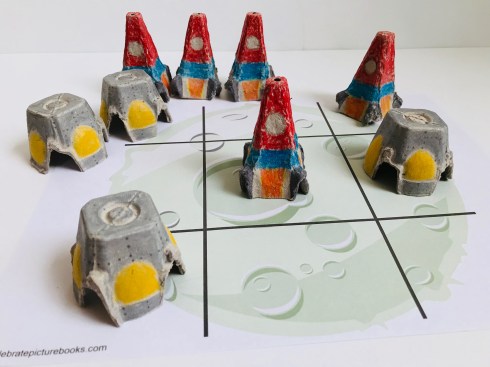
You can launch your own Tic-Tac-Toe Game with this set you make yourself! With just a couple of egg cartons, some crayons, and a printable game board, you’ll be off to the moon for some fun! Opposing players can be designated by rockets and capsules. Each player will need 5 playing pieces. 

Supplies

  • Printable Moon Tic-Tac-Toe Game Board
  • 2 cardboard egg cartons
  • Heavy stock paper or regular printer paper
  • Crayons
  • Black or gray fine-tip marker

Directions

To Make the Rockets

  1. Cut the tall center cones from the egg carton
  2. Trim the bottoms of each form so they stand steadily, leaving the arched corners intact
  3. Pencil in a circular window on one side near the top of the cone
  4. Color the rocket body any colors you like, going around the window and stopping where the arched corners begin
  5. With the marker color the arched corners of the form to make legs
  6. On the cardboard between the legs, color flames for blast off

To Make the Capsule

  1. Cut the egg cups from an egg carton
  2. Color the sides silver, leaving the curved section uncolored. (If your egg cup has no pre-pressed curve on the sides of the cup, draw one on each side.)
  3. Color the curved section yellow to make windows
  4. With the marker, dot “rivets” across the capsule

Print the Moon Game Board and play!

Picture Book Review

February 28 – It’s National Bird-Feeding Month

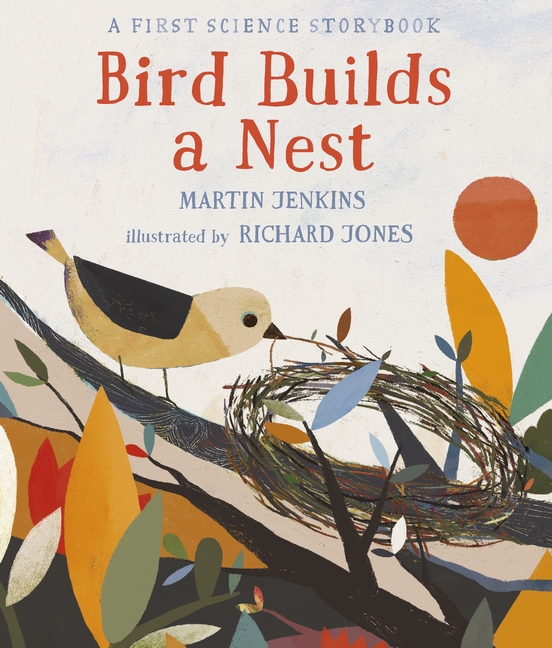
celebrate-picture-books-picture-book-review-bird-builds-a-nest-cover

About the Holiday

As birds begin coming back to your area during this last bit of winter to build nests, mate, and hatch little cheepers, they still need help finding nutritious food to sustain them. Without the lush vegetation and increased insect activity that will come with warmer weather, birds often rely on backyard feeders for food. Attracting colorful birds to your home can be a rewarding and joyful hobby – one you can enjoy year-round. If you’ve been considering hanging a bird feeder to one of your trees, today is the perfect day to get started!

Bird Builds a Nest: A First Science Storybook

Written by Martin Jenkins | Illustrated by Richard Jones


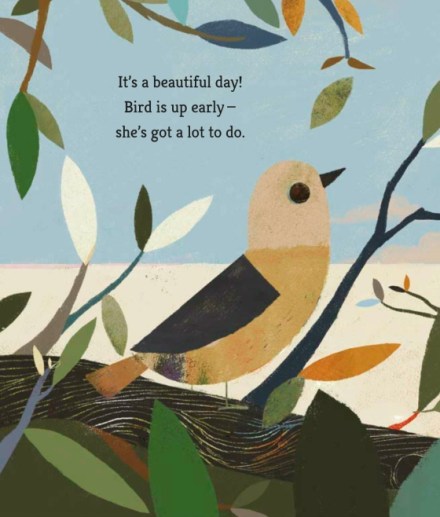
It’s early morning and Bird is already chirping. It’s going to be a busy day! To get started she needs breakfast. Of course, “what she wants is a nice, juicy…worm.” What the worm wants, though, is to not be eaten. So while “bird pulls hard…the worm pulls back.” This is one strong worm, and it ends up winning the tug-of-war. Nearby, though, is a smaller and weaker worm that is just as delicious.

celebrate-picture-books-picture-book-review-bird-builds-a-nest-bird-in-nest

Image copyright Richard JOnes, 2018, text copyright Martin Jenkins, 2018. Courtesy of Candlewick Press.

Full and satisfied, Bird takes off on her next task. She needs to find twigs. “Lots of twigs.” The first one she finds is more like a branch to the little bird—and is too heavy. The next one is as long as a snake and too heavy too. But there are plenty of perfectly small twigs scattered around, so Bird gets to work. She “can carry one large twig or two medium-size twigs or three or four small twigs (although it’s hard to fit that many in her beak at once).”

What is Bird doing with all of these twigs? Building her nest, of course! It takes time to arrange the twigs she brings back to the branch of her tree. “Carefully, she pushes a twig into the side of the nest and pulls its end back out.” As if weaving a basket, Bird intertwines more and more sticks, making her nest strong. It takes hours to complete her new home. Once in a while a twig falls or she drops one, but there are plenty more to find.

celebrate-picture-books-picture-book-review-bird-builds-a-nest-worm

Image copyright Richard JOnes, 2018, text copyright Martin Jenkins, 2018. Courtesy of Candlewick Press.

Once the twigs are all in place, Bird searches for soft material to line it. She gathers dried grass and feathers. These are so light that it’s easy to carry a lot at one time. Back in her nest she places the grass and feathers inside and “turning around and around, pushing with her whole body, she makes a snug little cup, smooth and soft on the inside.” Now the nest is comfy and all ready for…the five little eggs that are waiting to hatch!

Bird Builds a Nest is a First Science Storybook for young readers that, while showing how birds build nests also demonstrates various scientific forces. As kids see the baby birds emerge from the nest for the first time, they can also answer a few questions in the Afterward that prompt them to think about pushing and pulling, moving light and heavy objects, and the force of gravity. An Index reveals where in the text these forces can be found.

celebrate-picture-books-picture-book-review-bird-builds-a-nest-making-it-soft

Image copyright Richard JOnes, 2018, text copyright Martin Jenkins, 2018. Courtesy of Candlewick Press.

Spying a nest in a tree, eave, or other tucked-away space is like finding a secret, and is one of the joys of spring. Martin Jenkins’ delightful day out with Bird gives kids…well…a bird’s eye view of the nest-building process. Just like an artist, this sweet, industrious feathered friend gathers her materials and sets to work to make her instinctual vision come true. Jenkins’ step-by-step description is conversational and homey with words such as snug, tuck, fetching, and twigs that lend themselves to the charming alliteration that gives the story a poetic sound and feel.

Richard Jones’ mixed-media illustrations sing with beautiful folk-art inspired scenes of Bird gathering her material and creating her nest. Softly vibrant earth tones of autumn and spring accentuate Bird’s quiet and solitary endeavor. Bird is bright-eyed and cheerful as she flies back and forth carrying twigs and arranging them just so—activities that are clearly shown for budding scientists to see and understand. Readers will enjoy finding small details here and there—a mouse in a tree hole, a tiny ladybug, hearts in the swirls of the tree bark and formed by leaves, and even a bit of foreshadowing of the eggs to come. The male and female bird cuddle together in the finished nest as two ladybugs find each other under a purple heart, and the little chicks venturing out for the first time will enchant children.

Bird Builds a Nest wonderfully weaves together facts and a sweet story to introduce young readers to one particular natural phenomenon and some of the scientific forces involved. The captivating story would be a terrific addition to home libraries and classroom bookshelves for discussions about the natural world.

Ages 4 – 6

Candlewick Press, 2018 |ISBN 978-0763693466

To learn more about Richard Jones and view a portfolio of his art, visit his website.

National Bird-Feeding Month Activity

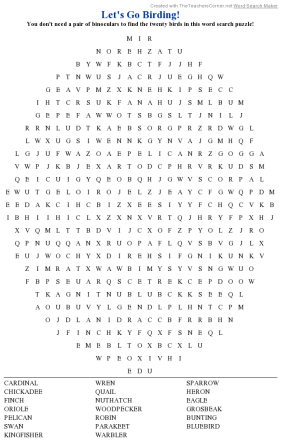
celebrate-picture-books-picture-book-review-let's-go-birding-word-search

Let’s Go Birding! Word Search Puzzle


When you put up a bird feeder in your yard, you’ll see so many different types of birds come to visit! Find the names of twenty types of birds in this printable Let’s Go Birding! Word Search Puzzle.

Let’s Go Birding! Word Search Puzzle | Let’s Go Birding! Word Search Solution

Picture Book Review