August 22 – It’s American Artist Appreciation Month

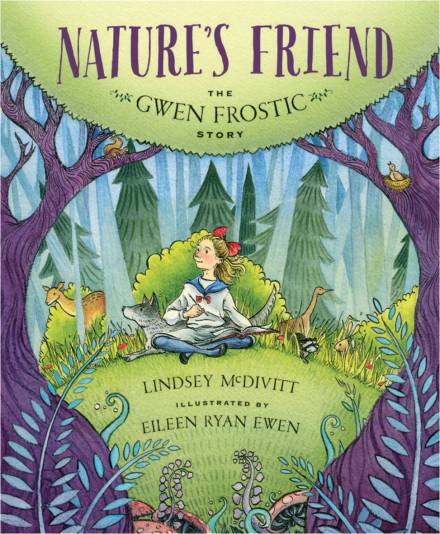
celebrate-picture-books-picture-book-review-nature's-friend-the-gwen-frostic-story-cover

About the Holiday

From the earliest days of the exploration and settlement of America, artists have been creating works that reveal the beauty, complexity, and meaning of this country and her people. Over the years American artists have developed innovative styles and delved into universal subjects in new ways. This month we celebrate these artists of the past and present who, through their work, make us see the world in fresh ways.

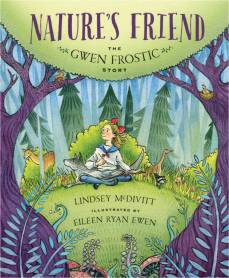
Nature’s Friend: The Gwen Frostic Story

Written by Lindsey McDivitt | Illustrated by Eileen Ryan Ewen


“Gwen followed her brothers and sisters everywhere, like a small fawn follows its herd.” Even though an illness in babyhood had left her hands and one foot weak and her speech slurred, Gwen grew up confident that she could do anything. Born in 1906, Gwen, as a child with disabilities, would normally have stayed home instead of attending school. But her mother had been a teacher, so she sent her to school and “pushed her to learn.”
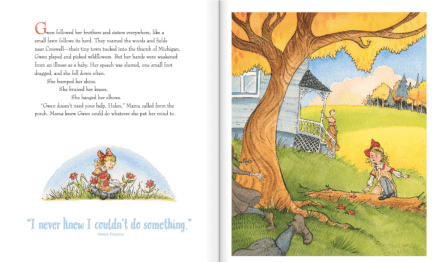
celebrate-picture-books-picture-book-review-nature's-friend-the-gwen-frostic-story-young-gwen

Image copyright Eileen Ryan Ewen, 2018, text copyright Lindsey McDivitt, 2018. Courtesy of Sleeping Bear Press.

The other kids giggled and whispered behind her back, and while she wanted to hide, she instead “gathered up knowledge like a bird builds a nest.” Her teachers thought she would never be able to write. To strengthen her hands, her mother encouraged her to draw, keeping a drawer full of supplies within reach. As Gwen sketched, her grip grew firmer.”

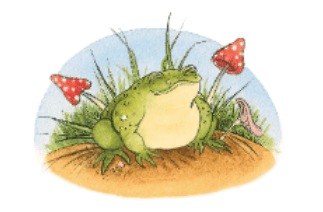
While making friends was difficult, Gwen found companionship in nature. She loved to spend time outdoors watching the unfurling ferns and frogs that “lapped up bugs with long, quick tongues.” From nature, Gwen learned, “‘all things are vital to the universe…all are equal…and at one…different.’”
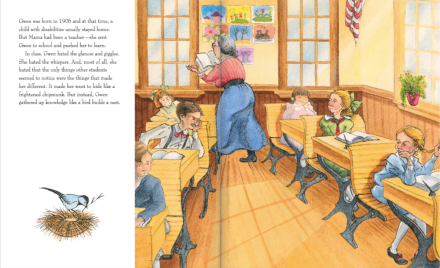
celebrate-picture-books-picture-book-review-nature's-friend-the-gwen-frostic-story-school

Image copyright Eileen Ryan Ewen, 2018, text copyright Lindsey McDivitt, 2018. Courtesy of Sleeping Bear Press.

A move to Detroit when she was twelve introduced Gwen to the buildings and people of a big city. In high school, Gwen, now stronger, took mechanical drawing and shop class. Later, in art school, Gwen was introduced to linoleum, in which she carved intricate images for printmaking. Gwen’s dream was to be an artist, but she also knew she needed to earn money to pay expenses.

She started a business making objects from hammered metal. Word of her art spread quickly. It was bought by leading Detroit families, and Gwen was invited to exhibit her art at the 1939 World’s Fair in New York. When World War II broke out, Gwen went to work building bombers. She even designed tools for building the planes. Contributing to the war effort was important, but Gwen still “longed to create art.” She bought a printing press and opened “Presscraft Papers stationery company.”
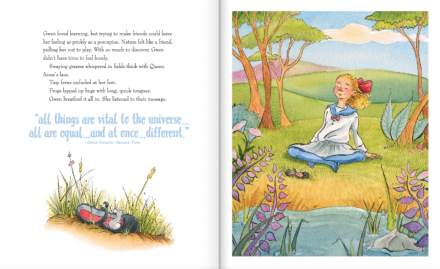
celebrate-picture-books-picture-book-review-nature's-friend-the-gwen-frostic-story-gwen-in-nature

Image copyright Eileen Ryan Ewen, 2018, text copyright Lindsey McDivitt, 2018. Courtesy of Sleeping Bear Press.

Gwen began to miss the nature she loved so much, so she packed up and moved back to Michigan. There, “she walked deep into the wetlands” and began carving linoleum blocks, recreating nature as she saw it. “She wanted others to see nature as she did, to recognize the value of plants, trees, and animals.” She made prints from her linoleum blocks and created greeting cards on her press. Her beautiful artwork reminded people of nature’s bounty at a time when the environment was threatened with pollution. People came from all over to her shop in the Michigan woods to buy her art that spoke to them: “‘Love this earth, / Love it’s waters… / Care enough to keep it clear.’”

An Author’s Note reveals more about Gwen Frostic’s life and provides a sketching craft for readers.

celebrate-picture-books-picture-book-review-nature's-friend-the-gwen-frostic-story-drawing

Image copyright Eileen Ryan Ewen, 2018, text copyright Lindsey McDivitt, 2018. Courtesy of Sleeping Bear Press.

Lindsey McDivitt’s superb biography of Gwen Frostic—an artist, inspiration, and pioneer for career women and the disabled—introduces children to a woman who, through persistence and confidence, lived life on her own terms. McDivitt’s lyrical prose infuses the story with the poetry of nature that Gwen internalized and translated into the art that people continue to admire and seek out. McDivitt’s thorough storytelling and excellent pacing allow for a full understanding of Gwen Frostic’s achievements. Young readers will be fascinated by the life work of this talented and determined artist.
Screen Shot 2018-08-21 at 6.54.39 PM

Eileen Ryan Ewen captures Gwen Frostic’s strength of character, can-do attitude, and love of nature in her stunning artwork. Full-page illustrations follow Gwen from her beloved Michigan woodlands to Detroit to art school and through her life as an artist and business woman. Images of Gwen carving a linoleum block, sketching designs for new tools as she sits next to a fighter plane and the woman installing rivets, working an old printing press, and greeting visitors at her shop broaden readers’ understanding of the times and Gwen’s work.

An exceptional picture book that provides encouragement and inspiration, Nature’s Friend: The Gwen Frostic Story is a must for classroom libraries and would make a positive impact on young readers as part of their home library.

Ages 6 – 10

Sleeping Bear Press, 2018 | ISBN 978-1585364053

Discover more about Lindsey McDivitt and her books on her website.

To learn more about Eileen Ryan Ewen, her art, and her books, visit her website.

American Artist Appreciation Month
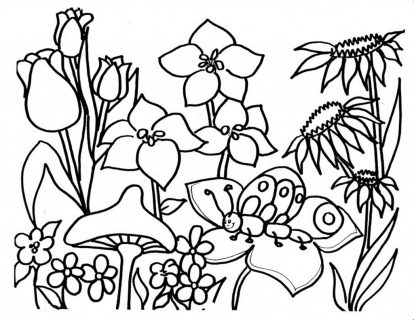
celebrate-picture-books-picture-book-review-nature-coloring-page

Nature Coloring Pages


If you love nature like Gwen Frostic did, you’ll enjoy these printable Nature Coloring Pages.

Meadow Coloring PageOcean Coloring Page

celebrate-picture-books-picture-book-review-nature's-friend-the-gwen-frostic-story-cover

You can find Nature’s Friend: The Gwen Frostic Story at these booksellers

Amazon | Barnes & Noble | Books-a-Million | IndieBound

Picture Book Review


July 22 – It’s National Blueberry Month

celebrate-picture-books-picture-book-review-the-honeybee-man-cover

About the Holiday

Why do we celebrate bees and honey during National Blueberry Month? Because—as Fred, the beekeeper in today’s book knows—the fragrant blossoms on blueberry bushes provide nectar that bees make into some of the most complex, sweet, and delicious honey around. If you’re lucky enough to find blueberry honey on your grocery store shelves—or even better, at your local farmers market—don’t hesitate to try it! While you’re at it, grab some plump, delectable blueberries and make blueberry pancakes to put that honey on!

The Honeybee Man

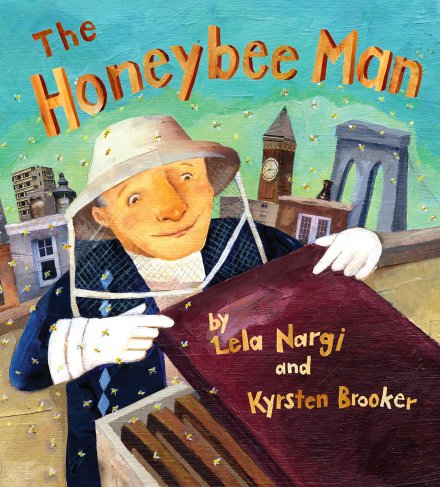
Written by Lela Nargi | Illustrated by Kyrsten Brooker


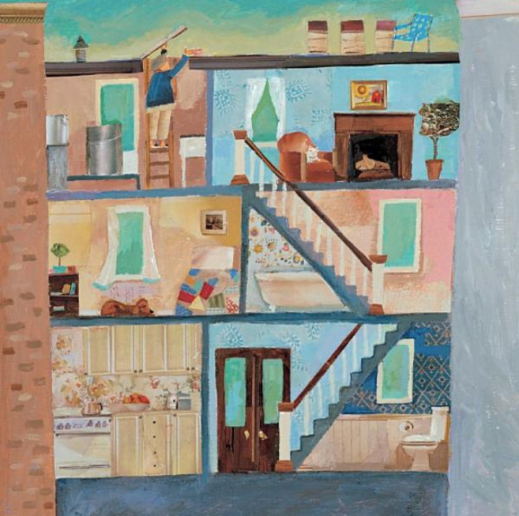
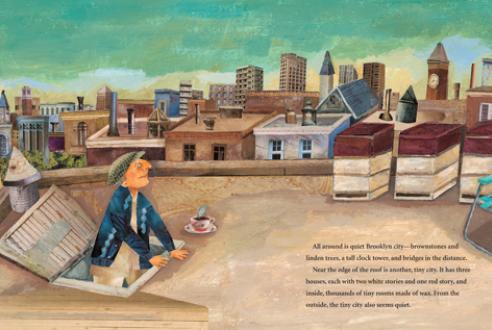
At dawn on a July morning, Fred awakens to begin his day with his “enormous” family. His morning routine consists of a cup of tea and a climb back upstairs and through a hatch in the ceiling that takes him to the roof. “All around is quiet Brooklyn city—brownstones and linden trees, a tall clock tower, and bridges in the distance.” But nearby is another, tiny city. It consists of only three houses, but inside are “thousands of tiny rooms made of wax.”

celebrate-picture-books-picture-book-review-the-honeybee-man-fred's-house

Image copyright Kyrsten Brooker, 2011, courtesy of Schwartz & Wade.

The summer morning smells of “maple leave and gasoline and the river and dust. He turns to the tiny city and inhales its smaller, sweeter smell—a little like caramel, a little like ripe peaches.” He bends down to the three houses to wake their residents. “‘Good morning, Queen Mab. Good morning, Queen Nefertiti. Good morning, Queen Boadicea,’” he calls before greeting the rest of his family: “‘Good morning, my bees, my darlings!’”

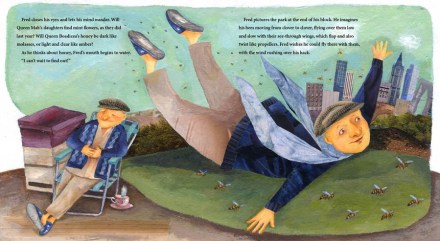
Inside the houses the bees are busy. The queens are laying eggs while the workers build wax rooms, nurse bees feed the babies, and others are getting ready to find fields of flowers for nectar. Fred dreams of the marvelous flowers the bees may find to flavor their honey. He imagines the bees flying low over the flowers moving among them and wishes he could soar with them too.

celebrate-picture-books-picture-book-review-the-honeybee-man-on-the-roof

Image copyright Kyrsten Brooker, 2011, courtesy of Schwartz & Wade

Fred watches the young bees uncertainly leave the hive and swirl off into the air. The older bees “zip out of the hives and throw themselves at the air, embracing it with their wings.” When a few land on Fred’s arm, he gently flicks them on their way. He spies on them from his rooftop as they disperse into his backyard garden, other neighborhood gardens, and perhaps, if Fred is lucky, to “blueberry bushes somewhere across town.” He sees the bees “dive into sweet pea and squash flowers. If he were closer, he could see them using their tubelike tongues to drink in flower nectar, which they store in honey sacs inside their bellies.”

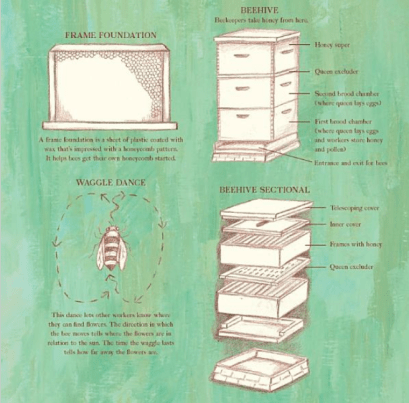
The bees fly slowly home weighted down with their treasure. Fred knows that inside the hive the bees will go to work, some will do the waggle dance that tells other bees where the flowers are, some will take the nectar and store it in the wax rooms, and others will fan “their wings to evaporate the water from the nectar so it will turn to honey.”

celebrate-picture-books-picture-book-review-the-honeybee-man-in-the-garden
Image copyright Kyrsten Brooker, 2011, text copyright Lela Nargi, 2011. Courtesy of Schwartz & Wade.

At the end of August Fred knows it’s time to collect the honey. He carefully enters the tiny houses, removing the honeycomb from the top. In his own home he cuts the wax caps of the comb and the honey begins to flow. A special spinning machine squeezes every drop from the honeycomb. He pours the honey into jars and labels them “Fred’s Brooklyn Honey, Made by Tireless Brooklyn Bees.” In the evening Fred sits on his stoop chatting with the neighbors. He gives each a jar of golden honey.

As night falls Fred opens a jar of honey as the bees huddle “back in their own city, waiting for the rays of tomorrow’s sun to call them up and away over Brooklyn.” Fred dips a finger into the honey and tastes. “It is sweet, like linden flowers. It is sharp, like rosemary. It is ever-so-slightly sour. “‘Ah,’ says Fred, absorbing these happy flavors. ‘Blueberries!’”

celebrate-picture-books-picture-book-review-the-honeybee-man-fred-flies

Image copyright Kyrsten Brooker, 2011, text copyright Lela Nargi, 2011. Courtesy of Schwartz & Wade.

Lela Nargi’s lovely city-based nature book brilliantly likens the tightly packed, exhilarating environs of Brooklyn to the stirring realm of the beehive. Through Fred’s love of his bee family, Nargi lyrically and with marvelous metaphors and verbs reveals the fascinating world of bees as well as the rich and satisfying life of one particular beekeeper. Readers organically learn fascinating facts about the ways bees collect nectar and transform it into delicious honey as well as why honey can have so many flavors.

In her gorgeous illustrations, Kyrsten Brooker uses the golden hues of honey to paint not only the beehive but Brooklyn as well, giving the two “cities” a sense of cohesiveness and equality. Fred, older, with his cup of tea and blue slippers is shown gently and lovingly taking care of his bees, even as he still has their spirit of adventure. Brooker’s combination of oils and collage fuse the dreamy quality of the text with the concreteness of its facts to create a unique book that would be perfect for quiet story times, rainy afternoons, or bedtime.

If there is such a thing as a child’s nature cozy, The Honeybee Man is it. The book would make a wonderful gift and a delightful addition to any child’s or classroom library.

celebrate-picture-books-picture-book-review-the-honeybee-man-bee-hive

Image copyright Kyrsten Brooker, 2011, text copyright Lela Nargi, 2011. Courtesy of Schwartz & Wade.

The endpapers provide detailed diagrams of the various types of bees, beehives, flowers, the waggle dance, and even a bee’s stinger. Nature lovers will relish the two pages of “amazing facts about honey, honeybees, and beekeepers” that follow the story.

Ages 5 – 10

Schwartz & Wade, 2011 | ISBN 978-0375849800

You can find books for children, articles for adults, and so much more on Lela Nargi’s website!

To learn more about Kyrsten Brooker, her books, and her art, visit her website.

National Blueberry Month Activity

CPB---Busy-Buzzy-Bee-Maze

Busy Buzzy Bee Maze


Can you help the little bee find her way through the maze to get to the flower and her friend?

Busy Buzzy Bee Maze | Busy Buzzy Bee Maze Solution!

celebrate-picture-books-picture-book-review-the-honeybee-man-cover

The Honeybee Man can be found at these booksellers

Amazon | Barnes & Noble | Books-a-Million | IndieBound

Picture Book Review
Picture Book Review

June 19 – World Sauntering Day

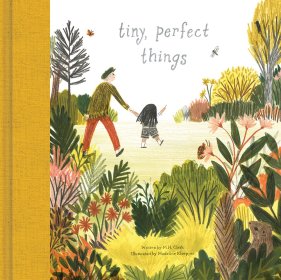
celebrate-picture-books-picture-book-review-tiny-perfect-things-cover

About the Holiday

In 1979 as the jogging craze was sweeping the world, W.T. “Bill” Rabe decided people needed to be reminded to slow down and really notice the things around them. At the time Rabe worked at the the Grand Hotel on Mackinac Island, Michigan, which boasts the world’s longest porch at 660 feet (200 m). Since that time people are encouraged to celebrate Sauntering Day by taking a long walk and enjoying the relaxation of a slower pace.

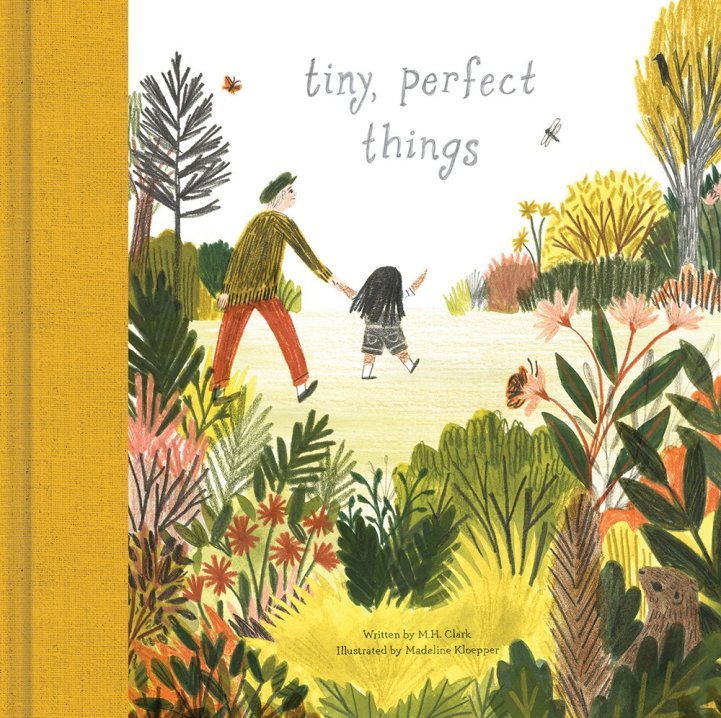
Tiny, Perfect Things

Written by M.H. Clark | Illustrated by Madeline Kloepper


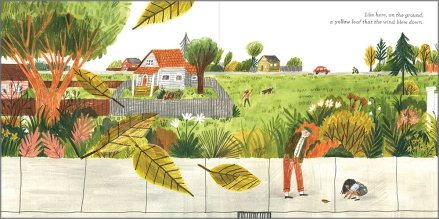
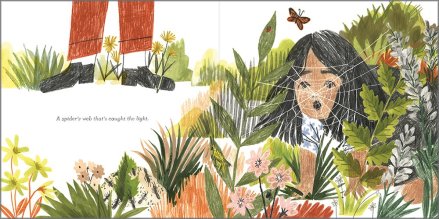
A little girl and her grandfather head outside for a walk. “Today, we keep our eyes open for tiny, perfect things,” the girl says. The first thing they find is a yellow leaf that has fluttered down from a nearby tree. While the girl is examining the leaf, she notices an intricate “spider’s web that’s caught the light.” Then Grandpa lifts her up to see “a snail that had climbed the fence last night.” 

celebrate-picture-books-picture-book-review-tiny-perfect-things-leaf

Image copyright Madeline Kloepper, 2018, text copyright M.H. Clark. Courtesy of Compendium.

Crows overhead watch the pair and guard the treasures they’ve hidden in their nest. One drops a red bottle cap for Grandpa to find. The little girl and her grandfather also see a red flower pushing up through a crack in the sidewalk and a man wearing a hat with a long, red feather. Farther on, the girl realizes their “shadows are holding hands,” waking when they walk and standing when they stand.

celebrate-picture-books-picture-book-review-tiny-perfect-things-spider-web

Image copyright Madeline Kloepper, 2018, text copyright M.H. Clark. Courtesy of Compendium.

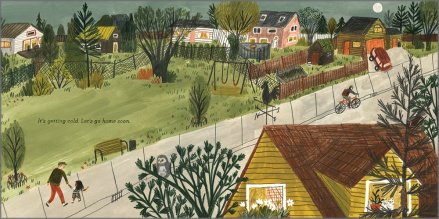
They wave to a neighbor and her cat and admire a shiny apple “way up high. / Red against the blue, blue sky.” As twilight falls and bunnies, birds, and other creatures settle in, a pale moon rises. The cold night air prompts the little girl and her grandfather to start back home. Around the corner, they see their house. A welcoming light is on, and a pretty white cat waits for them at the door.

The girl runs to her mother and exclaims, “We found so many things today! / A leaf, a snail, a cat, some crows. / The world is full of wonders, / no matter where we go.” She sits on the rug and draws all the tiny, perfect things they saw, ready to go out again tomorrow.

celebrate-picture-books-picture-book-review-tiny-perfect-things-night

Image copyright Madeline Kloepper, 2018, text copyright M.H. Clark. Courtesy of Compendium.

M.H. Clark’s gorgeously written, lyrical story shines a light on seemingly simple aspects of nature and neighborhoods. As seen through a child’s eyes, leaves, snails, the surprise meeting of familiar people and pets, and even a change in light and temperature are gems to be remembered, recorded, and sought out again and again. The gentle pace and affection between the little girl and her grandfather makes each page a joy to read, and the love and warmth of the girl’s mixed race, multigenerational family will swell the reader’s heart. Clark’s final line invites children to find “perfect things” wherever they go. It’s a call both kids and adults will want to answer.

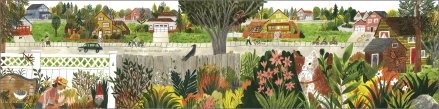
celebrate-picture-books-picture-book-review-tiny-perfect-things-double-gate-fold

Image copyright Madeline Kloepper, 2018, text copyright M.H. Clark. Courtesy of Compendium.

Madeline Kloepper’s lush illustrations combine sophistication with the sensibility of a child’s drawing to beautifully reflect the child’s-eye view of Clark’s story. With deep earth tones, Kloepper depicts a neighborhood teeming with life while also showing that the little girl and her grandfather are one with the natural world. Through various perspectives, Kloepper points out that astonishing things can be found at ground level, up high, and in surprising nooks and crannies if one just takes time to look. Each page depicts the object described in the text and then offers many more “tiny, perfect things” for alert readers to discover. A final double gate fold will have kids and adults sitting on the floor or spreading out at the table together to search for all of the wondrous things hidden in plain sight.

A book that opens readers eyes while warming their heart, Tiny, Perfect Things would be a much-loved addition to any child’s home bookshelf and is a must for classroom, school, and public libraries.

Ages 4 – 8

Compendium, 2018 | ISBN 978-1946873064

To learn more about Madeline Kloepper, her art, and her books, visit her website.

World Sauntering Day Activity

celebrate-picture-books-picture-book-review-nature-journal-cover

My Nature Journal 


You can remember the things you see on a walk in this Nature Journal. Just print the cover, add pages, and staple it together. Then draw the flowers, trees, birds, snails, and things you see. You can tape leaves and other small objects inside too!

My Nature Journal Cover 

celebrate-picture-books-picture-book-review-tiny-perfect-things-cover

You can find Tiny, Perfect Things at these booksellers

Amazon | Barnes & Noble | Books-a-Million | IndieBound

Picture Book Review
June 15 – National Nature Photography Day

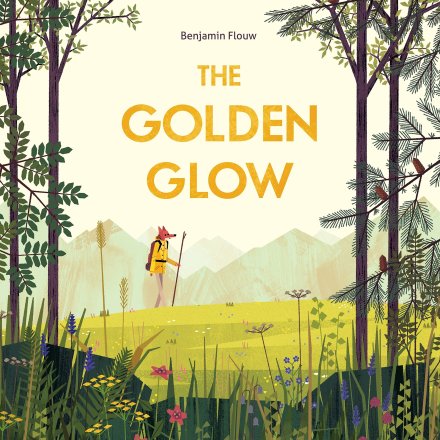
celebrate-picture-books-picture-book-review-the-golden-glow-cover

About the Holiday

Today’s holiday was established in 2006 by the North American Nature Photography Association (NANPA) to promote the enjoyment of taking photographs of nature while out hiking, traveling, or just in your own backyard. Nature photography is a fantastic hobby and a creative way to get you out interacting with the environment. In addition, nature photography allows you to bring home the beauty of fragile ecosystems without hurting the native flora and fauna. Today, grab your camera or phone (or your notebook and pencils) and head out to capture some of the glorious colors and wildlife around you.

Tundra Books sent me a copy of The Golden Glow to check out. All opinions are my own. I’m happy to be partnering with Tundra Books in a giveaway of The Golden Glow. See Details below.

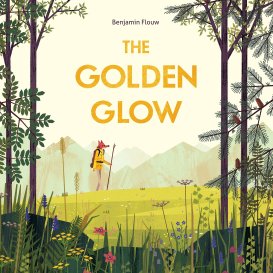
The Golden Glow

By Benjamin Flouw


Fox was a collector. As he sat in his armchair, his leafy acquisitions shaded him as if he were in the jungle. Reading through a botany book “looking the next new plant to add to his collection,” he came to a page that had no picture to go with the intriguing description. The plant’s name, he read, is “the golden glow” and it is part of “the Wellhidden family.” The book continues to say that the plant only grows high in the mountains and is so rare no one has ever seen it.

celebrate-picture-books-picture-book-review-the-golden-glow-reading

Copyright Benjamin Flouw, 2018, courtesy of Tundra Books.

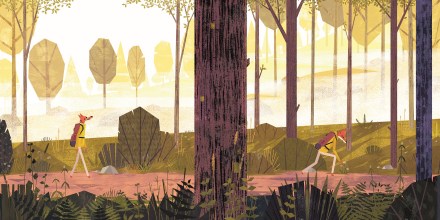
Fox determined that he would find this “fabulously fascinating flower.” He packed his things and in the morning set out to the mountains in the distance. As he walked, he admired the familiar plants along the way. Fox also knew “the name of each tree he walks under.” At the stream, he met Bear and asked him about the golden glow, but Bear knew nothing and suggested Fox talk to Marmot.

celebrate-picture-books-picture-book-review-the-golden-glow-wildflowers-on-path

Copyright Benjamin Flouw, 2018, courtesy of Tundra Books.

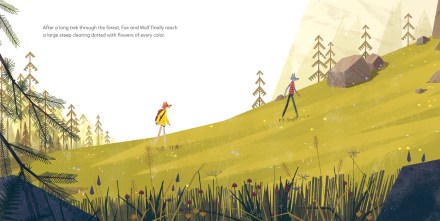
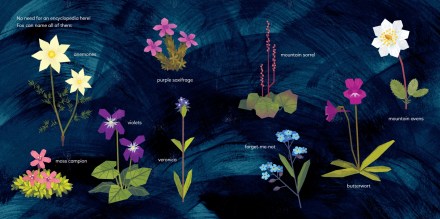
Like the golden glow, Marmot also liked to hide. Fox looked in every nook and cranny, but didn’t find her. While Fox was snacking on a grape pate sandwich, his cousin Wolf happened by. He’d never seen the golden glow either, but he could help Fox find Marmot. They crossed a field of wildflowers, and when he and Wolf stopped, Wolf whistled and Marmot answered.

Marmot turned out to be very helpful, telling Fox that the flower could be found at the very top of the mountain. Fox climbed and climbed as the air turned foggy. “Suddenly, a strange shape looms into view….” As Fox got closer, he recognized Mountain Goat. Mountain Goat told Fox that nothing grows at the top of the mountain, but he lent him a walking stick when he saw Fox’s determination.

celebrate-picture-books-picture-book-review-the-golden-glow-crossing-meadow

Copyright Benjamin Flouw, 2018, courtesy of Tundra Books.

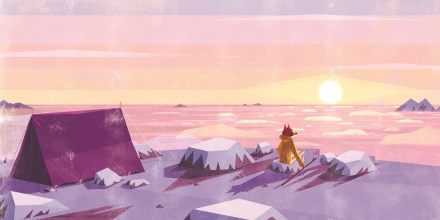
Fox climbed all the way up 9,800 feet to the snow zone. When the sun peeked out of the clouds, Fox looked around, but he found nothing growing there. The sun was due to set soon, so Fox pitched his tent and watched as the sun dipped lower and lower in the sky. He was just putting down the walking stick when he felt “something brush against his paw…”

celebrate-picture-books-picture-book-review-the-golden-glow-on-mountaintop

Copyright Benjamin Flouw, 2018, courtesy of Tundra Books.

Fox brushed away the snow to find “a fabulously fascinating flower.” Fox knew it must be the golden glow. Fox was just about to pick it, when he changed his mind. “This golden glow is more beautiful here on the mountaintop than it ever would be in a vase in his living room.” Instead, Fox reached into his backpack for his notebook and pencil.

Fox studied “the plant from every angle” and then began to draw. When Fox returned home, he “put all of his drawings into his botany book” so that he can look at the golden glow often and remember “just how fabulously fascinating his golden glow is, high up on the mountaintop.”

celebrate-picture-books-picture-book-review-the-golden-glow-coming-home

Copyright Benjamin Flouw, 2018, courtesy of Tundra Books.

Just as the simplest flower or leaf, Benjamin Flouw’s story holds delicate charms and hidden complexities that make The Golden Glow a book to be savored through multiple readings. While the book begins as a mysterious adventure story, as Fox journeys to the mountaintop, The Golden Glow offers beautifully detailed images of camping supplies, trees, wildlife habitats, wildflowers, and mountain zones; the quiet, unhurried pace of the text echoes the restorative power of nature; and Fox’s decision to leave the golden glow instead of picking it reminds readers that nature’s bounty belongs to everyone.

celebrate-picture-books-picture-book-review-the-golden-glow-wildflowers

Copyright Benjamin Flouw, 2018, courtesy of Tundra Books.

After the adventure is over, however, a deeper meaning is revealed in the final line of the book. A simple exchange of modifier from “the golden glow” to “his golden glow” presents a profound opportunity to consider and discuss the nature of individuality, uniqueness, and how people let their “glow” shine. 

Flouw’s distinctive angular illustrations are strikingly evocative of nature while giving the book a fresh look and a feeling of tranquility. The shiny gold foil leaf on the golden glow will elicit “oohs” and “ahhs,” and the penciled image of the golden glow that Fox draws will inspire young botanists to start their own nature notebook.

A gorgeous book that seamlessly combines nonfiction with a fictional story that has depth, The Golden Glow is an inspiring choice for home bookshelves and would be a fit for many classroom lessons as well as general story time.

Ages 4 – 8

Tundra Books, 2018 | ISBN 978-0735264120

To learn more about Benjamin Flouw and view a portfolio of his work, visit his website.

The Golden Glow Giveaway

I’m thrilled to be partnering with Tundra Books to be giving away:

  • One (1) copy of The Golden Glow by Benjamin Flouw

To be entered to win, just Follow me on Twitter @CelebratePicBks and Retweet a giveaway tweet during this week, June 15 – 21. Already a follower? Thanks! Just retweet for a chance to win.

Winners will be chosen on June 22.

Giveaways open to US addresses only | Prizing provided by Tundra Books

National Nature Photography Day Activity

celebrate-picture-books-picture-book-review-pic-a-pot-of-flowers-craft

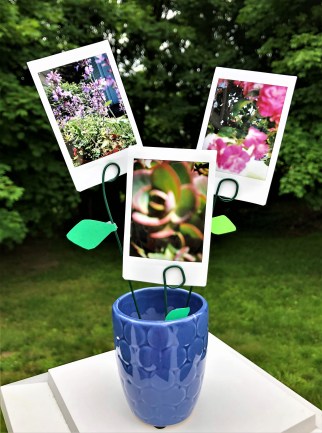
Pot a Pic of Flowers Craft


A collection of flower photographs can be just as beautiful as a pot of real posies. With this simple craft you can keep memories of flowers and plants you’ve seen while decorating your room or give a unique gift that shows off your photography skills and your love of nature!

Supplies

  • Small flower pot
  • Green floral wire
  • Green construction or heavy-stock paper
  • Pliers
  • Clay, playdough, or oasis
  • Scissors

Directions

To Make the Stem

  • Hold one tip of the wire tightly with the pliers
  • Wind the wire around the nose of the pliers two or three times. Squeeze the loops together, if necessary.
  • Cut the wire to the desired length. An assortment of lengths makes the display more interesting and allows all pictures to show
  • Cut small leaves from the green paper and tape to the stems
  1. Take pictures of flowers you like with your phone or other camera. Alternately, you can find pictures of flowers online.
  2. Print pictures on photo paper or regular paper
  3. Place clay, playdough, or oasis in the flower pot
  4. Stick the stems into the clay
  5. Carefully slide the pictures into the loops on the stems
  6. Display or give your flower pot!

celebrate-picture-books-picture-book-review-the-golden-glow-cover

You can find The Golden Glow at these booksellers

Amazon | Barnes & Noble | Books-a-Million | IndieBound 

Picture Book Review
June 13 – It’s National Great Outdoors Month

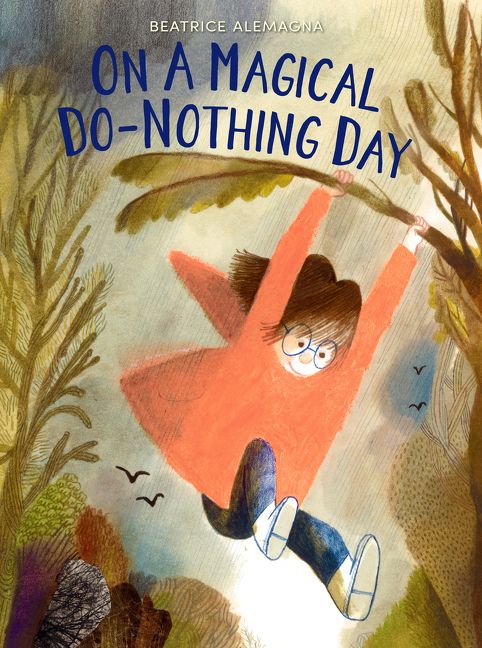
celebrate-picture-books-picture-book-review-on-a-magical-do-nothing-day-cover

About the Holiday

With all the fun games to play and not-so-fun-but-necessary chores to do inside, sometimes a day, a week, or even the whole summer can go by without you ever really getting outside to enjoy the sunshine, fresh air, and outdoor activities that can be so invigorating. Take the opportunity National Great Outdoors offers to discover somewhere new or see a familiar place in a whole new way.

On a Magical Do-Nothing Day

By Beatrice Alemagna


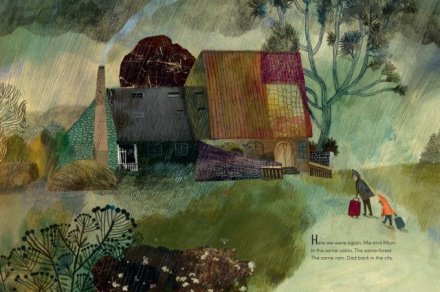
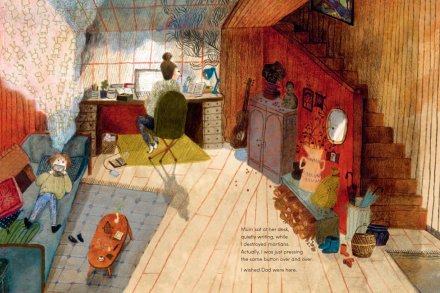
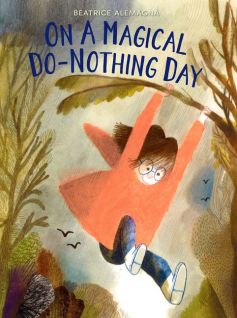
A little girl and her mom are “back again” at the cottage—even trudging up the walk in “the same rain”—while Dad is working back at home in the city. While Mom works at her computer, the girl destroys Martians, but she says, “Actually, I was just pressing the same button over and over.” She wishes that her dad were there.

celebrate-picture-books-picture-book-review-on-a-magical-do-nothing-day-cabin

Copyright Beatrice Alemanga, 2017, courtesy of HarperCollins.

Mom turns away from her writing and watches her daughter playing her video game. “Is this going to be another day of doing nothing?” she growls. Mom takes the device and hides it—“as usual”—and the little girl finds it—“as usual.” But this time she takes it outside. As the rain pelts down from gloomy skies it looked as if everything in the “garden was hiding from the sun.”

celebrate-picture-books-picture-book-review-on-a-magical-do-nothing-day-playing-video-games

Copyright Beatrice Alemanga, 2017, courtesy of HarperCollins.

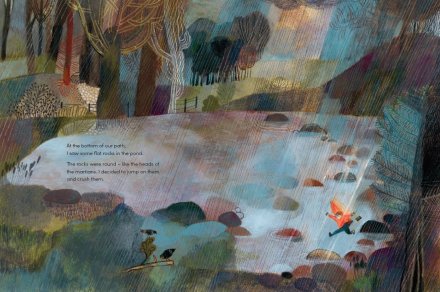
In the pond at the bottom of the hill she finds a line of flat stones. She hops from one to another, crushing them like the Martians in her game. While jumping, though, her game falls out of her pocket and into the pond. The water is so icy cold that she can’t grab it before it sinks out of sight. Oh no! she thinks, “Without my game, I have nothing to do.” The rain strikes her “like rocks,” and she feels “like a small tree trapped outside in a hurricane.”

celebrate-picture-books-picture-book-review-on-a-magical-do-nothing-day--jumping-on-rocks

Copyright Beatrice Alemanga, 2017, courtesy of HarperCollins.

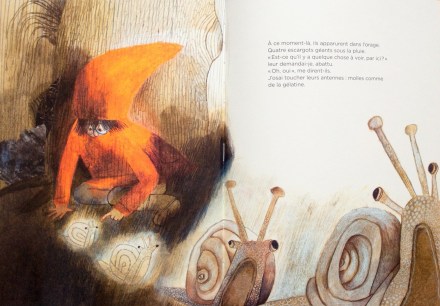
Just then she spies four giant snails slithering by. She asks them if there is anything to do around there, and they tell her yes. She gently feels one of the snail’s antennae. It is “as soft as jello” and makes her smile. She follows the snails and discovers a field filled with mushrooms. Their damp musky smell reminds her of her grandparents’ basement—her “cave of treasures.” She walks on and finds a spot in the earth where she digs her hand into the ground. She feels “thousands of seeds and pellets and kernals, grains and roots and berries touch “her fingers and hand.” When she looks up the sun is shining “through a giant strainer” and blinds her.

celebrate-picture-books-picture-book-review-on-a-magical-do-nothing-day-snails

Copyright Beatrice Alemanga, 2017, courtesy of beatricealemanga.com.

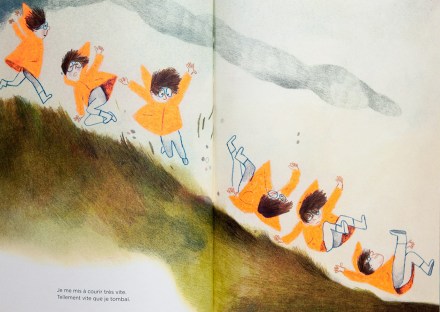
Her heart starts beating fast with energy. She takes off running and runs so quickly that she tumbles down the hill. She lands on her back with a flop, and when she opens her eyes, the world is topsy-turvy new. Energized, she climbs a tree and gazes out at the horizon, breaths deeply in the fresh air, drinks raindrops as they fall from a leaf, and notices bugs she’s never seen before. She talks to a bird, splashes in a puddle, and watches the world through stones as clear as glass.

celebrate-picture-books-picture-book-review-on-a-magical-do-nothing-day-tumbling

Copyright Beatrice Alemanga, 2017, courtesy of beatricealemanga.com.

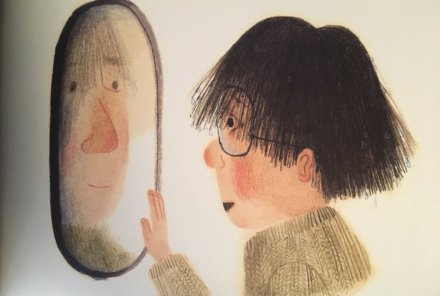
She hurries home and takes off her raincoat. When she glances in the mirror, for a moment she thinks she “sees her dad smiling at [her].” Her mom is still writing, but now she looks different to the little girl—“like one of the creatures outside.” Her mom notices how soaked she is and takes her to the kitchen to dry her off in a big, soft towel. The little girl feels like giving her mom a big hug. For a moment she wants to tell her about all the things she saw and did, but she doesn’t.

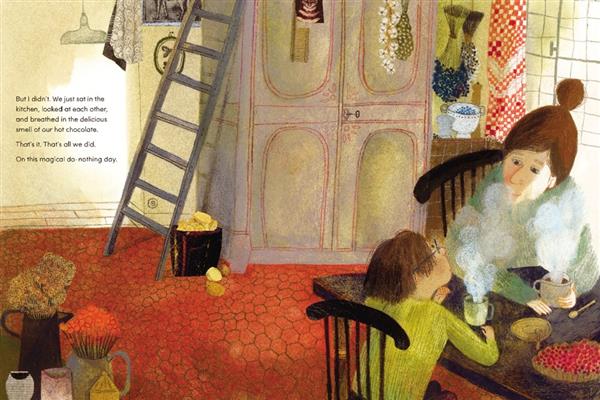
Instead, they enjoy their hot chocolate quietly together. “That’s it,” she says. “That’s all we did. On this magical do-nothing day.”

celebrate-picture-books-picture-book-review-on-a-magical-do-nothing-day-hot-chocolate

Copyright Beatrice Alemanga, 2017, courtesy of HarperCollins.

While the protagonist of A Magical Do-Nothing Day may never have looked at the world outside closely, Beatrice Alemagna certainly has. Alemagna’s exquisite illustrations portray the beauty of our environment—both indoors and out—and our connections to it with novel descriptions and stunning color and perspectives. As the girl ventures outside, video game clutched tightly, her face registers sadness and wariness. The Martians from the game crawl over and surround her, even when the game is off, seeming to fill any space that might be open to exploration, and, indeed, her first forays into the wild are taken game-style, hopping from platform to platform, rock to rock.

celebrate-picture-books-picture-book-review-on-a-magical-do-nothing-day-mirror

Copyright Beatrice Alemanga, 2017, courtesy of HarperCollins.

When the gaming device sinks into frigid water (as cold and impersonal as the gaming experience itself?), the child quickly comes out of her shell with the help of snails that lead her to greater discovery. The story gives readers much to ponder in the relationships between the child and parents and the child’s newfound appreciation for the natural world.

On a Magical Do-Nothing Day is a fantastic book to add to home and classroom libraries to spur children’s exploration—both in the natural world and within. While I used the feminine pronoun in my review, the story is told from the first person point of view and the child is drawn with gender neutral clothing and hairstyle, making this a book with universal appeal.

Ages 4 – 8

HarperCollins, 2017 | ISBN 978-0062657602

Discover more about Beatrice Alemanga, her books, and her art on her website.

National Great Outdoors Month Activity

celebrate-picture-books-picture-book-review-whose-shoes-maze

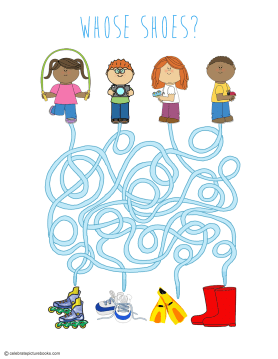
Whose Shoes? Maze


There are all sorts of ways to enjoy the great outdoors, from skating to scuba diving to hiking! These kids all want to do their favorite activity. Can you help match them to the shoes they’ll need in this printable Whose Shoes? Maze?

celebrate-picture-books-picture-book-review-on-a-magical-do-nothing-day-cover

You can find On a Magical Do-Nothing Day at these booksellers

Amazon | Barnes & Noble | Books-a-Million | HarperCollins | IndieBound 

Picture Book Review
May 7 – It’s National Wildflower Week

celebrate-picture-books-picture-book-review-bee-a-peek-through-picture-book-cover

About the Holiday

Sponsored by the Lady Bird Johnson Wildflower Center in Austin, Texas, an “internationally recognized botanic garden dedicated to inspiring the conservation of native plants in natural and designed landscapes,” today’s holiday celebrates the wildflowers that beautify the country from coast to coast. Lady Bird Johnson once said wildflowers “give us a sense of where we are in this great land of ours” as every area hosts its own particular flowers. Wildflower fields are important to the survival of the bee population, and, as pollinators, bees keep the wildflowers blooming and growing.

Bee: A Peek-Through Picture Book

By Britta Teckentrup


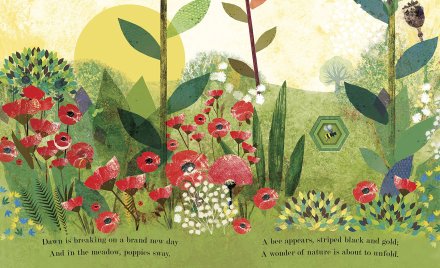
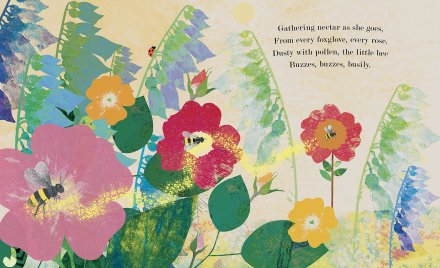
As the sun comes up over the meadow of poppies, a bee gets ready for her day. She flits through the forest, blending her quiet buzz with the songs of the birds in the trees. “As she travels here and there, / A gentle humming fills the air.” With no map to guide her, the bee knows exactly what route to take to visit each colorful flower. “Gathering nectar as she goes, / From every foxglove, every rose, / Dusty with pollen, the little bee / Buzzes, buzzes, busily.”

celebrate-picture-books-picture-book-review-bee-a-peek-through-picture-book-dawn

Copyright Britta Teckentrup, 2017, courtesy of Random House Books for Young Readers

The flowers attract the little bee with their sweet perfume, and with the sun as her compass, she finds them all. As she flies from flower to flower, tree to tree, she picks up and leaves bits of pollen that will create more blossoms.  But when she looks out over the field, the bee sees more flowers than she could ever hope to visit. The bee hurries back to her hive to tell the others about the smorgasbord waiting for them.

celebrate-picture-books-picture-book-review-bee-a-peek-through-picture-book-stream

Copyright Britta Teckentrup, 2017, courtesy of Random House Books for Young Readers

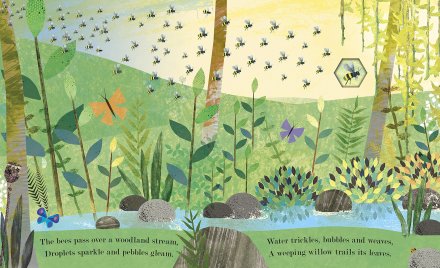
In droves they leave the hive, gliding over a pond, navigating an orchard, and continuing on. “The bees pass over a woodland stream. / Droplets sparkle and pebbles gleam. / Water trickles, bubbles, and weaves. / A weeping willow trails its leaves.” As the bees stop here and there along the way, they give life to new flowers and plants, expanding the wildflower meadow that is home to so many creatures.

celebrate-picture-books-picture-book-review-bee-a-peek-through-picture-book-nectar

Copyright Britta Teckentrup, 2017, courtesy of Random House Books for Young Readers

Readers can see that Britta Teckentrup’s beautiful tribute to bees is something special before they even open the book. On the cover, a sunset-hued flower stretches into the blue sky. Through its die-cut center, children can see the complexity of the flower and, in its very middle, a honey bee harvesting nectar. Teckentrup’s lyrical story of a bee’s day is complemented by gorgeous illustrations of the vibrant wildflowers that call to the little bee. Each page is rendered in a breathtaking palette that surrounds young readers with the mysteries of the natural world—and in the center is the bee, going about her job as squirrels scamper, deer silently look on, and butterflies flutter nearby.

Children will adore following the bee—and later, more and more bees—through open windows to the final two-page spread of a meadow in full bloom. All along the journey, the bee has made friends with woodland, pond, and orchard creatures, and young readers will delight in finding each of them hidden in this glorious field.

Ages 3 – 7

Doubleday Books for Young Readers, 2017 | ISBN 978-1524715267

Discover more about Britta Techentrup, her books, and artwork on her website!

National Wildflower Week Activity

CPB---Busy-Buzzy-Bee-Maze

Busy Buzzy Bee Maze


Can you help the little bee find her way through this printable Busy Buzzy Bee Maze? Here’s the Solution!

Picture Book Review

April 22 – Earth Day

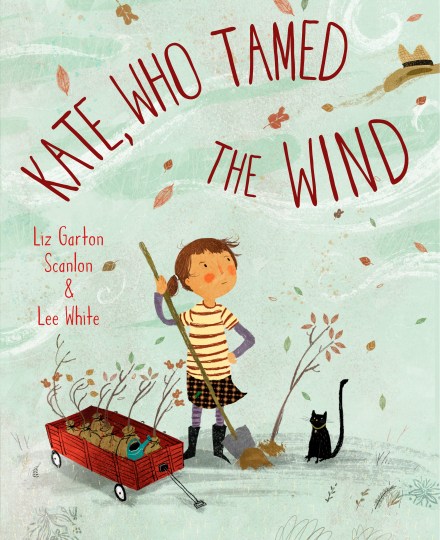
celebrate-picture-books-picture-book-review-kate-who-tamed-the-wind-cover

About the Holiday

Earth Day, the largest global civic-focused day of action, is celebrated in 192 countries and aims to raise awareness of issues concerning the sustainability and protection of our earth. This year’s theme is End Plastic Pollution with the goal of eliminating single-use plastics while promoting global regulation for the disposal of plastics. Plastics are a danger on land, in our oceans, and in our food. 2018 begins a multi-year effort to bring about alternatives to fossil fuel-based materials, one hundred percent recycling of plastics, “corporate and government accountability,” and our own attitudes concerning plastics. Around the world people also celebrate Earth Day by picking up trash along roadways and waterways, recycling, making family and business plans for using less water and electricity, and by planting trees bushes, and flowers that benefit both humans and animals.  For more information on how to get involved, visit the Earth Day Network.

Kate, Who Tamed the Wind

Written by Liz Garton Scanlon | Illustrated by Lee White


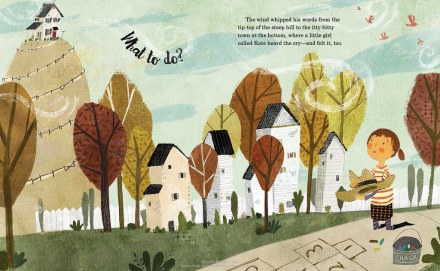
There once was a man who lived in a house on top of very tall, dusty hill. Being so high up, the man’s house captured breezes that set his curtains fluttering and his wind chimes tinkling. Sometimes the wind blew, rattling the shutters, sending the laundry flying from the line, and tearing boards from the house. Inside, the wind whipped, the “table tipped, and the tea spilled.” The man’s hat flew off and out the window, joining the birds who were leaving too.
celebrate-picture-books-picture-book-review-kate-who-tamed-the-wind-spilled-tea

Image copyright Lee White, 2018. text copyright Liz Garton Scanlon, 2018. Courtesy of Schwartz & Wade.

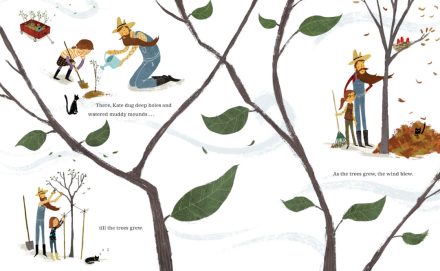
The man cried, “What to do?” Down on the sidewalk below, a little girl named Kate caught the man’s hat and the man’s cry too. Kate wanted to help. She “couldn’t stop the wind,” but she knew of something that could slow it down. When she returned the man’s hat, she also brought a wagon full of saplings. Kate and the man planted the trees, and they tended them as they grew—even while the wind blew.

celebrate-picture-books-picture-book-review-kate-who-tamed-the-wind-kate-catches-hat

Image copyright Lee White, 2018. text copyright Liz Garton Scanlon, 2018. Courtesy of Schwartz & Wade.

“The trees grew, the wind blew, and the time flew. The time flew as the trees grew…and grew…and Kate did too.” As the trees got bigger, taller, and stronger, the “leaves fluttered,” but the shutters quieted and the board stayed still. Inside, the tea brewed, the dust settled down, and the man’s hat stayed put. Even the birds came back. With the house ringed in trees, Kate and the man enjoyed a picnic in the yard, cooled just enough by the gentle breeze.

celebrate-picture-books-picture-book-review-kate-who-tamed-the-wind-planting-trees

Image copyright Lee White, 2018. text copyright Liz Garton Scanlon, 2018. Courtesy of Schwartz & Wade.

Readers will love getting carried away by Liz Garton Scanlon’s breezy lines that through alliteration and rhyme replicate a windy day as things bang, flap, whip, and go flying. As the trees that Kate and the man plant grow and begin to shelter the house from the wind, the rhythm of Scanlon’s text becomes more staccato and rooted. Little Kate is a terrific role model for young readers for her environmental know-how and her stick-to-itiveness as the trees grow from saplings to maturity. The long friendship between the man and Kate is also endearing.

Lee White’s softly hued pages swirl with swipes and swishes that whip curtains, steal laundry, and upend the table and tea. The man’s bewilderment serves as a foil to Kate’s determination and problem-solving, and the difference she makes in the man’s quality of life is evident as the trees grow, their friendship develops, and the wind is finally tamed. Kids will identify with this kind and intelligent child who grows up to be a caring adult.

Beautifully conceived and with lovely details, Kate, Who Tamed the Wind is an environmentally conscious story that will inspire young readers at home and in the classroom.

Ages 4 – 8

Schwartz & Wade, 2018 | ISBN 978-1101934791

Discover more about Liz Garton Scanlon and her books on her website

To learn more about Lee White, her books, and his art, visit his website.

Earth Day Activity

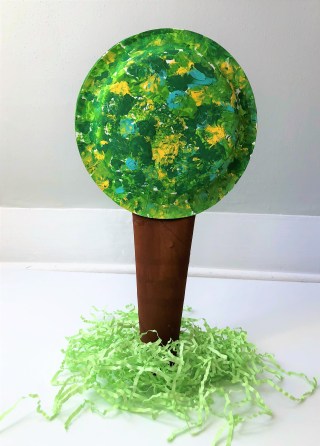
celebrate-picture-books-picture-book-review-paper-plate-tree-craft-2

Paper Plate Tree


On Earth Day children love planting trees in their yard or as part of a community project. With this easy craft, they can also plant a tree on their wall or bulletin board.

Supplies

  • Two paper plates 
  • Paper towel tube
  • Brown craft paint
  • Green craft paint (using a variety of green paints adds interest)
  • Paintbrush, cork, or cut carrot can be used to apply paint
  • Glue or hot glue gun or stapler

Directions

  1. Paint the paper towel tube brown, let dry
  2. Paint the bottoms of the two paper plates with the green (or other color) paints, let dry
  3. Flatten about 4 inches of the paper towel tube 
  4. Glue or tape the flat part of the paper towel tube to the unpainted side of one paper plate
  5. Glue the edges of the two paper plates together, let dry.
  6. Straighten the tree so that it can stand up, or hang your tree on a wall, bulletin board, in a window

Picture Book Review