April 3 – Find a Rainbow Day

About the Holiday

As the old proverb goes, “April showers bring May flowers,” but all that rain brings something else—rainbows! The science behind rainbows was first discovered in 1693, when scientists realized that this phenomenon is caused by light from the sun being refracted through raindrops and causing a dazzling show. Today, I wish you a rainy day and happy rainbow hunting! A perfect place to find rainbows every day and in amazing places beyond the sky is in today’s book!

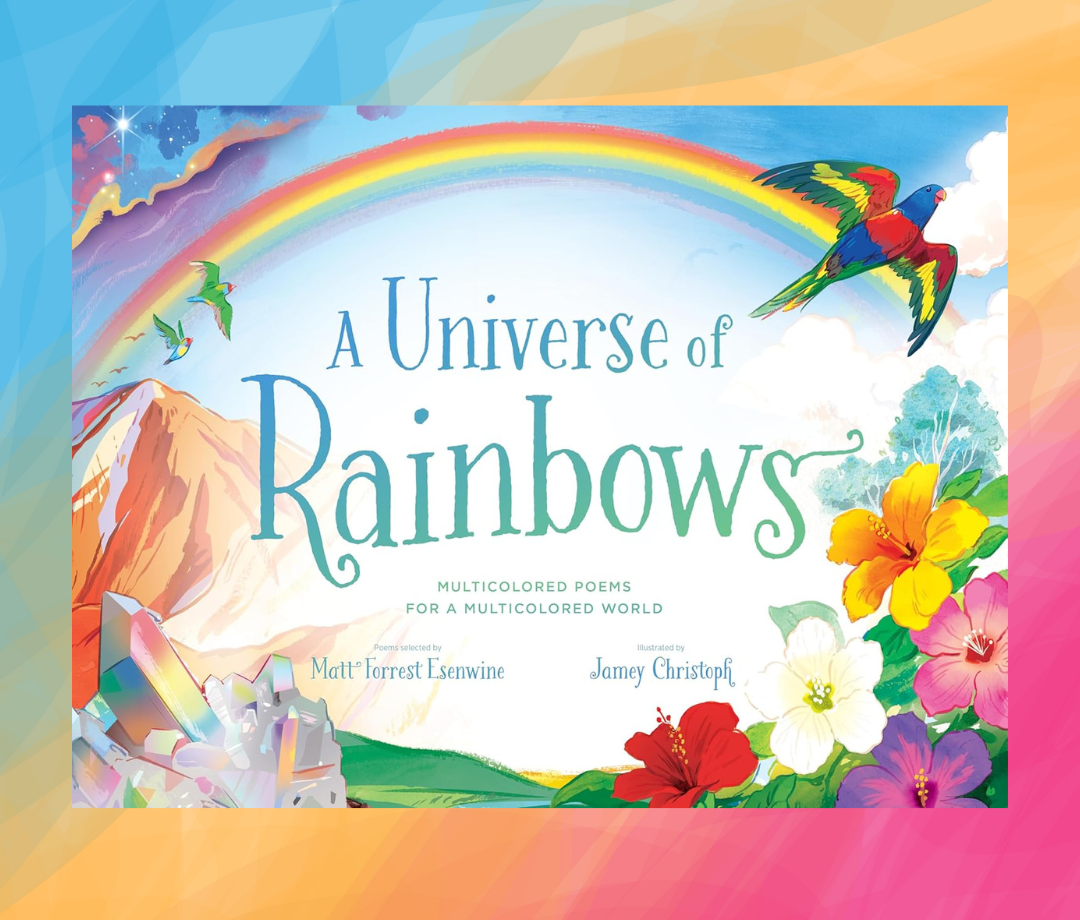
A Universe of Rainbows: Multicolored Poems for a Multicolored World


By Matt Forrest Esenwine | Illustrated by Jamey Christoph


Rainbows are a universally loved natural phenomenon. The excitement of seeing a rainbow arcing across the sky never goes away no matter how old you get. And a double rainbow? For some people, seeing one of those can be like glimpsing a celebrity. In the 22 poems that make up A Universe of Rainbows, Matt Forrest Esenwine and 19 other poets reveal that you don’t always have to wait for rain to be awed by the brilliance of this spectrum of colors as they abound in nature: on land, in waters, on plants and animals, and even in the depths of space.
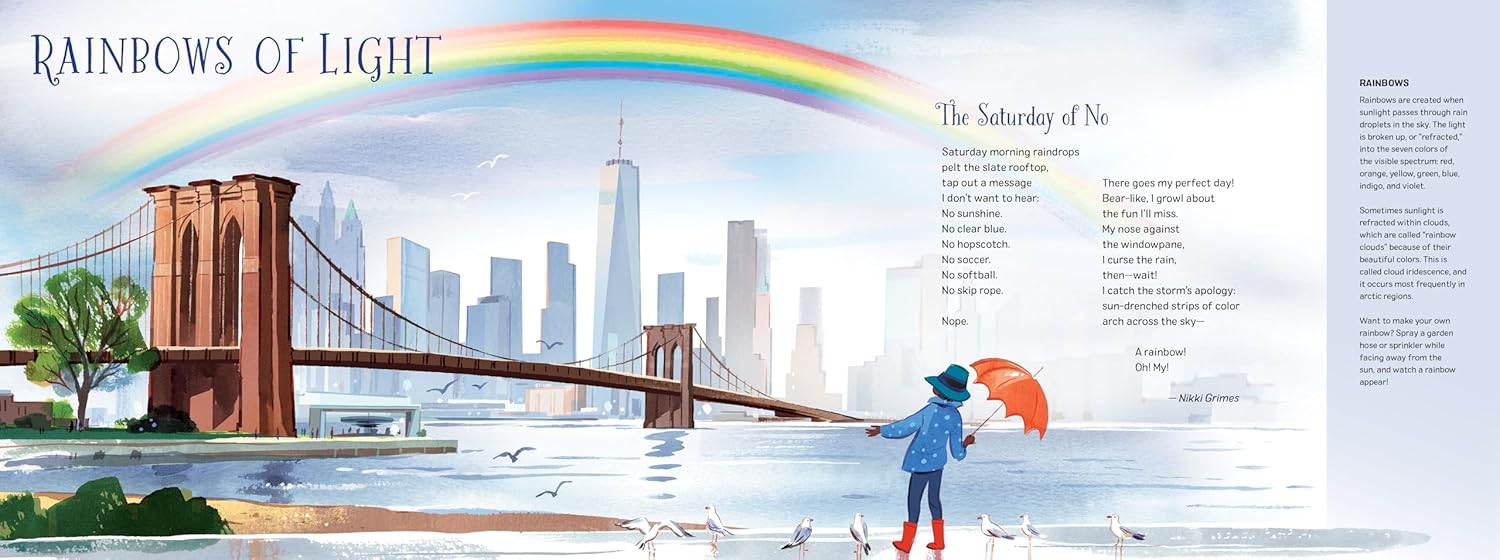
Illustration © 2025 by Jamey Christoph, text © 2025 by NIkki Grimes. Courtesy of Eerdmans Books for Young Readers.

Nikki Grimes leads off this lyrical odyssey that invites readers to travel around the world and beyond to discover rainbows in many forms. In Grimes’ “Rainbows of Light,” she channels the disappointment of a child facing a rainy day with “. . . No hopscotch. / No soccer. / No softball / no skip rope. . . .” The child “. . . curse[s] the rain” until they “catch the storm’s apology: / sun-drenched strips of color / arch across the sky— / A rainbow! / Oh! My!” 

You might think that rainbows occur in nature only during the day, but Joyce Sidman, reveals otherwise in her intricate and arresting pantoum “Along the Zambezi.” Sidman animates a moonbow, entreating readers to take a moment to look as “This dancer will not leap for long / over the span of Victoria Falls,” where “. . . a full moon crowns the darkened hill” while “. . . Mist swirls up in silver shawls, / bending moonlight’s slanting spill.” 
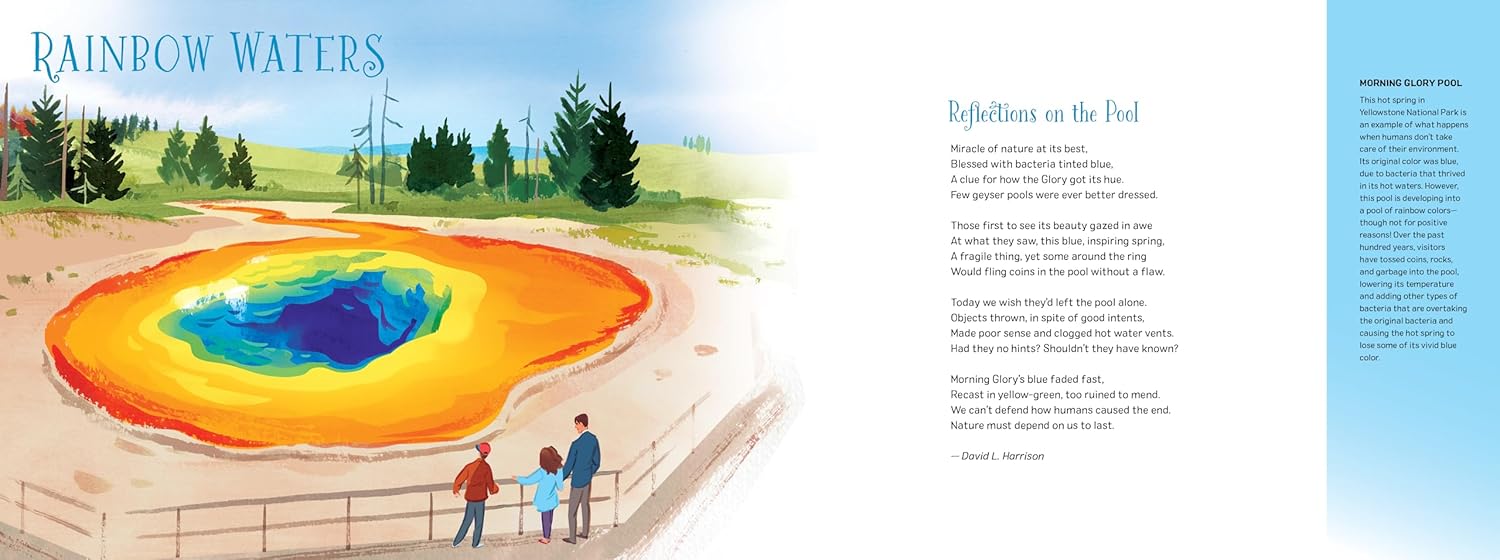
Illustration © 2025 by Jamey Christoph, text © 2025 by David L. Harrison. Courtesy of Eerdmans Books for Young Readers.

Rainbow seekers do not always need to look toward the sky to find the glorious hues of rainbows. In his rhythmic “Reflections on the Pool,” David L. Harrison nimbly combines assonance and consonance to introduce kids to the surprising Morning Glory Pool in Yellowstone National Park. Harrison describes how this hot spring—a “miracle of nature . . . / Blessed with bacteria tinted blue”—once appeared as vividly blue, but now, because of human interference, is developing a “rainbow of colors” as other types of bacteria take over. Together the poem and sidebar provide a concrete example of the value of conservation and a gripping entry into further study or research. 
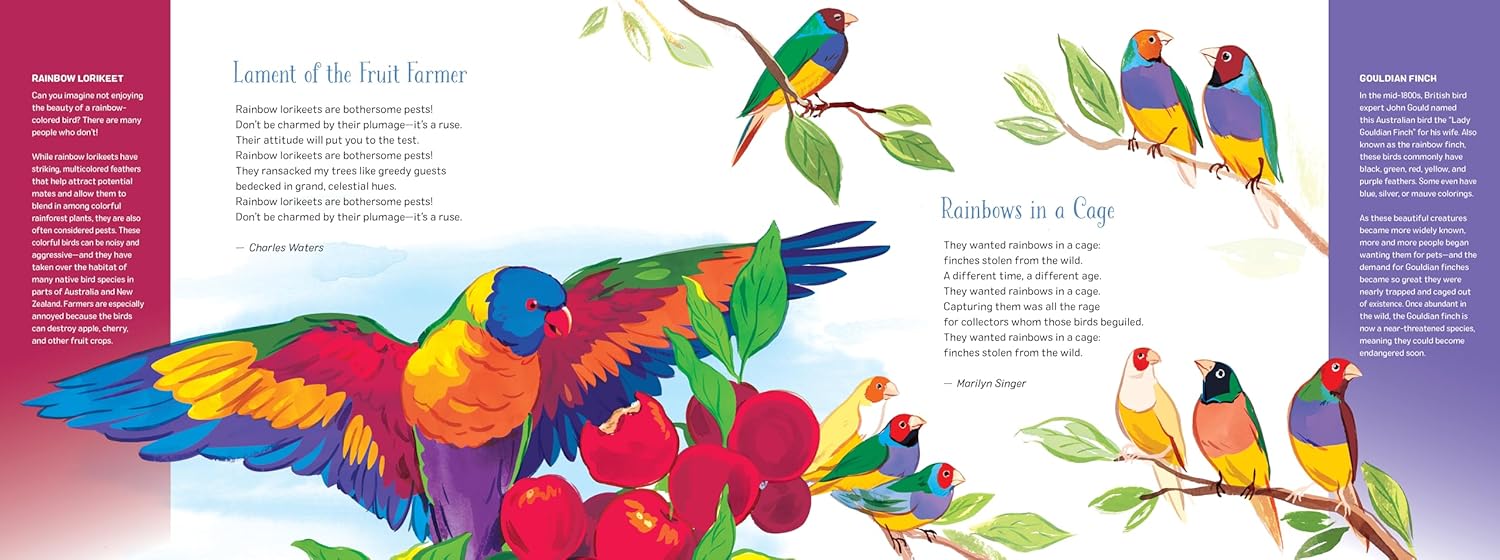
Readers also learn about a uniquely dressed tree, Rebecca Kai Dotlich’s “skirted pinwheel” of a flower, two varieties of birds, and incredible creatures of the sea and land that shimmer and glimmer with the colors of a rainbow. In “Elegant Danger,” Matt Forrest Esenwine exposes the “captivating beauty / with radiant appeal” of the peacock mantis shrimp that has “An appetite of titans. / Attitude of steel.”  into space to float within the Rainbow Nebula with poet Georgia Heard. 

Each poem is accompanied by a short and fascinating side bar offering more information about the natural phenomena that inspired the work.

Back matter includes a list of recommended books and websites where readers can find more information about the rainbows described in each poem as well as a glossary.
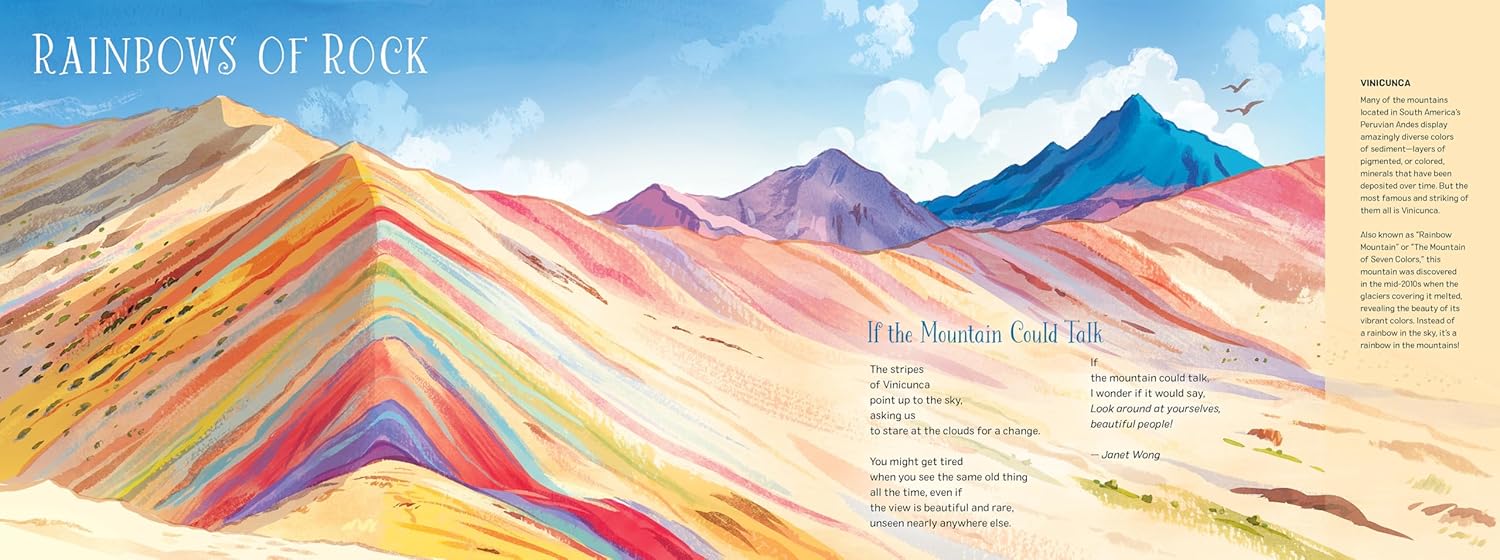
Illustration © 2025 by Jamey Christoph, text © 2025 by Janet Wong. Courtesy of Eerdmans Books for Young Readers.

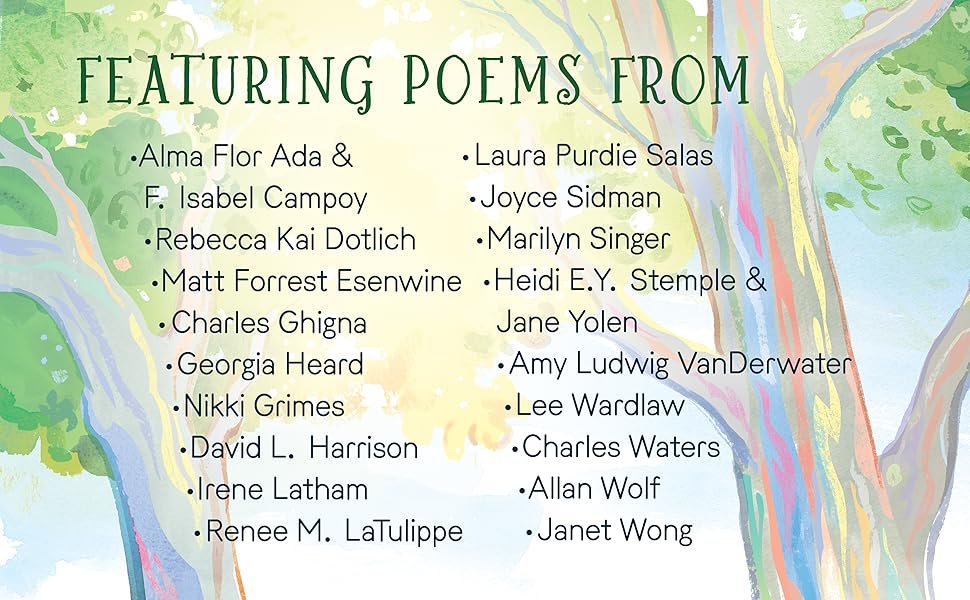
For the twenty award-winning writers who’ve contributed to Matt Forrest Esenwine’s debut poetry anthology, unique rainbows occurring in nature have inspired a wide range of contemplation and poetic form. Some are awe-struck, others hold a touch of humor, and still others are conversational. One thing they all have in common is an ability to transport readers to another place or just the right moment to witness one of life’s most astonishing sights. Through each poem, readers learn facts but they also discover how to observe with curiosity, appreciate the miraculous, and commit to preserving our natural wonders. 
Jamey Christoph’s multi-media illustrations mesmerize with brilliant color that tantalizes like a magic spell, slipping through ice crystals, hiding in plain sight, turning pools of water and majestic trees into artists’ palettes, and clothing creatures of the air, sea, and land. You might be tempted to think that these natural phenomenon can’t possibly be so vivid in real life, but take a look (these poems encourage further research) and you’ll find that Christoph’s full-spread images mirror their inspirations. Beautiful and stirring, each page welcomes you to linger awhile.

Encompassing riveting writing by award-winning poets, spellbinding illustrations of natural phenomena, and nearly endless applications for science, writing, and art study and discovery, A Universe of Rainbows: Multicolored Poems for a Multicolored World is a must for school and public library collections as well as for any reader who loves inspired writing and nature.  

Ages 6 – 10

Eerdmans Books for Young Readers, 2025 | ISBN 978-0802855718

About the Author

Matt Forrest Esenwine is a children’s author and poet whose books include The Thing to Remember about Stargazing (Tilbury House), Once Upon Another Time (Beaming), and A Beginner’s Guide to Being Human (Beaming). His work has been nominated for a Pushcart Prize and featured in numerous anthologies. Also a voiceover actor and commercial copywriter, Matt lives in Warner, New Hampshire, with his family. Visit his website at mattforrest.com.

About the Illustrator

Jamey Christoph has illustrated over twenty books, including The Great Lakes (Knopf), Stonewall (Random House), and Outside My Window (Eerdmans). His books have been named to many best-of-the-year list, including from the CBC and NYPL. Jamey lives in New Hampshire with his husband and their crazy dogs. Visit Jamey’s website at jameychristoph.com and follow him on Instagram @jameychristoph.

National Find a Rainbow Day Activity
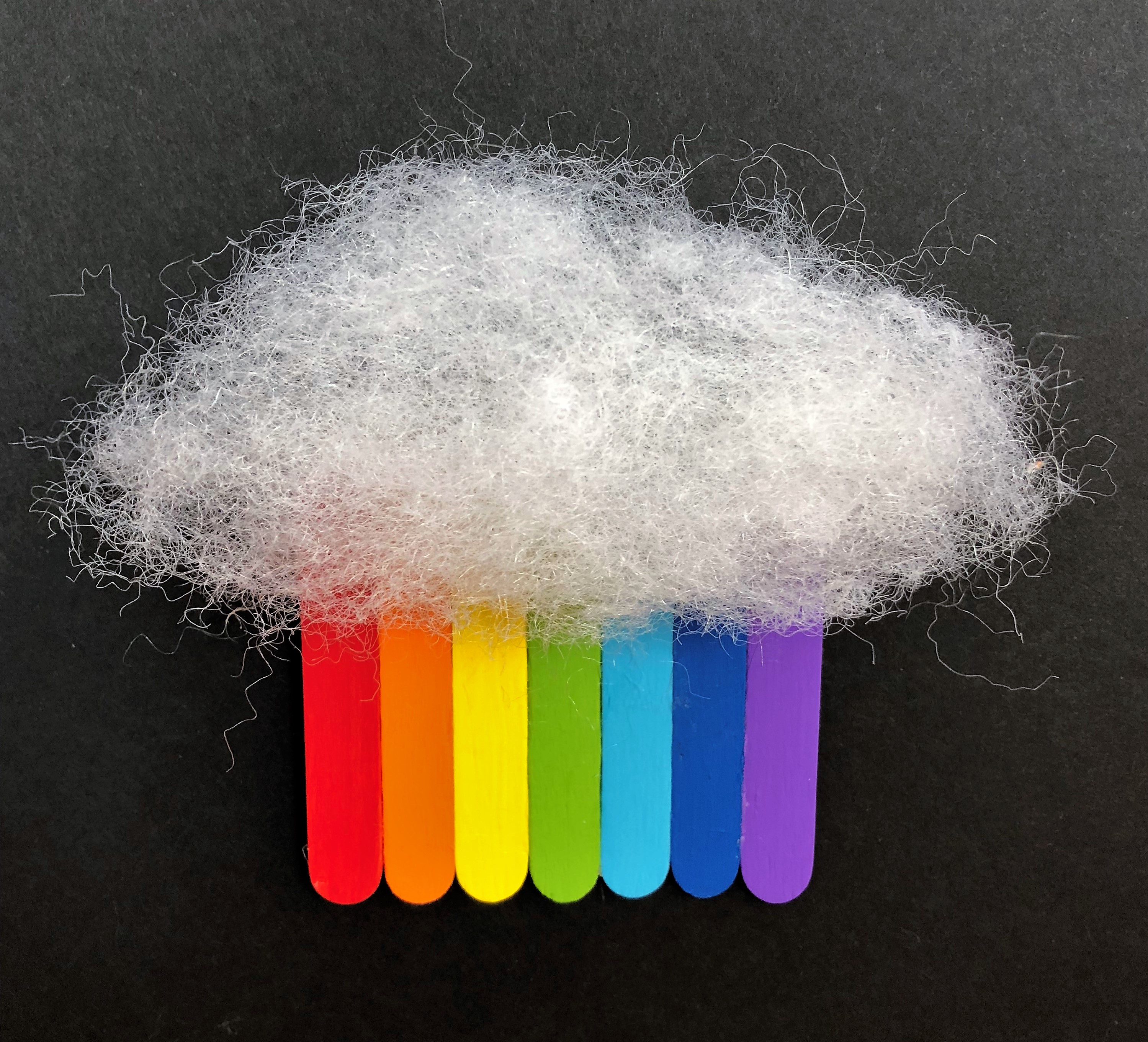
celebrate-picture-books-picture-book-review-rainbow-magnet-craft

Mini Rainbow Magnet


If you’re stuck on rainbows, you can make this mini rainbow to stick on your fridge or locker!

Supplies

  • 7 mini popsicle sticks (or cut regular popsicle sticks in half)
  • Paint in red, orange, yellow, green, blue, Indigo, violet (ROYGBIV)
  • Adhesive magnet
  • A little bit of polyfill
  • Paint brush
  • Glue or hot glue gun

Directions

  1. Paint one popsicle stick in each color, let dry
  2. Glue the popsicle sticks together side by side in the ROYGBIV order, let dry
  3. Roll a bit of polyfill into a cloud shape and glue to the top of the row of popsicle sticks
  4. Attach the magnet to the back of the rainbow
You can purchase A Universe of Rainbows from these booksellers

Amazon | Barnes & Noble | Bookshop (discounted books and support for your local independent bookstore)

Picture Book Review 

November 7 – It’s Picture Book Month

celebrate-picture-books-picture-book-review-when-you-find-a-rock-cover

About the Holiday

November is Picture Book Month, a month to remind us of the importance of picture books as a source of learning, growing and connecting for adults and children alike. While every day is a day to remember and celebrate our love for picture books, we challenge you this November to check out a few new titles, to share a book with a loved one, and keep on reading! To celebrate this month, we highlight a story that draws children and adults together in a meditation on the importance of connection, exploration, play and time for contemplation—all tied together by rocks!

I’m thrilled to welcome back Dorothy Levine, who has recently graduated from college and always lends a fresh, astute, and thoughtful perspective to her reviews. To learn more about Dorothy see our Welcome page.

Review by Dorothy Levine

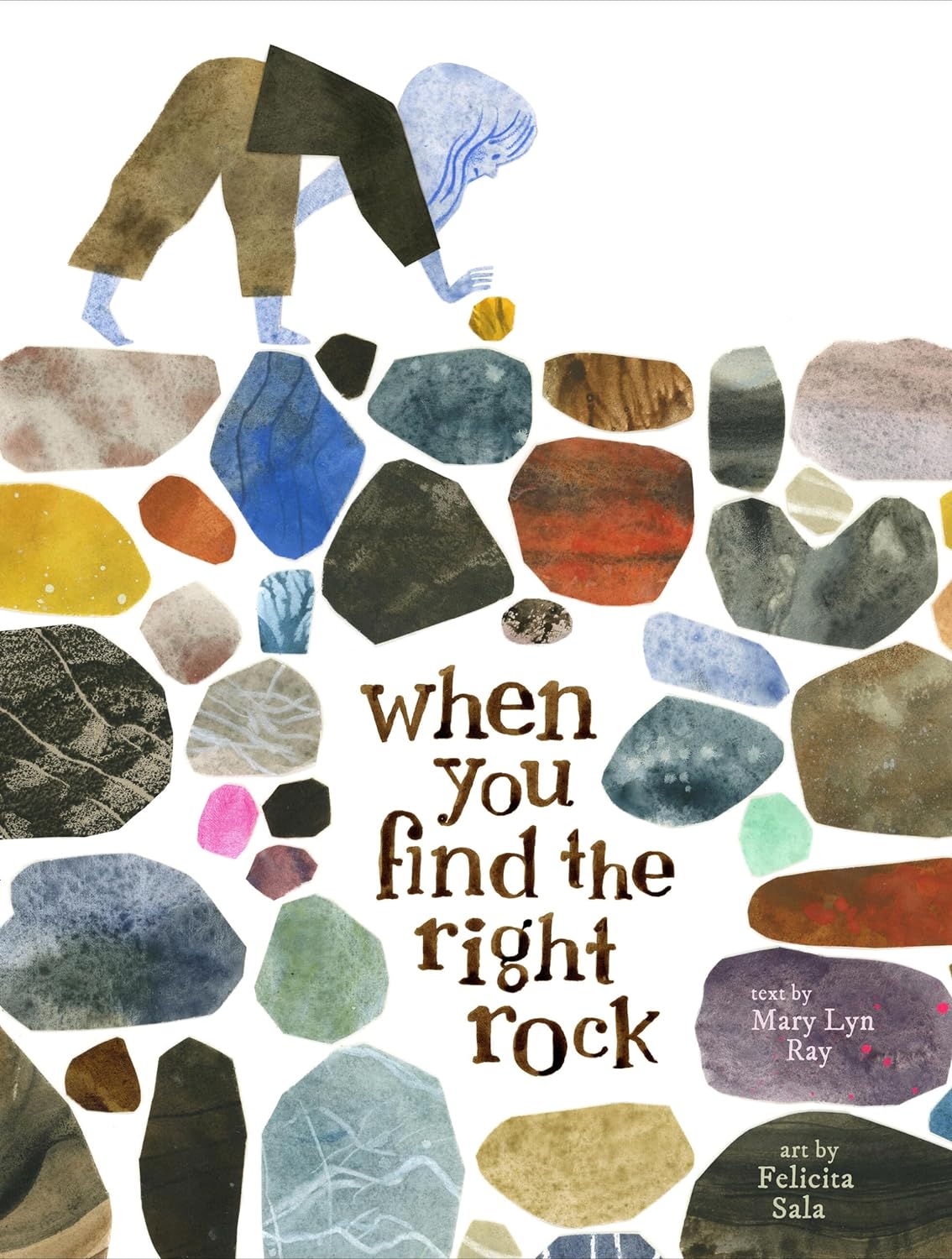
When You Find the Right Rock 

Written by Mary Lyn Ray | Illustrated by Felicita Sala


Calling all collectors, connectors, climbers, and thinkers. Find a seat to get cozy in as we mosey our way through the narrative of When You Find the Right Rock. Some of us tend to walk with our eyes cued into the scenery around us. Perhaps you are one to scan the ground for treasures as you walk or skim the skyline for birds. In a world of go-go-go, children and adults alike are often discouraged from taking the time to pause and ground themselves in place, to notice the details of the wide world that connect us all.

One of these connectors is rocks, particularly the biggest rock of all, the one that lives “far under grass and trees / and houses and schools,” the rock that Lyn Ray describes as “one big enough for / everyone to stand on.”

celebrate-picture-books-picture-book-review-when-you-find-a-rock-bolders

Image copyright Felicita Sala, 2024, text copyright Mary Lyn Ray, 2024. Courtesy of Chronicle Books.

The story begins as a continuation of the title sentence: “You may try to go around it, / Or to just keep thinking whatever / you were thinking.” Told from the second person “you” view, readers are immediately able to place themselves in this story. Artist Felicita Sala depicts a young child staring out at us, grasping hands with an adult and, facing forward, in a rush toward their destination.

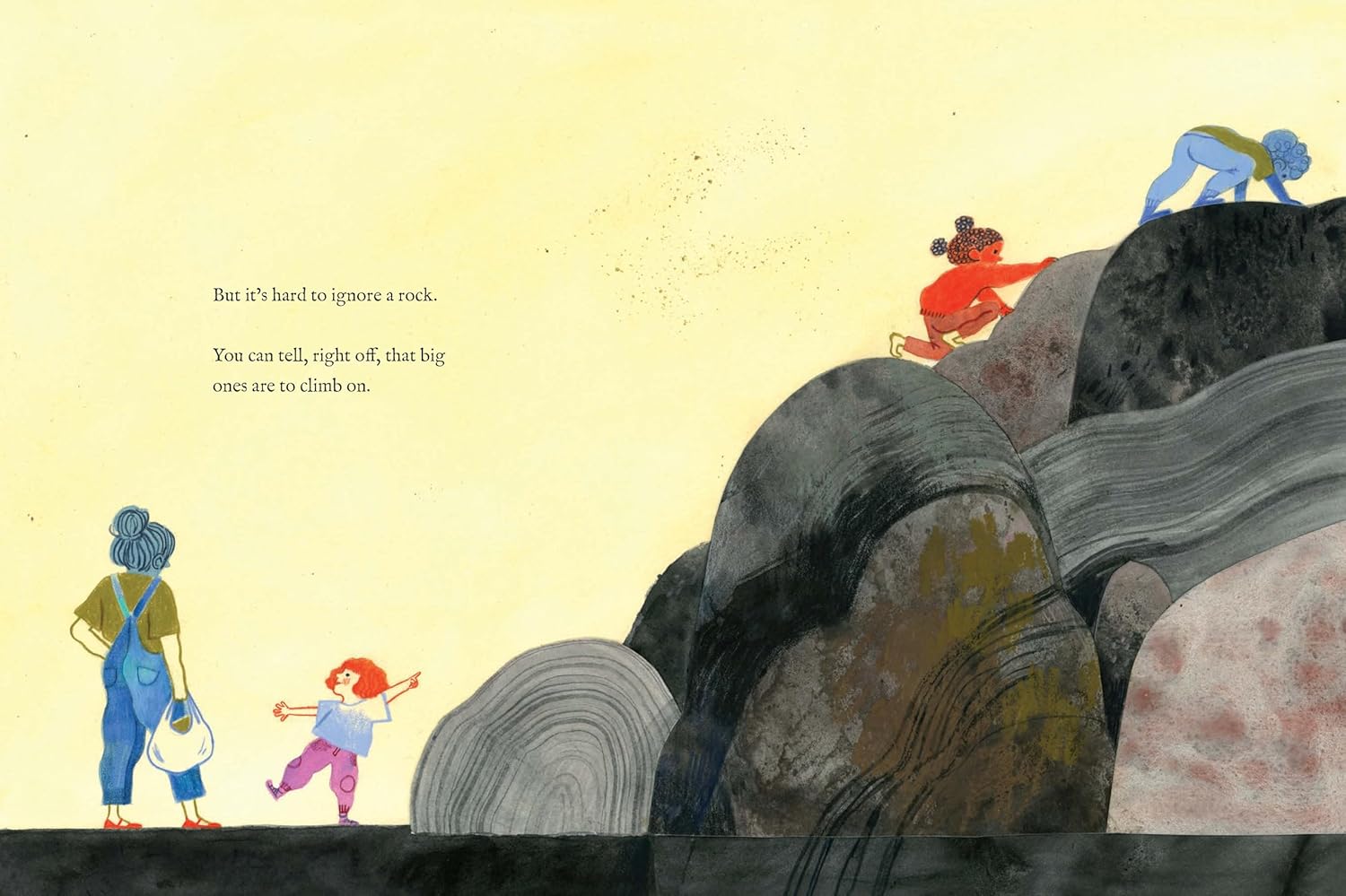
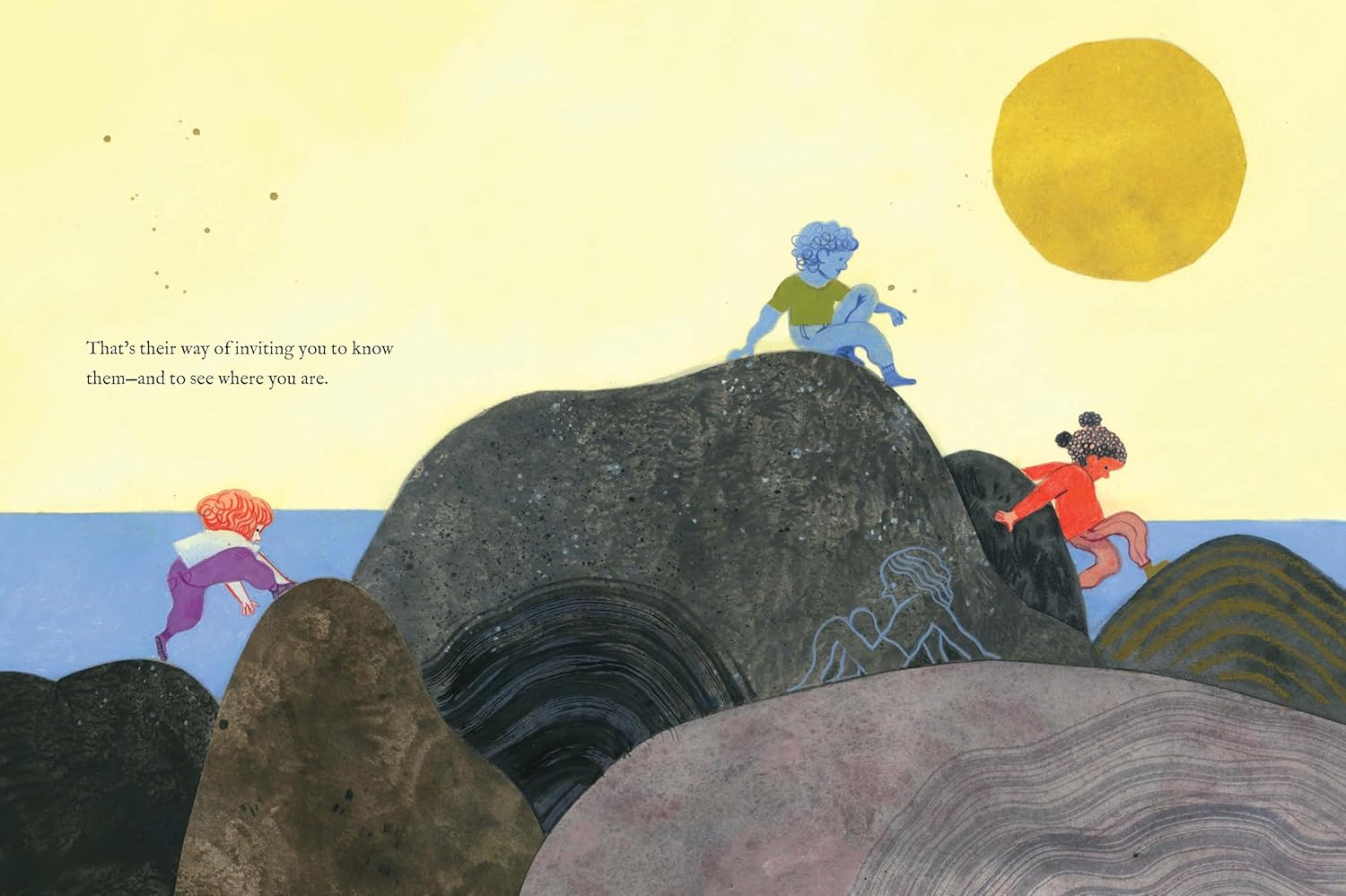
“But it’s hard to ignore a rock. You can tell, right off, that big ones are to climb on. That’s their way of inviting you to know them—and to see where you are.” When the child gestures to a large group of boulders, her adult puts a hand on her hip. Regardless, the child begins to climb and is met by others halfway up the rock. As the children climb, readers are lifted onwards and outwards from the original illustrated narrative, as Lyn Ray takes us through different sizes of rocks and some of the many fun and creative possibilities of what a rock can be and do.

celebrate-picture-books-picture-book-review-when-you-find-a-rock-climbing

Image copyright Felicita Sala, 2024, text copyright Mary Lyn Ray, 2024. Courtesy of Chronicle Books.

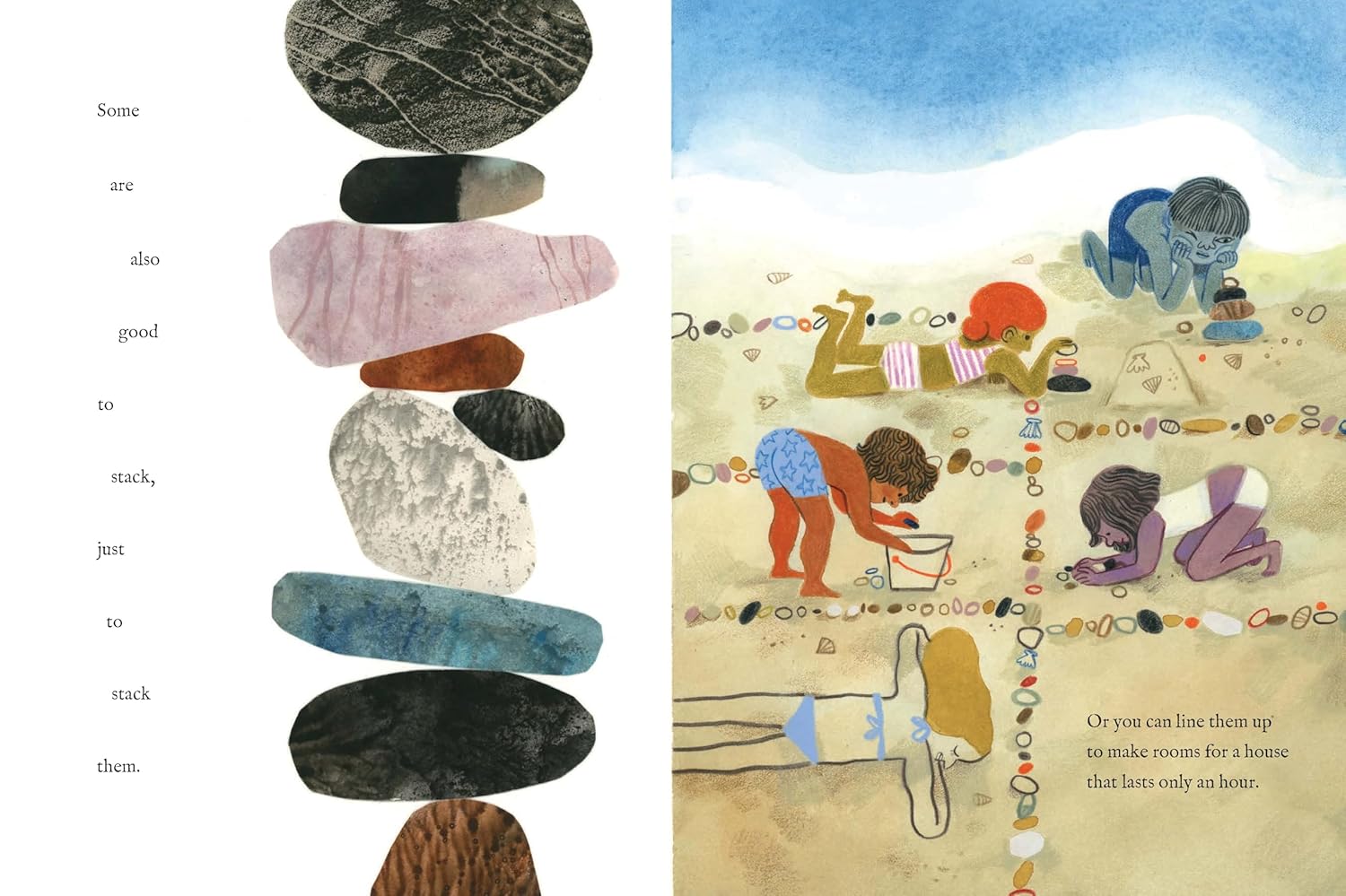
The purposes range from playful (to build a room of a pretend house on the beach) to explorative (“to show you / what heavy feels like”) and even philosophical (medium rocks are for perching on to see how your view of the world can change). Each spread shows a diverse cast of children. All these options hold equal weight. Lyn Ray writes: “Sometimes people might think you’re doing nothing, / same as they might think the rock is doing nothing. / But you and the rock know they’d be wrong.”

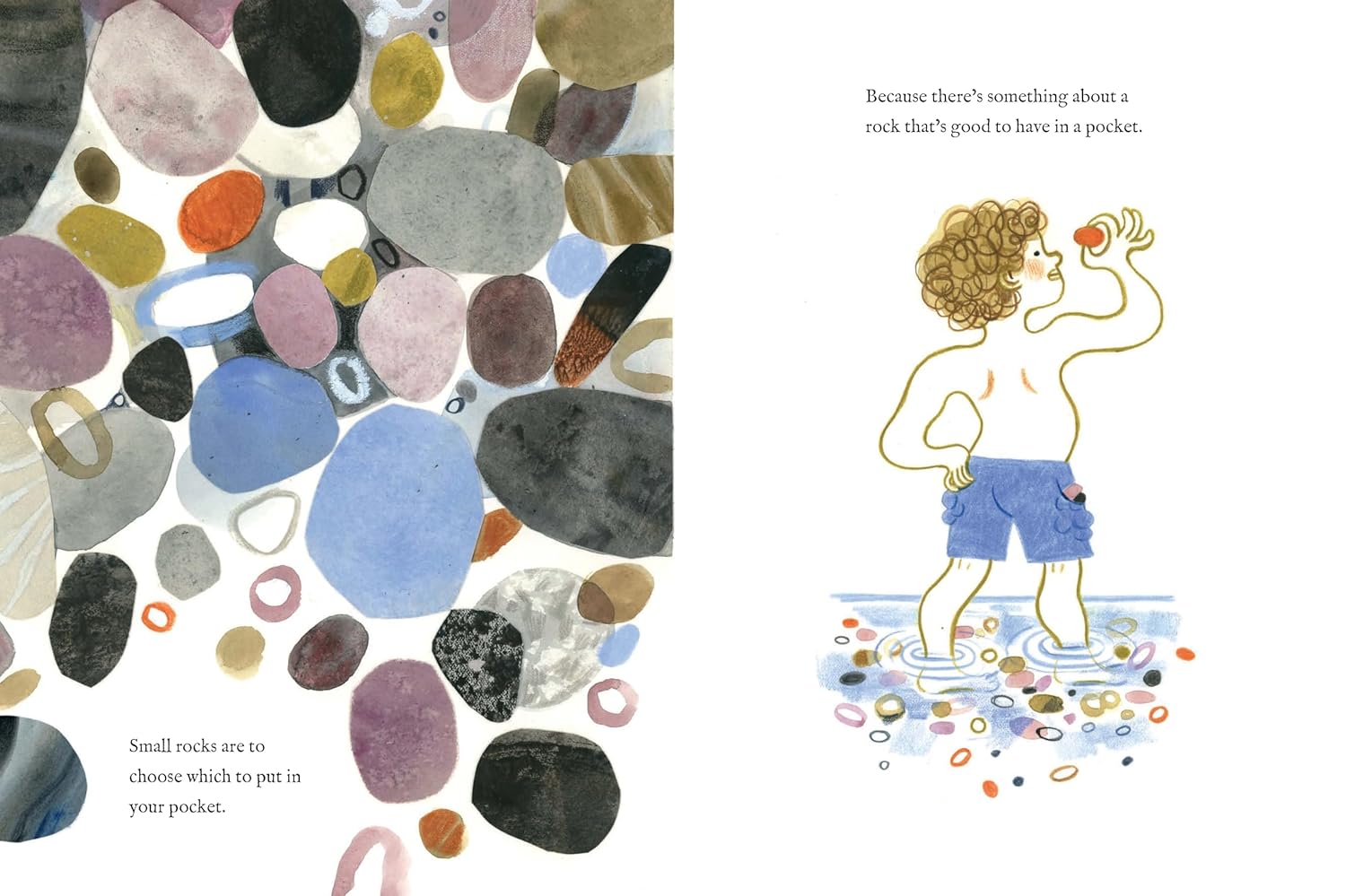
celebrate-picture-books-picture-book-review-when-you-find-a-rock-pocket

Image copyright Felicita Sala, 2024, text copyright Mary Lyn Ray, 2024. Courtesy of Chronicle Books.

The story then zooms out to a greater metaphorical sense of finding and grounding oneself in a world of shifting social relations and chaos. Lyn Ray compares finding something special or surprising within yourself (“just when you were maybe feeling sort of ordinary”) to finding a surprising rock in a less exciting bunch of pebbles. Readers are encouraged to reflect and hold on to these moments of inner finding: “You’ll want to keep that discovery in the place inside you where you remember certain things—Same as, maybe, you keep your special rocks somewhere.”

Readers are advised to take the time to “say hi to each rock you meet.” Because maybe if you find a rock that feels right in your hand, “you can feel like you’re holding hands with all the wide world.” On the final spread, we return to the scene of the child with the adult. This time, the child holds a small rock in one hand and rushes to hold the hand of her adult with her other. The two smile at each other, caught in a moment of connection.

celebrate-picture-books-picture-book-review-when-you-find-a-rock-stacked

Image copyright Felicita Sala, 2024, text copyright Mary Lyn Ray, 2024. Courtesy of Chronicle Books.

Illustrator Felicita Sala draws readers into the magic of rocks and relationships with others with detailed watercolor and colored pencil spreads that draw our focus from tiny to large scale as the words follow suit. Brightly colored pages are contrasted with darker-toned images where a rock or the child protagonist are the only ones highlighted. The illustrations masterfully weave in an under-narrative of the child and adult not told in the words, but on an emotional journey of their own, even in the singular one walk depicted.

The simplicity of the cover text, with the title displayed in the middle of a jumble of colorful textured rocks of different shapes and sizes—they even bump out of the cover in a glossed shine!—and the small choice to simplify the language to “text by” and “art by” rather than written and illustrated reflects the intentionality behind the beautiful simplicity of Mary Lyn Ray’s story as a whole; you don’t need to be a fancy geologist to admire rocks; you don’t need a reason beyond joy and admiration to stop and look at the world around you. Just like you don’t need to be a child to enjoy a picture book or a rock-lover to enjoy the story of When You Find the Right Rock.

Ages 3 – 8

Chronicle Books, 2024 | ISBN 978-1797214580

About the Author

Mary Lyn Ray has written many acclaimed books for children, including StarsPumpkinsMudThe Thank You Bookand Go to Sleep, Little Farm. She lives in South Danbury, New Hampshire, on an old farm where there are big rocks and pocket rocks, medium-sized and big, big rocks—all just right for saying hello to. Visit Mary at marylynray.com.

About the Illustrator

Felicita Sala is a self-taught illustrator. She studied philosophy and languages in Australia but then decided she wanted to create pictures. Since moving to Italy, she has worked on a few stop-motion animation projects along with her husband, Gianluca, but her passion lies in making picture books. She gets inspired by nature, children, mid-century illustration, folk art, and architecture. She lives in Rome with Gianluca and their daughter, Nina. Visit Felicita at felicitasala.com.

Picture Book Month Activity

celebrate-picture-books-picture-book-review-rock-collection-activity

Rock Exploration and Collection Ideas


On her website Early Learning Ideas, Jennifer Hier offers kids and adults a variety of ideas for ways to explore and collect rocks with children. Check out her post: 20 Easy Activities with Rocks that Will Make Learning Fun.

celebrate-picture-books-picture-book-review-when-you-find-a-rock-cover

You can purchase When You Find the Right Rock at these booksellers

Amazon | Barnes & Noble | Bookshop (to support your local independent bookstore)

Picture Book Review
January 7 – Old Rock Day

celebrate-picture-books-picture-book-review-a-rock-is-lively-cover

About the Holiday

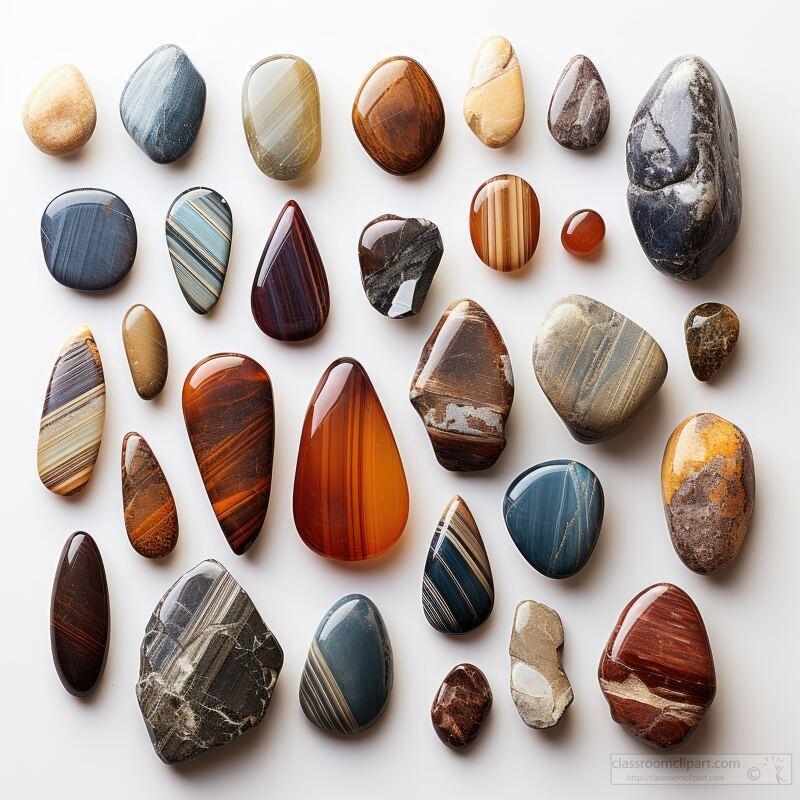
Do you love rocks? Are your eyes captured by the colors and patterns on the stones you see while out walking? Today’s holiday celebrates these wonders of nature and encourages geologists—both professionals and amateurs—to indulge their passion and maybe even teach others about the history and formation of rocks. To celebrate, take a walk in your area or even in your own backyard, pick up a few rocks, and research a little more about them.

A Rock is Lively

Written by Dianna Hutts Aston | Illustrated by Sylvia Long


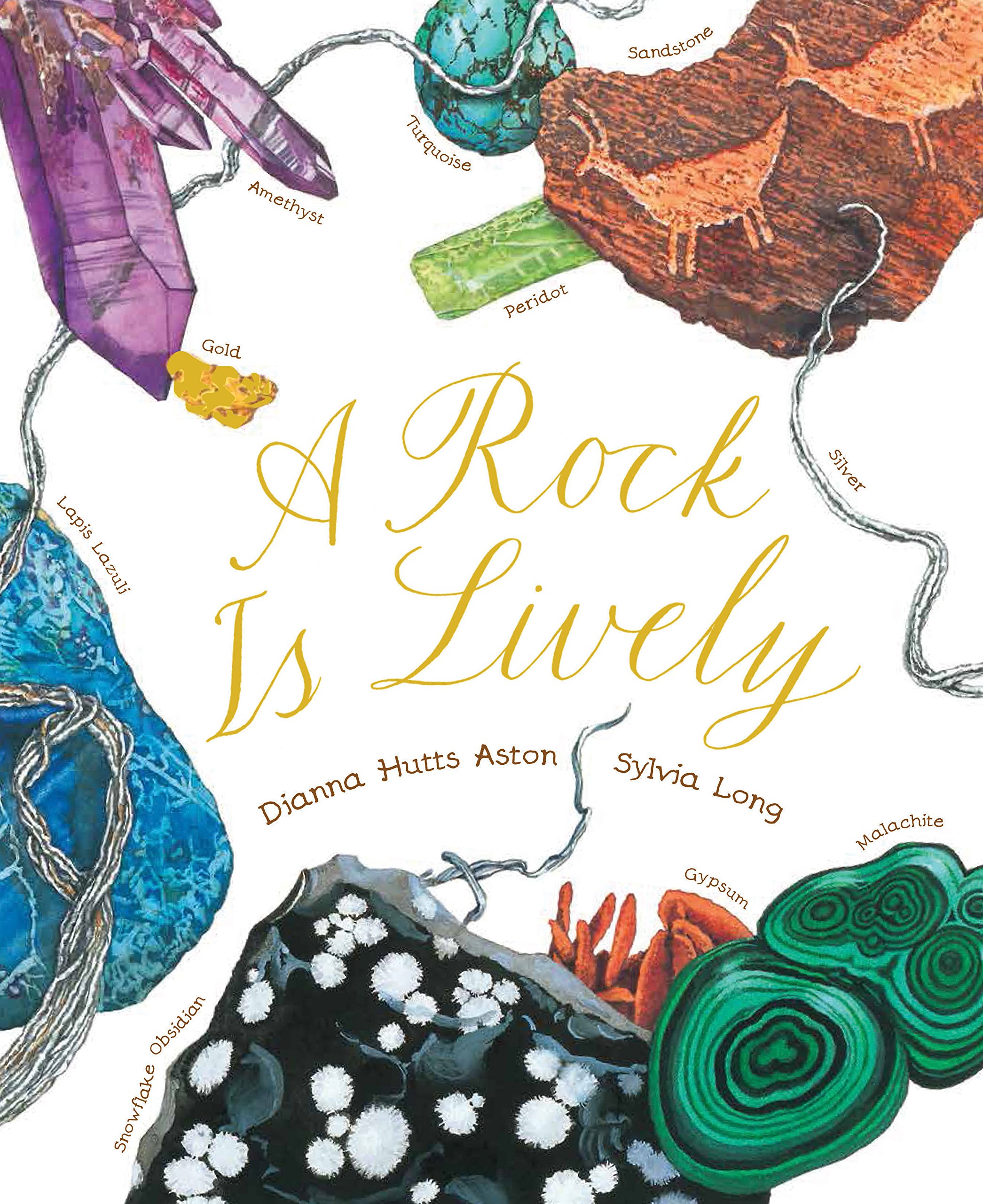
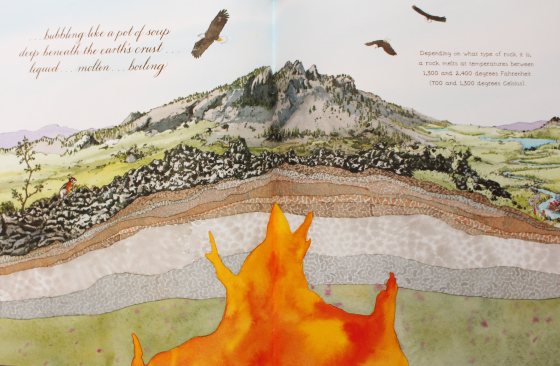
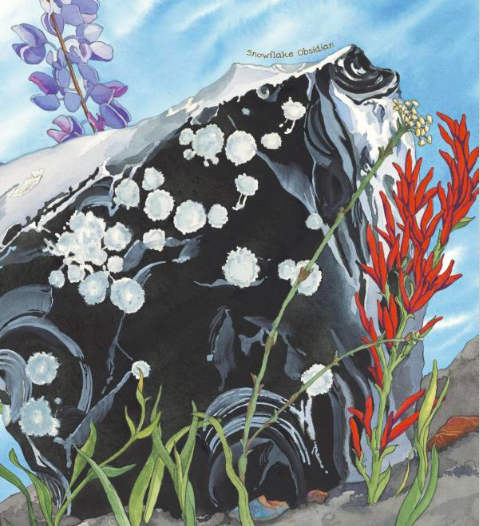
Open the cover of A Rock is Lively and before the text—even before the title—readers are treated to an array of fifty-one gemstones that dazzle the eyes. How enticing to learn about all of these natural works of art! “A rock is lively…” the text begins, arching over a shining piece of snowflake obsidian—an ebony-colored rock dotted with lacy blots. These lively rocks bubble “like a pot of soup deep beneath the earth’s crust…liquid…molten…boiling.” How hot does it need to be to melt a rock? Anywhere “between 1,300 and 2,400 degrees Fahrenheit (700 and 1,300 degrees Celsius).”

celebrate-picture-books-picture-book-review-a-rock-is-lively-lava

Image copyright Sylvia Long, 2012, text copyright Dianna Hutts Aston, 2012. Courtesy of Chronicle Books.

What happens at these temperatures? Well, like your favorite cookie recipe, “a rock is mixed up. All rocks are made of a mix of ingredients called minerals.” Take the recipe for Lapis Lazuli, for instance: “Mix the mineral lazurite with a dash of sodalite and a pinch of both calcite and pyrite. Heat within the earth until a brilliant blue.”

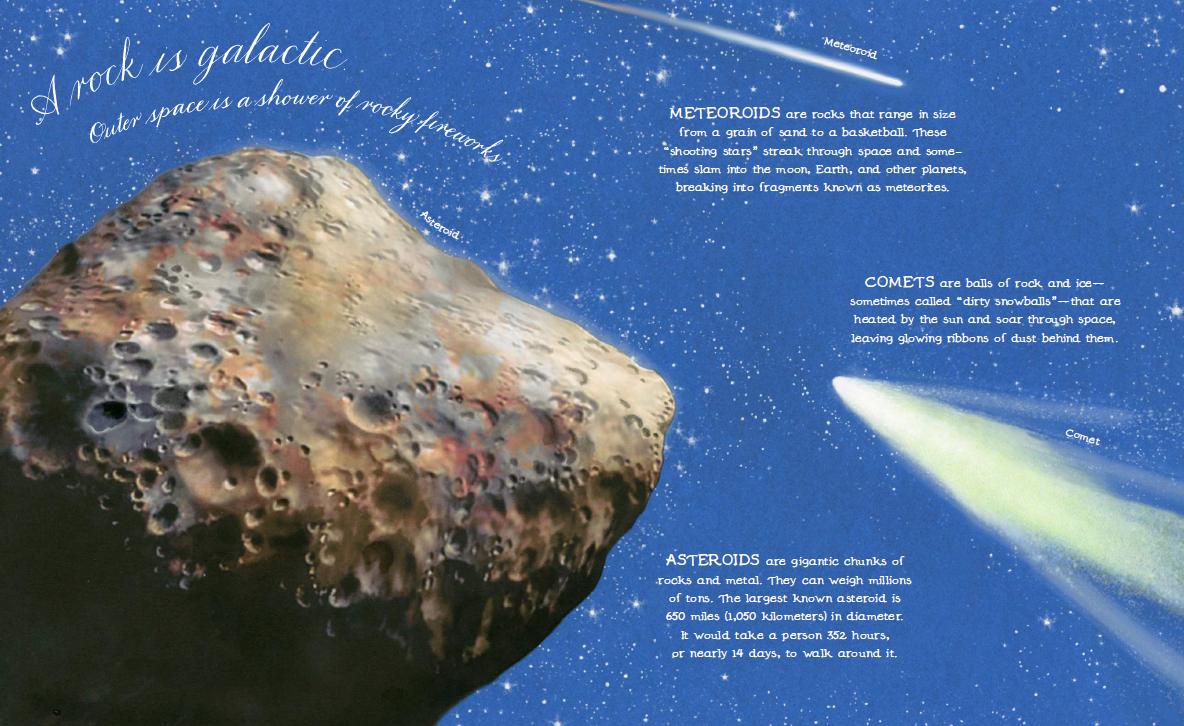
Rocks don’t exist just here on earth. Rocks are also galactic. “Outer space is a shower of rocky fireworks” made of meteoroids, comets, and asteroids. You’ll learn the differences among them here too. You probably already know that rocks are old, but how old? Billions of years old! “The oldest rocks ever found are nearly 4.5 billion years old.” Rocks are “huge…and tiny.” They are as big as a mountain reaching for the sky and as small as the grains underneath your feet.

“A rock is helpful.” Animals use rocks in many amazing ways. Some birds swallow stones to help with digestion, and some sea creatures ingest them to help keep them balanced in the water. Other animals use rocks to crack open shellfish and nuts so they can get to the goodness inside. Some rocks look plain on the outside but hold a beautiful surprise inside. Some rocks are full of colorful rainbows, others look like a starry night sky, while still others look like a white chrysanthemum or a red-and-green watermelon.

celebrate-picture-books-picture-book-review-a-rock-is-lively-galactic

Image copyright Sylvia Long, 2012, text copyright Dianna Hutts Aston, 2012. Courtesy of Chronicle Books.

From humans’ earliest days rocks have been chiseled into arrow heads and spear points, axe blades, and hammers. They’ve become mortars and pestles and are ground up today to “make cement and bricks, paper and pencils, glass, and toothpaste.” But rocks aren’t only useful, they’re creative too. Ancient peoples made paints from minerals and created colorful “pictographs on cave walls, rock shelters, and ledges.” Petroglyphs were made by chipping and pecking away at rock surfaces. As civilizations developed, so did their buildings and artwork made from stone. The pyramids were made from limestone, Stonehenge is formed from “sandstone, dolerite, and others,” the Taj Mahal and Michelangelo’s “David” are marble marvels, and Mt. Rushmore was carved from Granite.

“A rock is recycled.” Formed in three different ways, rocks are categorized as sedimentary, metamorphic, or igneous. “Over thousands of millions of years, [a rock] changes from one form to another. This is called the rock cycle,” and it keeps rocks very lively!

celebrate-picture-books-picture-book-review-a-rock-is-lively-surprising

Image copyright Sylvia Long, 2012, text copyright Dianna Hutts Aston, 2012. Courtesy of Chronicle Books.

Dianna Hutts Aston’s inventively and conversationally accessible discussion of the rocks that make up our earth and universe will enthrall any rock hound or entice the curious. Aston’s lead-in heads make for clear classification of and intriguing introductions to the various types of rocks, how they’re formed, what they look like, and how they’ve been used through history.  Her pages contain short, but very informative paragraphs that teach children about rocks through time and size comparisons they’ll understand, descriptions with familiar references, and evocative verbs and adjectives. Aston’s dynamic look at this subject will excite kids to learn more.

celebrate-picture-books-picture-book-review-a-rock-is-lively-snowflake-obsidian

Image copyright Sylvia Long, 2012, text copyright Dianna Hutts Aston, 2012. Courtesy of Chronicle Books.

Accompanying Aston’s text are Sylvia Long’s stunning illustrations that open readers eyes to the incredible beauty of each type of rock. To begin, young readers see a cut away of the rock layers beneath earth’s crust as well as the rocks that shoot across the sky. Aston shows animals using rocks in a myriad of ways as well as the tools, art, and buildings created by humans throughout history. The showstoppers are her depictions of the interior of different types of geodes, with their electric blues, reds, purples, and oranges and figures that lend the rocks their names. The double-spread pages containing fifty-one rocks with their name that introduce and end the book are a young geologist’s dream come true and will send them scurrying to discover and collect them all.

A fantastic reference, A Rock is Lively makes a terrific addition to home and classroom libraries  or a gift (pair it with a geode or small boxed rock collection) for young nature lovers and scientists.

Ages 7 – 12

Chronicle Books, 2012 (Hardcover; 2015 Paperback) | ISBN 978-1452106458

Discover more about Dianna Hutts Aston and her books on her website.

To learn more about Sylvia Long, her books, and her art, visit her website.

Old Rock Day Activity

CPB - Nasty Bugs magnet II (2)

Rock This Craft!


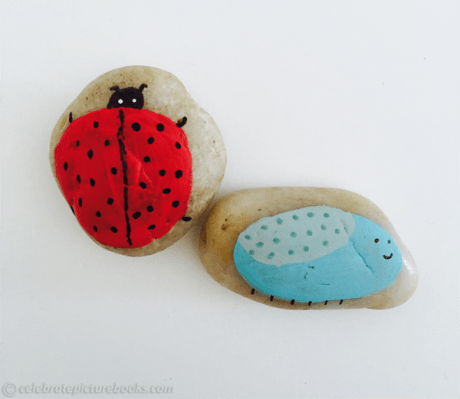
Smooth stones can give you a natural canvas for your creativity! With a little bit of paint, pins or magnets, and some imagination, you can make refrigerator magnets, jewelry, paper weights, and more!

Supplies

  • Smooth stones in various sizes
  • Paint or markers
  • Small magnets, available at craft stores
  • Jewelry pins, available at craft stores
  • Paint brush
  • Strong glue

Directions

To make magnets

  1. Design and paint an image on the stone
  2. Attach a magnet to the back with strong glue, let dry
  3. Use to hang pictures, notes, or other bits of important stuff on your refrigerator or magnetic board

To make jewelry

  1. Using a smaller, flatter stone, design and paint an image on the stone
  2. Attach a jewelry pin to the back with the strong glue, let dry
  3. Wear your pin proudly

To make a paper weight

  1. Using a large stone, design and paint an image on the stone
  2. Let dry
  3. Display and use on your desk to keep those papers in place

celebrate-picture-books-picture-book-review-a-rock-is-lively-cover

You can find A Rock is Lively at these booksellers

Amazon | Barnes & Noble | Books-a-Million | IndieBound

Picture Book Review