September 4 – National Wildlife Day

About the Holiday

National Wildlife Day was established in 2005 by author and pet lifestyle expert Colleen Paige to promote awareness of endangered species as well as preservation and conservation efforts around the world. Globally, there is increased pressure on many animals due to pollution, habitat destruction, and other environmental issues. This day (as well as February 22, in honor of renowned conservationist Steve Irwin) encourages people to learn more about the species in their area, work toward creating hospitable habitats in their own yard or community, and implement environment-friendly choices in their homes. One of the animals featured in today’s book is the pangolin, a species whose members range in endangered status from vulnerable to critically endangered.

Thank you to Scholastic for sending me a copy of this book for review!

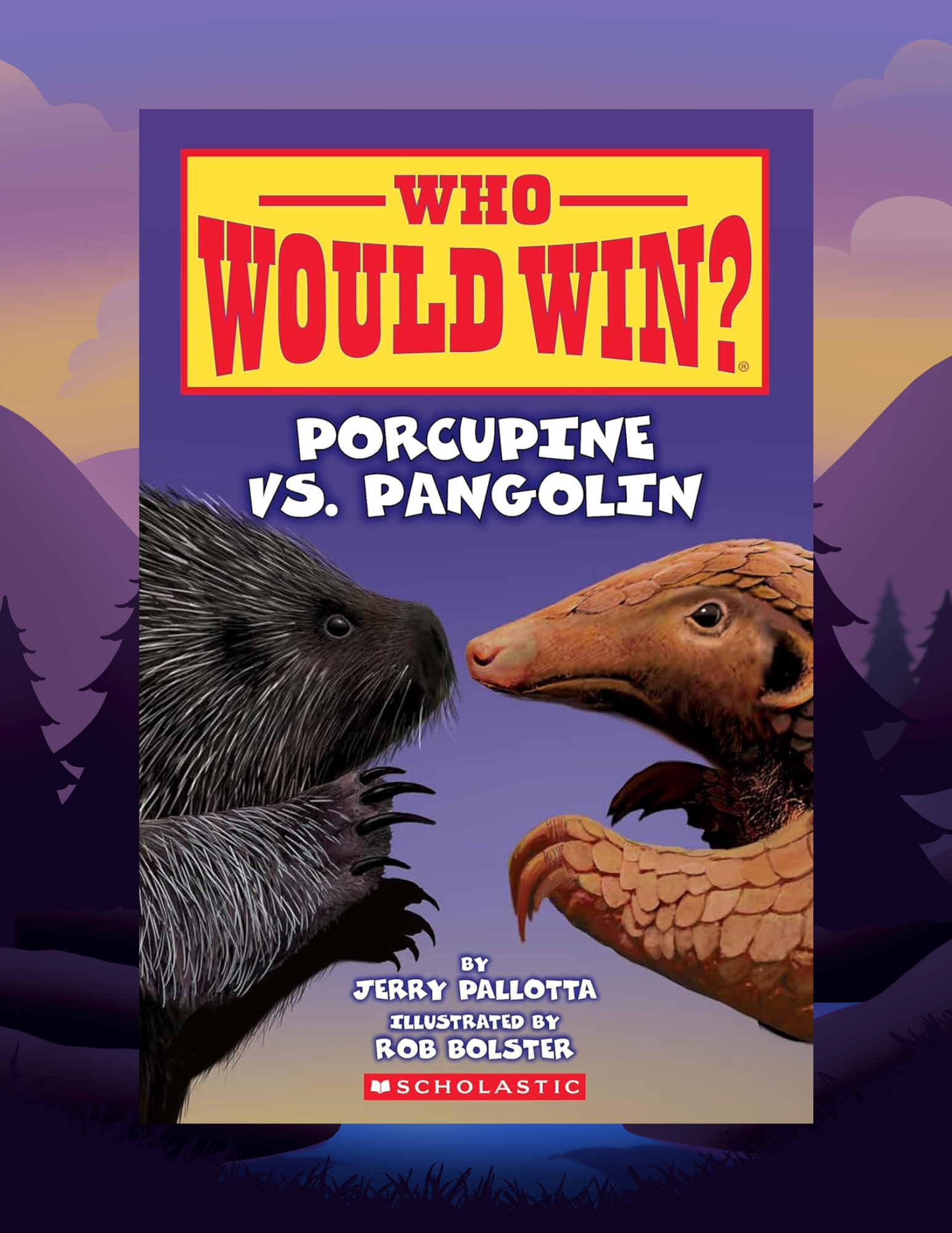
Who Would Win? Porcupine vs. Pangolin

Written by Jerry Pallotta | Illustrated by Rob Bolster


Welcome to Jerry Pallotta’s and Rob Bolster’s nocturnal showdown in the latest addition to the Who Would Win? series! On the left hand page: a porcupine; on the right: a pangolin. To help readers decide which animal would emerge victorious in a fight, Pallotta provides side-by-side dossiers that reveal pertinent facts about porcupines’ and pangolins’ bodies, skills, and defenses. 

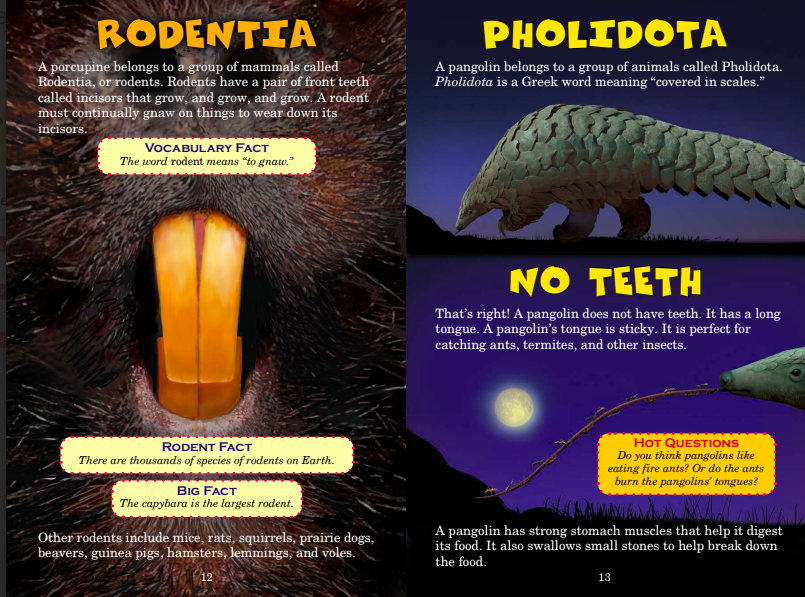
Examining these profiles, kids learn that a porcupine is “a mammal with sharp, pointed quills . . . that looks like a spiky fur ball.” They also get to know the pangolin, a mammal that resembles a reptile due to its scales that make it look like a “walking pine cone.” Pallotta—his text supported with photographs and Bolster’s realistic illustrations—presents clear and snappy descriptions of the competitor’s quills vs. scales, fur vs. hair, faces and feet, weapons and defenses, and the scientific group each animal belongs to.

Illustration © 2025 by Rob Bolster. Text © 2025 by Jerry Pallotta. Courtesy of Scholastic.

 The pages are also sprinkled with kid-pleasing visual elements that call out a wide range of facts, from “ouch facts” about quills to “hair facts” about naked mole rats and elephants to “name facts” that reveal alternate monikers for each contestant. There’s humor here too, and even a poem about a pangolin! Pallotta is also tuned into children’s boundless curiosity, revealing the various types of porcupines and pangolins; a lineup of animals with spikes as well as those that can roll into a ball like the pangolin; and a fascinating look at how other animals would fare against these two warriors.

As the sun sets, however, it’s time for the main attraction as the porcupine, searching for dinner, comes upon the pangolin slurping ants from a log. It’s time to RUMBLE! Who will win?

Illustration © 2025 by Rob Bolster. Text © 2025 by Jerry Pallotta. Courtesy of Scholastic.

If you’re a parent, librarian, teacher, or caregiver with a child or children who are familiar with the Who Will Win? series, then you know what a phenomenon these books are. Who Will Win? Porcupine vs. Pangolin is a worthy entrant into the field, providing educational and entertaining depth to the scientific study of these two unusual mammals. Children come away from reading (and excitedly rereading) this book not only with knowledge about porcupines and pangolins, but with bits about 21 other animals as well, making it an energizing spark for expanded learning. 

Information-packed and high-interest, Who Will Win? Porcupine vs. Pangolin will appeal to emergent and independent readers and makes a perfect read aloud for adults to share with their animal-loving kids. This book, as well as the rest of the series, is a must for any library collection and highly recommended for home bookshelves.

Ages 6 – 8

Scholastic, 2025 | ISBN 978-1339000961

About the Author

Jerry Pallotta is an award-winning author of children’s books, including What I Saw in the Teachers’ Lounge, Dinosaur Christmas, Who Will Guide My Sleigh Tonight?, Apple Fractions, and The Hershey’s Milk Chocolate Multiplication BookHis combination of interesting facts, detailed research, humor, and realistic illustrations has mesmerized countless children across the United States. You can visit him at jerrypallotta.com.

About the Illustrator

Rob Bolster is both a fine artist and a professional illustrator. His work has appeared in newspaper and magazine advertisements, and he has illustrated many books for young readers, including the bestselling Who Would Win? series. Rob lives and works near Boston, Massachusetts.

National Wildlife Day Activity

Pangolin and Porcupine Coloring Pages


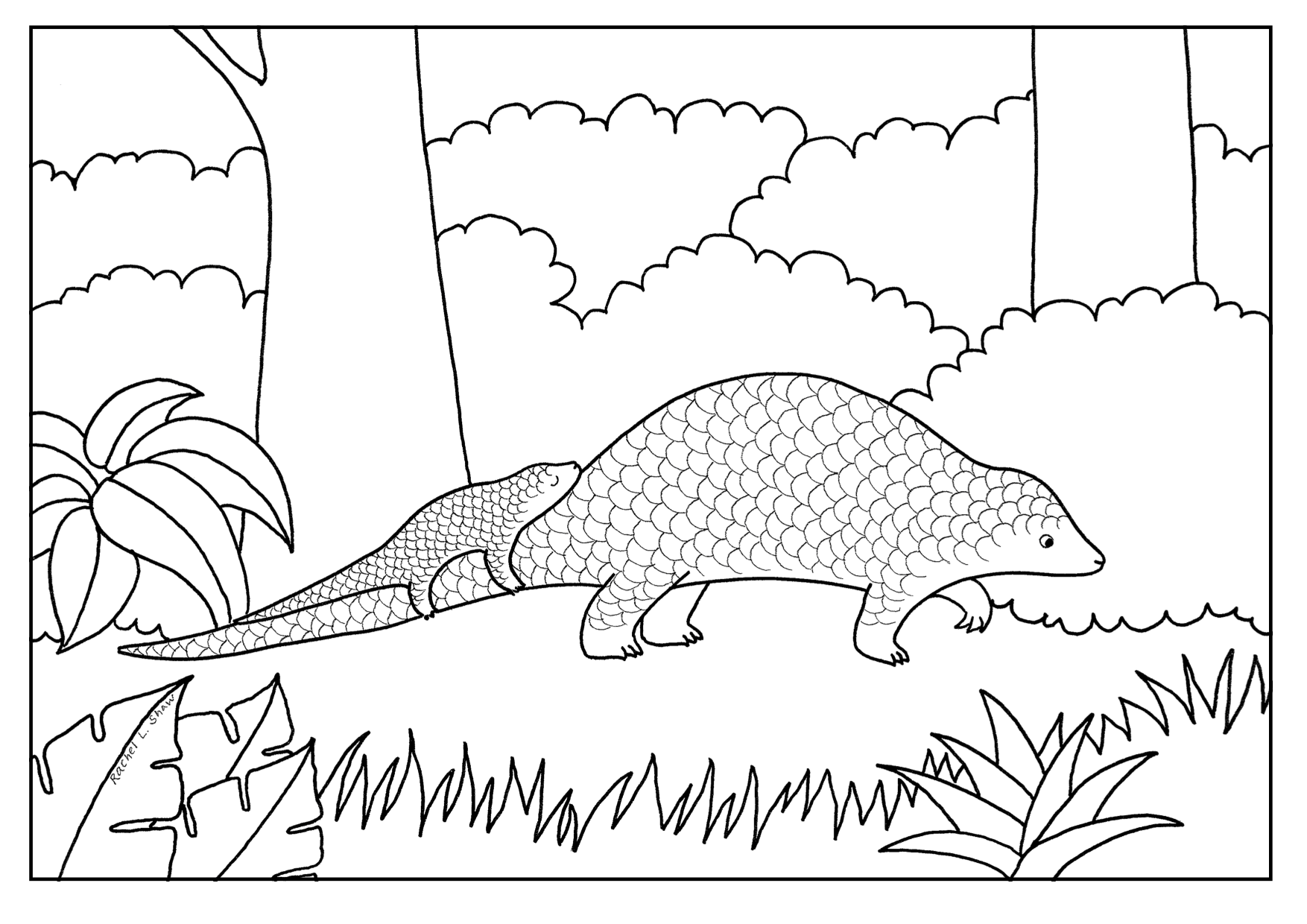
Celebrate the diversity of wildlife with these coloring pages of a pangolin and her pup and a porcupine!

Pangolin and Pup (by Rachel L Shaw) | Porcupine (courtesy of Karen Watson of The Graphics Fairy)

You can purchase Who Would Win? Porcupine vs. Pangolin from these booksellers

Amazon | Barnes & Noble | Bookshop (discounted books and support for your local independent bookstore)

Picture Book Review
July 22 – Wild about Wildlife Month

About the Holiday

Wild about Wildlife Month may be winding down, but that doesn’t mean we can’t enjoy all that nature has to offer the rest of the summer and all year long. Exploring parks, woodlands, grassy fields, or the shores of lakes, rivers, or the ocean is a fun and educational family activity that’s different each time you visit. Whether you and your kids like plants, animals, insects, or the rocks that hold everything together, a nature walk provides something for everyone. The best way to enjoy the outdoors is with a relaxed pace that lets you decompress, take it all in, and say “Ahhh!” 

Thank you to G. P. Putnam’s Sons for sending me a copy of this book for review!

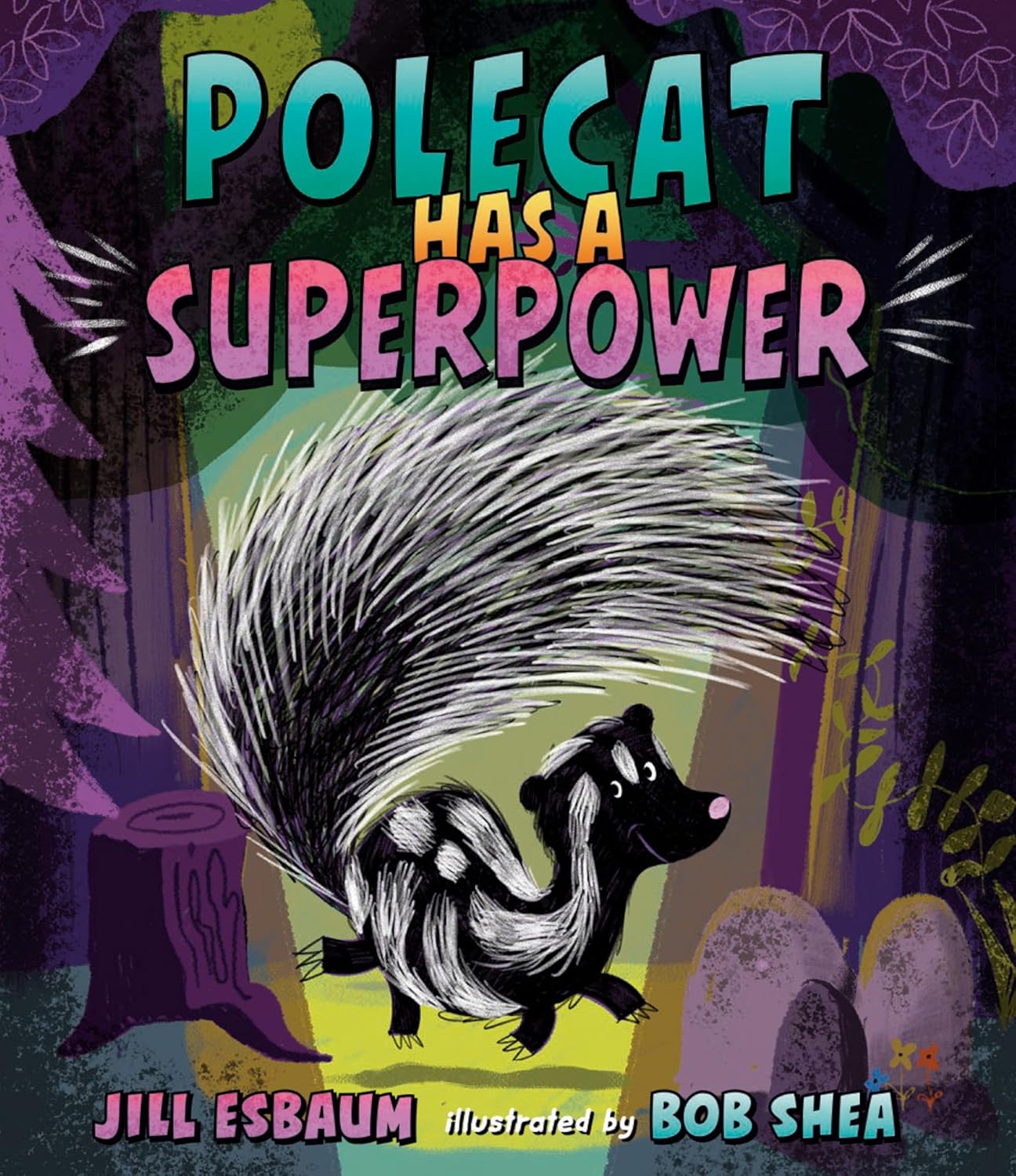
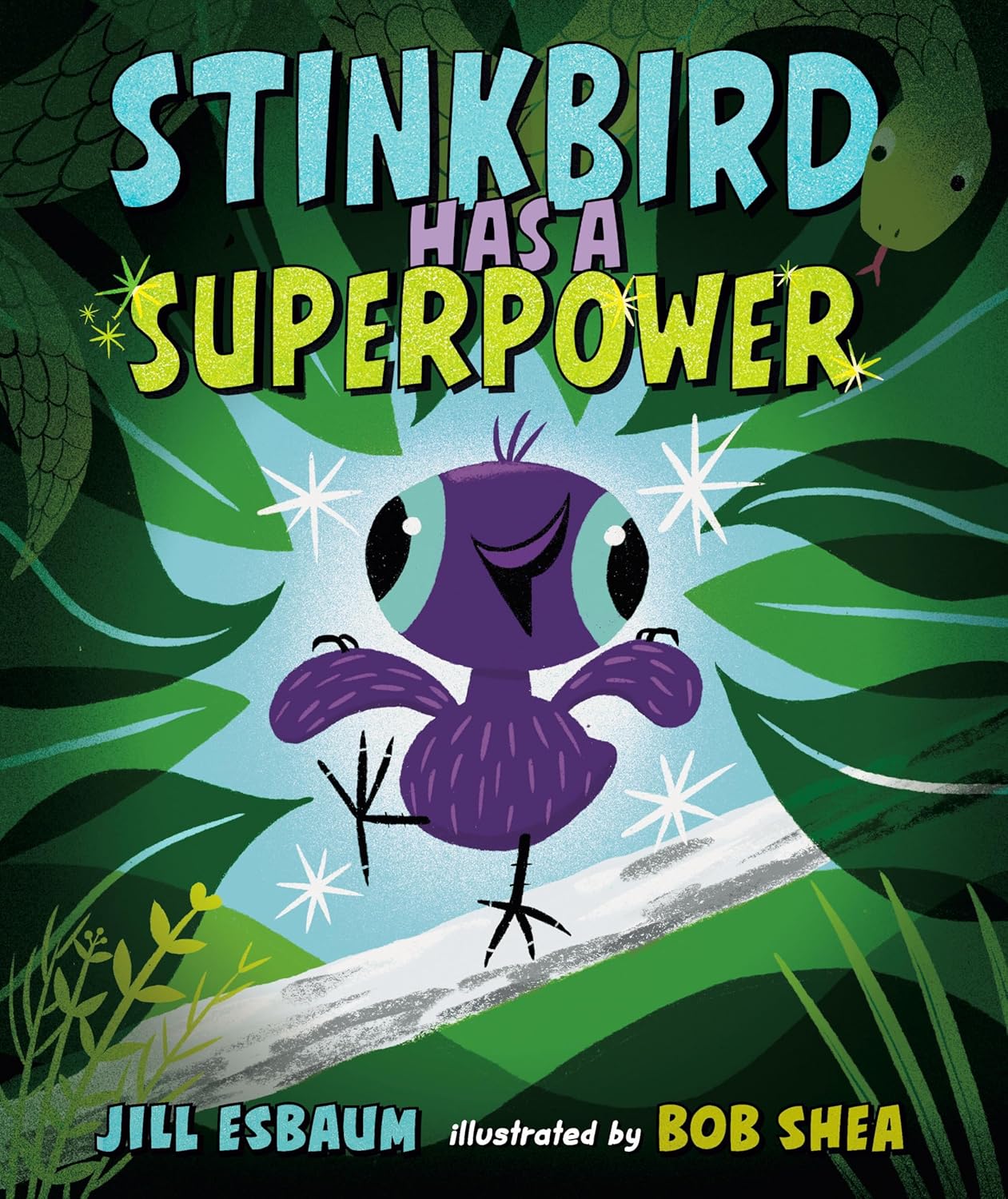
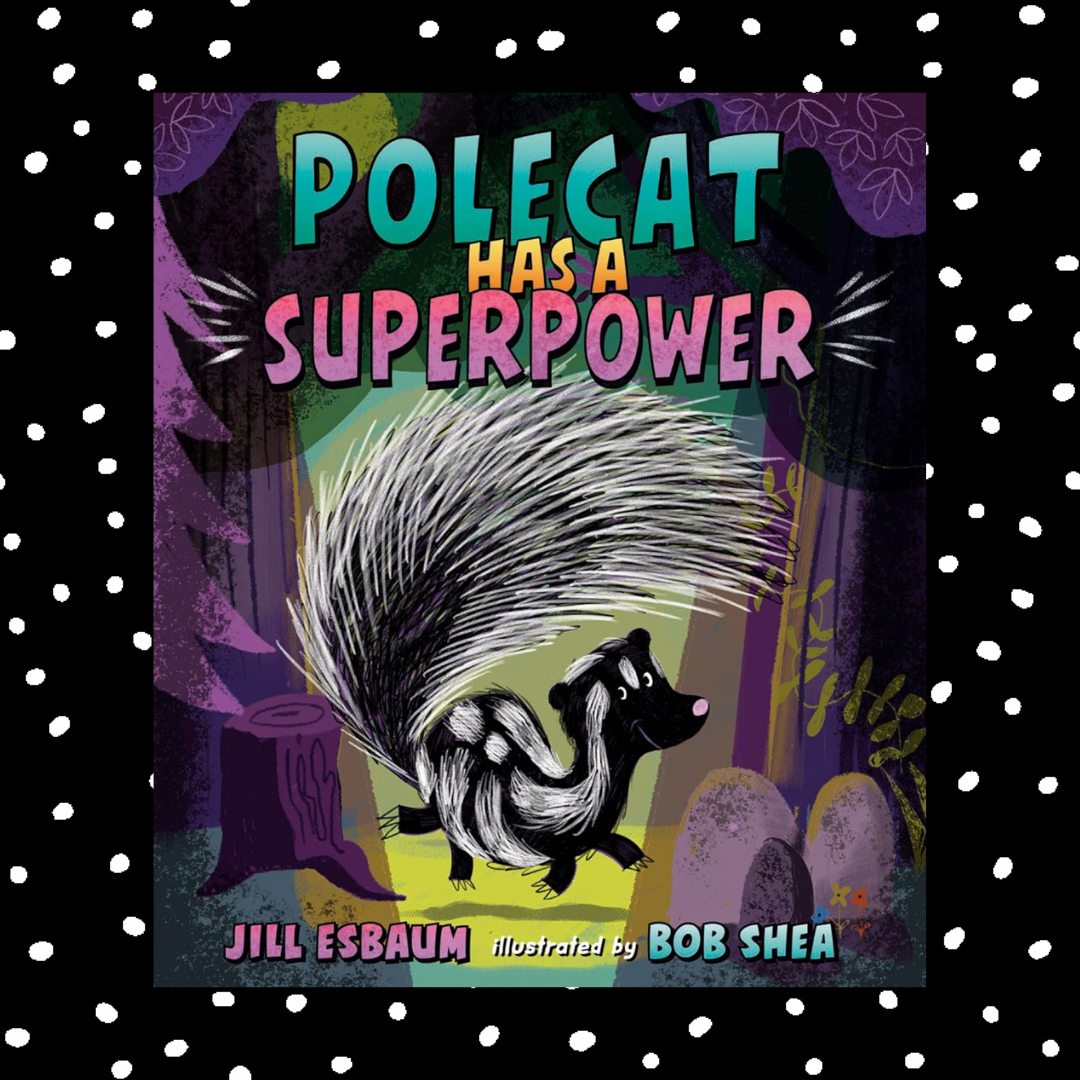
Polecat Has a Superpower

Written by Jill Esbaum | Illustrated by Bob Shea


A spotted skunk, aka Polecat, sits front and center, backlit by a sunset glow, promising to reveal his “DOOZY of a superpower”—but only after divulging all the other relevant information about himself. Things like why he chooses to live in a very particular place while being not that particular about where he lives; when polecats hunt for food, and how they’re “always, always alert for hungry predators.” It’s at this moment when the word “predators” hangs ominously in the air that Porcupine “SPROINGS” into view, frightened by the prospect of being eaten, and mistakes Polecat for a baby skunk.

illustration © 2025 by Bob Shea, text © 2025 by Jill Esbaum. Courtesy of G. P. Putnam’s Sons Books for Young Readers.

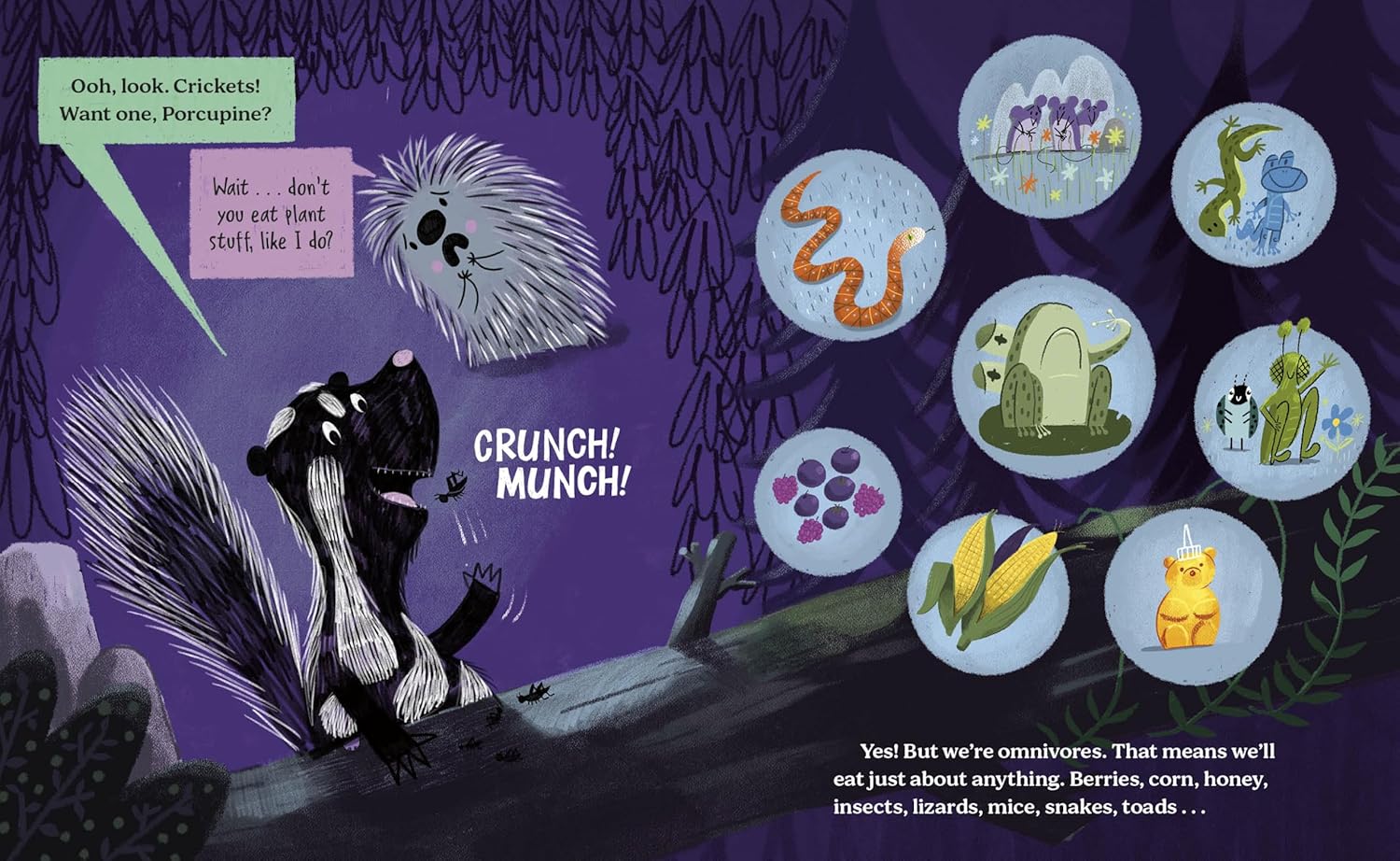
Polecat is not too pleased and goes on to show just how many things spotted skunks can do that their striped cousins can’t. Things like climbing quickly and sporting camouflaging spots. Porcupine is just warming up to this unusual interloper when Polecat chomps down a cricket, goes on to provide a full menu of foods that would satisfy its munchies, and then demonstrates how he prepares a caterpillar for “yumminny-yum-yum” fine dining. Trying hard not to be sick, Porcupine pleads, “Tell me that isn’t your superpower.” 

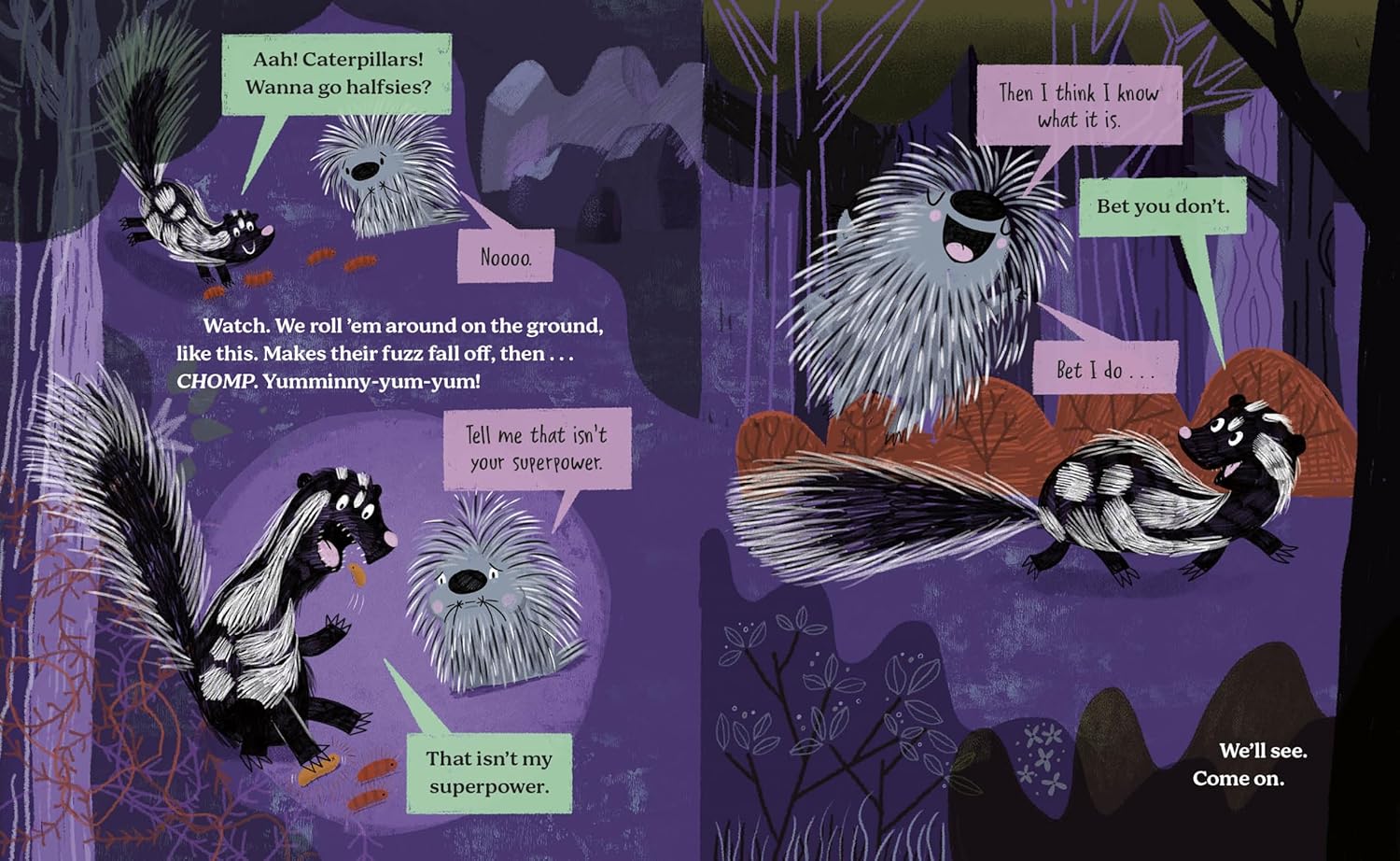
Reassured that it is not, Porcupine hints at knowing what Polecat’s superpower is. “Bet you don’t,” Polecat answers. The two creep farther into the woods where they spy a gathering of predators attending a program titled “How to Eat a Polecat” while enjoying a variety of snacks. Polecat is just about to disclose his “great trick to discourage enemies” when Porcupine blurts it out. Upset, Polecat blurts out what he thinks Porcupine’s defense is, but instead ends up getting an education about his spiky friend.

illustration © 2025 by Bob Shea, text © 2025 by Jill Esbaum. Courtesy of G. P. Putnam’s Sons Books for Young Readers.

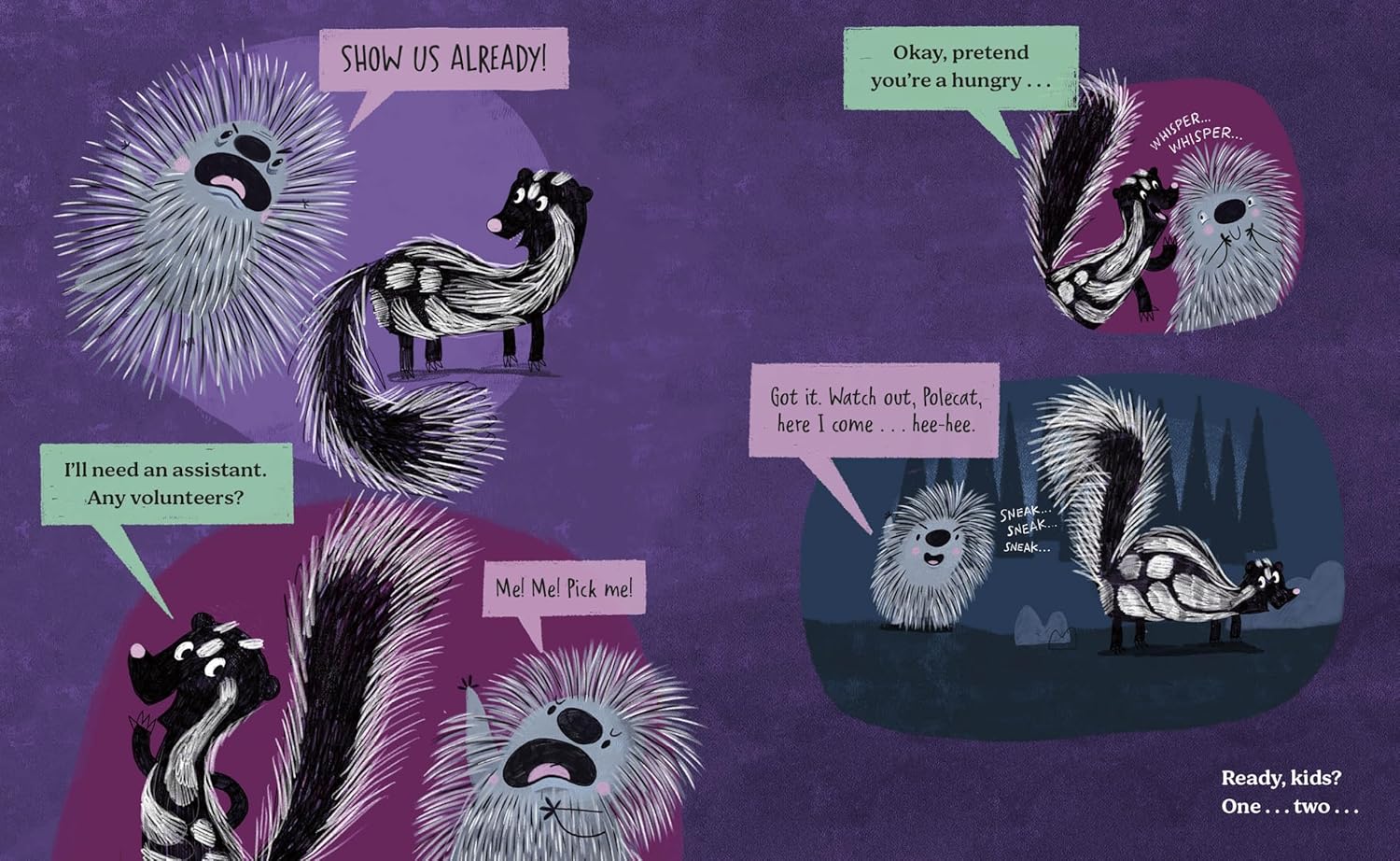
Finally, Polecat is ready to demonstrate his real superpower—”something nobody else does, not even my stripy cousins.” Porcupine happily volunteers to assist in the show only to run away screaming when he gets the surprise of his life. Polecat’s glad his superpower is so powerful, but he was hoping he and Porcupine could be friends. Porcupine’s ready to “hug it out”—but Polecat? Maybe a high five will do just as well.

A True or False? quiz about spotted skunks, with answers and explanations, follows the story.

illustration © 2025 by Bob Shea, text © 2025 by Jill Esbaum. Courtesy of G. P. Putnam’s Sons Books for Young Readers.

Polecat Has a Superpower, Jill Esbaum’s third book in this entertaining and educational series, sparkles with humor and smart repartee that keeps kids on the edge of their seats for the big reveal. Along the way, readers learn about the unusual spotted skunk and a few surprising tidbits about porcupines, while getting a grasp on some scientific terms as well.

Bob Shea realistically recreates the appearance of a spotted skunk and porcupine while infusing each with personalities that will hook kids. Porcupine’s facial expressions will endear him to young readers, who are also eager to know what Polecat’s secret is. Shea’s nighttime conclave of predators will have kids giggling, and the disclosure of Polecat’s superpower is sure to have them screaming along with Porcupine (but in delight, not fear).

Polecat Has a Superpower is a high-interest book that will be a much-asked-for addition to any home, classroom, and library collection. 

Ages 5 – 8

G. P. Putnam’s Sons Books for Young Readers, 2025 | ISBN 978-0593699997

Check out the other books in the series!

About the Author

Jill Esbaum has written many books for children, including How to Grow a DinosaurFrankenbunny, and If a T. Rex Crashes Your Birthday Party. Several of her books have been nominated for state awards, and I Am Cow, Hear Me Moo! won SCBWI’s Crystal Kite Award. She also enjoys writing kooky beginning reader stories like Thunder and Cluck, as well as a variety of nonfiction books. Visit her at jillesbaum.com and follow her on Twitter/X @JEsbaum.

About the Illustrator

Bob Shea is an award-winning author and illustrator of children’s books, including the popular Ballet Cat series, the Dinosaur Vs. series, and the runaway smash hit Unicorn Thinks He’s Pretty Great. He is an Eisner Award nominee and has worked with Comedy Central, PBS Kids, Playhouse Disney, Nick Jr., Google, and other clients. Visit him at bobshea.com and follow him on Instagram @BobSheaBooks.

Wild about Wildlife Month Activity

Eastern Spotted Skunk Coloring Page


If you’re kids are wild about wildlife, they’ll be wild about this Eastern Spotted Skunk Coloring Page! You can find many more educational Critter Sheets and Coloring Pages on the Florida State Parks website.

You can purchase Polecat Has a Superpower at these booksellers

Amazon | Barnes & Noble | Bookshop (discounted books and support for your local independent bookstore)

Picture Book Review
March 11 – It’s Gardening, Nature, and Ecology Books Month

About the Holiday

Established in the early 2000s by the Children’s Book Council, this month-long holiday encourages people to read books about gardening, nature, and ecology to foster a deeper connection with the environment and appreciation for our planet, encouraging more people to adopt sustainable practices in their daily lives.

I’d like to thank G.P. Putnam’s Sons Books for Young Readers for sharing a digital copy of Hello, I’m an Axolotl with me for review.

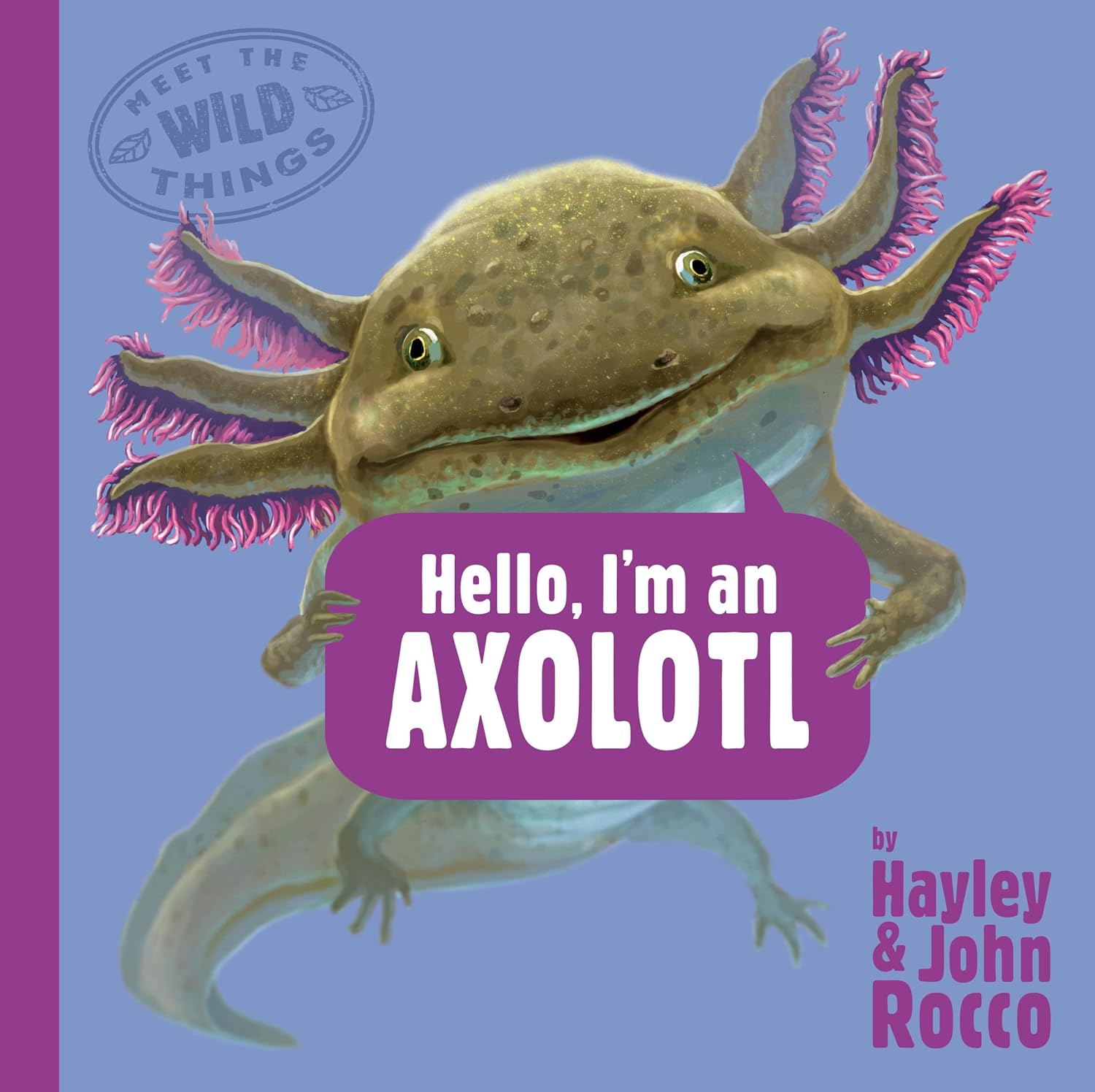
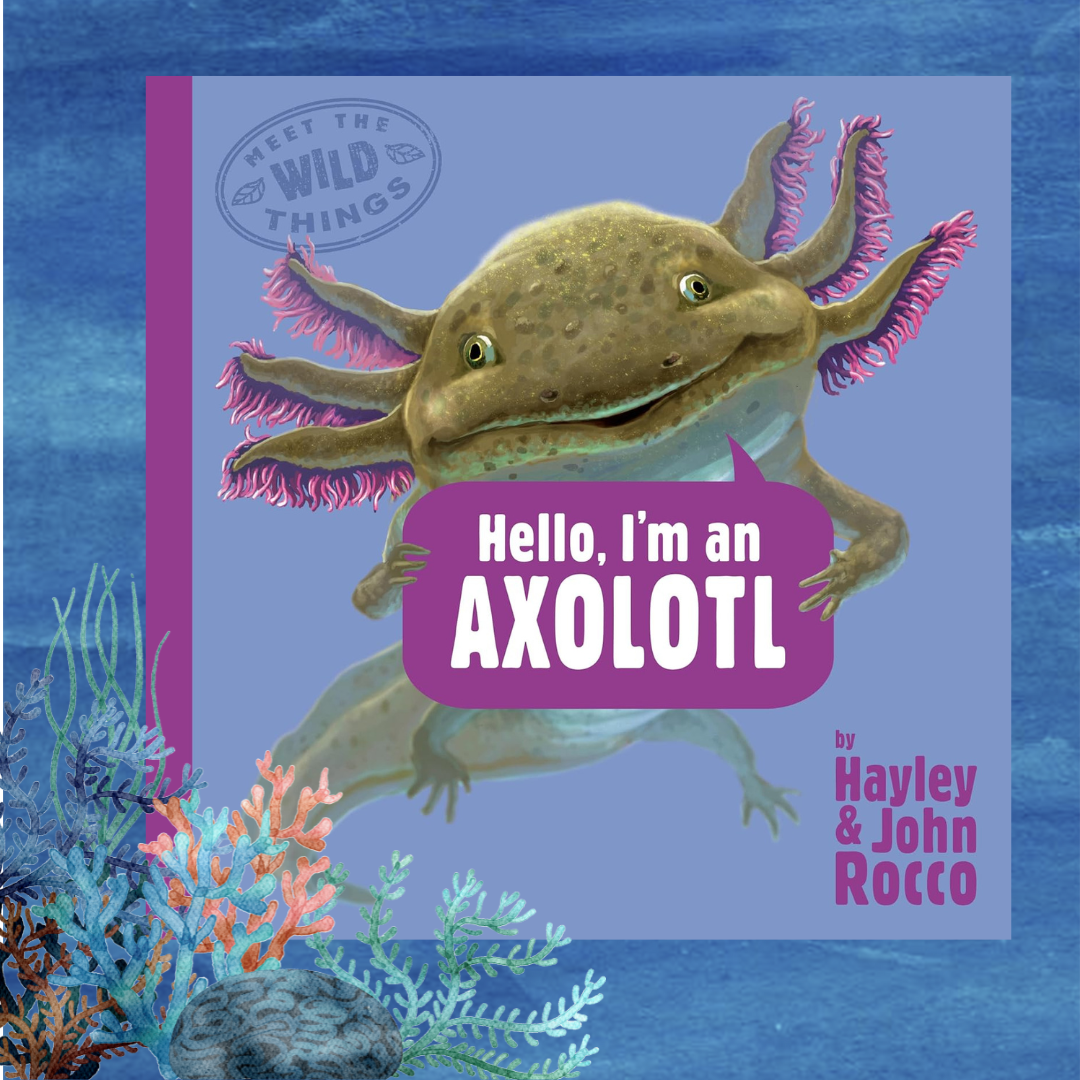
Hello, I’m an Axolotl

Written by Haley Rocco | Illustrated by John Rocco


Swimming into the popular Meet the Wild Things series that introduces kids to unusual and endangered animals is Hello, I’m an Axolotl and its spirited narrator who wastes no time in telling readers “I am A-M-A-Z-I-N-G!” And it’s not kidding!

First off, it’s named after a super hero-sounding Aztec god and then we learn that even though axolotl’s are related to salamanders, they’re a bit like an underwater Peter Pan because they “never really grow up,” which actually gives axolotls another superpower: the ability to breathe in two ways.

Illustration © 2025 by John Rocco, text © 2025 by Haley Rocco. Courtesy of G.P. Putnam’s Sons Books for Young Readers.

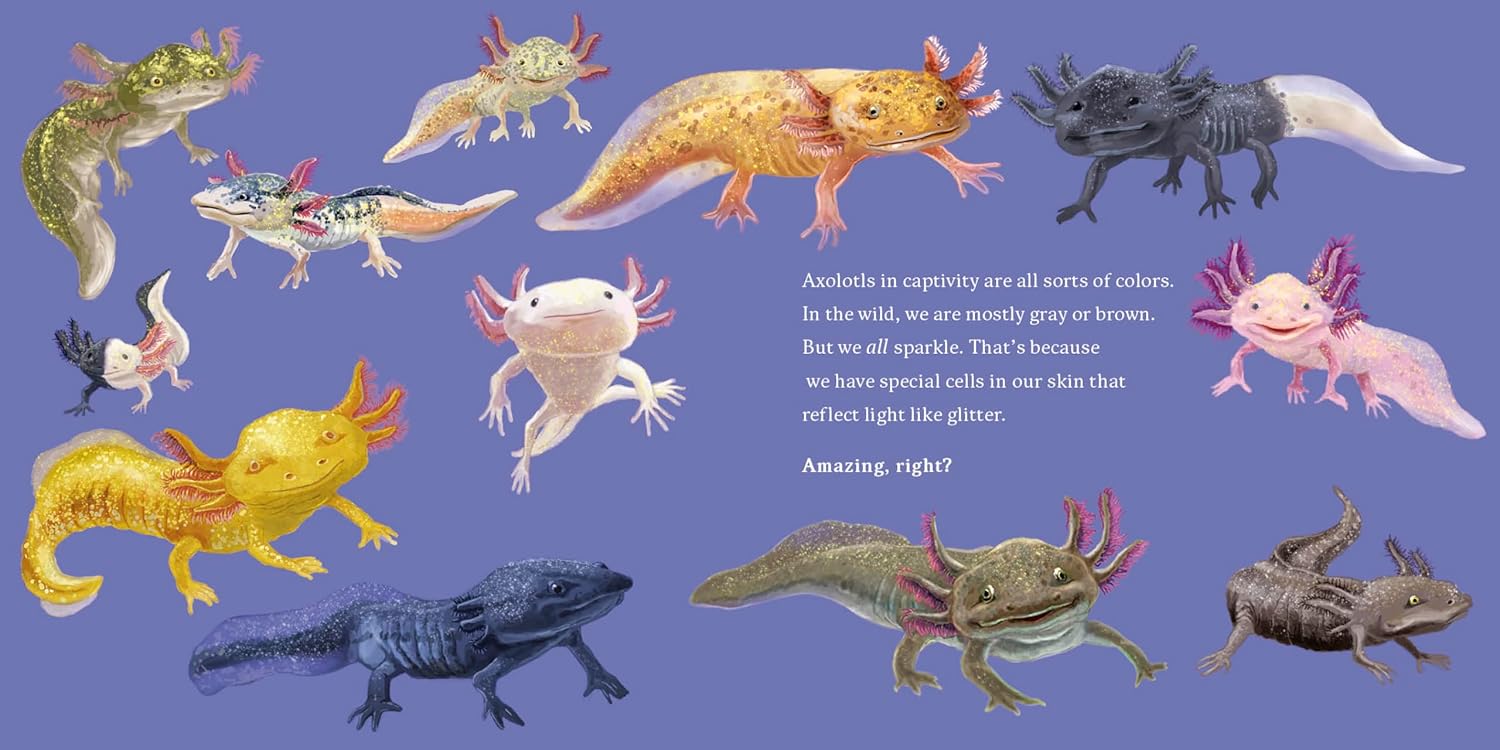
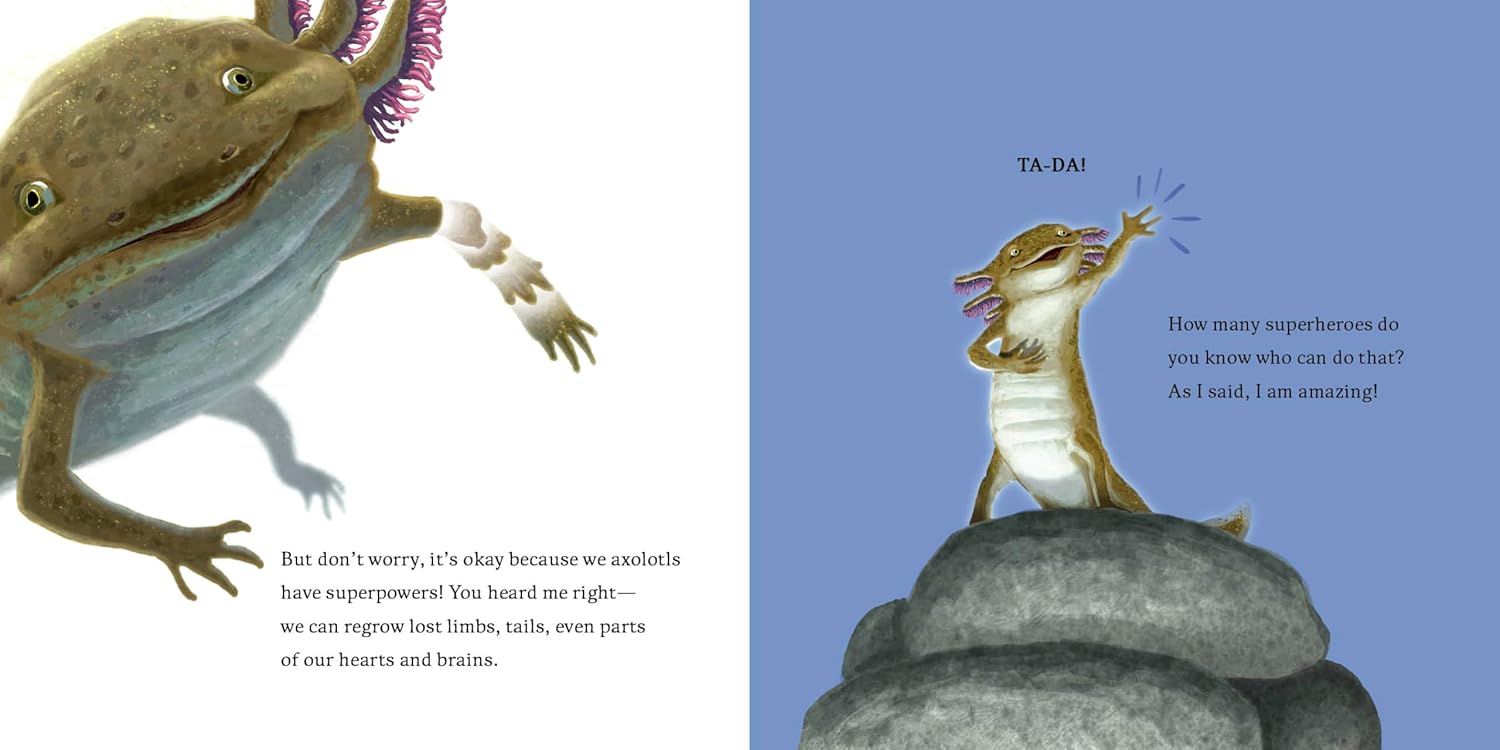
And if that doesn’t convince you that these little cuties are special, the fact that their skin sparkles like glitter certainly will! The book’s host then reveals how that’s possible. Pretty neat, huh? Still not convinced that the axolotl is one of the most fascinating animals on the planet? How about if you knew they can regrow “lost limbs, tails, even parts of [their] hearts and brains?!” This comes in handy, especially if one of their 1,000 siblings has mistaken them for a snack. Scientists are even studying how they do it with hopes of applying what they learn to humans one day.

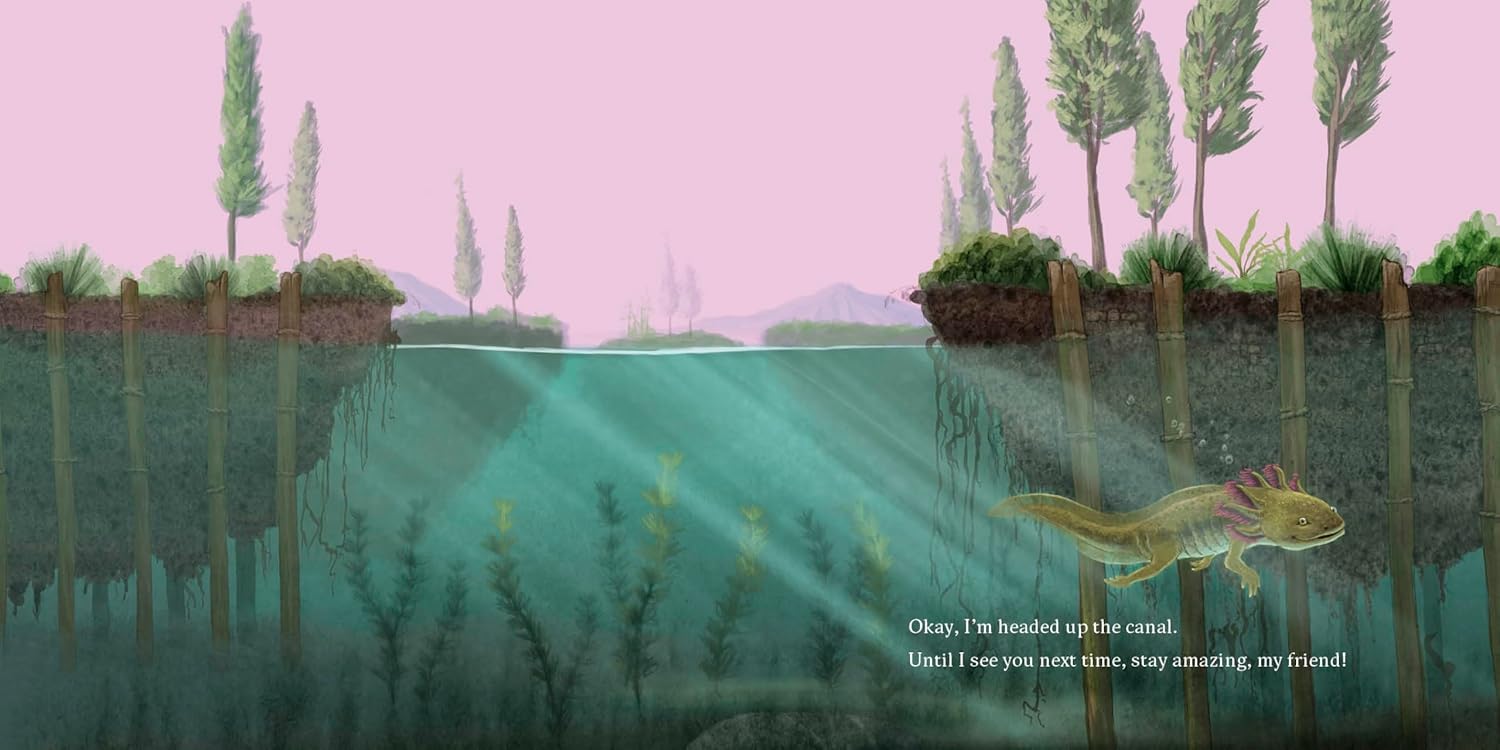
But everything isn’t rosy for axolotls. While “there about a million axolotls all over the world living in tanks and aquariums,” there are fewer than 500 living in the wild—and these are only found in one “lake and some canals outside Mexico City.” You’ll be able to see why when you compare an illustration of Lake Xochimilco from the 1500s to one from current times.

Illustration © 2025 by John Rocco, text © 2025 by Haley Rocco. Courtesy of G.P. Putnam’s Sons Books for Young Readers.

There is hope, however, as conservationists are reintroducing “an ancient Aztec farming method” that provides conditions axolotls need to survive. World-wide notoriety that shines a light on the plight of these A-M-A-Z-I-N-G creatures helps too.

Back matter expands on the facts presented in the text, including short paragraphs on the Aztec people, the origins of all axolotls in captivity today, the science behind their sparkly skin, why axolotls are endangered, and much more. 

Illustration © 2025 by John Rocco, text © 2025 by Haley Rocco. Courtesy of G.P. Putnam’s Sons Books for Young Readers.

Haley Rocco’s superpower is introducing incredible animals in a witty, personal voice that immediately endears them to kids. In Hello, I’m an Axalotl, her charming first-person narration rivets readers to the fascinating facts about axolotls, providing plenty of eye-opening and “awww”-inspiring moments as well as heartfelt concern about the future of these one-of-a-kind creatures and how they can help.

John Rocco’s stunning mixed media illustrations put kids eye-to-eye with the feisty and adorable axolotl narrator as it takes kids on a tour of its home, a lab where scientists are studying the regenerative abilities of axolotls, and to ancient and modern Lake Xochimilco. Readers of all ages will be intrigued by the image of the Aztec farming method making a comeback to protect axolotls. There’s even an “actual size” depiction of an axolotl that will captivate kids.

Unforgettable learning at its best, Hello, I’m an Axolotl is a must addition for school and public library collections and would make a perfect choice for families with children who love animals and care about the environment.

Ages 3 – 7

G.P. Putnam’s Sons Books for Young Readers, 2025 | ISBN 978-0593618219

Discover all the books in the “Meet the Wild Things” series!

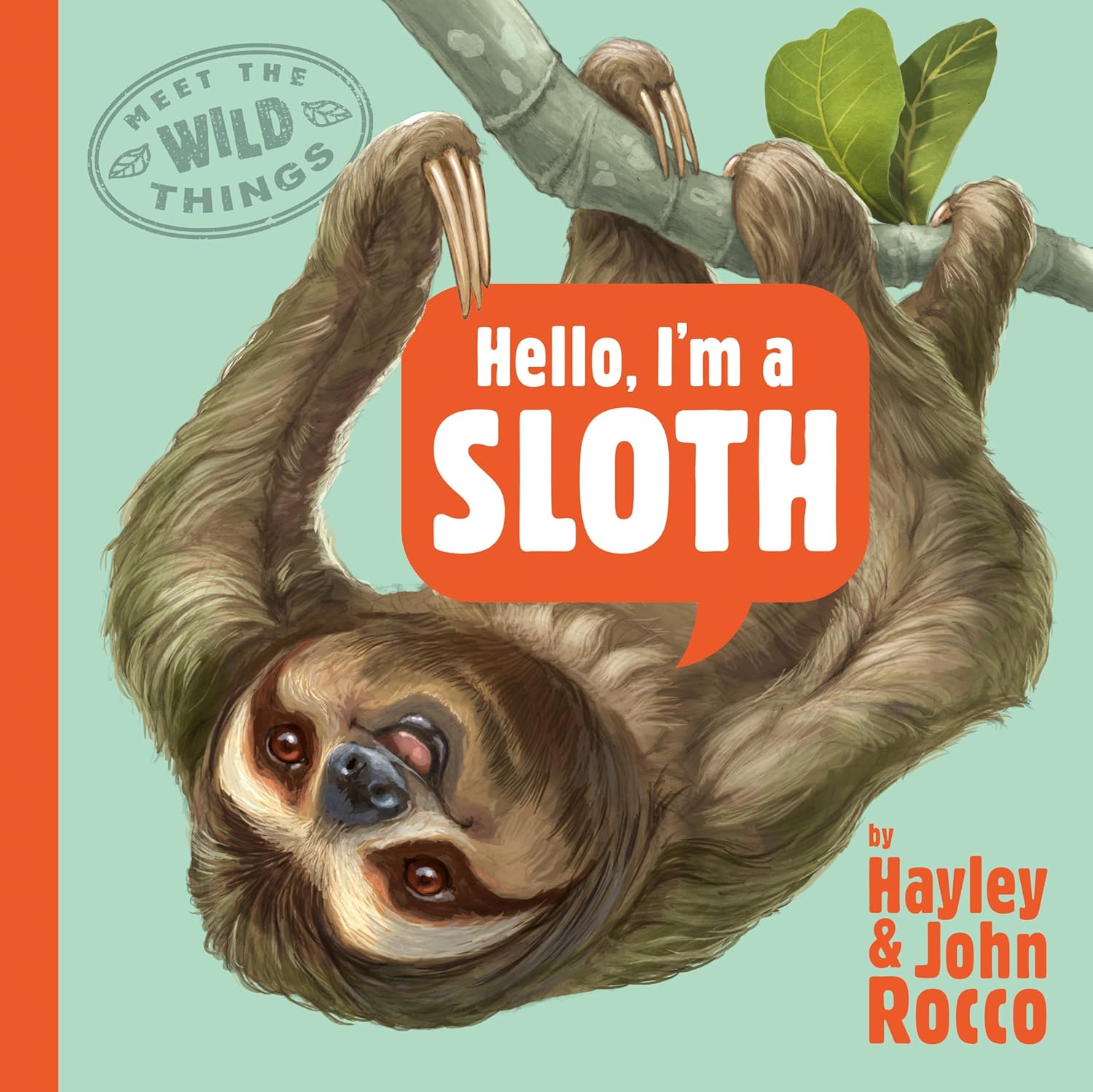
Hello, I’m a Sloth

Say hello to a sloth! Did you know sloths only poop once a week and can fall up to 100 feet without getting hurt? They also have hundreds of bugs living on them, including a species of moth that only lives on sloths! And they move so slowly that algae grows on their fur, which can actually help sloths camouflage!

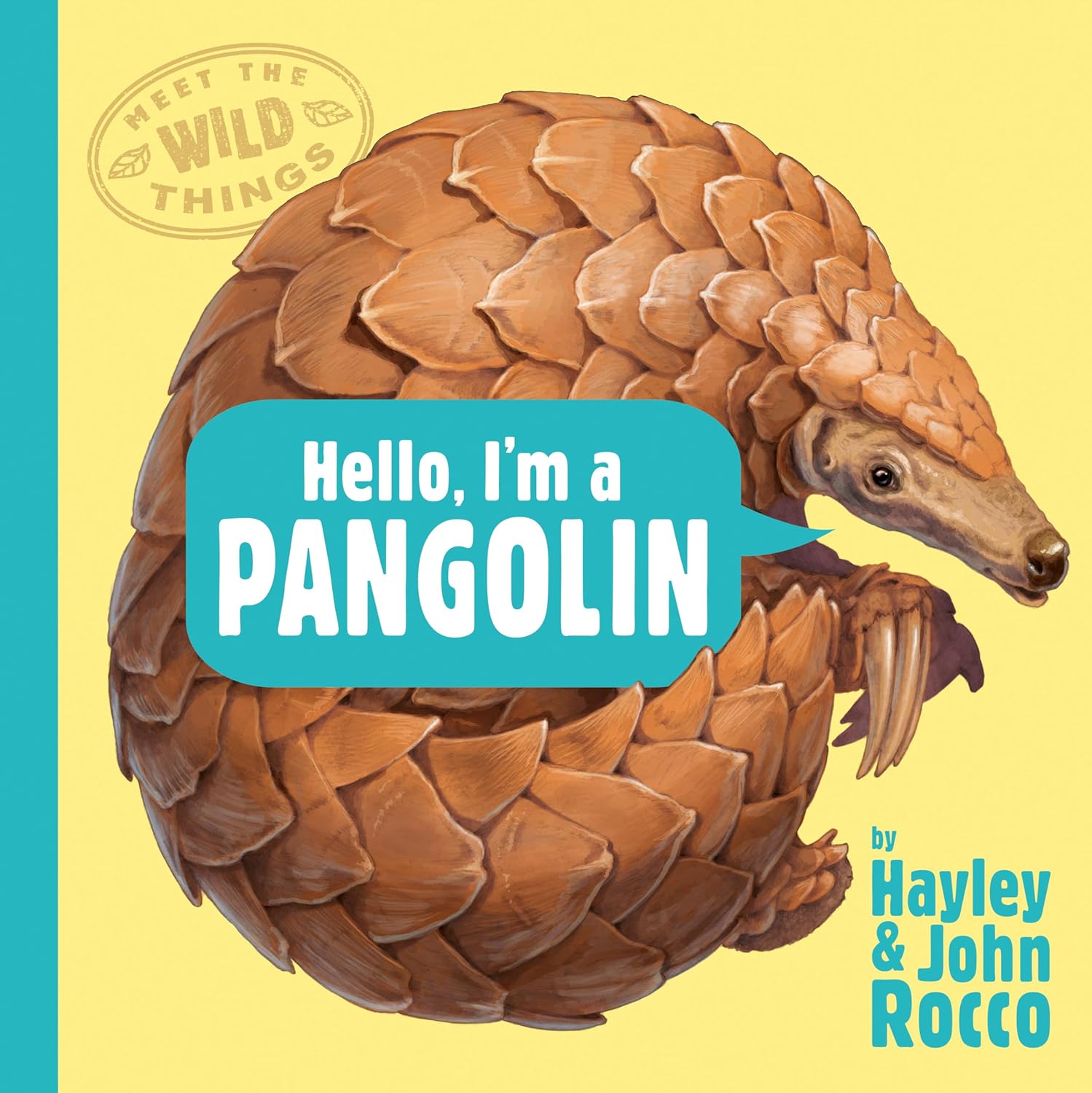
Hello, I’m a Pangolin

Say hello to a pangolin! Did you know pangolins are the only mammals with scales? And did you know pangolins have a super-sticky tongue as long as their entire body (the better to eat 20,000 bugs a day with!)?


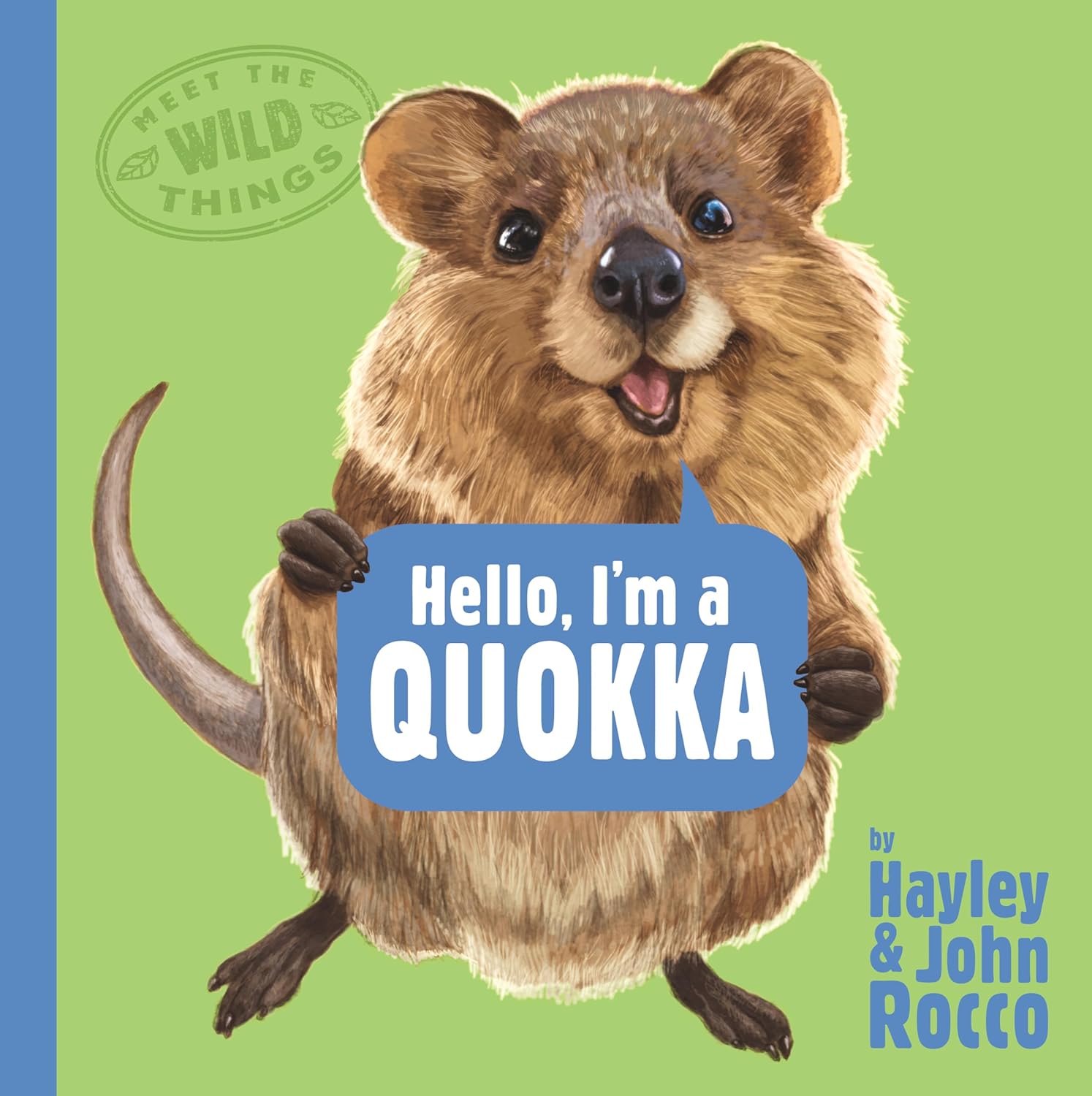
Hello, I’m a Quokka

Say hello to a quokka. Most of them live on a tiny island off of Western Australia. Like their relatives kangaroos and wallabies, they hop to get around and carry their babies in pouches. People say they are the happiest animal in the world. That’s because they’re very friendly, and their faces look like they are built for smiling—perfect for taking selfies with!

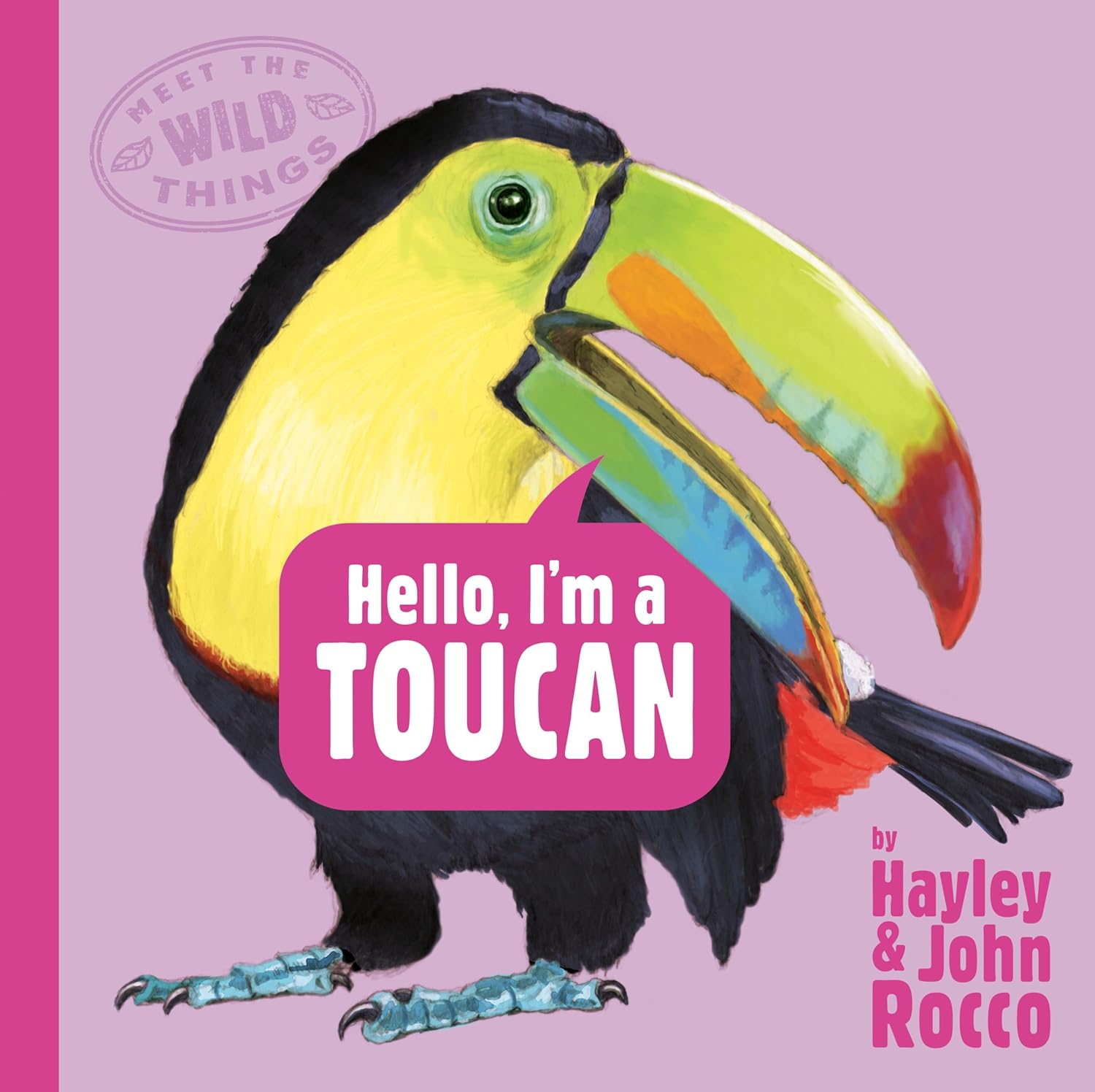
Hello, I’m a Toucan — Coming June 24!

Did you know a toucan’s bill is four times the size of its head? But you might be surprised by how lightweight and strong it is. And did you know that toucans use their bills to keep cool when it’s hot outside, by increasing blood flow from the rest of their body to maintain the perfect temperature? You can’t get much cooler than that.

About the Author

Hayley Rocco is the author of Wild Places: The Life of Naturalist David Attenborough, How to Send a Hug, and the Meet the Wild Things series, all in collaboration with her husband, John Rocco. Before dedicating herself to writing for children full-time, Hayley worked as a publicist at several major publishers. Visit Hayley at hayleyrocco.com and follow her on Instagram @hayleyroccobooks.

About the Illustrator

John Rocco is the #1 New York Times bestselling author and illustrator of many acclaimed books for children, including Blackout, the recipient of a Caldecott Honor, and How We Got to the Moon, which received a Sibert Honor and was longlisted for the National Book Award. John and Hayley live in Rhode Island in an old house tucked in the woods near the sea. Visit John at roccoart.com and follow him on Instagram @roccoart.

Hayley and John are also ambassadors for the nonprofit Wild Tomorrow and cofounders of Children’s Book Creators for Conservation.

You can purchase Hello, I’m an Axolotl at these booksellers

Amazon | Barnes & Noble | Bookshop (to support your local independent bookstore)

Picture Book Review
February 20 – National Love Your Pet Day

About the Holiday

Whether you have a dog or cat, hamster or fish, parakeet, iguana, or alpaca, your pet is one of the most beloved parts of your family. Sharing your life with a furry friend and their funny antics, eager personalities, and unconditional love simply makes things better. Today’s holiday encourages people to spend more time with their pet or pets by taking a longer walk, extending playtime, and giving special treats that show your them how much they mean to you. If you don’t have a pet, but have been considering getting one, maybe today’s the day!

Thank you to Beach Lane Books and Barb Fisch at Blue Slip Media for sharing a copy of Alpacas Here, Alpacas There with me!

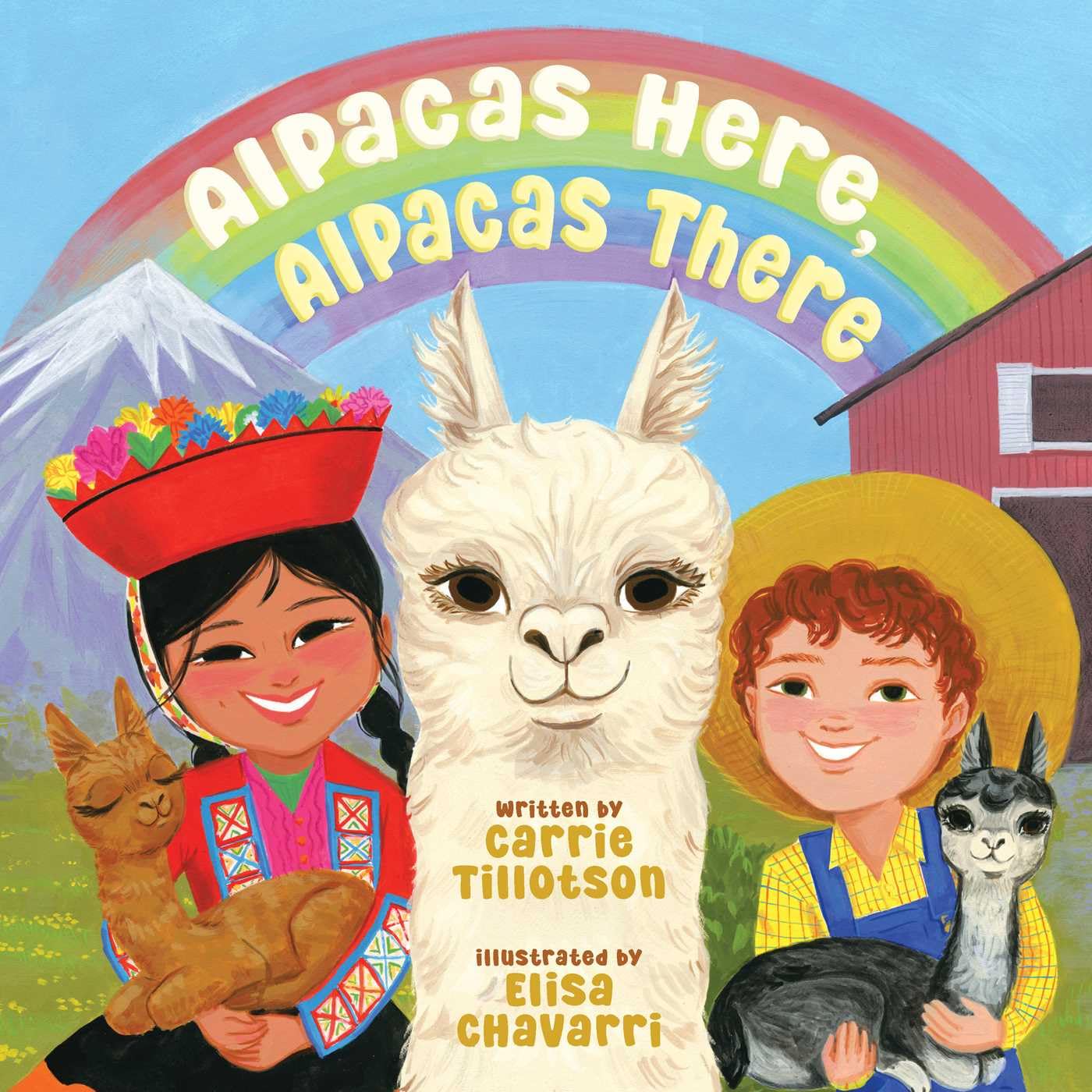
Alpacas Here, Alpacas There

Written by Carrie Tillotson | Illustrated by Elisa Chavarri


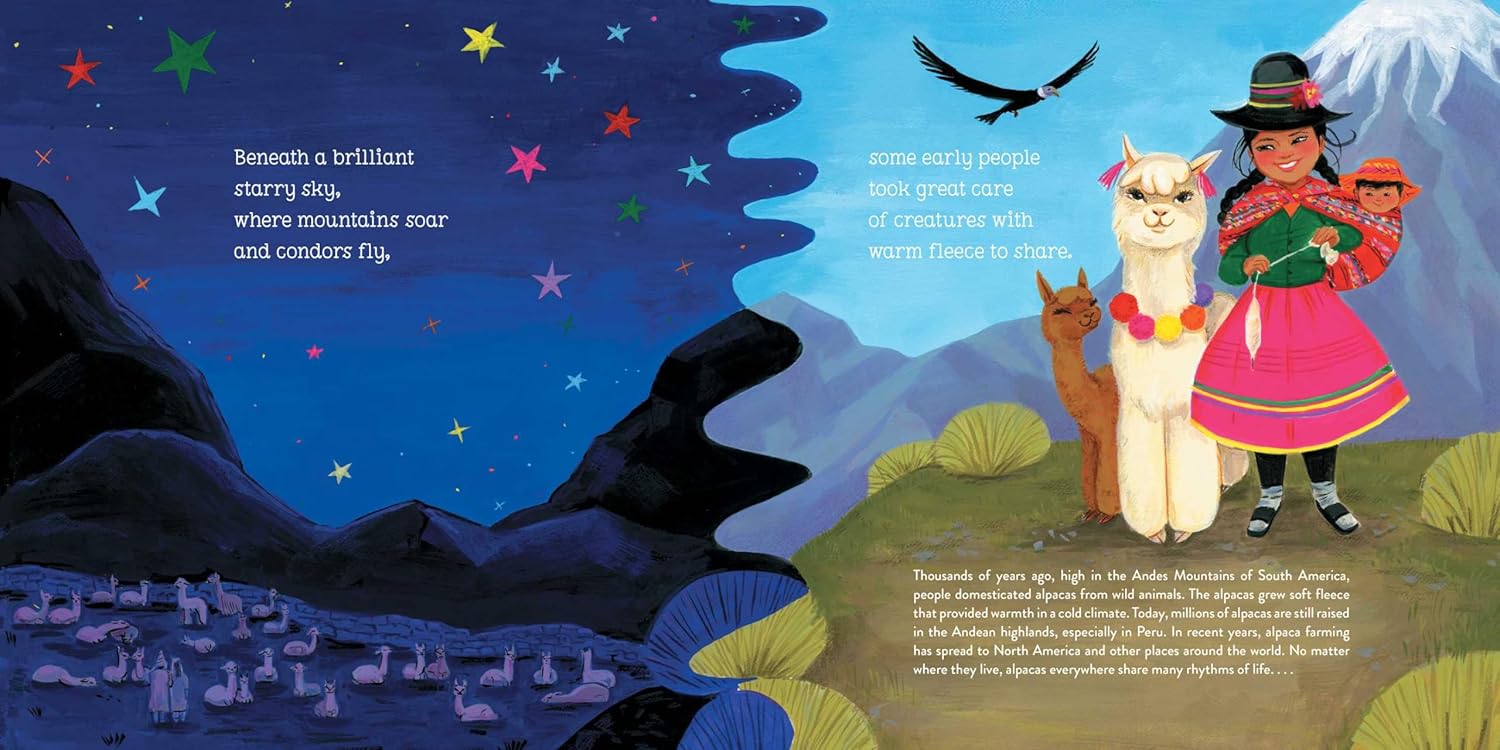
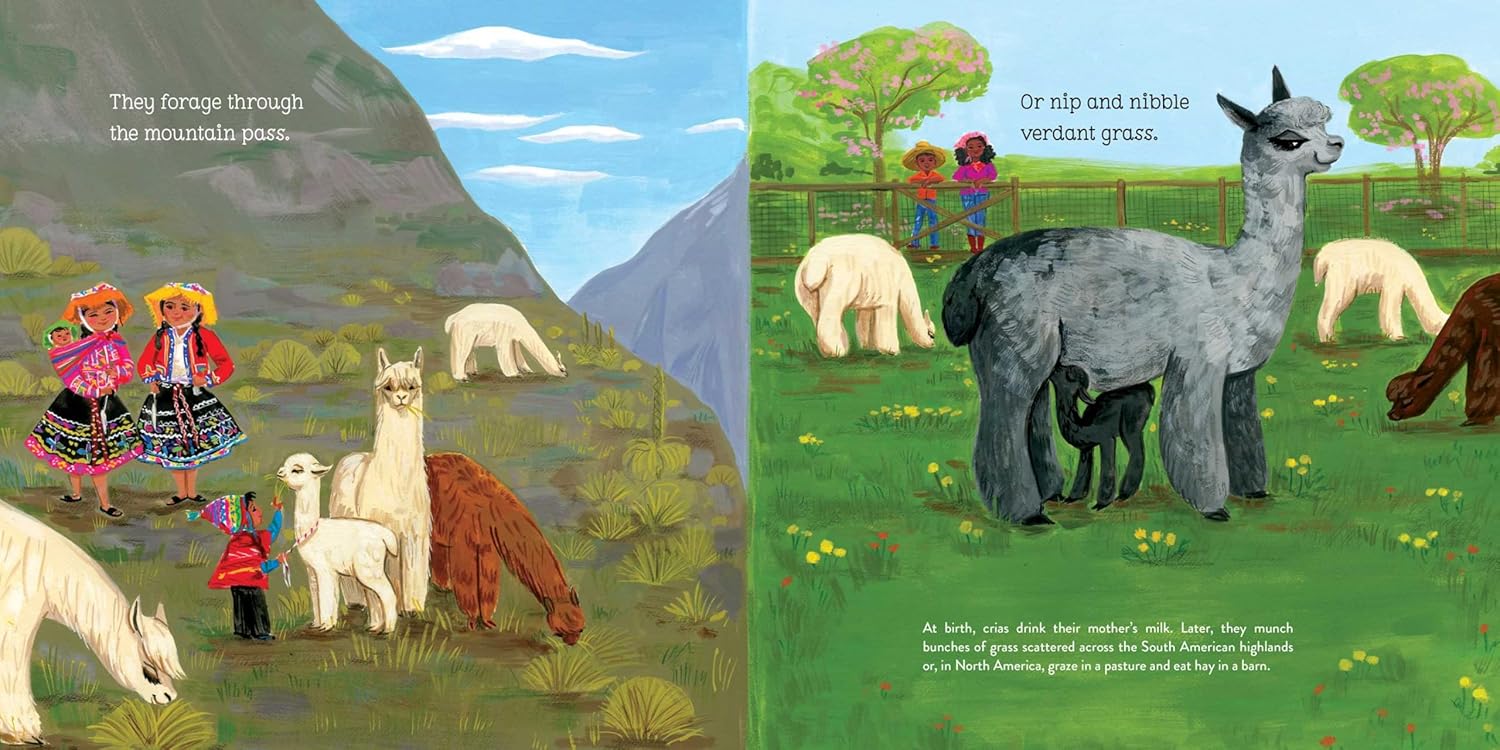
Alpaca lovers here, alpaca lovers there, alpaca lovers everywhere will be charmed by these oh-so-soft-coated animals brought to life through Carrie Tillotson’s lyrical verses that introduce fact-packed text and Elisa Chavarri’s vibrant illustrations. As readers visit alpaca farms in the animals’ native South America and comparatively recent homes in North America (Tillotson reveals that alpacas were domesticated 6,000 years ago by Indigenous peoples in South America and developed finer fleece under Incan advanced breeding programs but were first brought to North America only in the 1980s), they learn similarities and differences in the animals’ lifestyles—and even how they’re a bit like humans!

Illustration © 2025, Elisa Chavarri; text © 2025 Carrie Tillotson. Courtesy of Beach Lane Books.

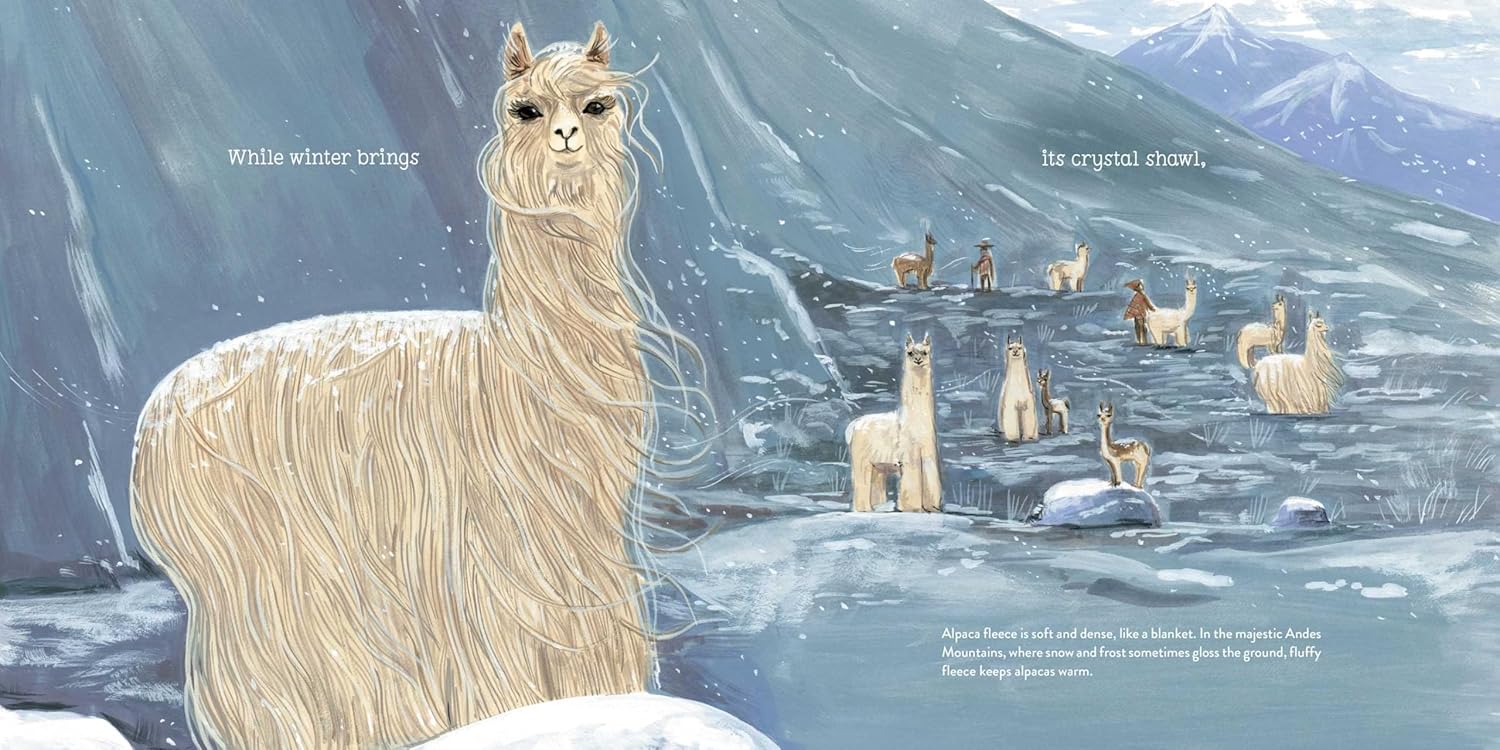
Just like human moms sing to their babies, mother alpacas and their newborn crias hum to each other as a way to bond and also find each other in the midst of the herd. In describing how South American alpacas survive the snowy mountains by developing thick coats and North American alpacas find relief during hot summers by lounging in cool wading pools, Tillotson writes: “While winter brings its crystal shawl, / in summer’s blaze they laze and sprawl.”

And kids who are wary of haircuts may be envious of an alpaca’s grooming schedule: “Their fleece grows long. Then, once a year, / the farmers gather . . . time to shear!” While South American farmers follow traditional methods “to trim their alpacas’ fleece with hand shears or a knife, . . . in North America, farmers usually use electric shears.” And what happens to all that cut fleece? “Assorted colors flurry, whirl! / From fleece to yarn, they spin and twirl.” Alpacas fleece is so diverse that in South America “alpaca fleece is often categorized into twenty-two colors  . . . and sixteen colors in North America.”

Illustration © 2025, Elisa Chavarri; text © 2025 Carrie Tillotson. Courtesy of Beach Lane Books.

While people everywhere love the soft warmth of alpaca fleece clothing, they’re also smitten by the playful way alpaca’s “pronk and prance,” springing into the air with “all four feet off the ground at once with stiff, straight legs,” a “bounding dance” they often perform at sunset. Having learned so much about these captivating creatures, readers of all ages will agree “they warm the hearts and heads and hands of everyone across the lands.”

Extensive back matter includes an Author’s Note; an Artist’s Note; a look at the history of alpacas in South America and North America; Alpaca-raising Practices; a description of the four types of camelids found in South America; a Glossary; and a list of Selected Sources.

Illustration © 2025, Elisa Chavarri; text © 2025 Carrie Tillotson. Courtesy of Beach Lane Books.

Carrie Tillotson’s enthusiasm for her subject spills over into her delightful verses that will enchant young readers and her fascinating supporting text that will captivate nonfiction lovers. Tillotson introduces facts and new vocabulary with a natural flow that makes it easy for readers to grasp concepts and definitions, enhancing their appreciation for these gentle, endearing animals and the soft, warm, fleecy products they provide.

Elisa Chavarri’s vivid illustrations of alpaca farming in South and North America will bring plenty of “Awww!”s from young readers (and not a few adults, too!) as they meet baby alpacas snuggling with their moms, beating the heat in an inflatable wading pool, and most especially pronking close to home as the sun sets. It’s impossible to resist these alpaca’s tender eyes as they gaze directly at readers, inviting them to join in the fun. 

Alpacas Here, Alpaca’s There is a wonderful compendium of facts and lore about these treasured animals. The poetic story is perfect for bedtime or story time, while the in-depth facts make the book a valuable resource for social studies lessons or school reports. The book would make a charming addition to home collections and an exciting choice for school and public library collections.

Ages 4 – 8

Beach Lane Books, 2025 | ISBN 978-1665942027

About the Author

Carrie Tillotson is the author of children’s books including Alpacas Here, Alpacas There and Counting to Bananas. After getting a master’s degree in public health, Carrie worked as a biostatistician for more than ten years and now sculpts her interests in science into playful picture books. Carrie lives in Oregon with her husband and son, two dogs, and two chickens. Visit her at CarrieTillotson.com. You can also find Carrie on Instagram and Bluesky.

About the Illustrator

Elisa Chavarri is an illustrator and artist working from Alpena, Michigan where she lives with her husband, daughter, and pets. Elisa attended Savannah College of Art and Design where she earned a degree in Animation. She is a native of Lima, Peru. You can visit her at ElisaChavarri.com and on Instagram.

National Love Your Pet Day Activity

celebrate-picture-books-picture-book-review-paw-print-magnet-smaller

Paw Print Magnet


A print of your pet’s paw makes a cute magnet for your locker to give you a paw…er, hand… holding those important messages and pictures. Here’s how to do this easy craft with your dog or cat.

Supplies

  • 1/2 cup flour
  • 1/2 cup salt
  • 1/4 cup water
  • Cookie cutter (optional)
  • Bowl
  • Wax paper
  • Strong multi-surface glue or hot glue gun
  • Strong magnet, available at craft stores or ribbon
  • Paint (optional)

Directions

  1. Mix the flour and salt in the bowl
  2. Slowly add the water and mix the dough, kneading it until it is smooth and soft. Add more water if necessary.
  3. Roll out the dough until it is about 1/4 – 1/2 inch thick
  4. Place the dough on the wax paper
  5. Carefully press your pet’s paw into the dough. 
  6. Place the cookie cutter over the print and cut out. If not using a cookie cutter, cut a shape about 1/4-inch around the paw print.
  7. Bake the dough at 250 degrees for 1 to 2 hours depending on thickness of dough
  8. When it’s cool, you may like to paint your paw print
  9. Glue the magnet to the back or make a loop hanger with ribbon and glue to back

You can purchase Alpacas Here, Alpacas There at these booksellers

Amazon | Barnes & Noble | Bookshop (to support your local independent bookstore)

Picture Book Review
 

February 10 – National Poop Day

celebrate-picture-books-picture-book-review-poop-for-breakfast-cover

About the Holiday

Who knew poop could inspire such a thoughtful and health-conscious holiday? But it has! Initiated in 2016 by the Madison Children’s Museum in Wisconsin to celebrate and educate the public on digestion and excretion, the day has become a fun, educational way to encourage people to be more aware of their digestive health and hygiene as well as that of their pets. By normalizing conversations about poop, the holiday aims to improve overall health practices and increase understanding of how our bodies work. The topic is no less fascinating in the world of wildlife, as today’s book shows.

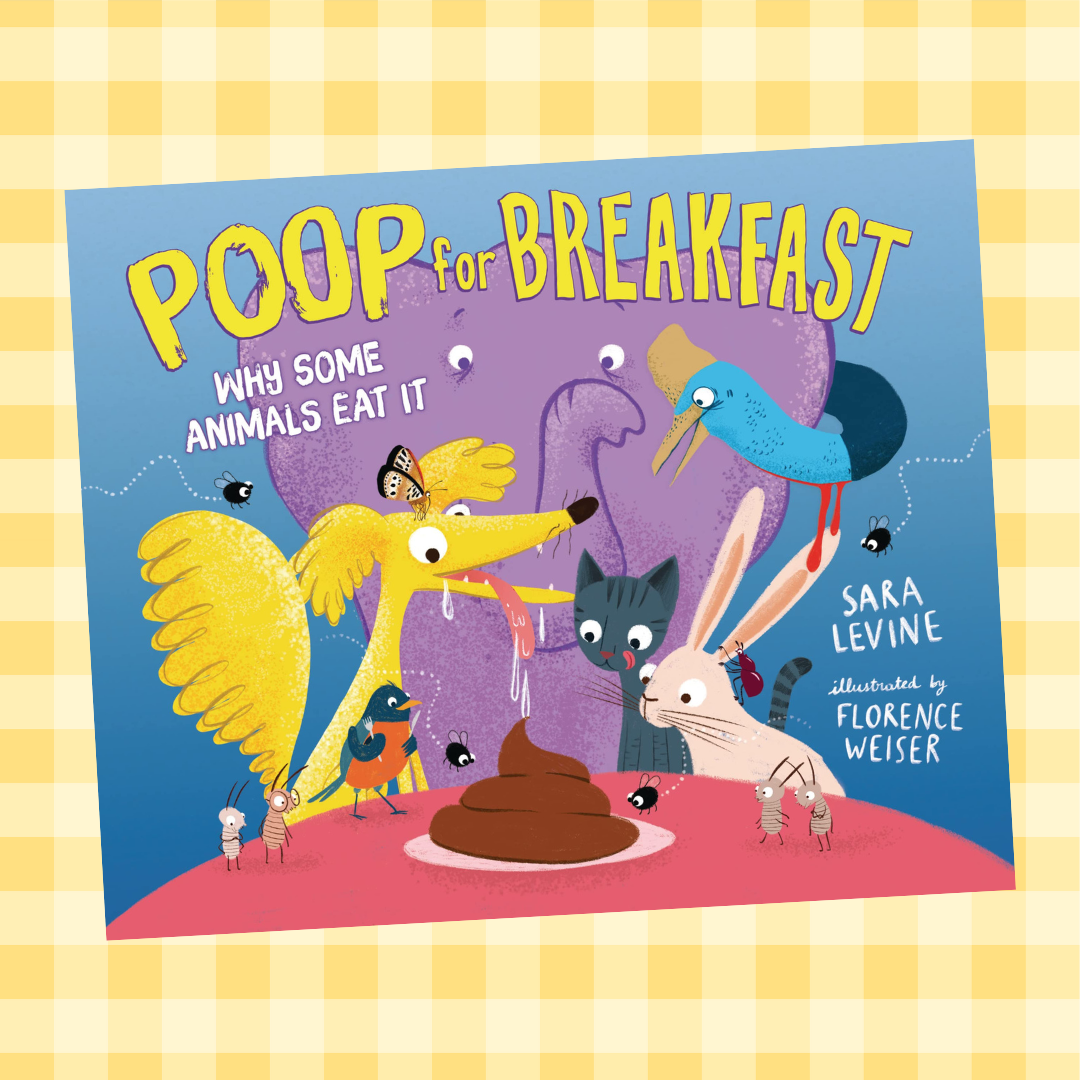
Thank you to Sara Levine and Millbrook Press for sharing a copy of Poop for Breakfast: Why Some Animals Eat It with me!

Poop for Breakfast: Why Some Animals Eat It 

Written by Sara Levine | Illustrated by Florence Weiser


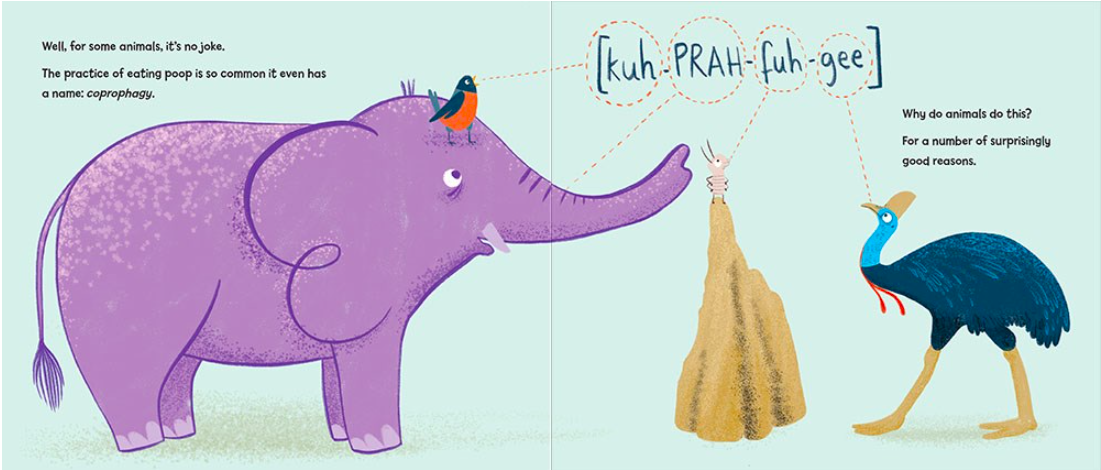
So, you wake up starving for a delicious meal. You’ve been dreaming of pancakes, maybe, or a plate of eggs and bacon. But when you get to the table, there’s a bowl of poop waiting for you?! What’s going on?! While you might sulk (and probably hold your nose), there are plenty of creatures who’d be thinking “Bring it on!” Who are these critters? They’re animals that practice coprophagy, and they do it “for a number of surprisingly good reasons,” as Sara Levine reveals.

celebrate-picture-books-picture-book-review-poop-for-breakfast-coprophagy

Image copyright Florence Weiser, 2023, text copyright Sara Levine, 2023. Courtesy of Millbrook Press.

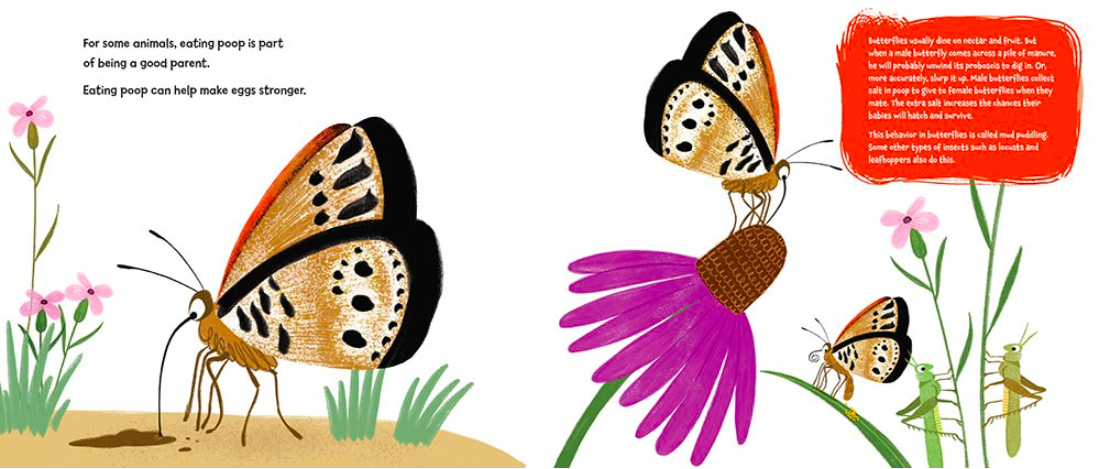
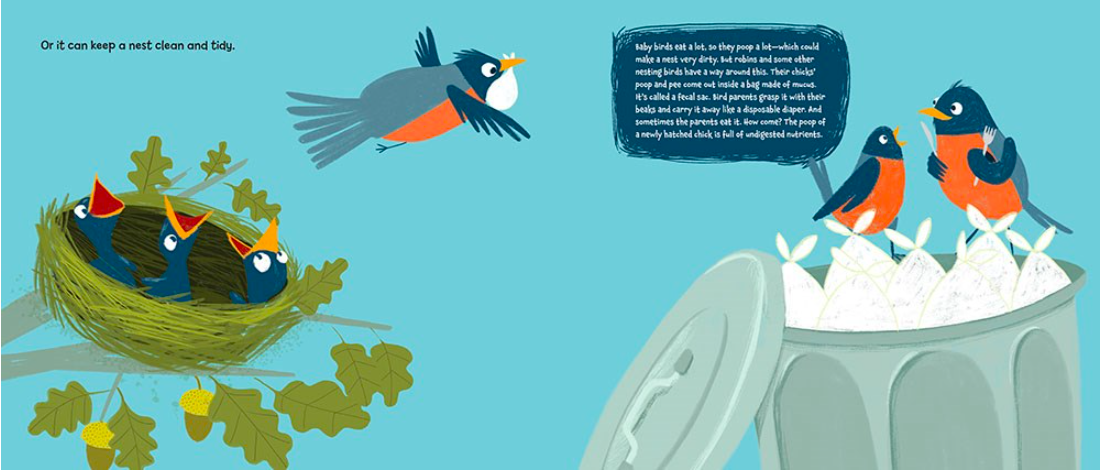
For some animals eating poop is just part of being a Number 1 (or maybe Number 2 is better in this case) parent. Butterflies, cats, and dogs as well as robins and other birds all have specific reasons for dining on doo-doo, from making eggs strong to protecting their babies from predators to keeping “a nest clean and tidy.” 

While these animals eat poop for external or aesthetic reasons, others engage in coprophagy to keep their digestive system working well. Still others, because of the length or shape of their digestive tract, require that food travels through their body twice to extract all of the nutrients. If you have a rabbit, hamster, guinea pig, or other small rodent as a pet, you know that their poop looks like little round balls or small pellets. As Levine tells readers, “this is the poop that has been through their digestive tract a second time. These animals’ first poop comes out soft, sticky, and full of nutrients. It’s called a cecotrope (SEE-ca-trope).” They then “gobble it up at night when it comes out. That’s why you don’t see it” in the cage.

celebrate-picture-books-picture-book-review-poop-for-breakfast-butterflies

Image copyright Florence Weiser, 2023, text copyright Sara Levine, 2023. Courtesy of Millbrook Press.

Since there are so many creatures who do eat poop, why don’t humans? Levine has included a whole list of reasons for why we don’t—and don’t need to. She also provides back matter that includes “The Scoop on Poop”—an explanation of what poop and pee are, how they’re created in the body, and how they’re eliminated. Kids will also have fun becoming “poop detectives” with the help of the illustrated poop identification guide for common pets and wildlife and also by playing a synonym game.

celebrate-picture-books-picture-book-review-poop-for-breakfast-robins

Image copyright Florence Weiser, 2023, text copyright Sara Levine, 2023. Courtesy of Millbrook Press.

Sara Levine is exceptional at presenting fascinating nature science topics in humorous and accessible ways for young audiences, and her latest book is no exception, Leaning into the “Ewww!” factor, Levine dishes up short, take-away reasons certain animals, birds, and insects practice coprophagy followed up with longer passages that explain the science and/or behavior behind them in easy-to-understand language sprinkled with humor that will keep readers riveted to this already high-interest subject.

Florence Weiser’s colorful illustrations perfectly bridge the humorous and the scientific nature of Levine’s text. Readers’ skeptical view of this “gross” habit is amusingly juxtaposed with creatures’ excited anticipation of a delicious meal through the characters’ facial expressions while the anatomical reasons for or against coprophagy are clearly depicted in images of human and various animals’ digestive systems.

Anatomy and nature science education at its best, Poop for Breakfast: Why Some Animals Eat It will keep kids enthralled as each page turn brings on a new round of giggles and avid learning. The book would enhance any home STEM collection and is a must for classroom, school, and public library bookshelves.

Ages 5 – 10

Millbrook Press, 2023 | ISBN 978-1728457963

About the Author

Sara Levine is an author, educator, and veterinarian. Her science books for children include the Animal by Animal series, Germs Up Close, and A Peek at Beaks: Tools Birds Use. Her books have received a number of awards including AAAS/Subaru SB&F Prize, Utah Beehive Book Award, Cook Prize finalist, Monarch Award master list, and Bank Street College Best Children’s Book of the Year. Visit her at saralevine.com and on Instagram at saralevinebooks.

About the Illustrator

Florence Weiser is a French illustrator currently based in beautiful, rainy Belgium. While growing up in Luxembourg, she always knew she wanted to draw and draw. She lives and works surrounded by nature, from which she gathers most of her inspiration. Visit her at florenceweiser.com and on Instagram at florence_weiser_illustration

You can find Poop for Breakfast: Why Some Animals Eat It at these booksellers

Amazon | Barnes & Noble | Bookshop (to support your local independent bookstore)

Picture Book Review

December 4 – International Cheetah Day

celebrate-picture-books-picture-book-review-fast-cheetah-slow-tortoise-cover

About the Holiday

The cheetah is the fastest land mammal in the world and also Africa’s most endangered big cat. With fewer than 7,500 cheetahs left in the wild, these beautiful and important animals are in a race with survival. Today’s holiday was established to raise awareness to the peril cheetahs and their ecosystem are in and to urge people to come to their aid. To learn more about cheetahs and how we can help them, and to find educational information and activities to download, visit the Cheetah Conservation Fund’s International Cheetah Day website.

Fast Cheetah, Slow Tortoise: Poems of Animal Opposites 

By Bette Westera and Mies van Hout | Translated by David Colmer


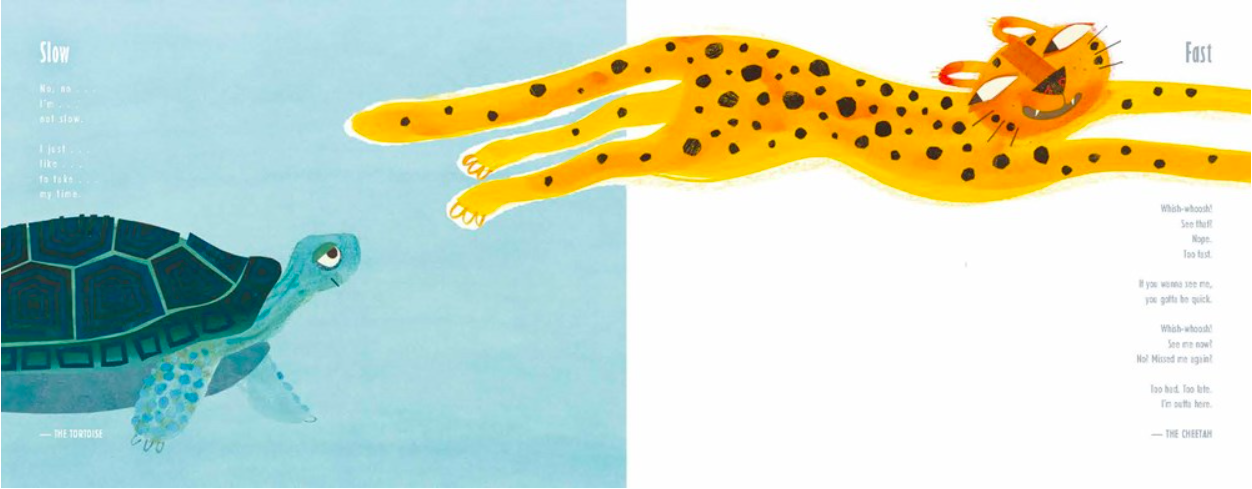
The world is full of animals (and people) of all sorts. Some are slow, like a tortoise—who, begging to differ, says, “I just like to take my time” while others are fast, like a cheetah—who with a “whish-whoosh! is “outta here.” There are those who identify with the “Tidy” pig, who loves to “. . . scrub and scrub / until I’m clean./ And put a fresh curl in my tail,” and those who aren’t so persnickety—like the “Messy” warthog: “Wash and comb my hair more often? / What for? Once a year is plenty. / These tangles suit me fine.”

celebrate-picture-books-picture-book-review-fast-cheetah-slow-tortoise-tortoise-and-cheetah

Image copyright Mies van Hout, 2024, text copyright Bette Westera, 2024, translation copyright David Colmer, 2024. Courtesy of Eerdmans Books for Young Readers.

In sixteen two-page spreads, Bette Westera and Mies van Hout introduce thirty-two animals who are opposites—or antonyms, for the grammatically minded—and do admirable jobs of advocating for themselves through short, free-form poems that proudly promote the traits that make them . . . well . . . them. Take the “Fancy” turkey and the “Everyday” chicken.

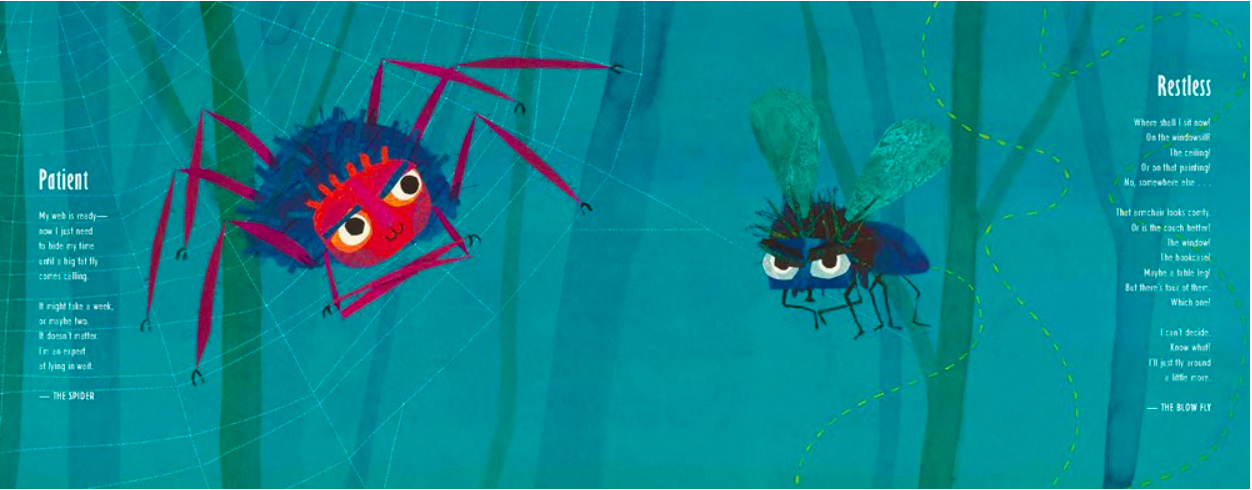
celebrate-picture-books-picture-book-review-fast-cheetah-slow-tortoise-spider-and-fly

Image copyright Mies van Hout, 2024, text copyright Bette Westera, 2024, translation copyright David Colmer, 2024. Courtesy of Eerdmans Books for Young Readers.

The turkey and the chicken face off across the pages with the Turkey going first as it recalls in part “a quick look in the mirror: / very chic, this red collar / over those dark blue feathers. / And how do you like my tail? / The peacock pales in comparison!” The chicken, in contrast, reveals: “I don’t like frills / and frippery. / I don’t like fancy / showing off” then goes on to say “. . . just give me grayish brown / or brownish gray.”

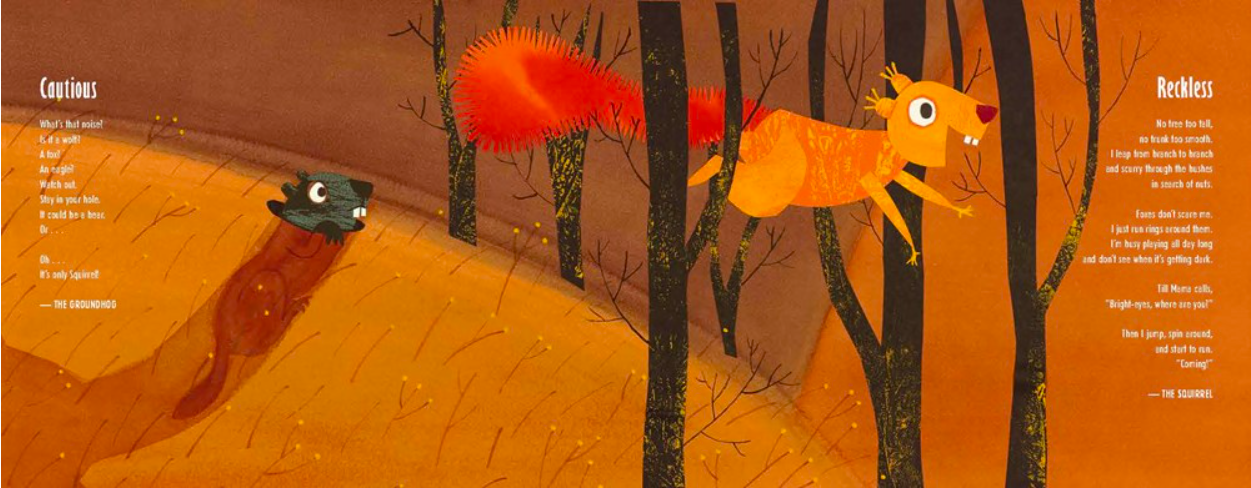
celebrate-picture-books-picture-book-review-fast-cheetah-slow-tortoise-groundhog-and-squirrel

Image copyright Mies van Hout, 2024, text copyright Bette Westera, 2024, translation copyright David Colmer, 2024. Courtesy of Eerdmans Books for Young Readers.

Each of Bette Westera’s poems, translated by David Colmer, delights with conversational rhythms and the humorous first-person descriptions within. Feisty attitudes meet plainspoken introspection meet playful nonchalance and energetic purpose—all divulged through snappy vocabulary and surprising turns of phrase. Kids will eagerly want to hear this charming read aloud again and again and will have fun deciding which of the animals they themselves most resemble. 

With her color-saturated and textured mixed-media illustrations, Mies van Hout presents kids and adults with a visual feast of expressive animals, each—like readers—with their own evident and endearing personality. You’ll want to linger awhile at every page to gaze into these animals’ eyes and fully appreciate their varied traits before meeting another pair of happy opposites.

An original take on learning—and valuing—the nature of opposites, Fast Cheetah, Slow Tortoise: Poems of Animal Opposites would be an entertaining addition for home story times as well as a terrific choice for libraries and classrooms, where the book could inspire fun writing projects.

Ages 4 – 8

Eerdmans Books for Young Readers, 2024 | ISBN  978-0802856357

About the Author

Bette Westera is the author of the Mildred L. Batchelder Honor Book Later, When I’m Big (Eerdmans) and over fifty other books for children. She has also translated books by Dr. Seuss, Astrid Lindgren, and Julia Donaldson into the Dutch language. Bette lives in the Netherlands, where her books have received two Golden Pencil awards and six Silver Pencil honors. Visit her website at bettewestera.nl.

About the Illustrator

Mies van Hout is a Dutch illustrator and author whose work has been published in over twenty countries. Her books in English include Happy, From One to Ten, This Is My Daddy!, and What Cats Think (all Pajama Press). Mies lives in the Drenthe province of the Netherlands. Visit her website at miesvanhout.nl or follow her on Instagram @miesvanhout.

About the Translator

David Colmer is an Australian writer and translator of Dutch and Flemish literature. He has translated over eighty books throughout his career, including Little Fox (Levine Querido), I’ll Root for You, and A Pond Full of Ink (both Eerdmans). His translations have won several prestigious awards, such as the PEN Translation Prize and the Independent Foreign Fiction Prize. David lives in Amsterdam.

International Cheetah Day Activity

Screen Shot 2024-12-03 at 6.19.59 PM

Cheetah Coloring Page

Learn more about cheetahs and see them in action with this video from National Geo Wild then color your own portrait of a cheetah with this Cheetah Coloring Page from the Cheetah Conservation Fund.

celebrate-picture-books-picture-book-review-fast-cheetah-slow-tortoise-cover

You can purchase Fast Cheetah, Slow Tortoise: Poems of Animal Opposites at these booksellers

Amazon | Barnes & Noble | Bookshop (to support your local independent bookstore)

Picture Book Review

September 4 – National Wildlife Day


celebrate-pictrure-books-picture-book-review-like-no-other-cover

About the Holiday

National Wildlife Day was established in 2005 by author and pet lifestyle expert Colleen Paige in memory of conservationist Steve Irwin. The day promotes awareness of the importance of conservation of animals, habitats, and the environment worldwide and offers education on the number of endangered and threatened species across the globe. To honor today’s holiday, visit a local zoo, aquarium, or other nature preserve and take some time to learn about what you can do to help protect the environment. 

Thank you to Kane Press for sharing a copy of Like No Other with me for review consideration. All opinions on the book are my own.

Like No Other: Earth’s Coolest One-of-a-Kind Creatures

Written by Sneed B. Collard III | Illustrated by Christopher Silas Neal


There’s something captivating about the unique. Couple that feeling with the endless fascination of animals, and you have today’s book! Like No Other introduces readers to thirteen creatures of the air, land, and sea that have no close living relatives in the animal kingdom. Some never had close relatives, some evolved away from their kin, and others thrived while the rest of their lineage became extinct.

Inside Sneed B. Collard III’s and Christopher Silas Neal’s eye-catching book, readers meet, among other one-of-a-kind animals, a bird that uses echolocation and nests in caves, a sea turtle that “can grow more than six feet long and can weigh more than half a ton,” and my personal favorite—a frog that lives eleven months of each year underground.

celebrate-pictrure-books-picture-book-review-like-no-other-secretarybird

Illustration copyright Christopher Silas Neal, 2024. Text copyright Sneed B. Collard III. Courtesy of Kane Press.

To orient children on animal classification and how the subjects of his book are so different, Sneed B. Collard III uses the example of a red fox to explain the terms genus, family, and order. He relates how the red fox is closely related to other species of foxes, more distantly related to dogs and wolves, and also belongs in the order Carnivora with other meat eaters. Christopher Silas Neal provides a clear visual representation to further help readers understand these terms.

Some of the animals in Like No Other, such as the walrus and the platypus, may be familiar to young readers, while others will come as a surprising discovery. Each accessible and detailed entry begins with a bite-size description of the animal that will immediately pique a child’s attention. Collard then goes on to reveal each animal’s scientific family, how they were left alone in the world, where they live, what they eat, and other extraordinary facts. Information on the height, weight, and lifespan of each creature is also included.

Christopher Silas Neal’s superb mixed-media, full-spread illustrations depict beautiful, true-to-life images of each animal interacting with its typical environment. Among the pages, readers will view an aye-aye as it taps a tree branch, listening for any tasty insects inside; dive deep with a whale shark as it sucks a school of tiny fish into its tunnel-like mouth; and watch a secretarybird wrangle with a snake. The final entry leads readers to contemplate where we humans fit into the earth’s design.

celebrate-pictrure-books-picture-book-review-like-no-other-leatherback-sea-turtle

Illustration copyright Christopher Silas Neal, 2024. Text copyright Sneed B. Collard III. Courtesy of Kane Press.

Extensive backmatter includes “Saving One-of-a-Kind Creatures,” which discusses the impact of human population growth and industry on plants and animals and how we can help reverse adverse effects; “Be an Animal Scientist”—a fun, step-by-step activity in which readers can test their skills of taxonomy by identifying and categorizing the creatures and plants depicted in a provided illustration; and “Figuring Out Relatives—an interactive explanation of taxonomy—as well as a glossary of words in the book, a list of websites for continued learning, and a short discussion on how the author researched his book. Closing out the section is a world map dotted with eleven more one-of-a-kind animals—a perfect resource for educators to spark kids’ own research.

Like No Other: Earth’s Coolest One-of-a-Kind Creatures will captivate young readers from cover to cover. Together the text and illustrations create a well-conceived package for both casual readers and those interested in doing further research as well as teachers and other educators looking for a high-interest book to introduce or add to their lessons in nature science. The book is a top pick for home and classroom bookshelves as well as school and public library collections.

Ages 5 – 8

Kane Press, 2024 | ISBN 978-1662670077

About the Author

Sneed B. Collard III is the author of more than eighty-five books for children and young people. His Beaks! title (Charlesbridge, 2002) has sold more than 200,000 copies in paperback, and continues to sell. His work has received the Eureka! Nonfiction Silver Medal, the High Plains Books Award, made the Junior Library Guild Selection list, and received many starred reviews from BooklistSchool Library Journal, and others.

About the Illustrator

Christopher Silas Neal is an award-winning author and illustrator of picture books, including the acclaimed Over and Under series with author Kate Messner, which was praised for its “stunning retro-style illustrations” (New York Times). Neal’s author debut Everyone was praised by Publishers Weekly as  “simple, honest, lyrical.” His board books Animal Colors and Animal Shapes received starred reviews from Publishers Weekly and Kirkus. He speaks about his books, the art-making process, and his career at schools, conferences, libraries, and book festivals across the country. Neal is a Mexican/European-American artist who lives with his wife and two boys in Brooklyn, NY.

National Wildlife Day Activity

celebrate-picture-books-picture-book-review-duck-billed-platypus-coloring-page

Animal Coloring Pages


Enjoy these coloring pages of two of the world’s unique animals!

Platypus | Whale Shark

celebrate-pictrure-books-picture-book-review-like-no-other-cover

You can purchase Like No Other: Earth’s Coolest One-of-a-Kind Creatures at these booksellers

Amazon | Barnes & Noble | Bookshop (to support your local independent bookstore)

Picture Book Review