
About the Holiday
The Dōngzhì Festival, or Winter Solstice is considered to be one of the most important Chinese festivals of the year and is a time for families to get together, worship their ancestors, and enjoy traditional delicacies. Celebrated for over 2,000 years, the festival sees families come together to make and eat tāng yuán, which symbolizes reunion and prosperity. While the celebration of the winter solstice is only one day (this year on December 21), the Dōngzhì Festival lasts 15 days.
This Winter Solstice festival originates from the Chinese concept of yin and yang, an ancient symbol of harmony and balance. In Chinese culture, there is a belief that when the days are short, there is insufficient Yang energy, thus people consume foods that are more yang (warm) in nature to counteract the yin (cold) of winter, such as tāng yuán, as seen in today’s book. To learn more about the holiday, visit mandarianmatrix.org.
Thank you to Bloomsbury Children’s Books for sharing a copy of this book with me for review!
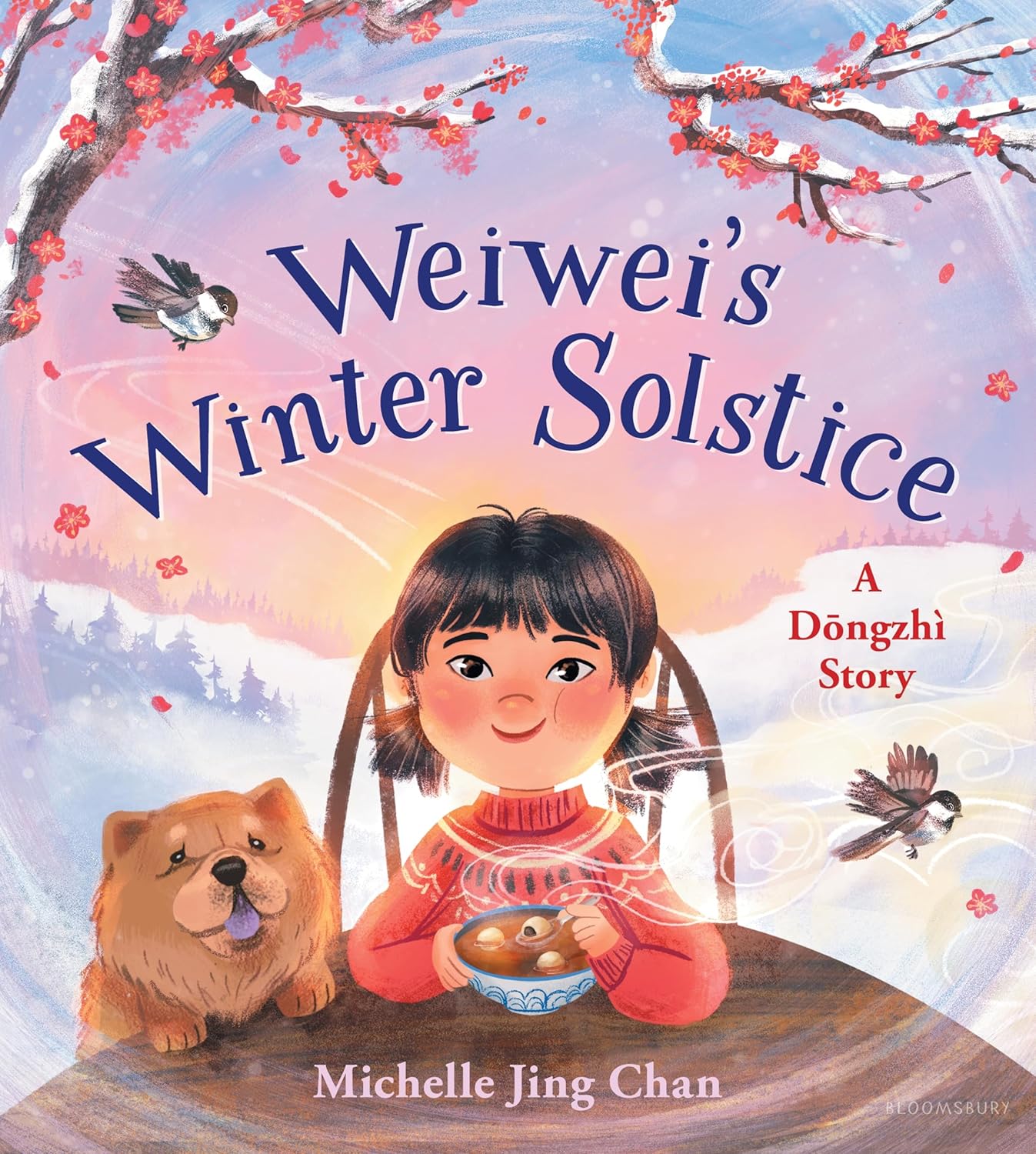
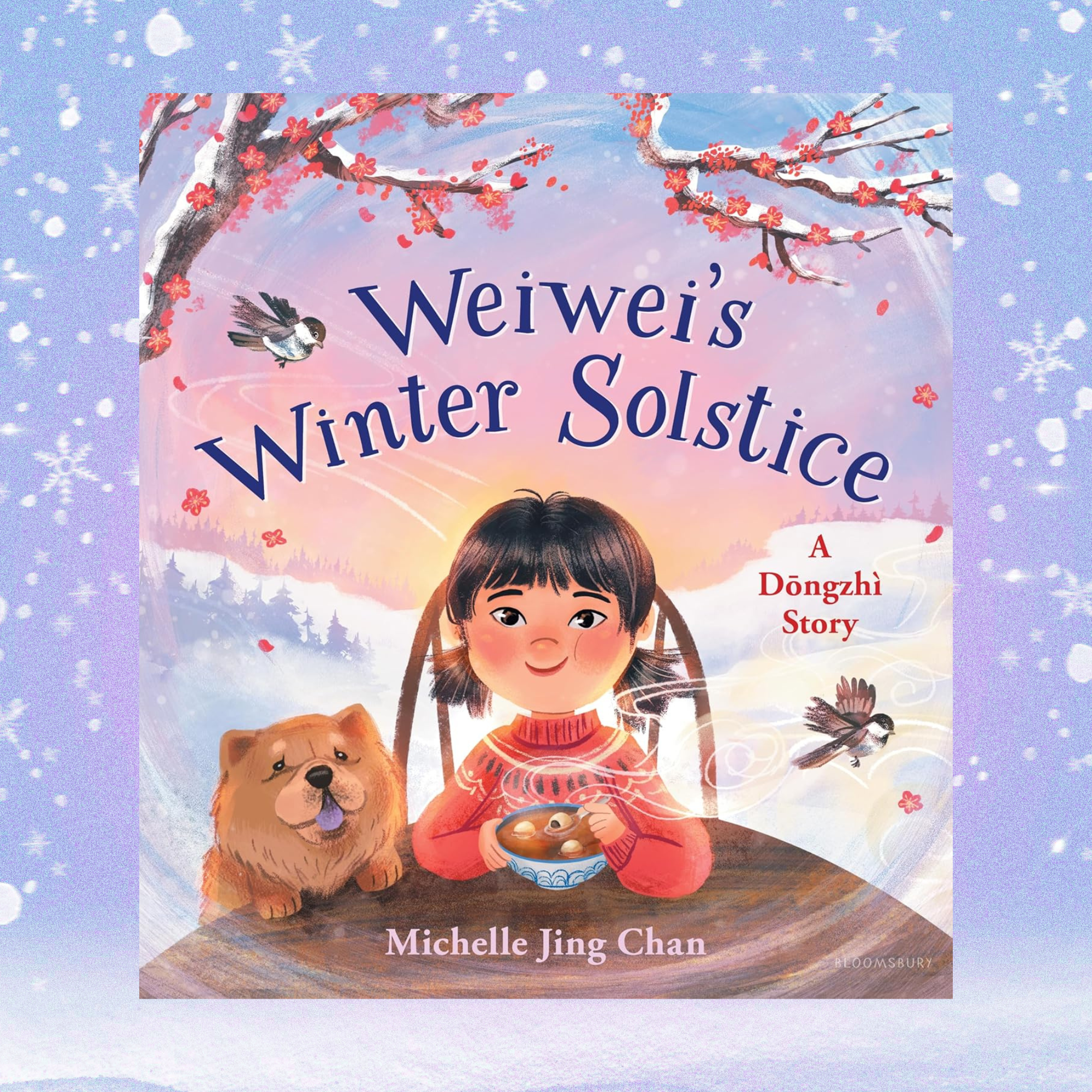
Weiwei’s Winter Solstice: A Dōngzhì Story
By Michelle Jing Chan
Today is Dōngzhì, the Chinese winter solstice—one of Weiwei’s favorite holidays. But instead of celebrating it by splashing in sprinklers amongst hummingbirds and palm trees at her former home, she’s bundled up in a sweater and blanket as snow covers the ground. For Weiwei Dōngzhì just doesn’t feel the same. Her family—Mama, Baba, her younger brother Didi, and Yeye, her grandfather—are ready for a walk and to play in the snow, but Weiwei can only scowl.
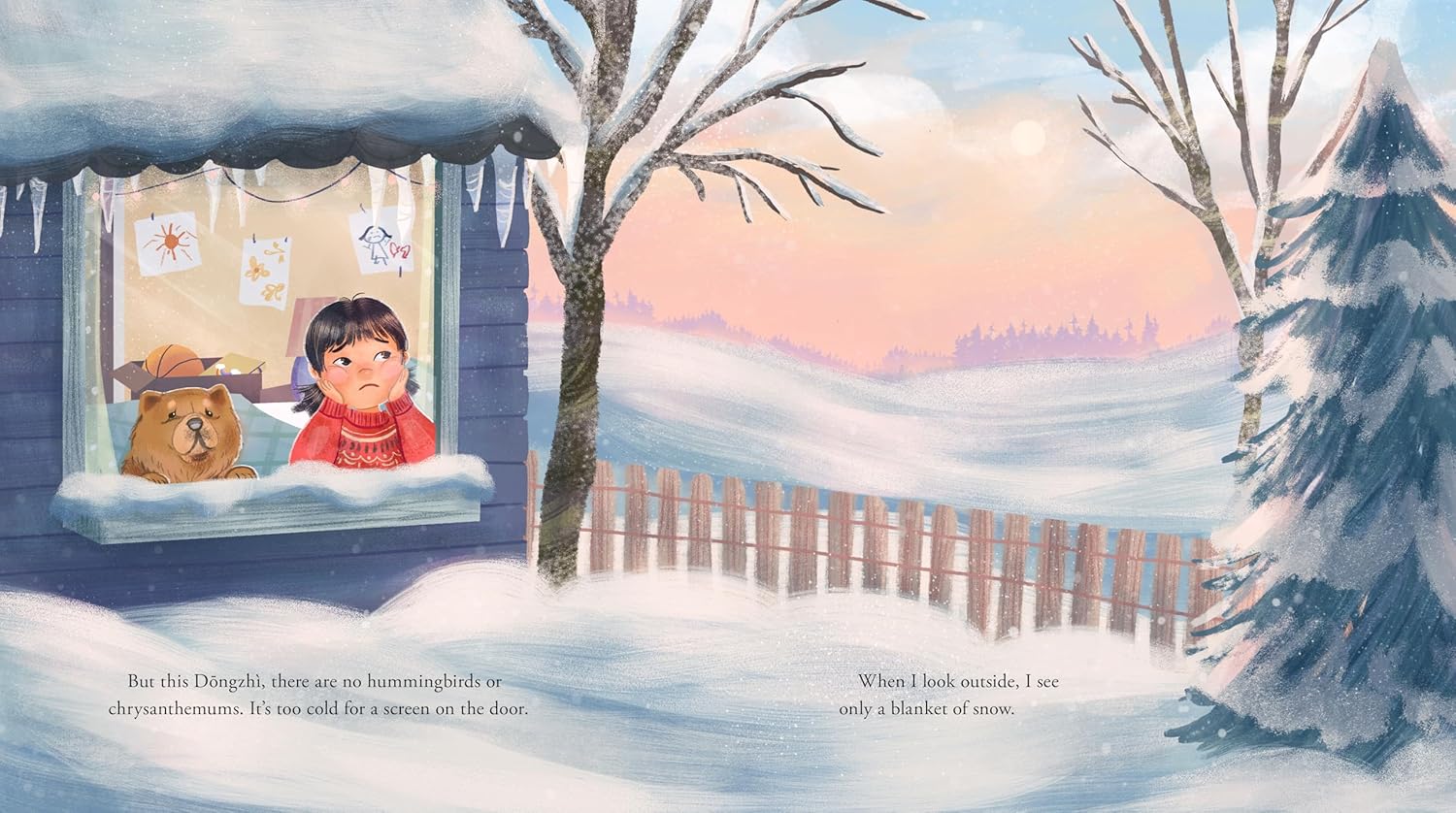
Text and image © 2025 by Michelle Jing Chan. Courtesy of Bloomsbury Children’s Books.
Yet once outside, Weiwei watches her breath cloud in the cold air, catches snowflakes on her tongue, and listens to the snow crunch as they walk. Then, suddenly, Weiwei gasps and points to a tree covered in red flowers. “‘Those are méihuā, plum blossoms!'” Yeye tells her. “. . . No matter how cold and dark it is, they still bloom.'” Weiwei begins to see other signs of life and beauty, but as the sun begins to set, it’s time for the family to go back home. Time for Weiwei’s favorite part of Dōngzhì.
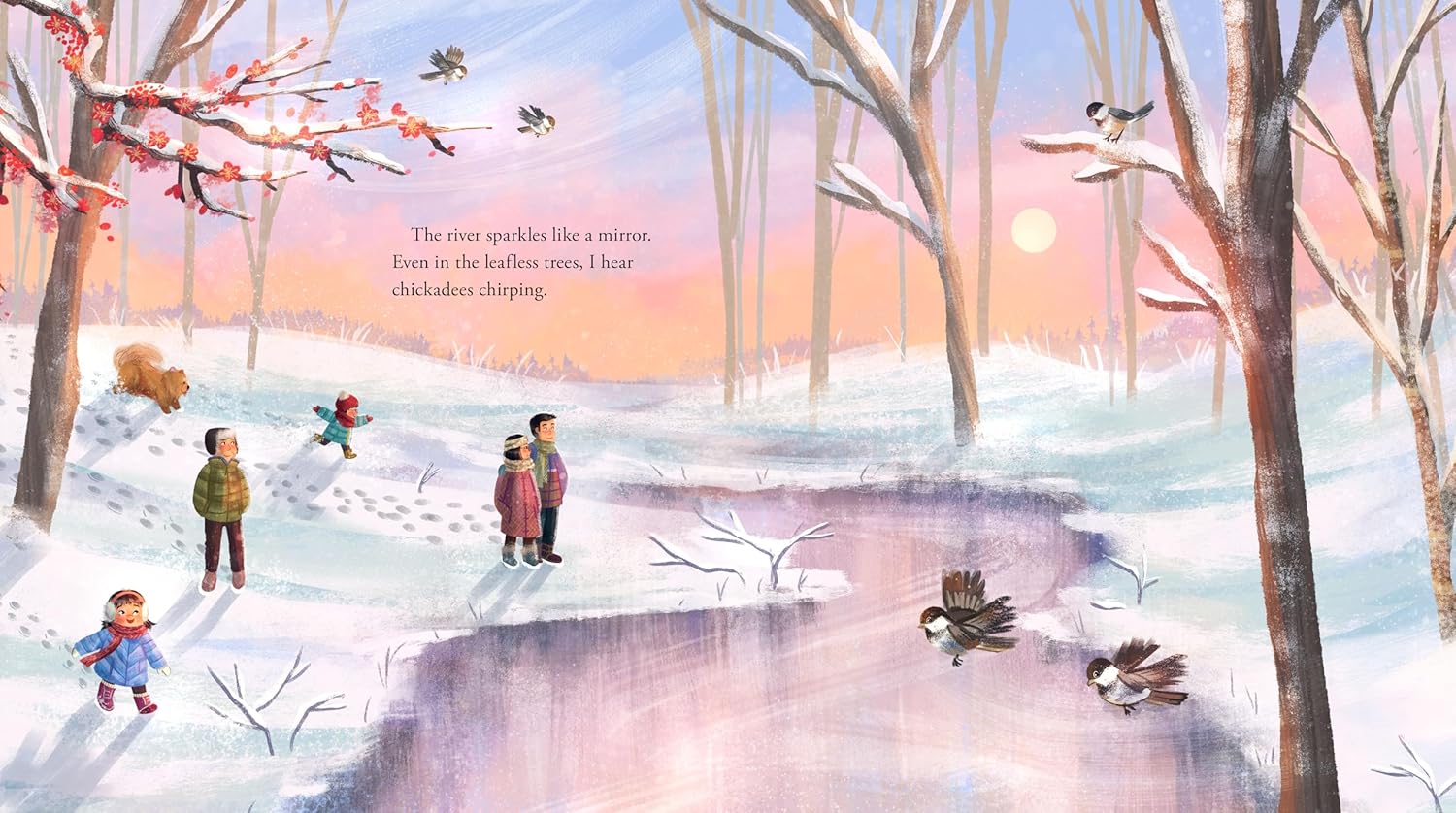
Text and image © 2025 by Michelle Jing Chan. Courtesy of Bloomsbury Children’s Books.
Back home everyone chips in to make tāng yuán. Mama and Didi stir “ground black sesame, sugar, and softened butter into a paste” while Yeye and Weiwei make rice flour dough and Baba makes ginger broth. Then Didi and Weiwei pat the dough into small pancakes, add a bit of black sesame paste, and roll them into balls. The balls simmer in the ginger broth until they float to the top.
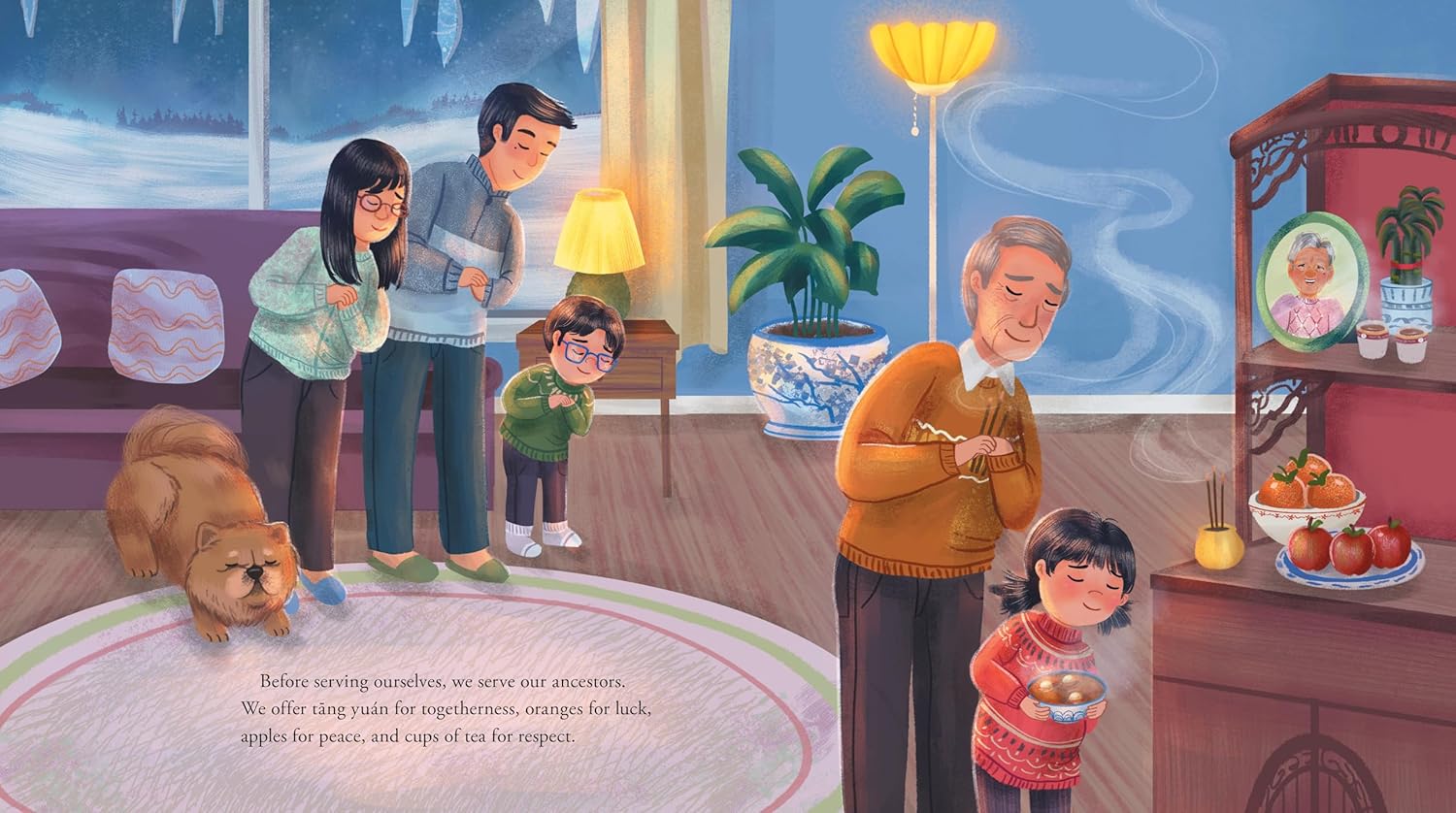
Text and image © 2025 by Michelle Jing Chan. Courtesy of Bloomsbury Children’s Books.
Before Weiwei and her family eat, they serve their ancestors. They “offer tāng yuán for togetherness, oranges for luck, apples for peace, and cups of tea for respect.” Then they eat! To Weiwei, the warm broth feels like a “sip of sunlight,” and Yeye reminds her that warmer days are coming. He tells her he knows it’s hard moving to a new home, “‘but anywhere can feel like home when we celebrate together.'” Weiwei listens to her grandfather and looks around at her cozy home and the people she loves. She knows spring is on its way with new memories to make, and decides that she will “bloom like the méihuā” and savor winter.
An Author’s Note describing the Dōngzhì holiday and how it is celebrated in various Asian countries as well as a recipe for Black Sesame Tāng Yuán follow the story.
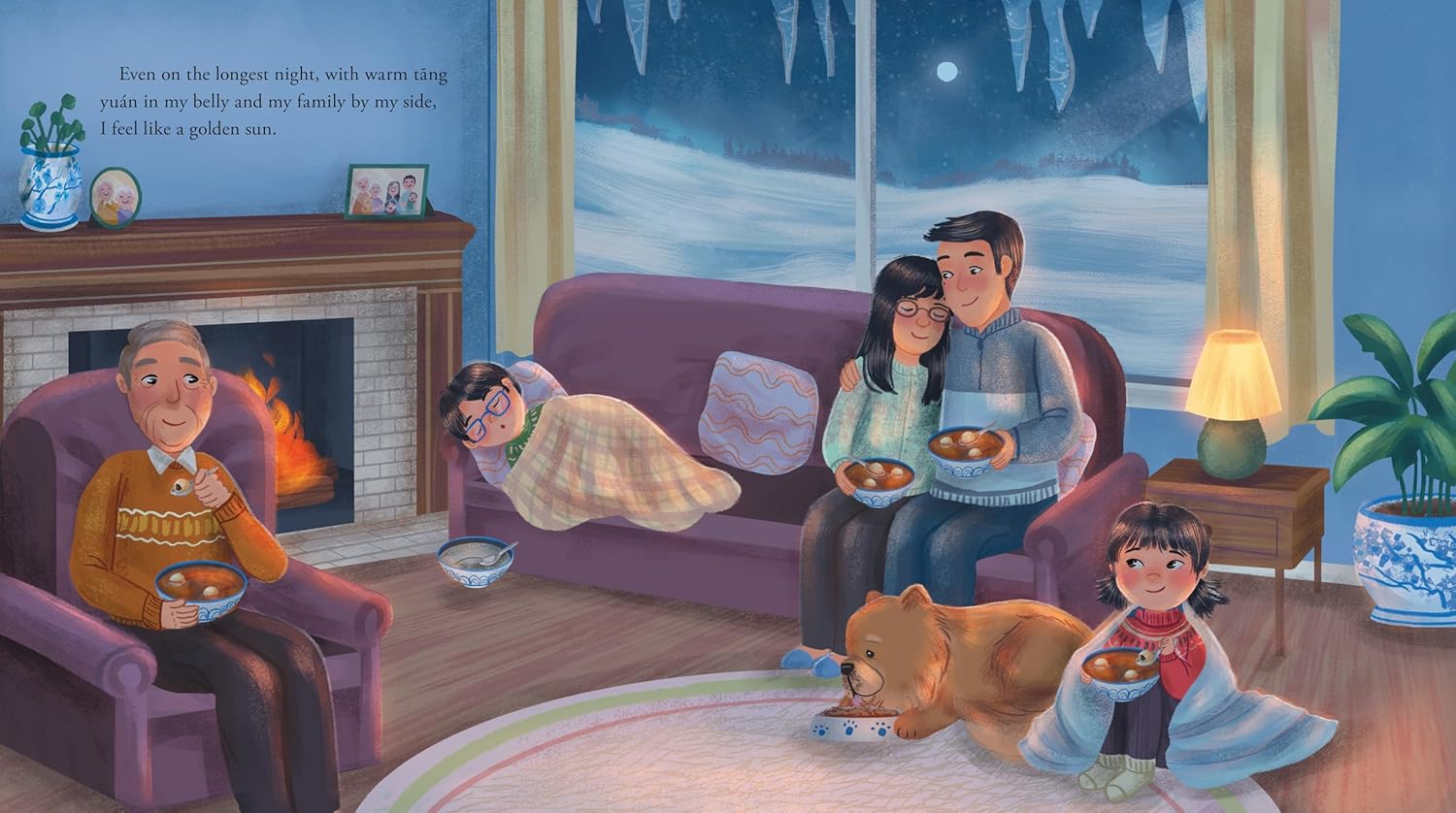
Text and image © 2025 by Michelle Jing Chan. Courtesy of Bloomsbury Children’s Books.
Michelle Jing Chan’s warmhearted story of a young girl feeling adrift and disappointed when it comes time to celebrate Dōngzhì in a new home touches on feelings of loss, rediscovery, and the stabilizing comfort of traditions. As Weiwei and her family take a walk through snowy woods instead of the sunny backyard she’s known, she glimpses aspects of familiarity that are further strengthened as she helps prepare and enjoy their customary dish. She recognizes that the Dōngzhì celebration she cherishes as well as her family unit have not changed, allowing her to embrace her new home and look forward to the future.
Chan’s expressive illustrations glow with the togetherness that tāng yuán represents. Even her lovely snowy scenes are lit with peach and gold, as the sun breaks through the winter clouds. Inside, soothing colors highlight the family’s close ties and the comforting flavors of home.
Weiwei’s Winter Solstice: A Dōngzhì Story offers heartening inspiration for readers in the midst of change as well as the comfort of family love and traditions for all. Pair with making the included recipe as a group to create an eventful story time.
Ages 3 – 6
Bloomsbury Children’s Books, 2025 | ISBN 978-1547614844
Michelle Jing Chan is a queer Chinese American illustrator who grew up in Colorado and lives in the Pacific Northwest. Inspired by nature, cultural folklore, and fantasy, Michelle aspires to illustrate diverse, empowering stories her younger self would have loved. When she’s not drawing, she can be found attempting new recipes, reading, or watching spooky TV shows. You can visit her at michellejingchan.com.
Listen to Michelle Jing Chan talk about how her family traditions and a trip to Colorado inspired her to write Weiwei’s Winter Solstice: A Dōngzhì Story below!
You can purchase Weiwei’s Winter Solstice: A Dōngzhì Story from these booksellers
Amazon | Barnes & Noble | Bookshop (Discounted books and support for your local independent bookstore)
Picture Book Review





 celebratepicturebooks.com